
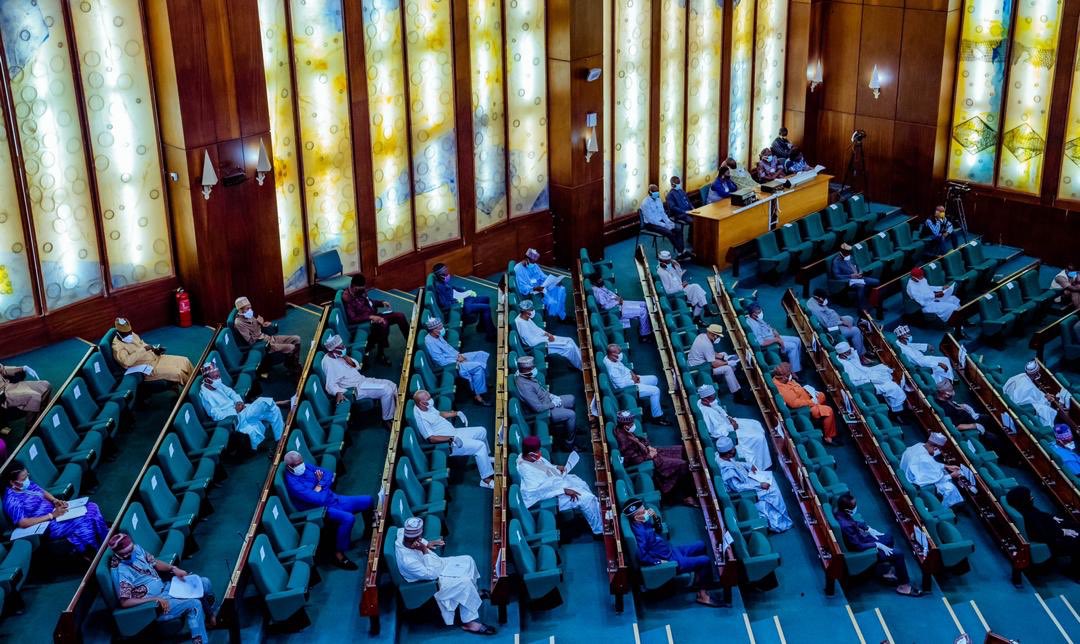

THE House of Representatives has criticised the management of the West African Examinations Council (WAEC) over widespread irregularities and operational lapses that marred the conduct of the 2025 Senior Secondary School Certificate Examination.
The House, through it Committee on Basic Education and Examination Bodies, questioned the Head of WAEC Nigeria, Amos Dangut, during an investigative hearing at the National Assembly on Monday, June 2, over it they described as systemic failures that had undermined public confidence in the country’s examination system.
Opening the session, the committee chairman, Oforji Oboku, representing Yenagoa/Opokuma Federal Constituency, Bayelsa State, expressed dissatisfaction with WAEC’s performance, appreciating his fellow lawmakers for making the oversight meeting a priority, even though the National Assembly was not in session.
“On behalf of this committee, I offer an unreserved apology to Nigerian parents, guardians, and candidates who suffered the chaos of the last examination cycle. We are committed to ensuring this never happens again,” Oboku said.
Reflecting on a previous meeting with WAEC held on May 30, Oboku described as appalling the revelations that students in numerous centres were forced to take their exams under harsh conditions, including late-night sessions illuminated only by torch lights.
The ICIR reports that stakeholders, including parents, students and education experts, voiced serious concerns over logistical failures, security challenges, and poor administration of the examination..
The ICIR reported that the Katsina State Government called for the cancellation of the West Africa Senior School Certificate Examination (WASSCE) English Language Paper 2 conducted by WAEC on Wednesday, May 28.
The State Commissioner for Basic and Secondary Education, Zainab Musa-Musawa, delivered a petition containing the state government’s position on the exam.at the WAEC office in Katsina on May 31.
During the House of Representatives hearing, lawmakers criticised widespread reports of irregularities and operational failures that marred the examination.
“It is unacceptable that in 2025, students are sitting for exams at 11 pm under torchlight. This is not just a failure of logistics, it is a failure of leadership,” Oboku stated.
While stressing that the committee’s investigation was not a witch-hunt, the lawmaker maintained a firm stance on uncovering the root causes of the council’s inefficiencies.
“We must identify the underlying causes of these repeated failures, address them decisively, and hold those responsible to account,” he vowed.
Lawmakers also criticised Dangut’s assertion that WAEC would roll out computer-based testing centres nationwide by 2026 and called for a national education summit to assess the real state of secondary school infrastructure across the country.
“You talk of CBT readiness, yet many local governments lack a single CBT centre. That’s like saying you own a car and a driver, but there’s no road. It’s fantasy, not capacity,” Oboku added.
Defending the council, Dangut cited unforeseen logistical challenges and insecurity in parts of the country.
The ICIR reported how students were kept in examination halls in several states in the country by WAEC after the English Language they were to write leaked. Many of the students did not return home until midnight after they were forced to wait to write the examination at night.

Nanji is an investigative journalist with the ICIR. She has years of experience in reporting and broadcasting human angle stories, gender inequalities, minority stories, and human rights issues. She has documented sexual war crimes in armed conflict, sex for grades in Nigerian Universities, harmful traditional practices and human trafficking.