
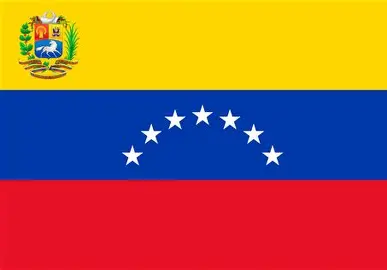
RESCUE teams are working around the clock to locate survivors trapped beneath collapsed buildings in Venezuela after twin earthquakes killed at least 235 people and injured about 4,300 others.
According to CNN, Venezuelan authorities said many people remain missing following the powerful earthquakes, which struck on Wednesday and devastated large parts of Caracas, La Guaira and surrounding communities, flattening homes and leaving thousands homeless.
Emergency responders are racing to save those still trapped before the critical 48- to 72-hour “golden window” for finding survivors closes.
International search-and-rescue teams from Chile, the Dominican Republic, El Salvador, Mexico and Switzerland have arrived in Venezuela to support local emergency workers, according to state broadcaster VTV.
The Chilean Air Force said it transported 30 members of the Chilean Fire Brigade’s Urban Search and Rescue (USAR) unit to the disaster zone, while Venezuelan authorities released footage showing Mexican rescue personnel and specially trained search dogs arriving to assist recovery efforts.
The International Federation of Red Cross and Red Crescent Societies (IFRC) said rescue operations had become a continuous, 24-hour effort as humanitarian workers struggle to reach those trapped beneath the rubble.
The IFRC’s Regional Director, Loyce Peace, told CNN that the search and rescue effort was constant and is 24 hours around the clock, noting that they lacked enough time and people necessarily to reach everyone.
Peace warned that while emergency rescue remains the immediate priority, the humanitarian consequences would persist long after global attention fades.
The disaster has prompted a broad international response despite longstanding political tensions involving Venezuela.
The United States announced a $150 million humanitarian aid package, deploying elite rescue teams, medical resources and military assets, including the amphibious transport ship USS Fort Lauderdale and transport aircraft to support relief operations.
The United Nations said it was coordinating the deployment of additional urban search-and-rescue teams.
Neighbouring Colombia is sending more than 60 rescue personnel and trained search dogs, while El Salvador has dispatched 300 rescuers and paramedics alongside 50 metric tonnes of humanitarian supplies, including medicines and essential relief materials.
Spain is deploying a field hospital, funding emergency assistance and sending 58 search-and-rescue specialists, firefighters and canine units. France, the Czech Republic, Panama, Cuba, Mexico, China, Japan and several other countries have also pledged personnel, medical teams, equipment or humanitarian support.
Mexico said it had deployed 261 military personnel, doctors, nurses and National Guard officers aboard two Air Force transport aircraft carrying rescue equipment and medical supplies, with additional shipments expected.
The European Union said it was ready to provide assistance if requested by Venezuelan authorities, while Pope Leo donated an initial emergency relief package worth €100,000.
In a temporary easing of sanctions, the United States Treasury Department authorised all transactions related to earthquake relief efforts in Venezuela from June 26 through October 23, allowing the transfer of humanitarian funds and resources to support emergency operations.
Meanwhile, frustration is growing among many Venezuelans over what critics describe as the government’s slow initial emergency response.
Emergency officials continue to warn that the death toll could rise as rescue workers gain access to heavily damaged neighbourhoods and more victims are recovered from the rubble.

Nanji is an investigative journalist with the ICIR. She has years of experience in reporting and broadcasting human angle stories, gender inequalities, minority stories, and human rights issues. She has documented sexual war crimes in armed conflict, sex for grades in Nigerian Universities, harmful traditional practices and human trafficking.