
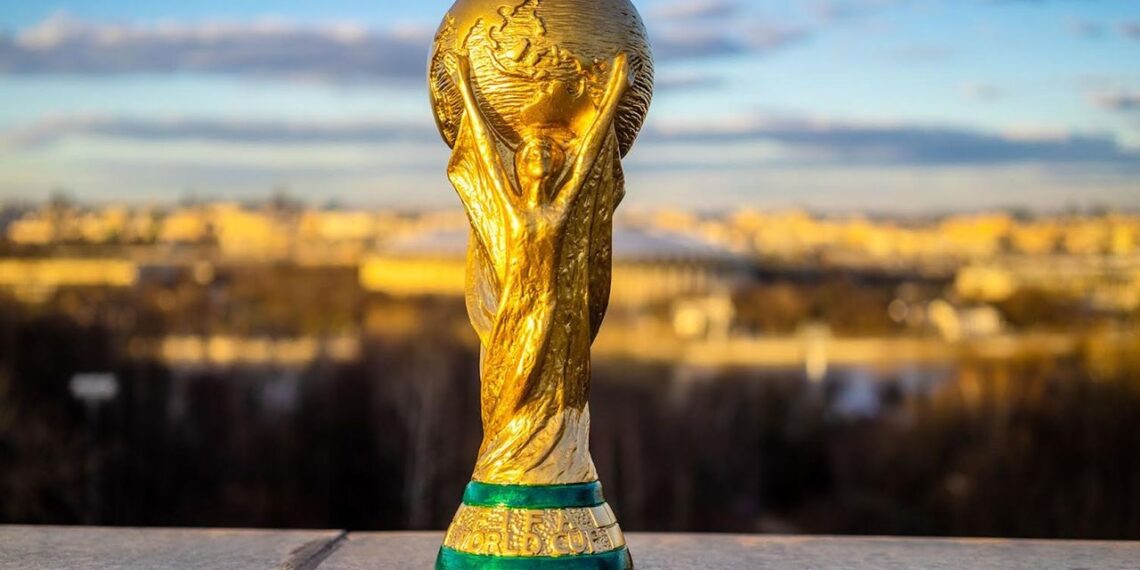

FIFA has confirmed that Spain, Portugal and Morocco will qualify automatically to jointly host the 2030 FIFA World Cup, with Uruguay, Argentina and Paraguay staging the tournament’s opening centenary matches to commemorate the 100th anniversary of the first World Cup.
Following Spain’s dramatic 1-0 extra-time victory over Argentina in the expanded 48-team 2026 World Cup final, the biggest world football tournament will mark several firsts in FIFA history as it will be the first World Cup hosted across two continents by three principal host nations and the first men’s World Cup to return to Africa since South Africa staged the competition in 2010. Morocco will become the first North African country to host the men’s World Cup.
The ICIR reported that Spain became the world champions once again after substitute Ferran Torres struck in the 106th minute of extra time to hand La Roja a hard-fought 1-0 victory over defending champions Argentina in the 2026 FIFA World Cup final.
The decisive goal at the New York New Jersey Stadium on Sunday ended Argentina’s hopes of becoming the first nation since Brazil in 1962 to retain the World Cup. It secured Spain’s second world title, 16 years after lifting their maiden trophy in South Africa in 2010.
FIFA also confirmed that Spain, Portugal and Morocco would serve as the main hosts, while Uruguay, Argentina and Paraguay would each stage one opening group-stage match to celebrate the centenary of the inaugural 1930 World Cup held in Uruguay.
The competition is scheduled to begin on June 8, 2030, with the opening matches taking place in Paraguay, Uruguay, and Argentina, and the main tournament holding in Spain, Portugal, and Morocco from June 13. The final is scheduled for July 21.
The opening match is expected to be played at Montevideo’s historic Estadio Centenario, the venue of the first FIFA World Cup final in 1930, and more than 20 stadiums across 20 cities are expected to host matches.
The 2030 edition will feature 48 teams, following the expansion introduced for the 2026 World Cup in the United States, Canada and Mexico. FIFA President Gianni Infantino has said the governing body is considering a proposal to expand the tournament further to 64 teams as part of the centenary celebrations, although no final decision has been made.
The FIFA World Cup first held in Uruguay in 1930 when 13 nations gathered for the first edition of the tournament. It has since grown into the world’s most-watched sporting event attracting billions of television viewers and millions of travelling supporters every four years. Only the 1942 and 1946 editions were cancelled because of the Second World War.
Brazil remains the most successful nation in the tournament’s history with five titles while also being the only country to have appeared in every edition of the tournament since its inception in 1930. It is followed by Germany and Italy with four titles each, while Argentina has won it three times.
The South American giants lifted the trophy in 1958, 1962, 1970, 1994 and 2002, while Germany and Italy are tied for second with four titles each. Germany’s triumphs came in 1954, 1974, 1990, and 2014, while Italy won in 1934, 1938, 1982, and 2006.
Argentina won in 1978, 1986 and 2022, while France secured championships in 1998 and 2018. Uruguay, winners of the inaugural tournament in 1930, also won the title in 1950, giving them two World Cup crowns.
The competition has steadily expanded over the decades from 13 teams in the inaugural tournament to 16, then 24, 32, and now 48.
The 2026 FIFA World Cup was jointly hosted by the United States, Canada and Mexico from June 11 to July 19, 2026, marking the first World Cup to be staged by three countries and the first to feature 48 teams.

Nanji is an investigative journalist with the ICIR. She has years of experience in reporting and broadcasting human angle stories, gender inequalities, minority stories, and human rights issues. She has documented sexual war crimes in armed conflict, sex for grades in Nigerian Universities, harmful traditional practices and human trafficking.