


FORTY days after armed men attacked schools in Oyo and Borno states and abducted dozens of pupils and teachers, the victims have since remained in captivity, leaving families trapped between hope and despair.
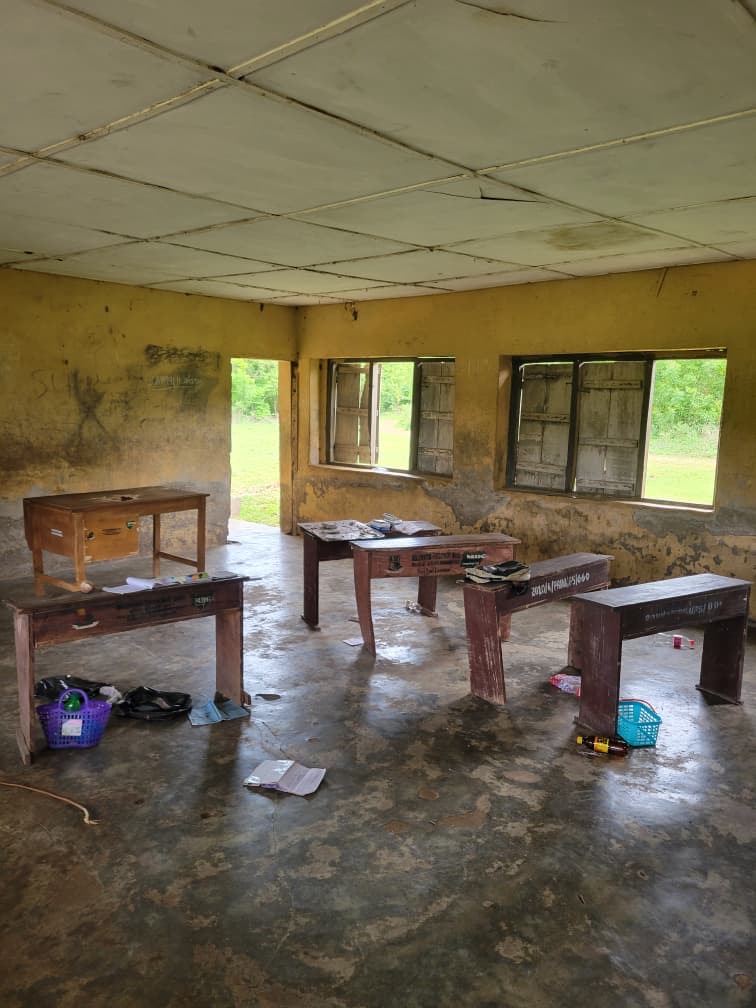
The attacks occurred on May 15, 2026. In Oyo, gunmen launched coordinated raids on Baptist Nursery and Primary School, Yawota; Community Grammar School, Ahoro-Esiele; and L.A. Primary School in Oriire Local Government Area, whisked away 39 pupils and seven teachers. The attackers reportedly killed at least one teacher during the operation before marching the victims into the forest.
On the same day, suspected insurgents stormed Primary and Junior Day Secondary School, Mussa, and surrounding communities in Askira-Uba Local Government Area of Borno State, abducting 42 students and teachers.
Since then, relatives in both states have endured weeks of uncertainty, with many saying they have received little information about the condition of their loved ones. Parents, community leaders and civil society groups have repeatedly appealed to authorities to intensify efforts to secure the victims’ release.
Forty days later, the abductees in both attacks are yet to regain their freedom.
The prolonged captivity has transformed the incidents from isolated security breaches into a broader test of Nigeria’s commitment to school safety more than a decade after the Chibok abduction prompted sweeping promises of reform.
In Oyo, the weeks following the attack have been marked by mounting public pressure and an escalating government response.
The continued detention of the victims prompted the Nigeria Union of Teachers (NUT) in Oyo State to embark on industrial action, arguing that teachers could not continue normal academic activities while their colleagues and pupils remained in captivity. The Union insisted that schools won’t reopen in the state until the security situation improves.
As frustration grew, the union expanded its campaign beyond Oyo, organising protests in several states and calling on the Federal Government and security agencies to secure the immediate release of the abductees.
The crisis also attracted federal attention. A high-level delegation comprising security officials and government representatives visited the affected communities to reassure families that efforts were underway to rescue the captives. The visit came amid criticism over the slow pace of progress and growing fears among relatives.
Meanwhile, security agencies intensified operations around the Old Oyo National Park after intelligence reports suggested the abductees were being held within the vast forest. Search-and-rescue operations involving the military, police, Amotekun Corps and other security agencies have focused on the area, although officials say the difficult terrain has complicated efforts to locate the victims without endangering their lives.
Governor Seyi Makinde later confirmed that intelligence reports pointed to the National Park as the likely location of the abductees and described the terrain as one of the biggest obstacles confronting rescue teams.
“One thing I can say is that our security reports indicate that they remain within the wider Old Oyo National Park axis. This is a vast area that stretches across parts of 10 local government areas in our state, covering approximately 2,500 square kilometres,” Makinde said.
“I mention this not to discourage anyone, but to help us understand the scale of the challenge before us. This is not an issue affecting only Oriire Local Government Area. It is an issue that concerns all of us. The size and terrain of the area require patience, coordination and persistence. It also means that vigilance from members of the public remains extremely important.”
In the latest escalation, the Oyo State Government imposed a 16-hour curfew across 10 local government areas bordering the park.
The restriction, which runs daily from 4 p.m. to 8 a.m., affects Oriire, Oorelope, Irepo, Saki West, Saki East, Atisbo, Itesiwaju, Iseyin, Olorunsogo and Atiba local government areas. According to the government, the measure is intended to strengthen ongoing security operations aimed at rescuing the victims and dismantling criminal networks operating around the forest corridor.
Despite all the efforts by stakeholders, including protests, strikes, and military operations in the state, the captives have yet to return home.
In Borno, the trajectory has been different but equally troubling.
Governor Babagana Zulum visited the affected community shortly after the attack and assured families that efforts were underway to secure the release of the abductees. However, as weeks passed without a breakthrough, frustration began to mount among parents and community leaders.
The NUT later marched through Maiduguri, demanding urgent government action. Led by the union’s National Publicity Secretary, Yusuf Ibn-Tom, the protesters urged both the federal and state governments to intensify rescue efforts and prioritise the safe return of the victims.
Parents and political leaders from Askira-Uba also staged demonstrations, accusing authorities of failing to provide sufficient information about the status of rescue operations. Unlike in Oyo, where officials have publicly disclosed the suspected location of the abductees and announced successive security measures, little information has emerged about the whereabouts of the victims abducted from Mussa.
The absence of regular public updates has fueled anxiety among families who have now spent more than six weeks waiting for news of their loved ones in a state that has arguably witnessed the most terrorists’ onslaughts in Nigeria.
The two incidents have also become a rallying point for wider public discontent over insecurity in the country. On June 12, demonstrators gathered in Abuja and Lagos to demand the safe release of the abductees and call for stronger action against kidnapping and insurgency.
In his Democracy Day address, President Bola Tinubu acknowledged the pain caused by the abductions, saying the mood of the nation had been dampened by the continued captivity of children taken from schools in Oyo and Borno states.
“We remain hopeful for their safe return,” the president said.
He defended his administration’s security strategy, noting that the government had declared a security emergency, approved the recruitment of more than 50,000 police officers and thousands of military personnel, and allocated N5.41 trillion to defence and security in the 2026 budget.
The president also issued a warning to armed groups. “To bandits, kidnappers, and sponsors of terror: surrender or face the full force of the Nigerian State,” he said, adding, “No mercy will be shown to those who trade in the blood of Nigerians.”
But forty days after the attacks, the victims abducted from classrooms in Oyo and Borno remain in captivity.

Nurudeen Akewushola is an investigative reporter and fact-checker with The ICIR. He believes courageous in-depth investigative reporting is the key to social justice, accountability and good governance in society. You can reach him via nyahaya@icirnigeria.org and @NurudeenAkewus1 on Twitter.