
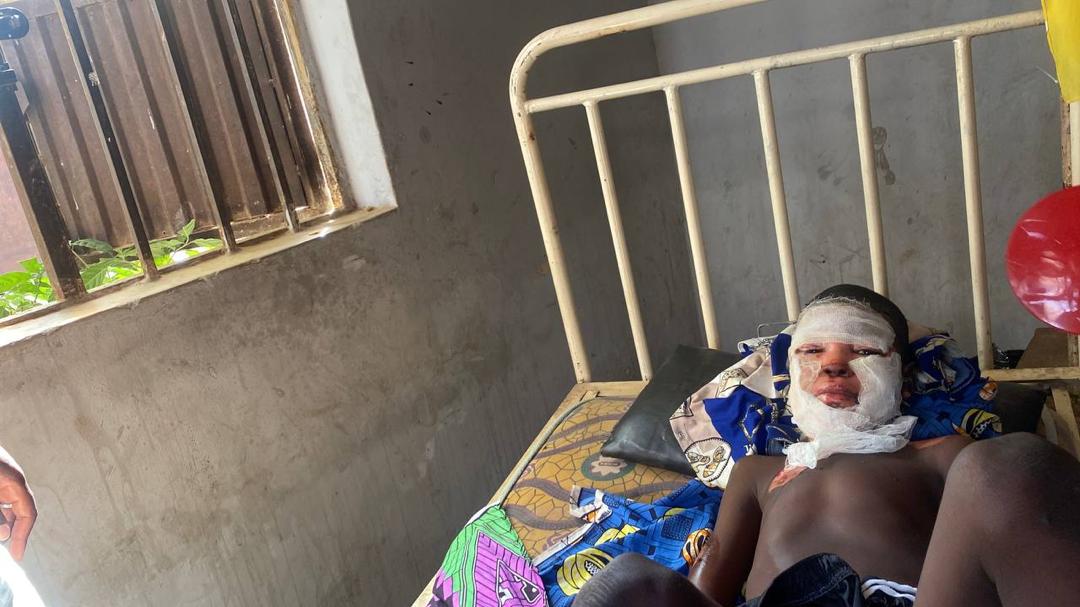

On the evening of Saturday, May 9, the Nigerian military carried out an airstrike on a shelter in Ungwan Makeri, a community in Shiroro Local Government Area of Niger State. The shelter had been filled with residents who had fled a bandit attack on nearby Kussasu village. When the strike hit, it left behind charred and dismembered bodies, among them children. In the aftermath, The ICIR sent a reporter to the community to investigate what happened and to document the toll.
When Jelili Iliya ran into a house in Ungwan Makeri, she had no idea that it would make her the target of a military aircraft pursuing bandits. Having fled armed attackers who invaded Kussasu village in Shiroro Local Government Area of Niger State, the 21-year-old had escaped through thick bushes spanning about 10 kilometres to make it to the shelter in Ungwan Makeri. She thought she had found safety until a thunderous sound knocked her off, rendering her unconscious.
The air strike had yanked off the roof of the house where she was taking cover.
Days later, she regained consciousness with a cannula attached to her hand while receiving treatment at a hospital in the neighbouring Zumba community. When The ICIR met her at Shalom Nursing Home Maternity, Iliya was sitting on a plastic chair inside a not-too-spacious ward, struggling through the waves of pain that interrupted her attempt to speak. Two nurses moved around her, adjusting a drip line and changing the dressing over her abdomen.
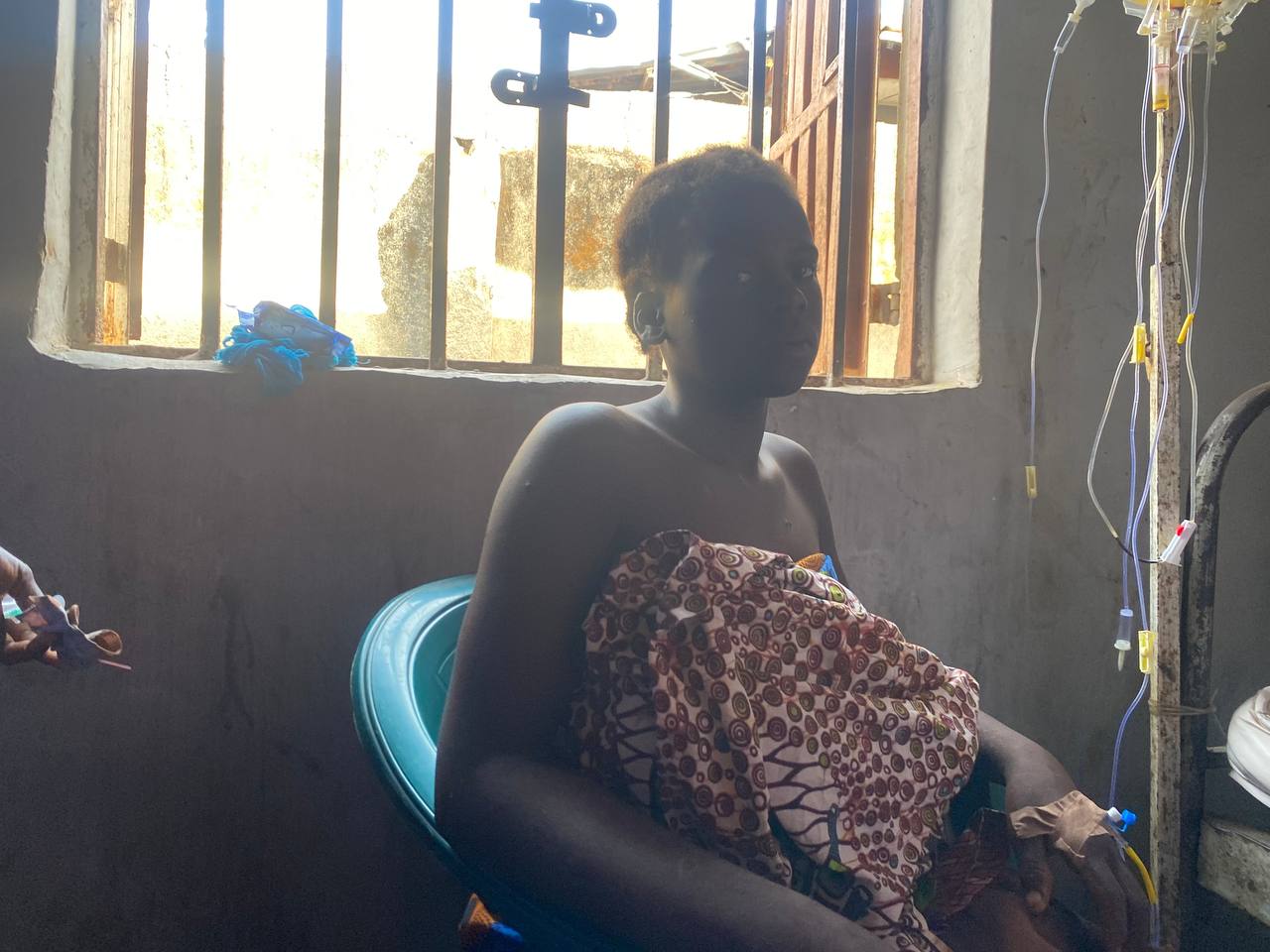
Medical health professionals at the hospital explained that the blast had torn open her stomach, causing severe internal injuries that required immediate surgery. They, however, said she was stable and recovering at the time The ICIR visited.
For Iliya, there were no clear memories of her rescue, only fragments of the commotion that forced her and many others to flee their village. She recalled the sound of an explosion before she was rendered unconscious. Photographs obtained during treatment show extensive damage to her abdomen, including ruptured tissue that required reconstructive surgery.
Her case mirrors that of five other victims, whom The ICIR found and spoke with at the Shalom Nursing Home Maternity in Zumba.
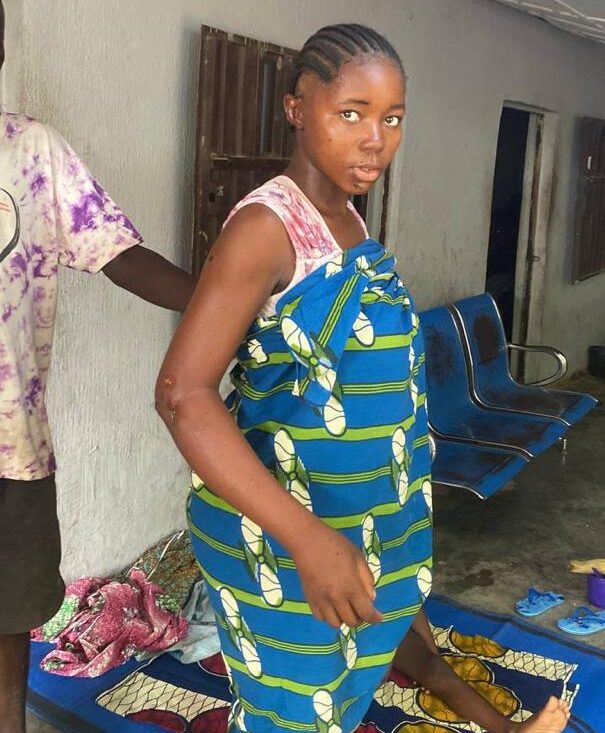
Faith Bege, who was injured in the same shelter as Iliya, is also receiving treatment at the hospital. Like Iliya, Bege, 28, had also fled Kussasu, trekking for nearly five hours to reach Ungwan Makeri.
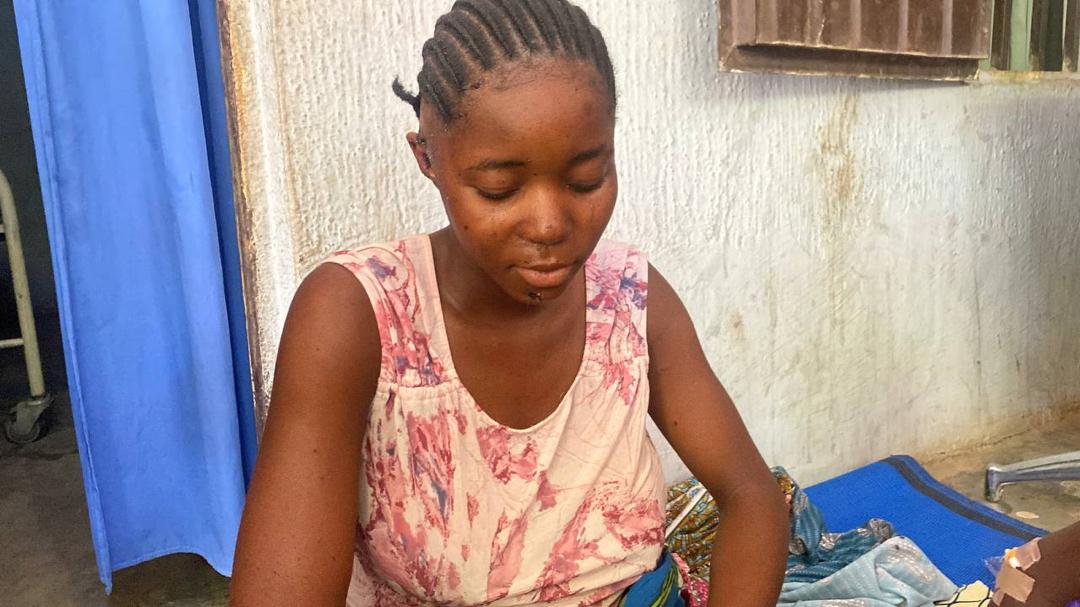
The ICIR met her sitting outside the hospital, gently fanning her burns. She had sustained injuries to her left leg and needed support to walk. Her right hand remained swollen from injuries sustained from the blast, while a stitched wound near her right ear was still visible.
The attack
The crisis began on the evening of Saturday, May 9, when armed men were sighted moving through bush paths connecting Kussasu in Shiroro LGA and nearby villages in neighbouring Munya LGA.
Their movement, described by multiple residents, was unusually large and had triggered immediate panic across the villages. By 6 pm that Saturday, households had begun to flee, but the movement of armed groups had stretched across multiple directions, leaving residents with the only option of moving towards Ungwan Makeri.
The journey itself was difficult, with many survivors recounting hours of long treks through bush paths, carrying children while trying to avoid main routes believed to be unsafe. Soon, Ungwan Makeri became a convergence point for the displaced. Many heaved a sigh of relief when they spotted military aircraft and assumed security forces were targeting the armed groups. Unknown to them, they would later become part of the casualties of that day.
Kussasu, according to a resident, serves as a major route for armed groups moving between Shiroro, Munya and Paikoro LGAs. The armed men often used the route to access a river that linked Munya and Paikoro, said Samson Yahaya, the Secretary of Kussasu Youth Association. “When you pass through Kussasu, there is a river you must cross to get to Munya and Paiko, the headquarters of Paikoro LGA,” he said.
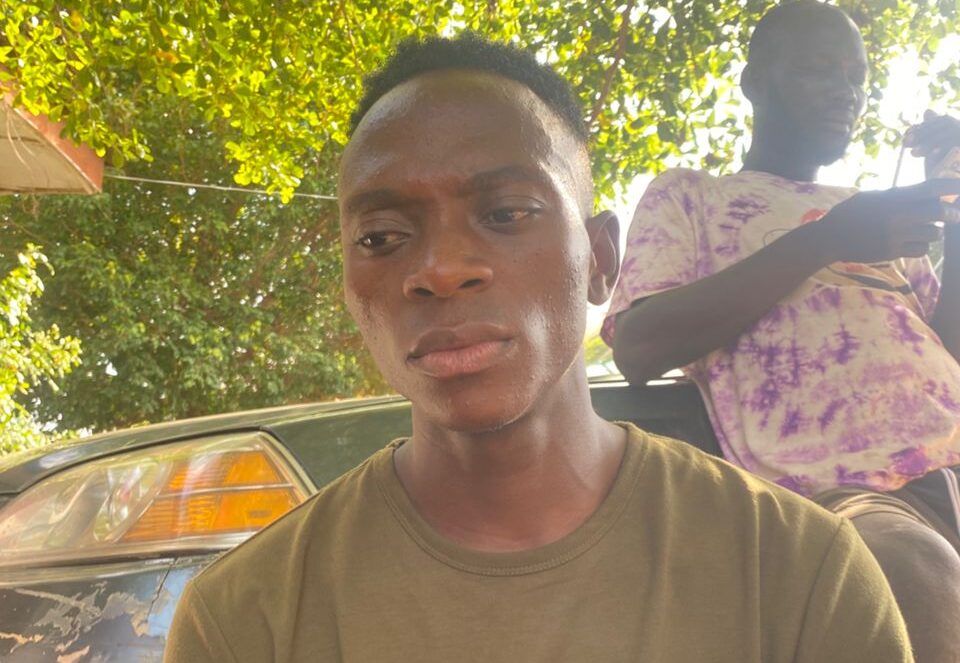
The villagers said the fleeing residents and the armed groups moved in completely different directions, adding that while civilians headed towards Ungwan Makeri for refuge, the armed men continued towards the river and headed into Munya and Paikoro.
Yahaya, who is familiar with the terrain, explained that the assailants often forced villagers around the riverbank to ferry them on canoes, alongside their motorcycles. This was the same playbook on the day of the attack, with residents saying that several villagers who attempted to flee were intercepted and forced towards the river crossing alongside the armed men.
“There were more than 300 motorcycles,” Yahaya said. “They started passing around 6 p.m but some of them did not reach the other end of the riverbank until around 3 a.m.”
Findings by The ICIR reveal the military aircraft repeatedly struck areas around the riverbank near Dogo Gona village, located after the crossing point. Several residents also recalled that the first explosions occurred around the Kussasu market area late Saturday night, after many villagers had fled.
Military bombs women and children fleeing violence
Meanwhile, what many residents thought would be a refuge from the terror they were fleeing soon turned into a killing ground on Sunday morning.
After fleeing Kussasu, displaced families gathered in Ungwan Makeri, hiding inside a compound with mud-brick buildings. But around 4 am, a military aircraft flew over Unguwan Makeri and blew the building apart. Residents who hid around the compound told The ICIR that the aircraft was not visible until moments after the damage.
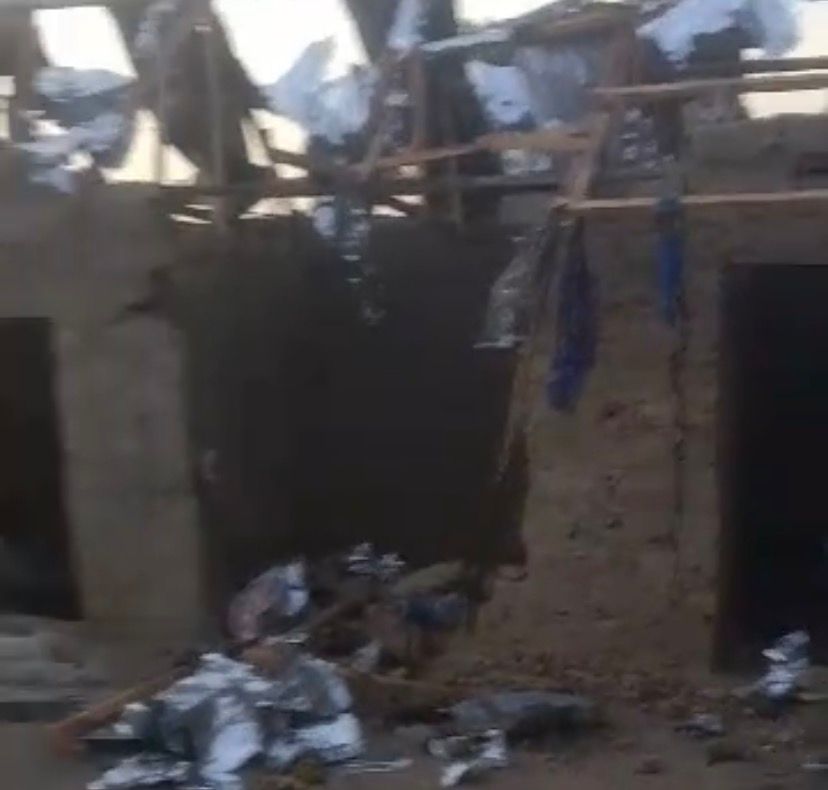
Although The ICIR could not visit the scene of the airstrike due to the security risks, a video exclusively obtained shows a scene of severe destruction inside the compound. The roof of the primary structure was entirely blown apart, splintered wooden support beams were left exposed to the sky, and shredded, twisted pieces of corrugated metal roofing sheets littered the ground. Sections of the walls appeared to have collapsed into piles of rubble, while standing walls were deeply cracked or heavily blackened by soot.
“We don’t know why the military came to Ungwan Makeri because it is a completely different route from where the terrorists were moving,” Yahaya continued. “Ungwan Makeri is on the other side, while the terrorists were heading towards the river crossing to Munya and Paiko,” he reiterated.
Contrary to the claim by authorities that the air strike had struck terrorists and their collaborators, several residents who spoke with The ICIR said they were not affiliated with the terrorists but were terrified villagers who had spent hours trekking through forests with children and elderly relatives after abandoning their homes at dusk.
“Most of the people who died were women and children. We hid them in the houses in Unguwan Makeri,” another resident, Solomon Yaro said. “Most of the men hid in nearby bushes, and that was what saved some of us.”
Footage from the aftermath showed the devastating toll of the incident. Thirteen people were killed in the incident, six of whom were children, whose bodies were recovered from beneath the burning rubble. Eight others, including two children, were injured and were receiving treatment at Shalom Nursing Hospital in Zumba at the time of filing this report.
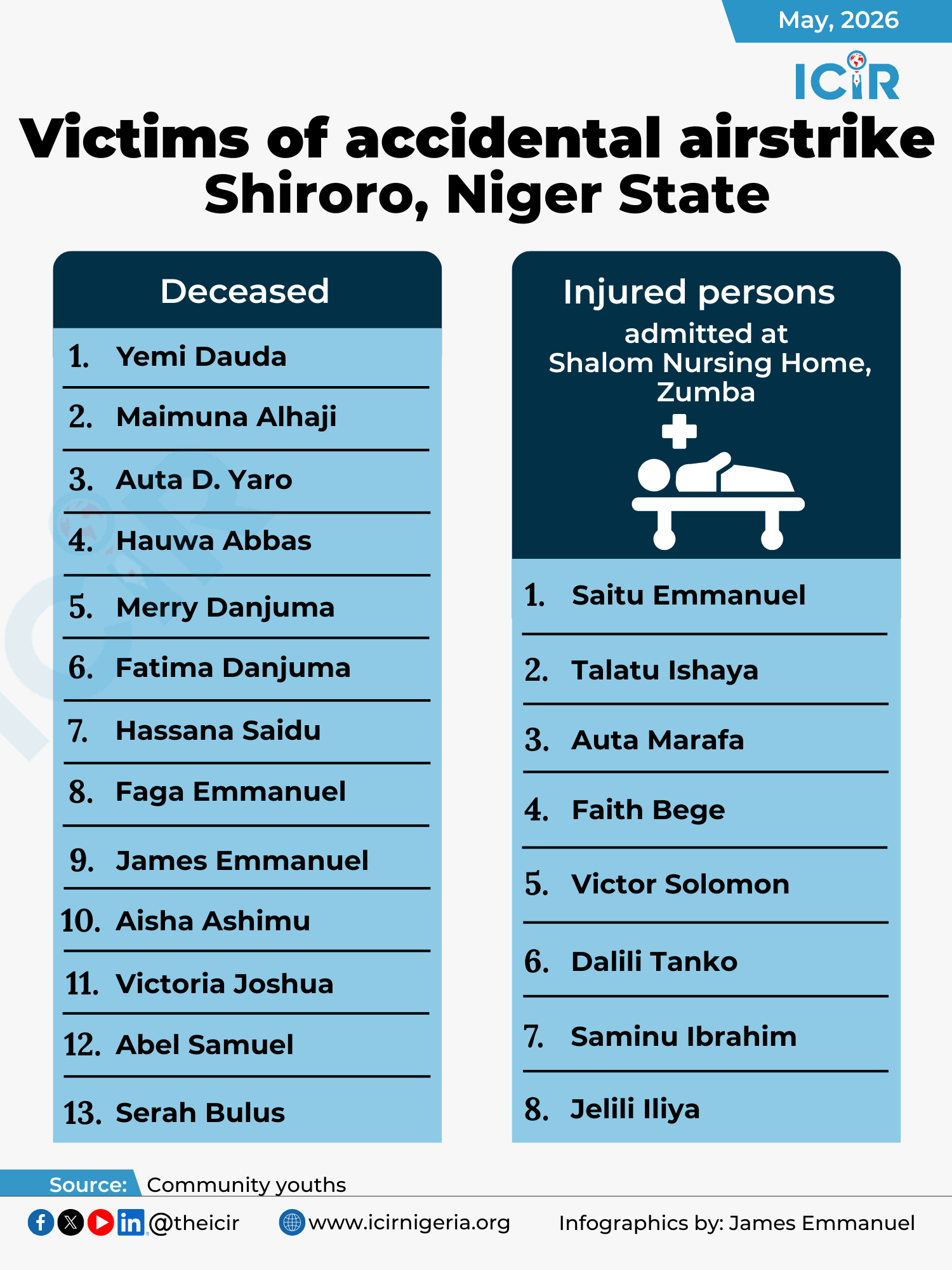
Those identified as killed were Yemi Dauda, Maimuna Alhaji, Auta D Yaro, Hauwa Abass, Merry Danjuma, Fatima Danjuma, Hassana Saidu, Faga Emmanuel, James Emmanuel, Aisha Ashimu, Victoria Joshua, Abel Samuel and Serah Bulus.
Residents also named injured survivors at Shalom Hospital in Zumba, as Saitu Emmanuel, Talatu Ishaya, Auta Marafa, Faith Bege, Victor Solomon, Dalili Tanko, Jelili Iliya and Saminu Ibrahim.
DHQ denies killing civilians
The following day, the Defence Headquarters (DHQ) denied allegations that civilians were killed during an aerial interdiction operation in the state, insisting the strikes were intelligence-driven, precision-targeted, and directed solely at armed bandit groups operating in Shiroro.
According to the military, intelligence received on May 9, 2026, indicated a convergence of armed bandits at Lukupe Village. Acting on this, it said the Nigerian Army UAV Command carried out coordinated air operations in the early hours of 10 May 2026, between 11:59 p.m. and 6:00 a.m., targeting identified locations in Katerma, Bokko, Kusasu and Kuduru communities.
The DHQ said the operation achieved its intended objective, including the neutralisation of about 70 armed bandits in Kusasu, adding that post-strike assessments showed the strikes were precise and based on credible intelligence.
While The ICIR cannot dispute that the strikes had targeted and eliminated bandits, findings from field reporting showed that the military strike had equally killed unarmed children and women who were taking refuge at Ungwan Makeri.
For more than 10 years, the north-west and parts of north-central Nigeria have faced violence by armed criminal groups commonly referred to as bandits. These groups have blocked major highways, attacked schools and engaged in large-scale abductions for ransom and carried out repeated raids on rural communities, imposing illegal taxes on villages.
Data from the conflict monitoring organisation, Armed Conflict Location and Event Data (ACLED) and analysed by The ICIR, indicates that the crisis, which intensified around 2018, has left thousands of people dead and forced hundreds of thousands more to abandon their communities across Kaduna, Kebbi, Sokoto, Zamfara, Katsina and Niger states.
In some of the worst-affected areas, entire districts have experienced repeated attacks within short intervals. Armed groups operating in these regions are often reported to maintain control over remote settlements, where state presence is limited.
Since their attacks escalated in Niger between 2019 and May 2026, they have resulted in a total of 4,732 fatalities across 1,274 recorded attacks.
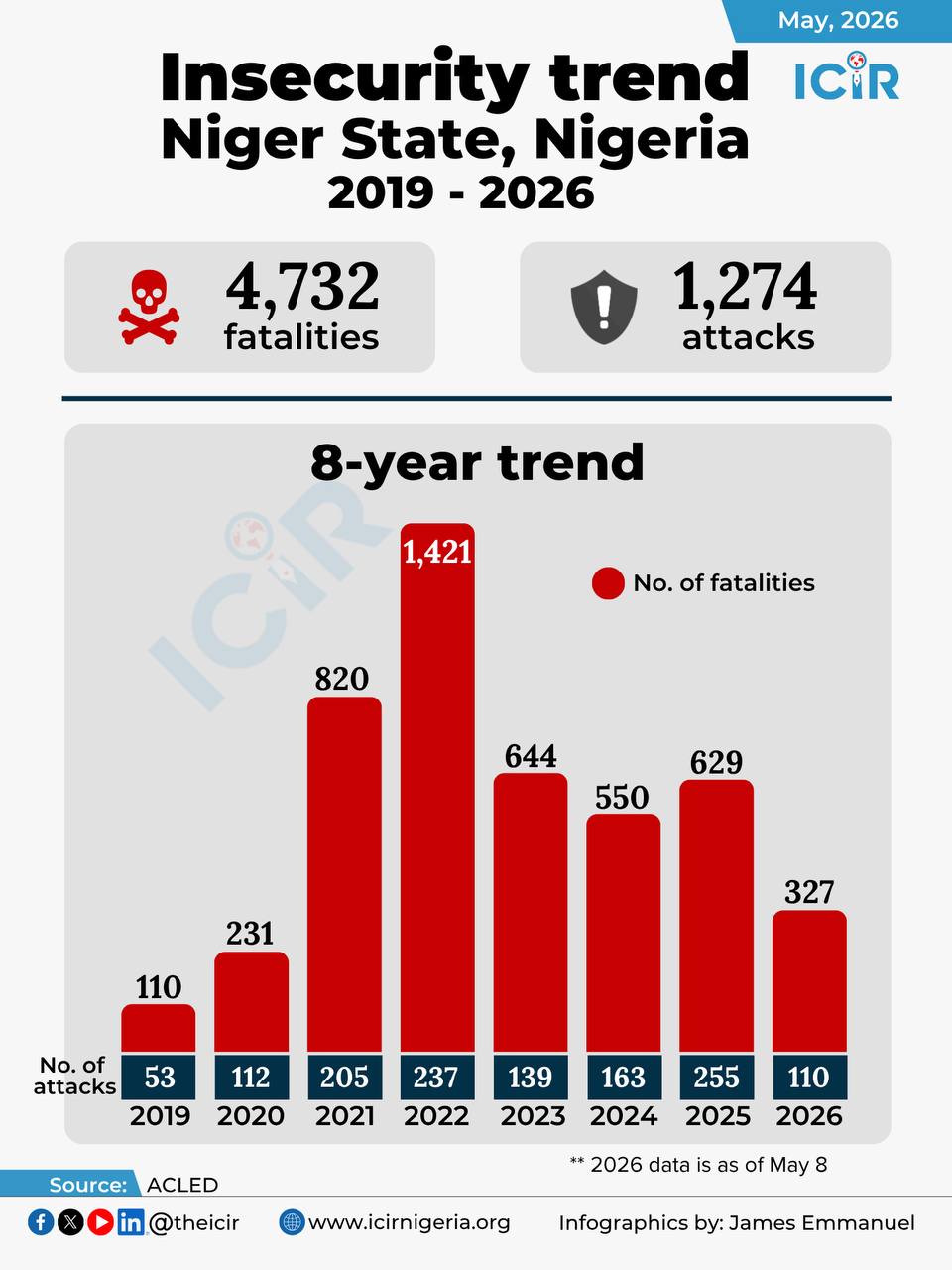
The data also showed an escalation in violence during the early years of this period, with fatalities skyrocketing from 110 in 2019 to a devastating peak of 1,421 in 2022. This peak also coincided with a high volume of incidents, reaching 237 attacks that year. Following 2022, the state saw a noticeable decline in annual deaths, though the numbers remained high, fluctuating between 550 and 644 fatalities from 2023 through 2025.
As of May 8, 2026, the state has already recorded 110 attacks and 327 fatalities in less than five months, which further indicates that despite a general downward trend from its peak, insecurity remains an active and lethal threat in the region.
However, military operations aimed at dislodging these groups have also generated controversy, with recurring allegations of civilian deaths during air and ground offensives. In some instances, residents and independent investigations have shown discrepancies from official accounts of operations.
Deadly pattern
This is not the first time a military airstrike has claimed the lives of civilians in Niger State. Over the years, residents in parts of the state have reported how military airstrikes targeting criminal hideouts allegedly hit civilians.
One of the most prominent incidents occurred in June 2021, when several wedding guests around Genu community, Rijau LGA were reportedly killed during an aerial bombardment. However, authorities denied responsibility for the incident and no public accountability followed.
In another case in 2022, at least six children were bombed by the Nigerian Air Force in Kurebe community, Shiroro. Several other communities have also raised concerns over indiscriminate aerial bombardments during security operations targeting armed groups in other northern states.
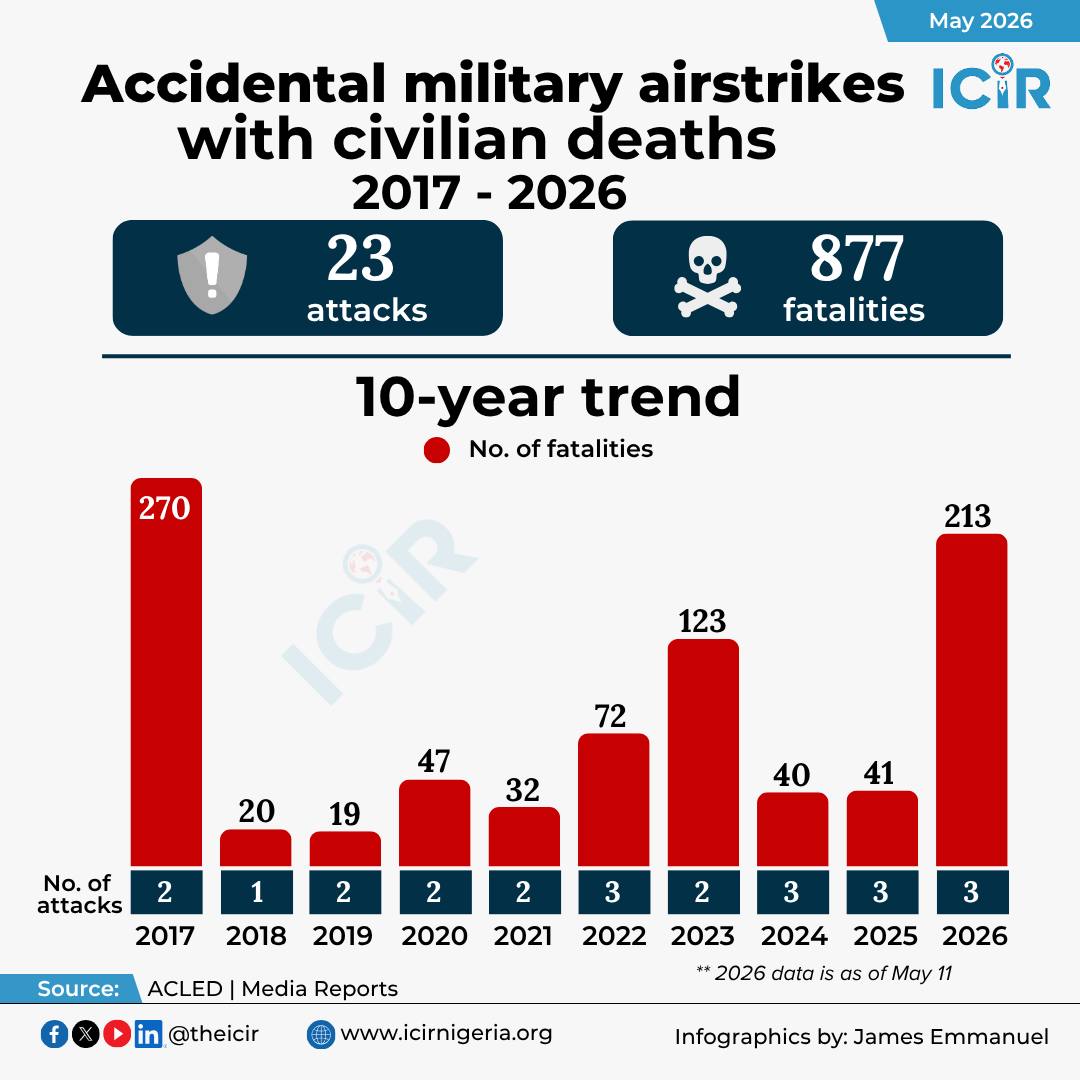
The repeated incidents reflect a broader pattern seen across northern Nigeria, where civilians living in conflict zones often find themselves trapped between armed groups on the ground and military offensives from the air. Data from the Armed Conflict Location and Event Data (ACLED) and media reports show that between 2017 and May 2026, at least 23 accidental military airstrikes on civilian communities were documented across northern Nigeria, leaving no fewer than 877 civilians dead.
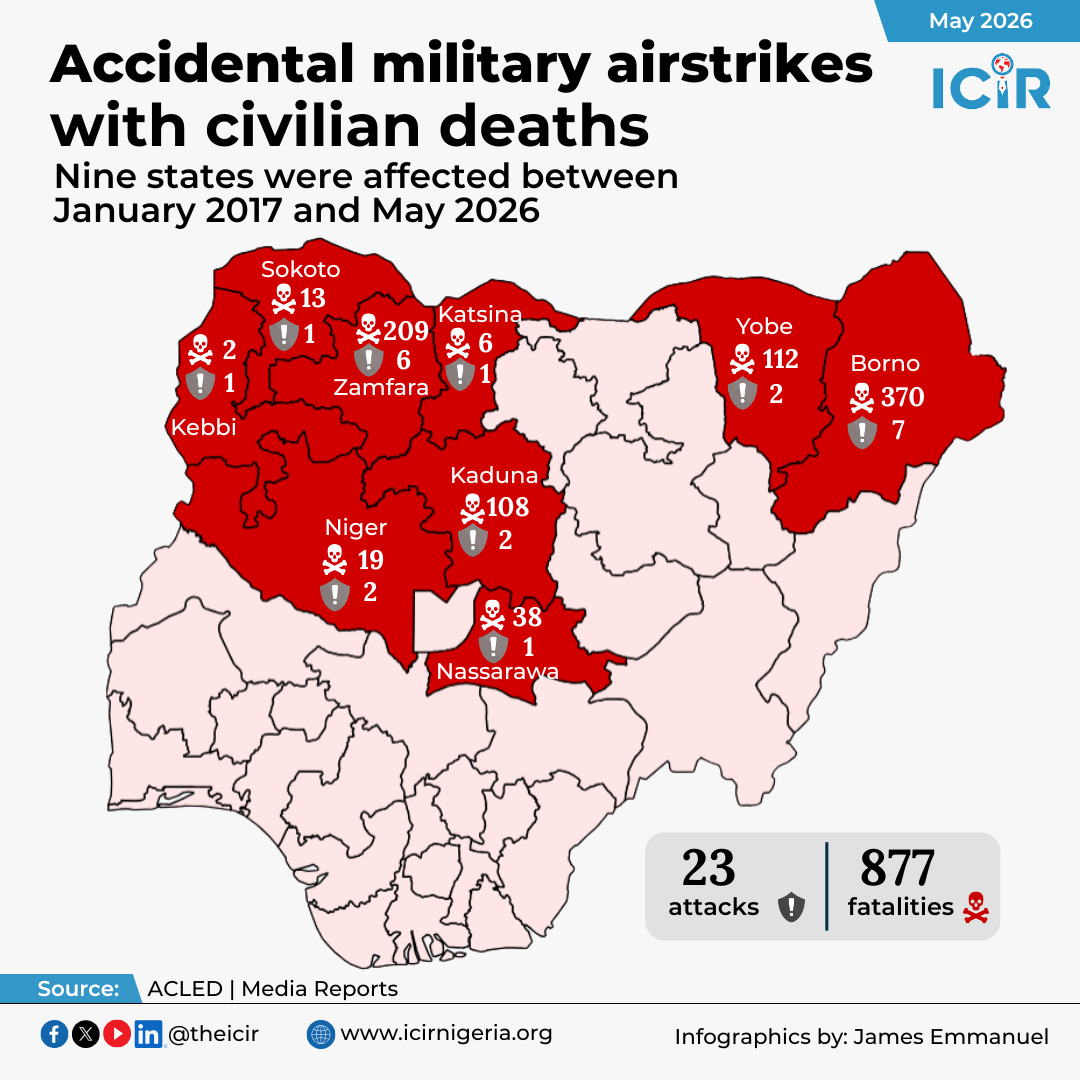
According to the data, Borno recorded the highest toll with about 370 civilian deaths from seven separate strikes. Zamfara followed with 209 deaths from six incidents, while Yobe and Kaduna recorded 112 and 108 deaths, respectively. Other affected states include Nasarawa with 38 deaths, Niger with 19, Sokoto with 13, Katsina with six, and Kebbi with two deaths.
The figures for 2026 alone have further heightened concerns among many Nigerians. Between January and May 2026, at least three accidental airstrikes have already been reported, with more than 200 civilians killed.
However, despite repeated promises of investigations, findings are rarely made public, while victims and affected communities are often left without compensation or justice. Earlier in April 2026, the Nigerian Air Force announced an investigation into another airstrike in Jilli community in Yobe State that reportedly killed several civilians, but no official outcome has been released.
Two sons lost, another injured
Nine-year-old Saitu Emmanuel was already deep in sleep when the early morning pressure to urinate forced her awake around 4 a.m. The previous day had been exhausting, a long and difficult trek that ended in Ungwan Makeri, where her family had taken shelter alongside other displaced residents.
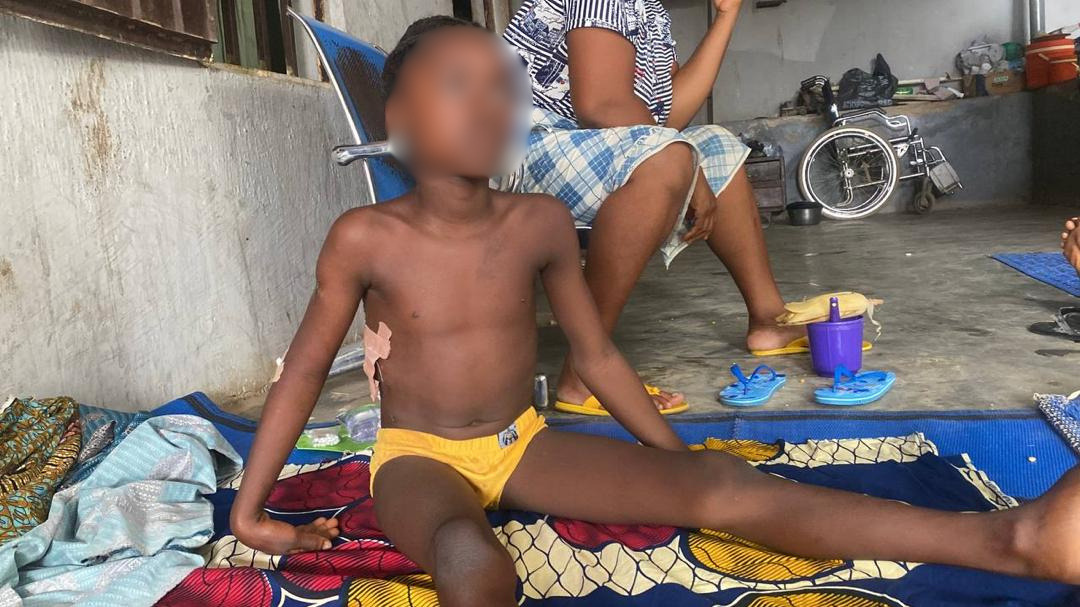
Still groggy and barely alert, she tapped her mother, and together they stepped outside for her to urinate. A few moments later, a deafening blast ripped through the building they had just walked out of.
The strike had brought down the house almost instantly, trapping many inside, including two of her younger brothers. Shortly after, the building went up in flames, with those trapped under the rubble.
Although Emmanuel survived the blast, she sustained injuries. Speaking beside her hospital bed in Zumba, her aunt, Lami Sani, said the child narrowly escaped death. She said she brought the injured girl to the hospital for treatment, while the child’s mother stayed behind in grief over the loss of her sons.
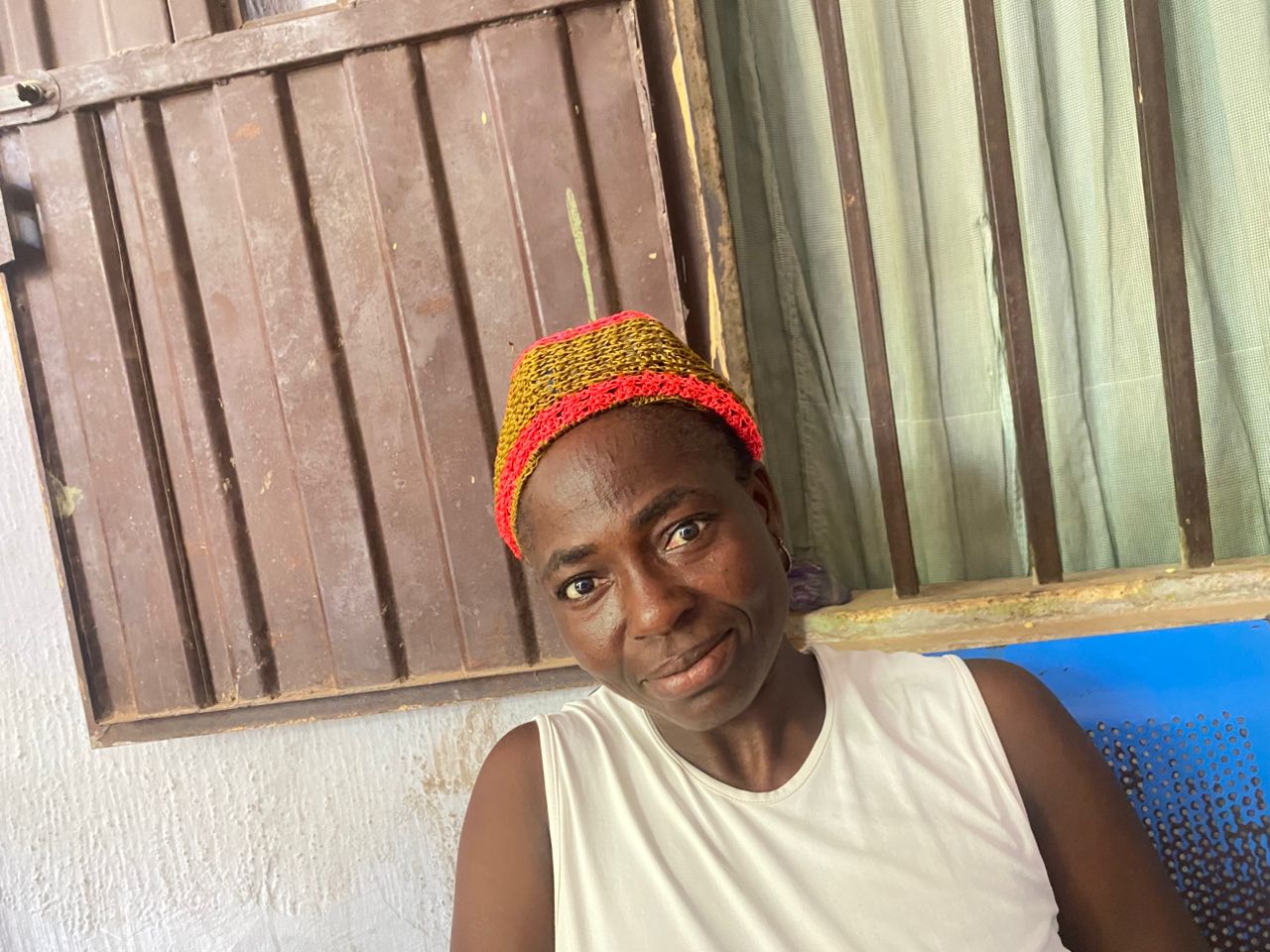
“We heard loud sounds during the night. We ran to take cover, but that particular house was bombed, and the building collapsed on the people inside and went up in flames,” she narrated.
Left to suffer
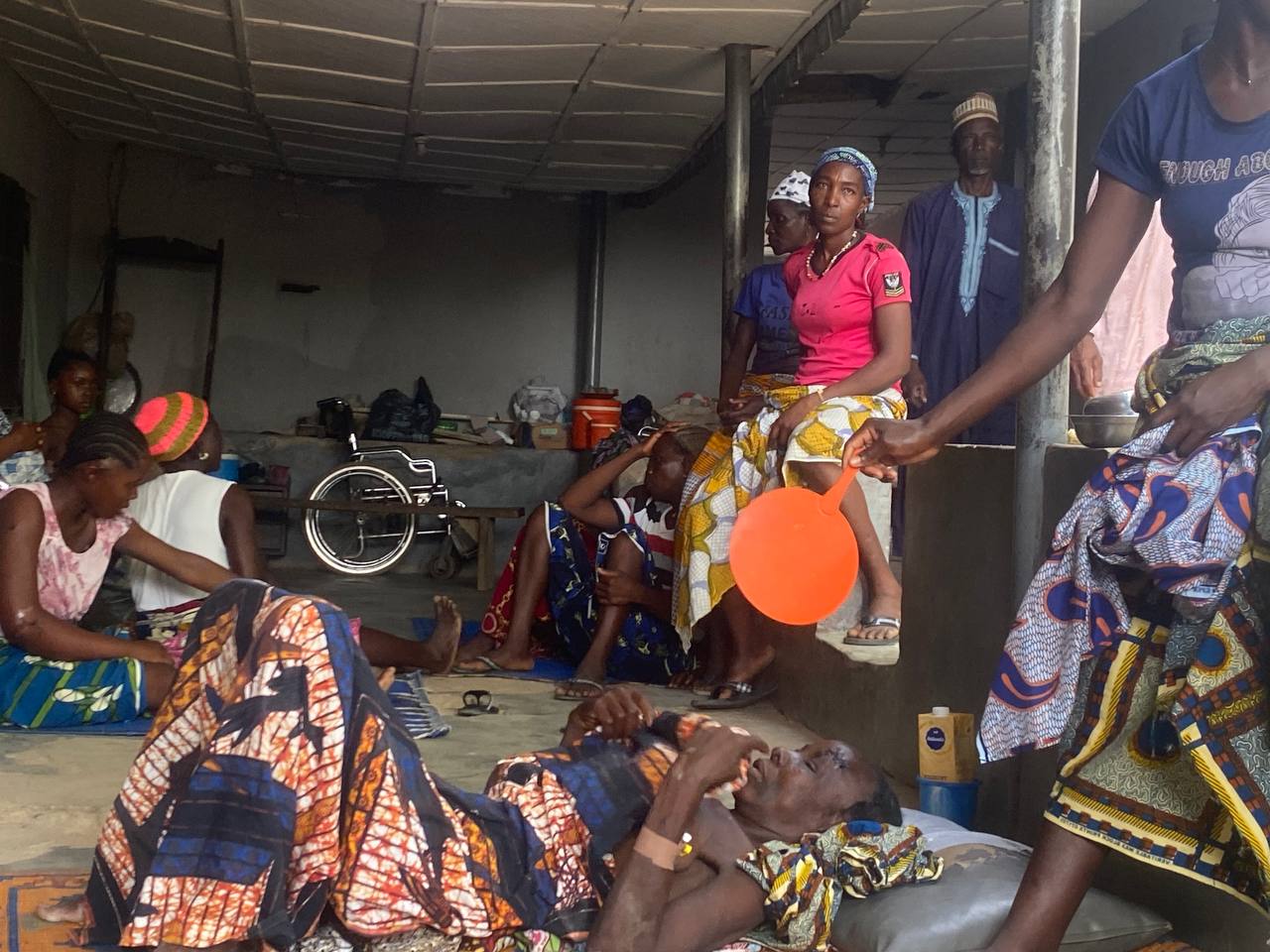
Days after the airstrike that killed 13 people and left eight others injured in Ungwan Makeri, survivors said they have been abandoned by authorities and are shocked by attempts to deny what happened.
Several families told The ICIR they had not received any direct support from the government since the incident.
The ICIR findings show that the hospital bill for the eight injured persons was estimated at over N2 million, which the families said they are struggling to raise.
Parts of the funds were initially raised to allow for emergency treatment of the patients, but the villagers, predominantly farmers and petty traders, said they are now overwhelmed by the mounting cost of care. Many say they are already stretched by daily survival needs and unable to meet further financial demands.
For Victoria Shedrack, 25, who lost her mother-in-law and nearly lost her child, Victor, the days after the incident have been defined by grief and uncertainty. Sitting beside her injured child, she recounted how she fled Kussasu with other residents, adding, “I was carrying my younger son, Clement, while the other one was with my mother-in-law. They were in the house when it was blown off. My mother-in-law’s legs were completely cut off. She died instantly. My other child here is critically injured, as you can see.”
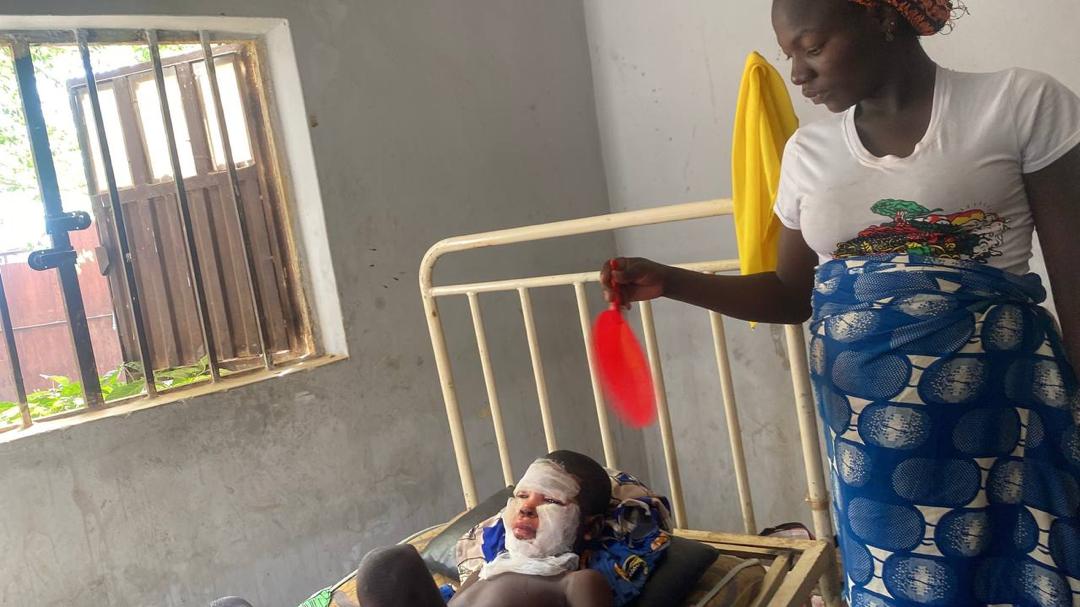
But despite the severity of the injuries, she said no government official had visited her family or offered assistance.
The same frustration was echoed by other survivors and relatives interviewed by The ICIR. Samson Yahaya, one of the residents who escaped the attack, said the community expected government officials to at least visit survivors, assess their needs and provide support after the tragedy.
Instead, he said, residents were left to fend for themselves.
“We buried our dead and took the injured to the hospital on our own,” he said. “Nobody came to ask how we were surviving.”
Government labellels children and the elderly as “terrorists’ informants”
Meanwhile, the Niger State Government, through the Commissioner for Homeland Security, Maurice Magaji, doubled down on the military’s position that those killed in the strike were not ordinary residents but terrorists and their collaborators embedded within armed networks operating across the axis.
He said the operation was intelligence-driven, preceded by warnings for residents to vacate affected areas, and described those present during the strike as collaborators of armed groups.
However, residents of Kusasu and neighbouring communities disputed the government’s account, saying civilians who had fled earlier attacks were among those killed or injured. They also rejected the claim that they are informants and mentioned that the government had shared no warning with them before the attack.
The Secretary of Kusassu Youth Association, Samson Yahaya, accused authorities of failing to visit affected areas to confirm the extent of the attack, arguing that such claims deepen distrust and ignore the realities on the ground.
“Up till now, my people are still in the hospital. But my greatest surprise is that from that first day till today, we have not heard anything from the government, not even the local government chairman.
“What pains me most is that the local government chairman went on a radio station and said whatever he felt like saying about the people affected by the bomb blast. He claimed that those affected were informants to kidnappers. He also said that those injured had been taken to the hospital, but up till today, I have not seen him or any member of his cabinet,” he said.
The ICIR obtained a radio recording of the chairman’s statement, in which he allegedly said the affected persons were informants.
However, when The ICIR first reached out to the Shiroro Local Government chairman, Isyaku Bawa, on June 8, 2026, his phone line was unreachable. Text messages sent to his line also went unanswered as of the time of filing this report.
On June 26, The ICIR again contacted Bawa via text message but received no response. However, when The ICIR finally reached him by phone on Monday, June 29, he asked the journalist to return to Niger State before he would comment on the report, despite the publication’s earlier attempts to obtain his response while reporting from Shiroro.
When The ICIR reached out to the Niger State Commissioner for Information and Orientation, Obed Nana Nuhu, on Monday, June 29, he referred this reporter to the statement previously released by the state government, which labelled the victims as informants.
Pressed for further clarification as to whether children were part of the informants, the commissioner asked this reporter to return to Niger State before he would comment further on the incident.
”Unfortunately, this platform is not good enough to brief you substantially; thanks, though,” he said.
Recurring civilian deaths expose gaps in military intelligence, expert says
Repeated killings of civilians in military airstrikes point to fundamental gaps in Nigeria’s counterinsurgency operations, particularly in intelligence verification, target identification and operational coordination, according to security expert Dengiyefa Angalapu.
Reacting to the latest incident, Angalapu, a Research Analyst at the Centre for Democracy and Development, said the recurrence of civilian casualties raises concerns about whether intelligence used to authorise military force is sufficiently corroborated before strikes are carried out.
“Counterinsurgency is very complex, but when civilian casualties occur repeatedly, it raises questions whether the intelligence is sufficiently corroborated before force is used,” he said.
He stressed that greater coordination is needed between ground forces responsible for gathering intelligence and the air units executing strikes. According to him, the military should strengthen surveillance systems, improve intelligence fusion and adopt stricter safeguards to distinguish civilians from legitimate military targets.
Angalapu also argued that accountability should follow every incident involving civilian deaths. He said international standards require investigations to be prompt, independent, transparent and credible, with evidence preserved, witnesses protected and findings made public wherever possible.
He rejected the notion that holding the military accountable would undermine its fight against insurgency, insisting that accountability is essential for improving operational effectiveness and maintaining public trust.
“Where wrongdoing is established, those responsible should be held accountable through appropriate legal or disciplinary actions. Accountability is not about weakening the military, because when these sorts of things occur repeatedly, we must hold that institution to account. And it does not necessarily mean that we do not support the military in the fight against insurgency. It means that there must be public trust and we must improve operational effectiveness,” he said.
Beyond investigations, Angalapu said the government’s immediate priority should be supporting victims through timely medical care, compensation and psychosocial assistance while engaging affected communities with empathy and transparency.
To prevent future incidents, he recommended that lessons from every civilian casualty case be integrated into military doctrine and operations.
He also urged the government to strengthen intelligence capabilities, improve precision targeting, invest in civilian harm mitigation policies, enhance troop training on civilian protection, deploy modern surveillance technologies and establish stronger oversight and accountability mechanisms.
“Protecting civilians is not just a humanitarian obligation,” he said. “It is essential to maintaining public trust. A prompt investigation should be conducted in this case, and the military should be held accountable because this is one too many.”

Mustapha Usman is an investigative journalist with the International Centre for Investigative Reporting. You can easily reach him via: musman@icirnigeria.com. He tweets @UsmanMustapha_M