

CAPE VERDE has declared two days of national mourning after a bus crash on the island of Fogo killed at least 25 people, most of them children and teenagers.
The crash occurred on Saturday evening, September 5, as the bus was returning from an excursion to Chã das Caldeiras, a settlement located within the volcanic caldera of Pico do Fogo.
The vehicle was travelling along the mountainous route between Chã das Caldeiras and Campanas de Cima when it reportedly veered off the road and plunged down a steep, rocky ravine.
Local reports said the bus fell about 30 metres into the ravine, making rescue operations difficult because of the rugged and inaccessible terrain.
At least 25 people were killed in the crash, including the driver. The bus was reportedly carrying 32 people at the time of the accident.
Most of those aboard were young people, with reports identifying many of the victims as secondary school students from the communities of Curral Grande and Ponta Verde.
The bus driver was also reported to have organised the annual excursion for the children. Reports said he transported some of the pupils to school during the academic term and organised the outing privately as a gift to them.
The difficult terrain around the crash site complicated the operation, with rescuers having to work in a steep, rocky ravine that could not be easily reached by vehicles.
Seven of the victims were buried early on Sunday because of the condition of their bodies, according to local authorities and media reports.
The injured survivors were taken to the São Francisco de Assis Regional Hospital on Fogo for treatment. Reports have given different figures for the number of injured people receiving treatment, with some saying around 12 survivors were taken to hospital and others putting the number higher.
Some of the injured were reported to be in serious condition.
The scale of the tragedy prompted authorities to declare a period of mourning across the island and the country.
Prime Minister Francisco Carvalho reportedly announced two days of mourning on Sunday as the country came to terms with the deaths.
President José Maria Pereira Neves also expressed condolences to the families of the victims and described the crash as “a great catastrophe.”
Neves said the immediate priority was to support the affected families and communities, while authorities were expected to investigate the circumstances surrounding the crash.
The cause of the accident had not been officially established as of Sunday. Authorities were investigating how the bus left the road and plunged into the ravine.
The tragedy has also led to the cancellation of some religious festivities on the island as communities mourned the victims.
Funeral ceremonies began on Sunday, with 18 coffins reportedly displayed during a Mass at São Lourenço Church before burial ceremonies continued.
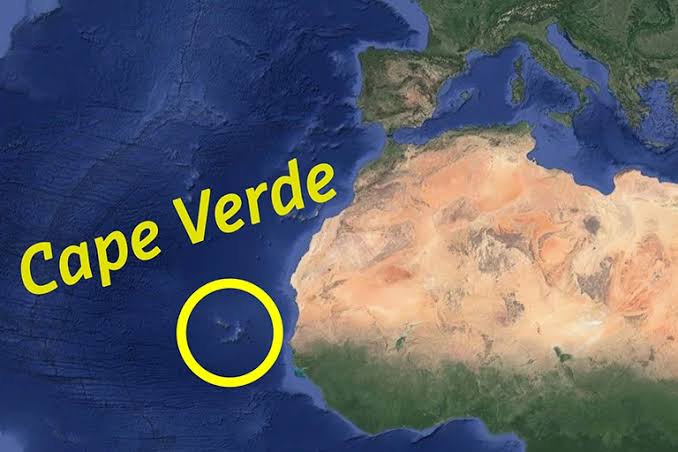
The accident has shocked Cape Verde, an Atlantic island nation off the coast of West Africa where large-scale road crashes are relatively uncommon.
Fogo is one of Cape Verde’s volcanic islands and is dominated by Pico do Fogo, the country’s highest peak. Chã das Caldeiras is located within the volcano’s caldera and is a popular destination for visitors and excursions.
The tragedy in Cape Verde contrasts with Nigeria’s recurring experience of mass deaths from terrorism, banditry, kidnapping and communal violence, where dozens of people are often killed in individual attacks and hundreds more lose their lives over relatively short periods.
For many Nigerians, however, the frequency of such attacks has made mass death an increasingly familiar part of daily life, as families continue to bury victims of attacks.
Unlike Cape Verde’s declaration of two days of national mourning following the deaths of 25 people in a single accident, Nigeria rarely declares national mourning over individual incidents of terrorist attacks, communal killings, or related tragedies, despite the cumulative toll of violence across the country. The government often resorts to issuing condolences and directive to security operatives.

Mustapha Usman is an investigative journalist with the International Centre for Investigative Reporting. You can easily reach him via: musman@icirnigeria.com. He tweets @UsmanMustapha_M