
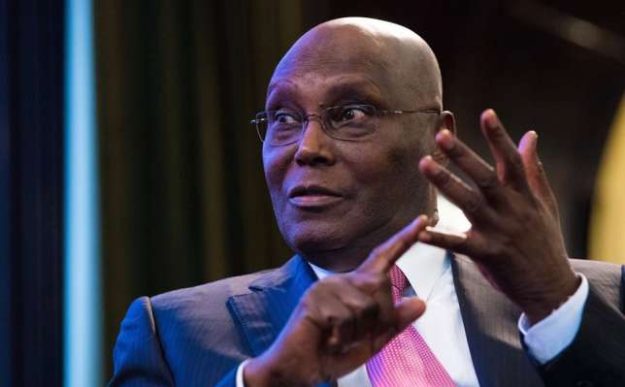
FORMER Vice President and African Democratic Congress (ADC) presidential candidate for the 2027 election, Atiku Abubakar, has criticised the All Progressives Congress (APC)-led government over the October 2020 shooting at the Lekki toll gate in Lagos.
In a statement marking the sixth anniversary of the #EndSARS protests, Abubakar said Nigerians were still waiting for clear answers about who authorised the deployment of soldiers to the toll gate and the circumstances surrounding the shooting of protesters.
Abubakar also criticised President Bola Tinubu’s response to the incident in October 2020, when he questioned the presence and character of protesters who suffered casualties during the shooting.
“Six years after the Lekki shooting, Nigeria is still waiting for a clear answer to one devastating question: Who gave the order? Let us also not forget that in October 2020, Bola Tinubu, rather than demonstrating the empathy and compassion the tragedy demanded, suggested that those who suffered casualties during the shooting had questions to answer,” the opposition presidential candidtate said.
He explained that the passage of six years had not erased the grief of affected families or the distrust among young Nigerians who participated in the protests demanding an end to police brutality.
“The anger trending across the country today is not a social media performance. It is grief that has been left to harden into distrust. It is the pain of families still demanding answers, and of young people who watched their calls for dignity meet violence and then watched the country move on without the truth they deserve,” he said.
Abubakar added that the APC, which has governed Nigeria since 2015, must address questions surrounding the shooting and demonstrate that the lives of citizens matter, linking the unresolved questions to the economic difficulties confronting young Nigerians.
“The APC has governed Nigeria through these six years… A government that cannot give citizens confidence that their lives matter has failed one of its most basic duties. And the hardship young people face today deepens that betrayal. Petrol at ₦1,405 a litre means more than an expensive journey. It means less money for food, school, rent and work. It means a young person can do everything asked of them and still find the door to a decent life shut in their face,” he said.
He outlined an economic recovery plan that proposes passing savings from domestically refined fuel on to consumers, increasing local production and job creation, protecting minimum-wage earners, supporting students and cutting government waste to fund relief measures.
“The APC promised renewal. For too many Nigerians, the experience has been rising costs, shrinking opportunity and a future pushed further out of reach. No speech about growth can excuse empty pockets. No anniversary tribute can replace justice. No campaign slogan can erase six years of unanswered questions,” he added.
The 79-year-old urged Nigerians to continue demanding accountability for the shooting, arguing that anniversary commemorations and political promises could not replace answers or meaningful economic relief.
The ICIR reported that Lekki toll gate shooting occurred on October 20, 2020, during the #EndSARS protests against police brutality and alleged abuses by the now-disbanded Special Anti-Robbery Squad (SARS).
On the night of the incident, soldiers opened fire on protesters who gathered at the Lekki toll plaza in Lagos. The incident drew international condemnation and became a defining moment in the nationwide protests, which had attracted thousands of young Nigerians demanding police reform and greater accountability.
The Lagos State Government established a judicial panel of inquiry to investigate police brutality and related incidents, including the Lekki toll gate shooting. The panel’s report, released in November 2021, described the incident as a massacre in its findings and documented evidence of shootings, casualties and alleged efforts to conceal evidence.
The Nigerian Army disputed key aspects of accounts of the incident, including allegations concerning the number of people killed.

Nanji is an investigative journalist with the ICIR. She has years of experience in reporting and broadcasting human angle stories, gender inequalities, minority stories, and human rights issues. She has documented sexual war crimes in armed conflict, sex for grades in Nigerian Universities, harmful traditional practices and human trafficking.