

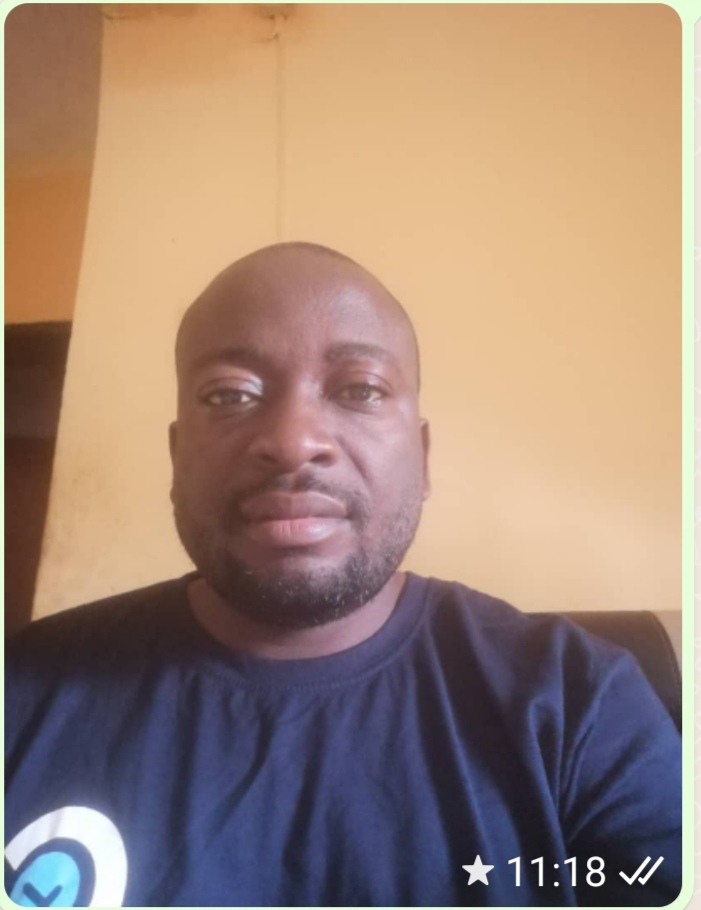
THE Committee to Protect Journalists (CPJ) has called on authorities in the Benin Republic to release Nigerian travel journalist, Mathew Ojoduma, who has been detained on terrorism charges since January 29.
Ojoduma is the founder of the Africa Views channel, which focuses on covering African cities.
He has been in prison in Benin since he was detained on the Benin-Burkina Faso border after he was caught with a drone, camera, and laptop.
His family is also seeking the intervention of the Nigerian government for his release.
The ICIR reports that Beninese police arrested Ojoduma when he was crossing Benin’s northern border into Burkina Faso at the town of Porga, with a camera, drone, and laptop, according to Ojoduma’s wife, Priscilla Mathew, who spoke with CPJ, and court documents, reviewed by CPJ.
“Authorities in Benin must immediately release journalist Mathew Ojoduma, who has already wasted nine months of his life in jail on spurious terrorism charges,” said CPJ Africa Director, Angela Quintal.
“The Nigerian government must also step up and act to ensure fair treatment of its citizens, rather than keeping silent in the face of this heinous abuse of press freedom,” Quintal added.
On February 13, Ojoduma was charged with membership of a terrorist organisation, and his case was heard on May 19, according to a judgment issued that day by the Special Court for the Repression of Economic Offences and Terrorism (CRIET), reviewed by CPJ, and Ojoduma’s lawyer, who declined to be named, citing fear of reprisal.
The judgment said Ojoduma was “suspected of being in intelligence with terrorist groups” — a charge he denied — because of his “’insistence’ on travelling via Porga, “despite the prevailing climate of insecurity” there.
The court referred the case to the Public Prosecutor’s Office as its criminal nature was beyond its competence.
Notably, Northern Benin has been grappling with an increase in violent extremist attacks since 2021, as Islamic State-linked insurgents have taken control of swathes of neighbouring Burkina Faso and Niger and, beyond them, Mali. Mathew said her husband intended to travel through Burkina Faso to Mali and Senegal on a reporting trip.
On July 2, CRIET ordered Ojoduma to be held in pre-trial detention, according to a court order, reviewed by CPJ. Mathew told CPJ that her husband was being held at a prison in the southern city of Cotonou.
The lawyer told CPJ he appealed to CRIET, but the verdict confirmed its May 19 ruling that the court did not have jurisdiction over the case.
He said CRIET told him that authorities’ search of Ojoduma’s “phones and the hard drive revealed no information in this case relating to acts of terrorism,” but he was unable to share a copy of the court document for procedural reasons.
The lawyer informed that the court said its analysis of Ojoduma’s computer showed he was a media specialist focusing on travel and the environment, with an interest in regional politics.
The Secretary, of the Lagos State chapter of the Nigerian Bar Association (NBA), Ayodeji Olabiwonnu, said Ojoduma’s family asked for support on Ojoduma’s behalf, adding that “the association wrote to Nigeria’s Attorney General, Minister of Foreign Affairs, and Nigerians in Diaspora Commission requesting action, but received no replies.”
The CPJ’s requests for comment, via phone, messaging app, and email, to Nigeria’s Minister of Foreign Affairs and the office of Nigerians in the Diaspora Commission, and email to the Attorney General’s office, did not receive any replies.
Its emails and calls requesting comments from Benin’s Ministry of Justice, CRIET, Police spokesperson Éric Orou Yérima, and government spokesperson, Wilfried Léandre Houngbédji also went unanswered.
On several instances, Nigerian journalists have been under intense attacks while calling powers and leadership to account.
In April 2025, the International Press Institute (IPI) Executive Board, including Nobel Peace Prize laureate Maria Ressa, declared support for journalists around the world over what it described as an unprecedented global assault on press freedom.
Comprising leading editors, journalists, and publishers from 21 countries, the board said the role of the media in safeguarding democracy and holding the powerful accountable was more critical than ever, especially amid rising authoritarianism and global instability.
Harrison Edeh is a journalist with the International Centre for Investigative Reporting, always determined to drive advocacy for good governance through holding public officials and businesses accountable.