


THE Ejigbo Local Council Development Area (LCDA) of Lagos State has reportedly spent over ₦3 billion on roads, drainage, and other projects. An investigation by The ICIR, however, reveals that the amounts quoted for the jobs were inflated beyond market value, while others were poorly executed and abandoned.
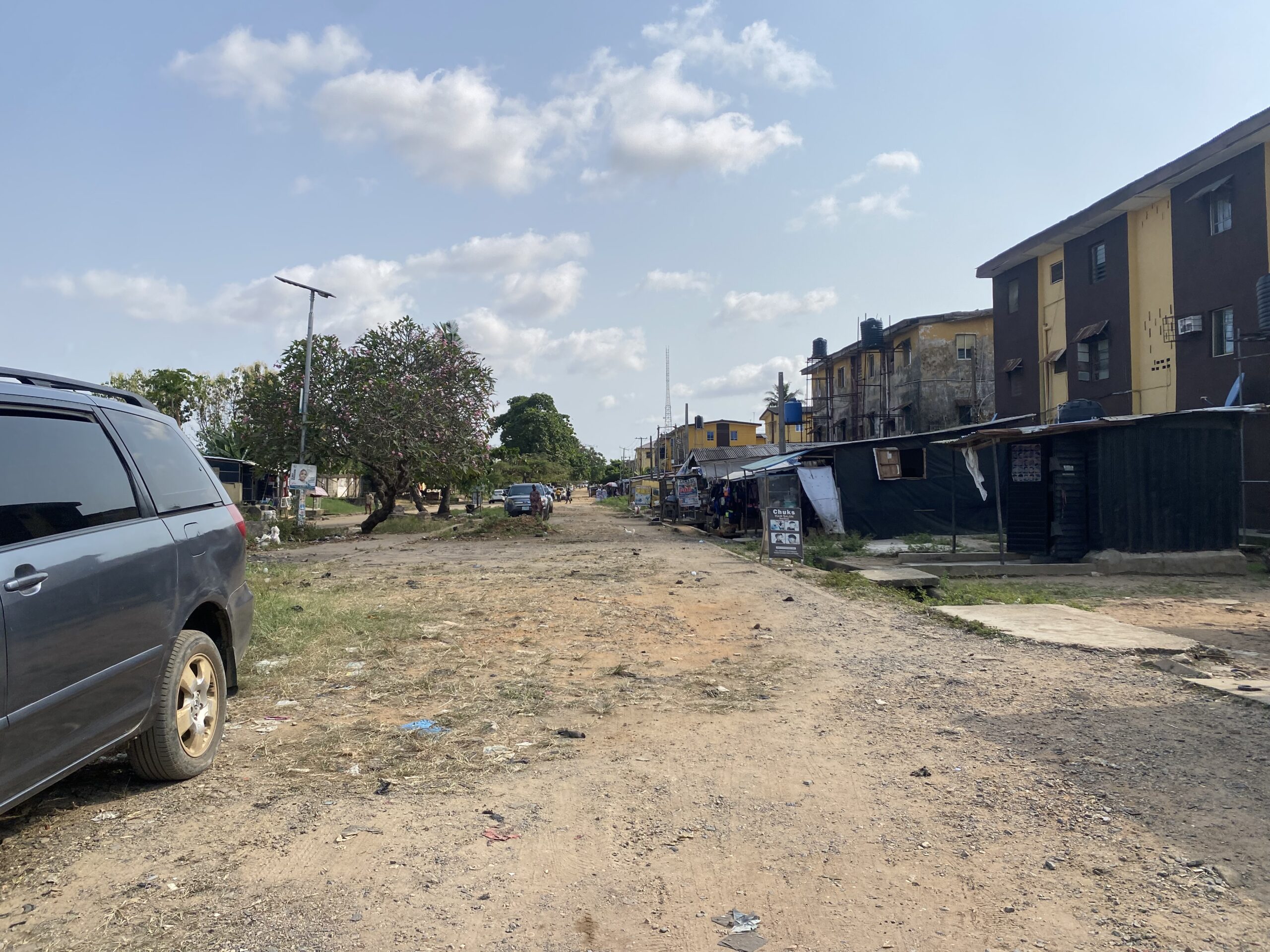
Janet Adanyari has operated her provision shop along Falana Street since 2010. Every time a vehicle or tricycle drives past the front of her shop, layers of dust settle on her goods, shelves, and the floor.
Oftentimes Adanyari had to cover her nose whenever in her shop, and uses a small rag to dust her goods. It is a daily ritual for her and many others who operate shops close to the main road at Falana Street.
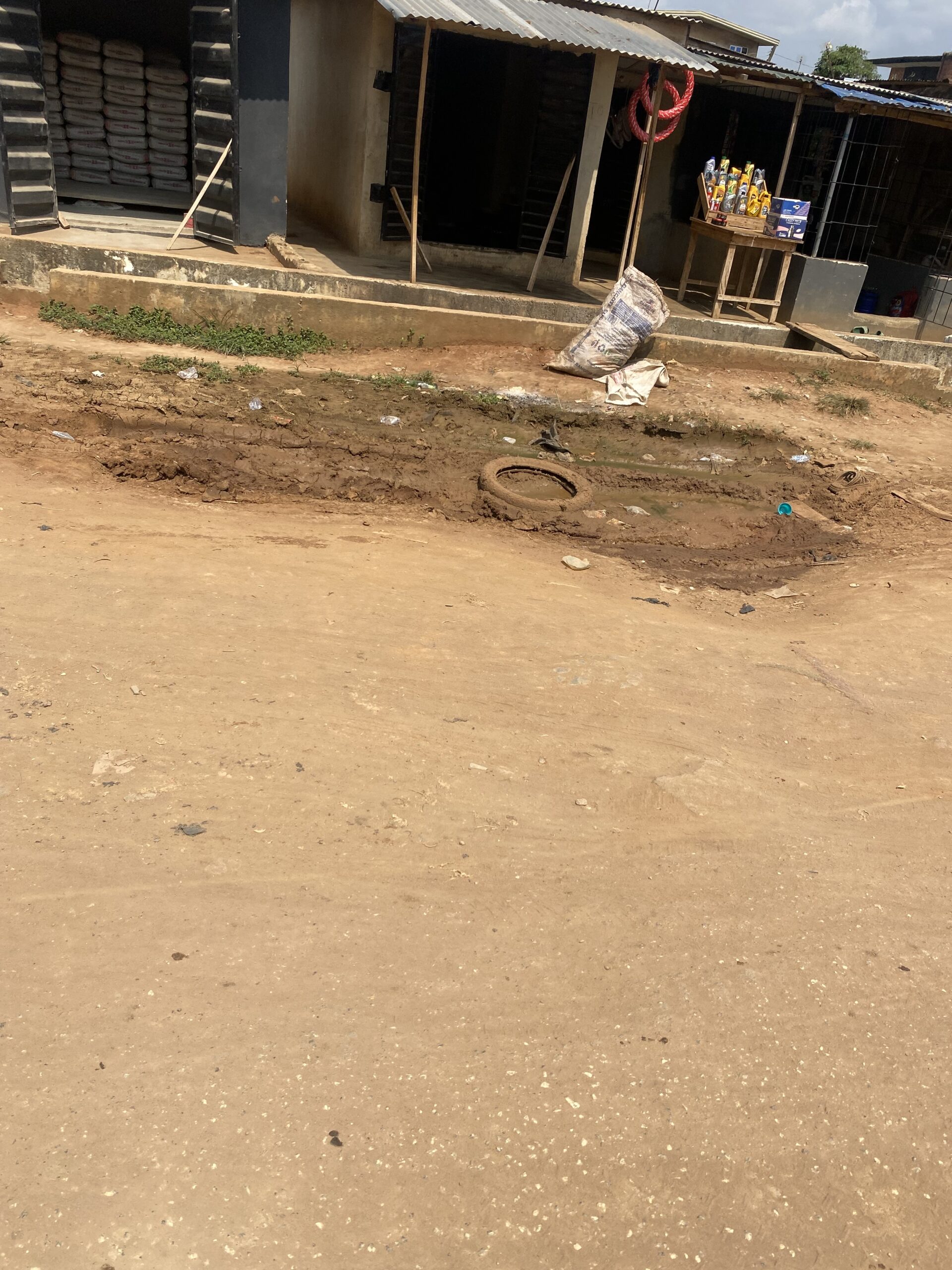
Adanyari, whose provision shop is located besides the newly constructed drainage, said the council merely extended the channel from the point where the interlocking and drainage project had been abandoned in 2025. However, she noted that the road itself has remained in a deplorable condition for years.
But dust is not her only worry. During the rainy season, water washes through the front of her shop. The situation worsens during heavy rainfall when flooding turns the surface muddy and slippery, preventing vehicles from passing through.
“There is nothing we can do,” Adanyari said. “We must eat, so we cannot stay indoors because of dust. We keep cleaning and covering our noses until God remembers us. Most of my customers are children, but some now go elsewhere because of the dust.”
Adanyari, who said she has operated in the area since 2010, recalled that the road has remained largely unchanged over the years.
Her experience mirrors that of other residents and traders in the area, who continue to wait endlessly for contractors to complete the Falana Road project awarded by the Ejigbo Development Area Council in July 2024.
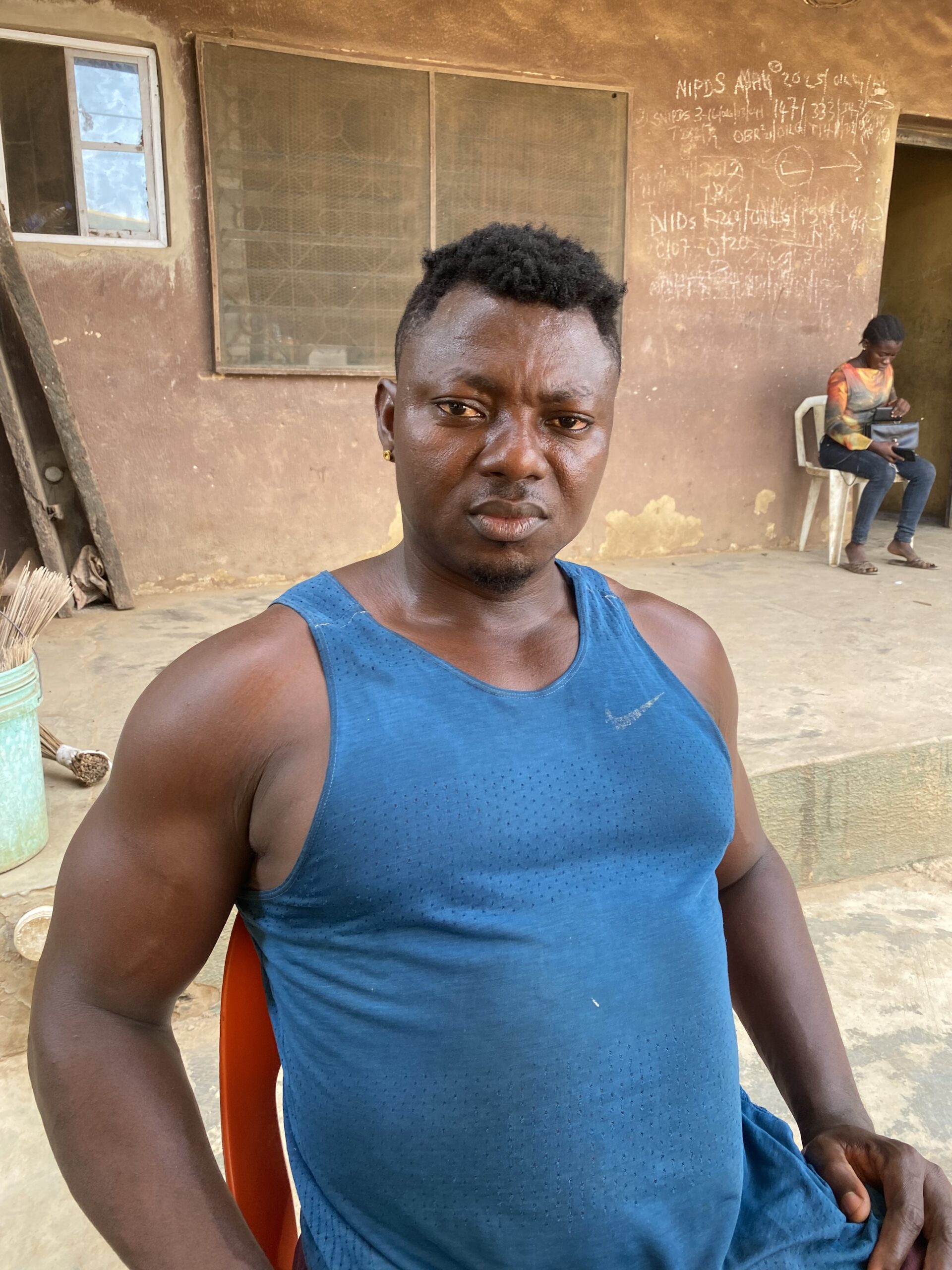
Quadri Lateef, who also lives in the area, expressed frustration over what he described as poor handling of the project after the drainage construction.
“After they did the drainage, the contract engineers sold the soil and sand and packed everything away. We left them because we did not want trouble,” he said, adding that he was unaware any funds had been collected for the full completion of the road and gutter.
Lateef noted that although the drainage itself appears functional, the surrounding road condition undermines its value. He described frequent vehicle damage along the street and recalled periods when motorists had to push their cars through particularly bad sections.
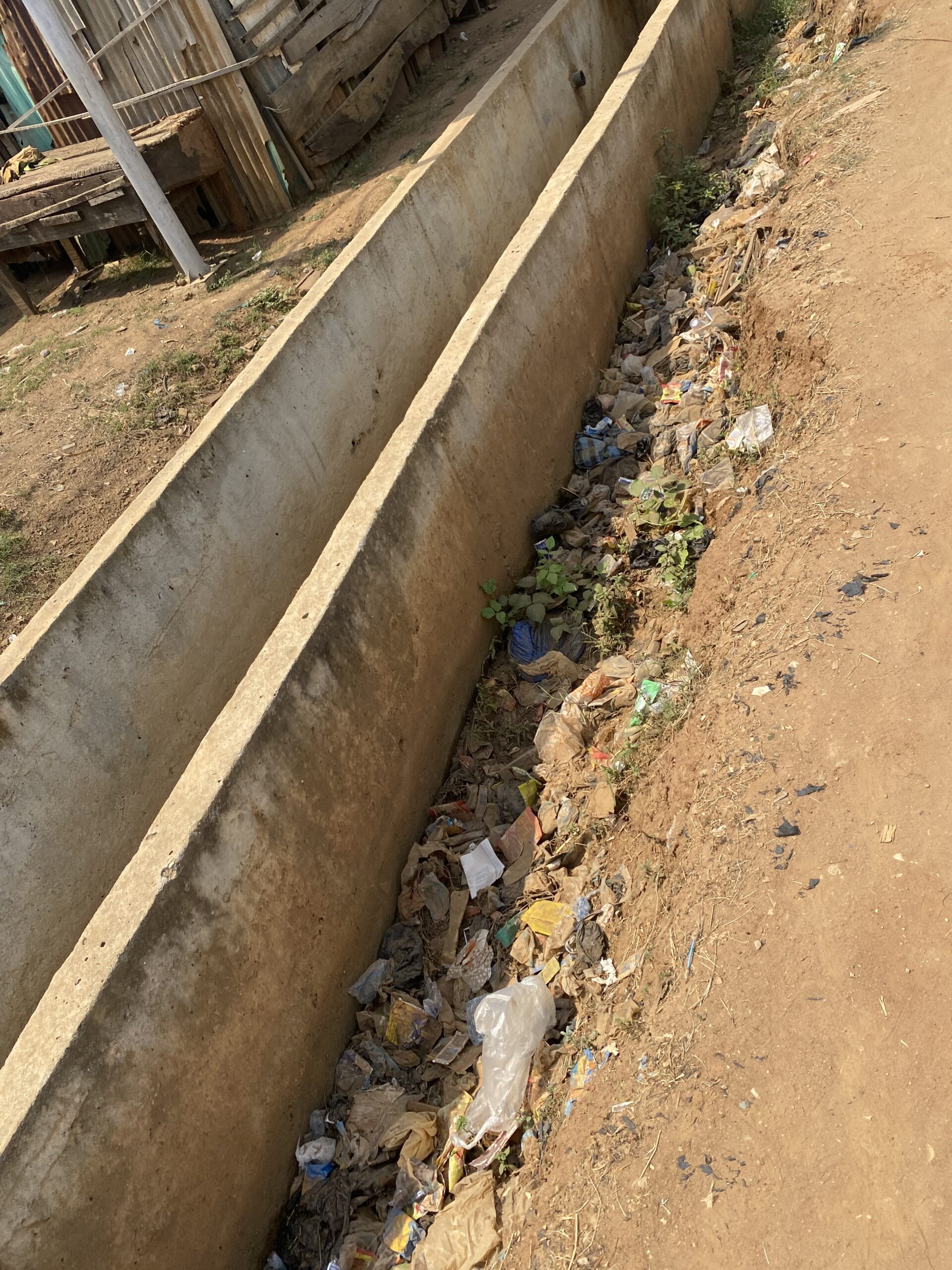
“The drainage may be good, but it is not right for people entering the community to meet a road in this deplorable state,” he added.
Adanyari and Lateef live at the far end of Falana Street, which would later be described as Falana Street phase 2 by the council. Their houses and shops fall under the unfinished stretch of the street, leading toward Omiyale, which continues to be a nightmare for commuters.
When The ICIR visited the site, tricyclists honked in frustration as motorcyclists struggled through thick dust that choked riders and passers-by.
Progress marred by contract inflation
While many residents of Falana Street are still wading in disappointment, months after a multi-million-naira drainage and road project was supposed to ease flooding and improve transportation, The ICIR findings showed that the project, commissioned under former council chairman Monsuru Bello, was riddled with overpayments, poor execution and fund mismanagement.
The project was split into two contracts during the tenure of the former council boss. The first phase cost ₦505,065,301.18, while the second phase was valued at ₦212,962,927.80.
Our findings indicate that the initial project, described as the construction of reinforced concrete drainage along the 944m length of Falana Street, was later re-awarded in parts, including an additional contract reportedly valued at about ₦54 million.
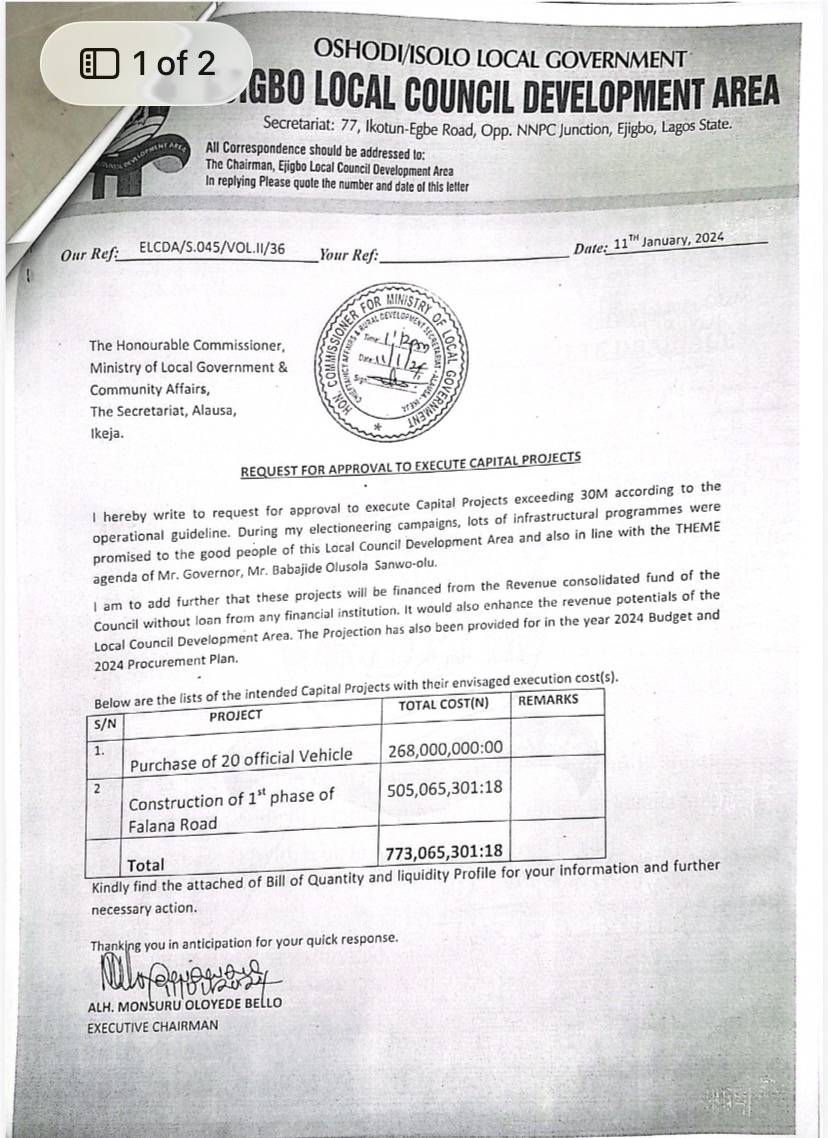
In a letter dated January 11, 2024 and addressed to the Commissioner for Local Government and Community Affairs, the council requested the approval of the of ₦505,065,301.18 for what it described as the construction of the ‘first phase of Falana Road,’ not drainage as later approved by the council.
Council approval for the release of ₦505,065,301.18 for phase one was granted on January 19, 2024, covering a proposed drainage length of 944 metres, which is just under one kilometre.
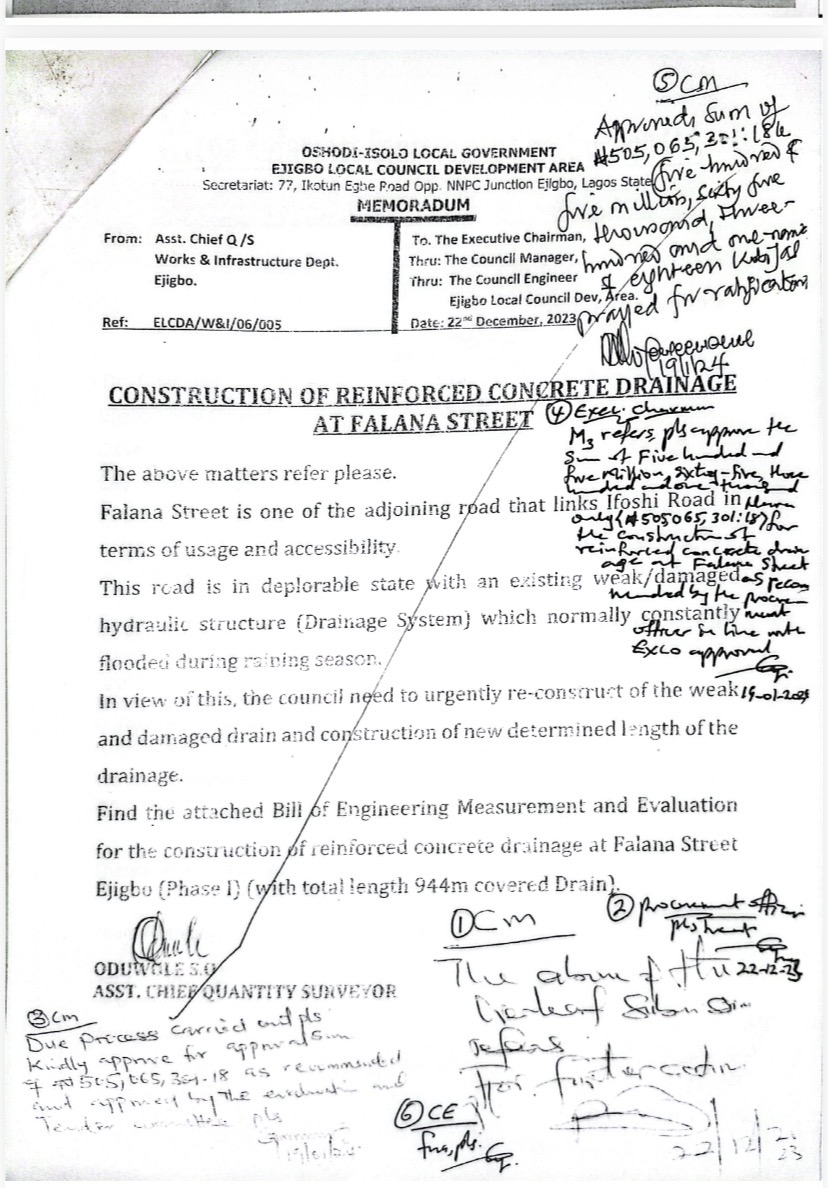
However, on-site measurements show the completed work spans only 514.65 metres, barely half of the approved length, despite full payment approval. The completed section runs from the main junction to St. Favour Room Nursing Care Maternity Home, just beyond Francel Montessori School, far short of the originally planned 944 metres.
It remains unclear whether the same contractor handled both the drainage and road works, but the projects were carried out at the same time and appeared to be parts of the single, composite project. When The ICIR visited the location, apart from the commissioning plaque, there was no signpost to show the project description and the job done.
A similar pattern appears in the road construction itself. Interlocking stones line only the finished stretch, with installation ending near the maternity home and leaving roughly 400 metres of the street in poor and neglected condition.
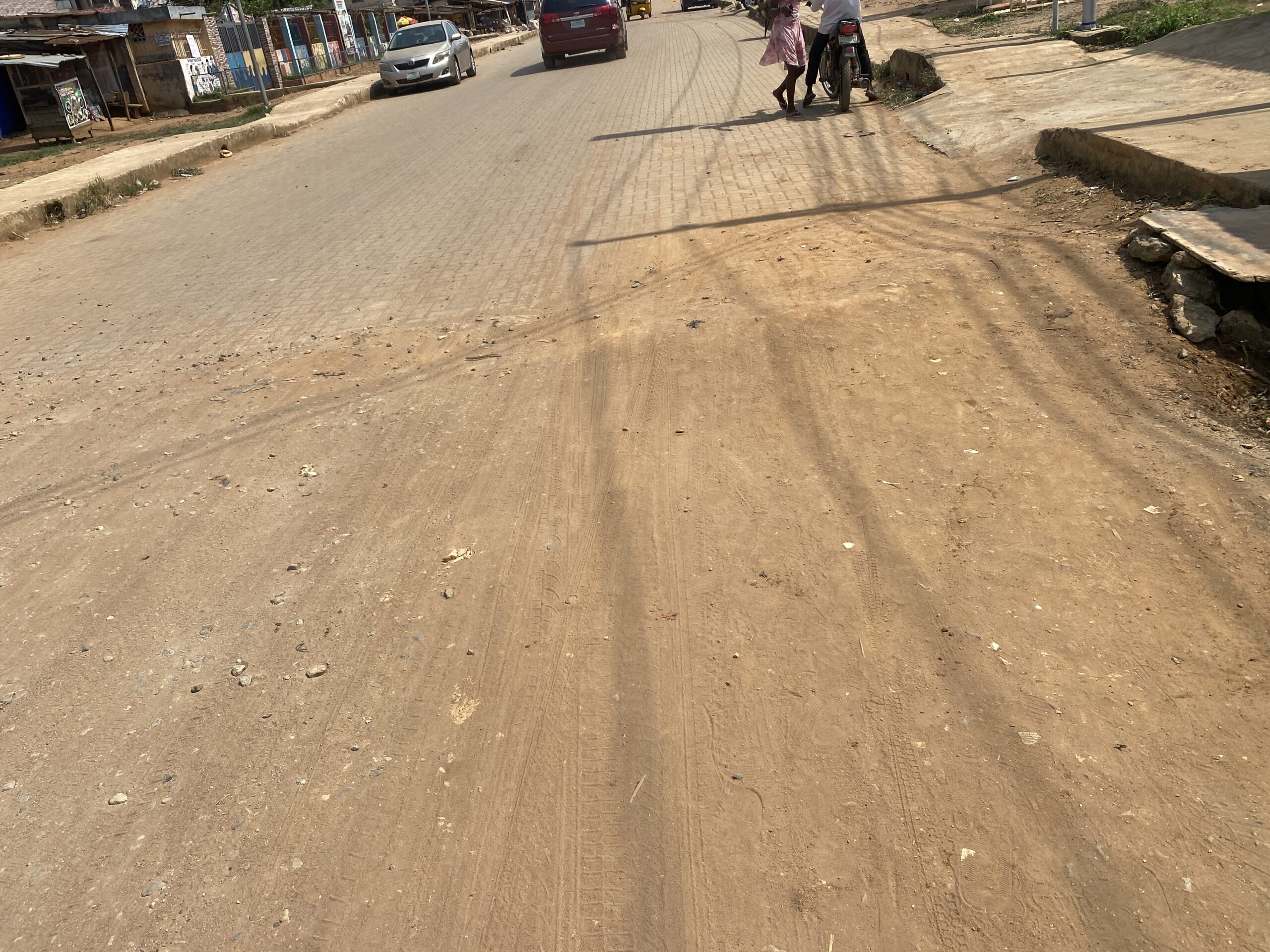
Residents who spoke with The ICIR acknowledged improvements in mobility at the completed 514.65 metres, but said the drainage system fails during heavy rainfall.
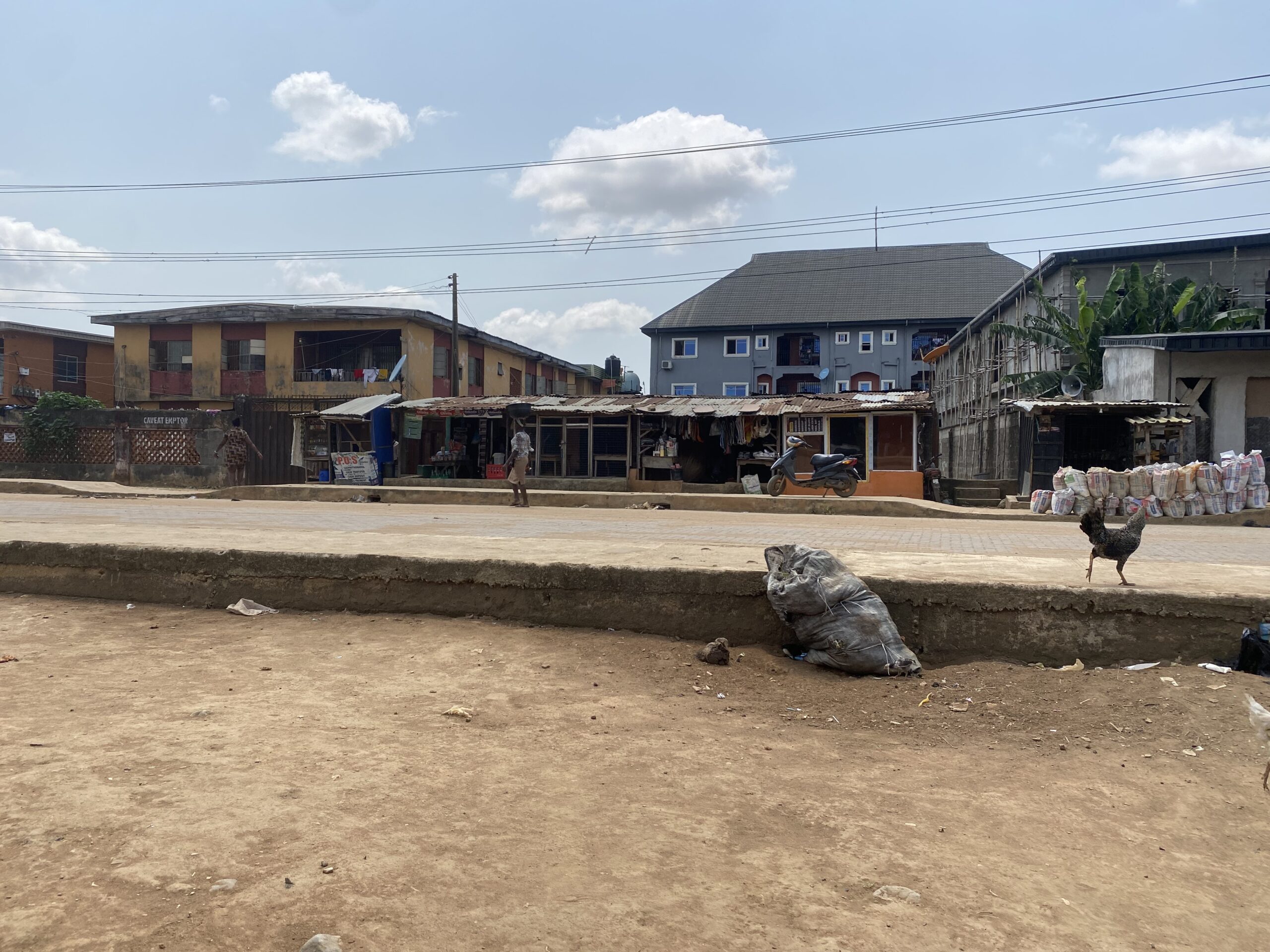
Speaking during the field visit, an engineer who accompanied the team warned that if the flooding is not properly addressed, it could damage the completed sections of the road and significantly reduce its lifespan.
“It appears the drainage is not solving the flooding issue, and that is due to the drainage being blocked and not wide enough to take the water. The drainage size should have considered all these,” the engineer said. “The holes through which the water enters the drainage should be considered and the numbers of holes should possibly be increased,” he added.
“If this drainage problem persists, the entire stretch will begin to fail sooner than expected.”
Costs raise red flags
Bill of Quantities (BOQ) estimates reviewed by this reporter indicate that constructing 514 metres of drainage should not exceed ₦160 million, including excavation and earthwork, filling, slab installation, compaction, preliminaries and workmanship.
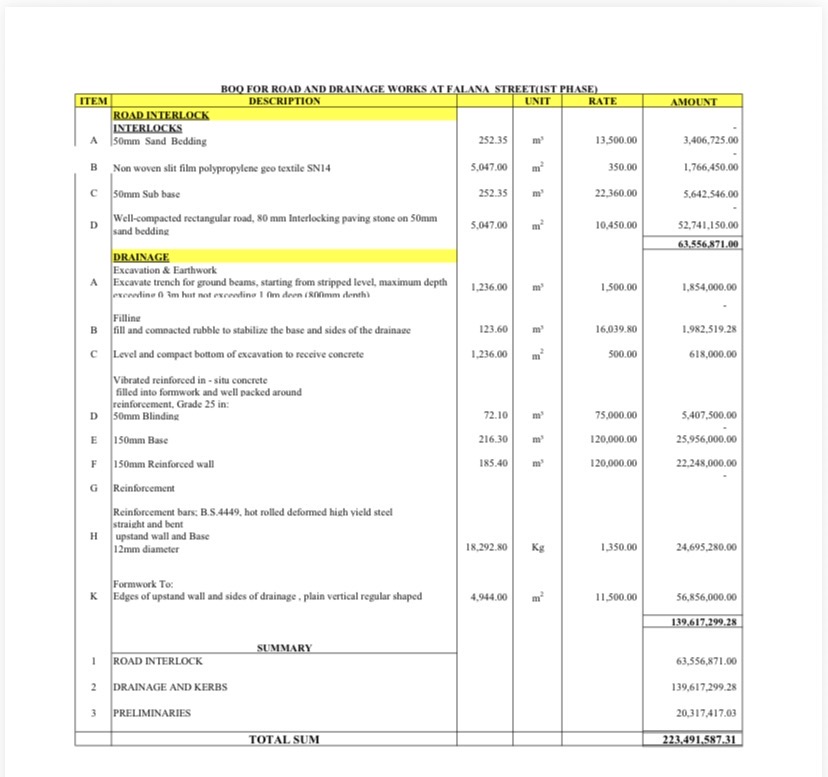
Instead, the council approved release of N505 million, which is triple of the amount spent on the project. This raises concerns about possible fund mismanagement.
A quantity surveyor, estimated the total cost for the completed 514 metres, including interlocking, kerbs, preliminaries, and contractor charges, at about ₦245.74 million.
The quantity surveyor explained that workmanship is typically calculated at about 10 per cent of project value, which is N223.5 million. Then 10 per cent of the amount stands at N22.3 million. Applying this industry benchmark raises the realistic execution cost of the existing drainage segment to roughly ₦245.74 million.
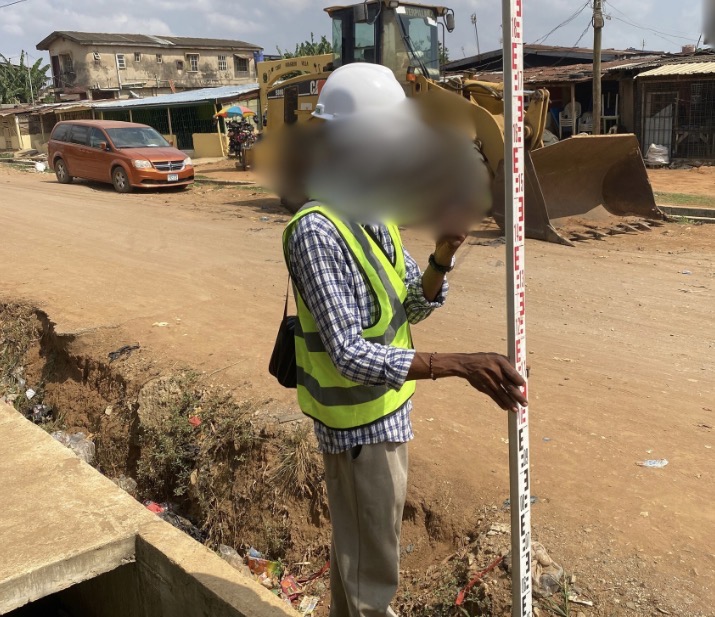
In the case of 944 metres long of drainage approved by the council, The ICIR investigation showed that the project should have cost only ₦313,698,925.56 after all valuation, including preliminaries and 10 per cent of the total approved amount for the contractor.
Another N54m paid for same inflated project
Months after the partially completed project was commissioned in 2025, contractors returned to extend the drainage toward the start of Omiyale Street.
The ICIR reports that the initial approval of more than ₦505 million for phase one had already covered a drainage length longer than what was ultimately constructed.
However, instead of enforcing completion under the original scope, it was gathered that the council approved new funding for work that residents said was poorly executed.
In October 2025, The ICIR reported how a civic group under the umbrella of Concerned Citizens of Ejigbo petitioned the Independent Corrupt Practices and Other Related Offences Commission (ICPC), listing among others the approval of an additional ₦54 million for “construction of reinforced concrete drainage at Falana Street.”
Site inspection shows that despite the reported additional payment, the drainage has not been sealed, leaving an exposed side trench running alongside the concrete structure.
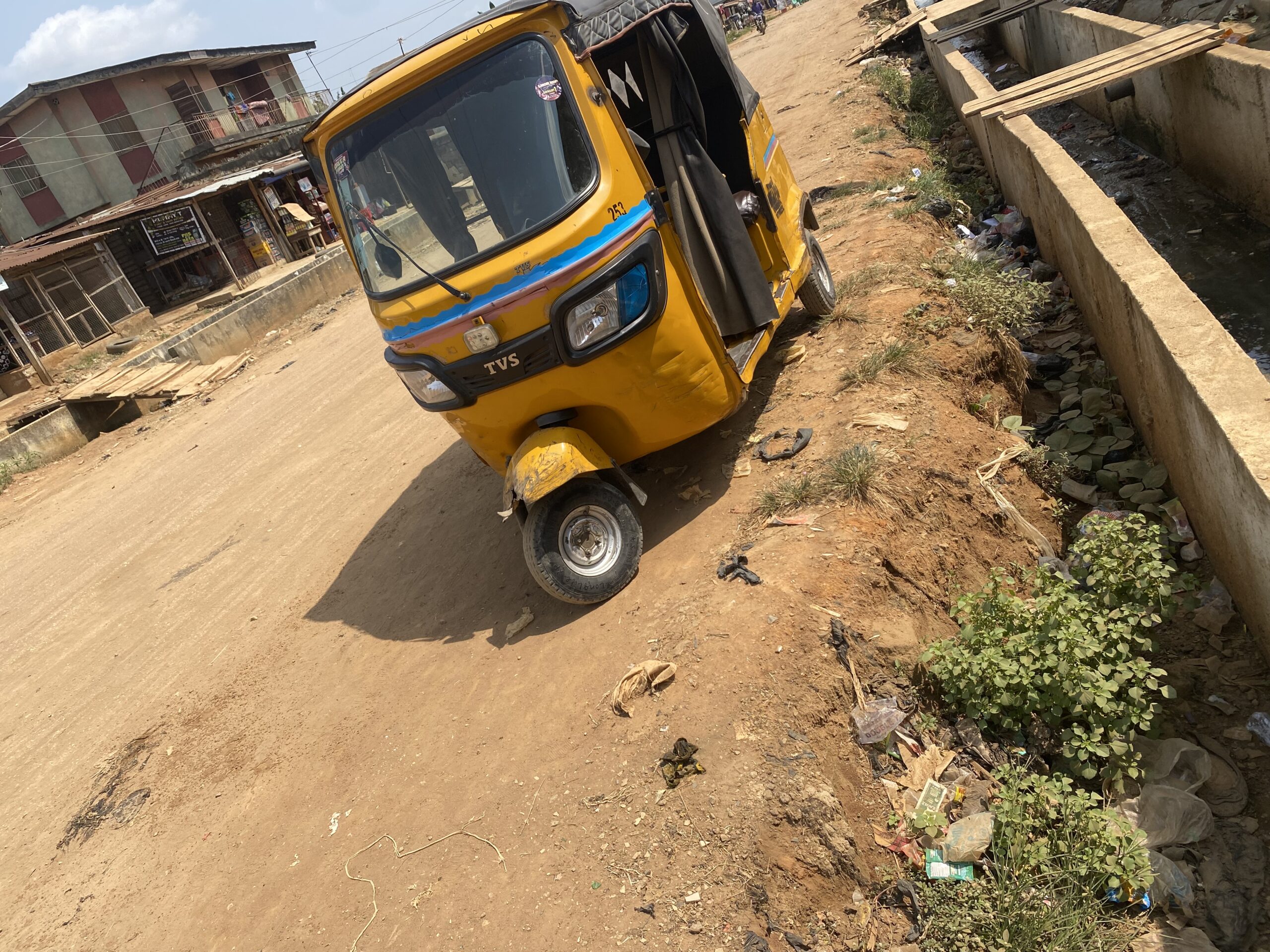
Residents said the exposed side trench has left them, particularly children, vulnerable to injury, as people could mistakenly step into the potholes.
Another N212 million awarded for Falana Street
Although the initial phase of the road project was left incomplete, records show that the council approved an additional ₦212,962,927.80 in July 2024 for the construction of Falana Street (Phase 2).
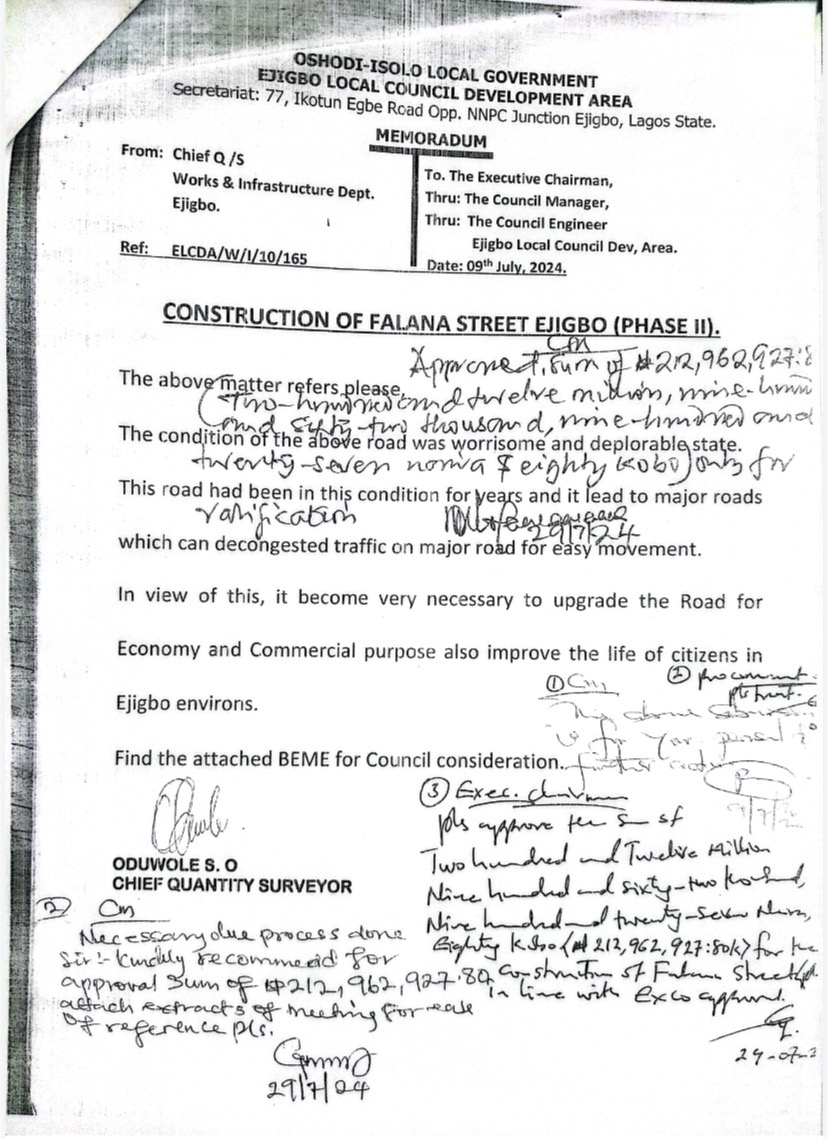
Despite the approval by the former council chairman on July 29, 2024, the remaining stretch from the maternity home to Kila House (Oyekunle street) and the Omiyale end of the street remained uncompleted and abandoned.
In the memo requesting approval, the road was described as “worrisome and deplorable,” noting it had remained in poor condition for years. However, on-ground assessment indicated the approved funds did not translate into meaningful construction, as residents continue to lament the state of the road.
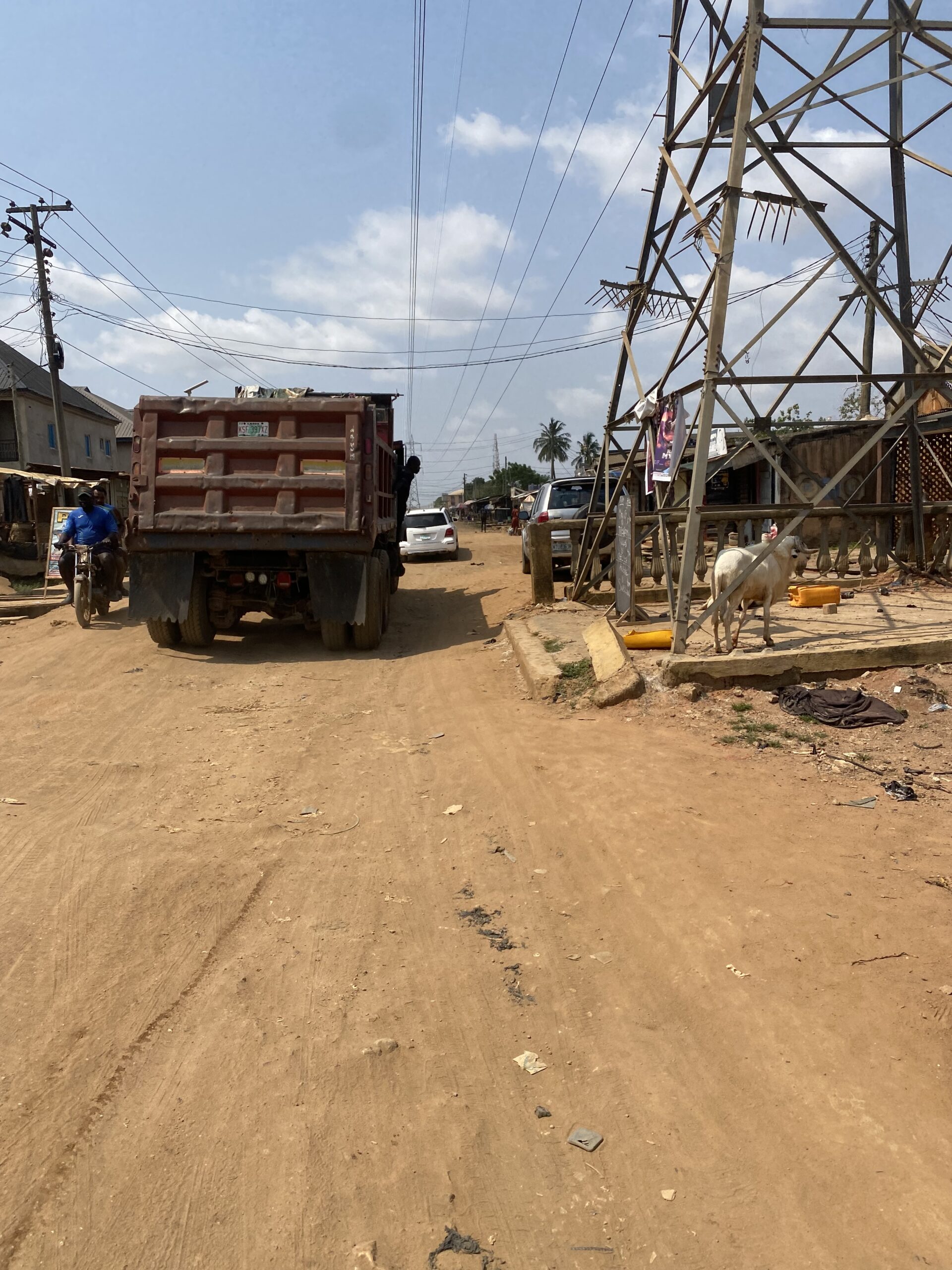
Notably, the ₦505 million earlier approved for phase one should have covered at least 400 additional metres beyond where it was currently abandoned, which the second phase expectedly should cover. But the project has been left abandoned despite the money approved in 2024. Curiously, the road was hurriedly commissioned before Bello left office, even though large sections remained visibly incomplete.
In the execution of the project to where Falana Street ends, The ICIR in consultation with civil engineers and a quantity surveyor, found that interlocking the street from where the first phase ends would cost N55 million after sand bedding, sub base, preliminaries and workmanship have been considered.
This means that the ₦212,962,927.80 approved for Phase 2 could have funded nearly four full completions of the remaining road section.
Residents of Majiyagbe lament as ₦400m worth project stalls
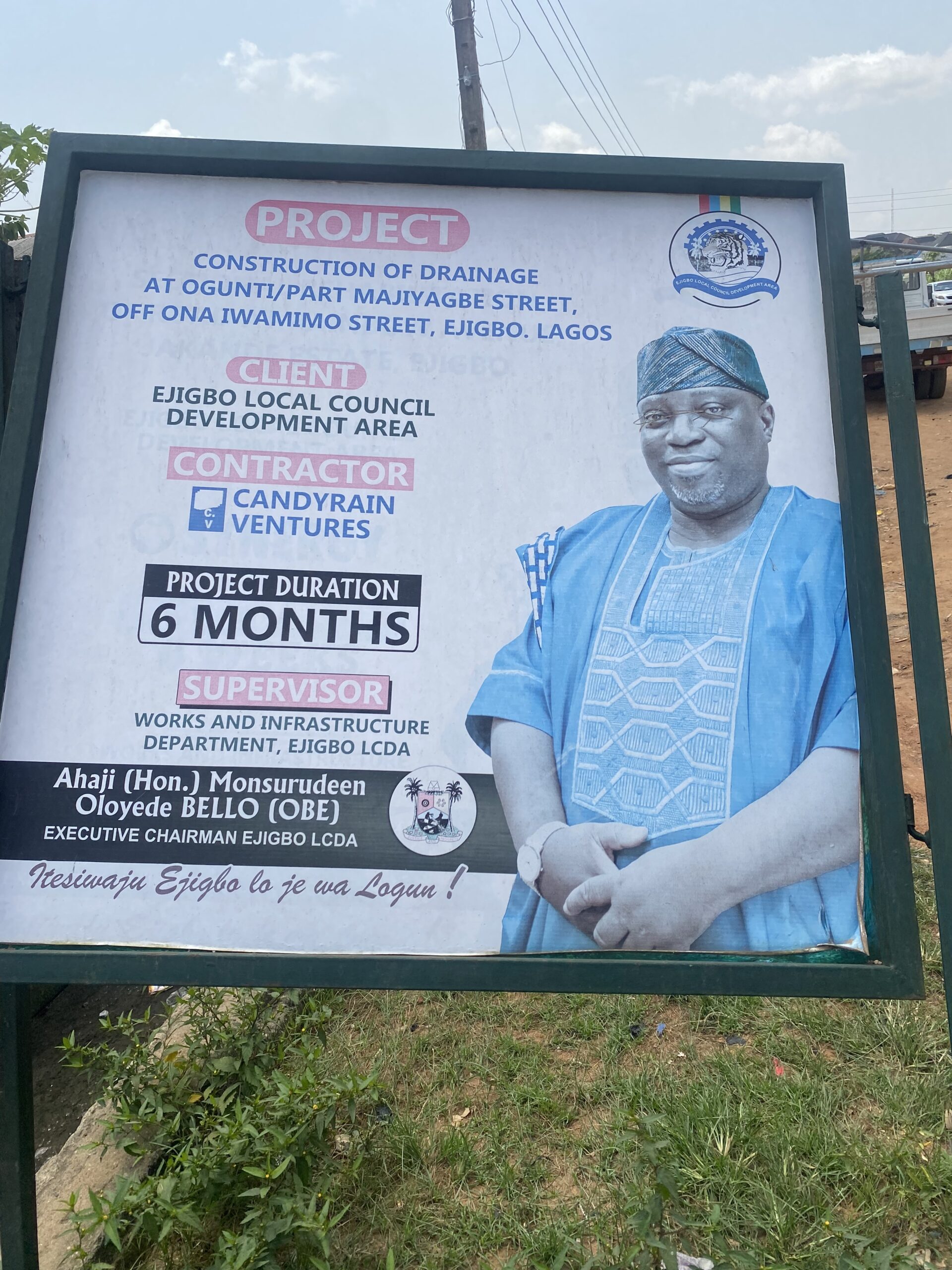
Baba Ayinde Olohunloba had high hopes in 2024 when Candyrain Ventures arrived in his community to dismantle the old, community-owned drainage with plans to upgrade it and construct a standard drainage system along Ogunti/part Majiyagbe Street.
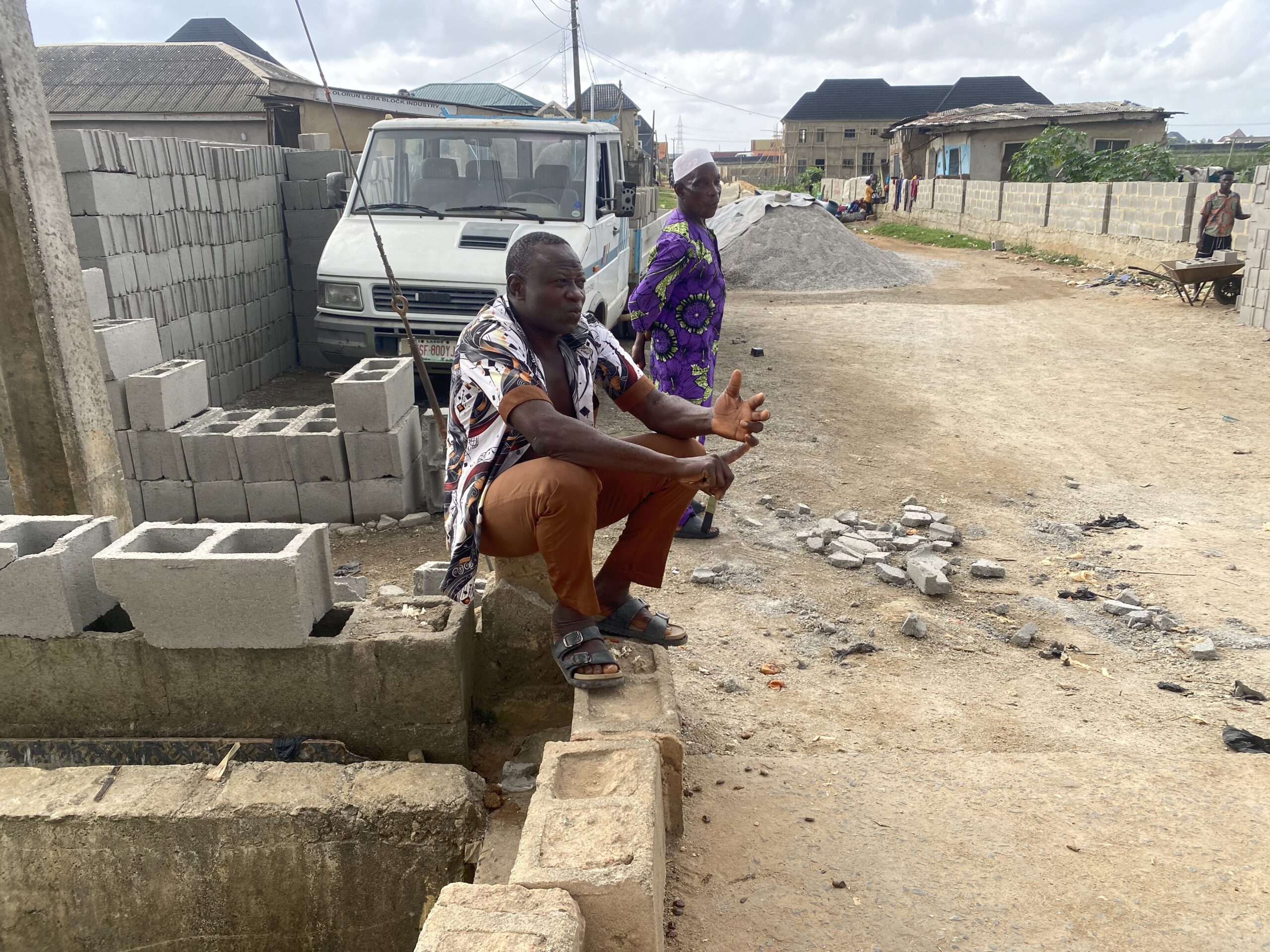
He imagined an end to years of flooding and unmotorable roads and hoped for a future of smoother rides and rainwater that would no longer threaten his home and business.
But months later, that excitement turned into deep frustration when the contractor dragged on a project that should only take six months. His frustration grew as the abandoned open trench left his house and business vulnerable to flooding.
According to Olohunloba, after the initial excavation, the engineer vanished for months. He also noted that the project began at the far end near the canal, leaving the section in front of his house incomplete.
When the rains came in 2025, floodwaters washed through his home and many others. His block-making business was often damaged, prompting him to take matters into his own hands.
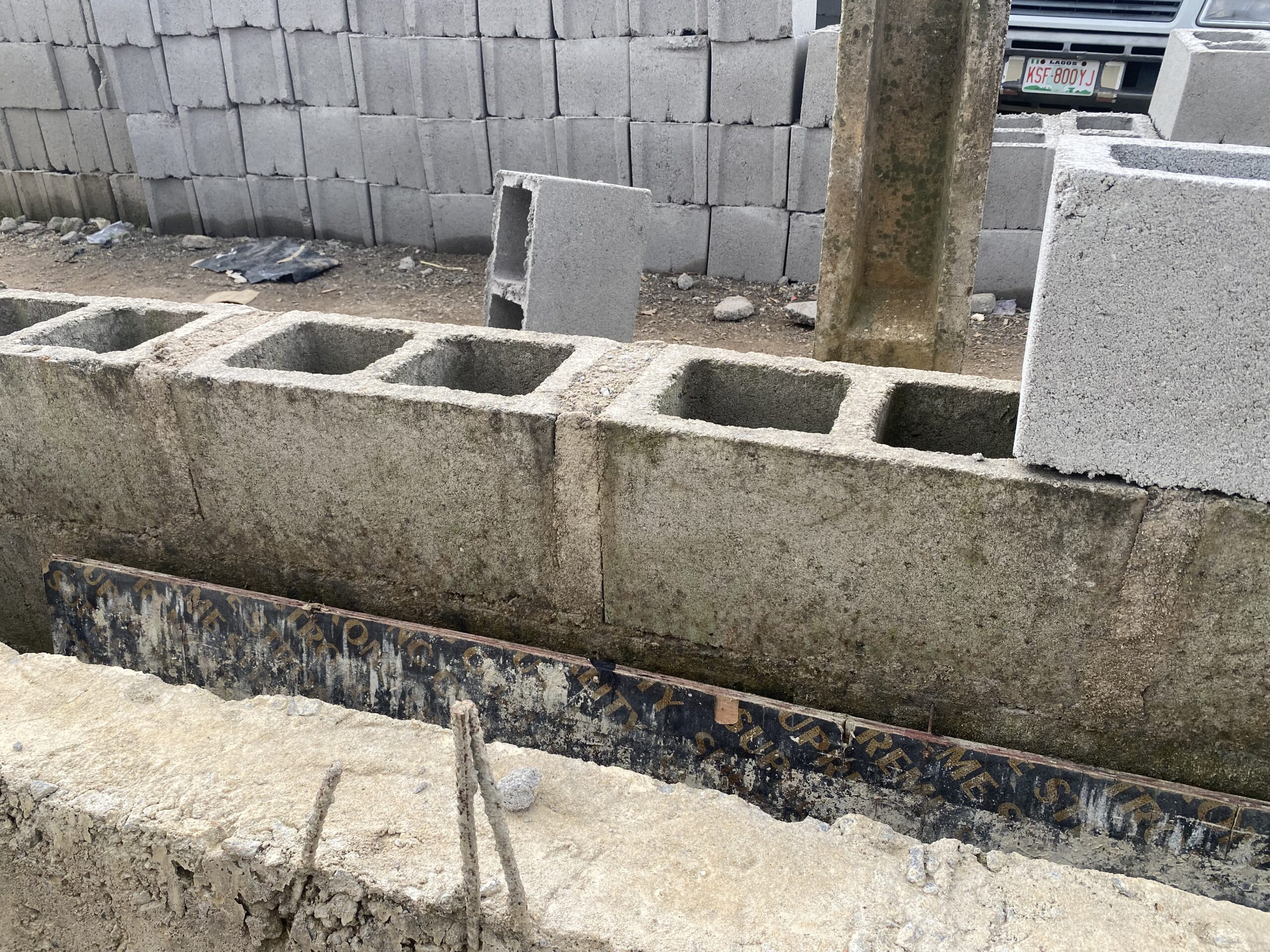
“We had to ask the engineer if we could construct and put blocks in the holes ourselves, and he said we could. So, we did the gutter ourselves. Months later, he finally came back to build his own drainage. Since then, it has been an inconsistent attempt to make the system work,” Olohunloba said.
The ICIR observed that even after the engineer returned in 2025, the drainage section near the canal beyond Olohunloba’s house was left open, exposing homes and makeshift structures where some traders live.
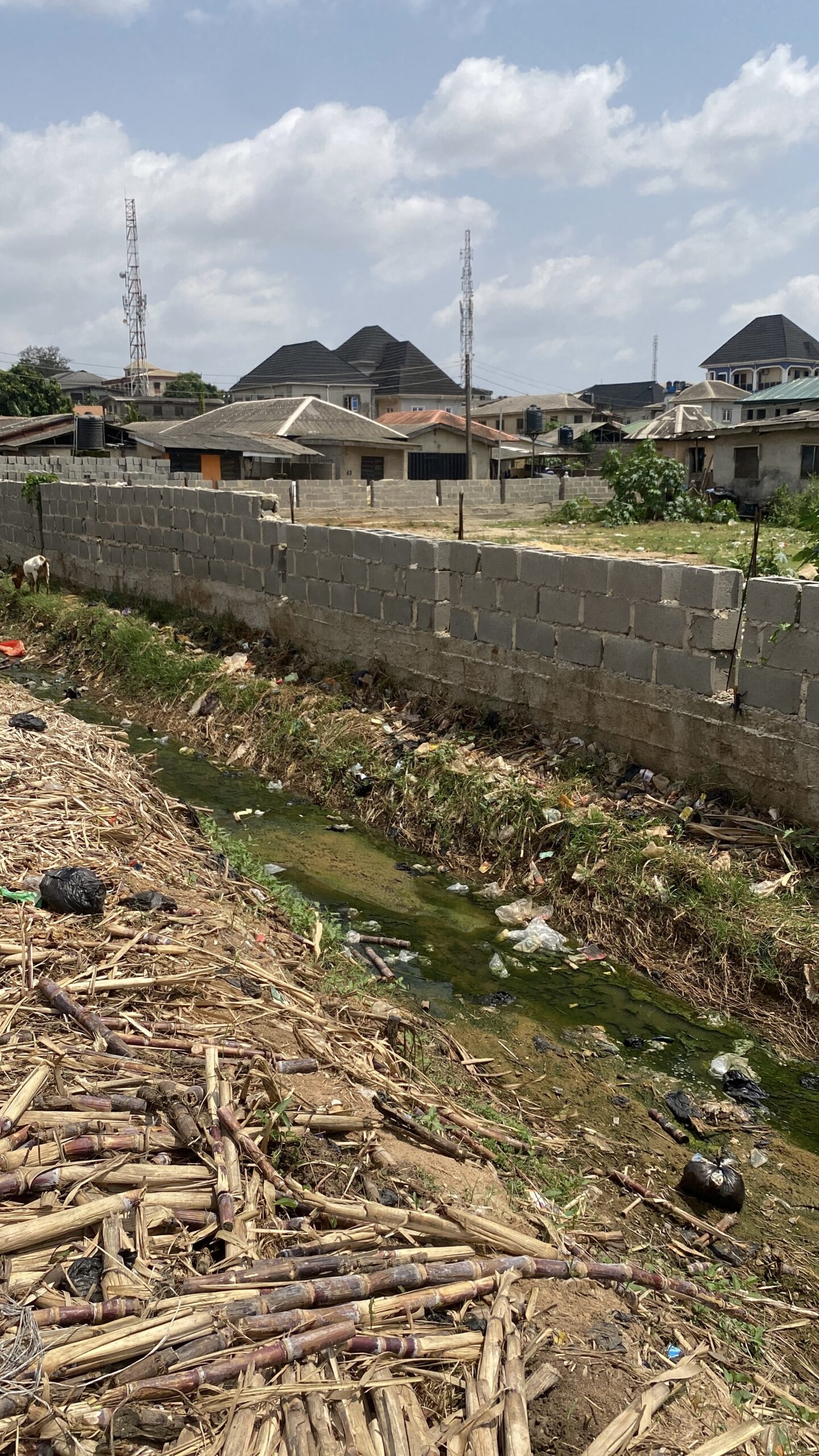
The open gutters, lacking slabs as initially promised, also became sites for open defecation.
No construction activity was observed during the reporter’s visit. By the roadside lay heaps of granite and sharp sand. In addition, potholes and uneven bumps said to have been caused by flooding scattered across the road continue to hinder smooth and safe vehicular movement.
Abandoned despite contract inflated by over N450m
An on-site investigation by The ICIR showed a disconnect between the scale of public funds released for infrastructure on Majiyagbe Street in Lagos and the limited work visible at the project site.
During a visit to the site on February 8, 2026, the only activity attributable to the project was a short stretch of partially constructed drainage.
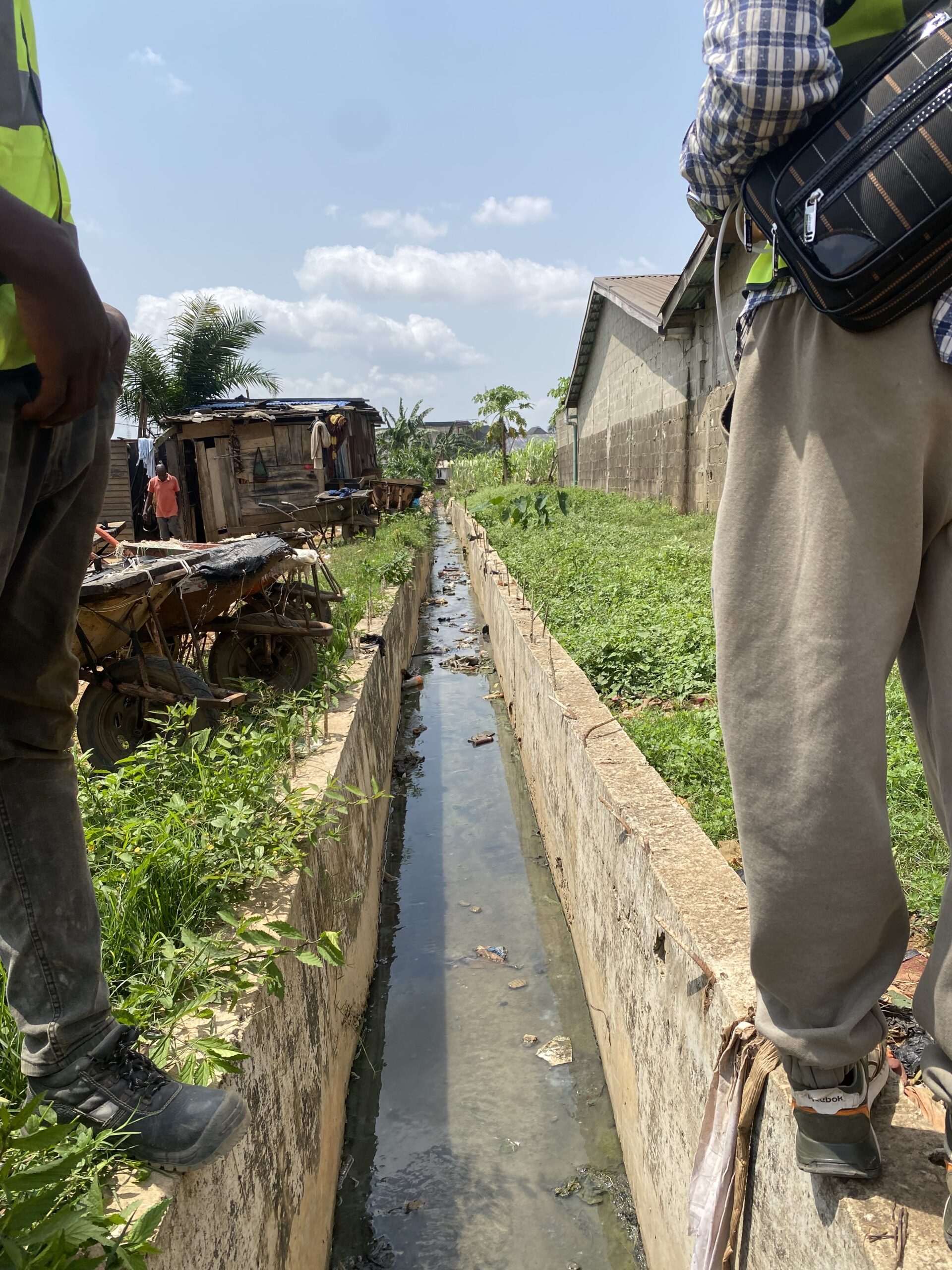
There was no evidence of road grading, interlocking installation, access slabs, or any of the complementary civil works typically associated with a standard drainage-and-road intervention of such financial magnitude.
Although contractor signpost signalled only the construction of drainage for the street, a civic group under the umbrella of Concerned Citizens of Ejigbo, in a petition, alleged that a total of ₦479,118,411 was released for construction of the street.
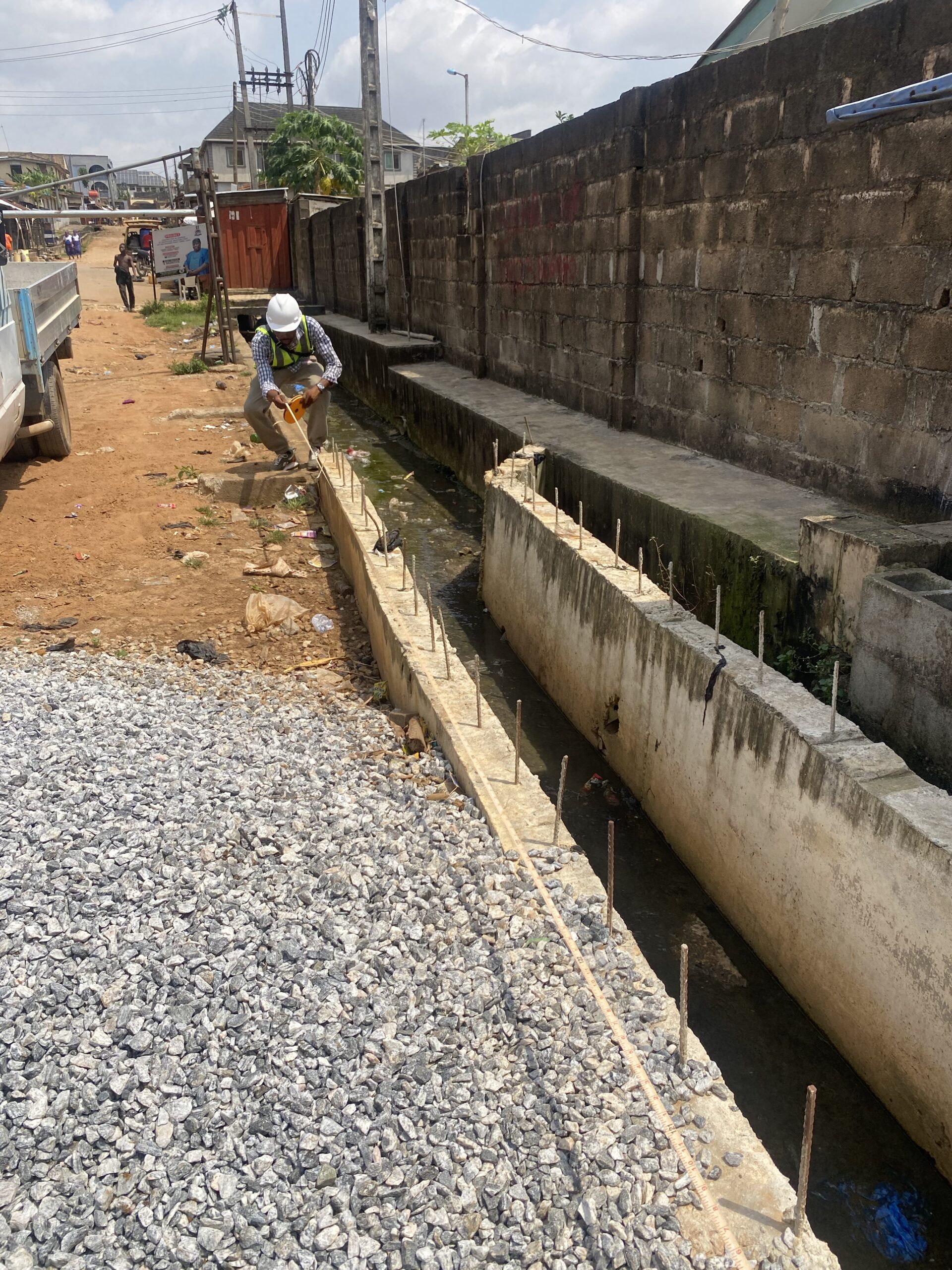
Measurements taken during the inspection revealed that the executed structure covers just 78.35 metres on one side of the road and 42.5 metres on the opposite side, with an average depth of 0.8 metres and width of 0.7 metres. Even this limited construction remains unfinished and abandoned.
The ICIR, alongside engineers, observed exposed reinforcement bars protruding from the concrete, refuse altering the designed slope and blocking water flow, and visible misalignment suggesting that the drainage walls fall short of acceptable engineering standards.
No additional work corresponding to the nearly half-billion-naira release could be identified on the ground.
To determine whether the expenditure aligns with the physical progress recorded at the site and the amount the completed project could cost, engineers reconstructed a bill of quantities restricted strictly to the 120.85-metre drainage already built.
The Bill of Quantity indicated that excavation, filling, concrete works, reinforcement, and formwork for the drainage were collectively valued at ₦14,299,665.58, while preliminaries were estimated at ₦714,983.28, bringing the total expected drainage cost to ₦15,014,648.86.
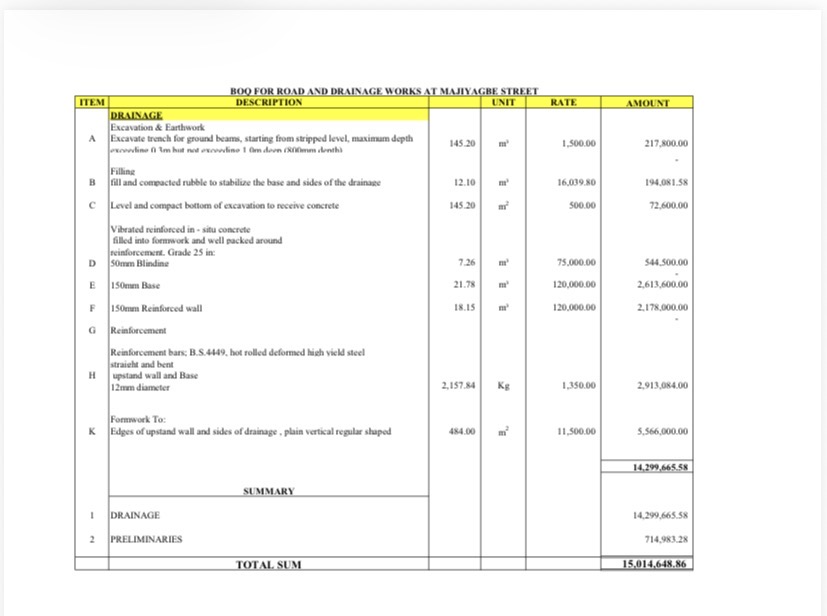
Applying this industry benchmark raises the realistic execution cost of the existing drainage segment to roughly ₦16.5 million.
When this engineering valuation of ₦16.5 million is compared with the ₦479.1 million reportedly released for the street, the difference suggests a potential inflation level running into about twenty-nine times the realistic construction cost.
The ICIR also checked on how much the completed project could cost, the quantity surveyor mentioned that the project would only cost about ₦52,083,577.05.
Nearly 1bn spent on another 1km road project
The pattern of inflated local government road contracts in Ejigbo Local Council Development Area (LCDA) continues with the Jubril Olabisi Road project, a short stretch of road whose cost is also disproportionate to its scale.
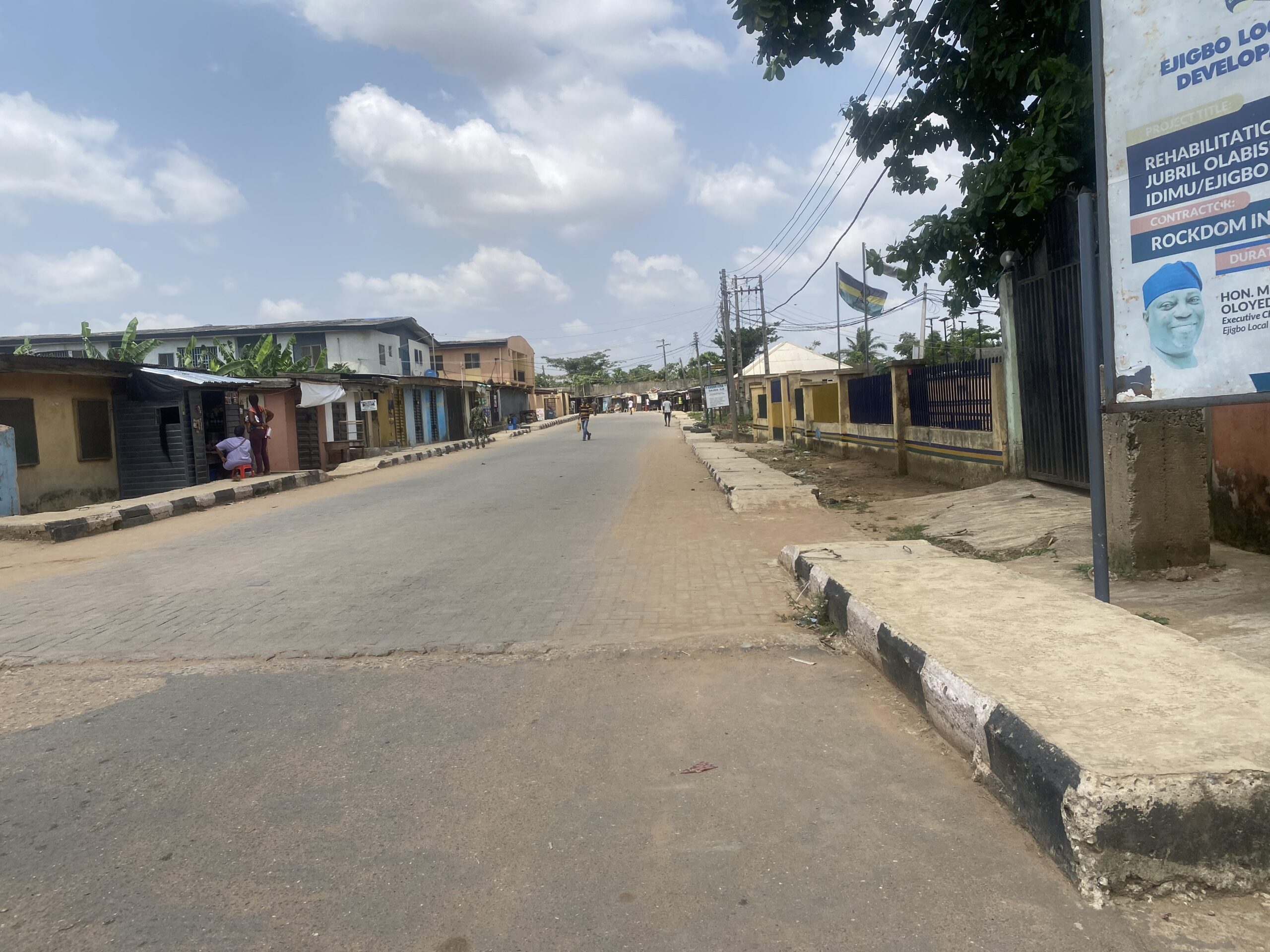
By contrast, Jubril Olabisi Street showed a seemingly successful intervention when compared to Falana Street and Majiyagbe.
The road measures roughly 627 metres, fully interlocked over 572.3 metres, and flanked on both sides by a completed drainage system. The project, executed by Rockdom Integrated Limited, was approved for a contract sum of ₦922,341,656.41, with payments cleared on November 29, 2024.
The contractor was mobilised to the field in 2024 but completed the project around April 2025. The project was consequently commissioned by ex-council chairman Bello in July 11, 2025.
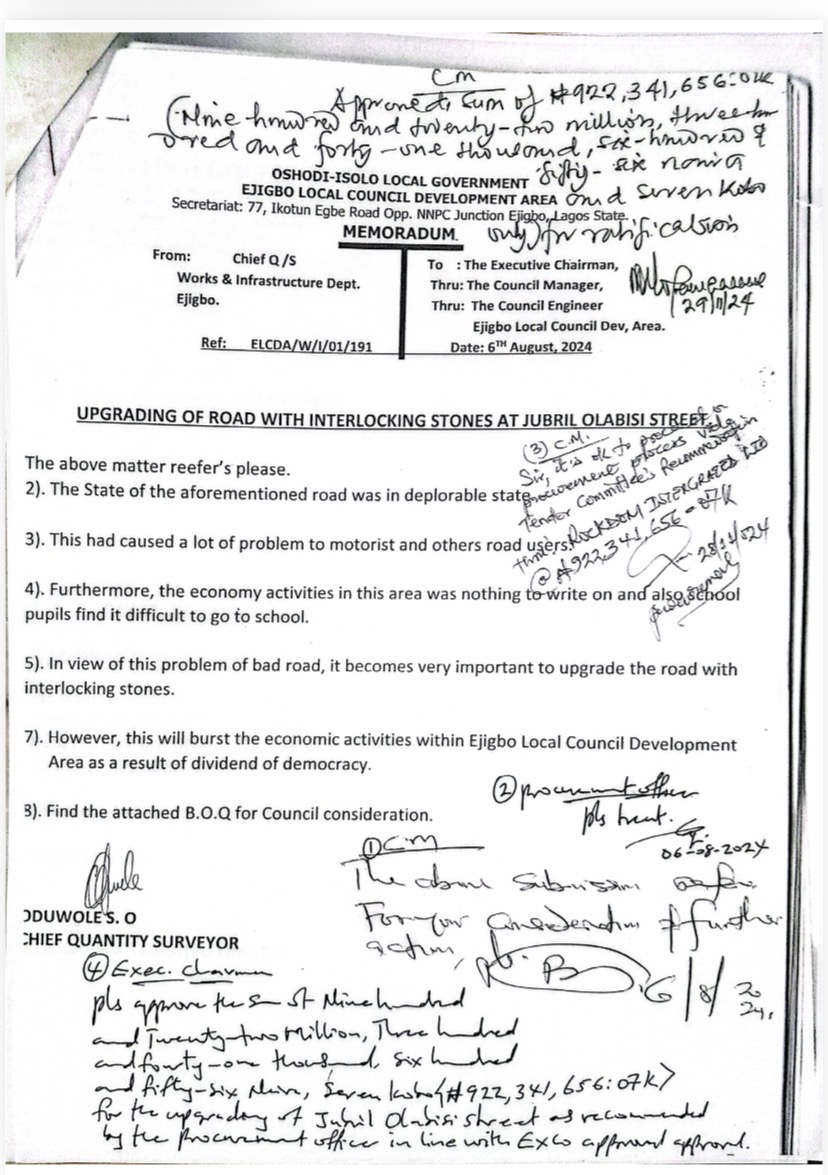
An independent Bill of Quantities (BOQ) prepared shows that constructing the interlocking road, the dual-sided drainage system, culverts, and necessary preliminaries and workmanship should not have exceeded ₦275.77 million, some N646,571,656.41. Less than what the project cost.
Of the N275.77 million,, interlocking the pavement accounts for just over ₦60 million, the dual-sided drainage and kerbs approximately ₦156 million, culverts about ₦10 million, and preliminaries roughly ₦22.79 million.
While many residents lauded the completion of the road and acknowledged the improved mobility and drainage in the area, expressed shock and incredulity upon learning that the contract was worth nearly a billion naira for such a short stretch of road.
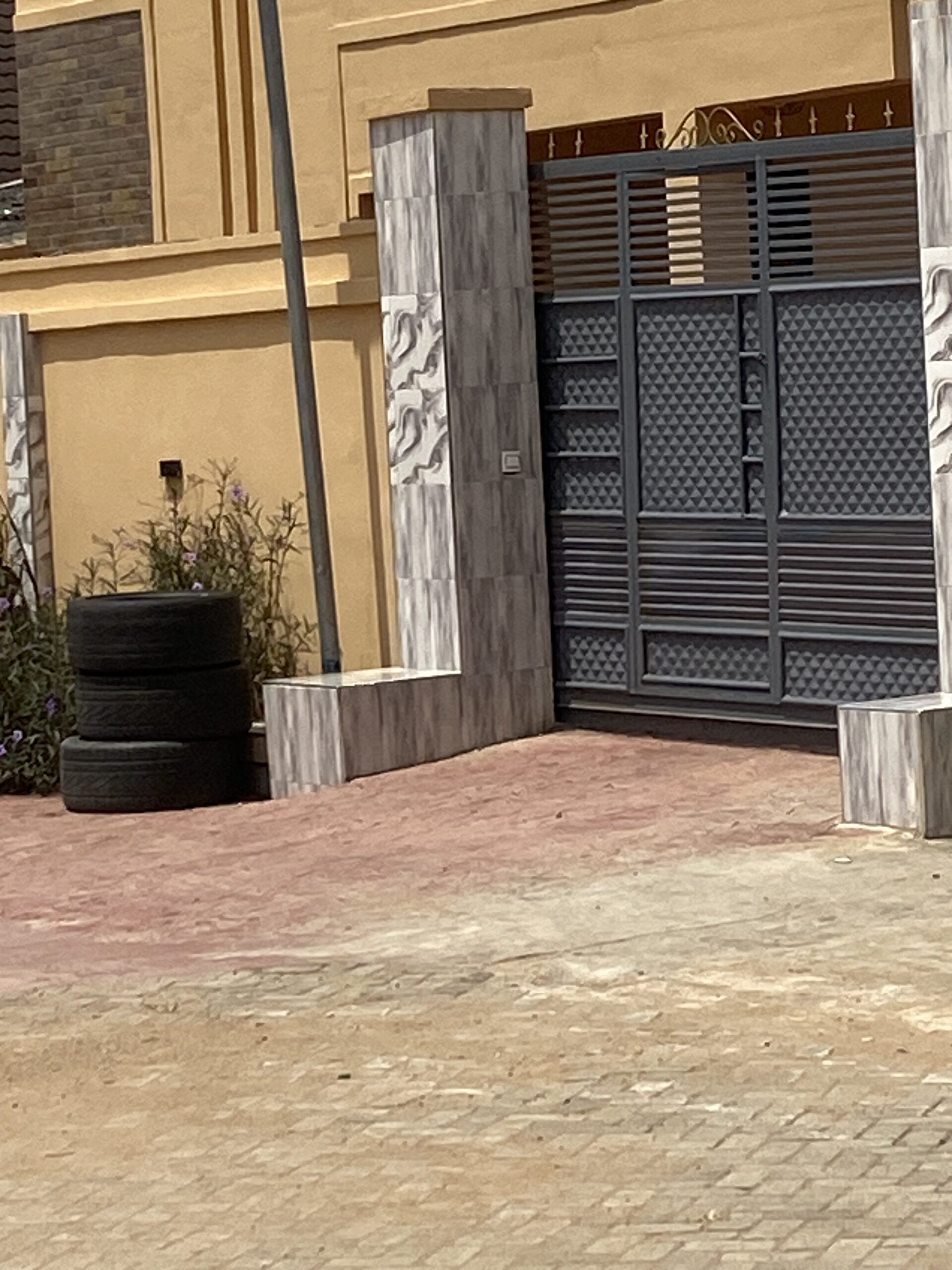
When The ICIR visited Rockdom Integrated Limited company to request information about the project, one of the company’s employees confirmed that it was executed by the firm but declined to provide relevant details, stating that the Independent Corrupt Practices and Other Related Offenses Commission, ICPC, is currently investigating the project.
The ICIR subsequently filed a Freedom of Information Act (FOIA) request with the company but, no response has been received since Monday, February 9, when the request was submitted.
Niyass Street gets N1bn for half a kilometre road project
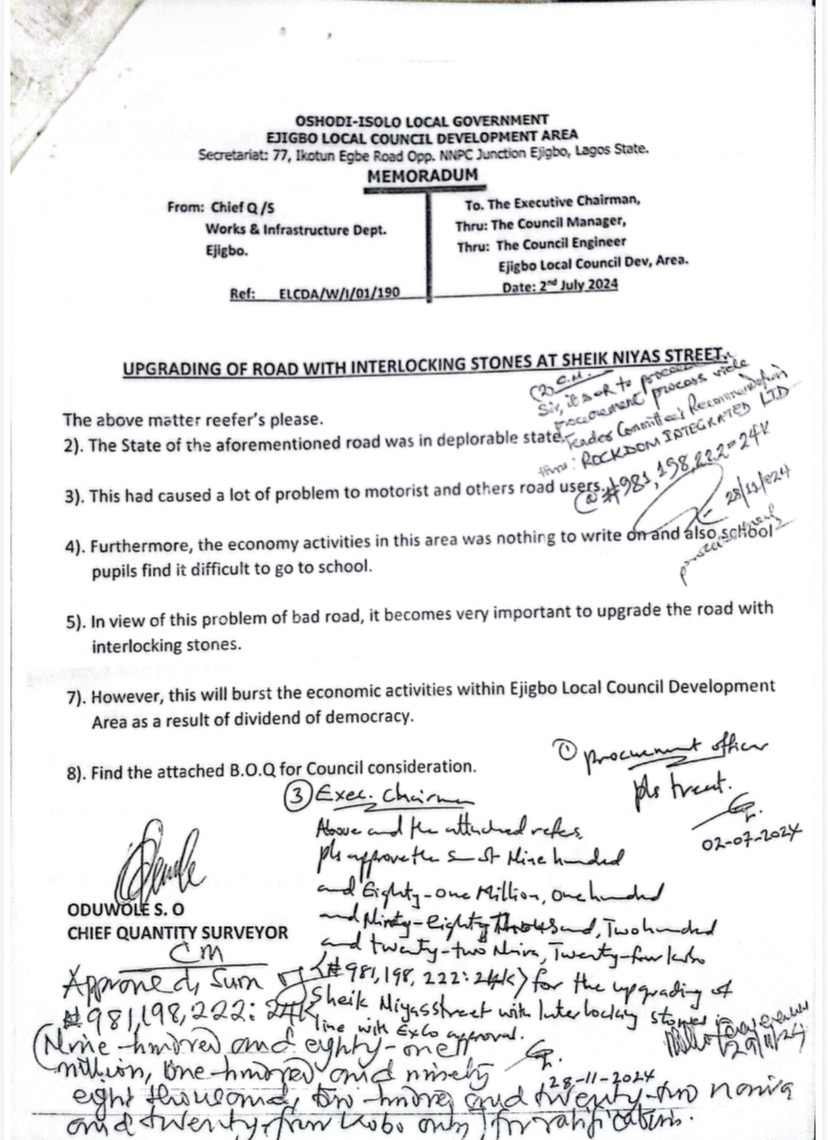
In a similar development, the Ejigbo Council also approved upgrading of a road with interlocking stones at Sheik Niyass to Rockdom Integrated Limited in July 2024 at a contract sum of N981,198,222:24.
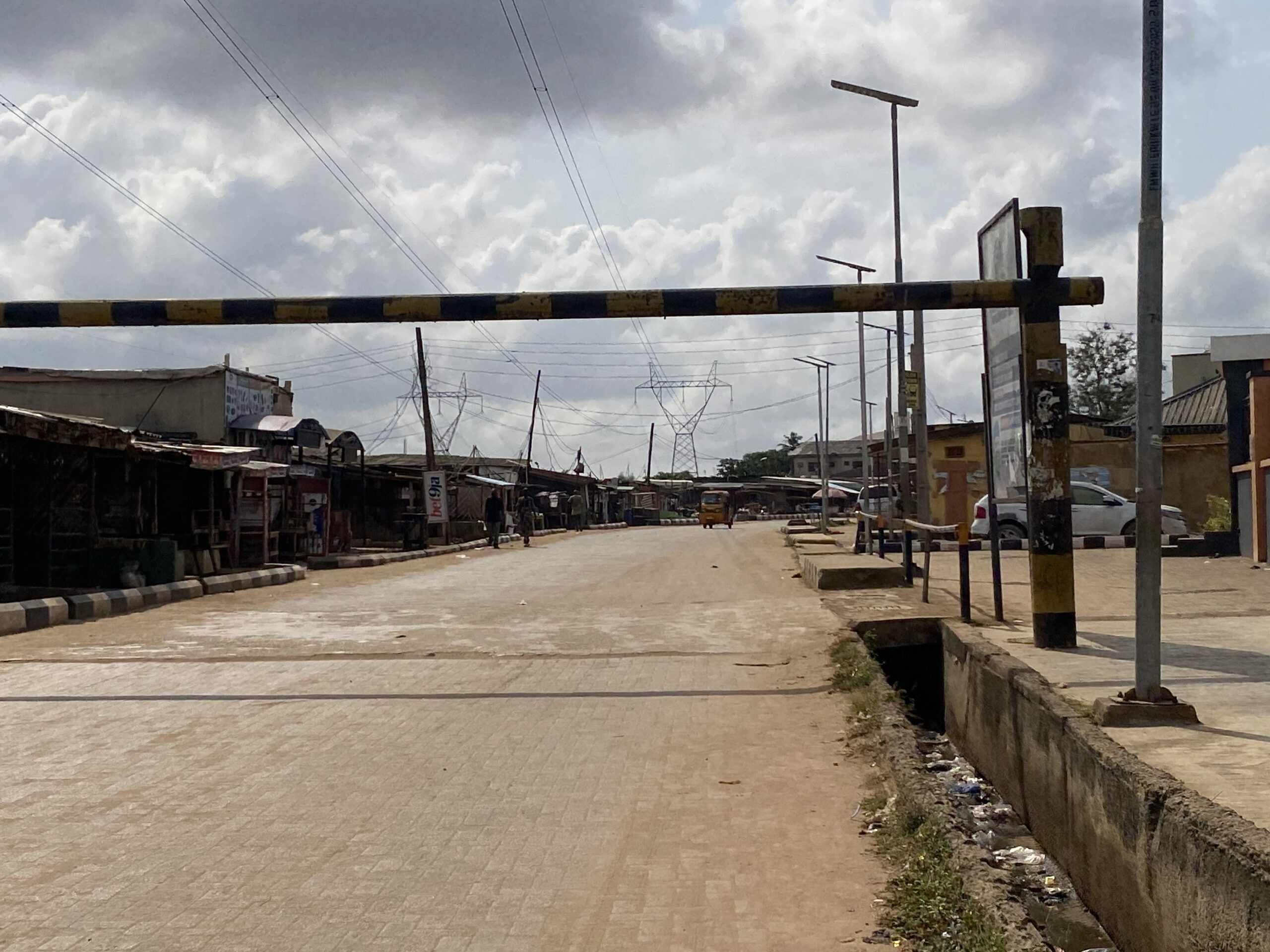
Findings showed that the project was also completed in 2025 and commissioned by the former chairman before he left office. The road project spanned about 593 metres long, with the drainage, roughly one metre deep and 0.8 metres wide, runs cleanly along one side, with 18 nos of culverts cutting across at intervals.
Despite the road being slightly shorter than Jubril Olabisi Street and has drainage on only one side, it received a higher allocation than the Olabisi Street project.
The independent Bill of Quantities for Sheik Niyass Street prepared by an independent quantity surveyor totals ₦189,573,654.41, covering the interlocking, drainage, culverts and preliminaries.
For a road of that length and specification, the quantity surveyors consulted by this reporter described the figure as “excessive and inflated”.
Double Star street riddled with potholes despite ₦34m payment
Despite government claims of filling and grading Double Star Street with N34 million in Jakande Estate, commuters and residents have continued to battle with poor road conditions long after funds were released for repairs.
The council in February 2025, approved ₦34 million to Gake Global Resources LTD, for Double Star Street rehabilitation, a sum residents were told would address potholes and surface degradation. But months after the contract award, the stretch of road remains riddled with potholes, depressions and craters that trap vehicles, slow and worsen during the rainy season.
Residents told The ICIR that at some point in 2025, engineers filled potholes with stones and graded parts of the road, but several sections were left untouched.
They noted that the street’s surface often breaks apart soon after minor rains, forcing drivers to slow down or swerve, further contributing to congestion and wear on vehicles.
Other residents attributed the poor condition partly to inferior workmanship or incomplete surface compaction.
The ICIR independently learnt that despite the approved N34 million purposely for the project, the road was largely filled with sand and asphalt sourced from other street projects, including Falana and Niyass streets. Residents at Falana Street also mentioned that the contractors packed away sand after fixing the drainage, leaving the drains exposed and open.
Public records show that Gake Global Resources Ltd was registered with the Corporate Affairs Commission (CAC) in 2021, four years before the project was awarded. However, the company displays little evidence of prior experience, particularly on its social media platforms.
Its first Instagram post appeared only in April 2023, and subsequent posts show minimal projects or work that could demonstrate the expertise or track record needed to execute a contract of this scale.
Although the company is active with the CAC, The ICIR could not locate a functional website for Gake Global Resources Ltd.
When The ICIR reached out to the company on Wednesday, February 25, 2026, for comments on these findings, the effort was unsuccessful. Calls to the phone contacts listed on the company’s Instagram page went unanswered. Subsequently, messages were sent via SMS and WhatsApp, but no response was received as of publication.
Ex-Chairman, Ejigbo council declines comment, cites ongoing ICPC investigation
Efforts by The ICIR to obtain response from former Ejigbo LCDA chairman, Monsuru Bello, on its findings have so far been unsuccessful.

In a correspondence sent to Bello on February 18, 2026, The ICIR sought explanations regarding the status, cost, and execution of several projects executed during his tenure.
Bello, however, declined to provide answers, citing an ongoing investigation. In a formal response, he wrote:
“The subject matter referenced in your request is currently under active investigation by the ICPC. Disclosure of records relating to an ongoing law enforcement investigation is exempt under the Freedom of Information Act where such disclosure could interfere with enforcement proceedings, prejudice investigation, or affect the rights of the person involved.”
The Ejigbo LCDA also declined providing information or reacting to the ICIR’s findings. In response to a FOIA request sent in a letter dated February 12, 2026, and signed by the Deputy Director of Legal, Okoya A. Adegoke, the council said that it could not comply with The ICIR’s FOIA request.
Lagos officials decline to respond
The ICIR contacted the Commissioner for Local Government and Chieftaincy Affairs Bolaji Robert, to seek an explanation of the cost-evaluation process applied before granting approval for the Ejigbo LCDA projects.
Calls placed to the commissioner were not answered, and a follow-up WhatsApp message sent thereafter had not received a response at the time of filing this report.
A message was also sent to the spokesperson for the Ministry of Local Government and Chieftaincy Affairs, Kehinde, who said he could not speak on the matter concerning the ministry without approval. He promised to facilitate an interview with the commissioner but of press time, no feedback had been received.
Similarly, enquiries were directed to Gboyega Akosile, the Chief Press Secretary to Governor Babajide Sanwolu requesting clarification on the state’s oversight framework and whether any review had been initiated in light of the discrepancies identified.
No response was obtained from him by press time.
Also, The ICIR reached out to the ICPC spokesperson, Okor Odeh, on the status of the investigation. He promised to look into the matter and get back. However, there was no further feedback as of the time of filing this report.

Mustapha Usman is an investigative journalist with the International Centre for Investigative Reporting. You can easily reach him via: musman@icirnigeria.com. He tweets @UsmanMustapha_M