
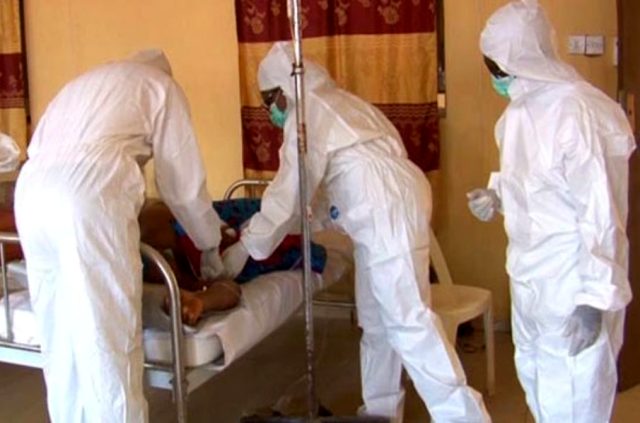
BETWEEN January and June 29, 2025, Nigeria recorded 790 confirmed cases of Lassa fever and 148 deaths, according to the latest situation report by the Nigeria Centre for Disease Control and Prevention (NCDC).
The virus, which causes acute viral haemorrhagic fever, has spread to 103 local government areas across 20 states.
The NCDC described Lassa fever as a virus caused mostly by the type of rodents known as the multimammate rat or the African rat.
The disease can be spread through direct contact with urine, faeces, saliva, or the blood of infected rats or contaminated objects, faeces, saliva, or the blood of infected rats.
Person-to-person transmission can also occur through direct contact with an infected person’s blood, urine, faeces, vomitus, and other body fluids.
The case fatality rate for the outbreak in the first half of 2025 stands at 18.7 per cent, higher than the 17.5 per cent recorded during the same period in 2024. While there has been a decrease in the number of suspected and confirmed cases compared to last year, the consistently high fatality rate remains a concern.
In epidemiological week 26, nine new confirmed cases were reported in Ondo and Edo states, down from ten cases recorded in the previous week. Three deaths were also recorded within the same period.
The report added that no new healthcare worker was affected in week 26, although 23 have been infected so far in 2025.
The NCDC noted that 90 per cent of all confirmed cases since the beginning of the year were reported from five states-Ondo, Bauchi, Edo, Taraba, and Ebonyi states.
Ondo alone accounts for 31 per cent of confirmed cases, having recorded 249 confirmed cases out of 1,969 suspected cases. The state is followed by Bauchi with 24 per cent (187 confirmed cases), Edo with 17 per cent (134 confirmed cases), Taraba with 15 per cent (117 confirmed cases), and Ebonyi with 3 per cent (22 confirmed cases).
The other 15 states with confirmed cases make up the remaining 10 per cent. They include Kogi, Gombe, Plateau, Benue, Kaduna, Nasarawa, Delta and the FCT.
The most affected age group is 21 to 30 years, with the male-to-female ratio for confirmed cases standing at 1 to 0.8.
The total number of suspected cases recorded so far in 2025 is 6,109, a decline from 7,020 suspected cases during the same period in 2024.
This development was on the heels of the earlier report by The ICIR on May 14, 2025, which showed that by epidemiological week 18, Nigeria recorded 717 confirmed cases and 138 deaths.
At the time, Ondo, Bauchi, and Taraba states were the most affected, collectively accounting for 71 per cent of all confirmed cases.
The CFR then stood at 19.3 per cent, which was already higher than the same period in 2024.
However, according to the agency, response efforts are ongoing at national and sub-national levels, adding that the Incident Management System has been de-escalated to alert mode, while surveillance, case management, risk communication, and contact tracing activities are ongoing.
The report highlighted that challenges such as late presentation of cases, poor health-seeking behaviour, poor environmental sanitation, and low awareness in high-burden communities persisted.

Mustapha Usman is an investigative journalist with the International Centre for Investigative Reporting. You can easily reach him via: musman@icirnigeria.com. He tweets @UsmanMustapha_M