
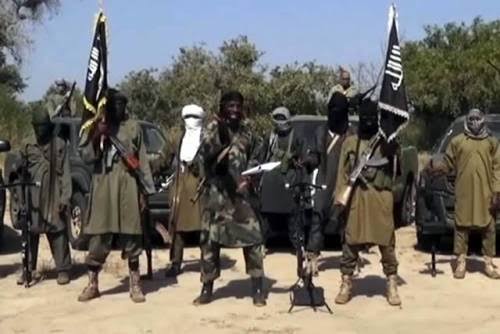

NIGERIAN lawyer, Maxwell Opara, has vowed to sue the Federal Government over its reintegration of 744 repentant terrorists into society.
Opara stated this on Friday, April 17, while featuring on Arise TV’s programme, “The Morning Show.”
“I shall be approaching the Federal High Court next week to stop this madness, we can’t continue like this, it has to stop,” he warned.
The Federal Government had on Thursday announced that 744 former terrorists and victims of violent extremism would be returned to the society after completing a de-radicalisation, rehabilitation and reintegration programme under Operation Safe Corridor.
Addressing the graduands and others at the graduation ceremony in Gombe, the Chief of Defence Staff, Olufemi Oluyede, a lieutenant general, said the programme was not to reward terrorism but to discourage people from engaging in it.
Oluyede, who was represented by the Director, Special Operations Forces at Defence Headquarters, Kabiru Tanimu, a rear admiral, said the initiative was to promote lasting peace.
The breakdown of the former terrorists is as follows: 597 from Borno, 15 from Kano, two from Abia State, 10 from Adamawa, one from Akwa Ibom, two from Anambra, 12 from Bauchi, , three from Ebonyi, one from Enugu, three from Katsina, and one from Kebbi.
Others are: five from Kogi, four from Nasarawa, two from Niger, two from Plateau, two from Sokoto, and 58 from Yobe. The list includes foreign nationals, comprising one from Burkina Faso, one from Cameroon, two from Chad, and four from Niger Republic.
Reports indicate that 733 of the beneficiaries are Muslims, while 11 are Christians.
Reacting further to the decision, Opara explained that Nigeria already had clear legal procedures for handling criminal offences and questioned the basis for the reintegration programme.
He noted that existing laws did not support such actions. According to him, most victims of terrorism have been displaced and are living at internally displaced persons’ camps. He wondered if the repentant terrorists would be returning to empty communities where they had killed and displaced residents.
He argued that the government should have rather focused on people affected by the conflict. Besides, he said the international treaties with which the government deradicalises the terrorists were not binding on Nigeria.
“Once a crime is committed, we have the constitution, we have the Administration of Criminal Justice Act, once you are charged to court, the only role the government has is through the attorney general to discontinue the matter.”
He maintained that after conviction, the only lawful relief available is through presidential pardon or amnesty under defined conditions, stressing that the current process does not fit either category.
“Once the person has faced trial and is convicted, the only option is to grant the person amnesty, that is presidential pardon, when the person meets the necessary criteria.”
He also considered the action fraudulent and called on the Economic and Financial Crimes Commission to probe the process.
The lawyer described the reintegration process as unrealistic, noting that many affected communities no longer exist due to displacement, while also raising concerns about selective application and lack of transparency across the programme nationwide.
He also rejected alleged coercion of the beneficiaries by insurgents as a justification for absolving suspects, insisting that a crime remains a crime regardless of the circumstances.