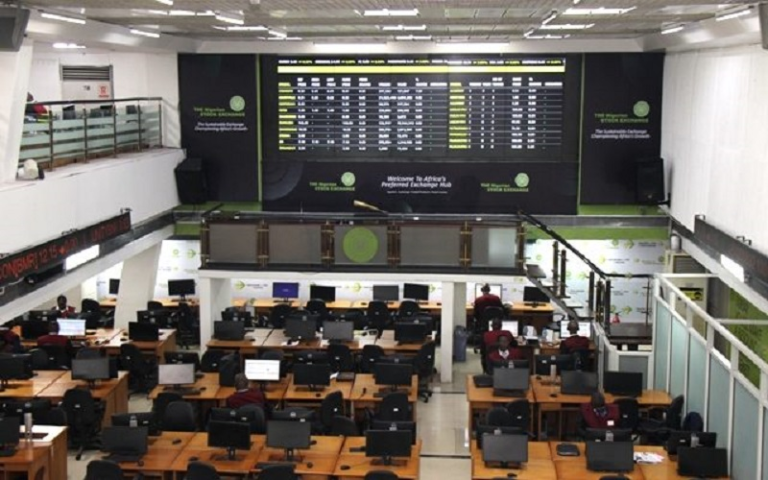
THE banking sector index rose by 0.93 per cent to close at 436.95 basis points (bps) in last week’s trading session, as investors worry over implications of the increase in monetary policy rate (MPR) on stocks.
Except for the oil and gas index which closed flat, the other sector indices – insurance, consumer goods and industrial – fell during the week’s trading session.
Trading had opened on the floor of the Nigerian Exchange Limited (NGX) on Monday, March 20 and closed on Friday, March 24.
But at the end of the trading session, the All-Share Index (ASI) and market capitalisation fell by 0.04 per to close at 54,892.53bps and N29.903 trillion respectively, to sustain a downward movement in the market for the second consecutive week.
The consumer goods index suffered the highest drop by 0.74 per cent to close at 696.17bps. While the insurance index fell by 0.53 per cent to close at 174.7bps, the industrial index shed 0.49 per cent to close at 2,539.31bps.
Amid the negative performances, the banking index rose from 432.92bps to close at 436.95bps. Zenith Bank, Access Holdings, FBN Holdings, Guaranty Trust Holding, Fidelity Bank and Jaiz Bank were the stocks that gained, while other banking stocks fell or closed flat.
Zenith gained 0.35k to close at N24.95; Access, 0.25k to N8.65; GTCO, 0.3k to N24.9; FBNH, 0.2k to N10.9; Jaiz Bank, 0.02k to 0.91k; and Fidelity, 0.01k to N5.2.
The Central Bank of Nigeria (CBN) had at the conclusion of its two-day monetary policy committee (MPC) meeting of March 20 and 21, raised the MPR by 50bps to 18 per cent. MPR is usually the rate at which the central bank is willing to lend money to commercial banks. It consequently influences banks’ lending rate to their customers.
In a chat with The ICIR, the National Chairman of the Progressive Shareholders Association of Nigeria (PSAN), Boniface Okezie, said the raise in MPR was not good for the industry.
Okezie believed, however, that despite the rate increase, banking stocks would be on demand.
“The banking sector still has a lot to offer to investors in terms of good dividends, coming from the likes of Zenith, GTCO, Stanbic IBTC, UBA, Access and other good banks,” he said.
He also expressed concern over the naira redesign policy of the central bank, stressing that it has badly affected the capital market.
“There is no money. How can people invest in the capital market because one must first find money to eat before he can plan to invest or put money in the bank?
“It is, indeed, a bad time for Nigerians and the capital market, the worst that has ever happened to Nigeria since we returned back to democratic rule in 1999,” Okezie added.
As investors digest the outcome of the MPC meeting and its probable impact on the economy and markets, analysts at Cowry Asset Management, in their Weekly Financial Market Review, stated, “However, we advise investors to trade companies with sound fundamentals and, as such, should take advantage of price corrections in line with domestic and global trends.”
Meanwhile, a total turnover of 1.689 billion shares worth N11.07 billion in 14,019 deals was traded during the week by investors, in contrast to a total of 853.745 million shares valued at N11.84 billion in 18,543 deals that exchanged hands in the week before.
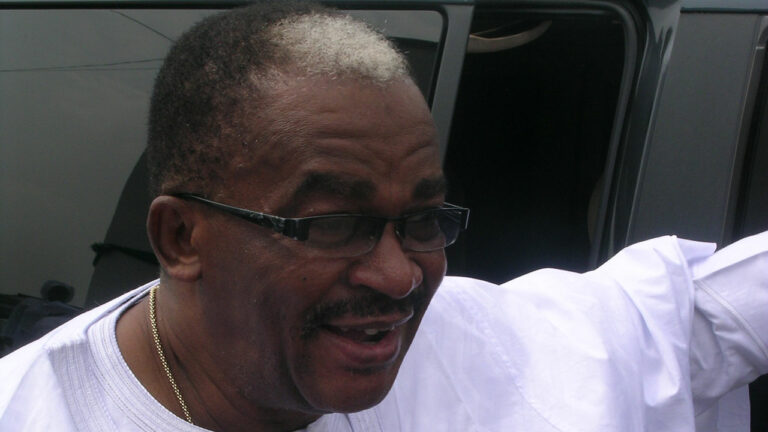
GENERAL Oladipo Diya, former Chief of General Staff (CGS), is dead, his family disclosed on Sunday, March 26.
His death was announced in a statement issued by his son, Prince Oyesinmilola Diya.
“On behalf of the entire Diya family, both at home and abroad, we announce the passing on to Glory of our dear Husband, Father, Grandfather, and Brother, Lt. General Donaldson Oladipo Oyeyinka Diya (retd).
“Our dear Daddy passed onto glory in the early hours of 26th March 2023. Please keep us in your prayers as we mourn his demise in this period. Further announcements will be made public in due course,” the statement read.
Diya served under the late Head of State, General Sani Abacha.
He was born on April 3, 1944 at Odogbolu in Ogun State.
He joined the Nigerian Defence Academy, Kaduna and fought during the Nigerian Civil War.
He was appointed CGS in 1993 and Vice Chairman of the Provisional Ruling Council in 1994.
As CGS, Diya was second in command and the de facto vice president of Nigeria under Abacha from 1994.
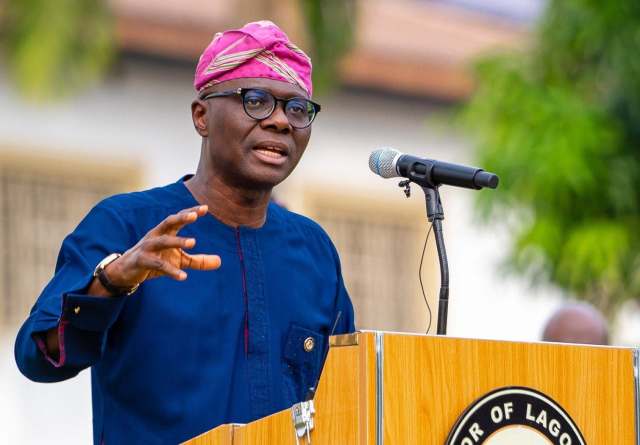
LAGOS State governor, Babajide Sanwo-Olu, has ordered the payment of N5 million as compensation to a driver allegedly assaulted during the #EndSARS memorial rally in Lagos.
The governor said he has directed the state’s Attorney-General and Commissioner for Justice, Moyosore Onigbanjo, to effect the payment.
The driver, Adedotun Clement, was carrying a passenger when he encountered a gridlock at the Lekki Toll Gate during a protest to commemorate the first anniversary of #EndSARS. He was subsequently tortured and pepper-sprayed by the Lagos State Neighbourhood Safety Agency officers and policemen.
On March 14, 2023, the court ordered the state government to pay Adedotun N5 million as compensation for the torture he suffered during the protest.
The Lagos government filed an appeal against the judgment on Tuesday.
But in a tweet on Saturday, March 25, the governor said he has interceded on Clement’s behalf for the sake of public interest, despite the appeal.
Good evening Lagos, as Governor, I'm committed to upholding the rule of law and protecting citizens' rights with empathy and authority.
I recently became aware of the case involving Mr. Clement Adedotun and the judgement by the Federal High Court, and I understand the impact…
Sanwo-Olu said he recently became aware of the case between the state government and Clement, stressing that after reviewing Clement’s case, he directed the Attorney General to set up a meeting and pay him the compensation awarded by the court.
The governor said that although the state government had appealed the ruling, he remained committed to upholding the rights of all Lagosians.
He commended all parties for seeking justice through appropriate channels.
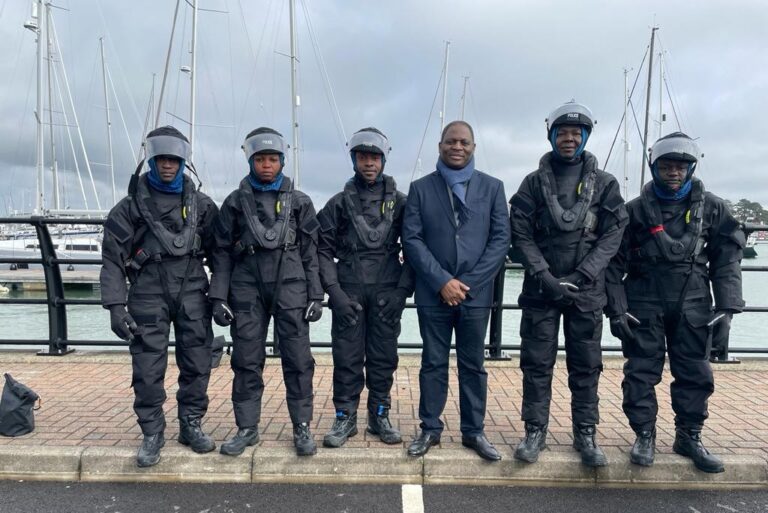
THIRTY-FIVE officers of the Marine Command and Seaports Operations of the National Drugs Law Enforcement Agency (NDLEA) have been trained by the United Kingdom (UK) Home Office International Operations (HOIO).
This was disclosed in a statement by the NDLEA Director, Media and Advocacy, Femi Babafemi, on Saturday, March 25.
Babafemi said five of the officers, including the first female coxswain, were currently undergoing a two-week Maritime Patrol and Tactical Coxswain training by the UK’s Central Maritime Training Unit in Southampton, UK.
The training is to enable the officers plan maritime deployments, pursue, and take over vessels on high seas.
“The trainings, according to the HOIO, are to enhance the border control capabilities of the NDLEA by providing specialised training, mentoring and advanced drug detection equipment.
“Key areas covered so far include: boat handling, weapons handling, riverine operations, boarding and vessel search, among many others. Some of the trainings have been facilitated by the British Military, Nigerian Navy and the United Nations Office on Drugs and Crime (UNODC) under the Global Maritime Crime Programme (GMCP),” Babafemi noted.
According to the statement, Chairman of the NDLEA Buba Marwa urged officers to reflect lessons learnt from the training in their work and share with colleagues.
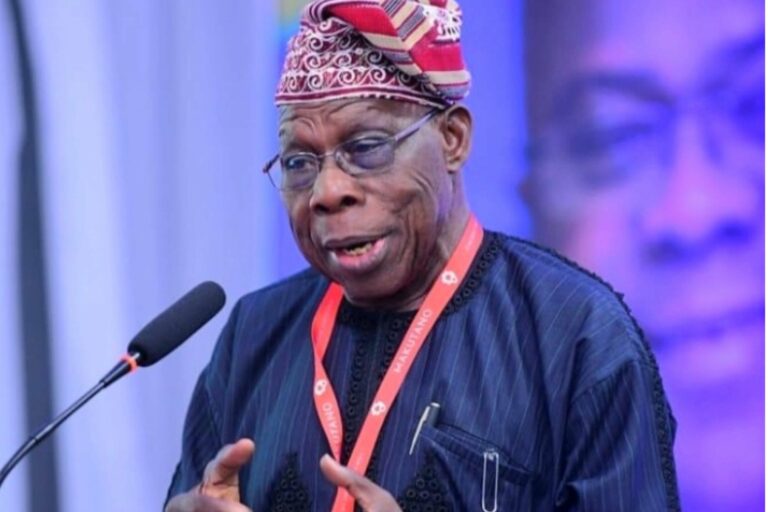
FORMER President Olusegun Obasanjo has condemned what he described as the “persistent” discrimination against Nigerians from the south-eastern region.
Speaking at an event to commemorate the one year anniversary of Anambra State governor, Charles Soludo in office, Obasanjo described the discrimination as “Igbophobia”.
The 85-year-old elder statesman who appointed Soludo as Governor of the Central Bank of Nigeria (CBN) and current Director General of the World Trade Organisation (WTO), Ngozi Okonjo-Iweala as Minister of Finance during his administration, said they were “probably the best of the appointments that I made when I was President”.
Obasanjo recalled that soon after appointing the duo who are from the South-East, he found himself in an “encounter with a dissenting voice”.
“Somebody came to me and said, ‘Wow! You have ruined the economy of Nigeria.”
“I said, ‘How?’ He said, ‘An Igbo woman, Minister of Finance; an Igbo man, Governor of the Central Bank? Then you have clearly completed the task of ruining the economy of Nigeria”.
“I don’t know why he said that, except for what I can call Igbophobia, and I don’t take that lightly. It remains, it persists.
“But when you have that type of thing that was said to me and the type of thing that you know is going on, as I have just called it, what do we do with it?
“I believe we have to go back to the scripture, which says we must conquer evil with good,” Obasanjo said.
The former President added that: “Whoever you are, wherever people are afraid of you, you must make yourself friendly to those who are afraid of you and earn their friendship by being good to them, and that is what we have to do.”
Continuing, Obasanjo noted that Soludo, who worked closely with him as an economic adviser, “never misadvised me” adding that his “impressive” performance was the reason he appointed him to lead the apex bank.
FOUR people have died in an auto-crash in the Lafenwa area of Abeokuta, Ogun State.
This was disclosed by the Federal Road Safety Corps (FRSC) Public Education Officer Florence Okpe, while addressing journalists on Saturday, March 25.
Okpe said the auto-crash, which occurred on Friday night, involved a tanker and two cars.
“The tanker driver was trying to make a turning at the Lafenwa Roundabout, lost control and rammed into two vehicles and fence of a building.
“The deceased were standing by the fence before they were trapped.”
She added that the truck spilled it’s content which was quickly trans loaded into another vehicle. Okpe also noted that fire service and other traffic officials arrived at the scene to offer assistance.
“The sector commander is pained over the carelessness of some truck drivers, who refused to consider other road users,” Okpe said.
She also noted that the bodies of the deceased have been claimed by family members.
Okpe sympathized with families of the deceased and urged them to contact the FRSC for further information.
The number of deaths from road accidents in Nigeria have continued to rise over the past three years.
Ogun State ranked fourth on the list of states with highest deaths from road accidents.
According to data by the NBS, 430 deaths were recorded from auto crashes within the state in 2021.
NEWLY elected and re-elected state governors will be confronted with problems of massive debts and high unemployment levels, when the next dispensation takes off on May 29.
Economic analysts are, however optimistic that all hope is not lost if the governors would seek proper debt restructuring, embrace fiscal discipline and ride on their areas of competitive advantage to create wealth for their people.
Nigeria’s 2022 Multidimensional Index (MPI) report revealed that 133 million people were multidimensionally poor. Sixty-five per cent of the poor – 86 million – were living in the North, while 35 per cent – nearly 47 million – were living in the South. This situation, analysts said, raises concerns about the economic status of Nigeria’s sub-nationals.
The report also showed that multidimensional poverty is higher in rural areas, where 72 per cent of people were poor, compared to the 42 per cent in urban areas.
Also, the MPI showed a spread of poverty figures across the states and the Federal Capital Territory (FCT).
States and unemployment
According to the 2022 MPI figures, Imo state has an unemployment figure of 56.6 per cent, Adamawa 54.9 per cent, Cross River 53.7 per cent, Yobe 52.6 per cent, Akwa Ibom 51.0 per cent, Abia 50.1 per cent, Edo 49.0 per cent, Kaduna 44.3 per cent, Anambra 44.2 per cent, and Borno 44.2 per cent.
Rivers state posted an unemployment figure of 41.6 per cent, FCT 40.4 per cent, Ebonyi 40.2 per cent, Kogi 39.0 per cent, Niger 38.8 per cent, Jigawa 38.7 per cent, Lagos 37.1 per cent, Bayelsa 36.7 per cent, Bauchi 34.2 per cent, Ekiti 32.2 per cent, Enugu 31.6 per cent, Taraba 31.5 per cent, Gombe 31.3 per cent, Delta 31.3 per cent, Nasarawa 29.8 per, cent, Plateau 26.6 per cent, and Kano 25.4 per cent.
Unemployment figures in the year for Katsina state was 25.3 per cent, Oyo 18.0 per cent, Kebbi 17.3 per cent, Ondo 17.1 per cent, Kwara 16.6 per cent, Ogun 16.4 per cent, Sokoto 14.5 per cent, Zamfara 13.0 per cent, Benue 12.0 per cent and Osun 11.7 per cent.
Rising debts
Nigeria’s public debt, according to the National Bureau of Statistics (NBS), rose to N44.06 trillion in the third quarter of 2022.
Lagos state recorded the highest domestic debt in the third quarter of 2022 with N877.03 billion, the report said.
The report also revealed that Nigeria’s public debt stock, which included external and domestic debts, rose from N42.84 trillion (or $103.31 billion), in the second quarter of 2022 to N44.06 trillion (or $101.91 billion) in the third quarter of the same year.
The figures showed that the public debt in national currency grew by 2.84 per cent within the period.
The data showed the debt figure comprised the debt stock of the federal government, the 36 state governments, and the FCT.
The report said external debt stood at N17.14 trillion (or $39.66 billion), while domestic debt was N26.91 trillion in the quarter under review.
The statistics office said the share of external debt to total public debt stood at 38.91 per cent in the third quarter of 2022, while domestic debt was recorded at 61.08 per cent.
On state profile analysis, the report showed Lagos state recorded the highest domestic debt in the third quarter of 2022 with N877.03 billion, followed by Delta with N272.61 billion, and Ogun with N241.78 billion.
The lowest debt was recorded in Jigawa state with N44.40 billion, followed by Kebbi and Katsina with N60.13 billion and N62.37 billion respectively.
Suggestions on how states can address the debt crisis
For the Lead Director, Centre for Social Justice (CSJ), Eze Onyekpere, states can wriggle themselves out of the debt trap through fiscal discipline and a budget transparent system that allows all stakeholders access to how their financial administrations are run.
Onyekpere said, “Most of the states are indebted to the way and manner that is not fiscally responsible. Many of them, without bail-out, may find it difficult to pay back those loans. It is, however, not the end of the World. It depends on how the manager takes some steps.
“Borrowing is not wrong per se, but it depends on what you do with borrowed proceeds. What many of the elected and re-elected state executive need to do is reschedule the year of amortisation and tenure of such debts. This will help them not to use a greater percentage of their resources on debt servicing.”
He noted that states can borrow, but they have to do so in a stategic manner.
He said, “A state like Abia with a competitive edge in business can borrow to deepen its industrial competitiveness and attract businesses in neighbouring West African countries.
“I will advise every state governor -elected and re-elected – to, in their initial broadcast, tell the stakeholders in their states the debt they inherited, arrears of salaries inherited, contractor arrears, and other major outstandings. If state governors are open and transparent, voluntary compliance with tax payments, as well as citizen participation and trust in governance will grow.”
Onyekpere: ‘There is hope for states with fiscal discipline, transparency and strategic planning’
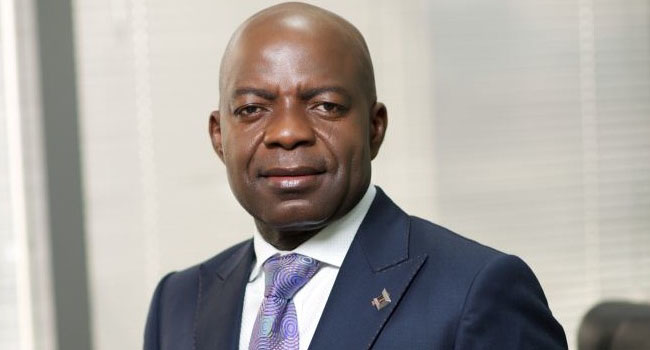
Abia state governor-elect, Alex Chioma Otti, admitted he has an enormous task ahead of him, but enthused the situation was not totally irredeemable.
In his acceptance speech after he was declared winner of the election, Otti said, “Our victory is for the Abians, for the civil servants, for the pensioners many of whom are being owed close to 60 months arrears of salary, and for doctors who have been on strike and are currently being owed 26 months arrears of salaries.
Otti: admits enormity of task ahead of him
“I know it’s going to be difficult, but I’m prepared to give good governance to our people. I already have my vision, encapsulated in my manifesto. In the next few days, I’ll appoint a transition committee and subsequently appoint a team, preparatory to my swearing in.”
He mentioned as most important now a deep look at the economy and how to harvest its low hanging fruits. This, he said, would enable him to jumpstart the state’s depressed economy.
Otti, noting that the state’s debt profile is currently about N190 billion, added, “When we go back to May 2015 when the government took over, records showed the debt was N34.5 billion. But currently, it has skyrocketed. However, all hope is not lost for Abia state. Our plan is to double the status of the N3.5 trillion Abia state economy.”
The governor-elect disclosed he was already engaging banks on possibilities of debt restructuring, debt write–off, interest write-off, and debt forgiveness.
He stressed that the next step would be to get approval from the Debt Management Office (DMO and issue bonds that would provide good terms for the loans for a much longer period. This, he said, would kick-start the state’s economy.
“For an economy that is in comatose, we have to jumpstart it by payment of salaries, allowances, pensions, and others.When this is done, people can participate actively in the economy. We are going to clear those outstanding salaries before the end of the year,” he said.
Onyekpere explained that states’ peculiarities vary and could inform economic options elected officials could use for wealth creation and lessening the unemployment burden.
“States like Katsina, Kaduna, Kano, Kebbi, and others have peculiar economic needs. They should look at areas of their competitive edge and grow their economies along those lines,” he said.
Incumbent Delta state governor, Ifeanyi Okowa, said that debt restructuring by the Federal government at the inception of the current administration helped states to stay afloat.
Okowa said, “When we came in in 2015, many states were having challenges with their debts. We worked with the Federal government to restructure those debts for 30 years.
“If you go to Delta state’s debts, you’ll discover that the debt restructuring we did with the Federal government has enabled us to be solvent, and has kept us to where we are currently.
“We will exit most of the internal debts we have in our state by May 29, 2023.
Possible opportunities on financial autonomy
A development economist, Kelvin Emmanuel, told The ICIR that states can build their financial autonomy with relevant enabling laws.
“Bill number 45 in the Constitutional Amendment that was recently signed into law in lieu of Executive Order EO10 that sought to grant financial autonomy to both state legislature and judiciary is the first step to governance and controls at sub-national levels,” Emmanuel said.
Emmanuel believes financial autonomy can help states to be prudent
He said that the Order, along with the rule enforced by the Nigeria Financial Intelligence Unit (NFIU), which prohibits cash withdrawals from state treasury, is critical for managing appropriation by sub-national authority.
“Considering that quite a number of states have a rising debt profile with irrevocable standing payment order (ISPO) is a reason the suit currently sitting at the Supreme Court, which seeks adjudication following a decision of a high court to let states collect their Personal Income Tax (PIT) and Value Added Tax (VAT), is key for states to raise their internally generated revenue, and pivotal to raising state government bonds as a tool to fund budget deficits in successive appropriations,” he said.
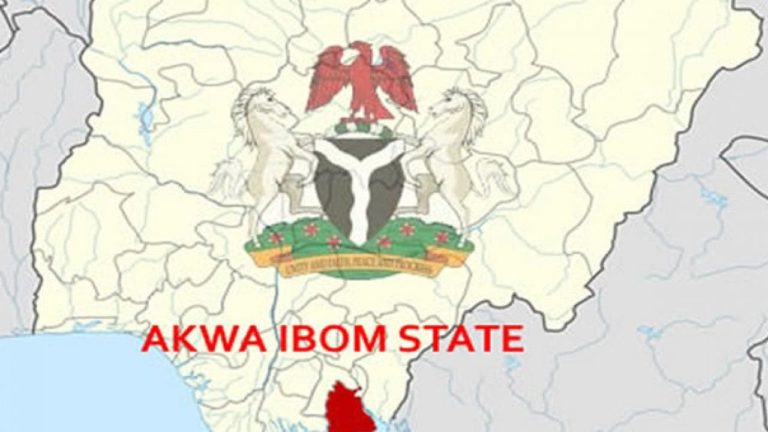
FORTY-FIVE inmates have been released across correctional centres in Akwa Ibom by the Chief Judge of the state Justice Ekaette Obot.
Obot released the inmates during a three-day visit to the correctional centres, noting that some of them have spent more years in detention than the penalty for the offence they were charged with.
Speaking with newsmen in Uyo on Friday, March 24, after a three-day visit to the centres, Obot called for the relocation of Eket Correctional Centre to decongest the facility for better management of inmates.
According to the News Agency of Nigeria, NAN, three inmates were pardoned from Ikot Abasi, nine were discharged and acquitted in Eket, 11 inmates were also freed from Ikot Ekpene while 22 inmates were released from Uyo correctional centres respectively.
The Chief Judge further explained that some of the discharged inmates were in the facilities for four or five years without being charged to court.
She urged the freed inmates to stay away from crimes as they might not be lucky to have another chance.
Obot further advised them to engage in useful ventures.
The CJ disclosed that Ikot Ekpene is the best facility for inmates, adding that the Eket facility is the worst with a capacity of 123 but currently having 300 inmates.
“As I said at the beginning, Ikot Abasi was okay, and the capacity was not fully utilised. So, it was more organised than every other facility apart from Ikot Ekpene. Ikot Ekpene is the best facility we have in the state.
“Eket is the worst of all, it is limited in space and the number is overwhelming and they are not able to cater for the inmates there.
“I have suggested that the custodial centre’s authority in Abuja should negotiate with the governor of the state and even the community for a good space to relocate that facility for better management of the inmates,” she said.
The Chief judge called on the police officers in charge of legal matters and the director of public prosecution to ensure diligence in prosecution to avoid the destruction of the justice delivery system.
She added that some inmates are kept in the custodial centres without trial and no case for years by the police and public prosecution.
THE Lagos State government has explained its decision to appeal a Federal High Court judgment that awarded N5 million as compensation to a driver allegedly assaulted during the #EndSARS memorial rally in Lagos.
The State’s Ministry of Justice, in a statement on Saturday, March 25, by its spokesperson, Grace Alo, said that the state government opposed the applicant’s claims during the case hearing.
Adedotun Clement, the driver in question, was carrying a passenger when he encountered a gridlock at the Lekki Toll-Gate during a protest to commemorate the first anniversary of #EndSARS.
He was subsequently tortured and pepper-sprayed by the Lagos State Neighbourhood Safety Agency officers and policemen.
On March 14, 2023, the court ordered the state government to pay Adedotun N5 million as compensation for the torture he suffered during the protest.
However, Adedotun’s counsel, Inibehe Effiong, claimed that the Lagos government was rejecting the judgment of the High Court, alleging a “lack of evidence for the torture.”
But the ministry explained that filing an appeal and asking for a stay of execution of the judgment was a constitutional right available to the state government to protect and reserve its rights under the law.
The statement added that the appeal and stay of execution did not prevent the ministry from further reviewing the matter and deciding whether to proceed with or withdraw the appeal.
The ministry assured the public that it would continue to be guided by the rule of law in carrying out its duties.
Alo also stated that once a definitive position was taken on the matter, the public would be notified.
The #EndSARS protests were a series of demonstrations in Nigeria in 2020 that demanded an end to police brutality and the dissolution of the Special Anti-Robbery Squad (SARS) unit of the Nigerian police.
The protests started in Lagos and quickly spread to other parts of the country, including Abuja. The protests were largely peaceful, but they were met with a violent crackdown by the police and other security agencies, leading to the deaths of several people.
The protests drew international attention, and the Nigerian government eventually dissolved the SARS unit and promised to reform the police force.
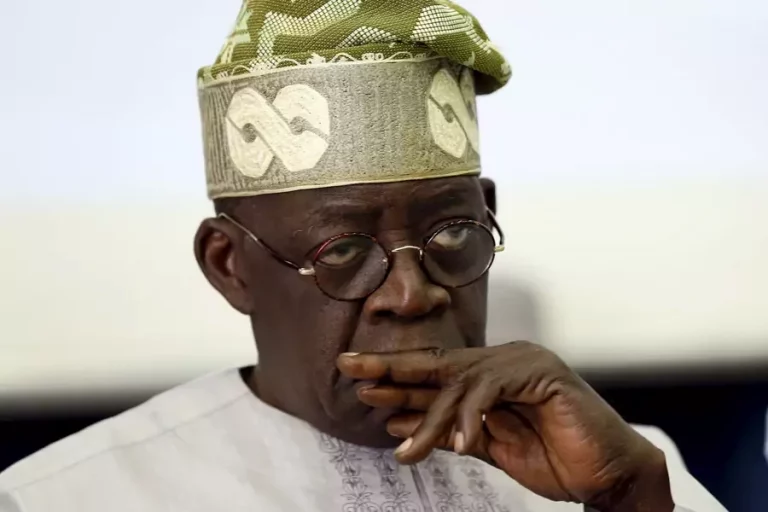
THE Court of Appeal in Abuja has dismissed an appeal by the Peoples Democratic Party (PDP) seeking to disqualify the All Progressives Congress (APC) presidential candidate, Bola Tinubu and his running mate Kashim Shettima, from the just concluded February 25 election.
In a unanimous judgment delivered by a three-member panel led by Justice James Abundaga on Friday, March 24, the court held that the PDP failed to demonstrate locus standi to institute the case.
The PDP had filed an appeal to reverse the Federal High Court’s January 13 judgment, which dismissed its suit on the grounds that it lacked locus standi.
The Independent National Electoral Commission (INEC), APC, Tinubu, and Shettima were respondents in the appeal, while the PDP was the appellant.
The PDP’s suit, filed on July 28, 2022, challenged the validity of the Tinubu/Shettima ticket for the 2023 presidential election. The party argued that Shettima’s nomination as the running mate violated the provisions of Sections 29(1), 33, 35, and 84(1)(2) of the Electoral Act, 2022 (as amended), claiming that Shettima had double nominations.
It argued that Shettima’s nomination as a vice-presidential candidate and the candidate for the Borno Central Senatorial seat contravened the law.
The PDP had sought an order to disqualify the APC, Tinubu, and Shettima from contesting the presidential election scheduled for February 25 and an order nullifying their candidacy.
The party also asked the court to compel INEC to remove their names from its list of nominated or sponsored candidates eligible to contest the election.
However, the defendants urged the court to dismiss the suit for lack of jurisdiction, arguing that the plaintiff lacked locus standi to institute the case, which challenged APC’s decision and its nomination of candidates for the election, which were within the confines of the party’s internal affairs and thus, non-justiciable.
Justice Abundaga, delivering the lead judgment, agreed with the respondents’ lawyers’ submissions that the PDP was a busybody meddling in the APC’s internal affairs.
He held that the trial court was right to have held that the PDP failed to establish its locus standi.
“The appellant, having failed to disclose its locus standi, this appeal fails, and it is hereby dismissed,” he said, affirming the judgment of the Federal High Court.
The judge also awarded N5 million cost against the appellant’s lawyer, J. O. Olotu.