
Why I will not appear before PDP disciplinary panel – Ortom
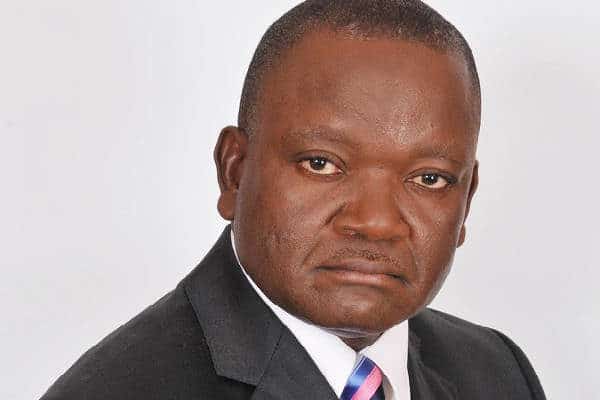
GOVERNOR of Benue State, Samuel Ortom has faulted the disciplinary action taken against him by the Peoples Democratic Party (PDP) over his alleged involvement in anti-party activities.
The governor described the decision referring him to the party’s disciplinary committee as “contemptuous” in a statement by his Chief Press Secretary, Nathaniel Ikyur on Thursday, March 23.
Ortom said the PDP disregarded a Court Order which barred the party and its organs from issuing any disciplinary measure against him.
The statement said, “The case is pending in court and there is an order of injunction restraining all organs of the party from carrying out disciplinary actions against the Governor. This Case is adjourned to 18th April 2023 and so it is baffling to see such a statement coming from the national leadership of the party.
“I think the national leadership of our party is losing its sense of direction. Instead of the leadership to sit back and think of ways of rebuilding the party following the aftermath of the just concluded elections, they are going about chasing imaginary shadows.”
Ortom, who campaigned for Peter Obi of the Labour Party against his party’s candidate, Atiku Abubakar in the build up to the 2023 general elections, noted that the PDP National Chairman Iyorchia Ayu should be the “first” to face the disciplinary committee.
In an interview with Arise TV, Ortom accused Ayu of leading Atiku to the gutters. He also blamed the national chairman’s actions for the party’s failure to win the presidential poll.
“As if that is not enough, there are strong indications that the national chairman was involved in anti-party activities in Benue State by working for the opposition All Progressives Congress, APC, just to get at me because of my principled stand against certain aspects of the decisions of the national leadership of the party.”
Ortom lost his senatorial bid to Titus Zam of the APC, his former Special Adviser on Local Government and Chieftaincy Affairs.
Meanwhile, the PDP has suspended some of its chieftains over alleged anti-party activities. These include former governor of Ekiti State Ayodele Fayose and former President of the Senate, Pius Anyim.
The party also suspended Aslam Aliyu and Dennis Ityavyar, members of the party in Zamfara and Benue states, respectively.
Media hubs seek entries for global youth media prize

THE Global Youth and News Media Prize, supported by the European Journalism Centre, the Google News Initiative, News-Decoder, and others, is accepting entries for the News/Media Literacy – Press Freedom Teaching Award.
The award aims to celebrate works that serve, support, attracts, and/or learn from young audiences.
Nominees for the Press Freedom Teaching Award must be educators and news organisations with an initiative to help students develop a thorough understanding of the crucial role of journalism in society and of the sometimes deadly risks for people who do this work.
READ ALSO:
- Appeal Court dismisses PDP’s suit challenging Tinubu’s candidacy
- 2023 Governorship Election: Winners and runners-up
- Ortom, Fayose dismiss suspension by PDP
- Taz Panter foundation offers Africa workshop
- Why Nigeria needs Child Rights Curriculum in varsities, others – UNICEF
Laureates will take part in an international ceremony and webinar designed to spread the word about their outstanding contributions to journalism and education and to encourage emulation of them.
Educators and news organizations targeting children and teenagers can compete for an award.
The deadline for the submission of the application is May 1, 2023. Interested applicants can submit entries here.
Ortom, Fayose dismiss suspension by PDP

BENUE State governor Samuel Ortom and former governor of Ekiti State, Ayo Fayose, have reacted to the disciplinary actions taken against them by the Peoples Democratic Party (PDP) over alleged anti-party activities.
The party had announced the suspension of some of its members, including Fayose, former president of the Senate, Pius Anyim, Dennis Ityavyar, and Aslam Aliyu while referring Ortom to its disciplinary committee.
The party’s National Publicity Secretary, Debo Ologunagba, who announced the decision in a statement on Thursday, March 23, said the suspension takes immediate effect.
Reacting, Ortom said that the party was acting in contempt of a subsisting Court Order.
He also said that it was contemptuous of the party’s leadership to disregard the Court Order, which barred the party or any organ of its organs from taking any disciplinary measure against him.
“I think the national leadership of our great party is losing its sense of direction,” said Ortom’s Chief Press Secretary, Nathaniel Ikyur, in a statement on Thursday.
“Instead of the leadership to sit back and think of ways of how to rebuild the party from the ruins of the defeat from the just-concluded elections, they are going about chasing imaginary shadows.”
Ikyur also added that the first person the party should refer to the disciplinary committee should be the national chairman of the party, Iyorchia Ayu, who lost his polling unit, ward, local government, and even the state in the just concluded general elections.
Fayose, on his part, described his suspension as “the last kick of a dead horse”.
The former governor said, “Ayu and his cohorts are only entertaining themselves with the purported suspension as their latest comedy skit.”
He added that he and others who stood by the party when Ayu and his cohorts left it to die, stating that the purported suspension would not stand.
Fayose had previously attacked Ayu following the defeat of the PDP presidential candidate, Atiku Abubakar, in the February 25 presidential election.
In an interview with Arise TV, he accused Ayu of leading Atiku to the gutters.
Taz Panter foundation offers Africa workshop

THE taz Panter Foundation is inviting applications for its Africa workshop themed ‘Reconnecting – African-European Perspectives’.
The event will help journalists report on major issues, including food security in the aftermath of the Ukraine crisis, climate change, disinformation, migration, and gender.
The training consists of a seven-session webinar series every four weeks from June to December, followed by an eight-day all-expensed-paid workshop in Berlin in January 2024.
The program is open to participants from Botswana, Cameroon, Cape Verde, Gambia, Ghana, Ivory Coast, Kenya, Lesotho, Liberia, Malawi, Mauritius, Namibia, Nigeria, Rwanda, Senegal, Seychelles, Sierra Leone, South Africa, and Zambia.
Applicants must be fluent in English, which is the working language of the program.
Journalists from 19 African countries can apply for this free training.
The deadline for the submission of the application is April 16, 2023. Interested applicants can apply here.
LP dismisses APC’s call for Obi, Datti’s arrest

THE Labour Party (LP) has dismissed calls by the All Progressives Congress (APC) for the arrest of its presidential candidate, Peter Obi, and his running mate, Yusuf Datti Baba-Ahmed, over alleged treasonable felony.
APC presidential campaign spokesperson Festus Keyamo, also minister of state for labour and employment, had called for the arrest of the LP candidates, claiming that they were preparing grounds for insurrection against the Nigerian state.
However, the LP has dismissed the calls describing it as a desperate attempt to gain political relevance.
Spokesperson of the LP Presidential Campaign Council, Yunusa Tanko, stated that Datti is a free citizen of Nigeria and is entitled to his fundamental right of freedom of expression.
Tanko also stressed that Datti never called for insurrection or any act envisaging treason.
He further called out Keyamo for recognizing that the elections were marred with blatant rigging, violence, voter suppression, and intimidation orchestrated by his party.
He pointed out Keyamo’s failure to report MC Oluomo, who told Igbos not to vote in Lagos, accusing the minister of ignoring the ethnic and tribal vitriol by his party and their supporters.
Tanko also criticized Keyamo for not reporting Tinubu, who, according to him, was recorded telling key supporters to fight, snatch, grab and run with ballot boxes during the elections.
According to Tanko, Keyamo has achieved nothing as a minister except posting fake news to rile up the polity on social media.
EFCC to go after corrupt public officials from May 29 – Bawa
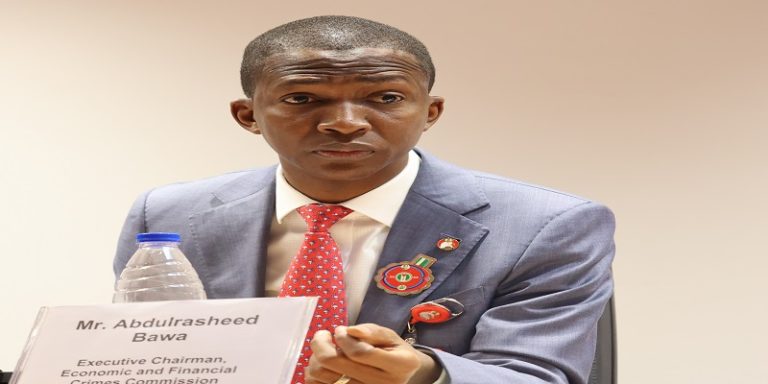
THE Economic and Financial Crimes Commission (EFCC) will target several departing governmental officials after May 29.
The EFCC Chairman, Abdulrasheed Bawa, provided this information in an exclusive interview with Daily Trust on Thursday, March 22.
Bawa revealed that at least two ministries are currently on the Commission’s radar for fraudulent operations bordering on procurement processes. However, he withheld the identities and the number of public officials who would be brought to justice according to the law.
“Currently, we’re investigating two ministries where double payments were made. In one of the ministries, the double payments, cumulatively, were about 20 contracts of over N4 billion.
“These were contracts that were done way back in 2018, and then some group of people, so bold, came up with the same narration.
“They moved the documents from the file, forged them, and then, of course, in conspiracy of some civil servants, raised vouchers and pay. How can that happen if we have digitalised procurement processes?” Bawa asked.
Bawa also reacted to calls for his sack by several civil society organisations.
“It is on record that I am the first sitting EFCC chairman to go to court and testify, not once, not twice or three times. We now have some groups of people that were paid; we know the people that are paying them, coming up with all sorts of gang-ups.
“We are following due process and the rule of law. The court had made a pronouncement, we have appealed that, and there is a stay of execution. What do you expect? We move on!” Bawa said
He pointed out that over the past few months, the EFCC had made more attempts than ever to institutionalise its operational activities.
He said massive arrests would be made in May, after which the Commission would commence prosecutions.
“And for those people that are not leaving in May, whenever they are leaving, we will be waiting for them to ensure that justice is done,” he added.
The ICIR reported that the EFCC is prosecuting high-profile cases nationwide in various courts.
The EFCC also made some high-profile arrests in 2022.
The arrested persons were alleged to be involved in one fraudulent activity or the other.
Why Nigeria needs Child Rights Curriculum in varsities, others – UNICEF
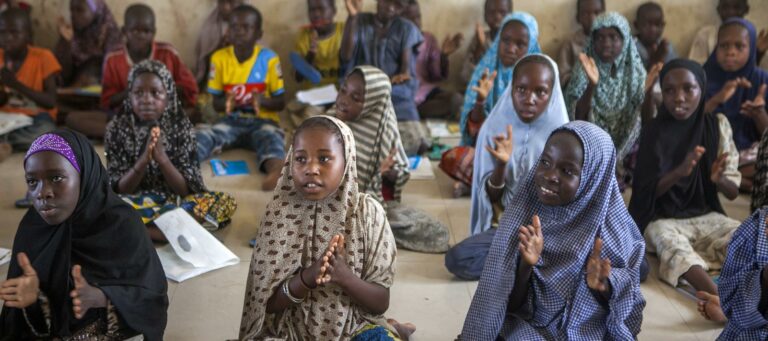
THE United Nations Children Fund (UNICEF) has appealed to Nigerian universities and other tertiary institutions to mainstream Child Rights Curriculum into their programmes.
UNICEF Chief of Field Office, Enugu, Juliet Chiluwe, made the call on Thursday, March 23, at a Two-Day Training of Trainers (ToT) in Child Rights Curriculum, organised by The Child Rights Information Bureau (CRIB) of the Federal Ministry of Information and Culture in conjunction with UNICEF, in Enugu, Enugu State.
The gathering had at least 12 academics and about 30 journalists.
Chiluwe, who oversees eight states for UNICEF, including the five South-East states and three others, commended the Nnamdi Azikiwe University (NAU), Awka, Anambra State, for being the first tertiary institution in Nigeria to endorse child rights curriculum as a general studies course, and making it compulsory for its Mass Communication students.
She said Child’s Rights Reporting Curriculum (CRRC) for tertiary institutions became imperative because communicating children’s rights was challenging.
According to her, a broad range of abuse against children emanates from ignorance of what constitutes a child’s right.
“This great opportunity helps to broaden the scope of knowledge and exposure of the communication students and practitioners of Mass Communication by infusion of the Child Rights concerns, which are also topical concerns for human development.”
Different experts who spoke at the training said when students, especially those studying Mass Communication and Law, understand child rights from school, it would be easy for them to put them in the right perspectives when practising.
In a presentation titled “The Foundation of Child’s Rights”, a veteran journalist, Jide Johnson, who holds an academic doctorate, said children constitute half of the population in most developing countries and are more vulnerable to poverty and abuse.
He explained that the effects of poverty and abuse often left indelible marks on children’s development and potential.
A child is a person under 18, as defined by the Nigerian Child Rights Act (2003) and the Convention on the Rights of the Child (1989).
Johnson summarised child’s rights as a wide range of civil, political, economic, social, and cultural rights/entitlements based on four human rights principles: universality, indivisibility, accountability and interdependence/inter-relatedness.
He explained that the actions of many adults in the country were harmful to children, including misconduct and other unlawful practices.
The journalist noted that children suffer as casualties of war or violence, victims of racial discrimination, neglect, malnutrition and hunger, infectious diseases, poverty and deprivation, cruelty and exploitation, environmental degradation, lack of clean water, malnutrition and diseases, among others, which he said justified the reason the Child Rights Curriculum was introduced.
He said every child had the right to survival, development, protection and participation.
He argued that though Nigeria had its Child Rights Act (2003), children’s rights must be defined in society so that they are protected, and their voices are heard on issues that affect them.
“We must provide an environment for them to survive, develop, and achieve. We are here to advocate for these rights to be recognised and for the duty-bearers like caregivers to understand the responsibilities they have to ensure that rights are complied with by all stakeholders in our society.”
One of UNIZIK’s lecturers at the training, Nneka Umejiaku, a doctor, averred that every child had inalienable rights.
She said the new curriculum was a good development because it would create awareness.
“The importance of child rights can never be over-emphasised because they are the future of any country. The government must protect the children because they are future leaders of society.”
In a chat with The ICIR, Nkechi Okpalaobi, a professor of Law at UNIZIK, said she had been working on child rights in the university and within her locality since 2010 while studying for her doctorate.
While highlighting the gains of making child rights a course for students, she lauded UNICEF for promoting the curriculum.
“We, the media and the academia, must mainstream children’s rights in schools’ curriculum, engage in advocacy programmes that would further promote the good of the child.”
Njideka Ezeonyejiaku, one of the lecturers at the workshop, also spoke with The ICIR. She holds a doctorate and teaches at UNIZIK’s Mass Communication department.
She said while society must prioritise child’s rights, parents must avoid over-pampering their children to avoid making them irresponsible in the future.
She said many children, including adults in the universities, were finding it challenging to cope in school because they had developed a lackadaisical attitude to work or were prevented by their parents from doing domestic chores and related activities at home.
In a report commemorating 2022 Children’s Day, The ICIR explained how Nigeria was not doing enough for its children.
CBN confirms latest N3.01bn release to DisCos for power sector intervention
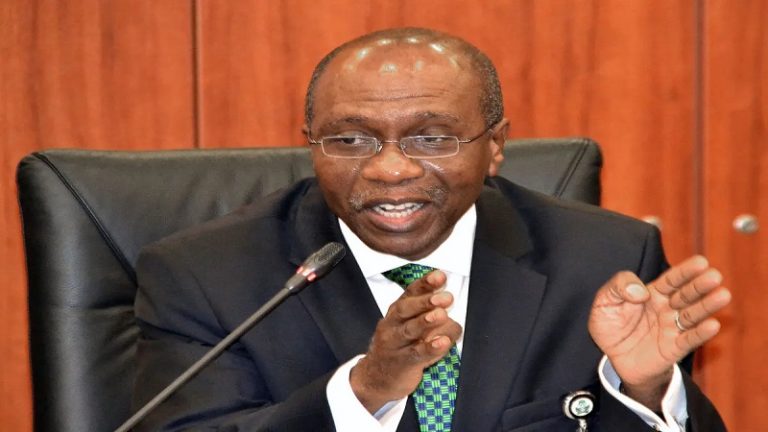
THE Central Bank of Nigeria (CBN) has confirmed the latest release of N3.01 billion under the Nigerian Electricity Market Stabilisation Facility (NEMSF-2) for capital and operational expenditure of electricity distribution companies (DisCos).
The CBN Governor, Godwin Emefiele, who made the disclosure today in Abuja, explained that the facility was aimed at improving the liquidity status of the DisCos and aiding their recovery of legacy debt.
The CBN has so far disbursed a total sum of N18.26 billion to the first batch of beneficiaries of the N213 billion NEMSF.
Emefiele reassured that the facility was a way of kick-starting the electricity market in order to ensure that the sector delivers tangible improvement in power supply for all Nigerians.
He explained that the CBN, in collaboration with the banking sector, offered to provide the facility to address recent shortfalls in power sector revenues caused by needed adjustments in the electricity tariff and legacy gas debts.
The ICIR had reported that the World Bank had also issued a loan facility support of $750 million to facilitate a credible electricity market in Nigeria’s power sector.
An industry source attributed the support from the World Bank and interventions from the apex bank as one of the key reasons for marginally improved power supply across the country.
“Most of the positives we are seeing today is one of the demands of the World Bank in lending us support to drive a credible electricity market. I can confirm to you now that Nigeria has set a minimum threshold to draw World Bank’s facility support with the persistent market reforms being undertaken currently by the regulator, the NERC,” a power sector governance expert and principal partner of Nexier Power, Emeka Okpukpara, told The ICIR.
TB killed 1.6m, infected 10.6m globally in 2021 – WHO

AS the world commemorates World Tuberculosis Day on Friday, March 24, the World Health Organization (WHO) said the disease killed 1.6 million people and infected 10.6 million globally in 2022.
Speaking on the disease in a message, Tereza Kasaeva, a doctor and Director of the Global Tuberculosis Programme, called on world leaders to invest more in tools and drugs to further help tackle the disease.
Tuberculosis, otherwise known as TB, affects the most vulnerable and marginalized worldwide, said Kasaeva.
According to her, global efforts to combat the disease have saved an estimated 74 million lives since 2000.
But she said the COVID-19 pandemic, conflicts in parts of the world, and the socio-economic inequities crisis had reversed the years of progress made in the fight against the condition.
“This has placed a heavy burden on those affected, especially the most vulnerable. For the first time in over a decade, WHO reported that estimated TB incidence and death have increased. Actions and investments still fall far short of those needed to handle the TB epidemic.”
She said there were several opportunities to raise visibility and political commitment and enhance commitment to the TB response.
“The theme of World TB Day 2023, ‘Yes, we can end TB,’ reflects this and aims to inspire hope and encourage high-level leadership, increase investment faster uptake of WHO recommendations, adoption of innovations, accelerated actions and multi-sectoral collaboration to combat the TB epidemic.
“On World TB Day, WHO is calling for action on several fronts to ensure that the commitments made to end TB are achieved.”
She said the 2023 UN high-level meeting on TB at the General Assembly in September would provide a better avenue for more commitment to fighting the disease.
READ ALSO:
- Media hubs seek entries for global youth media prize
- Global economic cost of water insecurity nears $500bn – World Bank chief
- Calm Down: how Nigerian singer and a Cameroonian dancer inspired a powerful new protest in Iran
- Balkan Investigative Regional Reporting Network seeks chief investigations’ editor
- Over 400 rebels accused of killing ex-Chadian President Derby sentenced for life
While urging good participation by world leaders and robust society engagement, Kasaeva called for an urgent increase in local and international investment in TB, including deploying more tools to tackle the ailment.
In 2021, The ICIR reported how an official of the Federal Ministry of Health raised the alarm that Nigeria could face a TB crisis, given its high prevalence and mortality.
The officials said that despite Nigeria having the highest cases of TB in Africa, the Federal Government provided only seven per cent of the funds needed to fight the condition.