Home Blog Page 1007

FG to commence flights on Nigeria Air before May 29

0

THE Nigerian Ministry of Aviation has said local and international flights will commence on the proposed national airlines, Nigeria Air, before May 29.

Minister of Aviation Hadi Sirika disclosed this on Thursday, March 23, during the ongoing 2023 National Aviation Stakeholders Forum.

“Operation of local and international flights will commence soon. Before the end of this administration, before May 29, we will fly,” Sirika said.

The minister noted that the national carrier would contribute to Nigeria’s Gross Domestic Product (GDP), and also improve tourism and hospitality in the country.

He added that the airline would develop the agricultural sector and create jobs along the agro-cargo terminals.

According to him, negotiations between the Ethiopian Airlines Group Consortium and the Nigerian government were ongoing over the commencement of the airline’s operations.

Sirika had said in February that flights on the national carrier would commence immediately the issuance of the Air Operators Certificate (AOC) was concluded by the Nigeria Civil Aviation Authority (NCAA).

The Federal Government has faced criticism over the relevance and sustainability of a new national airline following the failure of the previous carrier as a result of corruption and mismanagement.

Some local airlines in the country have also sued the Federal Government over the establishment of the national carrier, arguing that it would enjoy unfair advantages within the aviation sector

NCoS destroys prohibited items worth over N150m

0

THE Nigerian Correctional Service (NCoS) has destroyed seized and confiscated items from various Custodial Centers across the nation worth over N150 million at the National Headquarters, Abuja.

The prohibited items seized overtime via the proactive measures and routine search of cells by officers and men of the Service include cell phones, sim cards, laptops, hard drugs, power banks and other electronic devices considered contraband for inmates in custody.

This was disclosed by the Public Relations Officer of the Service, Abubakar Danlami Umar, in a statement on Thursday, March 23.

He said the Controller General of Corrections (CGC), Haliru Nababa set the items ablaze in fulfilment of sections 51 and 52 of the Service Standing Orders (SO).

The items before they were set on fire.Photo credit: NCoS
The items before they were set on fire.
Photo credit: NCoS

“Nababa thereafter thanked the Officers for their display of professionalism and assured the general Public that the Service will not relent in efforts towards ridding all Custodial Centers of prohibited items,” he said.

The CGC further stressed that searching cells would be a continuous exercise to ensure that inmates in Custody comply with standard operating procedures, which gives room for rehabilitation and reformatory programmes to thrive.

According to him, returning the inmates to society as self-sustained persons and employers of labour are paramount in the agenda of the Service at this time.

Behold governors elected in Nigeria’s gubernatorial elections

1

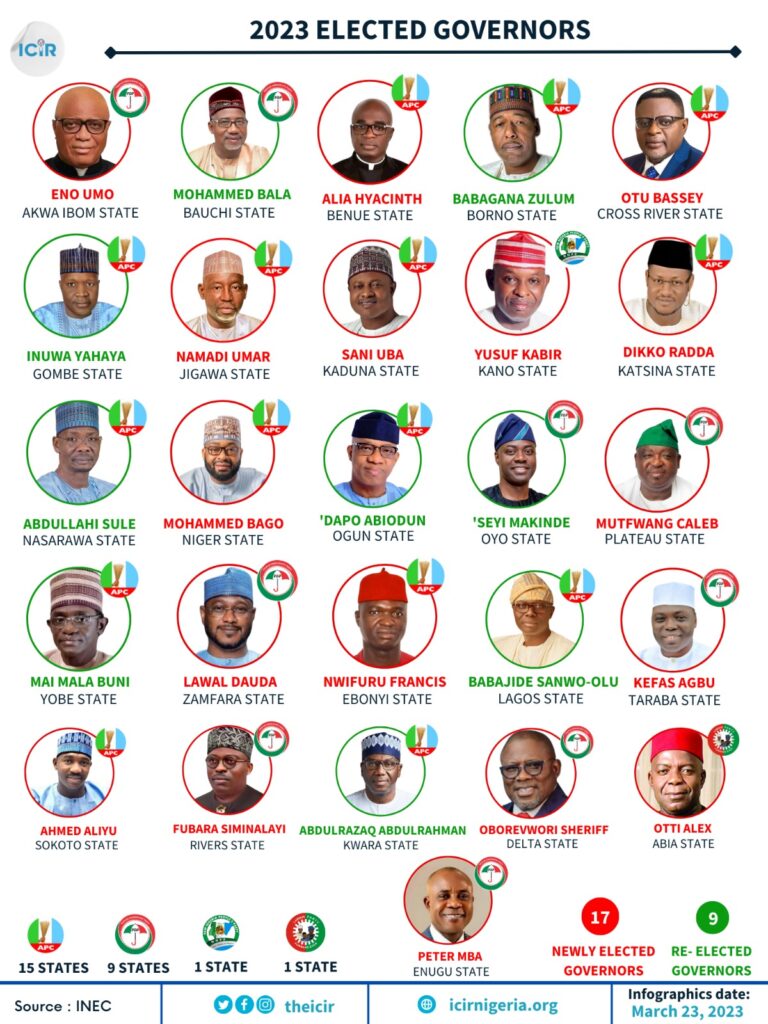
FOLLOWING the March 18 governorship elections, the Independent National Electoral Commission (INEC) has announced the winners in 26 states. The polls held in 28 states. Elections in two outstanding states were declared inconclusive.

INEC declared elections in Adamawa and Kebbi states inconclusive because of massive cancellation, over-voting and the low margin of winning votes.

Out of the nation’s 36 states, eight, namely Anambra, Bayelsa, Edo, Ekiti, Imo, Kogi, Ondo and Osun, hold off cycle governorship elections due to litigations and court judgments. Elections in Kogi, Bayelsa and Imo are scheduled for November 2023.

Also, out of the 28 states where governorship elections were conducted, governors sought re-election in 11 states. The states are Oyo, Bauchi, Kwara, Gombe, Nasarawa, Yobe, Ogun, Lagos, Borno and Adamawa.

Eighteen political parties participated in the governorship election across the 28 states with 416 candidates showing interest in the position. Despite over 74 million voters registered and more than 69 million PVCs collected in the 28 states, 19.3 million voters voted during the guber polls in 23 states.

The ICIR couldn’t verify the number of voters that participated in Zamfara, Taraba, Abia, Kebbi and Adamawa guber polls.

However, of the 26 winners announced so far, 17 were first timers while the remaining secured their second term mandate. Although there were many irregularities that marred and affected the outcome of the polls across the states, the election was still perceived to be an upgrade on the Presidential Election held on February 25.

A breakdown of the results from the 26 states where winners have been declared showed that the All Progressives Congress (APC) won in 15 states while the main opposition Peoples Democratic Party (PDP) emerged victorious in nine states. The New Nigeria Peoples Party (NNPP) and the Labour Party (LP) won a state each.

The states won by the APC are Benue, Borno, Cross River, Ebonyi, Gombe, Jigawa, Kaduna, Katsina, Kwara, Lagos, Nasarawa, Niger, Ogun, Sokoto, Yobe. 

PDP on the other hand won Akwa Ibom, Bauchi, Delta, Oyo, Plateau, Taraba, Rivers, Zamfara and Enugu

NNPP and LP secured Kano and Abia states, respectively.

It is interesting to note that the APC claimed Lagos State after the LP took the state during the presidential election held on February 25. Babajide Sanwo-Olu edged LP’s governorship candidate with over 300,000 votes difference and was declared the winner amidst reported cases of voter suppression and violence in some parts of the state.

In Rivers, Governor Nyesom Wike’s anointed candidate Sim Fubura was declared the winner after polling 302,614 votes during the guber election. Tonye Cole of the APC came a distant second with 95,274 votes while Beatrice Itubo of the LP scored 22,224 votes to come third. This was unlike the outcome of the presidential election when the ruling APC secured the majority of votes in the state.

The New Nigeria Peoples Party governorship candidate in Kano Abba Kabir Yusuf claimed the governorship seat after polling more than a million votes to defeat the ruling party’s candidate. However, APC will continue as the ruling party in Kaduna.

Also, Alex Otti of the Labour Party in Abia State was the only governorship candidate of the party that won the guber poll. Otti polled a total of 175,466 votes to defeat his closest rival and candidate of the PDP who scored 88,526. He was declared winner after the result from the controversial Obingwa Local Government Area was announced by INEC.

Meanwhile, there was a major upset in Zamfara as the PDP candidate Daudu Lawal won the election to defeat the sitting governor, Bello Matawalle. Matawalle is the only incumbent governor that has so far lost his second term bid out of the 11 governors that sought reelection. 

Below are the Governors reelected under the APC

  1. Babajide Sanwolu, the executive governor of Lagos State secured his second term after edging his closest rival, Gbadebo Rhodes Vivour.
  2. Dapo Abiodun was also reelected as the executive governor of Ogun State after polling 276,298 votes to defeat Ladi Adebutu of the PDP.
  3. Babagana Umaru Zulum won the guber poll in Borno with over 400 votes. He secured 545,543 to defeat PDP’s Mohammed Ali who scored 82,147.
  4. Abdulrazaq Abdulrahman retained his seat in Kwara after scoring 273,424 votes to defeat PDP’s Yaman Abdullahi.
  5. Muhammadu Yahaya won his reelection bid in Gombe. He defeated Mohammed Bade of the PDP.
  6. Abdullahi Sule also secured his second term by defeating David Ombugadu of PDP in Nasarawa. Sule scored 347,209 votes.
  7. Mai Mala Buni won his reelection as the governor of Yobe state with 317,113 votes. He won in all the 17 LGAs of the state.

Governors that secured second term under PDP

8. Seyi Makinde of Oyo State got 563,756 votes to defeat his closest rival Teslim Folarin of the APC who polled 256,685 votes.

9. Bala Mohammed of Bauchi State polled 525,280 votes while his closest rival, Sadique Abubakar of the APC got 432,272 votes.

Newly elected governors 

APC:

10. Hyacinth Alia defeated his closest rival, Titus Uba of the PDP who came a distant second, with a margin of 251,020 votes in Benue State.

11. Bassey Ottu polled 258,619 votes to defeat the candidate of the PDP, Sandy Onor, who scored 179,636 votes, in Cross River State.

12. Sheriff Oborevwori scored 360234 votes to defeat the APC candidate, Senator Ovie Omo-Agege, who scored 240229 in Delta State.

13. Inuwa Yahaya won the guber poll with 342,821 votes in Gombe State.

14. Umar Namadi defeated PDP’s Lamido Mustapha Sule after polling 618,449 in Jigawa State.

15. Uba Sani polled 730,002 votes to defeat Mohammed Isa Ashiru of the PDP, who scored a total of 719,196 votes in Kaduna State.

16. Dikko Radda polled 859,892 votes to emerge the governor-elect in Katsina State.

17. Mohammed Bago scored 46,9896 votes to defeat his closest rival, Liman Isah Kantigi of PDP, who garnered 38,7476 votes, in Niger State.

18. Ahmed Aliyu Sokoto had a total of 453,661 votes to defeat his closest rival and candidate of the Peoples Democratic Party, Saidu Umar, who got 404,632 in Sokoto State.

PDP:

19. Umo Eno scored 354,348 votes, beating his closest rival the Young Progressive Party (YPP), who got 136,262 votes in Akwa Ibom.

20. Caleb Mutfwang polled 525,299 votes to defeat his closest rival and the candidate of the ruling APC Nentawe Yilwatda, who polled 481,370 votes in Plateau State.

21. Siminialayi Fubara scored 302,614 votes to win the governorship seat ahead of Tonye Cole of the APC, who had 95,274 votes, in Rivers State.

22. Kefas Agbu polled 257,926 to edge the NNPP candidate, Muhammad Yahaya, who scored 202,277 votes to emerge second in Taraba State.

23. Daudu Lawal won the election after scoring 377,726 votes in Zamfara State.

24. Peter Mbah scored 160,895 votes to defeat his closest rival, Chijioke Edeoga of the Labour Party (LP), who polled 157,552 votes, in Enugu State.

NNPP:

25. Abba Kabir Yusuf was declared the winner with 1,019,602 votes, defeating his closest rival, APC candidate Nasir Gawuna, who polled 890,705 votes, in Kano State.

LP:

26. Alex Otti was declared the winner after defeating the candidate of the ruling party, PDP, in Abia State.

*Additional research was done by James Emmanuel.

Calm Down: how Nigerian singer and a Cameroonian dancer inspired a powerful new protest in Iran

0

By Ananya Jahanara Kabir, King’s College London

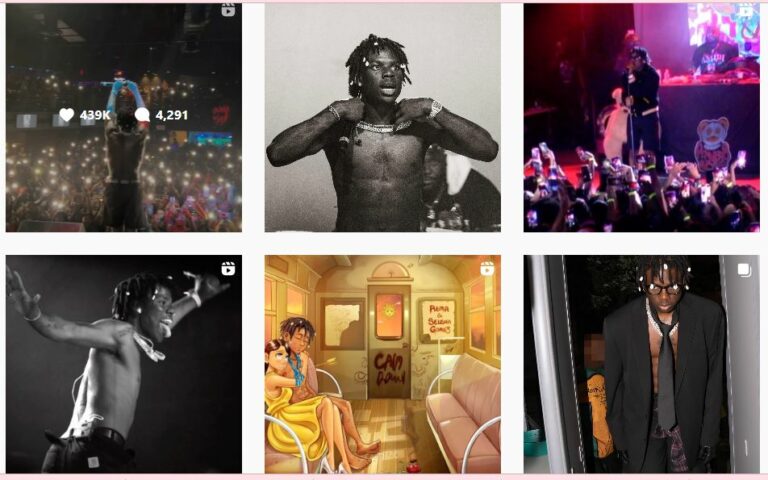
ON 8 March 2023, five teenage girls uploaded on social media a video of themselves performing the Calm Down Dance Challenge. This is the choreography for the first verse of the Afrobeats hit Calm Down by Nigerian singer Rema (Divine Ikubor).

The girls were following people across the world who’ve made this dance challenge go viral for over a year by uploading videos of themselves dancing to it. With one difference, though: they were dancing in Iran, where it is forbidden to dance in public, especially without the mandatory headscarves for women.

By 10 March, the 40-second video had gained enough notoriety for the dancers to be rounded up by authorities and made to apologise publicly. But the genie was out of the bottle. Their video is still circulating across social media.

They’re the latest in an escalating series of challenges to the Islamic Republic of Iran, rippling outwards from the death in custody of Mahsa Amini in September 2022. The Iranian woman was arrested for refusing to wear the headscarf in the prescribed manner.

Iranian girls dance to Calm Down.

Six months later, Iranian girls are still protesting – but now through a song by an African singer and a dance routine by an African dancer.

A winning combination of music, movement and technology can make dance routines go viral. This was seen, for example, during the COVID pandemic with the South African music and Angolan choreography to the hit song Jerusalema by Master KG.

In popular culture singers are known by name, but dancers largely remain unacknowledged. So who first dreamt up the Calm Down dance that has catapulted from microblogging fame to joyous defiance of a notoriously repressive regime?

The choreography

On 7 March 2022 the now-famous choreography for Calm Down first appeared on the TikTok handle Loïc Reyeltv. The poster was Cameroon-born, Montreal-based Loïc Ngumele Sipeyou, known professionally as Loïc Reyel. He’s the founding director of Afro Vybz dance school and in the video he’s dancing with five students.

Their short routine coordinates expressive hand gestures with footwork drawn from African street dance styles that globally circulate through teachers such as Loïc. Think Ivorian coupé-decalé, Nigerian shoki, Ghanaian azonto, Angolan kuduro … These local responses to pan-African electronic music constantly combine with Caribbean and African American dance styles to remember and resist the traumas of enslavement, colonialism and policing of the Black body.

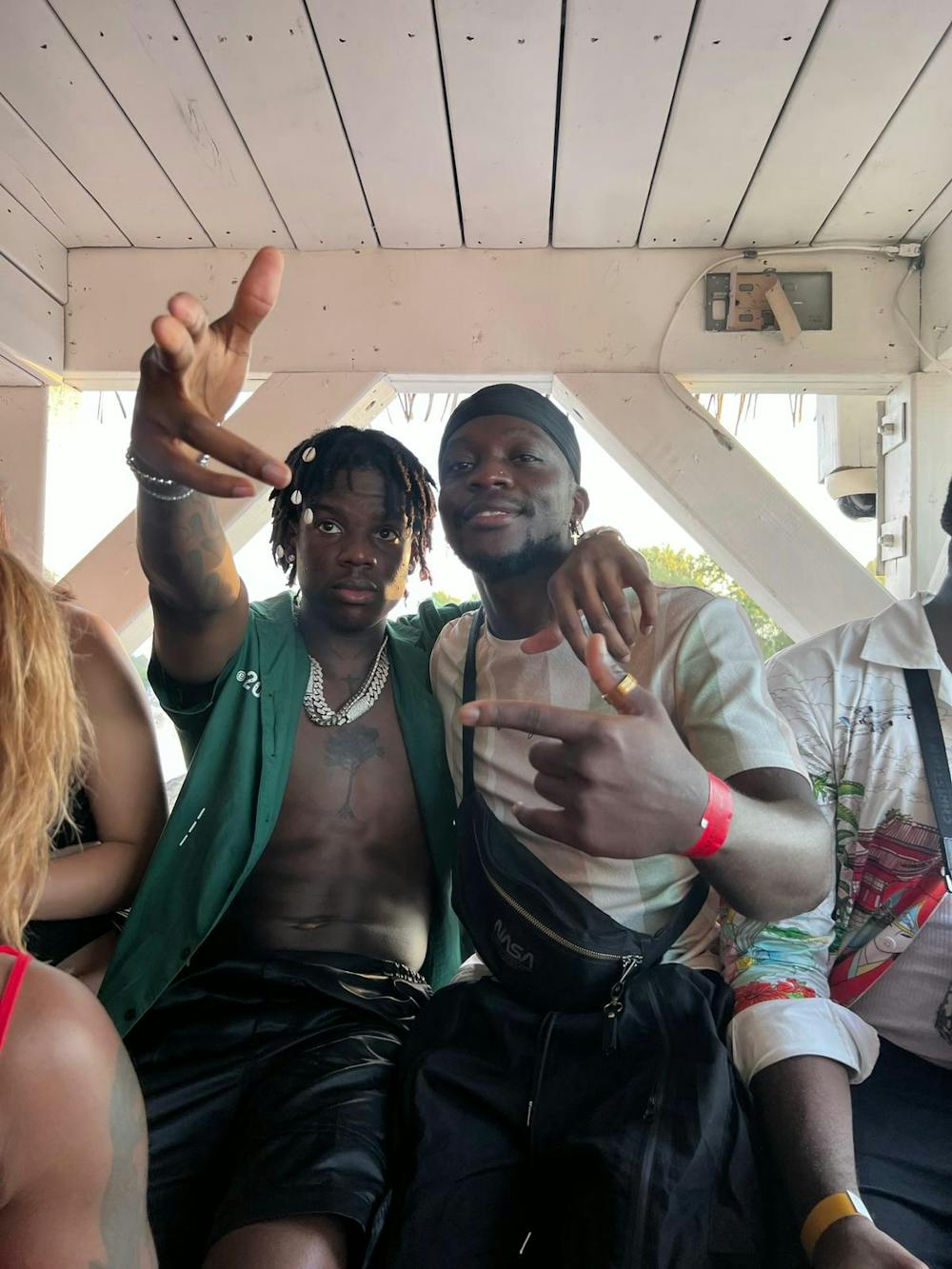
Two young African men sit, each with one arm around the other man and the other arm making hand gestures to camera.
Loïc Reyel (right) meets up with Rema, whose song he created an online dance challenge to Courtesy Loïc Reyel

Loïc used these rich resources to interpret a song that had been released less than a month earlier on Rema’s debut studio album Rave and Roses.

In a phone conversation with me, as part of my ongoing research into West African dance forms, Loïc described it as “a very easy song” he “felt immediately connected with” and could “really move to”.

As Calm Down began topping European charts, Loïc’s kinetic response began attracting social media users worldwide. His dance challenge video has, to date, 215,000 likes and 10,500 shares.

Loïc’s video is not just shared; countless people of all ages and nationalities learn his steps, record their performances and upload them on social media. From Pakistan to Kenya and now Iran, in solo, couple and group formats, in salwars and sweatpants, hoodies and baseball caps, by hijab-wearers and hijab-rejectors, the videos keep coming – as this TikTok compilation shows. A remixed duet version between Rema and US singer Selena Gomez gave the song a second peak in September 2022. Meanwhile, Loïc’s dance challenge continues to captivate globally.

The song

This magic arises from Rema’s vocal delivery. His melodic genius transforms the popular B major key with a complex progression of chords. The lyrics twist together the recognisable and near-indecipherable. In the song words and phrases like “vibes”, “calm down” and “lockdown” meet the syntax and vocabulary of Nigerian pidgin (“no dey do yanga” and Jamaican dancehall (“shawty”). The fizzy drink Fanta is crafted into an evocative image of desirability (“girl you sweet like Fanta-ooh”). The song pours out like chilled Fanta bubbling up with the unforgettable “lo-lo-lo-lo-ve-ve-ve-ve-ve”. Its laid back approach decolonises the English language, releasing it for the world to use.

Rema’s official video increased the song’s appeal by visualising its storyline. His pursuit of a “hot yet humble” girl in her yellow dress draws viewers into urban Africa’s interiors and streetscapes. Its plotline is universal: a couple struggling to emerge from a group. Loïc’s choreography enhances this story. Its hand gestures bring out the meanings swirling around the words. At the same time, legs, waist and pelvis spell out another story: the transformation of African kinetic (movement) codes into street dance styles that became the weaponry of dispossessed youth around the Afro-Atlantic rim.

Dance of joy

Says Loïc:

No matter what our people went through in the past, we are always able to dance with joy.

The body’s alegropolitics – its capacity to activate memories of enjoyment as well as trauma by creolising (bringing together) multiple cultural strands – characterises both Rema’s song and Loïc’s choreography. This enhances their interaction as well as, in Loïc’s words, the dance challenge’s “amazing success”. Its unstoppable popularity illustrates what ethnomusicologist Elina Djebbari calls videochoreomorphosis: the processes by which dance, using the body, remains meaningful in the digital age through dancers’ innovative interaction with the music video format.

In responding to Loïc’s challenge, the Iranian girls similarly remake themselves through video. Flamboyantly rejecting cultural isolation for kinetic cosmopolitanism, they step into a dynamic global culture as its active contributors. They flawlessly reproduce the sometimes tricky choreography and they add a special closing note: a spectacular booty shimmy. This runs counter to Islamic-influenced codes of female propriety but draws on the sacred “ontology of the twerk” in Africanist movement cultures.

Dreaming together for freedom

“Dance is freedom,” says Loïc, while acknowledging that these culturally coded moves are often misinterpreted by non-Africans as sexualised. The Iranian girls sense the power of such ambivalence. Looking back while shimmying, and ending with a flamboyant kick towards the lens in classic Afrobeat style, they shift the status quo.

They dance in the massive urban jungle of Ekbatan, a housing project built in Tehran during the 1970s. In the midst of brutalist concrete, hopes blossom through unpredictable confederations.

Rema recently sent a message in response to the video by the five girls:

To all the beautiful women who are fighting for a better world, I’m inspired by you, I sing for you, and I dream with you.

For Loïc, in the meanwhile, the Iranian dancers have confirmed his purpose in life: “to change the world through African dance. I’m closer to my goal.”

With thanks to Loïc Reyel, Francesca Negro and Elina DjebbariThe Conversation

Ananya Jahanara Kabir, Professor of English Literature, King’s College London

This article is republished from The Conversation under a Creative Commons license. Read the original article.

Naira scarcity: NLC set for nationwide strike

THE Nigeria Labour Congress (NLC) has declared a nationwide strike to protest the cash scarcity in the country.

The strike is scheduled to commence on Wednesday, March 29 and would involve public sector workers in the country and affiliate unions constituting the Nigeria Labour Congress.

As part of the strike, the NLC would picket all branches of the Central Bank of Nigeria (CBN) nationwide.

The NLC President, Joe Ajaero, announced plans for the strike at a media briefing in Abuja.

The industrial action, according to Ajaero, became the last resort for the labour union after the expiration of the ultimatum the congress issued to the Federal Government over the naira crisis.

The NLC had earlier issued a seven-day ultimatum to the Federal Government to end the petrol and cash scarcity in the country.

Addressing journalists, Ajaero also noted that the congress would be protesting the naira scarcity at CBN branches nationwide.

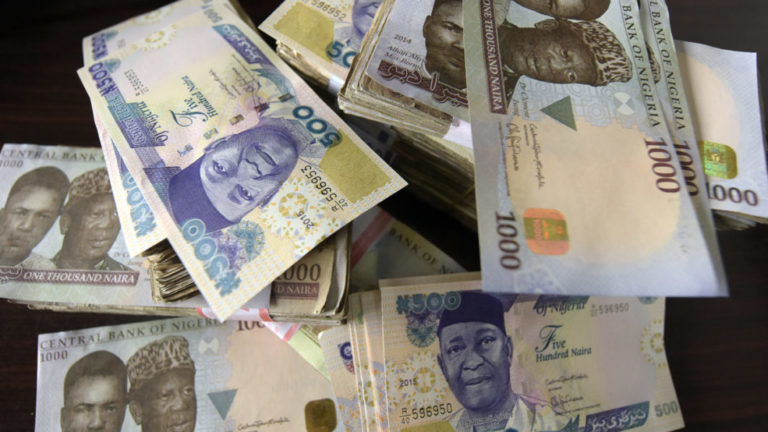
He said the situation worsened over time despite the Supreme Court order allowing the use of old N500 and N1000 notes as legal tender till December 31 this year.

“Last week, we requested the review of the cash crunch bedevilling the country, but we have discovered to our dismay, that as of this moment, not much effort has been made to alleviate the situation. Government is still foot-dragging on these issues we raised,” Ajaero said.

“Based on this, we met again this morning to review our position and resolved that by Wednesday next week, all CBN branches will be picketed. Workers are directed to stay at home, too, because people cannot eat, workers can no longer go to the office, and we have been pushed to the wall.

“We have decided to take our destiny in our hands; we have mobilised our workers on this exercise.”

The ICIR reported how the CBN introduced new N200, N500 and N1000 notes and directed that old notes cease to be legal tender from February 10.

The cashless policy has since created hardship for Nigerians, with many citizens, who are unable to obtain cash to meet daily needs, struggling for survival.

The worst hit are petty traders, artisans and labourers, who sustain their businesses through low volume cash transactions.

Balkan Investigative Regional Reporting Network seeks chief investigations’ editor

THE Balkan Investigative Regional Reporting Network (BIRN) is hiring a chief investigations’ editor.

Interested applicants must have a wealth of experience in investigative journalism, coordination of journalists, and a strong understanding of current affairs in Southeast and Central Europe.

Responsibilities include developing investigative story ideas and assigning journalists to work on them, forming and leading a network of in-house and external investigative journalists to pitch stories and work on program-related investigations, pre-editing drafts and fully preparing them before sending them to English copy editors.

Applicants must have a minimum of five years of editing investigative stories.

Investigative journalists and editors around the world can apply for a remote position.

The deadline for the submission of the application is March 31, 2023. Interested applicants can apply here.

Ekweremadu, wife, doctor found guilty of organ trafficking

A United Kingdom (UK) court at the Old Bailey on Thursday, March 23 convicted a former Nigerian Deputy Senate President, Ike Ekweremadu, his wife and a doctor of organ trafficking, in the first verdict of its kind under the Modern Slavery Act.

Ekweremadu, 60, his wife, Beatrice, 56, and the doctor, Obinna Obeta, 51, were found guilty of facilitating the travel of a 21-year-old Nigerian man to Britain with a view to exploit him.

Prosecutor Hugh Davies KC said the Ekweremadus and Obeta had treated the man and other potential donors as “disposable assets” and “spare parts for reward”, a behaviour that showed “entitlement, dishonesty and hypocrisy”.

He said Ekweremadu, who owns several properties and had a staff of 80, “agreed to reward someone for a kidney for his daughter – somebody in circumstances of poverty and from whom he distanced himself and made no inquiries, and with whom, for his own political protection, he wanted no direct contact”.

“What he agreed to do was not simply expedient in the clinical interests of his daughter, Sonia, it was exploitation, it was criminal. It is no defence to say he acted out of love for his daughter. Her clinical needs cannot come at the expense of the exploitation of somebody in poverty,” Davies added.

All the accused had denied the charges and Ekweremadu had told the court that he was the victim of a scam, while Obeta claimed the man was not offered a reward for his kidney and was acting altruistically.

However, a WhatsApp message tendered as evidence by the prosecutor revealed Obeta charged Ekweremadu N4.5 million (about £8,000), to help find a suitable kidney donor.

In February 2022, the donor was falsely presented to a private renal unit at Royal Free Hospital in London as Sonia’s cousin in a failed attempt to persuade medics to carry out an £80,000 transplant.

For a fee, a medical secretary at the hospital acted as an Igbo translator between the man and the doctors to help try to convince them he was an altruistic donor, the court heard.

Davies said Ekweremadu ignored medical advice to find a donor for his daughter among genuine family members.

On her part, Beatrice denied any knowledge of the alleged conspiracy and Sonia did not give evidence.

The Court found the accused guilty of criminally conspiring to bring the 21-year-old street trader to London to exploit him for his kidney and has reserved sentence for a later date.

Over 400 rebels accused of killing ex-Chadian President Derby sentenced for life

MORE than 400 rebels accused of killing Chad’s former President Idriss Deby Itno, have been sentenced to life in prison.

The rebels were convicted after they were subjected to a mass trial for terrorism, mercenarism, using child soldiers and undermining Chad’s integrity and security.

An appeal court handed down the sentence at a closed hearing on Tuesday, March 21.

The month-long trial charged 454 members of the Front For Change and Concord rebel group for killing longtime President Debt, who died in murky circumstances in 2021 just two days after winning a sixth term in office.

Two dozen people on trial were acquitted and it’s unclear exactly how many were convicted.

In addition to life imprisonment, leader of the rebel group, Mahamat Mahdi Ali has been fined some $30 million to be paid to Chad’s government for damages.

Lawyers for the defendants said they will appeal the verdict at Chad’s Supreme Court. “As this decision has been made public by the court of appeal, there is only the right to appeal,” said Lokoulde Francis, a lawyer for the accused persons.

Deby seized power in 1990 when his rebel forces overthrew then-President Hissene Habre, who was later convicted of human rights abuses at an international tribunal in Senegal.

He ran the country for more than three decades and died of unspecified injuries when he visited troops fighting the rebel group, which was seeking to gain control of the oil-rich Central African nation. No details of his death were made public.

Hours after Deby’s death, Chad’s military named his son, Mahamat Idriss Deby, as the country’s interim leader for what was intended to be an 18-month period. However, last year the government announced it was extending the transition for two more years, which led to protests across the country.

Elections: UK to impose sanctions on masterminds of voter intimidation, violence

THE United Kingdom (UK) government has said it will impose sanctions on persons behind incidents of voter intimidation and violence that marred the March 18 governorship and state assembly elections in Nigeria.

This is coming a day after the United States (US) threatened to sanction perpetrators of electoral violence in a statement that said it witnessed violent voter intimidation “first-hand”.

The UK Minister of State for Development and Africa, Andrew Mitchell, in a statement issued on Wednesday, March 22, said: “We can confirm that we are collating relevant information, with a view to taking action against some individuals.”

Mitchell added, “Members of our observation mission personally observed violence, and voter suppression in numerous voting locations.

“We witnessed and received credible reports from other observer missions and civil society organisations of vote buying and voter intimidation, the destruction and hijacking of election materials and the general disruption of the process in numerous states, including Lagos, Enugu and Rivers.

“In addition, we observed incidents of harassment of journalists. Freedom of speech and a free press is crucial for a healthy democracy, and journalists must be able to go about their work without being threatened.”

The statement also condemned inflammatory speeches by some public and political figures under the guise of ethnicity and religion.

“We call on all leaders not just to distance themselves from this kind of language, but to prevent those who speak on their behalf from doing so in this way,” the statement said.

Andrew Mitchell

Mitchell applauded Nigerian voters who participated in the voting process despite being faced with intimidation and hostility

“It is a testament to their commitment to democracy that many Nigerians were prepared to vote, despite being faced with intimidation and hostility.”

The statement urged political parties and candidates challenging the outcome of the elections to go to court.

“We will be observing the course of legal challenges made. The 2023 elections are not only important to Nigeria and Nigerians but also to Africa and the world as a whole.”

However, the UK Mission also observed technical and operational improvement during the gubernatorial and state assembly polls.


READ ALSO:


“More polling units opened on time, there was greater evidence of BVAS and IREV working and results uploaded in real-time from polling units and collation centres. These are positive markers to build on for future elections,” the statement noted.

Earlier, The ICIR reported how several election observers deployed to monitor the March 18 gubernatorial and state assembly elections across states in Nigeria suffered one form of assault or the other.

The report identified security operatives, political thugs and a federal lawmaker as some of the perpetrators of the assaults.

Hacks/Hackers media party calls for workshop proposals

HACKS/Hackers, with the support of the Knight Foundation and the International Center for Journalists (ICFJ), is inviting applications for its new edition of the Media Party.

The program is slated for June 8, 2023, to June 10, 2023, for the first time in Chicago, United States.

This is an international event that brings together journalists, entrepreneurs, developers, and designers from five continents to work together for the future of media.

The organisation is accepting proposals from those interested in giving workshops or lightning talks. Additionally, there will be a hackathon focused on the synthetic world and simulation models.

To submit a workshop proposal, click here.

To submit a lightning talk proposal about your media project, click here.

To apply for the hackathon, click here.

Journalists, entrepreneurs, developers, data activists, media analysts, and others can submit their proposals to this media event.

The deadline for the submission of applications is March 31, 2023. Interested applicants can apply here.