Home Blog Page 101

Resign from Tinubu’s gov’t, face Rivers politics, APC National Secretary tackles Wike

THE National Secretary of the All Progressives Congress (APC), Ajibola Basiru, has asked the Minister of the Federal Capital Territory, Nyesom Wike, to quit President Bola Tinubu’s government and focus fully on what he described as his ‘obsession’ with Rivers State politics.

Basiru in a statement on Monday, January 5, said the minister had no authority to interfere in the internal affairs of the ruling party, stressing that Wike was not a member of the APC and, therefore, lacked the standing to comment on its leadership or activities.

‎”I am the National Secretary of APC, and I don’t see any basis for him to be making comments about my activities either in Rivers State or in any part of Nigeria. As the National Secretary of the party, my activities aren’t confined to Osun State, contrary to his wrong impression.

‎”I am the head of the National Secretariat of the APC. So, he has no locus whatsoever to engage me in any political activity that concerns the APC until he joins the party,” he said.

The APC scribe dismissed what he described as veiled threats issued by Wike, insisting that his political background had prepared him to withstand intimidation from any quarter.

“‎I am one of the young Nigerians that confronted military dictatorship. I can’t be bullied by anybody, no matter how highly placed. My records as National Secretary are above board, and I can’t be queried by somebody who isn’t a member of APC,” he said.

Basiru also rejected allegations suggesting that he had an interest in Rivers State funds, particularly the state’s alleged N600 billion allocation, describing the claim as baseless and inconsistent with his record in public service.

The exchange followed comments by Wike during a “thank-you” visit to Oyigbo Local Government Area of Rivers State on Monday, where the minister warned Basiru to stay away from the state’s political affairs.

“‎Let me warn those who come to Rivers State, because you have heard that we have N600 billion, you come here, you collect, and you open your mouth to talk anyhow,” he said.

‎“I say it here, take this message to your National Secretary, leave Rivers State alone. Go and ask those who have done it before. Please don’t take our support for Mr President for granted. You have to be careful with the statements you make,” he added.

The warning came against the backdrop of ongoing political tension in the oil-rich Rivers State, particularly between Wike, the state immediate past governor and his successor, Siminalayi Fubara.

Basiru had earlier on Sunday, declared support for Fubara, urging party leaders to refrain from taking sides in the feud between the two leaders.

He also cautioned the APC South-South Chairman, Victor Giadom, against making derogatory remarks about the governor or any other elected official.

According to Basiru, members of the party’s National Working Committee should maintain neutrality in political crises to preserve internal cohesion.

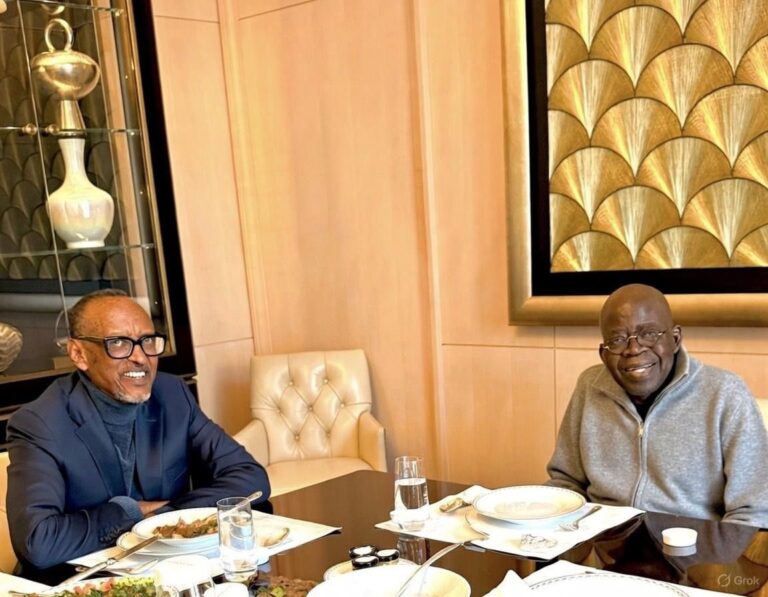
Grok watermark triggers doubt over Tinubu–Kagame photo

A Photograph shared from President Bola Tinubu’s reported meeting with Rwandan President Paul Kagame in Paris has triggered widespread debate on social media after users observed a Grok watermark on the image.

This prompts questions over whether artificial intelligence was used to generate or manipulate the photograph.

Tinubu, on Sunday, January 4, disclosed via his verified X account, @officialABAT, that he hosted President Kagame to a private lunch in Paris, the French capital.

According to Tinubu, the meeting provided an opportunity for both leaders to deliberate on global developments and Africa’s position in a rapidly changing international environment.

“This afternoon, I had a private lunch with H. E. President Paul Kagame of Rwanda to discuss the current state of world affairs and advancing Africa in an ever-changing global landscape,” Tinubu wrote.

The meeting occurred during the Nigerian president’s trip to Europe. Presidential spokesperson, Bayo Onanuga, had earlier announced in a statement that Tinubu departed Lagos on Sunday, December 28, 2025, for Europe, continuing his end-of-year break and ahead of an official engagement in the United Arab Emirates.

According to the statement, Tinubu was invited by the President of the United Arab Emirates, Sheikh Mohamed bin Zayed Al Nahyan, to participate in the 2026 edition of the Abu Dhabi Sustainability Week (ADSW 2026) summit.

The weeklong event is an annual gathering that brings together global leaders from government, business, and civil society to shape discussions on sustainable development.

With the theme “The Nexus of Next: All Systems Go,” ADSW 2026 is expected to connect ambition with action across innovation, finance, and people, highlighting pathways for global progress. The Presidency stated that Tinubu would return to Nigeria after the summit.

Grok watermark raises questions

However, controversy emerged after the photograph posted on Tinubu’s verified X account carried the watermark of Grok, a generative artificial intelligence chatbot developed by xAI, an AI company owned by billionaire Elon Musk. Grok is known for real-time search, AI-powered text generation, image creation, and image editing capabilities.

The same image was also shared by Dada Olusegun, Special Assistant to the President on New Media, further fueling reactions and scrutiny across social media platforms.

Several X and other social media users criticised the development, questioning why a photograph documenting a high-level diplomatic meeting would carry an AI watermark. Some users alleged that the image might have been artificially generated, while others accused the Presidency of attempting to mislead the public.

One X user, @WarepamorSammy, posted a strongly worded criticism accusing the president of using an AI-generated image to deceive Nigerians. Another user, @He_isJustin, wrote, “You should be ashamed to be honest. AI generated image posted by a ‘President’.”

Similarly, an X user identified as Ademola questioned the credibility of the image, suggesting that the use of an AI-generated photo reflected deeper issues within the administration.

Another critic, who tweets as #sonickay, also pointed out the Grok watermark and demanded clarity on the president’s whereabouts and activities.

Public scepticism and record of disinformation

The ICIR reports that the intensity of public reaction is influenced by previous instances in which the Nigerian Presidency has issued misleading or inaccurate information.

For instance, on April 29, 2025, Dada Olusegun shared two contrasting images on X purporting to compare water transportation in Anambra State under former Governor Peter Obi and Lagos State under Governor Babajide Sanwo-Olu. The image depicting Obi showed him in a wooden canoe in a flooded area, while the Lagos image showed a modern watercraft.

Olusegun captioned the post: “Water transportation in Anambra under Obi vs. water transportation in Lagos under Babajide Sanwo-Olu.”

However, a reverse image search conducted by The FactCheckHub revealed that the image of Obi was taken in October 2022, eight years after he left office, during a visit to flood victims while he was a presidential candidate.

In another case, during the August 2024 #EndBadGovernance protests, the Presidency shared a video of Tinubu purportedly addressing Nigerians and urging patience amid economic hardship. Investigations later revealed that the video was extracted from an older broadcast made in July 2023.

Additionally, on January 6, 2025, presidential spokesperson, Bayo Onanuga, inaccurately claimed that Julius Debrah was the Chief of Staff to former Ghanaian President Nana Akufo-Addo. Fact-checks showed that Debrah was, in fact, the Chief of Staff to the current Ghanaian President, John Mahama, while Akufo-Addo’s Chief of Staff was Akosua Frema Osei-Opare.

Presidency clarifies Grok image

Amid the controversy, Temitope Ajayi, Senior Special Assistant to the President on Media and Publicity, issued a statement with the title “Stop Press”, on Monday, January 5. He dismissed claims that the image of Tinubu and Kagame was AI-generated.

According to Ajayi, the photograph was taken with a mobile phone and was initially of poor quality. He explained that the photographer later used Grok to enhance the image quality, not to fabricate the scene or generate a fake photograph.

Ajayi added that both presidents indeed met in Paris and later had dinner with French President Emmanuel Macron the same day. He criticised media reports and social media reactions that concluded the image was fake without proper verification.

Can Grok be used to refine images?

Findings by The ICIR showed that Grok could be used for image refinement and modification. The tool allows users to improve brightness, exposure, and overall clarity, as well as modify backgrounds and posture using simple text prompts.

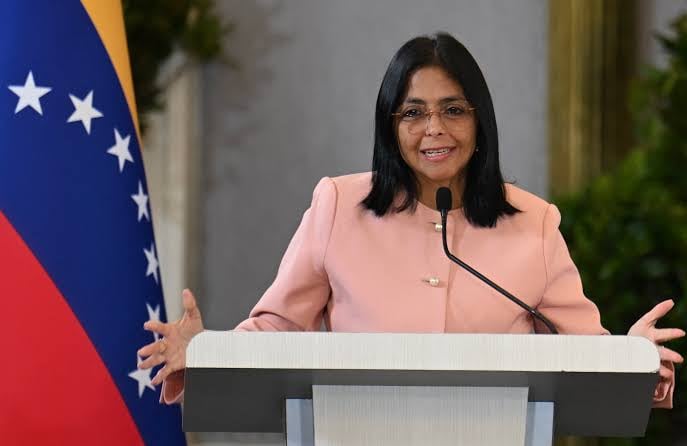
File Photo: Venezuel’s interim President, Delcy Rodríguez

The ICIR conducted a test run using a file photograph of Venezuela’s interim president and successfully enhanced the image, changed the background, and altered posture using Grok’s tools. These features are powered by Aurora, xAI’s photorealistic image model introduced in late 2024.

The enhanced picture of Venezuela Interim president with her background and posture changed with Grok

The image-editing function, integrated into the X platform and Grok’s standalone applications, enables AI-assisted visual adjustments with fewer content restrictions compared to similar tools, such as Google’s Gemini.


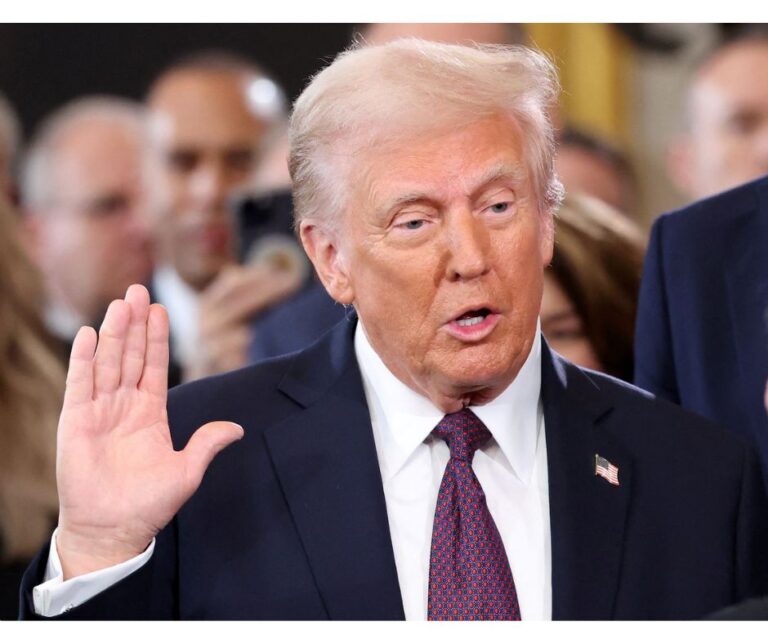
One-third of Nigerian immigrants in US depend on welfare – Trump

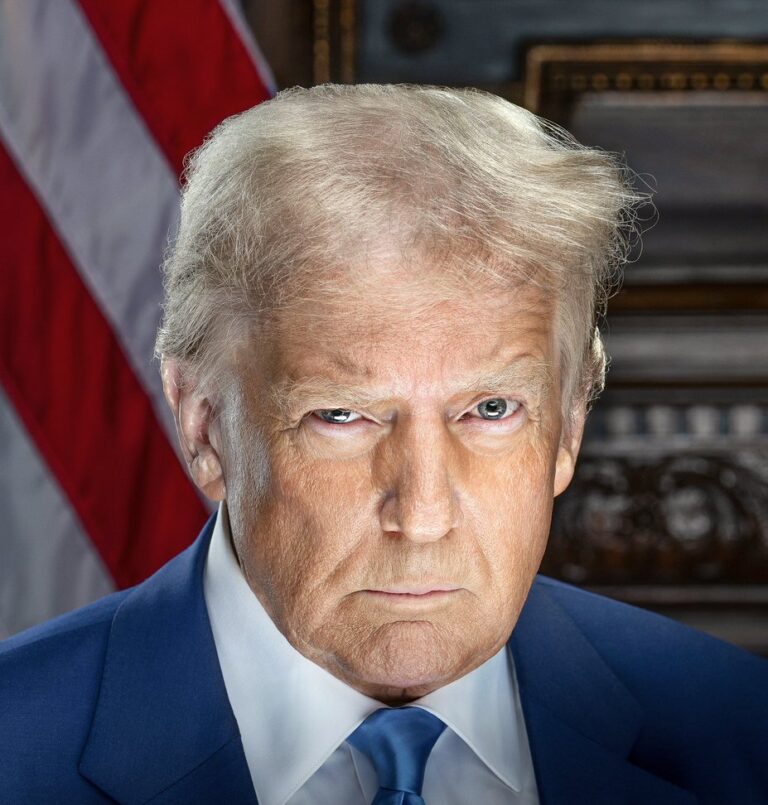
UNITED States President Donald Trump has claimed that roughly 33.3 per cent of Nigerian immigrant households in the United States receive some form of public assistance.

A chart circulated by Trump and titled “Immigrant Welfare Recipient Rates by Country of Origin,” profiles immigrants from about 120 countries and territories, and details the share of households that receive public assistance such as food support, healthcare benefits, and other welfare programmes.

Trump shared the chart on his Truth Social platform on Sunday, as Republicans renewed their focus on immigration policy, welfare dependency, and the economic impact of immigrants on US domestic politics.

According to the data, countries with the highest reported rates of welfare participation among immigrants include Bhutan at 81.4 per cent, Yemen at 75.2 per cent, Somalia at 71.9 per cent, the Marshall Islands at 71.4 per cent, the Dominican Republic, and Afghanistan both at 68.1 per cent, and Nigeria is listed at 33.3 per cent, placing it closer to the middle of the chart.

The data include Bermuda, Saudi Arabia, Argentina, Korea, and Kenya, which are the countries with the lowest welfare participation rates for immigrants, with figures ranging from about 25 to 29 per cent.

Trump’s post comes amid continued efforts by his administration to present access to public benefits as a central factor in determining immigration policies and eligibility criteria.

Throughout 2025, the administration repeatedly argued that welfare usage should be factored into decisions on who is allowed to enter or remain in the United States.

In June 2025, the White House unveiled a presidential proclamation imposing full and partial travel bans on several countries, citing security risks, weak identity management systems, and limited cooperation with US immigration authorities.

The restrictions were extended in late December 2025 through a revised proclamation effective January 1. The US widened the scope to 39 countries, which included Nigeria alongside several other African and Caribbean nations, with Burkina Faso, Mali, Niger, South Sudan, and Syria, being on the full ban list.

The partial restrictions limit access to immigrant visas as well as several non-immigrant visa categories, including student (F), vocational (M), and exchange (J) visas.

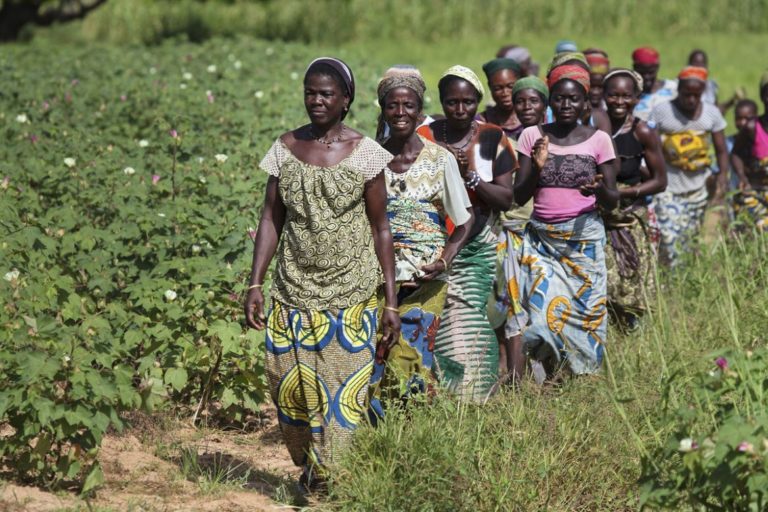
Is 2026 a defining year for women’s rights in Nigeria?

0

AS the world usher in 2026 , Nigerian gender advocates and women are no longer whispering their demands, from courtrooms and campuses to social media and the streets, they are insisting on dignity, representation, and justice.  In 2026, the expectation is that the state listens, acts, and delivers.

Representation, visibility, and redefining success

In 2025, Nigerian women continued to make notable achievements across sectors, from arts and governance to activism and business, even as structural barriers around mobility, recognition, and access to opportunity persist

In 2026, advocates expect the government to address structural inequalities that limit women’s economic and professional advancement from political representation and equal opportunity access to funding gaps and media representation.

Analysts note that true gender progress, is not measured by symbolic victories alone but by whether ordinary women, especially those in rural, displaced, and low-income communities experience tangible improvements in safety, opportunity, and justice.

Tackling sexual harassment and GBV

Initiatives launched in 2025 like The ICIR sexual harassment project to combat sexual harassment and abuse in universities signalled a growing recognition of the scale of abuse in educational institutions.

In 2026, expectations are rising for the nationwide adoption of sexual harassment policies in tertiary institutions and passage of the sexual harassment bill.

Following the the BBC investigation and other cases of sexual harassment in the country’s higher educational institutions, the Nigerian Senate in 2019, proposed legislation aimed at preventing, prohibiting, and redressing sexual harassment of students in tertiary educational institutions.

The proposed bill prescribes 14 years imprisonment for any academic found guilty of sexual misconduct against students. However, more than four years after the senate passed the bill, it still awaits presidential assent to make it law.

Former president Muhammadu Buhari failed to sign the bill during his term, and incumbent President Bola Tinubu has yet to do so too, years after his aide assured Nigerians of the president’s support for the bill.

Expectations are also rising for independent reporting and disciplinary mechanism and protection for whistle-blowers and survivors of sexual harassment and abuse.

With tens of thousands of GBV cases recorded annually, Nigeria faces mounting pressure to strengthen survivor support systems, improve data transparency, and ensure specialised prosecution of sexual and gender-based crimes, which under international law, failure to act amounts to state negligence.

Reproductive rights debates

The suspension of the proposed Criminal Code Amendment Bill on abortion-related offences highlighted Nigeria’s unresolved tensions around reproductive rights. In 2026, advocates expect broader, evidence-based conversations grounded in public health, human rights, and medical ethics.

Global standards, including guidance from the World Health Organization (WHO), stress that punitive abortion laws do not reduce abortion rates but increase unsafe procedures and maternal mortality.

As Nigeria grapples with one of the world’s highest maternal death rates, campaigners argue that future legislative efforts must prioritise women’s lives, access to healthcare, and clarity in law rather than blanket criminalisation.

Again, bandits strike, kill over 30, abduct scores in Niger

0

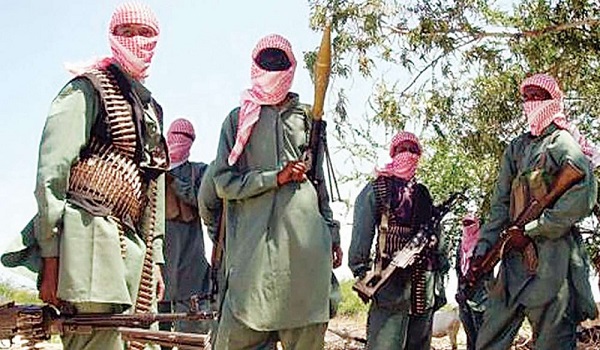
SUSPECTED bandits believed to be operating from the Kainji Lake National Park have attacked a village market in Kabe District, Borgu Local Government Area of Niger State, killing at least 30 villagers, abducting several others, and setting the market ablaze.

The attack occurred on Saturday at Kasuwan Daji market in Demo village, which the assailants reportedly accessed through Kabe.

During the raid, the gunmen allegedly looted food items and other goods, opened fire on residents, and abducted villagers along routes leading into the vast Kainji Lake National Park forest.

Confirming the incident in a statement on Sunday, the Niger State Police Command’s Public Relations Officer, Wasiu Abiodun, said a joint security team had visited the area and that efforts were underway to rescue those abducted.

“On January 3, 2026, at about 9 p.m., information received revealed that at about 4:30 p.m. of the same date, suspected bandits from the National Park forest along Kabe District invaded Kasuwan Daji, located at Demo village via Kabe, burnt the market, looted shops, and carted away food items,” Abiodun, a Superintendent of Police, said.

“On 04/01/2026 at about 8 a.m., a report indicated that a joint security team visited the scene, and over 30 victims lost their lives during the attack.

“Some persons were also kidnapped. Efforts are ongoing to rescue the kidnapped victims. Further developments will be communicated.”

The attack comes barely weeks after a similar incident in the state. On November 21, 2025, bandits abducted more than 300 pupils and students from St. Mary’s Private Catholic Primary and Secondary School in Papiri, Agwara Local Government Area.

The gunmen reportedly arrived on motorcycles around 2:00 a.m. and spent about three hours raiding the school dormitories, abducting 315 people, including 303 students and 12 teachers.

Following the incident, security operatives and local hunters were deployed to nearby forests in search of the abductees. About 50 pupils escaped within the first day and were reunited with their families, while the Federal Government later secured the release of 100 others.

On December 21, the Minister of Information and National Orientation, Mohammed Idris, announced that all the remaining abducted pupils of St. Mary’s Primary and Secondary School, Papiri, Niger State, “numbering 230″, had been freed.

What to expect in Nigeria’s fact-checking space in 2026

0

IN 2025, the global fact-checking landscape faced mounting pressure as AI-generated and deepfake content became more widespread and increasingly sophisticated, often making manipulation harder to detect than in previous years.

This period also coincided with funding uncertainty for several fact-checking organisations and growing debate over platform accountability. In the United States, some major technology companies began shifting away from third-party fact-checking programmes toward community-driven models, such as Community Notes, raising questions about the effectiveness and consistency of these approaches.

Later in the year, the sector faced additional strain following a U.S. policy shift restricted visas for individuals who had worked in fact-checking and content moderation. Together, these developments highlighted the increasingly hostile and unstable environment in which fact-checkers now operate.

READ ALSO: How AI made deepfakes harder to detect in 2025

Against this backdrop, several trends are expected to shape the fact-checking landscape in Nigeria in 2026, particularly around elections and information integrity. As the country moves closer to the next general elections, the quality and credibility of information will play a decisive role in shaping public trust, voter behaviour, and democratic participation.

Recent election cycles have shown that misinformation is no longer confined to polling periods; it emerges early, spreads rapidly, and exploits gaps in digital governance, media literacy, and platform accountability.

In 2026, these dynamics are likely to intensify, presenting new challenges for fact-checkers, journalists, and election stakeholders.

1. Early, prolonged election misinformation

Misinformation in 2026 is expected to take the form of prolonged narrative-building, as seen subtly before the 2023 elections. Political actors may spend months casting doubt on electoral institutions, questioning voter registers, or framing outcomes as predetermined or illegitimate. Once established, these narratives are difficult to reverse and often resurface during key moments, reducing the effectiveness of last-minute fact-checks.

2. More local and convincing AI political fakes

The growing accessibility of generative AI tools means manipulated political content will increasingly reflect Nigerian realities. Deepfake videos, cloned voice notes, and AI-generated images may feature recognisable public figures, local accents, and culturally specific messaging, making it harder for audiences to detect falsehoods. This trend will challenge traditional verification approaches that rely heavily on visual cues or known manipulation patterns.

3. Closed platforms shape political narratives

Encrypted messaging platforms such as WhatsApp and Telegram are expected to remain central to political mobilisation and misinformation in 2026. Messages circulated in closed groups, often framed as “insider information” or community alerts, will be difficult to monitor and correct. By the time these narratives reach public platforms, they may already have shaped opinions at the grassroots level.

4. Rising distrust for independent media

As election-related verification intensifies, fact-checkers and journalists may face growing hostility from political actors and their supporters. Corrections are increasingly at risk of being dismissed as partisan, while verification organisations may be accused of serving foreign or political interests.

Based on past election cycles, there is also a heightened risk of online harassment, legal intimidation, or regulatory pressure being used to discourage scrutiny of political claims ahead of the 2027 elections.

5. Unchecked narratives in local languages

Misinformation in local languages and dialects is expected to continue outpacing fact-checking efforts, particularly in regions where political communication relies heavily on oral, cultural, or religious messaging. At the same time, major technology platforms may rely heavily on automated moderation systems, with limited local context and delayed responses to flagged election-related content. These gaps could allow harmful narratives to spread largely unchecked during critical moments.

Together, these trends suggest that the challenge for fact-checkers in 2026 is likely to extend beyond debunking individual claims. It will increasingly involve tracking long-term narratives, responding to more sophisticated AI-generated content, and finding effective ways to reach audiences in private and local-language spaces.

Strengthening information integrity ahead of Nigeria’s next elections will require faster verification, greater platform accountability, legal protections for independent media, and sustained investment in media literacy and pre-bunking efforts.

President Tinubu’s Legal Practitioners Bill seeks capture and reprisal

0

By Chidi Anselm Odinkalu

Twenty-three days after the transmission by President Bola Ahmed Tinubu, the upper chamber of Nigeria’s National Assembly, better known as the Senate, held public hearings on 18 December 2025 to consider the Legal Practitioners Bill. At this pace, the bill will be certain to become law well before the middle of 2026.

The journey to this bill has been somewhat tortured. The last time there was meaningful legislative action on the regulation of the legal profession in Nigeria, the military were in power and that was over 50 years ago.

The existing framework governing Nigeria’s legal profession has, in fact, evolved very little since the Legal Practitioners Act was first enacted two years after independence in 1962. Long before the onset of this millennium, it was evident that the design and regulation of Nigeria’s legal profession needed to be updated. Substantial disagreements, however, existed as to how to accomplish this.

In December 2016, then President of the Nigerian Bar Association (NBA), Abubakar Balarabe (AB) Mahmoud, a Senior Advocate of Nigeria (SAN), constituted a Legal Practitioners Regulation Review Committee under the leadership of Anthony Idigbe, SAN, with a mandate to undertake consultations and rationalize proposals for the reform and regulation of Nigeria’s legal profession.

As part of its work, the Idigbe Committee took soundings from the official legal profession and from branches of the NBA. The Committee comprised entirely of lawyers and, in its work, appeared to make little effort to reach out to or consult with consumers of legal services. That was a significant flaw in its process.

Upon receiving the committee’s report, the president of the NBA then set out the desired goals and ambitions of the reform he sought: “We need a legal profession” he declared, “that will inspire confidence in the Nigerian legal system such that entrepreneurship will thrive and foreigners will feel confident to invest in our country thereby generating prosperity for our people.” He complained that – afflicted as it was by chronically incapable regulation – “the Nigerian Bar Association as presently structured and managed cannot provide that leadership expected to produce these outcomes.”

For nearly two decades preceding the Idigbe Committee Report and immediately thereafter, the NBA had been led by SANs. In 2020, the membership of the association elected Olumide Akpata to lead it. An exceptional and able lawyer, Olumide made his name at the commercial Bar. It is fair to say that some traditionalists took personal affront at his election to lead the Bar.

Any hopes for a quick dash to translate into legislative reality the lofty dreams inspired by the Idigbe Committee Report were to be quickly frustrated by an internecine contest that ensued of egos and interests too complex to be rehashed here. As this contest unfolded, the original proposals of the Idigbe Committee vegetated; then mutated, before getting annihilated.

It appears that some interests within the Body of Benchers (BoB) decided in this flux to capture the profession. Much of the contest that followed over the future of the regulatory proposals was to occur within the BoB. A statutory body created by the existing Legal Practitioners Act, the BoB is described under law as “a body of legal practitioners of the highest distinction” in Nigeria responsible for admitting new entrants into the legal profession.

While the BoB sought to subordinate to itself the NBA and all other organs for the regulation of the Legal Profession, the NBA sought to argue for its independence as the professional association of lawyers in Nigeria. As this argument raged, some interests instigated a contest over the assertion of associational monopolies by the NBA with the emergence of a Nigerian Law Society (NLS), in effect forcing the NBA to battle on two fronts for its own survival.

These contests were still ongoing when in 2023, Nigeria elected a new President. Leading protagonists in the BoB, who were also counsel to the new president, acquired presidential leverage in the battle to shape the new regulatory environment. With the strategic landscape thus redefined, the NBA was left to seek tactical accommodation in shaping the content of the new Bill, with a focus on preserving its considerable revenue streams. The original ambitions outlined in 2018 for a radical reinvention of Nigeria’s legal profession suffered a tragic stillbirth.

Among its eight objectives, the bill proposes to advance public confidence in legal services; promote the public interest, rule of law and access to justice; and, above all, “ensure the independence, integrity and honour of members of the legal profession.” There is, however, a clear mismatch between the essential proposals of the Bill and these high sounding objectives.

For starters, about half of the Bill is devoted to provisions for a revamped Body of Benchers, which emerges from these proposals as a supreme regulator – if not owner – of Nigeria’s legal profession. If these proposals become law, the provisions of the bill governing the BoB will prove to be the cemetery of Nigeria’s legal profession.

Far from being a guarantor of an independent Bar, the BoB created by this Bill is a wholly-owned subsidiary of the ruling government. It will be funded by the Federal Government through the National Judicial Council. Among its membership, the BoB will include the Chief Justice of Nigeria; Attorney-General of the Federation; all Justices of the Supreme Court; President of the Court of Appeal and Presiding Justices of divisions of the Court of Appeal; Chief Judge of the Federal High Court and of all state High Courts (including the High Court of the Federal Capital Territory); President of the National Industrial Court; all State Attorneys-General; as well as the President of the Senate, Speaker of the House of Representatives, and the Chairs of Judiciary Committee in both chambers of the National Assembly if they have been lawyers for at least 15 years.

The NBA’s representation in the Body will be 61, comprising its president and 60 other lawyers nominated by its National Executive Committee. It will be a no-contest.

Second, the BoB will be responsible not merely for admission into the legal profession but also for discipline. So, Body will subsume the Legal Practitioners Disciplinary Committee (LPDC). Members of the Body will become, in typical Nigerian fashion, above discipline.

Third, to underscore the supremacy of the BoB, the Bill now proposes that the Legal Practitioners Privileges Committee (LPPC) can only make, retain or review rules and criteria for conferment of the rank of SAN, including any conditions for withdrawal of the rank “with the approval of the Body of Benchers.”

Fourth, in a specific act of legislative reprisal, the new Bill excludes from the LPPC, the President of the NBA – until now a member of the LPPC which determines the conferment of the rank of SAN – unless he or she is a SAN. This provision is a specific reprisal against the NBA for electing in 2020, a president who was not a SAN. For that reason, this provision may, in time, become known as the “Olumide Akpata Reprisal”.

Fifth, the ambitions of the Bill venture into the impossible. In addition to regulating the practice of law in Nigeria, it also purports to reserve for Nigerian lawyers only legal services in relation to any matter of Nigerian law; or in relation to any dispute or transaction with substantial nexus to Nigeria. Implicitly, the Bill asserts extra-territorial effect. It is hard to see how that can work.

The Bill contains other significant provisions, such as the requirement for mandatory pupillage of up to two years for new lawyers or for licensing of foreign lawyers. Even the provision concerning foreign lawyers tone-deaf. It defines a foreign lawyer as “a person entitled to practice law in a foreign jurisdiction.” By this bill, a Nigerian lawyer qualified in another jurisdiction is foreign.

Admirable though its original goals were, Nigeria’s new Legal Practitioners Bill has suffered predictable derailment. If it gets adopted in its present form, the new law will be a shrine to institutional capture. Its main achievement will be to create in members of the Body of Benches, a new breed of super lawyers. The currency of their trade will be influence peddling, the very anti-thesis of what the effort to reform the Legal Practitioners Act was meant to be.

A lawyer and a teacher, Odinkalu can be reached at chidi.odinkalu@tufts.edu

Amid Maduro’s ouster, Venezuela Supreme Court appoints Interim President

VENEZUELA’s Supreme Court has directed Vice President Delcy Rodríguez to take over as interim leader following the seizure and removal of President Nicolás Maduro by the United States.

In its ruling, the court ordered Rodríguez to “assume and exercise, in an acting capacity, all the attributes, duties, and powers inherent to the office of President,” citing the need to ensure administrative continuity and the comprehensive defence of the nation.

According to AFP, the court said Rodríguez would temporarily occupy the presidency of the Bolivarian Republic of Venezuela to safeguard the continuity of government and national sovereignty.

It added that it would later deliberate on the appropriate legal framework to address the president’s forced absence and maintain state stability.

Earlier, US President Donald Trump said Washington would oversee Venezuela until a transition of leadership could be arranged.

“We’re going to run the country until such time as we can do a safe, proper and judicious transition,” Trump said at a press conference at his Mar-a-Lago residence in Florida. He added that the US did not want to install another leader only to face the same challenges that had persisted for years.

Trump provided few details on how the United States intended to administer Venezuela, despite the continued presence of the country’s vice president, legislature, and military, all of which have publicly opposed the US action. He said the plan would involve US oil companies investing billions of dollars to repair Venezuela’s damaged oil infrastructure, even as he maintained that the embargo on Venezuelan oil remained in force and that US forces would stay on alert.

“We’re going to have our very large United States oil companies, the biggest anywhere in the world, go in, spend billions of dollars, fix the badly broken infrastructure, the oil infrastructure, and start making money for the country,” Trump said.

Reports stated that a plane carrying Maduro landed shortly before 5 p.m. local time at Stewart Airport in New York, from where he was to be transferred to New York City.

Trump said the intervention would be carried out “with a group” largely made up of senior US officials, with a focus on restoring oil infrastructure and ensuring that the needs of the Venezuelan population were addressed.

Maduro captured during ‘large-scale strike’ in Venezuela, says President Trump

US President Donald Trump has said American forces carried out what he described as a “large-scale strike” in Venezuela, claiming that President Nicolás Maduro and his wife were captured during the operation.

In a post on his Truth Social platform on Saturday, Trump said the operation was conducted in coordination with US law enforcement agencies and resulted in Maduro and his wife being “captured and flown out of the country.”

“The United States of America has successfully carried out a large-scale strike against Venezuela and its leader, President Nicolas Maduro, who has been, along with his wife, captured and flown out of the country,” Trump wrote.

Venezuela’s government, however, accused Washington of attacking civilian and military targets across several states, characterising the action as an act of “military aggression.”

According to Al Jazeera, Venezuelan authorities said the strikes affected the capital, Caracas, as well as Miranda, Aragua and La Guaira states, prompting the declaration of a national emergency.

The country’s opposition said it had yet to take an official position on the reported US action.

A spokesperson told media outlets there was no formal response at the time, as uncertainty persisted over reports of explosions and alleged military activity, CNN reported.

Maria Machado, a leading opposition figure and outspoken critic of Maduro, has previously supported months of US military build-up and operations that Washington said targeted narco-trafficking networks.

She described Trump’s actions as “decisive” following the US seizure of a Venezuelan oil tanker last month.

Machado was barred by the Venezuelan authorities from contesting the presidential election, a move condemned by opposition groups and several international actors. Her current whereabouts remain unclear, according to Al Jazeera.

Maduro has repeatedly accused the United States of seeking regime change in Venezuela, alleging that Washington aims to gain control of the country’s vast oil resources.

Meanwhile, the US embassy in Bogotá said it was aware of reports of explosions in and around Caracas and reiterated its warning for US citizens not to travel to Venezuela.

In a security notice, the embassy urged Americans currently in the country to leave as soon as it is safe to do so, noting that Venezuela remains under a Level 4 “Do Not Travel” advisory.

The embassy advised US citizens to shelter in place if unable to leave immediately and to maintain multiple lines of communication with family and friends abroad. It also recalled that in March 2019, the US Department of State withdrew all diplomatic staff from Caracas and suspended embassy operations.

Authorities said further details would be provided at a news conference scheduled for 11 a.m. on Saturday.

12 AI tools to use in 2026 to work smarter, sell faster, compete globally

IN Nigeria, artificial intelligence has quietly become part of how ordinary Nigerians work, learn, sell, and communicate.

AI has helped students trying to understand complex topics, small business owners managing customers on WhatsApp, and AI tools are now woven into daily routines.

What makes AI especially important in Nigeria is the pressure to do more with less. Many people juggle multiple jobs, side hustles, or freelance work, often without teams or large budgets. AI fills the gap by acting as a digital assistant — helping one person write faster, design better, respond to customers promptly, and organise work efficiently.

Another factor is global competition. Nigerian freelancers, creatives, and professionals now compete in international markets where speed and quality matter. AI tools help bridge that gap, allowing users to produce work that meets global standards without expensive software or specialised training.

However, not every AI tool is easily adaptable in the Nigerian context. The most useful ones are those that work on mobile phones, have free or affordable plans, use minimal data, and fit naturally into existing habits like WhatsApp, social media, and remote work. Here are tools to use this The tools below stand out in 2026 because they meet those realities.

1. ChatGPT: This has become one of the widely used AI tool in Nigeria because of its flexibility. People use it to draft documents, generate business ideas, explain school subjects, write reports, create social media captions, and even prepare interview answers. For journalists and researchers, it helps structure stories and clarify complex issues, while for small business owners, it acts as a writing and planning assistant available at any hour.

2. ICIR Native AI: Developed by the International Centre for Investigative Reporting and unveiled in September at a webinar, the product is designed to help journalists and content creators transcribe audiovisual files, translate them into Nigeria’s major languages, and make media content more inclusive for diverse and hearing-impaired audiences. It has speech-to-Text Transcription, which enables the conversion of English audio into accurate text in real time, optimised for Nigerian accents and newsroom clarity and instant translation features, which enable translating transcribed speech into Hausa, Igbo, and Yoruba—maintaining meaning and accent-sensitive expressions among other features.

3. Leonardo AI: It’s an image and video generation tool that many creators rely on because it offers offers a free tier with daily tokens. This makes it especially attractive in Nigeria, where recurring subscriptions can be a barrier. With Leonardo AI, users can consistently generate high-quality visuals for blogs, social media, marketing materials, and personal projects without worrying about monthly payments.

4. Lexia AI : This is an AI-powered platform that simplifies e-commerce website creation for Nigerian entrepreneurs. The platform uses AI to generate product descriptions and images, and provides a user-friendly builder to create your online store.

5. Microsoft Designer: This is a free AI-powered design tool that helps users quickly create polished visuals without needing design experience. Built on DALL-E 3 technology, it turns simple text descriptions into complete graphic designs, making it a strong option for fast, AI-driven content creation, especially for social media and marketing.

In practice, Microsoft Designer is useful for Nigerians who need ready-to-use designs in minutes. Users can describe exactly what they want, such as an Instagram story announcing a flash sale or a promotional post for an online store, and the tool automatically generates multiple design concepts combining images, text, and layout.

These designs can then be easily adjusted to match brand colours, messaging, and style, making them suitable for small businesses, vendors, and content creators who want speed without sacrificing quality.

Microsoft Designer is accessible for free with a Microsoft account, which makes it easy for many users to adopt. While the platform provides a limited number of “boosts” for faster image generation and keeps core features free, some advanced options are tied to a Microsoft 365 subscription.

6. Canva AI : This has transformed how Nigerians approach design. Instead of hiring a graphic designer for every flyer or social media post, users rely on Canva’s AI features to generate clean, professional visuals in minutes.

It is widely used by small businesses, churches, NGOs, schools, and content creators who need consistent branding but have limited budgets.

7. Awa Doc: This is an AI-powered health assistant that provides instant medical guidance, helping users understand symptoms, get triage recommendations, and connect with care, all from their WhatsApp. It’s fast, private, and available 24/7.

The tool integrates medical and technical expertise by using an AI-powered healthcare assistant designed to break these barriers, delivering instant medical guidance through a simple chat. They use advanced AI to provide response, personalised health advice, and critical medical insights all within seconds, directly on WhatsApp.

8. WhatsApp AI chatbots: This includes tools integrated into WhatsApp Business, which are increasingly common among Nigerian vendors and service providers. These bots automatically respond to customer messages, handle frequently asked questions, confirm orders, and collect basic information. For businesses that receive messages at all hours, this reduces stress and ensures customers are not ignored.

9. Google Gemini: This is particularly useful when Nigerians need current and verifiable information. Unlike traditional search, it can be useful for accessing recent information / web data. Students use it for research, journalists for background checks, and entrepreneurs for market insights, especially when accuracy and recent updates matter.

10. CapCut AI: This has become a favourite among Nigerian content creators because it simplifies video editing. With automatic captions, transitions, and effects, users can turn raw phone videos into polished content suitable for TikTok, Instagram, and Facebook. Businesses also use it to promote products without hiring video editors.

11. Notion AI: this AI tool helps users organise their work, ideas, and projects in one place. Freelancers use it to manage clients, students use it to organise notes, and teams rely on it for planning and documentation. Its AI features help summarise notes and generate structured content from rough ideas.

12.  Perplexity AI: This stands out for research and fact-checking because it shows sources alongside its answers. This makes it valuable for journalists, students, and analysts who need to verify claims and avoid misinformation. In an era of viral falsehoods, tools like this are becoming essential.

In 2026, the real advantage is not knowing many AI tools, but knowing which ones fit your daily work and lifestyle. Nigerians who use AI deliberately to save time, reduce costs, and improve quality are most likely to remain competitive in business, media, education, and the global digital economy.

This is republished from the FactCheckHub