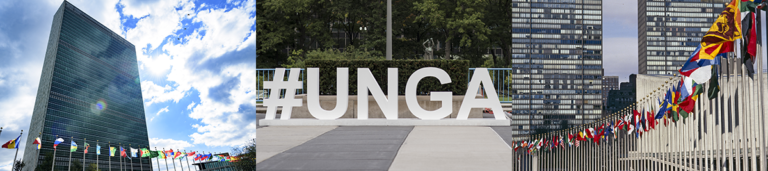
The programme aims to give participants the opportunity to report on international affairs during the 78th session of the United Nations General Assembly in New York.
Fellows will make professional contacts, interact with seasoned journalists and gain a broader perspective on global issues.
The fellowship is open to journalists working full time in developing countries in Africa, Asia, Latin America and the Caribbean.
Applicants should have a compelling interest in international affairs and the work of the U.N. and its member agencies. Freelance journalists can also apply.
The fellowship includes travel, accommodations and a per diem allowance.
Journalists who are 25 to 35 years old and from developing countries can apply for a fellowship to report on the United Nations from September to November 2023.
The submission of application deadline is April 24, 2023. Interested applicants can apply here.
THE candidate of the Labour Party (LP) in the just concluded Presidential election, Peter Obi, has finally submitted a petition challenging the outcome of the election held on February 25.
This was announced by the spokesperson of the Obi-Datti Presidential Campaign Council, Yunusa Tanko, on his official Twitter handle on Tuesday, March 21.
“It is official. The Labor Party Presidential candidate Peter OBI has filed his petition to the presidential elections tribunal in Abuja. The process of reclaiming the people’s mandate has started.” he tweeted.
The Independent National Electoral Commission (INEC) declared Bola Ahmed Tinubu of the All Progressives Congress (APC) winner of the presidential poll ahead of 17 other candidates that contested the election.
The Chairman of INEC, Mahmood Yakubu, announced the result of the election on March 1.
According to the result released by INEC, Tinubu scored a total of 8,794,726 votes to defeat Atiku Abubakar of the Peoples Democratic Party (PDP), who polled a total of 6,984,520 votes, and Peter Obi of the Labour Party (LP), who came third with 6,101,533 votes.
The PDP and LP candidates had since rejected the outcome of the election and vowed to challenge it in court.
An election petition must be presented and filed within 21 days of the declaration of the result.
When a petitioner misses the deadline to file his petition and it is later ruled to be statute-barred, he forfeits his right to bring the case.
…vote-buying as directly witnessed by EU EOM observers, further detracted from an appropriate conduct of the elections.
THE European Union (EU) Election Observation Mission to Nigeria’s 2023 general election has expressed worry over the “obstruction and use of organised violence” during the March 18 governorhip polls across the country.
The EU Mission noted that even though the elections mostly started on time, obstruction and organized violence limited the free expression of the will of voters, despite efforts by the civil society to promote democratic standards.
It noted that polling on election day was disrupted by multiple incidents of thuggery and intimidation of voters, polling officials, observers and journalists, resulting in many casualties and fatalities.
“Lagos, Kano, and other states in the southern and central part were most affected,” EU Chief Observer, Barry Andrews stated during a press conference in Abuja while presenting the Mission’s second preliminary statement on the process of the 2023 general elections.
He added that although the Independent National Electoral Commission (INEC), introduced some corrective measures ahead of the governorship and state assembly elections which enabled sensitive materials to be delivered on time and election technologies to be improved, the Commission continued to lack transparency.
“Throughout the mission we saw that Nigerians have a great appetite for democracy and are keen to engage in various civic activities. However, in many parts of the country, their expectations were not met.
“Many were disappointed and we witnessed voter apathy that is in part a clear consequence of failures by political elites and, unfortunately, also by INEC,” Andrews said.
According to the report, vote buying which was directly witnessed by EU EOM observers, further detracted from the appropriate conduct of the elections.
According to the report, there was also a clear underrepresentation of women as political parties lacked internal policies to support the constitutionally prescribed inclusion, contrary to Nigeria’s international commitments to eradicate discrimination against women.
Public confidence and trust in INEC were “severely damaged” due to the lack of transparency and operational failures and the polls revealed systemic weaknesses in the country’s electoral framework.
The first report of the EU EOM was issued on February 27, two days after the Presidential and National Assembly elections and a final report containing recommendations for improving the country’s electoral framework is expected to be published in a few months, as the Mission continues to observe post-election developments.
THE Independent National Electoral Commission (INEC) has declared the results of governorship elections in Zamfara, Rivers and Kaduna states.
The announcement was made by the INEC returning officers in each state after collating the results from polling units.
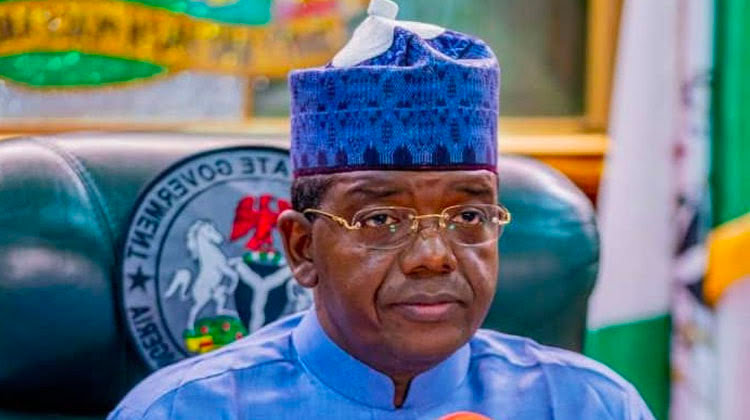
Zamfara’s incumbent governor, Matawalle Bello, lost his reelection bid to Lawal Dare of the Peoples Democratic Party (PDP).
Bello-Matawalle
The returning officer for the election, Kasimu Shehu, said Dare scored 377,726 votes to defeat Matawalle, who polled 311, 976 votes.
In Rivers State, Sim Fubara of the PDP emerged victorious in the gubernatorial election after polling 302,614 votes.
Siminalayi Fubara/PC: Channels TV
According to INEC, Tonye Cole of the All Progressives Congress (APC) came second with 95,274 votes, while Beatrice Itubo of the Labour Party (LP) came third with 22,224 votes.
Meanwhile, Uba Sani of the APC has been declared winner of the Kaduna State gubernatorial election.
INEC collation officer, Lawal Bilbis said Sani secured 730,002 votes to defeat his closest rival, Isah Ashiru Kudan of the PDP, who garnered 719,196 votes. Jonathan Asake of the Labour Party (LP) came third with 58,283 votes.
Uba Sani/PC: Punch Newspaper
Sani won in 10 local government areas (LGAs) of the state, while Ashiru won in 13. The LGAs won by Ashiru include Kaura, Sanga, Kajuru, Jaba, Makarfi, Jema’ah, Zango-Kataf, Soba, Chikun, Kagarko, Kachia, Lere, and Kudan.
The APC candidate won in Giwa, Ikara, Kauru, Sabon-Gari, Zaria, Kubau, Kaduna South, Kaduna North, Igabi, and Birnin-Gwari.
The governorship elections in the three states were keenly contested by the major political parties. The polls were also marred by pockets of violence and irregularities.
However, INEC has assured Nigerians that the results reflect the true wishes of the electorate.
Reacting to his victory in Zamfara, Lawal Dare of the PDP said his victory was a sign that the people of the state have rejected Matawalle’s administration. He promised to work hard to fulfil his campaign promises and take the state to greater heights.
Similarly, Sim Fubara of the PDP expressed gratitude to the people of Rivers State for giving him the opportunity to serve them. He promised to work tirelessly to ensure that the state experiences more development.
Uba Sani of the APC also thanked the people of Kaduna State for their support. He promised to run an all-inclusive government that will bring development to all parts of the state.
IN this second and concluding part of this investigation, Ekemini Simon takes a look at multiple contracts awarded to different companies for the yet-to-be-finished reconstruction of Abak-Ekparakwa-Ete-Ikot Abasi road.
Regardless of the N5.89bn reconstruction contract awarded to CCECC for the reconstruction of the Abak-Ekparakwa-Ete-Ikot Abasi federal road, the federal government through the Federal Roads Maintenance Agency (FERMA) and Federal Ministry of Works and Housing between 2019 and 2022 budgeted N896.4m for repairs maintenance of this road and awarded contracts to eight companies.
Even as the reconstruction project is yet to address fully the dilapidated condition of the road, at least the repairs and maintenance contract awarded to eight contractors for this project within the last four years and N753 million spent on the repair project should have changed the miserable condition of the road.
Multi-millions spent yearly for shabby repairs of Essene Spur
Checks into the Open Treasury Portal of the Federal Government reveal that in recent times, funds disbursement for the repairs and rehabilitation of the Abak-Ekparakwa-Ete-Ikot Abasi federal road commenced on December 31, 2019 to the contractor, Sunnex Nig Ltd with N23.40m paid. The contractor specifically had the contract of general maintenance of the spur called Essene in the Ikot Abasi section of the project. Through the aid of Google Map, an Open-Source App that measures distance, TheMail discovered that the road measured 3km.
Findings reveal that this road was shabbily repaired by Sunnex Nig. Ltd under the supervision of FERMA and consequently broke down in less than six months. Checks at the Corporate Affairs Commission (CAC) reveal two Directors of the company; Idris Balogun and Samson Idris.
Fallen truck on Abak-Ikot Abasi road
Seventeen months after the contract in 2019, another firm, I.C.O Engineering Consult Limited was awarded a contract for the maintenance of the road with N31.74m paid on May 3, 2021. When TheMail visited the road in November 2022, community leaders admitted that although repair work was carried out in December 2021, a section of the road measuring about 1km returned to its deplorable state as soon as the rainy season set in around April/May 2022.
A Community Leader in Essene, Otuekong Emmanuel Ekanem, said, ” The company that came under the supervision of FERMA only patched the potholes. It was done haphazardly. After that, as soon as the rainy season arrived, everything was washed away. This is not the first time it has happened. Each time they come to repair this road, it does not last beyond six months. We need a fresh reconstruction else resources would continue to be wasted”.
Checks at CAC reveal Okorie Ifeanyi Clement, Okorie Clement Joel, Chikaodiri Okorie Ezekiel and Humphery Emenogu Ikenna as Directors of the company.
After this newspaper had written a Freedom of Information request to FERMA and the Federal Ministry of Works in Mid December for information and evidence of spending on rehabilitation projects on the road, the Federal Ministry of Works and FERMA awarded contracts to two companies for the emergency repair of this spur.
According to data extracted from Open Treasury Portal, the Federal Ministry of Works and Housing on December 23, 2022, made “Part-payment for the emergency repair work on Abak-Ekparakwa-Ikot Akan Junction (Repair of Essene Road) at N81.53m (Including VAT tax) to A.E. And E. Limited. The company could not be reached at the address provided at CAC nor was there other contact information provided that could have aided the request for information on the evidence of work done.
Yet, eight days after payment was made by the federal ministry of works to repair this particular road, FERMA also made a part payment of N34.15 million for the “major maintenance” of the same road to Delko Holdings Nig Ltd.
Delko Holdings did not respond to the FOI request sent to the company for information and documents on the contract.
TheMail had requested for a contract approval letter, cost of the contract, contract duration, payments received so far from the government including date of payment, kilometres of total project/ kilometres of work executed/cost per kilometre, stage of work executed and location covered, and photos of before and after execution.
When TheMail Newspaper toured the road again on January 20, 2023, the newspaper noticed that repair work had commenced on the bad section of the road.
The newspaper reached the Chairman of the company, Ahuko James, by phone, who told TheMail newspaper that his company is the one undertaking the repairs. He said they had started the repair work immediately after receiving payment but stressed that the N34.15m is only advance payment for their work.
He assured that the company’s manager would respond to the FOI request from the newspaper. But this was not responded to before filling this report.
As stated earlier, A.E and E Limited could not be reached to give evidence on where they executed their contract.
Interestingly, when this newspaper revisited the project in mid-February 2023, the bad section of the road, which spans 1km, has been repaired. Surprisingly, however, De Bently Limited appeared on the signpost as the contractor of the project.
Checks at the Open Treasury Portal reveal that throughout the period under investigation, the company was not awarded the contract in Akwa Ibom state, thus raising suspicion that the project may have been subcontracted to the company.
Yet, background check of the company raises questions about their expertise. Checks at CAC did not yield comprehensive results about the company except that they were registered on June 18, 2010, with an address at 12 Gindiri street, Garki 2, Abuja.
However, analysing information on the company’s address as provided on the signpost at Essene Road raises a red flag. The address is Plot 892, Ngozi Okonjo Iweala Street, Utako District, Abuja. Investigations reveal that the company that occupies this premises is a hospitality outfit called Bently Hospitality Services and Consultancy Services, registered at CAC on October 19. 2022.
Extrabudgetary spending on ghost repairs, maintenance
Contract for the repairs and maintenance of the main stretch of the Abak-Ekparakwa-Ete-Ikot Abasi road received more than the budgeted funding in 2021. Checks into the 2021 Appropriation Act show that the total amount budgeted for repairs and maintenance for the road was N162.98m.
Since CCECC has overlaid 27km from Abak to Ibekwe in Mkpat Enin and 1.4km in Ikot Ntot in Mkpat Enin, it implies that the focus on repair and maintenance works should be on the remaining 20 kilometres.
Interestingly, the federal government, through FERMA, paid more than the budgeted amount. FERMA paid two companies, Cossel construction and Ok & Joel Engineering for the rehabilitation and maintenance of the stretch of the federal road in 2021. These two companies received a total payment of N223.17m, which is 36.9 per cent higher than the budgeted amount.
Cossel construction did not respond to the FOI request for information and documents on where the company worked despite acknowledging receipt of our letter in early December 2022.
Checks at CAC reveal Cosmas Anigbogu and Raymond Anigbogu as Directors of the company. The newspaper could not reach Ok & Joel despite several efforts. The company had moved out of its Abuja address published at CAC.
An internet search did not also turn out results of the company’s website or other contact information. Yet, further checks at CAC showed that the Directors of I.C.O Engineering, which were awarded the contract for the 3km spur, the same 2021 control shares at Ok & Joel with the addition of Ifeanyi Okorie Chisom as Person with Significant Interest (PSC) and Christopher Okegbe as Secretary.
In the 2022 fiscal year, although there was no budgetary provision in the Amended Appropriation Act for the repairs of this federal road beside the Essene spur and the Ekparakwa Etinan section, the repairs and maintenance of the Abak-Ekparakwa-Ete-Ikot Abasi road continued to gulp multimillion naira without evidence of project execution. ‘Two other companies, Ken-Next Venture and Omron Construction were reported at Open Treasury Portal to have been paid N359.01m between April and June 2022 for the project.
TheMail had sent FOI requests in December 2022 to the FERMA and the above companies seeking information and documents on implementing their contracts.
The request specifically sought information and documents on the contract approval letter, cost of the project, payments so far received, kilometres of work executed, precise location on the road the project was executed, stage of work implementation, photos of before and after execution, and certificate of completion.
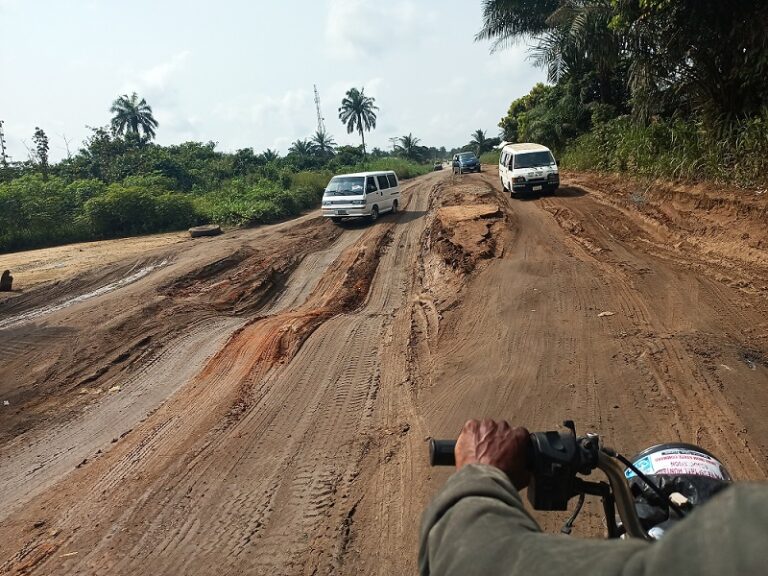
Spoilt vehicle due to deplorable Abak-Ikot Abasi road.
Instead of responding to the request, FERMA Akwa Ibom Office told TheMail Newspaper to write to its head office for the information. Although the FOI puts the responsibility of the writing on the State office, this newspaper still wrote to the Managing Director/ Chief Executive Officer of FERMA in Abuja. Even though the letter was acknowledged by the office in mid-December, 2022, the request was never acceded to by FERMA and the companies.
When TheMail toured the road in November 2022, the newspaper did not see evidence of repairs or maintenance on the stretch by the companies awarded the contract between 2021 and 2022.
Checks at CAC show three Directors at Ken-Next Venture; they are Onah Adaeze Favour, Onah Blessing Omotewho and Onah Kelvin James, who is the only one tagged as Person with Significant Control (PSC). Also, CAC checks reveal the Directors of Omron Construction to be Adesokan Olufunmbi (PSC), Olatunji Adedamola (PSC) and Olatunji Jameel.
‘We have not received any contract or payment’ Ken-Next Opens Up
Although data at Open Treasury Portal shows that Ken-Next Venture was paid N62.78m on April 1, 2022, for the “maintenance of Eket -Ikot Abasi road relocated to Ete-Abak road, an official of the company said that neither a contract was awarded to the company nor the contract fund published to have been paid ever got to the company nine months after the reported payment.
Although staff members of the company rejected the FOI request when TheMail visited their office in Port Harcourt on December 13, 2022, this newspaper went ahead to send the FOI request through the official mail address of the company. This still was not responded to. Yet, through a phone call, the newspaper reached Kelvin Onah which CAC documents show as the only Person with Significant Control in the company.
Kelvin, who admitted to having seen the FOI request, said his organisation thought it was an error since they had not received such a contract and hence did not see a need to respond.
He insisted that neither the contract for the repairs of the road has been awarded to his company nor the amount reported to have been paid to them.
Procurement regulation breached as FERMA awards Contract to splitting companies
Investigations have also shown that procurement processes were neglected by the procuring entity — the FERMA on the award of the repairs and maintenance of the road project. Findings showed that the agency contravened the public procurement law by awarding the contract for repairing the Abak-Ekparakwa-Ete-Ikot Abasi road to two companies with the same directors.
Enacted in 2007, the public procurement act clearly determines how public procurements should be conducted by ministries, departments and agencies
Section 58 (10 a and b) lists bid rigging among procurement offences.
It notes that “bid-rigging means an agreement between persons whereby offers submitted have been pre-arranged between them; or their conduct has had the effect of directly restricting free and open competition, distorting the competitiveness of the procurement process and leading to an escalation or increase in costs or loss of value to the national treasury”.
The FERMA did not give much regard to the Act. Instead, the agency went ahead to award the contract to two companies; I.C.O Engineering Consult Limited and Ok & Joel Engineering Services Limited, which data indicates that they engaged in bid rigging.
Checks into the CAC records revealed that these two companies shared the same Directors; Okorie Ifeanyi Clement, Okorie Clement Joel, Chikaodiri Okorie Ezekiel and Humphery Emenogu Ikenna. In both companies, Okorie Ifeanyi Clement is reported as the person with significant control.
Further analysis of the companies’ data suggests that it would not have been difficult for FERMA to identify the rigging if they had wanted to adhere to the provisions of the procurement. I.C.O Engineering Consult Limited and Ok & Joel Engineering Services Limited share the same registration address provided at CAC; No.9 Port Said Street, Zone Wuse Abuja, Abuja.
What is more, the payment date reveals that the FERMA is complicit in the deal. These two companies were awarded the contract for the road project in the same month in 2021.
Data from Open Treasury Portal shows that while I.C.O Engineering Consult Limited received N31.74m payment on May 3, 2021, Ok & Joel Engineering Services Limited got a payment of N80.23m 24 days after on May 27, 2021 for the same work.
When this newspaper in early December 2022 visited the address provided by the companies to submit a FOI letter requesting information and documents that give evidence of the project execution by the companies, it was gathered that the companies had moved from the facility without an alternative address. Search on the internet neither turned out results on the official websites of the companies nor phone and email address.
FERMA’s suspicious spiral of silence
Getting information and documents from the FERMA didn’t turn out successful. Every effort was stalled.
An FOI letter was sent to FERMA’s office in Akwa Ibom State. The Federal Roads Maintenance Engineer, Akwa Ibom State, L.O. Onimago refused to respond and directed the newspaper to request information and documents from its corporate headquarters in Abuja.
The newspaper made the request to FERMA’s corporate headquarters in Abuja in mid-December 2022. The office failed to respond despite acknowledgement. The office also failed to respond to calls to its official phone contact.
The supervising ministry of FERMA, the federal ministry of works and housing did not also respond to requests for information and documents on the contract. The Director (Planning, Research and Statistics), O.B Ode-Martins who responded on behalf of the Minister told this newspaper to obtain the details requested from FERMA under whose purview the project items fall.
The excuse of not acceding to the request is evasive since FERMA is under the supervision of the federal ministry of works and Housing.
Besides, if it is determined that the information sought is domiciled with another agency, the Act also gives the Minister the responsibility to transfer the request to the concerned agency, not the journalist.
Section 5 (1) reads “Where a public institution receives an application for access to information, and the institution is of the view that another public institution has greater interest in the information, the institution to which the application is made may within 3 days but not later than 7 days after the application is received, transfer the application, and if necessary, the information, to the other public institution, in which case, the institution transferring the application shall give written notice of the transfer to the applicant, which notice shall contain a statement in forming the applicant that such decision to transfer the application can be reviewed by the Court.”
FERMA in a Web of Consistent Fraud, Illegality
This is not the first time FERMA will be caught in the Web of fraud and illegalities.
In March 2022, the House of Representatives was moved to investigate what it alleged as monumental fraud and illegalities going on at FERMA.
The Minority Leader of the House, Ndudi Elumelu had expressed worry that most of the contracts awarded by FERMA are alleged to have been cornered by the management for themselves and their cronies who abandon the site after collecting a reasonable percentage of advance payment of contract sum.
“Further worried that if these spate of unbridled pilfer by top government officials is allowed to fester and unchecked it will not only drain the national purse but discredit the perceived fight against corruption by this government in the eyes of the international community, hence the need for this motion,” he said.
CSJ faults Ministry, FERMA on controversial procurement
The Centre for Social Justice has condemned the procurement method used in the repairs and maintenance of Abak-Ekparakwa -Ete-Ikot road including its spurs.
Briefed by the concerns, the Executive Director of the Centre for Social Justice, Eze Onyekpere noted that using two contractors with same Directors for a particular contract is corruption and grossly against the procurement requirements.
“This is just the same set of people using the mask of incorporation to get the same contract. In procurement, there should be competition.
Onyekpere, who equally condemned the practice of the Ministry of Works and Housing together with FERMA awarding the contract for maintenance of Essene Road during the same period, said the practice gives a leeway for money to be diverted.
“That is double counting so that money can be taken from the treasury. In such a situation, who will actually do the work”, he queried.
He also noted that for eight contractors to be awarded maintenance of a road project without specific information on the particular area or kilometres assigned is a red flag for corruption.
“They are supposed to show different sections they award contracts. For instance, that the contract is divided into lots; 1, 2 or 3 and show the kilometres of the contract awarded to each contractor so that people can know who is doing what and how they are expected to do it.”
The Executive Director said sometimes government officials intentionally fail to include this information in the contract so as to avoid thresholds of approvals hence give the contract to their cronies.
Onyekpere explained that when contracts follow the threshold approvals, it will demand more meticulous consideration of assessment by higher authorities thus the reason officials of the contracting officials make it opaque.
NIGERIA has successfully introduced new banknotes on about 10 occasions since its independence in 1960.
So why has the latest attempt been so controversial and traumatic? And what measures need to be taken to avoid a future debacle?
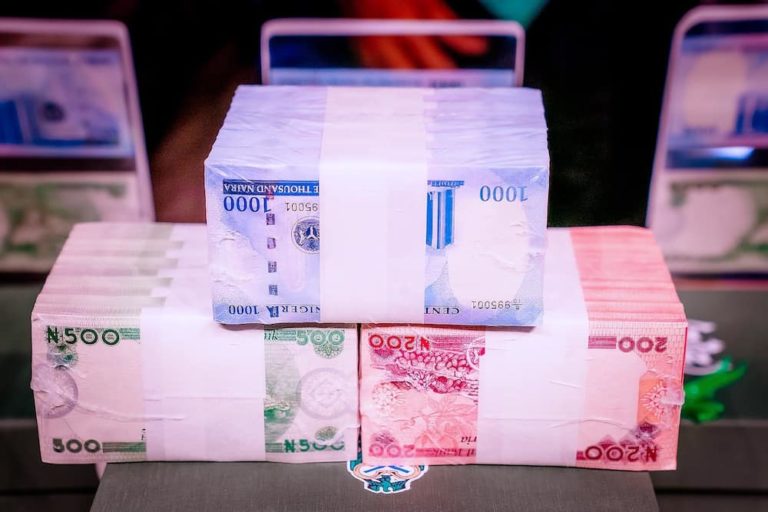
Nigeria’s central bank announced the introduction of new banknotes last November, with the changeover to new notes scheduled for mid-December. The rollout of the policy disintegrated into chaos, amid mounting anger among ordinary Nigerians.
The rollout of the currency change was disastrous. The fallout included:
Precipitous declines in business transactions (especially in the informal sector).
Long queues at bank premises and overcrowded banking halls
Attacks on bank staff and destruction of bank property, including ATMs that failed to dispense cash.
The policy also led to lawsuits by some state governors against the Central Bank of Nigeria and the Federal Government.
I have identified five factors that marred the redesign policy, most of which could have been avoided by the Central Bank of Nigeria.
Litany of errors
Cost-benefit: An egregious error committed by the central bank was its violation of the principle of cost-benefit analysis. This is a simple rule in economics that implores policy makers to undertake an initiative only when the benefits exceed the costs. One should ask: What were the benefits of introducing the policy? What were the potential costs at the time of implementation?
The central bank justified the redesign policy as follows: to rein in counterfeiting, promote a cashless economy by limiting the amount of the new banknotes that can be withdrawn, reduce the large quantity of dirty notes circulating in the economy, discourage hoarding, curb crimes like kidnapping and terrorism, and head off illicit financial transactions.
It also saw the policy as a way of addressing the huge amount of currency outside the formal financial sector; 85% of banknotes circulate outside the banking system, largely because of hoarding and illicit financial transactions.
And the cost? If indeed the central bank considered the cost, it obviously underestimated it. How would anyone ignore the large-scale disruptions in the economy and loss of productivity that the policy caused, not to speak of the stress and anxiety inflicted on Nigerians?
Communication: Of all the pitfalls that doomed the currency redesign policy, at least as conceived originally, the lack of effective communication about the overarching goals and modus operandi of the exercise was the most devastating.
Nigeria’s central bank threw a basic element of strategic planning and communication to the winds when it failed woefully to communicate and educate the public about expectations, prior to launching the policy. According to strategic planners, a major policy initiative that is not well communicated, from the top of the strategy planning pyramid to the bottom, is bound to fail.
The central bank should have sought the buy-in of major stakeholders, especially the National Economic Council and the National Assembly. The central bank would have had a better chance of avoiding the ferocious push-back it got.
The central bank finally began rolling out a communication plan by late December 2022. But this was too little too late. By then Nigerians had already characterised the policy as decidedly punitive. The narrative that had gained ground was that the change was designed to curtail the ability of politicians to buy votes during the 2023 elections.
This inevitably raised the question of why millions of Nigerians should suffer because of politicians?
The central bank’s mishandling of communication was also manifested in the fact that it failed to issue policy guidelines to commercial banks and the public days after the Supreme Court nullified the bank’s earlier deadline. This has exacerbated the confusion associated with the policy, as merchants and businesses continue to reject the old notes, despite the court’s rulings.
Inappropriate timeframe: The timeframe for implementation was unrealistic and impracticable. By setting a very short timeframe for phasing out the old notes, the Central Bank of Nigeria appeared to have adopted textbook assumptions about how the Nigerian banking system works.
Anyone who has been to a typical commercial bank in Nigeria would know it would have been impossible for the banks to undertake the monumental task of collecting old notes and dispensing the new ones within the one-and-a-half month window originally allowed by the central bank. Overcrowding, chaos, excruciatingly slow service and unnecessary bureaucratic red tape are quite common during normal banking hours. It is not uncommon to observe people with “connection” circumvent queues and obtain preferential access to bank staff. Although Nigerian banks pride themselves as being digitised, a lot of paper-pushing still goes on within the banking system.
The central bank should have considered this fact and allowed for a longer timeframe for implementation.
There was also no persuasive rationale for the rushed implementation of the policy. Neither was the central bank able to explain why the old and new notes could not coexist, a measure the Supreme Court has now mandated the bank to implement.
Conflicting goals and lack of prioritisation: Policy targeting is a major precondition for success. The focus on one unambiguous objective in past redesign policies enabled the central bank to conduct a seamless and less dramatic exercise.
The current redesign policy had too many goals, and it was unclear which one was the target goal.
Identifying target goals enables policy makers to select appropriate instruments for achieving those goals. But when there are too many goals, the danger is that an instrument designed for one goal may undermine another goal.
For instance, the goal of reining in money laundering and illicit financial transactions meant that the Central Bank of Nigeria needed to deliberately restrict access to the new banknotes. But this inflicted unintended hardships on innocent Nigerians who simply wanted to access their hard-earned money.
The central bank should have focused on one major goal. If the goal was to phase out old notes, as the bank is statutorily mandated to do, then the old and new notes could have circulated alongside each other until the old notes were phased out.
A casual announcement that new notes would be circulating from a given date would have been all that was needed. People would not have panicked and rushed to the banks to withdraw money.
Economic headwinds: It is very difficult to implement a major policy initiative that negatively affects people during a period of macroeconomic instability. The central bank policy came at a bad time. Nigeria’s economy is in a shambles, with a 22% inflation rate, 33% unemployment rate – 43% among young Nigerians – and a growth rate of 3%.
These economic challenges have been compounded by a 17.5% interest rate, steep declines in the value of the Naira, and widespread poverty.
Nigerians’ tolerance for economic shocks was already at its limit when the redesign policy was launched. The policy and the confusion that accompanied it tipped them over the edge.
The challenge of credibility
The central bank needs to reestablish its credibility as the “people’s bank,” to reverse a self-inflicted image of an organisation that’s partisan.
The bank has a fiduciary responsibility of catering to the interests of its main “shareholder,” the Nigerian people. But the perception is that the bank lacks independence. To effectively discharge its statutory duties, the Central Bank of Nigeria should initiate a process of re-asserting its independence and regaining the people’s trust and confidence.
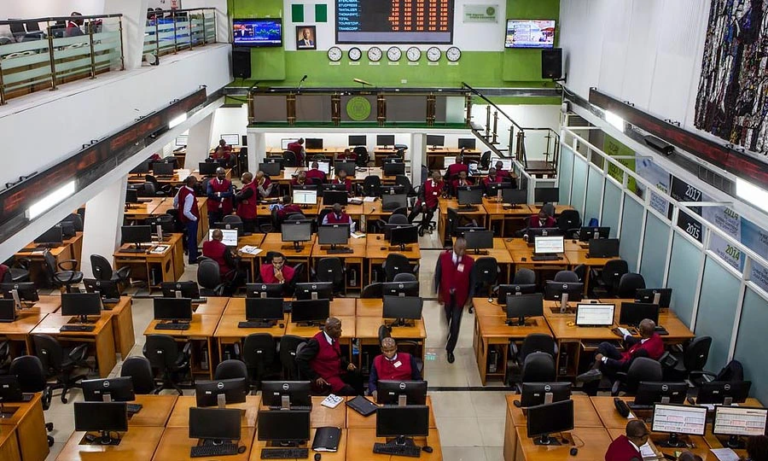
INVESTORS lost N14.66 billion as trading week opened today on the Nigerian Exchange Limited (NGX).
This drove the total market value of stocks down to N29.901 trillion at the close of the day’s trading, as the All-Share Index (ASI) also fell by 0.05 per cent to 54,888.48 basis points (bps).
Relative to 14 companies’ stocks that dropped in value, however, 19 companies’ stock prices appreciated at the close of the trading session. The year-to-date (YtD) gain of the domestic stock market also rose to 7.10 per cent.
Specifically, some mid- and large capitalised stocks like Wapic Insurance, Stanbic IBTC Bank, Nigerian Breweries, Chemical and Allied Products, and Dangote Sugar Refinery’s share prices fell.
Wapic Insurance dropped by 9.052 per cent to close at 0.38k; Stanbic fell by 8.52 per cent to N36.50; Nigerian Breweries shed 3.14 per cent to N38.55; Chemical and Allied Products lost 1.04 per cent to N19.00; and Dangote Sugar Refinery also dropped by 0.54 per cent to close at N 18.40
On sectoral performance, the banking and industrial indices rose by 1.30 per cent and 0.06 per cent to 438.53bps and 2,553.50bps respectively.
The insurance and consumer goods indices fell by 0.47 per cent and 0.36 per cent to close at 174.81bps and 698.87bps respectively; while the oil/gas index remained unchanged from what it closed in last week’s trading session.
Trading activity was upbeat as total deals appreciated by 3.86 per cent to 3,066 deals; volume rose by 646.50 per cent to 1.17 billion and value increased by 83.83 per cent to N2.88.70bn, respectively.
Neimeth International Pharmaceuticals was the most active stock in terms of volume with 1.07 billion units of shares worth N1.58bn changing hands in 15 deals.
The ICIR can report that investors in the Nigerian capital market lost N479bn in the previous week of March 13-17 owing to the uncertainty in the political space that triggered panic sell-off of shares.
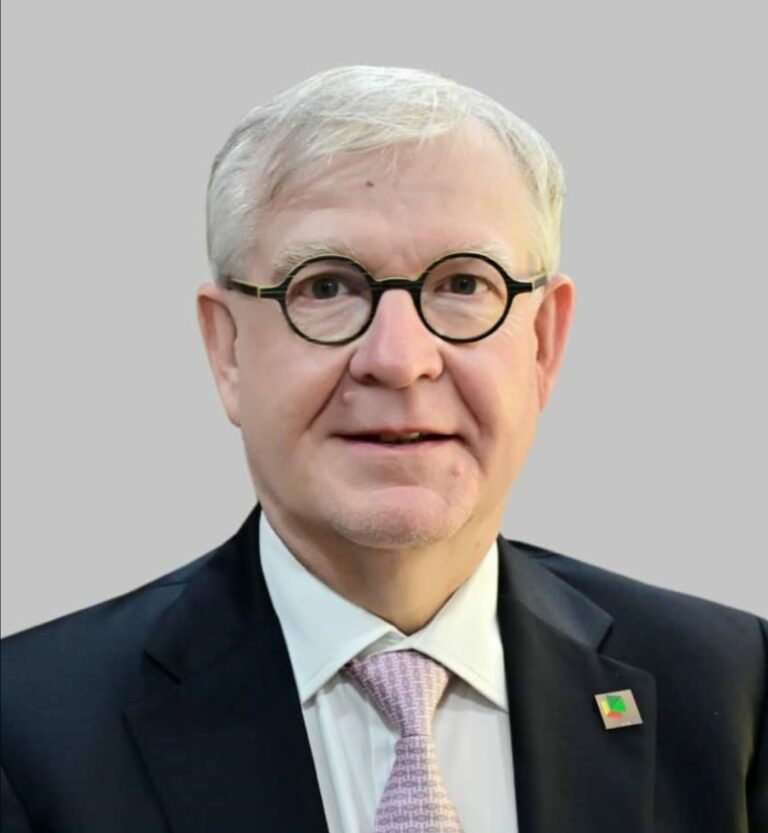
A former vice-president of Abu Dhabi National Oil Company (ADNOC), Jean-Marc Cordier, has officially joined the services of the Nigerian National Petroleum Company Limited (NNPCLtd.) as head of its trading arm, NNPC Trading Limited.
NNPCLtd. informed today in a statement signed by its chief corporate communications officer, Garba Deen Muhammad, that Cordier’s appointment was in furtherance of the ongoing repositioning drive in the company, which is focused on improved growth, better performance and service delivery.
A renowned international oil trader, Cordier is a French-Swiss national and holds a master’s degree in Corporate Finance with distinction from Paris 9 University.
NNPCLtd said Cordier’s experience and rich background spanning over 30 years in physical oil derivatives and risks management, with significant experience in reorganising and creating a trading business, would sustain growth in the company.
Records showed Cordier spent 24 years with Elf Trading/Total Trading in various positions as Trader, and Trading Desk Manager in Geneva, and four years as the Global Trading Manager at Addax Energy in Geneva.
At Abu Dhabi National Oil Company, United Arab Emirates, Cordier served as Vice President, Middle Distillates; Senior Vice President, Risk Management, and Senior Team Member in charge of building the trading activity for ADNOC and the launch of ADNOC Global Trading AGT in December 2020.
The ICIR findings showed that the NNPCLtd trading arm would ensure that the oil company achieve global trading status on global stock exchange markets, like its counterparts, including Saudi Arabia’s Arabian-American Oil Company (ARAMCO), and even Brazil’s Petroleo Brasilero (Petrobras).
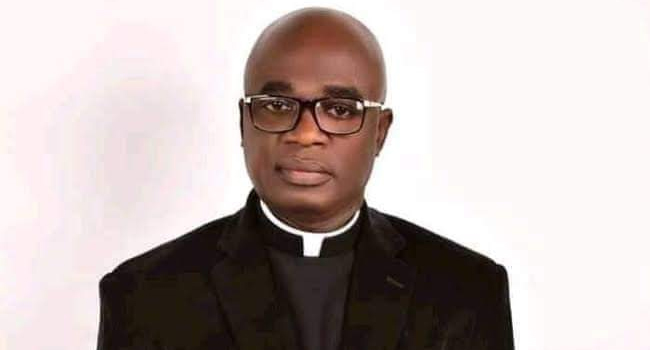
A CATHOLIC priest, Hyacinth Alia has been declared winner of the March 18 governorship election in Benue State.
The Independent National Electoral Commission (INEC) declared the candidate of the All Progressives Congress (APC) winner after he polled 473,933 votes ahead of his closest rival and candidate of the Peoples Democratic Party (PDP), Titus Uba, who scored 223, 913.
INEC’s Returning Officer in the state and Vice Chancellor of the Federal University of Technology, Minna, Faruq Kuta, announced the result on Monday, March 20.
Alia is expected to take over from Governor Samuel Ortom of the PDP.
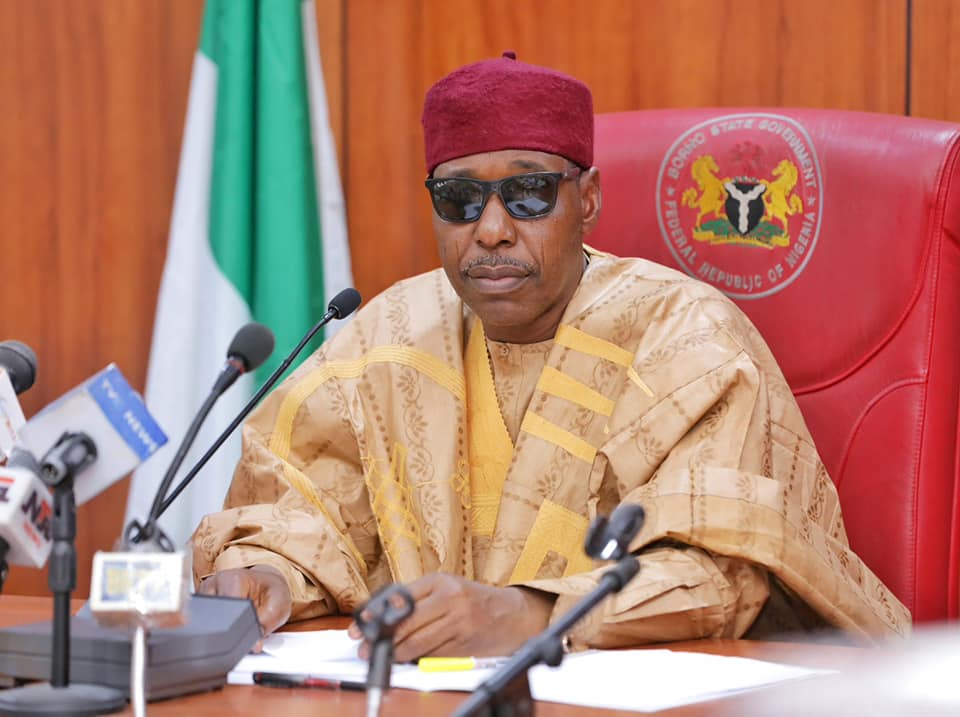
Similarly, INEC’s Returning Officer in Borno State and Vice Chancellor of Federal University, Wukari, Taraba State, Jude Tsammani Rabo, has declared Babagana Umara Zulum of the APC as the winner of the governorship election in the state after polled 545,543 votes.
Borno State Governor, Babagana Zulum
Zulum was reelected for a secord term after defeating his closest rival, Mohammed Ali Jajari of the PDP, who scored 81,850 votes.