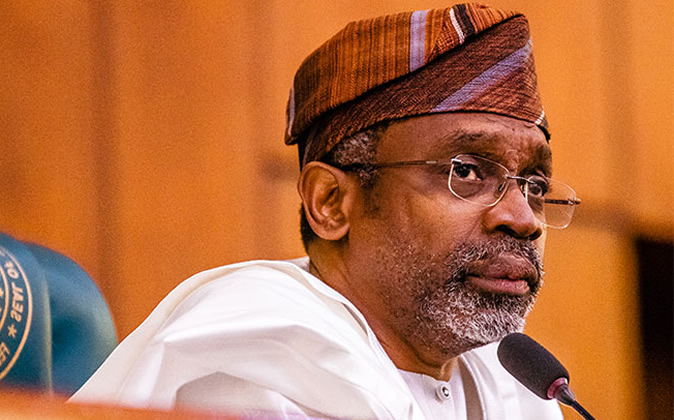
PRESIDENT Muhammadu Buhari has sworn in seven board members of the Independent Corrupt Practices and Other Offences Commission (ICPC).
The reappointed board members’ swearing-in ceremony took place shortly before the commencement of the Federal Executive Council meeting on Wednesday, March 15 at the State House in Abuja.
The reappointed board members are retired Justice Adamu Bello (Katsina), Hannatu Mohammed (Jigwa), Olubukola Balogun (Lagos), Obiora Samuel Igwedibia (Anambra), Abdullahi Saidu (Niger), Yahaya Umar Dauda (Nasarawa) and Grace Chinyere (Rivers).
The ICIR reported in 2019 that Buhari inaugurateda seven-member board for the ICPC which was chaired by Bolaji Owasanoye.
The renewed four-year tenure will end by March 2027
THE Economic and Financial Crimes Commission (EFCC) has accused a former Minister of Power, Mohammed Wakil, and others of receiving N450 million from the $115 million disbursed by then Minister of Petroleum Resources, Diezani Alison-Madueke, to influence the outcome of the 2015 presidential election.
The EFCC disclosed this in a statement released by its spokesperson, Wilson Uwujaren, on Tuesday, March 14.
According to the Commission, a Federal High Court in Maiduguri, Borno State, on Tuesday, heard how Wakil and others allegedly received N450 million to influence the outcome of the 2015 presidential election in Borno State.
The EFCC had, on June 18, 2019, re-arraigned Wakil alongside Garba Abacha, Ibrahim Shehu Birma, Abubakar Ali Kullima and Muhammad Baba Kachalla over the allegation.
They were accused of receiving the sum of N450 million from the $ 115 million allegedly disbursed by Alison-Madueke to influence the outcome of the 2015 presidential election.
The defendants all denied the money laundering charges.
According to the statement, EFCC’s counsel, Mukhtar Ahmed, led the third prosecution witness, PW3, Dauda Umar, in evidence.
The witness narrated how the sum of N450 million was signed and collected in cash from Fidelity Bank by Wakil alongside the second defendant, Garba Abacha.
According to Dauda, the money was disbursed across the country.
“Dauda told the court that the first defendant availed the EFCC with the template sent from the PDP headquarters for the disbursement of the money.
“On how the money was shared, Dauda informed the court that the second defendant accompanied his principal, Wakil and witnessed the disbursement of the funds. The third defendant was invited by Wakil and collected the sum of N120,340,000.00 on behalf of Southern Borno.
“The fourth defendant, who was also invited by Wakil, signed and collected the sum of N88, 620,000.00 on behalf of Northern Borno, while the fifth defendant signed and collected the sum of N140, 860,000.00 for Borno Central.
“They all signed and collected the said amounts in cash at the residence of Wakil,” the EFCC statement said.
The presiding judge, Justice J.K. Dagat, adjourned the matter till June 14, for the continuation of trial.
UNITED States (US) federal agents have launched a multi-state operation that is focused on busting a massive fraudulent nursing diploma scheme.
Consequently, the Texas Board of Nursing has released a 75-person probe list of individuals under investigation for fraudulent nursing credentials just as other states move to crack down on nurses with fake diplomas from South Florida schools.
Forty-three of the names were identified as nurses of Nigerian origin.
These individuals were accused of selling false and fraudulent nursing degree diplomas and transcripts to fake nurses for $15,000 each, raising serious questions about patient safety in US health institutions.
According to information on the Board’s website about the probe tagged ‘Operation Nightingale’, the individuals who acquired the fraudulent nursing credentials used them to qualify to sit for the national nursing board exam.
Upon successful completion of the board exam, the nursing applicants reportedly became eligible to obtain licensure in various states to work as a Registered Nurse (RN) or a Licensed Practical/Vocational Nurse (LPN/VN).
The Board said it had filed “Formal Charges” against the nurses for fraudulently obtaining educational credentials and according to the US Department of Justice, each defendant faces up to 20 years in prison.
“Please note that Formal Charges are not a final disciplinary action, and a nurse is permitted to work, as a nurse, while Formal Charges are pending,” the Board added.
The Department of Justice in a press release stated that more than 7,600 fake nursing diplomas were issued and distributed by three South Florida-based nursing schools.
The schools, which have since closed, include Siena College in Broward County, Palm Beach School of Nursing in Palm Beach County and Sacred Heart International Institute in Broward County.
However, it is believed that there were multiple other schools involved in the scheme in addition to the three schools listed and thousands of practicing nurses in the US could potentially be working with bogus academic credentials.
The Board has said it would continue to update its list as it receives additional information about the fraudulent diploma/transcript scheme.
“Not only is this a public safety concern, it also tarnishes the reputation of nurses who actually complete the demanding clinical and course work required to obtain their professional licenses and employment,” said US Attorney for the Southern District of Florida Markenzy Lapointe.
The Nigerian Ports Authority (NPA) introduced the electronic call-up system, powered by the Eto App, to tackle the issue of truck congestion in Apapa ports and restore order to that economic gateway. However, indiscriminate extortion and touting by hoodlums and corrupt security agencies along ports’ corridors have continued to impede the efficiency of the system. In this report, The ICIR’s NURUDEEN AKEWUSHOLA details how this development threatens the maritime sector.
As he headed out to work one sunny afternoon in November 2022, Chidera Ajaekwe, a truck driver, was filled with anticipation akin to the blazing sun in Lagos. He hoped to make a sufficient income to send to his parents in the village. Unfortunately, the trip turned out to be a horrible experience.
The 29-year-old, along with his fellow truck drivers, were transporting goods from a warehouse to the Tin Can Port when they were intercepted by a group of miscreants at an illegal checkpoint in Agboju. The thugs demanded a fee of ₦1,000 per truck, but the drivers were unable to comply since they had already expended their funds in settling the demands of previous groups of criminals at prior junctions.
Chidera Ajaekwe sustaintained serious injury when thugs attacked them when they couldn’t pay the extortion fee.
Enraged, the thugs resorted to using force to compel compliance with their demands. In a violent outburst, one of them threw a big stone at Chidera’s eyes, causing him to collapse to the ground. Chidera cried out in agony as his eyes bled. As soon as the thugs saw what they had done, they fled the scene.
This folder [HERE] contains horrid photos and videos of victims and casualties of attacks by hoodlums at Lagos ports corridors gathered during the course of the investigation. These are graphic pictures. Beware!
Chidera’s colleagues rushed him to the garage, and then to the police station to report the incident. However, when they got there, the police said it was not within their jurisdiction, advising them to visit another police station.
To save his life, his colleagues took him to the hospital, but by the time they got there, his eyes were already swollen, and he had lost a lot of blood.
Today, Chidera still lives in pain that reminds him of the ugly encounter, but his attackers still walk freely on the streets of Lagos.
“I have been having sleepless nights since the incident occurred, as the eyes still pain me any time I wish to sleep,” Chidera said, trying without success to cushion the tears trundling down his face because of the excruciating pain that resulted from the injury.
Chidera’s boss, who identified himself as Kayode, told The ICIR that he had spent over ₦100,000 in treating his eyes and that they had plans to go to a specialist hospital, where they already knew they would expend more money to secure treatment for him.
Kayode and Chidera
“The government is not doing well. If we talk about it, they would say it’s the government that put them there. They would be saying they are Sanwoolu boys,” he lamented.
Like Chidera, many truck drivers who frequent Lagos ports have been victims of attacks by these violent toll collectors in Lagos who harass businesses and collect illegal taxes from them. They generally create unwarranted bottlenecks in the import and export businesses conducted at the ports.
The open impunity
Findings by The ICIR show that there are several stations of extortionists operating publicly along the Apapa and Tin Can ports corridor. Unfortunately, their activities are aided by security operatives, especially the Lagos State Traffic Management Authority (LASTMA), a Lagos State-owned agency under the Ministry of Transportation.
Some victims who spoke with The ICIR identified non-state actors at the centre of this sharp practice as Lagos touts, members of Road Transport Employees Association( RTEAN), Oodua Peoples Congress (OPC), Maritimes Workers Union(MWUN), National Union of Road Transport Workers(NURTW) and Lagos State Parks and Garages (LASPARK).
While the complicit state actors are officers of the Lagos police, Lagos State Traffic Management Authority and the Federal Road Safety Commission.
This act of impunity by state and non-state actors which continues to frustrate the digital system and port operations has also led to several ghastly accidents which claimed the lives of citizens.
Data collated via independent oral testimonies from over 20 truck drivers operating at Apapa and Tin Can ports shows that there are about 15 channels of extortion along the Tin Can terminal axis and about 21 along the Apapa Port axis, and each truck driver said he pays at least N30,000 daily in settling thugs, popularly called Area Boys, before reaching their destinations.
The roads leading to the ports in Lagos were heavily congested on the bright afternoon of Saturday, November 26, 2022. Numerous trucks and fuel tankers lined up in extensive queues, vying to reach their intended destinations.
Disguised as a truck driver, this reporter embarked on an investigative journey on some of the routes associated with the ports. Findings show that the touts, who mount checkpoints at different stations leading to the ports, make thousands of naira daily from truck drivers.
The reporter visited various stations in Amuwo Odofin, proceeding from there to the Fatgbems junction and Mile-2, before heading to the Tin Can and Apapa ports.
Thug wields dangerous weapon on a public road in Apapa/Credit: Nurudeen Akewushola/The ICIR
During the two-day exercise, The ICIR independently verified about 12 channels where touts and arm-bearing agents enforce the collection of illegal tolls and taxes from truck drivers doing their legitimate business.
As for the thugs, they can easily spot them by the roadside, wielding dangerous weapons like daggers, pipes and pieces of wood. At some stations, they barricade the street with their bench, making it impossible for any truck to pass without their consent.
LASTMA liaising with thugs to fleece drivers
Within Amuwo-Odofin, which contains several routes leading to the Apapa Expressway, our reporter discovered six points of extortion where touts collect between ₦2,000 and ₦5,000 from truck drivers.
One of the major roads leading to the ports is Fatgbems junction. Although the reporter had earlier visited various points where the racket takes place, this junction stands out as officers of LASTMA connive with area boys to extort the drivers.
This reporter spotted two LASTMA officers working with the touts, who brandished their weapons to ensure that no trucker bypassed them.
LASTMA officer with hoodlums at Fatgbems extorting truck drivers
Rather than regulating the gridlock, which halted hundreds of trucks on the road, the officers busied themselves with collecting N2,000 from trucks passing through the junction. This reporter observed that the LASTMA officers and the touts share the money.
This reporter later approached one of the men who wore a LASTMA polo and cap to enquire how much it costs for a truck to pass through the junction. The thickly built dark-skinned man, who appeared to be in his late 30s, said it was ₦2,000.
The reporter quizzed him further, pretending that he had six trucks coming towards the junction.“Each vehicle is ₦2,000, not all. For the six trucks, it’s ₦12,000, when you reach up there, you would pay ₦500,” the LASTMA officer responded without hesitating.
LASTMA officer collecting money from truck drivers at Fatgbems
When contacted, the General Manager of Lagos State Traffic Management Authority (LASTMA), Bolaji Oreagba, denied the open impunity and unprofessional conducts by the officials of the agency.
LASTMA General Manager, Bolaji Oreagba
“Please, that is not correct. No LASTMA official collects tolls along Apapa corridors. Our officers are always in uniform,” he claimed, adding that the agency frowns at the collection of tolls on the road.
Police officers look away as touts extort truck drivers
At Mile-2 Junction, one would have expected that the presence of two police officers, identified as Ofen and Oliver, would curb the activities of the toll collectors. Rather, they sat comfortably while the thugs forced the truck drivers to cough up illegal levies.
The ICIR gathered that the police officers also take their cut from the money collected by the hoodlums, the reason why they feign ignorance.
Police officers look away as hoodlums extort truck drivers. Photo: The ICIR
The name of the young man manning this station is Belief. While his eyes were bloodshot, one would easily fathom the cause as his breath reeked of Indian Hemp.
When this reporter asked him how much they charge, he said ₦1,000 for a truck and ₦6,000 for six trucks.
Going forward
The next day, this reporter would proceed to Sunrise Junction.
Manning the Sunrise station were four men—two sat, flanked by their standing comrades. The sitting men donned Barcelona jerseys whilst the other two wore Ankara and a green native dress, respectively.
“Each truck is ₦4,000,” one of them responded to this reporter’s questions about the amount he would pay for his trucks to pass through their station.
When this reporter protested that the previous junctions had charged around ₦1,000 per truck, one of them, who identified himself as Baba Oja, explained that their station is an amalgamation of four bodies, namely Road Transport Employees Association( RTEAN), Maritimes Workers Union(MWUN), National Union of Road Transport Workers and Police and that the ₦4,000 would be split amongst them.
“We can only remove ₦500 for you. ₦3,500 per truck,” Baba Oja said.
After prolonged haggling, they eventually agreed that they would grant a waiver to one of this reporter’s four trucks and that he would pay ₦4,000 for each of the remaining three.
Infographic showing some extortion points along Apapa and Tin Can ports corridors
At Coconut Junction, this reporter encountered four young men. Two of them slept under a fuel tanker while their comrades sat down, wrapping Indian hemp. They inclined their pipes, which they use to stop vehicles, against the tanker.
“It’s ₦2,000 that you would pay here if you are going. From where you were coming there; you know they said ₦2,000. When you reach there too, you would pay ₦2,000. And there’s another one there; it’s also ₦2,000. There’s another one called Maritime; it’s ₦1,000. This place is called coconut,” said one of them, who identified himself as Wasiu Ila.
This reporter arrived at the Tin Can second gate to find out who charged even higher. They charged ₦5,000 on each truck entering the port.
Upon requesting an audience with them, the thugs directed this reporter to their leader, who identified himself as “Alfa.”
“It is ₦5,000 on each truck. But as they (this reporter’s trucks) are now many, if they follow one another, I would collect ₦4,000 on each,” Alfa said.
Lynched by OPC
Forty-five-year-old Lawal Ahmed would always remember April 27, 2022, as a day of gloom.
Ahmed and his colleagues were transporting containers along the Babangida Road, heading to the Tin Can Port, when they encountered some men he identified as members of Oodua Peoples Congress (OPC). The men approached them, asking for ₦2,000 per truck, and expectedly, they cooperated.
The OPC is a Yoruba nationalist and vigilante group dominant in the six states of Southwestern Nigeria and Kwara in the North-central region.
Lawal Ahmed
Minutes later, another set of hoodlums under the same umbrella approached Ahmed and his colleagues for money. They told the new faction that they had already paid their colleagues. However, before they realised it, the hoodlums had already punctured their tyres.
This led to an intense argument between the drivers and the thugs. While the drivers grabbed one of the thugs, insisting that they repair their tyres, his companions ran away.
The drivers did not know that the thugs left to fetch arms until they heard the sporadic shots that announced their return. Everyone in the area, including the drivers, scampered for safety, but, unfortunately, Ahmed was not lucky enough to escape.
“The guys trooped down with sticks, guns and cutlasses and started hitting me with them. They descended on me and whisked me away to their zone and my people started looking for me,” said Ahmed while narrating his experience in the hands of the thugs.
This folder [HERE] contains horrid photos and videos of victims and casualties of attacks by hoodlums at Lagos ports corridors gathered during the course of the investigation. These are graphic pictures. Beware!
Ahmed spent a day in their custody, where they subjected him to different forms of torture before the policemen eventually came to his rescue. He nursed his wounds for several weeks, but his attackers, who were arrested by the police, were released a few days after.
“The police could not conquer them because the OPC boys were more than them. It’s the policemen that we knew that usually collect bribes, but here, it’s the OPC boys that are everywhere. They should help us to talk to Gani Adams. The government should invite Gani Adams because anytime the boys want to talk, they usually say it’s Aare that sent them” he noted.
Illegal toll collectors raking millions in Lagos
The maritime industry is the backbone of international trade and the global economy. According to the National Bureau of Statistics (NBS), over 90 per cent of the volume of international trade in goods is carried by sea.
The sector serves as a significant source of income for the nation and provides employment opportunities for millions of young people. In 2022 alone, Apapa ports generated a remarkable revenue of N1.02 trillion for the nation. The industry generated and remitted N870.39 billion to the Federal Government’s account the previous year, while N518.4 billion was recorded as revenue in 2020.
One of the key players in this supply chain of goods and services is the haulage industry, which caters for the transportation of goods, by road, to ports for export and from ports to various local destinations.
However, despite its economic contribution, the haulage industry and the entire nation’s import and export business are threatened by the activities of these extortionists, which include constant harassment and exploitation.
Some of the truck owners and drivers who source for livelihood at the mercy of these marauding touts narrated how their businesses have fared after losing chunks of their income to the tolls collectors spread across the port corridors.
A truck driver, Toyin Akinjobi, narrated how he was beaten blue-black by thugs over his refusal to cough up ₦2,000. They also destroyed his truck.
“The problem we are facing is that from Ijesha to the second gate of the port is that there are area boys at numerous points where they forcibly collect money from us.
A truck driver, Toyin Akinjobi
“The last trip that I went for, I was beaten mercilessly by the hoodlums because I couldn’t give them money. And they stole some engines in my car.
“The amount we are spending for extortionists is uncountable. Like the trip I went to now; when my call-up didn’t come up on time, the boys collected ₦3,000 while waiting for call-up. In the morning again, the police and others too also collected ₦2,000 from me before they left.”
While narrating how this has affected his business, 45-year-old Taiwo Alarape, told The ICIR that it costs at least ₦35,000 to settle the extortionists on the road while entering or leaving the ports, depending on what the truck carries.
He narrated how LASTMA officers connived with thugs to beat him and collect a sum of ₦130,000 when his truck developed a fault on the road.
A truck driver, Taiwo Alarape
“As it stands, there isn’t much profit in this trade anymore. Personally, I have two wives and four children, but the frequent demands for money by the numerous boys on the road make it increasingly difficult. We spend up to two days on the road, and from Mile-2 to MOB, there could be as many as 15 of them demanding payment.
“There are times that we spend money between ₦5,000- ₦10,000 from our earnings as a driver for these boys,” he added.
Kayode, the truck manager whose driver is on the verge of losing his left eye, no thanks to the brutality of the touts, expressed concerns over the inaction of the Lagos State government, which, he believes, has given the touts the immunity to do whatever they wish on the roads.
“The government of Sanwo-Olu should help us evacuate these boys. They are just too many. There’s no amount that we can give to the driver to give these boys that they will not exhaust before they reach the warehouse. The drivers, too, are not animals. When they are moving, they would have to spend so much money. Anybody going to Alaba would spend nothing less than ₦100,000.
“We have made several attempts to report, but what they keep saying is that they don’t have the power. When they make an arrest, and they call them from the top, there’s nothing they can do. We have arrested several people and fought as regards to it but we had to give up.
”The major problem that all of us are facing is this area boys because when the work you do worth ₦200,000 and ₦100,000 ended up in the pocket of thugs on the road, the money would have finished.”
*The second part, to be published on 16-03 -23, will be linked HERE
THE sum of N21 trillion required to solve the housing deficit in the country can only be sourced through “seed funding” and not from federal government’s budget, a housing investment expert, Ayo Ibaru, has said.
The Bank of Industry (BoI) had stated in its latest research report that Nigeria needed N21 trillion to close its housing deficit gaps.
But as Ibaru posited, Nigeria might not be able to close the gap since it largely depends on borrowing to fund its budget.
The 2023 Federal government’s budget is N21 trillion, to be funded largely by borrowing.
The housing investment expert pointed out that the Federal government had been struggling to plug the housing deficit loopholes, but had really not maximally explored available seed funding options.
Ibaru said on the Arise Television programme ‘Business’ today that “the burden of addressing housing deficit should not be left in the hands of the government alone without seed funding support.
Seed funding is a form of securities offering involving a start-up company in which an investor put in capital in exchange for an equity or convertible stake in the company.
“We need a seed grant of solving the housing deficit problems. Ghana has taught us that this is doable,” he said.
He emphasised the importance of affordabe housing, noting that the government must have a long-term strategy to enable local manufacturers produce locally.
“You cannot have affordable housing when cement, land, and other materials are not affordable,” he said.
Ibaru further said that the first thing to do with the concept of affordable housing was to deal with delays in the housing processes.
The government, he emphasized, must begin to think of letting go its tight grip on land by signing land titles early enough.
The Federal government, through the Minister of Housing and Urban Development, has commenced a housing scheme for civil servants in the Federal Capital Territory (FCT).
However, those knowledgeable about the sector said it is difficult to close the funding gap without joint partnership with the private sector through enabling policies.
The Project Director, WAP Ltd, Rwanda, Harmony Kunu, held that available and new alternate building materials technology were not widely published and deployed to developers.
According to Kunu, lack of government’s support with the necessary infrastructure and incentives also discouraged mass housing projects.
“There is no formalised and published construction permit approval in place, and where some states government do have some sort of approvals, most are wrongly evaluated with respect to cost of securing approvals.
“Only in Nigeria do they cost the number of houses and number of floors to secure a construction permit for an estate project,” he said.
ADEDOTUN Clement, an Uber driver who was publicly attacked, assaulted and humiliated by officials of the Lagos State Neighbourhood Safety Agency and the Nigeria Police Force during the first anniversary of the #EndSARS protests in 2021, has been awarded N5 million compensation.
A Lagos Federal High Court on Tuesday, March 14, ordered the Lagos State Government and the Nigeria Police Force to pay N5 million as compensation to the driver.
The court condemned the torture of the driver by officials of the Lagos State Government and the Nigeria Police Force.
On October 20, 2021, Clement was carrying a passenger from the Island to the Mainland part of Lagos when he encountered the #EndSARS protest at the Lekki Toll Gate, which was disrupted by officials of Lagos State government and the police.
When the protest was dispersed using tear gas canisters, Clement temporarily abandoned his car like other motorists and ran for his life. However, when he returned to pick up his car, he was accosted, dragged, tortured, and manhandled by the officers who refused to heed his entreaties that he was an Uber driver and only wanted to retrieve his car.
The assault was captured on video and reported in the media, leading to public condemnation.
Following this, Lagos-based human rights lawyer and activist Inibehe Effiong sued the Lagos State Government, the Lagos State Neighbourhood Safety Agency, the Attorney General of Lagos, and the Nigeria Police.
Delivering judgment in the fundamental rights case on Tuesday, March 14, Justice A. L. Allagoa held that the treatment meted on the driver amounted to a violation of his right to dignity and awarded the sum of N5 million as damages to him.
Clement’s counsel, Effiong, expressed appreciation to the court for upholding his client’s rights and called on the Lagos State governor, Babjide Sanwo-Olu, to comply with the judgment and pay the compensation in line with his public declaration that he has compensated victims connected with the #EndSARS protests.
SPEAKER of the House of Representatives, Femi Gbajabiamila, has debunked rumours that he is lobbying to become Chief of Staff to the President-Elect, Bola Tinubu.
Gbajabiamila was absent when the Independent National Electoral Commission (INEC) issued certificates of return to newly elected members of the National Assembly at the International Conference Centre (ICC) in Abuja.
The Speaker’s absence raised speculations that he was more interested in the chief of staff position when Tinubu is sworn in by May 29, 2023.
However, speaking with journalists in Abuja on Monday, March 13 Gbajabiamila dismissed the speculations.
He said “I don’t know anything about that Chief of Staff thing.
“All I heard was that I didn’t come here last week to pick up my certificate and for that reason, somebody conjectured that must be about something about Chief of Staff.
“I was in Lagos and I could not leave Lagos because I was campaigning for my party. That’s number one.
“Again, it will interest you to know that I was not here four years ago to pick up my certificate because I couldn’t make it. I don’t think it is anything significant. I’ll pick up my certificate today or tomorrow.”
THE Independent National Electoral Commission (INEC) has cautioned the political parties and their supporters to see election as a contest and not a war.
The electoral umpire urged politicians and candidates to refrain from acts of violence that may mar the elections or compromise the security of personnel, observers, the media and service providers.
The Chairman of INEC, Mahmoud Yakubu, disclosed this at the Inter-Agency Consultative Committee on Election Security (ICCES) meeting in Abuja on Tuesday, March 14.
The meeting reviewed preparations for the Governorship and State Houses of Assembly elections scheduled for March, 18,2023.
“The State elections will involve 1,021 constituencies (28 Governorship and 993 State Assembly seats). There will also be more candidates involved and more collation centres to protect”,
“refrain from acts of violence that may mar the elections or compromise the security of our personnel, observers, the media and service providers,” he said.
Mahmoud said that INEC offices at the State level had given the Nigeria Police Force the delimitation information for the State Assembly and Governorship elections, including the locations of Polling Units and Collation Centers, in order to facilitate a coordinated deployment strategy with other security, law enforcement, and safety agencies.
The National Security Adviser, Babagana Monguno, said the Security Personnel were ready to provide a level playing ground for all Contestants in the election.
Monguno also called on Politicians to play according to the rules in the interest of all.
The Governorship elections would take place in 28 States of the Federation and all State constituencies nationwide.
THE Federal Government has disclosed that a total of 12,988,978 cyber attacks were recorded before and during the February 25 Presidential and National Assembly elections.
In a statement issued on Tuesday, March 14, the Minister of Communications and Digital Economy Isa Pantami revealed that at least 1,550,000 attacks were recorded on public websites and portals daily before the elections.
The statement noted that the attacks increased to 6,997,277 from within and outside Nigeria on election day.
The incidents include Distributed Denial of Service, email and IPS attacks, SSH Login Attempts, Brute Force Injection attempts, Path Traversal, Detection Evasion and Forceful Browsing.
The statement disclosed that a committee set up by the Ministry of Communications and Digital Economy to mitigate the activities of cyber criminals during the elections worked from February 24 till February 28.
“A total of 12,988,978 attacks were recorded, originating from both within and outside Nigeria.
“Generally, threats to public websites and portals averaged around 1,550,000 daily. However, this skyrocketed to 6,997,277 on Presidential Election Day.”
According to the statement, in the runup to the 2023 general elections, threat intelligence revealed an astronomical increase in cyber threats to the Nigerian cyberspace.
INTERNATIONAL Women’s Media Foundation is inviting applications for its Elizabeth Neuffer Fellowship.
The program provides academic and professional opportunities to advance the reporting skills of women and non-binary journalists who focus on human rights and social justice.
The Neuffer Fellowship is designed for women and non-binary journalists with at least three years of professional experience in journalism working in print, broadcast, or digital media, either as a staff journalist or as a freelancer.
All nationalities are welcome to apply but non-native English speakers must have excellent written and verbal English skills in order to fully participate in and benefit from the program.
The Fellow will complete research and coursework at MIT’s Center for International Studies and journalism internships at The Boston Globe and The New York Times.
The flexible structure of the program provides the fellow with opportunities to pursue academic research and hone their reporting skills. Past fellows have taken advantage of opportunities to publish work under their byline through various media outlets.
The organiser says, ”The Fellowship was created in memory of The Boston Globe correspondent and IWMF Courage in Journalism Award (1998) winner Elizabeth Neuffer, who died while reporting in Iraq on May 9, 2003.
“In collaboration with Neuffer’s family and friends, the IWMF started this program to honor Neuffer’s legacy while advancing her work in the fields of human rights and social justice.”
The deadline for the submission of applications is April 23, 2023. Interested applicants can apply here.



![Maritime ‘Bandits’: Lagos government looks away as touting, extortion thrive at Apapa Ports corridor [1]](https://www.icirnigeria.org/wp-content/uploads/2023/02/7FC32912-BE02-429E-AEDA-DFDACF531F60-768x432.webp "Maritime ‘Bandits’: Lagos government looks away as touting, extortion thrive at Apapa Ports corridor [1]")