Home Blog Page 1051

Live Fact-Check: 2023 Presidential and National Assembly elections [Collation]

0

The Nigerian Fact-checkers’ Coalition (NFC) brings you live-check of election-related misinformation and disinformation spreading online and on television  as collation and announcement takes place. 

See election day Live Fact-Check HERE

See results annoucement Live Fact-Check HERE


Do you have an election-related claim you want us to fact-check? Reach the NFC via WhatsApp here.

This page is constantly being updated with verified checks.


Here are the live-checks:


Claim 13

CLAIM: An Instagram post by Tunde Ednut (@mufasatundeednut) asserts that the presidential candidate of the Labour Party, Peter Obi, won Owerri West Local Government Area (LGA) in Imo state and Ndola West LGA in Delta state.

THE FINDINGS: So far, no comprehensive report is available for both LGAs. In Imo state, INEC started collation of the presidential election results from the 27 local government areas of the state and later suspended collation in Nkwerre/Nwangele/ Njaba/ Isu Federal Constituency of Imo State.

A report by ThisDay also noted that INEC rejected election results presented at the commission’s state office in Asaba for Ika North-east Local Government due to discrepancy in the figures presented.

VERDICT: INCORRECT

SOURCES: Punch and ThisDay newspapers


Claim 12

CLAIM:  An invitation card with a claim that Babajide Sanwo-Olu, the Lagos state governor is holding a dinner and one-on-one conversation with the Igbo captain of industry is doing rounds on WhatsApp.

THE FINDINGS: As Bola Tinubu lost Lagos state, his historical stronghold, to the Labour Party (LP) following Saturday’s presidential election, there are speculations that the Lagos state governor is trying to get the Igbos in the state to vote for him in the forthcoming March 11 governorship election. Jubril Gawat, Sanwo-Olu’s senior special assistant on new media, debunked the claim in a tweet with a version of the invitation card stamped with “Fake News” on Monday, February 27, 2023. 

VERDICT: INCORRECT

SOURCE: Jubril Gawat, senior special assistant to the Lagos state governor on new media


Claim 11

CLAIM: A Twitter user, Senior man (@her_genie) made a post with a pictorial chart of Premium Times’ election result dashboard revealing several numbers of votes scored by the top four candidates in the presidential election on Monday, February 27, 2023.

THE FINDINGS: The Premium Times official dashboard shows that the votes for the Labour Party, PDP, APC and NNPP had been doctored in the graphic shared by the Twitter user. Also, the chart in the post had also been rearranged by political parties with PDP first, followed by APC, LP and then NNDP instead of LP, PDP, APC and then NNDP.

Another detail that was excluded in the doctored chart is the total votes by states and the total votes by percentage (%), which is seen in the Premium Times dashboard. The graphic also missed the mark on the votes of senatorial district measured, which was 5,000, instead of 500,000 on the newspaper’s dashboard.

VERDICT: INCORRECT

SOURCE: Premium Times


Claim 10

CLAIM: A viral WhatsApp claim has circulated challenging the authenticity of Labour Party’s (LP) votes (11,397) in Ekiti state.

THE FINDINGS: According to the ICIR‘s report on the presidential election results in Ekiti state, the total vote cast was 314,472 and the valid vote cast was 308,171. In the report, APC had 201,494 votes; PDP had 89,554 while LP had 11,397.

Thus, if you subtract 302,445 from 308,171, you will get 5,726. Therefore, the total number of votes from the remaining  parties was 5,726. The total number of accredited votes according to the claimant is inaccurate.

VERDICT: INCORRECT

SOURCE:  The ICIR


Claim 9

CLAIM: A one-minute and 38 seconds TikTok video circulating on WhatsApp claims that “Ekiti election 2023 is fake results.”

THE FINDINGS: The original video, which is 22 minutes long, was posted on YouTube nearly eight years ago, precisely on March 31, 2015.  It shows the moment a former minister of Niger Delta, Godsday Orubebe, who was an agent of the Peoples Democratic Party (PDP) disrupted the national collation and announcement of the 2015 presidential election results on the same day the video was posted online.

VERDICT: INCORRECT

SOURCES: YouTube, Premium Times, Punch newspaper


Claim 8

CLAIM: Social media users claimed that Peter Obi, the Labour Party’s (LP) presidential candidate, has polled over 1 million votes in Plateau State.

THE FINDINGS: The result is yet to be announced officially by the Independent National Electoral Commission (INEC) as of 2.30 p.m. on Monday, February 27, when this report was filed. However, TheCable’s report on votes polled in Plateau State showed that  Obi had so far won eight LGAs while PDP won 2 LGAs out of the 17 LGAs in the state.

In total, the LP presidential candidate polled 301,905 votes in Plateau state.

VERDICT: MISLEADING.

SOURCE: TheCable Newspaper


Claim 7

CLAIM: post shared on Facebook claimed that thugs have set fire to shops owned by Igbo traders in Ladipo market in Lagos. The post has also been circulated on WhatsApp.

THE FINDINGS:  Checks showed that the video was from a 2022 fire incident in the market. Nosa Okunbor, the public relations officer of the Lagos State Emergency Management Agency (LASEMA), also said he has not received a report of any fire incident in the market as of Monday, February 27, 2023.

VERDICT: INCORRECT

SOURCES: LASEMA, Google reverse image search


Claim 6

CLAIM: A Twitter user, @NajibHaruna_, claimed that Ibrahim Bello Muhammad, 27, the newly elected House of Reps member in Kebbi State is the youngest federal lawmaker in Nigeria’s history.

THE FINDINGS: Findings show that Gabriel Saleh Zock of the APC, a first-term member representing Kachial/Kagarko Federal Constituency of Kaduna State is currently the youngest lawmaker in the House of Representatives. Gabriel was born on November 20, 1985. He became a lawmaker at the age of 34. If Bello is sworn in, he would break the record.

VERDICT: CORRECT

SOURCES: Multiple media reports


Claim 5

CLAIM: Social media users say the image uploaded on INEC’s IReV for Ekiti polling unit, not the result sheet.

THE FINDINGS: NFC’s visit to the INEC IReV portal confirms the report to be true. The image uploaded on the portal, as of 10am on Monday, February 27, differed from the INEC result sheet for the polling unit with code 13/01/02/001 under Ado ‘B’ Inisa Ward/RA in Ado Ekiti local government area. It rather contained the image of a young lady in a room.

VERDICT: CORRECT

SOURCE: INEC IReV Portal


Claim 4

CLAIM: Bashir Ahmad, Special Assistant on Digital Communications to Nigerian President Muhammadu Buhari, on his Twitter handle, claims that APC has won the elections in 14 states, PDP in 7, LP in 4 and NNPP in 1.

THE FINDINGS:  Reports by credible media platforms such as Channels TV and Premium Times reveal that INEC has declared the results of only one state, Ekiti, out of the 36 States in Nigeria as of 9am on Monday.

VERDICT: INCORRECT

SOURCES: Channels TV, Premium Times


Claim 3

CLAIM: The headline of a news report on ejesgist.ng claims that the presidential candidate of the Peoples Democratic Party (PDP), Atiku Abubakar, defeated the All Progressives Congress (APC) candidate, Bola Tinubu, to win all 20 local government areas in Osun State.

THE FINDINGS: Osun State has 30 local government areas. INEC result viewing portal shows that polling unit results of the 2023 presidential election have been uploaded from all 30 local government areas. The results declared at the national collation centre show that Atiku won 20 local governments while Tinubu won the remaining 10 LGAs.

VERDICT: MISLEADING

SOURCES: INEC IRev portal, Multiple media reports


Claim 2

CLAIM: A Twitter user @drpenking tweeted an image that showed the Labour Party got 29,568 votes in Agege and claimed INEC switched the results to APC and reduced the numbers for Labour Party to 13,270.

THE FINDINGS: Updates from various news outlets shows that APC won the Labour Party by a landslide in Agege local government area. We collated the results for each party and found that APC actually had 29,568 votes while Labour Party had a lesser total number of votes.

VERDICT:  INCORRECT

SOURCES: Multiple media reports


Claim 1

CLAIM: Peoples Gazette headline reads that soldiers shoot ‘Oluomo’ dead at collation centre.

THE FINDINGS: From the comment section, the NFC observed that some social media users were curious about which Oluomo was actually killed. Although the report states that PDP supporter Akinlabi Akinnaso, also known as Oluomo, was shot dead, reactions from commenters indicate confusion, prompting our check. The deceased is not the popular Lagos State NURTW chairman, MC Oluomo.

VERDICT: MISLEADING.

SOURCES: Vanguard Newspaper, Punch Newspaper


Nigerian Fact-checkers' Coalition

*This live-check was jointly researched and written by members of the Nigerian Fact-Checkers’ Coalition (NFC): Nurudeen Akewushola, Faith Abeka, Fatimah Quadri (FactCheckHub); Rosemary Ajayi (Digital Africa Research Lab); Daniel Adaji (The Insight); Elizabeth Ogunbamowo, Lois Ugbede, Cole Praise, Silas Jonathan, Temilade Onilede, Lateef Sanni (Dubawa); Catherine Adeniyi, Motunrayo Joel, Allwell Okpi, Seyi Awojuyigbe, Fatimah Abubakar, Abisola Olasupo (Africa Check); Rejoice Ewodage, Hannah Ajakaiye (FactsMatterNG), Shehu Olayinka and Bamas Victoria (ICIR).

It was edited and approved for publication by Kemi Busari, Caroline Anipah, Simbiat Bakare (Dubawa), David Ajikobi (Africa Check), Ajibola Amzat, and Opeyemi Kehinde (FactCheckHub).
Facebook Comments

Nigeria Decides 2023: Party agents protest, walk out of national collation centre

Party agents have accused the Independent National Electoral Commission (INEC) of wrongdoings in the Presidential and National Assembly elections held on Saturday, February 25, 2023.

The agent of the Peoples Democratic Party (PDP), Dino Melaye, had today at the National Collation Centre in Abuja raised issues about the credibility of the election.

Melaye claimed there was a case of over-voting in Ekiti and blamed the electoral body for its inability to transfer the election result on its result viewing portal (IRev).

The agent of the Labour Party (LP) and some other agents also protested against the pattern of the election result announcement.

Most agents who spoke want the INEC chair to stop the collation process until the issues raised are resolved.

Melaye urged the chairman of the Independent National Electoral Commission (INEC), Mahmood Yakubu, to adjourn the declaration of results for other states and reconvene after the results had been reviewed and double-checked.

In his reaction to the protests, Yakubu appealed for calm and promised that all their grievances would be looked into after the conclusion of the collation.

He added that under the law, he cannot stop the process until the collation was concluded.

He added that there was no over-voting in Ekiti, as alleged by Melaye.

“Thank you very much. We have heard everything that you have said. But I’m going to comment. All three issues. The first one, which was the starting point of all this lengthy conversation, is over the allegation of overvoting in the result presented yesterday from Ekiti State.

“What is overvoting? Were the total number of votes cast higher than the number of accredited voters?

“Based on the original of the document signed by party agents at state level and the spreadsheet before me, there was no overvoting in the city state.

“The total number of accredited voters 315,058, that is what is on the authentic document. Any other figure that shows anything at variance with this may not emanate from the Commission,” Yakubu said.

He said the Commission provided a detailed breakdown of the score of political parties across the board.

“My second response is: are the figures consistent with what transpired at the polling units?

“I like the suggestion made that the Commission has power under the Electoral Act to review results, but that power is contingent upon one procedure.

“The process has to be concluded first before you can then talk about the power to review.

“I want to assure political parties of evidence they have of any alleged wrongdoing at any level of the process, whether it is at the polling unit or at collection level, please forward this information, and I promise you, as soon as the process is concluded, we will then do the review as provided by law,” he added.

At the end of Yakubu’s speech, Melaye and some other party agents walked out of the collation venue, while the INEC chairman continued with the declaration of results.

US announces visa validity extension for Nigerians effective March 1

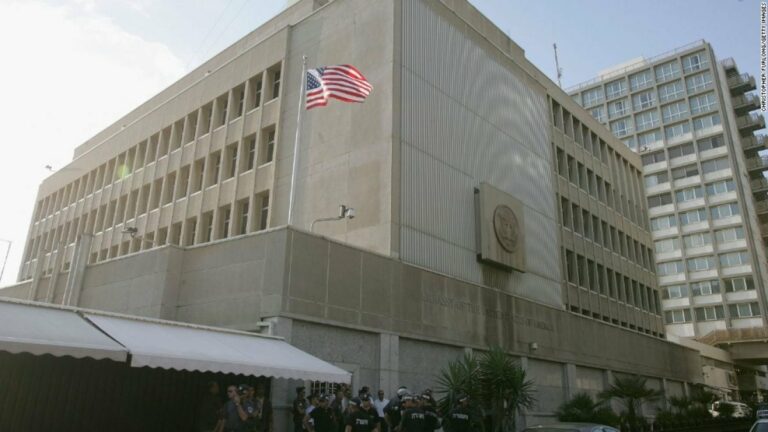
THE United States has announced a new visa regime for Nigerians. The regime takes effect from Wednesday, March 1, 2023.

According to a statement on Monday, Nigerian tourist visa applicants are now eligible for five years visa as against two years under the previous visa regime.

This review follows Nigeria’s recent policy of visa reciprocity with the US.

The statement read, “Effective March 1, 2023, the U.S. Mission will increase visitor visa validity from 24 months to 60 months for Nigerians who want to enter the United States temporarily for business and/or tourism.

“The visa validity extension allows Nigerians to use the visa for 60 months to make short trips to the United States for tourism or business purposes before having to renew their visa.”


READ ALSO:


It added that the visa application fee, currently USD160 (N73,672) will not increase as a result of the increased visa validity.

Increasing visa validity is one of several initiatives taken by the United States to reduce visa appointment wait times in Nigeria.

The U.S. Mission says it will continue to offer No-Interview Visa Renewals to those who meet the eligibility criteria.

Atiku emerges winner in Akwa Ibom

0

THE presidential candidate of the Peoples Democratic Party (PDP), Atiku Abubakar, has defeated those of the All Progressives Congress (APC) Ahmed Bola Tinubu, and Labour Party (LP) Peter Obi, in the Akwa Ibom State presidential election.

Abubakar secured a total of 214,012 votes to defeat his closest rival, Tinubu, who polled 160,620 votes, while Obi scored 132,683 votes.

The result was as declared by the returning officer for the state, Professor Emmanuel Adigio.

According to the results collated from the 31 local government areas in the state, Abubakar won in 23 local government areas, while Tinubu won in five local government areas.

Obi won in three local government areas, including the state capital, Uyo.

The state has a total number of 2,357,418 registered voters, but only 594,450 were accredited to vote.


According to the state returning officer, the total votes cast during the election was 587,417.

Summary of the results announced are as follows

A 860

AA 289

AAC 626

ADC 2265

ADP 811

APC 160,620

APGA 783

APM 599

APP 325

BP 525

LP 132,683

NNPP 7796

NRM 667

PDP 214,012

PRP 343

SDP 589

YPP 27,179

ZLP 4,124

Atiku wins presidential election in Yobe

0

THE candidate of the Peoples Democratic Party (PDP), Atiku Abubakar, has won the presidential election in Yobe State.

He was declared the winner of the Yobe election on Monday, February 27, having garnered 198,567 votes.

Atiku won by a landslide according to results collated from the 17 local government areas by the Independent National Electoral Commission (INEC).

The All Progressive Congress (APC) candidate, Bola Tinubu, followed with 151,459 votes.

The New Nigeria Peoples Party (NNPP) candidate, Rabiu Musa Kwankwaso, came third with 18,270 votes.

Out of the 17 local governments in the state, the PDP won 12, while the APC won 5.

Atiku wins with wide margin in Adamawa

0

THE presidential candidate of the Peoples Democratic Party (PDP) Atiku Abubakar, has won the presidential election in his state, Adamawa.

Atiku won the poll with a landslide after polling 417,611 votes across the 21 Local Government Areas of the state.

Candidate of the All Progressives Congress (APC) Bola Tinubu got 182,881 votes while the Labour Party (LP) candidate, Peter Obi, came third with 105,648 votes.

The result was announced by state collation officer Prof. Mohammed Mele, who is also the deputy vice chancellor of the University of Maiduguri.

Mele noted that 764,834 voters were accredited out of the 2,186,465 total registered voters.

Election: Let’s talk about BVAS

0

By Chidi Anselm Odinkalu

Note: This was first published in 2021

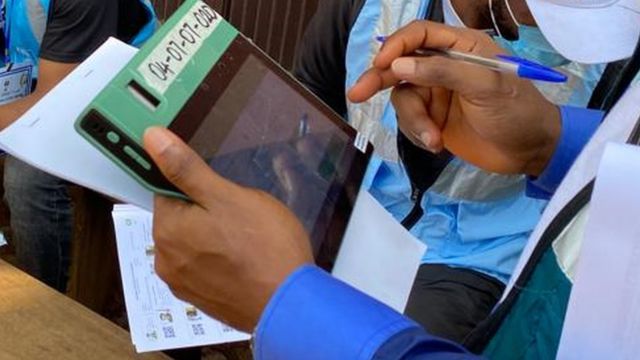
NIGERIA’S Independent National Electoral Commission, INEC, deployed a new gizmo in #AnambraDecides2021. It’s called the Bi-Modal Voter Accreditation System (BVAS).

Anambra was not the first time INEC had deployed BVAS. Its first promenade was in the Isoko South Constituency 1 bye-election in Delta State on 10 September, 2021 in which “some presiding officers…. complained that the machine had difficulties capturing the thumbs and faces of some of the voters, especially the aged.” Few noticed.

The Anambra election is, therefore, the most consequential outing so far of the BVAS and the first time it was deployed in a state-wide contest. It will be deployed again in both Ekiti and Osun, two governorship contests in 2022 in which the territorial footprint will be significantly more demanding than Anambra’s 4,844 km² and which have greater rural sprawl.

The performance of the BVAS in Anambra bears close attention and scrutiny. The reason will become evident shortly.

Context is essential. Democracy is quantum arithmetic. In a democracy, we count the people, we count their votes, and we count their money. Through counting the votes, leaders acquire the legitimacy to count and account for the people’s money.

This simple proposition assumes the existence of political numeracy skills and an institutional ethics of honest counting and accounting. In all three endeavours of counting the people, their votes and their money, Nigeria’s abysmal performance was over 55 years ago immortalised by Wolfgang Stolper in the classic, Planning without Facts. We are more adept at inventing numbers than counting them. Thus, for us in Nigeria, democracy has never been about honest counting and accounting. Rather, it is “a game of numbers”.

In elections, numbers that have no relationship to the votes actually cast are routinely written up all over the country. Judges and Senior Advocates of Nigeria (SANs), most of whom never needed to pass mathematics in order to dorn the wig and gown, then make lots of money deploying Latin to excuse innumerate political ethics. Usually, we never had problems with voting as such. Our problem was always with collation and with election litigation.

In 2015, INEC hit upon a technology solution in the form of the card reader to verify the Permanent Voters Card (PVC) and close the gap between voter authentication and the voting tallies and achieved over 50% in using the device to accredit voters in the presidential election.

The result was that for the first time in Nigeria’s presidential election history, the loser declined to sue and, overall, the percentage of elections ending up in the courts fell to about 43 per cent.

Only eight years earlier, in 2007, 86.35 per cent of all offices contested ended in court. In 2011, it was just over 51 per cent. In 2019, the proportion of voters that INEC accredited with the card reader had dropped to under 20 per cent and the number of contests ending up before the courts rose again to above 51 per cent. It does not take the rarefied skills of a theoretical physicist to correlate an effective technology solution with electoral credibility.

In the Nasarawa Central state constituency bye-election in August 2020, INEC introduced the Z-Pad to test a successor solution to the card reader in voter accreditation. It met with very mixed results. In the Edo Governorship off-cycle election the following month, INEC deployed the Z-Pad mostly as an interface with its new INEC Result Viewing (IReV) portal, which was credited with helping to preserve the will of the people in the contest on 24.22 per cent turnout.

The BVAS is a successor to the Z-Pad, reputed to achieve convergence of the essential features of these solutions in combining voter enrolment, voter accreditation, and results interface capabilities in one device. Theoretically, this should eliminate the gaps that enable analogue manipulation of numbers in elections. The voter accreditation capability combines fingerprint, Iris and facial recognition technologies supposedly to eliminate guesswork in voter identification and accreditation. To preclude hacks, the application requires regular software updates and serviceable broadband access, requiring 4G technology for convenient download. Many issues arise here; I confine myself here to four.

First, in one sentence, BVAS is a technology solution based on Artificial Intelligence and is only as good as the both the age of the data and the training that the Algorithms receive. The use of this technology as a solution on the scale required for credible election administration in Nigeria is challenging given its flawed reputation and at a time when many of its pioneers are pulling back from it.

In the Anambra election, for instance, it was clear that voters recently registered in INEC’s Continuing Voter Registration (CVR) were the most easily accredited because their features were current. However, older voters or voters whose PVCs were a few years old generally reported serious problems with accreditation, mostly because their features had changed in the intervening years between data capture and accreditation. Thousands of them may have been disenfranchised as a result. This raises legitimate questions about both the provenance of the Algorithms and their training. INEC needs to disclose more information about these parameters.

Second, technology solutions need complementary systems. In its 2020-2025 National Broadband Plan, the National Communications Commission discloses that broadband penetration rate in the country at the beginning of last year was about 37.8 per cent and sets a target of 70 per cent penetration by the time of the next general election in 2023.

Since these targets, however, rather than expand the footprint, much of the telecommunications infrastructure in north-west Nigeria have been shut down for supposedly more pressing purposes. MTN, the leading carrier in the country with 38 per cent market share, currently reports only 60 per cent 4G penetration.

In Dunukofia, Anambra state, most of which is covered by 3G networks, for instance, several presiding officers had to enlist local motor bike providers to take them to neighbouring communities where they could access the 4G Network to download BVAS updates.

This raises a third issue: BVAS is geospatially dependent. Anambra is Nigeria’s second smallest state at 4,844 km², with a dense population, in which communities live cheek-by-jowl with one another. The next two states in which INEC will audition BVAS before the 2023 presidential election, Ekiti (6,353 km²) and Osun (9,251 km²), combine for only 15,604 km² of landmass or nearly the size of Lagos State smaller than the smallest state in northern Nigeria, Gombe State (18,768 km²). By contrast, Niger State, the biggest state in (northern) Nigeria at 76,363 km² is about two and a half times the size of Oyo State, which at 28,454 km² is the largest state in southern Nigeria but only the 14th in the country. In Anambra, INEC could get away with the electoral frustrations of BVAS but they are unlikely to do so in Zamfara State with 39,762 km² or in Taraba State’s 54,473 km². Yet, despite its evident geospatial sensitivities, BVAS will only have been tested in three relatively small states of southern Nigeria before the 2023 elections but nowhere in the north. A situation in which BVAS can only be deployed in southern Nigeria in 2023 but not in the north will be rather problematic, to put it mildly. INEC should know this.

I have not mentioned Network failure.

Fourth, in the Anambra ballot, serious human agency deficits were very evident. It was clear that many electoral and presiding officers had little or no training in the BVAS. In mitigation, INEC could claim that they suffered unavoidable deficiencies in the withdrawal of trained election officials because of the attrition induced by the well-advertised pre-election violence. That excuse is unlikely avail them in Ekiti and Osun.

The voluble complaints about “voter apathy” in Anambra governorship election will not reckon with these factors nor volunteer the numbers whose suffragist aspirations were frustrated because facial recognition technology is partial to smoother features than Nigeria’s long-suffering people may routinely claim or possess.

In the euphoria that has followed the completion of the Anambra election, these issues are unlikely to receive the attention they deserve. That will be tragic. Voters in Azare or Rigassa are unlikely to be as patient with the frustrations of BVAS as we saw with their peers in Aguata or Oleh. The BVAS could be a potential game changer in closing the gap between electoral democracy as an enterprise in political numeracy and Nigerian elections as a cynical exercise in political voodoo. Whether or not this happens will depend on how seriously INEC treats the clear deficits that were on show in Anambra and, more importantly, on whether it even wishes to do so.

Odinkalu, a lawyer & teacher, wrote from Abuja.

Ortom loses senatorial bid to APC

0

BENUE State governor and candidate of the Peoples Democratic Party (PDP) Samuel Ortom has lost the Benue North-West senatorial election to Titus Zam of the All Progressives Congress (APC).

Returning Officer of the Independent National Electoral Commission (INEC) Rufus Sha’ato made the announcement in Makurdi on Monday, February 27.

Sha’ato noted that Zam gathered a total of 143,151 votes, followed by Ortom with 106,882.

The candidate of the Labour party Mark Gbillah came third with 51,950 votes, according to results from polling units in the state.

Zam was Ortom’s former aide, serving as his Special Adviser on Local Government and Chieftaincy Affairs during his first tenure.

The governor lost in six out of seven local governments in the senatorial zone, winning only his local government area, Guma.


READ ALSO:


Sha’ato also stated that the APC won the elections in the Makurdi/Guma federal constituency.

The APC candidate in the elections Dickson Tarkighir polled 49,511 votes, followed closely by Ben Mzondu of the PDP with 43,893 votes and Jerry Agber of the LP who polled 23,414.

“Tarkighir having satisfied the requirement of the law is hereby declared winner of the House of Representatives election for Makurdi/Guma Federal Constituency,’’ Shaa’ato stated.

Tinubu reacts to defeat, promises to accept election outcome

PRESIDENTIAL candidate of the All Progressives Congress (APC), Bola Tinubu, has promised to accept the choice of the majority in Lagos State.

Tinubu said as a democrat, he was willing to accept the election outcome, whether favourable or not.

He called for calm, saying the state election result should not trigger supporters and party members into violence and chaos.

The former Lagos State governor said this in a statement issued on Monday by the Director, Media and Publicity, APC Presidential Campaign Council, Bayo Onanuga.

Tinubu said narrowly losing Lagos state to another party should not be a reason for a breakdown in law and order, noting that the beauty of democracy was that people had a right to vote for the candidates of their choice.

“The fact that the APC narrowly lost Lagos State to another party should not be the reason for violence. As a democrat, you win some, you lose some. We must allow the process to continue unhindered across the country while maintaining peace and decorum,” he said.

He also expressed concern about violence in parts of the state and condemned the alleged attacks on some Igbo traders.

Obi was declared the winner of Lagos after pulling 582,354 votes.
Tinubu trailed behind with 572,606 votes, while Atiku Abubakar of the Peoples Democratic Party (PDP) garnered 75,750 votes.


Nigeria gets nearly $1bn from Global Fund, after misappropriating previous funds

0

THE Global Fund has approved nearly $1 billion for Nigeria to continue its fight against tuberculosis (TB), malaria, and HIV/AIDS for the next three years.

Out of approximately 110 countries, Nigeria got the highest grant of $933,156,931, covering 2023 to 2025.

The fund adds to almost $3 billion that the country has received since 2003.

Nigeria is the single biggest recipient of Global Fund grants.

It got over $1.5 billion for the 2017-2019 and 2020-2022 funding cycles. 

As of February 25, 2023, Nigeria had contributed $38.79 million to the Global Fund. It pledged $12 million for the Global Fund’s Sixth Replenishment, covering 2020-2022. The country is both a donor to the Global Fund and an implementer of programmes supported by the organization.

The ICIR reports that African nations benefit more than any other continent from Global Fund’s grants because the three diseases are prevalent in the region.

The ICIR also reports that though Nigeria needs more funds to combat many communicable and non-communicable diseases taking a high toll on the nation, many officials managing available funds have been accused of corruption, in many instances, with impunity.

In 2020, Global Fund supported Nigeria with $294 million to fight COVID-19.

The ICIR reported how the Global Fund, in its 2022 audit, accused the National Agency for Control of AIDS (NACA) and the Lagos State Government of misappropriating $19.6 million worth of COVID-19 procurement grants through shady contract awards.

It was not the first time the Global Fund would accuse Nigeria of misusing its grants.

In 2016, the Fund accused NACA and the National Malaria Elimination Programme (NMEP) of misappropriating the grants they got.

The Global Fund consequently suspended them as its grant recipients 

As of 2021, NACA was yet to clear itself of the 2016 indictment before the Nigerian government.

According to the Global Fund, Nigeria has the third highest number of HIV infections globally: 1.7 million people living with HIV and AIDS. It has the highest TB burden in Africa, and the sixth highest globally. 

The ICIR reports that the country parades the highest number of global malaria cases and the highest number of deaths. The 2022 World Malaria Report showed that the nation contributed 27 per cent of global malaria cases.

As of June 2022, organizations receiving grants from Global Fund in Nigeria are: 

  • Christian Health Association of Nigeria Civil Society for HIV/AIDS in Nigeria (CiSHAN)
  • The Yakubu Gowon Center for National Unity and International Cooperation
  • Association For Reproductive And Family Health (ARFH)
  • Catholic Relief Services – United States Conference of Catholic Bishops (CRS Nigeria)
  • Family Health International (FHI360)
  • Institute of Human Virology Nigeria (IHVN)
  • State Ministry of Health (LSMOH)
  • Management Sciences for Health (MSH)
  • National Agency for the Control of AIDS (NACA)
  • National Malaria Elimination Programme (NMEP)
  • National Tuberculosis & Leprosy Control Programme (NTBLCP)
  • Planned Parenthood Federation of Nigeria (PPFN) Society For Family Health (SFH)
  • National Action Committee on AIDS.