THE Independent National Electoral Commission (INEC) has suspended the Enugu East Senatorial election due to the killing of Labour Party (LP) candidate Oyibo Chukwu.
INEC chairman Mahmood Yakubu announced this on Friday, February 24 at a press conference held at the National Collation Centre in Abuja.
Chukwu, a lawyer, was shot dead by unknown gunmen three days before the Presidential and National Assembly elections.
According to several reports, Chukwu and other party members were killed late Wednesday night in Amaechi Awkunanaw, Enugu South Local Government Area, Enugu State.
The reports say unidentified individuals approached them while they were travelling in a Sienna car, shot at them and set the vehicle on fire.
The governorship candidate of the party in the state, Chijioke Edeoga, confirmed the incident.
Giving an update on the development on Friday, Yakubu said the Enugu East Senatorial election will now be combined with the governorship and state assemblies’ elections on March 11.
“This request is in line with the provision of the law, section 34(1) of the Electoral Act, 2022,” Yakubu said.
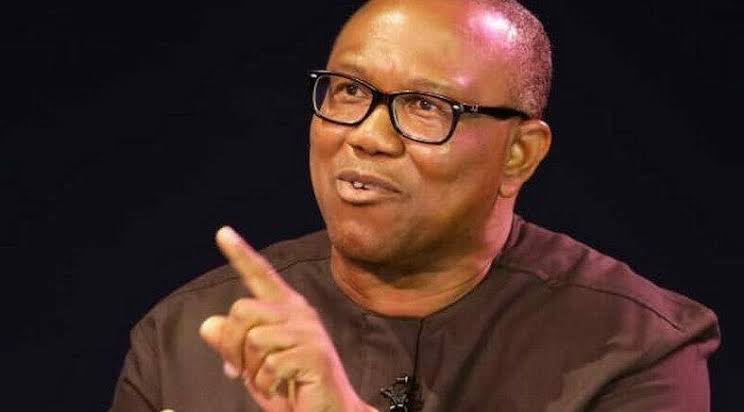
Meanwhile, the presidential candidate of the LP in the forthcoming elections, Peter Obi, has condemned Chukwu’s killing.
Obi also commiserated with the bereaved family, the Enugu East Senatorial Zone and the Labour Party family.
He reacted to the killing in a series of tweets on his official Twitter handle on Thursday.
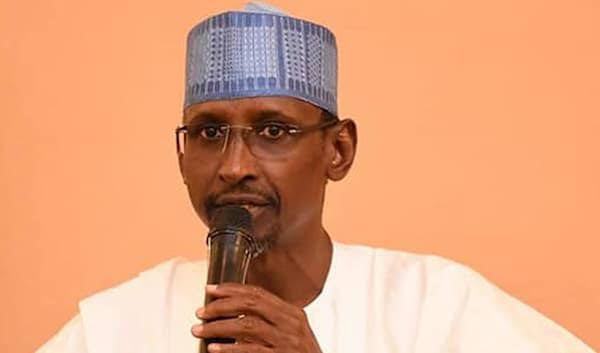
MINISTER of the Federal Capital Territory (FCT) Muhammad Musa Bello has urged residents to ensure that Saturday’s elections are peaceful and orderly.
A statement released by the Minister’s Director of Press Anthony Ogunleye on Friday, February 24, said Bello also urged Nigerians resident in the FCT to obey existing electoral rules and security regulations.
“I want to appeal to residents to be peaceful, law abiding and go out enmasse to cast your votes, because it is by your votes that you will determine who will represent you in the National Assembly.
“I wiII have no doubt that you will all make us proud by being disciplined and obey all regulations as set by INEC as well as the security agencies,” Bello said.
Commending residents for maintaining order during the campaign period, he encouraged them to further strengthen democracy in the city by voting in their preferred candidates.
“This has continued to show that democracy has matured in the FCT, where all contestants, irrespective of political party, played by the rules and campaigned with decorum, discipline and above all with respect for one another,” he said.
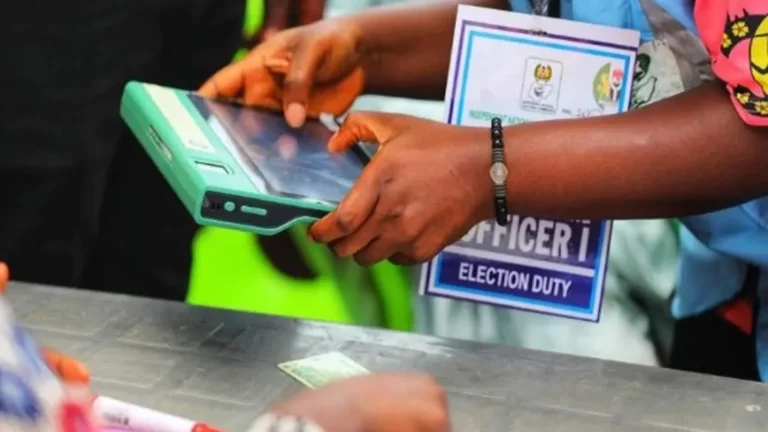
Over 93 million Nigerians are eligible to vote in the 2023 general elections, which start on Saturday, February 25 with Presidential and National Assembly polls.
The Independent National Electoral Commission (INEC) announced that 87 million registrants had collected their Permanent Voter Cards (PVCs) which will enable them cast votes in the exercise.
THE Trade Union Congress of Nigeria (TUC) has endorsed Peter Obi, the presidential candidate of the Labour Party (LP) for the 2023 presidential election.
The union has called on workers nationwide to vote for Obi, urging them to be vigilant during the election and to vote for pro-labour candidates they can trust.
In a statement signed by the President, Festus Osifo, and Secretary-General, Nuhu Toro, the TUC stressed the importance of the election, stating that it may determine the future of the country in socio-economic terms and the general well-being of the country.
It also directed its members to vote for the LP and all its candidates, emphasizing that the party belongs to them.
The TUC highlighted workers’ duty to not only cast their votes but also defend the electoral process’s sanctity.
It called on all Nigerians to ensure that special protection is given to electoral officials, particularly the over 200,000 National Youth Service Corps (NYSC) members engaged as ad-hoc staff, to ensure smooth elections.
The statement charged the Independent National Electoral Commission (INEC) with ensuring free, fair, transparent, and credible elections where votes count.
It called on security agencies to provide security to all citizens before, during, and after the elections.
The union also welcomed the deployment of 33 international organizations and 2,113 observers, requesting that they observe the elections without any form of interference or statements that could inflame passions or lead to any form of disruption in the country.
It highlighted the importance of the working class in ensuring the peaceful conduct of the elections and safeguarding general peace in the country, including in the post-election period.
The union emphasized that where political elites, some of whom hold multiple nationalities, are rich enough to relocate abroad, the working people and the mass of the citizenry have no alternative but to stay in the country.
The TUC urged the government at all levels to secure lives and property, stating that it has a primary duty to protect all citizens before, during, and after the elections.
It stressed the crucial role of the NYSC members, who are part of the bulwark of Nigeria’s youths that can guarantee a future Nigeria, and urged all Nigerians to ensure their special protection.
TUC’s endorsement of Obi comes days after its parent body, the Nigeria Labour Congress (NLC), urged workers across the nation to vote and the LP and its candidate in the elections.
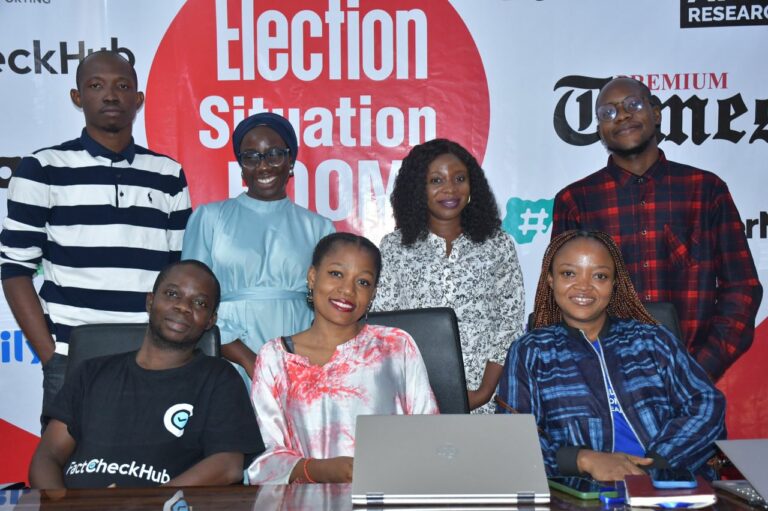
THE Nigerian Fact-Checkers’ Coalition (NFC) has unveiled its situation rooms to combat misinformation ahead of the 2023 general elections starting on Saturday, February 25.
The NFC election situation rooms located in Abuja, Lagos and the United Kingdom, will monitor the spread of election misinformation and disinformation targeted at inciting violence, promoting voter apathy, undermining trust in the electoral process and influencing the outcome of election.
The Abuja NFC situation room, which is linked virtually to others, is domiciled at The ICIR office in Abuja which also doubles as the coalition’s secretariat.
Opeyemi Kehinde, Editor at the FactCheckHub and NFC’s Coordinator, said the situation room is poised to monitor ‘fake news’ (misinformation and disinformation) purveyors, noting that Thursday’s dry run, held in Abuja, was to ensure effective work flow during the election.
“One of the things that we have put in place is to collapse our staff from most partner organisations into the coalition’s situation rooms where every person representing various partners will monitor and debunk ‘fake news’ that’s spreading on election day until the final results are announced by the Independent National Electoral Commission (INEC).
“The role of the coalition in ensuring the election integrity is very significant because we understand the dangers that lurk around when misinformation is allowed to have its way in the electoral process,” Kehinde said.
Caroline Anipah, Deputy Director at the Centre for Journalism Innovation and Development (CJID) commended the NFC for its work.
“The NFC has been doing a tremendous work holding political candidates and their followers accountable since it was set up. It has been heavily involved in live presidential debate fact-checking, among others.
“From the public reception of our work, we know we are doing things right, making a difference, and contributing to a cleaner information space – one devoid of the volume of misinformation that would have circulated without our work,” Anipah said.
The coalition, which was officially launched in June 2022, has observed various trends of misinformation and disinformation over the months running into the election.
“Some of the trends we have observed include the use of impersonation and digital mercenaries to insert certain narratives into mainstream conversation by manipulating Twitter’s Trending Topics,” Rosemary Ajayi, founder and lead researcher of Digital Africa Research Lab says.
“We have also documented the use of live video on Facebook and YouTube to stoke ethnic tensions and call for violence against certain ethnic groups on Election Day.
“We’ve also seen the politicisation of fact-checks published by the NFC. But a very interesting trend is the politicisation of Twitter Blue where savvy political actors subscribe to Twitter’s blue tick scheme to exploit the increased visibility it affords. It’s a worthwhile investment as subscribers’ Tweets are given prominence. I am keen to see how many will continue to subscribe after the elections,” Ajayi added.
Also commenting on the coalition’s preparedness for the election, Kemi Busari, DUBAWA Nigeria Editor, said: “The NFC is set to do a live fact-checking of election-related misinformation. We enjoin the public to send us claims and ensure they confirm any information before passing it on.”
Busari urged members of the public to always verify information before sharing on social media platforms. He encouraged the public to send any suspicious post, images or video that they want verified on Election Day to the coalition’s WhatsApp number: +2349030785265.
“We will provide voters and the general public with accurate information – verified and fact-checked, to help them make all the important decisions they must make during the elections,” Anipah said.
NFC comprises of leading Nigerian newsrooms, fact-checking organisations and civil society actors such as FactCheckHub, International Centre for Investigative Reporting (ICIR), Premium Times, TheCable, Africa Check, Centre for Democracy and Development (CDD), Centre for Journalism Innovation and Development (CJID), Daily Trust, Digital Africa Research Lab, Dubawa, FactsMatterNG, and The Insight.
The NFC consists of researchers, fact-checkers, social media monitors, editors, misinformation and disinformation experts drawn from the coalition partners.
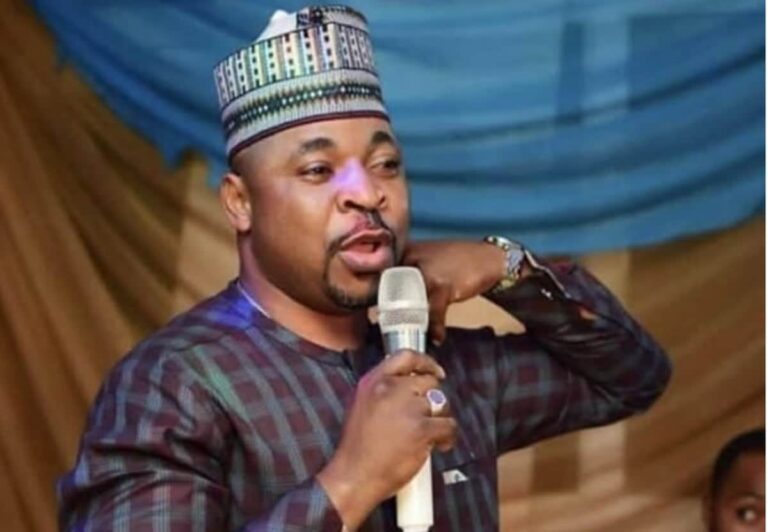
THE Federal High Court sitting in Lagos State has issued a perpetual injunction restraining the Independent National Electoral Commission (INEC) from contracting Musiliu Akinsanya, popularly known as MC Oluomo, to distribute 2023 election materials in the state.
The court’s decision also prohibits the electoral body from partnering or appointing any of MC Oluomo’s members or drivers to distribute election materials in the state.
The court gave the ruling on Friday, February 24 in a suit filed by the Labour Party (LP) governorship candidate, Gbadebo Rhodes-Vivour.
Other applicants in the suit included the governorship candidates of the African Democratic Congress (ADC), Funsho Doherty and Boot Party, Wale Oluwo.
On Monday, February 20, the court had granted an interim order on the matter before adjourning to hear the substantive case. The hearing in the substantive case came up on Wednesday, following which the court adjourned till today.
Through their lawyer, Abass Ibrahim, the applicants had asked for several reliefs, including a declaration that INEC’s appointment, partnership, or contracting of the MC Oluomo-led Lagos State Parks Management Committee violated sections 26 and 27 of the Electoral Act 2022 and was consequently unlawful, null, and void.
Additionally, the applicants sought an order to set aside any partnership, undertaking, contract, and memorandum of understanding (MOU) executed by MC Oluomo, the Lagos State Parks Management Committee, or any of its members and drivers with INEC to distribute election materials and personnel in Lagos State.
The applicants argued that INEC’s partnership or appointment of MC Oluomo and his team to distribute election materials and personnel would create room for election sabotage, manipulation, and rigging in favour of the All Progressives Congress (APC) party.
INEC did not file any response to the suit nor did the electoral body send a lawyer to represent them in court, despite being served with all the processes in the case as ordered by the court.
Justice Chukwujekwu Aneke delivered the judgment on Friday, granting all the reliefs sought by the applicants and issuing an order of perpetual injunction restraining INEC and its privies or any persons acting under their directions from contracting, partnering, or appointing MC Oluomo, Lagos State Parks Management Committee, or any of its members and drivers to distribute 2023 election materials and personnel in Lagos State.
A video showing some lawmakers at the entrance of Nigeria’s legislative complex in Abuja has circulated online with a claim that the Department of Security Services (DSS) has shut down the National Assembly.
In the video, some lawmakers were seen at the entrance of the complex lamenting over how DSS operatives led a siege there and prevented them from gaining entrance into the Hallowed Chambers.
The video has been going viral in several WhatsApp groups with a claim that the DSS recently shut down the national assembly.
A caption from the footage retrieved from a WhatsApp group by The FactCheckHub read:
“BREAKING NEWS: NIGERIA IS NOW IN A STATE OF ANARCHY/DICTATORSHIP. NATIONAL ASSEMBLY HAS BEEN SHUT DOWN BY UNKNOWN FORCES AND TAKEN OVER BY DSS!”
The video has found its way into the Nigerian social media space. It has been shared by several Twitter and Facebook users with a similar caption as can been seen here.
A Twitter user, @vivoexpresswisp tweeted the video with a caption thus:
“As an ex General, Buhari is a step ahead of rubber stamp National Assembly. Now DSS have locked up National Assembly. How will they impeach Buhari now?I stand with Buhari and Emefiele. Old Naira notes must go!(sic).”
The tweet has garnered over 47,000 views with about 80 retweets as of Thursday, February 16, 2023.
A Facebook user, Lady K Ifeoluwa posted the video on Facebook with a caption that read:
“YAWA DON GAS, NATIONAL ASSEMBLY HAS BEEN SHOT DOWN AND HAVE BEEN TAKEN OVER BY DSS. STATE OF ANARCHY BEGUN.”
The post has garnered more than 167,000 views, over 2,000 likes and about 940 comments as of Thursday, February 16, 2023.
CLAIM
Video shows DSS barring lawmakers from entering the National Assembly in 2023.
Screenshot of the viral video
THE FINDINGS
Findings by The FactCheckHub show that the claim is MISLEADING.
The FactCheckHub subjected the keyframes of the footage to multiple Reverse Image Search; the results revealed that the video has been online since 2018.
The video shows some lawmakers stranded outside the National Assembly Complex, as DSS officers stormed the legislative complex.
According to media reports, the masked operatives and officials of the Department of State Security Services who reportedly said they acted based on ‘order from the above’ barricaded the National Assembly entrance preventing lawmakers from entering the complex.
The leadership of the parliament was expected to meet on the day to deliberate on issues affecting the polity and the 2019 general elections and the N428 billion election budget proposal.
THE VERDICT
The video which showed lawmakers being barred from entering the National Assembly was from an incident that happened in 2018.
*This was first published by the FactCheckHub, read the original here
LESS than 24 hours before the Presidential and National Assembly elections, the Police in Rivers State have arrested a House of Representatives member representing Port Harcourt Federal Constituency II, Chinyere Igwe, allegedly with $500,000.
Spokesperson of the Rivers State Police Command Grace Iringe-Koko confirmed to The ICIR that operatives arrested Igwe Friday morning.
Igwe was alleged to have been arrested with a list of how the money would be shared across all 23 LGAs in the state and for officials of the Independent National Electoral Commission (INEC).
The ICIR converted the money allegedly caught with him by the Police at the official exchange rate of N460, giving a value of N230 million.
Igwe is a staunch supporter of the presidential candidate of the Peoples Democratic Party (PDP), Atiku Abubakar.
A former Commissioner for Urban Development in Rivers State, Igwe has a running battle with the Rivers State government headed by Governor Nyesom Wike.
Wike is an estranged PDP member. He has vowed repeatedly that Rivers State people would not vote for Abubakar.
Because of the raging feud between Wike and the former Vice President, the PDP could not hold its presidential campaign in the River State.
Meanwhile, the River State government had accused Igwe of involving in oil bunkering and sealed his fuel station for allegedly selling bunkered fuel.
Igwe’s arrest came hours after a Chief Magistrate Court in Port Harcourt remanded the lawmaker representing Etche/Omuma Federal Constituency in the House of Representatives, Ephraim Nwuzi, at the Nigerian Correctional Centre in the State.
The Police in the State accused Nwuzi, a member of the All Progressives Congress (APC), of treasonable felony.
He is the APC candidate for the National Assembly election coming up tomorrow Saturday, February 25.
HOURS after popular pro-Biafra separatist agitator Simon Ekpa was released following an invitation for questioning by Police in Finland, he has resumed threats that there would be no election in Nigeria’s South-East on Saturday, February 25.
Ekpa, who was seen leaving his apartment in Lahti Thursday afternoon in company of plainclothes Finnish policemen, was later released.
An officer at the Finnish Central Criminal Police Tommi Reen, had disclosed that Ekpa’s arrest was in connection with the ongoing preliminary investigation.
One local journalist confirmed to the BBC that Ekpa was released after being interrogated for a couple of hours.
Tweeting after his release, Ekpa wrote: “Tomorrow (Friday) sit at home, there will be no goat in the street…The end of Nigeria is here. your plan to islamise Nigeria using your terrorist group has failed. This Saturday, we will know who are the indigenous people”.
Meanwhile, the South-East Council of Traditional Rulers has urged all residents of the South-East to ignore any sit-at-home order and massively go out to vote for their preferred candidates.
The Nigerian government is worried over Ekpa’s inciting comments which could potentially scuttle the Presidential and National Assembly elections scheduled to hold on Saturday.
STATE agents in various West African countries are exploiting weak laws and employing advanced technology to spy on and harass journalists.
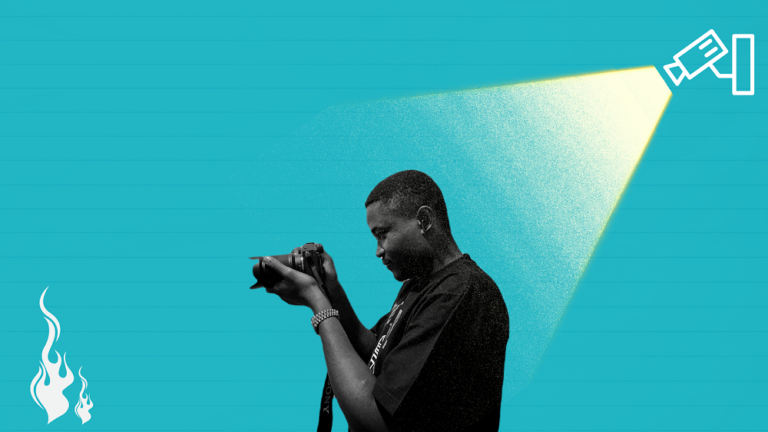
When Eti-Inyene Akpan, a freelance photojournalist, heard about the plans to hold #EndSARS protests in October 2020, he was eager to be at the forefront of reporting activities. He was going to document the events as Nigeria’s young people expressed displeasure over abuses by officers of the police Special Anti-Robbery Squad (SARS).
He would take photos of the demonstrations and share them on social media to create awareness.
Akpan himself was a victim of police brutality in 2015 when he was still an undergraduate at the University of Benin. He was ambushed by cultists for refusing to be part of them. When passersby intervened, the cultists accused him of being a thief.
“Unfortunately, there was a recent robbery incident in the area at the time. So, I was handed over to the police, who had caught one of the robbers disturbing the community the night before. On getting to the station, the guy caught said he did not know me. In spite of that, I was locked up for more than a week without being arraigned.”
His parents had to pay a huge sum before he was released. Afterwards, Akpan said, the police officer who extorted them admitted knowing he was attacked by cultists, adding that they could not guarantee his safety in the area. He had to leave Benin without completing his five-year pharmaceutical programme.
“From my past experience, I could relate to the feelings of many Nigerians. So, I was there all day to tell stories of the protesters.”
“From my past experience, I could relate to the feelings of many Nigerians. So, I was there all day to tell stories of the protesters.”
On October 20, 2020, in an attempt to bring an end to the protests, the Nigerian government deployed soldiers to the Lekki tollgate in Lagos, which had one of the largest gatherings of protesters. The troops shot at unarmed protesters and killed at least nine people. Others are still ‘missing’.
Akpan, who was present at the scene, took several pictures and videos of people soaked in blood. The same evening, he uploaded his pictures on Instagram. “Right in front of my eyes, I saw dead bodies. I had to narrowly escape. Here are some of the pictures of those […] shot by bullets. Let today’s date be marked in history books. Our government has failed us,” he wrote in the caption. In another post, he said with picture evidence: “Even when the peaceful protesters raised the Nigerian flag, they still shot at them.”
He would later tell HumAngle it was his first time seeing “raw bullet wounds”.
The following morning, federal authorities denied shooting at protesters. Since his pictures contradicted the official account, particularly Minister of Information and Culture Lai Mohammed, who described the incident as a “phantom massacre without blood or bodies”, Akpan started receiving calls from unknown contacts, asking him to pull down his posts.
“I was pressured by those calling as they asked me to delete my post and also told me to lie to the world that the pictures were fake.”
Soon, his bank account was frozen, and personnel of the domestic intelligence agency, DSS, visited his office to look for him.
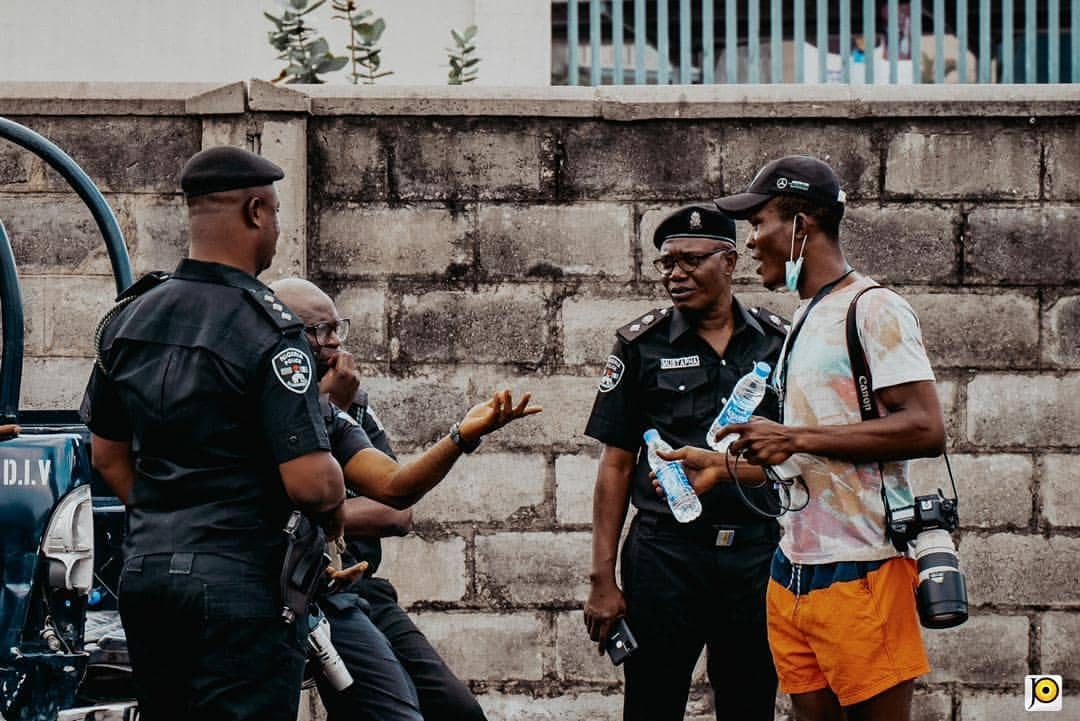
Akpan having a chat with police officers in Lagos during the protests, Oct. 13, 2020. Photo: JOPStudios
Akpan heeded his friends’ advice and left the country.
“They (security operatives) were already visiting the homes of my relatives to look for me. With the help of the Committee to Protect Journalists (CPJ), I embarked on a journey of hundreds of miles to Ghana through the Benin Republic and Togo,” he recalled.
“I have two sisters, but I told them not to tell my mother because she’s hypertensive. A week later, my sister called to tell me it seemed my mother knew already. I put her through a lot of trauma.”
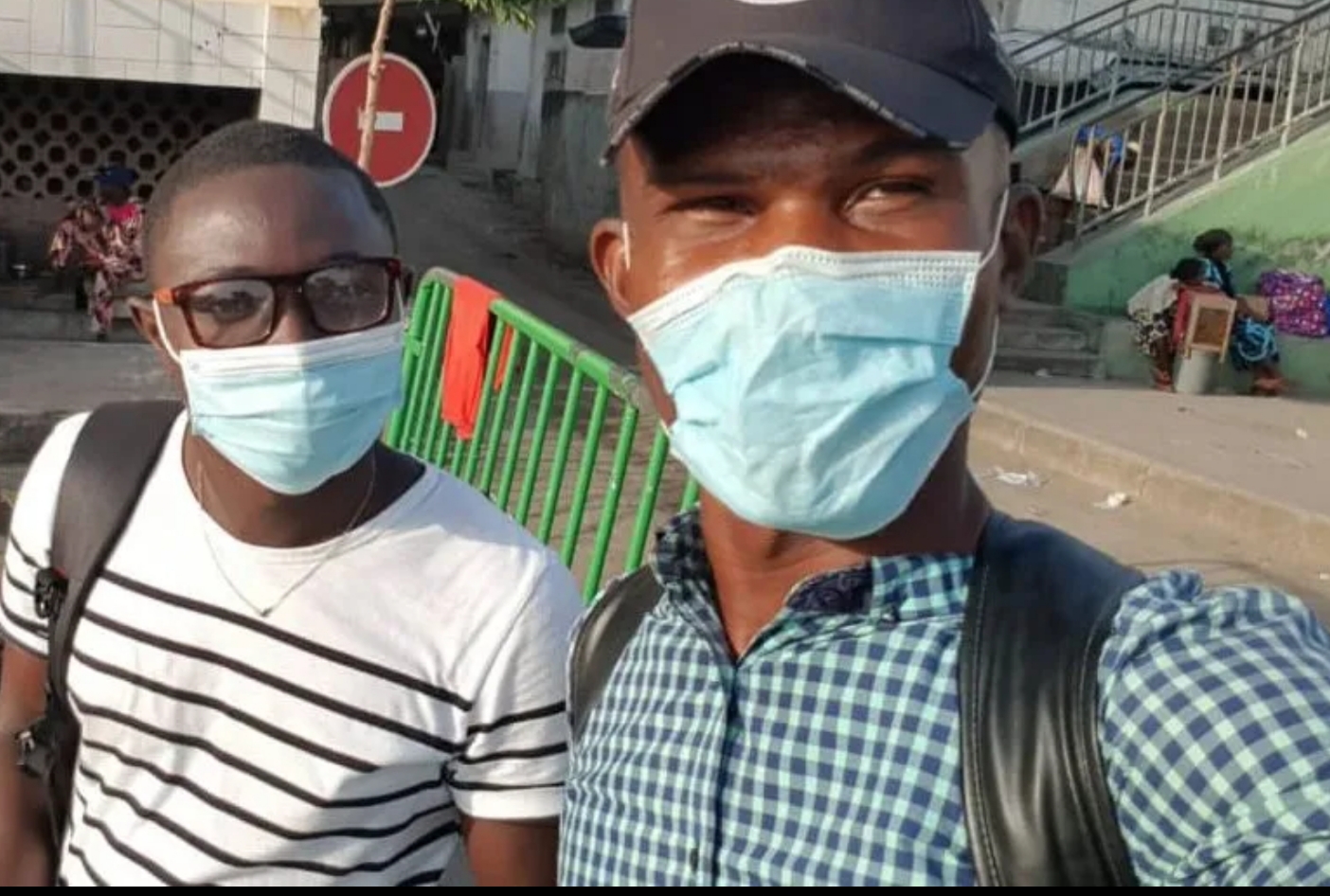
Surviving in exile would have been difficult for Akpan. He knew no one, whether in Benin or Togo, and did not speak the languages. But CPJ linked him with two local investigative journalists — Ignace Sossou in Benin and Ferdinand Ayité in Togo.
Sossou offered to help because he had also faced similar attacks from authorities in Benin in 2019. He had, in a Facebook post, quoted Beninese Public Prosecutor Mario Mètonou as describing the country’s digital code as “a weapon” that could be used against the press. He would later be jailed for six months.
Ignace Sossou, a local journalist in the Benin Republic, and Akpan while in exile. Photo: Eti-Inyene Akpan.
The surveillance of journalists by government agencies is a widespread practice in West Africa.
Aside from Sossou, the Beninoise police in 2019 raided the home of Casimir Kpedjo, editor of the Nouvelle Economie online newspaper, seized his computer, scanned its content, and copied data from the device, before arresting him.
Two other journalists, Patrice Gbaguidi and Hervé Alladé, were sentenced in November 2021 over accusations that they violated the country’s digital code by sharing their report about a public official’s alleged wrongdoing on social media. Amnesty International says Benin’s digital code, is being used to gag press freedom.
In Ghana, authorities are using cybercrime laws to treat journalists as criminals. It’s one of the countries where the military-grade cyber-surveillance system, Pegasus, has been used to spy on the private communications of individuals. It is also believed to have received phone-hacking equipment from foreign governments in 2019.
“It can copy messages you send or receive, harvest your photos and record your calls. It might secretly film you through your phone’s camera, or activate the microphone to record your conversations. It can potentially pinpoint where you are, where you’ve been, and who you’ve met,” The Guardian said about Pegasus in 2021.
The software is marketed and licensed to governments around the world under the guise of protecting national security and public safety.
According to Muhammed Bah, president of Gambia Press Union, journalists in the country work under the threat of digital surveillance due to the existence of a legal and technological framework that emboldens security agencies. Article 138 of the Gambia Information Communications Act gives national security agencies and investigative authorities the power to monitor, intercept, and store communications for surveillance purposes without effective judicial oversight.
The situation is the same in Guinea, where authorities have in the past arrested and seized journalists’ equipment. Even when the journalists were freed, their laptops which had several critical investigative materials, were not returned to them.
In Mali, authorities are also using digital surveillance tools to make journalism practice difficult for media practitioners.
Also, the authorities in Senegal have justified new laws that allow them to monitor citizen communication by saying they exist for the country’s security, but some journalists have raised concerns about this decision. The situation is the same in Togo as three journalists, in 2021, discovered that their phones were targeted for spyware surveillance long before they were arrested.
In 2019, Nigerian military personnel seized phones and computers from the offices of Daily Trust in Abuja and Maiduguri and subjected the devices to forensic search in a likely attempt to uncover the paper’s sources.
The following year, it was revealed that Nigeria’s Defence Intelligence Agency (DIA) has since 2015 acquired equipment to spy on phone conversations. The DIA reportedly bought the equipment from Circles, a surveillance firm that exploits weaknesses in the global mobile phone system to snoop on calls, texts, and the location of phones.
Nigeria has invested heavily in the acquisition of surveillance equipment for its security agencies since at least 2014, and oftentimes, journalists are targeted with this technology.
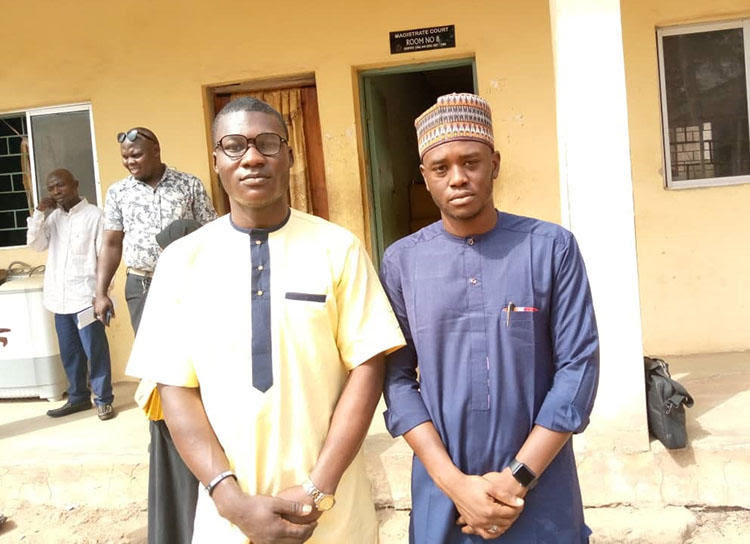
The police arrested Gidado Shuiab and Alfred Olufemi in 2019 over a News Digest report. They are believed to have bugged the phone of a former News Digest employee, Adebowale Adekoya, and then traced him to Yusuf Yunus and Wunmi Ashafa, two Lagos-based journalists. The police claimed they were investigating a fraud. So, they tricked them into setting up meetings that facilitated Adekoya’s arrest.
The police, who told Adekoya that they have been tracking his calls and SMS messages for a while, later forced him to lead them to Shuaib’s Abuja residence. Eventually, they also arrested Olufemi. The article’s authors were subsequently charged with criminal conspiracy and defamation.
The same tactic was used to arrest Fejiro Oliver, the publisher of the privately owned Secret Reporters, in 2017. According to a memoir on his Facebook page, the police lured him through Prince Kpokpogri, an acquaintance he was frequently in touch with on the phone.
HumAngle reached out to Jimmy Akpor, spokesperson of the defence headquarters, for comments, but he did not respond to calls and texts. Our reporters encountered the same challenge with DSS spokesperson Peter Afunanya.
Alfred Olufemi and Gidado Shuib at court on Jan. 13, 2020. Photo: Adejumo Kabir/Premium Times.
Sometimes, such surveillance is backed by law or enabled by gaps in the country’s legal framework. In Nigeria, for example, the constitution guarantees citizens’ right to privacy and empowers the press to hold the government accountable. But there are other laws making it possible for the government to obtain personal information for various reasons.
The Nigerian Communications Act mandates network service providers to assist authorities in preventing crime and protecting national security.
The Cybercrime Act additionally empowers law enforcement agents to get subscriber information from service providers. With the help of a court order, they can also intercept electronic communication for a criminal investigation. The law adds that any data retrieved through these methods must be used legitimately, but this isn’t always what happens.
Civil society groups have tried for many years to pass a Digital Rights and Freedom Bill, which protects Nigerians’ rights to digital privacy and other internet freedoms. But President Muhammadu Buhari declined to sign the legislation in 2019, citing “technical reasons”. Efforts have resumed to get a revised version of the bill passed before the current administration hands over power.
When contacted about access to user data by security agencies, the public relations units of Glo, MTN, 9mobile, and Airtel did not respond to HumAngle’s enquiries.
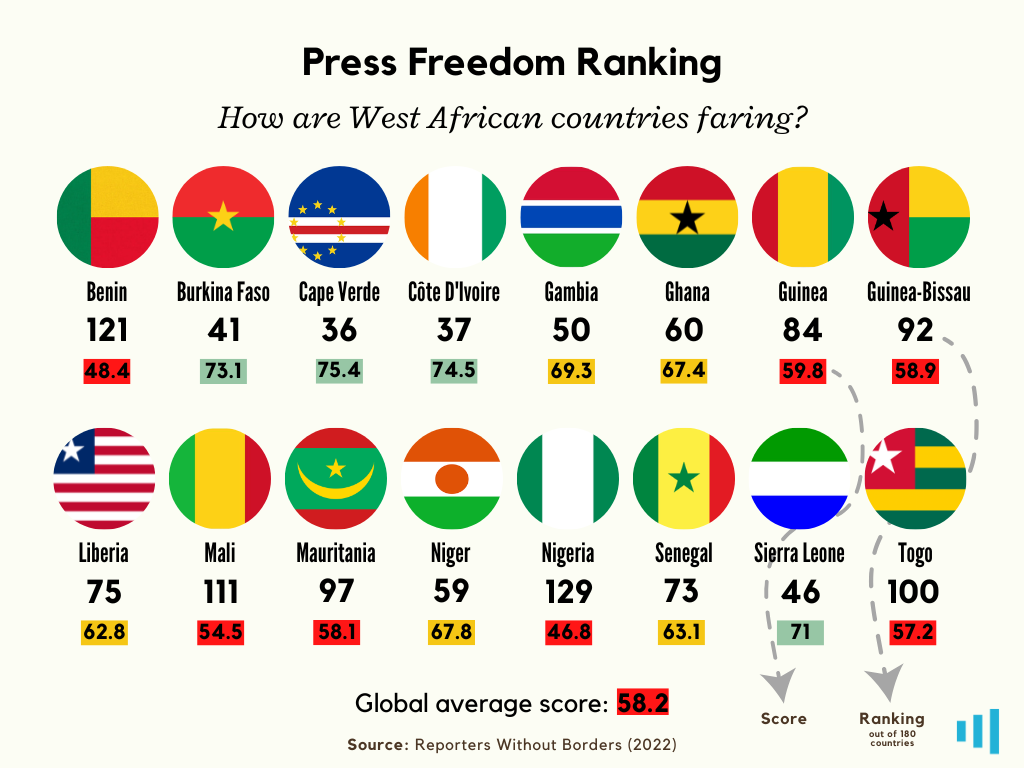
Five West African countries (Benin, Mali, Mauritania, Nigeria, and Togo) fall under the global average score on the 2022 Press Freedom Index. Infographic by: ‘Kunle Adebajo/HumAngle
The United Nations has described the widespread use of spyware on journalists as extremely alarming.
“Use of surveillance software has been linked to arrest, intimidation and even killings of journalists and human rights defenders. Reports of surveillance also have the invidious effect of making people censor themselves through fear. Journalists and human rights defenders play an indispensable role in our societies, and when they are silenced, we all suffer,” noted Michelle Bachelet, former UN High Commissioner for Human Rights.
CPJ has also urged authorities to desist from the misuse of spyware to threaten press freedom.
***
Akpan’s exile was difficult. Survival was hard, and his mental health was dealt a blow, especially until a friend in Ghana eventually offered him accommodation. He finally returned to Nigeria in Febuary 2021. He told HumAngle this was because he felt there was more work to do to tell the stories of the End SARS protesters.
“I got back and felt bad about my mother’s health. It wouldn’t have gone that bad if I had been home. That was the most painful thing for me,” he said.
He spent most of his time planning a photo exhibition for the protest anniversary. But his ordeal with state agents was not over. He couldn’t go back to his office. After granting a live television interview about his work, he received calls from the DSS, summoning him to their office without an explanation. He replied that he would honour an emailed invitation.
“There were times I got some calls for job offers, and when I checked the names of the companies, I realised that they do not exist. I was surprised at how they got my contact till I was forced to postpone the exhibition indefinitely,” he said.
“Till now, I’m scared because you cannot predict the Nigerian government. I still don’t tell people my whereabouts, and it’s been really bad as I only sleep with one eye closed.”