Home Blog Page 1073

Actress accused of spraying, stepping on naira notes gets N5m bail

A Nigerian actress, Oluwadarasimi Omoseyin, who the Economic and Financial Crimes Commission (EFCC) arraigned before the Federal High Court in Lagos on February 13 for allegedly spraying new naira notes at a party, has been granted bail in the sum of N5 million, with one surety in like sum.

The court ordered that the surety must be a public servant in the service of the Federation or the Lagos State Government not below the rank of Grade Level 12, or a holder of a genuine statutory certificate of occupancy of a developed landed property within the Lagos State municipality.

Omoseyin, the court directed, should be remanded at the Kirikiri Correctional Centre, Lagos, pending the perfection of the bail terms.

The charge against the actress, which is punishable under section 21(1) of the Central Bank Act, 2007, accused her of tampering with the sum of N100,000 issued by the Central Bank of Nigeria (CBN) while dancing at a social occasion held on January 28, 2023 at Monarch Event Centre, Lekki.

Operatives of the Independent Corrupt Practices and Other Fraud Related Offences Commission (ICPC) arrested the 31-year-old actress on February 1 and handed her over to the EFCC for investigation.

During the bail application hearing on Monday, February 13, the EFCC prosecutor, Sulaiman Sulaiman, submitted that bail was at the discretion of the court and insisted that in the event bail was granted, the conditions of the bail term should be such that they would enable the defendant to be present during the trial.

Omoseyin’s lawyer, Adenike Goncalves, had asked the court to grant her client bail pending the case’s hearing and determination and remand her client in EFCC custody pending the perfection of the bail terms, if granted by the court.

The judge then fixed February 15 for the ruling on the bail application and ordered that the defendant, who pleaded not guilty, be remanded at the Kirikiri Correctional facility.

The actress was seen in a viral video spraying and stepping on the newly redesigned naira notes at the party, while flaunting wads of the new naira notes.

The case had sparked a national debate about the disrespect of the country’s currency and the need to hold individuals accountable for their actions.

The matter has been adjourned till April 3 for trial.

Omoseyin’s case highlights the need for Nigerians to be cautious in using the country’s currency.
Naira scarcity: Tension rises as protesters raze banks in Edo, Delta

0

THE scarcity of naira notes led to violent protests in Edo and Delta states on Wednesday, February 15.

Angry protesters attacked several banks, destroying Automated Teller Machines (ATMs) and blocking the Ring Road in Benin, the Edo State capital.

In Udu, Delta State, protesters also set bank facilities ablaze, and according to a report, two persons were killed and several others injured by stray bullets from police officers who arrived at the scene to contain the unrest.

The ICIR contacted the Delta State Police Public Relations Officer (PPRO) Bright Edafe over the killings.

Edafe, however, said there were no deaths resulting from the protests.

“Nobody died. But the miscreants or hoodlums set two banks ablaze. Union Bank and Access Bank. We have so far arrested nine suspects. We arrested five from one of the banks, four from the other bank,” he said.

Three people were reported to have died in Edo State as a result of the protest, which turned violent. However, the PPRO in the state Chidi Nwabuzor said the Command had not received reports of the killings.

He noted that the agitators caused a lot of damage during the protest and did not inform the Command ahead of the exercise.

“The Command mobilised officers and men in collaboration with other sister security services, to quell the riot and to ensure that the lives and property of the citizens are protected. They (protesters) have equally done some havoc in some commercial banks, but relating to the deaths you are talking about, I think it is rather premature for me to talk about that.

“I think it is good for me to wait for the senior officers of the Nigerian Police Force (NPF), Edo State Police Command and other sister security agencies to return, to give first-hand information,” Nwabuzor said.

Protests have erupted in several states across the country.

The ICIR reported that properties were destroyed in Ogun, Kwara and Oyo states as residents staged protests against the scarcity of naira notes.

Naira redesign: APC’s rating no longer favourable – Akeredolu

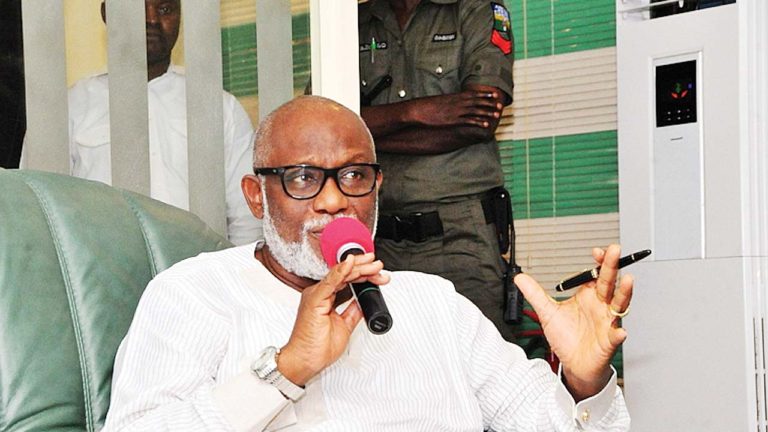
ONDO State Governor Rotimi Akeredolu has said President Muhammadu Buhari’s endorsement of the immediate implementation of the Naira redesign policy introduced by the Central Bank of Nigeria (CBN) has depleted the rating of the All Progressives Congress (APC).

The governor asked the President to direct the CBN to suspend the implementation of the policy.

Akeredolu gave the advice while hosting the Youth Directorate of the All Progressive Congress (APC) Presidential Campaign Council (PCC) led by Seyi Tinubu, son of APC presidential candidate, Bola Tinubu, in his office Tuesday night.

In a statement signed by his chief press secretary, Richard Olatunde, Akeredolu noted that the policy was ill-timed and was bringing pain to Nigerians.

The governor said, ”We have a problem we are facing in this country today. Our rating as a party is not that favourable. Let’s not deceive ourselves. Must it be now that we will have this financial policy?

“How? Fuel and everything? Things are not easy. This policy is not right at this time. It should be reversed. Reverse it and tell CBN that we are reversing it. Let old and new notes co-exist.

“Okada (commercial motorcyclists), taxis, and banks are not taking old notes again. There is an injunction, and everyone is behaving like there is no injunction. We had said that this man (CBN Governor Godwin Emefiele) should be removed when he contested to be President. The man is not fit for that position. A man who attempted to be President will frustrate us at this time.”

Akeredolu said both the new and old notes should be allowed to co-exist, noting that despite an existing Supreme Court injunction, the old notes seem to have ceased to be legal tender in the country.

Like Tinubu and the National Council on State, Akeredolu suggested that the CBN allow the old and new Naira notes to co-exist.

The ICIR reported how the Naira redesign policy has brought hardship to Nigerians.

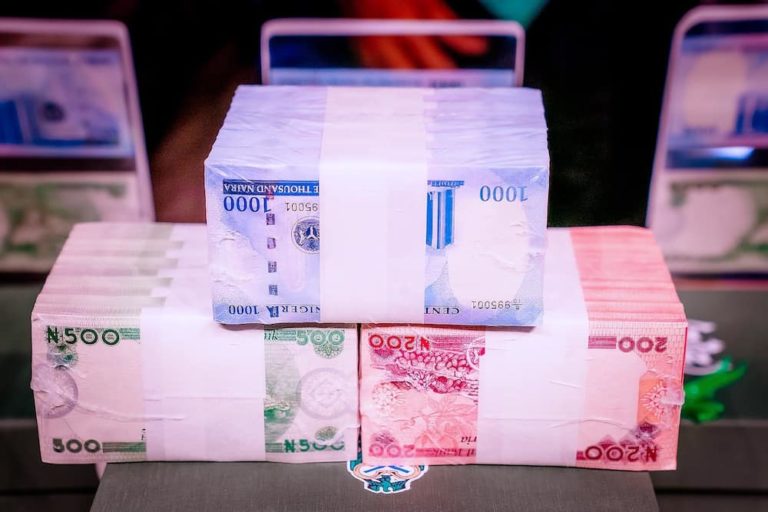
Since the CBN introduced the new N200, N500 and N1,000 notes on December 15, they have been very scarce in banks and at Point of Sale centres.

On Tuesday, February 14, the CBN governor told the diplomatic community in Abuja that the apex bank is standing by its decision to stop the use of the old notes on February 10.

Meanwhile, Akeredolu commended Tinubu’s son for his commitment to his father’s presidential bid.

While appreciating the youths in the party for their relentless efforts, the governor revealed that youth would determine the outcome of the presidential election.

“Your demographic shows that you occupy a larger percentage. You are the ones that will talk to yourself,” he said.

Earlier, Seyi Tinubu appreciated the governor’s commitment to youth development and inclusion in Ondo State.

January inflation rises to 21.82%, amid currency redesign crisis

NIGERIA’S inflation figure rose to 21.82 per cent in January 2023, an 0.47 per cent increase on the 21.34 per cent profile recorded in December 2022, according to the National Bureau of Statistics (NBS).

The NBS, in its report for January, listed disruption in the supply of food products, increases in import cost due to naira depreciation, and a general increase in the cost of production as factors responsible for steady inflation rise in 2022.

According to the NBS Consumer Price Index (CPI), the headline inflation rate in January 2023 was, on a year-on-year basis, 6.22 per cent points higher than the rate recorded in January 2022, which was 15.60 per cent.

The report stated, “This shows that the headline inflation rate (year-on-year basis) increased in the month of January 2023, when compared to the same month in the preceding year (i.e. January 2022).”

Economic watchers fear Nigeria could risk further inflationary surge by the time the NBS first quarter report is released, with a recession likely as the currency redesign policy creates more problems and anxiety in the economy.

“The small businesses and ordinary citizens are the biggest victims of this disruption and hardship inflicted in the economy by this poorly thought-out policy, since they are the biggest users of cash,” the Executive Director, Centre for the Promotion of Private Enterprise (CPPE), Muda Yusuf, said.

Yusuf described the CBN cash swap policy as greatly flawed, saying it was contributing to the economic hardship Nigerians are currently witnessing.

He did not regard the N2.6 trillion currency in circulation, as presented by the governor of the Central Bank of Nigeria (CBN), Godwin Emefiele, as one of the reasons for his naira redesign policy, too much for the Nigerian economy, which boasts a gross domestic product (GDP) of about N250 trillion.

“Any attempt to arbitrarily cut it will create a crisis. It is unacceptable that citizens are denied access to their cash deposited for purposes of cash swap. This could undermine the confidence of the citizens in the banking system and pose a major
risk to the financial inclusion objective of the CBN,” he added.


NMA joins PHERMC to probe illegal Korean hospital in Abuja

0

THE Nigerian Medical Association (NMA) has joined the Private Health Establishments Registration and Monitoring Committee (PHERMC) to probe the illegal Lilu Specialist Hospital run by a North Korean, Jongsu Kim, in Abuja.

Chairman of the Abuja chapter of the NMA, Charles Ugwuanyi, disclosed this on Wednesday during a radio show which appraised an investigation carried out by The ICIR, which exposed the illegal hospital.

The show, an anti-corruption radio programme titled ‘Public Conscience’, is a weekly anti-corruption programme produced by the Progressive Impact Organization for Community Development (PRIMORG). The MacArthur Foundation supports the programme.

The ICIR published its report exposing the hospital on January 31.

In the report, the organisation detailed how the high and mighty in the country, including Presidency officials and senior advocates, patronised the facility.

PHERMC confirmed in the report the hospital was not registered. The report also shows that the Lilu Specialist Hospital is not in the Health Facility Registry, warehousing all health facilities in Nigeria.

The hospital has no signpost and does not pay tax to the government.

As of September 2022, when the ICIR did the larger part of the investigation, Kim was receiving payment of bills by patients into his private bank account rather than the hospital’s. The facility treated each patient for between N150,000 and N500,000 and had attended to many patients. 

During the investigation, The ICIR contacted Bartholomew Chigozie Awugozi, one of the hospital’s three directors, as information obtained from the Corporation Affairs Commission (CAC) showed. Awugozi is based in Awka, Anambra State, where he manages his hotel.

His reaction gave the investigation a new twist. He claimed he was the hospital’s legal owner. 

The businessman was shocked that the hospital he opened in Port-Harcourt some years ago and had shut down because it was not yielding returns was running in Abuja by people he claimed not to know. 

When contacted, the hospital’s lawyer, Matthias Adeyemi, said the investigation was needless. He countered The ICIR findings.

When contacted again after Awugozi claimed he owned the hospital and had run it in Port Harcourt, Adeyemi agreed that ‘some’ of the findings were true.

The hospital shut down after the ICIR published its report. But its operators came out of their hiding days later to debunk the report.

Speaking on Wednesday’s radio show, the NMA chairman in the FCT said: “There is an issue of immigration (involving Kim and others working in the hospital). I am happy that the Nigerian Immigration Service has already been alerted. What is the immigration status of the principal actors in this whole saga? 

“We need an answer from the Nigerian Immigration Service. How did they enter Nigeria? How many are they operating in that facility?

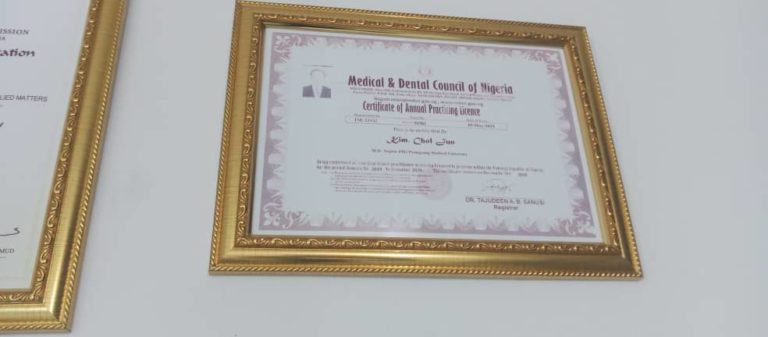
“The Nigerian law is very solid in terms of regulating who should practise medicine in Nigeria. That responsibility has been vested on the Nigerian Medical and Dental Council. We also need input from the registry of the MDCN on the actors at the facility. Are they registered with the MDCN because it is an absolute impossibility for any doctor to practise in Nigeria and is not under one form of registration or practising license or the other from the MDCN?”

Ugwuanyi said from the information his group gathered, there was no proof that doctors working in the facility were registered or licensed by the MDCN. 

According to him, unless anyone provides counter-evidence, the hospital’s operators are not supposed to practise medicine in Nigeria.

Similarly, the Chairman of the Hospital Inspection, Medical Outreach and Anti-quackery Committee of the NMA-FCT, Whera Sagay, a doctor, vowed to ensure persons behind the facility are exposed and made to face the law.

She warned anyone contemplating running an illegal health facility in the FCT and those doing it to desist to avoid accompanying penalties.

“Quackery is what the NMA takes seriously,” she stated as she pledged that the NMA would work with relevant authorities to ensure medical practice standardisation.

Meanwhile, The ICIR gathered from an impeccable source that the Federal Ministry of Health has handed over the investigation to the Health Secretariat of the Federal Capital Territory. The official said the government was working hard to unravel the mystery behind the hospital’s existence and bring persons behind it to book.

Call for papers: GIJC 2023 academic track seeks entries

JOURNALISM experts are invited to present papers at the 13th Global Investigative Journalism Conference, to be co-hosted by the Global Investigative Journalism Network (GIJN), Fojo Media Institute (Fojo) and Föreningen Grävande Journalister (FGJ).

The program will take place September 19, 2023 to September 22, 2023 in Gothenberg, Sweden.

The event will feature an academic track highlighting trends, challenges, teaching methodologies and best practices in investigative journalism.

Topics of research papers will be considered but not limited to trends in investigative reporting, trends in computer-assisted reporting and data journalism, challenges in doing investigative reporting depending on country or culture, successful methods of teaching investigative, computer-assisted and data journalism, and adapting investigative journalism to new technologies

If the abstract is accepted, the paper’s length is limited to 15 pages (excluding references, tables and appendices).

Papers must follow APA style and be written in English.

Journalism academics can submit their papers to be presented at this conference.

The deadline for the submission of application is March 27, 2023. Interested applicants can apply here.

Ilorin, Ogun residents protest over naira, fuel scarcity

0

SOME residents of Ilorin, Kwara State capital, on Wednesday, February 15 staged a protest over the scarcity of naira notes and premium motor spirit (pms) otherwise known as fuel.

The protest led to the shutdown of roadside businesses.

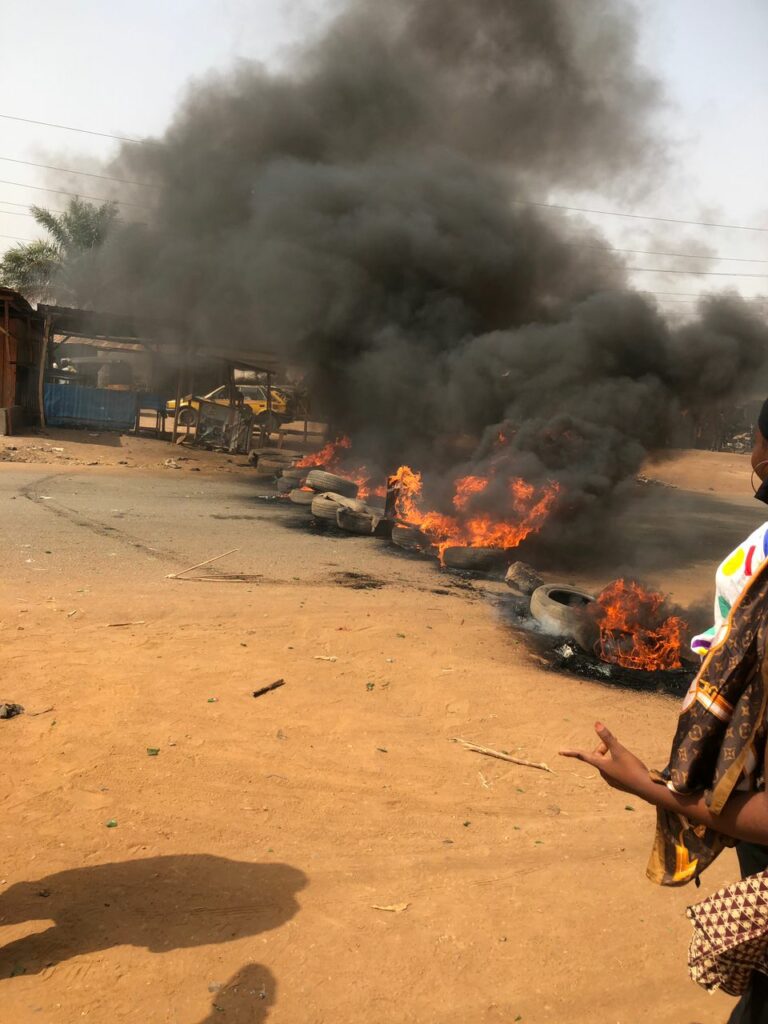
The protesters also blocked major roads in the city with bonfires, leaving motorists and passengers stranded.

The protest affected several parts of Ilorin, including Okolowo, Ogidi, Gambari, Sango, Surulere.

Speaking during the demonstration, one of the protesters, Abdumumin said the residents decided to protest when they couldn’t bear the pressure again.

Abdulmumin who is also a vulcanizer, expressed concerns that the naira redesign policy introduced by the Central Bank of Nigeria (CBN) had affected his business as cars are not moving on the road.

“The protest is to show how angry we are. Cars haven’t been passing on the road and that makes it hard for my own business to prosper. 

“Helps us beg the government because we are hungry. We don’t see new naira money. The old ones we have are no more accepted and that’s affecting me personally,” Abdumumin said.

Another resident who simply gave his name as Ibrahim disclosed to The ICIR that they decided to embark on the protest when they discovered that old naira notes are no longer accepted.

“This morning, information circulated that people are not accepting old naira notes again. Our expectation is that the governor should come out and address the situation the way some other state governors did. We learnt that there are governors who have instructed that the old notes should be accepted by the banks and that any bank who refused to accept it would be closed.

“There’s also the issue of fuel scarcity too. There is a lot of pressure because the filling stations have refused to sell fuel and that is why people are protesting.”

However, the state governor Abdulrahman Abdulrazaq, in a statement by his Chief Press Secretary (CPS), Rafiu Ajakaye, urged the people to remain calm.

“I testify to the inconvenience this development has brought. We are in this together, and we are not missing any opportunity to work with the CBN and the Federal Government to bring ease to the people within reasonable time. I admit it has been tough, and we do not take your patience for granted,” parts of the statement said.

In Ogun, some major roads were barricaded by aggrieved residents who are protesting against the scarcity of naira notes and fuel.

The protest also affected commercial activities as citizens made bonfires on the road.

On Tuesday, February 14, the protesters barricaded the Joju junction along the Idiroko-Ota road, causing heavy traffic gridlock.

Meanwhile Ogun State governor Dapo Abiodun faulted the commercial banks for refusing to accept old notes while failing to make new naira notes available.

In a post on his Twitter account, the governor threatened to shut down banks that refuse to accept old naira notes.

“We will shut down any commercial bank operating in Ogun State that refuses to accept old naira notes,” the governor vowed.


Fake EFCC chairman arrested in Abuja hotel

0

THE Economic and Financial Crimes Commission (EFCC) on Tuesday, February 14, arrested a fraudster, Salman Umar Hudu, 38, an indigene of Kano State.

He was arrested at a hotel in Abuja for falsely presenting himself as the EFCC chairman, Abdulrasheed Bawa, and other officers of the Commission.


READ ALSO:

‘Bawa must go’ protest sponsored by persons under investigation – EFCC

Contempt of court: CSOs call for sack of EFCC boss

Present state of some high profile EFCC corruption cases

EFCC arrests bank manager for hoarding new naira notes


The anti-graft agency said Hudu allegedly obtained N100,000 from a person he convinced that he could ‘handle’ any matter with the Commission.

This was disclosed in a statement posted on the Commission’s website.

The EFCC said the suspect has provided useful information and will be charged to court upon the conclusion of investigations into his activities.

In another development, Justice S. M. Shuiabu of the Federal High Court, Benin City, Edo State, on Tuesday, February 14, granted bail to 87-Year-old Chief Nosakhare Osadolor Odomore and Obazee Henry.

Odomore and Obazee were arraigned on February 6, 2023, by the Benin Zonal Command of the EFCC on a two-count charge of altering and forgery.

The EFCC, in a statement, said the duo were accused of working together to counterfeit land titles to make the property appear legitimate.

Supreme Court adjourns suit on naira redesign policy to Feb 22

0

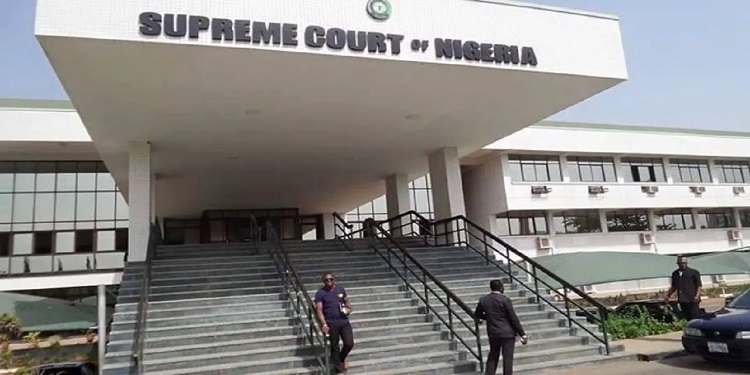
THE Supreme Court has adjourned the suit challenging the naira redesign policy of the Central Bank of Nigeria (CBN) to Wednesday, February 22.

The apex court fixed the date at a sitting on Wednesday, February 15.

The court also held that it was in order to hear the consolidated lawsuits filed by 10 states against the policy.

The governors of Kogi and Kaduna states, Yahaya Bello and Nasir El Rufai, respectively, were in court during Wednesday’s proceedings.

Speaking to journalists after the court session, Kogi state governor Bello said the governors were in court because Nigerians are suffering because of the CBN policy.

He said he believes the Supreme Court’s earlier ruling still exists until the postponed date.

The ICIR reported that the Supreme Court, on February 8, stopped the plan by the Federal Government to ban the use of the old naira notes from February 10.

A seven-member panel of Justices of the apex court led by Justice John Okoro ordered the suspension of the plan while ruling on an exparte motion filed by the Kaduna, Kogi and Zamfara state governments.

The ICIR reported that three All Progressives Congress (APC) governors dragged the Federal Government before the Supreme Court to halt the full implementation of the naira redesign policy introduced by the CBN.

The governors of Kaduna, El Rufai, Kogi, Bello, and Zamfara, Bello Matawalle, who filed the suit, expressed concern about the impact of the CBN policy on citizens of their states.

Other states like Ekiti, Ondo and Kano have applied to join the suit.

The Attorney General of the Federation (AGF) and Minister of Justice, Abubakar Malami, the only defendant in the lawsuit, had in a counter motion asked the Supreme Court to dismiss the suit filed by the state governments.

Mahmood Magaji, the lawyer representing the AGF, filed the government’s objection to the suit.

In the Notice of Preliminary Objection dated February 8, the Federal Government claimed that the Supreme Court lacked the necessary jurisdiction to entertain the suit in the first place.

The AGF argued that the plaintiffs should have commenced the suit before a Federal High Court and not at the Supreme Court.

He also stated that the Federal Government would take steps to vacate the order when the court resumes using the instrumentality of the law.

The CBN had earlier fixed February 10 for the expiration of the older version of the N200, N500 and N1,000 banknotes.

Maynard Institute, Fox Corporation seek applications for journalism fellowship

THE Maynard Institute, in partnership with Fox Corporation, is inviting applications to its Maynard 200 Journalism Fellowship.

The program supports the next generation of storytellers, leaders, frontline editors, and entrepreneurs of diverse backgrounds by providing relevant training courses, resources, and mentorship by distinguished media professionals and experts.

Participants will attend in-person workshops in Forth Worth, Texas, from June 26, 2023, to June 30, 2023, and October 23, 2023, to October 26, 2023, followed by yearlong mentorship, supplementary courses, and virtual meetings.

Hotel accommodations for fellows will be paid for by the Maynard Institute. Fellows will be reimbursed up to US$500 for their airfare and ground transportation.

Journalists of color can apply for this program.

Applicants living outside the United States need to be affiliated with a U.S.- based media outlet or organisation.

The deadline for submission of applications is March 31, 2023. Interested applicants can apply here.