Home Blog Page 118

Police arrest suspected bandit financiers in Sokoto

0

THE Sokoto State Police Command has arrested suspected financiers of banditry and members of a motorcycle-theft syndicate in two coordinated operations conducted on Wednesday in Sokoto and neighbouring Zamfara State.

In a statement issued on Friday, December 6, the Command’s spokesperson, Ahmed Rufai, said three men were arrested in Tangaza Local Government Area for allegedly providing financial support to a notorious bandit gang by facilitating the sale of rustled cattle.

“One of the suspects, Ruwa Ginyo, identified as the Fulani head of Gidan-Madi, was arrested alongside two accomplices. Four rustled cows were recovered during the operation,” Rufai said.

Commissioner of Police, Ahmed Musa, described the suspects as part of the “financial engine room” sustaining bandit activities. “Cutting off their funding stream is a major victory,” he stated.

Hours after the first operation, the Command’s Strike Force raided Talata Mafara in Zamfara State, arresting several individuals linked to a motorcycle-theft and resale network. Two motorcycles stolen in Sokoto were recovered.

Musa said the arrests reflect the Command’s widening operational capability. “Our message is clear: if you commit a crime in Sokoto, we will find you — even if you run to another state. The era of criminals feeling safe across borders is over,” he said.

He urged residents, especially livestock and motorcycle dealers, to verify ownership documents before transactions and to promptly report any suspicious activity.

This was not the first time the police had made a similar arrest, as the Federal Capital Territory (FCT) police command, in June 2023, arrested a wanted logistic supplier and informant to a kidnapping and banditry group terrorising the FCT and its environs.

The 25-year-old suspect, Mohammed Hamza, popularly known as Auta, was arrested by the anti-kidnapping unit of the command at the Mongoro Forest.

CAC sets January 2026 deadline, moves against unregistered PoS agents

THE Corporate Affairs Commission (CAC) has issued a directive to Point-of-Sale (PoS) operators nationwide as it launches a sweeping enforcement campaign targeting businesses operating without proper registration.

In a statement posted on its Instagram page on Saturday, December 6, the Commission said it had observed a surge in unregistered PoS operators across the country.

The Commission stressed that operating an unregistered PoS business violates the Companies and Allied Matters Act 2020 and the Central Bank of Nigeria’s Agent Banking Regulations.

The CAC also faulted some fintech firms for onboarding unregistered agents, describing the practice as reckless and harmful to the stability of Nigeria’s financial system. It warned that the trend exposes millions of Nigerians, including small business owners and rural users, to economic and investment risks.

“Fintechs enabling illegal operations will be placed on the watchlist and reported to the CBN. All operators are advised to regularise immediately. Compliance is mandatory,” the statement partly read.

This is not the first time the call regarding enforced regulatory monitoring of the PoS has been made. There have been several calls on the Central Bank of Nigeria (CBN) to take urgent steps toward curbing worsening cases of fraud affecting PoS businesses across the nation.

For instance, a call has also been made during an anti-corruption radio programme, PUBLIC CONSCIENCE, produced by the Progressive Impact Organisation for Community Development (PRIMORG) and reported by The ICIR.

Also, media reports earlier in the week noted that the chairman of the House of Representatives ad hoc committee on the Economic, Regulatory and Security Implications of Cryptocurrency Adoption and PoS Operations, Olufemi Bamisile,raised alarm over rising fraud connected to PoS transactions and the spread of unlicensed crypto-related activities.

According to him, the committee has received reports of unprofiled agents, cloned terminals, anonymous transactions and weak Know-Your-Customer processes — issues he warned are exposing Nigerians to financial loss, cybercrime and broader security risks.

The CAC added that beginning 1 January 2026, no PoS operator will be allowed to conduct business in Nigeria without completing full registration.

“Effective 1 January 2026, no PoS operator will be allowed to operate without CAC registration. Security agencies will enforce nationwide compliance, and unregistered PoS terminals will be seized or shut down,” it said.

Free but unreachable: Why persons with disabilities still struggle for healthcare in Anambra

1

FROM missing interpreters to inaccessible clinics, people with disabilities continue to pay the price for a system that promises inclusion but delivers exclusion.

Five years into her marriage, Elizabeth Ibeabuchi, a woman with hearing impairment learned she was pregnant, a moment she had long hoped for. Though she was enrolled under the Basic Healthcare Provision Fund (BHCPF) and entitled to free antenatal and delivery care, the system offered her something far less tangible. Silence.

At every clinic visit, she waved her hands in the air, trying to form the signs she had used all her life. The nurses stared back, confused. There was no interpreter. No one who understood her.

“They never understood what I was trying to say,” she signed slowly as her words were interpreted by a volunteer.

The price of that silence was devastating. Miscommunication at health facilities pushed her towards self-medication, patent drug stores and she eventually lost her pregnancy.

“I lost my pregnancy which took five years to come,” she signed. “Since then, I have been unable to conceive again.”

Her story highlights a critical gap: health services may be free, but they are out of reach for many people, particularly persons with disabilities. 

She is not alone. The story of Ifeoma Onyekaba, another woman with hearing impairment, reveals the same painful pattern.

Ifeoma Onyekaba (right) speaks through an interpreter. Photo: Alfred Ajayi/Radio Nigeria

Onyekaba described her ordeal navigating healthcare services in an interaction after a Joint National Association of Persons with Disabilities (JONAPWD) Amawbia, Awka South LGA.

Speaking through a sign-language interpreter, she explained: “Whenever I visit the hospital, communication is never smooth. I often have to write on paper to express how I feel, but it’s impossible to capture the full details of my condition that way. In the end, I simply accept whatever treatment is prescribed. The situation is even more difficult for those who cannot write at all.”

Behind Ibeabuchi’s painful loss and Onyekaba’s frustration lies a policy framework that, on paper, promises free and equitable healthcare for all. In practice, however, it continues to exclude some of the who need it most.

The Basic Health Care Provision Fund (BHCPF), established under the National Health Act of 2014 and operationalised in 2019, channels at least one percent of Nigeria’s Consolidated Revenue Fund to provide a basic package of health services through the National Health Insurance Authority (NHIA) and the National Primary Health Care Development Agency (NPHCDA).

The flagship programme is designed to ensure access to essential healthcare for all, particularly the poor and vulnerable, eliminate financial barriers, and strengthen that nation’s pursuit of Universal Health Coverage (UHC) by 2030.

It operates through three gateways each responsible for a specific component of service delivery. The gateways are National Primary Health Care Development Agency (NPHCDA), National Health Insurance Scheme (NHIS), and National Emergency Medical Treatment Committee (NEMTC).

While the BHCPF, through its health insurance gateway, has expanded access to services for the elderly, children under five, pregnant women, and the poorest households, persons with disabilities (PWDs) continue to face systemic barriers that extend far beyond enrolment. Their lived experiences reveal critical gaps that continue to exclude them from a programme intended to serve all Nigerians.

The hidden cost of ‘free’ healthcare

For some, like Vincent Onwubuya, a visually impaired enrolee, the problem begins long before reaching the clinic.

“You must pay for your guide’s transport. When you calculate how much it costs to get to the facility, you just change your mind,” he explained.

Vincent Onwubuya visually-impaired citizen. Photo: Alfred Ajayi/Radio Nigeria

“Some of us are dying with sicknesses because of lack of access. Sometimes, health centres don’t offer 24-hour service. Even when they do, they often lack essential drugs. You end up buying them yourself. What then is the meaning of health insurance?”

Onwubuya recounted a near-tragic medication error. “It wasn’t labelled in braille, so I couldn’t detect it until my wife checked and discovered it was a wrong medication. It could have been life-threatening if I had taken it.”

The loss of confidentiality in healthcare interactions is another pressing issue. Uzoamaka Ike, a Disability Rights Advocate, explained, “When a hearing-impaired person visits the hospital, there is no confidentiality because the caregiver does not understand the signs.

“Same in the case of a blind person. The individual has to be assisted by his relations or any other person to read the prescriptions by health givers. That way, other persons other than the medical or health practitioner attending to you have access to your secret information.”

Attitudinal barriers make the experience even worse. Ncheta Nwanokara, State Woman Leader of JONAPWD, described how some health workers verbally abuse women with disabilities, further undermining their access to dignified care.

JONAPWD Woman Leader, Ncheta Nwanokara. Photo: Alfred Ajayi/Radio Nigeria

“Some health workers often use derogatory words on our women. You can imagine them asking a pregnant woman with disability why she opened her legs for a man to impregnate her.

“They forget that we are human beings with feelings like every other person. Such derogatory statements discourage women with disabilities from accessing the free ante-natal and delivery services.”

Infrastructure and service gaps

Across many primary health centres (PHCs) in Awka North, Awka South, Anaocha, Dunukofia, Aguata, Nnewi South, Anambra West, and Onitsha South LGAs, persons with disabilities, especially women of child-bearing age, continue to face multiple physical barriers.

Non-inclusive designs such as steep stairs, narrow toilet doors, and high beds make access difficult. Wheelchairs are often broken or unavailable, and, where they exist, ramps are poorly built and unsafe.

At Adazi-Ani 1 PHC, in Anaocha LGA for instance, the Officer-in-Charge (OIC), Maureen Udeorji, admitted: “Our wheelchair has a little fault, so we are not using it.” Indeed, the wheelchair was seen by this reporter gathering dust in one corner of the facility.

Many centres either lack ramps altogether or have ramps without handrails which are meant to provide balance, especially for those using stretchers, pregnant women and the elderly.

The ever-busy, well-kept and recently renovated Okpuno PHC, in Awka South LGA falls in this category. The facility has several stairs but no ramps.

Okpuno PHC without a ramp. Photo: Alfred Ajayi/Radio Nigeria

“I agree with you that such facility is needed here for persons with physical disability. Taking such persons through this staircase is not easy. We will work on that, “the OIC, Stella Okeke said.

At Utuh PHC in Nnewi South LGA, the ramp itself poses a risk to PWDs.

“It is too steep,” said Ogoamaka Atuenyi, Chairperson of the Ward Development Committee.

“While trying to push someone up, it draws you back. The other time, an old woman with rheumatism almost fell. The OIC had to go down to attend to her because she couldn’t climb.”

By contrast, Mgbakwu PHC in Awka North offers( a rare example of inclusive design, featuring ramps with handrails that makes accessibility easier.

Patients using ramp provided at PHC Mgbakwu. Photo: Alfred Ajayi/Radio Nigeria

Civil Society Advocate Onyekachi Ololo, who has been involved in BHCPF implementation, blamed weak oversight by government for these gaps.

“The state government mandated OICs to install ramps for wheelchair access. Some complied, but many didn’t. There were no penalties. Some of the ramps built are death traps because they didn’t meet specifications.”

Across the facilities visited, tactile paving for persons with visual impairments was almost non-existent, and most Officers-in-Charge (OICs) had received no training in disability etiquette. As a result, PWDs remain dependent on individual acts of compassion rather than the protection of institutional policy.

Voices from the frontline

While some OICs admitted they rarely attend to persons with disabilities, others recounted encounters showing how small gestures of inclusion can significantly improve their experience.

Okpuno PHC, OIC, Okeke said, “We have two regular patients. One is with physical disability and another with hearing impairment. We try to communicate with our hands, but a sign-language interpreter would make things easier and improve care.”

In Urum PHC, Awka North LGA, the OIC, Marycynthia Ozoigbo recalled, “One of them is on a wheelchair. He is always happy and full of life. Whenever he comes, we help to carry him and the wheelchair.

Marycynthia Ozoigbo OIC Urum PHC and WDC Chairman Albert Chinwuko. Photo: Alfred Ajayi/Radio Nigeria

“My communication with a deaf woman was also interesting. We spoke mostly through gestures. I never studied sign language, but my psychology background helps me understand what she’s saying. She prefers to wait if I’m not around because we’ve built trust.”

Governance gaps and the broken promise of equity

A deeper cause of these recurring accessibility failures lies in policy making governance around health issues. Persons with disabilities are largely absent from Ward Development Committees (WDCs), the local oversight bodies that monitor and support primary healthcare centres.

Current BHCPF guideline prescribe a 60/40 male-to-female ratio in WDC composition but make no provision for disability inclusion. This gap means decisions affecting PWDs are often made without their input.

Another civil society advocate working on BHCPF implementation, Ugochi Ehiahuruike, described it as a major flaw. “This serious oversight must be corrected. If Nigeria’s Electoral Act 2022 can undergo review to improve representation, then BHCPF guidelines can be reviewed too.

“In Anambra, women make up only 11% of WDCs instead of the 40% target. Even if PWDs were allotted just 10%, it would be a meaningful start. They are Nigerians, and as we always say, ‘nothing about us without us.’”

The Anambra State Health Insurance Agency (ASHIA), which manages the BHCPF health insurance gateway, confirmed that PWDs are recognized among the scheme’s official enrollees. According to Dr. Simeon Onyemaechi, Managing Director of ASHIA, the programme covers “persons with disabilities, pregnant women, children under five, the elderly from age 65 and above and the poorest of the poor.”

Simeon Onyemaechi, MD, ASHIA. Photo: Alfred Ajayi/Radio Nigeria

He added that Anambra has extended coverage to persons living with sickle cell anemia, recognizing their vulnerability to disability.

“We have enrolled about 800 persons with sickle cell anemia to access healthcare,” he said.

However, Onyemaechi admitted that exclusion begins at the point of enrolment. “Many PWDs cannot register because they lack the National Identification Number (NIN), which is mandatory for accessing social protection programmes,” he explained.

Beyond documentation barriers, the shortage of sign-language interpreters further widens the gap.

“Even if government releases funds today, there are not enough qualified interpreters to deploy. It’s not just a financial issue; it’s a human resource problem,” he said.

Onyemaechi also raised a concern about patient privacy. “Engaging interpreters for every facility still doesn’t guarantee confidentiality. Whether it’s a family member or a hired interpreter, a third party inevitably gains access to the patient’s medical information. That’s the unfortunate reality for now.”

Activists argue that these justifications, though valid, do not excuse inaction. Onyekachi Ololo, a Civil Society Advocate, insists that deliberate policy adjustments could close the gap.

“The BHCPF was created to help Nigeria achieve Universal Health Coverage and leaving out PWDs defeats that goal. Inclusion isn’t charity; it’s a right,” he said.

OIC Amansea immunizing a child. Photo: Alfred Ajayi/Radio Nigeria

Legal and human rights imperatives

The denial of accessible healthcare to persons with disabilities (PWDs) in Anambra is not just a service delivery failure but also a violation of their rights. Both national and international laws guarantee equal access to health services without discrimination, yet in practice, these guarantees remain largely unfulfilled.

Article 1 of the Universal Declaration of Human Rights affirms that all human beings are born free and equal in dignity and rights, while Article 25 recognizes everyone’s right to an adequate standard of living, including access to health and social services.

Section 42 of the 1999 Constitution guarantees freedom from discrimination, affirming that no Nigerian should suffer any form of deprivation or unequal treatment under the law.

The Anambra State Disability Rights Law of 2018 guarantees the right of persons with disabilities to adequate healthcare. The law indicates health insurance as a vehicle for such inclusion.

Yet, despite this legal framework, exclusion persists. Research shows that PWDs generally record lower educational attainment, higher unemployment, poorer living conditions, and greater vulnerability to poverty, all of which heighten their need for health protection mechanisms like the BHCPF.

Universal Health Coverage (UHC) rests on the principle that everyone regardless of income, gender, or ability should receive quality healthcare without financial hardship. Globally, the World Health Organization estimates that about 1.3 billion people, or 16 percent of the population, live with significant disabilities. In Nigeria, the National Commission for Persons with Disabilities (NCPWD) places the figure at 35.1 million, while local estimates suggest that hundreds of thousands of residents in Anambra live with one form of disability or another.

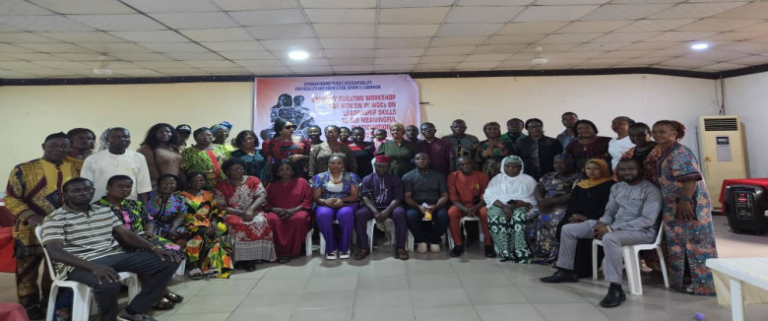
Capacity building workshop for women in WDC. Photo: Alfred Ajayi/Radio Nigeria

Experts emphasized that inclusion must go beyond physical accessibility. It requires budgetary commitment, legal enforcement, and consistent training of healthcare workers on disability-sensitive service delivery. They say without interpreters, ramps, adjustable beds, or braille-labelled medications, the BHCPF’s impact remains partial, and inequality deepens.

Ololo warns that “excluding PWDs from the BHCPF undermines Nigeria’s pursuit of Universal Health Coverage. The programme was designed to ensure that no one is left behind, but leaving PWDs out defeats its purpose.”

Dr. Onyemaechi agrees that Nigeria’s approach to inclusion must be sustainable rather than symbolic. “We must avoid tokenistic, one-off interventions,” he said. “Sustainable health protection must be institutionalized, not ceremonially launched.”

Lessons from other states

Across Nigeria, a few states are beginning to take deliberate steps toward inclusive healthcare.

In Lagos, local government councils have taken steps such as appointing sign-language interpreters in public institutions, signalling early movement toward broader interpreter deployment. Kaduna State launched a costed inclusive healthcare plan (2025–2027) to address communication barriers and ensure participation of PWDs in health governance.

In Ondo State, an assessment by the Disability Not A Barrier Initiative (DINABi) revealed that 73.7 percent of deaf respondents lacked access to interpreters. The report sparked sustained advocacy for reforms and prompted steps toward inclusive health communication.

PWDs during quarterly meeting at Amawbia, Awka South LGA. Photo: Alfred Ajayi/Radio Nigeria

Experts argue that political will, infrastructure upgrades, training, and meaningful inclusion in governance structures are essential for Anambra to follow suit. They recommended sign language training to build the capacity of health workers to communicate in basic sign language.

There is also a growing call for the Anambra State Disability Rights Commission to partner with civil society to monitor how disability inclusion is implemented under the BHCPF. Members of the disability community, however, warn that the commission itself is struggling and needs urgent government attention to function effectively.

Ugochi Ehiahuruike, a Civil Society Advocate believes inclusion must start from the top.

“For this to be institutionalized in Anambra, it will take a governor who understands disability and the meaning of equity. No one feels the pain like those wearing the shoes. As we push for special seats for women, PWDs must also be given a place at the table,” she said.

Ololo added that there is the need to review the BHCPF guidelines to explicitly capture the concerns of PWDs. They should be members of WDCs. “This will ensure that their needs are well-captured and access to healthcare services increases.”

“They should have seats in WDCs so their needs are represented in planning and service delivery. Inclusion won’t happen by goodwill; it has to be built into the system,” he said.

Inclusion of PWDs, Ololo insists, is a right and a prerequisite for universal health coverage. Accessibility can mean the difference between life and loss, between a policy that exists on paper and one that works in reality.

Without deliberate planning, funding, and training, the promise of Universal Health Coverage in Anambra will remain incomplete.

As Dr. Onyemaechi put it, “If even one person lacks financial or physical access to quality healthcare, Universal Health Coverage has not been achieved.”

WDC inclusion will help but …

The Coordinator, National Primary Health Care Development Agency (NPHCDA) in Anambra State and the Southeast, Obioha Agbakwuru, agreed that including PWDs in Ward Development Committees could enhance responsiveness to their healthcare needs and promote greater inclusivity but waiting for BHCPF guideline review would not deliver immediate relief for the affected persons.

“Reviewing guidelines to include PWDs is like having a clear rulebook and can make big changes happen. However, this might take time and will require people to follow the rules properly.

“Engaging communities to explore ways to include PWDs in WDCs would be a more effective strategy and foster participation and ownership. Talking to communities and working together can make healthcare and WDC more inclusive. This way, we use the real experiences of community members and PWDs to find practical solutions and can be quicker and more flexible.

Since the BHCPF aims to improve primary healthcare services and achieve Universal Health Coverage, Agbakwuru called for accessibility audits of PHCs, as well as special training for healthcare workers on disability inclusion.

“Provision of standard ramps with handrails should be mandated for all facilities including the provision of wheelchairs and accessible toilet facilities for PWDs. Engage PWD organizations in planning and governance.”

This report was made possible with support from the International Centre for Investigative Reporting, (ICIR)

Solutions journalism network awards open for nominations

JOURNALISTS around the world are invited to submit their best work for the 2026 Solutions Journalism Network (SJN) Awards, which honour outstanding reporting that not only exposes social problems but also investigates credible responses to them.

This is according to a statement issued by SJN which said that the entries would be judged based on the submission’s strength in meeting its defined four pillars of solutions journalism.

“The submission’s adherence to the US-based Society of Professional Journalists Code of Ethics. Factors such as accuracy, fairness, balance and adherence to professional standards.

“To efficiently manage the high volume of submissions, an AI tool built to identify solutions journalism will be used to assist in the initial evaluation of entries. This tool will serve as a pre-screening aid to help identify reporting relevant to the goals of this solutions journalism awards contest. Importantly, the AI does not replace human judgment. All final decisions will be made by judges, with human oversight present throughout the evaluation process,” the statement explained.

The organisation said its 2026 award cycle was open to entries published or aired between January 1, 2024 and December 31, 2025, across any newsroom size or individual journalistic practice.

“The news source and journalist must demonstrate no vested interest in the initiative mentioned in the narrative. The news source can specialise in an issue area, but its stories should not represent or reflect the views of special interests or provide publicity for a specific product or approach, or an affiliated organisation. Stories that are paid content will not qualify,” it added.

It noted that one of the top honours in this year’s programme is the General Excellence in Solutions Journalism Award, where a single winner will receive $1,000 for an exceptional body of solutions-driven reporting.

It added that each specialist category would award $500 to first-place winner, $250 second-place winner, and $150 third-place winner.

“Acknowledgement of Publishing Submissions to the Solutions Story Tracker: All award winners will be added to SJN’s Solutions Story Tracker. Award finalists may be added to the Story Tracker at the discretion of Story Tracker leadership.

“The SJN staff and awards judges reserve the right to reassign an entry to a different category or to withhold an award in any category if deemed appropriate,” it said.

SJN announced several specialist categories recognising excellence across diverse reporting formats. These include Best of Solutions Journalism in News Articles, Best of Solutions Journalism in Video, Best of Solutions Journalism in Audio, Best of Solutions Journalism in Visual Image, and Best of Solutions Journalism in Multimedia, Best of Student Solutions Journalism.

SJN said the awards aimed to spotlight proven models and groundbreaking reporting that showed how individuals, communities, and institutions responded to critical challenges from public health and education to governance, climate, conflict, economic inclusion, and social justice.

The deadline for nominations is February 27, 2026.

Independent journalists are also encouraged to apply and journalists whose work deeply interrogates solutions, highlights nuance and drives public understanding of what works and what doesn’t are encouraged to apply here.

Akpabio slams N200bn defamation suit against me, says Natasha

0

THE SENATOR representing Kogi Central Natasha Akpoti-Uduaghan has revealed she had been served with a fresh N200 billion defamation suit instituted against her by Senate President Godswill Akpabio over allegations of sexual harassment.

In a post on her Facebook page on Friday, December 5, the lawmaker said she received a court order granting Akpabio permission to serve her the suit through substituted means.

A copy of the court document, dated November 6, 2025, and issued by the Federal Capital Territory High Court, shows that a justice of the court, U.P. Kekemeke granted the claimant, Akpabio, leave to serve the originating processes on Akpoti-Uduaghan via the Clerk of the National Assembly.

The court ruled that this mode of service was “good and proper service.”

Reacting to the development, Akpoti-Uduaghan said she welcomed the lawsuit, noting that previous institutional processes within the Senate blocked her from presenting her petition of sexual harassment against Akpabio.

“Today being the 5th day of December, 2025, I’m in receipt of the newly instituted 200 billion naira suit against me by Senator Godswill Akpabio claiming defamation on sexual harassment,” she wrote.

She said the Senate Committee on Ethics and Privileges declined to hear her complaint, citing an earlier civil suit filed by Akpabio’s wife.

“Now, I am glad that Sen. Akpabio has brought this up because the Senate Committee on Ethics and Privileges failed to grant me audience in this issue relying on the fact that Godswill Akpabio’s wife had instituted a defamatory case against me. Therefore they couldn’t attend to a matter already in court.

“Albeit I couldn’t proceed to court because by Senate rules, I must still present my case before the Ethics committee (same committee that recommended my illegal suspension),” she said.

The Kogi senator declared that the new lawsuit provided her an opportunity to present her allegations before an impartial forum.

“Alas, I now have a chance to prove how I was sexually harassed and how my refusal to give into his demands unleashed series of unprovoked and unprecedented attacks on my person,” she added.

The ICIR reports that the recent development renewed months of tension between the two senators, which intensified after Akpoti-Uduaghan publicly accused the Senate President of sexual misconduct and political victimisation.

The Kogi senator, in an interview on Arise Television, accused Akpabio of making repeated sexual advances toward her, which she said she rejected.

She alleged that her refusal was the reason behind their frequent clashes at plenary sessions.

According to her, some of Akpabio’s love proposals were made with her on the phone and face-to-face in her husband’s presence. She further alleged that she had all the evidence for her claims.

Although the Kogi senator, on Wednesday, March 5, submitted an official petition regarding the sexual harassment and abuse of office by Akpabio, the Ethics Committee threw out the petition, citing key procedural oversights that allegedly undermined the petition’s legitimate.

Akpoti-Uduaghan, however, resubmitted the petition, shortly before her suspension.

Akpabio has consistently dismissed the allegations.

How ‘bow and go’ syndrome in Senate threatens governance in Nigeria

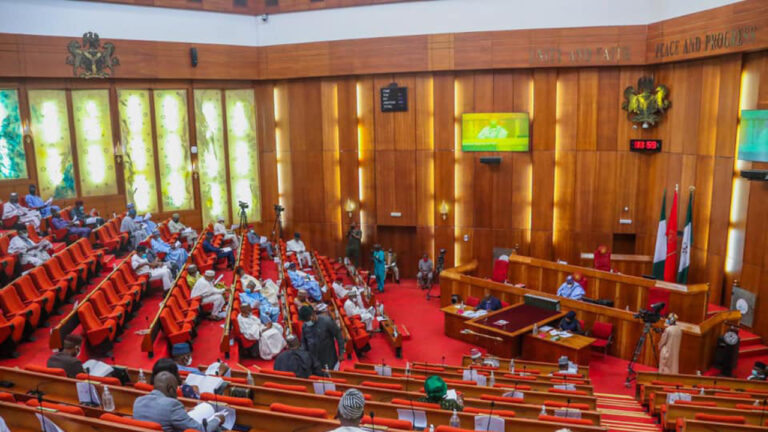
THE Senate on Tuesday, December 2, rejected a motion by the senator representing Niger East, Sani Musa, seeking to allow the Minister of Defence nominee, Christopher Musa, a retired general, to “take a bow and go” without rigorous questioning.

He cited Musa’s distinguished military career and previous role as Chief of Defence Staff as the reason the Senate should enable him to enjoy what has become a tradition in Nigeria’s upper legislative chamber.

The motion caused some minutes of disorder at the plenary, as some lawmakers, including Garba Maidoki (Kebbi South), opposed it and insisted that all nominees, regardless of prior public service, must undergo full screening in line with parliamentary tradition.

The Senate President, Godswill Akpabio, who presided over the plenary, called for calm and order as he rejected the proposal.

Taking an unusual stand, Akpabio said, “This is not the time for the politics of bow and go”, stressing that with Nigeria’s security challenges and more than 200 abducted schoolchildren in Niger State still in captivity, Nigerians should hear from the minister designate.

The Senate suspended the motion and proceeded with full screening of the nominee.

What this episode signifies

Sani Musa’s motion reflects a phenomenon critics call the “bow-and-go syndrome” in the Senate, where the screening of former security chiefs and other high-ranking appointees are fast-tracked as lawmakers ask them to take and bow and go.

According to the Guardian, the “bow-and-go” practice began in 2003 as a privilege strictly for nominees who had served in the Senate. It was later extended to everyone with legislative experience at federal and state levels.

The first beneficiary was the late Senator Wahab Dosumu, who represented Lagos Central Senatorial District between 1999 and 2003. The Senate asked him to take a bow and go when he was appointed a minister in 2004 after defecting from the then Alliance for Democracy (AD) to the Peoples’ Democratic Party (PDP).

About 15 of the 23 nominees of the late President Muhammadu Buhari led administration, enjoyed the privilege in 2019.

The nominees who have benefitted from the controversial decision are the current Senate President, Godswill Akpabio, George Akume, Emeka Nwajuaba, Adeleke Mamora, Rotimi Amaechi, Tayo Alasoadura, Mustapha Baba Shehuri, Timipre Sylva, Otunba Adeniyi Adebayo, Chris Ngige, Muhammadu Musa Bello, Sa’adiya Umar Farouk, Sharon Ikeazor, and Ramatu Aliyu.

In 2015, former Senate President Bukola Saraki said the 8th Senate under his watch would shun the practice.

The tradition was restored by the 9th and 10th Senate. According to critics, one of the effects of this tradition is the discrepancies that are exposed in the credentials of political appointees after their screening by the Senate and the State Security Service (SSS)

Critics also noted the Senate’s refusal to let Nigerians hear from the appointee deny citizens to know what the appointees’ plans are for the offices they are superintending over.

In 2017, The ICIR investigations exposed how two individuals appointed by the former Acting President Yemi Osinbajo to the board of the Independent Corrupt Practices and Other Related Offences Commission (ICPC) were under corruption investigations.

The appointees, Maimuna Aliyu and Sa’ad Alanamu, were being probed for alleged multi-million-naira fraud by both the ICPC and the Economic and Financial Crimes Commission (EFCC).

While Alanamu was being investigated on corruption charges allegedly committed while he headed some institutions in Kwara State, Aliyu reportedly had a longstanding case of abuse of office, misappropriation and diversion of public funds against her.

The ICIR also reported in 2018 how the former Minister of Finance Kemi Adeosun brought the Muhammadu Buhari administration into global disrepute after a Premium Times report revealed that she presented a forged NYSC exemption certificate as part of her credentials.

Although Buhari had referred Adeosun and other ministerial nominees to the SSS for security screening in September 2015, it remains shocking how her forged NYSC exemption certificate slipped through the agency’s scrutiny. Adesun also joined other minister-nominees to pass through Senate screening and confirmation.

She consequently resigned from office after public backlash.

Similarly, The ICIR reported the latest scandal involving the former Minister of Science, Technology and Innovation, Uche Nnaji, who resigned recently after another Premium Times report exposed him for using forged certificates to secure his position.

These incidents, according to critics, showed a consistent pattern of failure by vetting institutions to uphold the standards prescribed by law.

Constitutionally, the Senate is required to screen all ministerial nominees and other political positions, while the SSS conducts background checks.

Under Section 147(2) of the 1999 Constitution (as amended), ministerial nominees must be screened and confirmed by the Senate.

International best practices for legislative screening of nominees require the lawmakers conduct background checks of nominees and have access to records of asset declaration, and other relevant documents before the screening.

Similarly, the National Security Agencies Act of 1986 mandates the SSS to provide protective and preventive security through background checks on public officials, including verifying the authenticity of their records before appointment.

Doctor arrested in Kwara for supplying drugs to kidnappers

0

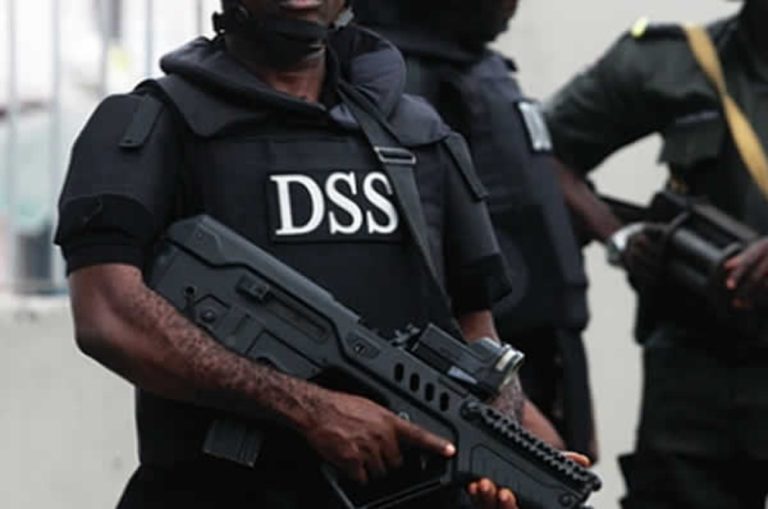
Operatives of the State Security Services (SSS) have arrested a medical doctor for allegedly transporting medical supplies from Sokoto State to suspected kidnapping gangs operating in Kwara State.

The Kwara State Government confirmed the arrest in a statement posted on its official Facebook page on Friday, December 5.

The suspect was reportedly intercepted in Jebba, Moro Local Government Area, following intelligence linking him to a syndicate responsible for delivering medical items to armed groups across the region.

The statement read, “The Department of State Service has taken into custody a medical doctor who was ferrying drugs from Sokoto to kidnappers in parts of Kwara State.

“The doctor was intercepted in the Jebba area following intelligence reports about the activities of the kidnappers and their couriers. The secret service says the criminal gangs appear desperate for medical care following gunshot wounds sustained in encounters with security forces.”

Meanwhile, security sources confirmed that the arrest formed part of an intensified operation aimed at disrupting the logistics networks sustaining kidnapping cells in the North-Central zone.

One of the sources said kidnapping gangs had recently increased efforts to secure medical treatment – particularly for gunshot wounds sustained during clashes with security operatives – forcing security agencies to heighten surveillance around the movement of medical supplies.

Meanwhile, some Nigerians who reacted to the arrest questioned why the Kwara state government is not naming the culprit in the official statement posted on its website.

“He doesn’t have a name?” asked a Facebook user, Boluwatife Oladipo.

Another social media user, Akomolafe Adetola, asked a similar question, saying, “So the doctor has no name?”

Michael Friday, another social media user, said the Kwara state government would have arrested the armed bandit gang before making the information public.

“Why publish such sensitive information…Wait until you arrest those gangs before publishing such news…Why are our security services bent on always scoring cheap praises instead of perfection?” Friday asked?

Kwara, it would be noted, has long been categorised as a peaceful state in the North-Central region, but has witnessed a rise in insecurity in recent months, with incidents recorded in Kaiama, Baruten, Ekiti and parts of Moro LGAs.

Border communities have been particularly vulnerable due to their closeness to expansive forests serving as hideouts for criminal gangs.

A troubling pattern  

The ICIR reported that the attack on the Eruku worshippers in November was part of a troubling pattern in Kwara State. While there have been moments when the violence seemed to be slowing, each time it appeared to be under control, another wave of attacks struck, spreading fear among residents and disrupting daily life.

Between September and October, the police and state government frequently reported neutralising the bandits and overrunning their camps in various parts of the state. These operations, according to officials, were part of ongoing efforts to curb banditry and restore security to communities that have been repeatedly attacked.

Despite these claims, residents said attacks on their communities continued, with many now displaced or in bandits’ captivity.

ICIR-funded report wins AMDF award

0

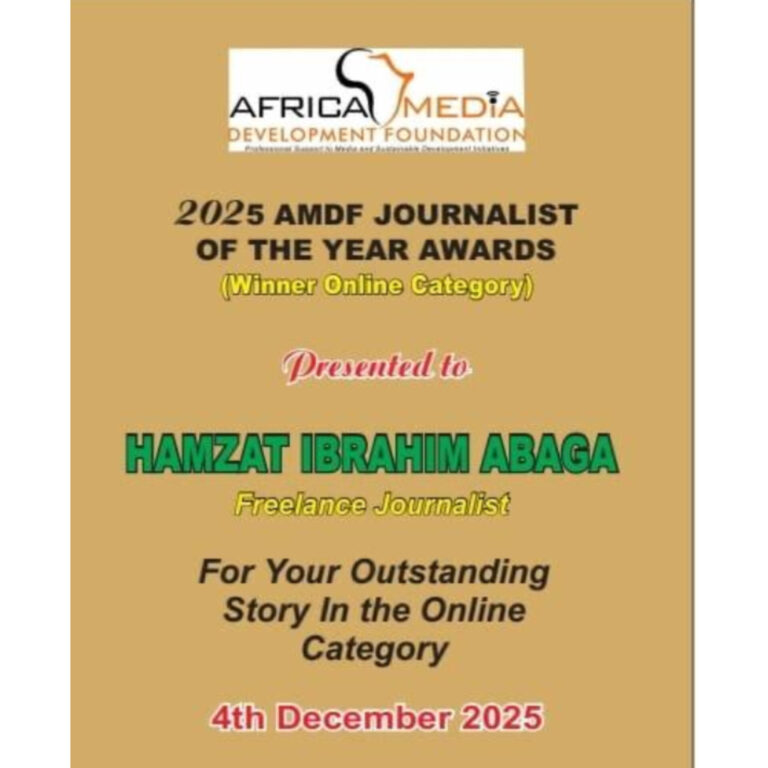
A REPORT funded by the International Centre for Investigative Reporting (ICIR) has won the 2025 African Media Development Foundation (AMDF) Journalist of the Year Award.

The investigative report won the award’s Online Category.

The author of the winning report, Hamzat Ibrahim Abaga, a freelance investigative journalist, was shortlisted among seven finalists and clinched the online category award for his August 2025 investigation titled “Sex for Food: Hunger Fuels Exploitation of Female IDPs in Niger State.”

Abaga, along with other award recipients, was honoured at the 2025 Africa Conference on Development Journalism (ACDJ), held from December 3–4 in Kaduna State.

The Executive Director of AMDF, Sekyen Dadik, said that the organisation introduced the Journalist of the Year Award in 2016 to recognise excellence in development journalism across Africa in photo, online, print, television, and radio categories.

According to AMDF, the 2025 Online Category award was “presented to Hamzat Ibrahim Abaga, in recognition of his outstanding story in the online category.

Abaga’s investigation exposed sexual exploitation of female internally displaced persons (IDPs) in Niger State, where some camp officials allegedly used food aid as leverage for sexual favours.

One young woman, Gambo, who spent four years in Kuta IDP camp, became a victim. She and her family eventually returned to their community in Shiroro Local Government Area despite ongoing bandit attacks.

Severe hunger and a lack of aid compounded her vulnerability, ultimately resulting in an unplanned pregnancy and the cancellation of her planned marriage. Other displaced women reported similar experiences, describing warnings about camp officials making sexual advances and accounts of direct pressure to comply with demands in order to receive food.

Some were removed from beneficiary lists when they refused, while long-term residents highlighted the persistent scarcity of food and basic necessities, leaving families struggling to survive.

The Niger State Government confirmed it was aware of the incidents and said investigations were ongoing.

Relevant ministries and human rights organisations are involved, and authorities emphasised continued support for IDPs through the distribution of food, blankets, and educational materials, despite logistical and funding challenges.

This latest award adds to the list of awards the ICIR funded stories have won in 2025.

The ICIR reported that a former staff of the ICIR, Ijeoma Opara was named first runner-up at the 34th Diamond Awards for Media Excellence (DAME) on November 27 for her reporting on illegal mining in Nasarawa State.

The report, “Chinese Illegal Miners Deprive Government of Revenue, Exploit Child Labour in Nasarawa,” was nominated in the Solid Minerals Development Reporting category.

Similarly, Alfred Ajayi’s report, supported by International Centre for Investigative Reporting (ICIR), won the Best Solutions Journalism Reporting category at the 2025 Centre for Journalism Innovation and Development (CJID) Excellence in Journalism Awards.

The report done under the Strengthening Public Accountability for Results and Knowledge (SPARK 2) project, spotlighted the positive impacts of the free Antenatal (ANC) and delivery programme of the Anambra State Government.

Another ICIR’s report, titled, “Airstrike cover-up: Katsina government helped Nigerian Air Force conceal civilian deaths,” has been shortlisted for Fetisov Journalism Award.

The investigation, done by The ICIR’s senior investigative reporter, Nurudeen Akewushola, was shortlisted in the category of Outstanding Contribution to Peace.

Akewushola’s reporting revealed that on November 20, 2024, an airstrike in Shawu village, Ruwan Godiya district, Faskari Local Government killed at least five unarmed civilians, including women and children, and injured 19 others.

Despite claims by the Katsina State Government and the Nigerian Air Force (NAF) that the operation targeted terrorists, Akewushola’s investigation showed the area had been evacuated by the armed groups before the attack, leaving innocent villagers as the primary victims.

Through field reporting, interviews, Akewushola documented consequences for families like that of Isah and his heavily pregnant wife, Hafsat, who lost their unborn child and faced crippling medical expenses. Other victims included eight-year-old Maryam Mukhtar and her mother, Abasyya, whose deaths left relatives grappling with profound loss.

The investigation also highlighted the government’s attempts to mislead the public, with the report exposing a systematic cover-up.


Supreme Court dismisses Osun’s suit on withheld LG funds

0

THE Supreme Court has thrown out a case instituted by the Osun State Government seeking to compel the Federal Government to release statutory allocations owed to local government areas in the state.

In a 6–1 majority decision, the court held that the Osun State Attorney-General lacked the legal standing to initiate the suit on behalf of the local governments, which it affirmed are constitutionally recognised bodies capable of pursuing their own legal claims.

The lead judgment, delivered on Friday, December 5, by Mohammed Idris, held that the matter revolved around allegations that the federal government did not remit funds meant for Osun’s local governments from the federation account, adding that since the controversy was strictly between the local government and the federal government, the state Attorney-General had no authority to represent them.

The court also drew a distinction between this case and the AG Abia & others v. AG Federation, in which the Supreme Court ordered that LG allocations be paid directly to councils nationwide.

Idris explained that if local governments in Osun believed their funds were being withheld, they should have approached the court.

However, the judge expressed displeasure at the federal government’s reluctance to fully implement earlier judgment mandating direct disbursement of federal allocations to local governments.

He reminded that the ruling was binding on the federal government , and the government must ensure that allocations due to local governments are sent directly to them without being withheld under any guise.

The ICIR reports that the federal government withheld Osun’s local government allocations earlier in 2025, citing a dispute over council elections.

The federal government, through the Attorney General of the Federation (AGF) and Minister of Justice, Lateef Fagbemi, declared that the local government chairmen elected on the platform of the Peoples’ Democratic Party PDP) were illegal.

According to him, the All Progressives Congress (APC) chairmen elected under former governor Gboyega Oyetola are the legal occupants of the LGAs because their tenure had not expired.

In August 2025, the state government headed to the Supreme Court, where it asked the apex court to compel the federal government to release several months of allocations.

The state government sought an order restraining the AGF, Central Bank of Nigeria, and Accountant General of the  Federation from withholding the funds.

The AGF also pressed the Supreme Court for relief against the state. 

New tax laws: what companies, private businesses should know before January 1 take off

BARRING any last-minute decision from the government, on January 1, Nigerians will enter a new tax regime that seeks to use digital tools to bring more people into the tax net through a centralised system.

The new regime, however, offers a fresh breath of life into the harmonised tax system structure in Nigeria, which removes multiple taxation and digitises payment, leaving some tricky, unsolved questions for corporate businesses and private entities.

The new tax law in Nigeria, signed on June 26, 2025, aims to simplify tax compliance, reduce multiple taxation, and increase revenue generation.

Background

The ICIR reported in June that the new bills had been signed into law by President Bola Tinubu. The bills that were signed into law were the Nigeria Tax Bill, the Nigeria Tax Administration Bill, the Nigeria Revenue Service (Establishment) Bill, and the Joint Revenue Board (Establishment) Bill.

Now an Act, the Nigerian Tax Act aims to merge the country’s tax laws into a single, unified system, while the Nigerian Tax Administration Act creates uniform procedures for tax collection across federal, state, and local governments, replacing the current patchwork of different systems.

Under the new law, the Nigeria Revenue Service (Establishment) Act gives the tax collection agency greater independence and expanded powers, including collecting non-tax revenue.

The Joint Revenue Board (Establishment) Act will set up formal cooperation structures between different levels of government and create oversight bodies, including a Tax Appeal Tribunal and the Office of the Tax Ombudsman.

These reforms aim to boost revenue, simplify tax administration, and promote economic growth.

TTax experts seek states' support for presidential reforms to end 'touting'
Chairman of the presidential committee on tax and fiscal policy reforms, Taiwo Oyedele

How companies would be taxed under the new regime

The Company Income Tax (CIT) has been reduced from 30 per cent to 25 per cent for medium and large firms starting in 2026, with a transitional rate of 27.5 per cent in 2025.

On Value-Added-Tax (VAT) exemption, essential items like food, medical services, and education are zero-rated.

The new regime has a development levy of 4 per cent on assessable profits, consolidating previous taxes.

INFOGRAPHIC FOR TAX AND WHAT IS PAYABLE
Infographic for tax ands what is payable from January 1

On the minimum effective tax rate, the new regime taxes 15 per cent for multinational groups with annual turnover above ₦50 billion.

Accordingly, the Capital Gains Tax was also increased from 10 per cent to 30 per cent for companies.

What do businesses stand to benefit?

The harmonised tax system simplified the tax structure and reduced the compliance burden to businesses through digital compliance and tax agents working at the Nigerian Revenue Service.

It also increased input VAT recovery for service-oriented industries. There are also exemptions for small businesses with an annual turnover below ₦100 million.

The new regime also targets improved transparency and accountability because of digital emphasis, which is enhanced through financial statements of companies and information they share with the Corporate Affairs Commission (CAC)

“Yes, there is seamless information management between the Federal Inland Revenue Service and the Corporate Affairs Commission for proper tracking of tax compliance and companies’ annual returns,” a notary public and a CAC consultant lawyer, Inemesit Eyibo, told The ICIR.

Some knotty areas and solutions from stakeholders

As Nigerian companies gear up to enter the New Tax regime, tax stakeholders have advised firms and corporate entities to get the services of a tax consultant to avoid possible pitfalls.

The stakeholders submitted Abuja Business Tax Roundtable 2025, organised by the Abuja
Chamber of Commerce and Industry (ACCI) with the theme: “Demystifying the New Tax Laws,” on Tuesday, November 25.

Speaking at the event, the Vice President of ACCI, Adesoji Adesugba, said, businesses are still asking critical questions about the new tax law.

“What are the opportunities, efficiencies and competitive edge it offers. How does it affect businesses?

An official of Federal Inland Revenue Service FIRS-Kenhinde Kajesomo, in allaying fears of business representatives at the event, said, “The government will tax fruits, not seed.”

He added that there are tax agents who assist with solutions to problems at tax offices nationwide.

“With these reforms, there is a harmonisation of different tax laws. Registration, filing of returns, all of them simplified to aid compliance,” he said.

He further said that the reforms are majorly data-driven, noting that there’s economic alignment in the new tax law.

What to know about the new tax law

The ICIR reports that the effective implementation date will be January 1, 2026, meaning that it will affect tax return filings of 2026 financial statements, so it’s not going to be immediate.

For Small and Medium Enterprises (SMEs), the zero tax threshold has been increased from 25 million to 50 million. Small companies with 0 to 50 million turnovers are now 0 per cent tax.

Companies with a turnover above 50 million will be taxed at the rate of 30 per cent.

“Small company” means a company that earns gross turnover of N50,000,000 or less per annum with the total fixed assets not exceeding N250,000,000.

However, businesses providing professional services shall not be classified as small companies.

The ICIR noted that in the new tax law, there’s no withholding tax deduction on business income of small businesses, and no VAT filing requirements to deduct and account for tax payments to vendors.

Areas of possible confusion for taxpayers

For a tax consultant and member of the Institute of Chartered Accountants of Nigeria (CITN), Emeka Okoroeze,  primary areas of concern are whether the new regime will be able to truly improve revenue generation by bringing more people and businesses into the tax net and strengthen the economy, as some believe that given incentives might not be enough to help the real sector.

“For instance, a situation where individuals who earn up to 2million face tax payment at 15 per cent and business turnover below 50 million pays zero tax remains a huge worry,” Okoroeze said.

For the management of Palm Bridge Concepts Limited, Ebuka Onyeneke, a loan facility of N500 million borrowed from a deposit money bank could create a huge economic problem for the firm if they hadn’t sought advice from a tax professional who guided them on how to properly designate their loan facility away from their sales and other transactions in their company’s financial statement.

“We have been asking relevant questions about the new tax law and our transactions. Our lawyer guided us on what to do to avoid pitfalls, and that saved us when we eventually submitted our financial statements to the relevant authorities,” Victor Inemesit, a lawyer who offers commercial advisory to Palmbridge Concepts Limited, told The ICIR.

A tax consultant and an Associate Professor of Taxation, Kennedy Iwundu, told The ICIR on the sidelines of a recent tax event that companies must properly delineate borrowed facilities from sales in their financial statements to avoid possible sanctions from tax authorities.

He said: “When you borrow a facility from the bank, ensure you get your company board to officially approve that loan, ensure it reflects in your financial statement as a loan facility and properly delineate that it’s not sales, adding that ‘Through proper delineation in the financial statements, you can avoid the trap of tax offence.”

Iwundu urged Nigerian companies to seek a tax consultant’s interpretation of the new law, since there could be areas of ambiguity.

“Seek the advice of a tax agent and consultant as provided in the law. For instance, Section 11 of the new tax law says all companies must file tax returns. Section 13 says all individuals must file in tax return. This could be confusing, and a tax expert could guide individuals who think they’re exempt in ways of going about this,” he said.

He also suggested that companies write the FIRS in some difficult transactions.

A representative of the Manufacturers Association of Nigeria (MAN), Chigozie Igwe, urged government officials to manage the narrative, adding that there is still serious fear about the whole tax issue.

“No economy has been built on the back of taxes alone. We must control the narrative out there- that of fear. Tax is a social contract. The government should as much as it can highlight the benefits for businesses and corporate entities to understand that it is a win-win,” Igwe said.

Other issues with the New tax law

The ICIR reports that under the new tax law, there is the  Economic Development Tax Incentive (EDTI), which applies to specified priority sectors such as the manufacture of electrical equipment, chemical, pharmaceutical products, motor vehicles, metal, iron, steel, electricity and gas supply, renewable energy, music, and video production.

The ICIR findings have shown that the qualifying Capital Expenditure threshold for EDTI ranges from ₦250 million to ₦500 million, depending on the sector.

Companies granted the EDTI can enjoy annual tax credits of 5 per cent of the acquired QCE, for five years.

EDTI can be extended for an additional five years, where profits generated during the
incentive period are wholly reinvested in
the business for expansion.

Offences for taxes, file returns failures

Key offences in the new Act include failure to grant access for the deployment of technology; Failure to deduct tax; Failure to remit tax deducted at source or self-account; Failure to attend to demands, requests or notices.

The ICIR reports that taxpayers may file a written notice of objection within 30 days of receiving an assessment, and the tax authority must respond within 90 days; otherwise, the taxpayer’s objection is deemed upheld.
In the new tax act, there is a seamless collaboration between different tax authorities, including joint tax audit exercises, to ensure compliance.

Taxpayers may claim a refund of overpaid taxes following an audit by the relevant tax
Authority and the approved refunds must be made within 90 days of decision of the tax
authority or set-off against any tax liability.

Taxation of dividend Profits of a Nigerian company assessment shall also  include the gross amount of the received dividend

Where a dividend is paid to a Nigerian company in the form of shares, such a Payment will not be subject to withholding tax.