Home Blog Page 180

Tony Elumelu grieves over staff death at Afriland Tower fire

THE CHAIRMAN of Afriland Properties Plc, Tony Elumelu, on Wednesday, September 16, said he was devastated by the fire incident that claimed the lives of the company’s staff at its Broad Street towers in Lagos State. 

Elumelu, in an official letter addressed to staff, said, “No word can capture the magnitude of this loss – not for their families who loved them, not for the friends who valued them, and not for those of us who worked beside them. Yesterday was a stark reminder of what truly matters: our irreplaceable people, those who walk through our doors each day and share our mission.”

“I learnt of this on my way to the US, en route to New York for UNGA. I have cut short my trip to return to Lagos as a mark of respect to our lost colleagues. “As we navigate this grief, I urge you all to reach out to those who are receiving care.”

He said there would be a memorial to honour those who died in the disaster, while promising to support their families.

Elumelu also expressed appreciation to firefighters and all those who supported in one way or another, from emergency responders and first aid workers to members of the public who showed courage and compassion.

The ICIR reported that a major fire broke out on Tuesday afternoon at Afriland Tower, Broad Street, Lagos Island. The building housed one of the branches of United Bank for Africa (UBA)

The incident sparked chaos in the area as thick smoke engulfed the high-rise building, forcing some staff to escape through windows.

Videos circulated on social media showed scenes of employees climbing down with the aid of fire service ladders, while others were seen trying to jump from upper floors in panic.

According to Deputy Controller General of the Lagos State Fire and Rescue Service, Ogabi Olajide, the alarm was raised at 1:38 p.m., with crews from Ebute Elefun and Sari Iganmu stations responding swiftly to the scene.

The fire was believed to have started in the basement inverter room before spreading to multiple floors.

Some people reportedly died in the inferno.

(BREAKING} Fubara bounces back as Tinubu lifts emergency rule

0
PRESIDENT Bola Tinubu on Wednesday, September 17, announced the end of the state of emergency he imposed on Rivers State after six months of federal control.
The proclamation, which began on March 18, 2025, will lapse at midnight, allowing Governor Siminalayi Fubara, his deputy Ngozi Odu, and members of the Rivers State House of Assembly, led by Speaker Martins Amaewhule to resume their duties on Thursday, September 18.
Tinubu, in a statement from the Presidential Villa, said the “extraordinary measure” was necessary to halt a total breakdown of governance in the oil-rich state after a prolonged political crisis between the executive and legislature.
According to the statement, the rift left the governor without a functional Assembly to pass an appropriation bill and exposed vital economic assets, including oil pipelines, to vandalism.
He recalled that his intervention followed months of failed reconciliation efforts and a Supreme Court judgment, noting that Rivers State had effectively been without government.
Relying on Section 305 of the 1999 Constitution, Tinubu suspended the governor, his deputy and all elected lawmakers for six months, a move later ratified by the National Assembly.
The president acknowledged the more than 40 court cases filed to challenge the legality of the emergency rule but maintained that the step was needed to “arrest the drift towards anarchy” and restore public order.
He said latest intelligence reports indicated “a new spirit of understanding” among political actors, making further federal oversight unnecessary.
“I am happy today that, from the intelligence available to me, there is a groundswell of a new spirit of understanding, a robust readiness, and potent enthusiasm on the part of all the stakeholders in Rivers State for an immediate return to democratic governance. This is undoubtedly a welcome development for me and a remarkable achievement for us. I therefore do not see why the state of emergency should exist a day longer than the six months I had pronounced at the beginning of it.
“It therefore gives me great pleasure to declare that the emergency in Rivers State of Nigeria shall end with effect from midnight today. The Governor, His Excellency Siminalayi Fubara, the deputy governor, Her Excellency Ngozi Nma Odu, and members of the Rivers State House of Assembly and the speaker, Martins Amaewhule, will resume work in their offices from 18 September 2025,” the president said.

Build-up to the end of emergency rule

As the September 18 deadline approached, The ICIR reported that attention had shifted to Government House in Port Harcourt, where Fubara was expected to reclaim his mandate.
According to the report, signs of an imminent handover emerged when Fubara’s predecessor and current Minister of the Federal Capital Territory, Nyesom Wike, declared on August 30 that the emergency would expire on schedule.
The sole administrator appointed by Tinubu, Ibok-Ette Ibas, a retired vice admiral, who has led the state since March, had prepared his exit with an interdenominational thanksgiving service held on Sunday, September 14.
Ibas took charge after Tinubu suspended the entire elected leadership, citing insecurity and a breakdown of governance amid a bitter feud between Fubara and 27 lawmakers loyal to Wike.
His six-month administration began with the removal of political appointees, appointment of caretakers of local government areas (LGAs), and the conduct of LGA elections in which Wike’s allies swept the polls, effectively shutting out Fubara’s supporters.
Ibas has defended his stewardship, pointing to the ‘peaceful’ LGA elections, the rehabilitation of the Diete-Spiff Secretariat, revival of the Songhai Farm, and an alleged N5 billion saved from a civil service verification exercise.
Meanwhile, in his statement on Wednesday, Tinubu urged governors and lawmakers nationwide to learn from the Rivers crisis, warning that only cooperation between the executive and legislative arms could guarantee the dividends of democracy.

Coalition condemns police ‘persecution’ of whistleblower who exposed Katsina payroll fraud

0

A COALITION of media and civil society groups has demanded the immediate release of Mubarak Bello, a whistleblower who exposed an alleged multi-million-naira payroll fraud in the Katsina State Police Command.

In a statement on Wednesday September 16, the Coalition for Whistleblower Protection and Press Freedom (CWPPF) described Bello’s arrest and detention as ‘disgraceful’.

The coalition also accused the Nigeria Police Force (NPF) of shielding suspects while punishing the man who exposed them. 

The CWPPF finds it utterly disturbing that the police, rather than investigating the credible allegations of corruption within their ranks, have chosen to victimise the whistleblower,” the statement read.

Backstory

The ICIR reported that Bello, 38, ran a small business centre inside the headquarters of the Katsina State Police Command, offering typing and documentation services to officers. 

In 2017, while helping to prepare salary and promotion papers, he said he uncovered a long-running scheme in which senior finance officers allegedly created ghost workers and diverted police salaries into private accounts.

Between 2019 and 2021, Bello petitioned the Economic and Financial Crimes Commission (EFCC), the Independent Corrupt Practices and Other Related Offences Commission (ICPC), the Attorney-General of the Federation, and the Police Service Commission (PSC)

Investigators confirmed that the ICPC invited key suspects, including finance officers CSP Bashir Abubakar and ASP Yakubu Ibrahim, but the officers refused to appear, citing the need for approval from the then Inspector-General of Police, Mohammed Adamu.

That approval, ICPC officials said, never came, despite a couple of letters written to the Inspector General of Police.

The ICIR gathered that this consequently stalled the probe and have put the life of Bello, who has since been facing repeated attacks from the accused police officers, in danger.

Similarly, the police have allegedly raided his home and office, seizing equipment and documents. 

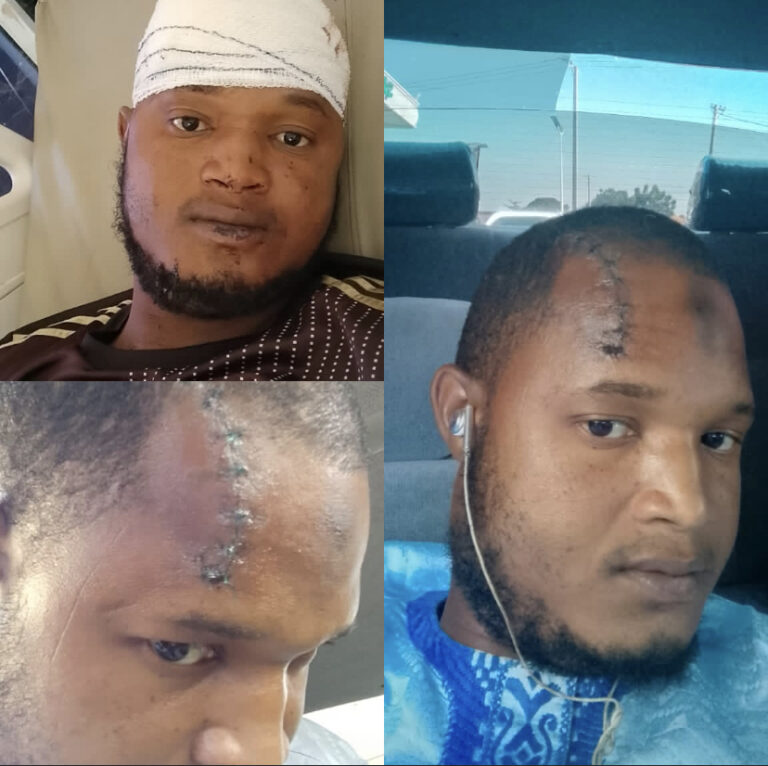
He was first arrested in 2020 on allegations of impersonating a police officer. In October 2024, machete-wielding men attacked him and inflicted severe injuries on his head and hand. 

Earlier, before the attack, The ICIR gathered that Bello had been arrested and detained by the police in Kaduna. He was later charged in court before he eventually regained freedom after spirited efforts by lawyers.

On 13 September 2025, the Katsina State Police Command announced Bello’s latest arrest, accusing him of impersonation, possessing a fake police ID and unlawfully carrying a firearm after a night patrol allegedly intercepted his car in Kaduna and recovered a rifle and cartridges. 

However, The ICIR authoritatively reported that Bello’s arrest was an act of victimisation by the Katsina State Police Command to silence him, after blowing the whistle on a ghost police workers scheme, allegedly perpetrated by the command several years ago.

A senior official of the ICPC close to the investigation of Bello’s petition said uncooperative attitude of the police authorities stalled the probe into the petition by the accused. 

The official said he was sure that Bello’s arrest amounted to victimisation for blowing the whistle to anti-corruption agencies, noting that the police ID card said to be fake was issued to him by the same police as part of the scheme to include his name in their payroll.

Coalition demands Bello’s release

Reacting, the CWPPF demanded round-the-clock protection for Bello and his family.

It also demanded the immediate suspension of all charges, and an independent probe outside police control into the payroll fraud and attacks on the whistleblower.

“We demand an independent and impartial investigation into the payroll fraud at the Katsina State Police Command and the subsequent hounding of Mr. Bello. This investigation must be conducted by a body outside of the Police Force to ensure its credibility.

“All individuals found culpable in the payroll racket, the obstruction of justice, and the attacks on Mr. Bello, no matter their rank or position, must be immediately prosecuted to the full extent of the law.

“The case of Mubarak Bello is a litmus test for the Nigerian government’s professed commitment to fighting corruption and protecting whistleblowers. Failure to act decisively  and in clear adherence to the rule of law sends a clear message to all Nigerians that they are on their own if they dare to speak out against the powerful,” the coalition added.

NECO releases 2025 SSCE results, records 60% pass rate in English, Mathematics

0

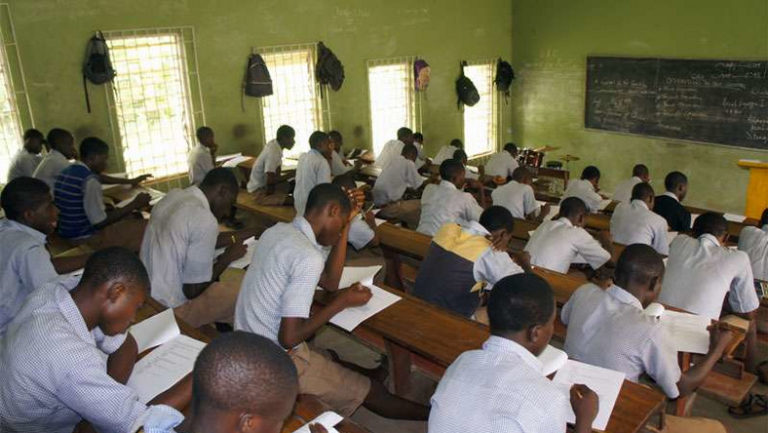
THE National Examinations Council (NECO) has released the results of its 2025 Senior School Certificate Examination (SSCE Internal).

The result showed a 60.2 per cent pass rate in English Language and mathematics, the two core subjects that often determine admission into tertiary institutions in Nigeria.

NECO Registrar, Ibrahim Wushishi, a professor, announced the results at the Council’s headquarters in Minna, Niger State, on Wednesday, September 17.

The release came 54 days after the last paper was written.

According to Wushishi, out of 1,358,339 candidates who sat for the June/July examination, 818,492 secured five credits and more, including English Language and Mathematics. He said 1,144,496 candidates got five credits in all subjects, representing 84.2 per cent of candidates who sat for the examination.

He added that the 2025 exams, conducted between June 16 and July 25, recorded a significant drop in malpractice cases from over 10,000 in 2024 to 3,878 this year, a reduction of 61.6 per cent.

Still, 38 schools in 13 states were indicted for mass cheating, while nine supervisors across Rivers, Niger, FCT, Kano, and Osun were recommended for blacklisting over poor supervision, aiding malpractice, lateness, and unruly conduct.

“During the conduct of the 2025 Senior School Certificate Examination, 38 schools were found to have been involved in whole-school (mass) cheating in 13 states. They will be invited to the Council for discussion, after which appropriate sanctions will be applied,Wushishi said.

He also disclosed that 1,622 candidates with special needs sat for the examination, including 586 hearing-impaired boys and 355 girls, alongside 191 visually impaired candidates.

Wushishi noted that candidates from Adamawa State’s Lamorde Local Government were affected by communal clashes that disrupted their exams between July 7 and 25. He explained that negotiations with the state government were underway to allow them do a make-up sitting.

A state-by-state breakdown showed Kano topping the performance chart with 68,159 candidates (5.02 per cent) scoring five credits, including English and mathematics. Lagos followed with 67,007 (4.93 per cent), while Oyo placed third with 48,742.

The registrar stressed that NECO had reduced the subjects examined to 38, in line with a reviewed curriculum, to make results faster to process and release.

He also pointed to ongoing reforms, including the gradual transition from the traditional paper-and-pencil model to computer-based testing (CBT), which began this year with selected public and private schools.

The ICIR reported in August that the West African Examinations Council (WAEC), Nigeria, another examination body, released the reviewed results of the 2025 West African Senior School Certificate Examination (WASSCE) for school candidates, following a 24-hour shutdown of its results portal to fix what it called technical bugslinked to a new anti-malpractice feature.

The WAEC had temporarily denied access to the results on August 7, citing anomalies caused by its recently introducedpaper serialisationsystem. 

The system, designed to reduce collusion in exam halls, was deployed in core subjects including mathematics, English language, biology, and economics, according to the council.

The ICIR reported that initial results released on August 4 showed a drastic decline in performance, with only 38.32 per cent of candidates obtaining at least five credits, including English and mathematics.

This triggered public outrage and allegations of operational lapses, which would later lead to the council announcing a review of the results.

Saudi Arabia frees 3 Nigerians wrongly jailed over drug trafficking claim

0

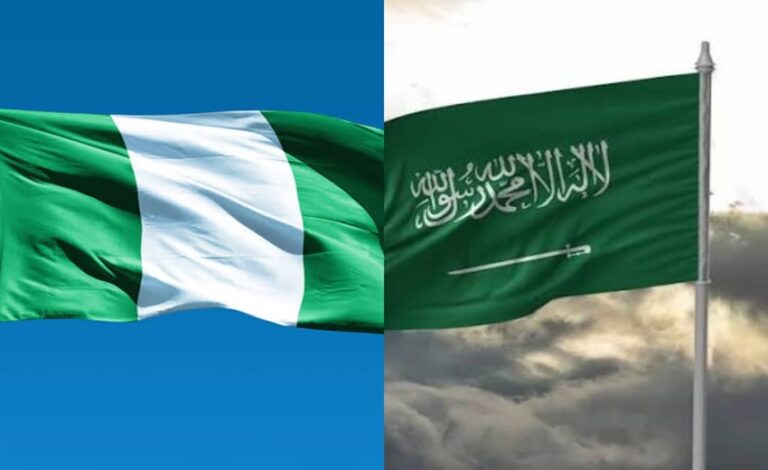
THE Saudi Arabian authorities have released three Nigerian pilgrims arrested on suspicion of drug trafficking following fresh evidence that linked their ordeal to a criminal syndicate operating at Kano Airport.

The pilgrims who were freed after weeks in Saudi detention are Maryam Hussain Abdullahi, Abdullahi Bahijja Aminu, and Abdulhamid Saddiq.

They were taken into custody in Jeddah in August after Saudi security agents found illicit substances tagged to their travel details. Their arrest came shortly after completing the lesser hajj.

For nearly four weeks, they languished in detention, facing the grim prospect of harsh Saudi penalties for drug trafficking, until Nigerian authorities intervened.

The Chairman of the National Drug Law Enforcement Agency (NDLEA), Mohamed Buba Marwa, spearheaded diplomatic engagements with his Saudi counterparts, armed with fresh evidence from NDLEA’s investigations in Nigeria.

His efforts, supported by President Bola Tinubu and a coalition of top government officials, including the Attorney General of the Federation, the Ministers of Foreign Affairs and Aviation, and the National Security Adviser, eventually led to their release this week.

While one of the pilgrims was freed on Sunday, September 14, the remaining two walked out of Saudi custody the following day, ending a month-long nightmare.

Marwa hailed the outcome as a “victory against injustice,” crediting Tinubu’s backing and Saudi cooperation under an existing bilateral drug control agreement. He stressed that the NDLEA would continue to ensure Nigerians are not unfairly punished for crimes they did not commit.

According to the NDLEA spokesperson, Femi Babafemi, in a statement released on Wednesday, September 17, behind the pilgrims’ ordeal was a sophisticated cartel at the Mallam Aminu Kano International Airport (MAKIA), which had perfected a scheme of planting narcotics on unsuspecting travellers.

He said NDLEA operatives, responding to complaints from the victims’ families, launched a probe that exposed the network.

The NDLEA investigation led to the arrest of 55-year-old alleged drug baron Mohammed Ali Abubakar, popularly known as Bello Karama, an airline staff member, and accomplices accused of checking in multiple bags under the pilgrims’ names.

Court charges have since been filed against Abubakar and three others: Celestina Emmanuel Yayock, Abdulbasit Adamu Sagagi, and Jazuli Kabir.

In August, The ICIR reported how NDLEA’s investigation unravelled the Kano-based syndicate behind the botched operation that nearly cost three Nigerians their freedom in Saudi Arabia.

According to NDLEA, the cartel exploited airport loopholes to tag illicit drug-laden luggage to innocent passengers. One of the victims, Abdullahi, checked in only a single nine-kilogramme bag that did not arrive with her in Jeddah. Yet she was arrested when Saudi authorities linked her to additional bags that later turned up with narcotics.

The NDLEA traced the operation to Karama, who allegedly checked in seven bags on Ethiopian Airlines under the pilgrims’ identities while he boarded an Egypt Air flight to Jeddah.

With at least six suspects in custody and four already charged, NDLEA insists the case highlights the vulnerability of Nigerian air travellers to organised airport syndicates.

The agency says new security checks were being introduced at the Kano Airport to prevent a repeat of the scandal.

Gold worth 600,000 euros stolen in Paris Museum heist

0

PARIS’ Natural History Museum has reported a break-in during which thieves stole gold samples valued at €600,000 ($700,000).

In a statement issued late Tuesday, September 16, the museum’s press office disclosed that the break-in had been uncovered earlier that morning, with the intruders reportedly using an angle grinder and blow torch to break into the riverside complex, a favourite destination for both Parisians and tourists.

“The theft concerns several specimens of native gold from the national collections held by the museum. While the stolen specimens are valued at around 600,000 euros based on the price of raw gold, they nevertheless carry an immeasurable heritage value,” the museum said.

A police source revealed that the museum’s alarm and surveillance systems had been crippled by a cyberattack in July, a weakness the thieves appeared to have exploited.

“This incident comes at a critical time for cultural institutions and museums in particular. Several public collections have indeed been targeted by thefts in recent months,” the museum added.

Renowned for its dinosaur skeletons and taxidermy displays, the National Natural History Museum in Paris’ upscale 5th District also features a geology and mineralogy gallery.

While no further details were provided on the other robberies, the case of Adrien Dubouché National Museum in Limoges, central France, which was broken into earlier this month is still fresh.

The thieves made away with two dishes and a vase of Chinese porcelain designated as national treasures, with the losses valued at €6.5 million.

The ICIR reports that in November 2024, armed robbers carried out a daring heist in Paray-le-Monial museum, seizing jewels worth millions from a piece by renowned Parisian goldsmith Joseph Chaumet, classified as a national treasure.

The local mayor, Jean-Marc Nesme, said the thieves pulled up on motorbikes at the Hiéron Museum in Paray-le-Monial, central France, around 4 p.m., with three storming inside while one kept watch outside.

In the same month, four men with axes and baseball bats smashed the display cases in broad daylight at the Cognacq-Jay museum in Paris, making off with several 18th-century works.

Ajaokuta Steel won’t work – Dangote

0

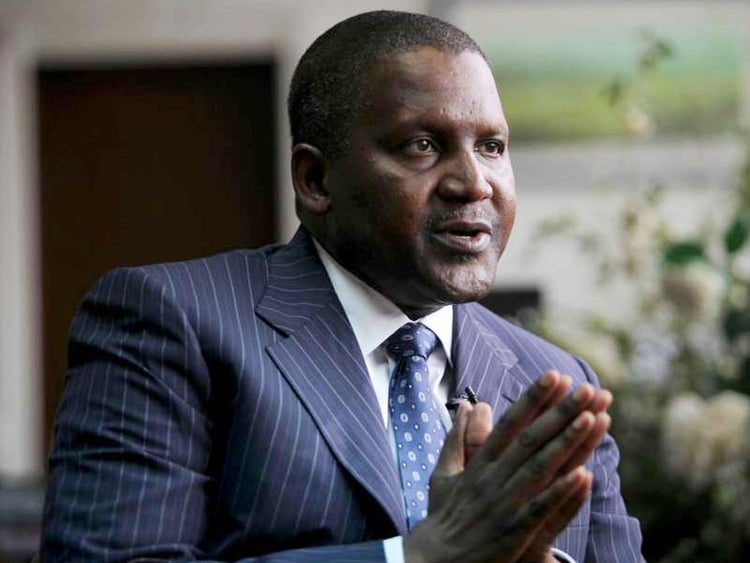
AFRICA richest man, Aliko Dangote, has dismissed hopes that Ajaokuta Steel Company, located in Kogi State, would ever work.

He said the company was obsolete and beyond rescue. 

Speaking in a video shared on TVC’s X handle on Tuesday, September 16, the president of the Dangote Group stressed that while a strong steel industry was essential for national development, Ajaokuta’s outdated technology made it impossible to operate competitively.

He said: “There is no nation that you can build without a steel industry, and honestly within us here, Ajaokuta will not work. We can keep deceiving ourselves and keep being passionate about it, but it’s not possible.

“It’s like you now, if you remember those vehicles we used to produce from Volkswagen (Igala) if you bring Igala now, would you now compare it to the current Kia. No, things have changed.”

The Ajaokuta plant, located in Kogi State, was launched in 1979 but never reached full operation and has remained idle for more than 20 years despite repeated government promises and billions of naira spent on it.

In 2022, Nigeria agreed to pay $496 million to settle a dispute with an Indian company after a failed concession deal. Later that year, the government announced that 11 firms, including three from Russia, had shown interest in taking over the facility. 

In 2023, the Minister of Steel Development, Shuaibu Audu, unveiled a roadmap to revive the plant, and by September 2024, the government signed an agreement with a Russian consortium for its rehabilitation.

In a statement signed by the Head of Press and Public Relations at the Federal Ministry of Steel Development, Salamatu Jibaniya, the ministry said the Russian Federation accepted the proposal after a TPE-led consortium inspected the Ajaokuta steel plant and the Itakpe iron ore mining site in August 2024, a visit that paved the way for the signing of the MoU.

The development followed President Bola Tinubu’s approval in January 2024 of the restart of the light steel section of the plant, after discussions with India’s Jindal Steel Group, which pledged a $5 billion investment in a new steel project in Nigeria during the G20 summit in New Delhi in September 2023.

However, speaking further on the state of the refinery, Dangote likened efforts to restart the plant to “going to a graveyard to bring back the dead” or asking “someone on a dying bed to run 100 metres.”

Things have changed and all of us have to keep changing or you will become archaic. You have to change, now, when you carry something like Ajaokuta, it’s like you going to the graveyard to bring a dead person or you go to the hospital to bring somebody who is on the dying bed to come and run 100 metres. It’s totally impossible,” he said.

Dangote exports petrol to US amid redundancy of Nigerian refineries

0

NIGERIA’s multi-billion-dollar Dangote Petroleum Refinery is reinforcing its global investment outreach, with the successful export of petrol to the United States.

The milestone coincides with Nigeria’s recent emergence as Africa’s leader in trade surplus, recording a positive balance of $8.4 billion in the first six months of 2025.

According to Reuters, energy giant Shell has purchased a cargo of petrol produced by the Lagos-based refinery, marking the second US-bound shipment within weeks.

The first cargo, handled by global trader Vitol and North American distributor Sunoco, arrived earlier this month at the New York Harbour. A third vessel is already en route, underscoring the refinery’s rapid emergence as a new player in international fuel markets.

The developments come as Dangote Group’s President, Aliko Dangote, consolidates its retail foothold across the downstream petroleum market in Nigeria with 4,000 CNG Trucks implementing direct supply to filling stations, banks and select factories.

This market expansion also came at a time when the Nigerian National Petroleum Company Limited (NNPCL) continues to waste resources on obsolete facilities that have failed to work.

The US breakthrough began on August 26, when about 300,000 barrels of petrol departed Nigeria aboard the tanker Gemini Pearl.

The cargo was sold by Mocoh Oil, a Swiss-based trading firm working with Dangote on exports, to Vitol, which later resold it to Sunoco. The shipment was discharged at Sunoco’s Linden facility in New Jersey on September 12.

A few days later, Glencore sold a second Dangote cargo to Shell. The vessel MH Daisen, carrying the consignment, is expected to arrive at New York Harbour by September 19.

Meanwhile, a third tanker, Seaexplorer, is scheduled to deliver another Vitol-purchased cargo to the same region by September 22.

Though cargo destinations often change based on market conditions, analysts say Dangote’s successful penetration into one of the world’s toughest markets proves the refinery’s ability to meet stringent US fuel standards.

The ICIR reports that Dangote Petrol has the qualities of the Euro V standard, which has a maximum sulphur content limit of 10 parts per million (ppm) compared to Euro 2, which has up to 50x more sulphur content(maximum of 500 ppm).

Analysts believe that the petrol standard would have given him an edge in the European and American markets, as Dangote Refinery has already disrupted the global petroleum market.

For a plant that began operations in 2024 after years of delays, the feat is being hailed as a dramatic shift in global fuel flows.

S&P Global, an energy analytics firm, said the refinery’s exports beyond Africa marked a “new milestone” for Nigerian refining capacity.

While Dangote’s refined petrol is sailing across the Atlantic, Nigerian fuel marketers continue to rely heavily on imports.

This paradox has sparked fresh concerns about the country’s fuel supply chain. Nigeria, Africa’s top crude exporter, has for decades depended on imported refined products while selling crude abroad.

Dangote’s Refinery was meant to reverse this trend, but entrenched interests in the fuel import business remain reluctant to shift.

Aliko Dangote insists his vision is to make Nigeria and Africa energy-independent, turning the continent into a net exporter of petroleum products. However, local petroleum traders accuse him of trying to monopolise the downstream sector, arguing that fuel importation must continue to ensure competition.

Beyond global exports, Dangote has been vocal about Nigeria’s moribund state-owned refineries in Port Harcourt, Warri, and Kaduna. He maintains that these facilities, run by the NNPCL, are outdated and structurally incapable of meeting the demands of a market dominated by petrol consumption.

“NNPC’s refineries can never compete because this market is a gasoline market. From every barrel, my refinery gets 54 per cent gasoline, while NNPC can barely achieve 18 per cent. The rest is low-value fuel oil that nobody needs today. The more they operate, the more money they lose,” Dangote said in a recent briefing.

He further warned that unless Nigeria created a business environment where investors could profit, no new private refinery project would emerge. “If we don’t make money, nobody will come into this business. And then you end up with only one supplier because NNPC’s refineries can never, ever compete,” he cautioned.

 

Sowore sues SSS, Meta, X, seeks order to keep posts labelling Tinubu criminal

0

HUMAN rights activist and former presidential candidate, Omoyele Sowore, has filed a suit against the State Security Service (SSS), Meta, and X Corp at the Federal High Court in Abuja, over what he described as unconstitutional censorship of his social media accounts.

The ICIR reported earlier that the Federal Government filed a five-count criminal charge at the Federal High Court in Abuja against Sowore,  accusing him of using social media to defame President Bola Ahmed Tinubu and spread information capable of disturbing public order.

The Nigerian government stated that the posts described the president as a ‘criminal’ and alleged he falsely claimed there was no more corruption in Nigeria.

The government further said the comments were intended to cause a breakdown of law and order and to tarnish the president’s reputation. 

In a counter suit,  Sowore, through his lawyer, Tope Temokun, urged the court to stop the SSS (otherwise known as the Department of State Services, DSS) from ordering global social media platforms to take down his posts, including one where he described President Bola Tinubu as a ‘criminal.’

“These suits were filed to challenge the unconstitutional censorship initiated by the DSS/SSS against Sowore’s accounts maintained with Meta and X.

“The lawsuit states categorically that this is about the survival of free speech in Nigeria. If state agencies can dictate to global platforms who may speak and what may be said, then no Nigerian is safe, their voices will be silenced at the whim of those in power,” the lawyer said.

He maintained that silencing political criticism had no place in a democracy, pointing to Section 39 of the 1999 Constitution, which upholds the right to freedom of expression.

“The Constitution of the Federal Republic of Nigeria, in Section 39, guarantees every citizen the right to freedom of expression, without interference. No security agency, no matter how powerful, can suspend or delete those rights.

“Meta and X must also understand this: when they bow to unlawful censorship demands, they become complicit in the suppression of liberty. They cannot hide behind neutrality while authoritarianism is exported onto their platforms,” he added.

The suit urged the court to declare that the SSS lacks the legal power to censor Nigerians on social media, that Meta and X should not permit their platforms to be used for repression, and that Sowore’s rights as well as those of other Nigerians must be safeguarded from unlawful interference.

“We call on all lovers of freedom, journalists, human rights defenders, and the Nigerian people to stand firm. Today it is Sowore; tomorrow it may be you.

“This struggle is not about personalities. It is about principle. And we shall resist every attempt to turn Nigeria into a digital dictatorship,” he stressed. 

Sowore, SaharaReporters publisher, has frequently clashed with security agencies over his criticisms of successive Nigerian governments.

The ICIR reported last week that the SSS wrote to Sowore, ordered him to delete the social media posts where he labelled Tinubu a ‘criminal’. 

The agency cautioned that refusal to comply would trigger legal action aimed at “protecting national security and public order”.

Sowore, however, defied the SSS directive, insisting that his criticism of the government formed part of his constitutional responsibility to hold leaders accountable.

The agency went further to petitioned Meta Platforms Inc., owners of Facebook and X (formerly Twitter), urging them to delete Sowore’s posts and deactivate his verified accounts.

Fire erupts at UBA branch on Broad Street, Lagos

0

A major fire broke out on Tuesday afternoon at Afriland Tower, Broad Street, Lagos Island, where one of the branches of United Bank for Africa (UBA) is located.

The incident sparked chaos in the area as thick smoke engulfed the high-rise building, forcing some staff to attempt escape through windows.

Videos circulating on social media showed dramatic scenes of employees climbing down with the aid of fire service ladders, while others were seen trying to jump from upper floors in panic.

According to Deputy Controller General of the Lagos State Fire and Rescue Service, Ogabi Olajide, the alarm was raised at 1:38 p.m., with crews from Ebute Elefun and Sari Iganmu stations responding swiftly to the scene. The fire is believed to have started in the basement inverter room before spreading to multiple floors.

In a statement, UBA clarified that while the affected building houses one of its branches, it is not the UBA House, Marina, which serves as the bank’s head office. The bank also assured that the safety and well-being of its staff and customers remained its priority.

“As against reports online and social media, the affected building is not the UBA House, Marina, the Bank’s head office. We have ensured the safety and well-being of our staff and customers in the branch,” the bank said.

As of press time, no casualties have been officially confirmed, though emergency teams continue rescue and containment efforts. Authorities have urged the public to avoid the area while operations are ongoing.

The viral footage has fueled public concern, with many Nigerians calling for urgent reviews of safety standards in commercial buildings across Lagos Island.