RESIDENTS of Abuja spend hours inside the sun to conduct COVID-19 test at the ThisDay Dome, Abuja, The ICIR observed on Monday.
Our reporter visited the centre and met dozens of people, many of who sat on a bare floor, waiting to their samples to be taken.
Apparently resigning to fate, they remained in the sun, scorched, sweating profusely.
Only a few plastic chairs were available for people to sit on at the centre, but the attendants cocooned themselves under the shade of a tarpaulin where they take data and samples of people who come for the test.
It appeared the staff of Pension Transitional Arrangement Directorate (PTAD) got directive to ensure they have the test done, as they formed the majority of people at the centre on Monday.
Abuja residents waitng to be tested for Covid at ThisDay Dome, FCT.
They hailed one another as each employee took his turn for the samples.
“It is such a rigorous process; we deserve the praise for our patience,” one of the staff told her colleagues, after getting her samples taken. Our reporter noted that people at the centre maintained social distancing and put on nose mask.
The attendants were also courteous.
It took each person at least four hours to get his samples taken, according to our findings.
Taking the samples did not take more than five minutes, but the wait for it took hours. Two samples were taken from each person: one from the mouth and the other from each of the nostrils.
Upon arrival at the centre, each person that came for test was given a number and asked to sit. It could take three hours for the person to be called for his samples to be taken. He would be strongly advised not to leave the premises. He would also be given an “EPID” number. The EPID number makes it important for every person that comes for test to ensure his samples are taken.
There were only four attendants at the centre; all young ladies. They blamed the delay on the shortage of staff.
They were quick to tell whoever bothered to complain that they were understaffed and could do nothing to help the situation.
One of them who spoke with our reporter said they used to be six at the centre, but two had left. She declined to give her name.
She said one of her colleagues left after she got wedded and the second person was indisposed.
“One of our staff was down. Tomorrow we hope she will be returning. We were six before, two people left; we are four now.
Asked why the staff that left were not replaced, she said: “Is it my duty to replace them?” When pressed further if they made a recommendation to the authorities over the shortage of manpower, she stated: “They know. They are aware of it. Our own is to come and do our work.”
Speaking on his experience after a long wait for his samples to be taken, one of the people who came for the test at the centre said: “I cannot talk about it because the “experience was too horrible.”
His colleague, who angrily boarded the same car with him volunteered to speak: “I’ve been here since 12 pm. We were asked to sit. After a while, we were given a number, and my number was 58. I waited from 12 pm to about some few minutes to 4 pm before they finally took the samples from me. I don’t know when the result will be out, hopefully in the next couple of days.
“They got our details, email, address, names and date of birth. I pray they do the right thing; that doesn’t give the result of one person to another.”
Like western countries battling with winter and cold-induced second wave of COVID-19, Nigeria has been recording higher confirmed cases of the pandemic in the past few days.
As of Monday evening, the country had 69,255 confirmed cases and 1,180 deaths from the disease.
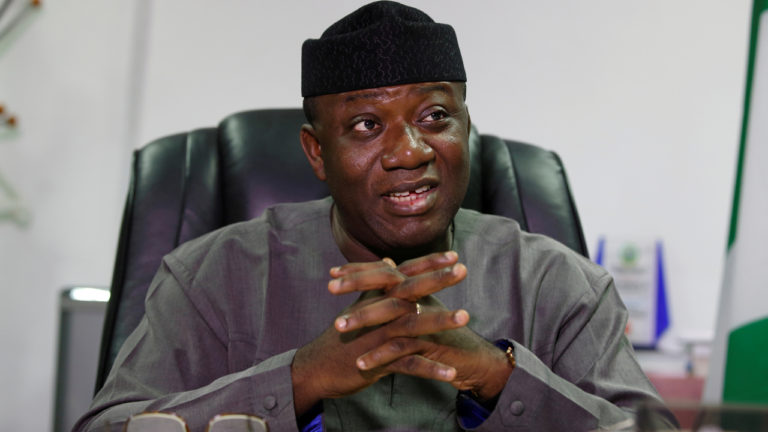
KAYODE Fayemi, the governor of Ekiti state has added voice to that of the critics of the Nigerian Army leadership, saying that the country’s military chiefs have nothing new again they are bringing to the table to address the ravaging security challenges in the country.
The governor, who said that the nation’s security apparatus needs to be reviewed, said the continuous presence of the service chiefs is affecting the morale of those who legitimately feel they should be moving towards the direction of the leadership and management of the country’s military
Fayemi, who is the Chairman of the Nigeria Governor Forum (NGF), said this during his appearance on Channels Television’s Sunday Politics..
“But in addition to that, we also believe that the entire framework of our internal security operation has to be reviewed and some morale-boosting issues have to be brought to the fore as far as the leadership of the military is concerned, there’s no question that governors also feel that service chiefs have done their best. They are the longest-serving service chiefs we have had in the country and frankly, there is nothing new that they are bringing to the table. They’ve done a lot in the course of the past five years and the fact that they are still there is also affecting the morale of those who legitimately feel they should be moving towards the direction of the leadership.”
Fayemi added that “the chief of defense staff is a course 25 officer. The chief of Naval staff is a course 26 officer of NDA. The chief of Army staff is a course 29 officer. The major generals that have just been promoted in the last few days, they are course 39 and 40. I mean the distance is humongous and it doesn’t make for cohesion and a confidence building in the military itself, and we need to address that in addition to addressing weapons.”
Fayemi, who lamented that the military is under-equipped from his recent visitation to Borno state, the epicenter of Boko-Haram, stressed that there is the need to better equip the military to better win the ongoing war.
While stating that the issue can be confronted, the governor noted that the war against insurgency needs to be dealt with in an unconventional manner.
He said that the NGF has noted with concern that the military has been overstretched because of their involvement in internal security across the country.
Fayemi added that there is a need for coordinated intelligence and that the civilian JTFs who sometimes understand the terrain and have more intelligence of the activities of the insurgents in Borno should be integrated into the military.
“So we believe that we can tackle this but that we need to deal with this in an unconventional manner. The insurgents are not fighting an asymmetrical war. The war that we are dealing with in the Northeast is asymmetrical. You don’t even know where the enemies are, they are mostly in the midst of our people so you cannot use the strategy of a conventional war to deal with this.
“You need to improve on intelligence. You need to link intelligence to military operations in the most effective manner. And you need to work with neighbours because it has become an international war of sorts that involves Chad, Cameroon, Niger and clearly even though we have a multinational Joint Task Force.
“I do not believe that we have been working as cohesively as we should and that’s a position that we hold in the governor’s forum as well. The governor of Borno, our colleague has been frontal about this position that a lot more needs to be done. The civilian JTF who has been effective needs to be integrated somewhat because they are better intelligence sometimes on what is going on, because many of these elements are from Borno State there.
“We also believe that the military has become somewhat overwhelmed as far as this insurgency is concerned and that’s understandable. They are involved in internal security in almost 34 states out of the 36 States in our country and that stretches them to its limit they are trying but it’s not enough. We’re still losing people and we need to really devise an immediate short term and long term strategy to deal with this. And these are things that will be raising with the president.”
The recent killings of more than 43 farmers in Borno state have renewed the calls for the president to sack the country service chiefs whom he appointed when he assumed office in 2015.
Rather than heed the calls, the president and his handlers have continued to rebuff those making the calls, describing them as unpatriotic and out of place.
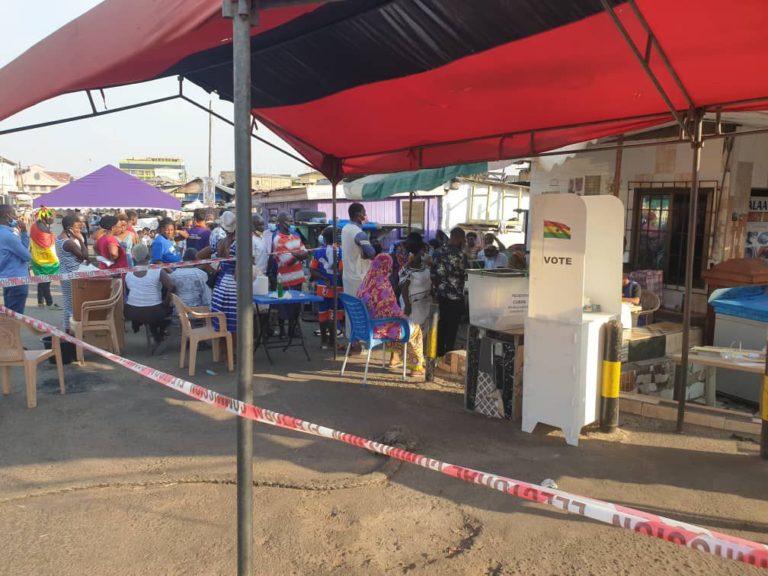
AS the Presidential and Parliamentary election continues in different parts of Ghana, the country’s Electoral Commission (EC) has raised alarm over allegation of tampering with ballot papers.
The incidents, according to the electoral commission, was recorded in Awutu Senya West and Bawku Central constituencies.
But the electoral officers indicted had been identified and reportedly removed from their posts pending the outcome of an investigation.
“Information reaching the commission indicates that there have been isolated cases of presidential ballot papers being tampered with in Awutu Senya West and Bawtu Central Constituencies,” the commission stated.
The electoral body, however, used the medium to remind the electorate that the presidential ballot paper only has 12 candidates.
For a correctly thumb printed ballot to be considered valid and counted, all the presidential candidates must be on the paper, the EC added.
It further urged all its staff and field officers to perform their duties based on laid down guidelines.
The political parties, party agents and the general public were as well urged to remain vigilant to ensure a free, fair, and credible poll.
Major contenders in the presidential election are John Mahama, the National Democratic Congress (NDC) candidate and Nana Akufo-Addo, the incumbent President, who is seeking re-election under the New Patriotic Party (NPP).
AS voting kicked off on Monday in Ghana’s presidential and parliamentary elections, John Mahama, frontline presidential candidate of the National Democratic Congress, NDC has decried the glitches that disenfranchised voters in various polling units.
Speaking to journalists after casting his vote in the Northern Region, Mahama said some voters names were removed from the register and as a result were disenfranchised.
Mahama disclosed that one of his security detail and a lady at his polling station were unable to vote saying the incident vindicates the NDC for kicking against the Electoral Commission’s decision to compile a new voters’ register.
“These are some of the little things we kept complaining about. I mean the EC said it has eliminated 30,000 names, without saying whose names they were.
“So now, we stand vindicated because these are issues we were warning the EC about, that on the day the verification machines might not work because they failed to deploy and test them during the exhibition,” he said.
The race is expected to be a close race between incumbent Nana Akufo-Addo, 76, of the New Patriotic Party NPP, and John Mahama, 62, of the NDC.
After signing a symbolic peace pact last week Friday, a move expected to signal peaceful co-existence between both candidates in spite of the outcome of the elections.
This is the third-time they are sparing against each other in an election as Ghana has had five presidents since 1992 and three hand-overs of power.
However, Mahama is optimistic that the whole electoral process will be carried out smoothly, devoid of violence and intimidation.
“I hope that the atmosphere we saw here will be the same everywhere in the country and if that happens that means voting will go smoothly and I hope that the same applies to the counting and collation,” he said.
Voters are expected to cast their ballots for a new president and members of parliament for 275 constituencies between 7:00 am and 5:00 pm across 38,000 polling stations in the country.
COALITION of Domestic Election Observers (CODEO) on Sunday says 4, 200 observers will be deployed for the Ghana Presidential and Parliamentary election, scheduled to start on Monday, December 7.
Arimaywo Shaibu, CODEO Acting Chairman disclosed this during media and stakeholders briefing held at the Kofi Annan International Peacekeeping Training Center (KAIPTC), Accra, Ghana.
The briefing normally holds on evening to the general election at every election year.
Shaibu who spoke on behalf of the different groups at the briefing said observers had undergone immense training on voters’ education, peace campaign, adherence to Coronavirus Disease (COVID-19) protocol and other electoral processes for proper monitoring of the 33,367 poll stations.
The observers, he said, would be deployed to each of the 275 constituencies from which each lawmaker from their respective constituents would get elected from the entire 16 regions of the country.
Aside from monitoring both polls, the observers are also expected to report voting activities and compile election results which would be used to benchmark final results declared by the Ghana Electoral Commission.
1,502 from the total observers are deployed as Parallel Vote Tabulation (PVT) observers.
“We are aware that elections provide the opportunities for citizens to democratically select their representatives to govern and manage the affairs of the society on their behalf,” Shaibu said.
“It is therefore imperative that this democratic right of exercising one’s franchise is conducted in a manner that the processes and outcomes are generally deemed credible and acceptable.”
The Ghana election is the eight in series of presidential polls held in the country since fourth republic commenced in 1992.
Major candidates contesting in the poll among the 27 political parties include John Mahama, the former president. He is contesting under the National Democratic Party (NDC) while the incumbent President, Nana Akufo-Addo is seeking re-election under the New Patriotic Party (NPP).
CODEO’s mandate is to support the Ghana electoral commission to ensure the country realise a free, fair and credible poll.
However, Shaibu, urged all contesting political leaders and their supporters to ensure peace reigns during the poll.
He urged the ad hoc staffs and electoral officials to remain objective. The security agencies were charged to conduct themselves professionally while the media was charged on proper reportage of the poll.
SENATOR representing Borno South, Ali Ndume, faces possible prosecution for alleged perjury and forgery, arising from the documentation he filed at the Federal High Court, Abuja as surety for Abdulrasheed Maina, former chairman of the Pension Task Team, who is facing trial for corruption.
Ndume first ran into trouble two weeks ago when Justice Okon Abang of the Federal High Court, Abuja ordered his remand in Kuje Correctional Centre for failing to produce Maina for trial. But the senator got a reprieve after spending five days in detention when the judge granted him bail on account of his “good behaviour and conduct,” even though the lawmaker challenged the court’s order to have him remanded in prison at the Court of Appeal in Abuja.
With the turn of events which saw the arrest and extradition of Maina to Nigeria from Niger Republic earlier last week, it would appear that the senator is off the hook.
However, he has bigger problems to deal with as there are allegations that he deceived the court to grant Maina bail by lying and presenting to the court property that did not belong to him as bail guarantee and presenting forged documents to prove ownership of same.
Prosecutors in the Maina case are said to be considering action against the senator for perjury and forgery and misleading the court to grant bail to the embattled former pension task team boss, who has now been remanded in prison until his trial is concluded.
In early June, the senator stood surety for Maina, agreeing to a bail bond of N500 million. As guarantee, he presented a property, a house in Asokoro District in Abuja worth N500 million.
Earlier, on May 5, Ndume had sworn to an affidavit of means in which he stated that “the property used in the fulfilment of the bail term belongs to me personally.”
In the affidavit, the senator also stated “if the defendant (Maina) jumps bail, the surety (Ndume) shall forfeit the bond to the tune of N500,000,000 (Five hundred million naira) to the federal government of Nigeria.”
However, sources close to the court case and the Economic and Financial Crimes commission, EFCC, which is prosecuting Maina, said that Ndume not only lied when he claimed ownership of the property, the house he presented to the court had been forfeited to the federal government and now serves as corporate offices of the Revenue and Fiscal Commission.
Documents obtained by The ICIR show that to sustain the claim of ownership of the property, a series of other lies were told and forged documents presented to the court.
First, the photograph of the property documented as Plot 158 Asokoro District, which is actually No 93, Yakubu Gowon Crescent, Asokoro is that of another property known as Manor Terrace situated at 22 Idris Kutigi Street Asokoro. It is believed that the photograph of Manor Terrace, an impressive property even by the standards of the highbrow Asokoro district, presented to the court was to convince it that the property is worth the N500 million bond.
Also, a photograph of the real house would have shown that it houses a federal agency, which could have raised questions.
Meanwhile, a geolocation of the addresses revealed that the distance between No 93, Yakubu Gowon Crescent, Asokoro and 22 Idris Kutigi Street Asokoro is 6.6km, a 9 minutes’ drive.
Documents presented to the court also claim that the property at No 93, Yakubu Gowon Crescent, Asokoro was originally owned by one Lawal Ahmed who “donated” it to Ndume in 2018. But it was learnt that the property is owned by the federal government, having been forfeited to it by its previous owner. It could not be ascertained why the federal government took over the property but our reporter confirmed that the property has been handed over to the Fiscal Responsibility Commission for its use as office.
First in the list of documents presented to the court believed to have been forged is an irrevocable power of attorney purportedly issued by Lawal to Ndume dated February 14, 2018.
Investigators believe that the power of attorney was hurriedly prepared to serve the specific purpose of presenting it to the court for Maina’s bail. It is curious that the court did not verify the authenticity of the document before accepting it as there are obvious questionable discrepancies in it.
For example, though the power of attorney was purportedly made on February 14, 2018, it did not take on the authority of a legal document until March 20, 2020 when it was signed a Notary Public/Commissioner for Oaths.
Another forged document presented to the court is an application purportedly made by Lawal to the Abuja Geographic information System, AGIS, to register the power of attorney to Ndume, which would formalise the latter’s ownership of the property and document him accordingly on agency’s database. The document, dated March 20, 2020, the same day that the power of attorney was signed by a Notary Public/Commissioner for Oath, was presented to the court as proof that Ndume is listed by the Federal capital Territory Administration, FCTA, as the bonafide owner of the property offered to the court as collateral for the N500 million bail bond. No such document exists at AGIS and Ndume is not listed as owner of the said property, The ICIR confirmed from FCTA authorities.
Purported FCTA’s confirmation of Registration of Power of Attorney.
Allegedly forged also are two letters of confirmation dated March 30, 2020 and May 20, 2020 purportedly signed by G.G. Bawa for the Director of Lands, Federal Capital Territory Administration, confirming to the Federal High Court, Abuja, the authenticity of a certificate of occupancy for the property presented to the court and the registration of the power of attorney with AGIS.
The first letter purports to confirm the authenticity of a certificate of occupancy for Plot 158, Asokoro District (93 Yakubu Gowon Street, Sokoro) issued to Lawal on August 29, 2015. That letter, addressed to the Deputy Registrar, Federal High Court, Abuja and dated March 30, 2020, also purports to confirm that the power of attorney from Lawal to Ndume over the property is registered with AGIS.
The second letter dated May 20, 2020 and also addressed to the Deputy Registrar, Federal High Court, Abuja, claims the said power of attorney is registered with the FCT authorities.
“We wish to confirm the execution of the Power of Attorney between Lawal Ahmed (Donor) and Mohammed Ali Ndume (Donee) in relation to Plot no 158, Cadastral Zone, Asokoro District, Abuja, covered by Certificate of Occupancy no (withheld) dated 29th August 2015. The Power of Attorney is duly registered in favour of Mohammed Ali Ndume,” the letter reads.
However, when The ICIR met Bawa in his office at the AGIS complex in Abuja on Friday afternoon, he denied any knowledge of the documents, confirming that they were forgeries.
Laughing when shown the letters, Bawa in turn showed our reporter a photocopy of the said letters in his possession and pointed out that the dates – March and May – fell within the period of lockdown when civil servants in the FCT, as in other parts of the country, did not go to work. He said no such documents were signed or issued by his office at this time.
The names of three lawyers appear on the power of attorney presented to the court purportedly handing ownership of 93 Yakubu Gowon Crescent, Asokoro, to Senator Ndume. They are Stanley Dienu, Thankgod Enahoro and Tamunoibim Ibitoru. When our reporter called Enahoro, he told the lawyer he would like to reach him on WhatsApp because he wanted to share some documents with him. On November 30, the lawyer read the first two messages sent by the reporter. In the first message sent at 5.39 pm, the reporter introduced himself. The second one send at 5.40pm that reads “I would like to confirm if the Power of Attorney attached is authentic. It is indicated that your chambers handled it.” He read both and subsequently switched off his WhatsApp because he has not even read the third message which contained the said power of attorney sent a few minutes later as at December 4 when this report was filed.
Since Monday, Enahoro has also refused to take the reporter’s calls, cutting him off every time he tried to reach him.
A source close to the court case and the investigations leading to it said that when Ndume was confronted with the forgeries and their implications for him, particularly with his position as a senator, he confessed that did not own the house presented to the court as guarantee for the bail bond.
The senator, it was gathered, said that when he told “Maina’s people” that he did not have a house worth the N500 million requested by the court, they told him not to worry as they would get the house to be used as surety.
The senator reportedly said they brought papers for him and he just signed them, trusting that they were genuine.
When our reporter spoke to Senator Ndume on Sunday night, he explained that he did not own a property worth N500 million and that the one he submitted to the court was donated to him.
“I do not own a property worth N500 million. I do not have that kind of money. I did not tell the court that I own the property but that it was donated to me. And before the court accepted the papers for the house, they should have verified it,” he asserted
The lawmaker insisted that he verified the papers of the property to determine its genuineness, asserting that they were confirmed to be authentic by AGIS.
“I sent a lawyer to verify if it was genuine when they donated the house to me and it was confirmed by AGIS. I accepted when they said they would donate the house. My only condition is that it would not be Maina’s own because that would have been wrong as he was accused of money laundering. So what is all this about?”
“I believe that some people want to smear my name because the bottom line is that the issue of the property has been overtaken by events. Bottomline is that Maina jumped bail but he has been arrested again and is now back in Kuje. So, what is the issue?, the senator queried.
When Ndume was told that AGIS distanced itself from the papers purportedly sent by it to the court verifying his ownership of the property, he said that he could not be blamed for that because the court should have verified if the documents were genuine.
He insisted that he did not know Maina until recently and had no reason to protect him through dubious means.
“I never knew Maina before and it took them eight months for them to convince me to stand as his surety. I have met him only twice in my life. First, when I went to prison to confirm that he was really sick and the doctor told me he was, indeed, terribly ill. The second time was last Thursday after they rearrested him. The thing is that judge insisted on a serving senator and he is from my constituency.”.
A source at the lands department of the FCTA who cannot be named said that presentation of forged land documents to courts for bail purposes is a racket that is common and that provided daily bread for many Nigerians. According to the source, the way it works is that when a court grants an accused person bail that requires a property as guarantee, there are always “touts, lawyers and even court officials who are there whose business it is to ensure that land\property documents are perfected and presented to the court.
The source said that the “racket involves FCTA, AGIS, court officials and even some security men.
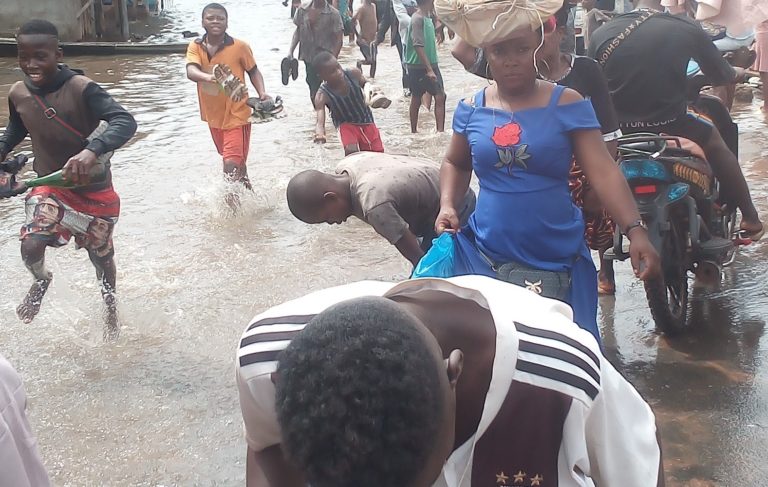
“I have lost all I have worked for this year. Yam and cassava farms were submerged by the flood. I don’t know how to recover from this. The whole of Anambra West Local Government is under water. We really need the Federal and State governments to help us so we can get back on our feet”.
One of the farmers and stakeholders in Mmiata Anam, Chief Mathias Ameke, lamenting the impacts of this year’s flood on him and the entire community.
While many residents are still not able to come to grips with the cause of annual flooding that devastates their livelihood, experts say it is not unconnected with Climate Change, which is increasingly becoming more threatening globally every year. Anambra is one of the states in Nigeria that is considerably impacted by flood disaster, a harsh spinoff of climate change, largely caused by man’s actions.
Flooding took a dangerous dimension in the state in 2012 and has since become a major environmental concern in Anambra State, leaving thousands of residents including farmers with unquantifiable losses, from which some of them are yet to fully recover. Recovery seems impossible because the disaster has become a recurring decimal which leaves farmers with varying degrees of loss anytime it occurs.
Flooding is caused by excessive rainfall and expanding seas due to global warming, which warms up and causes the ice to melt.
The Director, Centre for Water and Climate Change at Nnamdi Azikiwe University Awka, Dr Emma Ezenwaji, further explains how climate change causes excessive rainfall, which in turn leads to flooding.
“The expansion in the sea is because the rainfall actually depends on water it takes from the ground. So, with much water in the sea and massive sun, there is evaporation, which eventually leads to excessive rainfall. Without excessive rainfall, we will not have the flood disaster, which we now face annually in Anambra State”.
Dr Emmanuel Ezenwaji of the Department of Geography and Meteorology, Nnamdi Azikiwe University Awka and Victor Otti of the Department of Civil Engineering, Federal Polytechnic Polytechnic, Oko, in a publication in 2013, argued that excessive rainfall, which is one of the evidences of climate change, has a major contribution to flooding in the Anambra North Senatorial District, where most of the worst hit Local Government Areas and communities are located.
The research work also revealed that the area is getting wetter by 6.86mm per year.
“We are aware that rainfall generates runoff which empties into basins and rivers where they exist, but in an area which is poorly drained, flooding will result. Even when the basins and rivers exist to carry the flood, heavy rainfall often causes their carrying capacities to be exceeded, result in flooding”.
Anambra West LGA totally flooded
“The heavy flooding into the water channels often generate pressure on dams where they are located which sometimes force the authorities to open the water control structure to release some water downstream or risk the pulling down of the dam by water pressure in the reservoir section of the dam. The current flooding of almost everywhere in the country including areas in northern Anambra State is as a result of this problem”.
Also, in the journal of Geography and Regional Planning authored by Chukwudi Nzoiwu, Emma Ezenwaji, Ifeanyi Enete and Nwabueze Igu in July 2017, the academics observed that the annual rainfall varies slightly over 1370 mm to more than 2700 mm for the 40 years period under study.
They submitted that: “The annual rainfall in Awka varies from slightly over 1370 mm to more than 2700 mm for the 40 years period under study. The trend shows that at the start of the studied period (1976 to 2015), rainfall decline was recorded within the first decade (1976 to 1985) until 1987 after which increasing rainfall was noticeable for Awka”.
From Ayamelum to Anambra East and West as well as Ogbaru, Awka North, Onitsha North and South Local Government Areas, farmers tasted the bitter pill but those from Ayamelum, Anambra East, Anambra West and Ogbaru have more heart-rendering stories to tell as a result of this year’s episode of the deluge.
Visits to those local government areas revealed the level of devastation and colossal losses suffered by the local farmers, who most often take loans for their agricultural production. With roads and bridges submerged and farms and livestocks washed away, thousands of farmers can only hope for some form of succour and indemnity first from relevant government institutions as well as corporate bodies, international agencies and public spirited individuals.
The whole of Anambra West Local Government Area was under water, with varying stories of devastation to houses, farmlands and forest reserves. Sunday Iloegbunam, Mmiata-Anam, said several farmers had been plunged into debt by the incident.
“There is no place that is not covered by water in Mmiata-Anam. We are not talking of property again. We just want to save our lives. Our farm products are under water – yam, cassava, potatoes. I do borrow money to farm. But I could not get half of the size I farmed out before the flood came. I lost so much”.
Various communities in Anambra East Local Government Area including Aguleri, Enugwu-Otu, Mkpunando, Ezi-Agulu Otu and Anam were not spared as the bridge linking them with other parts of the local government had been submerged. A displaced Octogenarian, Mr Augustine Emeka, recounted the experience with bitter feelings.
Completely flooded Community Secondary School, Atani
“Our yam, cassava, rice are under water. The water this year pass last year. And he still dey come more and more. Water don cover my house. That is why we are running out. The money we take work rice, yam, cassava, all gone like that. I no hear that government say they provide place for us to run to. We are only helping ourselves”.
In Awka North, communities like Ugbenu, Ugbene and Awba Ofemili were also hit by the disaster. Cosmas Nnamah, a young rice farmer from Ugbenu, joined the farming occupation at the age of twelve and had enjoyed every bit of it but for the perennial flooding, which he first experienced in 2012.
”The flood came again this year with big force. Here at Ugbene, farms are submerged and destroyed. Some farmers have nothing to show for all their labour this year”.
As at 12th of October, 2020, Ayamelum, a Local Government Area, particularly reputed for rice farming, had been largely covered by flood, with several residents sacked from their homes, valuables lost, while the only access road linking the Local Government to the rest of the state was impassable. Those desperate to cross the flooded road had to pay extra as they were ferried by speed boats, tractors, trucks and lorries at a cost.
Mr Hyacinth Okafor, an Aggregator for NIRSAL-CBN Geo-Cooperatives in Anambra State, said the 2020 episode of the flooding has left them with different stories of losses.
“Out of ten hectres of farm we have here, six have been submerged by flood and it is still rising. So, the remaining four are not even safe. The farmer had put a lot into the farm, which was close to harvest. Many of our members are devastated and confused. Hope of livelihood had been destroyed”.
For some of the farmers in Ayamelum, who had earlier lost their rice field to drought, another evidence of climate change, it was a year of double tragedy with the arrival of flood.
Between June and August, we experienced drought and many farmers lost their rice fields. Then, this flood again. As we speak over twenty hectres are inside water most especially in Anaku and some parts of Omor. For farmers, the hope of making profit is dashed, For us the processors, the mills are inactive because we have no paddy to mill. The transporters are also idle because the road is submerged. Mr Abraham Ogwu, a rice processor and marketer lamented.
Perhaps, one of the most devastated local government areas is Ogbaru where the Police Zonal Headquarters, the Naval Outpost, General Hospital, the Chief Magistrate and Customary Courts as well as schools were submerged.
Houses have fallen, many lives lost and none of the sixteen communities in the local government is completely spared.
“As you can see, nowhere is safe from Okpoko to Oguikpele, the end of Ogbaru. This is a terrible situation. It’s almost getting to the level of 2012. But, I thank God, we started the sensitization on time with SEMA and NEMA. We told them to expect high rise of water”.
Some farmers in Ossomala forced to bring their cassava on the road for sale
That was Hon. Nnamdi Esimai, the Co-ordinator, Local Emergency Management Committee for Ogbaru Local Government Area.
Impacts on women and children
“Some of the things that our husbands and men can do in this situation, we cannot do. They can run and escape, but we cannot do that. You see women here in the camp, we have no privacy. You have to go to bathroom or go anywhere at the back of the building to change and have some privacy”.
The above statement by one of the female victims, Mrs Ijeoma Sunday, strengthens the fact that women and children bear greater brunt during emergencies arguably due to their vulnerability and natural weaknesses. Investigations revealed that the 2020 flood disaster had left far reaching adverse impacts on women and children across the affected communities.
The children were once again sacked from school for the second time in the year after resumption from the long break occasioned by COVID-19. This development worried some parents. Besides the disruption of their academic pursuit, most of those reportedly killed by the flood are infants.
One of the women said: “We have lost so much of our property and farmlands. We have lost some persons most of them children. Our prayer is that this does not continue”.
Soil erosion: evidence of climate change
Apart from flooding, another visible impact of climate-induced flooding is soil erosion, a major ecological problem confronting Anambra State, with severely negative effects on food production. Data from the Nigeria Erosion and Watershed Management Agency, NEWMAP indicates that Anambra State as at the last count, had nine hundred and sixty active erosion sites, which have claimed arable land in the area. Some of the communities in the state have become synonymous with erosion such as Nanka, Agulu, Oko among others.
New gullies are said to be forming with every drop of rain and this worries the Co-ordinator of NEWMAP in the state, Mr Mike Ivenso.
“Unfortunately, the resources to tackle the nine hundred and sixty erosion sites are very limited. NEWMAP is working on fourteen sites across the three Senatorial Zones. But, that is only a drop in the bucket. I am thinking that by now, the number sites should be around one thousand gullies and still counting. This is because the geomorphologic nature of the soil in the area, which is friable and loses its weight easily when in contact with water or moisture”.
Food crisis looms
Indisputably, climate change is one of the biggest threats to food security and the situation in Anambra calls for attention. Food security, which was earlier in the year threatened by the novel Corona Virus Disease (COVID-19) lock down, has been worsened by the flood, which has robbed most farmers of the harvest of their toiling round the year and has rendered several hectares of cultivable land useless.
Production capacity of the farmers, which had been badly affected by the twin disasters, promises far reaching multiplier effects for the State, as most of the farmers have lost input to cultivate in the next planting season and may not be able to farm at the rate they have done in the past due to the huge losses they suffered this year. This, for commentators, is an invitation to starvation and hunger.
Some of the children displaced by flood at the holding camp within Ogbaru LG Secretariat, Atani
A Natural Resources Surveying Lecturer in the Department of Forestry and Wildlife, Nnamdi Azikiwe University, Awka, Mr John Ogbodo, lucidly explained the link between climate change and food insecurity.
“Soil erosion washes away the nutrients on the surface of the soil and that leads to very low yield for farmers. Deforestation also leads to soil erosion which has rendered thousands of hectares of arable land unusable around the state.
“There is equally increase in weeds, blights and pests as well as droughts and moisture stress. You would have noticed competition for land becoming more intense across the state with farmers and herders clashes. The culminating impact of all these is food insecurity”. Mr Ogbodo feared.
Government interventions
The Federal Government is in partnership with Anambra State Government and the World Bank, implementing the Nigeria Erosion and Watershed Management Programme, NEWMAP, which is currently intervening in fourteen erosion sites across the three senatorial districts of the state. The state had spent about sixteen billion naira in the partnership with tripartite funding arrangement.
President Muhammadu Buhari recently directed that assistance be given to the state affected by flood this year and an Assessment Team, led by the Zonal Co-ordinator, National Emergency Management Agency, NEMA, in the South East, Mr Fred Anusim, had visited Anambra to give effect to that presidential order.
“We are in Anambra State to assess the impacts of the flooding to see how the Federal Government will assist as it is doing in other states like Kebbi, Niger, and Kwara to Kogi and Jigawa States. Then, Anambra, Delta, Rivers and Bayelsa. After we are done with the assessment, report will be sent back to Abuja so that they can plan for the relief intervention”. Mr Anusim explained.
A Medical Rescue Mission, headed by the Commissioner for Health, Dr Vincent Okpala was deployed to the affected Local Government Areas to save lives of residents and give them all necessary medical assistance.
Four truck load of food items were sent to the four worst hit Anambra East, Anambra West, Ayamelum and Ogbaru Local Government Areas, though under a circumstance many citizens described as questionable and face saving. One of them, who pleaded anonymity, alleged that government could no longer hoard the food items, after attempts by some irate youths, who besieged the warehouse to cart the materials away during the ENDSARS protest.
“My dear, they simply hoarded those items for campaign next year. Now, they want us to believe they are for flood victims. Yet, just last week, we heard them pleading to the Federal Government to assist flood victims with food items. They went to the camps and never carried any food items to the victims”.
Sensitization and information sharing campaign had been mounted for traditional rulers, Presidents-general and other critical interest groups on issues of flooding, erosion, indiscriminate dumping of refuse and blockage of drains, linking them with climate change.
Dr Emmanuel Okafor, the Permanent Secretary in the Ministry of Environment, further revealed that work on about one hundred and fifty erosion sites across the state are at various stages of completion while some had been delivered. The government, he added is encouraging tree planting in various communities to mitigate flooding and had distributed gas cylinders to households to reduce deforestation.
“We are already partnering with the Federal Ministry of Environment to see that old fridges and radio are carted away because they emit some gases that affect the ozone layers. The Government is executing land reclamation in two sites through the state ministries of works and environment.
“Recently, we met with people in Agulu, Nanka and Oko which are very prone to erosion on how to prevent new ones. Efforts are on to stop sand excavation in those communities. We are also encouraging our people to construct catchment pits in their compounds and to stop interlocking which aids run-off”.
Dr Okafor also hinted that the Ministry will soon champion the incorporation of Climate Change subjects into the curricular of all levels of education, to catch the children young with the message that will help to preserve the coming generation. The State Government earlier this year established the Erosion, Watershed and Climate Change Agency, for which three hundred million had been budgeted in the 2021 appropriation bill.
Other preventive measures by the state government include: setting up a task force for proper scoping and execution of development projects, campaign against indiscriminate building and erecting of structures on water ways and launch of one million tree planting initiative to provide natural cover for the soil.
“Trees take in carbon dioxide and give out oxygen which human beings need. So, removing carbon dioxide from the atmosphere causes greenhouse gases, which lead to climate change. The Task Force is to ensure that every development project is properly scoped and executed. For instance, for road projects, drainage system attached must be properly terminated into the nearest body of water”. NEWMAP Co-ordinator said.
Preventing the anticipated food crisis
Several measures had been suggested as ways to mitigate the negative impacts of climate change and save Anambra State from the looming hunger and starvation. These include: the dredging of big water bodies to enable them contain more water, wide publication of the onset and cessation of rainfall to enable farmers adjust to rainfall regime, early planting by farmers to ensure harvest before the arrival of flood, introduction of flood resilient rice species among others.
For an Agric-Value Chain Expert, Mr Abraham Ogwu, the government must be decisive in finding lasting solutions to the perennial flood disaster.
“Government should fund research institutes to be able to look at Climate Smart Agriculture. They can develop crop varieties that can resist either drought or flooding. Where that had been done, let the Government support the institutes to produce such special specie of rice in a good number to go round farmers who have fields in flood prone areas”.
The need for farmers especially those who cultivate acres and hectares of land to be insured by NIRSAL, against disastrous incidents such as flood and erosion has become more imperative than ever. It is the hope of many that National and State Emergency Management Agencies will come up with good programmes on how best to assist victims in the most impactful manner.
Woman Farmer narrating the ordeals of women and children
Experts submitted that the current situation in Anambra State is a time bomb that must not be allowed to explode to prevent devastation of unimaginable magnitude.
“If not checked in the next ten years, the whole state will be one big site of erosion. So, this is one area that is agitating the minds of experts and scholars because I don’t know how far government has gone in that area. I have said it severally that the Ministry of Environment in the state should not concentrate all attention on refuse evacuation. We have a very big problem in our hands” Director, NAU Centre for Water and Climate Change, Dr Emma Ezenwaji warned.
It was gathered that the State Government has been taking steps to ensure that food crisis does not result as anticipated. One of such measures, according to the Head of Department, Extension Services in the State Ministry of Agriculture, Mrs Ifeyinwa Uzoka, is sharing useful and timely information with farmers to build their capacities for optimal productivity.
“Most of the flood prone places do dry season farming. If they start early November, they will be able to harvest and make some profit before the flood sets in. Also, farmers in those areas should plant short-duration crops such as: rice, sweet potatoes, vegetables, amaratus green, pepper, okro, corn, and others which they can harvest two to three times before the flood comes. Planting only long-duration crops like yam and cassava can lead them to poverty food insecurity.
“Government is partnering NIRSAL and other agricultural facilities lending institutions to train our farmers and link them to agricultural credits at single digit interest rate. As we speak, the farmers are positioning themselves to access the facilities that are available at the moment”. Mrs Uzoka explained.
Awareness is yet low
One incontrovertible inference from most of the respondents is the hitherto low level of awareness among residents about climate change and its impacts on the state. Obalum Okagbue, a resident of Aguleri Otu, could not hide his ignorance as he responded to the poser on how much he knew about the cause of flooding.
“I no know wetin dey cause this flood. Na you people go fit tell us now. But, I hear people dey talk say na from kainji dam the flood come”. Okagbue responded
Cosmas Nnamah from Ugbenu is aware of the climate change but is pained that majority of the people, who bear its consequences, still don’t know why their farms are flooded every year.
Surviving against the odds
For Chief Ameke, the Government which is expected to take the lead in educating the populace about Climate Change, is found wanting.
“People have not been educated on why this is taking place. They said Kainji Dam has over-flown its bank and excess water must be released. It’s all about climate change. It is however pathetic that burning of bushes and felling of trees had continued unabated, while the fire is burning every day. No one is educating the people”.
The Permanent Secretary, Ministry of Environment, Dr Okafor, also agreed to the need to raise the bar on whatever is currently being done.
“I agree with you, we need to up our rate of public enlightenment. However, we’ve been talking to the people and putting up regular announcements through the state owned radio station. We could not scale to other stations due to financial constraints”.
Also reacting to the need for more intensive awareness campaign, the NEWMAP Co-ordinator, Mr Ivenso, posited that enlightenment about such an important issue must not be one-off.
“There can never be enough education. People must be constantly reminded of some of these things so that they will remain in their consciousness. We have a radio programme that is funded by the World Bank, on the state own radio station but must continue to highlight the issues. Other MDAs should please join us. Environmental issue is not just for the Ministry of Environment.
Mrs Ifeyinwa Uzoka, assured that the Ministry, through the Extension Services Department, is poised to bridge the gap in information dissemination.
“My Programme Manager, Mr Jude Nwankwo has plan to make sure that we reach the nooks and crannies of Anambra State to educate our people to discontinue with those practices that impact negatively on Climate Change and for farmers to imbibe the practice that can mitigate its effects. We must retrieve our footsteps and do only those things that will mitigate the impacts of climate change.
Facing the future
The Paris Climate Agreement reached in 2015 is the first single agreement uniting nations of the world to forge a common front in mitigating negative impacts of Climate Change. Its key elements include: keeping the global temperatures well below 2.0C (3.6F) above pre-industrial times and endeavour to limit them even more, to 1.5C and limiting the amount of greenhouse gases emitted by human activities to the same levels that trees, soil and oceans can absorb naturally, beginning at some point between 2050 and 2100.
Other elements are: reviewing each country’s contribution to cutting emissions every five years so they scale up to the challenge and encouraging the rich countries to help poorer nations with the provision of “climate finance” to adapt to climate change and switch to renewable energy.
Medical Outreach to flood affected communities
Bearing the above in mind, it is quite in order to conclude with the submission of the Co-ordinator of NEWMAP in the State, Mr Mike Ivenso.
He said: “The environment doesn’t need us but we need the environment. If the environment is bad to us, we will not survive. So, our practices have to be right to be able to survive and thrive on earth. The entire issue of climate change is a matter of whether we’ll exist or we’ll not. It is the biggest issue of our time. If we take it that seriously, then we have to make that commitment and efforts to continue to educate people and spare no effort to mitigate it”.
Nigeria must take the Climate Agreement seriously and implement those four key elements with patriotic commitment to ensure that negative impacts of climate change are kept at bay in the country. Anambra State Government must be more decisive and be seen as doing its utmost in tackling the challenges posed by climate change across the state.
Support for this report was provided by the Premium Times Centre for Investigative Journalism (PTCIJ) and is made possible through funding support from Ford Foundation.
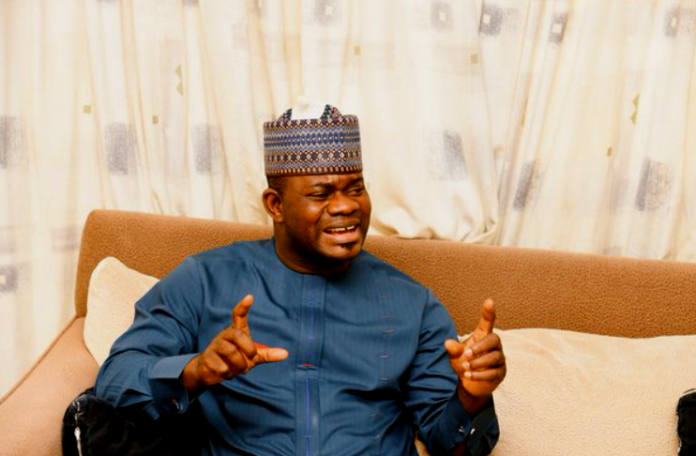
YAHAYA Bello, Governor of Kogi State, on November 19th, 2020, claimed that the All Progressive Congress (APC) -led government is securing Nigeria, stating that the achievement among others of the ruling party would stir them to victory in the 2023 general election.
He made this known when he appeared as a guest on Thursday’s edition of Channels Television’s Politics Today.
FULL TEXT
“APC has come to stay. We are developing the country, the people are happy with our programmes, we are touching lives and we are securing the nation.”
CLAIM
That the APC-led government is securing the country
VERIFICATION
The ICIR conducteda review of the recent weekly update of data of Nigeria security situation by Nigeria Security Tracker (NST) of 4 consecutive weeks, October 20 to November 20, 2020.
Analysing the 4 reports ( week 1, 2, 3, and 4), 620 people were killed in 34 states of the federation, including the Federal Capital Territory (FCT), as a result of various forms of violence across the country.
The reports gathered that a total of 293 were civilians, 64 security operatives, two were political actors and 20-year-old Pelumi Onifade, a journalist, was killed in custody by men of the Nigerian police. Other casualties included 128 Boko Haram members, 124 armed persons, eight robbers, two sectarian actors (2), and a kidnapper.
The highest death tolls were recorded in Borno (163), Katsina (72), Lagos (68), and Kaduna (64). They were followed by Zamfara (34), Edo (26), Cross River (18), Delta (15), Plateau (14), Yobe (12).
NST also noted that the bulk of deaths recorded in Lagos were as a result of the extrajudicial killings of peaceful protesters by men of the Nigerian Army and sponsored thugs during the height of the protest against police brutality in the state.
In October, Nigerian youths across the country staged a renewed national protest against police brutality, especially the notoriety of the special anti-robbery squad, one of the tactical units of the Nigerian police force. The protest signalled the zero confidence Nigerians have in the country’s police force which is known for extortion, extra-judicial killings, and gross violation of human rights.
The peaceful protest, however, turned bloody when Nigerian security forces, including soldiers, opened fire on hundreds of protesters in Lagos.
On kidnapping, the data revealed that in the same months under review, a total of 224 people were kidnapped across 18 states.
The acts took place in Katsina (38), Nasarawa (30), Kaduna (27), Zamfara (23), and Edo (23). Following closely were Ondo with 29 cases, Niger (14), Borno (9), Benue (5), Cross River (5), and Delta (5).
In addition, the northwestern part of the country is currently a hotbed for banditry and kidnapping activities.
Data from Assessment Capacities Project (ACAPS) also revealed that about 21 million people living in these states have been exposed to insecurity from activities of bandits. Banditry violence began as a farmer/herder conflict in 2011 and intensified between 2017 to 2018 to include cattle rustling, kidnapping for ransom, sexual violence and killings.
The violence has affected about 35 out of 92 local government areas in the 4 states. The discovery of gold mines and the activities of illegal miners competing for the control of gold reserves have served to further intensify the existence and activities of armed groups in the northwest. By March 2020, more than 210,000 people have been internally displaced. More than 35,000 refugees have crossed communal borders to Maradi in the Niger Republic by the beginning of March 2020.
Similarly, Nigeria retained its seat as the third country with the worst impact of terrorism for six consecutive times globally, the 2020 Global Terrorism Index (GTI) report stated. Even though terror-related deaths declined to 1,245 in 2019, Boko Haram recorded an increase in their activities targeted at civilians.
Terror-related deaths and incidents attributed to Boko Haram in Nigeria increased by 25 and 30 percent respectively from the prior year. Over the past year, Boko Haram increased attacks on military targets, with deaths rising from 26 in 2018 to 148 in 2019.
An attack on Rann, Borno, on January 28, 2019, by Boko Haram terrorists which left at least 60 people flowing in the pool of their blood while dozens were reported missing in the attack made one of the worst attacks in 2019.
The group was also responsible for Nigeria’s deadliest terrorist attack in 2019 when assailants attacked a funeral in Badu, Borno State. At least 70 people were killed and 10 others were wounded in the attack and ensuing clash.
According to the report, Fulani extremists were responsible for 26 percent of terror-related deaths in Nigeria at 325 fatalities. The majority of terrorist activity related to Fulani extremists occurred in the states of Kaduna, Plateau and Benue. Of the 111 attacks attributed to Fulani extremists, over 59 were armed assaults.
In its latest tragic strike, Boko Haram at least beheaded 110 farmers who were working on their rice fields in Zabarmari, Maiduguri. It was gathered that the farmers were tied up and had their throats slit by the Assailants, making murder the most “insane” attacks on civilians this year.
This came a month after Boko Haram militants slaughtered 22 farmers working on their irrigation fields near Maiduguri, in two separate attacks.
Verdict
Yahaya Bello lied. The above findings show that Yahaya Bello’s claim that the APC-led government is securing the country is false.
The report was produced during the 2020 Dubawa Fellowship attended by the reporter.
TOKUNBO Abiru, candidate of the All Progressives Congress has been declared the winner of the December 5 bye-election of Lagos East Senatorial District by the Independent Electoral Commission (INEC).
Ademola Oremosu, the INEC Returning Officer for the bye-election, declared the result at Somolu collation centre on Sunday.
Oremosu said Abiru polled a total of 89, 204 votes to defeat his closest rival from the People’s Democratic Party (PDP), Babatunde Gbadamosi, who gathered a total of 11,257 votes.
The Bye-election was contested by 12 political parties, 12 candidates out of which three are females while nine are males.
According to Oremosu, Muyiwa Adebanjo of Action Alliance (AA) got a total of 96 votes, Mercy Adeoye of African Action Congress (AAC) scored 248 votes, while John Kome of African Democratic Congress (ADC) polled 376 votes.
He further announced that Adebowale Ogunlaru of Action Democratic Party (ADP) polled 535 votes, Olusola Babatope of Allied Peoples Movement (APM) scored 202 votes, Florence Trautman of Labour Party (LP) got 58 votes, while Adijat Lawal of New Nigeria Peoples Party (NNPP) polled 52 votes.
Oremosu added that Akin Olukunle of National Rescue Movement (NRM) got 65 votes, Saheed Aluko of Social Democratic Party (SDP) scored 35 votes, while Taiwo Temitope of Young Progressive Party (YPP) scored 208 votes.
He noted that out of the total registered voters of 1,261,673 in the district, the total accredited voters were 104, 894, the total vote cast was 104, 405, the total valid votes were 102, 336, while the rejected votes were 2,069.
The election was necessitated by the death of the former senator representing Lagos East, Adebayo Osinowo. Osinowo otherwise known as ‘Pepperito’ died on Monday, June 15, at 65 years-old.







 Documents presented to the court also claim that the property at No 93, Yakubu Gowon Crescent, Asokoro was originally owned by one Lawal Ahmed who “donated” it to Ndume in 2018. But it was learnt that the property is owned by the federal government, having been forfeited to it by its previous owner. It could not be ascertained why the federal government took over the property but our reporter confirmed that the property has been handed over to the Fiscal Responsibility Commission for its use as office.