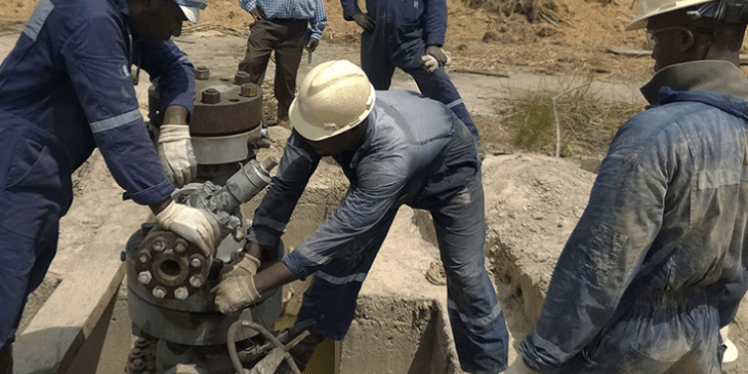
Nigeria, Africa’s biggest oil producer, is set to resume imports of petroleum products from the neighbouring country, Niger Republic.
This was disclosed at the Memorandum of Understanding, MOU, between the two countries on petroleum products transportation and storage which was facilitated by the Ministry of Petroleum Resources.
Present at the signing of the MOU ceremony includes Mele Kyari, MD of the Nigerian National Petroleum Corporation, NNPC, Alio Toune, Director-General of SONIDEP representing Niger’s petroleum agency and Omar Ibrahim, the Secretary-General of the African Petroleum Producers Organisation.
Others are Timipre Sylva and Foumakoye Gado who are Ministers of State for Petroleum for both countries.
Soraz Refinery located in Zinder, Niger which is a joint venture between the China National Petroleum Corporation, CNPC, and the Nigerien government has a capacity of 20,000 barrels per day and started production in 2011.
The refinery was built using a $980 million loan secured by the Nigerien government from China’s Exim bank and refinanced in 2012 at an interest rate of 2 per cent over 20 years.
“Niger’s total domestic requirement is about 5,000bpd, thus leaving a huge surplus of about 15,000 barrels per day, mostly for export,” a section of the document stated.
Nigeria currently boasts of the second-largest crude oil reserves in Africa with an estimated 37 billion barrels while Niger has 150 million barrels of proven oil reserves as of 2016.
However, between 2013 to 2015, Nigeria had spent $396 million to carry out turnaround maintenance for four of its refineries without a tangible result.
Speaking, at the signing of the MOU Sylva said the Niger Republic had excess crude oil constituents which would benefit the Nigerian market.
“This is a major step forward. Niger Republic has some excess products which need to be evacuated and Nigeria has the market for these products. Therefore, this is going to be a win-win relationship for both countries,” Sylva said.
Kyari said the two countries had had long engagements in the last four to five months with a view to restoring the importation of petroleum products (excess production) from Niger into Nigeria.
“With this development, we hope to have a long-lasting and sustainable commercial framework to having a pipeline from the Soraz Refinery in Zinder (Niger) into the most proximate Nigerian city so that we can develop a depot,”he said.
LAWYERS on Friday reacted to the incident that led to the death of Ifeanyi Elechi, a newspaper vendor shot by undisclosed security operative attached to Femi Gbajabiamila, Speaker of the House of Representative.
The lawyers argued both the Speaker and the security official should be held responsible for taking life of the deceased, despite being unarmed. The Speaker earlier claimed the security operative shot in the air to disperse the people obstructing his convoy and not at the vendor.
Tope Akinyode, one of the legal practitioners, reacting to the death said the victim was killed in an extra judicial manner, even though the deceased was not a hoodlum.
As a result, he called for the probe of the incident and immediate arrest of the Speaker, stressing that Gbajabiamila is not under immunity.
“The police must immediately arrest Mr Femi Gbajabiamila, take him into custody for interrogation and prosecute him within 48 hours. Mr Speaker is not protected by any immunity under the Nigerian laws. The killers of a street vendor in Abuja yesterday must be brought to book,” he stated.
Solomon Okedara, Human Rights Lawyer
Solomon Okedara, Human Right Lawyer also demanded for a thorough probe of the incident.
He argued the police is mandated to protect the citizens and not otherwise. The deceased, he explained has been denied of his fundamental human right to life.
In her reaction, Wumi Oluseye, a female lawyer disclosed that the case could be handled as a criminal liability or civil liability.
According to her, if the case is to be approached as a criminal matter, the person who shot at the late Elechi would be held liable. On the contrary, as a civil case, both the security operative and the principal would have to face the consequence of the action.
The principal in this context, she said is not necessarily the lawmaker but the security authority that deployed the operative.
“They can be charged under guilty of care as well. It is just like being responsible for the safety of other road users as a driver. So, the person who is being protected and the officer could be charged to court as a civil liability.”
Meanwhile, the case of arbitrarily killing by security operative is not new.
In 2019, Bisi Fayemi, Wife of the Ekiti State Governor was allegedly accused of ordering the shooting of students during a protest at the Federal University Oye-Ekiti (FUOYE). Though, she denied the incident Nigerians called for her prosecution.
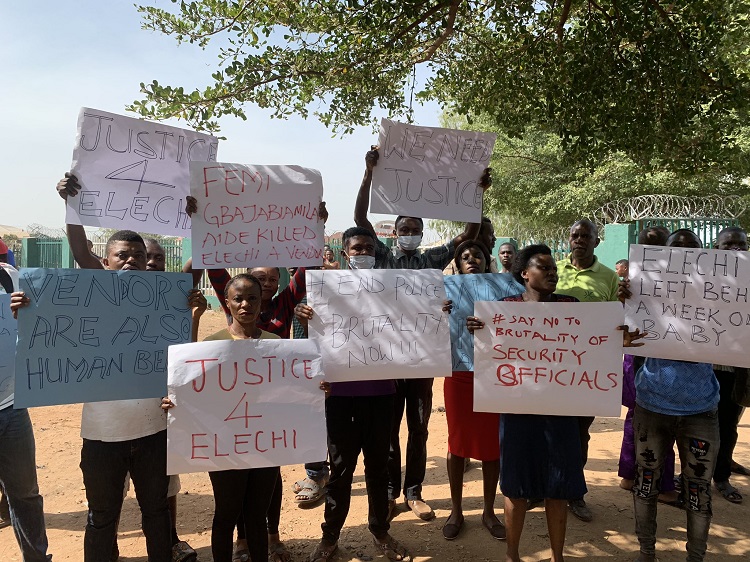
We want justice – newspaper vendors protest
The killing of Elechi the newspaper vendor has eventually led to a protest by relatives and members of the Newspaper Vendors Association.
In placards with different inscriptions, the demonstrators demanded for justice. Some of the writings are: “Femi Gbajabiamila aide killed Elechi a vendor,” “End Police Brutality Now,” “Vendors are also humans”, “Vendors lives matters,” among others.
While Okedara called for a petition to Mohammed Adamu, the Inspector General of Police (IGP), he emphasised probing the incident would unravel if the officer shot at will to protect the lawmaker or he was under an instruction.
Citing the Administration of the Criminal Justice Act (ACJA) 2015, the Okedara explained that in a situation such as the incident, it is only the culprit (officer) that would be held responsible. He, however, added that the lawmaker could be brought into the case if the police officer had acted under instruction of an authority.
“As he was denied right to life, there is need for thorough investigation into the matter. And anyone indicted in the case must face the consequence,” he stated.
He also called for full compensation for the deceased as he has relatives and other dependents who look up to him to meet their needs.
“Let there be a petition to the IGP asking for a thorough investigation of the matter. And while the matter is being investigated and prosecution of those being investigated, another case should be filed on the basis of breaching his fundamental human right.
“We are asking substantial compensation for the family. From the narrative, somebody somewhere depends on him. And the moment his life was taken away, the people are rendered helpless.”
THE Ondo State artisans have accused Kosemani Kolawole, Chairman of the Ondo State Micro-Credit Agency of diverting the COVID-19 Survival Fund to her church members.
They made this disclosure during a protest in Akure, the state capital on Friday, The Punch has reported.
They alleged that Kosemani, who is also the coordinator of the survival fund in the state marginalized them by replacing their names with her church members. They alleged that it was only a few of them that got the money.
Speaking, one of the protesters, Mr. Onile Adams, said they were worried about how the funds were released to some artisans, while others did not get anything, hence the protest.
“We have over 97 associations and we expect each association to get up to 60 percent of what was sent to them. We did all we were asked to do. We had several meetings and submitted many forms. There was no reason to do online registration,” he said,
“What we now heard was that enumeration was done inside the church and other people that are not artisans were enumerated. About 4,500 artisans were supposed to get the alert but we didn’t receive an alert.”
But Kolawale has denied the allegation. She said the fund was paid directly to beneficiaries.
“I didn’t divert anything to my church members. We are not paying money to artisans. It is the Federal Government that is paying. Monies are being paid directly to those enumerated,” she said.
The COVID-19 Survival Fund is a N75 billion monetary intervention of the federal government to mitigate the economic consequences of the COVID-19 outbreak on Small and Medium Enterprises (MSME) in the country.
Registration for the funds which is the core of the N2.3 trillion stimulus package of the Nigerian Economic Sustainability Plan began in September.
DAPO OLORUNYOMI, Premium Times publisher and three other journalists have been honoured by the Committee to Protect Journalists with the 2020 International Press Freedom Awards for their courageous journalism over the years.
According to the organisers, all four honourees have been arrested or faced criminal prosecution from state authorities for their reporting.
The award which was held virtually due to COVID-19 restrictions on Friday, and was chaired by Patrick Gaspard, the president of Open Society Foundations, was hosted by Lester Holt, NBC’s veteran broadcast journalist.
Olorunyomi, who is Premium Times’ co-founder and CEO, was awarded for his decades-long journalism career which has been geared towards press freedom in Nigeria, amidst repeated government harassment and arrests.
He was arrested twice during the brutal Abacha junta in 1995 before going into exile at the time. More recently, he was again arrested alongside a colleague in 2017 when police raided the Premium Times headquarters on the allegations of defamation.
In his acceptance speech, Olorunyomi said the recognition reminds him of the important work that remains undone in the development of media and the struggle to deepen democracy.
Other awardees include Bangladeshi Shahidul Alam, Iranian Mohammad Mosaed, and Russian Svetlana Prokopyeva.
Alam, a photojournalist and the founder of the Bangladeshi multimedia training organization, the Pathshala Media Institute and the Drik photo library, has a career spanning decades.
For 102 days, between August and November 2018, Mr. Alam was kept in custody and tortured by Bangladeshi officials after he posted a video to social media about student protests in the capital Dhaka.
Also, Mr. Mosaed, a freelance journalist who investigates corruption, labour issues, economic sanctions, and popular protests was forced to resign from a reformist newspaper, banned from practicing journalism, and sentenced to four years imprison for his critical reporting.
Not done, he began to publish his stories on social media platforms, but he was arrested in late 2019 in relation to a tweet and would be released in early 2020. By February, he was re-arrested for criticizing the Iranian government’s handling of COVID-19, CPJ wrote in a statement.
Meanwhile, Ms Prokopyeva, a regional correspondent for Radio Free Europe/Radio Liberty, known as Radio Svoboda, was awarded for her experience in early 2019, when Russian authorities raided her home, seized her equipment and personal belongings, and detained her.
CPJ said she was charged with “justifying terrorism” and her bank accounts were frozen in relation to comments she made on liberal radio station Ekho Moskvy in 2018 when she discussed a suicide bombing attack. This month, she was convicted and ordered to pay a fine of 500,000 rubles (US$6,980).
“Like brave and committed journalists everywhere, CPJ’s honorees set out to report the news without fear or favor for the benefit of their communities, their country, and the world,” CPJ’s executive director, Joel Simon, earlier said.
“They understood that they would confront powerful forces, enemies of the truth, who would try to stop them from doing their work. What they did not foresee was COVID-19.
“The global pandemic has not only made their jobs more difficult and dangerous, it has fueled a ferocious press freedom crackdown as autocratic leaders around the world suppress unwelcome news under the guise of protecting public health,” Mr. Simon added.
Meanwhile, Press right advocate group, CPJ, also honoured Amal Clooney, a lawyer, with the Gwen Ifill Press Freedom Award.
Clooney was honoured for her pro bono legal representation of embattled reporters around the world, including Wa Lone and Kyaw Soe Oo of Reuters, who were jailed in Myanmar for 17 months.
According to CPJ, Gwen Ifill Press Freedom Award is given annually by CPJ’s board of directors to recognize extraordinary and sustained commitment to press freedom.
FEMI Gbajabiamila, Speaker of the National Assembly has finally taken action against Abdullahi Hassan, a security operative accused of shooting Ifeanyi Okereke, a newspaper vendor on Thursday.
The Speaker in a letter he personally signed, Friday disclosed that Hassan has also been suspended as member of his security convoy.
This is coming after Nigerians criticised the lawmaker and Hassan’s action for the shooting of the unarmed newspaper vendor leading to the death of Okereke.
He disclosed that the accused operative has been handed over to the Department of State Security (DSS) for proper investigation and prosecution.
“Mr. Okereke was a citizen going about his business, trying to make a living for himself and his family. There is no reason for his life to have ended the way it did,” Gbajabiamila disclosed in the letter.
“This morning, I have handed over the security operative, Abdullahi M. Hassan, to the DSS for investigation and appropriate administrative and judicial action. In the interim, he has been suspended from the convoy.”
He expressed hope that the family of the victim would get justice even as he disclosed plans to meet with the relatives.
The lawmaker also pledged to support the wife and immediate family of the deceased.
“I commiserate with the family of Mr. Ifeanyi Okereke and ask all Nigerians to join me at this time to pray for the peaceful repose of his soul,” the letter read in part.
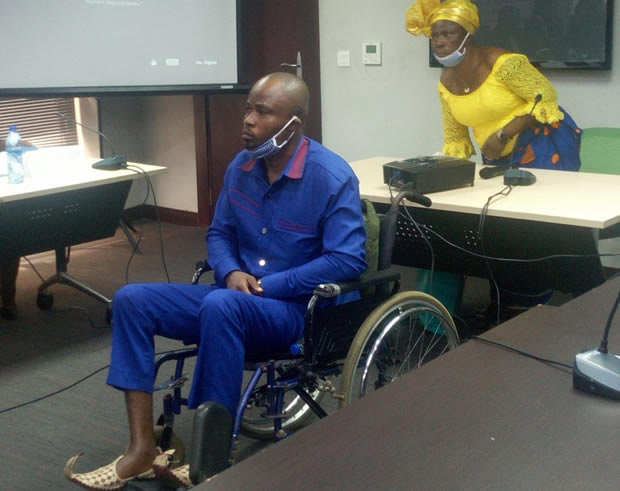
NDUKWE Ekwekwe, one of the petitioners at the ongoing Lagos panel of inquiry has presented before the panel the picture of one of the SARS officers that broke his spine.
Ekwekwe during cross-examination by the legal representative of the Nigerian Police, Emmanuel Eze, presented the phone number with a picture of a fair-complexioned and bearded man he identified as Hamza Haruna, stressing that he was the Investigating Police Officer that took him to the hospital after his spine was broken.
Being cross-examined by the legal representative of the Nigerian Police, Emmanuel Eze, Ndukwe told the Panel that he got the picture of Hamzah through his WhatsApp status.
“When they came to my shop at the Alaba International Market, they wore a T-shirt written at the back FSARS. Among them, I know and identify the IPO. His name is Hamzah and I have his phone contact. I was able to get his picture through the number he gave to my mother when I was at LUTH. His number is 07060712007. He is one of the officers. He was the person that arrested me and took me to the Ikeja police command for torturing,” Ekwekwe narrated.
Ekwekwe said Hamzah was the one that confined him to the wheelchair and made his condition worse.
“He was the devil that confined me to the wheelchair. I know and recognize him because I am not blind. When they came for my arrest, I wasn’t shown any ID card but when the people that were present requested to see their ID cards, they shot in the air and released teargas.”
He said it was during his two days in detention that the SARs officers broke his spine and tooth, adding that he has spent four years on a wheelchair since then.
“As at this moment, I didn’t know what I have done wrong. They didn’t tell me. I was only told it was an order from the Inspector General of Police. I was arrested by two police officers but others joined hands to torture me at Ikeja police command. I spent two days in detention. I was arrested around 2 pm and on the following day around 4 pm, they have broken my spine and teeth. And since then I have been on the wheelchair for four years.”
On his part, Eze prayed the panel for an adjournment saying that he need to conduct thorough investigation.
“Because of the involvement of SARS and other tactical teams, We are applying for an adjournment. He has given a name and the number he provided didn’t go through. In the overall interest of justice, I pray for an adjournment to enable us conduct thorough investigation into the matter.”
Meanwhile, Justice Doris Okuwobi said she is not happy with the pace at which the panel is moving, adding that over 100 petitions are still on the ground to be heard.
“This petition is one of over 100 petitions to be heard.
“I am constraint to consider this adjournment to December 1, 2020. We can’t continue at these baby steps. We have all hands on deck for cases to continue at a fast rate. We have just six months to conclude with all the petitions.”
Eight American citizens of Nigerian descent have been drafted into the professional National Basketball Association of the United States on Wednesday.
This was made known by the NBA on its Twitter handle on Wednesday.
The annual draft sees NBA teams choose from the best young talents across the United States.
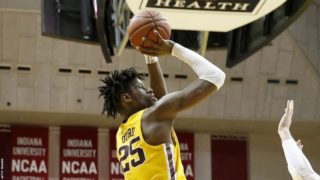
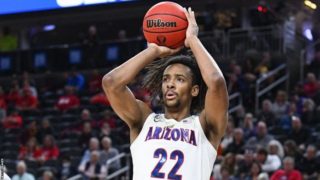
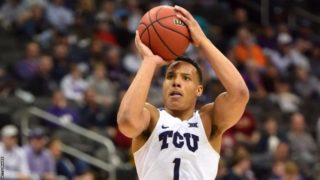
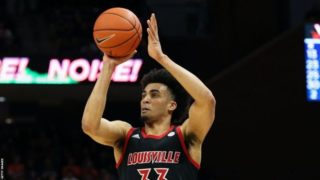
The Nigerians are Precious Achiuwa, Udoka Azubuike, Isaac Okoro, Onyeka Okongwu, Daniel Oturu, Zeke Nnaji, Desmond Bane and Jordan Nwora.
Precious Achiuwa
Precious Achiuwa
He was picked by the Miami Heat. The 21-year-old player was born in Nigeria and grew up in Port Harcourt.
According to the BBC, he said he had dreamt that one day he would end up playing for a great organization.
“My hope was to end up in a great organisation, and thank God my prayers got answered and I’m part of a great organisation,” Achiuwa said.
“I watched the NBA Finals, and thankful that they’re welcoming me to Miami. I think I can add a lot to the table, like add a lot of aggression and grittiness.”
Udoka Azubuike
Udoka Azubuike
Like Precious, he was born in Lagos before moving to the US. The 21-year-old centre will be playing for the Utah Jazz.
He said he was “so excited to play alongside Rudy (Gobert)”
“A defensive specialist, that’s mostly what I did at Kansas. I had a similar role to affect the game defensively. So I’m excited to learn from him.”
Isaac Okoro
Isaac Okoro
Isaac was born in Atlanta, Georgia to Nigerian parents. The 19-year-old small forward was part of the USA’s winning team at the 2018 Under-17 Basketball World Cup in Argentina. He was chosen by Cleveland Cavaliers.
“It feels great to be the first Nigerian in this draft to be drafted,” he said after being picked.
“It’s also just a blessing. My mom always tells me to keep that Nigerian pride. Even though I wasn’t born in Nigeria, I still got Nigerian blood. So it’s just having that on my shoulders.”
Onyeka Okongwu
Onyeka Okongwu
He was born in California to Nigerian parents.
The 19-year-old shooting guard, who has been selected by the Atlanta Hawks, was a high school teammate of third pick LaMelo Ball at Chino Hills in California.
“I want to win a championship. That should be everyone’s goal, to win a championship that everyone wants to win,” Okongwu insisted.
“Myself, I just want to be able to get better, be able to be the best that I can be, continue to work hard, have a great work ethic.”
Daniel Oturu
Daniel Oturu
He was born to Nigerian parents who are pentecostal ministers in Minnesota, with his father Francis a former table tennis player for Nigeria.
The 21-year-old, set to end up at the LA Clippers after he was originally picked by the Minnesota Timberwolves, who immediately traded him for the New York Knicks before being moved on again.
Zeke Nnaji
Zeke Nnaji
The 19-year-old Zeke was born to a Nigerian father and American mother. He played college basketball for the Arizona Wildcats and was picked by the Denver Nuggets.
“I’ve been working a lot during these quarantine times, and I feel like I’ve made a lot of improvements,” Nnaji explained.
“I’ve added 20 pounds of muscle. I’ve really improved my jump shot and shooting the three-pointer well.
“I feel great. My body feels explosive. I feel quick. I’m just excited to do whatever I can to help our team win.”
Desmond Bane
Desmond Bane
The 22-year-old, who will be playing for Boston Celtics, was raised in Indiana with a Nigerian father and American mother.
“You know, I feel like I bring a mature approach. I bring a mature, consistent approach, both on and off the floor, and I think that’ll be beneficial early on,” he said about the prospect of playing in the NBA.
Jordan Nwora
Jordan Nwora
Jordan, who was born to a Nigerian father Alexander and American mother Amy, was part of the Nigerian team that played at the 2019 Men’s World Cup.
The 22-year-old is a member of the US’ senior men’s basketball team, otherwise known as D’Tigers.
His father was Nigeria’s head coach at the World Cup (now the country’s assistant coach) and the duo became the first Nigerian son and father to be part of a Nigerian national team side at the same time.
Jordan is also Nigeria’s highest scorer in a single match after registering 36 points in a 2019 World Cup qualifier in Lagos.
“To be honest, I didn’t think I’d be in the position I’m in today. I’ve come a long way since high school. I didn’t think I’d be able to play at a level like Louisville,” he said before the draft.
TOBORE Ovuorie, an investigative journalist has insisted that EbonylifeTV Limited adapted her investigative report for the production of a movie, Òlòtūré.
Tobore said this during a telephone interview with The ICIR on Wednesday in reaction to the response to the legal representative of Ebonylife on the alleged adaptation of her investigative report titled “Investigation: Inside Nigeria’s Ruthless Human Trafficking Mafia”.
“I am not withdrawing my statement because I did not tell lies, in a case of defamation it means the person has made a false statement that has affected another person, so everything I have said so far is nothing but the truth and fact, so there is nothing to withdraw,” said Tobore.
She said her agitation and demands are premised on the ‘fact’ that from the beginning and the end of the movie, EbonylifeTV wrote that the movie is fiction and at the open and end of the movie, five other people were credited for writing the story.
She added that Ebonylife should have contacted her before filming the movie because it is about her life experience and she was still in therapy when the movie was released without due credit to her.
Tobore stated that Ebonylife TV should have apologised instead of embarking on a ‘damage control’.
“They should have quietly apologised to me when my lawyers contacted them and all these won’t have been flying around. It’s a case of beating me and still want to dictate how I should cry. It’s horrendously wrong.
“A film on exploitation is birthed by exploitation itself. Is that not a huge irony? What’s the difference between the traffickers and what they have done?” she said.
EbonylifeTV, through its legal representative, refuted Tobore’s claim and threatened to seek legal recourse if she fails to retract her words and publications that her story was adapted in the production of Òlòtūré.
“The allegation in your letter, that the Project is “a complete plagiarism and adaptation of [your Client’s] work”, is unfounded and our Client hereby refutes it in its entirety,” the letter read.
Ebonylife claimed that it only came across the journalist’s publication while ‘researching’ on the movie, adding that she had access to a private screening of the movie.
“To this end, we ask that you prevail on your Client to desist from further publications of these untrue claims and publish retractions of the disparaging publications on the various platforms where the disparaging remarks were made, failing which our Client will be left with no choice, but to resort to its considered legal actions, without further recourse to you,” Ebonylife’s response further read in part.
Disclaiming Ebonylife’s claim, Tobore explained to The ICIR that, on May 31st, 2019 she received a letter dated May 30th, 2019 titled “Appreciation For Journalistic Endeavours,” from Ebonylife signed by Abudu.
In the said letter, she confirmed that Ebonylife disclosed it came across her story while conducting research for the movie, Òlòtūré and the movie was inspired by the published story, alongside other articles and projects.
She said although she was showed some part of the movie before it was released, she didn’t do anything because she thought the proper credit was not given because it was still in post-production.
“The letter was not to seek my permission to use my story but only to appreciate my effort and deposit some percent of the profit made in Nigeria to my non-profit organisation,” Tobore stated.
Tobore in a letter to EbonylifeTV through her legal representative had demanded the compensation for copyright infringement in the sum of $5,000,000.00 (Five Million US Dollars), the immediate inclusion of proper open credit and end credit in the Movie, acknowledging the adaptation of her work in line with industry standard and practice.
Her counsel demanded, “a restriction on any further exploitation of our Client’s published life story by your good self, your company and its related companies or affiliates, in any form, including our Client’s post-investigation struggles and experiences, such as her nervous breakdown episodes, which she personally shared with you ABudu on set, on or about 6 June 2019 during the recording of the special edition of a program titled: ‘Moments With Mo’ at the Ilupeju recording studio of EbonylifeTV.”
The journalist added that the open and end credits of the Movie should be re-edited to read as follow, Open Credit “This Film Is Largely Based On Events Which Happened To A Nigerian Investigative Journalist In A 2014 Published Investigative Story” while the End Credit should read “This Film Is An Adaptation Of West Africa Undercover Inside The Human Trafficking Mafia, An Investigative Story By Tobore Ovuorie Published By Zam Magazine, Netherlands, On 22 January 2014 And Subsequently By Premium Times, Nigeria”.
When Abudu was contacted by The ICIR, she replied via a text message with a link to her Instagram post of a Premium Times report titled “Movie inspired by PREMIUM TIMES investigation launches on Netflix”.
In the post, Abudu thanked the Premium Times for giving EbonyLifeTV ‘the copyright’ to the story.
“Thank you so much Premium Times for telling such a range of compelling stories. We thank you for your partnership and we thank you for giving us the copyright to The Story Titled: Inside Nigeria’s Ruthless Human Trafficking Mafia” We look forward to telling more compelling stories published and owned by Premium Times.
In another text message, Abudu said she has nothing more to say apart from the post.
Meanwhile, section 10 subsection 3 of the Copyright Act gives ownership of journalism work to the publisher, in this case, Premium Times.
This report is updated to include the provision of the Nigerian copyright law.
MANY indigent residents of Benue State are dying at the hands of unqualified medical personnel due to shortage of qualified medical doctors in most rural communities in the state. Auxiliary nurses and laboratory scientists across the state posing as medical doctors often send hapless patients to their early graves. Ameh EJEKWONYILO reports.
AGBO John, a university undergraduate was lucky to have cheated death, but his younger sister, Stella, who was a high school student, died at the hands of a laboratory scientist who posed as a medical doctor.
Stella John was a senior secondary school student at the Gateway Excel College at Ogeneago in Ogbadibo Local Government Area of Benue State.
“Stella was a highly intelligent student, who looked out for other people,” Mary Ochoche described her teenage niece whose life came to a tragic end in February 2018.
Narrating late Stella’s ordeal, Ochoche said the deceased’s dream of becoming a medical doctor in order to cater for the health needs of her family and community was cut short by Friday Onuh, a laboratory scientist at the Federal Medical Centre, Efekwo, Otukpa.
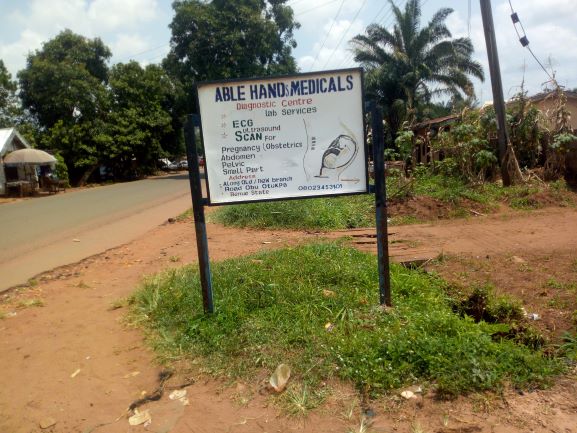
“In the first week of February 2018, I took Stella, my niece, to Able Hands Diagnostic Laboratory and Maternity Clinic here at Old Otupka Branch, Ogbadibo LGA of Benue State. She was operated upon by Mr. Friday Onuh, the ‘doctor’ in charge of the hospital. The surgery that was performed on Stella was to correct an inflammation which the doctor said was appendicitis.
Late Stella
“But a few weeks after the surgery, Stella’s health kept deteriorating as her eyes turned greenish and she became pale, because she neither ate nor drank water.
“When we asked ‘Dr. Onuh’ why Stella’s health was getting worse by the day, he responded that, ‘I’m on top of the situation.’ So, I discussed with other family members and we forcibly took Stella away from Dr. Onuh’s hospital to the Benue State University Teaching Hospital (BSUTH), where they demanded to see Dr. Friday Onuh who carried out the surgery on Stella.
“Curiously, Dr. Onuh refused to honour the invitation by the BSUTH authorities.
“Thereafter, we were referred to the Federal Medical Centre in Makurdi, where they equally requested for Dr. Onuh’s presence, but, again, he declined to turn up.
“It was at this point we knew that something was fishy about Dr. Onuh’s competence as a medical doctor.”
At the FMC, it was discovered that Stella was in septic shock because she suffered sepsis (an infection) during the surgery; her intestine was badly cut. It was also discovered during the referral that Stella’s kidneys were infected.
While at the hospital, four consultants battled to save her life as they performed many surgeries to correct the damage that was done by Dr. Onuh. They put her on the oxygen but to no avail.
Relating Stella’s last moments, her grieving aunt said, “Stella said she didn’t want to die, but as she was writhing on the bed in agony until she drew her last breath.
“Up till this moment, I still cry each time I see her former colleagues and students of Gateway Excel College in their uniforms. They remind me painfully of Stella’s dreams and aspirations as an obedient and intelligent child,” Ochoche said as tears rolled down her cheeks.
“Stella’s parents are still heartbroken even after two years since the horrible death of their daughter. That is why they have refused to talk to you (the journalist).
“Eventually, we discovered to our greatest surprise that ‘Doctor’ Onuh is not a medical doctor but a laboratory scientist. In the course of our investigation, we found out, too, that he acquired his hospital’s license in a medical doctor’s name. And that it was Mr. Onuh and a trained doctor that treated Stella’s older brother (Agbo) when he was ill in 2017. But this time, Mr. Onuh posed as a medical doctor and performed the surgery on Stella alone, thereby leading to her tragic death,” Ochoche narrated.
When our correspondent visited Gateway Excel College, where the deceased 18-year-old girl was a student, one of her tutors, Anthony Samuel Itodo, described Stella as one of the shining stars that the school ever had.
“Stella (John) was one of Gateway Excel College’s shining stars who carried her family and community’s dreams of a better life on her shoulders. She was our Games Prefect, where she demonstrated excellent leadership qualities. She was full of life and participated in several extra-curricular activities. Stella wanted to be a medical doctor so that she could contribute her quota to addressing the teething healthcare problems in this area and surrounding communities. Sadly, that is never to be, as her life was cut short by the same problem of an inadequate healthcare system that she had hoped to tackle,” Itodo, who emerged as one of the best 50 teachers in the 2018 Global Teachers Prize Awards, said.
Late Stella
Stella’s heart-rending story is similar to that of a 12-year-old boy, Gabriel Oche, of Ijege-Amejo in Okpokwu LGA of Benue State, who died in January 2019 after he was operated upon by an “auxiliary nurse” in the community.
“The New Year day of 2019 is a moment I will never forget in a hurry,” Joseph Oche said as he narrates the horrible circumstances that surrounded his first son’s death.
“In December of 2018, my son kept complaining of stomach ache. So, I took him to a neighbouring community where a nurse was operating. The nurse had been treating sick people within the adjoining communities. But when my son got there, he examined him for two days and said Gabriel needed an operation to correct the health problem.
“I agreed because the nurse said it was a minor exercise to remove the appendix. But after the operation, my son was not allowed to eat or drink water for two weeks. Thereafter, we began to see pus coming out of the operated region of Gabriel’s stomach. So, my wife rushed home to inform me.
“By the time I got the clinic, which was in the nurse’s bedroom, my son was gasping for breath. He was so thirsty that he pleaded for a drop of water on his tongue, but the nurse refused; arguing that water intake was not good for my son as the surgery had not healed completely.
“The next day which was 1st January 2019, my son died in my hands,” the 35-year-old farmer said as he wept uncontrollably.
When asked if he reported the incident to the police, Oche said, “Community leaders prevailed on me not to do so as it would spark a war between my community and that of the nurse, who had since fled the area.”
At Ugbokpo and Obagaji communities of Apa and Agatu LGAs of Benue State, two families are grieving over the tragic demise of their loved ones.
A 25-year-old housewife, Alice Ohepo’s two children are still dazed by their mother’s death in January 2020, Jonathan Ohepo said of the agony his wife’s death had brought on the family.
“My wife was pregnant and went into labour at about 9 am in early January this year. I was on my farm when my older son ran to me that her mother was not feeling too well. So, I rushed home and found shaking. I took her to a clinic her in Ugbokpo, where a caesarean operation was carried out on her after several hours of labour. Unfortunately, my wife and the baby died during the operation,” Ohepo lamented.
In a similar situation, the family of an 8-year-old girl, Onyikwu Inalegwu in Obagaji, the headquarters of Agatu LGA in the state is still asking for justice even after two years of their daughter’s death.
Little Onyikwu passed on in May 2018 after she received a month-long treatment for an ailment that affected her stomach, Ogbole Inalegwu said of his late daughter.
“I took my daughter to a private clinic here in Obagaji, for treatment for an ailment we could not diagnose. The owner of the clinic is Mr. Ochoyoda Anebi, whom we learnt later was operating in Ugbokpo, Apa LGA, but ran away to our community after he carried out some surgeries on people in the area which turned fatal.
“It was at that point that we knew that Mr. Anebi is a quack. He had been lying to us that he trained as a medical doctor in the United States of America,” Mr. Inalegwu explained.
The situation is not different at Gboko South councilof the state, as a 52-year-old blacksmith, Matthew Jande, is suffering a hearing loss on account of gentamicin injection overdose he received at a dispensary.
“My father is suffering what doctors at the Federal Medical Centre in Makurdi said is “Ototoxity”, that is, hearing loss. After taking my father’s medical history and the latest treatment he received in October last year at a dispensary in Gboko for a bacterial infection, which was a gentamicin injection, they revealed that his predicament was caused by the medicine overdosed,” Jande’s teenage son, Aondona, who accompanied his father to the hospital, said.
For Ukande Terna, he might never be able to father a child anymore as his testicles had been tampered with in the course of carrying out surgery to remove a hernia of the scrotum in Vandeikya, Katsina-Ala LGA of the state in 2018.
One of the many laboratory centres in Benue State where hapless patients are either maimed or killed.
“I was operated upon for hernia of the scrotum at Akure Clinic, a private clinic here in Katsina-Ala in April 2018. Several weeks after the surgery, the operated area was still producing pus. So, I was advised to seek further medical treatment in Makurdi. As a result, I went to the FMC, Makurdi, where I was diagnosed. It was discovered that a vein around my testicles had been badly affected in the course of carrying out the surgery I had. Consequently, the hospital people requested to see the doctor that treated me earlier, but he was nowhere to be found as he ran away. That was when it dawned on me that he had been operating as a quack,” the 42-old father of two lamented.
Terna, father of two girls, said he had lost self-esteem as a result of his medical condition, noting, “in a typical African society like the Tiv land where high premium is placed on the male-child, what will become of my bloodline when I pass on because I can no longer impregnate my wife so that I can have a male child to carry on my family name.”
In Obi council area, the family of a 36-year-old housewife, Helen Raphael, is cursing an auxiliary nurse, whose poor delivery midwifery skills allegedly lead to the deceased’s tragic passing in February last year.
According to Enyi Raphael, a resident of Itogo Ward in Obi, his late wife was rushed to a maternity home in the area but died after two days of labour.
“My wife was pregnant. So, when she went into labour in February 2019, I took her to a private maternity home that was being run by a nurse. She kept my wife for two days in labour until she died.
“As soon as my wife died, the nurse ran away. So, I took my wife’s corpse to the General Hospital at Obarike-Ito, headquarters of our council area, but the doctors declined to attend to her dead body, which I had wanted them to remove the dead baby before her burial. At the hospital, the doctors spoke to me angrily for contributing to my wife’s death by submitting her to someone who was unlicensed to deliver a pregnancy,” Raphael lamented.
When our correspondent visited the General Hospital on August 10, 2020, a doctor who was privy to the incident explained that quacks were having a field day in the community, which is leading to needless deaths and other life-threatening health complications.
Drivers of medical quackery in Benue
The umbrella body of medical doctors, the Nigerian Medical Association (NMA), Benue State chapter, described the crisis of medical quackery in the state as an “epidemic” that is in dire need of a multi-pronged approach to deal with.
The NMA chairman in the state, Samuel Otene, said, “Medical quackery is a monster we all have to fight to a standstill. It is a major problem in the Benue State health sector. But it is not just the state; it cuts across Nigeria.”
The NMA boss blamed the problem primarily on the twin issues of the Benue State government’s abdication of its responsibility in combating the “monster” of quacks and creating access to healthcare services, as well as widespread poverty and ignorance among the populace in identifying who a quack is in the health sector.
He enumerated other factors that are largely responsible for the problem to include lack of access to affordable medical care, police indifference, dilapidated health facilities, inadequate medical personnel, among others.
“Basically, the doctor-patient ratio in Nigeria is terribly low. Apart from this problem, we are now faced with an additional situation where over 80 per cent of the doctors are gravitating towards the urban areas. So, even when the doctors are few, 80% of the doctors are in the towns and cities. If you go to most of the states in Nigeria, most of the doctors are in the state capitals; nobody stays in the villages. With such a situation, the distribution is so skewed towards the towns and those who live in the villages (rural areas) do not have access to doctors at all.
“There is also another dimension of quackery. It is quackery in itself but most of us do not acknowledge it as quackery. Even if somebody is a certified medical doctor and he is not trained in a particular field, and he goes ahead and carries out a treatment on a patient beyond his actual level of training or expertise, such a person is actually a medical doctor but at that instance such as a person is acting as a quack.
According to the NMA chairman, an alleged quack, Oche Isaiah, carried out myomectomy on one Olekwu Ochijele who was suffering from uterine fibroid in March 2017 at Apa LGA of the state.
Similarly, he said, Isaiah operated on another pregnant lady, Deborah Aniheli, who was in labour.
“These two people died right on the theatre bed in Inminyi village of Egba Ward,” the NMA said.
Hameed Mohammed, chairman of the Benue State NMA Anti-Quackery Committee, agreed with his colleagues that the “endemic” nature of quackery in the state must be tackled in a deliberately systemic manner.
Mohammed said his committee had worked for over four years in trying to rid the state of quacks but met brick walls as stakeholders were not willing to discharge their responsibilities in halting the unwholesome practice. He fingered the unregulated proliferation of colleges of health technology in the state as a major driver of medical quackery. In his argument, graduates of these institutions go on to set up clinics without approvals from the relevant agencies of government in the state.
The lack of data in documenting incidents of medical quackery in the state is attributed to the general problem of poor management of public institutions in Nigeria. “Data are difficult to come by,” Mohammed said.
“Regularly, we see cases of people who carry out surgeries, but they are not qualified to do so. Even if you are a medical doctor, there is a level of training that you need to do certain surgeries.
Now, we do not keep records but regularly we see cases of quackery. At the level of the teaching hospital and the Federal Medical Centre, we see a lot of cases; and these are the ones that come to the hospitals, we are not talking about the ones who died in the villages or who refused to come out and complain.
“He continued: “So, it’s really difficult to keep statistics, due to the poor management of data in most public institutions in Nigeria, but we see cases regularly. And if you go round the state, you will see these schools of health technology; in some local governments, you would see up to five of such schools. In fact, if you go to Vandeikya LGA three years ago, they had about four of such schools and they are not accredited.”
“In most states in Nigeria, they would have only three or four schools of health technology, but Benue State has over 45 schools of health technology, and over 90 per cent of them are not accredited. These schools are supposed to train primary healthcare centres’ workers like community healthcare and extension workers. You know they have a standing guideline where if someone complains of headache, for instance, they would administer a simple treatment and then refer such a patient to the hospital if the ailment persists. But you see the graduates of these illegal schools going beyond their capacity and competencies; performing the duties of doctors and doing surgeries. So, these are extreme cases. Then you have other cases within the professionals too. There is lack of standardization among practitioners.
Expert views
In detailing the endemic danger quacks pose to human lives in the state, Shima Gyoh, a retired Professor of Surgery and former provost of the Benue State University College of Health Sciences, Makurdi, said qualified medical doctors collude with auxiliary nurses and even cleaners at hospitals to run unregistered clinics where patients are being sent to their early graves.
“A lot of these illegal clinics are run by cleaners in the hospitals; I knew some who started clinics without approval. What they do is, you start a clinic you ask a doctor to stand behind you and register the clinic in his name, then you pay the doctor something. Instead of the doctor inspecting what you are doing, he does not do that, and then you continue to run your clinic independently. Yet, you are not a doctor.
“At the (teaching) hospital, we were receiving patients with complications; some of them died on the spot. A lot of people were severely injured during operations in unregistered clinics; I mean operations done by unqualified people.
“I as a consult in the hospital, I tried to do investigations on this issue, but I was blocked by my junior doctors because some of them own these illegal clinics and they will not tell you. Sadly, they would treat people there beyond their competences. What happens is that when the patient is about to die, these unregistered healthcare providers would hurriedly send them to a hospital without a proper reference not,” Gyoh narrated his experience in tackling the menace.
…To be concluded tomorrow
This report was supported by the Institute of War and Peace Reporting (IWPR) and the International Centre for Investigative Reporting (ICIR).
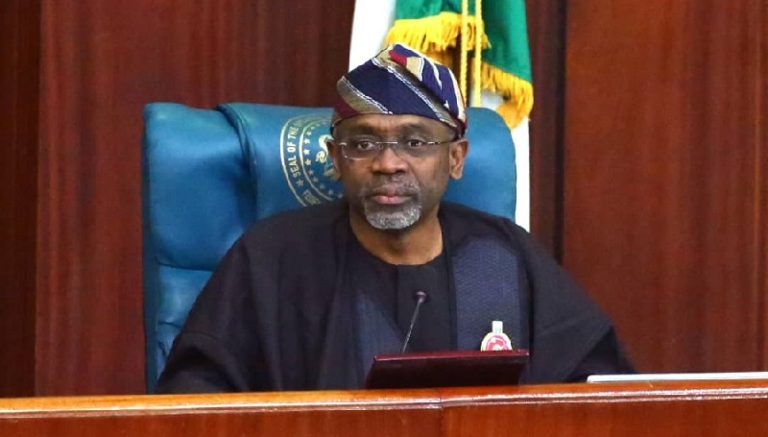
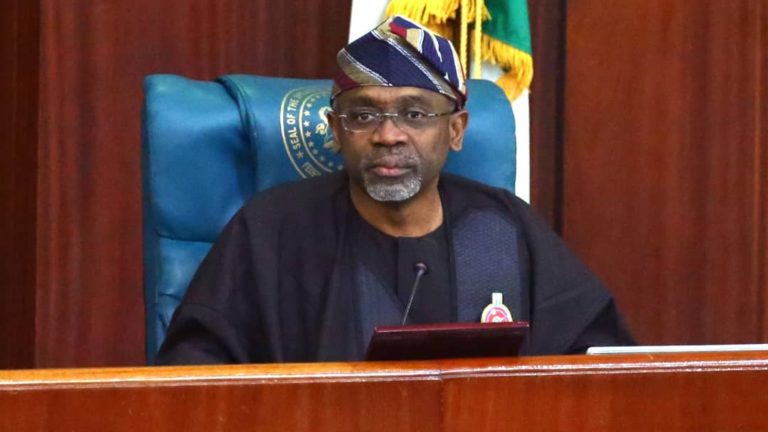
FEMI Gbajabiamila, Speakers of the House of Representatives, has confirmed the death of Ifeanyi Elechi, a newspaper vendor shot by one of the security aides attached to his convoy on Thursday.
The speaker made this known in a Twitter statement in the early hours of Friday.
He said the vendor was hit by a stray bullet meant to disperse some unidentified men who obstructed his convoy while he was departing the National Assembly.
“A horrible incident has taken place. This evening as I left the national assembly, I stopped as usual to exchange pleasantries with the newspaper vendors at the corner. Many of them have known me since I first moved to Abuja and it was a friendly exchange,” he said.
“Unfortunately, after the convoy set out in continuation of movement, unidentified men obstructed the convoy which got the attention of security men in the convoy who shot into the air to disperse them.”
The lawmaker said that contrary to the report by the security men on his convoy that they applied their discretion to shoot into the air, he was informed some hours after they got to their destination that someone had been hit by a stray bullet.
“Some hours later, after getting to our destination, it was brought to my attention that someone was hit by a stray bullet, contrary to an earlier report by men in the convoy that they applied their security discretion to shoot in the air.”
He stated that he had reported the case at a local police station and asked that the officer that fired the shot be suspended from the convoy pending the conclusion of investigation.
While sending his condolences to the family of the deceased, the Speaker expressed distraught about the incident.
“I have caused a report to be made to the local police station and an investigation has commenced.
“In the meantime; the officer who fired the fatal shot has been suspended from the convoy pending the conclusion of the investigation.
“My value for human life and my respect for all people – irrespective of social-economic status – is what endeared me to these vendors and these are the reasons why I stop my convoy quite often to connect with them.
“For one of them to have been shot by my security detail is horrific and I cannot begin to imagine the grief and loss Ifeanyi’s family must feel on this sad day. No family should have to go through this.”
Meanwhile, Etim Eteng, the Chairman of the Newspapers Vendors Association in FCT, told Punch that the man was shot in the head while the Speaker wanted to give them money.
“What I learnt was that the Speaker called to give them (vendors) money and the security aide just shot him in the head. He was rushed to the National Hospital where he died some hours later,” he said.
Also, Abdullahi Seidu, one of the vendors and an witness to the incident, said the unidentified trigger-happy security aide could not explain why he shot the deceased when confronted by Gbajabiamila.
“The vendors and other hawkers usually run after VIPs and lawmakers whenever they see them. In fact, they can identify the big men by their vehicles. So, the vendors flocked around the Speaker’s convoy and he gave them some money, but a gunshot just went off.
“The bullet hit Ifeanyi (Okereke) in the head and he fell down. The officer who fired the gun said he wanted to fire in the air.”
“I am personally distraught about this incident and my deepest sympathies go to the victim, his family and Abuja vendors,” the Speaker said.