Home Blog Page 1975

Investigation: How estate excos “embezzle” N100m development funds, “frustrate prosecution”

By Bankole Shakirudeen ADESHINA 


THE pioneer executive members of the Island Heritage Estate Association, an exclusive middle-class community, located in Ojodu Abiodun Area of Ifo Local Government Area of Ogun State, have been accused of embezzling the association’s development funds in the sum of N60 million.

The ICIR obtained documents, recorded telephone conversations, text messages, e-mail messages, bank transfers, and secretly recorded videos and audios, showing that N60 million cannot be accounted for by the former excos.

Not only that, about two dozen landlords, stakeholders and experts interviewed for this investigation confirmed the allegation and put the blame at the doorstep of three former executive officers of the estate association.

The missing funds are the total sum of the statutory levies comprising security charges, electricity bills, and annual development contributions, paid by homeowners into the estate’s account between 2010 and 2018.

The out-of-court settlement levies which all property owners in the estate were compelled to pay to settle land vendors known as omo onile contributed to the huge sum in the estate’s account.

In 2016, the residents rudely woke up to the invasion of  Omo-Onile from the Habeeb Kasumu Family, who claimed they were the rightful owners of the estate’s lands.

Threatening fires and brimstones, the invaders vowed to commence eviction, and demolition of all properties on their land, while pursuing litigation before the court of law for compensation over the landlords’ trespass.

The matter was settled out of court, with a buy-back arrangement to assuage the acclaimed new landowners.

According to the settlement arrangement, those who have completed their houses and had long moved in were asked to pay N300,000 each; N500,000 for those whose houses were still being developed; and N700,000 each for those who were yet to take full possession of their land.

Out of the total of 120 houses in the estate, 63 landlords were said to have complied with the full payment.  It was not clear which category of people paid what amount exactly.

Some of the property owners expressed suspicion that the claim by the omo-onile may have been part of ploys, carefully orchestrated by the embattled former excos to siphon the association’s funds.

The association members alleged that the reluctance of the former officials to rather push vigorously for litigation than seeking an out-of-court settlement with the acclaimed landowners shows connivance by the excos.

The decision to settle out of court with new landowners was allegedly taken unilaterally by the former excos, despite the fact that “most of us had valid Deed of Assignment/Agreement from the previous sellers,” they argued.

The landlords told The ICIR that the funds ‘”embezzled” by the excos were intended for a number of development projects, including paving of the estate’s road networks, introducing of a technology-driven security system for the residents of the estate, providing borehole water for the neighboring communities, and facilitating of the construction of a well-equipped Primary Healthcare Center within the proximity of the community among others.

The estate, started in 2010, though well-landscaped, is plagued by deplorable access and internal roads.

The situation is worsened during the rainy season. Often time heavy flooding practically cuts off the community from the Lagos-end of the Berger-Ojodu area, due to a poor drainage system that could not dislodge the heavy flow of drainage waters from adjoining communities.

There is also a prevalent shortage of clean water in the surrounding communities, an emergency the new executive members also planned to fix had the association money not been embezzled.


Alleged fraud

At the center of the scandal is an 11-man former executives, including Pastor Olajide Adewale Samuel, Chairman; Mr. Francis Chimezie, Vice Chairman; Mr. Owoeye Olufemi, Secretary; Mr. Eke Francis, Assistant Secretary; Mr. Taiwo Akinmolayan, Financial Secretary; Mr. Dada Bbabatunde, Treasurer (1); and Mr. Alimi Babatunde, Treasurer (2).

Others were Mr. Akomen Omijeh, PRO (1); Mr. Arubuola Rotimi, PRO (2); Mr. Oni Ayodeji, Assistant PRO; and Mr. Loto Oladapo, ex-Officio.

Among them, three ex-officials were signatories to the association’s accounts. They are former Chairman, an area pastor for the Redeemed Christian Church of God; former Secretary, a barrister and member of the Nigerian Bar Association; and the ex-financial secretary, a certified accountant and member of the Institute of Chartered Accountants of Nigeria, ICAN.

These three individuals have been accused of masterminding the fraud.

Fraud discovered

To fulfill the out-of-court settlement with the Kasumu Family, 63 landlords said they contributed a total of N42.3m, out of which N40.6m was reportedly paid to the beneficiary.

But after the auditing of the estate’s account, conducted by Messr Aderopo Oladejo & Co, a shortfall of N11.4m was discovered in the process, contrary to the claim of the three executives.

Documents obtained by The ICIR showed that the missing balance included the sum of N900,000 claimed as Ratification Levy paid by the suspected exco, which was discovered later to be untrue.

Also, the former excos could not account for “Utilization Fund” amounting to N18.3million.

The complainants said the money was meant for road construction and interlocking pavement.

In spite of the gross misappropriation, a loan of N3million was said to have been allocated to the former Financial Secretary, Akinmolayan, between 2015 and February 2016 without the knowledge of the association members.

He only paid back when the members announced the plan to probe the excos.

On the 26th of October 2016, N1million was withdrawn by Pastor Olajide and Mr. Akinmolayan, for “unapproved and unknown purposes”, according to documents.

Another “unauthorized loan of” N2million  was given to Mr. Owoeye, the former Secretary, who was also a signatory to the account.

This transaction was also unknown to the other executives and members, except for Adewale and Owoeye, the other two signatories, according to findings.

After some pressure, however, Mr. Owoeye was said to have made a full refund of the said money on the 28th of December, 2018.

The document also showed that the sum of N5million was remitted to the accounts of two corporate organisations namely, Living Links Ventures and KLX Kings Ventures, by Mr. Olajide and Mr. Akinmolayan. The decision was taken without the members’ approval.

The two companies were allegedly owned by the disbursers.

On the 3rd of May, 2016, the sum of N800,000 was withdrawn by the former Chairman, Pastor Olajide, for a purpose disputed by other members who now request for an immediate refund.

He has not refunded the money at the time of filing this report.

Another N700,000 withdrawn on the 9th of November 2017, was allegedly an unapproved loan for one of the landlords, Mr. Tunde Sosina.

But when speaking with TheICIR, Sosina denied the knowledge of collecting any loan whatsoever from the embattled executives.

“I never collected any loan from either the former or the current executive,” he said.

He added that if his name is linked to the scandal, he would be compelled to take “legal action” against the former executive members.

There are also ghost beneficiaries such as Evelyn Ubani and Abiodun Adefidipe who received payments from the association without rendering any services to it whatsoever.

Allegedly also, bank alerts were sent to the association’s e-mail address which was quickly deleted.

But the “cleanup exercise” was not perfectly done, as one of the members of the caretaker committee, who logged into the mail at about the same time the mail was about to be removed, combing for possible clues against the fraud, discovered the mysterious deletion of some messages.

“Right before my eyes, I just saw bank alerts messages being deleted and the delete folder being emptied without ordering any command whatsoever.

Mr Aremu, a complainant

“It was then I realized that this fraud was becoming much bigger than we ever thought,” Mr. Aremu told this reporter.

He said his finding was however reinforced with more information salvaged through the email’s sent box, where he uncovered communication lines by the accused excos over the fraudulent withdrawals.

Trust betrayed

When the Estate Association was inaugurated back in 2010, the three excos were among the volunteers endorsed by the entire members to occupy the executive positions because of their religious and professional status.

The assumption that they were of impeccable character and competence earned them unquestionable followership and total compliance to every single directive they issued, including instruction on financial obligations.

But early in the year 2013, rumor had it that the three may have been using the association’s money for personal gains, as they were seen to be embarking on massive construction projects on their uncompleted buildings at the time.

Most of the members of the association dismissed the rumour,  relying instead on the fact that the accused were updating the association regularly on all financial transactions, showing a printout of the association’s statement of the account anytime it is requested.

It later turned out that “all the documents being presented were doctored and not the true version of the real situation on the ground.”

The bubble finally busted in 2019 when new executives resumed office. The former officials “refused” to give the full account of their stewardship, particularly the detail of the association’s bank transactions since they assumed office.

Infuriated by the development, the new excos constituted a caretaker committee to investigate the matter and recommended action.

One of the committee’s resolutions was the engagement of a professional accounting firm to audit the accounts of the organization since its inception.

At the end of the one-month-long exercise, the report of the external auditor, covering between 26th of November 2012 and 31st of December, 2018, was released and did raise questions about the fund management by the three former excos.

The auditing firm based its conclusions on multiple irregularities and distortions discovered in the book.

Some of its verdicts are as follows:

“The association should ensure that the records are reconciled and aligned.  The difference of N7,600,000 (N44,100,000) minus (N36,500,000) should be properly investigated to establish the mix-up.

“The total sum of N7,900,000 was paid to individuals and unknown companies as follows:- Mr. Taiwo Akinmolayan – N4,800,000;  Mr. Bayode Dada—N300,000; Mr. Adewale Oladimeji – N800,000; Klx King Venture – N500,000; and Living Links Ventures – N1.500,000.

“Our review of the second ratification payment document of the N38,900,000 received shows that N2,500,000 out of the payment was not made through the bank account. This represents a payment of 3rd May 2015 (N800,000), 26th October 2016 (N1,000,000), and 11th May 2017 (N700,000.

“The record given to us revealed that a total sum of N4,500,000 was given out as loan by the executives from 2015 to 2018. The loan was without General Assembly approval hence illegal. This act represents a misuse of office and fraudulent were the beneficiaries of the loan were the cash custodian.  The association should investigate the loan repayment and decide on it thereafter.

Part of the report, reads, “Island Heritage Estate Association (IHEAS) has been in existence long before 26 November 2012 but financial and accounting records before 26 November  2012 were not presented to us for review and inclusion to the financial statements.

“Implications: The executives might have failed in their fiduciary duty; Report of accounting stewardship was not given; there was no verification of accounting transactions,” corroborating the suspicion that the missing funds might be much more than what is being quoted above.

Continuing, the reporting reveals further that “the position of treasurer was vacant between 2015 to January 2018, according to the record presented to us.  This forms major lapses and weakness as there are no checks and balances where the work of the treasurer and financial secretary is combined by the Financial Secretary. It was this period that money was given to the executive in form of the (unapproved) loan without General Assembly approval,” the report revealed the depth of the scandal.

There was another part, which categorically states that “there is a very weak control on the management of cash.  Cash collected could be misappropriated by a dubious officer.

Speaking with The ICIR, the auditor, Mr. Ropo Oladapo, confirmed that his company did carry out a statutory audit exercise on the association’s bank account, and all findings were based on the records made available.

When asked whether his recommendations were objective and solely focused on advancing the cause of justice, his reply was a razor blade sharp “yes of course,” adding that “and I can stand by it anywhere.”

Long walk to justice

To enforce the recommendations of the auditor, letters were written to all the members of the former executives, demanding of them the refund of the missing funds, and explanations why legal action should not be taken against them.

The indicted officials denied the allegations and threatened to sue for libel.

Unsatisfied by this response, the landlords decided to push much harder, writing a petition to the Police Headquarters, Zone II in February 2020, seeking the law enforcement institution to investigate the alleged fraud and execute prosecution.

Tagged “Allegation of Conspiracy, Forgery, Stealing and Fraudulent Diversion and attempt to pervert the cause of justice by the trios of Adewale, Owoeye, and Akinmolayan,” the group asked the Inspector General of Police Monitoring Team, Zone II Command, led by Justin Adaka, to investigate the matter, prosecute the suspects, and help the estate association retrieve its stolen funds from them.

Barrister Mayowa Owolabi, the association’s lawyer, said the police initially handled the case with great professionalism.

“We were specifically impressed in the sense that the investigation was carried out in a civil manner. Nobody was arrested whatsoever. The accused were invited alongside our team. We all went there. We were asked to bring supporting documents for and against our claims, which we did, sufficiently. And we were given ample time for this,” he recalled.

After a long rigorous process, the investigation was eventually concluded, and the three were indicted.

The indictment report was however not released to the party. It was read by the police Assistant Inspector General of Police in charge of Zone II Command and kept in confidential files.

“Consequently, the police recommended them for prosecution,” Owolabi, who is also the Secretary, Nigerian Bar Association, Lagos Chapter, recalled.

The legal counsel said during the “indictment”, “the former chairman, Adewale pleaded for mercy” saying the former financial secretary made him sign blank cheques that he never knew were being issued for fraudulent purposes.

“For me, it is inequitable for trusted leaders to do such a disappointing thing against its people,” the lawyer said, vowing to have the stolen money refunded.

“I am highly disappointed in the accused trios. More especially, in Barrister Olufemi Owoeye, who is a colleague of mine in the legal profession.

“As a matter of fact, I dialogued with him at one point, telling him that as a lawyer, I knew the gravity of the implication of the scandal he has put himself into. I told him I was under pressure to write a petition against him and the two others. That he should do the needful so that I do not have any need to write the petition, because I knew how catastrophic the ending would be for them,” he explained.

If eventually prosecuted, Owoeye, alongside two others, besides facing imprisonment, could get barred from practicing law again in the country, as the NBA Law and indeed Nigeria constitution stipulate stiffer sanctions for such an offence.

Ditto for Taiwo Akinmolayan, a professional accountant and member of ICAN, who was expected to lead with a high sense of ethical standards.
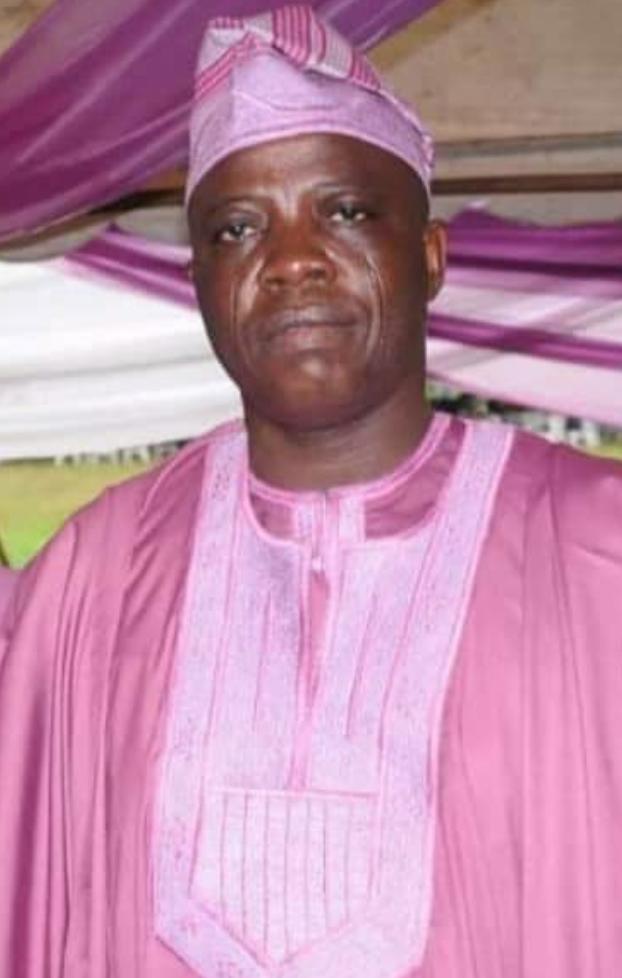
Mr Taiwo Akinmolayan, embattled former Fin-Sec

ICAN, a reputable professional institution known for zero-tolerance against corrupt practices by its members, has in the past dismembered those found culpable in a fraudulent criminal act.

Examples are the former Managing Director of the defunct Oceanic Bank Plc, Dr. Cecelia Ibru, and her counterpart in Intercontinental Bank Plc, Dr. Erastus Akingbola. Regardless of their status, they lost their membership of the prestigious professional body early in 2000 when they got themselves enmeshed in a fraudulent scandal that leads to the collapse of their banks.

For the former chairman, a pastor of the Redeem Christian Church of God, the fate that awaits him is clear.

The Christian religion is one that doesn’t condone the abuse of trust, conspiracy, or stealing of other people’s hard-earned money, as evident in the 10 commandments.

Also, proverbs 12:22 says, “Lying lips are an abomination to the Lord but those who act faithfully are his delight.”

Corinthians 6:10 stated that “Nor thieves, nor greedy, nor drunkards, nor revilers, nor swindlers will inherit the kingdom of God.”

Verifying the documents

  According to the landlords, the three suspects have been indicted by the probe panel at the Police Headquarters, Zone 11 Command before the COVID-19 lockdown in February 2020.

It however expressed disappointment that instead of moving to prosecute them, the police allowed them to go home and even granted their request that the case is transferred to another station for further investigation.

The ICIR could not obtain a copy of the document indicting the suspects as an effort to do so remain futile.

When this reporter contacted the IPO in charge of the petition in Zone II Command, Inspector Afolabi Tajudeen, he said, “we have since done with the case and transferred the file to Kam Salaam, Obalende, for further action, according to the instruction we received.”

He did not confirm if the suspects were indicted by the police.

The investigation by The ICIR revealed that that new IPO at Kam Salaam, the is Inspector Utzu Sunday, a Cross Rivers-born officer of the police, whom the complaint believed has been compromised by the accused.

“Without fear of contradictions, we have our reservations about the integrity of the IPO, Inspector Sunday Utzu,” the Estate association lawyer told The ICIR.

“The Inspector Sunday has been heavily compromised. And their plan is to use him to frustrate the investigation and allow the matter to die at that stage, but we are determined,” added the Secretary-General for the new EXCO.

After three unsuccessful visits to Sunday’s office, this reporter finally got him to address the issues raised on the phone.

When asked about the update on the investigation and when it would be concluded, Inspector Sunday replied that the investigation is still ongoing.

Asked when the investigation is likely to be completed, he countered with another question, “On whose part are you, let me know.”

“I am on the side of justice. I am for both parties. My interest is in knowing whether or not the accused are being accused wrongly or rightly,” the reporter replied

But Inspector Sunday thereafter refused to comment further.

So far,  three litigations have been instituted by the accused in the Ogun State High Courts, one of which was instituted (with Suit number HCF/152/2019) by the duos of the former chairman and the former financial secretary, praying the court to restrain the new executives from arresting them or holding them liable for the mismanagement.

Two other cases, filed by the former Secretary (with suits number HCF/97/2020 and HCF/98/2020), are challenging the legality of the constitution of the Caretaker Committee upon which the decision to audit the association’s account was premised, and a libel.

According to Owoeye, the indicted Secretary, the constitution of the Caretaker Committee by the General House was a violation of the Bylaw of the association; as such power resides only with the Board of Trustees of the Association.

“Hence the audit committee findings, recommendation and allegation of mismanagement of the association’s funds would amount to null and void,” according to his reply.

Absolving himself of any wrongdoing, Owoeye also vowed to make the new exco of the association “pay dearly for tarnishing his hard-earned reputation over the allegation.”

When this reporter reached out to him, he declined to comment further on the matter, saying because there is an ongoing litigation on the said subject matter, commenting further, even to a journalist, would attract dire consequences to him as a lawyer.

Unlike Owoeye, Mr. Taiwo Akinmolaya, the embattled former Financial Secretary, while speaking with TheICIR, said emphatically that “no single kobo was mismanaged” by the former executives of the association.

Although, he admitted, reluctantly, that he borrowed himself the sum of N3million, a non-interest loan routed behind the larger executives because he was one of the signatories to the account, but insisted he didn’t do anything wrong because he has since returned the money.

According to him, “the truth remains that the N3million I borrowed doesn’t even belong to the association. It was the Omo-Onile’s (Ratification) money, which I have since returned.

“So, I don’t know why these people would continue to tarnish my image.  At this juncture, I would have no other option than to sue them for defamation of my character. That is exactly what I am going to do,” he threatened.

Probing further, this reporter asked Akinmolayan to explain why the act of borrowing oneself an association’s money because one is in the custody of the said money, and without the consent of the rest of the members of the association, should not be described as an abuse of office, his swift response was “you can’t just jump into a conclusion just like that”!

In his own defense, the former Chairman, Pastor Olajide said he has consulted his lawyer upon receiving a request for clarification from this reporter over the matter, and his lawyer has advised him to keep a sealed lip.

According to Adewale, “after I received your message, I had to speak to my lawyer on the matter. And he told me that since the matter is already being adjudicated upon, further petitioning or discussion on it could amount to perjury or contempt of court.

“Therefore, if you really need to speak to me on this matter, I would have to avail you of my lawyer’s contact,” he submitted.

On second thought, however, he decided to offer more, started by debunking the allegation and instead, accusing his accusers of playing a “personal vendetta.”

His lawyer, Barrister Folorunsho Joseph, speaking with this reporter, said his client has not done anything wrong.

He said so far, the complainants have not been able to prove anything against his client in a competent law court, hence “publishing anything on the matter would be at your own risk.

“You will simply be exposing yourself to libel; because we are going to sue you if you do so,” he warned The ICIR.

When asked whether he was privy to a statutory audited report of the association, which conclusively indicted his client and two others, he dismissively disregarded the report, saying it was only a “company reporting and not an audit.

“If you check the report very well, the auditor said emphatically that it should not be used for any external purposes. That it is only meant for internal usage,” he added.

The whistleblowers

Nonetheless, the aggrieved complainants are some of the co-landlords in the estate, who recently took over as the members of the new executives of the association.

The new executives are Mr. Gbenga Ajumo, Chairman; Mr. Ayobami Oyewusi, Vice Chairman; Mr. Idowu Aremu, Secretary-General; Mr. Bidemi Shokoya, Assistant Secretary; Mr. Funmilayo Arowoogun, Treasurer, Mr. Olutayo Duduyemi; Financial Secretary; Mr, Wale Edalere, Financial Secretary; Mr. Arubuola Rotimi, Financial Secretary 2; Mr. Ajagbe Olalekan Samuel, Ex-Officio; and Mr. Ogo Ozegbe, Ex-Officio.

They are being led by the trio of Aremu, the Gen-Sec, a real estate mogul; Samuel, a Civil Engineer, and Oladapo, a member of the indicted EXCO, who absorbed himself of any wrongdoing. He is a retired brewer with the Nigeria Guinness.

The accusers and the accused were however good friends and neighbors, who used to enjoy the serenity of the beautiful ambiance provided by the uptown estate, until the fraud was unearthed.

Going forward, their friendship had not only turned sour, the quest for justice has stoked up tension that has induced uneasy calmness across the estate.

When the deafening silence breaks, it is by the rudeness of death threats and physical assaults by both families.

TheICIR’s unannounced visits to the estate gave a glimpse of the razor blade sharp tension causing apprehension in the neighborhood.

Houses built next to each other were separated with fences as high as 12/14 fits, in some cases, and impenetrable entrance gates that leave no room for unscheduled visitors.

On a particular street, one of the accusers, who was also a member of the former ex-officio, Samuel, lives with one of the accused, Mr. Akinmolayan, within a distance of less than 100 metres.

Neither do they greet, nor the members of their respective families! Ditto with Mr. Looto and the former Chairman, Mr. Adewale.

There have been occasions where family members of one of the accused allegedly physically attacked the family of one of the complainants.

As if that was not enough, there was also a separate incident where Samuel, a complainant, was said to have been threatened with “mysterious death” by the former Chairman, Adewale.

Adewale allegedly warned Samuel “to desist from pursuing the matter or else experience sudden/mysterious death.”

The matter was reported at the Ojodu Abiodun Police State and the accused was made to write an undertaking, promising that no harm would be done to the complainant.
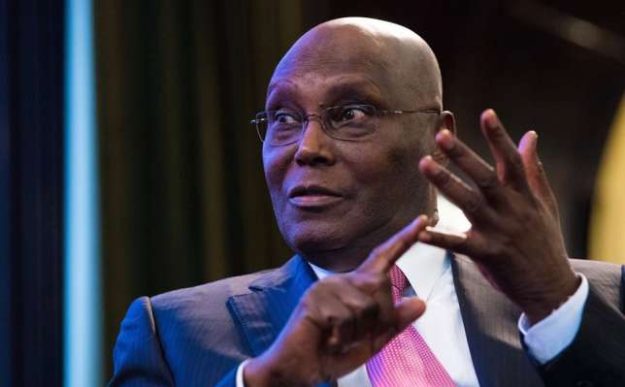
Nigeria was not completely debt free in 2007, as claimed by Atiku Abubakar

0

FORMER Vice President, Atiku Abubakar, on Friday, stated that Nigeria experienced an unprecedented economic boom with a 6 per cent annual growth and paid off its debt when former President Olusegun Obasanjo and himself managed the nation’s affairs.

In a Twitter post, he described the period between 1999 and 2007 when he served as vice president of the country as a time of national restoration for the country when the country was without debt.

“Between 1999 and 2007, Nigeria paid off her entire foreign debt while maintaining an unprecedented 6 per cent annual GDP growth.

“Those were periods of national restoration, and I am very proud of the work President Obasanjo and I did for this nation we care so much for. Facts don’t lie,” he tweeted.

But this is not a true statement, according to the data published by the Debt Management Office, DMO, the government’s agency that keeps records of Nigeria’s debt portfolio.

Nigeria’s debt history according to DMO, shows that the country was indebted to external sources to the tune of $28.04 billion in 1999, of which $20.5 billion was owed to the Paris Club of creditors.

The data also reveals that while the debt owed the Paris Club was paid in 2006, following a debt relief program approved by the World Bank. The country’s external debt was $3.54 billion and climbed to $3.65 billion in 2007.

The country’s external debt profile continued to rise to $10.72 billion in 2015 Currently, the debt stands at $27 billion as of March 2020 under President Buhari’s administration.

An indication that the country’s external debt profile had increased by more than 50 percent under Buhari administration.


Atiku Abubakar’s tweet

Nigeria though had a fair share of economic boom recording a positive growth rate between 1999 to 2007. According to the World  Bank, the country had a stable economic growth during the period recording 5.02 percent in 2000, 5.92 percent in 2001, 7.35 percent in 2003, 9.25 percent in 2004, 6.44 percent in 2005, 6.06 percent in 2006 and 6.59 percent in 2007.

However, President Buhari’s administration has endured a turbulent economic growth registering Nigeria’s first recession after 25 years in 2016, due to lower revenues from a drop in crude oil prices.

Data obtained from the World Bank showed that the GDP growth rate dropped from 2.04 percent in 2015 before it dropped to -1.62 percent in 2016. The growth rate increased to 0.81 percent in 2017, it slightly increased by 1.94 in 2018 and increased by 2.24 in 2019.

When the GDP growth rate of a country is negative, then the economy of that country slides into recession. Key indicators that drive a nation’s GDP growth include its consumer spendings on goods and services, business investments in the country, government spendings and its net trade.

Nigeria is currently not listed as the fastest growing economy in Africa with a paltry 1.94 percent GDP growth rate, lagging behind Ethiopia at 10.3 percent, Ghana at 8.1 percent, Cote d’Ivoire at 7.7 percent, Tanzania at 7.1 percent, Senegal at 7.2 percent and Djibouti at 7 percent.

A PriceWaterhouseCoopers, PWC, report affirms that Nigeria’s economy grew by 2.7 percent in 2015, but slide to its slowest growth in the past four years, much lower than its previous GDP average growth rate of 4.8 percent.

Nigeria’s domestic debt has also grown to $56.72 billion, bringing the total public debt which comprises of debt of the Federal Government, the 36 States of the Federation and the Federal Capital Territory (FCT)  to $83.88 billion.

Saudi Arabia with a GDP of $577.6 billion was the 20th largest economy in the world in 2011, though, a PWC projection stipulates that  Nigeria could attain that level of GDP growth by 2023 assuming other economies are stagnant if its GDP growth annually surpasses the 10 percent mark.

The World Bank predicts that Nigeria’s population is expected to rise to 410 million by 2050 while 94 million people live on less than $1.90 a day but the GDP is growing at a less consistent rate, averaging 1.4 per cent since 2016.

This suggests that Nigeria is exposed to global economic shocks due to its significant debt accumulation, import-dependent economy and low diversification of exports

Ondo Election: Navy, Marine Police partner to secure 62 creeks, 270 polling Units

FESTUS Okoye, Chairman of Information and Voters Education Committee for the Independent National Electoral Commission (INEC) has said the Nigerian Navy, Marine Police and other relevant security architecture will partner the commission to secure 62 creeks and 270 polling units close to the riverine areas in Ondo State.

He described this gesture as deliberate and part of efforts to ensure a free, fair, credible and peaceful poll on the scheduled October 10 Governorship election in the state.

Okoye is particularly concerned about human safety and protection of the electoral materials to be deployed to Ese-Odo and Ilaje Local Government Areas of the state.

He said the terrain has a history of violence because of poor access by security operatives during previous elections.

“The police, Navy and other security agencies have been mandated to engage in clearance operation and flush out groups and individuals that threaten the peace of the state and the electoral process especially in the creeks and other black spots,” he told Saturday Punch.

“More than 270 of our Polling Units are in the riverine areas of Ese-Odo and Ilaje Local Governments, with over 62 creeks, and we are in touch with the Nigerian Navy and the Marine Police for the purpose of protecting and escorting our personnel and materials to these difficult terrains.”

Citing Section 29 subsection 3 of the Electoral Act, 2010 as Amended, INEC is at liberty to request the support of security operatives for the purpose of ensuring the safety of lives and election materials during the poll.

“We shall therefore request for the assistance of the Navy for an escort in the riverine areas, and the Army will block the entrance and exit out of Ondo State on election day,” he added.

It was also gathered that the military already commenced surveillance of the waterways ahead of the election day.

Troops were sighted notable coastal areas including Asere, Abereke, Agadagba, Arogbo among others in the concerned local government areas.

“The purpose of the exercise is to get prepared for the October 10 governorship election. We want to ensure that the election is free and peaceful and to make sure that hoodlums don’t interfere.

“As you are aware, the places visited lead to Delta and Ogun states and they (militants) will be coming. But I want to assure you that wherever they come from, we will give them a blocking force,” Brig. Gen. Zakari Abubakar, the Commander of 32 Artillery Brigade, Akure stated.

He noted that the move was to send a warning signal to hoodlums on the waterways against any form of planned criminality on the election day.

The Incumbent Governor, Rotimi Akeredolu is the All Progressives Congress (APC) candidate for the governorship election while the major contender from the Peoples Democratic Party (PDP) is Eyitayo Jegede.

IPPIS: University workers begin strike on Monday

THE Joint Action Committee of Senior Staff Association of Nigerian Universities (SSANU) and the Non-Academic Staff Union (NASU) will on Monday commence a 14-day warning strike.

A statement jointly signed by the National President, SSANU, Samson Ugwoke, and General Secretary, NASU, Peter Adeyemi, said the strike is hinged upon the inconsistencies of the Integrated Personnel and Payroll Information System (IPPIS) in the payment of salaries and the non-payment of earned allowances to its members.

According to the statement, other issues are “non-payment of national minimum wage and retirement benefits to our members. The delay in the renegotiation of FGN/NASU and SSANU Agreements, as well as the non-payment of benefits to retired members, teaching staff usurping the headship of non-teaching units and neglect and poor funding of state universities.”

The statement added that the “warning strike is a prelude to a full blown total and indefinite industrial action if the grievances highlighted above are not properly addressed.”

The branch chairmen of the University of Lagos (UNILAG) chapters of SSANU and NASU, Olusola Sowunmi and Kehinde Ajibade, told newsmen that the unions were rejecting IPPIS because it falls short of the expectation the government promised it was going to addressed.

“We are disappointed with the turnout of things. The IPPIS failed to meet our expectations and our retired members are not being paid as and when due. Also, we are not being paid the new minimum wage that other agencies of government have been enjoying. The new wage is a matter of law as it was an act of parliament,” Sowunmi said.

Ajibade who said the union has the nod of its national leadership to announce the commencement of the warning striked added that if the federal government could pay it other workers, there was no reason why their members should not be paid.

“Just as the government has given schools notice of resumption, our national leadership also gave us the notice to announce this warning strike over a month ago. After the two weeks, if nothing is done to address our concerns, we will meet and deliberate on the next line of action.”

As part of its reasons for embarking on strike since March, the Academic Staff Union of Universities (ASUU), have outrightly rejected the IPPIS saying given the same reason by SSANU and NASU.

ASUU is however asking the government to adopt in paying its members the University Transparency and Accountability Solution (UTAS), the one it developed in replacement of IPPIS.

PENGASSAN urges FG to stop Chevron’s plan to sack 600 Nigerian workers

0

THE Petroleum and Natural Gas Senior Staff Association of Nigeria (PENGASSAN) says it would do everything possible to resist the planned retrenchment of 600 workers by Chevron Nigeria Limited.

The union charged the Federal Government to call the management of Chevron to order and direct it to comply with Nigerian laws and regulations in the oil and gas industry

Chevron Nigeria Limited had in a press statement on Friday disclosed its intention to cut its workforce by 25 per cent as it reviews its manpower requirements in the light of the changing business environment.

In a statement titled “Chevron Nigeria Limited reviews workforce in accordance with business exigencies,” the oil major said the move was to improve capital efficiency and reduce operating costs.

A press statement by Chevron’s branch of PENGASSAN which was signed by Ete Oyegbanren, Chairman, and  Lavin AghaunorSecretary, said 2,000 workers received notification on Thursday that their services were no longer required by Chevron.

The statement disclosed that workers who received the notifications were informed to  re-apply for new jobs in the company “wherein 600 of them would be subsequently declared redundant and their appointment terminated.”

The union accused Chevron of planning to engage more expatriates from America to replace the 600 Nigerians.

Checks by The ICIR, however, reveal that the move by the Chevron contradicts the Department of Petroleum Resources (DPR) 2019 guidelines for the release of staff in the Nigerian oil and gas industry

The Act states that whenever a holder of an oil mining lease, licence or permit under the Petroleum Act seeks to disengage any of its Nigerian workers, the approval of the Minister of Petroleum Resources through the Department of Petroleum Resources must be sought through a formal application.

With the Minister’s consent, the DPR shall conduct an investigation into the circumstances surrounding the release and the employer is precluded from publishing or advertising the release of the worker until the Minister’s approval has been given.

Esimaje Brikinn, Chevron’s General Manager Policy, Government and Public Affairs had stated that the reduction of 25 per cent of its workforce would improve the oil firm’s competitiveness.

“The aim is to have a business that is competitive and have an appropriately sized organisation with improved processes.

“This will increase efficiency and effectiveness, retain value, reduce cost, and generate more revenue for the Federal Government of Nigeria,” he said.

Journalists to submit entries online as Wole Soyinka Award focuses on SDGs and COVID-19

THE Wole Soyinka Centre for Investigative Journalism (WSCIJ) says it will accept all entries for its annual award for investigative reporting online for the first time.

Motunrayo Alaka, Executive Director of WSCIJ said in a statement Friday that the 2020 award will reward works that explore the intersection between Sustainable Development Goals (SDGs) and COVID-19.

Alaka explained that the choice of focus area for the 15th edition of the award programme was due to the fact that COVID-19 has exacerbated problems of poverty, hunger, education, health, and inequalities between female and male persons among others, that Nigeria faced as the country marked its 60th independence anniversary.

“A pioneer initiative dedicated to promoting investigative journalism, the award, was first held in 2005 to build a culture of investigative reporting for Nigeria’s nascent democracy and honour journalists who expose public or corporate corruption, human rights abuses and regulatory failures,” she said.

For the 15th edition, stories from the print, online, photo, cartoon, television and radio genres of the media, published between  October 4, 2019, and  October 3, 2020, are qualified to apply.

The deadline for submission of entries is Saturday, 24 October 2020 by 4 pm, the statement indicates.

From October 4 when the award call for application opens, all reporters who meet the necessary entry criteria may submit their works on the online portal – www.award.wscij.org, Alaka disclosed.

She added that the WSCIJ has continued to reward journalists who show courage through reports that uphold the responsibility of the media to provoke effective governance and accountable leadership in Nigeria.

“The Covid19 pandemic has equally aggravated the challenges the Nigerian media face. The sustainability of newsrooms in Nigeria and the welfare of journalists are threatened. Therefore, investigative reporting along with the freedom of speech and good governance it engenders are endangered too,” she said.

“More than ever before, it is important to celebrate and encourage reporters who stood their place as frontline workers in this time of crisis.”

Over the past 15 years, WSCIJ has contributed to building the culture of investigative journalism in the Nigerian media through the award.

It has held 14 editions and produced 98 finalists, 50 ‘Soyinka Laureates’, and nine investigative journalists of the year. It has also made 22 honorary decorations for Lifetime Award for Journalistic Excellence and Ani-Corruption Defender Award.


Women entrepreneurs in Nigeria risk their health, pollute environment to eke out a living

By Jennifer UGWA


MOVING frantically in a deliberate effort to outsmart the thick black clouds gathering overhead that evening, Maureen Ezeh, 34, made haste with the most important routine of the day as thick black smoke snaked through the soot-covered perforated holes on the 10-year-old corrugated zinc- made kitchen.

The widowed mother of three runs a mobile food restaurant popularly known as (Mama Put) at ninth miles corner, Ngwo in Udi Local Government Area of Enugu State, one of the major cities in the southeastern regions.

With a population of 50,000 people, a major commercial activity engaged by womenfolk in Ngwo is mobile restaurant- This is not limited to the preparation and sale of Okpa, a local cuisine widely associated with the town of Udi.

Cleaning her reddened eyes with the edge of a wrapper hanging above the miniature kitchen window, Maureen called to her 13- year-old daughter to move the wheeled -truck that housed the unwashed food coolers from her day’s sales toward the shade behind their one-room apartment as the first showers of rain pelted down.

Striving to survive

With 69 percent of households in the country using solid fuels as their primary source of domestic energy for cooking, women and children are at a particularly high risk of disease from exposure to household air pollution says the World Health Organisation.

 As an estimated 95,300 Nigerians reportedly die annually from indoor air pollution. 

“When I remember that my children are still in class because of the little profit that I make from this business, I am grateful. But, my health is not as it used to be. The smoke from the woods is hurting my eyes and chest,” Maureen narrated.

Making daily sales of  N20,000- N25,000 ($51.69) from her ‘Mama Put’ endeavours, the High Blood Pressure patient reveals that she makes over N5,000 ($12.92) daily as profits after the purchase of foodstuffs needed in the preparation of the next day’s business.

“At least I spend not less than N1500 to buy firewood every day. And sometimes, it still won’t be enough- depending on the type of wood. If it burns faster, I buy more. Spending N8, 000 to N13, 000 ($18.90-33.60) to buy gas cylinders is not easy for me,” she said.

Maureen explained that with the advent of the rainy season, the cost of firewood would be the least of her problems. She would have to cook in the rain.

“The smoke from a wet wood is nothing compared to what you are seeing right now,” she said.

Miscarriages and pots

She dished out hot plates of rice and beans simultaneous in a rapid and obviously accustomed manner for the throng of early morning risers already occupying the benches that surround the wooden table where the cooler of food was placed.

Edith Onah prepares for the next days business. Photo credit- Jennifer Ugwa

Unfortunately, Edith Onah, 36, had lost her babies in two miscarriages since she started the mobile restaurant business 16 years ago. Just like Maureen, Edith also uses solid fuel for her cooking.

“Although I was advised by doctors at the University Teaching Hospital, Enugu (UNTH) to go on bed rest until the baby was due and avoid the heat and smoke from the cooking. But, that was an almost impossible task. If I did that, I probably would have lost the two that I have to hunger,” she explained.

According to a 2013 research, approximately 0.8 per cent of neonatal deaths, 42.9 per cent of post-neonatal deaths, and 36.3 per cent of child deaths could be attributed to the use of solid fuels.

“Cooking was not an option,” she said, “it was mandatory for our survival.”

Nigeria has rated the world poverty capital with nearly half the population living on less than $1.90 a day and just like Maureen, Edith spends over N1, 000 ($2.58) on drugs and supplements almost on a weekly basis.

“I won’t lie, I have achieved certain important things thanks to this business. But my health and sight and that of my little girl assisting me have been affected terribly,” Edith said as she stirred the boiling pot of food.

Juliet Achibir, an ophthalmologist at Marafem Eye Clinic noted that constant exposure of the eyes to smoke from the use of solid fuels causes itchiness and redness of the eyes and “without proper medical eye care, might lead to permanent sight damage,” she said. 

Although the women would prefer safer and cleaner energy, it might still be sometime before there is a deliberate and permanent move towards that reality.

Clean cooking visualisation

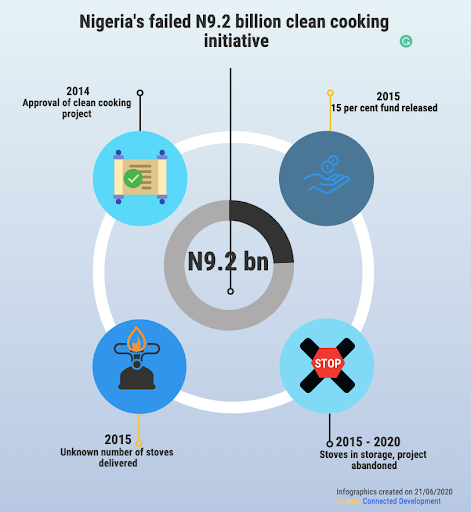
N9.2 billion clean cooking initiative: Abandoned project, squashed hopes

After the approval of a memo presented by the Minister of Environment, Laurentia Mallam, in 2014, under President Goodluck Jonathan regime, the Nigerian government approved NGN9, 287,250,000.00 for the distribution of 750, 000 Clean Cook Stoves and 18,000 Wonder bags to rural women, as a countermeasure to stopping depletion of forest resources caused by indiscriminate felling of trees.

With the Federal Economic Council’s unanimous approval, the sum NGN9, 287,250,000.00 ($24,002,897.62) was ratified by the president for the delivery of the project which was awarded to Messrs Integra Renewable Energy Services Limited.

However, in a report made available to this reporter by Connected Development (CODE), a Non-Government Organisation that tracks government fund releases revealed that 15 per cent (N1.6 billion) was approved to be released to the contractor in 2015 but Messrs Integral claimed to have received N1.2 billion.

By May 18 2015, an on-site check at the Velodrome of the National Stadium in Abuja by CODE confirmed the delivery of clean cookstoves but the actual number was not ascertained.

Clean cookstoves in storage at Veldrome Abuja. Photo credit_ CODE

Five years later, the stoves are still in storage at the Velodrome, yet to reach the intended beneficiaries.

At the time of publication, the ministry is yet to respond to an inquiry email on the current state of the project.

Death by installation

The Food and Agricultural Organisation estimates that 90 percent of rural households in Southern Nigeria and up to 98 percent in Northern Nigeria depend on fuelwood as their source of domestic energy.

In 2005, Nigeria had the highest rate of deforestation globally at 400,000 hectares annually.

With the fast-paced depletion of forests, Omobola Eko founder Urban Tree Revival Initiative and climate activist said a gradual demise of ecological systems would be inevitable.

“Planting new trees may not be as effective as protecting the existing forests. Providing renewable means of cooking for rural and urban women will help reduce carbon emissions in the atmosphere and improve health.

“This will greatly reduce pressure on forest trees for firewood and charcoal,” she said.

Despite being responsible for the deaths of 4.3 million people annually in the world, billions of people globally still depend on these dirty sources of energy for cooking and heating their homes.

“It could be gradually killing us but firewood is what we have now,” Maureen said.

Two ICIR reporters shortlisted for 2020 African Fact-checking Awards

THE Africa Check has shortlisted two reporters of the International Center for Investigative Reporting, (ICIR), Damilola Ojetunde and Olayinka Shehu for the 2020 African Fact-checking Awards.

The information which was disclosed on the official website of the Africa Check stated that the 2020 edition received 192 entries from 27 countries across the continent.

According to the organisation, the awards in its seventh year is the only awards programme that honours journalism by Africa-based media in the expanding field of fact-checking.

This year’s categories include Fact-Check of the Year by a Working Journalist and Fact-Check of the Year by a Student Journalist.

The winner of the award for the best fact-checking report by a working journalist will get a prize of $3,000, while the runner-up will be awarded $1,500. For the student category, the winner will get a prize of $2,000, and the runner-up $1,000.

Among the Nigerians shortlisted for the award, is Damilola Ojetunde of The ICIR, whose entry report centered on a photograph shared to justify the sharing of COVID-19 relief materials in Rwanda by Ngozi Okonjo-Iweala, a former Nigerian Minister of Finance.

In the report, Damilola was able to establish that the photo was that of a Gambian Islamic leader who shared food items to the Muslims in his area in 2019.

The photograph was shared by a Facebook page named Brother’s Consulting on May 16, 2019. The post was captioned in Frenchas “Cheick Elhadj Ibrahim Dinding sylla” but translated by Facebook to English, as “a generous donor offers food to the faithful Muslims in his area”.

According to Damilola’s findings, Okonjo – Iweala shared a photograph that was nearly a year old to justify what she purported to be the distribution of food items in Rwanda during the COVID-19 pandemic, a process she said was worthy of emulation.

Similarly, Olayinka Shehu also of The ICIR, whose entry focused on the health risk of 5G on the human body was also shortlisted under the Fact-Check of the Year by a working journalist category.

In this report, Olayinka’s verdict identified that it was most certainly inaccurate and untrue that the fifth-generation mobile network has anything to do with the spread of the coronavirus.

While evidence shows that mobile phones release some percentage of radio waves, there is no evidence to show that it has an effect on the human body, plants or causes coronavirus, his Factcheck revealed.


Appeal Court overturns nullification of Diri’s election as Bayelsa governor

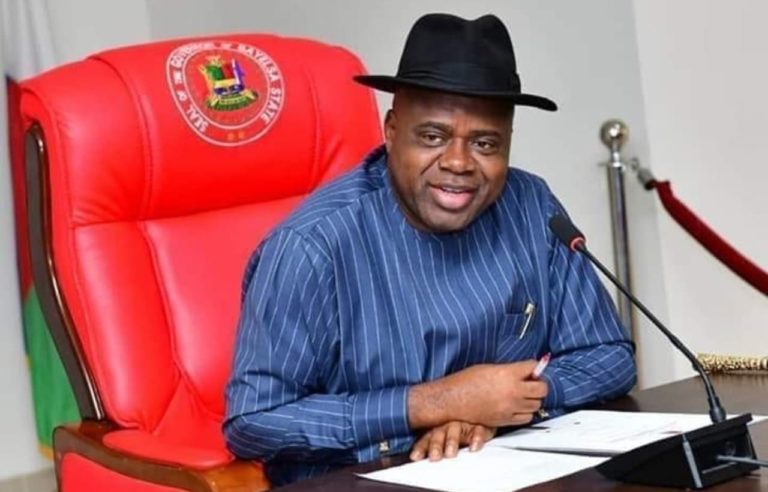
THE Court of Appeal has overturned the judgement of the Bayelsa Election Petition Tribunal that nullified the election of Duoye Diri as governor of Bayelsa State.

Diri had approached the appellate court following a majority judgment of the Bayelsa State governorship election tribunal that nullified his election on 12 grounds, due to a petition by the Advanced Nigeria Democratic Party (ANDP).

In a unanimous judgement delivered by a five-man panel of the appellate court on Friday, the court held that the Tribunal acted outside its jurisdiction by nullifying the election of Diri as governor of Bayelsa State.

The court said the Advanced Nigeria Democratic Party (ANDP) that challenged the governor’s election failed woefully to show that it had a valid candidate that was unlawfully excluded by the Independent National Electoral Commission (INEC) from the election.

It berated the tribunal for ignoring the fact that the petition of ANDP was status barred in addition to the fact that the party presented an unqualified candidate to INEC in the November 16, 2019 governorship election in Bayelsa State.

It would be recalled that in its petition, the ANDP claimed that the party was unlawfully excluded from the election.

The party insisted that its initial deputy governorship candidate, David Esinkuma was duly substituted by the party within the allowed time frame, following the notification from INEC that he was under-age.

Justice Yunusa Musa, who delivered the lead judgment in the petition against Governor Diri said INEC has no power to disqualify any candidate and insisted that the petition by the ANDP was valid.

He also added that only a court has the power to disqualify any candidate for any election and that the petition was filed within 21 days, which is the stipulated time for petitions to be filed.

Justice Musa described the action of INEC to exclude the ANDP from the Bayelsa governorship election as illegal, hence leading to the decision to nullify Diri’s election.


Police officer nabbed for using mercenary in JAMB’s exam

THE Joint Admissions and Matriculation Board (JAMB) says it has nabbed a personnel of the Nigeria Police Force, one Etim Israel, for engaging another person to sit for him in the 2020 Unified Tertiary Matriculation Examination (UTME).

 Israel, who is a Police Constable in the Akwa Ibom State Command, registered for the exam with his name while the impersonator used his picture and other biometric details to sit for the exam.

The Policeman, who said he applied to study Fishery at the Akwa Ibom State University in the 2020 UTME, told newsmen on Friday in Abuja, that he paid N30,000 to engage the services of the mercenary (a teacher), one Emmanuel- now on the run, to sit for the exam as he was away on special duties.

Israel said after scoring over 240 in the exam and decided to commence the admission’s process, he was told that he won’t sail through because of the disparity in the picture, which prompted him to visit JAMB’s office for correction, a move that landed him in trouble.

“I went to their (JAMB) office to change my picture when they told me (in Akwa Ibom) that I won’t be able to use the result because of the picture,” Israel said.

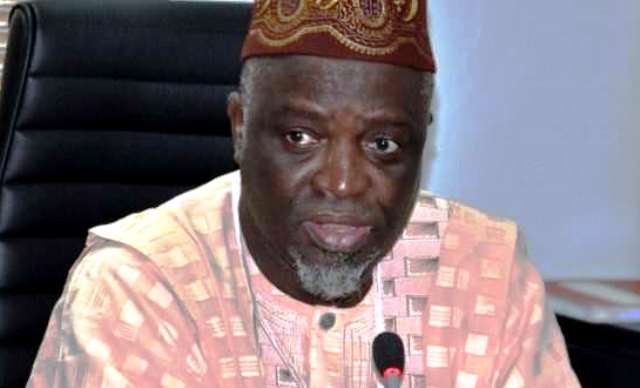
Ishaq Oloyede, Registrar of JAMB, who said Israel will be prosecuted in accordance with the law, expressed concern on the antics of some candidates that try to circumvent watertight measures put in place to prevent impersonation.

He cited an instance where a woman’s name appeared on the registration list and a man would attempt to sit on her behalf.

“When some candidates complain that they have registered for our examination but could not be verified on the day of the examination, many do not grasp the full import of their claims as such candidates, who are more often than not impersonators, expected to be allowed to enter the examination hall without undergoing necessary searches,’’ Oloyede said.

“However, in the last UTME, the Board introduced the taking of a snapshot of the candidate who claims they could not be verified and comparing the new picture with the one in our database. 

“As a result of this innovation, only very few cases of impersonation were recorded compared with the number in the past.’’

While saying the number of candidates that had challenges with verification dropped from over 70,000 in 2019 to 4,900 this year, Oloyede, said that the figure was still high.

The JAMB boss, however, assured candidates that had genuine verification challenges during the 2020 UTME, that the Board would fix a new date for them to write the exam.

Speaking on Israel Etim,  Oloyede said the policeman was one of the 657 candidates that requested for change of picture in their registration profiles, adding that he was arrested when he could not give convincing reasons before he later confessed to engaging a mercenary in the exam.

He said the directive by the Minister of Education, Adamu Adamu, that all institutions should use the already captured biometrics and pictures by the Board in processing admission has made it impossible for candidates whose examinations were taken on their behalf by professional examination takers to gain admissions.

“A good example of the above closely is an arrested member of the Nigeria Police Force, Mr. Etim Israel, who had hired a teacher, one Mr. Emmanuel, still at large, to sit the UTME for him and now wants to change his picture to enable him secure admission. 

“This is because the new measures in place would not let him dare show his face in his chosen institution as it is the picture of his impersonator that would be displayed at the screening venue,” he said.

Oloyede, however, said the Board may not have the capacity to ensure the robust prosecution of all those involved in impersonation during the UTME but will select some from across the country to face the wrath of the law.