Home Blog Page 1980

NNPC would not be scrapped but commercialised says Sylva, Petroleum Minister

0

TIMIPRE Sylva, Nigeria’s Minister of State for Petroleum says the new draft of the Petroleum Industry Bill (PIB) sent to the National Assembly would not scrap the Nigerian National Petroleum Corporation (NNPC) rather, the corporation would be commercialised.

Sylva said this when answering questions from journalists at the National Assembly after an interactive session with the leadership of the National Assembly.

“We have heard so much noise about NNPC being scrapped but that is not being envisaged by the bill at all, NNPC will not be scrapped but commercialised in line with deregulation move being made across all the streams in the sector comprising of upstream, downstream and midstream,” the Minister stated.

According to him, the new PIB would create competition in the petroleum sector while it would also be beneficial to the host communities.

He added that the industry would be transformed and the Petroleum Equalisation Fund (PEF) and the Petroleum Products Pricing Regulatory Agency (PPPRA) would not exist in the same form that they currently exist.

Sylva stated that the only new thing in the bill is the development of the pipeline sector for the midstream industry that would manage pipelines.

“We have said that NNPC will be commercialised. “But if you are talking about transforming the industry, the only new thing that we are introducing is the development of the midstream, that is the pipeline sector.

“So we have provided robustly for the growth of the midstream sector but I don’t want to go into the details of the bill until it is read on the floor of the Senate,” he noted.

COVID-19: Kwara Govt arranges N135m loans for private schools

0

By ABIODUN Jamiu


THE Kwara State Government says it has set aside the sum of N135,500,000 under the Kwara State Social Investment Programme (KWASSIP) as an interest-free loan for private schools in the state.

This is coming after the National Association of Proprietors of Private Schools (NAPPS) in the state called for assistance to cushion the effects of school closure arising from the COVID-19 pandemic.

Rafiu Ajakaye, Chief Press Secretary to the Governor of Kwara State, stated in a press statement on Tuesday that the 1,119 private schools in the state have been grouped into two, each category receiving between N200,000 and N100,000 depending on their staff strength.

Ajakaye explained that under the arrangement, schools in category A — which totalled 236 and have 20 staff and above — will each receive N200,000 to support their workers.

While Category B schools, with 19 or less staff and totalling 883 schools, are to receive N100,000 each under the arrangement that is purely voluntary.

Abdulrahman AbdulRazaq, Governor of Kwara State had during a recent virtual meeting held with the umbrella bodies of private schools in the state pledged to offer an interest-free loan to the owners as salary support for their workers to prevent massive loss of job in the sector.

AbdulRazaq said he would not be blind to the plight of any Kwaran, including proprietors and workers across private schools in the state who he acknowledged had been hard hit by the COVID-19 pandemic due to the closure of schools and some other businesses for months.

The private school owners had during the virtual meeting commended the administration for the food palliatives given to them through the COVID-19 committee.

11 days to election, Buhari seeks Reps’ approval of N148b to reimburse Ondo, four states for constructing Federal roads

0

PRESIDENT Muhammadu Buhari on Tuesday wrote to the House of Representatives to seek approval for the Federal Government to reimburse five states for constructing roads on its behalf.

At the opening of the plenary session, Femi Gbajabiamila, the Speaker of the House Representatives read the president’s request to the house.

In the letter, President Buhari sought “approval of the reimbursement of N148.14 billion through the issuance of promissory notes to Bayelsa, Cross River, Ondo, Osun and Rivers State governments for federal road projects executed by the states.”

The President noted that the Federal Executive Council (FEC), at a meeting on June 3, 2020, approved the reimbursement.

The breakdown of the amount to be disbursed to the beneficiary states shows that Cross River will receive N18.3 billion, Ondo is to get N7.8 billion, Osun N2.6 billion, Bayelsa N38.4 billion and Rivers N78.9 billion respectively.

The approval of the budget was criticised by opposition lawmakers who asked that the approval be delayed until after the Ondo election.

The decision of the Presidency to include Ondo State, where the governorship election is due to hold on October 10, among the benefitting states follows a similar trend of disbursement of funds by the Federal Government to States where elections were due to take place.

Ondo State where Rotimi Akeredolu, an All Progressives Congress (APC) is seeking re-election will receive N7.8 billion.

The Senate had last year approved N10 billion for Kogi State, three days to its governorship election.

The approval of the budget was criticised by opposition lawmakers who asked that the approval be delayed until after the election.

Money Transfer operator bags 98-years for stealing from FirstBank

0

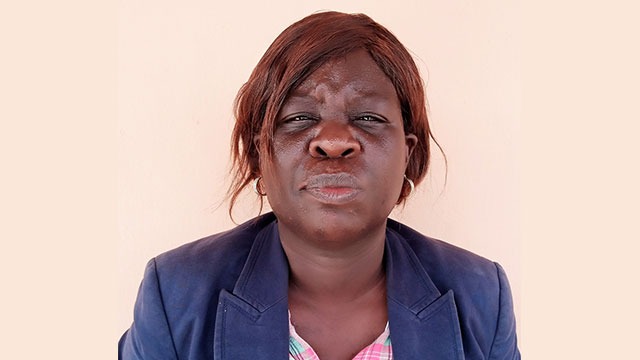
THE Economic Financial Crimes Commission (EFCC), has secured the conviction of a former staff of FirstBank of Nigeria Limited, Oreoluwa Adesakin, for fraud.

Adesakin who was handed a cumulative 98 years in prison by Justice Muniru Olagunju of the Oyo State High Court on Monday was found guilty of committing financial fraud against her employers to the tune of N49,320,652.32, and an additional $368,203.00 belonging to the bank which she converted to her personal use. 

Wilson Uwujaren, Head, Media and Publicity at the EFCC, who disclosed this in a statement emailed to The ICIR on Tuesday said Adesakin’s case was prosecuted by the Ibadan Zonal Office of the Commission on 14-count charges, bordering on stealing, forgery, and fraudulent accounting.

One of the charges read: “That you Oreoluwa Adesakin sometime between the months of May 2013 and November 2013, at Ibadan within the Ibadan Judicial Division, whilst being a staff of FirstBank PLC stole the sum of N25,974,116.13 (Twenty Five Million, Nine Hundred and Seventy Four Thousand, One Hundred and Sixteen Naira, Thirteen Kobo) from First Bank PLC MoneyGram Payment Naira Account, property of First bank PLC.”

Despite her plea of not guilty before the court, Uwujaren further stated that the presiding judge pronounced the convict guilty based on the overwhelming evidence provided by the EFCC before the court.

Commending the due diligence of the prosecuting counsel, the judge found Adesakin guilty of all the charges. She was sentenced to seven years in prison without an option of fine on each of the 14 counts, which will run concurrently.

In addition to her jail term, the convict is to also restitute to the FirstBank, through the EFCC, all the money she stole.

The convict was arraigned April 4, 2014 by the EFCC following a conclusion of investigations against her which arose from a petition from her former employer, dated December 18, 2013.

The bank alleged in the petition that Adesakin, as its Money Transfer Operator, saddled with the responsibility of effecting payments through Western Union Money Transfer and Money Gram platforms, fraudulently manipulated accounting and withdrew the total sums of N49,320,652.32 and another $368,203 for herself, which the bank only uncovered while reviewing its internal account.

Further investigation by the EFCC also established that the convict used part of the proceeds of her crime to acquire landed properties in different parts of Oyo State.

Arewa Consultative Forum  cautions Osinbajo on comments on Nigeria breakup

0

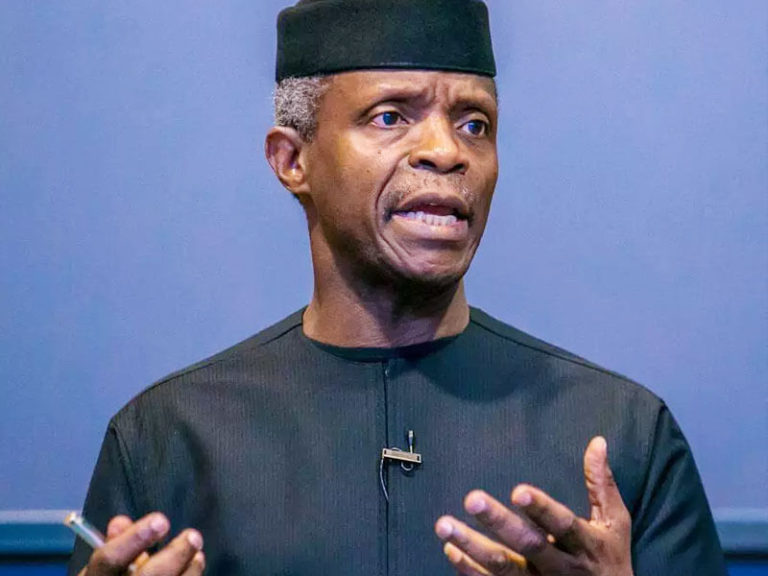
THE Arewa Consultative Forum (ACF) has cautioned Nigeria’s Vice President, Yemi Osinbajo on his comments on the possible breakup of Nigeria.

The Vice President had noted on Sunday that there were cracks in the nation’s wall, which if not addressed, could lead to its possible breakup.

Osinbanjo who was represented by Boss Mustapha, the Secretary to the Government of the Federation, stated this at a church service held to commemorate Nigeria’s 60th independence anniversary at the National Ecumenical Centre in Abuja on Sunday, according to a report by Punch newspaper.

While drawing biblical allusion from how Nehemiah built the broken walls of ancient Jerusalem, he noted that Nigeria needed focus and consistent prayers to avoid a possible break up.

“Fortunately for us, our walls are not yet broken but there are obvious cracks that could lead to a break if not properly addressed,” he said.

“Nehemiah started with fervent prayers, seeking the face of God and pleaded with his king to allow him return to Jerusalem to rebuild the broken walls because the wall signifies peace, security, contentment and prosperity. It signifies the essence of the state of the nation.

“There’s an urgent need for a Nehemiah in our country, Nigeria, today. And like Nehemiah faced opposition in his efforts to rebuild the walls, any Nigerian that desires to rebuild Nigeria must also be ready to face stiffer opposition which will come in torrents. It can only be diffused by consistent focus and prayers.

However, in its reaction to the Vice President’s comments, the ACF through Emmanuel Yawe, its National Publicity Secretary in an interview with The Punch, agreed with Osinbajo that there were cracks in the nation’s wall but said with time the country would overcome them.

Yawe cautioned the Vice President against utterance that can worsen tension. He also cautioned other leaders to “watch their words.”

“The cracks are unhealthy but we expect the Vice President to calm nerves and not make a pronouncement that will aggravate the situation,” he said 

“The ACF is hopeful that Nigeria will overcome its current travails as it did in the past and even overcame a fratricidal war to break up Nigeria. To do this, Nigerian leaders like Osinbanjo should watch their words.”

Osinbajo’s call was coming about two weeks after a former president, Olusegun Obasanjo said Nigeria was slowly becoming a failed and divided state.

The ex-president who said he has never seen the country in such a bad state blamed the current status of the country on poor management of the nation’s diversity.

While he also warned against the call for war and secession, Obasanjo had said for Nigeria to successfully tackle its challenges, the problem of disunity must first be addressed.

Obasanjo was berated by the presidency and presidential aides for his statement.

Humanitarian Minister, Farouq challenges ICPC to publish details of persons involved in N2.7b school feeding fund fraud

0

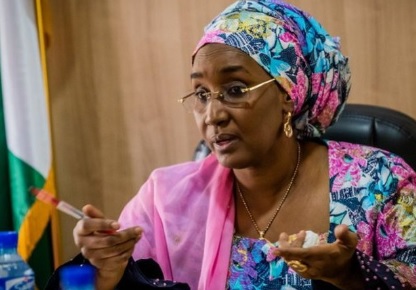
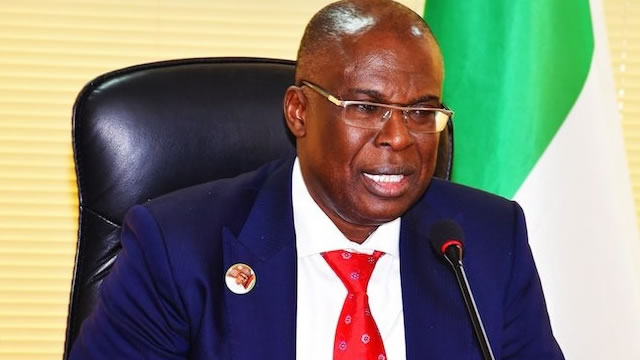
SADIYA Umar Farouq, the Minister of Humanitarian Affairs, Disaster Management and Social Development has challenged the Independent Corrupt Practices and Other Related Offences (ICPC) to publish the details of persons involved in the alleged diversion of the N2.72 billion school feeding programme.

Farouq said this in a statement signed by Nneka Ikem Anibeze, her Special Assistant on Media in reaction to a comment made by the ICPC chairman, Bolaji Owasanoye.

Owasanoye, the ICPC Chairman had disclosed on Monday at the 2nd National Summit on Diminishing Corruption presided over by President Muhammadu Buhari, at the Council Chambers of the Presidential Villa, Abuja, that preliminary investigation by the Commission had indicated that part of the N2.67billion was diverted to private accounts.

He added that over N2.5 billion was misappropriated by a senior civil servant (name withheld) in the ministry of agriculture and now deceased, for himself and cronies.

However, the Minister described those casting aspesions on her as malicious and unfair, calling on the ICPC to publish the names of persons, Federal Colleges and school heads whose names have been found to be associated with the missing funds and also freeze the accounts where the said funds were diverted.

According to her, the Federal Government Colleges school feeding in question was different from the Home Grown School Feeding which was one of her Ministry’s Social Investment Programmes.

She further explained that the school feeding under scrutiny is feeding of students in Federal Government Colleges across the country which is not under the Federal Ministry of Humanitarian Affairs which only oversees Home Grown School Feeding for children in Primaries 1-3 in select public schools across the country.

The Minister insisted that the ICPC Chairman was misquoted by those she called mischief makers and directed reports at the Ministry of Humanitarian Affairs.

“The statement by ICPC was twisted and misinterpreted by mischief makers and directed at the Ministry of Humanitarian Affairs,” Farouq said.

While urging members of the public to disregard the false reports being linked to the ministry, she reiterated that the over N2.5 billion which was reportedly misappropriated by a senior civil servant (name withheld) took place in a different ministry and not the Ministry of Humanitarian Affairs, Disaster Management and Social Development.

“That the ICPC recovered N16 billion worth of assets from the said ministry which was paid into an individual account for non-official purposes and not the Ministry of Humanitarian Affairs, Disaster Management and Social Development,” she said.

However, Azuka Ogugua, the ICPC spokesperson during a telephone conversation with The ICIR on Tuesday said that the ICPC chairman was misquoted by media reports.

Ogugua said Owasanoye never mentioned the Ministry of Humanitarian Affairs during his statement at the Presidential Villa.

“The Chairman did not mention the Ministry of Humanitarian Affairs, he only talked about the Federal Government Colleges school feeding programme, I don’t know where the media got their reports from,” she said.

Labour retreats to strike another day

0

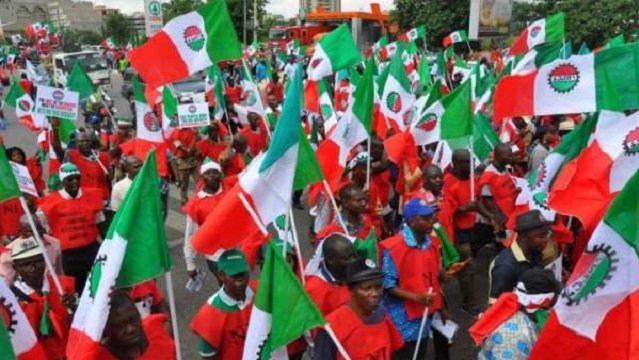
ORDINARY Nigerians, who had already braced up for consequences of a showdown between organised labour and the Federal Government over the hike in fuel pump price and electricity tariff, woke up on Monday to see reports that the industrial action planned by labour to force the government to reverse the highly unpopular policies has been called off at the last minute. An agreement reached at a nocturnal meeting between representatives of the government and the labour unions resulted in the suspension of the planned industrial action.

However, while the Nigerian Labour Congress and the Trade Union Congress had decided to embark on the strike to force a total reversal of the petrol pump price and electricity tariff hikes, the reason given for the suspension of the strike, as gleaned from a communique issued after the Sunday night and Monday morning meeting, was that the government had agreed to suspend the application of the cost-reflective electricity tariff adjustments for two weeks.

From all indications, labour has already backed down from demanding a reversal of the particular hike which is arguably of greater concern to majority of Nigerians – the increase in fuel pump price brought about by the deregulation of the downstream sector of the petroleum industry.

While many Nigerians would feel disappointed at the development, it also serves to illustrate a recurring trend in the history of labour strikes in Nigeria. Even as organised labour would always resort to industrial action as a default reaction to the introduction of perceived ‘unjust’ policies, government, most of the time, ends up having its way. In this sense, it is also not impossible that, at the end of the day, the two-week suspension of the implementation of the application of the cost-reflective tariff would only be a temporary reprieve with the government still going ahead to implement the hike in the cost of electricity.

Despite industrial actions embarked on by organised labour to oppose various episodes of government-determined increment of the fuel pump price, the cost of a litre of petrol had risen steadily, over the years, even during the period the government was implementing the controversial subsidy on petroleum products.

In June 2007, labour went on strike for a total of four days over the increase in the pump price of fuel from N65 to N75 by the administration of Late President Umaru Yar’Adua. The massive industrial action

that trailed the removal of fuel subsidy and increase in pump price from N65 to N138, in January 2012, by the President Goodluck Jonathan administration, lasted five days.

Again, for a period of four days in May 2016, labour downed tools in protest after President Muhammadu Buhari hiked the fuel pump price from N86 to N145.

While it had on some instances won the battle in the fight with the government by forcing a suspension of the implementation of the increment in fuel pump prices, labour has ultimately ended up losing the war, as can be inferred from the fact that the cost of a litre of petrol is currently selling between N158 and N162 at filling stations across the country.

Arguably, labour’s biggest victory from industrial actions was forcing the Federal Government to meet its minimum wage demands – a feat that featured a series of strikes over a long period of time. But the minimum wage victory is not yet total, as it was only recorded at the federal level, with most state governments yet to bow to labour’s demands.

The feeling that labour has been on the losing side in most instances in its chequered negotiations with government is also reinforced by the failure of two highly ‘militant’ professional unions – the Academic Staff Union of Universities and the Nigerian Association of Resident Doctors – to actualise longstanding demands despite several strike actions.

Over the years, academic activities had shutdown and undergraduates endured prolonged stays in universities, while patients had been left to their fate, resulting in preventable deaths, as ASUU and NARD embarked on strikes to press home different demands on the government. But so little was achieved, and not much changed – in fact, both labour unions (ASUU and NARD) are on strike at the moment.

The fact that life is daily getting harder for Nigerians, despite numerous strikes embarked on by labour in a bid to force the implementation of ‘more humane’ policies, indicates that somehow, government has a way of getting the better of the labour leaders whenever the two parties meet at the negotiating table.

The government has made promises by promising some palliatives that would cushion the impact of the deregulation-influenced hike in fuel pump price, which labour has already been made to accept. The communique from the meeting between labour and the government said the palliatives would be in the areas of transport, power, housing, agriculture and humanitarian support. Interestingly, a resolution

that the Nigerian National Petroleum Corporation should expedite the rehabilitation of the nation’s four refineries located in Port Harcourt, Warri and Kaduna to achieve 50 per cent completion by December 2021 was among the major takeaways from the meeting.

The rehabilitation of the refineries had been on the agenda for several years and it remains to be seen whether the fresh resolution arising from the latest episode of labour-government negotiations, aimed at stopping an industrial action, could do the magic.

But then, observers would be keen to note that government has made similar promises in previous instances when it wants time to avert nationwide industrial actions, which usually come with dismal economic consequences. Palliatives have been rolled out by the government in the past but the impact of the interventions is uncertain, as the measures implemented by the government have not eased the hardship being experienced by Nigerians on a daily basis.

Be that as it may, it appears that the promises made by government at the meeting with labour was a last-minute move. Before the two parties sat down to negotiate, the government had tried to use the judiciary to stop the workers from going on strike, an action which was also in keeping with tradition in the history of government’s response to labour agitations.

Following an ex-parte application by the Office of the Attorney General of the Federation, Justice Ibrahim Galadima of the National Industrial Court sitting in Abuja issued a restraining order stopping the NLC and the TUC from proceeding with the strike.

But while the Nigerian labour laws restricts the right to strike and the judiciary goes ahead to declare strike action against general economic and political policies illegal, Nigeria is a member of the International Labour Organisation, which recognises the right to embark on strike as a fundamental human right.

Legal hurdles placed against industrial actions by the government has over the years have failed to stop labour from playing a role in Nigeria’s political and economic affairs. The first organised labour movement in the country was formed in 1912, when civil servants established a union. Railway workers and teachers followed suit and in 1945, 43,000 workers staged a 40-day strike to protest low wages. By 1950, there were 144 unions, with more than 144,000 members.

However, in 1978, a government decree amendment reorganised more than 1000 unions into 70 registered industrial bodies under the umbrella of the NLC but, despite government interference in union activities, in July 1994, two key unions of oil and gas workers – Nigeria Union of Petroleum and

Natural Gas Workers (NUPENG) and Petroleum and Natural Gas Senior Staff Association of Nigeria (PENGASSAN) – went on strike to demand the reversal of the nullification of the June 12, 1993 presidential election believed to have been won by the late Alhaji Moshood Abiola. The then military dictator, General Sani Abacha, moved to suppress the strike by replacing the leaders of the oil workers unions and the NLC with state-appointed administrators, and top union leaders, Frank Kokori and Milton Dabibi, and others, were detained without trial.

The unions regained their independence after General Abdulsalami Abubakar took over from Abacha in June 1998, and when Nigeria returned to civil rule in 1999 under President Olusegun Obasanjo, they asserted their powers with a massive strike which forced the government to abandon an attempt to increase the fuel pump price in 2000.

With government resorting to a mixture of court actions, subtle threats and negotiations to avert strikes as democratic governance stabilised in the country, it is becoming increasingly easier for government to have its way at the end of the day.

Before labour suspended the planned strike on Monday, insistence by its leaders on going ahead with the strike was countered by warnings from the police, which, on its part, insisted that it would enforce the National Industrial Court order. The government also weighed in with a subtle threat to workers on its payroll, with a circular issued by the Head of Service, Dr. Folashade Yemi-Esan, ‘advising’ civil servants from level 12 and above, and essential duty officers, to be at work on Monday, the day the strike was meant to commence. The circular insisted that a National Industrial Court had restrained labour from going ahead with the strike.

Labour insisted on going ahead with the strike, and Nigerians prepared for ‘a mother of all strikes’, until the narrative turned into an anti-climax at the last minute – with labour calling off the strike and at the same time giving up its opposition to the fuel pump price hike even as government only halted the implementation of the increment in electricity tariff for two weeks.

What happens after two weeks is unknown at the moment but it would not be unexpected if, by that time, labour once again re-groups for another strike.

ICPC uncovers N2.67b meant for school feeding program in civil servants’ accounts

0

THE Independent Corrupt Practices and Other Related Offences Commission (ICPC), says it has uncovered how high wire fraud still take place within the civil service system.

Bolaji Owasanoye, Chairman of ICPC said officials of the Commission recently uncovered a N2.67 billion payment made to some Federal Colleges, also known as Unity Schools for the homegrown feeding programme during lockdown.

Owasanoye gave details of these frauds in his keynote address at the second National Summit on Diminishing Corruption with the theme: “Together Against Corruption and Launch of the National Ethics and Integrity Policy”.

The event held at the Council Chambers of the Presidential Villa, Abuja.

He stated that ICPC detected that the funds were diverted into personal accounts of the Ministry officials when children were observing the lockdown imposed by the government.

Beyond this, another N2.5 billion was alleged to have been appropriated by a senior civil servant in the Ministry of Agriculture and Natural Resources for himself and cronies.

Unfortunately, the kingpin is now deceased.

Owasanoye also listed other assets recovered in the Agric ministry to include 18 buildings, 12 business premises and 25 plots of land.

He said under Open Treasury Portal review carried out between January to August 15, 2020, out of 268 Ministries, Departments and Agencies (MDAs) 72 of them had cumulative infractions of N90 million.

According to him, while 33 MDAs tendered explanations that N4.1 billion was transferred to sub-TSA, N4.2 billion paid to individuals had no satisfactory explanations.

“We observed that transfers to sub-TSA was to prevent disbursement from being monitored. Nevertheless, we discovered payments to some federal colleges for school feeding in the sum of N2.67 billion during lockdown when the children are not in school, and some of the money ended up in personal accounts. We have commenced investigations into these findings, “Owasanoye told participants.

The ICPC chairman also said under Commission’s 2020 constituency and executive projects tracking initiative, 722 projects with a threshold of N100 million (490 ZiP and 232 executives) were tracked across 16 states.

Corruption is not a part of Nigeria’s core ethical values – President Buhari

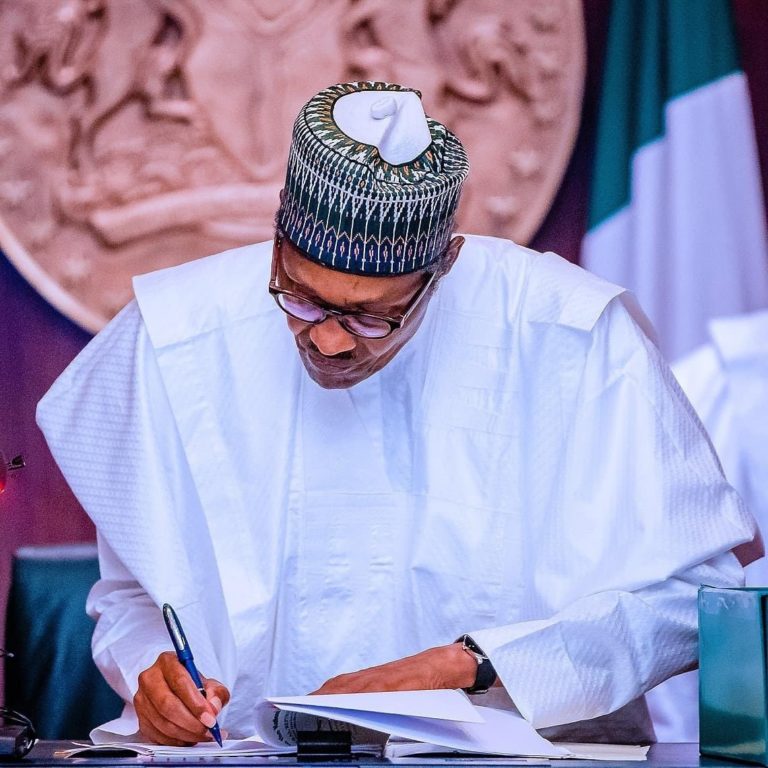
0

PRESIDENT Muhammadu Buhari at the launch of the National Ethics and Integrity Policy on Monday said corruption was alien to Nigeria’s core ethical values.

President Buhari was speaking at the 20th anniversary of the establishment of the Independent Corrupt Practices and Other Related Offences Commission (ICPC) while presiding over the event virtually from the presidential villa in Abuja.

The event was organised by the ICPC, in collaboration with the Office of the Secretary to Government of the Federation, and the National Orientation Agency (NOA).

President Buhari went down memory lane to explain his role in combating corruption while he was a military head of state.

“As military Head of State, I fought corruption headlong and held public officers who abused their office or misused public funds to an account. Furthermore, I introduced the War Against Indiscipline (WAI), one of whose cardinal objectives was the promotion of our cherished culture of ethical conduct, integrity, and hard work,” he said.

“I recognised in 1984 as I do even more now that corruption poses a clear danger to Nigeria, so, we cannot relent in efforts to eradicate it from our society. As I have often reminded Nigerians, If we do not kill corruption, corruption will kill Nigeria.”

He reiterated a call on the judiciary to undertake reforms that will fast-track delivery of justice for the common good.

“We need laws and legal system to be reformed to deliver justice to every citizen without regard to status and finally we need ethical re-orientation of the people to achieve this goal. When we work together against corruption we can defeat it,” he said.

He maintained that enlightening Nigerians on preventive measures remains the key component in fighting corruption and commended ICPC in this regard.

“I wish to reiterate the role of preventive measures, public education and enlightenment against corruption. This government through the Open Treasury initiative, TSA, GIFMIS, BVN and many more is implementing different corruption prevention measures to track and retain government revenue for the use of the people,” he said.

At the event, awards were presented to Opeyemi Peter Adeboye, Chikezie Favour and Matilda Daniels declared winners of the ICPC Youth Music and Essay Competitions on the promotion of anti-corruption values.

Other awardees for the 2020 Public Service Integrity Awards include CSP Francis Osagie Erhabor of the Nigeria Police and Hamza Adamu Buwai of the Federal Ministry of Industry, Trade & Investment who demonstrated the will to look away from graft and corruption.

Congratulating the awardees, President Buhari said the country was proud of their accomplishments.

“Even though COVID-19 has not permitted the kind of ceremony that you deserve, Nigeria is proud of you. You are a pride to your families, institutions and to Nigeria,” he said.

Buhari commends former UN President, Muhammad- Bande says he has made Nigeria proud

0

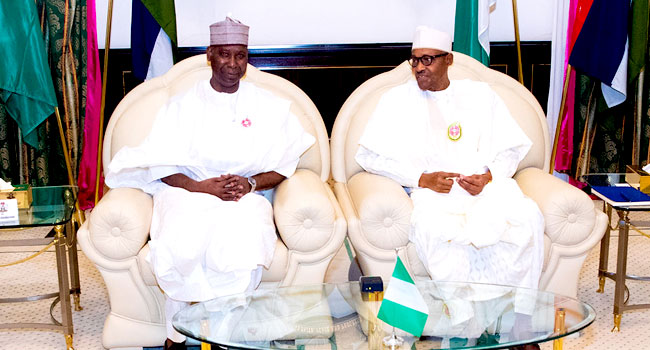
PRESIDENT Muhammadu Buhari has commended Tijjani Muhammad-Bande, the President of the 74th Session of the United Nations General (UNGA74) 2019-2020 and Nigeria’s permanent representative to the United Nations on the expiration of his tenure.

“Your performance in the last one year as President of the General Assembly has made Nigeria exceptionally proud and I wish to pay glowing tributes to you for your huge achievements as Permanent Representative of Nigeria to the United Nations (UN), Buhari said.

Garba Shehu, Senior Special Assistant to the President on Media and Publicity disclosed this in a statement noting that Buhari described the former UNGA president’s tenure in the United Nations as a “triumphant,” administration.

Shehu quoted Buhari as saying that as Nigeria’s Permanent Representative, Muhammad-Bande ‘played a cardinal role by giving impetus to a number of UN global initiatives, one of which was advancing the achievement of the Sustainable Development Goals (SDGs) particularly in poverty eradication, zero hunger, and quality education’.

According to the President, the former UNGA president was relentless in pursuing his agenda for the UN despite the COVID-19 pandemic.

“In spite of all the challenges that pre-existed your tenure in office and those posed by the COVID-19 global pandemic, marking the most trying time in the history of the UN you were relentless in pursuing the agenda you set out as President of the General Assembly (PGA) and remained committed to the ideals of the UN. You have acquitted yourself quite admirably,” Buhari stated.

The Nigerian President further stated that Muhammad Bande’s achievement was in multilateralism as he wished him success in all his future endeavours.