Home Blog Page 2

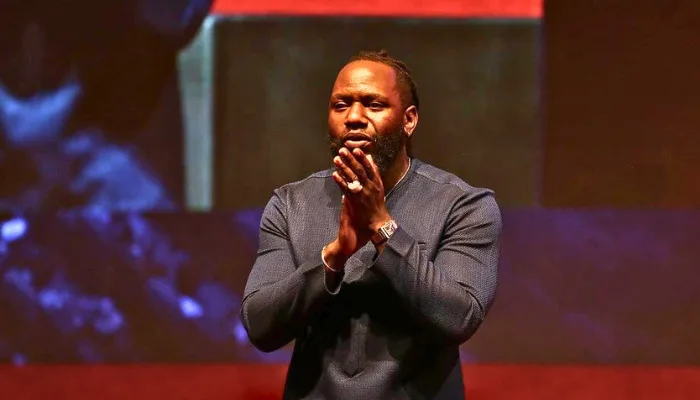
UPDATED: Fountain of Life Church faces leadership crisis as board suspends Jimmy Odukoya

0

A LEADERSHIP crisis has erupted at The Fountain of Life Church in Lagos following the emergence of conflicting statements from the church’s Board of Trustees and another faction aligned with the church’s leadership under its Senior Pastor, Jimmy Odukoya.

While the Board of Trustees announced Odukoya’s removal as the church’s senior pastor, the pastor’s camp has rejected the decision, insisting that he remains in office.

In a report announcing his removal, the Board of Trustees said it had resolved to terminate Odukoya’s recognition as senior pastor following a review of a video recording containing what it described as the succession instructions of the late founder, Taiwo Odukoya.

The Board said the recording, made in December 2021 at the late pastor’s request, showed that the founder had designated another person as his successor while assigning Odukoya the roles of administrative assistant to the successor and head of the youth church. The arrangements, it said, were to take effect upon the founder’s death or inability to communicate.

The Board said the embattled pastor recorded the video at his father’s request but that it was not made available when it initially sought clarification about the founder’s succession plans.

“The Board has undertaken a careful consideration of the recording, the circumstances in which it was made and the relevant provisions of the church’s constitution,” the statement read.

The Board explained that its decision to appoint the late founder’s son as senior pastor after his father’s death in August 2023 was based on the information available to it at the time.

It said it had reviewed the recording alongside the church’s constitution and concluded that the leadership structure needed to be realigned to reflect the late founder’s instructions.

“The Board has not acted in haste. Since the video came to light, the board has sought a peaceful and private resolution of these matters,” it noted, adding that it had attempted to resolve the disagreement privately through meetings involving respected religious leaders but alleged that the embattled pastor rejected the advice offered during the reconciliation process.

It further cited concerns over his recent remarriage and the public blessing of his marriage, describing the development as inconsistent with the church’s teachings, the values of its founders and the standards expected of its spiritual leadership.

The Board said following a meeting on November 16, it resolved that the younger Odukoya was no longer recognised as the church’s senior pastor, effective immediately.

However, in a counterstatement issued on Tuesday, signed in the name of The Fountain of Life Church rival “Board of Trustees” and shared on Odukoya’s social media handle, the church rejected the announcement, describing it as constitutionally invalid and insisting that those behind it lacked the authority to speak on its behalf.

The statement accused the individuals who announced the pastor’s removal of earlier constituting themselves into a group called the “Concerned Members of the Board” and acting outside the constitutional framework governing the church.

The church also alleged that the trustees involved had been asked to resign from the board as far back as March 14, 2026, over what it described as repeated violations of the church’s constitution and founding principles.

According to the counterstatement, the communication was formally delivered to the trustees concerned and acknowledged, while one of them subsequently resigned.

The church maintained that the remaining individuals had continued to make decisions they purported to be binding on the institution without complying with its governing constitution.

“For the avoidance of doubt, Pastor Jimmy Odukoya remains the duly appointed Senior Pastor and Chairman of the Board of Trustees of The Incorporated Trustees of The Fountain of Life Church,” the statement said.

It added that his appointment was unanimously approved by the Board of Trustees in September 2023 and that no constitutionally valid decision had been made to remove him from either position.

“The constitution remains the governing instrument of the church. No individual or group of individuals can substitute their preferences for the express provisions of that constitution,” it added.

The ICIR checked the church’s website for further verification and contact details of its board members, but the pastoral leadership page only identified Pastor Jimmy Odukoya as senior pastor and Chairman of the Board of Trustees, and his sister, Toluwani Odukoya-Ijogun, as associate senior pastor.

Efforts by this reporter to obtain further clarification on the crisis from the church were unsuccessful at the time of filing this report. Phone calls to the contact numbers listed by the church went unanswered, and a WhatsApp message to the church did not get a response.

The church’s position on the conflicting statements and the allegations surrounding the purported removal could therefore not be independently verified as of the time of filing this report.

The ICIR reports that the development comes more than three years after the late Odukoya’s son assumed leadership of the church following the death of his father on August 7, 2023, at the age of 67.

The Fountain of Life Church was founded in 1992 by Odukoya and his first wife, Bimbo Odukoya, a pastor. The woman died on December 11, 2005, from injuries sustained in the Sosoliso Airlines Flight 1145 crash in Port Harcourt.

Her husband subsequently married South African Pastor Nomthi Zulu in 2010, and she died in November 2021 after battling cancer.

Following the man’s death in August 2023, his son was announced as his successor by the church’s Board of Trustees and installed as senior pastor in September 2023.

On November 1, 2026, the embattled Odukoya introduced his new wife, Mo Jasyme, to the congregation during a Sunday service at the church’s headquarters in Ilupeju, Lagos.

The introduction followed a social media post in which he shared a photograph of two hands wearing wedding rings with the caption, “To New Beginnings.”

Tunde Bakare, a pastor of the Citadel Global Community Church, who reportedly blessed the couple’s marriage in the United States, introduced the bride to the congregation as Pastor Mo Odukoya.

The younger Odukoya was previously married to Oluwakemi Banjoko in London in March 2013, with whom he has two children. Their marriage ended in separation.

His new wife, Jasyme, was previously married to British Nigerian record producer Mosadoluwa Adegboye. She was a designer and creative entrepreneur. Jasyme collaborated with her former husband on various creative ventures over the years. The circumstances surrounding her divorce from Adegboye, including when the marriage ended, remain unclear.

The remarriage generated debate among Christians and members of the public over divorce, remarriage and the expectations placed on church leaders.

NOTE: This report has been updated to reflect the involvement of two Board of Trustees in the dispute with embattled Senior Pastor Jimmy Odukoya.

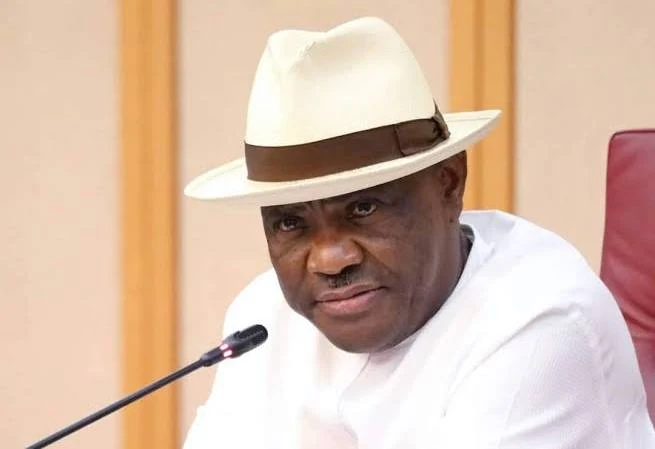
Benue approves N2.69bn for Israel pilgrimage amid insecurity, hunger, infrastructure deficits

THE Benue State Government has approved N2.69 billion to sponsor 500 people on a Christian pilgrimage to Israel, the state’s Commissioner for Information and Orientation, Solomon Iorpev, disclosed on Monday.

Iorpev, in a statement, said the approval was made at an emergency meeting of the State Executive Council.
He said the step was the first of its kind since the creation of the north-central state.
“This initiative reflects the commitment of the administration of Governor Hyacinth Alia to the spiritual growth and well-being of the people,” he said.
The commissioner said the council also congratulated Alia on receiving the All Progressives Congress (APC), flag to seek a second tenure in the 2027 elections.
The flag was given to Alia at a ceremony in Jos, in Plateau.

He quoted members of the council as saying that the approval demonstrated the confidence reposed in the governor by the people of Benue State, President Bola Tinubu and the party.

Iorpev added that the council also congratulated Alia on his emergence as The Sun Newspaper Governor of the Year.
He said the council considered the award as a recognition of the governor’s achievements and purposeful leadership since assuming office.
According to the commissioner, members of the council reaffirmed the commitment to supporting the governor’s agenda of service, unity and development across the state.
He added that the council equally expressed gratitude to God for the blessings on the state and the achievements recorded by the Alia administration.

The ICIR reports that the approval comes as the state prepares to participate in the 2027 general elections alongside other states across the country.

Alia, an ordained Catholic priest, assumed office as governor on May 29, 2023. He approved the expenditure nearly three and a half years into his administration and barely two months before the 2027 presidential and National Assembly elections.

The ICIR further reports that Benue State has been grappling with widespread insecurity, forcing many residents to flee their communities and seek refuge in internally displaced persons (IDP) camps following repeated attacks by gunmen.

According to a September 2026 report by the United Nations High Commissioner for Refugees (UNHCR), the UN refugee agency, Benue State is home to approximately 500,000 internally displaced persons (IDPs), the second-largest displaced population in Nigeria. These residents were forced to flee their communities not by natural disasters but by persistent insecurity, which the Alia-led government has failed to contain.

“Between January 2024 and August 2025, more than 270 attacks against civilians were recorded across the state, with over 880 people killed in 2025 alone. In 2026, 76 people had been killed by August,” the report stated.

Besides insecurity, the state faces hunger, inadequate infrastructure, poor healthcare and educational facilities, high unemployment and other socioeconomic challenges common to many states in the country.

On November 7, The ICIR reported that the Delta State Government had approved a similar amount to sponsor Christian pilgrimage to Israel.

The State Commissioner for Bureau of Special Duties, Erijo Etacherure, announced the approval in Asaba on Friday, November 6.

He said the Nigeria Christian Pilgrim Commission (NCPC) would begin screening intending pilgrims on November 11 following the N2 billion earmarked by the government for the sponsorship of Christians in the state to Jordan for the 2026 pilgrimage programme.

The ICIR reports that the approval for the pilgrimage comes amid socioeconomic challenges facing the state. For instance, the Debt Management Office (DMO) put Delta State’s total debt stood at ₦369.30 billion as of June 30, 2026.

In September 2025, the Guardian Newspaper reported the African Network for Environment and Economic Justice (ANEEJ) claiming 1.5 million people in the state lived in multi-dimensional poverty.

Several media reports, including investigations by the Guardian and other Nigerian media organisations, have documented significant challenges facing Delta State’s education, road, healthcare and electricity iinfrastructure.

Many states in Nigeria use public funds to sponsor religious pilgrimages, a practice that often attracts criticism from citizens who argue that such resources could be channelled into sectors and projects that benefit a larger proportion of the population.

Wike defends UniAbuja land reduction

0

THE Federal Capital Territory Administration (FCTA) has defended the reduction of the University of Abuja’s land from 11,824.04 hectares to 4,685 hectares, saying the decision by FCT Minister Nyesom Wike was based on recommendations approved by his predecessor, Mohammed Bello.

In a statement issued on Monday through his Senior Special Assistant on Public Communications and Social Media, Lere Olayinka, Wike said a joint committee comprising representatives of the FCTA and the university had recommended that the institution’s land be reduced to 100 hectares in line with the National Universities Commission’s (NUC) recommendation.

“It is on record that on November 10, 2016, the then FCT Minister inaugurated a Joint Committee of FCTA and UNIABUJA on Land and Sundry Issues. The committee was to look into the UNIABUJA land size vis encroachment by indigenous settlers, encroachment on the Gwagwalada Mini Campus land by illegal developers and issuance of titles for the two campuses of the university with their actual land size,” he said.

The minister statement follows a move by the academic and non-academic staff, students and alumni, under the Joint Action Committee (JAC), who staged a protest at the university’s main campus in Gwagwalada, Abuja on Monday, over the reduction of the university’s land, with members of the university community opposing the move and demanding a reversal.

The demonstrators, who blocked the university’s main entrance and vowed to sustain the protest until their demands are addressed demanded President Bola Tinubu’s intervention and called on Wike to stop further allocations of the institution’s land.

The Students’ Union Government had earlier announced a three-day protest scheduled to run from November 16 to 18, urging students and staff unions to participate.

In his statement, Wike described Monday’s protest by the university’s JAC as misplaced, insisting that he did not arbitrarily take the decision but acted on the findings of a joint committee established in 2016.

“Five out of the 12 members of the committee were from UNIABUJA. They were Prof. Otaki Alanana, Prof. A. Mallam, Mohamed Kassim, A.E. Ripite and Sadiq O. Shuaibu. The committee recommended amongst others that the land area of over 11,000 hectares of the main campus was far beyond the recommended size by the National University Commission (NUC), and that the recommended size of 100 hectares by the NUC be given to the university,” he added.
According to him, the report was approved by Bello, adding that rather than implement the 100-hectare recommendation, Wike approved 4,519.80 hectares for the university, bringing the institution’s retained land to 4,685 hectares.

Wike argued that the approved allocation was sufficient to accommodate significant future development, estimating that it could provide space for more than 80,000 buildings if developed into plots of 500 square metres each.

He also alleged that the university had previously allocated portions of its land to individuals and corporate organisations, including the Economic and Financial Crimes Commission (EFCC), without obtaining the FCTA’s approval.

The minister questioned the basis of the protest, asking whether the university’s staff unions and other stakeholders were unaware that representatives of the institution had participated in the committee that recommended the reduction. He challenged the Academic Staff Union of Universities (ASUU), Senior Staff Association of Nigerian Universities (SSANU), Non-Academic Staff Union of Educational and Associated Institutions (NASU), Students’ Union Government and the alumni association to explain their opposition to the decision.

“Where in the civilised world is a university built on over 11,000 hectares of land, on which over 220,000 houses can be built at 500 square metres per plot?” he queried.

Wike further questioned how the reduction of undeveloped land would affect the university’s academic activities, staff salaries or students’ education, maintaining that the land decision was an administrative matter between the government and the university.

The ICIR reports that the protest is the latest development in a prolonged dispute between the University of Abuja community and the FCTA over the ownership and control of the institution’s land.

The disagreement dates back to June 2025, when FCT Minister Nyesom Wike announced plans to reduce the university’s original 11,824.04-hectare land allocation to approximately 4,000 hectares, with about 7,000 hectares to be recovered by the FCTA for other developments.

The minister argued that the university had occupied more land than it required and questioned the documentation covering the allocation. The decision was opposed by the university community, as ASUU maintained that the land was legally allocated to the institution in 1988 and was necessary for its future expansion, research activities and infrastructure development.

On August 18, 2026, the High Court of the FCT, sitting in Maitama, ordered parties in Suit No. FCT/HC/CV/3500/2026 to maintain the status quo over Plot No. 1, Giri District, pending the determination of a substantive suit instituted by the university against the FCT minister and the FCDA.

However, ASUU has accused the FCTA of violating the order by allocating portions of the disputed land to private interests.

On September 26, the tensions escalated after the university’s ASUU chapter accused the FCT minister of allocating portions of the disputed land to private individuals and companies, allegedly violating the subsisting court order.

The union subsequently threatened industrial action if the allocations were not reversed.

Police to release 78 suspects arrested over attack on Tinubu’s convoy in Abuja

0

THE Federal Capital Territory (FCT) Police Command says it will release 78 suspects arrested in connection with the attack on President Bola Tinubu’s convoy in Abuja, following a presidential directive granting them clemency.

The command disclosed this in a statement on Monday by its spokesperson, Josephine Adeh, saying the suspects were undergoing the necessary release procedures in compliance with the Presidency’s directive.

“Following the extension of presidential clemency to the individuals involved in the attack, the Presidency directed that the suspects arrested in connection with the incident be warned and released. In compliance with the directive, the command wishes to inform the public that the suspects are currently undergoing the necessary release processes,” she said.

The ICIR reports that the suspects were arrested following an attack on the president’s motorcade on Friday, November 13, 2026, shortly after Tinubu observed Jumu’ah prayers at a mosque in the Garki District of Abuja.

The police confirmed that some individuals attacked the departing convoy with stones and other dangerous objects, damaging several vehicles and injuring some security operatives.

The command said a joint security team, led by the police, responded to the incident, while subsequent intelligence-led operations in the area resulted in additional arrests, bringing the number of suspects in custody to 78.

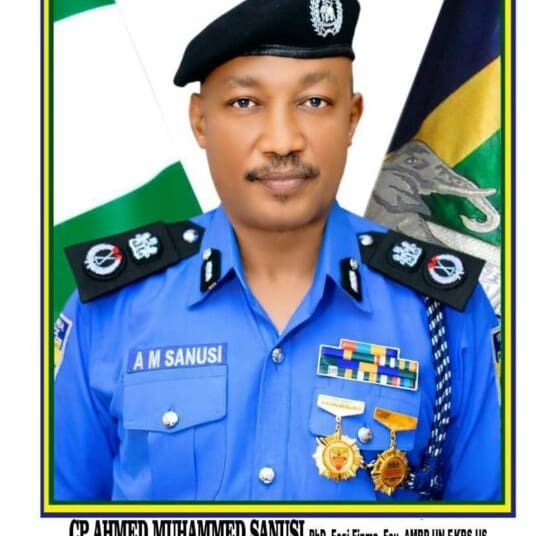
“The Commissioner of Police, FCT Command, CP Ahmed Mohammed Sanusi, PhD, FCAI, warns against acts of violence, public disorder and destruction of property. As preparations for the 2027 general elections intensify, the command urges all political parties, political actors and their supporters to embrace peaceful political engagement and shun violence, intimidation, inflammatory statements and incitement,” it added.

The command explained that its commissioner also directed area commanders, divisional police officers and heads of tactical units to intensify security operations to protect residents and visitors.

The police further urged political parties, politicians and their supporters to avoid violence, intimidation, inflammatory statements and incitement.

The ICIR reported that some Nigerians on Friday chanted “Ba ma so” and “Ba ma yi”, meaning “we do not want you”, and threw stones at Tinubu’s convoy after he attended Juma’at prayers in Abuja.

Videos circulating on social media (here, here, here, and here), showed groups of angry youths chanting the Hausa expressions of rejection as vehicles in the convoy attempted to leave the mosque.

Some of the people in the videos were seen shouting “Ba ma so” and “Ba ma yi” while throwing stones at the vehicles and security operatives from behind an iron barrier.

Security operatives accompanying the convoy were also seen drawing their weapons as the situation became tense.

In another video, some youths were seen destroying posters bearing the insignia of the All Progressives Congress (APC), the ruling party, while expressing opposition to Tinubu.

One of the videos showed what appeared to be the president’s official vehicle, identifiable by two flags mounted on it, being escorted by security operatives as it made its way out of the area.

Bandits abduct nine residents in Kaduna

0

SUSPECTED bandits have abducted nine residents of Kurmin Wali community in Kajuru Local Government Area, Kaduna State, in a fresh attack that left 14 people in captivity.

The village head, Isiaku Danazumi, disclosed this in an interview with journalists on Monday in Kaduna.

Danazumi said the attackers invaded the community at about 9:14 a.m. on Sunday, and abducted 12 residents, three of whom later escaped and returned home.

He said the nine victims still in captivity joined five other residents abducted in two separate attacks in October.

According to him, two residents were abducted on October 2, while another three were taken away by the attackers on October 10.

“This brings the total number of our people currently in the hands of the bandits to 14,” he said.

The traditional leader expressed concern over the continued attacks, saying that despite notifying the relevant authorities, there had been no concrete action to secure the release of the victims.

He said some security personnel visited the community on Sunday after the attackers had fled but left less than an hour after arriving.

Danazumi appealed to the authorities to intensify security operations in the area and facilitate the safe return of those being held captive.

NAN reports that Kurmin Wali had suffered a major attack in January 2026, when suspected bandits abducted more than 80 residents during a church service, sparking widespread public condemnation.

The latest incident has renewed concerns over the security situation in Kajuru and the safety of residents in vulnerable rural communities.

Efforts to obtain the reaction of the Kaduna State Police Command were unsuccessful as the Police Public Relations Officer, Mansir Hassan, a deputy superintendent of police, could not be reached for comments.

As of the time of filing this report, the police and the Kaduna State Ministry of Internal Security and Home Affairs had yet to issue an official statement on the latest attack.

Atiku faults Tinubu over apology to Plateau residents for not visiting attack-hit communities

0

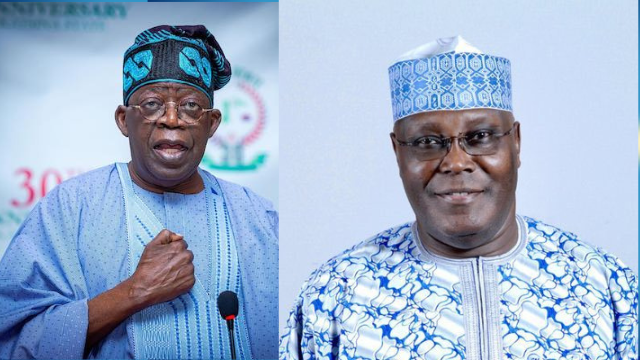
FORMER Vice-President Atiku Abubakar has criticised President Bola Tinubu over his appeal for forgiveness from Plateau residents for failing to visit communities affected by deadly attacks during his previous trip to the state.

Abubakar, the presidential candidate of the African Democratic Congress (ADC), said Tinubu’s decision to return to Plateau to campaign without having visited affected communities during their moments of grief was insensitive to the victims and their families.

“The people of Plateau needed their president when they were grieving, when their communities were under attack and when families desperately needed reassurance. President Tinubu promised to end the killings and protect them, but he failed to keep those promises. He did not visit to stand with them in their darkest hour,” he said.

The criticism followed Tinubu’s remarks at the All Progressives Congress (APC) presidential campaign rally in Jos on Saturday, where he acknowledged that his previous visit to the state was restricted to the airport.

The president appealed to residents to forgive him for not visiting communities in the hinterland, saying he was aware of the destruction caused by the attacks.

“When I last visited, the other time, I was limited to the airport; forgive me if you didn’t see me in the hinterland, but I saw the devastation,” Tinubu said.

Reacting in a statement on Sunday, Abubakar said Plateau residents needed the president’s presence and reassurance when their communities were under attack, rather than during an election campaign.

He accused Tinubu of failing to fulfil his promise to address insecurity and protect residents, arguing that a campaign appearance could not erase the government’s response to the killings.

“Now he has gone to Plateau to campaign and ask for forgiveness. The people may forgive him, but they will never forget the lives lost, the communities left in fear and the absence of their president when they needed him most,” he said.

Abubakar further argued that the suffering of residents should not be turned into a political campaign message, insisting that voters would hold the president accountable for his handling of the security situation.

The ICIR reports that Tinubu’s comments relate to several attacks on communities in the state by non-state actors, including the March 29, 2026, attack on Angwan Rukuba community in Jos North Local Government Area of Plateau State, where at least 28 people were reportedly killed.

The attackers reportedly opened fire on residents at a popular drinking spot in the community, leaving several others injured. The incident heightened concerns over recurring attacks and insecurity in Plateau State.

On April 2, 2026, Tinubu visited Jos following the attack and ordered the deployment of more than 5,000 artificial intelligence-enabled surveillance cameras to strengthen security operations in the state.

However, the president’s visit was largely restricted to the Yakubu Gowon Airport, where he met with Governor Caleb Mutfwang, political leaders and some victims’ representatives.

The decision not to visit the affected community attracted criticism, with Abubakar describing the airport-only condolence visit as insensitive to grieving residents.

The Presidency subsequently defended the president’s decision, with his Special Adviser on Information and Strategy, Bayo Onanuga, explaining that Tinubu’s engagements with the Chadian president in Abuja and a previously scheduled trip to Iperu, Ogun State, affected his movement.

How Nigerians can avoid snakebites – FMC Abuja MD

0

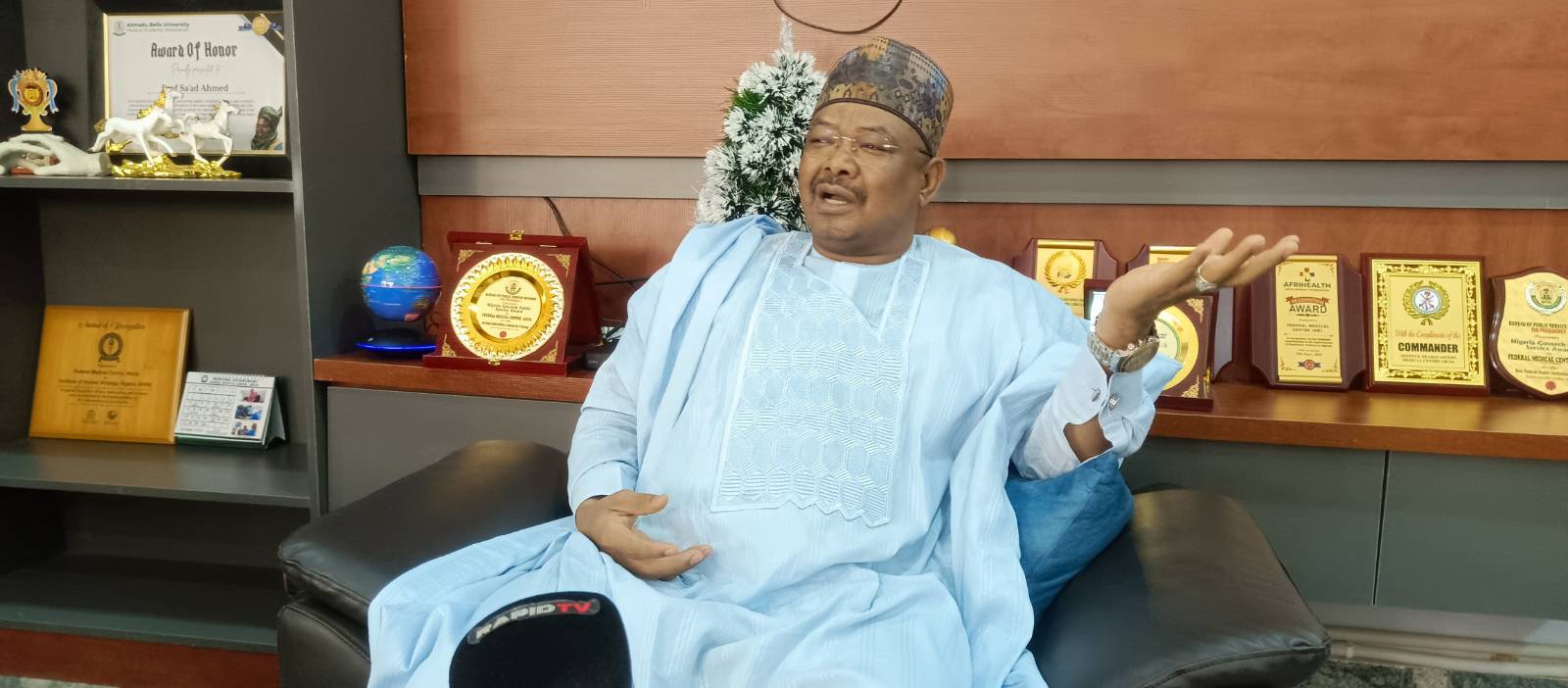
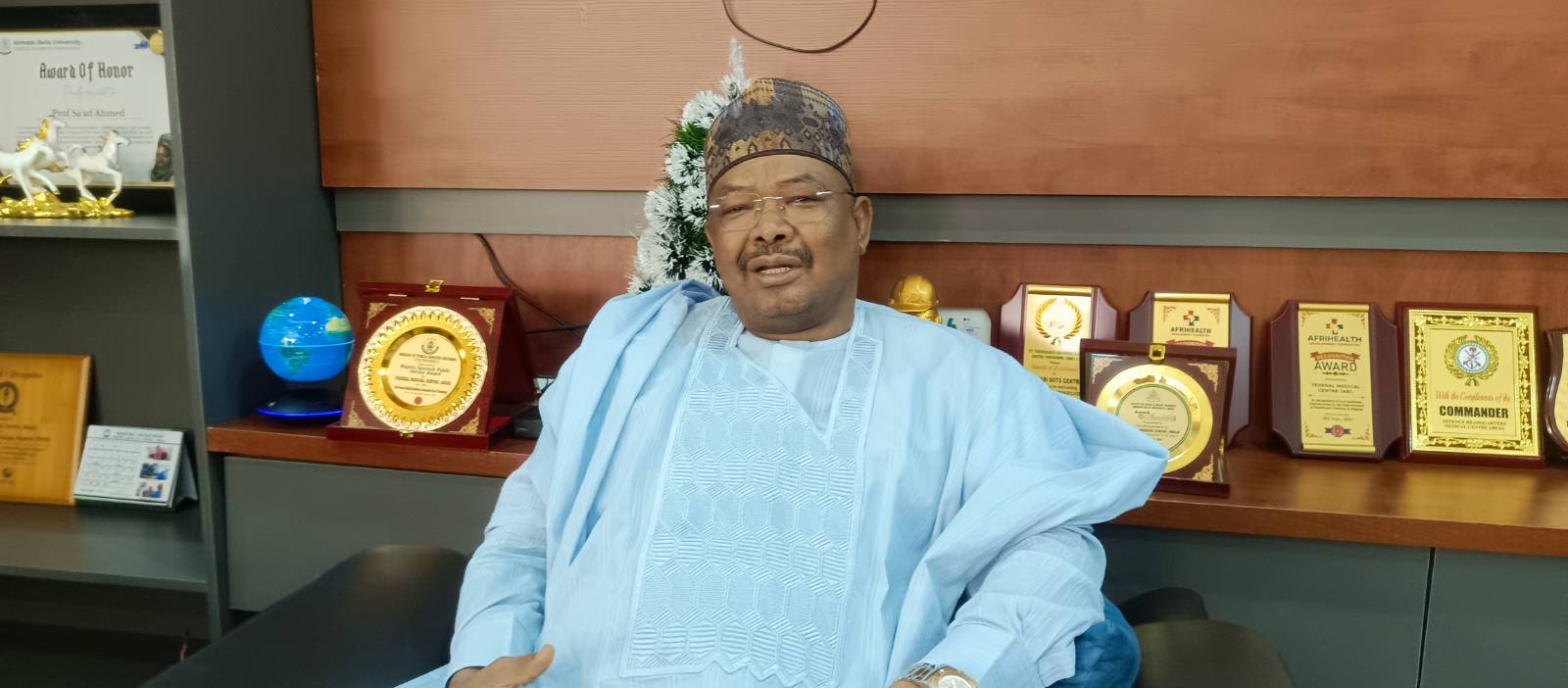
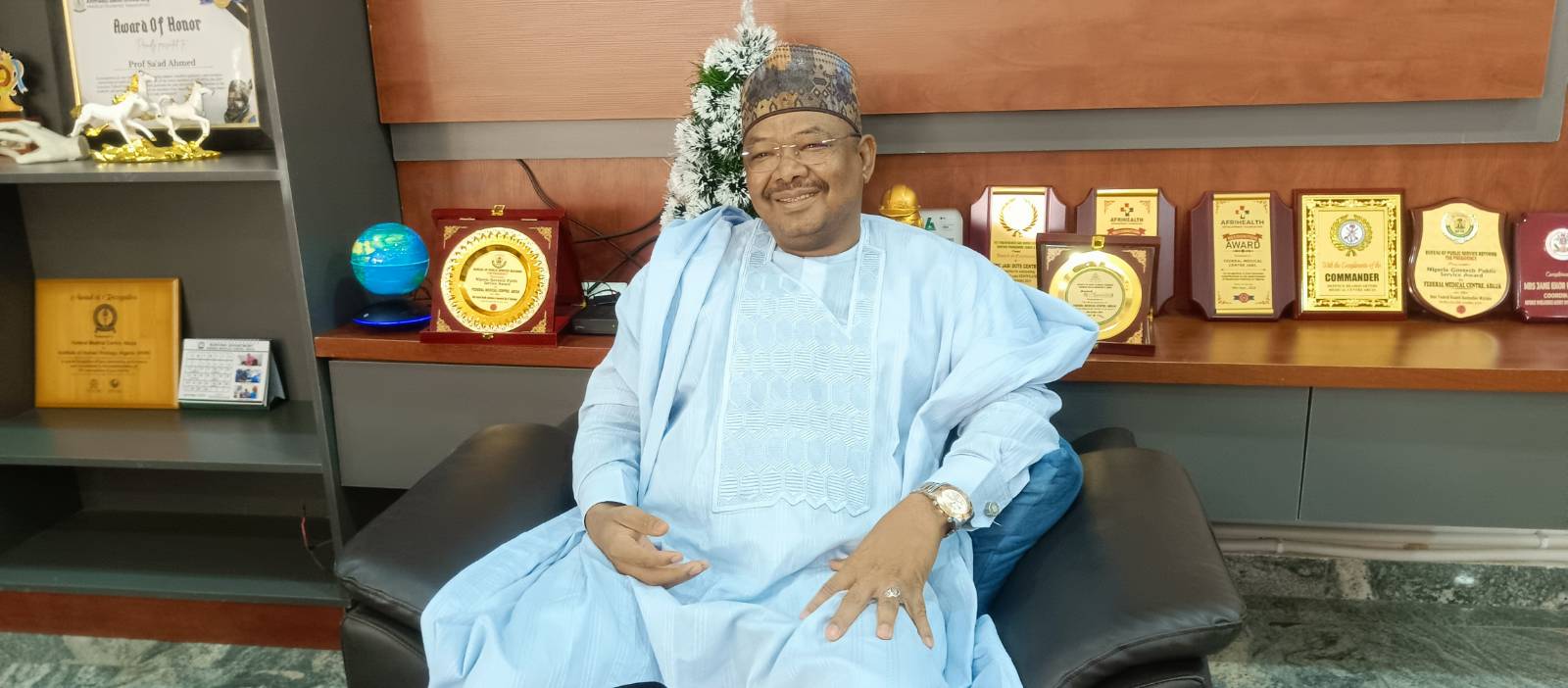
Snake bites and scorpion stings can turn life-threatening within minutes. But timely medical intervention could prevent fatalities, says Sa’ad Ahmed, professor and Medical Director of the Federal Medical Centre (FMC), Jabi, Abuja. In this interview with The ICIR’s Marcus Fatunmole, Ahmed sheds light on the growing concerns about reptiles encroaching on residential areas and explains why the first 15 to 30 minutes after a snakebite are often the difference between life and death. Excerpt 


Your hospital recently treated a lady bitten by a mamba snake. From a medical perspective, how can people avoid snakebites, especially during this hot season, amid concerns over El Niño?

Yes. El Niño, we all know, is a situation where we have increased environmental temperatures arising from the rise in temperature around the Pacific. So it affects, basically, what I can say is global warming. With that, you expect some reptiles to be affected. Certainly, they’ll come out of their hiding places to get to cooler environments where they can live.

That affects snake habitats as well. So you see cases where snakes will be moving from hotter areas to cooler environments for better conditions. In doing so, they can come into contact with humans. And if someone mistakenly comes into contact with one, it can actually lead to an encounter. So I think that may lead to the snakebite that we are talking about.

What has been the experience with snakebites at the FMC this year?

So far, I think we have had 11 cases of snakebites this year. Virtually every month, we see one case until, I think, July, when we had two cases. In August, we had three cases and in October, two cases. So we have had 11 cases so far.

What are the first aid measures in the event of a snakebite? 

I think the first thing, once there is a snakebite, is to first look at the affected area. You don’t need to wash it. You don’t need to start panicking. What needs to be done is to start preparing to move the patient to the nearest hospital.

If a tourniquet is to be applied, then it shouldn’t be so tight that it affects the blood supply. Otherwise, there could be loss of blood supply to the distal part of the limb. What is most important is to get the person to the nearest hospital as soon as possible.

MD, Federal Medical Centre (FMC), Jabi, Professor Sa’ad Ahmed PC: The ICIR

We are witnessing rapid urban development with buildings increasingly taking over natural habitats of reptiles. How does this affect the frequency of snakes creeping into homes?

When you have development, it is expected that it should push reptiles far away. But when we keep things indiscriminately, then we leave spaces where these reptiles can actually hide. If everywhere is clean, the reptiles will have no chance of living in that place, which means they have to move away from those areas.

So, I think with proper development, we expect the reptiles to move far away. But where you have clusters of people, houses built indiscriminately, or a lot of items kept around where people live, then you are certainly inviting snakes to come in and stay in those places. And, of course, from time to time, those snakes can come out to look for food or other things around the area.

If you mistakenly, let’s say, step on one, the snake can bite. So, I think that with good development, we shouldn’t be living with snakes. But where we don’t have good planning, and people keep things indiscriminately around their homes, then we’ll be inviting snakes.

There are those who fear scorpions as much as they fear snakes. Can scorpion stings be as fatal as snakebites?

They all have toxins, but the nature of toxins may differ. For snakebites, it depends on the kind of snake. Some may not be poisonous, but there are poisonous ones; it all depends. Some toxins affect the neurons, whereby the nervous system can be affected, and that may lead to cessation of breathing.

There are some that destroy the blood. They lyse the red blood cells within the system, and then someone can start bleeding. And, you know, red blood cells are the components of the blood that carry oxygen to various tissues of the human body.

So, if they are lysed, there will be no transmission of oxygen to the tissues. Of course, there will be multi-organ failure and what have you. Scorpions also have toxins. First, the pain itself can lead to serious discomfort.

Secondly, it causes an anaphylactic reaction. In an anaphylactic reaction, you basically go into shock. Therefore, there will be less blood supply to the vital organs, and you can have multi-organ failure as well. When all these things happen, one needs to get to the hospital as quickly as possible.

What’s your advice to those who rush to traditional homes when bitten by reptiles? Is there evidence that such treatments work?

Well, I may not speak much about the application of traditional medicine because I’m not knowledgeable about it. I’m more of the orthodox type. So, my advice would be to go to the nearest hospital to access proper care. However, we can research some of the things they do, which we don’t know much about. We could actually see if they are beneficial. We can recommend that they be incorporated into orthodox practice.

MD, Federal Medical Centre (FMC), Jabi, Professor Sa’ad Ahmed PC: The ICIR

Let’s talk about the challenges of having antivenom. Many people in Nigeria believe many hospitals don’t have it. What does it take? 

We have always had stocks of anti-snake venom. Unfortunately, a case involving our hospital went viral on social media. It was reported that they brought the patient here and we didn’t have anti-snake venom. That wasn’t really true because that person was given two doses of anti-snake venom – polyvalent, not even monovalent- because polyvalent antivenom takes care of whatever type of snakebite. If you are sure of the type of snake, you can use monovalent anti-snake venom. We gave two doses of polyvalent antivenom.

But unfortunately, because of the delay in conveying that person to this facility, a lot had already happened. One thing I have kept hammering on is the fact that a person who has been bitten by a snake needs to be brought to the hospital on time. That’s very important because once the venom starts affecting the organs, there is really nothing one can do.

But if the person is brought in quite early, the anti-snake venom can take care of whatever complications that could have occurred. Beyond that, lately, the federal government has also started stocking anti-snake venom at the Federal Ministry of Health. They distribute it to various health facilities.

Currently, that’s where we source our anti-snake venom. My general advice is that, if there is any case of snakebite, people should reach out to the nearest health facility to get the necessary care. The earlier you institute the modalities of treatment by giving anti-snake venom and all the other supportive treatment, the better the outcome.

How soon should someone bitten by a snake report to the hospital?

When I say immediate, I mean immediate. If you are able to transport the person in less than 15 to 30 minutes, that’s a very good time within which intervention can be provided.

A recent Climate Impact Lab projection suggests that Nigeria could record about 56,000 additional heat-related deaths by March 2027. What advice would you give Nigerians on how to protect themselves from extreme heat and prevent heat-related deaths?

 I think what is important is to appreciate and also know that El Niño is real. It’s going to warm up our area. Therefore, there will be a lot of heat. Try to wear light clothing, drink a lot of water, and avoid sunny places. Always look for shelter. Mostly, what we are running away from is dehydration and heat stroke. If we can manage our exposure to heat and drink a lot of water to prevent dehydration, I think everything will be good. It’s not a period that will last for too long, but while it is here, let’s see how we can take care of ourselves and also be mindful of reptiles that could come out during this period.

Be mindful of our environment. Let’s keep them lit. Let’s also keep them clean, and let’s be vigilant.

MD, Federal Medical Centre (FMC), Jabi, Professor Sa’ad Ahmed PC: The ICIR

The FMC was formerly a federal civil servants’ hospital before it was upgraded. What can you say are  your challenges and achievements?

It is a facility that has evolved, or I can say is still evolving. It started from a place that was not bigger than the size of this room where we are. It went from being a clinic to becoming a federal staff hospital, where they occupied just a bungalow. Then the whole wing of this hospital was built in 2012, when it was a federal staff hospital.

But as soon as the structure was completed, I think the government, in its wisdom, felt there was a need to upgrade it to a tertiary level of care. It was then christened the Federal Medical Centre, Abuja. Since then, we’ve been expanding gradually, both in terms of staffing, infrastructure and equipment.

While doing that, we also looked at the system. How do we change the system to accommodate the increased clientele? I can tell you that I came here early in 2020, and at that time, our outpatient load was basically 5,000 to 6,000 a month. Currently, we have about 30,000 a month. So, you know, it’s gradual, and we knew that this facility would accommodate more and more patients.

So, what do we do about it? We started expanding. If you see some of our facilities, where there are just bungalow-type buildings, we have raised most of them to two or three storeys. We don’t have the advantage of space, for expansion but at least we can build vertically and start moving upwards.

With that, we are able to expand accordingly. We had to move all administrative staff, heads of departments and others into this administrative building. We left the other side purely for clinical services so that more people can access care. As the clientele increases, we also noticed that we needed to use technology to provide services. Currently, I can say that clinical services are 100 per cent paperless at the FMC. Everything is based on the system. In terms of payments, we have also linked them to the electronic medical records.

This is one public hospital where you can get a kidney transplant. This is one public hospital where we routinely perform open-heart surgeries. We also perform laser surgeries, complex neurosurgical procedures and many complex orthopaedic procedures.

Beyond that, we have also tried to address the issue of manpower. Most of our departments and units are accredited by the West African College of Physicians, the West African College of Surgeons, or the National Postgraduate Medical College of Nigeria.

So we train lots of healthcare specialists and doctors who become consultants. In that regard, we can say we are not doing badly because the pass rate from this centre is around 90 to 95 per cent for each part of the exam our candidates take. We have also won awards for being the best, either within the country or across West Africa.

How do you handle brain drain, which is a major crisis in Nigeria’s health sector?

 Japa syndrome is real. I can say 2020 and 2022 were the worst years for us. Post-COVID, the West realised that they needed more healthcare workers. Where could they get it? They started poaching from Africa. A lot of staff from Nigeria and other parts of Africa have moved over to the UK, US, Saudi Arabia, Australia and others. It got to a point during that period that I was afraid to open many staff members’ files. Immediately you opened, you would see things like that (resignation).

Within the last two years, things have stabilised. What we are seeing now is the normal thing, maybe one or two people leaving, which is not unusual. The unusual part was what we had around those periods. We must thank the government for expediting and prioritising the recruitment process for hospitals.

Dangote Sinotruk rolls out first locally assembled electric trucks

0

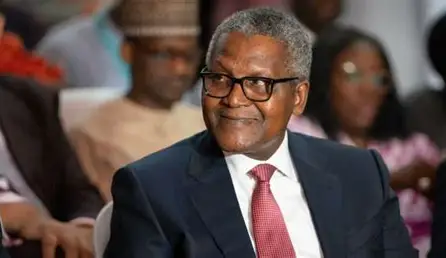
DANGOTE Sinotruk West Africa Ltd. has unveiled its first electric commercial trucks in Lagos, marking a new phase in Nigeria’s automotive manufacturing industry and its transition to cleaner transportation.

The Vice-President of Dangote Group, Devakumar Edwin, said at the rollout ceremony in Lagos on Sunday that the introduction of electric commercial vehicles marked another milestone in the company’s efforts to bring advanced automotive technology to Nigeria.

Edwin said the joint venture was established to develop a world-class commercial vehicle business, strengthen local assembly capabilities, create employment and contribute to Nigeria’s economic development.

He said the company’s product portfolio had expanded from heavy-duty trucks to tippers, light trucks, pickups and buses to meet the country’s transportation needs.

“The introduction of electric vehicles follows the company’s earlier adoption of compressed natural gas technology as part of efforts to embrace more sustainable transportation solutions,” he said.

Edwin noted that electric commercial vehicles offered opportunities to reduce operating costs and tailpipe emissions, depending on electricity costs, vehicle applications, availability of charging infrastructure, technical expertise, spare parts and efficient after-sales support.

“We are already getting ready with a strong after-sales support. We have set up our team, and we are also going to support in terms of charging facilities and other technical expertise required,” he said.

He said the company would work with partners, customers and government stakeholders to develop the electric vehicle ecosystem in Nigeria.

Edwin explained that Dangote Group’s ambition was to develop Dangote Sinotruk into one of West Africa’s leading automotive assembly and manufacturing businesses.

He added that the partnership would strengthen local assembly, facilitate technology transfer, develop Nigerian technical talent, increase local value addition and create more employment opportunities.

He expressed confidence that Nigeria could become a regional hub for commercial vehicle manufacturing, citing its large market, industrial base and entrepreneurial capacity.

President, Sinotruk Group, Liu Wei, described the development as a historic milestone, saying the vehicle was the first new-energy truck to be assembled on the African continent.

Liu said the development demonstrated the commitment of the joint venture between Dangote Group and Sinotruk to advancing Africa’s industrialisation and supporting Nigeria’s transition to cleaner energy.

He said the partnership, which began in 2013, formally established a joint venture in 2014 and had since evolved from vehicle assembly to more advanced manufacturing operations.

According to him, the joint venture assembled its first heavy-duty truck in 2017, while its commercial vehicle welding and eco-coating paint line began operations in 2024. He said the company had assembled more than 8,000 vehicles locally over the past decade.

Liu said the partnership would continue to upgrade its production lines, expand manufacturing capacity and strengthen local technical expertise to serve Nigeria and the wider West African market.

He added that the company planned to expand its product range to include heavy-duty trucks, light trucks, pickups, trailers and vehicle body-building.

The Sinotruk president also pledged increased training opportunities for Nigerian engineers and technicians, including opportunities for practical training in China.

Lagos State Commissioner for Transportation, Oluwaseun Osiyemi, represented by the Managing Director of Lagos Bus Services, Olasunkanmi Ojowuro, described the rollout as a significant development in Nigeria’s industrial history.

He said local assembly of electric trucks would provide opportunities to reduce emissions, lower long-term transportation costs and equip Nigerian engineers and technicians with skills in electric vehicle technology.

According to him, the initiative will also strengthen Nigeria’s capacity to develop a competitive automotive and battery manufacturing industry.

He commended Dangote Group for its investment and called for more private-sector initiatives capable of advancing sustainable transportation and industrial development.

The Ologba of Ogba Kingdom, Oba Latif Egbeyemi, also commended Dangote Group for investing in cleaner transportation technology, describing the initiative as a bold step towards sustainable industrial development.

Egbeyemi urged the company to prioritise local content, professional training and the development of Nigerian engineers and technicians.

He also called for stronger engagement with the host community through corporate social responsibility initiatives, environmental protection and youth empowerment.

The traditional ruler urged government and relevant regulatory agencies to provide supportive policies and infrastructure, including reliable electricity, charging facilities, appropriate standards and incentives for local manufacturing and assembly.

The Chairman of Ikeja Local Government, Akeem Dauda, said the development was a source of pride to the council, noting that the investment further reinforced Ikeja’s position as a centre of commerce, industry, technology and enterprise.

Dauda commended Dangote Group’s commitment to industrialisation, job creation and local capacity development.

He said the electric truck rollout presented opportunities for employment generation, skills acquisition, technology transfer and business growth within Ikeja and beyond.

He reaffirmed the council’s commitment to supporting investments through an enabling business environment, improved infrastructure and partnerships that delivered economic benefits to residents.

Dauda said collaboration between government and the private sector remained essential to achieving sustainable economic development. (NAN)


For Festus Keyamo, heavens may not fall but the sky can recede

0

By Chidi Anselm Odinkalu

THERE are two different expressions that show how deeply courts, judges and politicians are inter-mingled in Nigeria today. When politicians desire to signal how deeply their control of the courts runs, their dialect is mirth: “go to court!” And to celebrate an improbable outcome snatched through undue propinquity to judicial robes, they gloat with “heavens will not fall!”

These are two sides of Nigeria’s alluring currency of impunity. Its remit runs everywhere – the executive, legislature, judiciary, bureaucracy, universities, contractocracy, faith organisations, civics. Even the uniformed services are not left out in the rat race for impunity. Those who have it want to maximise it; those who lack it seek its face.

In the past week, the debate on impunity in Nigeria has centered around the judgment on 5 November 2026 by Peter Lifu, a judge of the Federal High Court, nixing the slate of candidates of the African Democratic Congress (ADC) for the 2027 general elections. It is the most recent – but by no means the only one – of a slew of quite incredible judgments by a judge who has developed a genius for being the destination referee in the “endless family quarrels” of Nigeria’s politicians.

Much of this latest controversy has focused on the text of what Peter Lifu decided but the trouble with this case precedes its outcome. It is the evidence around it of what can happen when judicial administration is captured.

This case began on September 2, 2025, in the court of Emeka Nwite, another judge of the same Federal High Court. The claimant was one Nafiu Bala Gombe, who sought judicial recognition as the rightful national chairman of the ADC. To achieve this, he asked the court to de-recognise David Mark and Rauf Aregbesola in the roles of national chairman and secretary respectively of the party.

A procedural objection by the party traveled all the way to the Supreme Court, which decided on 30 April 2026 to return the case to Justice Emeka Nwite for hearing on its merits.

Four days after that decision, on May 4, 2026, Nafiu Bala Gombe delivered a letter to the Chief Judge of the Federal High Court, John Tsoho, inexplicably complaining that the case before Emeka Nwite had suffered “prolonged and inordinate delay” and asking the Chief Judge to transfer it to another judge.

Remarkably, the date on this letter was April 4 That was nearly one month before the Supreme Court decided the appeal. That did not make logical sense.

Yet, the day after receiving Nafiu Bala’s transfer request, on May 5, 2026, Chief Judge Tsoho transmitted it to the lawyer for the ADC, Luka Musa Haruna, a Senior Advocate of Nigeria, SAN.

In a response dated May 11 and copied to the Chief Justice of Nigeria (CJN), Luka Haruna said Nafiu Bala’s request was “an odious effort” to impugn the integrity of the trial judge. Instead, he sought compliance with the order of the Supreme Court to return the case to  Emeka Nwite, together with accelerated hearing of the case.

Three days earlier, on May 8, upon being notified that Nafiu Bala had written to the Chief Judge to ask for the transfer of the case to another judge, Emeka Nwite adjourned the matter indefinitely to await the decision of the Chief Judge.

In the midst of this frenzy, on May 14, 2024, the National Judicial Council (NJC) recommended 12 judges to the president of Nigeria for elevation to the Court of Appeal. One of them was Emeka Nwite. Six months later, that recommendation still awaits the president’s attention and Emeka Nwite still works as a High Court judge.

Meanwhile, on May 19, Chief Judge John Tsoho addressed a fresh letter to Luka Musa Haruna SAN in which he observed that the recommendation of Emeka Nwite for appointment to the Court of Appeal “constitutes an intervening event that makes the reassignment of this suit inevitable.”

The Chief Judge informed the lawyer that he had “therefore, reassigned this suit to Hon. Justice P.O. Lifu for accelerated hearing.” He offered no reason for why it had to be Peter Lifu.

At this time, Peter Lifu was already presiding over another case seeking the de-registration of the ADC. On May 22, the Court of Appeal issued an order “staying further proceedings” in that case. That was a mere three days after the Chief Judge chose to send to the same judge yet another case seeking essentially the same outcome. He took no notice.

On June 15, in defiance of the directive of the Court of Appeal, Peter Lifu issued judgment de-registering the ADC. Why then would he sit to decide the leadership of a party that he’d ordered de-registered?

Two weeks earlier, on June 1, in a four-page letter to Chief Judge John Tsoho, National Secretary of the ADC, Rauf Aregbesola, protested the reassignment of the case saying, among other things: “we have serious concerns regarding the reassignment of politically sensitive matters involving opposition parties to a recurring group of judges of the Abuja Division, particularly, Hon. Justice Peter Lifu….”

The letter named two other judges among this list. It also accused the Chief Judge of “administrative interference” with the proceedings and of undermining full compliance with the decision of the Supreme Court. The Chief Judge took little notice.

To be sure, the ADC was not alone in noticing the pattern of assignment of political cases by the current Chief Judge of the Federal High Court. Law Akhigbe, who has analysed the pattern, publicly wonders “how so many politically explosive cases seem to find their way before the same judge”, and worries that “when a judge repeatedly finds himself at the centre of politically consequential disputes, scrutiny inevitably follows.”

He is not alone. On July 28, 2026, the Court of Appeal overturned the decision of Peter Lifu to de-register the ADC, accusing him of the highest level of “judicial impertinence”, and calling him a “misfit on the bench.” The NJC, which has met since then, was unconcerned; nor, it appears, was Chief Judge, John Tsoho.

Merrily, Peter Lifu’s latest judgment achieves the same end that the Court of Appeal overturned in its judgment of July 28.

In response to this latest outing by Peter Lifu, Aviation Minister, Festus Keyamo SAN, joined the “heavens will not fall” gang, in capital letters. Babafemi Ojudu, a former Senator and presidential adviser, responded to him thoughtfully, inviting him to care about the country.

In a separate response, Olusegun Adeniyi argues that “when a minister of the Federal Republic, and a respected SAN, tells critics to keep quiet about a judgment with this history, he is not defending the judiciary.”

The political significance of judicial power is not in doubt. That is precisely why it needs to be conserved with care, not weaponized with recklessness. The price of failing to conserve it can be steep.

The index case, of course, was Nazi Germany. Ernst Fraenkel reminds us in The Dual State, his classic study of Adolf Hitler’s overthrow of democratic institutions leading to the catastrophe of the Third Reich, that “administrative and general courts aided in the achievement of this condition…., the purpose being the achievement of a political aim.”

When Kenya voted in presidential elections at the end of 2007, their judiciary was widely acknowledged to be “designed to serve the interest of the president and could not be trusted to pass impartial judgments, particularly where the president was involved.” So, the politicians sought to settle their electoral disputes in killing fields.

With the country staring down the edge of the precipice, they finally agreed to pull back. The price was a clear out of the judiciary. In 2010, they began a re-set under a new Chief Justice whose record included political detention and exile. He had never sat previously as a judge.

Those – like Festus Keyamo – living under the false assurance that the heavens will not fall, stare in the wrong direction. They should fear instead for what may happen to the ground underneath them when some judges and their political patrons finally achieve the goal of rendering the courts irrelevant with a succession of noxious decisions. The final moments as the earth satiates its anger and the skies recede in one terminal ‘woosh!’ could be worse than a collapse of the heavens.

A lawyer and a teacher, Odinkalu can be reached at chidi.odinkalu@tufts.edu

Nigerian mission in S/Africa urges calm in row over Ramaphosa spokesman’s remarks

0
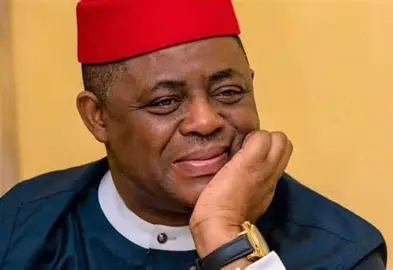
THE Nigerian High Commission in South Africa has urged restraint and reconciliation after remarks by President Cyril Ramaphosa’s spokesman, Vincent Magwenya, about Nigeria’s High Commissioner, Femi Fani-Kayode.
The Mission said on its verified X handle that it wants cordial relations between both countries preserved.
The row followed a disruption of the South African Presidency’s YouTube livestream when Fani-Kayode was due to present his letters of credence to Ramaphosa in Tshwane.
The broadcast was restored while Ramaphosa was addressing the ambassadors.
Following the disruption, Fani-Kayode accused South African officials responsible for the livestream of deliberately excluding his speech from the broadcast. He, however, praised Ramaphosa for intervening after he brought the disruption to his attention.
Magwenya consequently accused Fani-Kayode of lying about Ramaphosa intervening in the controversy.
Reacting, the Nigerian Mission said the disagreement should have been handled through diplomatic channels and urged Magwenya to show restraint.
The Mission described Magwenya’s conduct as provocative and diplomatically inappropriate.
It rejected what it called Magwenya’s  attempt to portray Fani-Kayode as dishonest and damage Nigeria’s image.
“To us, this matter is closed, but if you wish to escalate it, you are welcome to do so, and we are up to the task. A word is enough for the wise,” the Mission said.
It commended Ramaphosa for intervening.
“Thankfully your president had the decency and presence of mind to put out the fire and direct you and your state broadcaster to do the right thing. He literally saved the day,” it said. (NAN)