Home Blog Page 2090

El-Rufai lifts partial lockdown in Kaduna after 75 days

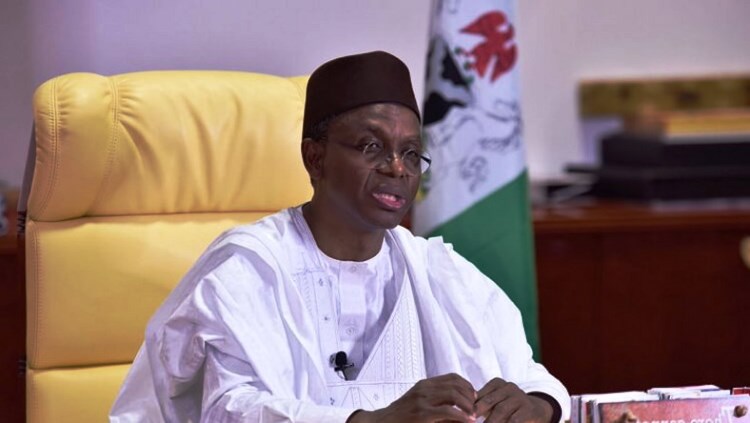
NASIR El-Rufai, Governor of Kaduna State has suspended the partial lockdown imposed in the state to stop the spread of Coronavirus disease (COVID-19).

The governor during a state broadcast on Tuesday explained that the lifting of the partial lockdown after 75 days followed  consultations and compliance by residents of the state with the guidelines of the lockdown.

He said it became necessary to move to the next step which, according to him is staying safe while pursuing socio-economic activities.

El-Rufai advised residents of the state to practice personal responsibility at places of work and worship.

He stated that civil servants are to resume work in phases which would be announced by the Head of Civil Service in the state.

On religious gatherings, the governor noted that a ban has been lifted only on Sunday service for churches and Friday service for mosques.

He added that commercial vehicles must reduce capacity to not more than two passengers per row and not more than 50 percent of capacity.

The governor also lifted ban on supermarkets, hair salons and hotels with orders that restaurants and bars are to offer only room service.

However, he said some certain persons were determined to jeopardise the effort of health workers in the state by making threats of an ‘untimely strike action’.

“Regrettably, certain persons seem determined to sully all the goodwill the hard work of our health workers has attracted by the untimely threat of strike action amidst a pandemic,”El-Rufai noted.

According to him, the threat was an action that contravened the Hippocratic Oath and Public Service Rules.

“This reckless action is a clear violation of the Hippocratic Oath, the Trade Union (Essential Services) Act and Public Service Rules,” he further stated.

The ICIR had reported how health workers in the state under the umbrella body of Kaduna State Health Care Workers Union and Associations earlier criticised the state government and threatened to go on strike for alleged deduction of 25 per cent from their salaries.

Over 262 million children forced out of school by COVID-19 pandemic in Africa – Report


THE Save the Children International has said that the COVID-19 pandemic has disrupted the education of 262.5 million children in Africa, the continent’s most vulnerable population.

In it’s latest report titled “COVID-19 Impacts on African Children,” released on Monday, the charity highlighted how the pandemic had jeopardised African children’s access to formal learning, exposing them to the risk of being sexually abused or recruited by force into an armed group.

The report indicates that “more than 368 million school children globally are now missing out on school meals on which they depend, noting that 3.5 million of these children reside in Southern and Central Africa.

Eric Hazard, Panafrican Campaign and Policy Director at Save the Children, said the existing vulnerabilities coupled with the challenges posed by the pandemic could put development progress in Africa on the reverse.

“With the rapid spread of COVID-19, this pandemic is overburdening the under-resourced African health systems and disrupting routine health services, jeopardising Africa children’s access to formal learning, health and safety and protection,”Hazard.

“Especially girls and this is unfolding in Africa against a backdrop of worrying hunger levels driven by climate shocks, conflict and economic challenges.”

Between June and August 2020, the international aid organisation projects that 19 million people in West and Central Africa would be food and nutritionally insecure due to agricultural logistical constraints and labour shortages caused by COVID-19.

The report hinted that the food insecure population in Africa could double in the coming months, which has a serious nutritional impact on children.

It also highlighted that malaria deaths could hit the 769,000 mark in Africa which is the highest in 20 years due to disruption of insecticide-treated net campaigns and access to antimalarial medicines as the lockdown enforced across the continent brought activities to a halt.

Hazard urged African member states to ensure high-level political commitment and leadership across all sectors involved in COVID-19 response and provide a synergy that will provide viable solutions.

“As a child rights organisation, we have adapted our strategies and approaches to protect the most vulnerable children and ensure that their rights are protected but this requires a coordinated effort, led by African governments,” he said.

“The main threats, the COVID-19 pandemic poses to children in Africa suggests some of the political and programmatic responses protect children’s rights.”

N-power beneficiaries cry out over three-months unpaid stipends, despite minister’s promise to pay in 72 hours

SOME beneficiaries of the National Social Investment Programme, N-power, have cried out to the federal government over non-payment of their three-month-old salary.

The beneficiaries are asking the government to approve the payment of their March, April, and May stipends

This is coming after Sadiya Farouk, the Minister of Humanitarian Affairs, Disaster Management and Social Development promised beneficiaries and the program monitors across the country last week Tuesday, that they would start receiving payments for the months of March and April within the next 72 hours.

The minister disclosed in a  press statement that the delay in the payment of the beneficiaries and monitors was “due to the change in Government Policy of migration from the REMITA platform system to the GIFMIS system of payment which requires offloading the beneficiaries into the new system before finally uploading, reviewing and final payment by the Social Investment Programme (SIP).”

N-Power is a youth empowerment scheme sponsored by the Federal Government of Nigeria under the Social Investment Program (SIP) with 500,000 enrollees across the country.  Other programs under the program include Home Grown School Feeding, Tradermoni, Marketmoni and the Conditional Cash Transfer in the 36 states of the country.

Beneficiaries starving, dodging their landlords

However, hundreds of tweets and comments from over two hundred and fifty beneficiaries seen by The ICIR show that the promise made by Farouk has not been fulfilled a week after.

Beneficiaries now complain of the difficulty of meeting their needs. Someone said he has “turned to a thief in the night who sneaks in and out of the house”  just to avoid his creditors.

A beneficiary from Plateau State, Samuel Bangudu, a father of four, said the situation has been “awful” for him in the last three months. He said his wife lost her job which makes things more difficult for the family.

Bangudu sounded distraught on Monday while speaking to  The ICIR. “How I wish you can see my four children at the moment sharing the remaining cups of Gaari in the house. I have not eaten today the same as their mother. We are really pushed to the wall.”

He said the family’s condition was exacerbated by the lockdown order because nobody was even willing to borrow him money.

“My rent has expired since the 20th of March, and I have been avoiding my landlord,” he said.

Similarly, Habibu Isa from Katsina State told The ICIR that the lockdown has exposed him and his family to the worst embarrassment of their lives. he said he no longer could take anything on credit he is owing many people.

“They are all tired of borrowing me money. The food sellers here are no more willing to help me again to buy on credit, I can not continue like this any longer. Pls help us talk to the government”

Another beneficiary of the scheme, Ogunmodede Oladeji, said he has been broke to the point that he contemplated suicide. “I am currently indebted to some money lenders like Opay, FairMoney, Branch, Carbon Paylater, SEAP microfinance bank, and others”. He told The ICIR that he no longer can walk freely on the street.

From Delta State, Chinyere Esther also recounted her sad story. She told The ICIR that she is totally broke as she has used up all her savings, and borrowed so much from her neighbours with the hope to pay back when the backlogs of her stipends are paid.

The affected beneficiaries have taken their protest to Twitter using #PayOurMarchAprilAndMayStipends.

Auwalu Nasiru who tweeted through @NasuruAuwalu appended a picture of him on the sickbed, pleading to the Npower through her official Twitter handle to pay him his backlogs so as to foot his medical bills.


Salisu Ashiru (@SalisuAshiru5) in his own tweet qualified the unpaid backlogs as ill-treatment of the beneficiary as the situation is unbearable for many.

Forward your particulars for verification,  Ministry advises

According to Vanguard Newspaper,  the Ministry of Humanitarian Affairs, Disaster Management, and Social Development has refuted claims by some N-POWER beneficiaries that they were being owed up to three months’ payments.

Rhoda Iliya, the ministry’s spokesperson, told The ICIR that claims of non-payment of stipends to the beneficiaries for three months were untrue, but he refused to comment on whether the ministry has paid up to May.

Iliya said those claiming they were being owed may not be genuine beneficiaries of the social investment programme. She challenged them to forward their particulars to the ministry for authentication if they are sure.

However, the payment dashboard seen by The ICIR  shows “unpaid” for the months of March, April, and May as claimed by the affected beneficiaries.  Only January and February’s payment read “paid”.


Nigerian lawmakers to investigate Police Pension scheme

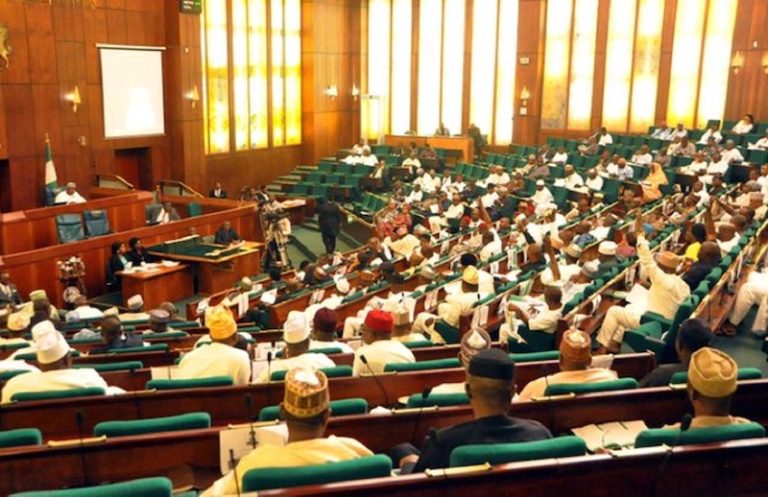
The House of Representatives on Tuesday directed its Committees on Police Affairs and Pension to investigate the Nigerian Police Force Pension Limited over failure to meet it’s pension and gratuity obligations.

Adeyemi Taofeek, member representing Mushin Federal constituency, Lagos who presented the motion before the House expressed the need for the investigation as a necessary measure to ensure Police reform.

The House during plenary session mandated the two committees to investigate the immediate and remote causes of the NPF Pensions Limited inability to meet its monthly pension obligation and the timely payment of gratuities to retiring police officers.

The Nigeria Police Force launched its own Pension Fund Administrator (PFA) known as NPF Pensions Limited in 2014  according to the Pension Reform Act (PRA 2014) with the responsibility for managing pension assets of the entire Nigeria Police Force personnel.

The NPF Pensions Limited was incorporated with a fully paid share capital of N1 billion while the two major shareholders are; Nigeria Police Welfare Insurance Cooperative Society Ltd and Nigeria Police Multipurpose Cooperative Society Limited.

The Committees on Police Affairs and Pensions were charged to report  back to the House in four weeks with findings and recommendations for a model to prevent future misappropriations.


With over 800 health workers infected with COVID-19, FG moves to pay hazard allowance

THE Federal Government is set to pay Nigerian health workers in the frontline battling the Coronavirus disease (COVID 19) disease pandemic, hazard allowance for the months of April and May, Chris Ngige, Minister for Labour and Employment, said on Tuesday.

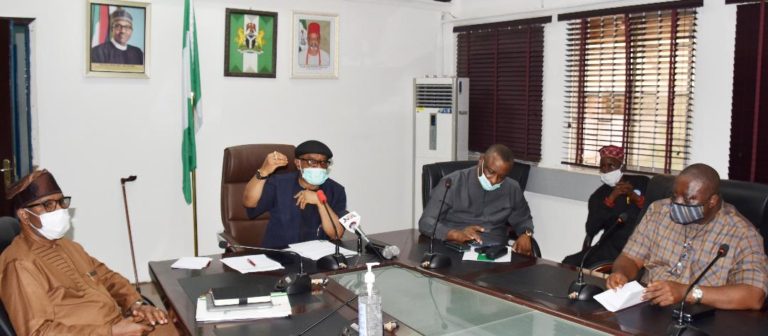
Ngige disclosed this while speaking at a meeting between representatives of the Federal Government and Health Professional Associations, where he reiterated that the allowance would be paid to the workers before June 12.

“We have fixed a timeline for ourselves that before the end of this week, the health workers captured in that particular COVID 19 net; frontline workers should get all their hazard and inducement allowances for the month of April and May before the close of the week,” he said.

The decision, he said was part of the agreement reached between the Federal Government Representatives led by him and representatives of the health sector workers.

According to him, the urgent approval granted by President Mohammed Buhari was in appreciation of efforts of the health workers risking their lives on the frontline in the fight against COVID 19.

Ngige stated that the government “ reviewed all, and also reviewed all the emoluments” to be given to the health workers.

He added that the decision on the commencement of the implementation of the allowances was reached along with the Accountant-General of the Federation and the Minister of Health.

Ngige further said that the Federal Government has approved insurance coverage for the health workers adding that the gesture was in consonance with the memorandum of understanding entered into on  April 21, between the Federal Government Representatives, the health professionals and unions in the health sector.

Olorunimbe Mamora,  Minister of State for Health, who was also at the meeting said the Ministry would ensure the provision of Personal Protective Equipment (PPE) to various hospitals.

Present at the meeting were the Minister of State, Labour and Employment, Festus Keyamo SAN, Accountant General of the Federation, Ahmed Idris, Ag. Chairman, National Salary and Wages Commission, Eyo Nta, Permanent Secretary Federal Ministry of Labour and Employment, William Alo, Permanent Secretary Federal Ministry of Health, A.M Abdullahi.

Also present were National President, Joint Health Employees Sector Union, Biobelemoye Josiah, President, National Union of Allied Health Professional, O.C Ogbonna and Secretary General, Nigerian Medical Association, Dr. Ekpe Philips.

This is coming a week after it was reported that over 812 Nigerian health workers have contracted COVID-19.

“We have had 812 health care workers infected, they are not just numbers, 29 of these work for NCDC, they are people I know, they have families, wives and children,” Chikwe Ihekweazu, Director General of Nigeria Centre for Disease Control (NCDC) had said during the briefing of the COVID-19 Presidential Task Force (PTF) in Abuja on Tuesday, June 3.

Meanwhile, Tedros Adhanom, Director General of the World Health Organisation (WHO), once said more than 18 million health workers would be needed in both low-income and middle-income nations, including Nigeria.

Currently, Nigeria has 12,801 confirmed cases of COVID-19.

Court jails nine internet fraudsters in Ogun

THE Economic and Financial Crimes Commission (EFCC) has secured the conviction and sentencing of nine internet fraudsters in Abeokuta, Ogun State capital.

A statement by Dele Oyewale, EFCC’s Head, Media & Publicity stated that the Ibadan Zonal Office of the Commission secured the conviction of the nine fraudsters before two different judges of the Federal High Court, Abeokuta.

According to Oyewale, two of the fraudsters, Toheeb Abdulrasheed and Chukwuebuka Isaac Dike were sentenced by Justice Mohammed Abubakar of the Federal High Court, Abeokuta, on Monday, June 8,  for their involvement in internet-related fraud.

The EFCC spokesperson explained that Dike, who claimed to be a 100-level Biochemistry student of the Federal University of Agriculture, (FUNAAB) was sentenced to three months in prison while Abdulrasheed, a self-acclaimed graduate of Business Administration from Moshood Abiola
Polytechnic (MAPOLY), Abeokuta, bagged four months.

Their sentences followed the prayer of prosecution counsel, Abdulrasheed Suleiman for their conviction after they pleaded guilty to their respective amended one-count charge.

Aside the prison sentences, the judge also ordered that Abdulrasheed restituted the sum of $600USD to his victim through the Federal Government and to also forfeit his iPhone 6 to the government.

Dike on the other hand,   was ordered to  restitute the sum of $500USD  to his victim and ceded his gold iPhone 11 Pro Max and Rose Gold Infinix Hot 5 to the Federal Government.

The statement further disclosed that Justice Ibrahim Watilat of the same Federal High Court, Abeokuta on Tuesday June 2 convicted and sentenced the trio of Tobiloba Oni, Paul Oluwadamilare Odole and Michael Oluwaseun Jemiseye, having found them guilty of the criminal charges preferred against them by the Ibadan Zonal Office of the Commission.

Oni was handed four months imprisonment, Jemiseye got three months with N120,000 option of fine, while Odole got four months with equally N120,000 option of fine.

Apart from forfeiting all items recovered from them to the Federal Government, the convicts were mandated to sign a pact with the EFCC to be of good behaviour and never to be involved in any form of economic and financial crime within or outside the country.

They are also to always make themselves available for participation in subsequent anti-corruption campaigns of the Commission.

Justice Watilat in the same vein, convicted three additional others for internet-related crimes.

The convicts: Favour Chinueze Ekeh, Kolade Nwachukwu and Sultan Adeniji Egbede were handed three months imprisonment each with N100,000, N50,000 and N100,000 option of fine, respectively, which must be paid within two days of the sentence or else, the prison term would apply.

Justice Abubarkar  had on Tuesday, June 2, convicted one Rotimi Quadri Akinlolu for his involvement in internet fraud.

He was sentenced to six months imprisonment with effect from March 6 when he was arrested. Aside the jail term, he forfeited all items recovered from him to the Federal Government.


After more than 150 days in prison, Kalu returns as Senate Chief Whip

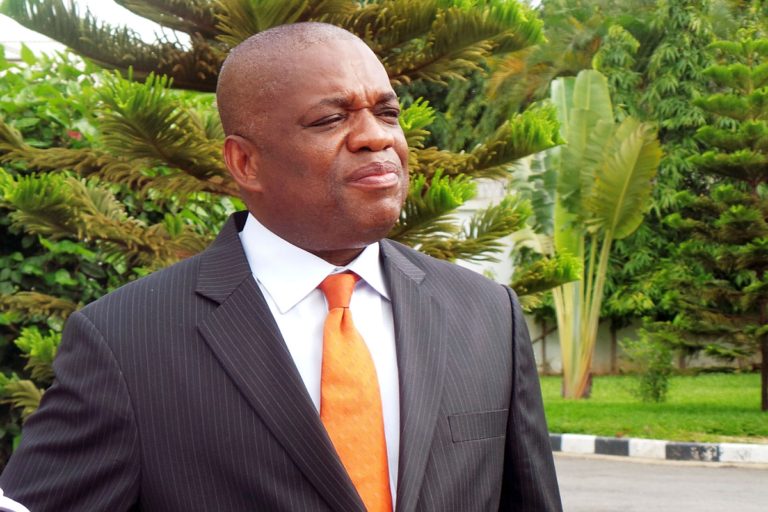
ORJI Kalu Uzor, former Abia State governor and senator representing Abia North  on Tuesday resumed as Senate Chief Whip after spending more than 150 days in prison.

Kalu while speaking to journalists before stepping into the Senate chamber said he was glad to be back at the Senate.

He added that he needed to commence work to cover up for the loss time during his incarceration.

Kalu had been in jail serving a 12-year sentence after he was convicted on corruption charges committed during his two term as the governor of Abia State.

On Tuesday, December 5,2019, Justice Mohammed Idris of the Federal High Court in Lagos sentenced Kalu to 12 years imprisonment on a 39 count charges brought by the Economic Financial Crimes Commission (EFCC).

He was convicted alongside his firm, Slok Nigeria Limited and Ude Udeogu, his former Abia State Director of Finance.

The judge ruled that the Kalu and others were guilty of misappropriation of funds to the tune of N7.1 billion  from the treasury of Abia State Government between 1999 to 2007.

However, Kalu was released on June 2, 2020, from Kuje Correctional Centre, Abuja following an order by the Supreme Court.

Setting the High Court’s judgement aside, the Supreme Court ruled that the High Court lacked the power to convict a former governor.

The apex court also challenged the jurisdiction of the Lagos Division of the Federal High Court chaired by Justice Idris to sentence Kalu.

Welcoming Kalu back to the Senate,  Ahmad Lawan, Senate President, said his return as the Chief Whip to the Senate was ‘indeed a blessing.’

“I want to welcome back our one and only Chief Whip of the Senate and indeed the National Assembly,” Lawan said.

“Chief whip you are welcome, we are very grateful to the Almighty God for his blessings,” Lawan said.

Sponsor of Infectious Diseases Control Bill says no going back, as CSOs, lawyers kick

CHUKWUKA Utazi, the senator sponsoring Infectious Diseases Control Bill 2020 says the upper chamber of the National Assembly would go ahead to consider the Bill despite concerns for violation of human rights contained in it.

The Senate has scheduled a public hearing on the Bill to hold on Wednesday, May 10.

“The bill is very necessary and timely because there are gaps that are existing and we need to fill them, Utazi said Tuesday evening during a Citizen Town Hall meeting organised to garner views on the Bill, aired on the Channels Television.

He explained the rationale behind the bill, noting that there is a need for a legal framework as the country cannot continue to depend on executive order, one after the other.

“It’s totally wrong, this is democracy, we are not in a military regime where the executive would make laws for the people, the legislative is there and that is what we want to do, we want to take up our job and do what we ought to do,” Utazi noted.

He said the senate has consulted with relevant stakeholders and “no matter what, upper chamber is going ahead with the bill.”

“In pursuing this matter, we don’t have to continue waiting, we have consulted. Let everyone who wants to make an input come over and bring an opinion, because no matter what, we are going ahead with it,” Utazi said.

At the Town Hall meeting, members of civil society organisations, lawyers and representatives of Nigeria Medical Association (NMA) expressed their views on the proposed Infectious Diseases Control Bill.

Bukky Shonibare, Executive Director, Girl Child Africa, who was part of the meeting emphasised the need to scrutinise the bill in order to see to what extent it promotes, protects and respects human rights.

Shonibare maintained that the Civil Society Organisations would raise concerns if any proposed bill would violate human rights in the country.

She disclosed that an analysis of the Infectious Diseases Control Bill 2020  has revealed that not less than seven fundamental human rights that have been guaranteed in Nigerian constitution are violated in it.

“If you do an analysis of the bill, you’ll find out that at least seven fundamental human rights that are guaranteed in our constitution would be violated,” she said.

Femi Falana,  human rights activist and Senior Advocate of Nigeria (SAN) who joined the meeting via Skype described the bill as illegal.

“My views on the bill are that it’s superfluous, unnecessary, unwarranted and unconstitutional therefore it should not be passed,” Falana said.

He posited that the bill is bound to fail ‘because if it is passed, it is going to be challenged.’

” I would like to suggest that the National Assembly to seek sound legal advise so that we do not waste precious resources on a law that is likely to fail or declared null and void,” Falana said.

Henry Ewunono, head of advocacy at the Nigeria Medical Association (NMA), , said if the National Assembly has decided to proceed with the bill without consulting, the NMA would not be part of it.

However, he insisted that the bill is necessary because there is no law that addresses the excesses of some citizens refusing quarantine.

“Is it not time to have a law to curtail the excesses of the so called VIPs, people who brought in this disease that is now ravaging the country,” he argued.

On the issue of infringement on fundamental human rights of freedom of movement, Ayo Obe a legal practitioner said if a person has an infectious disease, then the person should not be allowed to go about and infect others.

“To say it is against the fundamental human rights doesn’t really answer the question because we all don’t want to be infected,” Obe said.

Osai Ojigho, Country Director of Amnesty International in Nigeria questioned the legality of the bill.

She said beyond the infringement of human right, the part of the bill that says a person could be forcibly arrested, quarantined and vaccinated is worrisome noting that it cannot be challenged by anyone.

“You cannot even take it to the court for review, you cannot challenge the power of the Director General which means that your right for a review doesn’t even exist, No individual or institution should have such power,” Ojigho noted.

She said on the part of Amnesty international, the bill as it is should not stand, and that AI demands a complete overhaul.

Small-scale women farmers canvass increased budgetary allocation to agriculture

 A coalition of female farmers under the aegis of Small-Scale Women Farmers Organisation in Nigeria (SWOFON), has decried Federal Government’s indifferent attitude to small scale farmers across the country.

In a statement released by Mary Afan, the group’s spokesperson, SWOFON lamented the vote reduction to the agricultural sector in the 2020 budget by the Federal Government from N183.1 billion to N136.9 billion which accounts for a 1.73 per cent reduction.

This, Afan noted is not in tandem with the Maputo Declarations of 10 percent annual budget to agriculture, adding that the reduction would put small scale women farmers at the receiving end of hardship.

“A 1.73 per cent budget cut goes against the Maputo Declarations that says 10 per cent of the nation’s fiscal budget should be used on agriculture and any further reduction will lead to decreased food production,” Afan said in the statement.

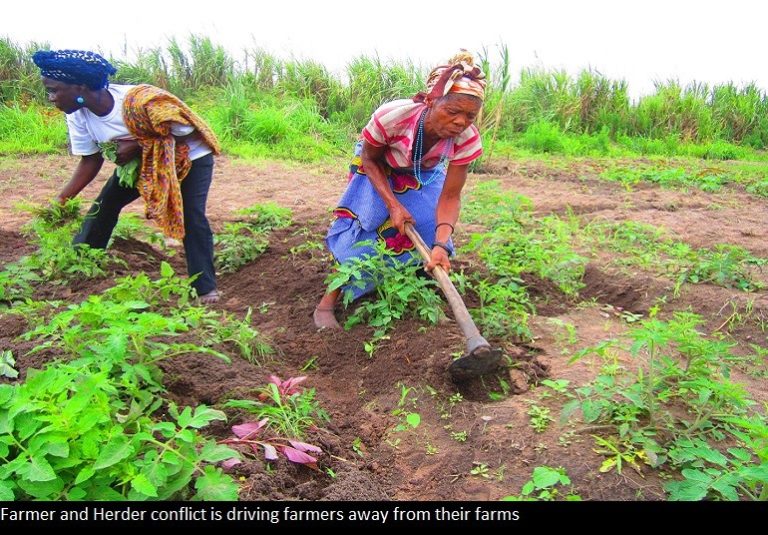
Speaking further, she said women farmers constitute 60 percent of the nation’s agriculture labour, describing them as the lifeblood of Nigerian agriculture and critical to the livelihood of people in the country.

“Women farmers constitute over 60 per cent of the agriculture labour force and provide inputs and functions that are critical to improved livelihoods as their efforts have not received enough budgetary support, facilitation and acknowledgement by successive governments,” she said.

In 2019, female farmers contribution to  production in Nigeria was estimated to worth N11.3 trillion.

The women farmers, however, called on the Federal Government to increase allocation to the agriculture sector to at least 5 percent of the total budget.

“Our plea is for an increase in the allocation to agriculture to at least 5 per cent of the overall budget which is 50 per cent of the Maputo commitment this will amount to not less than N201.1billion,” she said.

Afan added that despite challenges facing the small-scale women farmers on food production, their contribution had been significant, as they supplied “up to 50 per cent of the country’s vegetables and fruits.”

The female farmers’ organisation urged the Federal Government to allocate budget funded programmes and projects for women and youth with locations, clear deliverable and tied to identifiable stakeholders.

“We also know that increased public investments in critical sectors, such as agriculture, are required to lift the binding constraints on poor and more importantly, on women farmers’ productivity and would better position the economy on its path to a resurgence from the imminent recession,” she said.

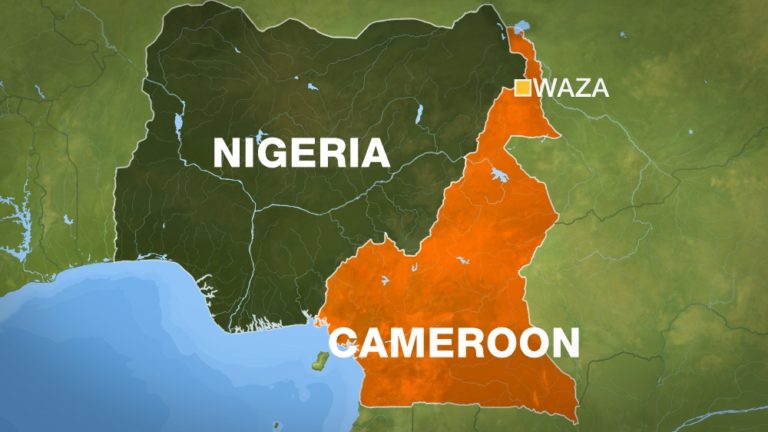
FACT-CHECK: Is United Nations creating a new country out of Nigeria, Cameroon?

By Opeyemi KEHINDE


THE Guardian (Nigeria) newspaper on Friday, June 5, 2020, reported that “By July 10 this year, Nigeria may lose 24 local councils, by way of ceding, to a new country to be known as United Nations Organisation (UNO) State of Cameroon at its borders with la Republique du Cameroun.” The report has generated reactions from the public both in Nigeria, Cameroon as well as in the international community.

The report, published by some Nigerian newspapers and online news platforms, was titled: “Nigeria may lose 24 councils to new UN state”

THE CLAIM

The report claimed that Nigeria may lose 24 local government areas to a new country to be known as United Nations Organisation (UNO) State of Cameroon, which shall be carved out from parts of Nigeria and Cameroon.

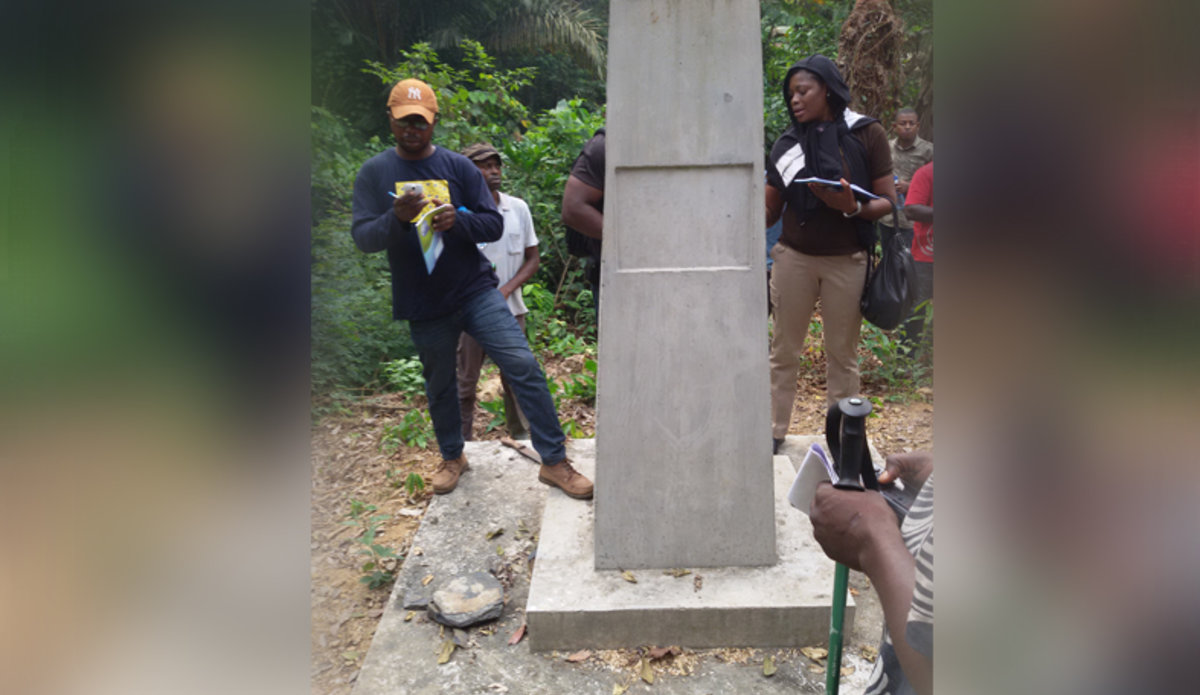
Pillar construction project at Taraba State (Nigeria)/North West Region (Cameroon): Nigerian customs officer (right) of Cross River State’s local Boki government inspects location of newly erected Primary Pillar BP 67 (boundary pillar), which replaces the old “Anglo-German Pillar. Credit: UN Photo/MABAYA

The report stated further that President Paul Biya has commenced the withdrawal of his country’s soldiers from the southern part of the new state.

“The withdrawal of troops by Biya was formally demanded by the former President of the United Nations General Assembly, Ali A. Treki on May 20, 2020,” The Guardian reported.

The UN, according to recent reports, pledged to actualize a new State of Cameroon on July 10, 2020, which will be known as the UNO State of Cameroon or simply as “Ambazonia.”

The media report has been trending online since the news broke out on Friday.  So far it has been shared severally by hundreds of internet users especially on Twitter and Facebook, including @Amaka_Ekwo, the Press Secretary to Nnamdi Kanu, the leader of the proscribed Biafra group, IPOB.

 THE CHECK

A fact-check investigation by The ICIR shows that the United Nations (UN) is not creating a new country in Africa though there had been agitations for the creation of Ambazonia State by some leaders from Southern Cameroon.

The Director, United Nations Information Centre for Nigeria, Ronald D. Kayanja, on Monday, denied the media report in a terse response to an email enquiry by The ICIR.

“This is fake news. Should be disregarded,” he said.

UN Helicopter Support to the CNMC lands on Gotel Mountain (Cameroon/Nigeria), to reach border areas of difficult access during the delineation of the two nations’ boundaries. Credit: UN Photo/BARIL

Bashir Ahmaad, an aide to the Nigerian President, Muhammadu Buhari, has also debunked the report.

He said: “Nigeria may lose 24 councils to new UN state” you might have read this story on the Guardian newspapers, WhatsApp or somewhere else, the story is 100 per cent fake, fabricated, maybe for an agenda only best known to those that started the spreading the fake news.”


Similarly, Barrister Abdul Oroh, a solicitor to some detained leaders of Southern Cameroon agitators who were currently facing trial in Cameroon, told The ICIR that the Southern Cameroonians were unaware of the UN attempt to create the new State. He said all his sources in Southern Cameroon denied knowing anything about it.

When The ICIR reached out to Nigeria’s Ministry of Foreign Affairs, its spokesperson, Ferdinand Nwonye could not be reached on his mobile line. Text messages sent to him since Friday were not replied either.

The ICIR also reports that the October 10, 2002 ruling of the International Court of Justice (ICJ) at The Hague on boundary dispute between Nigeria and Cameroon only delineated boundaries between the two nations; it didn’t make any provision for the creation of an autonomous State to be carved out of the two countries.

Following the world court judgement, the Cameroon-Nigeria Mixed Commission (CNMC) was established in November 2002 by the UN Secretary-General at the request of Presidents Paul Biya and Olusegun Obasanjo of Cameroon and Nigeria respectively.

The goal of the CNMC was to facilitate the implementation of the 10 October 2002 judgement of the International Court of Justice (ICJ) on the Cameroon-Nigeria boundary dispute.


THE VERDICT

There is no evidence to support the claim that the UN is creating a new state from parts of Nigeria and Cameroon. Therefore, the report is FALSE.