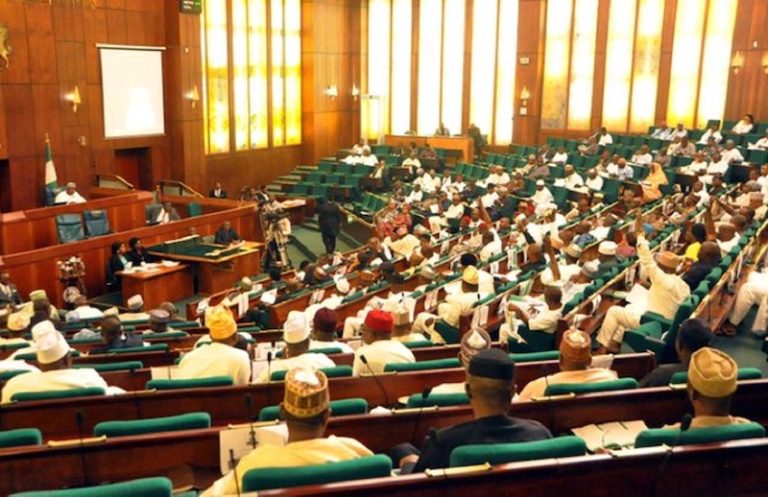
ALI Ndume, Chairman, Senate Committee on Army, says the Federal Government should consider a conversion of the National Assembly to a part-time legislature during amidst the Coronavirus disease (COVID-19) pandemic to save cost.
“As far as I’m concerned, we can make the National Assembly a part time arrangement for now since we conduct our sitting once or twice in a week these days,” Ndume said on Wednesday.
“If we make it part time, that means our salaries must be reduced.”
This is coming less than 24 hours after Ndume was reported to have called for reduction of civil servants’ salaries.
While speaking to reporters in Abuja in an interview according to The Nation, the lawmaker denied calling on the Federal Government to cut the salaries of civil servants in the country.
Ndume said he was quoted out context in the report.
According to him, public servants across the three arms of government “not working full-time” during the present pandemic should no longer be paid 100 per cent of their salaries.
“The statement credited to me was not a complete statement and I was quoted out of context,” Ndume said.
“When they asked me questions about the revised budget, I said we should fasten our belts during this pandemic due to the fall in the prices of crude oil which is the mainstay of our economy,” he added.
Ndume said he had advised the Federal Government to look critically into cutting down the cost of governance.
“I said the Federal Government should critically look into cutting down of the cost of governance,” he said.
“I called for the reduction of overhead cost, salaries of senior public servants and the recurrent expenditure. That is what I said and I still stand by it.”
The senator representing Borno South Senatorial District was reported by many media outfits (The ICIR not inclusive) that Government should critically look at the personnel and recurrent expenditure which consumes about 70 per cent of the budget.
“People should make sacrifices. This is the time to look at issues critically. But as I said, When I talk like this – and make my opinion – people look at it and call me all sorts of names. But I try to express myself,” he was quoted as said.
In his interview on Wednesday, Ndume said he couldn’t have called for the reduction of salaries of lower civil servants, because the ‘salaries are too small.’
He argued that Nigerian civil servants deserve palliatives from all tiers of government.
“As a matter of fact, Nigerian Civil Servants deserve palliatives from all tiers of government, even with their salaries,” he said.
“I maintain that since most of us who are public servants across the three arms of government are not working full time for now, our salaries should no longer be paid 100 per cent.
“Overhead should also not be 100 per cent again. All those travel allowances should stop because we are no longer traveling.
“We are operating from online now, the provision for stationery should be stopped. By that so many expenditure would have been removed.”
Explaining why he called for a part-time National Assembly, he said: “The reality is that we can’t continue in a situation like this where 70 per cent of the country’s budget is going to personnel and recurrent expenditure as if everything is okay.
“This is a time when we are borrowing to fund the budget. I didn’t say salaries of civil servants who are struggling to survive, should be slashed.”
He insisted that the government should identify public officers that can work part time and reduce their salaries.
“For example, even we in the National Assembly, for the period of this pandemic, I strongly advocate that the work of the legislature and other people should be made par time and therefore, pay them on part time basis to reduce the cost,” Ndume said.
He stressed that there are jobs that are not critical, that could be converted to part-time basis to reduce cost, noting that the jobs of medical personnel cannot be made part-time.
Merriam-Webster’s editorial manager Peter Sokolowski in response to Mitchum’s request told the AFP news agency that the second definition will be updated to reflect the request.
“We will make that even more clear in our next release,” Peter Sokolowski said.
“This is the kind of continuous revision that is part of the work of keeping the dictionary up to date, based on rigorous criteria and research we employ in order to describe the language as it is actually used,” he added.
The decision comes amid international anti-racism protests after the death of George Floyd in Minneapolis.
Floyd died after a white police officer held a knee on his neck for nearly nine minutes.
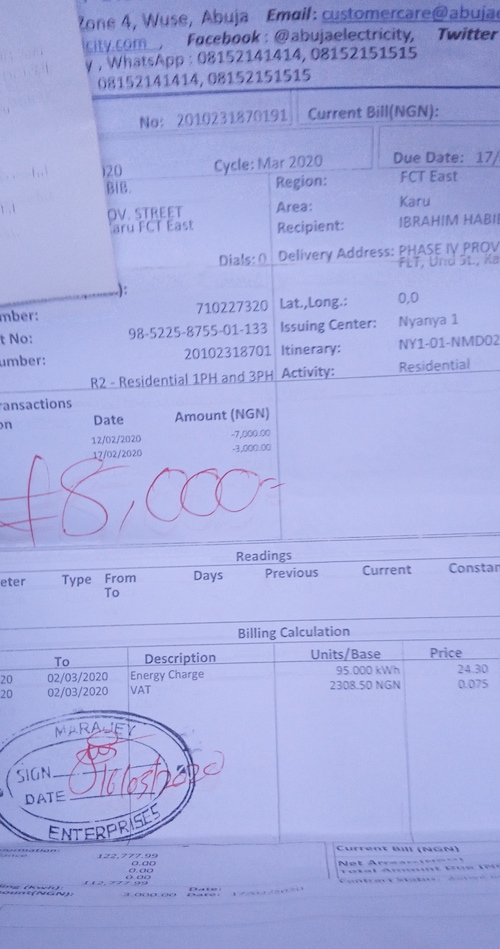
UMAR Labbo, 36, was in good spirits when he moved with his family of three into a rented apartment in Nyanya, a suburb of Abuja in 2017, and when he received the first electricity bill for his one-bedroom flat he knew something was off.
The bill received from Abuja Electricity Distribution Company, AEDC, stated that he was owing N112,777 as his outstanding arrears barely a month he moved into the house.
The debt owed by the former occupant of the house was added to his own monthly charge of N10,000, but despite his explanations, officials of the AEDC did nothing.
Rather they insisted he would have to offset the previous debt by paying in parts or risk being disconnected.
“It is ridiculous how they charge me monthly without regard to the appliances being used in the house or the supply of power which is erratic. I have applied for a prepaid meter to be able to monitor how much electricity I have consumed but since last year they are yet to deliver it,” he said.
Umar’s electricity bill for May, after paying N8,000. Credit: The ICIR
Distribution companies in the country had charged between N25 to N30 for 1 Kilowatt Hour, Kwh, of electricity, consumed on the national grid for the use of each domestic appliance per hour though the charges depend on the type of tariff plan which could be residential or commercial.
“The officials just put down figures they feel like and expect us to pay without taking note of the gadgets in our homes or the number of times they supply power so what is the essence of the estimated bills for houses without meters,” he told The ICIR.
For Labbo, this pattern of “estimated billing” by the AEDC has become very familiar and unfair but without a prepaid metre, the practice has continued, especially during the nationwide lockdown.
In February, the Nigerian Electricity Regulatory Commission, NERC, the nation’s power regulator announced limits on estimated bills to be issued by electricity distribution companies also known as DisCos to unmetered customers placing the maximum monthly tariff charged a residential customer at N1,872 per month.
No more arbitrariness in estimated billing as @NERCNG capped estimation for some categories of electricity customers pic.twitter.com/qgZ9dTkP4i
However, the limits placed by the regulatory agency has been flagrantly disregarded by the electricity distribution companies as tales of outrageous charges by electricity consumers have continued to emerge.
Labbo’s frustration reflects the plight of 4.09 million Nigerians who do not have access to prepaid meters according to a Price Waterhouse Coopers, PWC, 2019 report as they recount tales of outrageous bills that do not reflect the electricity they consumed in their homes.
Tales of unfair treatment, extortion
In a report, Funke Osibodu, Chief Executive Officer, CEO, of Benin Electricity Distribution Company, BEDC, said during the lockdown, the DisCos experienced supply disruption, rising cost due to exchange rate volatility and loss of revenue.
“Our costs have gone up but revenue has gone down, as our industrial and commercial customers have been hard hit leading to drop in demand,” she said.
During the shutdown which affected several religious and industrial clusters, electricity consumers across the country who have no meters have borne the financial burden of estimated electricity bills.
Benjamin Uzordimma resides in a two-bedroom rented flat in Omilani off Ijesha in Surulere, a suburb of Lagos State under the Eko Electricity Distribution Company, EkoDisco, an apartment he moved into 16 months ago.
He started to worry when his electricity bills rocketed from N9,000 in December 2019 to N21,000 in April without a change in the appliances he used in the house.
“It is a serious problem for me because there is no change in what I have been using in my house and the bills keep rising without reason and the worst of all is that they don’t factor in the number of times they supply power which on some bad days for three days on a stretch they won’t supply power,” he told The ICIR.
Social media has also been flooded with complaints about the crazy estimated bills charged electricity customers as they vent their displeasure with the DisCos on Twitter.
A Twitter user identified as Ikechukwu Bobo, who lives in Ijeshatedo in Surulere, Lagos state in a compound with six single rooms with six occupants said their bill rose from N13,000 to N28,000 despite the incessant power cuts.
Another Twitter user known as Chukwuka Steven said EkoDisco kept increasing his estimated electricity bill though he was on a residential electricity tariff plan.
“I stay in Satellite town in Lagos State precisely in a three-bedroom apartment and my bill for just this month was 37k. I was wondering if I had a mini-factory in my house,” he said.
BEDC was not left out. Their customers are complaining of being ripped off. Iyinta Ijesha, recounting his ordeal said he was shocked after being presented with an outrageous bill even though they lacked power supply for two weeks.
“I have been paying heavily for no energy from BEDC under the guise of estimated billing from Olorunshogo area of Ekiti state. Between April 8 and 29th, there was no energy supply, but at the end of the month, they brought N11,800 bill. I was dumbfounded,” he said.
In 2019, according to data obtained from the Nigeria Bureau of Statistics, NBS, about 7.48 million residential households are connected by the distribution companies, but only 3.39 million households are metered which means 54.7 per cent of electricity consumers in the country have no meters.
The dilemma of electricity consumers who are placed on estimated billing as they relive their experiences is an indication that NERC did not ensure electricity distribution companies complied with the capping of estimated billing as the extortion cycle continued.
The failed order
NERC had issued Order No/NERC/197/2020 on capping of estimated billings in Nigerian Electricity Supply Industry, NESI, on February 20 to prevent electricity consumers from being charged arbitrarily by DisCos.
The Order revoked the NERC (Methodology for Estimated Billing) Regulations 2012 and placed a restriction on the estimated bill to protect unmetered R2 (Residential-single and 3-phase meters, who consume more than 50kWh per month) and C1(Commercial-single and 3-phase meters, small businesses) customers from arbitrary billing and facilitate their metering process.
It was expected that DisCos would recognise tariff class A1 customers which include customers using grid-connected premises for schools, religious houses amongst others that need single or 3 phase meters by identifying and getting them metered by April 30.
The capped rates are N1,872.00 for R2, where consumption is capped at 78-kilowatt hour per month at a tariff of N24 per kilowatt.
Also, all residential customers who consume no more than 50-kilowatt hour (R1 Customers) per month shall be billed N4 per kilowatt-hour at a total maximum of N200 per month.
The order directed that any customer whose current estimated bill was below the capped price should be without upward review until the installation of a meter by the DisCos.
While a customer who rejects the installation of a prepaid meter should be disconnected by the DisCo.
NERC’S Response
On June 9, NERC issued a notice of intention to commence enforcement action against seven distribution companies namely Benin, Enugu, Eko, Ikeja, Kano, Kaduna and Port Harcourt.
They are expected to respond to the notice within 14 days over their failure to comply with NERC’s order on capping of unmetered residential and commercial electricity customers.
The Nigerian Electricity Regulatory Commission has issued notices of intention to commence enforcement action against Seven electricity distribution companies over their failure to comply with the Order 197/2020 on capping of unmetered R2 and C1 electricity customers.
Speaking to The ICIR, Mike Faloseyi, NERC spokesperson in a phone interview when asked why it took four months for NERC to call the distribution companies to order for violating its law, said they were following “due process”.
“Its because we are following the due process we have to consider all the parties involved in the case that is why we took time before we served them notice,” he said.
However, the order issued by NERC in February had stated that customers on higher tariffs should be metered by April 30 or they were to remain connected to supply, but without further payment to the DisCos until a meter is installed for them.
Customers are still waiting to see if NERC would rise to its responsibilities.
With the havoc caused by the COVID-19 pandemic and subsequent shutdown that left the world at a standstill, GRACE OBIKE, with support from the International Budget Partnership (IBP), had a chat with smallholder women farmers in the Federal Capital Territory (FCT) on how the situation affected them.
IMAGINE a farmer braving the lockdown that commenced in March, trekking back and forth to her farm for lack of transportation, labouring for weeks to cultivate her farmland, which is her only means of livelihood and finally planting maize.
She tends it like a baby since she cannot purchase the much-needed fertiliser that this type of crop thrives on, then watches it grow to waist length as the weeks go by only to return on a fateful day to discover that all she had planted had been eaten up by herds of cattle.
The above scenario is the plight of many small-scale farmers in different parts of the Federal Capital Territory (FCT).
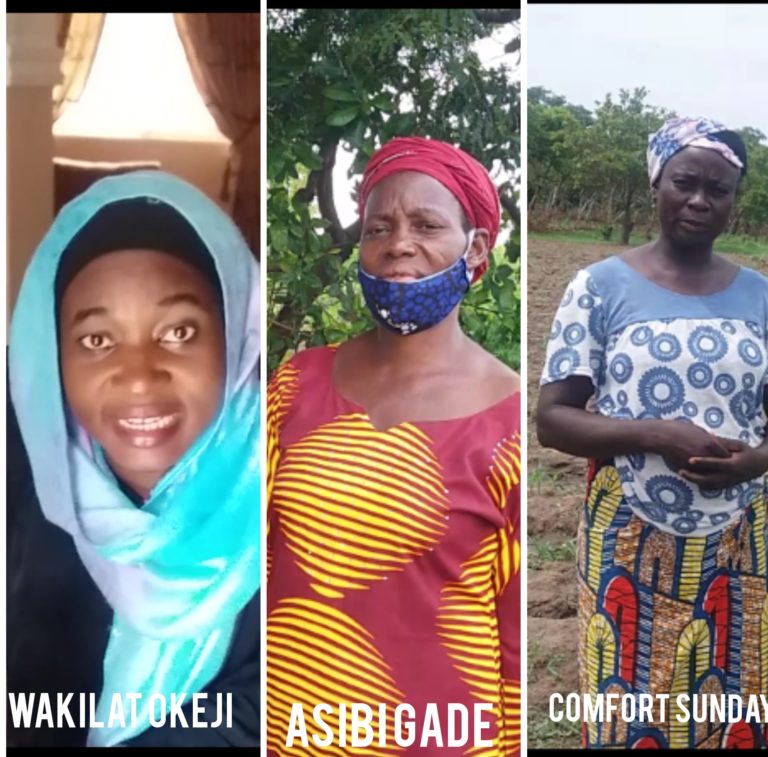
Recalling her sad story, Asibi Gade, a small-scale woman farmer who resides in Small Shada, opposite the Mathematical Centre in Kwali Area Council, rents farmlands for N10, 000 per season on which to grow cassava which she will process into fufu in large quantity for sale, corn and rice.
The widow and mother of two who resides in a tiny two-bedroom bungalow with her unemployed graduate son explained to The Nation how last year, she and a group of women contributed resources and rented hectares of land for N10, 000 per hectare, cultivated corn and soybeans with the aim of sharing the profit. But when some of them went to harvest the produce, they found cattle on the farm having a field day.
“The herdsmen surrounded our women, uprooted the produce and fed them to their cattle. We lost everything. We arrested the herdsmen and took them to the police, but they advised us to accept the N20, 000 compensation they offered us if we don’t want to lose everything,” she said.
In Jiwa community of the Abuja Municipal Area Council (AMAC), the experience of the farmers is similar.
Comfort Sunday just began a fish farm about two weeks ago to supplement her income from crops. She is just one of the hundreds of women in the community that farm in a large expanse of land divided into small plots without any form of demarcation among over 500 women who cultivate various vegetables such as waterleaf, garden-eggs and other crops. She plants rice, beans, corn and groundnut.
Last year, her group, the Smallholder Women Farmers’ of Nigeria (SWOFON) applied to the Federal Capital Development Authority (FCDA) for fertiliser, which they eventually got at a subsidised rate. She used the fertiliser on her beans crop and applied sufficient herbicides to ensure a good yield. Her bean crops were almost ready for harvest when herdsmen came to her farm and she lost everything as they cattle destroyed everything.
Laraba Shuaibu, FCT Smallholder Woman farmer
When she spoke with our reporter at her farm, she said during the lockdown, a couple in the community was returning from the farm when they came across herdsmen feeding their cattle with a neighbour’s crop. They confronted the herdsmen who attacked them with sticks and cutlasses and were eventually rescued by youths who got wind of the incident.
Why smallholder women farmers
According to a research conducted by Bashir Babura and published in the Scholarly Journal of Agricultural Science, Vol. 7 (1) in 2017, more than 80 per cent of farmers in Nigeria are smallholder farmers who produce an estimated 98 per cent of the food consumed in Nigeria apart from wheat. Many of the farmers are women. In the Federal Capital Territory (FCT) alone, the Programme Coordinator SWOFON, Ogechi Okebugwu said at least 13,000 small-scale farmers are women.
Their farming is, however, constantly disrupted by incidents of clashes with herders in search of food for their cattle. To stem these incidents, the Federal Government attempted to introduce the Rural Grazing Area (RUGA) policy, which was developed by the National Livestock Transformation Plan under the Nigerian Economic Council, but the move was faulted and has been adopted only by some states.
In pursuit of its diversification toward agriculture, the Federal Government’s budgetary allocations have continued to increase from 1.25 per cent in 2016 to 1.82 per cent in 2017 and 2.23 per cent in 2018.
Apart from launch of the programmes such as the N150 billion credit relief package by the Central Bank of Nigeria (CBN) for agriculture food chain businesses, FarmerMoni loans which have a three-month repayment period and the presidential fertiliser initiative for the 2020 farming season, the Federal Government recently announced that it intends to secure 995million Euro-worth of agricultural equipment for Nigerian farmers.
The FCT Authority also has the Agriculture Development Project (ADP), which delivers to women extension services towards ensuring that they are coordinated to key into agriculture development programmes.
The Deputy Director of Information and Communication of the Agriculture and Rural Development Secretariat of the FCT, Zakaria Aliyu said at the inception of every season, farmers are invited and offered subsidised agro-inputs such as fertilisers, insecticides, seedlings, poultry feeds, day-old chicks; fish processing inputs, water pumps and sprayers at 50 per cent subsidy.
In 2018 about 6,000 farmers were said to have benefited from the subsidy and 9,000 last year, but the support is yet to commence this farming season due to the lockdown, which has just been relaxed.
Who benefits from the programmes?
Despite the government’s investments in the agriculture sector, the COVID-19 pandemic and subsequent lockdown has severely affected farming activities and, according to Gade, a food crisis may be inevitable in the country.
A resident of Kuchibuyi, a sleepy village in Bwari Area Council Laraba Shuiabu, is the second of two wives of a local farmer who has nine children and had spent most of the lockdown period caring for a daughter who had just undergone surgery.
Unlike the other women farmers, Shuiabu, who owns a large farm about 40 minutes’ walk from her home, cultivates corn, rice and groundnut, explained that while she had a bountiful harvest last year, sold high volume of her corn fresh during the season from which she paid her children’s school fees and other bills. She added that she still had up to 50 bags of dry corn which she sold, even as she said she has barely planted enough to feed her family this year.
She further explained that her bounty was possible last year because she hired a tractor to plough her farm, had access to pesticides, fertiliser and sufficient seedlings, but cannot afford to do same this year. She had to cultivate just a small portion of her farm on her own while the rest lay fallow because she is too exhausted to do more. This indicates that she won’t have enough to sell this year.
Investigations by The Nation revealed that many of the women usually engage in menial jobs or sell their crops to earn enough money to buy all they needed for the new season.
“I am used to packing sand from the river and sell to trucks who in turn sell to builders,” Shuiabu explained.
She continued: “The money that I realise from this is what I use to hire a tractor, buy seedlings, fertiliser and pesticides for my farm at a subsidised rate from the FCT, but they asked us not to leave home so I could not make the money I need. Last year, I used 10 bags of fertiliser on my farm but even if they offer me this year, I don’t have the money.
“With the way things are right now, this and the coming year, things will be hard in this country because we don’t have money to invest in our farms. We are unable to go out and sell the little produce we have because they asked us not to leave the house.”
Gade explained that she had lost over N50,000 during the lockdown because she was unable to supply her fufu to her consumers in the town like she always did and buyers that eventually made it to their community insisted on buying it half the price.
She said the development has affected the income she and other members of the community who survive off supplying fufu to the Abuja metropolis need to invest in her farm this season, adding that access to fertiliser will be a huge factor that determines yield this season because farmers like herself are unable to go and apply for fertiliser at the FCDA due to the lockdown.
What about the loans?
The Smallholder women farmers in the FCT who spoke with The Nation explained that, apart from lack of access to herbicides/pesticides, fertilisers, knapsacks and improved seedlings at subsidised rates, small-scale farmers are afraid of applying for the numerous farmers’ loans the government claims it is providing for them due to inability to meet the repayment terms.
“I am scared of loans because some of my neighbours who collected loans from micro-finance banks and other places now sleep inside the bush because of the aggressive way they chase them for the repayment of even N10, 000.
“They don’t have rest of mind. It scares me and I know that as a widow, no one will rescue me when the time comes. If I collect, how will I pay back? The fufu that I sell is no longer profitable because of the COVID-19; people no longer come to buy like before,” she said.
Sunday believes that the process of acquiring the loan is too stressful with the need for collateral and other requirements.
“The stress that one goes through to get the money is too much. It’s better one manages what one has,” she said.
A poultry farmer from Peyi village in Ushafa, under the Bwari Area Council, Wakilat Okeji said the government is yet to make any provision for small-scale poultry farmers that will help them make a profit.
“For me, Tradersmoni is just N50, 000. It’s not enough. My Marketmoni is just N10, 000. If one wants to set up a farm of 1,000 capacity birds, one will need not less than N1.8 million to N2 million. A standard poultry farm will help reduce the risk of mortality, but as a start-up poultry farmer, I cannot access N2 million from the regular commercial banks or some of the interventions offered by the government. They will still fund only small-scale where they give things such as N100, 000, N200, 000, which will not be enough to produce the capacity of making profit.”
She said she recently tried applying for the COVID-19 support but when she saw the conditions for N1.5 million, which include movable assets, a guarantor that is a professional or civil servant on level 12 and above, she was discouraged.
Way out
The Programme Coordinator of SWOFON said the group is currently working on getting a good bargain for their members to access opportunities provided by the government through the Nigerian Agricultural Insurance Corporation (NAIC), including subsidised crops, subsidised livestock, commercial crops, machinery, equipment and agro-processing equipment.
Until that happens, farmers such as Shuiabu believe that women such as herself will not be comfortable applying for loans. She suggested that government officials should follow them to their communities and mobilise them rather than giving money to people who claim to represent them.
The Deputy Director of Information and Communication of the Agriculture and Rural Development Secretariat of the FCT, however, said support for the farmers is based on recommendations of agriculture officers who reside in the farm communities.
But Gade said the present interest rates on the loans offered by the government is too high, even as she called for the provision of power tillers, hand planters and improved seedlings.
“To encourage small-scale poultry farmers, the government should adopt the clustering method where they provide cluster facilities which will be like a hub where farmers can go and rent space. The space should have the capacity of 1, 000 birds per batch and all the needed facilities such as light, water, a veterinary doctor and security are provided to secure the pens,” Okeji stated.
More than providing facilities and affordable loans, Sunday said the problem of the herdsmen must also be addressed.
“If the government provides all that is needed and does not handle the menace of the herdsmen in our communities, then it will be as good as returning to square one because we will plant, weed but not harvest,” she said.
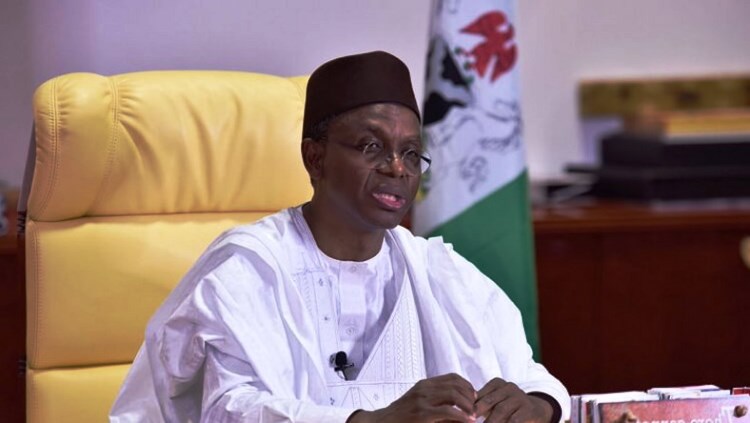
NASIR El-Rufai, Governor of Kaduna State has suspended the partial lockdown imposed in the state to stop the spread of Coronavirus disease (COVID-19).
The governor during a state broadcast on Tuesday explained that the lifting of the partial lockdown after 75 days followed consultations and compliance by residents of the state with the guidelines of the lockdown.
He said it became necessary to move to the next step which, according to him is staying safe while pursuing socio-economic activities.
El-Rufai advised residents of the state to practice personal responsibility at places of work and worship.
He stated that civil servants are to resume work in phases which would be announced by the Head of Civil Service in the state.
On religious gatherings, the governor noted that a ban has been lifted only on Sunday service for churches and Friday service for mosques.
He added that commercial vehicles must reduce capacity to not more than two passengers per row and not more than 50 percent of capacity.
The governor also lifted ban on supermarkets, hair salons and hotels with orders that restaurants and bars are to offer only room service.
However, he said some certain persons were determined to jeopardise the effort of health workers in the state by making threats of an ‘untimely strike action’.
“Regrettably, certain persons seem determined to sully all the goodwill the hard work of our health workers has attracted by the untimely threat of strike action amidst a pandemic,”El-Rufai noted.
According to him, the threat was an action that contravened the Hippocratic Oath and Public Service Rules.
“This reckless action is a clear violation of the Hippocratic Oath, the Trade Union (Essential Services) Act and Public Service Rules,” he further stated.
The ICIR had reported how health workers in the state under the umbrella body of Kaduna State Health Care Workers Union and Associations earlier criticised the state government and threatened to go on strike for alleged deduction of 25 per cent from their salaries.
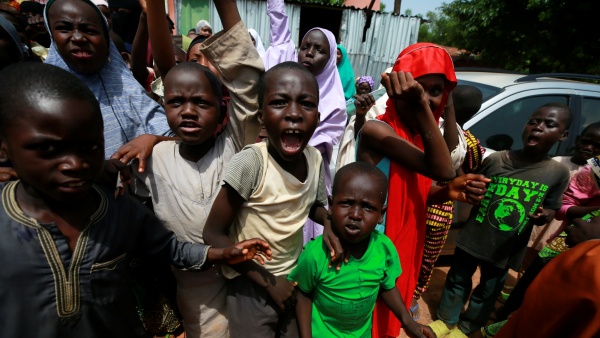
THE Save the Children International has said that the COVID-19 pandemic has disrupted the education of 262.5 million children in Africa, the continent’s most vulnerable population.
In it’s latest report titled “COVID-19 Impacts on African Children,” released on Monday, the charity highlighted how the pandemic had jeopardised African children’s access to formal learning, exposing them to the risk of being sexually abused or recruited by force into an armed group.
The report indicates that “more than 368 million school children globally are now missing out on school meals on which they depend, noting that 3.5 million of these children reside in Southern and Central Africa.
Eric Hazard, Panafrican Campaign and Policy Director at Save the Children, said the existing vulnerabilities coupled with the challenges posed by the pandemic could put development progress in Africa on the reverse.
“With the rapid spread of COVID-19, this pandemic is overburdening the under-resourced African health systems and disrupting routine health services, jeopardising Africa children’s access to formal learning, health and safety and protection,”Hazard.
“Especially girls and this is unfolding in Africa against a backdrop of worrying hunger levels driven by climate shocks, conflict and economic challenges.”
Between June and August 2020, the international aid organisation projects that 19 million people in West and Central Africa would be food and nutritionally insecure due to agricultural logistical constraints and labour shortages caused by COVID-19.
The report hinted that the food insecure population in Africa could double in the coming months, which has a serious nutritional impact on children.
It also highlighted that malaria deaths could hit the 769,000 mark in Africa which is the highest in 20 years due to disruption of insecticide-treated net campaigns and access to antimalarial medicines as the lockdown enforced across the continent brought activities to a halt.
Hazard urged African member states to ensure high-level political commitment and leadership across all sectors involved in COVID-19 response and provide a synergy that will provide viable solutions.
“As a child rights organisation, we have adapted our strategies and approaches to protect the most vulnerable children and ensure that their rights are protected but this requires a coordinated effort, led by African governments,” he said.
“The main threats, the COVID-19 pandemic poses to children in Africa suggests some of the political and programmatic responses protect children’s rights.”
SOME beneficiaries of the National Social Investment Programme, N-power, have cried out to the federal government over non-payment of their three-month-old salary.
The beneficiaries are asking the government to approve the payment of their March, April, and May stipends
This is coming after Sadiya Farouk, the Minister of Humanitarian Affairs, Disaster Management and Social Development promised beneficiaries and the program monitors across the country last week Tuesday, that they would start receiving payments for the months of March and April within the next 72 hours.
The minister disclosed in a press statement that the delay in the payment of the beneficiaries and monitors was “due to the change in Government Policy of migration from the REMITA platform system to the GIFMIS system of payment which requires offloading the beneficiaries into the new system before finally uploading, reviewing and final payment by the Social Investment Programme (SIP).”
N-Power is a youth empowerment scheme sponsored by the Federal Government of Nigeria under the Social Investment Program (SIP) with 500,000 enrollees across the country. Other programs under the program include Home Grown School Feeding, Tradermoni, Marketmoni and the Conditional Cash Transfer in the 36 states of the country.
Beneficiaries starving, dodging their landlords
However, hundreds of tweets and comments from over two hundred and fifty beneficiaries seen by The ICIR show that the promise made by Farouk has not been fulfilled a week after.
Beneficiaries now complain of the difficulty of meeting their needs. Someone said he has “turned to a thief in the night who sneaks in and out of the house” just to avoid his creditors.
A beneficiary from Plateau State, Samuel Bangudu, a father of four, said the situation has been “awful” for him in the last three months. He said his wife lost her job which makes things more difficult for the family.
Bangudu sounded distraught on Monday while speaking to The ICIR. “How I wish you can see my four children at the moment sharing the remaining cups of Gaari in the house. I have not eaten today the same as their mother. We are really pushed to the wall.”
He said the family’s condition was exacerbated by the lockdown order because nobody was even willing to borrow him money.
“My rent has expired since the 20th of March, and I have been avoiding my landlord,” he said.
Similarly, Habibu Isa from Katsina State told The ICIR that the lockdown has exposed him and his family to the worst embarrassment of their lives. he said he no longer could take anything on credit he is owing many people.
“They are all tired of borrowing me money. The food sellers here are no more willing to help me again to buy on credit, I can not continue like this any longer. Pls help us talk to the government”
Another beneficiary of the scheme, Ogunmodede Oladeji, said he has been broke to the point that he contemplated suicide. “I am currently indebted to some money lenders like Opay, FairMoney, Branch, Carbon Paylater, SEAP microfinance bank, and others”. He told The ICIR that he no longer can walk freely on the street.
From Delta State, Chinyere Esther also recounted her sad story. She told The ICIR that she is totally broke as she has used up all her savings, and borrowed so much from her neighbours with the hope to pay back when the backlogs of her stipends are paid.
The affected beneficiaries have taken their protest to Twitter using #PayOurMarchAprilAndMayStipends.
Auwalu Nasiru who tweeted through @NasuruAuwalu appended a picture of him on the sickbed, pleading to the Npower through her official Twitter handle to pay him his backlogs so as to foot his medical bills.
Please Npower help me out resolved my problem and pay me my March,April and May stipend to pay my mother medical bill
Auwal Nasiru kebbi Junior Secondary school Dankoji NPVN NO NPVN /KE/2016/101095 pic.twitter.com/oqBNLipQHm
Salisu Ashiru (@SalisuAshiru5) in his own tweet qualified the unpaid backlogs as ill-treatment of the beneficiary as the situation is unbearable for many.
Your ill- treatment to unpaid beneficiaries is devastating!
Had it been you knew how you inflicted beneficiaries you could have repent for inhuman action. Have a Fear of God and settle this matter @npower_ng the situation to many is unbearable!!!
Forward your particulars for verification, Ministry advises
According to Vanguard Newspaper, the Ministry of Humanitarian Affairs, Disaster Management, and Social Development has refuted claims by some N-POWER beneficiaries that they were being owed up to three months’ payments.
Rhoda Iliya, the ministry’s spokesperson, told The ICIR that claims of non-payment of stipends to the beneficiaries for three months were untrue, but he refused to comment on whether the ministry has paid up to May.
Iliya said those claiming they were being owed may not be genuine beneficiaries of the social investment programme. She challenged them to forward their particulars to the ministry for authentication if they are sure.
However, the payment dashboard seen by The ICIR shows “unpaid” for the months of March, April, and May as claimed by the affected beneficiaries. Only January and February’s payment read “paid”.
The House of Representatives on Tuesday directed its Committees on Police Affairs and Pension to investigate the Nigerian Police Force Pension Limited over failure to meet it’s pension and gratuity obligations.
Adeyemi Taofeek, member representing Mushin Federal constituency, Lagos who presented the motion before the House expressed the need for the investigation as a necessary measure to ensure Police reform.
The House during plenary session mandated the two committees to investigate the immediate and remote causes of the NPF Pensions Limited inability to meet its monthly pension obligation and the timely payment of gratuities to retiring police officers.
The Nigeria Police Force launched its own Pension Fund Administrator (PFA) known as NPF Pensions Limited in 2014 according to the Pension Reform Act (PRA 2014) with the responsibility for managing pension assets of the entire Nigeria Police Force personnel.
The NPF Pensions Limited was incorporated with a fully paid share capital of N1 billion while the two major shareholders are; Nigeria Police Welfare Insurance Cooperative Society Ltd and Nigeria Police Multipurpose Cooperative Society Limited.
The Committees on Police Affairs and Pensions were charged to report back to the House in four weeks with findings and recommendations for a model to prevent future misappropriations.
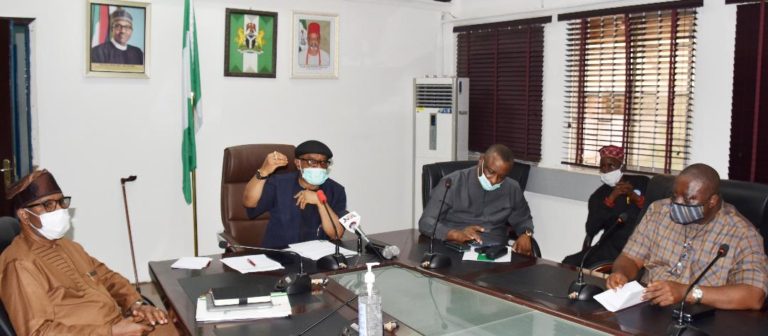
THE Federal Government is set to pay Nigerian health workers in the frontline battling the Coronavirus disease (COVID 19) disease pandemic, hazard allowance for the months of April and May, Chris Ngige, Minister for Labour and Employment, said on Tuesday.
Ngige disclosed this while speaking at a meeting between representatives of the Federal Government and Health Professional Associations, where he reiterated that the allowance would be paid to the workers before June 12.
“We have fixed a timeline for ourselves that before the end of this week, the health workers captured in that particular COVID 19 net; frontline workers should get all their hazard and inducement allowances for the month of April and May before the close of the week,” he said.
The decision, he said was part of the agreement reached between the Federal Government Representatives led by him and representatives of the health sector workers.
According to him, the urgent approval granted by President Mohammed Buhari was in appreciation of efforts of the health workers risking their lives on the frontline in the fight against COVID 19.
Ngige stated that the government “ reviewed all, and also reviewed all the emoluments” to be given to the health workers.
He added that the decision on the commencement of the implementation of the allowances was reached along with the Accountant-General of the Federation and the Minister of Health.
Ngige further said that the Federal Government has approved insurance coverage for the health workers adding that the gesture was in consonance with the memorandum of understanding entered into on April 21, between the Federal Government Representatives, the health professionals and unions in the health sector.
Olorunimbe Mamora, Minister of State for Health, who was also at the meeting said the Ministry would ensure the provision of Personal Protective Equipment (PPE) to various hospitals.
Present at the meeting were the Minister of State, Labour and Employment, Festus Keyamo SAN, Accountant General of the Federation, Ahmed Idris, Ag. Chairman, National Salary and Wages Commission, Eyo Nta, Permanent Secretary Federal Ministry of Labour and Employment, William Alo, Permanent Secretary Federal Ministry of Health, A.M Abdullahi.
Also present were National President, Joint Health Employees Sector Union, Biobelemoye Josiah, President, National Union of Allied Health Professional, O.C Ogbonna and Secretary General, Nigerian Medical Association, Dr. Ekpe Philips.
This is coming a week after it was reported that over 812 Nigerian health workers have contracted COVID-19.
“We have had 812 health care workers infected, they are not just numbers, 29 of these work for NCDC, they are people I know, they have families, wives and children,” Chikwe Ihekweazu, Director General of Nigeria Centre for Disease Control (NCDC) had said during the briefing of the COVID-19 Presidential Task Force (PTF) in Abuja on Tuesday, June 3.
Meanwhile, Tedros Adhanom, Director General of the World Health Organisation (WHO), once said more than 18 million health workers would be needed in both low-income and middle-income nations, including Nigeria.
Currently, Nigeria has 12,801 confirmed cases of COVID-19.
THE Economic and Financial Crimes Commission (EFCC) has secured the conviction and sentencing of nine internet fraudsters in Abeokuta, Ogun State capital.
A statement by Dele Oyewale, EFCC’s Head, Media & Publicity stated that the Ibadan Zonal Office of the Commission secured the conviction of the nine fraudsters before two different judges of the Federal High Court, Abeokuta.
According to Oyewale, two of the fraudsters, Toheeb Abdulrasheed and Chukwuebuka Isaac Dike were sentenced by Justice Mohammed Abubakar of the Federal High Court, Abeokuta, on Monday, June 8, for their involvement in internet-related fraud.
The EFCC spokesperson explained that Dike, who claimed to be a 100-level Biochemistry student of the Federal University of Agriculture, (FUNAAB) was sentenced to three months in prison while Abdulrasheed, a self-acclaimed graduate of Business Administration from Moshood Abiola
Polytechnic (MAPOLY), Abeokuta, bagged four months.
Their sentences followed the prayer of prosecution counsel, Abdulrasheed Suleiman for their conviction after they pleaded guilty to their respective amended one-count charge.
Aside the prison sentences, the judge also ordered that Abdulrasheed restituted the sum of $600USD to his victim through the Federal Government and to also forfeit his iPhone 6 to the government.
Dike on the other hand, was ordered to restitute the sum of $500USD to his victim and ceded his gold iPhone 11 Pro Max and Rose Gold Infinix Hot 5 to the Federal Government.
The statement further disclosed that Justice Ibrahim Watilat of the same Federal High Court, Abeokuta on Tuesday June 2 convicted and sentenced the trio of Tobiloba Oni, Paul Oluwadamilare Odole and Michael Oluwaseun Jemiseye, having found them guilty of the criminal charges preferred against them by the Ibadan Zonal Office of the Commission.
Oni was handed four months imprisonment, Jemiseye got three months with N120,000 option of fine, while Odole got four months with equally N120,000 option of fine.
Apart from forfeiting all items recovered from them to the Federal Government, the convicts were mandated to sign a pact with the EFCC to be of good behaviour and never to be involved in any form of economic and financial crime within or outside the country.
They are also to always make themselves available for participation in subsequent anti-corruption campaigns of the Commission.
Justice Watilat in the same vein, convicted three additional others for internet-related crimes.
The convicts: Favour Chinueze Ekeh, Kolade Nwachukwu and Sultan Adeniji Egbede were handed three months imprisonment each with N100,000, N50,000 and N100,000 option of fine, respectively, which must be paid within two days of the sentence or else, the prison term would apply.
Justice Abubarkar had on Tuesday, June 2, convicted one Rotimi Quadri Akinlolu for his involvement in internet fraud.
He was sentenced to six months imprisonment with effect from March 6 when he was arrested. Aside the jail term, he forfeited all items recovered from him to the Federal Government.