THE Federal government has cut the budget of the Ministry of Health and other key ministries such as education, power, and agriculture. This is amidst the ravaging COVID-19 pandemic and inadequate health infrastructure in the country. However, in what seems like the Executive arm patronising the Legislative arm, the Zonal Intervention Project budget and the National Assembly Library budget were untouched.
According to the revised document seen by Dataphyte, the Federal Ministry of Health had a downward cut of ₦15.17 billion. Likewise, the Ministries of Education, Science and Technology, Water Resources, and the Federal Capital Territory are also among the worst hit by capital expenditure reductions.
Since the outbreak of coronavirus, governments around the world are adjusting to current economic realities. The global economic shock arising from the pandemic has resulted in the fall of crude oil prices and production. This development led to various adjustments in the early passed 2020 budget, which is pending a review from the National Assembly. Details from the revision showed that the Federal Government reduced the benchmark for the oil price to $25 per barrel, oil production at 1.90 million barrel per day, exchange rate devalued to ₦360 to a dollar.
No ₦1.5 trillion Cut But Increased Recurrent Expenditure
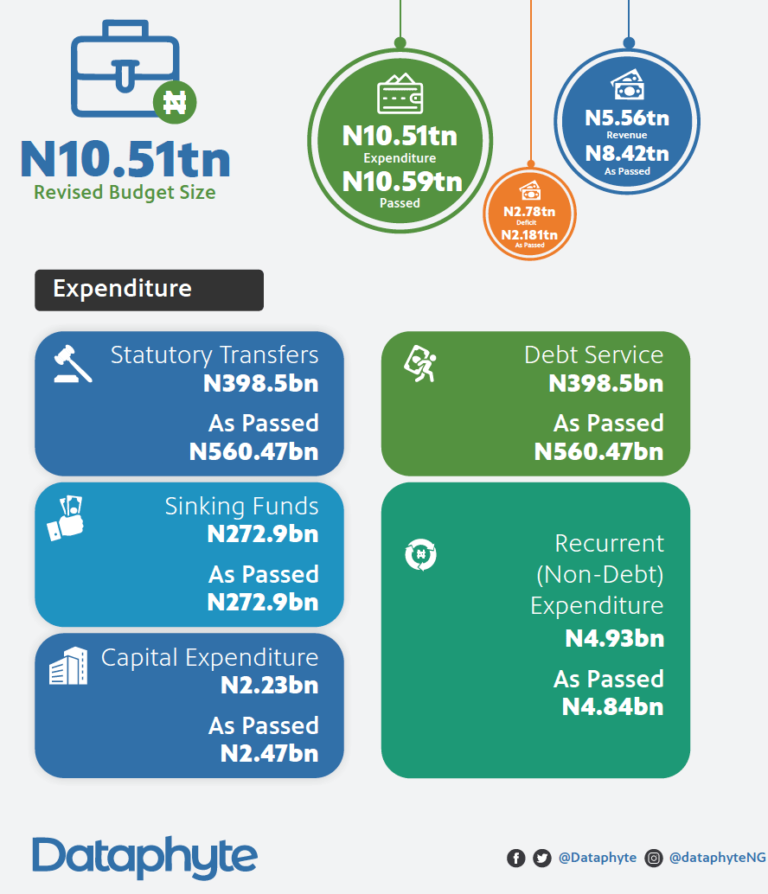
The Federal Government had announced its decision to downsize the entire 2020 budget by ₦1.5trillion. However, the revised budget proposal is only short by ₦80.35 billion (80,345,966,946). According to the proposed budget document, the 2020 budget as passed by the National Assembly was ₦10.59 trillion (10,594,362,364,830) while the proposed revision is ₦10.51 trillion (10,509,654,033,054).
Further analysis of the budget revision showed that despite reductions in capital expenditure of key MDAs, such as Health, Education, and Agriculture, the federal government increased recurrent expenditure by ₦85.55 billion. This is from ₦4.84 trillion to ₦4.93 trillion.
Capital Expenditure of N100 billion for Zonal Intervention Project, others remain unchanged
Despite cuts in key critical sectors, the Federal Government left N2 billion for the construction of the National Assembly Library (NLIDS). Ordinarily, this should have been among the opportunity costs on the expenditure items as a result of dwindling revenue and projected recession.
Other capital expenses not touched include ₦4 billion expenses for Galaxy Blackbone, ₦5 billion for GIFMIS/IPPIS Capital, ₦6 billion for OSSAP: Special Projets, ₦16 billion for OSSAP: Social Safety Net, N10billion for Office of the Senior Special Adviser to the President (OSSA): Conditional Grants To States, ₦8 billion for OSSAP: Payment of Ongoing Projects, ₦7.97 billion for OSSAP – SDGs: SDG Projects 1. Also, ₦100 billion for Zonal Intervention Projects, ₦2.5 billion for Head of Service (Federal Government Staff Housing Loans Board), ₦1.5 billion for National Development Plans (Federal Ministry of Finance, Budget, and National Planning), and ₦7.2 billion for Capital Existencies/Adjustment to Capital Cost.
It also includes ₦10 billion for Contingency (Capital), ₦500 million for Presidential Enabling Business Environment Council (PEBEC), ₦10 billion for Grants to Bank of Industry (BOI) to support low-interest lending to SMEs, ₦26.9 billion for Refund (Acquisition of Yola DISCO), ₦20 billion for Special Intervention Fund, N1 billion for Constitution review, N500 million for CPA, ₦1.5 billion for FGN Intervention In Zamfara/Katsina/Borno, and another ₦2.5 billion for the Digitalisation of Archival for Supreme Court Proceedings and Judgments.
MDAs with Biggest Cuts in Capital Expenditure
The Ministry of Works and Housing got the highest cut of N58.83 billion. The Ministry’s capital expenditure was dropped from ₦315.57 billion to ₦256.74 billion. The Ministry is followed by the Federal Ministry of Agriculture and Rural Development with a revised capital expenditure from ₦124.4 billion to ₦79 billion.
The Ministry of Transport also suffered a similar fate with ₦14.71 billion cut, while Science and Technology Ministry got ₦20.47 billion cut. Also, capital expenditure for the Ministry of Education was cut by ₦16.86 billion, FCTA and the Presidency removed ₦32. 75 billion and ₦9.1 billion, respectively.
The Federal Government also cut ₦111.92 million from the Office of the Auditor General of the Federation, leaving the important component of government with a meagre ₦41.15 million from the initial ₦153.07 million.
Nigeria’s fiscal policy continues to favour recurrent expenditure
The new budget revision suggests the extent of the Federal Government’s commitment to development aspirations. Capital expenditure includes the acquisition and development of infrastructure facilities, maintenance of fixed assets, and others. Contrarily, recurrent expenditure is spent on wages and daily recurring operations. In actual sense, Nigeria’s fiscal policy continues to give high priorities to recurrent expenditure and provisions for debt servicing in place of capital expenses over the years. Although Mrs. Zainab Ahmed, Nigeria’s Minister of Finance, Budget, and National Planning, had claimed in a memo that the revision eliminated non-critical capital expenditure, classified as Administrative Capital Expenditure.
A recent DATAPHYTE occasional paper confirmed Nigeria’s bloated recurrent expenditure. The paper revealed how five key sectors received less than a fifth of the total budget size, while allocation to debt servicing was over 25 percent. For the period, capital expenditure received a meagre percentage.
In an interview with Ms. Aanu Rotimi, the Program Manager at Health Reform Foundation of Nigeria (HEFRON), she said an in-depth review of the constituency projects has shown huge investment in irrelevant projects. She stressed the same budget allocation should not be left untouched “when we are yet to have at least one functional primary healthcare centre per ward”. She then called on the National Assembly to prioritise budget response to the challenges of inadequate human resource for health, poor health infrastructure, inadequate supply of consumables which are leaving mothers and children to die in thousands annually.
Speaking with Mr. Olanrewaju Suraju, Chairman of HEDA Resource Centre, he decried the attempt to leave the legislature’s budget untouched. He said there is no direct bearing or urgent need for a National Assembly Library. It would be better to redeem the National Library than to construct the National Assembly library at this time. Leaving these items in the legislatures’ budget untouched suggest a motivation to negotiate quick passage of the revised budget” he said. He further called on the Senate President and the Speaker of the House of Representatives to ensure that non-essential components are removed from the budget revision.
THE officers of Mabushi Police station, located in the Federal Capital Territory (FCT), headed by Divisional Police Officer, SP Bello Saadu, have arrested a certain Nura Salisu, accused of raping, impregnating 16-year-old Nanket Manasseh and reportedly killing their baby.
Salisu, 30, an Abuja Electricity Distribution (AEDC) official, who resides in Jahi, was arrested by officers of Jahi Police station on May 22, for abducting his 6-month-old baby and refusing to share details of its whereabouts.
The ICIR gathered that Salisu fathered the baby in question after having carnal knowledge of 16-year-old Manasseh, when she was 15.
Manasseh, who lives with her foster mother, Phoebe, in Jahi disclosed that Salisu had been chasing her since she was 10. Recalling how he enticed her, Manasseh told The ICIR that her first encounter with him was when she was in primary three, when he gifted her a mobile phone.
Since she was not expected to own a phone, she lied to her foster mother that she found it on the floor, but Phoebe doubted her story.
When she later confessed that Salisu gave her the phone, Phoebe warned the AEDC worker to stay away from her child who at the time was only 10. She also reported the case to the Chief of Jahi, who warned Salisu to keep away from the teenager.
By the time Manasseh clocked 15 and was ready for school, Salisu struck again and this time, he lured her with a promise to sponsor her education.
According to the young girl, Salisu booked a hotel and asked her to check in, claiming that he had very important information to share with her.
While in the hotel located somewhere in Jahi, Manasseh said Salisu showed up late at night and forcefully slept with her.
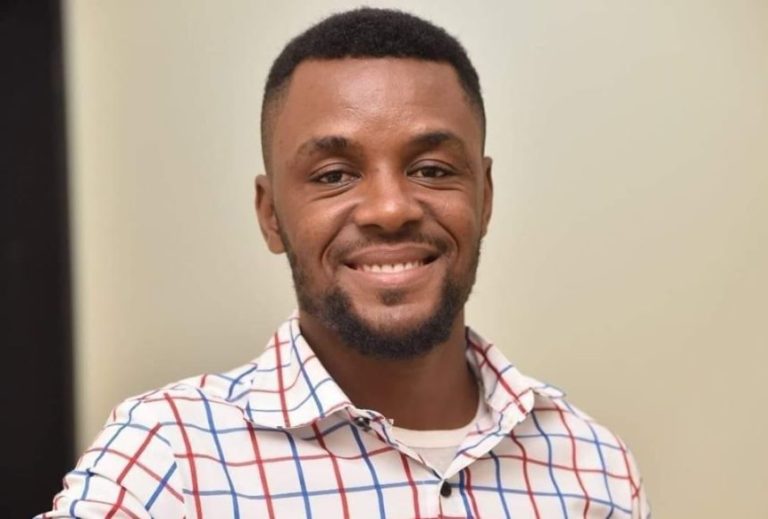
16-year-old Nanket Manasseh CREDIT: Wanda Adu
“I told him I didn’t want sex but he still had me and left when he was done. In the morning I packed my things and went back to my sister’s house without telling anyone about what happened.” Manasseh narrated to The ICIR.
Two months later, Manasseh noticed that she had missed her period twice in a row and suspected that she had become pregnant . The young girl confided in her friend who advised her to abort it, but Manasseh decided to keep the child without telling her parents. .
However, by the fourth month, Manasseh’s stomach began protruding and it caught the attention of Phoebe who quizzed her about it and made her take a Do-It-Yourself (DIY) home pregnancy test, with the aid of a test stick.
The instant test came out positive and that’s when things got worse.
With her secret discovered, Manasseh admitted that Salisu was responsible for her pregnancy and Phoebe immediately reached out to him with the news.
Unperturbed, Salisu gave Phoebe one condition of accepting the baby, saying if Manasseh put to bed in November 2019 – which by his calculations fell on the ninth month from when he last slept with her – he would accept the child. Otherwise, he wouldn’t.
On November 13, 2019, Manasseh delivered a baby boy who Salisu later named Kamal. But he was an absent father and never provided any support for the baby or its mother.
At 16, Manasseh was therefore saddled with raising the child without the support of its father except for that offered by her foster parents.
On two separate occasions, she visited the family home of Salisu with her baby, hoping to make him provide some form of support for the baby. Yet, the more Manasseh was trying to get the best for her son from the man who put her in family way, the more Salisu was getting upset.
Salisu was married to another young lady who had four children for him, but they are all dead now. He believes that touching his offsprings before their first birthday spelt doom, and this is the reason he avoided Kamal.
On May 21, things took a wilder turn.
Kamal had started teething and on that day and was running temperature. Worried about the health of her baby, Manasseh needed money to buy drugs for the child and acting on advice of her foster parents, she took the child to Salisu to get support.
Upon arriving at the house, Manasseh met no one and decided to stay at her friend, Blessing’s place. While there, she called Salisu to inform him about the baby’s condition and the plan to get him to offer some support. Salisu later showed up at Blessing’s house around noon and forcefully collected the baby from its mother, and took it to an unknown place.
6-month-old Kamal missing since May 21 after being abducted by his father, Nura Salisu CREDIT: Wanda Adu
“Salisu dragged my baby from me, holding him with one hand. I tried to collect my baby but he started walking away with the child. I didn’t see him for some time and when he came back he couldn’t tell me where he kept my baby.” Manasseh narrated in tears.
On the night of the same day, the matter of the missing baby was reported to Jahi police station.
The next day, it was transferred to Mabushi police station, where Salisu was detained and questioned about the location of the baby.
According to Phoebe, Salisu gave three different accounts on the whereabouts of the child. In one confession he admitted dumping the baby in Jabi Lake and leaving it to drown.
In the other, he claimed that he gave the child to a friend of his, Moses, who on the same day traveled to Kano with the child. Salisu said he had no means of reaching his friend or had any idea where in Kano the friend had taken baby Kamal.
In another account, Salisu said he gave the child to his sister in Garki and when asked to lead the police family to the place, he refused.
Due to varying, conflicting accounts of the child’s whereabouts, the police transferred the case from Mabushi Police Station to the state Criminal Investigation Department (CID) office for further investigation.
According to SP Bello Saadu, the DPO of Mabushi Police Station, the primary concern of the police is to locate the baby, afterwhich, Salisu would answer for his actions.
“We would work on prosecuting the suspect for all his sins,” Saadu told The ICIR on Wednesday.
At the state CID office, a new Investigation Police Officer (IPO) identified as Josephine was assigned to the case and according to Lere P. Samuel, a relation of Manasseh, on Friday, the suspect led the police to a location where he claimed to have dumped the baby.
“The IPO, Josephine was recording as Salisu told us that he left the baby wrapped in a jacket and sellotape in the bush but nothing was found,” Samuel told The ICIR.
Salisu was then taken back to the CID office where he appeared before the Assistant Inspector General of Police (Intelligence division) for more questioning.
According to Samuel, the senior officer demanded that the suspect hand over his cell phone unlocked. Upon refusal, Salisu was beaten by some officers for not cooperating and he was forced to unlock his phone.
“The ACP (intelligence division) accused Salisu of not being a true Muslim and told him the only way his punishment would be reduced is if the baby is found. He told him that in a case the baby is dead, he (Salisu) should consider himself a dead man within the next three months,” Samuel narrated the incident to The ICIR.
The ICIR contacted the FCT Commissioner of Police Bala Ciroma on telephone but he advised that the FCT Police Public Relations Officer (PPRO), Anjuguri Manzah be contacted instead.
Manzah on his part promised to get back to our reporter after answering two calls placed to his mobile phone but as at the time of filing this report, he’s yet to respond.
The suspect remains in police custody and investigation is said to be on-going.
Meanwhile, Wanda Adu Foundation, a non-governmental organisation (NGO) focused on helping vulnerable women and children, has been monitoring the case.
While it applauds the police for transferring the case to the state CID office, the founder of the NGO, Wandadaku Adu, told The ICIR that the police have resorted to victim blaming.
“The police are blaming the victim for seeking child support. They said Manasseh’s request triggered the suspect’s actions. This is wrong and I frown at it,” she said.
She believes the police can do much more than it is doing at the moment.
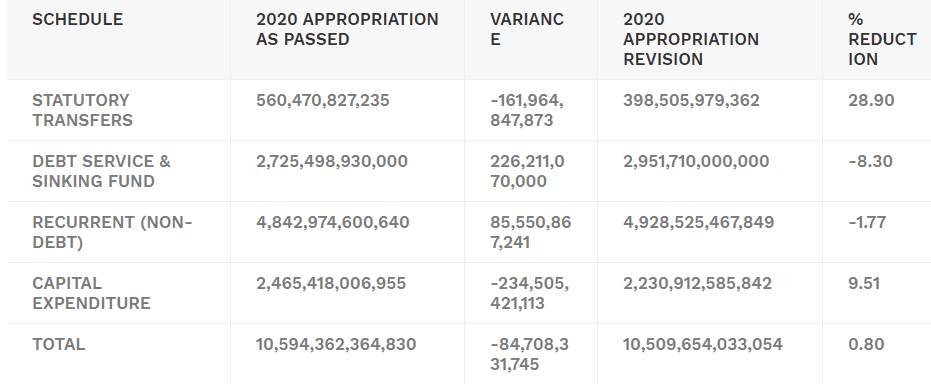
A REVIEW of the Revised 2020 Budget exclusively obtained by DATAPHYTE indicates that the Federal Government has reduced the total budget size by only ₦84.71 billion. Against the background that the government initially proposed a ₦1.5 trillion budget cut (over 14 percent reduction of the total budget size), the new cut is low.
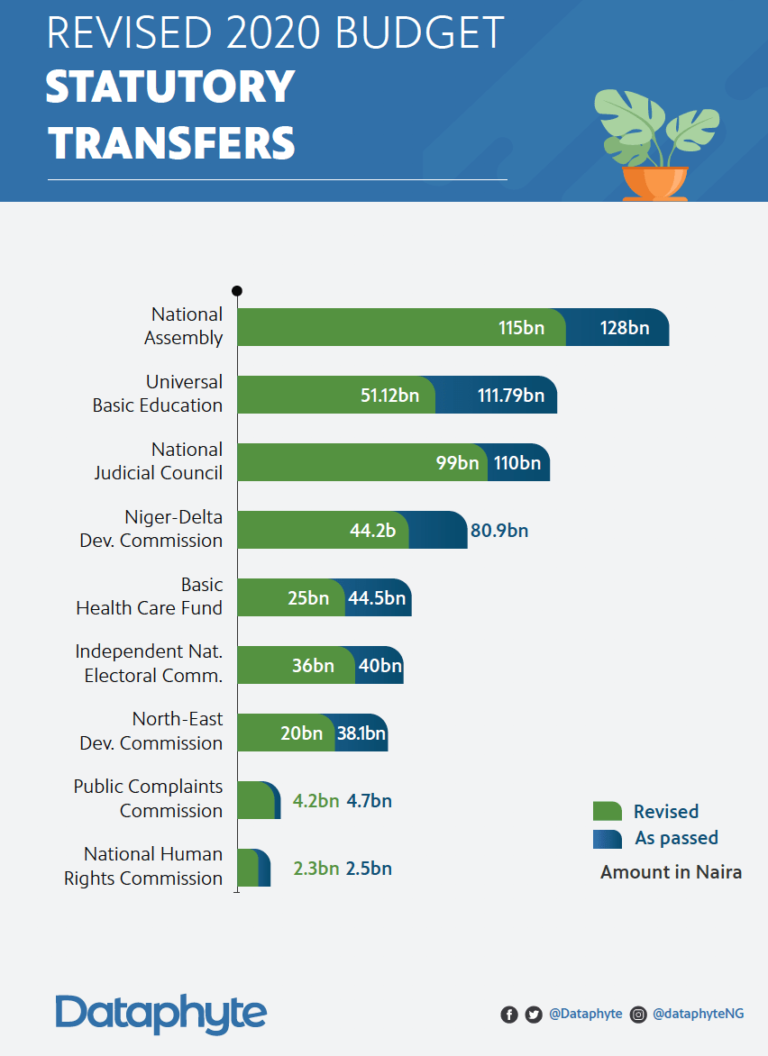
On a close look, the revision proposes less than one percent reduction to the initial budget size. With less than one percent budget reduction, one wonders the real essence of the whole budget review attempt. In addition, the budget review dampens the hope of many the Nigerians optimistic of a reduction of the enormous cost of governance. Budget for the National Assembly only reduced by 10 percent while the budget for the Presidency reduced by only 9.75 percent.
Revised 2020 Budget across Main Expenditure Items
The composition of the revised budget implies more dilemma for Nigeria’s development aspiration. Across Nigeria’s four main expenditure items, only the budgetary provisions for statutory transfers and capital expenditure have been reduced. While statutory transfers decreased by 28.9 percent, capital expenditure reduced by close to 10 percent. Against the background that budgetary provision to development propellants continue to be low, the reduction is not satisfactory.
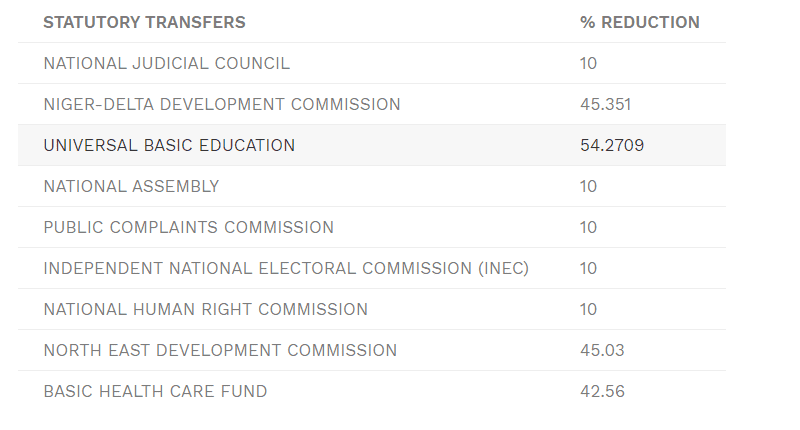
But the bigger dilemma bothers on Nigeria’s priority. While budgetary allocation to the National Judicial Council, National Assembly, Independent National Electoral Commission, and other agencies of government have been reduced only by about 10 percent respectively, budgetary provision for education reduced by close to 55 percent. Similarly, provision for basic health care fund reduced by over 42 percent.
With the reality of the COVID-19 pandemic, reduction in budgetary share for education and healthcare does not reflect the prioritization of the citizen’s real needs. With the growing number of COVID-19 cases in the country, an increase in budget share to the health sector is expected. To expand education access to the teeming Nigerian school children who are deprived of education during this period, additional budgetary commitment is also required. This is to cover up the cost of setting up virtual learning alternatives.
Revised Budgetary Allocation to Statutory Transfer
Increased Recurrent and Debt Servicing Expenditure
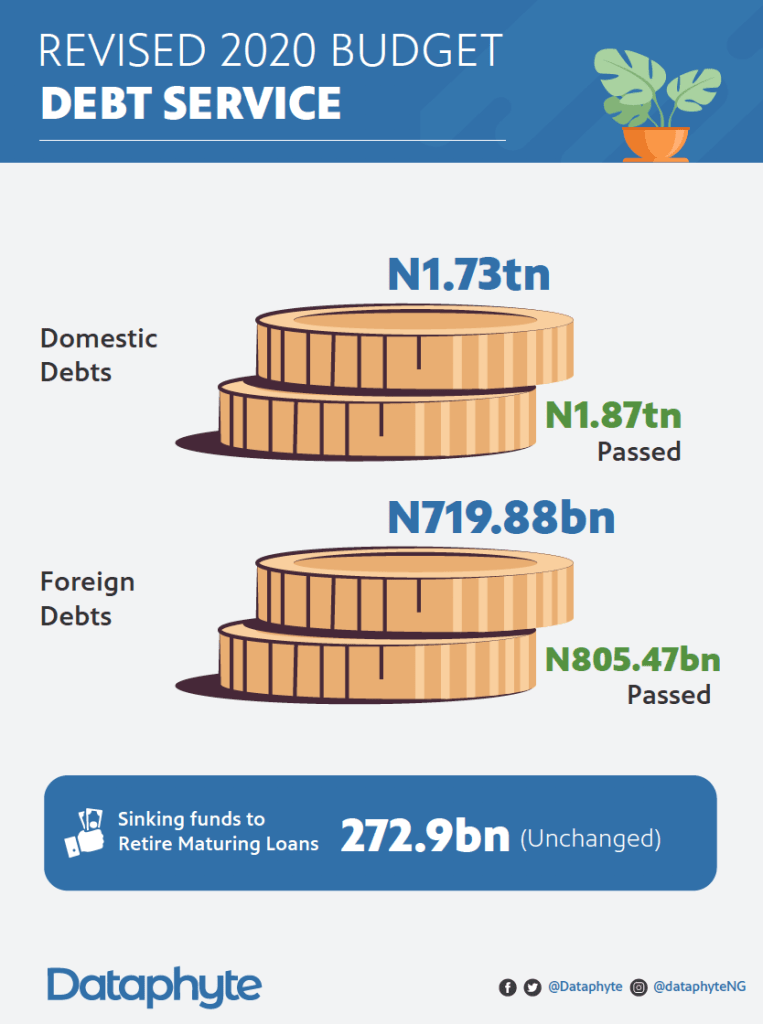
Contrarily, budget share for recurrent expenditure as well as debt servicing has increased. By implication, spending on recurrent items will continue to suppress Nigeria’s aspirations for development this year. But there are even bigger questions on the items that have increased the recurrent expenditure figure. For instance, insensitive recruitments like that of the Nigerian National Petroleum Corporation would have added to these expenditure burdens. Also, the increasing budgetary commitment to debt servicing over health and education may affirm that Nigeria indeed cares more about its debt profile than the citizens.
Conversely, Nigeria’s revenue realities continue to expose the need for stiffer revenue management measures. In fact with the realities presented by the Addendum to the 2020-2022 Medium Term Expenditure Framework and Fiscal Strategy Paper (MTEF/FSP), the proposed budget revision appears like a mere child’s play. As at Q1 2020, gross oil and gas revenue was short by over 28 percent of the anticipated revenue.
In addition, the net oil and gas revenue inflow to the Federation Account was ₦940.91 billion. This represents a shortfall of ₦425.52 billion (or 31.1 percent of the pro-rata amount). Similarly, non-oil tax revenue was only ₦269.41 billion by the end of the first quarter of 2020. This is a shortfall of about 40 percent of the predicated non-oil revenue earning for 2020.
From the revenue earnings in Q1 2020, as well as the existing realities on oil trade and the ongoing global pandemic, hopes for increased revenue earnings may be blurry. The continued lockdown is expected to impact on tax revenue from Nigeria’s business community. Thus, the revised budget may be somewhat impracticable without a corresponding increase in Nigeria’s debt.
Counting on the National Assembly To Do Better
At this point, the National Assembly must step in to show solidarity to the Nigerian people. Therefore, it must use its oversight powers to ensure the proposed budgetary revision is jettisoned and replaced with a more realistic and citizen-focused budget. Increasing commitment to capital investments will show Nigeria’s commitment to the course of development. DATAPHYTE’s recent occasional paper provides a guide for the budget revision.
Moreover, the legislative arm needs to show it is truly not patronised by the executive arm of government. Especially as the Zonal Intervention Project budget and the National Assembly Library budget tied to the two chambers were untouched in the budget revision. Above all, a budget that allows for increasing provision for basic education and healthcare should be developed.
In an interview with a health advocate, Ms. Aanu Rotimi, the Program Manager at Health Reform Foundation of Nigeria (HEFRON), she said the current COVID-19 situation has revealed proper investment in the health sector is central to economic growth and development. “Nothing can be more important now than appropriate and focused investment in human development according to the current realities and the future needs of this country”, she further stressed. The health advocate said this is the time to push aside superfluity of a few for direct and impactful investments for all that can be tracked and validated. In conclusion, she nudged the legislatures to walk the talk, translate their commitments to actions and ensure there are no wastages as usual.”
Also reacting to the budget revision, Mr. Kolawole Oluwadare, the Deputy Director Socio-Economic Rights and Accountability Project (SERAP) said these cuts are not inevitable. He said the Nigerian government had a lot of choices as to what to cut but chose to balance the budget on the backs of the most disadvantage. “In the absence of concrete social protection for over 80 million poor Nigerians, these cuts (and what was left uncut) will not only worsen the plight of the poor but also deepen the trust deficit of citizens in government.” Mr. Oluwadare submitted.
In April, SERAP gave the President and leadership of the National Assembly 14 days to reverse the proposed illegal cut of N26.51 billion in basic healthcare budget and to cut the National Assembly and Presidency budgets instead, or face legal action.
THE Committee for the Defence of Human Rights (CDHR), a human rights group based in Lagos has condemned the unlawful detention of Kufre Carter, a journalist and Emperor Ogbonna, a lawyer by the State Security Service (SSS) in Akwa Ibom and Abia states respectively.
Osagie Obayuwana, National President of CDHR in a press statement made available to The ICIR condemned the continued ‘unlawful detention of Kufre Carter by the SSS’ at Uyo, Akwa-Ibom State Command, despite being granted bail by the court and having perfected the bail conditions.
Carter was arrested on April 27 by operatives of SSS in Uyo. He was charged with criminal defamation for allegedly “castigating” Dominic Ukpong, the Akwa Ibom State Commissioner for Health, for his alleged poor handling of the fight against the COVID-19 pandemic in the state.
Obayuwana noted that Kufre was arraigned before a Magistrate Court, but granted bail on rather harsh conditions.
According to him, his lawyers appealed against the conditions and secured a variation of the conditions at the High Court, lamenting that after perfecting the bail conditions, Kufre was still ‘being held unlawfully in the custody of the SSS on the ground of a directive from the State Government House.
“We of the CDHR berates the DSS as a leopard that cannot change its spots, for its persistent failure to uphold the principles of the rule of law, considering its penchant for holding of detainees, despite subsisting court orders granting the release of such detainees from custody. We call to mind the national shame the same DSS subjected Nigeria to in the Omoyele Sowore case of recent memory,” the human rights activist said.
The journalist was however released on May 27, after spending a month in SSS detention.
But Obayuwana reiterated that the Kufre Carter case has proved conclusively that SSS is an agency which has no respect for the Judiciary as an independent arm of government and has no qualms or remorse in disobeying court orders.
“We will not accept a situation where the DSS refuses to accept that the liberty of all citizens, freedom of movement and freedom from unlawful detention are fundamental human rights that are constitutionally guaranteed as inalienable,” he said.
He expressed concerns about the manner in which the DSS panders to the whims and caprice of members of the Executive arm in matters already before Court, involving the constitutional rights of a citizen.
In the case of Emperor Ogbonna, Obayuwana recalled that the lawyer and human rights activist was abducted in a commando style by the DSS operatives and whisked away on March 24, 2020 from his office.
He was accused of publishing what is termed “falsehood” against Okezie Ikpeazu, the Governor of Abia State.
While he was charged to Court and released after meeting his bail conditions, Obayuwana said Ogbonna was immediately rearrested by officials of DSS on the same day of his release, April 28.
“He is reported to have been transferred to Abuja, whilst his case is still pending before the Court in Abia,” Obayuwana said.
According to him, the lawyer has been held incommunicado in Abuja,without having contacts with his family, doctors and lawyers for weeks now.
“He has not been charged to Court or granted administrative bail for any other offence he may be suspected to have committed.”
While noting that the common thread between the case of Carter Kufre and that of Emperor Ogbonna is the expression of an opinion about public office holders, the National President of CDHR berated the SSS that it lacks the power to elevate public office holders in the Executive Arm of Government to “tin gods” beyond criticism.
He maintained that decisions and orders of court must be respected and observed in a constitutional democracy and demanded immediate and unconditional release of the lawyer.
“Thus, CDHR vehemently berates the DSS for electing to act arbitrarily, in defiance to the rule of law, in refusing to respect valid orders of competent courts restoring liberty to otherwise detained persons.”
He warned that such arbitrariness could only provoke and invite anarchy, mass resistance, insurrection, protests and outright revolution by the people who are being instigated to lose faith in the rule of law.
“The continuous detention of Kufre Carter and Emperor Ogbonna despite a valid Court Order for their release is clearly illegal, unlawful and unconstitutional. CDHR therefore further vehemently decries the level to which the DSS has degenerated, to that of being persistent violators of the rights of citizens and violators of constitutional and statutory provisions.”
“The DSS has shown itself to be tainted with unprofessionalism and eye service, failing in its responsibility as an Agency of State, to observe the fundamental human rights of citizens. We have in the past called for its disbandment; we do so again now.”
Meanwhile, in similar vein, Rule of Law and Accountability Advocacy Centre (RULAAC), an advocacy organisation, called on President Muhammadu Buhari to direct the SSS to obey court orders and operate within the rule of law.
NKISI Aroli Street located in Onitsha North Local Government of Anambra State is close to becoming a forgotten ruin due to unstoppable erosion that has continued to devastate the entire community.
Entrance into Nkisi Aroli street looks like a disaster zone, crumbled buildings lined up the sides of the street, house roofs were gone, walls had caved in and previous occupants were nowhere in sight.
The ruins are what is left of people’s homes after a drainage channelling water from different parts of Onitsha city which run across Nkisi Aroli street collapsed, creating a gully that eventually transformed into a huge valley that destroyed homes, and put human lives at risk.
Residents whose homes have crumbled now live with relatives, while others have embarked on a forced migration away from the town.
Arthur Mazeli, 54, is one of the affected residents whose bungalow was swallowed up by the devastating gully erosion in September 2019, forcing him and his family to migrate from his ancestral home to Enugu State.
Before his house collapsed, Arthur had hoped it would accommodate his entire extended family but the rooms once filled with laughter now are hollowed with emptiness.
His main source of concern wasn’t the loss of the building in which he had spent his childhood, but the graves of his parents about to be completely erased by the landslide.
“Since I lost my house in Onitsha, I haven’t recovered from that experience because it hasn’t been easy for me but I am hoping on God to go past it,” he said.
Arthur and his family had quietly deserted the building when the erosion was advancing towards the house, which ultimately left a section of the building partly collapsed but the gravesite of his parents was spared.
However, with the rainy season approaching, the landslide is likely to swallow the entire building and the graves.
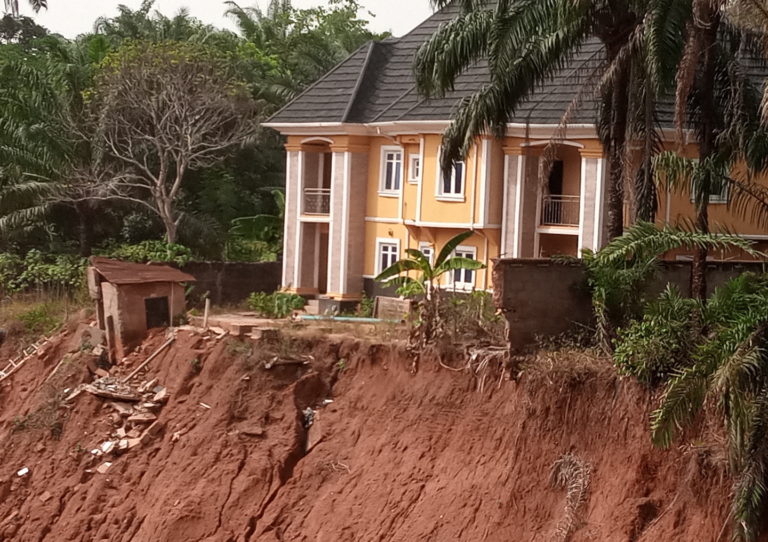
Some of the collapsed buildings in Nkisi Aroli, Onitsha. Credit: The ICIR
Finally, he decided to move the bones of his parents to a different location to preserve the memory of the dead before the rainy season starts.
“Though I lost my ancestral home in Onitsha, the graves of my parents were lying at the precipice of the gully and I didn’t have to wait for the rains to fall and wash away their graves so we had to relocate their graves,” he said.
Speaking to The ICIR, he said the cost of the traditional rites required to relocate the graves was exorbitant and had taken a toll on him since he moved to Enugu. He described the experience as traumatic.
“We spent a lot of money paying people who were involved in moving the graves because there were several traditional rites involved and they were demanding huge sums of money, the experience has really been traumatic for me,” he said.
From Mazeli’s wrecked house, a few steps away are several buildings that have also suffered the same fate. With the rainy season approaching, residents of Nkisi Aroli whose houses are not yet affected live in fear as they can’t sleep at night whenever it rains, hoping that their houses would not fall on them in their sleep.
10 houses collapsed in 3 months
On September 27th, 2019, thirteen families from Nkisi Aroli/Obeleagu communities who were displaced by erosion had written to the Ecological Fund Office, EFO, to urgently intervene to curtail the spread of the erosion and prevent further devastation.
Three months after that letter was sent to the Ecological office, the gully engulfed a total of ten buildings before the start of the dry season which started in December 2019. Whenever it rains, a landslide ensues from the gully destroying farmlands and homes.
The buildings swallowed up by the gully include a thriving primary and secondary school, several residential story buildings, bungalows and a church.
Yet not fewer than 100 homes are threatened by the expanding gully.
With an estimated depth of 30 metres, and the gully spanning a distance of more than 500 metres, residents have started making plans to leave the area as the rains set to hit full hilt in April.
The increasing rainfall has made erosion and landslides become more frequent in Nkisi Aroli.
For Nwankwo Chuka,29, after completing his first degree in parasitology at Nnamdi Azikiwe University, Awka five years ago, it only seemed natural to follow the footsteps of his deceased father in managing the school his father established while he was alive.
He had high hopes to sustain the legacies of his father who had also been a resident pastor and founder of All Christian Resurrection Redeemed Ministry located in Nkisi Aroli, church where Chuka had spent a good part of his life.
The Redeemed Christian School, an educational arm of All Christian Resurrection Redeemed Ministry, was also located in the same premises and surrounded by a single perimeter fence.
In October 2019, he arrived at the school one morning and met rubbles. After an intense rainfall that night, a landslide from the gully had sunk both church and the school.
Speaking to The ICIR, Chuka described the experience as traumatic as he had to relocate the school to a makeshift structure built within one week to accommodate the students but the current location is also threatened by the gully.
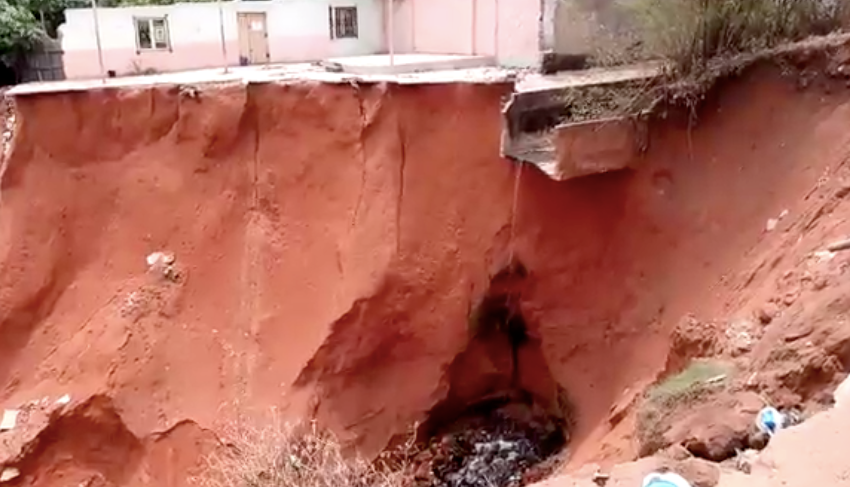
Ruins of the church and school building that Chuka met in 2019. Credit: The ICIR
“My mother and I had faced psychological trauma from the incident when it happened but we had to get used to it. We built a makeshift structure within one week to accommodate our students but some parents took their children to other schools for fear that our school might collapse and things have not been the same,” he sighed.
According to a 2018 Global Report on Internal Displacement17.2 million people were driven from their homes by shocks like landslides, hurricanes and droughts which accounts for an estimated 50,000 people who were forcefully displaced by natural or man-made disasters daily in 2018.
Chuka is still counting his losses, he is yet to recover from the economic fix the erosion disaster had put him in.
“The school had over 600 students in both the primary and secondary before the landslide but it currently has about 180 students which have affected our income. It’s a matter of time before the gully gets to this temporary site which means we have to leave as soon as possible,” Chuka said.
Chuka while narrating his ordeal to the reporter. Credit: The ICIR
Amaechi Osemeke, a resident of Nkisi Aroli said that the degradation of land by erosion in Nkisi Aroli was worrisome because ancestral lands they inherited from their parents would disappear in a few years if the problem was not solved.
“All these buildings are ancestral homes. It’s not that we came here to build commercial buildings for tenants but with our homes getting destroyed by erosion there’s nowhere to go. I can’t imagine the emotion because some people who lost their ancestral homes are squatting with their relations or tenants,” he said.
Another affected resident, Lawrence Edozie who spoke to The ICIR said he couldn’t talk about the erosion problem because at the time he was mourning his wife who died in March.
“I can’t talk about the pains caused by the erosion in Nkisi Aroli right now, because I no longer stay there anymore. I am living in Nwanwa and I just lost my wife which is enough tragedy for my family. I am still mourning my loss,” he explained.
According to dataobtainedfrom the Internal Displacement Monitoring Center, IDMC, 514,000 people in Nigeria were displaced from their homes in 2019 from natural disasters like erosion and flooding.
However, for climate migrants like Lawrence, life will no longer be as it used to be until the erosion is stopped.
EFO spends 3 per cent of its budget on erosion
Established in 1981, the EFO is tasked with addressing environmental concerns such as erosion, flooding, landslides amongst other natural or man-made disasters that put human lives and properties at risk across the country.
The Ecological Office receives 2 per cent of Nigeria’s total fiscal budget yearly and does not disclose its annual budget publicly despite the provision of the Fiscal Responsibility Act, FRA, of 2007, that mandates government agencies to make their budget public.
Nigeria is asignatory to the Bonn Challenge Initiative and had pledged to reinstate more than 4 million hectares of deforested and degraded land by 2030 to contribute to the United Nations Sustainable Development Goal to support life on land.
Anambra, Imo, Ebonyi, Abia, and Enugu States have the highest number of active erosion sites in the country, according to a 2017study published by the European Centre for Research Training and Development.
From May 2015 to September 2019, the Ecological Office had carried out only four erosion projects in each of the SouthEast states over a four year period.
A review of available records by The ICIR obtained from the Nigeria Extractive Industries Transparency Initiative, NEITI, after a request reveals that states hit severely by erosion have received little intervention support from the Ecological Office to curtail their erosion crises.
Between 2007 to 2015, the EFO had received a total of N433 billion as its allocation from the Federal government.
NEITI’s record of erosion interventions to southeastern states between 2007 to 2016, was pegged at N12.7 billion which accounts for a paltry 3 per cent of the total fund that the Ecological Office received to address ecological challenges in the country.
In Anambra State, from 2007 to 2011, the EFO had budgeted an estimated N4.23 billion to address erosion concerns in the state but the actual payment made for the projects to the contractors was N2.16 billion, just a little above 50 per cent.
The other states also share a similar fate. Abia State was expected to receive N2.86 billion from the EFO but the actual payment received was N1.34 billion, Imo State received N1.29 billion from a projected N2.15 billion, Ebonyi State received N496 million from N1.83 billion and Enugu State received N1.39 billion from N2.88 billion allocated by the EFO.
Erosion/Flood control project worth over N900 million in disarray
For residents of Nnobi, Alor and Umudiaokka communities in Idemili/Dunukofia Local Government Areas of Anambra State, their expected dividends of democracy have been turned into a forgotten dream.
With more than eleven families displaced by the gully, the rural agrarian communities are faced with a shrinking landmass.
The erosion project contract whose cost was not publicly disclosed was awarded by the Ecological Office to Utendala Nigeria Limited in March 2019, with Engineering Consult Limited acting as a consultant while the duration of the project was slated for one year.
One year after the project was awarded, there is no notable progress to reflect that work had taken place at the erosion site in Alor, apart from the rehabilitation of street roads and drainages in the communities.
The project was intended to provide road rehabilitation, erosion and flooding control in the affected communities.
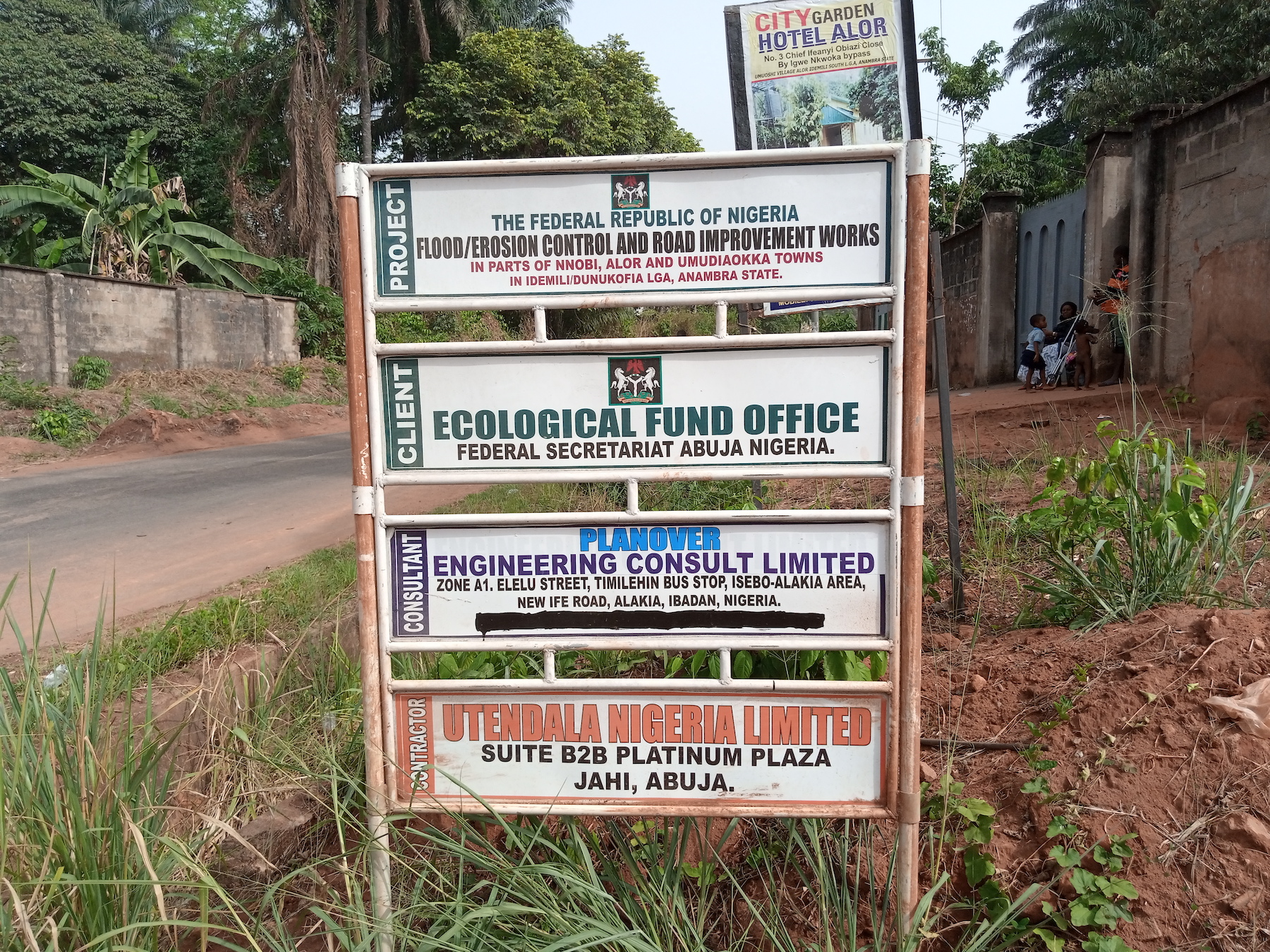
A signpost showing the firms involved in the erosion project. Credit: The ICIR
The ICIR sent a Freedom of Information, FOI letter to EFO on February 12, requesting for the details of contracts and specific projects carried out by the Ecological Office in Anambra State between 2014 to 2019.
The receipt of the FOI request was acknowledged by the ecological agency and a reply was received on March 6, three weeks later, stating that the request was still being processed. This action breaches the FOI Act that compels government agencies to respond to an FOI request within seven working days.
A former staff of Utendala Nigeria Limited who had worked with the firm on contractual terms and privy to details of the contract told The ICIR under the condition of anonymity that over 80 per cent of the total contract sum had been paid to the contractor.
“The contractor received 30 per cent initially to kick start the project and subsequently was paid 50 per cent, but as it stands now it looks like the current state of work does not commensurate with the amount spent so far,” he said.
When The ICIR reporter visited the communities in March to ascertain the level of progress at the erosion site, it was clear that the reality on the ground was a contrast of what the project intended to achieve.
There was no machinery or equipment indicating the presence of the contractor at the erosion site, even as the gully threatens residential buildings, and distort the landscape of the communities.
Uzoma Igbonwa, President General of Alor community told The ICIR that he was dissatisfied with the pace oat which the contractor was handling the project because the damage by the erosion had worsened under his watch compared to when he started the project.
“I have had my reservations about the contractor with his handling of the erosion project, for one year now it’s been one week of work and then they would abscond for another week. This has allowed the rains to create more damage if you go and take a look at the site. The gully is worse than before,” he said.
He said the community would be writing a petition to the Ecological Office to make complaints.
He said the erosion damage would require four times the amount spent initially to fix the problem.
“It’s very disturbing that there has been no change since the contractor started work on that site since 2018. My house is very close to the gully, it’s just a matter of a few showers of rain before it will encroach my house if it is not addressed. We are petitioning the Ecological Office and attaching pictures to compare the state of the gully two years ago and there is no difference,” he said.
Construction firm with a fake address
The ICIR reporter could not contact the management of Utendala Nigeria Limited, as the company had no website or digital presence online, apart from a few newsreports that hinted at some government contracts the firm had handled in the past.
However, on a billboard at the project site, the recorded address of the contractor was given as “Platinum Plaza, suite B2B, Jahi, Abuja,” and when the reporter visited the supposed office at exactly 11:24 am on Monday, 4 May, the inscription on the doorpost was different.
The office was occupied by a charity organisation named “Emmanuel Ayaba Foundation”, upon enquiry from the reporter Emmanuel Ayaba, who runs the foundation told The ICIR that he had never heard the name of the engineering firm before and his charity organisation was not affiliated with the engineering firm.
“Well, I have not heard the name of that company before, what we do at Emmanuel Ayaba Foundation does not involve engineering or construction work,” he said.
On May 27, the EFO’s deputy spokesperson Joel Oruche brokered a meeting with The ICIR after the reporter shared his findings with him. Present at the meeting includes the project manager of the erosion project, Hycienth Godwin, Director of soil erosion and flood control at the EFO, Felix Okeke, and an engineer introduced as Nwachukwu.
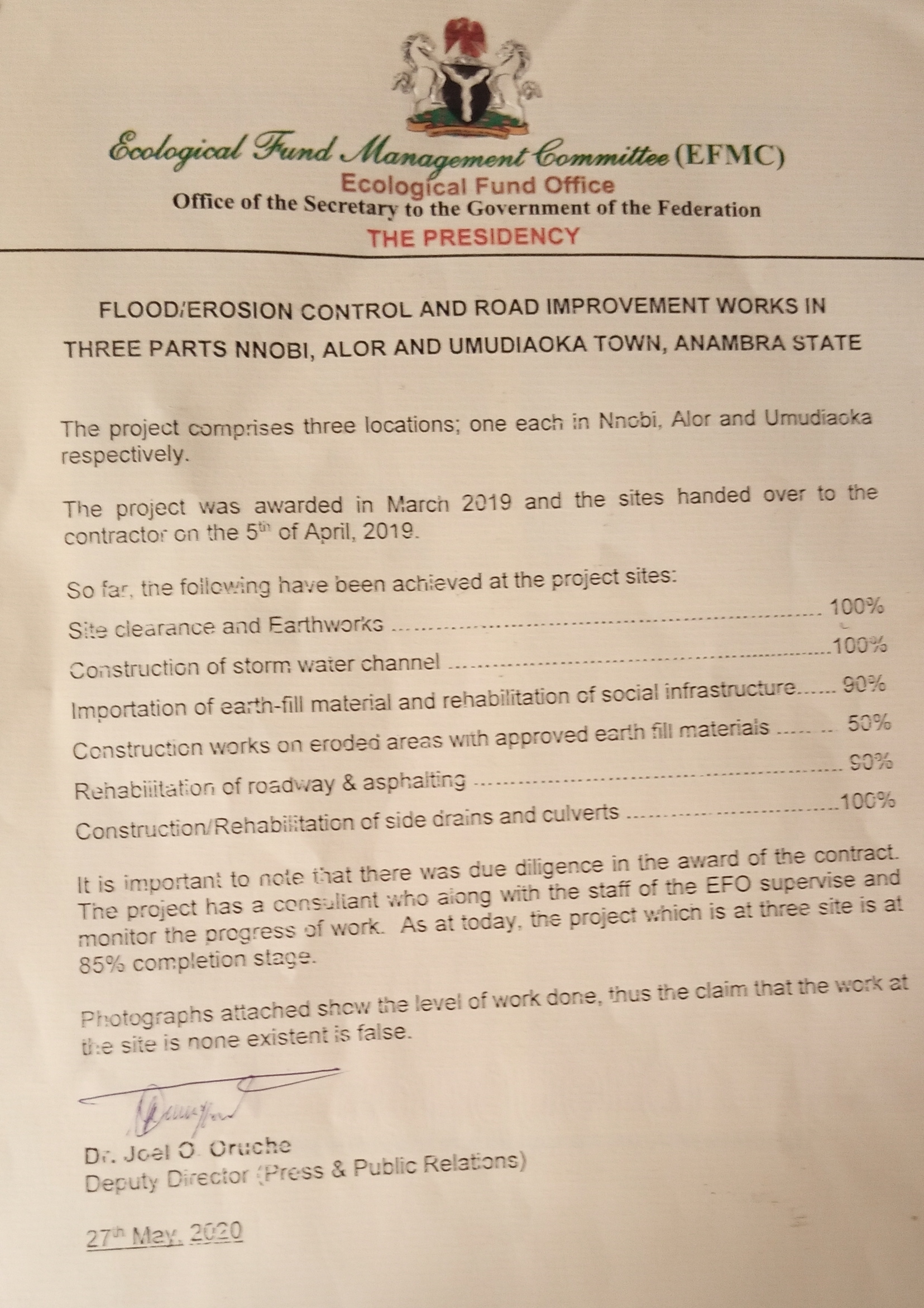
At the meeting, they jointly presented a document that provided a progress report at the site which they said was at 85 per completion stage and due diligence was carried out in the award of the contract which was supervised by the staff of the EFO alongside a consultant to monitor the progress of work.
When The ICIR reporter confronted them with the findings of the fake address given by the contractor, and a video showing the poor state of the erosion site when he visited Alor community.
Oruche said the non-existence of the contractor’s office was not the problem of the Ecological Office but the contractor because the EFO’s main concern was to execute the project.
However, they declined to reveal the cost of the project saying as civil servants they were not obliged to reveal the details of the contract unless they were authorised by the permanent secretary, saying the scope of the contract did not make the erosion site a priority in the project.
The document issued by the Ecological Fund Office concerning the contract. Credit: The ICIR
At the meeting, Hycienth affirmed that the focus of his firm was to address roads and drainages which he confirmed to be 3 km in total, stating that the gully control was a palliative measure by the firm to fill the eroded area with earth fill materials and not its priority.
Worried about the poor work done by the contractor at the erosion site, Chris Oyeka, a resident said the gully was endangering the livelihoods of residents on a daily basis with the rainy season.
“There is a major problem in Alor as we are in the rainy season houses, more homes are likely to go down if the contractor doesn’t get on with work at the erosion site when the rains come,” he said.
Worried about the poor work done by the contractor at the erosion site, Chris Oyeka, a resident said the gully was endangering the livelihoods of residents on a daily basis with the rainy season.
“There is a major problem in Alor as we are in the rainy season houses, more homes are likely to go down if the contractor doesn’t get on with work at the erosion site when the rains come,” he said.
Financial records enmeshed in ecological fraud
On March 6, 2017, the Ecological Office awarded a contract worth N1.257 billion for the canalisation and desilting of Okoko and Ogbagba rivers in Osogbo, Osun State, with a completion period expected to last for 10 months.
The contract details showed that N30 million was earmarked as compensation to owners of marked-to-demolish buildings and economic trees that would be affected by the project.
An audit report of the accounts of the Ecological Office conducted by the Auditor General of the Federation, AuGF revealed that there were no records to show that the payments were made. There were no receipts, invoices or approvals to show proof of the expenditure.
In a letter to the Permanent Secretary of the Ecological Office, Habila Lawal, the AuGF directed her to recover the monies and remit to the national treasury but that request was never honoured and the money was not accounted for, the audited records show.
It is not unusual for misappropriation of ecological intervention funds to take place at the Ecological Office without questions being asked going by reports from previous audits of its financial records.
Some of the contracts from the Ecological Office are assigned to companies that seem to exist only on paper according to the audit report from the office of the AuGF.
Between 2012 to 2014, the audit team from the AuGF’s office discovered that there was a compulsory 2.5 per cent deduction made by the Ecological Office from several contracts awarded to engineering firms for ecological projects that were shared on a 60 to 40 per cent basis with the executing agency.
The monies were traced and found to be stashed in two major banks in Abuja, namely Fidelity Bank branch located at Plot 267, Tafa Balewa Road, Central Business District bearing the account number, 5030033322 and United Bank of Africa, UBA, located in Garki with the account number 1013600986.
Investigations by The ICIR revealed that the name of the UBA account currently is ECOLOGICAL FUND OFFICE/OSGF(PROJECT ADMIN) which is also linked directly to the Office of the Secretary to the Government of the Federation, OSGF, currently headed by Boss Mustapha while the Fidelity Bank account was inoperative at the time.
The criteria for the 2.5 per cent deduction adopted by the Ecological Office was a flagrant breach of Nigeria’s public service financial regulations and extant circulars but the ultimate beneficiaries of the monies still remain sketchy as the expenditure was classified as recurrent expenses which are not within the purview of the audit team.
Audits of the Ecological Office financial records from 2007 to 2015 show that $2.5 billion allocated for environmental remediation projects had beenmisappropriated by civil servants at the Ecological Office in connivance with contractors while Nigerians grapple with the horrors of climate change.
The watchdogs are quiet
On March 14, 2018, Senator Mohammed Hassan representing Yobe South Senatorial district described the ecological fund as a “slush fund” due to illegal withdrawals from the Ecological Fund Office account for reasons not consistent with the objectives of the ecological fund during abill presentation on the misuse of intervention funds by the EFO at the house.
“The fund has over the years been operated like a slush fund deployed for varying purposes according to the whims and caprices of the incumbent,” he said at the hearing.
The Economic and Financial Crimes Commission, EFCC, is Nigeria’s leading anti-graft agency responsible for investigation of economic and financial crimes in the country.
The ICIR showed the spokesperson of the EFCC, Dele Oyewale its findings on the failed projects by the EFO to contractors who abscond without completing the job after collecting more than 50 per cent of payments and also the reports from the office of the AuGF.
The wuestion was asked to ascertain if the EFCC had carried out investigations into the misappropriation of funds at the EFO and if it had, what was the outcome of their investigations.
“The way we operate is if there are such issues as you have said and a petition is not placed before the commission to that effect then we cannot go out of our way and act on it. Without a formal petition since these cases have to go through the courts then we don’t have substantial allegations that we can work upon and there is practically nothing we can do.
“If you are able to find out if a petition has been raised to these allegations you have mentioned then I can go and look for it and check if we have carried out an investigation on that matter or not,” he said.
His statement that a petition has to be written to the commission before an investigation into economic and financial crimes can commence contradicts Section 7(a) of the Economic and Financial Crimes Commission Establishment Act 2003.
The Act confers special powers on the EFCC, “ to cause investigations to be conducted as to whether any person, corporate body or organization has committed any offence under this Act or other law relating to economic and financial crimes.
Okoduwa Rashidat, spokesperson of the Independent and Corrupt and Related Practices Commission, ICPC, when contacted by The ICIR to know if the agency had carried out investigations on the financial misappropriation, but she could not be reached as she failed to respond to calls, text and WhatsApp messages.
IN spite of the impacts of the pandemic COVID-19 on the economy, Nigeria’s economy may not slide into recession, the Central Bank of Nigeria (CBN) has said.
At the end of its Monetary Policy Committee (MPC) meeting held Thursday, the apex bank held that the economy would reverse to positive growth by the fourth quarter of 2020 if the current stimulus initiatives are properly implemented.
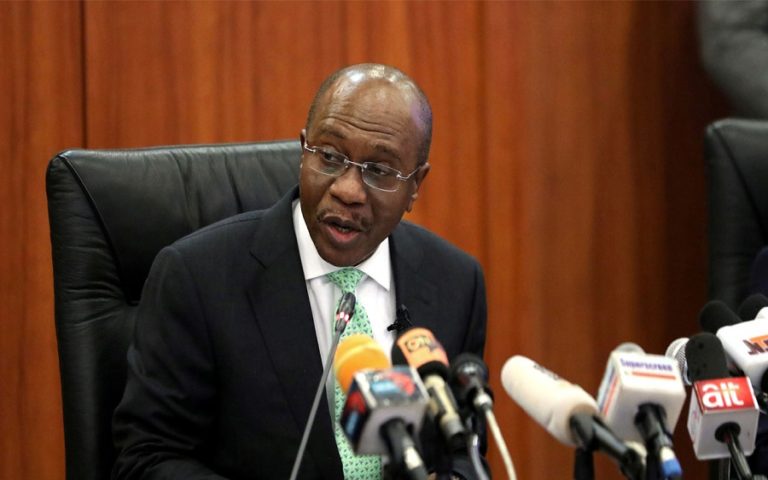
In a communique signed and issued at the end of the meeting by Godwin Emefiele, the CBN governor, the bank noted that a sharp decline in output growth was expected in Q2 of 2020 which may extend to the third quarter, it expressed optimism that the economy may not slide into recession.
During the meeting, the MPC noted that the imperative for monetary policy at the May 2020 meeting was to strike a balance between supporting the recovery of output growth while maintaining stable price development across inflation, the exchange rate and market interest rates.
The Committee noted that the Cash Reserve Requirement (CRR) was recently adjusted upwards as a means of tightening the stance of policy.
In its response to the COVID-19 pandemic, however, the Bank reduced interest rates associated with all CBN interventions from 9 to 5 per cent.
Members of the committee agreed that increasing Monetary Policy Rate (MPR) at “this stage will thus be counter-intuitive and will result in upward pressure on retail market rates.”
While ending the meeting, the Committee decided by a unanimous vote to reduce the Monetary Policy Rate (MPR) and to hold all other policy parameters constant.
At the end of the meeting, the MPC voted to reduce the MPR to12.5per cent; retain the Asymmetric Corridor of +200/-500 basis points around the MPR; retain the CRR at 27.5 per cent, and retain the Liquidity Ratio at 30 per cent.
THE Poynter Institute for Media Studies is receiving applications for its newest grant program.
With the support of YouTube via the Google News Initiative, the The International Fact-Checking Network (IFCN), has $1 million in grant funding available for established fact-checking units that are pursuing projects around video production, tools development, audience building, and new formats testing.
The eligibility of the application is based on Fact-checking organizations that are verified signatories of the IFCN’s Code of Principles and/or organizations that have been regularly publishing nonpartisan fact checks over the last three months.
All applicants will be first evaluated by their eligibility and then judged by an independent selection committee.
In addition to grant funding, accepted applicants will get exposure at Global Fact 8 in June 2021.
Fact-checking units may submit only one application for up to $50,000.
Applications close June 17, 2020, and the IFCN will announce recipients August 4, 2020.
For more information and how to apply here, click here
THE Centre for Democracy and Development (CDD) has scored President Muhammadu Buhari low in the fight against corruption, despite his campaign promise of change.
According to CDD, many Nigerians had high hopes that President Buhari would work tirelessly to disrupt the country’s kleptocratic status quo, but he has nevertheless fallen short of his promise to “demonstrate zero tolerance for corrupt practices.”
The report titled, “Assessment of President Buhari’s Corruption Fight in the last 5 Years”, was presented by the CDD executive director, Idayat Hassan at a press conference organized via Zoom on Friday, May 29 between 12 noon and 1 pm.
The report underscores both the shortcomings and achievements of the Buhari administration in the last five years. The president assumed office on May 29, 2015.
For the shortcoming, the pro-democracy think-tank criticised some of the Buhari appointments, which it described as “questionable”.
According to CDD, several members of the Buhari cabinet in the second term were former governors accused of corruption and officials with close ties to former head of state, late Sani Abacha.
The report also condemned the Buhari government for reinstating a top pension official even though he was facing prosecution by the EFCC on corruption charges.
The president also dithered in suspending the former Secretary to the Government of the Federation, David Babachir Lawal from office, despite indictment by the Senate over alleged breaches in the handling of contracts awarded by the Presidential Initiative for the North East.
The failure to timely suspend erring appointees pending investigations have been replicated in several instances, the report stated.
CDD also condemned the president of turning blind eye to political corruption, and frolicking with corrupt politicians especially during the 2019 campaign ahead of the general elections.
“The President has asked a few questions about how the APC funds itself, even though it is common knowledge that candidates depend on stolen public funds provided by political godfathers to fuel election campaigns.”
As minister of petroleum, President Buhari has failed to achieve reform in the sector despite his pledge, the CDD noted. Citing the example of the NNPC, the Centre blamed the president for sustaining a corrupt system at NNPC that has enriched briefcase companies than his predecessors.
Though Buhari has condemned the sleaze in the security sector under the former President Goodluck Jonathan, his own administration has also failed to rein in security votes—opaque slush funds that remain one of the most glaring examples of security sector corruption in Nigeria.
In fact, a report by Transparency International published in May 2018 shows that the amount earmarked for security votes in the federal budget has increased during Buhari’s tenure from N9.3 billion ($46.2 million in total) to N18.4 billion ($51 million in total) in 2018.
The Centre also criticised some of the economic policies of Buhari, especially the border policy which did a little to deter smugglers, yet trigger bribery and corruption at border posts.
Hassan during her presentation wondered why a government that promised so much transparency could become notorious for declining Fiscal Transparency.
Hear words: “Under President Buhari, the Central Bank of Nigeria has become less transparent and more vulnerable to political influence on fiscal and monetary policy. The bank’s oversight role has diminished and the relationship between it and the nation’s commercial banks has become too cozy. Since 2015, sales of discounted foreign exchange to privileged recipients have become more opaque than ever before. In December 2017, the government announced the withdrawal of $1 billion from the Excess Crude Account—nearly half of Nigeria’s now nearly-empty rainy day fund—for ad hoc security expenditures. The government has yet to reveal exactly how this money was spent, suggesting that it was likely used to energise ruling party political structures ahead of the 2019 general election.”
Notwithstanding, the Buhari administration also got some commendations from CDD, especially for its consistent anti-corruption messaging and for its effort to Improve financial centralisation.
Examples are the Treasury Single Account policy that allows for government transaction through a single account, and the Integrated Payroll and Personnel Information System (IPPIS) that helps prevent payment to ghost or absentee workers.
The CDD also praised the government of Buhari for strong anti-corruption appointments such as that of the EFCC Chairman, Ibrahim Magu, ICPC Chairman Bolaji Owasanoye and the Executive Secretary of Nigeria Extractive Industries Transparency Initiative (NEITI), Waziri Adio.
The Centre’s director, in fact, rated Buhari higher for recording more corruption conviction than any of his predecessors, though she noted that over half of these convictions were from cybercrime prosecutions.
In the area of asset recovery, Buhari also got a pass mark.
“The government has increasingly used innovative legal tools to seize suspected proceeds of corruption from former officials who would be difficult and time-consuming to convict,” Hassan said.
The presidency though is yet to respond to the CDD’s report, but Garba Shehu, the president’s spokesperson has tweeted earlier that the last five years (of Buhari administration) have been full of historic achievements.
“Please go to the Presidential handles and read how the decades-long wishes of the Nigerian people are being met,” he posted.
THE Central Bank of Nigeria (CBN) says it has approved a regulatory forbearance for the restructuring of credit facilities in the Other Financial Institutions (OFI) in order to further mitigate the impact of the COVID-19 pandemic on households, businesses and regulated institutions.
According to a circular by the apex bank to all Other Financial Institutions,dated May 27 sighted by The ICIR, the CBN intervention facilities availed through participating OFIs are granted a further one-year moratorium on all principal repayment effective from March 1, 2020.
The circular was signed by Kevin Amugo, Director, Financial Policy and Regulation Department.
Also, interest rates on the CBN intervention facility through participating financial institutions is reduced from 9 per cent to 5 per cent per annum effective March 1, 2020.
The apex bank said other financial institutions are granted leave to consider temporary and time-limited restructuring of the tenure and loan terms of households and businesses affected by the pandemic.
According to the apex bank, developments would be monitored and implementation of appropriate measures to safeguard financial stability and support stakeholders impacted by COVID-19 pandemic.
It would be recalled that the CBN in March announced six initial policy measures to contain the impacts of COVID-19 on the Nigerian economy.
ADAMU Yahaya, a prominent Boko Haram fighter, who has taken part in major attacks against troops of the Nigerian Army in the North East has surrendered himself to the troops, John Enenche, the Coordinator of Defence Media Operations at the Defence Headquarters said.
According to Enenche, a Major General, Yahaya who is also known as Saad Karami led the last attack on Nigerian Army troops in Baga town and also participated in attacks on Metele, Mairari, Bindiram, Kangarwa and Shetimari (Niger Republic).
The Coordinator of Defence Media Operations said the Boko Haram warlord voluntarily surrendered to troops of 242 Battalion in Monguno.
“This was as a result of the aggressive posture of the troops and artillery bombardments of terrorists’ suspected locations around the general area,” Enenche said.
It could be recalled that in November 2018, Boko Haram fighters killed over 70 Soldiers of 157 Task Force Battalion in a single attack in Metele, Guzamala Local Government Area, at about 6:00 p.m.
Large cache of arms, ammunition, and military equipment were carted away by the terrorists during the attack on 157 Task Force Battalion in Metele.
Meanwhile, troops of Army Super Camp 11 Gambouru under Sector 1 of Operation Lafiya Dole, May 24 at Mudu Town in Borno State neutralised 12 Boko Haram terrorists, Enenche said.
He added that troops also rescued 241 persons in captivity of the terrorists comprising 105 women and 136 children.
Items recovered, according to him were four Boko Haram terrorists’ flags, a motorcycle, two bicycles, an amplifier and two sewing machines.