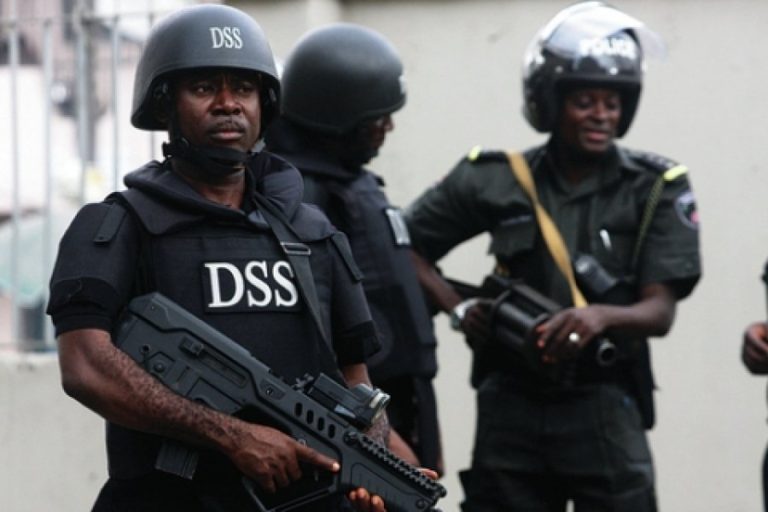
INIBEHE Effiong, the lead counsel to detained Akwa-Ibom based Journalist, Kufre Carter, said the State Security Services has disregarded a court order in service of governor Emmanuel Udom’s interest.
Effiong, in a press statement stated that after he had fulfiled all bail conditions on behalf of his client, SSS still has not released him.
The ICIR had reported how Carter was arrested by men of the SSS over a viral audio message criticising the State governor and the commissioner of health.
Effiong added that following an order application granted by Justice Archibong Archibong of the High Court of Akwa Ibom State, he went to the SSS quarters with relevant documents.
After waiting for several hours at the SSS office, men of the security agency told Effiong that the Attorney General of the state had written them not to grant the court order.
Effiong noted that from his discussion with the SSS officials, they were bent on not obeying the order until they get a directive from the governor.
“From my discussion with the SSS official on Friday, they ostensibly made it clear that they will not obey the Court Order for the release of our client except and until Governor Udom Emmanuel gives them directive to that effect,” Effiong wrote.
He said the SSS has no right to determine the effect of a bail order.
“By insisting that our client will only be released from their custody on the directive of the Governor of Akwa Ibom State, the SSS has flagrantly flouted the Order of Hon. Justice Archibong Archibong which commanded the immediate release of our client upon the perfection of his bail conditions without any further condition(s),” the statement further read.
Effiong noted that on behalf of Carter, a petition would be sent to the Body of Benchers, the Legal Practitioners Privileges Committee (LPPC) and the Legal Practitioners Disciplinary Committee (LPDC) and other regulatory bodies in the legal profession to sanction the SSS for its action.
He called on the Federal Government, the Director-General of the SSS, the National Human Rights Commission, civil society, international community, the media and Nigerians to urgently prevail on the SSS Command in Akwa Ibom state to obey the valid and subsisting order of the High Court, and release Carter.
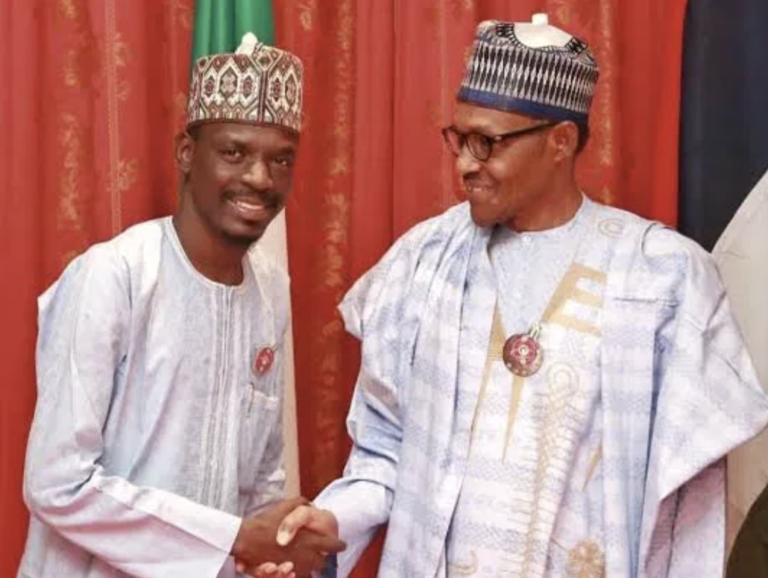
BASHIR Ahmad, a presidential aide and personal assistant to President Muhammadu Buhari on New Media has come under fire on social media for a recent post in which he promised to intervene in the case of one Yunusa Dahiru, who was recently sentenced to 26 -year imprisonment for child trafficking and sexual exploitation of Ese Oruru.
Dahiru, also known as Yellow, was charged in Bayelsa for reportedly abducting Oruru in 2015, aged 13 at the time. It was reported that he took the minor to Kano State and forcefully married and impregnated her.
As a result he was arraigned on a five-count charge of illicit sex, sexual exploitation, criminal abduction and unlawful carnal knowledge of a minor.
Delivering her judgement, Thursday, Justice Jane Inyang, sentenced Yunusa to five years in prison for count 2, and seven years in prison for count 3, 4 and 5 respectively, noting that the prison terms are to be served consecutively,
Following his conviction, a Twitter user identified as Hammad Yusuf Saleh shared a post asking Ahmad to intervene in the case, which he claimed was manipulated.
“Please Bashir, do something about Yunusa Yellow for Allah’s sake, he is wrongly accused and sentenced, the whole matter is manipulated, we need to appeal for him,” his tweet read.
Responding in Hausa, Ahmad said: “My brother, I do not have the power to do anything against the judgment of the court, but I will try to contact those whom I think are capable.”
His statement caused an uproar on Twitter with many calling out Ahmad for confidently announcing that he would try to influence a verdict already passed by a high court, indicating that he is in support of the alleged rape and abduction of a minor.
Following the backlash, Ahmad, shared another post stating that he was unaware of the details of the case and would never support the abduction of a minor, which he described as a ‘condemnable act’.
“I commented on the Yunusa Yellow saga earlier, without knowing and understanding the details of the case. Eloping or rather, kidnapping a minor and forcing her to marry you shouldn’t be taken lightly. A condemnable act!,” his post read.
However the bigger question about his plan to possibly upturn the conviction of Nigerian court was left unanswered.
In a phone interview with The ICIR on Saturday, Ahmad said he was simply being misunderstood.
The president’s aide said what he meant was that he would reach out to people who knew about the outcome of the case to find out what happened, stressing that he had no intention of upturning the conviction or had the power to do so.
“My statement was taken out of context. I have no power to say or do anything but I meant I would find out what happened and if necessary, something will be done. But the Google translation is a direct one and doesn’t reflect what I truly meant.
“In my tweet I never mentioned judges and I regretted my statement after I saw what he (Yellow) did,” Ahmad told The ICIR.
While Ahmad is doubling down on his statement, many social media users are calling for his sack.
A Twitter user identified as Ifeoma Solanke in a tweet submitted: “Will President Buhari sack Bashir for that unguided tweet that puts the presidency, judiciary and Nigeria in a bad light or should we trend #SackBashirNow?”
Her statement is reechoed by many other posts made by Nigerians on social media, agreeing that the statement puts the presidency in disrepute.
Though the presidency is yet to comment officially on the controversy, a source from the Villa chided Ahmad for indiscretion.
“His tweet was unwittingly put out. He did not give it critical thought, he approached it from a sympathetic point of view forgetting that he was an aide to the President, or that he had the clout that such a tweet would suggest many wrong things. If anything, he has apologised and acknowledged his wrongdoing. He should be judged by his repentance, not his sin,” the source told The ICIR.
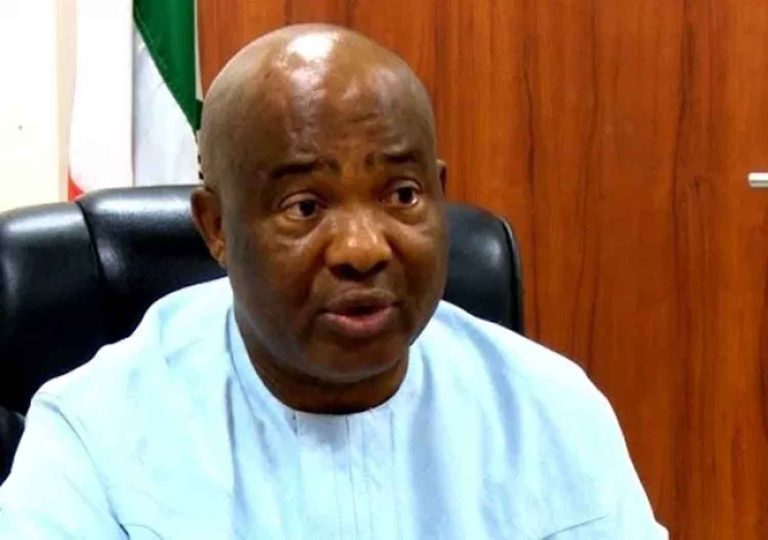
HOPE Uzodinma, Imo State governor officially revoked payment of pensions allowances and gratuities to former governors, deputy governors, speakers and deputy speakers of the state in a bid to cut down the State’s financial expenses by repealing the State’s Pensions and Privileges 2007.
In a Twitter post, Uzodinma explained that the bill to annul the law that created pension allowances and gratuities for former political office holders in the State who spent less than ten years in office was to put a stop to a fraudulent scheme.
“The governors and Speakers Pensions and Privileges law was a bad law that needed to be repealed. it was anti-people. It was in bad faith. It was fraudulent,” he tweeted.
The governor stated that the past law runs contrary to the 1999 constitution as amended, which stipulates that a pensioner must have worked for at least 10 years and must be up to 45 years of age.
He lamented that the situation where some of the beneficiaries of such payments also get a huge amount of money as salaries and allowances in other positions they occupied puts the state in a dire financial situation.
“I needed to recover the billions of public funds that would have been lavished on a privileged few and plough it back to the more important business of developing our state. I am glad that the House of Assembly members saw reason with me and today this offensive law has been repealed,” he said.
Section 124 of the 1999 constitution, with respect to the remuneration of governors, deputy governors and certain other officers places that function within the confines of the Revenue Mobilization Allocation and Fiscal Commission, RMAFC.
‘‘There shall be paid to the holders of the offices mentioned in [subsection 4] such remuneration and salaries as may be prescribed by a House of Assembly but not exceeding the amount as shall have been determined by the Revenue Mobilization, Allocation and Fiscal Commission’’
RMAFC is saddled with the responsibility of approving salaries of political officials in the country.
However, the Commission approves 300 per cent of the basic salary of a political office holder as severance allowances at the end of their tenure without making provision for pensions or gratuity.
In another development, the Speaker of the Imo House of Assembly, Chiji Collins, announced the presentation of another bill for the governor’s assent which is a bill on the Imo State University of Agriculture and Environmental Sciences which seeks for a multi-campus arrangement.
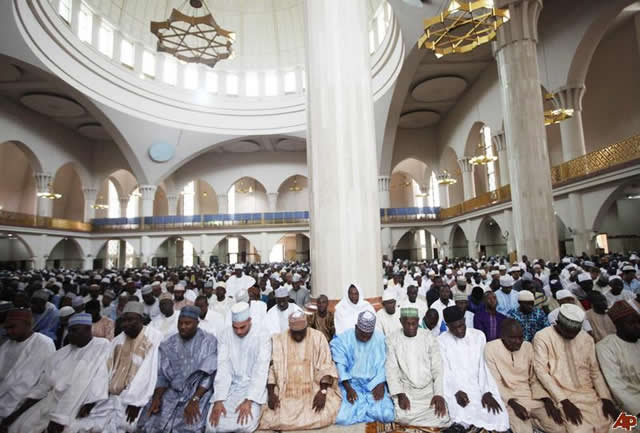
On Friday, Muhammad Sa’ad Abubakar, the Sultan of Sokoto and the President-General of Nigeria Supreme Council of Islamic Affairs declared Sunday 24th May 2020 as the first day of Shawwal 1441 after Hijrah, which is Eid-el-fitr day.
According to a statement signed by Sambo Wali Jinaidu, the chairman advisory committee on religious affairs Sultanate council, the national moon sighting committee did not receive any report from the various moon sighting committees across the county confirming the sighting of the new moon of Shawwal 1441AH on Friday 22nd of May 2020
However, in her effort to contain the Coronavirus pandemic (COVID-19), the Federal Capital Territory Administration, FCTA, has ordered the suspension of the annual congregational prayer on Eid-grounds across the FCT.
In a statement released by the administration, signed by the chief press secretary to the Minister, Anthony Ogunleye, FCTA disclosed that the action is in tandem with the guidelines by the Presidential Task Force on COVID-19 and one of the strategic efforts to curtail the spread of the virus in the FCT.
“This is in tandem with the guidelines, issued by the Presidential Task Force on COVID-19, that all places of worship in the FCT and other high-risk states of the Federation should remain closed during the recently extended period of lockdown”
The administration added that it had held a meeting with the League of FCT Imams and Christian leaders and the decision was unanimously agreed on
“In order to achieve this objective of enforcing these guidelines, meetings were held earlier between the Administration and leaders of the Christian Association of Nigeria (CAN) and the League of FCT Imams”.
“The meeting acknowledged that the primary concern of all leaders and public officials was to save lives. In view of this common goal, the leaders of the religious organisations have agreed to work towards the eventual opening up of worship places at a time to be determined by the Presidential Task Force, based on medical advice”, the statement reads.
Usual Eid-el Fitr
Eid al-Fitr is an Arabic phrase which means “Festival of Breaking the Fast” which is celebrated by Muslims worldwide to mark the end of the month-long dawn-to-sunset fasting of Ramadan when the new moon is sighted by local religious authorities.
As Muslims prepare for the end of Ramadan, this year’s celebration will be unusual as no account of Islamic history shows any precedent of such
According to a real-time dashboard by LivePopulation, as at the time of filing this report, Nigeria has a total population of 18,428,427 of which 50 per cent of it (9,302,669) are Muslims.
Nigeria Medical Association (NMA), Cross River branch has raised concerns over recent possible coronavirus (COVID-19) deaths in the state, demanding that the state government puts more effort in scaling up the level of preparedness and containment of the deadly virus.
The group stated that it had received several reports from the Surveillance and Epidemiology unit indicating that delay in some post-mortem sample collections has led to the rising number of death of suspected cases of COVID-19 in the state.
These views were expressed in a press statement signed by the Chairman of the Association, Agam Ayurk and the Secretary, Dr Ezoke Epoke, and released on May 22.
The Association disclosed that the state has carried out only seven tests of COVID-19, stating that it accounts for the zero record of cases and places in Cross River as the state with the second least testing of COVID-19 in the country.
NMA therefore urged the state government to consider a coordinated and expanded surveillance response and team, adding that it will be effective in the prevention and containment of the virus.
It disclosed that as of May 21, samples collected and tested so far were all from the University of Calabar Teaching Hospital, Calabar (UCTH), it thus asked if UCTH is the only hospital with patients fitting criterion for testing.
“Is it only UCTH that has patients that meet the criteria for sample collection? What happened to patients who may have visited the various Primary Health Care Facilities, General Hospitals and Private Hospitals across the State that may have satisfied the criteria for testing?,” the Association asked in the press statement.
While it commended the state government for its effort to prevent importation of the virus into the state, the Association submitted that the lack of a Nigeria Centre for Disease Control (NCDC) designated Molecular Laboratory Testing Centre in the state is worrisome and poses risk in the management of COVID-19.
According to the group, the NCDC Laboratory catchment for coronavirus testing for Cross River State is at Irrua, Edo State, a distance of 447.9km (7h 50min) from Calabar.
It recommended that NCDC change the testing centre of Cross River State from Irrua to Abakaliki, stating that Abakaliki, the capital of Ebonyi State has a testing centre that is 188.9km (3h 17min) from Calabar.
It added that NCDC should fully accredit Dr Lawrence Memorial Hospital which is a Bio-Safety Level Three (BSL-3) laboratory and UCTH, Calabar for COVID-19 testing.
Currently, Nigeria has 7261 confirmed cases of COVID-19 in 35 states, as at the time of filing this report.
Cross River is yet to record a single case of the virus.
ON a Sunday morning, the pews at Kingdom Hall of Jehovah Witnesses, Olunlade, Ilorin, Kwara State are empty and also the car park. The sounds of hymns from the congregants could not be heard or the noise from the feet of children running around in Sunday school.
For a church whose core mission revolves around preaching from house to house, the onslaught of COVID-19, a disease caused by the coronavirus has disrupted their mode of worship.
With the government’s ban on movement to halt the spread of the virus, that part of their religious obligations is no longer possible at least until the threat of COVID-19 is a distant reality.
Live services at the congregation have been replaced with virtual services on Zoom, an online video streaming service and the usual hugs and handshakes amongst members after a service, a part of their social construct has been substituted with brief nods on screen.
Ibiniyi Timothy, a member of the congregation says their mode of worship has taken a new meaning as the outbreak of the disease has introduced several changes into their services.
“We have switched to meetings online through Zoom but you can’t compare that interaction with face to face meetings which restricts the way we interact with each other in the past. Though the world headquarters have paid for a full subscription at Zoom which accommodates 300 people for each meeting. It is not the same,” he said.
This virtual service takes place twice a week but several members cannot engage with the service because they cannot afford data or do not have access to the internet.
“So the financially stable members of our congregation usually contribute money for those who can’t afford to buy data while those who don’t have access to the internet will have to join their neighbours who have access so far it’s been challenging,” he said.
For the first time in Nigeria for over 50 years, churches were locked up for more than a six week period, creating a major social disruption in a country where eight in ten adults attend a weekly worship service which is ranked highest in the world according to a 2018 data analysis obtained from Washington-based Pew Research Center.
From pews to cyber views
On Monday, Nigeria had recorded 5,959 confirmed coronavirus cases and 182 deaths which had seen an increase in the rate of infections to 852 cases per day.
Despite, a nationwide curfew imposed from 8.00 p.m. to 6.00 pm where people were compelled to wear face masks in public including the ban on travel between states.
Nigeria which boasts of an estimated Christian population of 80 million with about half of the population members of the pentecostal churches, the lockdown has seen increased activity of churches on various online streaming services compared to the past as the church has moved to the internet to connect with their audience.
The move by the churches to adapt to these changes was orchestrated by the outbreak of COVID-19.
According to the Global Digital January report, Nigeria has 69.2 million mobile phone connections which account for 83 per cent of an estimated population of 200 million. About 85.49 million Nigerians have access to the internet while 27 million are active social media users.
Most churches in the country have a common similarity which is its sound system. Music played at high volume is a familiar feature especially on Sunday services or during all-night services.
The noise can be intolerable for those who are not used to it and for those who live or work nearby but at St John the Baptist Cathedral Catholic Church, Gboko, in Benue State there has been an eerie silence since the lockdown was announced with the church was under lock and keys.
Odaikwu Idoko, a member of the church told The ICIR that since there were no sermons several parishioners were stranded as for weeks and considered the period a holiday.
“It was considered a holiday for everyone since we do not stream the mass conducted at the cathedral online there was no way we could attend mass so we had prayed in our own ways at home,” he said.
Kehinde Ajibola who attends Christ Apostolic Church, CAC, in Mararaba, Nassarawa State has not been able to able to attend any service in his church since the lockdown was announced so he resorts to studying the church’s Sunday school manual to fulfil his religious obligations.
“I’ve not been able to attend a regular service in my church since the lockdown it very odd for me because attending church has been a habitual activity for me since I was a kid. I’ve been doing it all my life and to suddenly have that experience taken from you is a shock,” he said.
Online traffic on the rise
In the wake of COVID-19 outbreak, churches in Nigeria expanded their digital presence, accepting offerings online, streaming sermons on social media and hosting group meetings through video chat.
Muhammed Rudman, CEO of Internet Exchange Point of Nigeria, iXPN, in a report, stated that daily internet traffic and data usage in Nigeria had increased by 10 per cent which he attributed to growing online activities during the lockdown.
“We started noticing an increase like a week ago, about 10 per cent increase in traffic. As more people start learning online, we expect the traffic to be much higher,” he said.
Some families created an atmosphere of a church at home by dressing up in their Sunday outfits to sing, preach and take “offerings” from the rest of the family to give to their church.
Anna Oboh, a member of Mountain of Fire and Miracles Ministries, MFM, South West region, district 6 located in Ibadan said they performed Sunday services choosing a preacher and also taking offerings.
“On Sundays, we perform a version of a church service appointing someone to preach, another to take exhortation and also take offerings,” she said.
However, the catholic church had not fully embraced the technology of virtual reality as hundreds of parishioners could not participate in the church’s rites of confession, offerings and the eucharist.
Patrick Alumuku, a priest who also doubles as Director of Communications at the Abuja Archdiocese of the Catholic Church, explained to The ICIR said every rite associated with the celebration of mass (service) not physically conducted was spiritually represented.
“The Catholic liturgy is divided into two parts the liturgy of the word and the liturgy of the eucharist but the word which is the sermon takes prominence over every other aspect of the liturgy but long before now the church has a tradition of what is called the absence of physical rites reserved for sick people or incapacitated who were exempted on the basis of reciting a special prayer to that effect,” he said.
He said the Abuja Catholic archdiocese was able to make use of its television station, Catholic Television Network ramp up over 200,000 viewers to it’s Sunday masses across different parts of the world.
“We did not conduct masses on social media because we had a television station but the major challenge was getting people to get free to air decoders to participate in the mass. Though, we were able to get 200,000 viewers watching from different parts of the world which is a remarkable landmark for us,” he said.
Chidebere Afoaku, 31-year-old crack cocaine and heroin addict, was looking for a quick fix as she swaddled her four-day-old baby, Kaosiso, in her arms, walking the streets of Abuja on April 25, when she was arrested by officers of the National Agency for the Prohibition of Trafficking in Persons (NAPTIP), Nigeria’s anti-trafficking agency.
Set to find some cash, Afoaku strolled into His Grace Pavilion Estate, located in the Apo area of Abuja, several miles from where she called home.
With her underweight, sickly baby in her arms, the new mother sought to whip up sympathy as she began the day’s quest to find money.
Luckily, a family took pity on her and the child and gave her some food items. Rather than return home, the young mother hid the food items at a nearby place, and returned to beg for alms.
Not so lucky the second time, someone in the neighbourhood alerted the police and she was arrested.
According to Emeh Magnus, head of NAPTIP’s Rapid Response Squad (N-RRS) in Abuja, Afoaku was picked up because she was using her baby to beg for alms, which contravenes Section 5 of the Violence Against Person Prohibition (VAPP) Act 2015.
Upon interrogation, it was found that she is the actual mother of the child and had planned on using the proceeds from street begging to purchase narcotics.
Her admission reflected her struggle with hard drugs since 2016 when she was first introduced to it by her boyfriend.
Right after secondary school, before she fell off track, Afoaku struggled to gain admission into the university but it never deterred her from her ultimate goal of making quick money.
According to Calista,Afoaku’s elder sister, she was always seeking means to make it big and endlessly searched for ways to get rich quick.
For a short while, she got lucky. She got a job with a foreigner as a secretary and began earning N50,000 monthly but she wanted more. She relocated to the Federal Capital Territory (FCT) from Kano, with an ambitious mindset and wasted no time in finding a way to get all she wanted.
However, her goals changed the moment she started using drugs.
Calista recalls that it started as a simple indulgence – a hit once in a while before it graduated into a full-blown addiction. By then Afoaku, who was living in a single bedroom apartment in Wuse, Zone 7, with a friend, started selling her properties to fund her cravings.
Afoaku would spend N16,000 per dose on crack cocaine and, sometimes, settle for a half dose at N8,000 on days she could not afford more.
Her addiction problem grew worse with time.
Once, she was dating a certain Martin who cared deeply about her. He reportedly gave her N1.8 million to purchase a car. Within a few weeks of receiving the money, Afoaku could not account for it. At another time, she started dating a certain Tope who was ready to settle down with her. However, he found out about her addiction and broke off the relationship.
Sometime in 2018, Afoaku moved in with Calista and for a few days acted like she had come off the addiction, until she started selling some of her sister’s property to buy drugs.
It started with small household items like a blender and, eventually, Calista noticed that her gas cylinders and cooker were missing from the house. It then occurred to her that her sister was exchanging the items for drugs.
In the same period, Calista found someone who recommended a rehab facility in Lagos where her sister could be treated and then she began saving money to travel to the southwestern state.
As they prepared to go to the rehab facility, Afoaku absconded, only to be found weeks later sleeping at a hotel with a new boyfriend, Ogbonna.
Unfortunately for Afoaku, her new found love, Ogbonna, was a drug dealer and a recently convicted felon who is presently cooling his heels in prison. However, before getting arrested for armed robbery and drug dealing, the young man was her plug.
Theirs was a hopeless love, founded on the streets of a crack cocaine-induced reality.
The affair resulted in few pregnancies but with incessant intake of cocaine and heroin, the babies kept dying and Ogbonna would call crying to her sister about losing yet another child.
“Many times, she would call me with news that she had gotten pregnant but the baby had died,” Calista told The ICIR.
Afoaku lost at least two children before she finally birthed Kaosiso.
Baby Kaosiso was the only child that survived the first few days and, shortly after being born, became a money making tool for its mother.
There was no means to reach Afoaku who hasn’t been seen since she was released from NAPTIP office. It was gathered that she exchanged her mobile phone for some cash and only reaches out to her sister with different numbers once in a while.
According to Calista, the last time she heard from her sister was over a month ago when she called to share her plans of relocating to Owerri.
“She told me she needs money to move to Owerri, that she’s still doing drugs because she has access to it here in Abuja. She told me that it will be hard for her to get it in Owerri and that’s why she wants to move there,” Calista told The ICIR in an interview.
Pandemic baby
Born on Saturday, April 18, Kaosiso was born while the world battled a pandemic – now with a record of 5621infected persons in Nigeria alone, the novel coronavirus has claimed over 170 lives in the country and over 313,000 people globally, as at the time of filing this report.
In the FCT (where Kaosiso was born), the lockdown order imposed by President Muhammadu Buhari to curb the spread of COVID-19 was in full effect; restricting movement and resulting in bans on most activities. But not street begging for Afoaku, who was quick to introduce her new-born child to the business.
Uncared for, the little baby was exposed to rain, sun and other extreme weather conditions as his mother begged for alms.
By the time Afoaku was arrested with her child, baby Kaosiso was near death.
Baby Kaosisochukwu captured on April 27 after being rescued from mother.
Rescued by Dorothy Njemanze Foundation (DNF), a non-governmental organisation focused on dealing with issues of Sexual and Gender-based Violence (SGBV), the little baby was taken to the Federal Staff Hospital, Jabi, but was refused admission due to the on-going COVID-19 pandemic.
In search for help, DNF contacted Wanda Adu Foundation, an NGO which focuses on helping vulnerable women and children. The founder, Wandadaku Adu, reached out to a doctor friend (Ernest) who directed that they take the child to Federal Staff Hospital, Gwarinpa.
At the Gwarinpa hospital, they were again refused admission and told the hospital doesn’t treat “preterm” babies because they lack the facilities and equipment to treat such children.
Preterm is defined as babies born alive before 37 weeks of pregnancy are completed. And, being underweight, Kaosiso was assumed to be a preterm baby.
However, with Dr. Ernest’s influence and pleadings, the baby was admitted to the hospital at about 9 PM on April 27.
Upon admission, baby Koasiso was diagnosed with jaundice. Many newborns, according to Healthline, have some kind of jaundice and bilirubin levels that rise above 5 mg/dL within the first few days after birth, due to the stress of birth.
“After a test was carried out, it was discovered that Kaosiso’s jaundice level was at 13.3 mg/dL – an alarming level”, Wanda described to The ICIR as she narrated the incident that commanded her next decision.
Kaosiso’s medical report from the Federal Staff Hospital, Gwarinpa. CREDIT: Wanda Adu
Beside having jaundice, Kaosiso who before being admitted to the hospital lived with his aunt, Calista, after his mother was arrested, was evidently neglected.
Wanda recalls the baby had blisters around his diaper area and she could make out when last the child had a bath or a diaper change.
“At the hospital, when the baby was put in the machine for a test, he started crying and I heard Calista tell the baby to shut up, else she would slap him. I quickly rebuked her but I also knew the baby couldn’t survive with his aunt,” Wanda said.
Moved to tears, Wanda decided to provide absolute care for the child.
With the help of DNF and Wanda, the baby was treated and spent a week recovering in the hospital.
As Koasiso began breathing newness of life and gradually recuperated, Wanda worked out legal details of becoming the sole care provider for the child for two years before it was agreed that he would be taken to his grandmother, Afoaku’s mother in Kano.
As a struggling single mother herself, Wanda, relied on the goodness of her heart and the generosity of her Facebook followers, to whom she shared the story of Kaosiso, to donate some food and clothing items for the baby.
According to Wanda, several donations in the form of money, diapers, baby food and milk poured in from all corners and she was reminded of the pleasant side of human nature.
Currently, Kaosiso is completely healed and receiving care with Wanda, who looks to own a shelter in the future where she can care for vulnerable children.
Road to redemption
Now only a month old, Kaosiso looks different from his first day on earth. However, he still struggles to fit into clothing for his age, being underweight.
At first glance, his deeply pigmented lips strike a note of worry on how life must have been while he was in his mother’s womb, but he has managed to adopt a calm nature that reflects an inner strength, probably drawn from his name, Kaosisochukwu, meaning God’s will in Igbo.
Kaosiso gradually recuperating CREDIT: Wanda Adu
In his new life, he has a newfound love for sleeping and according to Wanda, a special liking for his bath time. Unlike most babies, Kaosiso doesn’t cry much. He would only let out a shout of frustration when hungry, or to alert whoever was listening that he was up from a nap.
For him, life has only just begun but not without more hurdles to cross.
As he grows, he would have to fight or accept the truth about his mother who is still battling addiction. Having been exposed to crack cocaine and heroin as a fetus, Kaosiso’s growth and survival is still largely tied to his mother.
In a report published on by the National Institute on Drug Abuse (United States), it was stated that research has shown that exposure to cocaine during fetal development may lead to a deficit in some children.
“These include behavior problems (e.g., difficulties with self-regulation) and deficits in some aspects of cognitive performance, information processing, and sustained attention to tasks—abilities that are important for the realization of a child’s full potential,” the report read.
Another report points out that, when a fetus is exposed to cocaine in the womb, it can “cause significant central nervous system problems that may not be seen until the child is older.
“These effects may include problems with attention and behavioral self-control. Delays in learning, slower growth rate, language difficulties and in some cases, a need for special education in school.”
While the tide seems set against Kaosiso, his refuge in Wanda is a blessing.
Wanda Adu – Founder of Wanda Adu Foundation CREDIT: Wanda Adu
Driven by a passion to better the lives of vulnerable women and children, Wanda stands as a symbol of redemption for Kaosiso and many children like him.
Drug abuse in Nigeria
According to the results of the National Drug Use Survey released in January 2019, the number of high-risk drug users in Nigeria has estimated at 14.4 per cent or 14.3 million people aged between 15 and 64 years.
Ranging from the use of cannabis, the most popular drug, opioids, and non-medical use of prescription drugs such as codeine and tramadol, to injecting high-risk substances, the drug use level in the country is at an alarming rate.
In a report by the United Nations Office on Drugs and Crime(UNODC), it was stated that an estimated global illicit manufacture of cocaine reached an all-time high of 1,976 tons in 2017, representing an increase of 25 per cent in the previous year.
With such indices and limited availability of drug counselling and treatment services around the country, health crises resulting from substance abuse prevail nationwide, and even worse during the COVID-19 lockdown period in Abuja.
According to officer Magnus, cases like that of Afoaku are not isolated.
“Afoaku is not an isolated case resulting from drug use. Several cases of spousal battery currently in the unit have colouration of drug abuse and the lockdown exposed these drug related crimes.” Magnus told The ICIR in a phone interview.
Editor’s note: Some names have been changed to protect identities of individuals.
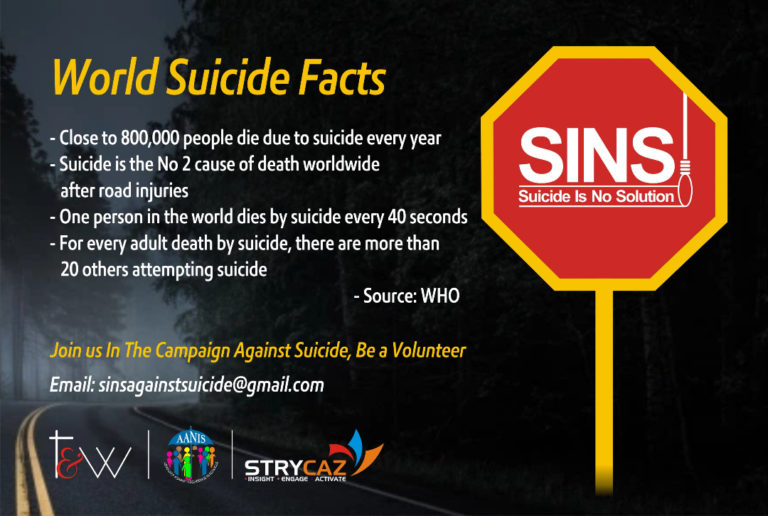
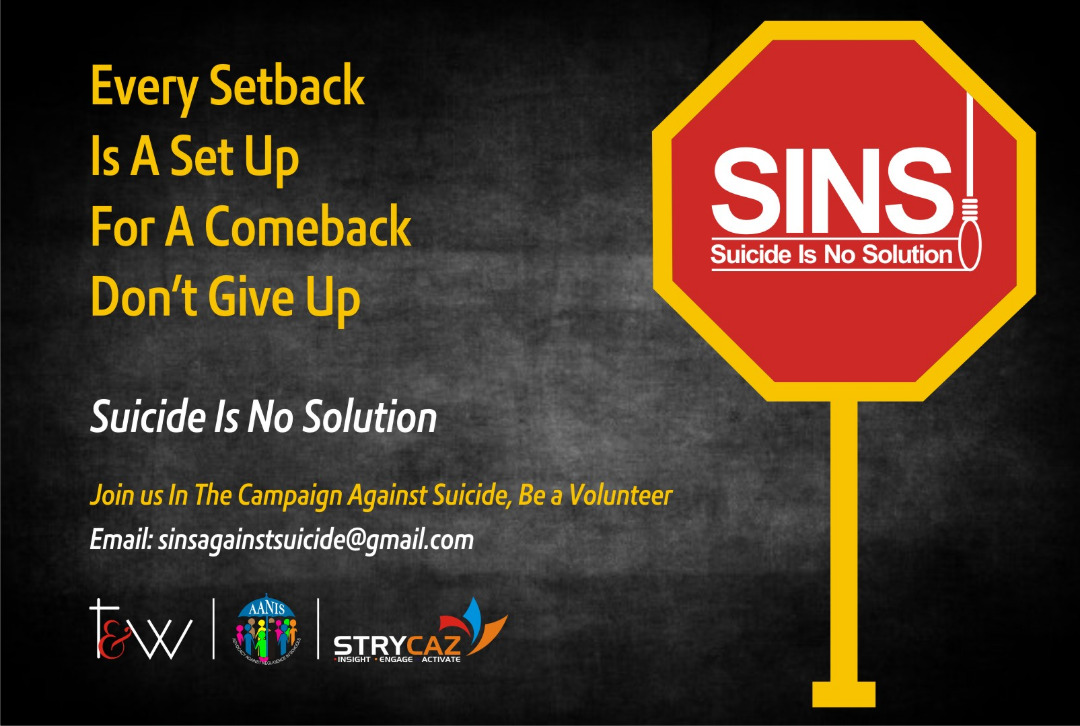
A NON-GOVERNMENTAL initiative, Suicide Is No Solution (SINS) has commenced an anti-suicide campaign as a means to help curb suicide in Nigeria.
Series of advocacy activities put together by the group with a view to dissuading people from committing suicide includes interactive events and counseling support to highlight the increasing tide of deaths by suicide amongst Nigerians and provide professional support to would-be victims.
The initiative launched by the group on Thursday also revealed that a team of mental health practitioners, religious leaders, social workers and volunteers have joined hands to support the cause in order to achieve its objective.
Idy Toye-Arulogun the project team leader, stated that the SINS initiative is a coordinated response to the increase in rate of deaths caused by suicide in Nigeria.
She said the key task of the SINS campaign is to significantly reduce the rate of deaths by suicide in Nigeria through a strong public enlightenment and advocacy campaign that discourages people from killing themselves.
She added that every 40 seconds one person dies by suicide in the world and Nigeria currently the 15th position in the world suicide ranking.
Hence, there is a strong need to intensify the campaign against suicide, especially given the psychological effects of the COVID-19 global pandemic.
Toye-Arulogun further noted that the SINS campaign encompasses multi-media communication messages for exposure in both traditional and new media platforms, a helpline and professional counseling support structure to engage members of the public going through distress and depression.
She said the group is hopeful that the SINS intervention will contribute to the mental well being of Nigerians and ultimately reduce deaths by suicide through various engagements.
According to experts Suicide is the second leading cause of death especially among the youth.
But the Nigerian government has not prioritise any form of intervention programme to prevent the trend.
For instance, there are fewer than 500 psychiatrists nationwide to take care of over 200 million people.
Europe on the other hand has 13 programmes, America has eight, Western Pacific has five, South East Asia has two programmes while Africa has no intervention programmes.
Some of the advocacy messages being promoted include: “Don’t let the stumble on the road be the end of your journey; Every setback is a set up for a comeback, don’t give up; Life is full of options, suicide is no option; If you need help or know someone who does, call our helpline: 07041000466.”
THE Federal Government and some state governors have disagreed about restrictions on social gathering as some governors have allowed religious gatherings against the directive.
Secretary to the Government of the Federation (SGF) and Chairman of the Presidential Task Force on COVID-19, Boss Mustapha reportedly said on Thursday that some state governors could be endangering lives of the vulnerables to coronavirus (COVID-19) pandemic.
“Governors are also advised on the decision taken by some of their colleagues to permit large gatherings as such decisions could inadvertently endanger the elderly, the sick and those with underlying factors during such gatherings,” he said.
He said that ban on social gatherings of more than 20 people has not been lifted hence government should enforce compliance.
“The strong advisory from the PTF is that large gatherings beyond 20 persons remain prohibited and should be adhered to,” he stated.
“Particularly, I underscore the need for the governors to provide personal and strong leadership, carry the policy of community ownership to the grass-roots and create deeper awareness,” Mustapha said.
Mustapha said following the inauguration of an Ad-Hoc Committee on COVID-19 by the House of Representatives, the PTF would engage with the committee to ensure compliance to efforts to curb the virus.
As at the time of filing this report, 12 state governments have lifted ban on religious gatherings.
Among the states are Cross River and Kogi states which are yet to record any case of COVID-19.
Bauch, Ebonyi, Borno, Kaduna, Kano, Gombe, Taraba, Anambra, Nasarawa, Adamawa, Zamfara states have permitted religious gathering ahead of Eid-il-Fitr celebration.
FINANCE minister Zainab Ahmed has said Nigeria would soon go into a recession.
But the federal government is trying to make sure it is shallow so that Nigeria can quickly come out of it by 2021, she added.
According to the minister, Nigeria’s economy could shrink as much as 8.9 per cent in 2020 in a worst-case scenario.
This would be a deeper recession than what was forecast after oil prices sink due to the COVID-19 pandemic.
But with a stimulus, the contraction could be kept to just 0.59 per cent, the minister said.
The pandemic and oil price plunge have not only hit growth but also dented the country’s main source of income, creating large financing needs and weakening the naira.
Ahmed said, “Nigeria’s first-quarter revenue from crude sales was 940.9 billion Naira, missing its target by 31 per cent due to the oil price crash.”
“Nigeria has $72.04 million in its oil savings account as of May 21, compared to $325 million in November,” she added.
According to worldometers as of 22 May 2020 Nigeria recorded 7,016 cases, 211 death and 1907 total cases recovered.
A World Bank director in attendance during the meeting said the Bank was planning a package for immediate economic relief for Nigeria.
Nigeria’s finance minister said the proposal was worth $1.5 billion and intended for Nigeria’s states to provide relief at sub-national level and hopefully to be disbursed by September.