A CIVIL Society Organisation, Environmental Rights Action/Friends of the Earth Nigeria (ERA/FoEN) has urged the National Agency for Food Drugs Administration and Control (NAFDAC) to hasten the process of trans-fat regulations.
The group in a statement signed by its head of media and campaign, Philip Jakpor said NAFDAC should take actions to ensure speedy approval of the ‘’Pre-packaged Food, Water and Ice Labelling Regulation, 2019’’ and ‘’Fats & Oils Regulation, 2019’’
Marking the two years anniversary of the Replace Package of the World Health Organisation (WHO) the group said the two guidelines are aimed at regulating the amount of trans fatty acids in the nation’s food chain.
The statement futher read that the regulation is a step-by-step guide for the elimination of industrially-produced trans-fatty acids from the global food supply.
The WHO had on May 14, 2018, released the replace package, advising governments across the world that eliminating trans fat is key to protecting health and saving lives.
According to the group, WHO estimates that every year, trans fat intake leads to more than 500,000 deaths of people from cardiovascular disease.
ERA/FOEN wrote that the world is currently battling the covid-19 pandemic and scientific evidences have shown that people with existing CVD conditions are prone to complications if they contract COVID-19.
“More than ever before the nation needs to work fast on laws and policies that will promote healthy lifestyles and approval of the regulations speedily will go a long way in that direction’’, Akinbode Oluwafemi, ERA/FoEN Deputy Executive Director said.
“Industrially produced trans fats are contained in hardened vegetable fats, such as margarine and ghee, and are often present in snack food, baked foods, and fried foods,” the statement read.
The group also urged Nigerians to abstain from all foods laced with industrial trans fat.
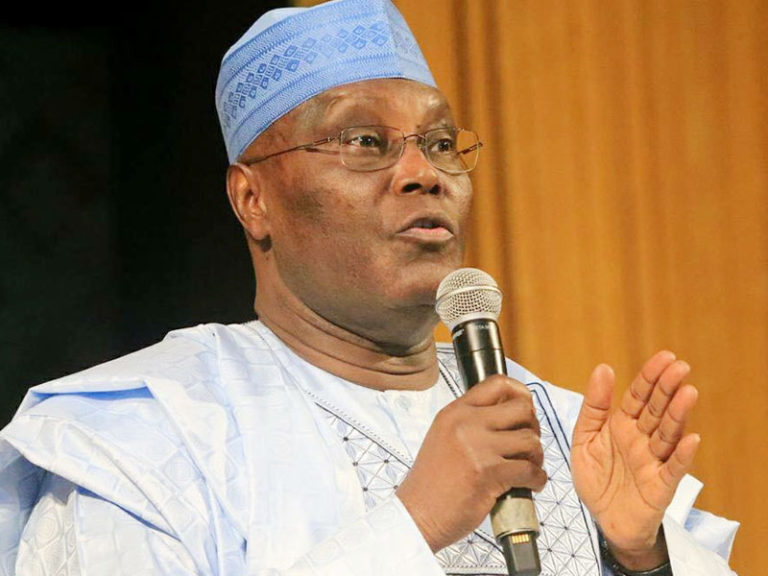
THE former PDP presidential candidate, Atiku Abubakar on Thursday criticised the Nigerian government’s decision to cut down the 2020 budget by only o.6 per cent which he describes as “grossly insufficient”.
Nigeria cannot afford luxuries during austerity, Atiku has said.
In a series of tweets, the former vice president expressed his dismay that despite the crash in the price of oil, and the inability of Nigeria to expand her revenue base through the non-oil sector, the FG has only considered slashing its budget by a mere 0.6 per cent, which represents a reduction of only ₦71 billion.
He added that the decision by the FG is grossly insufficient and betrays the fact that the nation has lost touch with the current realities in the global political economy.
For the avoidance of doubt, Atiku referenced when the budget was presented to the National Assembly on Tuesday, October 8, 2019, which he stated was predicated on a projection that the nation would generate crude oil production of 2.18 million barrels a day, at an expected oil price of $57 per barrel.
This he said is no longer the case today, adding that both the country’s production and the price of oil have been severely affected by the coronavirus pandemic, to the extent that Nigeria has unsold vessels, and its income has tanked by more than 50 per cent.
He stressed that Nigeria cannot be the only nation by bucking the trend as it not justifiable for a reduction in expenditure of just 0.6 per cent.
Atiku cited example of a country like Saudi Arabia with a much stronger production capacity than Nigeria and with a larger global market share, as well as a foreign reserve that is 12 times of Nigeria but has slashed her budget by almost 30 per cent.
“Nigeria cannot make up for the loss of expected revenue by taking out more loans and issuing out more bonds. Debt will be the death of our economy, and bonds will put our people in bondage,” Atiku tweeted.
The best way out of this economic quagmire is to reduce our expenditure, and a 0.6 per cent reduction is no reduction, it is only window dressing, Atiku said.
He, therefore, urged the federal government to put Nigerians first in its decisions.
“My counsel to @NigeriaGov is this: put Nigerians first and cut your coat, not according to your size, but according to your cloth,” Atiku added.
He recommended that the federal government should realistically slash the budget.
Atiku also added that billions budgeted for the travels and feeding of the president and vice president should be reduced. The ₦27 billion budget for the renovation of the National Assembly should also go.
The massive budgets to run both the Presidency and the Legislature should be downsized. The budget for purchasing luxury cars for the president, his vice, and other political office holders must be abandoned, he tweeted.
However, he added that the salaries of civil servants should be left alone, while the salaries of political appointees must be reduced.
He further advised that 8 or 9 of the jets in the Presidential Air Fleet should be sold.
In his opinion, any budget slash that is less than 25 per cent will not be in the interest of Nigeria.
Adding that beyond a budget slash, Nigeria needs a budget realignment, to redirect expenditure away from running a massive bureaucracy, into social development sectors like education, infrastructure, and above all, healthcare.
“We must invest in the goose that lays the golden egg – the Nigerian people.”
The former vice president said these are the types of sacrifices that Nigeria needs in a time of crisis and “not empty gestures that will lead to empty treasuries.”
LESOTHO, the last African country to be affected by coronavirus, on Wednesday announced it has detected its first case of COVID-19.
The virus was detected on an individual among 81 people who were tested after arriving last week from Saudi Arabia and neighboring South Africa, the health ministry said in a statement.
“The Ministry of Health informed the Basotho nation and the entire community living in Lesotho, that the country now has the first confirmed case of COVID-19,” Director-General Nyane Letsie said.
The patient is a Lesotho national studying in Saudi Arabia.
Lesotho went into lockdown on March 29 to protect itself from a potential spread of the virus from South Africa, which entirely surrounds the kingdom and has the highest number of confirmed cases on the continent.
Prime Minister Thomas Thabane loosened the restrictions on May 6 allowing “all non-essential services and enterprises to temporarily open shop”.
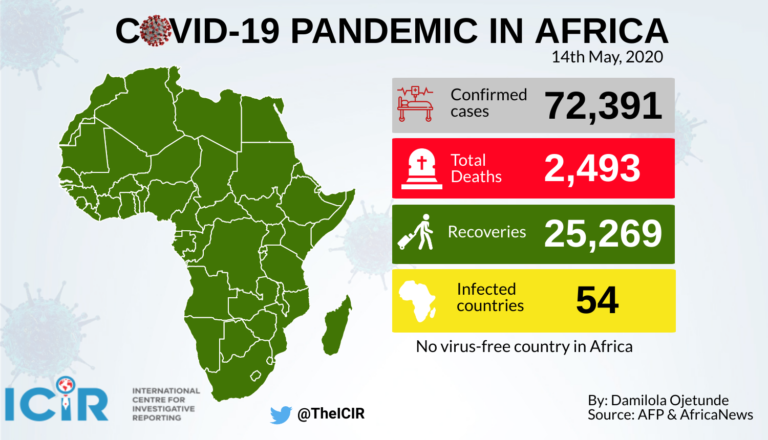
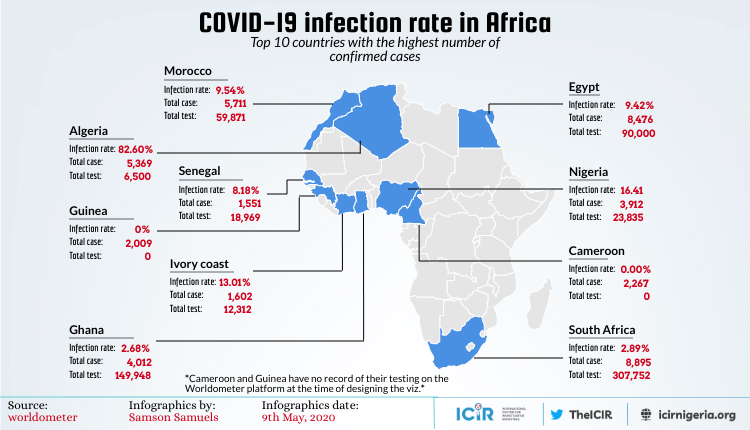
There are now more than over 70,000 confirmed cases of coronavirus across the continent, with a number of African countries imposing a range of prevention and containment measures against the spread of the pandemic.
THE federal government on Wednesday, approved the revised 2020 budget, adopting a benchmark of $25 per barrel after months of reviewing.
As of the third week of March, the country was contemplating revising the benchmark downward from $57 per barrel to $30 based on an estimated daily crude oil production of 2.18 million barrels.
Fiscal authorities have been grappling with deep fall in income as the government suggested last week that an 80 per cent in the projected net oil and gas revenue could trigger a slash of the fund available.
These funds are to be distributed among government tiers through the Federation Account Allocation Committee from the N5.5 trillion earlier proposed to N1.1 trillion.
Minister for finance Zainab Ahmed said the government is in the “process of an amendment that is bringing down the revenue indicator to $20 per barrel.”
“The council has approved our recommendations and the approval has these key parameters; the crude oil price is approved at $25 per barrel,” Ahmed added.
According to the minister, crude oil production is at 1.94 million barrels per day and then an exchange rate of N360 to $1.
The revised budget is now in the total sum of N10.523 trillion, a difference of about N71.5 billion when compared to the approved budget.
So the borrowing, the drawdown of the multilateral loan coming from special accounts, and coming from the privatisation will fund the fiscal deficit of N5.365 trillion that we have in the proposed amendment of the 2020 budget, the minister revealed.
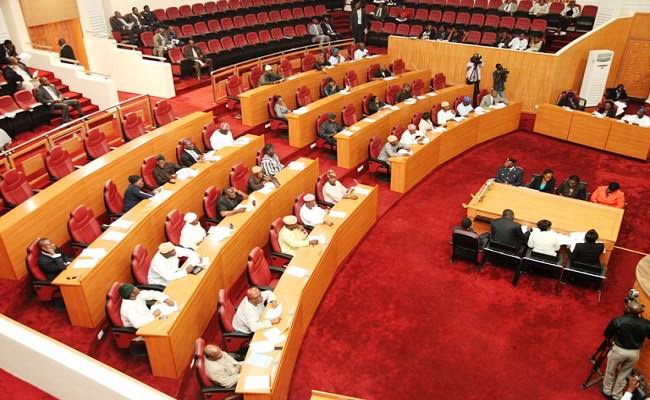
SOME members of the Bauchi State House of Assembly have insisted that the state government has to open churches and mosques to enable people worship since markets are also open from time to time.
A member representing Giade local government area in the state assembly, Hon. Dan’umma Bello during the house plenary on Wednesday argued that there is a need to go spiritual to end COVID-19, hence the need to allow people observe Juma’at prayers and church services.
A summary of the House proceedings dispatched to newsmen by the spokesperson of the Speaker, Abdul Burra quoted the lawmaker saying; “since people are allowed to go to market for three days per week, people should equally be allowed to go and pray Juma’at prayers on Fridays and church service on Sunday.”
Hon. Dan’umma also said the government should reduce the number of mosques and churches by selecting a few that the prayers will be allowed.
In addition, Hon Yusuf Inuwa Dadiye, member representing Ganjuwa West in the state assembly reminded the members that they will account for all their deeds and actions on the day of judgement.
He described as unfortunate the banning of Juma’at prayers and church services in Bauchi State.
“Every day, our constituents are calling us to inquire whether they can go to Juma’at prayers and church services or not”, he said.
Hon. Dadiye who quoted some verses of the Holy Qur’an on the necessity and sanctity of Juma’at prayers to all Muslims, called on the members of the assembly to call for the opening of Juma’at mosques on Fridays and churches on Sunday ‘because the solution to COVID-19 is prayers.’
The member, therefore, calls on the government to increase the number of mosques for Juma’at prayers so that people will not congest the existing mosques.
He said “when that is done, government should order for strict compliance to the guidelines of fighting the disease in all Juma’at mosques and churches,” he said.
The lawmakers also described as unacceptable, the high-handedness of security agencies on unarmed civilians while enforcing the partial lockdown imposed by the state government.
A member of the assembly, Jamilu Umaru Dahiru has lamented that the behavior of the security agents trying to enforce the lockdown is highly unacceptable.
Jamilu who observed during House plenary on Wednesday said many citizens of the state receive bashings from ‘overzealous security personnel’ in the name of enforcement of the lockdown order.
“There is the need for government to call the attention of the security agents to be professional and respect the dignity of human beings while enforcing government’s directives on COVID-19 lockdown,” the lawmaker said.
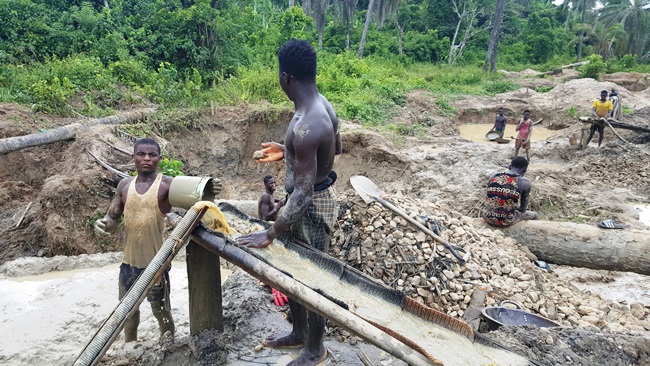
THE Federation of Nigerian Mining Host Communities, and Civil Society Coalition on Nigeria’s Mining Sector, Wednesday called on the Federal Government to prosecute sponsors of illegal mining in the country.
The group said beyond the recent arrest and planned prosection of the 19 foreigners accused of illegal gold mining, prefrential treatments should be avoided.
They said both foreigners and 21 Nigerians involved in the illegal activities in Osun and Zamfara states should be prosecuted accordingly.
Some of the Non-profit Organisations include: Global Rights, Women in Mining, Praxis Centre, Centre for Community Excellence (CENCEX-Zamfara), SilverChip Fox and Foundation for Environmental Rights Advocacy.
Others are: Follow the Money, CSR-In-Action, Community Enlightenment & Development Initiative, Zamfara, Third Eye, Environmental Rights Action/Friends of the Earth Nigeria, Neighbourhood Environment Watch Foundation etc.
While they called for speedy prosecution of the suspects, the CSOs reacted to statement of Olamilekan Adegbite, Minister of Mines and Steel Development, who said the ministry was under pressure from some “godfathers” to release the Chinese culprits, and dismiss the case.
“We therefore hold the federal government to their pledge to ensure the prosecution of all suspects of illegal mining in the country, and call for a full and immediate investigation of each case, and where found culpable, the arrest and prosecution of their ‘godfathers’ and enablers,” the group said in a joint statement by Abiodun Baiyewu, Executive Director of Global Rights and Janet Adeyemi, Executive Director, Women in Mining.
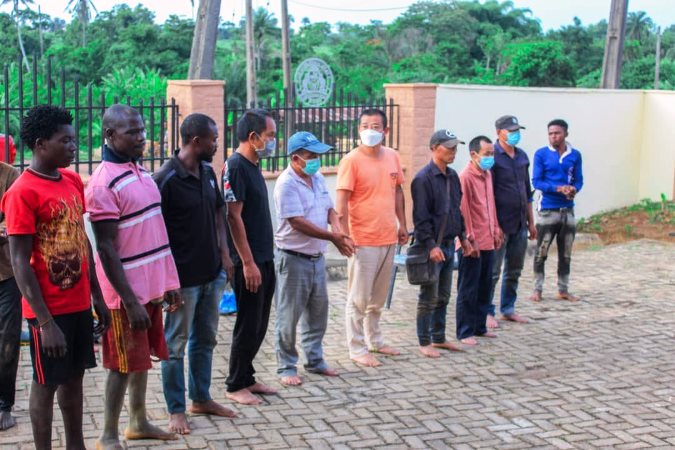
Illegal goldminers paraded by the Osun State government Photo Credit: Osun Govt
“The government’s efforts must not end with just knee-jerked arrests and prosecution of foreign illegal miners, it must include concerted efforts to ensure that the avenues through which solid minerals are ferried out of Nigeria without due process are blocked.”
The group further advocated that the FG should end the thriving illicit trade within, and smuggling of solid minerals out of the country, stressing that government policies should support main beneficiaries of such minerals to enhance value, and other monetary benefits of the sector.
The Osun State government last week paraded some Chinese and Nigerians involved in illegal gold mining in the state.
However, the stakeholders advised government to prepare for the Post Coronavirus Disease (COVID-19) by genuinely diversifying the economy.
They urged government to block all leakages in the sector, citing instance that Nigeria loses about $1.54 billion annually from illegal gold exploitation alongside other revenues and royalties.
“More particularly, we ask that the government fulfil its obligations of ensuring the reform of Nigeria’s Minerals and Mining Act and other extant regulations to conform to the ECOWAS mining directive in order to holistically develop the sector.”
The ICIR earlier did a two – part investigation on illegal gold mining in Osun and its implication on the environment and the health of the locals.
The report also highlighted the connivance of traditional rulers with illegal miners.
AN investigative journalism nonprofit based in Nigeria, the International Centre for Investigative Reporting (ICIR), has pushed the envelope with its approach to investigating the country’s response to the COVID-19 pandemic.
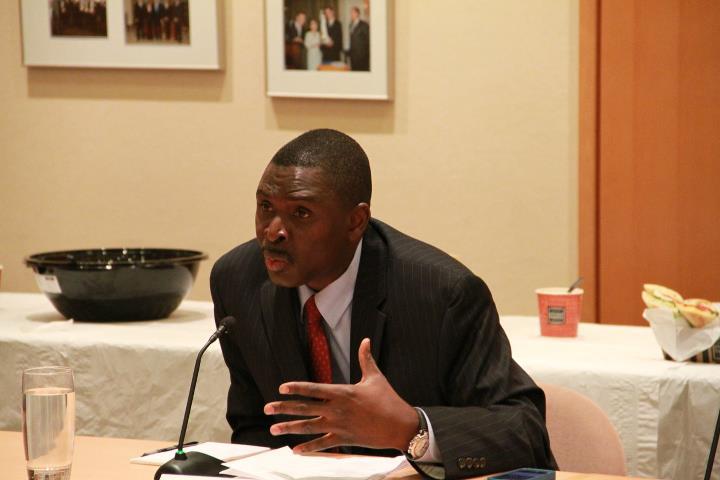
In this interview with GIJN’s Africa Editor Benon Herbert Oluka, ICIR Executive Director Dayo Aiyetan discusses the team’s work. Aiyetan, an investigative reporter, newsroom mentor, and media trainer, will be speaking at Investigating the Pandemic: The Threat to Africa, a GIJN webinar, on Thursday, May 14 at 9 am EDT.
You have investigated the COVID-19 story for about six weeks now. What have been your most impactful investigations?
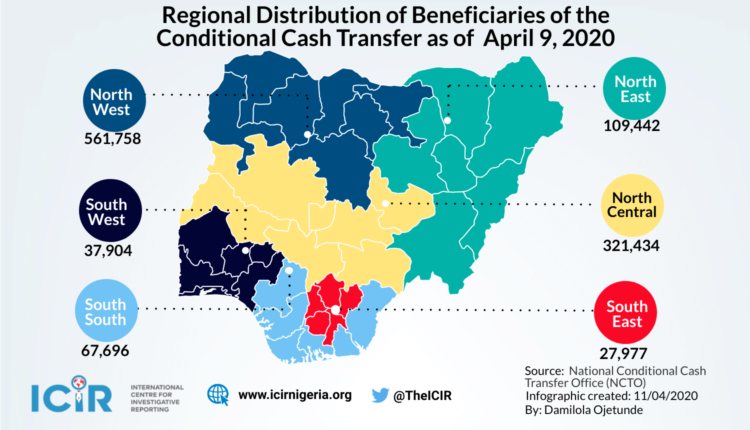
The first would be our data-driven report on cash transfers, which interrogated efforts to offer financial support to vulnerable families in Nigeria. The president had ordered that 20,000 Nigerian Naira (about US$51) be paid to the most vulnerable households, drawn from the National Social Register, a register of the poorest people in the country. But our investigation revealed that less than half of the vulnerable households on the register were receiving help from the government.
The data also showed the skewed nature of the distribution of cash as more households in states in the northern part of Nigeria were getting far more than households in the south … The government was forced to find a more equitable means of distributing palliative [food parcels] to reach as many Nigerians as possible.
Regional distribution of beneficiaries of the Conditional Cash Transfer as of April 9, 2020
Then there is our story about what doctors and other health workers earn as hazard allowance. In some places, doctors earned as low as N5,000 ($13.64) per month. We compared this with what doctors in other West African countries earned — $361 in Ghana, $460 in Sierra Leone and $825 in Liberia — and within weeks the state and federal governments reversed the situation.
For me, the report with perhaps the biggest impact is that which called out the minister of health, who overstated the extent of Nigeria’s preparedness to deal with a coronavirus outbreak. He visited one hospital in Lagos and declared that Nigeria was ready. The World Health Organisation (WHO), too, sang the same song. But our investigation revealed that Nigeria did not even have adequate isolation centers and was not prepared for the health crisis that the pandemic would bring. I believe that our calling out the minister informed the new government strategy… There has been more transparency in providing credible information to Nigerians and now the presidential task force on COVID-19 briefs the nation daily.
The COVID-19 story started as a health story before roping in all other reporters as it swept across the world. As an investigative unit with wide-ranging reports, how did your team cover issues around COVID-19 that would have an impact?
The ICIR runs a small newsroom. We do not have reporters in the states, only in the capital Abuja. And there was a lockdown. Every journalist reported from their different location so we were able to get a broad view at least of what was happening in the whole of the Federal Capital Territory.
But we were not covering stories around the country and there was a lot going on. So we reached out to journalists in other newsrooms that we had worked with on our funded investigative projects to report for us on specific projects… and jointly published. We did this particularly in the early days to report on state responses to the pandemic and unearthed a lot of initial mismanagement of responses, denial, and cover up of COVID-19 cases.
Could you share with us some of the investigations you’ve done during the lockdown and explain how you were able to pull them off?
The story on prison congestion and the risk of an outbreak of the pandemic in prisons, called correctional centers in Nigeria, was done through undercover reporting in at least one prison. I cannot speak about the details, but our reporter got into Maiduguri Maximum Security Prison and was able to paint a picture of what could happen in the facility if [overcrowding wasn’t alleviated] and if protective equipment was not provided to the prisoners.
Another investigation we did was about the response of the Akwa Ibom State government to the pandemic. We learnt what was going on and got a trusted journalist in the state to report for us. The investigation was important because the state government was living in denial, suppressing testing, and frustrating medical personnel. The investigation exposed all this.
The interesting thing is that an official of the state government who had followed some of our reporting on the pandemic reached out to us all the way from Akwa Ibom State to provide information about what was going on. As we had no reporter there, we got a trusted journalist to do the report, giving him access to our source.
One of the biggest challenges for journalists covering COVID-19 has been the reliability of figures. Have you had instances where you and your team faced this challenge? How were you able to overcome it?
The example that readily comes to mind is the story we ran on the social register of the poor. The government had refused to give exact figures about the number of households and many people — including journalists — were quoting all kinds of figures that could not be verified. We were fortunate. We kept looking and eventually found a source in the right place who provided the data in a government document. Once we verified that the document was authentic, we ran with the figures and the government could not deny it.
What have been the greatest challenges that you’ve faced while doing investigations during the pandemic?
I believe it is the frustration we have faced reporting from the front line, particularly in hospitals and isolation centers. We wanted to tell the story of our health workers and how they cope treating COVID-19 patients, what welfare packages they enjoy, if they had adequate personal protective equipment (PPE) and medical equipment to work with. However, the government refused to give us access. We can understand that the government would not want the truth about some of the inadequacies in our treatment of COVID-19 patients to come out but these are stories that need to be told.
Another challenge has to do with covering stories of human right abuses during the lockdown. Because most of our journalists do not have cars we are sometimes limited in the scope of stories we want to cover. But we quickly learnt a few lessons and adapted.
Are there particular tools and resources that have aided you and your team in your effort to carry out investigations during the pandemic?
What have been the missed opportunities for investigative journalists that you would want them to keep in mind going forward?
Using data not only to make government accountable, but also to set the agenda, and influence government policy. For example, the government eased the lockdown in Nigeria at a time when infections were rising. Journalists should put such government action in context through what data says. At the ICIR, we are now tracking the data of infections and doing stories showing whether the ease in lockdown regulations makes sense or not.
Also, I do not think journalists in Nigeria are using data enough to set [the] agenda in the areas of health, education, infrastructure, etc. One of the stories we want to do at the ICIR is to look at the education data, particularly dealing with the number of schools and children in schools. We want to force the government to start thinking of the future when schools should resume. We want to use this data to project how many more schools the government needs to build, because our kids need to observe social distancing when they return to school. Journalists can use data…. like this to set the agenda, to influence policy in virtually every facet of the economy.
On World Press Freedom Day you said journalists and media organizations must innovate in order to adapt and survive after the pandemic is brought under control. What kind of innovations do you have in mind?
Journalists must learn new, cost-effective ways of telling stories, particularly using technology. Today’s investigative reporting work — in fact, any kind of journalism — is driven by technology and journalists must embrace tech tools and not rely on old, traditional methods. So, instead of pounding the streets looking for sources, data or documents, we should learn that a whole lot of this we can get online.
THE presidency has said that of the five federal government’s priority projects, three will be funded by the Abacha loot recently recovered.
The recently repatriated Sanni Abacha loot will go towards three of Nigeria Government’s five priority projects, excluding the Mambilla power and East-West road projects.
The president’s spokesperson Garba Shehu earlier had said the Mambilla Project was one of five priority projects to benefit from the $311 million Abacha loot under the Presidential Infrastructure Development Fund (PIDF) managed by the Nigeria sovereign investment autority.
But he had corrected that error.
Although the Mambilla and East-West expressway are regarded under the PIDF as priority projects, Garba said he has ascertained that they are exempt from the agreement signed between the Nigerian, United States and British territory of Jersey governments.
According to the document, only the second Niger bridge, Abuja-Kaduna-Kano expressway, and Lagos-Ibadan expressway will benefit from the repatriated funds.
Mr. Shehu urged all print and online media to take note of this correction and make the necessary adjustments to their previous publications on the issue.
The funds are domiciled in the NSIA, he disclosed.
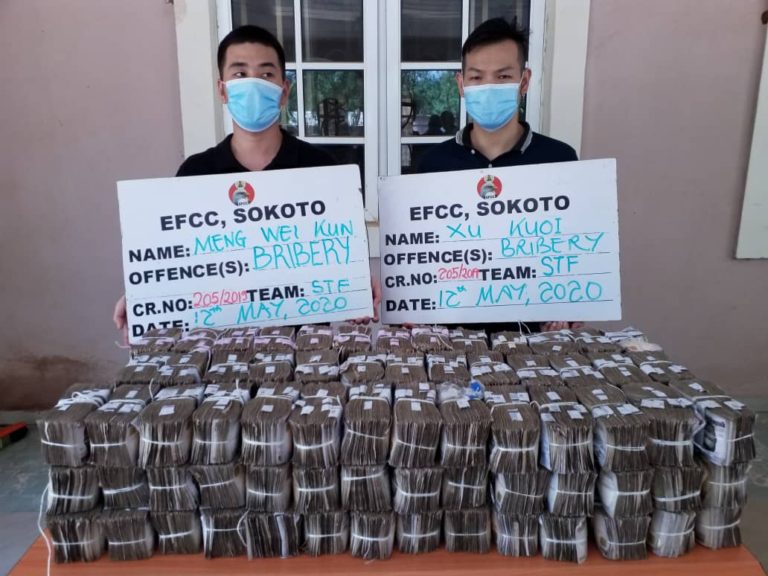
SOKOTO office of the Economic and Financial Crimes Commission (EFCC) arrested two Chinese for offering N100 million bribe to the state commission’s zonal head, Abdullahi Lawal revealed on the EFCC’s official Twitter handle.
The officials of the company named Xu Koi and Meng Wei Kun offered the bribe in a desperate bid to compromise ongoing investigations of the construction company called China Zhonghao Nigeria Limited.
According to EFCC, the Chinese company was handling contracts awarded by the Zamfara State Government in the sum of N50 billion between 2012 to 2019.
The Sokoto zonal office of the commission is investigating the construction company in connection with the execution of contracts for the construction of township roads in Gummi, Bukkuyan, Anka and Nassarawa towns of Zamfara State.
And also the construction of one hundred and sixty-eight (168) solar-powered boreholes in the 14 local government area of the state.
The commission revealed that the Chinese company reached out to the Sokoto Zonal head with N100 million as a bribe to bury the matter of inconsistency and unprofessionalism in the way and manner the project was carried out.
In a grand design to trap the corrupt officials, Lawal played along and lured them to believe he would accept the bribe.
Two representatives of the Chinese company offered him cash totalling N50 million in their office along airport road, Sokoto, the cash was said to be offered as the first installment.
According to EFCC, the suspects were promptly arrested with the cash as evidence.
The Chinese were charged on alleged conspiracy, misappropriation of public funds embezzlement, official corruption, abuse of office stealing and money laundering against the Zamfara State through inflated and uncompleted contracts awarded to the company.
Investigations have so far revealed that China Zounghao Limited has received payment of over N41 billion from the Zamfara State government.
Out of the N41 billion, N16 billion which was equivalent to over $53 million was allegedly diverted and traced to some bureau de change operators.
The suspects would soon be charged to court, the EFCC revealed.
Recall that The ICIR had earlier reported that the African Development Bank Group (AFDB) has debarred China Zhonghao Nigeria Limited, a civil engineering company registered in Nigeria, for fraudulent practices.
AFDB announced on its official website that the Chinese company which has been registered in Nigeria for 18 months has been charged for fraudulent practices which may affect the company fortunes with other multilateral development banks.
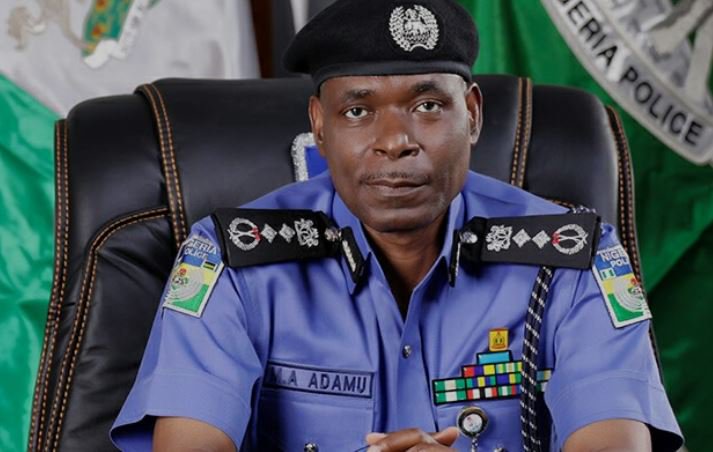
LUCKY Nwidu, a Port Harcourt-based pharmacist has filed petition to the Inspector General of Police, Adamu Muhammed over extortion by officers of Rivers State Police Command who claimed to be enforcing lockdown order.
The ICIR had reported how officers of the Ozuoba police station in Port Harcourt arrested, extorted and put Nwodu’s life at risk.
According to the solicitor of Nwidu, the officers locked up Nwidu after he had explained to them that as an essential worker, his office, Luckpharm Pharmacy has been exempted from the lockdown.
Despite his explanations, he was kept in the police and a bail of N100,000 was demanded by the investigating police officer identified as Inspector Bukola with the knowledge of the Divisional Police Officer, CSP Christian Ogowoke.
After spending hours in police custody, Nwidu was eventually granted bail after paying N20,000 despite his attorney’s explanation that he had not committed any crime.
Nwidu through his lawyer is demanding that the officers involved in his arrest should be sanctioned and that the commissioner of police in the state should tender an unreserved apology for the misconducts of his officers.
In the petition, the pharmacist also asked for a refund of N20,000 extorted from him by the Police Division without which other steps may be taken including demanding compensation.
In a separate petition addressed to the governor of Rivers State, Nyesom Wike, the pharmacist demanded a compensation of N100,000,000.
As stated in the petition, the compensation is for the damages and unfair treatment of Nwidu by officers of the police.
“The payment of N100, 000,000.00. ie One hundred Million Naira, as compensation and damages to our client who has been treated inhumanly and in a degrading manner contrary to chapter 5 of the 1999 constitution,” the petition read.