Home Blog Page 2112

World Press Freedom Day: Checking Gov. Umahi’s mad impulses!

By Charles Otu


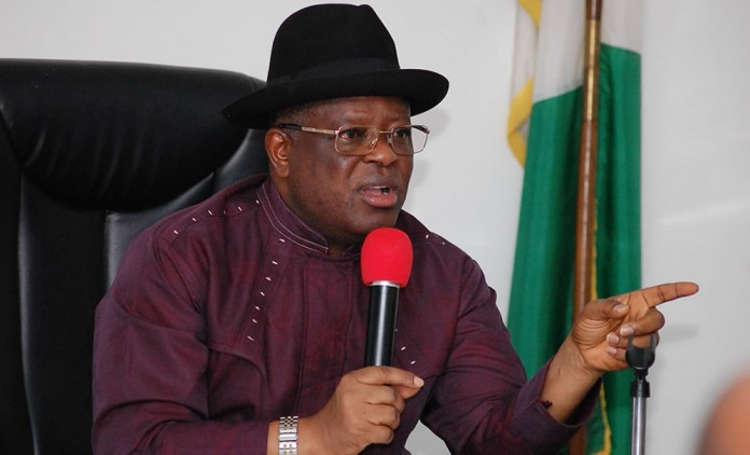
FEW days before the celebration of the World Press Freedom Day, marked globally on May 3rd every year, the Governor of Ebonyi State, Engr. David Umahi had been in the news sadly for deliberately and habitually misfiring against the noble men of the pen profession.

Recall that my colleagues; Chijioke Agwu of the SUN and Peter Okutu of the VANGUARD newspapers had recently and separately done reports; the former, stating the fact that Lassa fever was still ravaging Ebonyians and the latter raising the alarm about an alleged military invasion of Ngbo- a border community which had been at war with its neighbouring Agila community in Benue State.

In this era of Citizen’s journalism, some alarmed natives had shared a video of some village men and women crying about the loss of their sons and daughters during the alleged incident on the social media.

As those who truly know Umahi to be a brutal egoist anticipated, the State’s Chief Executive flew off the handle, egregiously raising his dictatorial sledgehammer in a State-wide broadcast against the two reporters for something which saner minds and democracies consider very trifling and merely nominal that an ordinary right of reply would have been enough!

In a thrill of honest but outrageous indignation, Umahi in his rascally modes of action proclaimed a life ban from any government facility for the two journalists. In his further voluntary exclamation which again, was altogether callous and cruel-hearted, the Governor decreed, “If you think you have the pen, we have the koboko”!

In his dreadful fantasy, grandiose delusion and repugnant ferocity, the said ban would be ‘For life’ and the Courts of Law (same Courts his government is still trying some journalists accused of libel)- which unlike the Constitutionally-unrecognized Fourth Estate of the Realm (the Press), is an entirely different arm of government with its supposed autonomy should be left out of the entire frightful brouhaha.

“Ebonyi people are so angry with the Press that I may not know when they may begin to attack Journalists in the State”, Umahi added glibly.

Both ‘sinning’ reporters had been arrested on Umahi’s orders and later released. Recall also that there was a viral video of the Governor saying on Television that he has “instructed the Local Government Chairmen to use their men to enforce minimum compliance which is the cane for anyone who came out without a facemask”. These ‘instructions’ are still being carried out to the later in markets, shops and other public places by his aides across the entire State!

Alas, some of his media hirelings who, of course have no media background and understanding, perturbed by what they still perceived to be their bosses’ sheer swagger in taming some ‘stubborn and unscrupulous’ journalists added to the profoundly obtuse stupidity of the condemnable broadcast by outrightly repudiating it before the weird public that the voice of their principal was ‘doctored’. That was at best another gaffe taken to far!

Even though Umahi’s unhidden disinclination to the two media reports he termed; ‘degrading Ebonyi State’ must have awoken and united the Press in its responsibility of gathering, processing and disseminating information to the Nigerian public as mandated it by Sections 22, 39 and 40 of the Constitution of the Federal Republic of Nigeria, 1999 (as amended), as they spoke with intense gravity, all condemning what could be rightly termed the ‘mad’ impulses of Governor Umahi, the fact remains that many Nigerian State actors easily get away with atrocious acts of impunity against media practitioners. There have never been, especially in recent times a collective strive to get truly and deserving justice for journalists attacked in the cause of performing their lawful assignments. At best, what we get are mere lines of Press Statements condemning such acts.

Howbeit, it is heart-warming that the media spoke firmly and in morbid fascination condemning Umahi’s unmitigated contempt for free speech and opinions which remains the cardinal point of any democratic governance the world over. Some newspapers devoted their front pages, some; their Editorial pages, others, through their Columnists, personality interviews and even through opinion articles in the battle to prove to Umahi whom a SUN Columnist rightly described as having become a “Local pandemic in the midst of a global pandemic” that the pen is yet mightier than the sword (Koboko, in this instance). The fact which was missing however is that he was not just becoming a ‘local pandemic’ or acting in a fit of a rage because of the global COVID-19 pandemic as he claimed in his apology, Governor Umahi had been a local pandemic in the lives of many Ebonyians, except perhaps, his family members and very few cronies who make miniature profits from his direct labour government.

His appointees, except a very few who have taken to their heels through resignations and the rest who were axed by Umahi perpetually live in morbid fear even after parting with his government. The Governor’s over a thousand Special and Technical Advisers dare not advise him on any issue or face sack and or relegation, some an outright ‘banishment’ from his ‘kingdom’ of Ebonyi. Many therefore live in unbridled sycophancy and pretense while trying to survive on at least a meal or two daily. To say that even his appointees cannot wait for 2023 to come so that the Umahi cup can pass them over is to put it whimsically mildly!

Good a thing the Governor has finally come down from his high horse in less than 72 hours and apologized to the two journalists, their media organizations and by extension, all media practitioners in the State. However, Umahi’s actions, inactions and unspoken disdain as a ‘resolute rascal’ against the gentlemen of the pen profession ought not to be swept under the carpet so easily by the media in Nigeria. At least, the bitter lesson he must have learnt is to take seriously, Napoleon Bonaparte’s disposition that: “Were it left for me to choose between ten thousand army and a pen, I will not hesitate a moment to go for the later”. Governor Umahi’s koboko (cockney horsewhip) has fatally crumbled before the pen and so did his fatuous indignation for gentlemen of the press, even though his apology was equally laced with his characteristic deplorable arrogance as against the thinking of many that such should have been handed with downright penitence, for want of a better expression.

As one who lives and practices journalism in Ebonyi (at least for about a decade now), it is incontrovertible that the Governor even before his last onslaught against the two Correspondents and particularly to his Social media critics, has essentially been an emperor behind a politician’s mask! It would be illuminating and ironical to the ears of many when one takes a look at Umahi’s promise in his inaugural address on May 29th 2015 while taking his Oath of Office after running his erstwhile boss, Chief Martin Elechi out of town and later, stock to not only pick the PDP Gubernatorial ticket but emerge albeit controversially as his successor.

In page 17 of the said address, he vowed, (against the background of his emergence);

“We offer our clean and immaculate hands of friendship. We place on the table an unconditional spirit of cooperation. We hold malice towards none. All Ebonyians are welcome to contribute their quota to the development of this beautiful estate that we call our common heritage”

Umahi continued that his will be, “A government that will listen and absorb the wisdom and counsel that will come from all citizens, young and old. We shall strive with our mightiest effort to give meaning to the concept of a government of the people, by the people and for the people. We shall do so precisely because we recognize that we are nothing without the people. We shall dedicate ourselves to building a community of common destiny where we may not all agree on all things, but we will all recognize the fingerprint of the Divine upon all humanity. In otherwords, we will welcome a healthy and progressive opposition,…”

It is rather a strange paradox to many that what has been obtainable in Ebonyi in the past five years of Governor Umahi’s reign is a blistering hack-down of any opposing view or idea! Beginning from the notorious June 2nd 2017 attack of this writer by some armed thugs loyal to the government who abducted and tortured him right inside the Government House for counseling the government to reconsider its vows and pacts with the Ebonyi masses as contained in its ‘bible’ (the inaugural address), to the shooting of another journalist the same day, it has been one crackdown after another even on Social media critics and opposition leaders in the State. Some of us were black-listed and had had remained ‘banned’ from the Government House since 2015 following his erstwhile Information Commissioner’s so-called accreditation of only ‘loyal’ journalists.

The entire scenario of media practice in Ebonyi is so indescribably awful that members of the Fourth Estate of the realm in their pallid agony suffer their pitiable fate in utter silence! Just before the life ban of two journalists, two other correspondents had secretly been suspended from entering the Government House a few months ago. Another was recently publicly derided in the most abhorrent manner by the Governor for simply asking him a question during a Media briefing on the kinds of palliatives he intends to provide for Ebonyians in this period of COVID-19 lockdown.

This however does not vitiate the merit in Umahi’s claim that over 90 per cent of journalists in the State, particularly those in the Correspondents Chapel receives a monthly paltry stipend from the government and it has been the culture almost since the creation of Ebonyi State. The present leadership of the NUJ in Ebonyi in its deferential and almost awestruck subservience to the State government has its own blames too for receiving ‘largesse’ from time to time for and on behalf of ‘all’ practicing journalists in the State, therefore not condemning any of the attacks meted out on its members which remains the highest since 2015 across the 36 States of the Federation.

As the umbrella body of practicing journalists across the country, NUJ and other media rights platforms and organizations take a sober reflection on this year’s celebration of World Press Freedom Day, they must put a check on the scandalous “awards for highest the highest bidders” given to all category of leaders who do not only undermine democracy but the veritable foundation upon which it is built- the Media! Granted that Governor Umahi has done marvelously well mainly in the area of road construction and flyovers particularly in the urban cities with his adroit use of concrete rigid pavement (cement) ‘technology’, his debilitating disdain for free speech and opinions which is the fulcrum of democracy and governance is awful and in the estimation of right-thinking individuals disqualifies him from any high honour and cerebral adulation.

As though prophetic and speaking directly to whoever (an Umahi that would later succeed him in 2015), Umahi’s predecessor, Chief Martin Elechi at the 2013 Democracy Day celebration lecture opined on page 4 of his Address: “The fundamental gain in democracy is, therefore freedom: freedom to choose who rule us, freedom to criticize programmes and policies of government and, most importantly, freedom to contribute by way of advice on how governance can be better improved”. Elechi lived true to these words as the press often took him and his government task even in the most critical times but Umahi, who served as his Deputy learnt nothing from this his boss’ school of Thoughts on democracy and governance.

The earlier the Press in Nigeria self-regulates itself and members, the better for our nation. For if our revered Nationalists like Dr. Nnamdi Azikiwe, Chief Obafemi Awolowo among others fought gallantly for the Independence of our nation through the power of the media, we must all be on our guards to defend, protect and preserve our fledgling democracy with the powers of our pen while being responsible and at the same time responsive to our collective Constitutional duties.

Governor Umahi and his fellow Hitlers in the corridors of power in Nigeria must therefore be made to understand that the power of the pen still topples down great kingdoms like card-houses and sticks foolscaps on the head of kings- like it has now done to him and his future political ambitions. The wise words of celebrated French journalist and Nobel Prize in Literature winner, Albert Camus, should be drummed into their heads that: “a free press can, of course be good or bad, but, most certainly, without freedom, the press will never be anything but bad”.

 Otu, an Ebonyi-based Journalist wrote from Abakaliki (07038104883)
Workers Day: Youths Digest trains campus journalists on career development, investigative reporting ‬

YOUTHS  Digest, the organiser of annual Campus Journalism Awards & Dialogue, has trained young journalists on developmental journalism and investigating reporting, especially on the Covid-19 pandemic.‬

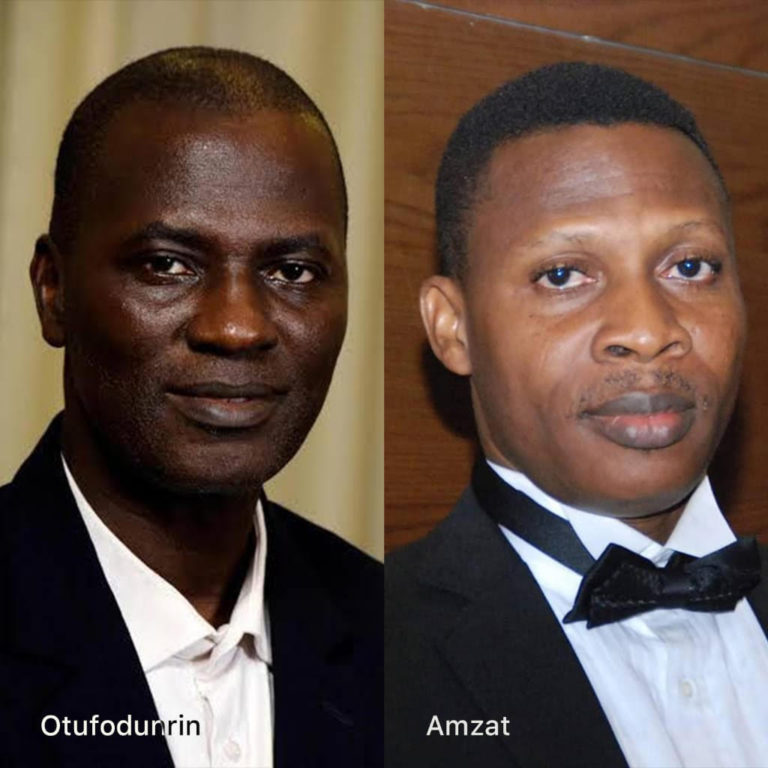
‪The training, which was organised in collaboration with the Civil Society Legislative Advocacy Centre (CISLAC), featured Mr Lekan Otufodunrin, Executive Director, Media Career Development Network Services and Ajibola Amzat, the Editor at the International Centre for Investigative Reporting.‬

‪The first phase of the training was coordinated by Lekan Otufodunrin, who spoke on building a career in journalism.‬

‪While commenting on the need for journalists to see journalism as a Social duty, the former Managing Editor of The Nation Newspaper, urged campus journalists to develop interest and skills in developmental and investigative reporting to a better and transparent society.‬

‪”Prominence should not be the goal of any journalist but being excellent in your work. You may also need to report major issues in unique and excellent ways to be noticed either by your organization or the world generally. Do it as a duty,” he stressed.‬

‪He praised the efforts of Campus journalists, whom he said need more encouragement and supports.‬

‪”I must commend the zeal I have noticed in campuses by students especially those where Mass Communication is not offered, yet they have done a lot to promote campus journalism on their own. They need more encouragement and support”.‬

‪On the other hand, Amzat, who spoke on Investigating Covid-19 pandemic, focused on investigating guidelines for campus journalists.‬

‪He noted that the ICIR has assisted campus journalists with small grants before the arrival of COVID-19. The organisation has also mentored many young writers and budding journalists. ‬

‪”The opportunity is still available subject to funding we receive from our donor foundation” he noted.‬

‪He also pointed out that Campus journalists can use Digital Tools to report Covid-19.‬

‪”Campus journalists can undertake reporting assignments at this period using several open-source tools available. Google, Twitter, Facebook, and other tech companies have created tools that can be used to report from home. Learn about these open sources, and use them,” Amzat stated.‬

‪Amzat also advised that journalists must also be conscious of their health while covering assignments.‬

‪”The infection does not distinguish journalists from non-journalists. It attacks all equally. Therefore, journalists covering COVID-19 need to protect themselves,” he said.‬

Meanwhile, Maryam Ileyemi, a Campus Journalist from Lagos State University said that the tweet chat was very enlightening and insightful. Another campus journalist from Uthman Dan-Fodio University Sokoto hailed Youths Digest for organising the workshop during this pandemic and that he learnt about new skills and knowledge that will be helpful in his journalism career.

‪Comrade Auwal Rafsanjani, the Executive Director of CISLAC, praised Youths Digest for organising the online workshops, assuring them of CISLAC’s continuous support.‬

FCTA releases guidelines on easing lockdown, warns against inter-state travel

THE Federal Capital Territory Administration (FCTA) has published guidelines on the implementation of the phased and gradual easing of the lockdown that was earlier announced by President Muhammadu Buhari in his nationwide broadcast on Monday April 27.

Minister of FCT, Muhammad Bello in a press statement on Saturday disclosed that FCTA will enforce rigorously the guidelines regulating the easing of the lockdown in the FCT as part of measures to contain the spread of Coronavirus disease (COVID-19) pandemic in the territory.

Bello said security agencies have been mandated to arrest and prosecute, through the mobile courts, anyone found contravening the guidelines.

He said the FCTA will vigorously enforce the overnight curfew from 8:00pm to 6:00 am, and in order to prevent person infected with COVID-19 from coming into the Territory, will also enforce the ban on interstate travel.

Therefore, all workers who reside outside the FCT have been directed to remain in their respective states of residence until the ban on interstate travel is lifted.

Below are the guidelines released by the FCT Administration:

An overnight curfew will be applicable in the FCT from 8:00pm till 6:00 am.

Effective Monday, 4th May 2020,  all civil servants in the FCT on Grade level 14 and above  are to report for work 3 times a week, on  Mondays, Wednesdays and Fridays between the hours of 8am and 2pm.

Extant guidelines on market operations for sale of food items only remain in effect. Markets are to operate for two days in a week on Wednesdays and Saturdays between 8:00am and 3:00pm.

The extant directive on places of worship still subsists and they remain closed.

All clubs, bars, gardens, beer parlors, recreational parks, communal sports facilities, movie theatres etc  in the FCT remain closed.

Taxis are mandated to carry a maximum of 4 persons at a time (driver and 3 persons)

All schools in the FCT remain closed until further notice. Schools are not permitted to commence third term operations in any form until directed otherwise by the relevant authorities.

Use of face masks by residents in all public places is mandatory.

The security agencies have been mandated to arrest and prosecute anyone found to be contravening any of these guidelines through the mobile courts.

The Minister however, urged residents that COVID-19 is a very serious ailment that can be fatal and there is the need for residents to follow all laid down health protocols.


COVID-19: Banks in competition to donate N1 billion into relief fund

COVID-19 charity donations to the Central Bank of Nigeria (CBN) may have turned into a stiff competition as banks struggle to donate billions of Naira to look stronger than the others, insider sources have told The ICIR.

Recall that CBN has earlier informed the private companies and individuals wishing to make voluntary donations towards the fight against Coronavirus to do so via COVID-19 Relief Fund Account.

According to a source at the First City Monument Bank (FCMB) that asked for anonymity, “The CBN intervened when banks turned COVID-19 into a competition and started out doing each other in donating billions.”

“The apex bank met with the committee of banks and suggested that donations towards fighting COVID-19 be coordinated and done through CBN,” he added.

CBN determined how much each bank would pay depending on how big they are, there are three tiers of banks which are categorised according to their financial weight, tier one, tier two and tier three.

FCMB  was to pay N250 million according to the CBN categorisation, whereas, the bank’s management previously had decided to donate more than that, the source said.

The source added that there is a need for CBN to streamline the process because banks had turned it into a competition, putting unnecessary pressure on smaller banks.

Though sources from other banks told The ICIR they were not aware of the pressure on them to make donations for COVID-19,  they did not deny there was competition.

Abdul Imoyo of Access Bank said, “I am not aware of the competition in the banking sector as regards donation to COVID-19, I am only aware of the donation of N1 billion my bank made.”

Charles Amadi of Fidelity Bank did not respond to calls and text messages sent to him.

According to Adewale Kunle of Sterling Bank, “He said donations were made according to the financial strength of various banks and Sterling bank was able to donate the sum of N250 million.”

Also, another source at Union bank that asked to be anonymous said: ” I believe we can’t give what we can’t afford in times like this. We were only able to donate N250 million to help fight the pandemic .”

Efforts to reach CBN spokesman, Isaac Okorafor for comment unsuccessful.

As of April 17, 2020, nine banks had donated to CBN to fight the pandemic. They are Guaranty Trust Bank (N1 billion), United Bank for Africa (N1 billion), Zenith Bank (N1 billion), Access Bank (N1 billion), First Bank (N1 billion), Union Bank (N250 million), Sterling Bank (N250 million), Standard Chartered (N250 million) and Stanbic IBTC Bank (N250 million).

Recently the management of Access Bank has resolved to lay off 75 per cent of its workers due to the impact of COVID-19 on the banks and to avert any coming challenges.

Governors order pay cut as Coronavirus takes toll on economy

AS the effect of Coronavirus disease (COVID-19) pandemic bites harder on the Nigerian economy, some state governors are taking measures to reduce the impact, including slashing workers’ salaries.

In Oyo State, Governor Seyi Makinde disclosed plans to slash salaries of senior political appointees by 50 per cent.

He made this disclosure while addressing top labour leaders in the state at Labour House, American Quarters, Ibadan on Friday.

The governor also said he had gotten the cooperation of the state lawmakers to cut their salaries by 30 per cent in order to reduce the effects of COVID-19 on the state’s economy.

“The next couple of months are going to be difficult ones, but we are working hard to mitigate the shocks to our economy.

“Already, we have secured the cooperation of the legislature to take a 30 percent cut to their monthly allocations, while senior government appointees take 50 percent pay cuts. This is because we feel that the economic safety of the workforce must be prioritised,” Makinde said.

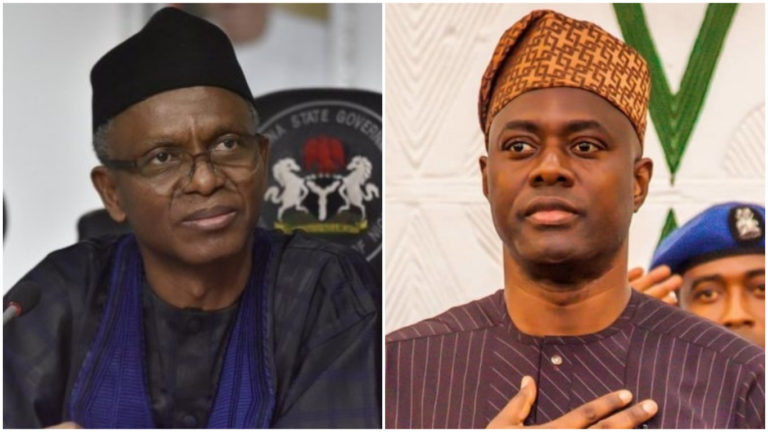
Similarly, Kaduna State Governor, Nasir El-Rufai has asked the workers to donate part of their salaries into the state’s purse.

El-Rufai on Sunday April 26, announced that state public servants earning, at least, N67, 000 will have 25 per cent of their salaries donated to the state and state senior appointees; including commissioners, permanent secretaries, special advisers and heads of agencies will each donate N500,000 in April.

In subsequent months, El-Rufai said senior appointees will each donate 50 percent of their salaries.

“Career public servants earning a net pay of N67,000 and above aftertax will also donate 25 percent of their pay monthly whilst the quarantine conditions are in place,” El-Rufai’s media adviser Muyiwa Adekeye said in a statement.

According to the governor, the move is to ensure that the millions of people living in the state are adequately supported during this COVID-19 period.

However, El-Rufai’s plan to cut 25 per cent of career public servants salary does not go down well  with healthcare workers who have the high risk of contracting Coronavirus.

The Nigerian Medical Association (NMA) has criticised the governor, demanding he reverses his decision.

”NMA hereby calls on the State Government to as a matter of urgency  to avert crisis in the health sector of Kaduna State by immediately paying all health care workers the balance of 25% of their April 2020 salaries,” the group said in a statement signed by Stephen Akau Kache, the State Chairman and Ifeanyi Aghadi Kene, the State Secretary of NMA.

Also, Adams Oshiomhole, National Chairman of the ruling All Progressives Congress (APC), in an article published to mark Labour Day warned governors against cutting pay of workers in this period.

Oshiomhole said cutting salaries in this COVID-19 period can only bring about a vicious cycle of poverty, adding that state leaders “be sensitive to the poor condition of workers during this difficult time.”

“Cutting wages is most unhelpful in the circumstance. It’s like asking an anaemic patient to donate blood to save the lives of other patients in need of blood transfusion,” Oshiomhole said.

He thus urged governors to rather reduce cost of governance instead of cutting wages or retrenching workers.

In the same vein, the Nigeria Labour Congress (NLC) has waded in,  kicking against cutting or stopping workers’ salaries at this period.

“In reciprocation of the enormous sacrifice made by workers, we urge employers of labour to show solidarity with the sacrifice of our workers and people by ensuring wage protection, income support and social inclusion at these trying times,”  Ayuba Wabba, the NLC President said at a press conference marking the 2020 International Workers Memorial Workers’ Day in Abuja.


FRSC, Hajj Commission, five other agencies listed for scrap in Oronsaye’s report

FOLLOWING President Muhammadu Buhari’s decision to consider the recommendations of  Stephen Oronsaye-led report on Restructuring and Rationalisation of the Federal Government’s Parastatals, Commissions and Agencies, there are seven major government agencies considered for scrap.

These agencies are the Fiscal Responsibility Commission, National Poverty Eradication Programme, Utilities Charges Commission (UCC), National Economic Intelligence Committee, Nigerian Christian Pilgrims Commission (NCPC), National Hajj Commission of Nigeria (NAHCON) and the Federal Road Safety Corps (FRSC).

In the 103 pages of the white paper, the report stated that the Act establishing the listed agencies should be repealed, while also suggesting the merger of other bodies with similar responsibilities.

The document which was prepared by a seven-member committee and inaugurated on 18th August 2011 by the former President Goodluck Jonathan was expected to fully take effect in 2014 but was not implemented.

Nine years after it was inaugurated, Buhari on Thursday, 30th April directed  Secretary to the Government of the Federation, Boss Mustapha, and Head of Service (HoS) dr. Folashade Yemi Esan to implement the report so as to prune down the cost of governance, as the COVID-19 pandemic bites hard on the country’s economy.

“It has reviewed the whole of the size of government and has made very significant recommendations in terms of reducing the number of agencies and that would mean merging some agencies,”   said Zainab Ahmed, the Minister of Finance, Budget and National Planning.

“This is a report that has been in place for a long time and there hasn’t been implementation but the president has approved that this should be implemented and we have conveyed Mr President’s approval to the arms of government that are responsible for this and that will be the office of the secretary of government and the head of the civil service of the federation.”

The Bureau of Public Service Reform (BPSR), an agency established to initiate government reform policies also acknowledged the changes in a tweet on Thursday.

The ICIR here highlights the functions of the seven agencies listed for scrap.

The Fiscal Responsibility Commission

The Fiscal Responsibility Commission (FRC) was established in 2007 by the Act of parliament to ensure prudent government expenditure. It also performs almost similar responsibilities with the Revenue Mobilisation and Fiscal Commission (RMAFC).

The Committee advised that the FRC be closed down, a recommendation which was accepted by the Jonathan-led administration. Mohammed Adoke, a Senior Advocate of Nigeria (SAN) and former Minister of Justice were further directed to commence needed actions to scrap the commission.

It was agreed that the RMAFC should also perform the responsibilities of FRC while the law establishing the National Salaries Income and Wages Commission (NSIWC) should be repealed.

In view of this, activities of the NSIWC are to be governed by the RMAFC Act.

“The Committee recommends that the fiscal responsibility commission be abolished and its enabling law repealed as RMAFC is already empowered by the Constitution to carry out the functions,” it stated.

National Poverty Eradication Programme  

The National Poverty Eradication Programme (NAPEP) is an initiative of the former President, Olusegun Obasanjo, designed in 2001 to help reduce poverty in the country.

But, it is part of the programmes pencilled for scrap. The committee recommended that NAPEP should be integrated into a new organisation known as the National Agency for Job Creation and Empowerment (NAJCE) alongside Small and Medium Enterprise Development Agency (SMEDAN) and the National Directorate of Employment (NDE).

While the federal government agreed to scrap NAPEP, it rejected NAJCE.


Utilities Charges Commission (UCC)

The Utilities Charges Commission is an agency of the FG established under Cap Law in 2004 and amended in 2016. It is meant to monitor charges and advise the government on tariffs charged by any of the public utilities.

The Oronsaye Committee, however, advised that the law which sets up the commission be abolished and other enabling laws repealed. Existing staff of the commission were directed to be redeployed to the Office of the Head of Civil Service of the Federation; since the workers are public servants.

“Government accepts this recommendation and directs that the process of repealing the enabling law should be initiated by the OSGF,” the document stated.


National Economic Intelligence Committee

The National Economic Intelligence Committee (NEIC) Act (1994) domiciled in the Presidency has the responsibility to analyse the annual budget and enforce fiscal measures that could help achieve revenue targets, grow the economy and other related matters such as tax evasion.

The 13-member committee is empowered to monitor monetary guidelines issued by the Central Bank on Nigeria (CBN), enforce existing tax regulations and give situation report of its activities on a quarterly basis to the president.

“The NEIC should be scrapped and its enabling law repealed, and further budgetary allocations to NEIC cease forthwith,” the Commission recommended.


Federal Road Safety Corps

Further, the Committee also recommended the disbandment of the Federal Road Safety Corps (FRSC).

Though the advice was rejected by the past administration, the committee argued that road safety management and highway patrol should be the primary responsibility of the Police as obtainable in other developed nations.

The FRSC officials, the committee added should be redeployed to the Police Service Commission (PSC), Federal Civil Service Commission (FCSC) and the Vehicle Inspection Office in the Federal Capital Territory Authority (FCTA).


Nigerian Christian Pilgrims Commission (NCPC) and National Hajj Commission of Nigeria (NAHCON)   

The Nigerian Christian Pilgrims Commission (NCPC) and National Hajj Commission of Nigeria (NAHCON) are among federal government agencies the committee advised should be scrapped.

Oronsaye’s report said rather than sponsoring pilgrims, the government should restrict itself to providing the needed vaccines and consular supports.

Functions of the commissions were asked to be taken over by the Federal Ministry of Foreign Affairs.

Though the Jonathan administration rejected recommendations for these two commissions, it is unclear if the current government would accept it, considering the current economic reality in the country and global oil market.

“The federal government should stop sponsoring pilgrims and pilgrimages with effect from the 2012 fiscal year, and government stop granting concessionary foreign exchange rate to pilgrims,” the Committee advised.

NOSDRA concludes probe of oil spill from Shell’s facility at Angiama in Bayelsa   

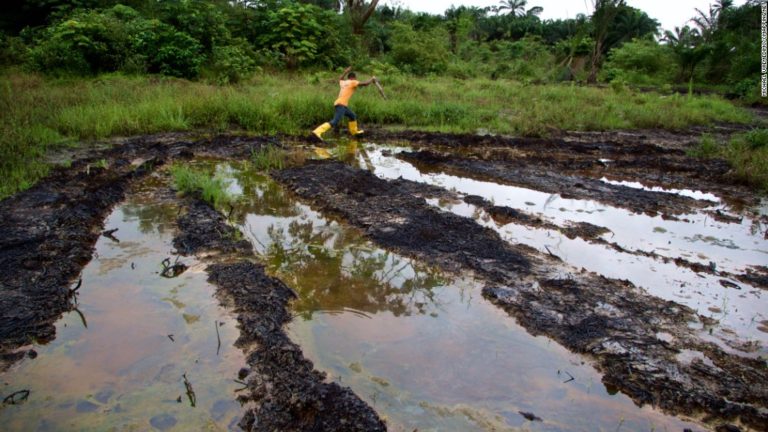
THE National Oil Spills Detection and Response Agency (NOSDRA) says it has concluded investigations on a spill from Well 13 at Angiama in Bayelsa.


The oil well located at Angiama a coastline settlement by the bank of River Nun, Southern Ijaw Local Government in Bayelsa is operated by Shell Petroleum Development Company (SPDC).

Idris Musa, Director-General of NOSDRA said in a telephone interview on Friday that 43 barrels of crude were discharged into the farmlands and nearby swamps.

It was learnt that the Joint Investigative Visit (JIV) witnessed disagreements between the host community who accused officials of the oil firm of under-reporting the volume of leaked crude.

JIV is a statutory team convened after any leak by operator, regulators, community and government representatives to ascertain the cause and quantity of oil leakage from oil spills.

The NOSDRA-DG said that contrary to claims by SPDC that the investigation was still ongoing, the agency had closed out the probe and filed the Joint Investigation Visit (JIV) report dated March 28, 2020.

“Joint           Investigation was done and concluded. Spill containment was done, oil recovery is done while post-spill impact and damage assessment will follow and the JIV report is available,” Musa said.

SPDC’s Spokesman Bamidele Odugbesan had claimed that the JIV report was yet to be published on the oil firm’s spills incident portal because it has not been signed.

“The JIV is published after it is signed off and this marks the completion of the process,” Odugbesan said.

Investigations at SPDC’s oil spills incident website revealed no record of the March 17 incident at Angiama while other leak incidents before and afterward were reported on the portal.

The NOSDRA boss explained that the agency found out that the leak was caused by equipment failure and recommended that SPDC should clean up and remediate the impacted site.

According to the JIV report with spill incident No. 2614095 made available to journalists, the oil leak impacted an area of 11,200 square meters and extended beyond SPDC’s Right of Way.

The report was signed by three community representatives namely Timi Yaro, Hon Target Isaih Segibo and Chief Noah Biobele , Owei Boma Blessing signed for Bayelsa Ministry of Environment and three officials endorsed for SPDC.

However, Desi Macline, a representative of Well 13 host community, says there is a disagreement over the volume of the oil spill from Shell fields in the community and they subsequently declined to sign the JIV report.  


FG gives directives on partial resumption of public servants

FOLLOWING the broadcast of President Buhari on a phased and gradual easing of lockdown measures occasioned by the Coronavirus pandemic, the federal government has directed that all senior staff in the public service should return to work.

Public officers from Grade Level 14 and others on essential services have been directed to resume work, effectively from May 4, between the working hours of 9 am to 2 pm on Mondays, Wednesdays and Fridays.

In a circular signed by the Head of Service of the Federation, Folasade  Yemi-Esan, further directed the concerned officers to ensure full compliance with the directives and advice on the COVID-19 pandemic preventive measures which include maintaining social distance, regular hand washing or sanitising.

Officers were further advised to limit the number of visitors they receive to the barest minimum and visitors should also comply with preventive and safety measures of the pandemic.

The circular also stated that federal Secretariat complexes have been decontaminated while efforts are being put in place to do the same in public offices.

The federal government through the Permanent Secretaries and Chief Executive Officers are to ensure the provision of handwashing and sanitary materials at entrances and strategic points in various MDAs, the circular stated.

It also directed that entrance to MDAs is limited to only one person at a time, and stressed the importance of using infrared thermometers to check for visitor’s temperature.


COVID-19: Access Bank to fire 75 percent of junior workers

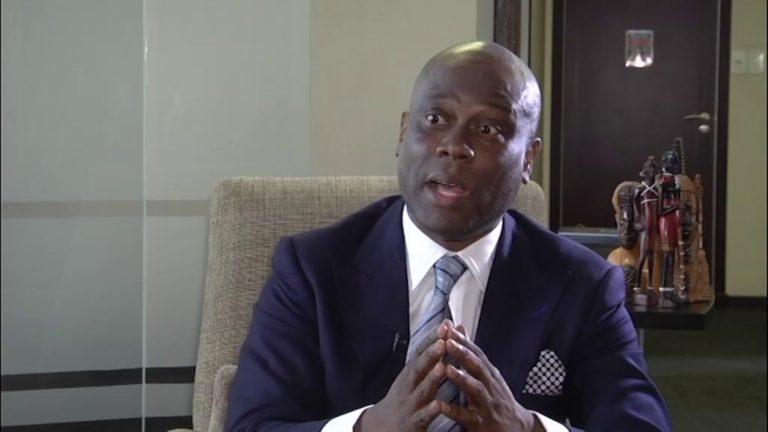
THE managing director of Access Bank Herbert Wigwe has disclosed plan to reduce the number of junior staff in the bank by 75 per cent.

He made this statement in a video interview where he listed  the affected workers to include tea girls, security guards, cleaners and teller officers.

He said even though all the branches of Access bank would be closed till December 2020, there would be a need to cut a large number of the junior staff.

According to Wigwe, this category of staffs represents a large number of workers in the bank and the management of the bank would speak to their employers on this reduction process.

He also said due to the impact of the COVID-19 pandemic and the uncertainty of the days ahead, this reduction of workers is important for the bank to still meet up with its responsibilities as a financial institution.

The managing director of the bank said he would also take the heat by taking a 40 per cent pay cut, saying everybody would have to make some adjustments of some sort.

Wigwe said, “This is not the best of times, we understand the difficulties people are going through, but we also understand the higher calling of creating an institution that can provide for us and the fact that tomorrow when things improve we shall revert to normal.”

“But what is important is, this adjustment is required at a time when we see great difficulties coming in, to make sure that if there is one institution left standing in this country as a bank it must be Access,” he added.

The bank boss said he should not be misquoted that they understand it would affect people but the adjustment is necessary to protect their franchise as a bank and make them stronger as they move into the future.

Wigwe, you will recall  held a total of 1.24 billion indirect shares as of April 2019. The indirect shares were made up of 537.73 million shares owned by United Alliance Company of Nigeria Limited and 702.56 million shares owned by Trust and Capital Limited.

But he had sold off 28.86 million units of shares worth N297.82 million, representing 2.33 per cent of his total shares in the bank, according to the Nigerian Stock Exchange.

Access Bank in 2019 completed the merger and business combination of the erstwhile Diamond
Bank making the bank the biggest bank in Nigeria by total assets and number of customers as well
as a significant retail footprint and infrastructure.

The group recorded gross earnings of ₦666.7bn (26 per cent year on year), and a 12 per cent increase in Profit Before Tax (PBT) to ₦115.4bn, despite the significant merger cost.

A major driver of this growth is the interest income of ₦536.8bn, which grew by 41 per cent year on year, reflecting a sustainable approach to generating revenue through traditional banking

Daniel Martins of Fair White financial group who spoke to The ICIR said, “With the recent merger which added to huge profitable numbers for this bank and the financial strength of Access Bank, it’s too early to send people home.”

Adeleye Kolade a financial consultant also said, “It is unfortunate the junior staffs have to suffer this blow, after all, they don’t earn much, the bank should have started the cost-cutting from the board of directors to management level instead of  directly hitting these junior ones.”

We are fighting COVID-19 without support from FG – Gov. Wike laments

NYESOM Wike, the governor of Rivers state said the state is solely battling the spread of Coronavirus (COVID-19) pandemic without tangible material support from the federal government.

Wike said this during a state address on Friday afternoon during his briefing on COVID-19 in the state.

According to him, the federal government has refused to provide ‘any tangible material support for the state.

He added that hitherto the Nigeria Centre for Disease Control (NCDC) has refused to set up a testing centre in Rivers state.

“Up till now the NCDC has not established any testing Centre in the state despite our socio-economic position in the state,” Wike said.

He alleged that NCDC’s action is deliberate because the Centre has been unable to justify not setting up a testing centre in the state.

Wike further noted that the Rivers state government is not at the peak of the fight against COVID-19 due to non-compliance of some individuals.

He said some cases were aided into the state by security officials who are supposed to enforce the task force guidelines.

The Rivers state governor gave a ‘last warning’ to Umu-okoro community leaders over non-compliance to the social distancing.

He noted that the community has continued to organise ‘night market’ against the state task force guidelines.