SOME vulnerable households in Kwali Area Council of the Federal Capital Territory have started receiving N20,000 relief fund being disbursed by the Federal Government.
According to a Channels news report, the Minister of Humanitarian Affairs, Disaster Management and Social Development, Sadia Umar-Farouk, said at the launching of the scheme that the relief fund would continue for the next four months.
Farouk added that the relief fund is being distributed as announced by Nigerian President Muhammadu Buhari during his National broadcast on COVID-19 on Sunday evening.
Buhari had said relief fund would be disbursed to vulnerable households following his order for a lockdown of the FCT, Lagos and Ogun states.
The Minister disclosed that the N20,000 would be given to each person in vulnerable households.
Noting the importance of the cash relief, she said the government is aware that most of the vulnerable groups live on daily wage and the lockdown would hinder their livelihood.
“Because of this COVID-19, the vulnerable groups have to expand, because we are aware that there are people who live on daily wage, so we are also going to look at those groups of people to see how we can get this food relief intervention to them in this period,” she said.
PRESIDENT Muhammadu Buhari’s much-delayed and anxiously-awaited authoritative speech on Covid-19, delivered on Sunday, March 29, locked down Abuja, Lagos and Ogun from Monday, March 30. That’s for millions who wake up at sunrise and retire to bed at sunset in these cities. But as for me and the multitude to whom the ritual of filing and marching to worship centres in columns, like ants, every Sunday was life, the government (or is it Covid-19?) had slammed the gate of freedom in our faces twenty-four hours earlier.
This is because social distancing, a precautionary measure, had translated into the closure of churches and mosques in Nigeria. Effectively, my freedom was curtailed and I began to feel the deprivation of ‘lockdown’ from that Sunday.
Having endured a hazardous Saturday night of mosquito bites, sticky sweats and bleary eyes from blackout, I had slumbered into an unusual Sunday; a Sunday devoid of the communal, congregational worship.
As I sat in my book-busy library, poring over church manuals and scriptures, my little Shammah walked in at about 5.30am to stir the odd feeling that had matured in my mind.
“Daddy, how will today’s service look like, now that we’re not going to church,” he asked me.
“We’ll have our Sunday service in this house,” I replied.
Gazing at me, his probing eyes told me my son would not consider a Sunday service in our living room as sacred as congregating at a designated place of worship – as he used to know it. For the eight-year-old, not attending church service on a Sunday morning was sacrilegious. Every dawn, as he grew up, Shammah bathed at 5.00 am; dressed up before 6.00 am; hopped into his mother’s car at 6.15 am; endured his mother’s high-speed ride to beat the 6.30 am deadline for prayer band meeting; and at 8.00 am joined his friends in the children section of our church for worship service and other free gifts like biscuits, birthday cakes, juicy drinks, jokes, and the fun of showing off their new dresses. Since birth, he had not consciously skipped this weekly culture. But he did on March 29.
I had to put on my creative cap to separate the Sunday worship service from our regular morning prayer session in my house. To the amazement of my children and wards, I insisted that everyone must wear ‘Church clothes,’ meaning they must wash up, choose from their best wears and conjure up the special emotion associated with veneration for God on Sunday. As members of the Redeemed Christian Church of God (RCCG) we assembled in my living room, tuned to Dove TV on DSTV at 8.00am for Sunday anointing service, Sunday School, praise and worship, and the sermon by Pastor E.A. Adeboye.
A few cars are pictured on a road, as authorities try to limit the spread of the coronavirus disease (COVID-19) in Abuja, Nigeria March 30, 2020. REUTERS/Afolabi Sotunde
As we congregated around the tv, my mind raced back to the prophecy of John Alexander Dowie, a Nineteenth-Century preacher for two relevant events. First, was his impactful healing ministry whose foundation was laid on a pandemic, like coronavirus, that had spread throughout Australia and sent thousands of persons back to the dust. He had lamented his ordeal as a pastor of a small church in Newton, a suburb of Sidney, saying: “My heart was very heavy, for I had been visiting the sick and dying beds of more than thirty in my flock, and I had cast the dust to its kindred dust into more than forty graves within a few weeks…” Then, he summoned soldierly faith and began to lay hands on the sick for divine healing from city to city and country to country. And they were healed. On a Sunday morning like this, coronavirus reminded me of his remarkable faith and feat that is indelible in church history.
Secondly, Dowie had, in the late Nineteenth Century prophesied the emergence of radio and television, a very remote possibility as at 1907 when he died. He may have foreseen that the audio and visual media would enhance evangelism across time and space. Over a hundred years after Dowie uttered that prophecy, television and radio came to the rescue of the church at a time of mysterious coronavirus pandemic.
Sitting through the Sunday service in my room, my imagination transported me to a larger congregation – a congregation larger than my parish – which constituted the millions of RCCG members hooked on to Dove tv for the Sunday service. Being part of the multitude captured in my imagination gave me a very special feeling as we formally closed the service.
However, the most remarkable and profound experience of that Sunday was the eerie, ghostly spectacle from churches in Italy, where I saw on the Cable News Network (CNN), reports showing thousands of coffins in rows in a Catholic cathedral, as priests performed funeral rites for mass burial.
Unbelievably, coronavirus had claimed 10,000 lives! Indeed, ‘seeing is believing’. Though I had received daily updates of death tolls in Italy, the visual of corpses evoked a different feeling; it was a different experience.
Those columns of coffins in that cathedral belied the sophisticated medical facilities television screens highlighted every time news of how coronavirus pandemic ravaged Italy was aired by international news networks. With well-kitted medical personnel; everyone on the street of Italian cities wearing protective face masks and hand-gloves; and numerous hospital beds supported with state-of-the-art ventilators, the hundreds of corpses prepared for burial, which I saw on CNN, looked strange and ironic.
‘Italy may be under a curse,’ a part of me remarked. But listening to the news broadcast on the deepening pandemic in the US which deflated President Trump’s confidence, making him embrace the worst situation of some 200,000 deaths, and reports that British Prime Minister Boris Johnson, too, was coming to terms with the devil, I soon told myself that Italy was not under any curse.
Italy, though fighting hard to loosen itself from the predicament, was, indeed, in the grip of a wild pandemic; a plague that does not discriminate between saints and sinners.
During my private prayer sessions, I had committed myself to regular intercession for Italy as a result of the hundreds of deaths announced daily since coronavirus spread like satanic fire all over that European country. ‘Lord, have mercy on Italy,’ I had prayed uncountable times. But the spectacle on Sunday, March 29, gave me a different, ominous sense of the pandemic. To my prayer for Italy, I have added this appeal to the Divine Power – ‘Lord, let this deadly cup pass over Nigeria.’
For the rest of that Sunday, I wondered if we, Third World countries in Africa, with our laughable medical infrastructure, would escape a worse, tragic and catastrophic predicament. With tertiary health institutions barely passing as consulting clinics; shortage of medical equipment and consumables; shortage of doctors; wrong, faulty and fraudulent diagnoses; the mercantile attitude of proprietors of private hospitals; non-production of common/essential drugs; lack of motivation and weak morale among medical personnel; and endemic corruption in the medical sector, escaping this curse and woes of coronavirus would be by the skin of our teeth.
Usually, Sundays are my favourite days, as it provided me with the opportunity to socialize with those who wish me well; those who verbalise their love for me; and smile generously with me. At Sunday services, I joined (any) congregation to sing rapturous hymns or high praises which usually lift my spirit and soul from this earthly realm to heavenly realms where all impossibilities fade and dissolve into the eternal possibility in the name of Jesus. But the ominous caskets in Italian cathedrals stole my Sunday-Sunday elixir and tossed me into the dark palm of gloom. Those sights and scenes shattered to pieces all the myths about Africans not being vulnerable to coronavirus. I can’t accept that this death is whiter and lighter than black.
At about 7.00 pm that evening, President Buhari made the lockdown speech. A great speech. But will it conquer the wild beast that has sneaked into Nigeria, wounding us from city to city? Without Covid-19 test kit to quicken detection, isolation and treatment, this beast would pounce on ignorant and vulnerable Nigerians – in their millions – and make the weeping and wailing in Italy a mere whimper.
May that never happen to us.
Theophilus Abbah, PHD is a journalist, writer, researcher and trainer.
Twitter @theophilusa
Nigerian currency, the Naira has depreciated to its weakest level since February 2017 in the unofficial black market after the Central Bank of Nigeria (CBN) cut supply to dealers.
According to abokiFX.com, a forex trading website, the local unit traded at 415 Naira per dollar.
However, official CBN rate of Naira against the dollar stood at N360 as at Monday, March 30, 2020, on its official website.
The CBN announced last week that it was suspending foreign exchange sales to Bureau De Change until further notice. A move it said was in line with curtailing the spread of coronavirus in the country.
This was after devaluing the exchange rate used by foreign bond and stock investors, which had been largely pegged since 2017, by about 4 per cent to N380 per dollar.
ADonald Ademola, a Financial Analyst at Magnartis Portfolio Managers who spoke to The ICIR, said “There is an expectation that Nigeria will have to let its currency weaken more.”
“Bureau De Change account for 30 per cent of foreign exchange transactions and if supply is not coming from there, even people with dollars will hoard,” Robert Omotunde, an analyst at Afrinvest said in a report.
“The foreign reserve is not at a comfortable level. If the major source of supply is now pressured, the exchange rate will feel the pain and the situation will worsen,” Omotunde said.
Chief Executive Officer of Flying Eagles Bureau De Change, Sadiq Abdullahi who spoke to The ICIR said: “People are hoarding dollars, thinking when things become normal they’ll make a profit.”
The CBN sold more than $12 billion to bureau de change operators last year.
Zenith Bank Plc and Guaranty Trust Plc have cut how much foreign currency customers can spend overseas due to expected dollar shortage caused by the coronavirus pandemic and the slump in the price of oil, Nigeria’s main export.
THE National Human Rights Commission (NHRC) has asked Nigerians to report any case of human rights violation and abuse by security agents enforcing compliance of the of 14-day lock down imposed by the Federal Government to prevent the spread of coronavirus.
Executive Secretary of the Commission, Tony Ojukwu, called on members of the public to report such human rights violation.
He called on Nigerians to report either “by telephone calls, text messages or video and ensure that such reports include the location of the violation, date, time of such violations and a clear description of alleged violators and their victims.”
Ojukwu stated this in a press release sighted by The ICIR, in which he pointed that some cases of abuse are already being recorded as security operatives use extreme measures to enforce the lock-down order issued by President Muhammadu Buhari on Sunday, March 29.
President Buhari had in a nationwide broadcast ordered that Lagos and Ogun states, as well as the Federal Capital Territory (FCT), Abuja effect a lock down, restricting movement and gathering of citizens for a period of 14 days.
To ensure compliance, security operatives from the police, paramilitary and military have been dispatched to different areas in the the two states and the FCT to enforce the lock down.
There have however been footage of human rights abuses by these security operatives.
Earlier, The ICIR reported how some Lagos Task Force officials were captured on tape destroying goods and wares of small business owners for disregarding the lock down order.
Meanwhile, Ebun-Olu Adegboruwa, a human rights activist and Senior Advocate of Nigeria (SAN) has said that the Quarantine Act of 1926 does not provide the legal framework to restrict movement of citizens around the country and arguing that presidenr Buhari acted illegally when he declared a lockdown order in FCT, Lagos and Ogun states.
According to Adegboruwa, an executive regulation cannot in law take away a fundamental right of freedom of movement granted by the Constitution.
THE Federal Government has again reduced the pump price of the premium motor spirit (PMS) popularly known as petrol from N125 per litre to N123.50k effective from Wednesday, April 1, 2020.
A statement issued Tuesday night by the Petroleum Products Pricing Regulatory Agency (PPPRA) which contains the new price said the new price regime was in line with the government approval for a monthly review.
President Muhammadu Buhari had on March 18 approved the reduction of the pump price of petrol from N145 to N125 to reflect the declining price of crude oil globally.
The price reduction was announced after the Federal Executive Council (FEC) meeting held at the Presidential Villa in Abuja, by the Minister of State on Petroleum Resources, Timipre Sylva in a statement.
He cited the drop in the price of crude oil at the global market leading to the reduced open market price of imported petrol below the official pump price of N145 per litre.
According to the PPPRA statement signed by its Executive Secretary, Abdulkadir Saidu, “The Guiding price which becomes effective 1st April 2020, shall apply at all retail outlets nationwide for the month of April, 2020.”
“PPPRA and other relevant regulatory Agencies shall continue to monitor compliance to extant regulations for a sustainable downstream petroleum sector.
“Members of the Public and all Oil Marketing Companies are to be guided accordingly,” the statement added.
THE National Electricity Regulatory Commission (NERC) on Tuesday made a temporary U-turn on the date it initially set for a new electricity tariff to take effect.
The NERC had earlier issued a directive for the commencement of new tariff on 1 April, 2020 but it stated in a new order with reference number: NERC/198/2020 “that due to complaints from the end-use customers such as poor service delivery, inadequate provision of prepaid meters, hours of guaranteed supply and the COVID-19 pandemic, the old date set at tomorrow is no longer valid.”
The order was titled: Order on the Transition to Cost Reflective Tariffs in the Nigerian Electricity Supply Industry.
As a result, the NERC had directed the 11 Distribution Companies (DisCos) to present a comprehensive plan to realise the revenue requirements as well as strategies to provide Nigerians with stable power before June 30, 2021.
“The orders of the commission (Order N0: NERC/GL/184/2019 to NERC/GL/184/2019) titled ‘The December 2019 Minor Review of Multi-Year Tariff Order (MYTO) 2015 and Minimum Remittance Order for the Year 2020’ shall remain in force until 30 June, 2020 when a new Minor Review Order shall be issued by the commission,” NERC stated in a document, sighted by The ICIR.
The document was jointly signed by James Momoh, its Chairman and Dafe Akpeneye, the Commissioner, Legal, Licensing and Compliance.
“There shall be no increase in tariffs of end-use customers on 1 April, 2020,” the NERC said.
The NERC said it recognises the economic impact of the global pandemic mostly on Nigerians and why it should be considered in the new directive.
The commission also disclosed that henceforth, the future tariff for customers would be determined after consultations between DisCos and customers clusters, with firm commitments on rates and quality of service.
The NERC further ordered DisCos to disaggregate their service areas otherwise known as customer base in accordance with the quality of service delivered.
It said the DisCos are expected to also provide smart meters to the customers such that the meters could send real-time or close to real-life electricity usage data to the commission.
The orders read in part: “All DisCos are hereby directed to submit a detailed plan for the attainment of full recovery of prudent costs and allowed return on capital (revenue requirement) by 30 June 2021. The revenue recovery and financial sustainability plans shall be submitted to the commission no later than 21 April 2020. The plans shall include a path, with timeliness, for transiting customers to a higher quality of service.
“All DisCos are hereby directed to submit, no later than 21 April, 2020, revised performance improvement plans based on the key objective of improvement in service for end-use customers and transiting to full revenue recovery. The approved plans shall form the basis for future tariff reviews and full cost recovery.”
“All future tariff review shall be on the basis of consultations between the DisCos and customer clusters with firm commitments on rates and quality of service. The service level compact shall include a compensation mechanism for end-use customers to address the DisCos’s failure events to deliver on performance targets.”
However, the Commission announced plans by the Federal Government to provide tariff support during the transitional period to the full revenue recovery target fixed at 30 June, 2021.
It pledged to fix all issues of concern regarding financial records of all DisCos arising from tariff-related deficits as represented and payables to the Nigerian Bulk Electricity Trading Plc (NBET) and the market operator.
THE State High Court sitting Tuesday, March 31,in Sokoto has convicted and sentenced one Freedom Sampson Inah to 10 years imprisonment with an option of fine of two Hundred thousand naira (N200,000.00) over a one-count charge bordering on swindling one Ahmed Jelani to the tune of N1,830,250 (One Million Eight Hundred and Thirty Thousand, Two Hundred and Fifty Naira).
According to Economic and Financial Crimes Commission (EFCC) who secured the conviction, Freedom and his other conspirators, Nwabueze Uzochukwu Joseph and Peter Ike had sometimes in 2019 disguised as travel agents at of Gulf Centre International Travel and Tourism and Top Valley Speciality Hospital United Arab Emirate (UAE) to dupe dupe the job seeker.
Ahmed Jelani was reported to have made the transfer of One Million Eight Hundred and Thirty Thousand, Two Hundred and Fifty Naira on three different occasions into four different accounts.
“That you, Freedom Sampson Inah, while acting as travel agent of Gulf Centre International Travel and Tourism, United Arab Emirate (UAE) and Top Valley Speciality Hospital UAE and Nwabueze Uzochukwu Joseph, Peter Ike (now at large), sometime in 2019 at Sokoto within the judicial division of the High Court of Justice of Sokoto State, dishonestly induced one Ahmed Jelani to pay the total sum of N1,435,250.00 (One Million Four Hundred and Thirty-five Thousand, Two Hundred Naira) into three different accounts including the sum of N395,000 (Three Hundred and Ninety-five Thousand Naira) into your Access Bank account number by deceiving him with an offer of appointment with Top Valley Speciality Hospital, United Arab Emirate and thereby committed an offence contrary to Section 310 of the Sokoto State Penal Code Law 2019 and punishable under Section 311 of the same Law.”
Despite Sampson’s guilty plea, counsel for the EFCC, S.H. Sa’ad asked the court to convict and sentence him in line with the Penal Code Law of Sokoto State.
The defence counsel, Shamsu Dauda, however, pleaded with the court to temper justice with mercy as his client was a first-time offender who had become remorseful. He also told the court that the convict had fully restituted the victim.
Justice M.S. Sifawa of the Sokoto State High court thereafter convicted and sentenced the defendant to 10 years imprisonment with an option of fine of Two Hundred Thousand Naira (N200,000.00)
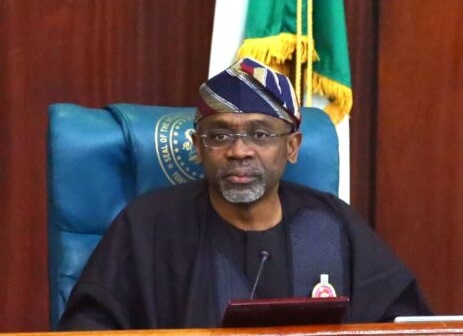
SPEAKER of the House of Representatives, Olufemi Gbajabiamila, has reiterated the fact that Nigeria is facing the spread of the deadly coronavirus due to the unpreparedness of the country.
Gbajabiamila made this statement in a seven-minute video posted on his official Twitter handle on Tuesday. He said the transmission of the disease is presently a big threat to Nigeria.
“The transmission of this disease at a scale at which our systems are not prepared is our biggest present threat. We alleviate that threat by self-isolating. The bad news of this disease, everyone is a potential victim. But the good news, everyone is a potential solution,” the speaker.
The speaker also said that Nigeria is currently witnessing an index experience because of the government’s failure to address healthcare challenges for years.
He assured Nigerians that the current administration will do everything possible to make a change.
“None of us living in Nigeria today has ever experienced such a time as this. At this moment, when our determination to succeed is surpassed only by our recognition of the dire consequences of falling short, we are hopeful that our best effort will be enough,” Gbajabiamila said.
This crisis has exposed in the worst possible way the evident weaknesses of our health system. After this is over, and moving forward, we must do everything in our power to ensure that we would never again come upon a moment such as this as ill-equipped as we are now.”
He also commended President Muhammadu Buhari for the way he has handled the crisis so far.
“The House of Representatives commends President Muhammadu Buhari, GCFR, for the ongoing effort by the federal government of Nigeria to manage this outbreak in Nigeria and alleviate the adverse economic and social impact on all our citizens.
“In every way we can, we will continue to support this effort to ensure that our people make it through this difficult time, with dignity and peace of mind.”
On the containment of the deadly pandemic coronavirus, TheICIRreported how the federal government has pronounced a total shutdown of Abuja, Lagos and Ogun states to mitigate the spread of the virus in the country.
The president also promised in his last broadcast on Sunday to send relief materials to Nigerians who may need it.
“For residents of satellite and commuter towns and communities around Lagos and Abuja whose livelihoods will surely be affected by some of these restrictive measures, we shall deploy relief materials to ease their pains in the coming weeks.”
At the time of filing this report, Nigeria is currently battling with 135 infected victims of the virus as eight persons have been discharged. The deadly virus has killed two persons, according to NCDC.
As the Federal and state governments make efforts to contain the spread of coronavirus, measures being taken by Akwa Ibom State Government seem to be hindered by insecurity, inadequate medical personnel and appropriate medical equipment for treatment of Covid-19 patients reports. Tony ESIN who visited the state Emergency Operations Centre and Infectious Diseases Centre at Ikot Ekpene in the company of other journalists,reports.
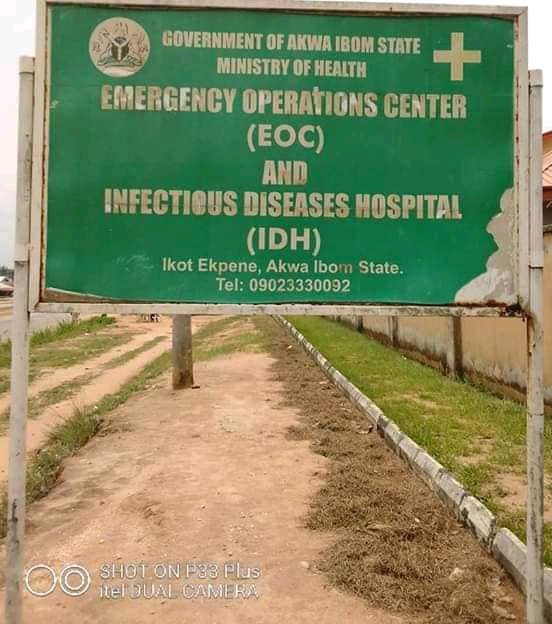
APPROACHING its main entrance, a visitor is welcomed by a signpost reading “Government of Akwa Ibom State, Ministry of Health, Emergency Operations Centre and Infectious Diseases Centre.”
The facility said to have been in existence since 1928 — 32 years older than Nigeria as a country— is the state’s sole centre being prepared for any possible outbreak of the coronavirus.
On arrival at the centre at Ikot Ekpene last Wednesday, the gate was left ajar, without any restriction —neither was there any measure put in place to get visitors to wash their hands or use hands sanitiser before gaining entrance as has been the practice all over the world since the outbreak of COVID-19 in China.
A team of investigative journalists had gone on a fact-finding mission to the centre.
The entire premises was full of activities with persons suspected to be nurses on duty in the various offices. There had been speculations on whether the IDH was in good condition and properly equipped in case of any occurrence of the COVID-19 in the state.
Journalists denied access to the facility
On requesting to see the Chief Medical Director of the hospital, the nurses beckoned on one Dr. Udeme who later came out and courteously told the journalists that he should be given just ‘one minute’ to attend to them. That one minute enabled him to put a call through to seek permission to grant the pressmen an audience.
After about 20 minutes, Dr. Udeme, dressed in a blue lab coat and face mask came out to address the journalists. But not long after he came out he did not wait to be asked questions by the anxious journalists.He hurriedly stated: “sorry gentlemen, I have been instructed not to grant any of you interview or allow you access to see the facilities…”
He categorically said the order was from the Commissioner for Health, Dominic Ukpong. The doctor added that the Health Commissioner would be coming to the facility that day and therefore suggested the journalists could wait for him to arrive.
The Commissioner for Health himself had during a press briefing recently challenged journalists to visit the centre by themselves to ascertain the true circumstances and not rely on social media grapevines.
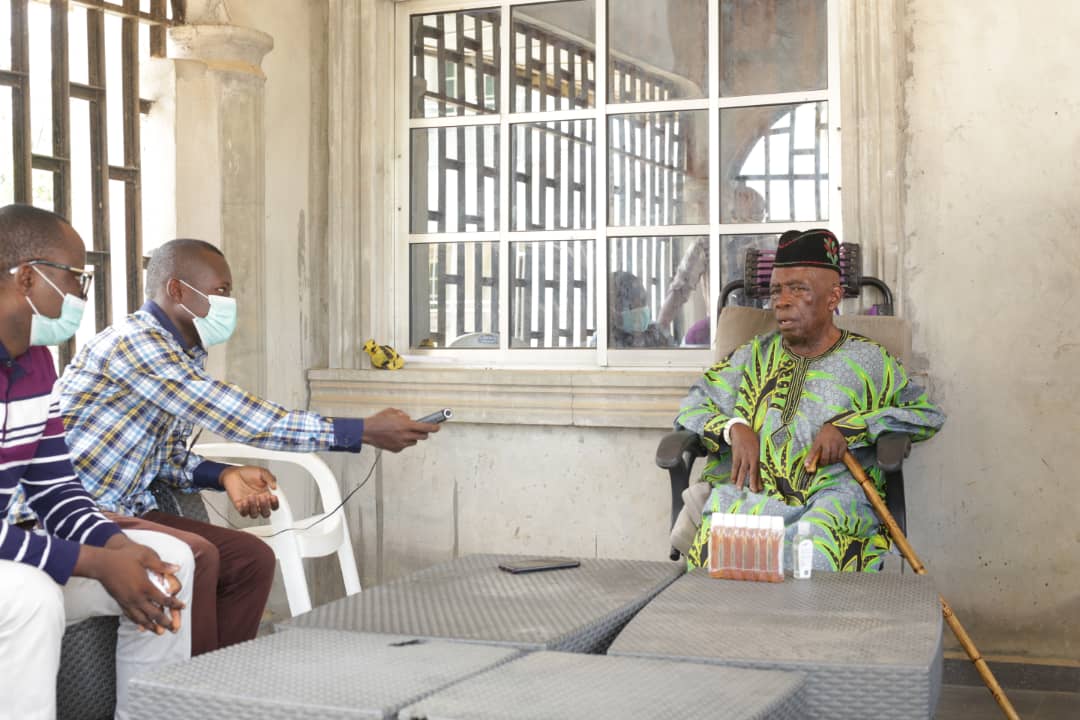
The journalists’ visit to the centre was to also further verify claims by some important personalities in the state, including the Paramount Ruler of Obot Akara Local Government Area, Okuku Uwah Umoh Adiaka, who corroborated that the centre had been in existence since 1928, but that it currently lacks equipment for the purpose of tackling coronavirus as the government would have the people to believe.
Paramount Ruler of Obot Akara Local Government Area, Okuku Uwah Umoh Adiaka says the centre lacks equipment.
The monarch said: “The infectious disease hospital was built in 1928. If you are passing to Ikot Ekpene along Uyo road, you will see the hospital. Please just call at the place, if you see more than two tables, regard me as a liar.”
State government not forthcoming on the state of the centre
Akwa Ibom State Governor, Udom Emmanuel
The Akwa Ibom State government has repeatedly declined comments on the true state of facilities put in place at the IDH to contain the spread of the virus or manage the situation in case the pandemic gets to the state, although the government has reiterated its readiness to fight the scourge in various instances.
This has brought about speculations in the state with some saying the state has 19 ventilators and others saying there are just four of such equipment.
A ventilator is a machine that provides mechanical ventilation by moving breathable air into and out of the lungs, to deliver breaths to a patient who is physically unable to breathe.
Despite its insistence that the centre is ready to take any emergency, the state government has not disclosed the carrying capacity of the IDH, giving rise to disquiet among the people of the state. No one knows how many bed spaces are provided at the centre.
This fear was further heightened when recently, the Public Relations Officer of the Nigerian Medical Association (NMA) in the state, Dr. Emmanuel Ekem in a live radio programme lamented the poor state of equipment at the centre. He particularly pointed out that there were no ventilators at the centre.
His assertion that the IDH at Ikot Ekpene has no ventilator raised doubt among the populace regarding the functionality of the facility.
There are 15 ventilators in Akwa Ibom State but none at IDH — Commissioner for Health
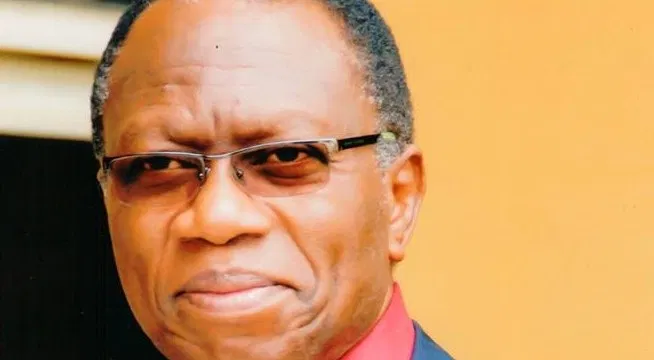
Akwa Ibom State Commissioner for Health, Dominic Ukpong
After much insinuation and pressure about the number of ventilators owned by the state, Ukpong, clarified in his last press briefing after his meeting with medical professionals in the state capital which ended in fiasco.
According to him, there are 13 ventilators at the Ibom Specialist Hospital in Uyo while two are at the Government House.
This brings the total number of ventilators in medical facilities in the state to 15. While admitting that there was no ventilator at the Isolation Centre in Ikot Ekpene, he explained that it was fear of theft that made the state government not to keep ventilators at the centre. He argued that the IDH was not well secured. He, however, assured the machines can be moved down there any time for use in case of emergency.
“They are saying, for instance, we have no ventilator. We have as I am talking to you 13 ventilators in Ibom Specialist Hospital. We cannot take a ventilator to the Isolation Centre because of the possibility of theft. We have three at the Government House and we even have one for children,” the Commissioner said.
“We have oxygen jars there. From Ibom Specialist Hospital to Ikot Ekpene, it is just about 10 minutes. So that is not a problem. If you go to a place where people with COVID-19 are being managed, you have tested them and they are positive and they are there with just the fever and cough. You don’t see them with oxygen. It is when the breathing difficulty sets in that you bring in oxygen. And if they further develop pneumonia that is when you bring in the ventilator which they are shouting about,” he explained further.
According to the Health Commissioner, there are three doctors working at the Isolation Centre, noting that the state government provided them with accommodation within the facility.
But medical personnel sighted at the centre who craved anonymity told the journalists that the staff were living in total apprehension due to lack of security. According to him, residents in the community see the siting of the centre in their domain as a ‘threat to lives.’
This, the commissioner corroborated when he said that the centre has no ventilator because of fear of theft. “The state ministry of health does not move ventilators to the centre because they might be stolen,” he had said.
Centre has three trained medical doctors
Another concern about the Akwa Ibom Isolation centre is about the availability of well-trained medical personnel to handle the situation. This too is uncertain.
When asked if there were enough hands to handle the situation in case of any recorded case of the disease, the Commissioner for Health said the state government had long trained medical personnel for such emergencies “right from the time of Ebola.” He had in an interview earlier said there were three doctors working at the Isolation Centre.
Feud with NMA, other associations in health sector
It is more worrisome that the state Ministry of Health at the moment is at loggerheads with the members of the Nigerian Medical Association and other key allied medical bodies in the state which culminated in the recent call for the removal of the Commissioner of Health by the medical bodies.
It is certain where the medical personnel manning the state Isolation Centre are drawn from when the medical practitioners in the state through their various unions have accused the Commissioner of not carrying them along.
The professional bodies in the health sector comprising the Nigerian Medical Association, Pharmaceutical Society of Nigeria, Association of Medical Laboratory Scientist of Nigeria, and National Association of Nigerian Nurses and Midwives have all called for immediate removal of the Commissioner for Health over what they described as his disregard for professionalism, lack of managerial and interpersonal skills as well as poor management of the COVID-19 emergency situation.
The health workers after staging a walkout at a meeting convened by the Commissioner for Health in Uyo, met and passed a vote of no confidence on him, stating that all efforts to seek understanding with the Commissioner proved abortive.
“In order to save the health sector, we hereby, jointly, as the Conglomeration of Healthcare Professionals comprising of NMA, PSN, NANNM, and AMLSN pass a vote of no confidence on the Commissioner for Health, Dr. Dominic Ukpong for his lack of managerial and interpersonal skills, disregard for professionals and professionalism, high-handedness and divisive tendencies, and outright poor management of COVID-19 preparedness,” the groups stated in a press statement read during their emergency meeting recently.
The Commissioner for Health, in his reaction had, however, accused the Nigerian Medical Association of stirring the whole impasse, saying they were ‘doing union things’ and attempting to sabotage the effort of the state government in coordinating for effective healthcare delivery in the state, including containing the spread of the novel COVID- 19.
A cautious Govt and carefree people
Regrettably, repeatedly assuring the Akwa Ibom public that the state is free of coronavirus ‘as no case has been recorded’ seems to have made most residents of the state to be too loose about taking precautionary measures.
The State Governor, Udom Emmanuel in a special broadcast on March 20, urged everyone to go about their normal businesses stating that everything was under control. He appealed for utmost caution and a deep sense of rationality, especially from the media, in the manner of reportage of the global pandemic.
“I want to assure the public that the rumours and false information going around on social media are completely false. There is no confirmed case of Coronavirus disease in Akwa Ibom State,” he said.
Governor Emmanuel in the broadcast explained that even before the first confirmed case was recorded in Nigeria, he had immediately set up an Infectious Disease Prevention and Control Task Force with a charge on the Commissioner for Health to remain on top of the situation.
Similarly, the Commissioner for Health at various press briefings reiterated the same. Although the state government has urged everyone to adopt social distancing and undertake the basic respiratory hygiene practices, this is undesirably not adhered to as checks revealed that residents in Uyo, the state capital still cluster in motor parks, board crowded public vehicles and also attend church services in clusters on Sundays and other days.
The people seem to be carried away by the umpteenth assurances by the state government that the state is safe of the virus.
In Akwa Ibom, like in some other places in Nigeria, two factors shape people’s opinions and reaction to situations – religion and politics. Religion and politics are Siamese twins in Akwa Ibom. With the domineering political cum religious slogan ‘Only God’, most residents in the state believe it will always be God and as such no worries except to wait upon God’s face.
Testing is a required prerequisite for confirmation of the COVID-19, especially in people who are asymptomatic.
Strict adherence to WHO’s prescriptions as the ultimate way out
The World Health Organisation (WHO) has said the only way to overcome the pandemic was for countries to keep testing.
According to the Nigeria Centre for Disease Control (NCDC), laboratories where Covid-19 can be tested are seven in the entire country at the moment, but the test can be done in six places across the country.
Lagos has two of the laboratories, while Osun, Edo and the Federal Capital Territory (FCT) have one each. Two laboratories have just been located in Oyo and Ebonyi states, bringing the number to seven.
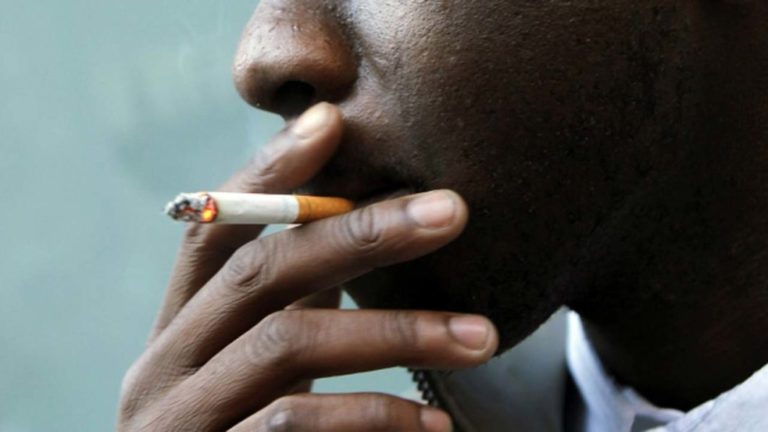
A CIVIL Society organisation, Environmental Rights Action/Friends of the Earth Nigeria (ERA/FoEN), has warned that smokers are at higher risk of developing fatal complications if they contract coronavirus.
In a statement signed by Philip Jakpor, the group’s Head of Media & Campaign, he said while there is currently no conclusive evidence that people who smoke tobacco are at higher risk of being infected with the virus, researchers have confirmed that people who smoke are at greater risk of other respiratory infections.
According to the group, the largest study investigating the link between COVID-19 and smoking published to date looked at clinical outcomes from 1,099 patients with laboratory-confirmed COVID-19 infection from 532 hospitals across China.
Quoting a research, the group said “12.4 per cent of current smokers either died, were admitted to an intensive care unit or required mechanical ventilation, compared with 4.7% of non-smokers. Along similar lines, 21.2per cent of current smokers had severe symptoms, as opposed to 14.5% of non-smokers”.
The civil society group added that similarly, the World Health Orgnisation (WHO) has also warned that since smoking involves consecutive hand-to-face motions, it creates a route of potential viral transmission, like the current COVID 19.
Deputy Executive Director of ERA/FoEN, Akinbode Oluwafemi urged the Nigerian government to enforce theNational Tobacco Control (NTC) Act of 2015.
He added that the Federal Government should learn from other countries who have banned the use of Hookah otherwise known as Shisha in public gatherings as part of measures to curb the spread of the virus.
“Several countries have taken far-reaching actions to prevent imminent upsurge of smoking-induced fatalities as the COVID-19 virus ravages on.
“For instance, Russia has banned the use of Hookah (Shisha) in all public catering facilities. On March 16 the Governor of Cairo banned Hookah (Shisha) in cafés and restaurants.
“Other nations that have equally banned Hookah in the last one month are Iran, India, Jordan, Saudi Arabia, Sudan, Oman, Turkey, Uzbekistan and the United Arab Emirates, among others,” the statement read.
ERA/FoEN also cautioned public officials from receiving donations from tobacco companies, saying that they are “greek gift” with reference to a media report that Oyo State Governor, Seyi Makinde is already in talks with some companies, including the British America Tobacco Nigeria (BATN) to make donations to tackle the spread of the pandemic in the state.
“These “Greek Gifts” are ultimately targeted at compromising public officials, weakening heath systems and positioning the tobacco industry as a credible stakeholder in public health policy,” the group said.


![[Covid-19: My lockdown diary] Day 1: A ghostly spectacle after unusual Sunday worship](https://www.icirnigeria.org/wp-content/uploads/2020/04/italy.png "[Covid-19: My lockdown diary] Day 1: A ghostly spectacle after unusual Sunday worship")