Home Blog Page 214

NCC tightens corporate governance rules for telcos

0

THE Nigerian Communications Commission (NCC) has stiffened the corporate governance guidelines for telecommunications (telcos) operators to enhance transparency, internal controls, and risk management across the industry.

The  Executive Vice-Chairman of NCC, Aminu Maida, hinted at this during the inauguration of the 2025 Guidelines on Corporate Governance on Wednesday, August 6, in Lagos.

According to Maida, the new framework is designed to ensure long-term sustainability for telcos’ businesses, networks, as well as instill investor confidence.

Under the new rules, telecommunications licensees must implement balanced board structures, enhance transparency, and establish more stringent internal control systems.

Board members are expected to include executive, non-executive, and independent directors with demonstrated expertise in information and communication technology (ICT) and cybersecurity.

He stressed further that NCC now formally recognises regulatory officers within licensees’ operations as key contacts for compliance monitoring.

“Corporate governance is no longer a soft requirement. It is now strategically imperative, especially in a sector that is central to Nigeria’s digital future and exposed to cybersecurity threats, climate risks, energy shocks, and rising consumer expectations.

“A major highlight of the new framework is the emphasis on internal audits and risk control,” Maida said.

With the new guidelines, operators are expected to conduct structured risk assessments and empower internal audit functions to ensure oversight.

“The guidelines mandate submission of mid-year and annual compliance reports, which must be certified by the board of directors.

“Our goal is simple, to ensure that telcos’ boards and management are properly structured to provide reliable services, protect infrastructure, and respond to the dynamic challenges of the industry,” Maida maintained.

He noted that companies with robust governance frameworks consistently outperformed others in areas of service delivery, financial management, and regulatory compliance.

He pointed out that the stiffer measures may initially disrupt some operators, but that the long-term benefits would outweigh any temporary challenges.

“With over 200 million active subscriptions, the telecoms sector is now considered essential to Nigeria’s economy, supporting digital infrastructure across finance, education, healthcare, and government services,” the NCC boss said.

He further noted that the guidelines will be rolled out in phases, depending on the category of licence held, stressing that enforcement would be rigorous.

“Operators must view this not as a regulatory burden but as a blueprint for long-term value creation.

“Where there is non-compliance, the commission will not hesitate to apply sanctions after remediation windows close,” Maida said.

On his part, Fabian Ajogwu, a senior advocate, said the review guidelines would reflect current realities, including Artificial Intelligence, cybersecurity, and environmental, social, and governance (ESG) priorities.

The ICIR reports that Ajogwu led the committee that produced the first Code of Corporate Governance for the telecoms sector in 2014.

An earlier report by The ICIR noted that the NCC has been embarking on some regulatory enforcement after it approved 50 per cent tariff hike for the telcos with most Nigerians still complaining about poor services despite the upward tariff review.

Tinubu orders free healthcare for low-income retirees

0

PRESIDENT Bola Tinubu has directed the urgent rollout of free healthcare access for low-income retirees under the Contributory Pension Scheme (CPS).

The presidency described the move as essential to restoring dignity and ensuring social protection for the country’s most vulnerable senior citizens.

According to a statement on Wednesday, August 6, by his Special Adviser on Information and Strategy, Bayo Onanuga, Tinubu issued the directive after receiving a detailed briefing from the Director General of the National Pension Commission (PenCom), Omolola Oloworaran.

The president described the healthcare initiative as a critical component of social protection and dignity in retirement and also ordered the immediate implementation of a long-overdue pension increase.

“He (the president) also called for the prompt implementation of long-overdue pension increases and a minimum pension guarantee, which would provide a safety net for the most vulnerable pensioners under the CPS,” the statement read in part.

The latest development came at a time when the country faces increasing concerns about inflation, hardships, and rising living costs, which have significantly affected the quality of life of many retired public servants. 

Several pensioners and experts have repeatedly called for comprehensive reform of the nation’s pension framework, especially for vulnerable groups whose benefits have eroded in value over the years.

The Contributory Pension Scheme was introduced in 2004 through the Pension Reform Act to replace the old defined-benefit system, with hope to ensure the regular and timely payment of retirement benefits. 

However, the scheme has seen notable progress, as many Nigerians have shown displeasure over Nigeria’s pension system, with some describing it as inequitable and unsustainable for thousands of retirees.

In March 2025, Mathew Fashagba, a Business Administration expert and a professor  at the Federal University, Lokoja, described Nigeria’s current contributory pension system as failing to meet the requirements to guarantee adequate retirement benefits.

“When an Act is passed but fails to achieve its objectives, it becomes necessary to review it urgently. In the case of Nigeria’s Contributory Pension Scheme, the Act has not successfully provided adequate retirement benefits,” he was quoted to have said.

The presidency stated that during the briefing, PenCom’s DG also informed the president of plans to introduce foreign currency-denominated pension contributions, allowing Nigerians in the diaspora to participate in the system. 

She highlighted ongoing efforts to safeguard the value of pension assets amid inflation and macroeconomic instability.

Police pension ‘crisis’

Following weeks of agitations by the retired police officers, the president also directed PenCom to urgently resolve the long-running issue of police pensions.

The ICIR reported that dozens of retired police officers have, in recent times, protested poor remuneration, demanding better welfare from the Nigerian Police Force.

The Nigerian Union of Retired Police Officers, on July 21, stormed the NPF headquarters with a demand for their immediate removal from the contributory pension scheme.

They described the pension scheme as ‘discriminatory’. The demonstrators, mostly elderly, stood in the rain, holding placards and chanting anti-government songs.

The retired police officers had debated that their low monthly pension could not meet their immediate needs.

Reacting to this in a statement on Wednesday, the presidency said “President Tinubu further mandated the PenCom DG to urgently resolve the longstanding police pension issue, emphasising that members of the Police Force who serve and protect the nation deserve to retire with dignity and peace of mind.”

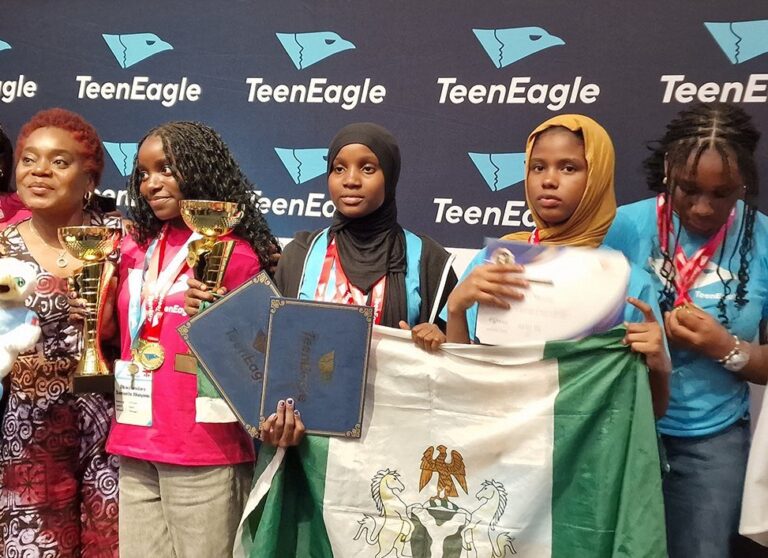
Tinubu commends 3 Nigerian students for winning global English competition, debate awards

0

AMID widespread celebrations and calls for national recognition, President Bola Tinubu has congratulated three Nigerian students, Nafisa Abdullahi Aminu, Rukayya Muhammad Fema, and Hadiza Kashim Kalli, for their outstanding performance at the 2025 TeenEagle Global competition held in London, United Kingdom.

Seventeen-year-old Nafisa emerged the overall best in English language skills, beating over 20,000 participants from 69 countries, including native English-speaking nations.

Rukayya, 15, was named the best in debate, while Hadiza clinched the gold medal in the outstanding talent category.

In a statement on Wednesday, August 6, by the President’s Special Adviser on Information and Strategy, Bayo Onanuga, Tinubu described the trio as ‘exceptional young Nigerians’ and praised their triumph as a reflection of the nation’s bright future and the potential embedded in its youth.

The president commended the students’ institutions for nurturing what he called ‘some of the world’s brightest minds’ and reiterated his administration’s commitment to removing financial barriers in education through initiatives like the Nigerian Education Loan Fund (NELFUND).

“President Tinubu commends these exceptional young Nigerians for the feat and affirms that the nation’s future is much brighter with many of its youth as repositories of excellence.

“The president also commends the institutions of learning and states that these accomplishments are a testament to the quality and potential of Nigeria’s education system as a nurturer of some of the world’s brightest minds,” the statement read.

The congratulatory message came as many Nigerians celebrate the young girls’ victory, particularly on social media, where users have called for national honours, scholarships, and housing rewards for the students, in what similar to what was gifted to recent sports champions.

The ICIR earlier reported that the victory of Nafisa, a student at Nigerian Tulip International College (NTIC) in Yobe State, triggered a renewed discourse on Nigeria’s educational potential. 

Many Nigerians, including prominent figures, had urged the federal government to grant her a national honour similar to those awarded to the Super Falcons and D’Tigress teams after recent victories.

The Yobe State Governor Mai Mala Buni, whose scholarship scheme reportedly funded the education of Nafisa and Rukayya at NTIC, has already announced plans to host a grand reception in their honour. 

In a statement signed by his media aide, the governor said the students’ achievements ‘”justify the government’s investment in the education sector.”

Similarly, former Vice President Atiku Abubakar and former Minister of Communications Isa Ali Pantami both applauded Nafisa’s feat. 

Atiku described it as “a powerful testament to the limitless potential of the Nigerian girl-child when provided with quality education and a supportive environment,” while Pantami called for her to be awarded $100,000, a three-bedroom apartment, and the Officer of the Order of the Niger (OON) honour.

On July 28, the Nigerian government gifted each member of the Super Falcons $100,000, a flat, and national honours after their Women’s Africa Cup of Nations triumph in Morocco. A similar gesture was extended to the D’Tigress basketball team for their fifth consecutive AfroBasket title on August 4.

Meanwhile, the president encouraged Nafisa, Rukayya, and Hadiza to remain steadfast in their studies and wished them continued success.

FG warns of 5-day floods in 19 states, issues nationwide alert

0

THE Federal Government (FG) has predicted heavy rainfall over a five-day period that may trigger flooding in 19 states across 76 locations.

The FG issued the warning on Tuesday, August 5, through the National Flood Early Warning Systems Centre of the Federal Ministry of Environment.

This comes as severe floods hit Ogun and Gombe states, with Lagos, Plateau, Anambra, and Delta states also experiencing flood-related crisis.

The government urged stakeholders and residents to take urgent preventive measures to stay safe.

The flood prediction report indicates that certain areas will likely experience heavy rainfall leading to flooding between August 5 and August 9.

The flood prediction affects several states and locations, including Akwa-Ibom, Bauchi, Ebonyi, Cross River, Nasarawa, Benue, Kaduna, and Katsina, with specific areas listed in each state.

Other affected states and locations include Kebbi, Kano, Niger, Plateau, Taraba, Jigawa, Yobe, Zamfara, Sokoto, Borno, and Gombe, with multiple specific areas listed in each state.

Flooding in Nigeria is an annual disaster that results in loss of life and property damage.

Last year, 31 states were affected, causing hundreds of deaths, thousands of injuries, and impacting 1.2 million people.

Nigeria has experienced severe flooding this year, resulting in loss of life and property damage.

According to the National Emergency Management Agency (NEMA), 191 people have died, 94 are missing, and 134,435 have been affected across 20 states and 47 local government areas.

The ICIR reported that the Nigerian Meteorological Agency (NiMet) predicted three days of heavy downpours and thunderstorms across Nigeria from Monday, August 4, to Wednesday, August 6.

In its weather outlook released on Sunday, August 3, in Abuja, NIMET said early morning thunderstorms were expected on Monday with medium rains over parts of Sokoto, Adamawa, Kebbi, Zamfara, Jigawa, Kano, Katsina, and Taraba states in the northern region.

Veteran journalist Doyin Abiola dies at 82

0

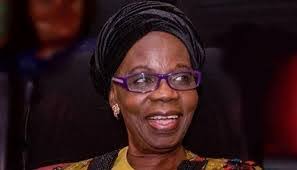
DOYIN Abiola, one of Nigeria’s most iconic media pioneers and the first Nigerian woman to become Editor-in-Chief of a national daily newspaper, has died at the age of 82.

A doctoral degree holder, she was one of the wives of the late business tycoon and politician, Moshood Kashimawo Abiola, the acclaimed winner of the annulled June 12, 1993, presidential election.

Her death was confirmed on Wednesday by Jamiu Abiola, one of Abiola’s sons, in a phone interview with Punch Online.

Media icon and barrier breaker

Abiola was widely revered for her groundbreaking achievements in journalism, her fearless advocacy for truth, and her leadership in the Nigerian media space, spanning more than three decades.

Born in 1943, she earned a degree in English and Drama from the University of Ibadan in 1969 and began her journalism career at Daily Sketch, where her column ‘Tiro’ gained popularity for addressing public and gender issues.

In 1970, she proceeded to the United States for postgraduate studies, culminating in a PhD in Communications and Political Science from New York University in 1979.

Upon returning to Nigeria, she joined Daily Times as a Features Writer, rising to Group Features Editor and later serving on the paper’s influential editorial board.

Her editorial acumen eventually led her to National Concord, where she made history as the paper’s first daily editor. In 1986, she was appointed Managing Director and Editor-in-Chief, which made her one of the most powerful media executives in Nigeria at the time.

Under her leadership, the Concord Group flourished, expanding its reach to publish 14 different newspapers and magazines.

Despite military clampdowns, including an 18 month proscription during General Sani Abacha’s regime, l Abiola remained committed to press freedom and ethical journalism.

A firm believer in merit over gender, she once turned down a “Woman Editor” role at Daily Times, arguing that the title underestimated her capabilities.

Her trailblazing stance would later pave the way for future generations of women in media.

Abiola also served the industry in numerous capacities, including chairing the Nigerian Media Merit Award’s nominating panel and sitting on Ogun State University’s advisory council.

She was named an Eisenhower Fellow in 1986 and later received the prestigious Diamond Awards for Media Excellence (DAME) Lifetime Achievement Award, becoming only the second woman to do so.

She also served as Chairperson of the CNN African Journalist of the Year Awards.

Throughout her career and personal life, she stood firmly by her husband during the years of political persecution and upheaval that followed the annulled 1993 election.

Funeral arrangements are expected to be announced by the family.

Bandits abduct 150 persons in Zamfara in four days

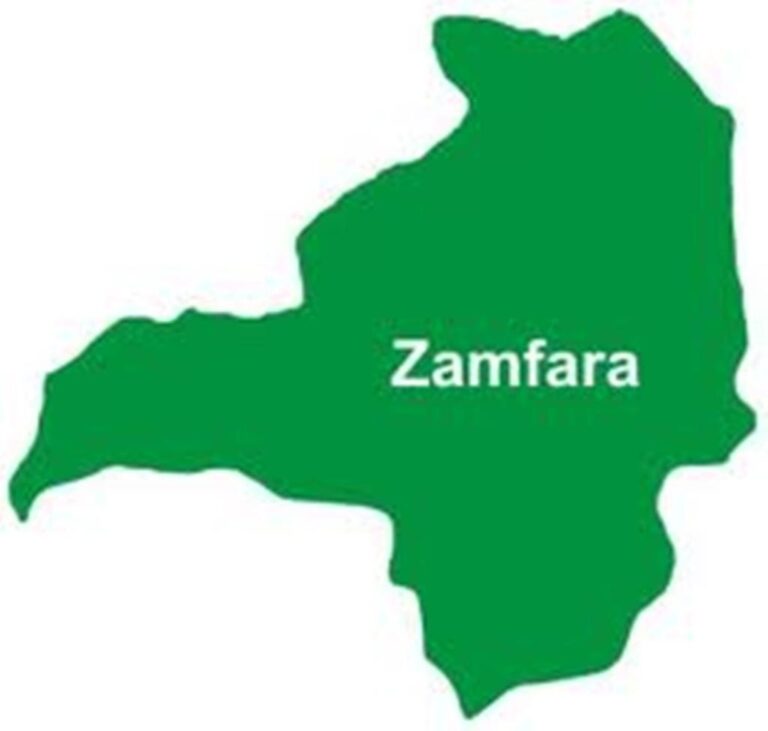
AT least 150 people, including 20 young girls and women, have been abducted by bandits in a series of attacks on several communities in Zamfara State over the past four days.

Residents of the affected communities confirmed the figures to journalists noting that heavily armed bandits launched attacks at night or during rainfall over a four-day period in several villages, including Moriki, Sabon Garin Damri, Dakko Butsa, Tungar Abdu Dogo, Tungar Sarkin Daji, Sadeda, and Tungar Labi.The 20 young girls and women were abducted in a fresh attack on Moriki town in Zurmi Local Government Area.

A resident of Moriki, Sufyanu Moriki, told journalists that the victims were abducted on Saturday while they were out gathering firewood on the outskirts of the town.

“The abduction actually happened on Saturday. They went out to fetch firewood at the outskirts of the town when they were kidnapped by the armed group. They are yet to contact anyone to demand ransom,” Moriki said. 

Similarly, the spokesperson for the Zamfara State Government, Mahmud Mohammed Dantawasa, confirmed the series of attacks but did not confirm or deny the number of people kidnapped, stating only that the government was working to rescue the victims.

The ICIR reported last month that 33 kidnapped victims of Banga village in Kaura Namoda Local Government Area of the state were allegedly forced by their abductors to kill one another, after their relations had paid ransoms on them.

The victims were among the 50 people, mostly women and children, abducted in February by a suspected notorious bandit, Bello Dansadiya, and his team during a raid, where three pregnant women delivered and all the babies died there.

Despite allegedly receiving N50 million ransom, paid in instalments, Dansadiya refused to release all the abductees, ignoring repeated pleas from their relatives.

Responding to the latest abduction, the Zamfara Police Command’s spokesperson, Yazid Abubakar, said he had yet to receive information about the abduction but promised to provide details once he is briefed on the incident.

The ICIR reports that organised armed gangs began to emerge in North-West Nigeria from 2011, where bandits levy taxes on farmers, rustle cattle and kidnapping became lucrative business.

The recent rise of the Lakurawa jihadist group in the region has further escalated violence in the region.

Many communities across the Zamfara State 14 LGAs have been displaced, with residents of Maru, Anka, Shinkafi, Maradun, Zurmi, Gusau, and Bungudu LGAs being the worst hit.

A member of the Zamfara State House of Assembly, Aminu Ibrahim, representing Kaura Namoda State Constituency, was arrested last year over alleged involvement in banditry and kidnapping in the state.

Another Nigerian found dead in UK residence 

THE United Kingdom’s Metropolitan Police have identified the victim of a fatal stabbing in Romford as 60-year-old Nigerian woman, Nkiru Chima, who was discovered dead in her apartment with multiple stab wounds.

The Metropolitan Police, in a statement published on its website on Tuesday disclosed that they were alerted by the British Transport Police around 7 p.m. on Sunday, prompting officers to visit the apartment.

“A report from the British Transport Police at around 19:00hrs following concerns for welfare of a woman at an address in Bushy Close, RM1.

“Officers located a woman at the address with multiple stab wounds, she was sadly pronounced dead at the scene. She has since been named as 60-year-old Nkiru Chima from Romford” the statement read.

The ICIR reported a similar incident on Monday, where two individuals were charged in connection with the fatal stabbing of 26-year-old Nigerian, Ayowale Aladejana, in New Cross, southeast London.

The Metropolitan Police reported that detectives investigating Ayowale Aladejana’s fatal stabbing had charged a man and a woman with murder.

Reacting to the latest cases, Detective Chief Inspector Joanna Yorke of the Met’s Specialist Crime Command said the police was confident that Nkiru’s tragic death was linked to the death of a 20-year-old man found on the train tracks at Romford station earlier that evening.

“As our enquiries have progressed, we are confident that Nkiru’s tragic death is connected to the death of a 20-year-old man on the train tracks at Romford station earlier that evening. This man was known to Nkiru and British Transport Police continue to investigate his death.

“I would like to thank the local community for their support with this investigation so far.”

Yorke noted that officers would continue their enquiries and urged anyone with information to contact the police on 101 or reach out on X @METCC, quoting reference CAD 6914/27JUL.

The ICIR reported in May that a nurse residing in Leeds, United Kingdom, Nnena Miriam, was found dead in her apartment.

The news was confirmed in a statement released by Fellow Nurses Africa, an organisation committed to promoting the nursing profession in Africa.

It revealed that police discovered Miriam’s body following a missing person report.


Nigeria coalition politics and the battle for 2027

IN the ever-changing landscape of Nigerian politics, alliances are forged and broken with alarming regularity. From the formation of the All Progressives Congress (APC) to the fledgling coalitions of 2019 and beyond, the quest for power and relevance has driven politicians to form partnerships.

 The ICIR takes a look at the history of recent coalitions in Nigeria and what they reveal about Nigeria’s political landscape.

The emergence of the APC

In February 2013, three  opposition partiesthe Action Congress of Nigeria (ACN), the Congress for Progressive Change (CPC), and the All Nigeria Peoples Party (ANPP)- came together to form the All Progressives Congress (APC).

This coalition also integrated a breakaway faction of the All Progressives Grand Alliance (APGA) led by then Imo State Gnnovernor, Rochas Okorocha, and a faction of the then-ruling People’s Democratic Party (n-PDP) led by former vice president Atiku Abubakar, Bukola Saraki, and others.

Buhari oversaw longest shutdowns of Nigerian universities since 1999. Now a varsity bears his name
The first president produced by the APC, late   Muhammadu Buhari

The formation of the APC paved the way for its victory in the 2015 presidential election, with Muhammadu Buhari emerging as the winner. He defeated then incumbent Goodluck Jonathan. Buhari also won again in 2019, thereby spending 8 years as the president of Nigeria.

The APC’s success at the polls was repeated in 2023, with Bola Tinubu emerging as the president after a closely contested election.

The 2019 coalition experiment

Shortly before the 2019 presidential election, Fela Durotoye of the  Alliance for New Nigeria (ANN), Kingsley Moghalu of the Young Progressives Party (YPP), and Omoyele Sowore of the African Action Congress (AAC) also attempted to form a coalition known as “Visionary Presidential Aspirants Coming Together” (PACT).

The PACT group consisted of 18 presidential aspirants who initially agreed to elect a consensus candidate, but some opted out before the election.

The trio aimed to build a united front to mobilise Nigerians for change, but their efforts ultimately fell apart.

The group collapsed after a committee formed to pick a consensus candidate from among the aspirants chose Durotoye, but others  rejected the outcome. Durotoye, a motivational speaker and businessman, emerged as the consensus candidate for the PACT group, beating candidates like Moghalu and Sowore.

AAC eventually backed Sowore and endorsed him as their presidential candidate.

Durotoye’s ANN and Moghalu’s YPP went ahead to form a different alliance called “The Force” in January 2019, without Sowore’s AAC.

Nigeria coalition Politics: The road to 2027 and beyond
From left: Fela Durotoye, Kingsley Moghalu and Omoyele Sowore. Photo credit: Twitter/@feladurotoye

Moghalu and Durotoye agreed to form the coalition ahead of the 2019 general election and agreed to announce who would be their coalition presidential candidate.

The development came a few days after the presidential aspirant of the Allied Congress Party of Nigeria (ACPN), Obiageli Ezekwesili, pulled out of the race.

But Moghalu exited the coalition after the vote that brought up Durotoye as the winner, claiming widespread support for his candidacy.

The new coalition ahead of 2027: A threat to the APC?

In March 2025, a new coalition emerged, led by former Vice President Atiku Abubakar.

Apart from Atiku, who was the 2023 presidential candidate of the PDP, others in the coalition include notable figures like former Anambra State Governor and 2023 presidential candidate of the Labour Party (LP), Peter Obi, former governor of Kaduna State, Nasir El-Rufai, and former Rivers State governor, Rotimi Amaechi.

According to the group, they aim to consolidate opposition efforts and present a unified front against the APC in the 2027 election.

Atiku, El-Rufai, Amaechi-led coalition forms new party, seeks INEC registration
Leaders of the new coalition. Former Minister of Transport Rotimi Amaechi and former Senate President, David Mark

On July 5, 2025, the coalition adopted the African Democratic Congress (ADC) as its platform and appointed interim leaders, including a former Senate President, David Mark, as National Chairman.

Hurdles for the new coalition

As the 2027 general elections approach, there are  hurdles the coalition must overcome. They also face internal and external challenges, including criticism from other opposition groups and potential leadership friction between supporters of Atiku and Obi.

The APC has dismissed the coalition as a gathering of self-interested politicians, with President Tinubu describing it as a “coalition of confusion.”

Meanwhile, key serving politicians have continued to move in droves to the APC despite the coming of the ADC.

Recent defectors to the ruling APC include Delta State Governor Sheriff Oborevwori, who led the entire structure of the PDP to the APC; his predecessor, Ifeanyi Okowa; Akwa Ibom State Governor Umoh Enoh; and serving members of both chambers of the National Assembly, among others.

Okowa was the running mate to Atiku, a former member of the PDP, the main opposition party that has been in tatters as bigwigs have either endorsed the ADC or moved to the APC ahead of the 2027 election.

It is, however, left to be seen if the coalition will succeed or not, but one thing is certain: Nigeria’s political landscape will continue to shift and evolve, driven by the quest for power and relevance.

As politicians navigate the 2027 election terrain, Nigerians are yearning for a better future. Their interests revolve around achieving a more prosperous, stable, and united nation. This desire for a better Nigeria encompasses various aspects, including economic stability, good governance, security, peace, and quality education.

Ecobank Group exits Mozambique market

The ECOBANK Group said it has reached an agreement to sell its stake in Ecobank Mozambique SA (EMZ) to FDH Bank Plc, a Malawian bank, in a move to exit the Mozambique market.

The Group, Ecobank Transnational Incorporated (ETI), announced this in an official disclosure to the Nigerian Exchange Limited (NGX) on Tuesday, August 5.

“This transaction represents a strategic change in ownership and operational management with no expected disruption to banking operations, assets, or employees,” the pan-African bank stated.

A licensed commercial bank, supervised and regulated by the Central Bank of Mozambique, with four branches, the Mozambique subsidiary came into operation in the year 2000 when it was incorporated as Novo Banco SARL, before changing its name in 2014 to Ecobank Mozambique SA, following an acquisition by ETI.

According to the parent company of Ecobank Nigeria, the acquisition is to be fully financed from FDH Bank Plc’s retained earnings.

“This strategic decision aligns with our commitment to Ecobank’s Growth, Transformation, and Returns strategy, ensuring we remain a competitive and meaningful player across the markets in which we operate.

“As a Pan-African financial institution, we continuously assess our operations to drive sustainable growth while maintaining our core mission of driving Africa’s financial integration and economic growth,” the Group Chief Executive Officer, Jeremy Awori, said.

He hinted that the transfer was considered to ensure the least disruption and the best outcome for employees, customers, and operations.

“We are exploring strategic partnerships with FDH Bank to maintain Mozambique’s access to our pan-African digital ecosystem for seamless cross-border payments.

“While our direct presence in Mozambique is changing, our unwavering commitment to driving pan-African financial integration and economic growth across the continent remains stronger than ever,” Awori added.

The bank stated further that the transaction has received all the necessary regulatory approvals, subject to customary conditions precedent, and is expected to be completed within the 2025 financial year.

Upon completion, FDH Bank will assume effective control of Ecobank Mozambique SA.

The ICIR reports that as a pan-African bank, the Ecobank Group currently has a presence in 35 African countries, with a banking license in Paris and international offices in London, Dubai, and Beijing.

Abuja overtakes Lagos as foreign inflows rise to $5.64bn in Q1

THE Federal Capital Territory (FCT) Abuja ranked the top destination for foreign inflows into the country as capital importation rose to $5.64 billion in the first quarter (Q1) of the year.

This was contained in the latest report, ‘Nigeria Capital Importation Q1 2025’, released by the National Bureau of Statistics (NBS) on Tuesday, August 5.

It indicated that out of the five states that recorded capital importation during the quarter, Abuja pulled $3.05 billion to top the states that attracted foreign inflows, accounting for 54.11 per cent of the total capital importation.

Check by The ICIR shows that this will be the first time Lagos is overtaken as the top destination for foreign investment into the country.

Following, Lagos attracted $2.56 billion to become the second top destination through which capital importation came into the country in the review period.

Ogun state attracted $7.95 million, Oyo $7.81 7.81million, and Kaduna $4.06 million, respectively.

The ICIR had reported that there has been concern over fewer states out of the 36 states and the FCT attracting foreign inflows into the country.

However, Nigeria’s total capital importation rose to $5.6 billion in Q1 of the year from $3.4 billion in the same period of 2024.

It represents a slight increase when compared to $5.09 billion recorded in the fourth quarter (Q4) of 2024.

“In Q1 2025, total capital importation into Nigeria stood at $5642.07 million, higher than $3376.01 million recorded in Q1 2024, indicating an increase of 67.12%.

“In comparison to the preceding quarter, capital importation increased by 10.86% from $5089.16 million in Q4 2024,” NBS stated.

Capital importation is the influx of external funds Nigeria receives from investment, trade, and business production from other countries.

A breakdown of the inflow showed that portfolio investment ranked top with $5.2 billion, accounting for 92.25 per cent, followed by other investment inflow with $311.17 million, and foreign direct investment $126.29 million, which recorded the least inflow.

The ICIR reports that portfolio investments are regarded as ‘hot’ money that foreign investors bring into acquiring Nigeria’s bonds and stocks.

Analysts decry this type of investment as the investors are likely to take their funds out of the country when they sense economic trouble.

The investments are also easier to dispose of than foreign direct investment, which improves under a business-friendly environment.

In an earlier report, The ICIR analysed why Nigeria should attract more foreign direct investment which has continued to record the least inflow.

A substantial and long-term investment made into a project or building a firm in the country, foreign direct investment is crucial for the country’s economic growth.

Attracting higher foreign direct investment, analysts believe, would strengthen the naira against other currencies and bring about foreign exchange liquidity in the country.