Home Blog Page 222

Obi to Tinubu: Nigerians growing poorer despite rising debt

LABOUR Party presidential candidate in the 2023 general election, Peter Obi, has again expressed concern about the federal government’s borrowing pattern, which he said is driving the country deeper into debt without yielding positive governance or human development benefits.

Obi said in a statement on Tuesday, July 29, urging the government to consider the rising public debts amid deepening poverty Nigerians are facing and the erosion of public trust.

The ICIR reported on Monday that the former Anambra State Governor had claimed the President Bola Tinubu’s government is feeding Nigerians with incorrect statistics.

He cited the declining unemployment rate, inflation, and gross domestic product figures, but did not substantiate his concerns with data and information.

Obi’s concern is coming barely two days after the African Democratic Congress (ADC) condemned what it described as the “fiscal vandalism” of President Bola Tinubu’s administration, following the National Assembly’s approval of the $21 billion in foreign loans.

The party had worried that the new borrowing spree could drive Nigeria’s public debt beyond N200 trillion by the end of the year without any visible economic gains to show for it.

In his statement on Tuesday, July 29, Obi drove home his points.

He noted that on July 22, the Nigerian Senate approved an additional $21 billion, €2.2 billion, ¥15 billion of external borrowing for the 2025–2026 fiscal cycle.

The chamber also approved a N750.98 billion domestic bond issuance and a €65 million grant.

“With an already existing public debt of about N149.39 trillion as at the first quarter of 2025, adding the approved loans of about N37.2 trillion) brings our current total debt to approximately N187 trillion, with concerns that our debt might exceed N200 trillion by the end of 2025.

“As our GDP before rebasing was about N269.2 trillion (about $180 billion), the government has borrowed the equivalent of nearly 70% of our previous GDP. Even after the rebasing, which pushed our GDP to about N372.8 trillion (about $243 7billion), the government would have borrowed about 50.16 % of the new GDP (with the approved loans), the highest debt-to-GDP ratio in our history as a nation,” Obi explained.

He pointed out that while the year-on-year increase is about N27.72 trillion, the quarter-on-quarter increase is about N4.72 trillion.

“We are accumulating very exponential levels of unsustainable debt with little or nothing to show for it in critical areas such as education, healthcare, electricity generation, security of lives and property, and pulling people out of poverty.

“We still rank low in all major human development indicators. While education is underfunded and standard in continuous decline, healthcare remains inaccessible to millions of Nigerians, particularly the poor,” Obi said.

He expressed his worries that the security of lives and property has deteriorated with over 10,217 people killed and 672 villages sacked between May 29, 2023, and May 29, 2025, even when security spending has significantly increased from N2.98 trillion in 2023 to N4.91 trillion in 2025.

He further cited that infrastructure decay persists across the country, with approximately 135,000 kilometres (km) of the 195,000 km of roads remaining unpaved, largely unmotorable, and unusable.

He stressed also that it is the same depressing situation in almost all sectors of the economy, with the power sector an unquestionable example, with less than 5,000 megawatts (MW) supplied for over 200 million Nigerians.

“Today, over two years after the present government took over and with all the humongous borrowing, we are still confronted with negative reports of worsening poverty with about 133 million (63%) Nigerians classified as multi-dimensionally poor, increasing unemployment and disheartening news like 652 children dead as the malnutrition crisis worsens in Northern Nigeria,” Obi stated.

He noted that Médecins Sans Frontières (MSF), a non-governmental organisation known as Doctors Without Borders, has just sounded the alarm over an escalating malnutrition crisis in Northern Nigeria, with Katsina State emerging as one of the worst-hit areas.

“This is a country blessed with enormous resources, yet nobody should go to bed hungry. Still, a persistent deficiency in leadership has thrown the majority of our citizens into increasing multi-dimensional poverty,” Obi maintained.

He holds the view that borrowing is not inherently bad if it is sustainable and tied to productive investments with measurable outcomes.

He, however, said it is unfortunate that the current pattern of borrowing without accountability, without transparency, and without transformational impact is simply mortgaging the future of Nigeria’s children.

“The government should consider the inter-generational consequences of its unsustainable borrowings and show at least a minimum consideration and interest in the future of young and unborn Nigerians.

“We must return to a disciplined and prudent economic management culture, cutting the cost of governance, blocking leakages, investing in human capital, and building a productive economy. Nigeria cannot continue to borrow recklessly while poverty deepens and public trust erodes,” Obi urged.

He believes the time for the government to stop the fiscal indiscipline is now.

“We must build a New Nigeria, where leadership is responsible, development is people-centred, and every kobo borrowed or spent delivers a measurable impact to achieve sustainable and inclusive development and growth,” he added.
Ripples as National Hospital Abuja sacks frontline doctors amid brain drain

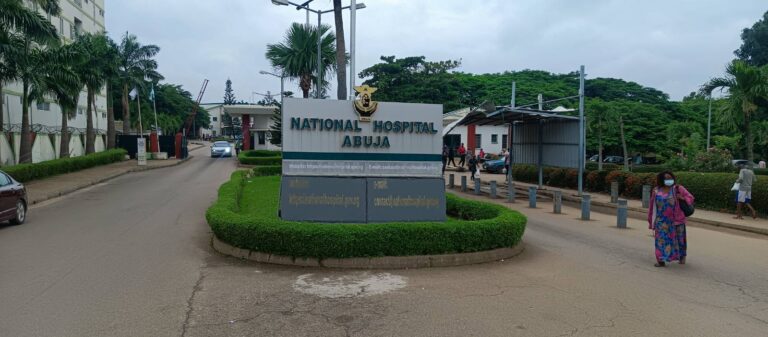
AT a time when Nigeria is grappling with a critical shortage of medical professionals due to the Japa syndrome, three Nigerian consultant doctors were dismissed from National Hospital Abuja without clear explanation. 


Inside the radiology unit of the National Hospital Abuja (NHA), Jonah Wachap gathered his personal belongings in early January after receiving a dismissal letter that offered no reasons for his termination.

Two other consultant doctors, Akinnagbe Akinbola, an obstetrician and gynaecologist, and Nweke Clinton, a urologist, were also affected.

The trio, along with twelve other medical specialists, had been employed as locum consultants  (temporary consultants) in March 2022 by the former Chief Medical Director (CMD) of the hospital, Jaf Momoh, whose tenure ended later that year. 

Six months later,  another set of twenty post locum consultants were employed with subsequent addition which brought the number of local consultants to 42 by 2023.

 “Our appointments were expected to be regularised following a probationary period, in line with National Hospital Conditions of Service,” Akinbola said.

The ICIR reports that it was the same year that the Nigerian Medical Association reported a staggering shortfall of 315,426 doctors, indicating that Nigeria would need over 360,000 physicians to adequately meet the healthcare needs of its population.

Dismissal without explanation

Following Momoh’s departure, the hospital had two acting CMDs, Aisha Umar and Abba Badamasi, before Muhammad Raji Mahmud who is currenlty the CMD was appointed.

Out of the forty-two consultants, only ten had their appointments regularised at the discretion of the management, while two resigned voluntarily, leaving 30 others, including Wachap, in limbo with only short-term appointments as locum consultants.

However, in January, during their most recent application for renewal, Jonah, Clinton, and Akinbola, in isolation from the 30 others, were issued a notice granting a three-month extension, after which their contracts was terminated for reasons known only to the management.

“We became shattered as we have stayed back in the country to provide services when most of our colleagues have left for greener pastures because of the JAPA syndrome, instead of our three years service regularised we were rather disengaged,” Akinbola added.

Dearth of doctors in Nigeria

Their experience highlights a broader crisis in Nigeria’s healthcare system, where only about 55,000 licenced doctors are available to serve a population of over 200 million. According to a recent report  by Premuim Times, a ratio of roughly 1 doctor attends to every 4,000 patients. This falls short of the World Health Organization’s recommended ratio of at least 2.5 medical staff including physicians, nurses and midwives per 1,000 population needed to deliver basic primary care and make progress toward universal health coverage.

Annual migration estimates reveal that Nigeria loses between 1,800 and 2,000 doctors each year according to Nigeria’s Coordinating Minister of Health and Social Welfare,  Muhammad Pate.

In late 2022, over 10,296 Nigerian‑trained physicians were recruited by the United Kingdom.

According to the report, doctors cited poor pay and harsh working conditions, including a lack of medical equipment, dilapidated hospital infrastructure, and overwhelming workloads that lead to burnout and frustration, as key reasons for leaving the country.

NMA FCT reaction 

Despite two appeals and consistent departmental recommendations, the hospital management stood by its decision. The affected doctors then turned to the National Medical Association for intervention.

The association noted that “following receipt of the letter an appeal to the management was written and also a call for intervention was sent to the Medical and Dental Consultants’ Association of Nigeria (MDCAN) NHA chapter and NMA FCT branch. However, it was agreed that the MDCAN NHA should handle the issue” according to a document obtained by The ICIR.

It noted that the MDCAN tried but failed to secure an amicable resolution. The NMA Federal Capital Territory branch waded into the matter but was equally unsuccessful prompting a call for intervention by the NOC NMA.

According to a document obtained by The ICIR, the NMA FCT held an emergency congress meeting on March 27, after receiving a formal complaint from the consultants.

In a letter dated April 2, obtained by The ICIR, the association appealed to Mahmud, the CMD, citing the doctors’ IPPIS salary status and urging reconsideration based on “equity, justice, and fairness.”

“The association is really concerned that no reason has been so far advanced as to why the services of these concerned members who draw their salaries from IPPIS are no longer needed in the hospital other than the fact that it is a “top management” decision.

“Sir, we wish to passionately appeal that you reconsider your stand and let the concerned consultants go back to work while we continue the process of engagement and advocacy to resolve any possible challenges posed based on the principle of equity, justice and fairness” the letter read.

A copy of the letter written to the CMD by National Medical Association

The association noted that the Executive Committee was expected to update the Congress and the National body on April 7, 2025, on his response and progress made.

A second letter, submitted on April 4, referenced discussions led by  Badamasi, who represented Mahmud, on April 3, acknowledged that the decision had been reviewed twice without change but still gave no clear rationale for the selective dismissals.

“Abba Badamasi said the exiting of the affected forum consultants was a top management committee’s decision. He added that even though the initial decision has been further reviewed twice, it still didn’t change. 

“However, there was no reason whatsoever for the selective disengagement of the three (3) affected consultant doctors out of many others,” the letter reads.

A copy of the second letter

In its final communication, the NMA warned that the perceived victimisation of certain members could jeopardise industrial harmony at the hospital. 

“We are hoping for a positive outcome on or before April 7, 2025, when we shall give the NOC an update and consider an emergency congress meeting to look at the issue as directed at our last OGM which was held on 27/03/2025,” it added.

However, the association said it didn’t get a positive response and outcome despite its efforts. 

A copy of a letter of report to the president of the association

A disrupted service delivery 

After the hospital dismissed Wachap and his colleagues, the hospital grapples with staffing gaps.

A source at the hospital told The ICIR that the shortage of consultants is worsening patient care. “The absence of specialists in key departments is putting pressure on the remaining staff,” the source said.

A patient who corroborated the growing strain said, “I gave birth on a Friday. After they cleaned my baby, no one checked on me or the child until Sunday when I insisted on being discharged.”

Another hospital staff, who spoke to The ICIR on condition of anonymity, said his shift was rescheduled to cover the entire week, with two additional departments placed under his supervision because of the shortage of staff.

Akinbola, the obstetrician and gynaecologist who was dismmised said the Senate and the Minister of Health summoned the CMD and the affected doctors to a meeting in June, during which the CMD was directed to reinstate them.

“The association gave a strike ultimatum which the senate invited us, CMD and the ministry of health to an investigative panel. 

“In the panel it was concluded it is a case of victimisation, and he was asked to recall us which he is yet to do after three weeks,” he said.

We planned to sack 32 consultants – National Hospital 

The hospital’s Public Relations Officer, Maijamaa Adamu, told The ICIR that the management had initially planned to dismiss all 32 remaining consultants, but he could not explain why only three were eventually affected.

“I don’t know the mindset of the management. I don’t know why the three, but I believe they had issues,” Adamu said, confirming that the remaining consultants are currently awaiting authorisation. “So, that six-month arrangement for them was not renewed.”

In response to the shortage of medical personnel, he said that the hospital is currently in the process of recruiting 400 doctors and nurses.

“As we speak at the moment, from last week to this week, employment letters are being distributed for the recent recruitment exercise that the federal government had given waiver to the hospital to employ over four hundred doctors and nurses. 

“We are expecting a very big relief, in terms of the stressful nature of the work arising from the number of staff that we have” he said. 

Governor suspends 25 commissioners, 22 Permanent Secretaries, others over failure to attend official event

0

EBONYI State Governor Francis Nwifuru has ordered the immediate suspension of 87 senior government officials for failing to attend a crucial state function.

The suspended officials include 25 commissioners, 14 senior special assistants, 24 special assistants, and 22 permanent secretaries. 

Their suspension, which is to last one month without pay, was announced in a statement signed Monday night, July 29, by the governor’s Chief Press Secretary, Monday Uzor.

According to the statement, the officials are barred from signing any official documents during the suspension period. 

Nwifuru also directed the affected commissioners to hand over to their respective permanent secretaries.

“The Governor of Ebonyi State, Rt. Hon. Francis Ogbonna Nwifuru has directed that the underlisted government functionaries proceed on a one-month working suspension without salary for failure to attend an important government function,” the statement read.

The statement added that the action showed the governor’s commitment to discipline and his expectations for high standards of conduct and dedication from public officials in service to the people of Ebonyi State.

Below is the list of suspended officials as reported:

Commissioners 

1. Engr. Stanley Lebechi Mbam
2. Prof. Leonard Uguru
3. Dr. Mathew Nwobashi
4. Prof. Nwogo Obasi.
5. Hon. Victor Chukwu
6. Engr. Jude Okpor
7. Barr. Ikeuwa Omebe
8. Hon. Chidi Onyia
9. Chief Oguzo – Offia Nwali
10. Dr. Ben. Uruchi Odo
11. Dr. Donatus Ilang
12. Dr. Mrs Ngozi Obichukwu
13. Dr. Moses Ekuma Ikenna
14. Chief Richard Idike
15. Barr. Mrs. Felicia Nwankpuma
16. Hon. Chinedu Nkah
17. Engr. Ogbonna Obasi Abara
18. Mrs Nkechinyere Iyioku
19. Engr. Francis Ori
20. Hon. Tochukwu Okorie
21. Barr. Valentine Okike Uzo
22. Chief Sunday Inyima
23. Hon. Ogbonnaya Okorie
24. Chief Elechi Elechi
25. Hon. Stanley Ogbuewu

Senior Special Assistants

1. Hon. Bassey Chukwu
2. Mrs. Rose Ofoke
3. Mr. Kerian Ofoke
4. Hon. Anthony Nwegede
5. Hon. Onu Nwonye
6. Mrs. Lilian Nwachkwu
7. Mr. Fred Nwogbaga
8. Hon. Paul Nwogha
9. Hon. Pius Nwoga
10. Hon. Ali Ikechukwu
11. Hon. Nwiboko Chukwuma
12. Mrs Esther Nwogha
13. Barr. Caleb onwe
14. Hon. Chinedu Awo

Special Assistants

1. Mr Mbam Emmanuel
2. Tobias Ogbonna
3. Easy Okike Uzo
4. Obinna Oko Enyim
5. Chima Nnachi Okoro
6. Nwali Amechi
7. Dr. Sabinus Nwibo
8. Okorie Jideofor
9. Sunday ogenyi
10. Stanley Kamani
11. Ikechukwu Jideofor
12. Emeka Okpa Onwe
13. David Aja
14. Frank Uka
15. John Nwangbo
16. Ogbonna Melford Nwuruku
17. Ifeanyi Ujebe
18. Chima Ogbuagu
19. Kizito Nwenyi
20. Uwa Henry Ifeanyi
21. Elechi Okechukwu Solomon
22. Ibina John Ogbonna
23. Mbam Ifeanyi D
24. Nwigum Nonso Christian

Permanent Secretaries 

1. Dr. Lawrence Ezeogo
2. Dr. Isioma C Arunne-Inyang
3. Mrs Rose Ibe
4. Mrs Ogechi Nwobasi
5. Mrs Anwu Theresa
6. Dr. Lynda Alo
7. Mr Monday Nkwuda
8. Mrs Mary Ngozi Otozi
9. Mrs Martina Obiya
10. Mrs Ogechi Anaso-Kalu
11. Barr Emmanuel Onwe
12. Mr Henry Nworie
13. Mrs Joy Mbam
14. Mrs Henrietta Ikechukwu Oruh
15. Barr Peter Ede
16. Dr. Gabriel Odo
17. Mrs Mfon Williamson
18. Ms Alusi Felicia
19. Mrs Betty Uzoma
20. Engr Chukwuma Ojeogu
21. Barr Ikechukwu Alobu
22. Mr Fidelis Nwankwo.

Kidnapped victims, nursing mothers forced to kill each other in Zamfara after paying ransom

THIRTY-THREE kidnapped victims of Banga village in Kaura Namoda Local Government Area of Zamfara State were allegedly forced by their abductors to kill one another, after their relations had paid ransoms on them.

The ICIR gathered on Tuesday, July 29, that the victims were among the 50 people, mostly women and children, abducted in February by a suspected notorious bandit, Bello Dansadiya, and his team during raids on Kaura Namoda town and Banga village in the Kaura Namoda LGA.

A credible source confirmed to The ICIR that two people were killed during the raid, and three pregnant women were among those whisked away from the communities.

“At the camp, three pregnant women delivered and all the babies died there.  After payment of ransom in two installments, the victims were asked to slaughter themselves, in which 29 males and four females were slaughtered making 33.

“It means 33 plus the three babies, making 36. If added with the two killed at the village during the abduction, that makes 38,” the source said.

The ICIR reports that despite allegedly receiving N50 million ransom, paid in installments, the bandit leader refused to release all the abductees, ignoring repeated pleas from their relatives.

The bandits released only 18 of the victims on Saturday, July 26, while the remaining were held as Dansadiya demanded additional ransom.

Chairman of Kaura Namoda Local Government Area, Mannir Mu’azu Haidara, confirmed to journalists that the 18 rescued victims sustained varying degrees of injuries from torture and were receiving medical treatment at the Kaura Namoda General Hospital.

The ICIR reported on Sunday, July 27, that a resident of Banga village, Sani Suleiman, appealed to the state government for intervention, claiming that bandits slaughtered 35 of the people they abducted after their families had paid N35 million ransom on them.

Suleiman said the abductors kidnapped 53 people from the village and were demanding a ransom of one million naira for each victim.

Suleiman said that the victims had been in captivity for several months, but only 18 of them, who were able to pay the ransom, were released.

Ahmed Danmanga, the Special Adviser on Security Matters to the state Governor Dauda Lawal, also confirmed the incident but said he could not verify the exact number of residents killed.

The ICIR reports that Zamfara State has faced security challenges over the years, ranging from insurgent attacks to banditry.

Many communities across the state’s 14 LGAs have been displaced, with residents of Maru, Anka, Shinkafi, Maradun, Zurmi, Gusau, and Bungudu LGAs being the worst hit.

A member of the Zamfara State House of Assembly, Aminu Ibrahim, representing Kaura Namoda State Constituency, was arrested last year over alleged involvement in banditry and kidnapping in the state.

SEC voids Tourist Company of Nigeria’s AGM resolutions

THE Securities and Exchange Commission (SEC) has rejected the Annual General Meeting (AGM) of The Tourist Company of Nigeria (TCN) Plc held on July 25, 2025, declaring resolutions passed at the meeting null and void.

The apex regulator disowned the AGM in a statement on Monday, July  28.

The SEC said it condemned recent actions by some majority shareholders of the TCN, who allegedly convened the meeting in defiance of a suspension order iit had issued.

According to the regulator, the meeting also resulted in unauthorised changes to the company’s board, including the removal of SEC-appointed interim directors and the board secretary.

It described all actions taken by the TCN during the meeting as illegal and disruptive.

“The Commission, pursuant to its core mandate under the Investments and Securities Act, 2025, had taken regulatory steps including appointing two Interim Independent Directors into the Board of TCN Plc to ensure its survival as a going concern and to protect the interest of all shareholders especially those whose holdings cannot give them access to the management and control of the company.

“The recent steps taken by the majority shareholders are poised to thwart the gains already made by the said regulatory intervention, which had brought stability into the company and returned its shares to positive values,” the SEC said.

The commission had on July 24 directed TCN to halt its planned AGM for July 25.

This followed the commission’s action in February 2017 to take a regulatory action on the company and the appointment of directors by SEC to the board.

In its statement on Monday, the SEC noted its intervention in TCN, including the appointment of two interim independent directors.

This, it said, was aimed at preserving the company’s status as a going concern and safeguarding the interests of all shareholders, particularly minority investors.

“The Commission, by this notice, informs the general public and all stakeholders that TCN Plc remained under the commission’s regulatory involvement. The commission does not recognise the purported Annual General Meeting (AGM) of TCN Plc of July 25, 2025, held in clear disregard of an express directive from the commission and in contravention of extant laws governing such meetings.

“The commission shall accordingly discountenance any resolution passed in the said meeting until all legacy issues are fully resolved.

“The Board of TCN Plc remains as constituted before the purported AGM, and the SEC-appointed independent directors would remain on the Board of TCN Plc to ensure good governance, stability, the protection of minority investors, and to ultimately maintain an orderly and fair market,” it added.

The commission assured stakeholders that it remained committed to investors protection and market discipline, emphasising its statutory mandate under the Investments and Securities Act, 2025.

It vowed to deploy all legal mechanisms available to enforce its directives and uphold the integrity of the capital market.

“All stakeholders and the investing public should be guided accordingly,” the SEC stated.

UPDATED: ICIR seeks applications for Tobacco Harm Reduction reporting workshop 

Please note: The International Centre for Investigative Reporting (ICIR) will no longer be part of this project. Previously announced in connection with a Tobacco Harm Reduction reporting workshop in collaboration with THR Nigeria the ICIR’s role has since been withdrawn, and this initiative will now proceed independently.


THE International Centre for Investigative Reporting (ICIR), in collaboration with Tobacco Harm Reduction (THR) Nigeria, is seeking applications for a specialised workshop aimed at enhancing tobacco harm reduction reporting among Nigerian media professionals.

The initiative is part of a larger strategy to empower journalists and media practitioners with the knowledge and skills required for accurate, ethical, and evidence-based reporting on Tobacco Harm Reduction (THR) and Safer Nicotine Products (SNPs).

The workshop will also introduce participants to a newly developed Tobacco Harm Reduction Reporting toolkit, a comprehensive resource that addresses common misconceptions, corrects misinformation, and enhances journalistic capacity to cover THR topics with sensitivity, context, and accuracy.

The Executive Director of The ICIR, Dayo Aiyetan, noted that “journalists, even health reporters, need to have adequate understanding of the issues around tobacco consumption and the global efforts at reducing its harmful effects on human health.”

“Reporting on smoking, THR (Tobacco Harm Reduction) and the so-called Safer Nicotine products is somewhat sensitive and technical, otherwise journalists who do not have proper understanding would end up misinforming the public.Hence the need for the toolkit, he added.

The representative for Tobacco Harm Reduction, Nigeria, Molly Ogbodum, noted that the THR toolkit “Is a useful resource to provide media professionals with the skill and knowledge to bridge the gap between THR reporting, public understanding, and usage of SNPs.”

She emphasised that the initiative was not just about education, but about addressing persistent challenges in public perception.

“The goal is to correct misconceptions, reduce misinformation, and increase awareness of SNP by building the capacity of media professionals for effective, responsible, and ethical THR reporting in Nigeria.”

Highlighting the broader impact of the efforts, she added, “We are bridging the information gap by capacitating media professionals, ensuring that the public, especially adult consumers, have access to reliable information to make informed choices regarding safer nicotine products.”

Applications are now open for health journalists, investigative reporters, and media professionals interested in exploring or expanding their capacity in health and public health reporting through this workshop.

The workshop is open to early-career and seasoned journalists who are passionate about improving the quality of reporting around health and tobacco-related issues.

Interested applicants are encouraged to apply here.

Tinubu rewards Super Falcons with national honours, $100,000, houses after WAFCON victory

0

PRESIDENT Bola Tinubu has rewarded Nigeria’s Super Falcons with national awards, cash gifts, and houses, following their thrilling victory at the 2025 Women’s Africa Cup of Nations (WAFCON) in Morocco.

At a reception held on Monday, July 28, at the Presidential Villa in Abuja, Tinubu conferred the national honour of Officer of the Order of the Niger (OON) on all 24 players and 11 technical crew members. 

Each player also received a cash prize of the naira equivalent of $100,000, while the technical team members were awarded $50,000 each. 

In addition, the president directed the allocation of three-bedroom apartments to all recipients in the Federal Government’s Renewed Hope Housing Estate.

On behalf of the grateful nation, I hereby confer on the players and the 11 man technical team with national honour of OON. Additionally, I hereby direct the allocation of three-bedroom apartment to each of the player and technical crew in our Renew Hope estate.

“In addition, there’s a cash award of the naira equivalent of 100,000 US dollar to each 24 players and equivalent of 50,000 to the eleven man technical team,” the president said.

The announcement of prizes followed the presentation of the WAFCON trophy by team captain Rasheedat Ajibade and vice-captain Chiamaka Nnadozie to Tinubu and First Lady, Oluremi Tinubu. 

Background

Nigeria’s Super Falcons claimed their 10th WAFCON title on Saturday, July 26, after a dramatic 3–2 comeback win against hosts Morocco in Rabat.

Esther Okoronkwo sparked the revival with a 64th-minute penalty, before Folashade Florence Ijamilusi equalised in the 71st minute. Jennifer Echegini then sealed the dramatic turnaround with a late strike in the 88th minute.

The Super Falcons dominated key areas of the game, registering 14 shots to Morocco’s 10, with five on target. They also held 55 per cent possession, completed 280 passes at 69 per cent accuracy, and earned five corners compared to Morocco’s three.

The 2024 Women’s Africa Cup of Nations (WAFCON), hosted by Morocco, kicked off on July 5 with 12 teams competing across three groups. Traditional powerhouses like Nigeria, South Africa, and Ghana advanced alongside surprise performers such as Senegal and Algeria.

Nigeria’s victory further cements their dominance in African women’s football.

With this latest triumph, the Super Falcons have now won a record 10 WAFCON titles, reinforcing their status as the most successful team in the tournament’s history.

Super Falcons show appreciation 

As Tinubu announced the prizes for the players and technical team, the Super Falcons erupted in cheers, and gave the president a standing ovation. 

They also filled the hall with applause while a celebratory chant of “Na our Baba be this o,” (this is our father) echoed by players as they showed their excitement and gratitude for the national recognition and rewards.

Earlier in her address, the captain of the team Rasheedat Ajibade, had thanked the Federal Government for the honour and pledged that the team would continue to bring pride to Nigeria.

She also said the victory represented a significant moment in their lives, adding that the players hoped it sent a positive signal to young girls about pursuing their dreams.

FRSC lacks power to seize drivers’ licence, vehicles – Appeal Court rules

0

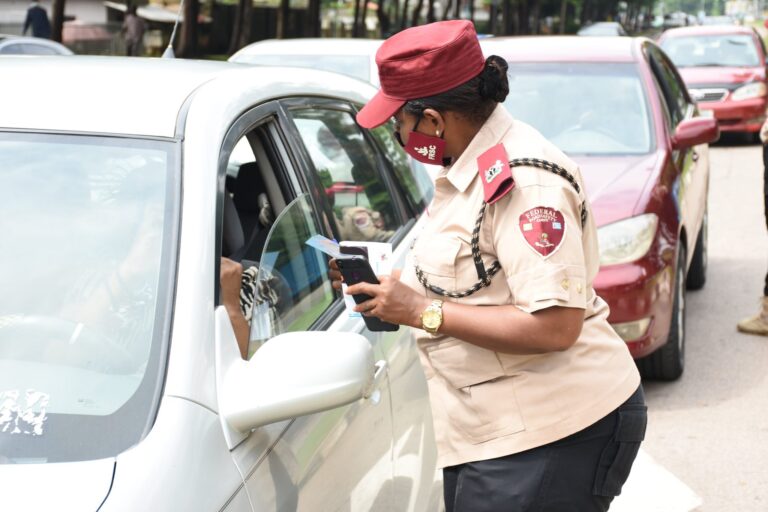
THE Court of Appeal sitting in Owerri, Imo State, has ruled that the Federal Road Safety Corps (FRSC) lacked the power to seize drivers’ licences, vehicles, or related documents without lawful justification.

The court gave the ruling in Appeal No: CA/OW/199/2022, filed by the FRSC, the Corps Marshal, and an officer identified by Uniform No. COSS 35 (as 1st to 3rd Appellants), against Emmanuel Ugochukwu Shebbs (Respondent).

The Appeal Court affirmed the High Court’s ruling that the FRSC’s seizure of drivers’ licences and vehicles violated fundamental human rights.

The judges, Amina Audi Wambai, M. Lawal Abubakar, and Ntong F. Ntong declared the FRSC’s liability for rights violation.

Delivering a unanimous judgement, the court reduced the damages awarded to the respondent from N30 million to N10 million, covering general and exemplary damages.

The case, which has lasted five years, originated from a 2020 incident where FRSC officers stopped Shebbs on Bende Road in Umuahia during the COVID-19 lockdown.

Shebbs claimed that despite his car being fault-free, the FRSC officers demanded a bribe.

After refusing the bribe, the officers allegedly found a fake issue with his tyre and confiscated his driver’s licence, issuing a N3,000 fine.

Shebbs took the matter to the Abia High Court, arguing that the FRSC’s actions were unlawful and violated his fundamental rights.

Recall that in 2024, in a similar case, a Federal High Court (FHC) in Abuja barred the Directorate of Road Traffic Services (DTRS), otherwise known as the Vehicle Inspection Office (VIO), from stopping vehicles, confiscating them, and imposing fines on motorists.

Delivering the judgement in case number FHC/ABJ/CS/1695/2023 on Wednesday, October 2, the judge, Nkeonye Evelyn Maha, held that no law empowered the respondents to carry out such activities.

The judgement was given following a fundamental rights enforcement suit filed by a human rights activist and lawyer, Abubakar Marshal, before the court.

Listed as respondents on the matter, the order also binds the Minister of the Federal Capital Territory, the Director of Road Transport, and the Area Commander, Jabi.

Furthermore, a restraining order was issued by the court against the respondents to stop them and their agents from impounding or confiscating vehicles or imposing fines, declaring such actions as improper, illegal, and oppressive.

WHO blames 1.3m yearly deaths from hepatitis on poor vaccination, others

0

THE World Health Organization (WHO) has raised fresh concerns as the global death toll from chronic hepatitis climbs to 1.3 million annually, despite the disease being preventable, treatable, and in some cases, curable.

In a short message to mark World Hepatitis Day 2025, observed every July 28, the organisation revealed that more than 304 million people lived with chronic hepatitis infections in 2022. 

It described the trend as alarming and called for urgent action to break down the financial, social, and systemic barriers, especially stigma, that continue to hinder access to testing, vaccination, and treatment.

The WHO said the theme for this year’s commemoration, “Hepatitis: Let’s Break It Down,” is a global rallying cry to dismantle the obstacles that make early diagnosis and treatment inaccessible for millions. 

The organisation noted that hepatitis was silently spreading across the globe, with about 6,000 new infections daily, most of which remained undetected until irreversible liver damage occurred.

“Chronic viral hepatitis causes 1.3 million deaths every year, mostly from liver cancer and cirrhosis. That’s 3,500 deaths every single day – on par with tuberculosis. Hepatitis B and C are spreading silently, with 6,000 new infections daily. Despite being preventable and treatable, the disease burden continues to rise, especially in regions with limited access to care,” WHO said.

It warned that many of those living with hepatitis did not know they were infected, adding that  early diagnosis remained the most effective way to prevent liver cancer and save lives. 

The organisation emphasised that if countries acted fast, they could prevent 2.8 million hepatitis-related deaths by 2030 through scaled-up testing, timely vaccination, harm reduction, and expanded access to treatment.

According to the global health body, only 45 per cent of babies globally received the hepatitis B vaccine within the first 24 hours of birth in 2020, the latest data by WHO.

This gap, it noted, continued to put millions of children at risk of lifelong infection. 

Hepatitis A, caused by the hepatitis A virus (HAV),  is an inflammation of the liver, which is primarily spread when an uninfected (and unvaccinated) person ingests food or water that is contaminated with the faeces of an infected person. 

According to the WHO, the disease is closely associated with unsafe water or food, inadequate sanitation, poor personal hygiene and oral-anal sex.

In Nigeria and other developing countries, limited access to clean water, poor waste disposal, and overcrowded living conditions make the spread of hepatitis A almost inevitable. Despite the availability of effective vaccines, both hepatitis A, B, and C remain under-addressed in many parts of the world. 

In 2024, WHO reported that waterborne outbreaks of hepatitis A could erupt explosively, particularly in conflict-affected regions or areas facing humanitarian crises.

While Hepatitis A doesn’t lead to long-term liver damage like Hepatitis B and C, it can still cause a range of symptoms from mild to severe. 

Hepatitis B, by contrast, spreads through infected body fluids, blood, or semen and often becomes chronic. It primarily spreads from mother to child during birth, a process known as perinatal transmission. HPB  can also be transmitted horizontally, most often when an infected child passes the virus to an uninfected child, particularly within their first five years of life.

In 2022, 254 million people lived with chronic HBV infection, which accounted for 1.1 million deaths, primarily from cirrhosis or liver cancer. The WHO also noted that about 1.2 million new infections were recorded each year.

It said Hepatitis B could be prevented with a safe and effective vaccine, adding that the vaccine should be given soon after birth with boosters a few weeks later.

“Hepatitis B is a major global health problem. The burden of infection is highest in the WHO Western Pacific Region and the WHO African Region, where 97 million and 65 million people, respectively, are chronically infected. Sixty-one million people are infected in the WHO South-East Asia Region, 15 million in the WHO Eastern Mediterranean Region, 11 million in the WHO in the WHO European Region and five million in the WHO Region of the Americas,” WHO wrote.

Hepatitis C, on the other hand, is transmitted almost exclusively through blood-to-blood contact, including unsafe injections and transfusions. Unlike B, there is no vaccine for hepatitis C, but it is curable with antiviral treatment. 

However, most people remain undiagnosed until the infection has caused significant liver damage, making early testing and access to care critical.

“Globally, an estimated 50 million people have chronic hepatitis C virus infection, with about 1.0 million new infections occurring per year.

“WHO estimated that in 2022, approximately 242 000 people died from hepatitis C, mostly from cirrhosis and hepatocellular carcinoma (primary liver cancer),” WHO said.

Hepatitis D (HDV) is a rare but more aggressive form of viral hepatitis that only occurs in people already infected with hepatitis B. 

The WHO said there was no specific vaccine for hepatitis D, but it could be prevented through immunisation against hepatitis B. 

Meanwhile, Hepatitis E (HEV), like hepatitis A, is spread through contaminated water and food and is more common in regions with poor sanitation.

WHO calls for action

The WHO urged governments to improve newborn vaccination coverage, integrate hepatitis services into maternal and child health programmes, and ensure universal access to care.

The organisation called on governments to scale up decentralised testing and treatment, adopt smart investments, and embed hepatitis care into primary healthcare.

It further appealed to individuals to get tested, vaccinate newborns, share accurate information, and speak out against stigma, adding that policymakers should link hepatitis elimination efforts with cancer prevention campaigns and strengthen accountability through reliable data systems.

Nigerian nurses declare nationwide strike over poor welfare

0

THE National Association of Nigerian Nurses and Midwives (NANNM) has declared a seven-day nationwide strike.

The action will begin at noon on Tuesday, July 29, following the expiration of a 15-day ultimatum issued by NANNM to the Federal Government.

The association said the strike would involve a total withdrawal of services across all federal health institutions. 

The action, it said, was in response to the government’s failure to address longstanding demands for improved welfare, fair allowances, and better working conditions for nurses and midwives.

The notice, signed by NANNM’s National Secretary, Enya Osinachi, and issued by its President, Morakinyo-Olajide Rilwan, followed an emergency meeting of the association’s National Executive Council held on July 10 in Abuja.

According to the association, the strike became necessary after the Federal Government and the Federal Ministry of Health failed to respond meaningfully to its July 14 ultimatum. 

It said the decision was aimed at drawing urgent attention to the critical issues affecting nurses nationwide.

“The strike, starting at 12 on Tuesday, July 29, will involve total service withdrawal across all Federal health institutions.

“Nurses nationwide have been asked to comply fully and stand in solidarity,” the statement read.

The NANNM criticised a June 27 circular from the National Salaries, Income and Wages Commission, rejecting its provisions and calling for its reversal. The association is also demanding upward reviews of key allowances, including shift duty, on-call, and retention bonuses.

The union reaffirmed the vital role of nurses in healthcare delivery, noting that they accounted for between 60 and 70 per cent of hospital services.

It stressed that any health system that undervalued its nursing workforce undermined the quality of care and public health outcomes.

The association called on the Federal Government to engage in constructive dialogue to avert a prolonged shutdown of federal health institutions.

Nigerian nurses and midwives have long raised concerns over poor remuneration, harsh working conditions, and the lack of recognition within the country’s healthcare system.

In recent years, a surge in emigration of Nigerian nurses to countries like the United Kingdom, Canada, and Saudi Arabia has worsened staffing gaps in local hospitals.

Health union have blamed the exodus on poor welfare, insecurity, and lack of career growth opportunities at home.