Home Blog Page 2234

DSS’s action extremely embarrassing, has never happened in Nigeria – Falana

HUMAN rights lawyer, Femi Falana SAN, has berated the Department of State Security Services (DSS) for disrupting court proceedings in its attempt to arrest SaharaReporters Publisher, Omoyele Sowore and Olawale Bakare.

The DSS had today stormed the Federal High Court, Abuja to effect the arrest Sowore and Bakare barely 24 hours after they were released from DSS custody on the order of the court.

Falana, who is the lead counsel to Sowore and Bakare in an interview with Channelstv, said the action of the DSS was extremely embarrassing because it has never happened in Nigeria.

“The atmosphere was very rowdy, but I insisted that the arrest could not be carried out within the precinct of the court. He was going to be arrested outside the premises but there was a crowd that resisted the arrest, but I appealed to everybody and asked Sowore to jump into my car and so we drove to the office of the SSS because they said he will just answer a few questions, but now he is being detained.

“We are going to take steps under the law by asking for his release again since they are claiming this is a fresh arrest.

“Nobody has disclosed yet what his charges are; he couldn’t have committed any other offence because he has been detained for the past four months unless the SSS wants to tell the whole world that he committed this fresh offence while in their custody,” he stressed.

The human rights lawyer said, “This morning, the SSS lawyers and the lawyers of the Attorney-General reported to the court that the order of the court had been complied with and I confirmed because our clients were released last night.

“As soon as the court adjourned the matter to February next year, the DSS operatives pounced on the court, disrupted proceeding and then attempted to arrest our clients even in the web of the court, that was extremely embarrassing because it has never happened in Nigeria where you enter a court to arrest anybody, even an alleged coup plotter.”

Also, a member of the legal team representing Sowore and Bakare, Abdul Mahmud in a facebook post, said the legal team knew DSS operatives were coming for their clients.

“We knew there were plans to re-arrest Sowore and Bakare when contacts whispered to me as I was leaving the courtroom for another courtroom to move his human rights application motion that fresh charges are being filed. Falana was already standing to address the court when I returned to him and told him of the plans, which he duly informed the court. Surprisingly, Liman SAN, who leads the prosecution, sidestepped the information because he was in cahoots with the dog-whisperer.

“Sowore was eventually taken away – on one condition: that he will be taken by his lawyers to the gangsters in his own car. No more. The dogs balked. Come and see the way they left the court- like a scene taken out of the Western movie.”

“The nonsense I saw today in court never happened in my years of practising as a lawyer under two terrible dictatorship. When I was snatched by the DMI in 1996, they waited outside the High Court Ijebu-Ode and trailed me to the CLO South West Ijebu Ode. I had a fair number of brushes with the state; but what I saw today leaves me with two impressions: 1) The dogs are intent on killing Sowore; 2) Dictatorship is here.”

It would be recalled that Sowore who is the convener of #RevolutionNow was arrested by the operatives of DSS on August 3rd, 2019, at about 1:25 am according to a distress tweet he posted just before his phone was confiscated.

Both detainees are facing seven-count charge bordering on conspiracy to commit treasonable felony, money laundering and cybercrimes, amongst others.

But after spending 124 days in DSS custody, they were released on Thursday night, following an order given by Justice Ijeoma Ojukwu who gave the security agency a 24-hour ultimatum to effect the bail order earlier issued.

Analysis: OPEC’s proposed cuts in global oil supply may not affect oil prices

0
ON Thursday, the ministerial panel of key Organisation of Petroleum Exporting Countries, OPEC, producers and its allied countries OPEC+ pushed for the expansion of agreed oil production cuts by 500,000 barrels per day to ensure a balanced market in 2020.

Oil prices rose slightly by 4 per cent on Thursday following the deliberations by OPEC members to agree on deeper output cuts in a bid to raise oil prices and prevent an oversupply next year.

The benchmark price of Brent crude climbed to $63.50 a barrel on Thursday, up from a slump of $55 a barrel in August but below its 2019 high point of about $75 a barrel earlier in the year.

At the OPEC’s ministerial meeting in Vienna, Austria it was agreed that oil-producing states increase their production cuts by an additional 500,000 barrels per day to the current level of 1.2 million barrels per day which is set to end in March 2020 according to a Reuters report.

Timipre Sylva, Nigeria’s Petroleum Minister for State confirmed after the meeting that the cuts would be adhered to reduce its oil production further “if it is absolutely necessary.”

“It would be difficult for us, but if you don’t have any option, what are we going to do? We have to cut,” he said.

Russian energy minister, Alexander Novak said there would be calls for the OPEC+ coalition to meet again in the first week of March to review the deal and extend it, if warranted, through the rest of 2020.

“By then we will have a better understanding of the market’s development and forecasts of summer demand and supply. We really do see some risks of oversupply in first-quarter connected with a seasonal drought of demand,” he said.

This means that OPEC and it’s allied countries led by Russia will reduce their global production output of crude oil by 1.7 million barrels per day until it is reviewed in March 2020.

In September 2016, OPEC announced a reduction target of crude oil supply by 800,000 barrels per day and in November of the same year, it adjusted its supply cuts to 1.2 million barrels per day. Between 2016 to 2019 OPEC has announced seven major oil cuts to raise global oil price.

However, the frequent oil production cuts by OPEC with the aim of raising global oil prices have shown that OPEC’s restriction of global oil supply is no longer a reliable means of forcing higher prices in the international oil market.

The United States of America, USA, is currently the world’s largest producer of crude oil with a crude oil production of 12.3 million barrels per day due to its increased shale oil production while OPEC’s major producers namely Russia and Saudi Arabia lags at 10.53 and 10.3 million barrels per day.

Increased shale operations from the US and Canada while rising production in other non-OPEC countries such as Brazil and Norway threatens to add to the oil glut.

However, OPEC and OPEC+ members control about half of the world’s production which is not enough to force prices down but forecasts indicate a market surplus has met lower seasonal demand.

The Head of Oil Market Research at Rystad Energy, Bjørnar Tonhaugen, predicts that with oil glut large global implied stock builds the price of crude could fall lower than it did in 2016.

“We have a clear message to the OPEC+ countries, A ‘roll-over’ of the current production agreement is not enough to preserve a balanced market and ensure a stable oil price environment in 2020.

“With potential stock builds of 2.3 million barrels per day, oil prices could fall below $30 per barrel lower than during the previous lows of 2016. Such a scenario would be devastating for the forward curve structure as potential stock builds would be larger than what we have observed historically,” he said.

Sowore, Bakare rearrested by DSS

SAHARA Reporters publisher, Omoyele Sowore and Olawale Bakare have been rearrested by  operatives of the Department of State Security (DSS) just hours after being released from their custody.

Both Sowore and Bakare were forcefully rearrested at the premises of the Headquarters of Federal High Court early Friday morning when the hearing on the treasonable felony charge against them was adjourned to December 11 to 13 by Justice Ijeoma Ojukwu.

Sowore and Bakare were released Thursday evening after Justice Ojukwu ordered their release on bail by the DSS within 24 hours insisting that the trial would not commence except the order was complied with.

She had ruled that both Sowore and Bakare must be released from the custody or senior officials of the DSS would be held in criminal contempt.

On Friday however, the prosecution counsel, Hassan Liman had told the court that both he and the defence counsel had unanimously agreed to adjourn the trial to 11-13 December.

This was also agreed to by the presiding judge who announced that the case was therefore adjourned to the agreed dates.

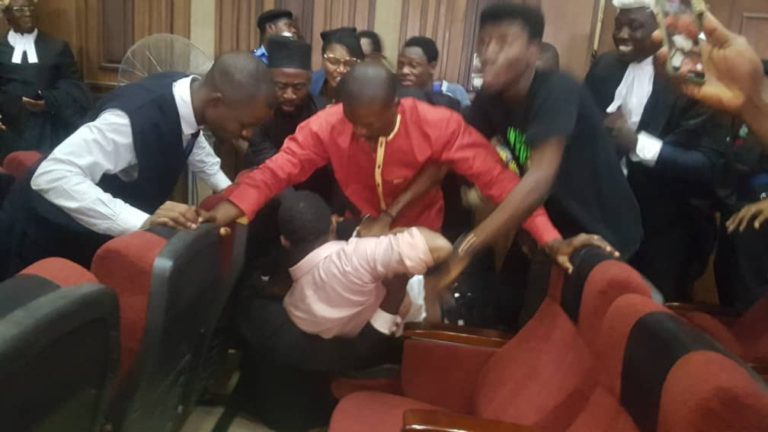
As the defendants were about to leave the court 7 of the Federal High Court, a DSS officer dressed in a black suit grabbed Sowore from behind and dragged him down even as the court door was locked to prevent journalists from gaining entrance to witness the unfolding drama.

This led to a rowdy session in the court room as supporters of the Sahara Reporters publisher mounted a stiff resistance against his rearrest while the DSS operatives threatened to shoot them.

Meanwhile, Justice Ojukwu who had another case to hear in the same court was taken to safety by  her orderly as the commotion continued.

Sowore’s counsel, Femi Falana, Senior Advocate of Nigeria (SAN) also resisted the arrest of the convener of #RevolutionNow, insisting that he could not be arrested within the court premises.

“Can I advise that you go out? you cannot arrest him in the premises of the court, who is your leader? he asked the heavily armed DSS operatives.”

Speaking to journalists in the court, Falana said he had earlier received information that the director of the State Security Services had ordered the ‘abduction’ of Sowore and Bakare.

“You will recall that I did inform the court that there are attempts to file another charge against them but the prosecution team said in the open court that there is no such information,” he said.

“We either run this country by the rule of law or we resort to gangsterism which is what is going on in the court because we’ve fought against military dictators including General Buhari and defeated all of them,” Falana added.

He said that ‘under a democratically elected government, we are not going to allow anybody to put the rule of law or treat it with disdain’.

“We have complied with the court order, what is therefore required is for the DSS allow our clients to enjoy their limited freedom because they have been restricted to Abuja and Osogbo respectively,” Falana lamented.

The human rights lawyer however stated emphatically that Sowore and Bakare’s arrest would not go unchallenged by the defendants.

EFCC apprehends fake cleric

THE Economic and Financial Crimes Commission, EFCC, said it has arrested a fake muslim cleric, Mallam Abdulrashid Imam over allegations bordering on fraud to the tune of N3million naira and $24,000 United States dollars.

The commission’s Head of Media and Publicity, Wilson Uwujaren in a statement signed by him disclosed that the arrest followed petition by Mohammed Dewu.

According to the statement, Dewu alleged that the fake cleric in October, fraudulently collected money from him claiming to have the supernatural ability to impact Qur’anic knowledge on him through the aid of Jinns (spirits).

EFCC’s statement read that the petitioner claimed that the suspect induced him to purchase two number of bottle perfume at N70,000 each, one bottle of special perfume at N160,000; a bottle of perfume for the treatment of his mother’s leg at N550,000.

The statement further read that the petitioner was made to pay for a set of 60 perfumes to activate the Qur’anic verses that will be implanted into his brain by spiritual means at N1,680,000, two mobile phones and SIM cards at N20,000 and thirty buckets of honey that will enable him transfer the Qur’anic verses to his brain at N900,000.

Dewu also alleged that the Abdulrashid compelled him to pay the sum of $24,000 for prayers to neutralize the forces preventing from getting a plum appointment which the government had planned for him.

EFCC disclosed that upon the arrest of the suspect, a fake blank Qur’an and keys to the room he had been using to con the victim were recovered.

“So far in the investigation, three houses in Kano state, reasonably suspected to be proceeds of fraud have been linked to the suspect,” the statement added.

The Antigraft agency also said that an EFCC prosecuted Man was sentenced for N32m Fraud in Lagos Ikeja.

Uwujaren said the convict, Oseni Iyere was found guilty on a three-count charge bordering on obtaining money by false pretence and stealing to the tune of N32m.

Noting the court ruling, the commission’s statement read, “That you, Oseni Iyere, between the months of March 2016 and May, 2016 , within the Ikeja Judicial Division, dishonestly converted  for your own use the sum of N17, 164,000( Seventeen Million , One Hundred and Sixty- Four Thousand Naira) property of Terry christa Energy Nigeria Limited  entrusted with you for the purchase of  petroleum products”.

EFCC noted that although the defendant pleaded not guilty to the charge against him, he was found guilty by the sitting judge on the case, Mojisola Dada.

Dada sentenced the defendant to seven years imprisonment on counts one and two, and two years on counts two and three which will run concurrently.

World Malaria Report: More Nigerians die from malaria than any other nationals

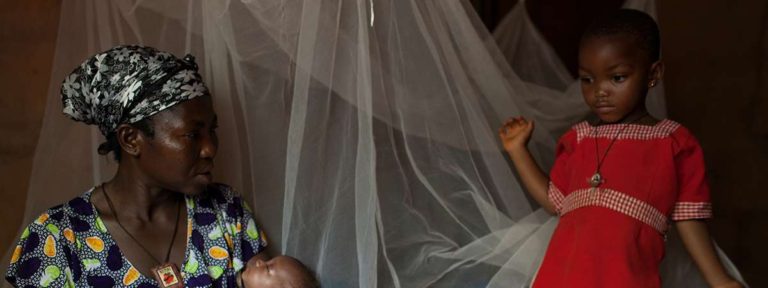
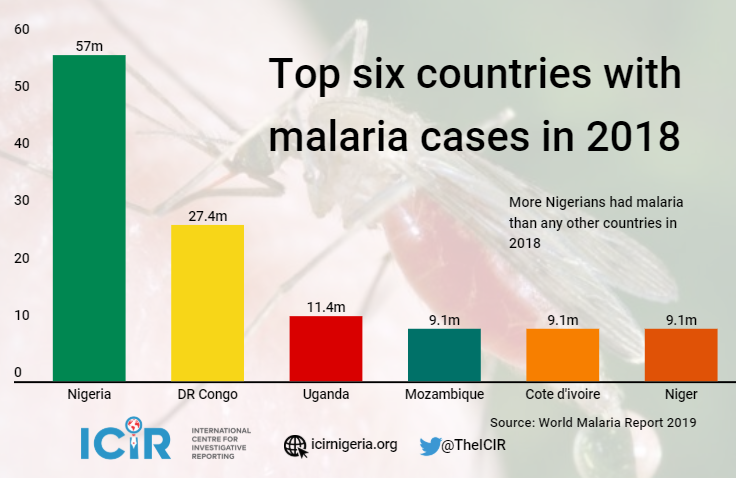
NIGERIA has earned the position of the worst-hit country with malaria cases with over 57 million citizens suffering from the disease in 2018. Malaria accounts for the highest number of deaths last year, according to the World Malaria Report.

The annual report published by the World Health Organisation (WHO) on Wednesday revealed that more Nigerians had malaria in 2018 than in 2017, despite being one of the countries that received large amounts of international funding to address the scourge in the country.

“Over the 2010–2018 period, the Democratic Republic of the Congo and Nigeria received the largest amount of international funding,” it read in part.

The global report showed than there was a “notable” increase in malaria incidence in the country where it was six per cent higher than cases in 2017. In 2017, about 5.3 million Nigerians had malaria but the number has increased to 57 million in 2018.

Also, Nigeria was identified to have more citizens that died from the condition in 2018 than in any other country with estimated 95,000 deaths of the total 405,000 deaths worldwide.

This shows about 11 people die every hour from malaria every day in Nigeria. 

In every 81 people that died of malaria globally in 2018, 19 were Nigerians.

Malaria is a preventable and curable disease that simple care could address, however, the report stated that there was a large gap in the treatment of malaria in Nigeria. 

“Testing was also worryingly low in children who were brought for care, with 30 per cent or less being tested in Cameroon, the Democratic Republic of the Congo and Nigeria.

Infographics credit: Rebecca Akinremi

While countries like Algeria, Togo Cabo Verde, Mauritania were stated to be on track to reduce malaria cases with more than 40 per cent by 2020, Nigeria was grouped among less than 40 per cent reduction.

The National Demographic and Health Survey that was released in November also speculated a possible increase in malaria in 2018.

Based on the 2018 NDHS, 24.2 per cent of Nigerian children had fever, a figure higher than in 2015 where the total percentage was 12.5 per cent.  Fever is a major symptom of malaria disease.

It noted that the condition was high in the Northeast with 35 per cent of children with fever, southwest was 9 per cent.

“Malaria, a preventable, treatable, and curable disease, is endemic in Nigeria and remains the foremost public health problem in the country, taking its greatest toll on children under age 5 and pregnant women,” it stated. 

To prevent malaria, WHO has recommended the use of insecticide-treated mosquito nets and indoor residual spraying, while pregnant women should take three doses of anti-malarial medicine named Intermittent preventive treatment of malaria in pregnancy (IPTp).

But the NDHS noted that the intake of the recommended doses of medicine during pregnancy to prevent malaria was at 17 per cent of the population,  against 21 per cent in the 2015 National Malaria Indicator Survey. The intake of two doses of the drug also reduced to 40 per cent when compared to 2015 of 41 per cent.

Infographics credit: Rebecca Akinremi

Intermittent preventive treatment of malaria in pregnancy (IPTp) is a full therapeutic course of antimalarial medicine given to pregnant women at routine antenatal care visits to prevent malaria. 

Besides protecting the mother, it also protects the babies and helps prevent placental parasitaemia, low birth weight, foetal anaemia, and neonatal mortality. It could also prevent maternal anaemia, a condition that could end a mother’s life during childbirth.

The Nigeria National Malaria Policy launched in 2015 and titled Nigeria’s Road to Malaria Elimination by 2020aimed at reducing malaria to pre-elimination levels. The strategic plan also stated that the malaria-related deaths which were 95,844 in 2018  would be zero by 2020.

After 124 days in detention, DSS releases Sowore on bail

0

FEW hours after Federal High Court Abuja ordered the release of Sahara reporters publisher, Omoyele sowore, the Department of States Services (DSS) has finally released him on bail.

Sowore was released after 124 days of illegal detention.

Justice Ijeoma Ojukwu of the Federal High Court had earlier today ruled that both Sowore and Olawale Bakare be released in the next 24 hours before the commencement of the hearing.

The court’s decision which followed the failure of the DSS to release the defendants on bail one month after their bail application was granted by the court.

He was released on Thursday evening after the Federal High Court in Abuja ordered his release for the third time.

The judge also awarded the cost of N100,000 against the prosecution to be paid to the defendants for foisting “frivolous adjournment” on the court.

She ordered that the cost must be paid before the next hearing which is Friday.

Sowore who is the convener of #RevolutionNow was arrested by the operatives of DSS on August 3rd 2019, at about 1:25 am according to a distress tweet he posted just before his phone was confiscated from him.

Amnesty Int’l says ICC investigation over war crimes in Nigeria now inevitable


NETSANET Belay, Amnesty International’s Research and Advocacy Director says an ICC investigation into war crimes and crimes against humanity committed during the conflict in northeast Nigeria is now inevitable.

“The Prosecutor has confirmed yet again that the Nigerian government is not taking steps to deliver justice,” Belay said while reacting to the publication of the annual report of the Prosecutor of the ICC on preliminary examinations, which sets out the work of the ICC over the last year looking at countries around the world where crimes may have been committed to decide whether to open investigations,

“Victims have been waiting for justice for over 10 years,” he added in a document released on Thursday by the AI.

According to him, the Prosecutor has also confirmed that she will make a final decision in 2020 on whether to proceed to investigate specific crimes.

“Should Nigerian authorities fail to demonstrate tangible steps to fulfil their obligations, she will be bound to proceed towards a full investigation,” Belay said.

The Nigerian government, he noted, has already demonstrated that it is not willing to investigate and prosecute those responsible for heinous crimes committed by all parties to the conflict in the North east.

“The ICC should have already launched an investigation but there can be no doubt that the time will come in 2020 for the ICC to step up to its role as the court of last resort.

“States parties to the Rome Statue must step up to provide the necessary resources to the Court and reiterate cooperation with the Office of the Prosecutor to enable such an investigation into the situation in Nigeria.”

Amnesty International recalled that both Boko Haram and the Nigerian security forces have committed war crimes and other serious violations and abuses of human rights law, since the beginning of the conflict in July 2009.

The ICC Office of the Prosecutor (OTP) opened a preliminary examination into the situation in Nigeria in 2010.

The OTP on Thursday it released its 2019 report on preliminary examinations. It appears that the Office still has not determined whether or not to open an investigation into the situation, close to ten years after the opening of the preliminary examination.

However, it is clear that the Prosecutor is losing patience with the failure by Nigeria to investigate and prosecute those responsible for violation of the Rome Statute.


PTCIJ underscores need for security of newsmen

0

THE safety of media personnel has been adjudged highly important especially in a society where insecurity is on the rise. Newsmen are therefore urged to prioritize their security above duty. 

This is part of the messages of a 2-day workshop for journalists organised by the Premium Times Centre for Investigative Journalism (PTCIJ), which kicked off on Wednesday, themed: Holistic Security and Safety Management.

The workshop facilitated by professionals was attended by journalists from media organisations across the country.

At the training, facilitators stressed the need for the holistic wellbeing of media personnel during their dispatch of duties. They stressed the point that the security of journalists was of the essence and should be taken into serious considerations.

On security, journalists were told to analyze the importance and risk entailed in the reporting of sensitive stories before embarking on it.

Reasons, according to the PTCIJ, was that the reportage of event like attacks has a greater negative effect on the emotional, physical and psychological wellbeing of newsmen.

The workshop held that a consistent reportage of insecurity stories like Boko Haram, sexual harassment, depression, etc, can incite trauma for journalists.

They called on managers of media firms to avail journalists the opportunity for a periodic visit to psychologists to cross-examine themselves, ensuring a good state of health, for improved working productivity.

Also, a facilitator on digital security, Adekunle Adedeji advised that journalists should be more informed on digital security because protecting their working tools and securing their information, was equally as important as their physical wellbeing.

In the same light, a fitness expert, Olumayokun Okunnu noted that media personnel should be abreast of physical tactics on self-defense skills, to protect themselves from all forms of harassment and threat.

He said because such insecurities are inevitable and seldom encountered, journalists should be physically fit at all times.

The organisers of the event decry the unfavourable condition of journalists in Nigeria, where there are no laws protecting the profession.

Despite the existence of a right to freedom of expression, they said there are still no laws protecting the press from freedom after expression.

Highlights of the training featured journalist fitness, cross-examination, physical security tactics among other skills.

Recalling Tai Solarin’s prediction

0

By Edwin MADUNAGU


NIGERIA’S 2019 elections, particularly the recent governorship contests in Kogi and Bayelsa states, have forcefully brought back a prediction which the late Tai Solarin made about 40 years ago in the aftermath of the 1979 elections. Of course, recalling this prediction is also recalling my response to it at the time. I was then 33.

 It is appropriate to begin any story I might wish to tell here by introducing Tai Solarin to young Nigerians who were not born when the prediction was made. This set of Nigerians now constitutes the majority of the Nigerian population. Tai Solarin was a prominent Nigerian male from Southwestern Nigeria who was a secular humanist and educationist, but whose humanism was exceptional because it was all-round (that is, in thought as well as inaction), consistent, courageous and well-informed.

 Tai Solarin was not a Marxist, not a communist and not a worker by class placement. But he was a proletarian in lifestyle. In politics he would be described as a progressive, but not a progressive in the mould of the present-day Nigeria’s neofascist “progressive”. Tai Solarin was a progressive in the original sense of being located in the Leftist ideological and political universe. He was, in general, a “social critic” and, in particular, a critical, popular and respected newspaper columnist.

 Now to the beginning of this piece. We may recall that Nigeria’s Second Republic began on October 1, 1979, after a 13-year period (1966-1979) of military rule that witnessed a civil war. In the general elections that ushered in the Republic, Shehu Shagari of the National Party of Nigeria (NPN) emerged as (Executive) President and Obafemi Awolowo of the Unity Party of Nigeria (UPN) emerged as the second strongest presidential candidate. The result was, to say the least, very contentious—as we can recall or research. But the issue here is neither the contentiousness of the result of the presidential contest nor the side which Tai Solarin supported. (He was a member of the UPN). Rather, we are concerned with his prediction five weeks into the new Republic.

 On November 4, 1979, 34 days after the installation of President Shehu Shagari, the Sunday edition of the Tribune newspaper carried a column by Tai Solarin titled The Stolen Presidency. In it the columnist wrote: “If this government lasts four years… the four-year-old NPN will have been firmly planted as Government Party everywhere, and the UPN, the GNPP, the NPP and the PRP will have been drained to annihilation, both in membership—it is already starting—and in morale. The 1983 election would therefore be between the NPN and the Revolutionary Party which, having studied how the NPN came to power knows exactly what to do to supplant the NPN for the presidency. There would then be a confusion on the national raft. Then a splash. Then commotion among the sharks. And we, the common people, will have, as victims, paid the supreme sacrifice”.

 My comment on this prediction was immediate—as was expected in those days. It appeared in an edition of the Nigerian Chronicle, a daily newspaper owned and published by the Cross River State government. The comment was later revised and included in the text of a lecture I delivered at the University of Ife (now Obafemi Awolowo University) in November 1980 under the auspices of the institution’s Alliance of Progressive Students (ALPS) on the occasion of the 31st anniversary of the killing of Nigerian miners at the Iva Valley Mines, Enugu, by the colonial police. And later still, in May 1981, the comment was included in a book which emanated from the lecture. The lecture, as well as the book that emanated from it, were titled: Human Progress and Its Enemies: The Struggle for a more humane social order in Nigeria.

 In the book, I said: “Tai Solarin’s prediction is unusual in two ways. In the first place, Tai Solarin was predicting the disintegration and demise of his party, the UPN. In the second place, he was predicting that it would require a Revolutionary Party to dislodge the NPN from power: a type of prediction that normally comes from a revolutionary and not a liberal. We may ignore Tai Solarin’s scenario—for the Revolutionary Party, when it emerges, will not fight according to the rules fashioned by the enemies of progress. But we agree completely that the NPN, as a political party, is today the best organization of the Nigerian bourgeoisie and the most accurate reflection of Nigerian bourgeois interests. So long as the bourgeois social order remains so long will the NPN (or a new monster it may give birth to) continue to be the dominant political organization of the bourgeoisie.”

It follows from above that “only a revolutionary agency, representing the true aspirations of the popular masses (the workers, the peasants, students, etc.) and fighting consistently for an entirely new social order, can ever dislodge the NPN from power. To that extent—and to that extent alone—we agree with Tai Solarin. But we do not share his pessimism. A revolution cannot be conceived in a pessimistic perspective. A revolution—to use the words of Leon Trotsky—is incompatible with pessimism and other forms of spiritual collapse. Tai Solarin’s pessimism arose from the fact that he made a separation between the people and the Revolutionary Party—a type of separation that exists between the people and the existing political parties. A genuine revolution can only be made by the people under the leadership of their revolutionary organization, and such a revolution demands the highest forms of optimism and moral courage.”

Looking now at this nearly 40-year old “exchange” between Tai Solarin and myself, it strikes me that I could myself not have realized its full import. Tai Solarin said only a Revolutionary Party could dislodge the NPN from power. I agreed with him but amended the proposition by replacing “NPN” with the phrase “NPN or a new monster it might give birth to”. This suggests that I had a “flash” that NPN could be succeeded by another party—or another entity—but nonetheless, a “monster” (such as a military junta) organically emerging from NPN. But the “flash” was not pursued.

 It is clear that the class perspective was missing from Tai Solarin’s analysis and prediction. This is explicable, given that he was not a Marxist. But my response was also not sufficiently ideological. Let me explain. In political-ideological contestation, even in our own context, the terms “bourgeois” and “capitalist” are not simply interchangeable. The absence of “capitalist” in my “disquisition” qualifies it as petty-bourgeois, even if revolutionary. If I had adopted a more appropriate ideological posture I would have stated explicitly that what I was alluding to was the removal of the capitalist class, as a class, and not just its political organisations like the NPN.

Having said this, the questions now are: Why is it that for almost 40 years, I have periodically—after every major election or change of government—felt the way I felt following the 1979 general elections and Tai Solarin’s prediction? Why is it that despite the Nigerian Left’s insistence, at least since 1979, on the inevitability and irreducibility of a Revolutionary Party, the party has not emerged? Why should we find ourselves repeating the same theses and propositions after every bloody and farcical display called “election”?

Does it mean that nothing has changed fundamentally in Nigeria’s social order or in the Leftist challenge to it, or both? How has Nigeria’s ruling capitalist class been able to periodically renew itself, assume new organizational forms and continue its rule? Put differently, why has it not been possible to overthrow Nigeria’s ruling capitalist class, as a class, or dislodge it as the dominant political force?

 Madunagu, mathematician and journalist, writes from Calabar, Cross River State.