Home Blog Page 2235

Between thuggery and state disobedience

0

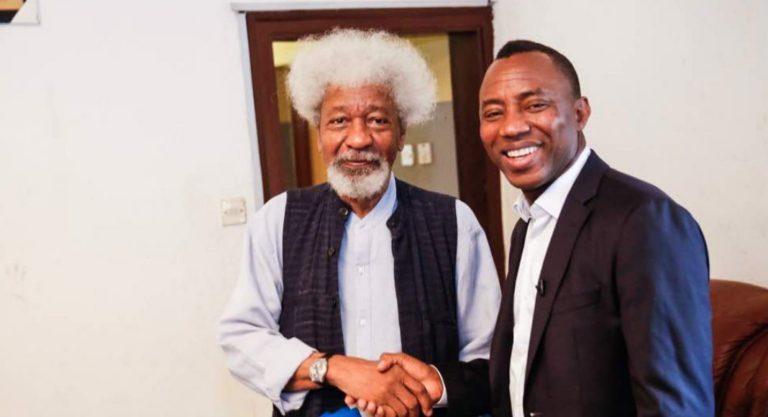
By Wole  SOYINKA

I HAVE no hesitation in admitting that I have a personal, formative interest in the health of the Nigerian judiciary, deeper perhaps than the average Nigerian.  At a critical junction in the life of this writer, a judge resolved to give primacy to the call of conscience, affirm his professional integrity and defend the supremacy of law in defiance of state interference. He refused to bow to external pressure in adjudicating a case whose conclusion, had this accused been found guilty as charged, would have been life imprisonment.  That individual, the late Justice Kayode Eso, has narrated the event in his autobiography – The Mystery Gunman with his noted wit and judicial poise.

The Deputy Premier of the then Western region of Nigeria had summoned the judge to his residence, lectured him on his duty to protect the interests of the government against the accused. Justice Kayode listened politely, re-affirmed his commitment to the rule of law, and took his leave.

It would be most surprising if my own brush with the law has not crossed my mind since the predicament of  Omoyele Sowole, journalist and former presidential candidate began. The Nigerian judiciary was not thereby, nor is today a model of perfection. Nonetheless, exemplars such as Justice Esho have succeeded in creating, in some of us, exceptional respect for the Bench, instilled a conviction that the law, despite its lapses, demands respect, autonomy, and obedience. Much of the judiciary across the continent remains constantly under siege – Nigeria is no exception. Needless to say, it often strikes me that the “learned brotherhood” could do more to protect, and assert itself. Apart from the obvious and numerous scandals of moral deficit that require constant internal purgation, there are instances where it does fail to protect itself even from putative and/or illegal power.

Take the assassination of the Minister of Justice and Attorney-General, Bola Ige on his way to a UN appointment. The presiding judge on that case cried out against unseemly interference from ” least expected quarters”.  He kept a diary of coded names and times, two pages of which came into my possession.  His cries petered out in void. Justice Abass, feeling vulnerable and isolated, bowed out of the case. The judiciary lamely acquiesced, certainly with a huge sigh of relief in some sectors.  A robust opportunity lost to burnish the image of the law. I was left aghast.

From tragedy to  slapstick tragi-comedy – let us pull up an eye-witness account from the Nigerian PM News of Thursday, September 2014:

Temperamental Ekiti state Governor-elect, Ayodele Fayose, slapped a court judge today for being rude to him and then ordered his thugs to beat him further.

The action of Fayose and his thugs triggered some pandemonium in the court, with judicial workers and others running into safety. The sitting of the Ekiti State Governorship Election petition Tribunal could also not hold.

Immediately, thugs numbering about 20 pounced on Justice Adeyeye, beat him up and tore his clothes, while his co-workers scampered and shouted for help.

Following the development, judicial workers hurriedly shut down the court premises thereby preventing any court proceeding for hours before the police fired tear gas canisters to disperse the hoodlums.

For a week, two weeks, then forever, `I waited to see what would be the response of the judiciary. There came none.  Naively, I thought, surely, this institution will rise and defend its very existence through some form of action, even if merely symbolic. Not a squeak. Not even after that governor left the office and thereby lost his immunity. What to me appeared to be the collapse,  not just of a pillar, but of the edifice of human culture, appeared to be no more than a blip on the judicial template.

There are of course more effective ways of degrading a judiciary than merely brutalizing a judge, and leaving his judicial robes in tatters.  One of the most effective, increasingly optimized in Nigeria, is simply by not only ignoring, but treating its orders with disdain, encouraging its agencies to trot out cynical excuses for disobedience while laughing all the way to the citadel of power. In that regard, there does appear to be an undeclared contest among succeeding governments, intensified since the return of the nation to civilian government in 1999 for placement in the Guinness Book of Records as the most notorious Scofflaw in the field of democratic pretensions. Or could it be an anticipation of a proposal I made at the Athens Democracy Forum some months ago, calling for an annual award – such as an Order of Demerit – for such an achiever?

Perhaps we have finally attained maximum saturation, and there is no need for any further record keeping. It is extremely difficult to imagine a further lowering of the bar of disdain for the law than we have witnessed under the present regime.  The degree of cynicism in the conduct of  State Security agencies has attained a level of consistency that is surpassed by only one other previous government – but it is a close call. Not only does a security agency refuse to obey a court order to release a suspect after fulfilling his bail conditions, that agency manufactures one childish pretext after another, including a claim that no one has shown up to receive the detainee. “His sureties have yet to show up to collect him”,  declared the DSS, prime candidate for special featuring in my “Interventions” series, periodically dedicated to the theme of  The Republic of Liars. Are we speaking here of a full-grown adult, a journalist and former presidential aspirant, or an overnight bag awaiting the rightful claimant in a LOST AND FOUND department?

The nation continues to undergo the chagrin of having the rug pulled from under her feet while waiting on the long queue for judicial redress against the strong-arm culture of the state, as well as unlisted power interests.  For instance, Lagos state, the former capital, and still the acknowledged commercial capital of the nation, once found herself denied statutory allocation for several years, despite repeated court declarations that such withholding by the central government was unconstitutional and should be remedied forthwith. That president took sadistic pleasure in simply playing deaf. It took his successor to end the abuse and restore the full entitlements of that state, disobedience that went beyond mere churlishness but affected the development and welfare of the indigenes of that state. And so on, and on, waiting in vain for that day when the Rule of Law becomes commonplace, and its benefice is not doled out by the drop to famished mendicants.

So, finally, what do thuggery and court disobedience have in common? Everything!  They are both Scofflaw’s manifestations.  Unilateral declarations of  Supra-Law delusions. One is simply a more structured, more hypocritical version of the other. One knows itself for what it is, while the other tries to camouflage its abnormality under a higher purpose, the more elastic the better . Such is that often specious alibi labeled “national security”. Is Sowore  Myetti Allah? As for those agencies that actually think to inhibit social revolution by fastening on the alarmist association of the word ‘revolution’,  half the citizens of this nation should be in permanent detention.  From pulpit to minaret, from clinic to fish market, from student club to motor park, the wish for a drastic transformation of this nation is staple discourse.  Perhaps we should begin with its application to that institution whose decisions affect both society and individuals with such finality, for good or ill – the judiciary.

-Professor Wole Soyinka is the first African to receive Noble Prize in Literature.
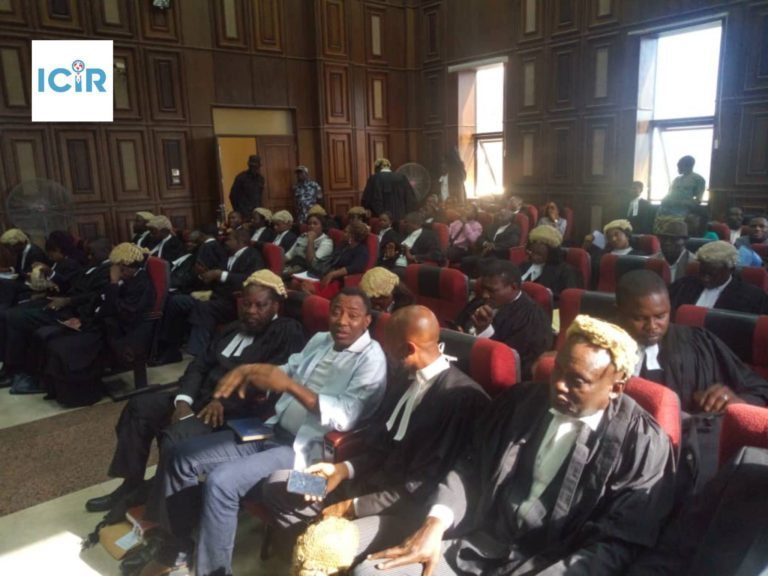
 

Court slams DSS N100,000 fine, orders Sowore’s release in 24hrs

THE Federal High Court Abuja has ordered the Department of States Services (DSS) to pay N100,000 to the Convener of the ‘Revolution now’ protest, Omoyele Sowore and Bakare for failing to comply with the court’s order for their release.

The presiding  Judge, Ijeoma Ojukwu ruled that the defendants be released in the next 24 hours before the commencement of the hearing.

The court’s decision followed the failure of the DSS to release the defendants on bail one month after the bail application was granted by the court.

Prosecution Counsel, Hassan Liman argued that the DSS did not release the defendant’s because they failed to provide sureties.

Ojukwu opposed Liman’s statement reiterating that the provision of sureties was not part of her ruling in November.

Femi Falana, the defendant’s counsel filed for adjournment of the case because ‘it is not ripe for hearing’.

He noted that contrary to the court order, the prosecution provided the defendant’s a summarized statement of five witnesses against the court order that a full statement should be made available to the defence counsel.

Falana added ‘that in a bid to frustrate the case, the prosecution sent a bundle of document yesterday afternoon and seven video cassettes.

He added that he had contacted the legal department of DSS to facilitate a meeting with the defendants in order to conform them to the documents and video cassettes but the request was not granted up till the sitting.

In response to Falana’s claim, Liman argued that Section 379 subsection 1a of the Administration of Criminal Justice Act (ACJA) only stated that ‘Summary of witnesses’ among other things be provided to the defendants’ counsel.

“On the issue of calls and text messages, I will not join issues with my learned colleague so that our issue will not become the subject of discussion,” Liman said.

Liman added that the late arrival of the statements of the witnesses to the defendants was due to administrative hindrance.

However, Ojukwu said the prosecution is the reason the trial hearing of the defendants will not commence as slated for 5th December 2019.

The Judge adjourned the trial of the case to 6th December pending the time when she said the defendants must be granted bail.

At the end of the sitting, some old women in white robes were seen at the gate of the Federal High Court, protesting and wailing as they demand the release of Sowore.

SOWORE: Soyinka says FG, DSS would have to detain many more Nigerians over revolution

NOBEL Laureate, Professor Wole Soyinka has berated the Federal Government and the Department of State Security (DSS) over continued detention of the convener of #RevolutionNow, Omoyele Sowore and disobedience of court orders to release him.

In a statement issued on Thursday, Soyinka said the Federal Government and its security agencies would have to detain half of the nation’s population for detaining Sowore based on his call for revolution in the country.

According to the social critic who titled his statement, “Between thuggery and state disobedience,” the “wish for drastic transformation of this nation is staple discourse.”

“Is Sowore  Myetti Allah? As for those agencies that actually think to inhibit social revolution by fastening on the alarmist association of the word ‘revolution’, half the citizens of this nation should be in permanent detention,” he said.

“From pulpit to minaret, from clinic to fish market, from student club to motor park, the wish for drastic transformation of this nation is staple discourse.”

He said the discourse should start with the judiciary whose decisions, the literary icon said, affect both society and individuals with such finality, for good or ill.

Citing similar disobedience of court orders by previous administrations since return of democracy in 1999, Soyinka said Nigeria has continued to undergo the chagrin of having the rug pulled from under her feet while waiting on the long queue for judicial redress against the strong-arm culture of the state, as well as unlisted power interests.

“ For instance, Lagos state, the former capital, and still the acknowledged commercial capital of the nation, once found herself denied statutory allocation for several years, despite repeated court declarations that such withholding by the central government was unconstitutional and should be remedied forthwith,” he recalled.

“That president took sadistic pleasure in simply playing deaf. It took his successor to end the abuse and restore the full entitlements of that state, disobedience that went beyond mere churlishness but affected the development and welfare of the indigenes of that state.

“And so on, and on, waiting in vain for that day when the Rule of Law becomes commonplace, and its benefice is not doled out by the drop to famished mendicants.”

Speaking on the similarity between thuggery and court disobedience, he said, both have everything in common.

“They are both Scofflaw manifestations.  Unilateral declarations of Supra-Law delusions,” he said.

“One is simply a more structured, more hypocritical version of the other. One knows itself for what it is, while the other tries to camouflage its abnormality under a higher purpose, the more elastic the better . Such is that often specious alibi labeled “national security”.


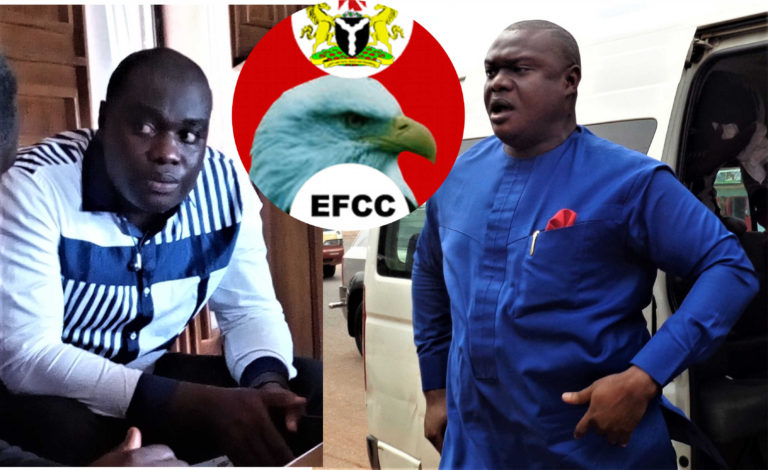
N7.1bn fraud: Orji Kalu bags 12 years imprisonment

0

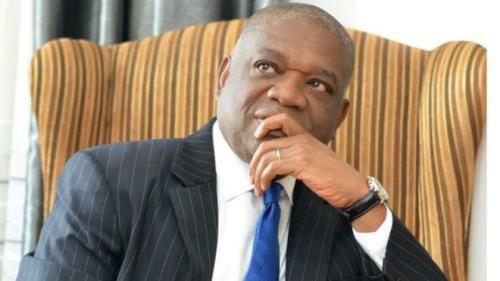
THE Federal High Court in Lagos has convicted a former governor of Abia State, Orji Uzor Kalu, who was charged with N7.2bn fraud.

He was found guilty on the entire 39 counts filed against him and his co-defendants on Thursday by the Economic and Financial Crimes Commission (EFCC)

Justice Mohammed Idris sentenced Kalu to 12 years’ imprisonment as well as ordering the winding up of Kalu’s company, Slok Nigeria Limited, charged as third defendant in the case.

It will be recalled that EFCC prosecuted Kalu and a former Commissioner for Finance in the state, Ude Udeogo.

Also charged along with Kalu is his company, Slok Nig. Ltd.

The EFCC had on October 31 2016, preferred a 34-count charge against the defendants and was later increased to 39 counts.

While Kalu and his company were convicted on all the 39 counts of the fraud charge, Udeogo was found guilty of 34 counts.

On November 12, 2018, NAN reported that Kalu was absent for his trial, after being absent on a previous adjourned date – November 5, 2018.

Although the defence counsel informed the court that he was away for medical treatment in Germany then, the court however,revoked his bail and ordered that, at his return to Nigeria, he must submit himself and his travel documents to the EFCC, or be arrested.

The EFCC in the charge said that the defendants committed the alleged offences between August 2001 and October 2005 when he was governor.

It said that the former governor utilised his company’s account to retain N200 million in First Inland bank (now First City Monument Bank).

The commission said the sum formed part of funds illegally derived from the coffers of the Abia State Government.

It said that the defendants diverted over N7.2 billion from Abia government’s treasury during  Kalu’s tenure as the governor, in contravention of Sections 15(6), 16 and 21 of the Money Laundering (Prohibition) Act, 2005.

The commission said that the offences also contravened the provisions of the Money Laundering Act of 1995 as amended.

Former presidential candidate berates FG plans to cut cost of governance

THE Presidential candidate of the Abundant Nigeria Renewal Party, ANRP, 2019 general elections Tope Fasua, has criticised the federal government’s plan to reduce the cost of governance as a way of stabilising the economy, describing it as ‘Big on Tokenism’.

Fasua said the plan can only yield minimum effect considering the nation’s huge borrowings from foreign countries.

During a Public Conscience Radio Program produced by the Progressive Impact Organization for Community Development, PRIMORG, in Abuja, Fasua said the spending cut shouldn’t be narrowed down to travels alone.

Fasua who is also the founder and Chief Executive Officer, CEO of Global Analytics Consulting Limited, reiterated that there is not much to make out of the renewed steps towards the reduction.

He said the travelling habit of government officials in Nigeria is as high as 50 times in a year, utilizing the taxpayers’ money.

Cutting down the number of travel times, just to reduce cost is very ridiculous, he said.

“We’re talking about a country that is borrowing to survive with struggling taxpayers and so many poor people.”

He said travel issues in Nigeria have two implications, stating that aside from the monetary aspect, there are the good intentions of government which would result in nothing because of the unavailability of the persons expected to drive the nation.

He said there are other resource-sapping issues leading to wastage. This includes hiring foreign consultants, especially in areas of reforming the public sector

He criticized the habits of Nigerians moving the country’s resources overseas, and advised government to start patronizing made-in-Nigeria products.

The ANRP candidate also identified the building of presidential lodges in various states as wastage, saying the president has never slept in some and most have started dilapidating.

On Nigeria’s Budget, Fasua said the over N10 trillion budgeted is not enough because the government usually expend the money wrongly, and the impact doesn’t get to ordinary people.

“Nigeria is not employing the Performance-Based Budgeting System, but still practice the Envelop Budgeting, which affects accountability,” he noted.

He advised that idle civil servants wasting away in government’s ministries, departments and agencies should be deployed to sectors that require extra services, like the health and education sectors.


The economy of loss

0

By Abdul Mahmud


Reading Homer’s epic poem, ‘The Iliad’, in my Advanced Level class many years ago, I was confronted with the human condition. The evil that men do, evil that withers good and destroys humanity, so easily recognizable in the Homeric poem, gave me a deeper understanding of the human condition.

Sure, Homer’s epic poem made meaning to me and left me with two lasting impressions – first, that war isn’t pretty; and second, that the march of warriors isn’t a catwalk – as it also made me to question war, feel the grief of those whose loved ones have either disappeared or died in wars, while using my mind’s eye to recreate the setting of human misery.

Still, I was young and found it hard to fathom why men had to go to war over a woman. Looking back now and making a deeper sense of the setting I recreated then – the butchery men perpetuate, while eager to become heroes who are “held in a single honour”, as Achilles regrettably described it in the epic poem, amid evil mania – I am confronted by the mental picture of the visible and invisible hand of war and the economy which allows only a purchase on loss. In this economy we ask, same way as Priam, in the moment of soliloquy, asked after Achilles took away the body of his son, Hector, “why me?”

There is no light in this economy of loss, no glamorization of what is gained, no heroic acclaim to prowess, only blackness resulting from loss and shared grief. When Priam begged Achilles for his son’s body to be returned to him for burial, and Achilles wept for his friend, Patroclus, who was killed by Hector, the commonality of loss was thus established, even by the introduction to ‘The Iliad’: “the experience of grief is common to all humans, even those who kill each other in war”. Nothing can be truer.

Beyond the purchase on grief, the economy of loss has a way of producing beginning, ending and diminishing hope. A happy beginning somehow shrinks into a sad ending. There are a few examples. A father departs from home and bids farewell to his loved ones, only to go missing halfway between departure and arrival. A citizen is plucked from his home, never to be seen, or heard from, as is the case of Dadiyata, who has been missing for over one hundred days now. Then, the story of the missing persons of the north east – young men who have simply disappeared into the blackhole of insurgency. The case of a region dealing with an ending that is truly not an ending. Grief, sadness, and diminishing hope is what ties the families of the disappeared – presumed dead where there is no proof of life – into an economy whose only register is loss.

Last week, the International Centre for Investigative Reporting, ICIR, presented its investigative report on ‘Justice for Missing Persons in the North East’. The public presentation gave civil society activists and families of missing persons the opportunity to centre the phenomenon of missing persons that has gone unaddressed by officialdom for a long time. If anything made the presentation a sobering and humbling experience, it was the stoicism displayed by women whose husbands, brothers, sons and uncles disappeared into thin air.

Here were women, who, having lost their homes and livelihoods, found courage to tell their heartbreaking stories, dry-eyed. There were the occasional cries, though. Looking at the women, while torn by grief, I couldn’t but imagine all they had gone through and are still going though; the psychological trauma that the disappearances of loved ones inflict on them, the open sores of pain, and thoughts of not knowing whether their loved ones are alive or dead. For these brave women, life becomes either about keeping vigil for those who have disappeared or looking for the signs of life in missing lives. Everyday is about keeping hope alive and not burying it.

A member of Jire Dole with photograph of her detained husband

Clearly, these women are in a spot of bother. Their conditions ought not to be further ruined by limbo – not knowing whether to mourn their missing loved ones or hope that one day soon they will walk to their warm embraces. So, they keep asking questions. There can be no stoic acceptance of the inevitable while their questions remain unanswered. The state has refused to provide answers to their questions: where are the missing persons of the north east? Are they alive or dead? Mum is the word.

But, they have remained undeterred, pushing their heads against the stonewall of silence and running their kites of courage in the tumults of the wind. They have publicly named one Colonel Cyril Ofurumazi, an officer of the Nigeria Army, they allege is responsible for the disappearances. The International Centre for Investigative Reporting echoes the claim in its Report: “Yellow’s alleged crimes were raised in some of the interviews, with some of the women accusing him of arbitrarily arresting their children and spouses, many of whom are yet to be released. Some could not tell the whereabouts of their spouses yet – whether alive or dead”. According to the ICIR, “these young men were executed by Colonel Ofurumazi, aka Yellow, and his boys”.

Col. Cyril Ofurumazi

Mum is the word. Unsurprisingly, the state has lived true to its DNA. Perhaps, it will respond, when it is done with measuring the SI Units of its lies. The silence is worrying, so is the number of missing persons in the northeast, which the Red Cross puts at 22,000. The number interrogates the integrity of the military operations in that corner of our country. Accounting for the missing is not rocket science. When a state shirks responsibilities imposed by international law, impunity flourishes – the type that allows rogue officers to traipse around, camouflaged. The state isn’t interested in bringing the complicit military brass to book. Perhaps, this is so, because it considers the “economy” as a “production space” of loss for the poor, who carry the urns of grief, without comfort.

However, there is a deeper problem here. The state is refusing to face up to the problem of male deficit in Borno state, for instance. Not until peace returns we won’t know the devastating effect of the insurgency on the post-war economy. Nobody is looking at the ratio of men to women, as it dangerously slides – with young men disappearing without a trace and cemeteries hearsing the future daily. In another theatre, this week, five prisoners were electrocuted in Ikoyi Prison – fresh registers on the economy of loss.

Nearly 30 per cent of under- skilled youths resident in Africa, AFDB

0

ADAMON Mukasa, Senior researcher, Africa Development Bank has said that to curb unemployment, the governments of African States need to develop policies to facilitate school-to-work transition of their youths in order to reduce skill- mismatch.

During the ongoing 2019 African Economic Conference in Egypt tagged; “Jobs, Entrepreneurship, and Capacity Development for African Youth”, Mukasa, said that often times, youths accept job positions that they are not equipped to manage as an alternative to being unemployed.

He revealed that the continent has under-skilled youths in different sectors representing 28.9 per cent which more than doubles 13 per cent recorded in other developing regions of the world.

“More than half, 56.9 per cent, received basic to secondary education only, compared to 36.4 per cent in other parts of the developing world. This mismatch impacts earnings, job satisfaction and job stability, Mukasa added.

“African countries must develop policies to facilitate school-to-work transition of their youth,” he said.

Report from the conference host by the ADB, the United Nations Development Programme, and the United Nations Economic Commission for Africa posits that “in education, around 8.3 per cent of youth had reached tertiary education versus 20.6 per cent of their peers in other developing regions.

The researcher suggested more attention should be shifted to the science, technology, engineering and mathematics (STEM) in the academic sector.

A move he said would help provide leverage for youths at the labour market.


BUDGET: $15b unaccounted for in defence sector in 15 years—CISLAC

AN estimated $15billion has been unaccounted for from the defence sector between 2000 and 2015 while billions are spent without clear rationale and external oversight, the Civil Society Legislative Advocacy Centre (CISLAC) and its partner, Transparency International – Defence and Security (TI-DS) have said.

“More spending does not mean more security. Defence sector is a juicy target for corrupt military leaders seeking to pad their pockets,” said Auwal Musa Rafsanjani, Executive Director of CISLAC at the end of a two-day workshop organised in Abuja towards strengthening gaps in the 2020 defence budget.

“Without increasing transparency and oversight of our most secret sector, we will not succeed in keeping Nigerian wealth in Nigeria. Corruption in the defence sector has only expanded.”

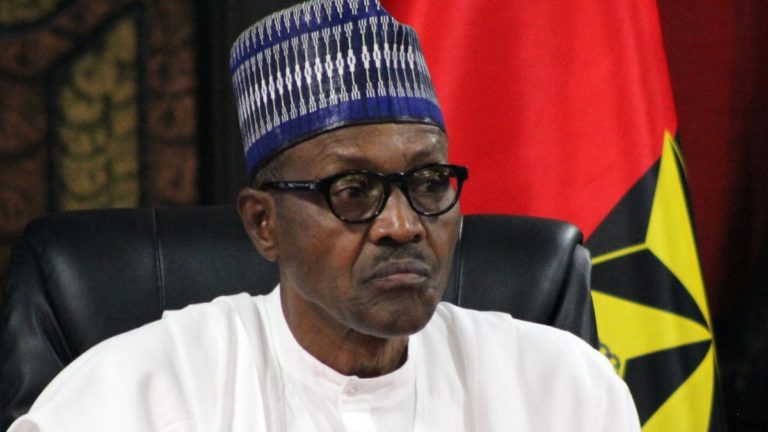
Rafsanjani said while President Muhammadu Buhari has made significant moves to take on the secretive and powerful defence sector, the pace of reform at the Ministry of Defence is slow.

He reiterated that reforms of the defence sector were long overdue and ‘painfully needed in the context of mounting security challenges.

Opaque counter-terrorism spending, the CISLAC boss noted would jeopadise Nigeria’s anti-corruption drive and derail the fight against Islamic State of West Africa Province (ISWAP).

“Security votes are corruption schemes which have done little good except diverting funds, “he added.

While noting that uncoordinated capital expenditure in the defence budget has progressed with little or no impact, Rafsanjani stated that the National Assembly must strengthen its oversight on defence budget and spending

He said CISLAC and its partners have found that unpublished defence budgets are still frequently abused by corrupt officials seeking to benefit from the conflicts with Boko Haram and oil theft in the Southern region and lauder stolen money abroad.

“Many deaths in the conflict have occurred while the military still lacks vital equipment, critical training and morale. Even the Chief of Army Staff alluded to this recently,” Rafsanjani said.

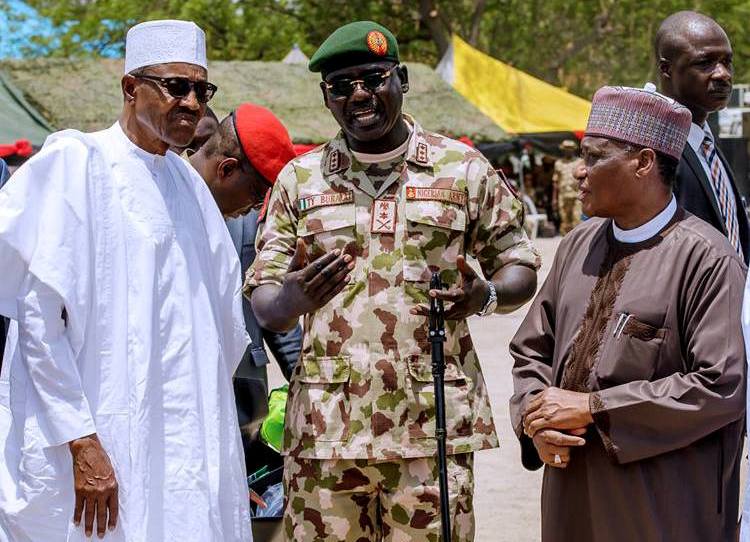
Meanwhile, the two CSOs asked President Buhari to brief the nation on the spending of money withdrawn from the excess crude account to purchase intelligence equipment and weapons to fight against Boko Haram in 2017.

They also called for the speedy passage of the special anti-corruption court by the National Assembly, noting that while the passage of the bill is awaited, the Chief Justice of Nigeria (CJN) can and should designate some courts as special courts to try corrupt cases as well as designate days for the hearing of corruption cases.

“We are determined to advocate for accountable defence spending, providing of declasified information to the public, increased integrity of defence personnel and civilian oversight of the sector in line with international good practice,” CISLAC said.

Court orders ex-governors who collected pensions while serving as ministers, senators should return fund

FORMER governors now serving or had served as ministers or members of the national assemblies may have to return the money received as pensions since leaving the governorship position.

This is based on a declaration at a Federal High Court in Ikoyi, Lagos that ordered the federal government to recover life pensions collected by the former governors.

The Socio-Economic Rights and Accountability Project (SERAP) that led the court suit disclosed the “landmark judgement” in a  series of tweets on Wednesday.

It had sued the federal government in 2017 after it fails to “stop former governors from receiving double pay and life pensions.”

Giving the ruling, the court also directed Abubakar Malami, Attorney-General of the Federation (AGF) and Minister of Justice to challenge the legality of states’ pension laws permitting former governors, “who are now senators and ministers to enjoy governors’ emoluments while drawing normal salaries and allowances in their new political offices”

It added that the AGF should identify those involved and seek full recovery of public funds from the former governors.

“Having considered all the facts presented by SERAP on the need for the suit and the Counter-Affidavit against same, I find no reason why the order of mandamus should not be granted. I am of the view that SERAP’s suit has merit,” said Justice Oluremi Oguntoyinbo.

The former governors identified by SERAPto have received “double emoluments” include Rabiu Musa Kwankwaso, Kano State; Kabiru Gaya, Kano State; Godswill Akpabio, Akwa Ibom  State; Theodore Orji, Abia State; Abdullahi Adamu, Nasarawa State and Sam Egwu, Ebonyi State.

Others are Shaaba Lafiagi (Kwara), Joshua Dariye (Plateau), Jonah Jang (Plateau),Ahmed Sani Yarima (Zamfara), Danjuma Goje (Gombe), Bukar Abba Ibrahim (Yobe), Adamu Aliero (Kebbi), George Akume (Benue) and Rotimi Amaechi (Rivers).

The suit marked FHC/L/CS/1497/2017 has been adjourned to 3 February 2020 for a report of compliance with the judgment by the Federal government.

“We won’t rest until this judgment is fully enforced and all state governors follow the Zamfara state example by immediately abolishing pension laws in their states,” SERAP tweeted.

Femi Falana, a human rights lawyer said the lawsuit was one of the most patriotic public interest litigation ever undertaken in Nigeria. He called on state governors to use the judgment as the basis for “formally repealing life pension laws and all other retrogressive laws without any further ado”.

Two brothers bag jail term over N4bn fraud in Anambra

THE Economic and Financial Crimes Commission (EFCC) said it has secured a court sentence of two brothers, Kingsley Nwegwu and Joakin Nwegwu who were found guilty of N4 billion naira frauds.

In a press statement by the commission’s Head of media and publicity, Wilson Uwujaren, he said the convicts were sentenced on 2nd December following prosecution by the EFCC Enugu Zonal office.

He added that the brothers are both managing directors of ACJEC Global Services Ltd who lured people to invest in the company with promise of 30-34 per cent interest annually on their investment.

The sitting judge on the case, M.L. Abubakar of the Federal High Court, Awka, Anambra State convicted the Nwegwu brothers on 50 charges of conspiracy and obtaining money by false pretence.

EFCC said the prosecution began in 2011 when the commission received petitions against them, alleging that they were lured to invest the said money in ACJEC Global Services Ltd with the promise of mouth-watering 30- 34 per cent interest annually on their investments to be paid to them.

EFCC added that the petitioners alleged that after investing the said money they never got the interest nor the capital invested in the company.

The commission said after investigations they found out that more than N4 billion was paid into the accounts of the convicts by their victims, numbering over 200, in what turned out to be a Ponzi Scheme of sorts.
The Anti-graft agency added that one of the victims of the fraud was said to have invested more than N50million.

Abubakar, after reviewing the evidence brought by the EFCC against them held that the prosecution proved its case beyond every reasonable doubt and convicted them accordingly.

According to the statement, the judge further ordered that all the properties traced to them in the course of investigations should be forfeited to the Federal Government.

However, he gave the convicts an option of fine of N1million each, a decision which many of the victims of the scam present at the court hearing showed outright dissatisfaction to.

Meanwhile, the commission said on the same day, 3 internet fraudsters were sentenced to prison in Ekiti and Osun State.

EFCC said Ibadan zonal office of the commission secured the conviction of Adetunji Abayomi Ademola (a.k.a Clara Mantione Musellman), Blessing Daniel Aladetutu and Adebowale Fadairo.

Ademola stood before the sitting judge of the Federal High Court 1, Ado-Ekiti Judicial Division, K. Babs while the duo of Aladetutu and Fadairo were convicted in Federal High Court sitting in Osogbo, Osun State.

The statement further read that based on a plea bargain agreement with EFCC, Justice Babs convicted and sentenced Ademola to four months in prison.

Fadairo and Aladetutu were ordered to restitute $413 US dollars and $500 US dollars to their victims through the EFCC and forfeit their phones to the Federal Republic of Nigeria.