THE Independent Corrupt and Other Related Offences Commission (ICPC) says it has discovered a total sum of N3.9b embedded in the 2019 zonal intervention projects budget that is not allocated to any project or sector.
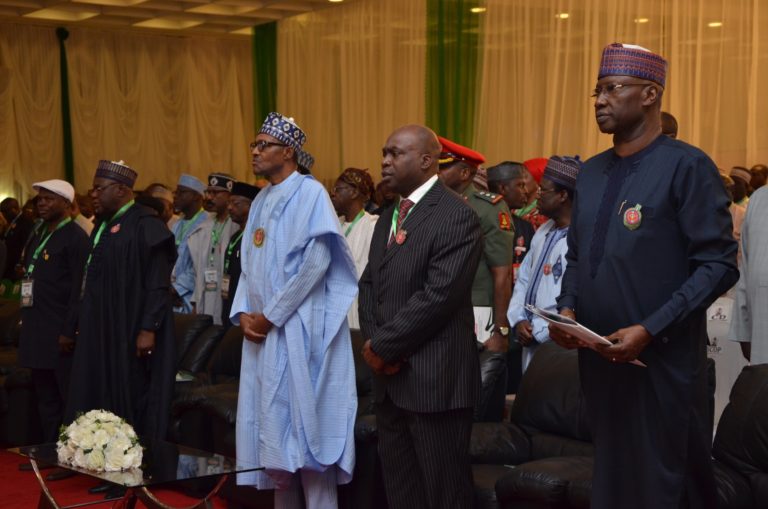
Professor Bolaji Owasanoye, Chairman of ICPC disclosed this in Abuja on Tuesday while speaking at National Summit on Diminishing Corruption in the Public Sector and Presentation of Integrity Awards.
“We can see the states where this money may be potentially taken if it is released,” Owasanoye said.
“Needless to say, we are persuaded sir that Mr. President will not allow the release of money embedded in the budget for no particular purpose.”
According to him, the breakdown of budgetary allocation for 2019 revealed that empowerment and capacity building take over 50 percent of the budget for Zonal Intervention Projects.
“If releases are made, these allocations cannot be effectively tracked except we adopt a different implementation approach,” he said.
Speaking on the tracking of constituency projects which the Commission commenced in April, the ICPC Chairman said Constituency Project Tracking Initiative covered the first term of President Muhammadu Buhari (2015 and 2018).
Explaining that Zonal Intervention Projects enjoy annually a captive budgetary vote of N100billion, Owasanoye, said the Constituency Projects Tracking Groups (CPTG) team monitored and completed the pilot phase consisting 255 projects out of 424 projects in 12 states spread across the six geo-political zones.
He said the total appropriation for the selected projects was N24.32billion out of which N22.27billion was awarded in contracts.
Owasanoye said his agency has saved the government about N2billion in the recovery of diverted assets, such as equipment for schools, hospitals, farms, water or energy projects, marginal improvement from use or supply of substandard materials, recovery of money from overvaluation, identification of vulnerabilities and preventive measure for future projects.
He said the CPTG team also forced 34 contractors back to the site in several states and not fewer than 200 contractors have gone back to sites on their own volition.
“… we discovered that some agencies of government are favorites for embedding of constituency projects irrespective of their core mandate and capacity of these agencies to deliver or supervise projects. The attraction appears to be either corrupt tendencies within such agencies or the inherent weaknesses within them. Most notorious in this regard are Border Communities Development Agency and Small and Medium Enterprises Development Agency of Nigeria.”
Owasanoye said the Commission also discovered gross abuse of personnel budget and inflation or padding of the nominal role when it conducted System Study and Review of Ministries, Departments and Agencies (MDAs) practices.
“As at the time we went to press we had covered about 300 MDAs and the amount inflated was about N12b. As at today your Excellency we have discovered additional N6b making a total of N18.624b restrained by ICPC,” Owasanoye said.
Touching on the detail of the system study and review of MDAs, he said ICPC widened the use of its powers under section 6(b-d) of our enabling law to scrutinize the practices, systems and procedures of MDAs in respect of personnel cost from 2017 to July 2019 and 2018 capital development fund.
“Part of our preliminary findings… revealed gross abuse of personnel budget and inflation or padding of the nominal role,” he stated.
According to him, culprit MDAs are mostly academic and health institutions, which he said included University of Benin Teaching Hospital with padded N1.1billion personnel cost; Federal Medical Center, Bayelsa, N915 million; Nnamdi Azikwe University, N907million; University of Jos, N896 million; University College Hospital Ibadan, N701million; Usman Dan Fodio University, N636million and University of Ibadan N558m.
He however, noted that institutions and all those implicated would be given the opportunity to explain themselves while investigations are on to confirm any credible explanations they may have.
“We have alerted the Minister of Finance of our findings and appropriate steps are being taken to ensure that implicated MDAs will not be able to spend the excess built into their personnel budget.
Let me note with regret sir that in the 2017-2018 fiscal year the balances recorded for personnel were wrongfully utilized by MDAs for other purposes due to lack of proactivity by late enforcement and related agencies. That sum amounted to N18.39billion,” he said.
The Commission, Owasanoye, said has recommended based on the findings, for full implementation of the president’s directive that MDAs not on IPPIS should not be paid as review shows that most of the guilty MDAS are not on IPPIS.
Speaking further, he said that it was found that some MDAs spent N9.2billion of capital funds on overhead related items contrary to extant financial regulations.
The Commission also found that some MDAs failed to remit tax and divert pension and NHIS deductions for unrelated payments thus aggravating the sufferings of other Nigerians.
“Some MDAs abused the e-payment policy of government thus making payments through staff accounts instead of to actual beneficiaries.
“Most egregious in the current cycle of review is the Federal Ministry of Water Resources where N3.3b was paid out in about a month through the accounts of staff. ICPC arrested 59 directors from the ministry and investigation is ongoing,” he said.
He said the ICPC has recommended that diversion or non-payment or remittance of tax, pension, health insurance or any statutory deduction should attract dismissal of heads of the agencies and immediate prosecution.
“Should government accept this recommendation ICPC will furnish government with list of defaulting MDAs.”
Acheju Abuh, the Women Leader of PDP’s Wada/Aro Campaign Council, was on Monday set ablaze by a group of suspected political thugs in her home at Ochadamu in Ofu local government area of Kogi state after last Saturday’s governorship election in the state.
It was learnt that the suspected thugs who invaded the home of the victim at about 2:00 pm, locked all exits in the house and poured petrol on it before incinerating the house.
According to the report by DailyTrust, the woman was burnt on Monday afternoon by suspected thugs alleged to be loyal to All Progressive Congress (APC)-the the ruling party in the state.
The suspected thugs were said to have prevented locals from coming to the rescue of the woman as they shot sporadically to scare people away and kept watch until the building had been razed.
Eyewitness account claimed that Abuh attempted to escape through a window but was prevented by the metal burglary proof and gunshots with bullets raining in her direction.
“The bloodthirsty thugs waited, shooting and watching with relish while Mrs Abuh cried from inside the inferno until her voice died out.”
The thugs were said to have dispersed when the entire house and Mrs Abuh had been completely burnt.
William Aya, the spokesman of the Kogi Police Command, confirmed the incident to the media, said it was a case of culpable homicide and mischief by fire.
Aya said that about 4:30 pm, November 18, 2019, one Musa Etu of Ochadamu, Ofu LGA reported at the station that, at about 10:30 of the same date, there was a misunderstanding between one Awolu Zekeri, aged 35 years member of APC and one Gowon Simeon, a member of PDP both of Ochadamu.
“In the process, Gowon Simeon stabbed Awolu Zekeri with a knife on his lap and he (Zekeri) died on his way to the hospital.
“As a result, angry youths in the area mobilized to the house of one Simeon Abuh of the same address who is an uncle to the suspect, set it ablaze, thereby burnt one Salome Abuh aged 60 years.
“Three other houses were equally burnt. The corpse has been moved to the University Teaching Hospital Mortuary Anyigba for Autopsy.
“Meanwhile, the Police Mobile Force and Police Special Forces have been drafted to the area to prevent any breakdown of law and order. The investigation is ongoing”, Aya said.
THE Nigerian Army said it has recovered gun trucks, anti-aircraft guns, ammunitions among other items from Boko Haram fighters in a failed ambush by the insurgents.
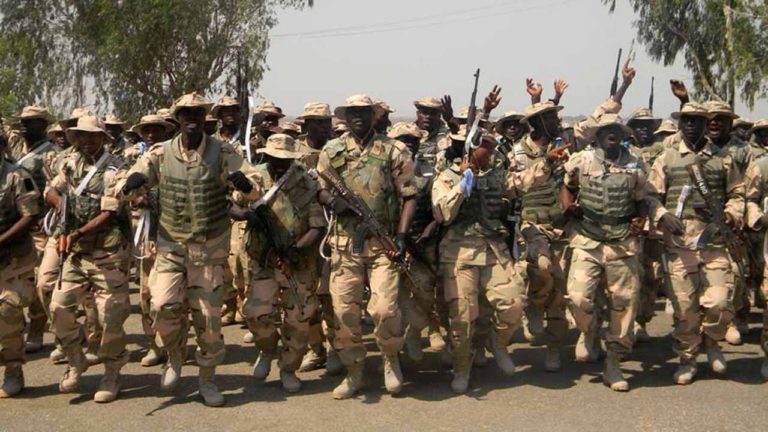
In a statement by the army authorities signed by Aminu Iliyasu, the Nigerian Army Operations Media Coordinator, the troops of 153 Task Force Battalion during a fighting patrol on Monday were ambushed by Boko Haram insurgents along Ala Village, in Dikwa local government of Borno State.
He said the patrolling army troop were able to turn the ambush around as they engaged in a firefight with the terrorist who eventually flee abandoning their weapons and food supplies.
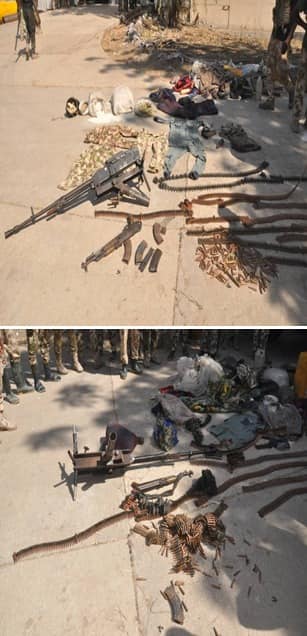
The troops embarked on a pursuit of the fleeing insurgents who abandoned two gun trucks, two anti-aircraft guns, 2,080 Rounds of 7.62mm NATO ammunition, 26 Rounds of 12.7 mm armour-piercing incendiary ammunition, he said.
According to him, the troop was also able to recover three AK 47 Rifles, six rounds of 12.7 mm (Belted), one AOJOE motorcycle including some clothes, food supplies and mechanical tools.
He said most of the Boko Haram members were believed to have escaped with varying degrees of gunshot wounds.
“The Chief of Army Staff, Lieutenant General Tukur Yusufu Buratai commends the troops for their gallantry, and equally wishes to reiterate the commitment of the Nigerian Army to accomplish its constitutional mandate professionally and responsively for a secured Nigeria,” he wrote.
He expressed the appreciation of COAS to well-meaning Nigerians for their unalloyed support, goodwill and understanding towards officers and men of the Nigerian Army as they tackle multiple security challenges confronting the nation.
He added that less than two weeks ago, Boko Haram suffered a tactical boomerang when some of them were neutralised and maimed as they mistakenly stepped on the same improvised explosive device that they had earlier planted.
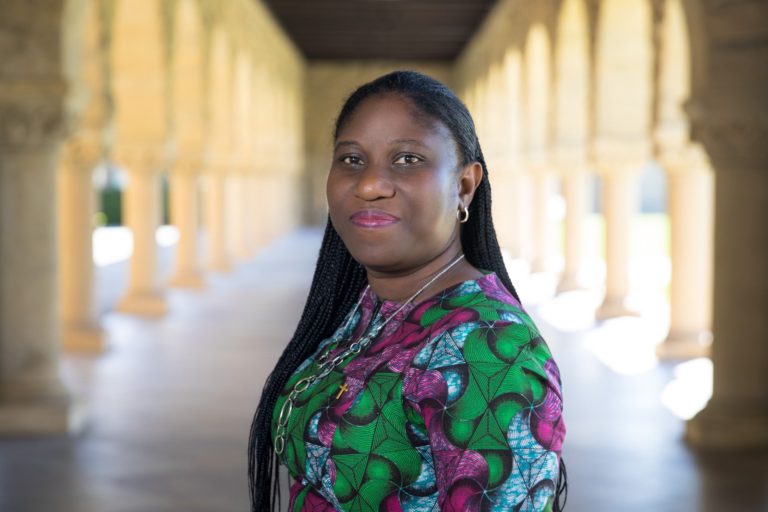
THE Wole Soyinka Centre for Investigative Journalism (WSCIJ), has appointed Motunrayo Alaka as Executive Director of the organisation.
In a statement signed by the Board Chairman, Ropo Sekoni, he disclosed that the appointement was as a result of a board decision made on September 19, 2019 at the board meeting.
The board noted that her promotion was long overdue, highlighted Motunrayo’s long service and her unalloyed loyalty during the organisation’s long thick-and-thin growing period.
The board also said her efforts were central to the organisation’s many successes as a reference point in the promotion of journalism and the media for the enrichment and consolidation of democracy in Nigeria and beyond.
Prior to this appointment, Motunrayo served as the pioneer Centre Coordinator since December 2008.
As the cordinator, she provided strategic leadership for WSCIJ’s programmes and managed relationships
with the organisation’s stakeholders.
According to the statement, she grew the organisation from its initial two programmes
– the annual award and lecture, to more than 10. Sekoni added that she was the pioneer Programme Manager of the Wole Soyinka Investigative Reporting Award from 2005 to 2006 having been a key member of the team that commenced the initiative in 2005.
Motunrayo has over 14 years’ experience in journalism, media strategy and programme development and is passionate about issues of collaboration, ethics, inclusion and sustainability especially as they relate
with the media and governance. She has enabled the training of more than 1050 reporters across 100 media organisations and led the implementation of over 210 reports that have been published across the Nigerian media on issues including health, girls and women, education, the extractives (oil and gas), politics, governance and electricity.
Among other endeavours, Motunrayo Alaka has served on award boards for the United Nations Educational, Scientific and Cultural Organisation (UNESCO) International Media and Information Literacy Award Committee and the British Broadcasting Corp. Service Trust.
She is currently a fellow of the 2019-20 class of the prestigious John S. Knight Journalism Fellowships at Stanford University in California, United States.
WSCIJ is the pioneer organization focused on promoting investigative reporting in Nigeria.
SIX years ago, the Federal Government unbundled the power Holding Company of Nigerian (PHCN) and handed over 18 utility firms to private investors. Government raked in $2.5 billion (about N916.575bn) from the transaction involving six Generation Companies (GenCos) and 11 Distribution Companies (Discos).
The private investors personally collected their share certificates from the then President Goodluck Jonathan on September 30, and took over the management of the assets from November 1, 2013.
From the DisCos, the government got $1.3bn (now about N456bn), but Daily Trust investigation revealed that electricity consumers still get epileptic supply, buy meters, transformers and other electrical materials across the 11 privatized DisCos.
Records from the Bureau of Public Enterprises (BPE), which coordinated the transaction, put the payments at $2.525 billion (N1 trillion). The breakdown shows that government sold stakes and concessioned the six GenCos for $1.269bn (N460.7bn).
The 10 DisCos (the sale of Kaduna Electric held later) were sold at $1.256bn (about N455.9bn) for 60 percent shares as government retained 40 percent stake.
A Schedule of Licence Fees document used for obtaining licence from the Nigerian Electricity Regulatory Commission (NERC) showed that, each DisCo paid N1 million licence application fee to NERC.
After that, a DisCo paid $75,000 (about N27.1 million) as the licence fee, which is valid for 10 years. In all, the 11 DisCos paid N298.3m as licence fee to NERC plus N11m application fees. This was separate from the $1.256bn they paid to BPE for acquiring the distribution assets.
According to excerpts of the Performance Agreements, the privatized GenCos and their new owners were to have added 5,000 megawatts (MW) of electricity to the national grid after five years, which was 2018.
The DisCos were to have metered their customers and reduced their Aggregate Technical Commercial and Collection (ATC&C) losses in the first five years when a review would be done on how well the investors managed the firms.
Who owns privatized DisCos?
BPE has officials representing the 40 percent federal government’s stake in each of the 10 DisCos’ board. BPE is also fully operating the Yola DisCo after the core investor pulled out in 2015.
The transaction documents for the DisCos’ privatization show that AbujaDisCo was acquired for $164m by KANN Utility Consortium Ltd, which is a joint venture between CEC Africa Investment, a Zambian firm. The local firm is, Xerxes Global Investments Limited.
A businessman, Victor Gbolade Osibodu through his Virgeo Power Ltd for about $128m, acquired Benin DisCo. He is the husband of a former Managing Director of Union Bank, Mrs Funke Osibodu, who is the present MD of Benin DisCo. Vigeo was to invest N40bn in next five years to turn it around.
The Chairman of West Power and Gas, Mr Charles Momoh along with, Dr Tunji Olowolafe, and Mr Ernest Orji fronted for Eko Disco and partnered with Siemens Ltd of Germany. The consortium acquired the DisCo for $135m and committed to spend $257m for its improvement.
Korea Electric Power Company (KEPCO) and New Electricity Distribution Company (NEDC) formed a Consortium and partnered with Tonye Cole’s Sahara Energy to acquire the Ikeja DisCo at $134.75m. It also acquired Egbin GenCo.
Integrated Energy Distribution and Marketing Company (IDMC) fronted by John Olatunde Ayeni, former Chairman of Skye Bank (Polaris) acquired both the Ibadan and Yola Discos for $160m. It dropped Yola DisCo in 2015.
Yusuf Hamisu Abubakar is the Managing Director of the Sahelian Power SPV that acquired Kano DisCo for $102m. Abubakar is a board member at Niger Insurance Company.
Emeka Offor’s Interstate Electrics got Enugu DisCo for $106.4m. The firm could not meet up earlier with the 75% payment deadline and was earlier recommended by BPE for disqualification.
Reports said Alhaji Mohammed Noma, Chairman of the Aura Energy got Jos DisCo for $28m. The politician was a former speaker, House of Assembly in Bauchi state in the first republic.
Governments of Bayelsa, Rivers, Cross River and Akwa Ibom state formed the 4Power Consortium to get Port Harcourt Disco. 4Power said it partnered with other private investors to manage the asset.
Sahelian Power SPV later got Kaduna DisCo and has been managing it. While Yusuf Hamisu Abubakar is Chairman of Kaduna Electric, another partner and politician, Jamil Gwamna is the Managing Director of Kano DisCo.
The site where consumers contributed to have their transformer replaced at Agingi in Plateau State. Jos DisCo took the old one without bringing a new one but took money
Performance assessment yardsticks of DisCos
As at December 31, 2017, a NERC metering report said 4.7 million electricity consumers were not metered since the privatization exercise. It represented 55 percent of the about eight million registered electricity users NERC identified.
The regulator unveiled the Meter Asset Providers (MAP) regulation with effect from April 8, 2018 for customers to buy meters.
Between 2013 and November 2016, the Daily Trust investigation found that the 11 DisCos had a targeted 4.92m customers; installing 1.640m meters annually. But they failed.
DisCos only installed 201,756 meters while customers bought 410,796 meters under the old Credited Advance Payment for Metering Initiative (CAPMI) replaced by the MAP regulation. That means, customers bought 51 per cent more meters than DisCos in three years.
In the 1st Quarter 2019 Report of NERC, out of the 8.841m registered electricity customers, only 3.794m (42.9%) have meters. 57% representing 5.047 customers are still on estimated billing, “which has contributed to customer apathy towards payment for electricity.”
While consumers groan under ‘crazy bills’ without adequate meters, MAP however failed to takeoff until May 2019. So far, a metering schedule for 10 DisCos obtained by this paper indicates that they ought to install 5.545 million by 2020 to bridge the gap.
They target 1.064 meters under MAP by 2019 ending (next month). Although 2019 will end soon, updates show that all the DisCos under MAP have installed less than 50,000 meters, indicating just 5 percent of their 2019 target.
For future targets, the DisCos should install 2.674m meters in 2020, 1.593m units in 2021 and 313,637 meters should be installed by 2022.
Customer complaints abound
NERC report in Q1 2019 revealed that while the 11 DisCo cleared 78% complaints, the 30 Forum Offices of NERC resolved 41%, leaving 59% cases pending. 151,938 electricity consumers made complaints at the 11 DisCos.
The DisCos reported resolving 118,563 complaints, representing 78% of them leaving 33,375 complaints. Top of the complaints were metering, estimated billing and service interruption, accounting for 92,626 complaints.
NERC has 30 Forum Offices in 29 states for handling consumer complaints to 30 across 29 states plus Abuja. They received 2,678 complaints, and 59% of them were not resolved.
The site where consumers contributed to have their transformer replaced at Agingi in Plateau State. Jos DisCo took the old one without bringing a new one but took money
Customers fret over high bills, buy equipment
In spite of the $1.4 trillion the DisCos said they have invested since 2013, electricity consumers lament dissatisfaction, poor supply, outrageous bills while they buy transformers, cables and even meters.
The Consumer Rights and Obligations Regulation document obtained from NERC indicates that the rights were enshrined in the Electric Power Sector Reform Act (EPSRA), 2005.
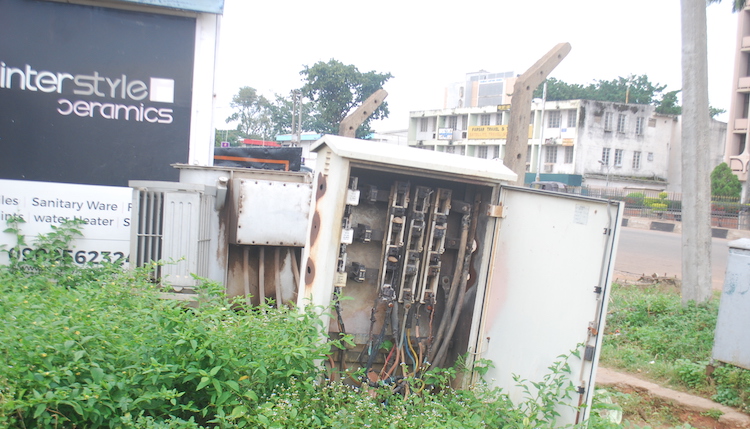
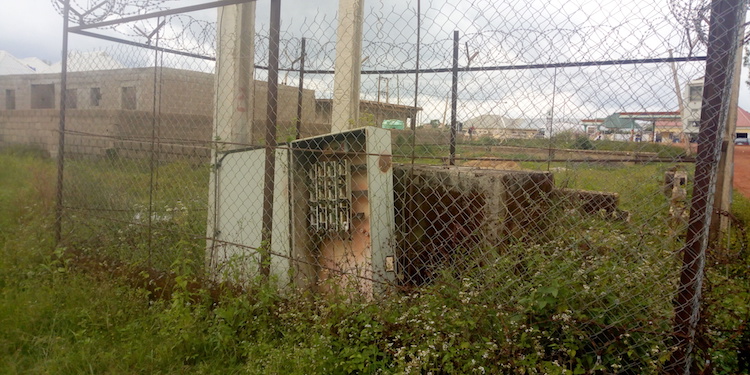
The content of the Regulation places the responsibility of buying, replacing or repairing electricity transformers, poles and related equipment used in the supply of electricity on the 11 DisCos operating in Nigeria, and not on consumers.
However, the Daily Trust investigation in about 30 communities being served by seven of the DisCos across eight States, show that many DisCos have not complied with this regulation.
In Kaduna metropolis where Kaduna Electric has its headquarters, our reporters surveyed the service conditions in some communities. Residents of Kwanar Almajirai at Hayin Dan Mani Community in the Rigasa District of Kaduna are tired of contributing to fix their transformers anytime the fault occurs.
The transformer was faulty again and the residents taxed themselves from N11,500 above to buy a new transformer. A resident, Abdullahi Adamu said the community had been without electricity for the past two years because each time they fixed it, the transformer goes bad again.
Asked if the residents formally reported the fault to Kaduna Electric officials, Adamu said, “They are aware but they are not helping matters because each time we informed them they will ask us to be patient.”
In Dan Mani area of Kaduna town, Malam Usman Idris lives on Muhammadu Buhari way adjacent Yazifa Street. “We agreed to contribute N25,000 because the electricity company is not helping matters to repair our transformer.”
Sadly, Idris said officials of Kaduna Electric gave the approval for the community to contribute the fund. Five others streets in the community suffer similar fate.
A criss cross of illegally connected wires along Bank Road, adjacent Kaduna Electric headquarters in Kaduna
In Ikeja area of Lagos State, Bamidele Ogunwusi who leaves along college road, Ifako, under Ikeja Electric said the officials have asked residents of the area to be prepared to pay for transformer replacement after their 50KVA pole mounted device went bad.
“When we approached the Ikeja Electric officials, they said if they cannot fix the spoilt 50KVA transformer, we should start making up our minds to contribute for a new transformer which will cost us about N1 million,” he explained.
Mr Anthony Chukwu, a businessman at Akesan Igando, in Alimosho LGA said residents were asked by the Ikeja DisCo officials to pay N10, 000 each to replace a faulty 500KVA transformer.
Under Abuja DisCo, communities also raise money to buy transformers and other electrical materials. Residents of Appma, Angwan Doka in Karu LGA, the biggest hub of Nasarawa State have similar tales.
In Appma, house owners said they pay between N50, 000 and N70,000 each to the electricity committee to get connected to the two community transformers that were bought by residents since 2012.
Mr Bulus Audu said, “The most worrisome of the situation is that, the payment continues even after the initial payment of N50, 000 or N70, 000. They said the about N4, 000 to N8,000 is for unending transformer oil, coil or maintenance, while AEDC officials would come to also collect their bills from us at month end.”
In Dutse area of Abuja still under AEDC, private 33 kilovolt (KV) transformers flood the network, just as it is in Kubwa and other parts of the FCT. At Dutse Zone 4 a resident said to have bought pole-mounting transformer collects N100,000 from residents to connect them. During the survey, it was observed that the practice is everywhere, in Masaka, New Nyanya, Ado, and Mararaba towns in Nasarawa State to Kurudu, Karu, Nyanya, Sokale, Bwari towns in the FCT.
Transformer at APPMA Village, Phase 1, New Nyanya in Nasarawa State
In Yola, Adamawa State, Yola DisCo electricity customers face similar challenges of high billing, buying transformers and paying for repairs. Our survey of communities in Yola town revealed the poor state of the DisCo’s services.
Malam Ladan Musa is a resident of Sangere, a settlement along Numan Road in Yola. The community transformer broke down for three months without being fixed by Yola DisCo. They had raised N300,000 to fix an earlier fault.
At the Jambutu area in Yola, the substation was severally submerged during this rainy season, causing the electricity company to shut down supply whenever it rained.
“We live in perpetual panic as we fear possible electrocution when the substation gets over flooded. The DisCo has not done much to arrest the situation,” resident Bello Kundi said.
A vigilante group leader, Ojo Johnson decried frequent cable theft and other vandal activities at the Jimeta metropolis of Yola. He said in some areas, residents contributed money to form local guards to protect transformers.
Some Enugu communities have constant outage than power supply. The people of Owerre Umabor Community, in Eha-Alumonah, Nsukka LGA of Enugu State said they have not seen electricity for two years.
A community leader, Comrade Emmanuel Ugwueze said their faulty transformer was taken away by officials of Enugu DisCo for repair in 2017. “The DisCo made several promises concerning the power failure, but did not “keep even one promise.”
At Nsukka town of Enugu, residents also pay to fix their transformers and buy cables too. Obinna Okafor said in spite of this sacrifice, “We are faced with huge estimated billing and if you don’t pay, they will cut off the supply.”
Epileptic supply with shabby networks rock Obolo Afor, Enugu state. Friday Okwudiri, a furniture dealer said the cost of making chairs and beds are rising as they depended more on generators at the furniture market.
In Edo state the power situation is at its lowest ebb as majority of the resident hardly get six hours electricity from the Benin Electricity Distribution Company (BEDC).
A resident in Benin City, Mike Igbinoba said, in my area, the electricity is being rationed three hours on and three hours off but we hardly get three hours electricity in a day.
There are areas in Benin that have been without electricity for months. Those having electricity in Benin are the supper rich companies who can afford to pay between N200, 000 and above N1 million.
Osazee Edigin, a public relations officer of Edo State Civil Society Organisation said, lamented poor services of BEDC. “Business activities have crumbled due to power outage and our youths are migrating.”
Survey of communities in Kumbotso, Tarauni, Gwale and parts of Nasarawa LGAs in Kano shows residents contribute money to buy and repair faulty transformers.
Most residents claim the DisCo often takes time to clear faults, leaving them in the dark for weeks or months.
This transformer in Umuakpahu community near Port Harcourt has always been fixed by residents as Port Harcourt DisCo won’t help
At Tudun Yola quarters, Gwale LGA, Daily Trust found that residents bought the operational transformer. The Secretary, Tudun Yola Community Development Association, Alhaji Ali Tamasi Mu’az said they had to buy a new one when the first one damaged and they were in the dark for two months.
In Plateau State, residents of Agingi community and Akak Achahu have their power supply rationed. When their transformers went bad, they raised monies but can’t get Jos disCo to fix them or even return the faulty transformers.
The Village Head, Akak Achahu, said they had to task each house N2,000 to raise the money and that they have the records of the monies collected and paid.
At Angwan Rogo in Jos North, residents said their transformer at Danbadawe Street has issues. Salisu Ahmed said they have stayed for about a year now without light after their former faulty transformer was taken away for repairs for so long.
Chairman of Umuakpahu Landlords Association, Chief Victor Omeudo in Oyigbo LGA of Rivers State said residents contributed N33,000 each to buy a new transformer for N1.8m after their 500KVA exploded. They did this because PHEDC failed them.
Energy theft, poor payments affecting DisCos
A document from the Association of Electricity Distributors (ANED) representing the interest of 10 DisCos puts the losses traced to energy theft and poor payment at about N155.89bn in 2018. That was 70 percent of their Aggregate Technical and Commercial Collections (ATC&C) losses.
The energy loss they said, affect the revenue available to the power sector value chain and raises the amount paid by customers who pay their bills regularly.
At Ikeja DisCo, 43,000 prepaid meters from the 134,000 units installed were tampered with. Port Harcourt DisCo reported 30 percent revenue loss due to energy theft. Enugu DisCo lost 43 percent revenue monthly to energy theft.
NERC recognized this loss factor in its first quarter 2019 report noting that, for every ₦10 worth of electricity received by DisCos, ₦2.00 is lost due to energy theft and poor distribution infrastructure.
The electricity debts owed by Ministries Departments and Agencies (MDAs) at both the Federal and State government levels is a concern. By October 2019, MDAs owe N120bn; the military and security forces owe the highest portion. “Electricity debts owed by MDAs are currently, in excess of N100bn; the MDA debts constitute a leakage from DisCo remittance,” ANED said.
Operators finger regulatory issues
Speaking on the problem of the power sector, the Executive Director, Research and Advocacy of ANED, Barrister Sunday Oduntan said government failed to fulfill its Conditions Precedents (CPs) after the privatization. A proposed N100bn subsidy for two years to cushion the effect of a tariff hike to customers was not paid.
The baseline studies by NERC to define the actual ATC&C losses for each DisCo took 12 months after privatization and that delayed the DisCos’ targets. About six bi-annual minor reviews since 2016 were not implemented.
ANED said power generation wholesale contract price rose to about N40 but DisCos were held by NERC to sell for below N30.
However, 10 DisCos under ANED in their first quarter 2019 performance report recorded positive growth. The DisCos’ collection efficiency rose by N61bn, which is 16 percent higher than that of the entire 2018.
From about 5 million registered electricity consumers in 2013, the 11 DisCos did customer enumeration and now, 8.841m customers were captured as at March 2019.
The average ATC&C of the 10 DisCos dropped to 47.2 percent in February 2019 from the 56 percent average when they took over the assets in 2013.
Suicidal block making spree in Dawaki, Abuja under Abuja DisCo
Experts speak on improving sector
President, Consumer Protection Network, Barrister Kunle Kola Olubiyo, said there are still a lot of gaps to be addressed with regards to the performance of the distribution companies (DisCos) in terms of customer services.
“I cannot say we have really gotten it so well. From DisCos to DisCos they have what they call their KPI and an automated device, which allows for tracking from DisCos to DisCos.
“But if we have to look at it generally there are backlog of unresolved issues that got to do with consumers’ dissatisfaction in the sector. Until lately when the regulator (NERC) gave notice for their intention to review the operational license of some DisCos, the operators in the last three years operated like lame ducks” Olubiyo held.
President of Association of Public Policy Analysts (APPA) – Comrade Princewill Okorie said the level of performance of the DisCos in terms of customer services since privatization is not encouraging because of ‘exploitation.’
“For instance they have not been obeying Sections 80, 81 and 82 of the Electric Power Sector Reform Act of 2005; that is on consumer protection and licensing performance standard. Specifically there is exploitation and fraud in collecting reconnection fee that is contained in that Act.
“Also they are not obeying estimated billing methodology. Therefore, both the DisCos and NERC have not helped matters in the area of consumer protection,” he said.
Some of the spokespersons for the selected DisCos who were contacted, commented on the findings of the investigations especially on why customers should buy transformers and other electrical materials.
The Head, Corporate Communications at Kaduna Electric, Abdul’azeez Abdullahi said nobody asked people to pay or contribute money to replace or fix their faulty transformers. He said the DisCo preferred that customers offset their bills promptly so that such transformers serving them can be fixed when faulty.
“We never asked people to contribute money to fix or buy transformer. They don’t want to pay bills rather, when their transformers get spoiled they will be running helter-skelter to fix it. Nobody say they should fix transformer let them pay their debts which was what we expect from them,” Abdullahi explained.
The Acting Head, Communication at Jos DisCo, Saratu Aliyu said the DisCo does not encourage any community to pay money for transformers. However, if any community wants to be part of facilitating the process of getting a transformer, they should discuss formally and follow procedures.
For the two communities where they paid to DisCo’s officials and did not get transformers, Aliyu assured of probing the cases.
Head of Corporate Affairs and Communications at Yola DisCo, Kingsley Nkemneme said 15 transformers were vandalised in Yola town, which the DisCo fixed. It also fenced 150 transformers recently and encouraged communities to help in guarding the equipment.
Head Corporate Communications of Kano DisCo, Ibrahim Sani Shawai said DisCos are responsible for clearing faults but that such complaints about faulty equipment or mishap in the distribution lines should be channeled properly.
“If it is beyond what our Customer Service Point (CSP) can do immediately, they will take the transformer to our workshop and if it is beyond repairs we bring a replacement, but people don’t report,” Shawai said.
BPE, NERC wield stick after failed years
BPE summoned a meeting of the Shareholders of the Discos on 26th of June 2019 to add more members representing the 40% government’s stakes in the DisCos.
“The FGN decided to increase its representation (Directors) on the Boards by two given its 40% shareholding. The objective is to ensure transparency in their operations as well as improve their performance.”
In July 2019, the Federal Government and Siemens AG signed a six-year roadmap agreement for developing the power sector with a target of 11,000MW by 2023. Siemens AG’s Global Chief Executive Officer, Mr Joe Kaeser signed the pact with President Muhammadu Buhari at the State House in Abuja.
Government said it is seeking $3bn loan from World Bank to reset the power sector.
NERC on its part wielded the big stick in October 2019, by threatening to cancel the licenses of eight DisCos in 60 days for accumulating N30.1bn energy invoice debts in July 2019.
NERC said the eight DisCos received N36.1bn invoice from the Nigerian Bulk Electricity Trading Plc (NBET) for bulk energy but remitted only N5.91bn, representing just 16 percent performance. They are getting sanctioned for the balance of N30.1bn.
That was the first of its kind in six years. The affected DisCos paid N216.9 million to get the licence during the 2013 privatization: it is valid for 10 years and also renewable for N500, 000 after expiration.
The eight affected DisCos include Enugu, Abuja, Benin and Port Harcourt DisCo. The rest are Kano, Kaduna, Ikeja and Yola DisCo (now under public management).
In a reaction, the DisCos’ association – ANED said they will need N8.7bn to comply with that, and feared that compliance with the NERC Order will make them cut staff and may reduce overall performance.
Responding, the General Manager, Public Affairs Division at NERC, Dr Usman Abba-Arabi in a response to enquiries on this investigation, referred to NERC Order to the affected DisCos on cancelling their licences in 60 days since October 2019.
The Commission also issued another Order on November 5, 2019 insisting that DisCos must present their performance scorecard in writing and would be evaluated by the public.
Arabi said: “The orders that we gave to the DisCos encompass everything including their performance improvement, the issue of customer enumeration, and customer care, they are all in there. Whatever they submit, we will take to FIRS and to CBN to verify before taking decisions.”
On the implication of cancelling the licence, the NERC spokesman said: “The deadline given to the DisCos to provide responses was 60 days (Elapses on December 7, 2019), and that would be unfair to preempt the outcome. When the DisCos submit their responses, NERC will look at them and then know what to do,” Arabi noted.
This report is part of a collaborative investigative series by Daily Trust, the International Centre for Investigative Reporting (ICIR), Premium Times and TheCable, facilitated by the Wole Soyinka Centre for Investigative Journalism (WSCIJ) under its Regulators Monitoring Programme (REMOP) for the Electricity Sector, with support from the John D. and Catherine T. MacArthur Foundation.
PRESIDENT Muhammadu Buhari on Monday affirmed the electoral victory of the incumbent Kogi State Governor, Yahaya Bello, stating he ran a good race in the November 16 governorship poll and won it well.
In his congratulatory message on his Twitter handle to Governor Bello, who was adjudged winner of the “controversial” elections by the Independent National Electoral Commission, INEC, he described the victory as “well-won”.
The President described the election and emergence of the All Progressives Congress, APC, candidate as “a race well run and a victory well won,” he said.
In a statement delivered through Femi Adesina, media aide to the President, he also commiserated with families who lost their loved ones during the election.
“Let me enjoin Governor Bello to imbibe the spirit of magnanimity in victory by extending a hand of partnership to opposition candidates while urging those dissatisfied with the outcome of the election to approach the courts,” the statement reads.
Congratulations to Governor Yahaya Bello on his re-election. It was a race well run and a victory well won. I urge him to see his renewed mandate as another opportunity to build on the foundations already laid towards improving the lives of the people of Kogi State.
“I commend all APC, supporters for remaining steadfast and resolute even in the face of isolated incidents of violence. All political actors and stakeholders must take deliberate steps to eschew electoral violence as a peaceful and orderly process are vital to our quest for enduring democracy”, President Buhari stated.
Buhari urged Governor Bello to see his renewed mandate as another chance to build on the foundations he had laid in his first term towards improving the lives of the people of Kogi State.
Bello of the APC had polled a total of 393,540 votes to defeat Musa Wada of the Peoples Democratic Party, PDP, who scored 189,704 votes.
Natasha Akpoti of the Social Democratic Party was third with a total of 9,482 votes.
International observers have expressed dissatisfaction with the Kogi elections over the conduct which was marred with widespread incidents of violence and intimidation of voters.
Amongst the observers are the European Union, EU, The Diplomatic Watch made up of observers from Austria, Germany, Ireland, the Netherlands, the United Kingdom, and the United States who also voiced their concerns.
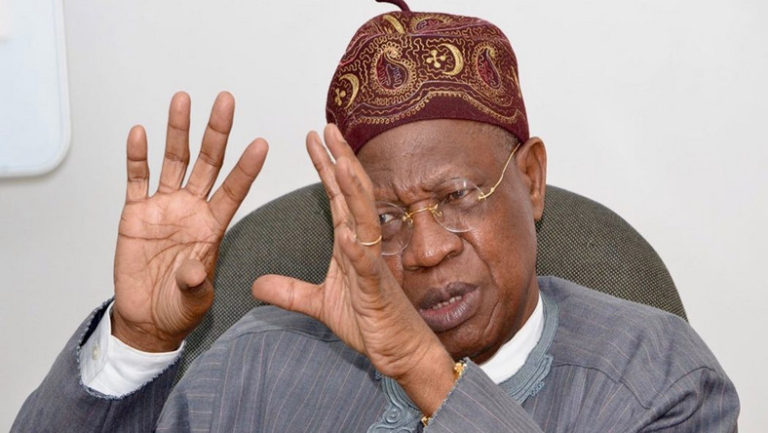
THE Minister of Information and Culture, Lai Mohammed has emphasised that the Federal Government would carry on with its plan to regulate social media in Nigeria over hate speech and fake news.
He disclosed the government’s plan during a courtesy visit by the Nigerian Union of Journalist (NUJ) National Executive led by Chris Isiguzo along with other executive members in Abuja on Monday.
Mohammed said the NUJ had failed to contact the ministry to lodge any complaints concerning the regulation before they approached the media to condemn the regulations.
“If the NUJ or the Guild of Editors, or indeed any professional body has any fears, we expect them to reach out and engage us, rather than rushing to the media to condemn a plan to inject sanity into the social media space and protect the integrity of the media,” Mohammed said.
According to him, the NUJ had put the cart before the horse by publicly rejecting the planned social media regulation without even trying to understand what it entails.
Mohammed said, “As a professional body for journalists, the NUJ has its code of ethics for journalists, and this guides their operation”.
He noted that to the best of his knowledge, the trained, professional journalists cannot afford to engage in fake news because it will kill the public trust in the media.
Mohammed said that the media could not afford to engage in hate speech, because of the implication for national peace and unity, adding there has to be a country before the media can practise the profession.
He said the plan is to inject sanity into the social media space and it has nothing to do with gaggling journalists or stifling free speech.
“When we announced the plan to regulate social media, we said clearly that the regulation is not an attempt to gag the media or muzzle free speech. We said journalists have nothing to fear,” he noted.
Speaking on the activities that have been put in place on the regulation, Mohammed said letters have been dispatched to the stakeholders concerning the regulations.
“We will not unilaterally impose measures aimed at injecting sanity into the social media space. We will work with stakeholders, including the NUJ, Guild of Editors, Newspaper Proprietors Association of Nigeria, the Civil Society, Online Publishers, Bloggers, etc,” he added.
He said a government that has the intention of gagging the media won’t engage stakeholders in dialogue on the way forward.
He said the NUJ and other media professional bodies should take the lead in sanitising the social media space, because they would be the first victim when the people lose confidence in the media
FORMER Chairman of the National Human Rights Commission (NHRC), Chidi Odinkalu has said the federal government needs to account for Nigerians who are missing and also be accountable to their families.
“Under Nigeria’s constitution, government still has the primary obligation for the safety and security of every person within the country’s territory,” he said.
The former NHRC boss said this in a series of tweets during an interactive Tweetchat, alongside Humanitarian Girl-Child Advocate Bukky Shonibare on “Missing Persons in Nigeria” organised by the International Centre for Investigative Reporting (ICIR).
According to him, the families of the missing also deserve closure in dignity.
He said, “Where people have gone missing because of a crime or violation of the law, these are constitutional values and legal obligations, the duty of government is to bring violators of such things to justice.”
In the standard process of reporting a case of missing persons and who should make such reports, Odinkalu said The International Committee of the Red Cross (ICRC), is the safest place to report a case of suspected missing person in a humanitarian theatre – the person reporting has least likelihood of exposure to adversity from belligerents which they, in turn, liaise with belligerents.
“There’s a general aversion in official circles in Nigeria for honest statistics, adding that those who can and feel confident enough to approach security agencies, such as Nigerian Army, Nigerian Police should feel free to do so.”
Bukky Shonibare, on her part, said people go missing for different reasons such as conflicts, crises, abductions, disasters, and accidents.
She, however, said the cause with the highest number is conflict, and it is more in the northeast due to the continuous armed conflict.
On the mechanism to implement when searching for missing persons, the Girl-Child Advocate highlighted some approaches to take into consideration such as visits to IDP camps and host communities to capture details of missing and unidentified persons with a view to creating database, create a collage of their pictures and information for easy identification and reunification as well as pasting the above information in key locations e.g. IDP camps, community halls, airports, etc.
She also emphasised the importance of technology, saying people can go on a website or use a USSD to access details of missing and unidentified persons.
One of the contributors identified as Oluwakemi Olayinka observed that the families of a missing person should submit the names of their family members to the appropriate officials so as to identify those missing and begin a search. The use of local vigilante groups can also aid in searching for them, she said.
Dayo Emmanuel, another participant in the tweetchat said illiteracy is one major problem, even among the so-called educated ones, as well as the slow response from relevant agencies.
Odinkalu urged the relevant agencies to care about the living, the statistics, and record-keeping as well as setting up a standard system that could help the government account for missing persons in the country.
A NON-PROFIT research and advocacy group, the Centre for Democracy and Development, CDD, has said it recorded the killings of at least 10 people and over 129 cases of electoral malpractice during the governorship elections in Kogi and Bayelsa States last Saturday.
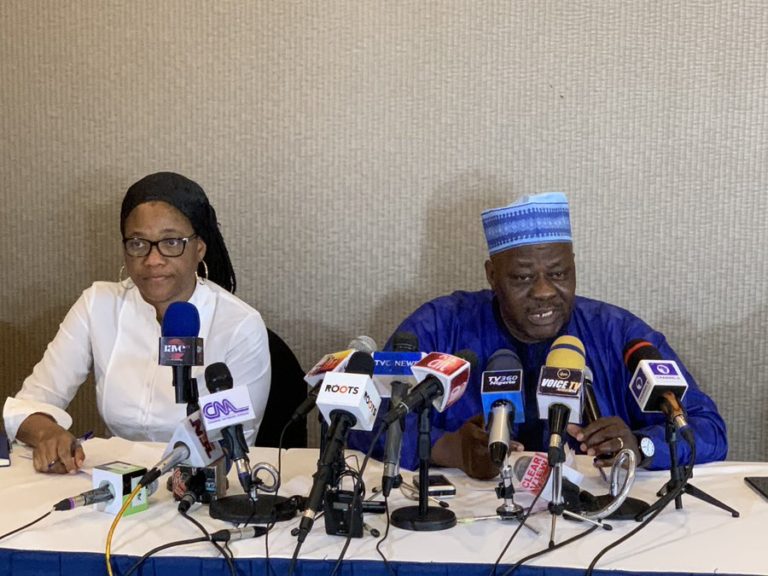
In a press conference held on Monday, the group urged President Muhammadu Buhari-led administration to “redeem the sanctity of the ballot”.
“On November 16 in Kogi and Bayelsa States, the very foundation of our 20-year-old democratic order came under a grievous assault. Enthusiastic citizens trooped out to vote for candidates of their choice, but they were absolutely disappointed,” Idayat Hassan, CDD’s director, told journalists.
“Many voters were disenfranchised as a result of a constant threat to life and limb throughout the process.”
Election Analysis Centre, the situation room operated by CDD for the purpose of monitoring elections in Kogi and Bayelsa, received field data from various observers.
In Kogi alone, it deployed over 300 observers to areas with a higher number of registered voters and where irregularities were expected, Idayat told The ICIR.
It also engaged 35 fake news monitors.
“The sheer magnitude of the violent assault on the sanctity of the ballot was shocking beyond description. The outcome of such a process that was so criminally subverted should not actually be allowed to stand. At the last count, our observers report from Kogi State have recorded the death of 10 people in various shooting incidents and attacks across the state,” she said.
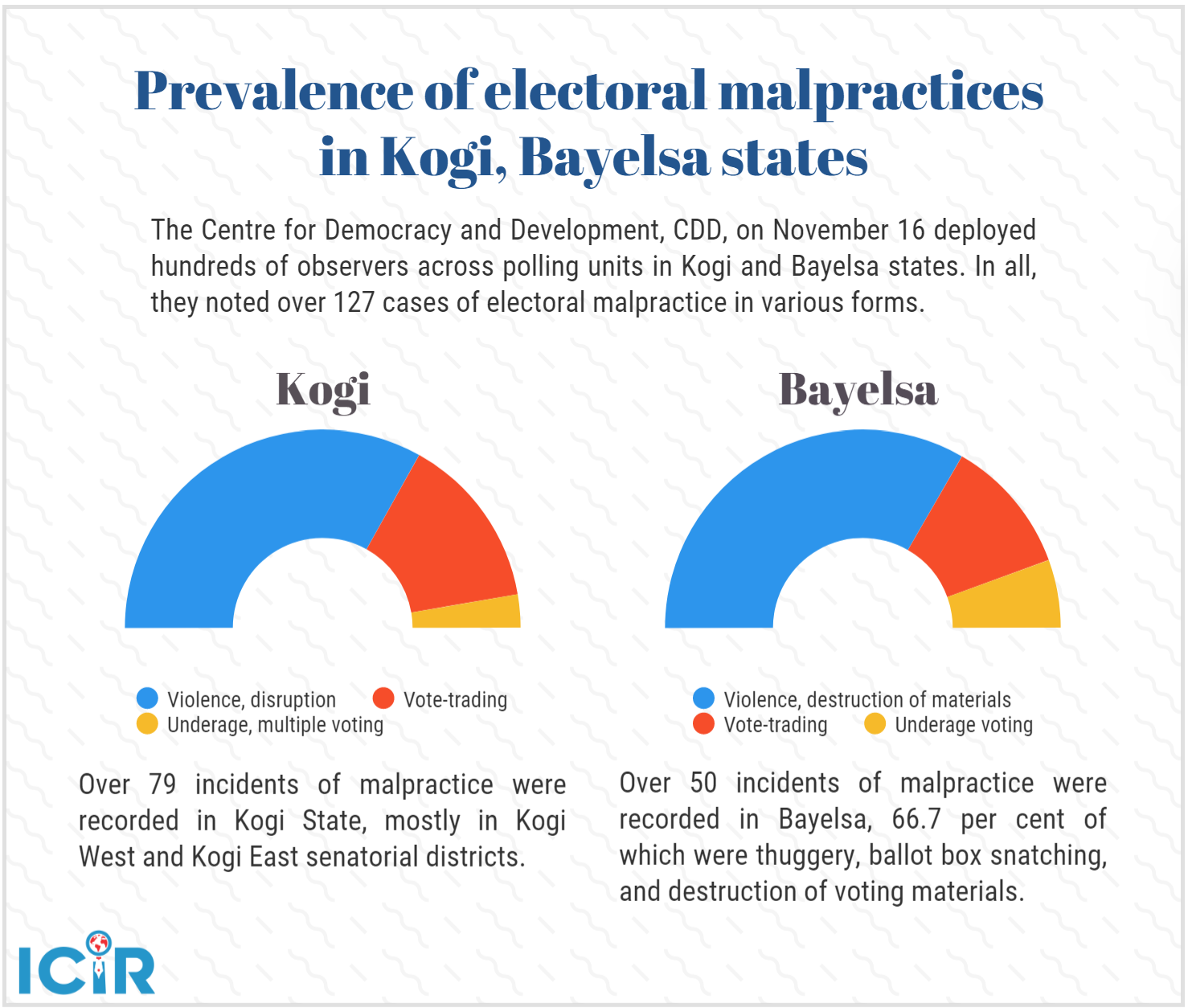
Over 79 incidents of malpractice were recorded in Kogi, ranging from hijack of electoral materials to kidnap of ad-hoc staff of the Independent National Electoral Commission (INEC), vote-buying, attack on observers and journalists, and so on.
Violence and disruption of voting constituted 66.21 per cent of the reported cases of electoral violations, vote trading constituted 28.38 per cent, while underage and multiple voting accounted for 5.4 per cent. It was also noted that 55 per cent of the incidents took place in Kogi West senatorial district, 27 per cent in Kogi East, and 18 per cent in Kogi Central.
On the other hand, violence (manifesting as thuggery, ballot box snatching and destruction of voting materials) constituted 66.7 per cent of the cases reported in Bayelsa, vote trading constituted 22.2 per cent, and underage voting constituted 11.1 per cent.
“On the whole, what we saw on the field defies reasonable logic, especially coming after the 2019 general elections, feeling that we as stakeholders would have learnt key lessons, experiences that would actually improve the quality of the electoral process,” Idayat said. “The conduct of the Kogi and Bayelsa polls is indicative of an electoral process that is fast deteriorating.”
She said figures of the voters’ turnout declared by the electoral commission for some local government areas are suspicious when compared with figures from previous elections from 1999. For example, in Okene, as many as 87 per cent (114,001) of the total registered voters were accredited, “an incredible increase of around 69.1 per cent” compared to 2015 figures.
CDD called for a robust, multi-stakeholder response in rescuing Nigeria’s electoral process.
“We dare not choose the convenient path of silence,” Idayat urged.
“As a generation of Nigerians, history will reserve very harsh judgement for us if we stand by and do nothing as citizens are being increasingly stripped of their fundamental right to decide who govern them. It has become so bad that parallels are being drawn between the elections being conducted now and the infamous elections of 2003 and 2007. We cannot afford to return to the lowest points in our electoral experience.
“CDD calls on President Muhammadu Buhari to urgently provide the leadership needed to rescue the electoral process and by extension the entire democratic system from imminent collapse. This call becomes imperative because Buhari was only able to ascend the presidency through the historic 2015 elections because the electoral process allowed the votes to count. That watershed was a culmination of the electoral reform initiated by late president Umar-Musa Yar’adua and former president Goodluck Jonathan.
“At the moment, Nigeria’s electoral process requires similarly bold and courageous leadership to chart a way forward and resolve the lingering challenges threatening to derail it. President Buhari owes this duty to all Nigerians. He cannot stand by and allow the continuous degeneration of our electoral system.”
Femi Falana (SAN) giving remarks during the press briefing
Over 20 fake news reports published about Kogi election
Hassan said CDD’s monitors observed over 20 pieces of misinformation in relation to elections in Kogi that were “capable of further inflaming the already volatile state”.
“I think it’s high time both INEC, the Nigerian state, and other stakeholders took very seriously the impact of disinformation in elections. This weaponisation of information was really pervasive in the elections,” she said.
She said the large deployment of security agents for the elections did not translate to the improvement of security in Kogi.
According to her: “In some places, they actually turned their faces while the onslaught was going on, while in some they were completely overpowered.”
Jibrin Ibrahim, a professor of political science and senior fellow at the CDD, agreed that security agencies, despite their responsibility to protect citizens and the rule of law, were complicit in disrupting the elections and allowing attacks at polling units.
“Specifically, we are concerned about the direct contradiction we saw of massive police deployment, over 30,000 for both Kogi and Bayelsa states, but on the ground that massive deployment was not visible to eyes,” he lamented, adding jokingly: “Maybe they took another form because we know we are in Africa.”
He added: “We went through a lot of the key roads leading out of Lokoja and there were no checkpoints. And precisely because the police was not there to check, those who were moving around were armed thugs in Hilux vans, carrying weapons, and moving systematically from polling unit to polling unit.
“This is a direct indication that there was state complicity in what happened.”
He urged President Buhari to set up a panel to probe into why state agencies failed to act appropriately during the elections, stressing that democracy is gravely endangered by current happenings in the country.
Also at the event were Femi Falana, Senior Advocate of Nigeria and human rights activist, as well as Adele Jinadu, a professor and the chairman of the CDD.
THE total votes recorded for the ruling party, All Progressives Congress, APC, in Kogi State shows that the incumbent governor, Yahaya Bello has won the Saturday guber election, but the number contradicts the summation of the vote counts from each local government area, The ICIR has found.
The final score announced by the Independent National Electoral Commission (INEC) for the APC is 12,682 higher than the actual votes counted. This represents 3.2 per cent surplus in favour of the ruling party.
The Returning Officer and Vice-Chancellor of Ahmadu Bello University, Zaria, Professor Ibrahim Umar, declared at the INEC office in Lokoja that the APC governorship candidate, Yahaya Bello, polled 406,222 votes in total against Musa Wada of the People’s Democratic Party (PDP) who garnered a total 189,704 votes.
Here are the figures as announced by INEC:
LGA
APC
PDP
Adavi
64,657
366
Ajaokuta
17,952
5,565
Ankpa
11,269
28,108
Bassa
8,386
9,724
Dekina
8,948
16,575
Ibaji
12, 682
10,504
Idah
4,602
13,962
Igalamela-Odolu
8,075
11,195
Ijumu
11,425
7,587
Kabba/Bunu
15,364
8,084
Koton Karfe
14,097
9,404
Lokoja
19,457
11,059
Mopa-Muro
4,953
3,581
Ofu
11,006
12,264
Ogori/Magongo
3,679
2,145
Okehi
36,954
478
Okene
112,764
139
Olamaboro
16,876
8,155
Omala
8,473
14,403
Yagba East
6,735
7,546
Yagba West
7,868
8,860
TOTAL
393,540
189,704
However, a summation of results from 21 local government areas monitored live by The ICIR shows that the APC candidate instead polled a total of 393,540 votes, a difference of 12,682 from the figure announced by the INEC, while the PDP polled 189,704 votes.
The ICIR discovered that 12,682 is also exactly the number of votes that went to the APC candidate at Ibaji Local Government Area, an indication that the result from the area may have been posted twice.
Results from Ibaji were part of the last set of results announced on Monday morning by the electoral commission after it postponed the collation process on Sunday evening.
Rotimi Oyekanmi, Chief Press Secretary to the INEC Chairman, did not deny this finding when The ICIR reached out to him.
“We are going to look at the figure again when the report is sent to the headquarters,” he said.
He also assured The ICIR that the Commission would check for votes recorded for other local governments to see if there are double posting of results.