Home Blog Page 2251

Two journalists arraigned for conspiracy, defamation over report indicting company owned by Buhari’s aide

0

ALFRED OLUFEMI, a student journalist at Obafemi Awolowo University, and Gidado Shuaib Yushau, editor of Youths Digest and The News Digest, were on Tuesday arraigned before an Ilorin magistrate court on charges of conspiracy and defamation.

Their prosecution by the Nigeria Police was triggered by a petition from Hillcrest Agro-Allied Industry, an agricultural products processing company, located at Ajase Ipo, Kwara State, owned by Sarah Alade, Special Adviser to the President on Finance and Economy and former Deputy Governor of the Central Bank of Nigeria (CBN).

Olufemi had in May 2018 written an investigative report that alleged that Hillcrest permits the consumption of banned substances in  violation of the the law. He said though the company promised to get back to him on his findings, no statement was given after several days.

Yushau and Olufemi were charged with criminal conspiracy and defamation, prohibited by the Penal Code, after the company made complaints in a letter to the police dated September 9, nearly 16 months after the report’s publication.

“Both Messrs Shuaib and Olufemi pleaded not guilty,” PR Nigeria reported.

“Following the bail application made by the defence counsel, Barrister Usman Kola Belgore, the Chief Magistrate of the Court, Magistrate A.O. Muhammed released the defendants on grounds of recognition and that they are innocent until proven otherwise.

“The conditions of bail include two sureties each who are relatives of the defendants with a bail bond of two hundred thousand naira. (N200,000.00) The case was adjourned for hearing on January 13.”

According to a First Information Report filed at the magistrate court and seen by The ICIR, when he was invited, Olufemi insisted his findings were true “but could not come up with proves [sic]”.

The document further stated: “Investigation conducted at State Criminal Intelligence and Investigation Department, Ilorin, revealed that you Olufemi Alfred ‘m’ and Gidado Shuaib ‘m’ criminally conspired to tarnish the name and image of Hillcrest Agro-Allied Industries Limited with your injurious and malicious article, which you published on newsdigest.ng on 19/05/2018, without any substantial evidence.”

The police in October  arrested Yushau and Adebowale Adekoya, NewsDigest’s webmaster, in connection with the report.

Olufemi later reported voluntarily to the police. He has won a number of journalism awards, including the 2018 News Editor Award of the Nigerian Universities Merit Award (NUMA), as well as the Campus Journalism Awards’ Campus Journalist of the Year award in 2018 and Investigative Reporter of the Year award in 2019.

The Committee to Protect Journalists (CPJ), an independent US-based non-profit that promotes press freedom, has called for the charges against Olufemi and Yushau to be dropped.

“CPJ is alarmed that reporter Alfred Olufemi and NewsDigest publisher Gidado Yushau have been charged with criminal conspiracy and defamation for a May 2018 report,” it wrote on Tuesday.

Anti Hate Speech Bill: A violation of freedom of expression ― Atiku

0

THE Anti Hate Speech recently introduced by the Senate has been described as a violation of Nigeria’s constitutionally guaranteed right of freedom of speech.

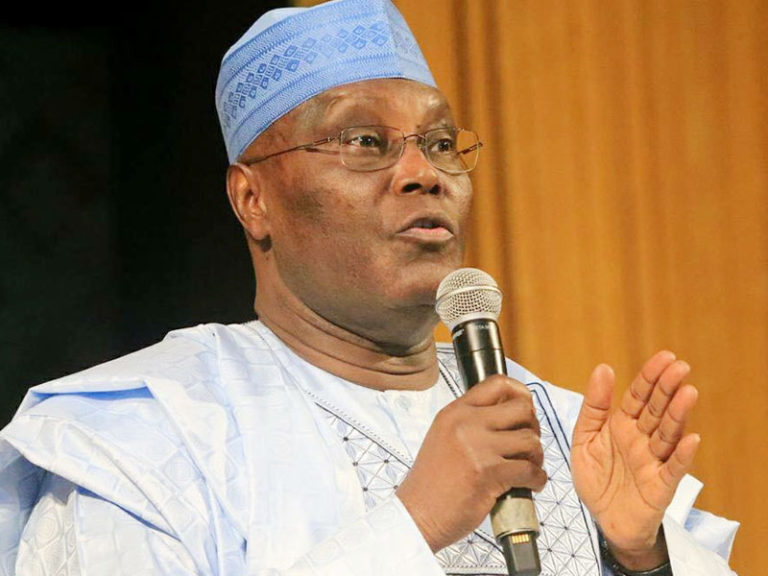
The Presidential Candidate of the People Democratic Party (PDP), Atiku Abubakar made this assertion in a statement, addressing the recently proposed bill by the Senate to establish an agency checkmating hate speech in the country.

“Atiku Abubakar wishes to sound a note of caution to those now with the idea of an Anti Hate Speech Bill, with punishment for supposed Hate Speech to be death by hanging.

“The contemplation of such laws is in itself not just hate speech, but an abuse of the legislative process that will violate Nigerians’ constitutionally guaranteed right to Freedom of Speech.

“Atiku urges those behind this Bill to awake to the fact that Nigeria’s democracy has survived its longest incarnation because those who governed this great nation between 1999 and 2015 never toyed with this most fundamental of freedoms.

” It is prudent to build upon the tolerance inherited from those years and not shrink the democratic space to satisfy personal and group interests.

“Freedom of Speech was not just bestowed to Nigerians by the Constitution of the Federal Republic of Nigeria, 1999 (as amended), it is also a divine right given to all men by their Creator.

“History is littered with the very negative unintended consequences that result when this God-given right is obstructed by those who seek to intimidate the people rather than accommodate them.

“We should be reminded that history does not repeat itself. Rather, men repeat history. And often, to disastrous consequences.

“Nigeria presently has too many pressing concerns. We are now the world headquarters for extreme poverty as well as the global epicentre of out-of-school children. Our economy is smaller than it was in 2015, while our population is one of the world’s fastest-growing.

“We have retrogressed in the Corruption Perception Index of Transparency International, from the position we held four years ago, and our Human Development Indexes are abysmally low,” Atiku said.

He said, “It, therefore, begs the question: should we not rather make laws to tackle these pressing domestic challenges, instead of this Bill, which many citizens consider obnoxious?”.

He further cautioned, “We must prioritise our challenges ahead of the whims and caprices of those who do not like to hear the inconvenient truth. Stop this folly and focus on issues that matter to Nigerians”.

The Anti Hate Bill titled, “National Commission for the Prohibition of Hate Speeches (Estb., etc) Bill 2019” was on Tuesday sponsored by the Deputy Senate Whip, Sabu Abdullahi. It has passed the first reading on the floor of the Senate.


Sowore: It is criminal, inhuman Soyinka frowns at DSS live shooting at protesters

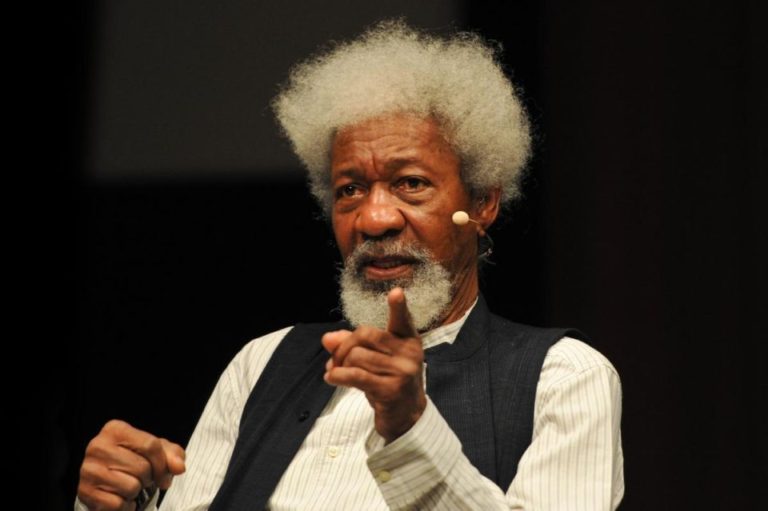
WOLE Soyinka, Nobel Laureate and professor of creative writing has described the firing of live bullets by the Department of State Security Service (DSS) against the protesters seeking the release of Omoyele Sowore as an act of government insecurity and paranoia that was not only callous or inhuman but it was “criminal”.

Professor Soyinka who made this statement on Wednesday asked the government to release Sowore, the publisher of Sahara Reporters, to save the country from any “further embarrassment in the regard of the world”.

The Nobel Laureate urged the DSS and the judiciary to make an apology to the nation to have kept Sowore in detention since August 2.

“It would go some distance in redeeming the image of an increasingly fascistic agency and reduce the swelling tide of public disillusionment,” he said.

Soyinka had commended the groups that c0nvened the protest for Sowore’s release on Tuesday.

The ICIR reported how the protest which began peacefully turned into chaos when some DSS operatives suddenly showed and dispersed the crowd with tear gas and firing live bullets in the air.

“It is heart-warming to witness the determined efforts of ‘Concerned Nigerians’ in defence of these rights. Predictably, the ham-fisted response of the Directorate of State Security (DSS) continues to defy the rulings of the court. The weaponry of lies having been exploded in their faces, they resort to what else? Violence! Violence, including, as now reported, the firing of live bullets. Why the desperation?

“The answer is straightforward: the government never imagined that the bail conditions for Sowore would ever be met. Even Sowore’s supporters despaired. The bail test was clearly set to fail! It took a while for the projection to be reversed, and it left the DSS floundering. That agency then resorted to childish, cynical lies. It claimed that the ordered release was no longer in their hands, but in Sowore’s end of the transfer. The lie being exploded, what next? Bullets of course!

“Such a development is not only callous and inhuman, it is criminal. It escalates an already untenable defiance by the state. As I remarked from the onset, this is an act of government insecurity and paranoia that merely defeats its real purpose. And now – bullets? This is no longer comical. Perhaps it is necessary to remind this government of precedents in other lands where, even years after the event, those who trampled on established human rights that generate homicidal impunity are called to account for abuse of power and crimes against humanity.

“The protests for Sowore’s release go beyond only acts of solidarity, they are manifestations of the judgment and authority of courts of law, under which this nation is supposedly governed. Either it is, or it isn’t. The answer stares us all in the face. The principles that now fall under threat implicate more than one individual under travail. They involve the very entitlement of a nation to lay claim to membership of any democratic, humanized union.

“The sporadic, uncoordinated responses as in the case of Omoyele Sowore, the absence of a solid strategy, ready to be activated against any threat — these continue to enable these agencies in their mission to enthrone a pattern of conduct that openly scoffs at the role of the judiciary in national life. Result? A steady entrenchment of the cult of impunity in the dealings of state with the citizenry – both individuals and organizations. The level of arrogance has crossed even the most permissive thresholds.

“Enough of this charade, nothing more than a display of crude, naked power,” said Soyinka.

He pleaded for the rule of law to reign, failing that could proclaim the death of ordered society, he said.

Sowore, who was arrested in August for convening a Revolution Now campaign, has spent 102 days in detention as of November 12 despite having been granted bail by the Federal High Court and fulfilled the conditions.

Clearing the path for good journalism

0

By Godwin ONYEACHOLEM

TIME and again, there are desperate calls not just by veterans but also by younger and discriminating practitioners about the compelling need to rescue journalism practice in Nigeria from obvious dereliction, continuous degenerative state of violation and steady slide into disrepute.

If these calls are being heeded and efforts are indeed being made by stakeholders to arrest this worrying drift, nothing so far of significance by way of practice vindicates this claim. Sloppy journalism is still largely being served in the print and electronic media across the country. Worse of all, ethics, the soul of the profession, seems to have been thrown overboard with the way it is being treated as purely an incidental rather than an integral part of the trade.

But the online medium, Premium Times, is set to turn things around. Alongside its NGO affiliate Premium Times Centre for Investigative Journalism (PTCIJ), it is working to ensure that journalism in Nigeria receives a desirable facelift that would serve its real purpose as a public service function. In other words, Premium Times is passionate about removing those clogs that today debase and shame journalism on these shores. It appears like a sort of crusade for which the paper is energetically gunning to be the arrowhead. One key method it has chosen to achieve this goal is the focus on training.

This is commendable. At least as first step towards confronting the issues around poor practice – and a certain unflattering outcome as consequence – all those who not only love the profession but are also deeply troubled by its swelling decadence, must agree that training and retraining of practitioners must be the way to go.

Last week, Premium Times, in conjunction with the Nigeria Governors’ Forum (NGF), activated its commitment to this objective with a two-day training for journalists spotlighting the more recondite but very important subjects of budget tracking and data-driven journalism. The venue of the event was the plush secretariat of the NGF on Lake Chad Crescent in Maitama, Abuja, a high-end district in the city.

The NGF is a non-partisan NGO set up in 2003 by the 36 State governors of Nigeria to enhance the development of governance at the sub-national level. Its major aims and objectives include promoting inclusive governance and enhancing collaboration between the governors and society. The NGF secretariat, which became fully operational in 2009, is headed by Aisahana Bayo Okauru, a smart, well-spoken gentleman who trained as an economist and lawyer and exudes the aura of a consummate polyhistor rather than just being cerebral. He is known by the title of Director-General.

Without doubt, Okauru was extremely excited about the training. He was delighted that he was doing this with Dapo Olorunyomi, the publisher of Premium Times with whom he worked at the Economic and Financial Crimes Commission (EFCC) in the early days of that institution. And of course, Musikilu Mojeed, the Editor-in-Chief of the paper whom he described as a worthy friend. Okauru said he would be ready at all times to lend a hand in efforts to upgrade the skills of journalists as a means of attaining good governance and sustaining democracy in the country.

A total of 40 journalists from the media across the country sat listening, enchanted by the beauty and excellence in the delivery of 13 resource persons including Olorunyomi and his highly resourceful lieutenants – Mojeed, Abdulaziz Abdulaziz, Joshua Olufemi, Idris Akinbajo to mention a few – and then some top staff of the NGF.

The themes were impressively varied. From the ultimate goal of journalism in society, through the rudiments of reporting and investigation, data journalism, NGF and its various good governance activities, fact-checking and verification, and down to code of ethics for journalists and the more arcane subjects of budgeting and procurement, participants had two days of refreshing perspectives that would enhance their work as journalists. As for Okauru, so captivated was he by both the presentations and the ambience that he sat through most of the sessions with the countenance of a man who seems fulfilled by the way the training turned out.

For one, not in a long time had one sat in a journalism training that offered so much depth, illumination and insight. The event further opened one’s eyes to the fact that training is key; that the need for training, training and retraining can never be overstated in a situation where the profession is not evolving as rapidly as the tools of work. Journalism has now gone beyond a notebook and a tape recorder. The future of journalism seems now to be dictated by the direction of technology and journalists are now scrambling to catch up with the instruments that keep rolling out at breakneck speed. Without training, we will never get close to knowing these instruments let alone mastering them.

But other than the accelerated transformation brought about by technology, it is important to also note that young graduates are arriving newsrooms in large numbers with a scandalous knowledge of grammar and poor understanding of the profession. They need help. And the only way to help them and save the profession is through periodic rigorous training, internally and externally.

One area journalism trainers must critically look at is the lack of awareness among a majority of Nigerian journalists that the profession is not an ‘I-feel-alright’ profession. There is need to keep drilling it down to the skulls of new entrants and old hands alike that journalism is a profession of struggle, struggle between good and evil, between the forces of light and darkness, and between truth and falsehood. Therefore, practitioners should be constantly made to realize that it is not an oil company job, nor is it banking or any of those cozy jobs that invest egotistical feel-good feeling in those who hold such jobs.

Put in another way, journalism is the metaphor for fight. And it is aptly so in third world countries like Nigeria where corruption is rife and bad governance, perpetually emphasised through audacious fascist tendencies, holds sway. To that extent, practitioners should forever brace up for the combat operations that would necessarily follow.

Hopefully, the Premium Times collaboration with NGF would be sustained and would catalyze renewed enthusiasm in the prioritization of training as an important step in checkmating the ills bedeviling journalism practice in the country.

Godwin Onyeacholem is with the African Centre for Media & Information Literacy (AFRICMIL). He can be reached via: gonyeacholem@gmail.com



NNPC’s staff in collusion with oil vandals, Senate summons GMD Kyari

0

ON Tuesday the Senate asked the Group Managing Director of the Nigerian National Petroleum Corporation, NNPC, Mele Kyari, to appear before its Committee on Petroleum Resources, over the increased rate of pipeline vandalism across the country.

The President of the Senate, Ahmad Lawan, announced this after Ibrahim Gobir, chairman of the Senate’s ad hoc committee on the recent explosion of NNPC pipelines in Rivers and Lagos States, presented his report on the floor of the Senate.

In the report several officials of the NNPC, Nigerian Pipeline and Storage Company and firms securing the facilities are allegedly acting in collusion with vandals to sabotage the pipelines, leading to the loss of lives.

The report specifically alleged that some officials of the NNPC were aware of the Komkom pipeline leakage in Rivers State, two days before the explosion but hesitated in taking necessary action.

Records obtained from NNPC’s Monthly Financial and Operations Report, MFOR, indicates that the number of oil pipeline breaches peaked in July with 228 vandalised points. This showed a 77 per cent increase when compared to its June figures with 106 vandalised points.

Senator Ibrahim Hassan representing Jigawa North Senatorial district urged the committee to punish officials who were culpable in the act of oil vandalism.

Lawan directed the Senate Committee on Petroleum (downstream) to invite the NNPC with a view to ensuring a review of security measures for pipelines in parts of the country.

He also said the National Assembly will amend the National Oil Spill Detection and Response Agency Act to prevent the activities of pipeline vandals that lead to explosions and deaths.

“Our Committee on Petroleum (downstream) should invite the NNPC with a view to know what they have been doing over the years to secure the pipelines; what measures are in place and whether there is a need to review these agreements.

“This is a multi-billion dollar industry. People consciously do these things, it’s not an accident. Those who are caught in the fires or who come to scavenge are the ones who end up losing their lives. This is not acceptable,” he said.

He also stated the National Assembly will amend the National Oil Spill Detection and Response Agency Act to prevent the activities of pipeline vandals that lead to explosions and deaths.

“When we have to amend the NOSDRA Act, this is something that we have to do expeditiously. We should do it because it will help in preventing or minimising the reoccurrence of these criminal acts,” he said.

Bayelsa poll: Why court sacked APC deputy gov candidate

0

CONFUSION rocks All Progressive Congress (APC) as Abuja High Court disqualified Bayelsa Deputy Governor Candidate, Biobarakuma Degi-Eremienyo 3 days to the election over false information submitted to the Independent National Electoral Commission.

In a suit filed as FHC/ABJ/CS/1101/2019 before the court by the People’s Democratic Party (PDP) and INEC against Degi-Eremienyo over the provision of false information.

PDP sued Degi-Eremienyo over false information in his CF0001 form submitted to the Independent National Electoral Commission (INEC) to contest for deputy governor of the state in the November 16 election.

According to the Bayelsa State Commissioner for Information, Daniel Iworiso-Markson, the documents obtained from the court revealed five different names on the candidate’s certificates.

Markson said  Degi’s First school leaving certificate(FLSC) in 1976,  bore Degi Biobaragha while his West African Examination Council (WAEC) of 1984 carried Adegi Biobarakumo.

He added that the candidate’s first degree in 1990 from the Rivers State University of Science and Technology (RSUST) bore Degi Biobarakuma, the name on his master’s degree from Rivers State University of Science and Technology (RSUST) obtained in 2002 is Degi Biobarakuma Wangagha.

In submission of documents to INEC,  Form CF001 of the documents carried Degi-Eremienyo Biobarakuma, a name different from the names on all of his educational certificates.

Markson stated that part of the documents he obtained also showed two different affidavits sworn before two unidentified Notaries Public in an attempt to correct his name blaming the mistakes on the part of the institutions as the cause of the incoherence.

The sitting judge, Inyang Ekwo, said there is no connection in the names on his school-leaving certificate, first degree (BA), WAEC, Masters’s degree and the affidavits he submitted for correction of his name.

Ekwo added that all of the documents submitted by Degi-Eremienyo to the INEC carried different names.

He ruled that the right way to correct misspelled names or documents with error is by writing the issuing institutions to correct and not by an affidavit deposed to before a Notary public which did not issue the certificates.

Consequently, he disqualified him on the ground that he provided false information to the electoral body to stand for the election.

Rotimi Oyekanmi, Chief Press Secretary to the Chairman INEC, told The ICIR that INEC has not been served with the court order but that the commission is known for obeying court orders.

Oyekanmi said even if the commission will appeal to the court on the judgement, the court order will still be obeyed.

Degi-Eremienyo is currently the senator representing Bayelsa East and Vice Chairman of two senate committees – Special Duties Committee and Gas Resources Committee.

He also served as Executive Director at the Federal Roads Maintenance Agency (FERMA) and Bayelsa Commissioner for Local Government Affairs under former President Goodluck Jonathan while he served as Bayelsa Governor in 2016.


Senate urged presidency to complete Baro Port Project of Lower Niger

0

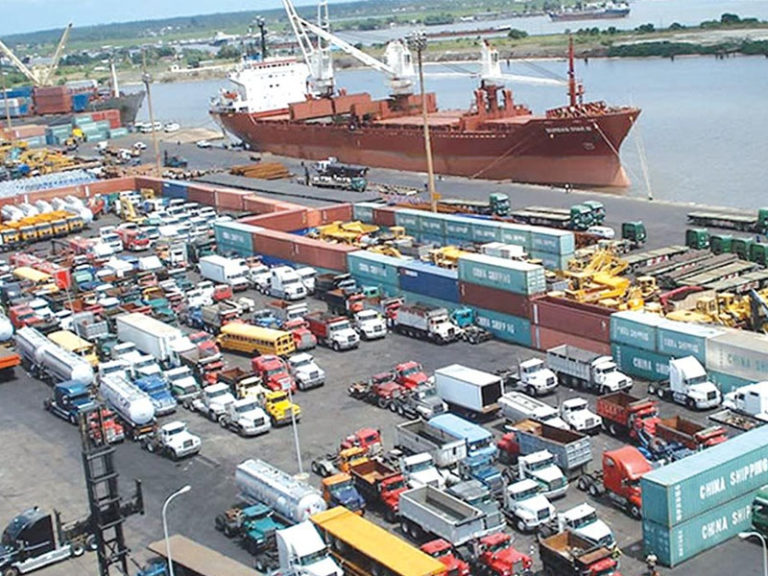
THE Senate has urged the federal government to complete Baro Port Project of the Lower River Niger in order to cause rapid socio-economic growth of the country.

Bima Mohammad Enag, Senator representing Niger South District made this call during the plenary session on Tuesday.

Senator Ahmed Sani Musa and Senator Adamu Aliero supported the motion, stating the economic significance of the port to Nigeria, as that which would generate employment for the citizenry, advance the economic prosperity and that of a neighbouring country like the Niger Republic.

The project was started during the administration of the late President Musa Yar’Adua.


READ ALSO:

The Senate urged the federal government to make funds available to contractors for final completion, urging the government to transfer the roads project to Presidential Infrastructure Development Fund (PIDF) for better funding and execution.

In addition, the lawmakers asked that the rehabilitation of the Narrow Guage Railway in Baro be facilitated, to ensure the rapid socio-economic growth of Nigeria.

They also called for continuous dredging and maintenance of the Rivers Niger and Benue by National Inland Waterways Authorities (NIWA) to ensure navigability, and asked that the maintenance be extended to the lower River Niger and other affected rivers yet to be dredged.

“Mandate the Senate Committees on Maritime Transport, Public Procurement and Works to investigate NIWA activities in respect of Baro Port and make adequate recommendations to facilitate early completion.

“That the Senate engage with the Executive arm of government on the importance of the completion of the dredging of the River Niger; and urge the Federal Government to extend the dredging of the River Niger to Yauri, Kebbi State,” the Senate demanded.

The Baro Port, situated in Agaie Local Government Area(LGA) in Niger State, was first approved in 2011/12 during the Yar’adua administration at the cost of 5.8 billion and was awarded to a Chinese firm CGCC Project Limited at the time.

The port, equipped with a quay length of 150 meters, cargo stacking yard of 7,000 square meters, a transit shed of 3, 600 square meters and an estimated capacity of 5,000 TEU at a time, was intended to create 2000 jobs directly or indirectly to the citizenry.

However, since the commissioning of the port in December by President Muhammadu Buhari, Daily Trust reported that non-release of the funds had stalled the completion of the project as at September 2019.

Child mortality increases in Nigeria- Report

THE newly released National Demographic and Health Survey (NDHS) has stated that 132 of 1000 Nigerian children die before the age of five which showed an increase when compared to the 2013 survey with 128 deaths per 1000 live births.

The NDHS, implemented by Nigeria’s National Population Commission, is a national sample survey that provides up-to-date information on demographic and health indicators.  

The official statistics recorded that under-five mortality  was 132 deaths per 1,000 live births. It implies that more than one in 8 children die before clocking age five in Nigeria. 

Meanwhile, the 2013 NDHS revealed that there were 128 deaths in 1000 live births before age five, an indication that there were additional four deaths per 1000 live births.

The NDHS defines under-five mortality “The probability of dying between birth and the fifth birthday”.

So with the current figure, for every 100,000 births, 13,200 children die. For every 1,000,000 births, there is a probability of 132,000 dying.

Breaking it down to each state, Kebbi state has the highest number of children deaths with 252 deaths per 1000 live births, while Ogun had the lowest deaths of children with 30 deaths per 1000 births.

Among the six regions, the NDHS revealed that Northwest had the highest rate of deaths among children below five, while the Southwest had the lowest rate.

The mortality rates of under-five Nigerian Children across the six regions. Infographics credit: Rebecca Akinremi

The report also stated that boys are more likely to die in childhood than girls.  

“The difference is particularly pronounced for the under-5 mortality rate (137 male deaths per 1,000 live births versus 127 female deaths per 1,000 live births),” it stated.

Also, the death rate is higher in rural areas than in urban areas with 157 and 92 deaths per 1,000 live births respectively.

“The demographic characteristics of both mothers and children have been found to play an important role in the survival of children,” it reported.

Buhari–David-West bromance: How virologist became oil minister

0

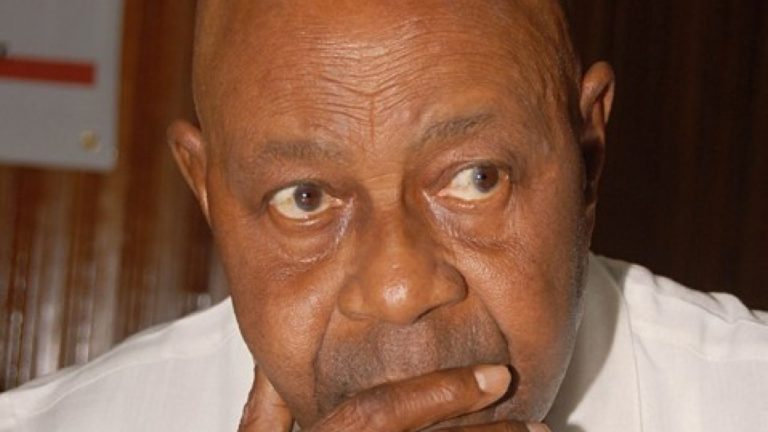
FORMER petroleum minister, Tam David – West, whose death was announced yesterday, knew little about the oil and gas industry when he was appointed as minister in 1984 by military administration headed by President Muhammadu Buhari.

David-West, a professor of virology, was confirmed dead on Monday after failing to recover from an undisclosed illness.

Described as an “ally and friend”, President Muhammadu Buhari eulogised the deceased statesman urging Nigerians to emulate his noble character.

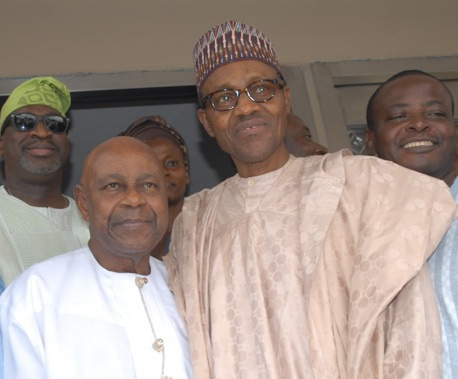
In David – West’s 2010 book titled “Who Really is General Muhammadu Buhari?”, he chronicled his chanced encounter with Buhari as a military head of state on January 18, 1984, which culminated with his appointment as petroleum and energy minister without a prior relationship.


READ ALSO:

Using the term “Buhari – David – West – Divinity” to describe their relationship, he explained this in the book that their first conversation after he accepted the role of minister defined their friendship until his death.

“I told Buhari that I don’t remember ever meeting him before January 18, 1984. His words were most humbling because he said my appointment was very vital and crucial to the nation’s economy,” he had stated in his book.

“I will not interfere with your duties,” a statement Buhari made which he hinted in the book was the height of trust and integrity that marked their friendship until the time of his death.

He admitted in the book that Buhari picked him to become the minister of petroleum despite his limited knowledge of the oil industry at the time.

“First and foremost, I was completely blank on Petroleum matters. The only fleeting contact with hydrocarbons was two undergraduate (Michigan State University, U.S.A.) courses on Hydrocarbon Chemistry 1959 and a biochemistry course at Yale Graduate School 1961.

“Secondly, the more I reflected on the enormity of my ministerial portfolio in the context of the national economy especially from the void of my background on petroleum matters the more I got concerned. But certainly not afraid of the heavy state (national) responsibility put on my shoulders so to say,” an excerpt from the book reads.

He stated in the book that Buhari’s friendship with him convinces him of his divine purpose.

“My contact with General Muhammadu Buhari and the honour and privilege to work with an untiring patriot as well as to serve the fatherland clearly convinces me of a divine purpose,” he said.

In a statement released by Special Adviser on Media, Femi Adeshina on behalf of President Muhammadu Buhari, confirming the passing of the academician he was described as “a consultant virologist of national and international standing.”

“He had an indomitable spirit, stood resolutely by whatever he believed in and was in a class on its own.

“President Buhari prays that God will rest the soul of the committed nationalist, urging all those who believe in the ideals he espoused to approximate the same, for the betterment of Nigeria, and humanity,” the statement concludes.

Buhari and David-West/File Copy

He started his higher education at the University of Ibadan, before proceeding to Michigan State University where he bagged his first degree in 1960. He obtained an MSc degree from Yale University in 1962 and a Ph.D. degree at McGill University in 1966.

David-West was appointed consultant virologist and senior lecturer at the University of Ibadan in 1969 before being promoted to professor of virology in 1975.

He bestrode the political scene like a colossus, serving as commissioner of education and a member of the Executive Council of Rivers State between 1975 to 1979.

Appointed federal minister of petroleum and energy from 1984 to 1985 under General Muhammadu Buhari, he had a brief stint as minister of mines, power, and steel under General Ibrahim Babangida in 1986 before he was arrested and removed by the Babangida regime for allegedly contributing to the economic adversity of the country.

David-West is a prolific author of academic papers in virology that have appeared in scholarly journals and also a social critic.

Born in 1936, he died at the age of 83 on Monday, November 11 and is survived by his family.

VIDEO: Gunshots, tear-gassing as DSS operatives disperse protesters seeking Sowore’s release

0

USING tear gas canisters and firing repeatedly into the air, operatives of the Department of State Services, DSS, on Tuesday forcibly dispersed protesters who camped at the security agency’s Abuja headquarters to demand the release of Sahara Reporters publisher Omoyele Sowore.

Sowore, also the convener of the Revolution Now campaign, has spent nearly 102 days in detention despite having been granted bail by the Federal High Court and fulfilled the conditions. He was arrested in August, according to the DSS, because he called for a revolution and “for threatening public safety, peaceful co-existence and social harmony in the country”.

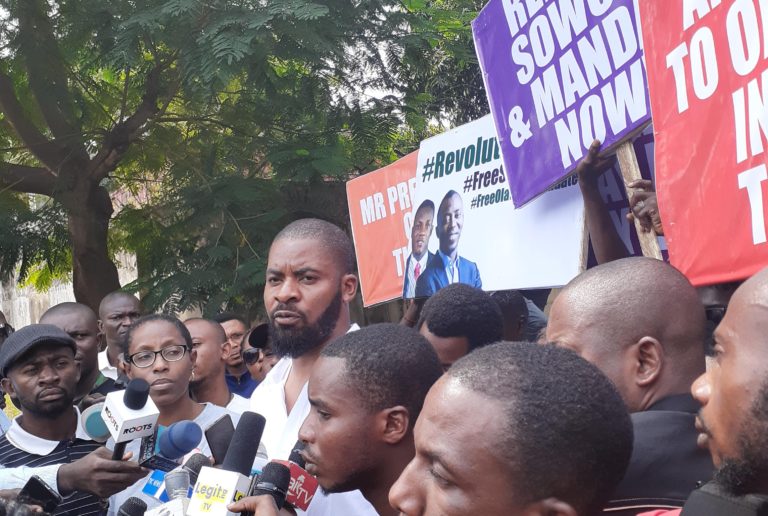
The protest had gone on peacefully for close to one hour before the security agents interrupted, first by driving a black patrol vehicle into the crowd as Deji Adeyanju, convener of the Concerned Nigerians civil society group, was addressing journalists and protesters.

“Leave here,” one officer shouted at the crowd.

Seconds later, guns and tear gas canisters were fired and the protesters took off in various directions. The operatives continued shooting for several minutes and chased reporters and protesters on both lanes of the Maitama Avenue using patrol vehicles and motorcycles.

The law enforcement officers then set up a blockade on a part of the Murtala Muhammed Expressway which connects to Maitama Avenue where the DSS headquarters is situated, to prevent the protesters from regrouping.

It is not clear if any person was arrested or sustained injuries during the chaos.

“We were bribed with N1 million at gunpoint not to protest”

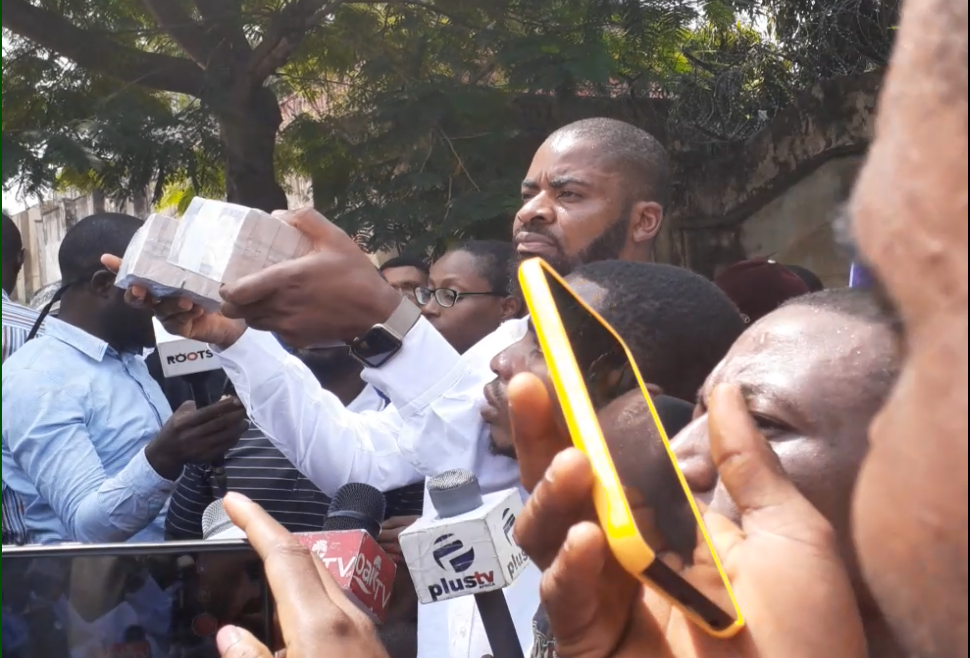
Adeyanju, during his first address to journalists, said his group was bribed with N1 million in cash in order to call off the protest. He declined to disclose the identities of those who offered it but added that they promised to pay more money at a later time and also secure favours from the government.

“We came here on Saturday to say they should release Sowore to us because they had by themselves told us that the reason they are not releasing him to us is that there was nobody to receive him, and we came and said give us our property. They refused and played all kinds of pranks with us,” he narrated.

“Since that day, some of us have received all kinds of threats. We are not new to these threats at all, but we were even offered money at gunpoint,” Adeyanju added as he held two sizeable bundles of N500 notes.

Deji Adeyanju raises wads of N500 notes allegedly offered as bribe
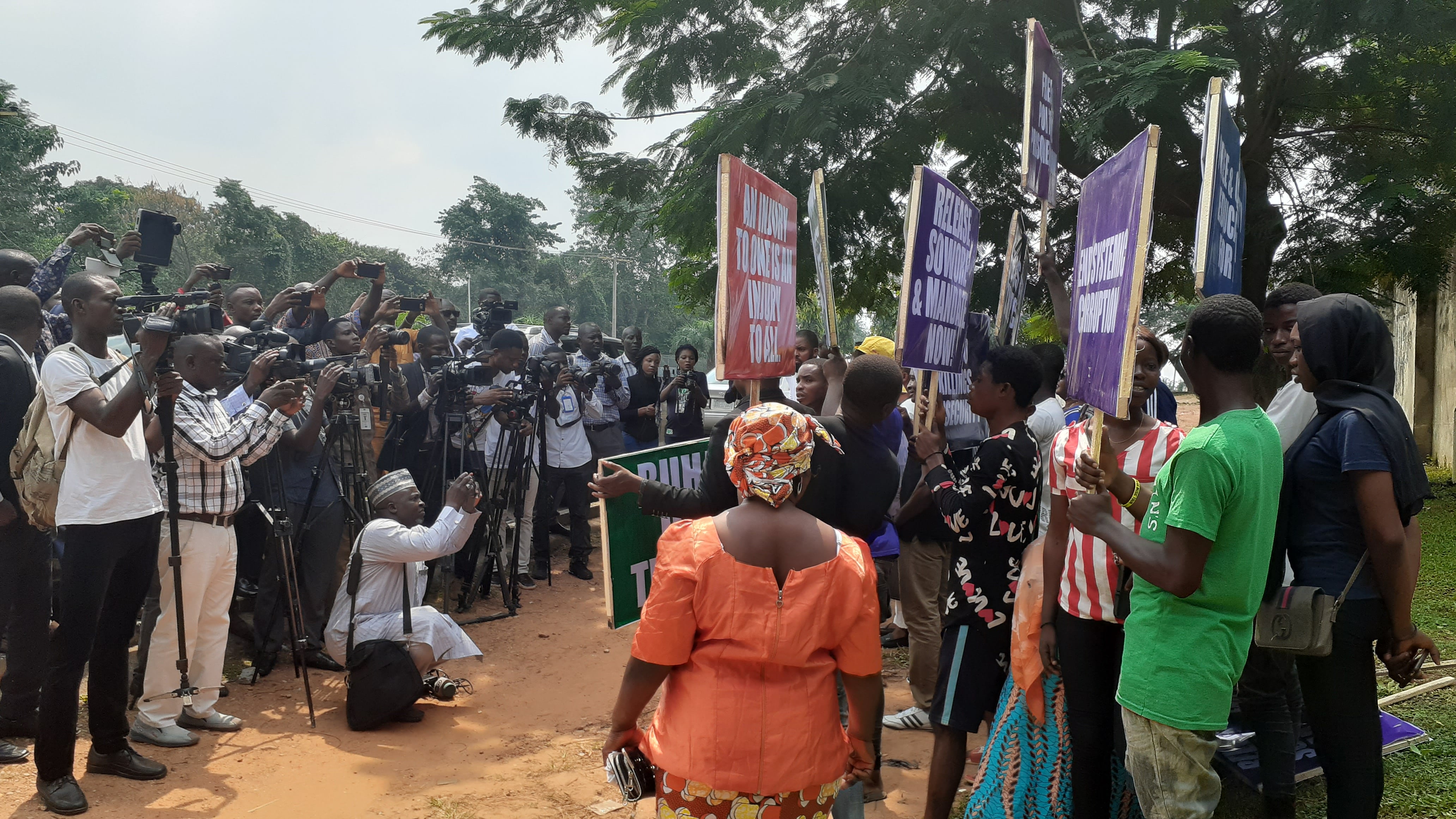
Protesters at the DSS headquarters on Tuesday demand for Sowore’s release

He said he deliberately would not provide the details of that encounter but hinted that he is ready to release proof if the bribe offer is denied.

“See, I’ve not mentioned any name. We are waiting for them to say we are lying, then just like we did to Charly Boy [Charles Chukwuemeka Oputa], we will also do it to them. If they like, they should kill us… We will never in our country be cowed by anybody. And to everybody who believes in the cause, these things may take time, but I can assure you that one day all this rubbish we are witnessing in our country will stop.”

The convener of Concerned Nigerians also said if those who offered the bribe do not accept it, the money will be given to Femi Falana, a Senior Advocate of Nigeria leading Sowore’s defence team “to augment part of the legal bills”.

“We will never compromise,” he emphasised.

“They have said we should not come out today. They made all kinds of promises to us at gunpoint, but we will not be deterred … And they have told some of us in confidence that they will never release Sowore. They will not release him. They give threats, they give money, they give all kinds of things. That’s the kind of government we have. I’m just giving you a tip of the iceberg.”

Protesters on Tuesday carried various placards stating, “DSS, obey the court”, “Release Sowore and Mandate now”, “End system corruption”, “An injury to one is an injury to all”, “End to killings and insecurity”, “Buhari, don’t kill democracy”, and so on.