THE ninth Assembly of the Senate on Tuesday introduced a bill to prohibit the spread of hate speeches in the country.
The bill, titled “National Commission for the Prohibition of Hate Speeches (Estb., etc) Bill 2019” was sponsored by the Deputy Senate Whip, Sabu Abdullahi and has passed the first reading on the floor of the Senate.
The hate speech bill was first sponsored by Abdullahi at the 8th Assembly, where he was the Senate Spokesperson. The bill, however, never scaled through to the third reading.
According to Abdullahi, the bill prescribed death by hanging as a penalty for deviants, if enacted into law. The same was prescribed as a penalty at the 8th Assembly.
Hate speech bill comes exactly a week after another bill to regulate the use of social media was proposed. The latter passed the first reading on November 6 on the floor of the Senate.
Titled: ‘Protection from Internet Falsehood and Manipulations Bill, 2019’, the bill sponsored by Mohammed Sani Musa, was aimed at curbing fake news on the internet.
The bill also prescribes: “If anyone is caught with this kind of situation, you cough out between N150,000 to a maximum imprisonment of three years or both. And if it is a corporate organisation that refused to block that false information despite the fact that they have been alerted by authorities not to disseminate that information for public interest and they still go-ahead to do it, refusing to do that blockage will be penalised between N5 million to N10 million for those organisations.
“For example, MTN, Glo, 9 mobile, etc. which we use their platform in transmitting this information, if nothing is done, we fine them and you will see that it will be a deterrence to others,” Musa said.
The bill was however greeted with reactions from the Nigeria Guild of Editors, calling on the federal government to repeal its decision to regulate social media.
According to NGE, the plan to regulate the use of social media would impede on the civil rights of Nigerians to their freedom of expression and rights to hold opinions as convened in section 39 of the 1999 constitution as amended.
In April 2017, Aliyu Umar, 27, began his day at dawn. He started by carefully preparing charcoal fire with which he would prepare breakfast of noodles, fried eggs, bread and tea for his early morning customers.
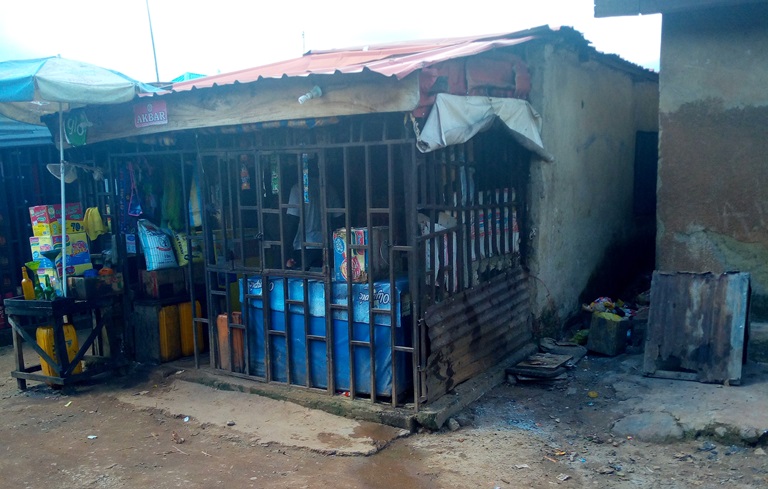
His shop was a hotspot for residents of Unguwar Hausawa community in Nyanya, a suburb of Abuja. When they needed light breakfast or dinner, Umar’s shop was their destination.
Umar came to Abuja from Sokoto State, the northwest region of Nigeria five years ago. It was rough for him in the first few months, switching trades, before he finally settled for food vending.
That morning, a faulty high-tension power cable passing over his shop and two residential buildings were being repaired by the staff of Abuja Electricity Distribution Company, AEDC, but the men carried out a bad job because one of the cables was left hanging loose – dangerously.
Concerned residents in the area observed that one of the cables was frayed and the naked wire could fall on any of the nearby buildings, so a call was placed to the AEDC office to fix the problem.
When the workmen arrived they asked for a bribe of ₦5,000 before they could carry out any work on the faulty line, but residents offered to pay ₦3,000 instead, which the AEDC staff rejected and left without fixing the problem.
Hours later, the electric cable fell on the building close to Umar’s shop electrocuting the occupants, six-year-old Hassan Tsafe and his mother Umaimah Tsafe.
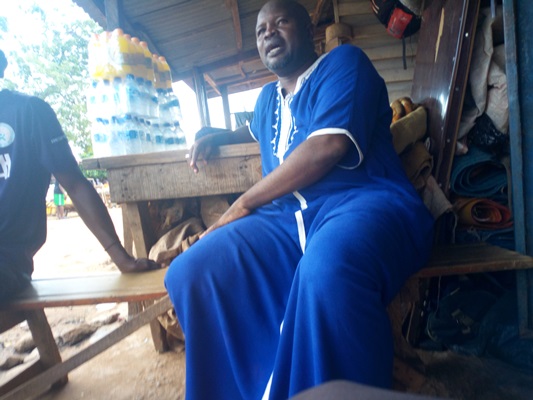
Alhaji Musa Mohammed Dala, chief of the Hausa community in Nyanya. Credit: ICIR
Umar also was unable to run for safety before he was electrocuted. The fire outbreak burnt everything in his shop where he laid incapacitated by shock.
When he was brought out of the fire, he was confirmed dead alongside Hassan, while Umainah was still clinging to life. The young mother was rushed to a nearby hospital, but she died later.
The chief of the Hausa community in Nyanya, Alhaji Musa Mohammed Dala who acted as guardian to the late Umar recounted the tragedy.
“The AEDC workers were unwilling to accept anything less than ₦5,000 which was why they left and most residents had left for their businesses that day. Maybe if we had completed the payment they requested, it would have been a different story today,” he recalled.
The AEDC set up an eight-man investigative panel led by Mohammed Ainoko Sule to probe the fire incident after filing an official report to the Nigerian Electricity Regulatory Commission, NERC, and Nigeria Electricity Management Services Agency, NEMSA, in compliance to procedural guidelines in the Electric Power Sector Act 2005.
Aliyu’s former tea shop has been converted to a provision store. Credit: ICIR
Three months later, the community leader Alhaji Muhammad Dala and Secretary Abubakar Hassan, petitioned NERC citing negligence of the AEDC for exposing residents to grave danger, urging NERC to wade into the matter, but there was no response.
Fast forward to 2019, the findings of the investigative panel have not been communicated to the families of the victims even after they had submitted a petition to NERC and the AEDC. To date, none of the affected families has been offered any form of compensation or relief.
“Aliyu’s family doesn’t know people in high places. Who will speak up for him? So the family has to wait for Allah to intervene for his death,” the community leader said in a tone that betrayed his distress.
Umar’s case was one of the 47,958 consumer complaints about poor services from AEDC that was filed at NERC in 2017 but the case is yet to be resolved by the Commission. The dead silence from the power regulatory body illustrates the frustration faced by electricity consumers in Nigeria.
Clueless without cues
In August 2019, the amount of electricity generated by the nation’s 27 power stations dropped below 3,000 megawatts for two days consecutively putting millions of homes in the darkness.
The incident took place between August 24th and 25th; data obtained from the National Electricity System Operator showed that total power generation in the country dropped from 3,184 MW to 2,970MW as at 6 am of August 25th.
It also revealed that a total of 2,159MW generation capacity was not consumed by the Distribution Companies, DISCOS from August 22nd – 23rd, as a result of low load demand by the DISCOS, while 112.5MW was idle due to transmission line constraints.
The Transmission Company of Nigeria, TCN bears the responsibility of providing stable transmission of power to the DISCOS without system failure.
In the past, TCN has repeatedly accused the DISCOS of rejecting power supply, an accusation that has been disputed by DISCOS.
In a report, Ndidi Mbah, spokesperson for TCN blamed the DISCOS for the shortfall in power supply alleging they rejected power (load) which caused a system failure proved to be a major hindrance to a robust transmission.
The Association of Nigerian Electricity Distributors, ANED in a press release issued a firm rebuttal disputing this claim, maintaining the actual power supply requested from TCN by the DISCOS and the power delivered by the transmission company contradicted data released by National Control Centre.
In a bid to proffer a solution to the problem, Prof. James Momoh, NERC’s chairman set up a six-man panel to investigate the claims between ANED and DISCOs, according to a THISDAY report.
“We organised a team of six and set them up with a specific mandate to call a meeting with all the Discos and TCN. They all came and we met them for five days to discuss the bottlenecks at the interface and they opened up and at the end of the day, we put them in a room to negotiate a resolution to the challenges,” he said.
NERC’s duties also include monitoring the operations of the electricity market using available data to make insightful regulatory decisions.
He explained the technical details behind the different values posted by DISCOs and TCN
“We know the issues are also commercial, but we are putting our hands first in the technical challenges. All these challenges we will get into them fully and our staff will find out why the Multi-Year Tariff Order, MYTO allocations are different from the daily nominations,” he added.
Infographics on metered customers
Momoh’s response suggested that NERC’s decision on the issue would be without deference to available data at its disposal necessary for effective monitoring of the sector.
The ICIR sent a Freedom of Information, FOI letter to NERC on September 27, requesting for the MYTO allocation given to the 11 DISCOS by TCN from June to August, and also the customer complaints records that had been lodged at NERC with regards to services failure from the AEDC from 2015 to 2019.
The MYTO allocation is a percentage of electricity on the grid that is made available to all the Discos.
The receipt of the FOI request was acknowledged by the regulatory agency and a reply was received within seven days as stipulated by the act. NERC, in fact, provided data of energy consumption between June and July, but it claimed the August records were unavailable.
The Nigerian Energy Support Programme, NESP, 2015 report which was carried out by the German government in conjunction with the European Union, EU, identified that there was no comprehensive generally accepted database of power consumption in the country due to lack of adequate electronic data processing facilities by the regulatory agencies to computerise electricity statistics.
However, speaking to The ICIR, Samuel Ekeh, NERC’s Deputy Manager, Public Affairs said the commission had an independent source of data in tracking the energy exchange between DISCOS and TCN.
“We have an independent source of data but that data will not apply in the DISCOS and TCN issue because there’ve been accusations and counter-positions from both parties. We also cannot rely on their data, NERC is like the referee in this case bringing a neutral scale to re-measure, so what we decide at that point is what stands,” he said.
He did not specify the source of NERC’s data nor did he specify how the regulatory agency would solve the dispute between DISCOS and TCN.
Nigeria’s per capita power consumption is pegged at 151 kWh per year, according to the Nigeria Power Baseline Report in 2015, when compared to African countries like South Africa whose annual per capita power consumption is over 2000 kWh, while Ghana, Cote d’ Ivoire, Cameroun all have above 200kWh.
It was projected that Nigeria would attain the 433 kWh per year mark in 2025, according to the report based on the number of ongoing power projects at the time but that prediction appears unrealistic. In 2018, five power plants accounted for more than half of Nigeria’s power generation.
They include Egbin, Kainji, Azura-Edo IPP, Jebba and Delta, while the other 21 power plants were operating at a suboptimal level, and the country’s current operational level is below 4000MW.
A Paper Tiger
Ibhade Emmanuel, a BEDC’s customer stared in disbelief at the total amount he had been charged for estimated electricity consumption in five months.
“I have paid over ₦150,000 since April which is outrageous. This made me start making formal complaints on the issue to the Benin Electricity Distribution Company, BEDC, and NERC but their response has proved to be very frustrating,” he said.
Ibhade had purchased a prepayment meter for his house in January 2017 where he was charged ₦100,000 for the purchase of the meter and ₦5,000 for its installation at BEDC’s office in Ovwian, Udu local government area of Delta State.
He had left the country before the prepayment meter was installed but his family was able to make use of the meter for a couple of months before they were told the meter was not registered.
BEDC officials claimed they would take estimated readings from the meter until it was registered but the registration was never carried out. After repeated calls to the distribution company to rectify the problem were unsuccessful, Ibhade wrote a formal complaint to BEDC in April 2019 requesting the distribution company to fix the meter or stop the estimated charges.
Officials of BEDC, therefore, disconnected his residence when he refused to pay the estimated bills until the issues surrounding the unregistered meter sold to him at BEDC’s office was resolved.
“Sometimes we’ve had power blackout for straight 16 days, at the end of the month the bill would be over ₦19,000 when we rarely have power supply for six hours in a day. It makes me wonder how they come with such figures without the reading of the meter,” he told The ICIR.
Emmanuel Ibhade, a disgruntled customer of Benin DISCO
He also wrote to NERC urging the power regulatory body to intervene and stop the illegal extortion by the distribution company but his letter was ignored.
Section 96 of the Electric Power Sector Reform (EPSR) Act stipulates that when a distribution company is informed during working hours that a customer’s prepaid meter is not operating properly, an authorized official from the company shall visit the customer premises within 24 hours to inspect and fix or replace it.
Five months later, Ibhade’s prepaid meter is not yet registered while officials of BEDC have continued to send estimated charges for electricity consumed, a flagrant breach of the EPSR Act.
NERC had issued a regulation on meter asset provider service, which was expected to take effect from April 3, 2018. The regulation defined the roles of the 11 distribution companies, which was to engage the services of Meter Asset Providers, MAP, who will supply and install the meters.
The initiative by NERC was to provide prepaid meters which will put an end to estimated billings and encourage the development of competitive meter services in the electricity industry.
The timeline for the execution of MAP programme was initially slated for July 3, 2018, but was later shifted to November 30, 2018. The dateline for the kickoff of the project was moved to May 1, 2019, after the DISCOS failed to meet the April 1, 2019 deadline.
Annual metering of 1.64 million meters was DISCOS’s target to surpass the 4.92 million meters mark within three years.
Section 18 (3) of MAP Regulations 2018 stipulates that MAP licensee must meter a customer not later than 10 working days after such customer has paid for the meter.
“While faulty meters are expected to be repaired or replaced free-of-charge within two working days, except in instances where it is established that the customer is responsible for the damaged meter,” a section of the regulation reads.
However, the clauses in the MAP regulations have continued to be disregarded by the DISCOS, and NERC is yet to enforce compliance.
Chinyere Kabiru, a fashion designer residing in Suleja paid cash for the prepaid meter in August at AEDC’s office in Suleja but after two months the meter is yet to be delivered to her.
She is uncertain when the prepaid meter will get to her doorsteps after several failed assurances from AEDC’s officials.
“I paid for the prepaid meter in August and I was told the meter would be installed after ten working days but it’s over two months since then. The last time I was there, the officials still asked me to wait for another ten working days which elapsed last week,” she told The ICIR.
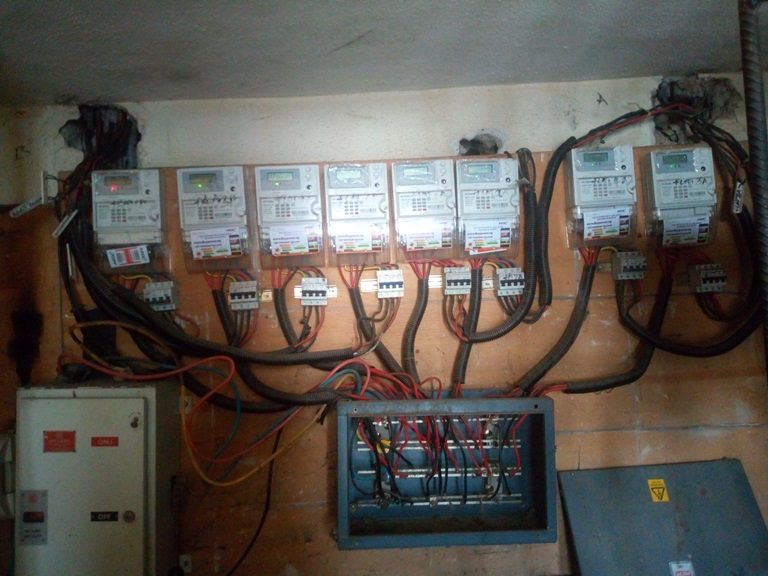
According to 2019 data obtained from the Nigeria Bureau of Statistics, NBS, Nigeria boasts of an estimated 7.48 million registered residential households who are connected by the distribution companies, but only 3.39 million households are metered which means 54.7 per cent of electricity consumers in the country have no meters.
Ironically, more than half of DISCOS customers do not have meters and the total revenue collected by all the DISCOS from customers still does not match with the total bills dispatched according to figures obtained from NERC.
For the first quarter of 2019, the total billings of AEDC customers across Nassarawa, Abuja, Niger and Kogi States was estimated at ₦25 billion while the revenue collected from customers for the period under review was ₦17.5 billion.
In the third quarter of 2018, the collection efficiency of the DISCOS across the country improved from 55.3 per cent of the same quarter in 2017 to 65.6 per cent, according to an analysis done by Price Waterhouse Coopers, PWC. This means that ₦3.4 of every ₦10 billed to customers are not paid to DISCOS as at when due.
Oyebode Fadipe, General Manager, Corporate Communications at the AEDC, defended the distribution company, saying it was currently the most compliant distribution company to the MAP programme in the country.
While admitting that the company cannot boast of a hundred per cent rate in attending to its customer’s complaints, he said they are giving it their best shot.
“There have been instances where we’ve not been able to meter customers within the number of days stipulated by the MAP regulations which is ten days but it is majorly because most customers do not give us vital information for us to get to their homes or the location the meters are expected to be despite that we are the most compliant DISCO to the MAP programme,” he explained.
While admitting that the company cannot boast of a hundred per cent rate in attending to its customer’s complaints, he said they are doing their best.
“For example, some customers have names that are so long that the computer has to drop those names. It is until those customers come out to say that we’ve not been metered, so there is no deliberate attempt on our part not to meter customers. We are doing our best,” he said.
However, the AEDC boasts of over 1 million customers with 580,000 customers currently metered, it is believed that metering customers will reduce the liquidity challenges in the power sector but the progress in metering has been slow.
Electricity subsidy soars, as regulator’s grip on power sector wanes
While electricity consumers complain of being ripped off by DISCOS through the adoption of estimated billings, analysis of NERC’s data on the power market shortfall indicates that the tariff shortfall is on the rise.
Tariff shortfall is the difference between the expected cost-reflective tariff expected to be paid by the customer and the actual tariff currently being charged customers by the DISCOS. In a bid to reduce the cost of electricity on Nigerians the Federal Government through the Power Sector Recovery Plan agreed to pay that shortfall as subsidy.
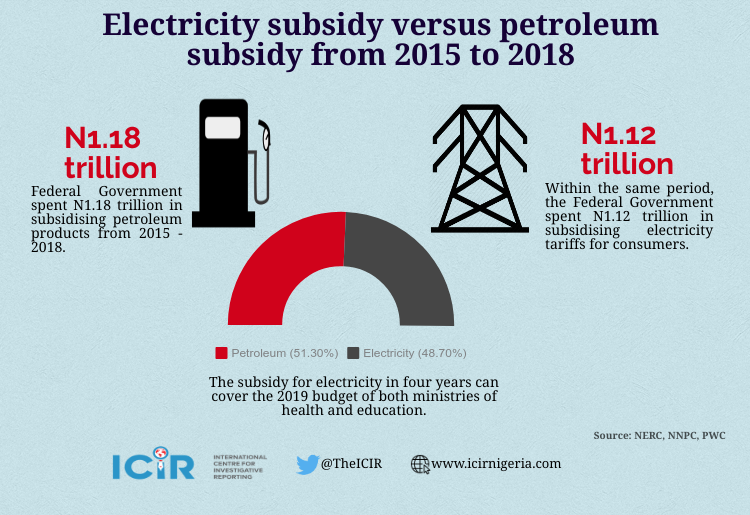
From 2015 to 2018, the Federal Government had spent ₦1.12 trillion as electricity subsidy according to data from Price Waterhouse Coopers. The data also shows that the shortfall to be paid to the DISCOS has been on the rise in recent years.
In 2015, the DISCOS were owed ₦165 billion by the FG in subsidy, while it climbed to ₦235 billion in 2016. PWC predicts the debt is expected to reach ₦522 billion at the end of 2019.
Credit: Infographics
Between 2015 and 2018, the total revenue spent by the Federal Government in subsidising electricity stood at ₦1.12 trillion, while the subsidy spent on petroleum products within the same period was pegged at ₦1.2 trillion, data from the Nigerian National Petroleum Corporation, NNPC has shown.
Analysis by PWC also shows that the combined sum of both subsidy payments estimated at ₦2.3 trillion, accounts for 17 per cent of Nigeria’s foreign reserves and 26 six per cent of the 2019 budget.
Officials of the distribution companies usually extort money from customers to fix electrical issues that they’ve been paid to carry out.
Ikechukwu Henry, a resident of Wumba, Apo extension in Abuja is wary of officials of the AEDC who he says extort customers for services they are paid to render.
“In January, our transformer got damaged which AEDC promised to replace, when the transformer was to be installed two months later officials of the AEDC who came to fix it demanded that we pay them for installation and that there were some electrical fittings that they were supposed to buy which the community had to pay for,” he said.
The residents were forced to pay the officials to fix the transformer or risk not getting it installed. Residents, therefore, contributed over ₦60,000 before officials of the AEDC agreed to install the transformer.
“This has always been the case with AEDC staff. Sometimes in 2017 when that transformer was bad we were asked to contribute money to replace the transformer but residents were not comfortable with that idea because we had contributed money like that in the past and it found its way to private pockets,” he concluded.
We are not spirits – NERC
Ekeh was asked what action NERC had taken to punish erring DISCOs for flouting the EPSR Act with regards to the estimated billing of customers and their sluggish responses to consumer complaints.
“We are not spirits to know when DISCOs are shortchanging you, it is only when you speak out and complain to us. That’s why we have forum offices in every state to sanction DISCOS and give consumers succor,” he said.
Ekeh dismissed the accusation that NERC is ineffective in carrying out its regulatory obligations, stating that consumer complaints, which come to the attention of the commission, are given top priority.
“If you don’t report to us and follow our complaint interface mechanism then you may not get our help which is why most people go to social media, saying there is no NERC. It doesn’t make sense if you make a complaint to the DISCOS after ten working days and your issue is not resolved then send them a reminder after that you can put it in writing to the commission for us to take it up,” he said.
According to section 32 of the EPSR Act, NERC is expected to prioritize consumer needs by setting up customer service mechanisms that will proffer solutions to customer complaints to ensure safety and good quality of service in the delivery of electricity to consumers.
In September, consumer complaints’ records obtained by an FOI request from NERC showed that from 2015 to 2019, the commission had received a total of 256, 037 complaints from customers of the Abuja Electric Distribution Company of which 211,820 of those complaints were resolved, leaving 44,217 unresolved complaints.
NERC’s complaints resolution rates indicated that 82.7 per cent of cases from the AEDC that reached them were resolved. Metering issues ranked top priority complaints with 69,030 incidents and was followed closely by billings with 55,823 complaints.
However, the statistics released by NERC contradicts the experiences of people who spoke to The ICIR in the course of the investigation.
Data without evidence
Adetayo Adegbenle, the executive director of PowerUp Nigeria, an electricity consumer rights group advocating for the right to the accessibility of electricity and proper billing systems, is concerned about NERC ‘s data. He believes the data lacks empirical evidence.
“The EPSR Act compels the DISCOS to submit a summary of its performance compliance with customer service standards within ten working days at the end of each month but they don’t do it. So if NERC comes up with any data on consumer complaints then it has to be attached with the monthly monitoring form from each DISCOS as empirical evidence,” he said.
He also stated that the regulatory agency is complicit with the DISCOS by not treating cases brought before them with a sense of urgency.
“We took a case to NERC in February this year for the issue to be resolved and they scheduled a hearing on the matter for September, that action alone would have exasperated the complainant. Another challenge with the DISCOS is that complaints that come to the customer units of the DISCOS are not attended to which is frustrating.
“I have written a litany of letters on behalf of customers to DISCOs which they ignored, and the NERC has not called them to order,” he stated.
Adegbenle advised that a toll-free hotline be set up where all the industry stakeholders will be kept in the loop to track complaints until resolution of the problem is achieved.
This report is part of a collaborative investigative series by Daily Trust, the International Centre for Investigative Reporting (ICIR), Premium Times and TheCable, facilitated by the Wole Soyinka Centre for Investigative Journalism (WSCIJ) under its Regulators Monitoring Programme (REMOP) for the Electricity Sector, with support from the John D. and Catherine T. MacArthur Foundation.
FOR the first time, African travellers have liberal access to over half the continent, the 2019 Africa Visa Openness Index published by the African Union Commission and African Development Bank, has revealed.
According to the 32 pages study launched on Monday at the Africa Investment Forum in Johannesburg South Africa, with focus on the Agenda 2063, the report showed that there were positive developments across Africa in easing the mobility of African citizens across the continent.
A number of Africa’s regional blocs also showed improvements with the Economic Commission of West African States (ECOWAS) countries achieving a 100 per cent on open reciprocity the highest in the region.
However, Nigeria Ranked 30th amongst African nations on the index. In addition, the report showed that Nigeria was not among the 32 countries to have signed the Protocol on Free Movement of Persons (PFMP) and also not among the 26 countries to have ratified the African Continental
Free Trade Area (AfCFTA).
Ranked among the top 20 countries on visa, openness is Mauritania in North Africa ranked first place, in West Africa, was Benin, Cabon Verde, Gambia, Ghana, Guinea-Bissau, Senegal and Togo.
In East Africa, Comoro, Djibouti, Kenya, Rwanda, Seychelles, Somalia, Tanzania, Ethiopia (moving from 32nd position in the previous year) and Uganda made the list while Madagascar, Mauritius, and Mozambique were among the only three South African countries to have also made the top 20’s.
Seychelles and Benin are the top-performing countries, offering visa-free access to all Africans.
According to the report, over half of the top 20 countries hold the most favourable passports for African travel which indicates that more liberal policies can promote their own citizens’ ease to travel.
The report showed that 47 countries improved or maintained their visa openness scores in 2019 as African visitors no longer need a visa to travel to a quarter of other African countries.
However, despite the improvement seen in the report, it is only a one per cent change from what was obtained in 2016 with only 26 per cent of Africans able to get visas on arrival in other African countries in 2019, while 49 per cent Africans in 2019 need visas to travel to other African countries –a decrease from recorded 51 per cent in 2018.
Currently, only 21 African countries out of the 54 African nations offer e-visa to make travel more accessible, an increment from 16 countries in 2018, 13 in 2017, and 9 in 2016.
The Africa Visa Openness Index measures how open African countries are in issuing visas, judging from questions asked citizens from other countries in Africa when they travel, ease of accessing visas before arrival, on arrival and or if other African citizens can visit a particular African country without a visa.
NATASHA Akpoti, Social Democratic Party candidate (SDP) candidate in November 16 Kogi gubernatorial election has accused the All Progressive Congress (APC) Candidate and Governor of Kogi State, Yahaya Bello of sending thugs to set the SDP secretariat ablaze on Sunday evening.
Akpoti said at about 11 am thugs sent to SDP’s secretariat destroyed properties, tore her posters and replaced them with Bello’s.
According to her, she received a call at 12 midnight, that the Secretariat earlier vandalized was on fire which made her notify the Nigeria Police Force, Nigerian Army and the Department of State Securities.
Akpoti alleged that while the military men tried to put out the fire but could not do so because of the numbers of APC thugs present at the scene allegedly carrying machine guns.
She said her security detail could not go close to the scene because they saw the police vehicles armed with officers carrying heavy guns.
The SDP candidate added that the Kogi state Commissioner of Police, Hakeem Busari was also in support of Yahaya Bello’s action because he was present at the scene of the incident but did not do anything to stop it.
People’s Democratic Party (PDP) had called for the removal of the commissioner over allegations of bias on the buildup of the elections.
In a ten minute video posted on social media, Akpoti called out the Governor of Kaduna state, Nasir El-Rufai, Governor of Ekiti State, Kayode Fayemi, the APC National Chairman, Adams Oshiomole and Nigeria President, Muhammadu Buhari, as being complicit.
She also accused Bello of threatening to kidnap and kill her while she campaigns through the state.
“Yahaya Bello owes me the protection of lives and property as the constitutional oath of office he took,” she said, noting that she has information about the governor’s plan to kidnap and kill her during her tour of the state.
The ICIR contacted the Kogi Police Public Relations Officer, Williams Ovye Aya who said he is not aware of the incident because he has been busy with the security logistics of the election and promised to confirm and call back but has not till the time of publishing this report.
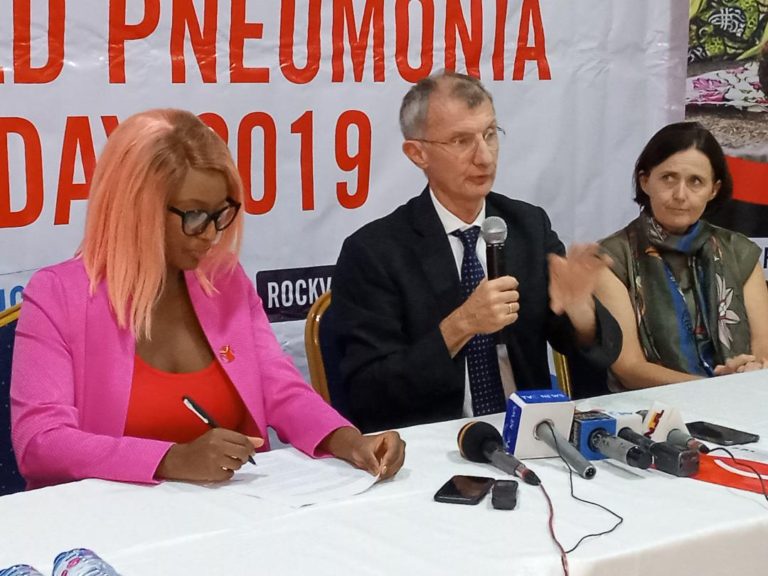
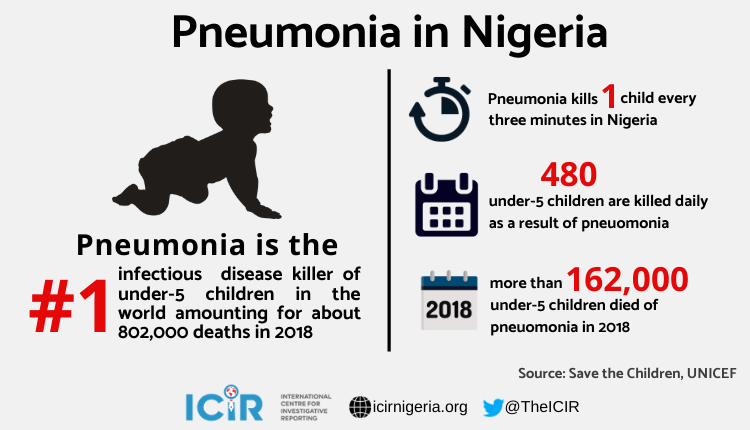
A leading child rights organisation, Save the Children, says pneumonia is killing one child every three minutes in Nigeria, which amounts to a total of 480 children in a day nationwide.
The organisation also disclosed that Nigeria has the highest number of pneumonia deaths globally, as the disease claimed the lives of 162,000 children in Nigeria under the age of five in 2018.
Pneumonia, which is caused by bacteria, viruses or fungi, and leaves children fighting for breath as their lungs fill with pus and fluid, is now a leading killer of children in Nigeria, causing 19 per cent of under-five deaths.
Kevin Watkins, Chief Executive of Save the Children, the UK who disclosed these numbers at a press conference on Monday to commemorate this year’s World Pneumonia Day, said pneumonia is a leading killer of children in Nigeria, causing 19 per cent of under-five deaths.
Nigeria ranked second behind India in 2017 with 132,556 number of under-five deaths from children while India topped the world with a total of 178,717 children deaths.
He called on the Federal Government to urgently commit new resources to tackling the deadly disease.
“Globally, 802,000 children under the age of five died from pneumonia in 2018, more than from any other disease. By comparison, 437,000 children under five died due to diarrhoea and 272,000 to malaria,” Watkins.
“Just five countries were responsible for more than half of child pneumonia deaths: Nigeria 162,000, India 227,000; Pakistan 58,000; the Democratic Republic of Congo, 40,000 and Ethiopia 37,000.”
He explained that children with immune systems weakened by other infections or by malnutrition and those living in areas with high levels of air pollution and unsafe water are at far greater risk.
Watkins added that recent analysis found out that Nigerian children born in the poorest households were nearly three times more likely to die from diseases like pneumonia before their fifth birthday, compared to the richest children.
He noted that the picture is starkest in Zamfara State, where children are five times as likely to die before the age of five compared to children from Kwara State.
Watkins said that most pneumonia deaths can be prevented with vaccines and easily treated with low-cost antibiotics, such as Amoxicillin DT.
He, however, lamented that millions of children are missing out on both more than 40 per cent of one-year-olds in Nigeria are unvaccinated and three in four children suffering from pneumonia symptoms do not get access to medical treatment.
Watkins said it was time for government, United Nations and multilateral agendas, companies and Non-governmental organisations to join forces to light pneumonia and protect these children.
According to him, “This is a forgotten global health epidemic that demands a greater international response. Millions of children are dying for want of vaccines, affordable antibiotics, and routine oxygen treatment. The pneumonia crisis is a symptom of neglect and indefensible inequalities in access to health care.”
Deirdre Keogh, Save the Children Country Director, said that the organisation was collaborating with the Every Breath Counts (EBC) Coalition, supported the federal government in the development of the National integrated Pneumonia Control Strategy, stressing that it was an important step in addressing pneumonia.
Also, Save the Children UK Ambassador, Florence Otedola, also known as DJ Cuppy, said Nigeria spent just $10 per person on health care in 2015, which she said was far below the $86 minimum level recommended by the World Health Organisation.
“We can all do our part in making sure the children of Nigeria do not die from pneumonia. lnvite us to come together and invest in providing treatment to every last child who deserves to survive this preventable disease.”
A report published by the Independent National Electoral Commission (INEC) has indicted the electoral umpire with a 95.2 per cent respondent feedback on the tendency of INEC corrupt officials compromising the November 16 governorship election.
Second in the list is political interference in the electoral process put at 94.2 per cent followed by strong political opposition – 93.6 per cent while the least in the ranking is Civil Society Organisation (CSOs) influence pegged at 37.8 per cent.
The study was drawn from the Election Violence Mitigation and Advocacy Tool (EMVAT) of the electoral body as the gubernatorial poll is scheduled to hold the same day in Bayelsa and Kogi States.
The Election Security Threat System (ESTA) identifies election risk factors in the Bayelsa governorship Poll with the essence of recognising early warning signals that could assist stakeholders deploy needed responses.
“…study identified a number of election risk factors which, in their order of rating by the respondents, include: (a) corruption among INEC officials (95.2 per cent); (b) political interference in the work of INEC (94.2 per cent),” the report states.
“(c) the presence of strong opposition (93.6 per cent); (d) inadequate training and conduct of party agents (91.3%); (e) adherence to process and procedures (90.4 per cent); (f) proliferation of small arms and light weapons (89.8 per cent); (g) inadequate training and conduct of security agents (88.2 per cent); and i) abuse of power of incumbency (88.2 per cent).
“Others include exclusion and discrimination against the youth (85.3 per cent); INEC’s information management (81.3per cent), confused electoral laws (79.9 per cent); exclusion and discrimination against the elderly (76.9per cent); widespread availability and use of hard drugs (76.2per cent); the activities of troublesome politicians, political parties, leaders and candidates (74.6 per cent), the participation of illegal immigrants in the election (74.3 per cent); and the use of hate speech (71.8 per cent).”
According to INEC, data for the study were collected using the EMVAT to elicit information from 408 members of the general public and experts across the state.
“Analyses were analyzed descriptively and interpretatively using tables, frequency distribution, and simple percentages.”
In terms of insecurity, it identified the roles of security operatives and religious extremists as major groups whose actions or inactions could pose a major threat to the electorate.
However, in Kogi State, the study, conducted on 928 respondents revealed the likelihood of political exclusion of the youths which might lead to electoral violence.
It showed exclusion of 83 per cent of the youth, women exclusion put at 78 per cent, the exclusion of ethnic minorities – 74 per cent and the elderly, described as the most excluded political group ranked 70 per cent.
Beyond exclusion, the respondents identified religious extremism, undue-influence such as God-fatherism as well as partiality of INEC officials as issues that might lead to electoral violence in the middle belt state.
“….in terms of Election Management leading to Election Violence in Kogi, the study reveals that the following are very likely to occur: Partiality of INEC Officials (82 per cent); Problem of Underage Registration (73 per cent); Problems associated with the Continuous Voter Registration exercise (69%); Failure to prosecute Electoral Offenders (68%); Poor voter Education by INEC (65 per cent); and substitution of Trained Electoral Officials (64 per cent).”
Other independent findings by Non-profit organisations such as YIAGA Africa had earlier alluded to some of the above discoveries, particularly the issue of arms stock-piling, violence, vote-buying and hate speeches.
Butswat Asinim, Bayelsa State Police Public Relations Officer, in his reaction told The ICIR that arms stock-piling were truly reported but it has not been established based on intelligence report.
He said several police officers from the states are converging in Yenagoa, the State capital ahead of the poll to prevent likely electoral violence.
“We have deployed our intelligence to various communities to source for information concerning the fear that people are stockpiling arms to be used for the election.
“Based on the intelligence so far gathered, we are not sure that these fear are actually real. We couldn’t really get any tangible intelligence as to the credibility of that information on arms stock-piling,” Asinim says.
“However, our men are still in the field sourcing for actionable intelligence to that regard. We will also deploy our tactical unit. As I speak with you, several police officers from various states are arriving Yenagoa for the election.”
GOV Seriake Dickson of Bayelsa has urged the people of Bayelsa to keep faith with the Peoples Democratic Party (PDP) as they go to the polls on Nov 16 to elect his successor.
Dickson who made the call in a radio broadcast on Sunday night monitored by in Yenagoa noted that voting against the PDP would amount to a betrayal of trust to PDP faithful nationwide.
He said that the faithful of the party who supported former President Goodluck Jonathan to become President would be disappointed if the people of Bayelsa dump PDP for the All Progressives Congress (APC).
He advised the people to make informed choices between Senator Douye Diri of the PDP and Chief David Lyon of the APC haven heard the candidates sell their plans as they canvass for votes in a peaceful atmosphere.
“I advise Bayelsa people in their own interest to keep faith with PDP, the followers of PDP across the country who made sacrifices and supported one of our own to become President will feel disappointed if we abandon PDP.
“It is on record that some of them were attacked for supporting former President Goodluck Jonathan and some were even killed for standing by our own, so it is only reasonable that we remain with PDP,” Dickson said.
On the purported rift with Jonathan over the choice of the PDP governorship candidate, Dickson blamed ‘political jobbers’ for making misleading comments and misrepresenting his actions.
Dickson said that those who claimed to be working for Jonathan do not mean well for the former President.
He said that Jonathan remains his leader adding that he served as a political strategist to the ex-president adding that those sowing the seed of discord between them were unfair to him.
“I do not want to say much but those of them sowing the seed of discord were not there when I fought battles for the former President, I was the only PDP governor that did not collect the N750 million for Jonathan’s re-election in 2015.
“I told him then that the election was our own and those who wanted to impose a successor on me are unfair, I will reveal more in my memoirs when I leave office and people will have the details,” Dickson said.
Jonathan was absent at the grand finale of the PDP rally in Bayelsa ahead the Nov 16 poll fueling speculations that the former President was aggrieved with the outcome of the primaries.
The aspirant purportedly endorsed by Jonathan lost out in the September primaries.
On the Bayelsa International Airport project, Dickson accused Nigeria’s aviation sector regulators of conspiracy and connivance with APC in the delay to grant regulatory approval for Bayelsa International Airport.
The governor stated that the APC was sabotaging the development efforts of his party, the Peoples Democratic Party (PDP) in Bayelsa.
Dickson also blamed the approval delay on the activities of some overzealous officials of the Ministry of Aviation who he accused of playing with the development of the state.
He maintained that the Airport was built to international standards at the cost of less than N70 billion and urged the people to vote against APC for playing politics with the development of Bayelsa.
It will be recalled that the Nigerian Civil Aviation Authorities had inspected the airport in September and insisted that the facility be fenced before final approvals for flight operations.
The Bayelsa government had obtained a N40 billion loan to finance the project, and later sought the state Assembly’s approval of additional N40 billion for its completion and other capital projects.
Meanwhile, the APC in Bayelsa had said that computing the interests paid on the loans has shot the project sum to over N100 bn making the airport the most expensive in the world.
Bayelsa APC described borrowing from short term money market at prevailing interest rates to fund a long term project as unsustainable.
The party said that the cost of borrowing made the project a burden on the treasury
THE Human Rights Watch (HRW) has charged the Nigerian government to issue a directive that will completely ban the chaining of patients in mental health facilities across the country.
In a report published by the civil society organisation, it is noted that chaining of patients is an abuse of human rights.
HRW said it visited 28 mental facilities, and 27 of the facilities had their patients including a 10-year-old boy, chained or shackled.
According to HRW, the staff of the facilities chain either both or one ankle of a person and connect it to a very heavy or immovable object.
The report added that some of the patients were chained for days as punishment or as a preventive measure against escape.
HRW disclosed that the victims were not only chained in illegal rehabilitation centres but also in religious centres and government-owned facilities.
It quoted the statements of some of the patients of the facility such as Zain in Abeokuta, Ogun State who said she was chained for three months which has caused her lots of injuries. Also, a 40 years old woman (Adedamola) held in a church in Ibadan for 2 years said while she was chained, she often got injuries on her ankles.
“Chaining can cause serious injuries and psychological distress, a 35-year-old woman chained for 10 months in an Islamic rehabilitation centre in Kano, northern Nigeria, said, “Everything about this (chaining) is difficult; you feel like you want to commit suicide … regardless of how you felt before coming here, you will get worse,” the report stated.
It added that the Conventions on the Rights of Person with Disabilities (CRPD) in 2007 stated the obligation to ensure equal rights for people with disabilities, including right to liberty and freedom from torture, ill-treatment and forced treatment.
It noted that as much as the Nigerian government is clear on its position about torture, it has not specifically ban chaining in Nigeria mental institutions.
Emina Ceremovic, a researcher on disability rights at the Human rights watch also urged the Nigerian government to issue a ban on chaining inspect all facilities, both private and state ones and ensure people can access quality mental health services.
The report came after sacking of several illegal centres across Nigeria including Oyo state, Kaduna State,Adamawa state and Kwara where most victims have been found chained, malnourished or abused.
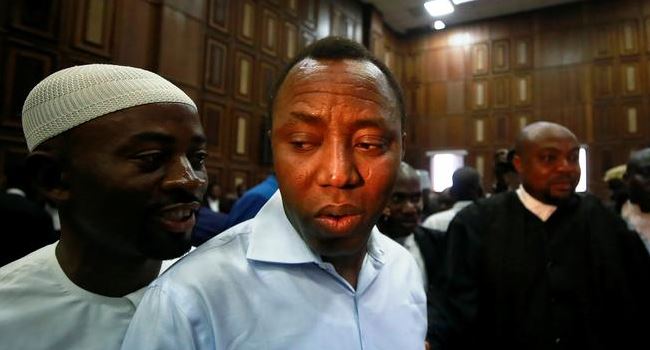
SENIOR Advocate of Nigeria, Femi Falana, has said his legal team, representing Publisher of Sahara Reporters and Convener of the Revolution Now protests, Omoyele Sowore, will file contempt charges against the Department of State Services (DSS) on Tuesday.
In an interview with Channels TV on Monday, the human rights lawyer said the aim of the contempt proceedings is to compel the DSS Director-General, Yusuf Bichi, to justify in court why the agency has disobeyed orders directing that his client be released.
“And if he is unable to release them, what the law requires is that he should be sent to prison because nobody is above the law in Nigeria. We either run the government under the rule of law or under martial law,” he added.
Falana also said the DSS is prepared to release Sowore and his co-defendant, Olawale Bakare.
“I was reliably informed last night by a security official that the government is currently fishing for evidence,” he said.
“An attempt is being made to file a fresh charge on Tuesday so that there will be an excuse that ‘we are arraigning them in court, hence we are unable to release them’. If you recall, that was what was done when Justice Taiwo Taiwo granted Mr Sowore bail on the 24th of September. For a whole week, the order of the court was flouted. And then, of course, on the 30th he was arraigned together with Mr Bakare.
“We are ready for them,” he maintained. Asides the contempt proceedings, Falana said his legal team also has plans to file an application under the Fundamental Rights (Enforcement Procedure) Rules to challenge “the illegal detention of Mr Sowore a week before an illegal order was procured to detain him for 45 days”.
Rights activist and convener of the Concerned Nigerians group, Deji Adeyanju, has said he would lead a delegation to the DSS headquarters in Abuja on Tuesday “to receive both Sowore and Bakare”.
“Despite the embarrassing and unprofessional statement credited to the DSS, Nigerians, comprising activists, lawyers, families, friends and other citizens came out on Saturday morning to receive the duo. As expected but quite unfortunate, the DSS yet again failed to release them, under the excuse that we came on a weekend,” he said in a statement on Monday.
Timeline of Omoyele Sowore’s arrest and detention
August 1: Sowore announces plan for a nationwide protest to take place on August 5 in 21 states.
August 2: At about 11 pm, Sowore is arrested by DSS operatives.
August 8: Justice Taiwo Taiwo of the Federal High Court grants DSS’s request to detain Sowore for 45 days.
August 28: Vacation judge, Justice Nkeonye Maha, declines to grant Sowore’s motion challenging 45-day detention.
September 21: Federal government files charges against Sowore including allegations of treasonable felony, insulting the president, and money laundering.
September 24: Justice Taiwo grants Sowore’s bail application.
September 26: Federal High Court insists on Sowore’s release, threatens to hold DSS DG in contempt.
September 30: Justice Ijeoma Ojukwu orders that Sowore, co-defendant be remanded in DSS custody after pleading not guilty to seven counts of treason, cyberstalking, insulting the president, money laundering, etc.
October 4: Justice Ojukwu grants bail to Sowore in the sum of N100 million and two sureties.
November 6: Falana says Sowore has met bail conditions and should be released that day.
November 8: DSS says it has received court order to release Sowore but “no person has turned up … to take delivery of him.”
CORPORATE Affairs Commission (CAC) on Monday in Abuja urged companies operating in the country to file in their annual returns as provided by the law or risk being de-listed from its register.
Moses Adaguusu, Head Public Affairs, CAC, during a press briefing said that the call became necessary in view of the need to keep the commission abreast of such companies that were still in operation or otherwise.
“A very vital importance is that filing of the annual return by a company helps to simply keep the commission abreast that such company is still actively in operation and still engaging in business activities or otherwise,’’ Adaguusi said.
While emphasising that the Enforcement and Monitoring Department of the Commission would intensify efforts to ensure compliance, Adaguusu, however, urged companies to embrace voluntary compliance.
According to him, although, we go out on enforcement, we are not going like task force because the economy is difficult.
“We want companies to embrace voluntary compliance so that there won’t be penalties.
“Penalties run into millions of naira and that is enough to close a company,’’ he said.
Adaguusu expressed concern that rather than comply with filing annual returns to the CAC, some companies seek for waiver on penalties.
According to him, in extreme cases, the commission considers waivers on penalty.
He also pointed out that companies need to be up to date with CAC to enable them to get registered with the Bureau of Public Procurement (BPP).
Adaguusu said, “companies that execute contracts would have difficulties being paid if they are not registered with the BPP.
“Companies that want to do business must be on the Bureau of Public Procurement and before you are registered with BPP you must be up to date with CAC.
“This is another window that is encouraging companies to come and update with CAC,’’ Adaguusu said.
He, however, pointed out that the process of delisting companies from CAC’s register for failure to file annual returns is an ongoing process.
“It takes a process and it is ongoing. “In 2008, 10 companies were deregistered and in 2016, 38 companies were also deregistered; so, it is a continuous process and there will be no need to leave companies that are not complying on the register,’’ Adaguusi said.
He emphasised that the task before the Monitoring and Enforcement Department was to ensure that companies do not only file their annual returns but stay away from sharp practices.
” For instance, we will go from door to door to ensure that companies maintain the original names they used for registration.
“Also, the department will ensure that companies display their registration numbers in all their correspondence as well as indicate the list of directors.
“A company with a reputation will give people who want to do business with them a breath.
“On the contrary, where the directors are not known, people will be skeptical to do business with them,’’ Adaguusi said.
He further said that CAC would sustain efforts aimed at ensuring that the process of registering companies was devoid of hitches.
Adaguusu said that the upgrade of the Company Registration Portal (CRP) is to enhance the incorporation process.
The Company Registration Portal is the software that drives the operations of the commission.
The commission’s spokesman added that the move to upgrade the software was geared toward ensuring improved efficiency, provision of greater customer experience and ease of doing business.
An annual return is a mandatory requirement every enterprise or incorporated trustees must file annually by delivering to CAC a return in the prescribed form containing specified matters related to the organisation in accordance with Companies and Allied Matters Act (CAMA).