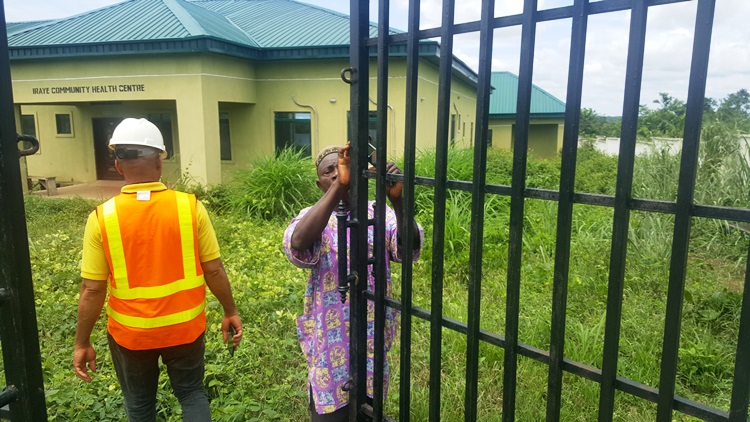
Olugbenga ADANIKIN reports about the travails of the residents of Iraye, an NNPC host-community in Ogun State that got a 20-bed modern hospital facility, after almost 20 years of waiting, but still lacks access to healthcare. The clinic is meant to serve residents of 14 neighbouring villages. Though the state government is expected to take ownership after completion, it has not done so and the clinic is now overtaken by bushes.
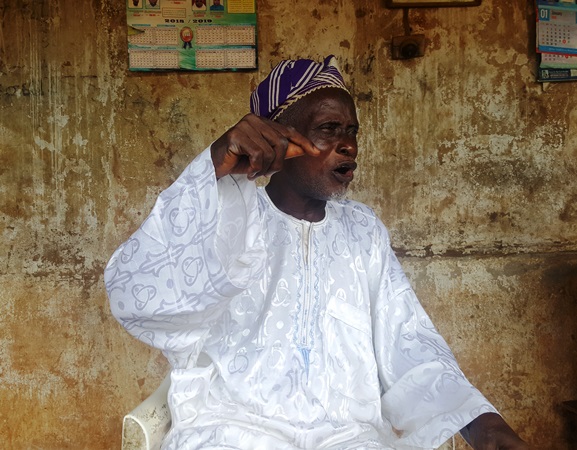
“QUEEN Elizabeth took this route when she came to Nigeria in 1956,” that is how Rasheed Alimi, the Community Head of Iraye started his conversation with this reporter.
“This is where she passed,” he said, pointing at the first federal road linking Odonguyan, Ikorodu in Lagos state to Sagamu in Ogun state – now abandoned.
He made this comment to stress the point that the community has been neglected despite decades of existence.
Iraye is located in Sagamu Local Government Area (LGA) of Ogun State, an ancient town with no modern infrastructure. Since independence, the community has craved for basic amenities such as electricity, water, healthcare facilities.
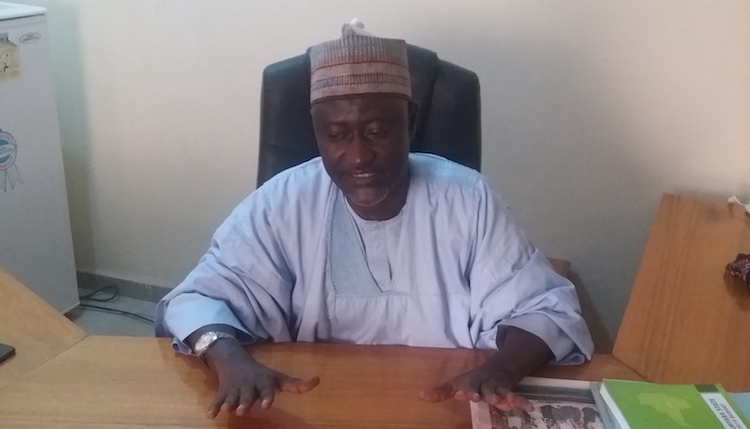
Rasheed Alimi, Iraye Community Head who had pleaded with the NNPC for over 15 years to support with a healthcare facility. Photo Credit: Olugbenga Adanikin, The ICIR
Long years of waiting for a health care facility yet left to rot after completion
“It is over 15 years that I have been making appeal to the Nigerian National Petroleum Corporation (NNPC),” says Alimi. “They asked what I wanted but I told them I don’t need money but something physical that would be beneficial to the whole community as a hospital, good road and electricity.”
He later added a gas station to his request. In March 2019, the Nigerian Pipelines and Storage Company, a subsidiary of the NNPC, came to his rescue. A 20-bed hospital facility was constructed and commissioned by the company in the presence of the state government. The clinic was delivered with a new Mikano power generating set and borehole facility.
Women, especially pregnant ones, were full of excitements when the clinic was completed. Located next to the chief’s house, it is meant to serve 14 rural communities.
“I thought it was a joke until the project became a reality.”
But nine months after it was commissioned, Ogun State government has neither deployed medical staff to manage the clinic nor stocked the clinic with drugs.
“When pregnant women who used to line up at the gate of the health centre eventually got tired of visiting, they stopped coming,” the security guard at the clinic told The ICIR.
Findings by The ICIR showed that the hospital facility is equipped with modern medical technology.
Left to ruin
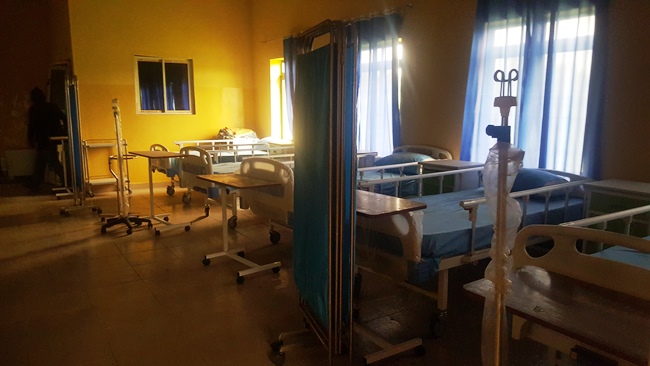
Now the hospital is covered with bushes. The new power generating set left unused has also begun to depreciate. Inside, thick cobwebs are everywhere, and beds are covered with dust, though, the painting is still fresh,
The ICIR counted 10 modern hospital beds in the male ward and 10 beds in the female ward. Aside, there is a laboratory for blood test, consulting rooms, large reception for patients, nurses’ bay and delivery rooms, stores with extra medical equipment such as oxygen, baby weigh, among others.
Make-shift Cassava farm within Iraye Community Health Centre managed by the security guard
Photo Credit: Olugbenga Adanikin, The ICIR
Security guard to Iraye Community Health Centre owed nine months take home. Photo Credit: Olugbenga Adanikin, The ICIR
Residence of Iraye Community Head Mr Rasheed Alimi
Photo Credit: Olugbenga Adanikin, The ICIR
Power generating set provided for Iraye Health Care Centre by the NNPC due to no power supply.
Photo Credit: Olugbenga Adanikin, The ICIR
One of the beds in the male ward at Iraye Community Health Centre.
Photo Credit: Olugbenga Adanikin, The ICIR
Iraye Community Health Centre wastes away due to Ogun State neglect
Photo Credit: Olugbenga Adanikin, The ICIR
Iraye Community Health Centre Medical Laboratory.
Photo Credit: Olugbenga Adanikin, The ICIR
Extra medical items stored in a separate building within Iraye Community Health Centre
Photo Credit: Olugbenga Adanikin, The ICIR
Abandoned Iraye Community High School just being revived through community efforts.
Photo Credit: Olugbenga Adanikin, The ICIR
The facility is also equipped with giant refrigerators; air conditioners, modern furniture, waste bins of different colours and a parking space that could accommodate about eight cars. The clinic is enclosed by high fence.
Now part of the land in the premises has been converted to cassava farmland by the security guard at the gate who has been owed wages for seven months. Two security men were hired by NNPC for the hospital at inception.
“The state or local government ought to pay their income but till now, we have not heard anything,” Alimi told The ICIR.
Female Ward, Iraye Community Health Centre, Sagamu LGA, Ogun State Photo Credit: Olugbenga Adanikin, The ICIR
Scary statistics on death of pregnant women and under-five children
Nigeria Demographic and Health Survey (NDHS) 2018 Report jointly released by the National Population Commission (NPC), United States Agency for International Development (USAID), World Health Organisation, the Global Fund among others in November ranks Ogun State among those with high under-five mortality.
“By state, under-5 mortality ranges from 30 deaths per 1,000 live births in Ogun State,” key findings of the survey state.
“Children whose mothers have no education are more likely to die young (170 deaths per 1, 000 live births) than children whose mothers have more than secondary education (56 deaths per 1,000 live births)
The figure contributes to national statistics of under-five and maternal mortality put at 2, 445.
“Every single day, Nigeria loses about 2,300 children under five and 145 women of childbearing age,” according to a report by The Guardian.
“Nigeria is the second-largest contributor to the under-five and maternal mortality rate in the world accounting for 14 per cent of World’s maternal mortality deaths.”
The world Atlas also ranked Nigeria fourth among countries with the highest number of maternal mortality – 814 deaths per 100, 000 births.
But United Nations Children’s Fund (UNICEF) official data on maternal mortality, as at September described Nigeria’s status as ‘Very High’ in the range of between (500-999) deaths. It specifically pegged the figure at 917 deaths of pregnant women per 100, 000 live births.
Ironically, Nigeria is among the signatory to the Sustainable Development Goals (SDGs) aimed at achieving specific developmental goals, particularly goal 3.1, reducing incidents of child and maternal deaths to 7.5 per cent annually to realize the goal by 2030.
Government turns deaf hear
A former aide of Amosun, who spoke under the condition of anonymity said though the hospital was built under past government, the new administration might not do much. According to him, the 250-bed healthcare facility built in Abeokuta by the past governor also has been abandoned.
Kunle Somorin, the spokesperson to the governor was contacted via phone but he repeatedly terminated the calls. Text messages sent to him were not replied.
Notwithstanding, the community head has appealed to the state government to urgently provide the centre with qualified doctors, nurses and drugs to make it operational.
“NNPC spent so much money to build this clinic, but we don’t want it to become a waste,” he told The ICIR.
ACCORDING to the United Nations Children’s Fund, UNICEF, an estimated two million children in Nigeria suffer from Severe Acute Malnutrition, SAM. Grace Obike, with the aid of a grant from Ford Foundation and the International Centre for Investigative Reporting, recently travelled to Zamfara to x-ray the problem in the state.
WHO would have thought that malnutrition could result in a child not only being disabled but also becoming deaf and blind for life, even after years of therapy? That will be the fate of five-year-old Mubashir, who was rushed to the Federal Medical Center in Gusau earlier this year by a philanthropist with complications from malnutrition.
The child had suffered meningitis two years ago and was taken to a primary health facility in his community. But three days into the treatment, his poor parents took him away from the hospital because they could no longer afford the cost of treatment. They returned home to treat him traditionally but, instead of getting better, he became severely malnourished and when they tried returning him to the hospital, they could not due to constant attacks by bandits. Finally, they were located by a philanthropist who got contributions from several people to return him to the hospital.
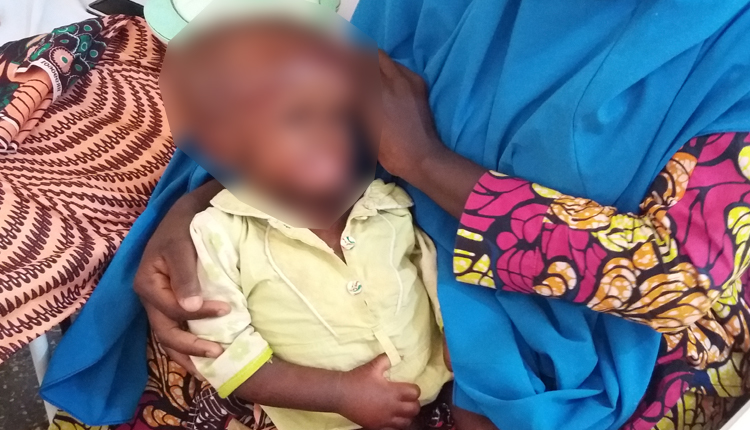
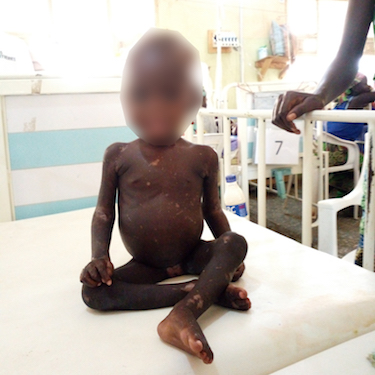
At just two, Zuwaira Musa’s daughter has seen more pains than most children her age. Her head is almost twice as large as her entire swollen body. She is so pale, her skin almost translucent, so severely malnourished that her skin peels and she can barely breathe on her own or keep her small eyes open enough to focus. She has been sick for close to a month and has had to be returned to the hospital in a state of coma few days after being discharged.
Emir’s palace camp in Anka
This is not Zuwaira’s first encounter with malnutrition. Her older child who is five had been treated for malnutrition when she was as young as her younger one and had been treated in the same ward before she had her second child but, obviously, she never learnt from the incident because her younger child’s case is worse than that of her first.
For one-year-old Kadija Sani, the Federal Medical Center, Gusau, has become home for the past few days after her young mother ran away leaving her with the grandmother. Seeing her one-year-old daughter fall into a coma and barely able to breathe, the young mother who has never experienced such a near-death experience before, according to her mother, handed her over to her mother and ran away. Baby Kadija who is suffering from complications due to malnutrition has been in and out if coma, breathing off and on with the aid of an oxygen tank, due to her severe case of malnutrition.
On another bed in the Severe Paediatric Ward, SPW, of the Anka General Hospital, two-year-old Mario just barely began understanding her surroundings. She is severely malnourished and the doctors could only get the veins on her head, her skin is peeling off like one who was thrown into hot oil and she has difficulty breathing as she looks on from sunken eyes.
Following tradition, like most mothers in Zamfara, her teenage mother had weaned her off breast milk when she was a year old and taken her to live with her grandmother so she could adapt to the new changes. But she obviously never did because the infant went straight for her mother’s breast when the mother was fast asleep while she and her grandmother came visiting. The child immediately started to convulse and fainted several times before she was rushed to the hospital. Her mother claimed that it was because the baby took her breast milk, which she claimed is sour
But her doctors disputed the mother’s theory and insisted that Mario was sick due to complications of the acute malnutrition she suffers from because her grandmother was unable to supplement her new diet with enough nutritious meals but fed her a continuous dose of kunu which is purely carbohydrate.
For Amina, a young mother of three whose youngest is suffering from malnutrition, she prays for the day that her two years old who is gradually recovering will grow stronger and be able to run around and play so she could dress her up in different dresses like her other children. Amina said that she has learnt her lesson and has been educated on the things she needs to do to ensure her children are never getting malnourished again.
Malnourished baby Mairo
SAVING GRACE
The story goes and on of mothers with severally malnourished children that are brought in almost dead, malnourished and severely dehydrated, seeking for help where traditional medicine has failed.
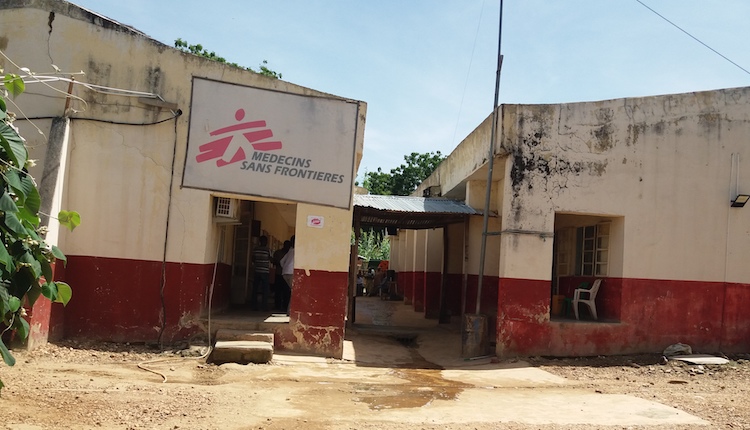
At the paediatric section of Anka General Hospital, two large wards had been set aside and a third constructed and waiting specifically for the treatment of acute malnourishment cases. The 136-bed wards mostly have two sick children sharing a bed, the section has been fully handed over to Medecines Sans Frontiers / Doctors Without Borders Holland (MSF) by the Zamfara State government to handle childhood diseases in Anka.
After a few days of treatment, when the children can breathe on their own, maybe start eating and no longer require constant observation, they are transferred to the next ward for continuous treatment and the third ward when they are well enough for discharge.
Lead project coordinator with MSF in Anka, Benjamin Mwangombo, explained that malnutrition is among the core diseases that MSF treats at the paediatric ward of the Anka General Hospital and other ambulatory therapeutic feeding centres. The cases are divided into acute and moderate malnutrition cases and MSF only admits acute cases where children need treatment, such as cases with medical complications like severe pneumonia, severe malaria and meningitis. He said that MSF takes care of the nutritional and medical complications.
Mwangombo said that patients with Severe Acute Malnutrition (SAM) are admitted into the Inpatient Therapeutic Feeding Centres (ITFC) while the malnourished ones without medical complications are taken care of in the Ambulatory Therapeutic Feeding Centres (ATFC), which takes care of them at outpatient centres, where they visit weekly and are given therapeutic food and medications, if need be.
He said, “Cases of SAM need critical observations because in such conditions most of them can no longer eat on their own, they need nutrients but because of the complications they cant, so we take care of the medical needs so that when there is improvement, they are stable and have appetites we refer them to the ATFC. We have ATFC’s in Anka, Bagega, Jangede and Nasarawa.
“We observe that most of them come late, they come when the children are very sick because malnutrition is a process, you see the child change. In the previous years, we used to see them come early but currently, most of them come late and we don’t have much access to where they are coming. We used to go to outreaches in the surrounding areas but we no longer have access to go anymore, if we could, maybe we would have brought treatment to them but we have not been able to go for outreach since February but we have the ATFC here in Anka where they have access to and we are supporting the state ministry of health with ATFC services in Jangade and Nasarawa.”
A report by MSF reveals that in the last nine months in Anka alone (Jan-Sept 2019) 7,446 children in the LGA were treated for malnutrition. This does not include children that might have died due to complications from malnutrition.
In Tsafe Local Government Area of the state, the prevalence of malnutrition among young children is another daunting issue that the general hospital in the area handles. The local government is said to be famous for producing bullet proof charms and so people, including members of the Civilian Joint Task Force (CJTF) troop into the communities to fortify themselves against the bandits that have caused so much havoc in the state. Unfortunately, their fame and prowess have not been able to help them save their children from the menace of malnutrition.
Unlike Anka, the Tsafe General Hospital does not have the kind of personnel found in the former’s paediatric unit due to the contributions of MSF here, Bashir Ibrahim who is in charge of malnutrition cases at the hospital explained that an instrument is used to measure if all children brought into the hospital are suffering from malnutrition.
Although most of the hospital files were in December last year when residents of Tsafe protested killing by bandits, Ibrahim revealed that 40 patients suffering from malnutrition were destroyed successfully treated at the General Hospital, Tsafe in the months of August and September this year.
He said sometimes the children are brought in very dehydrated and suffering from dermatosis (a disorder involving lesions or eruptions of the skin that are acute, lasting days to weeks or chronic, lasting months to years) with oedema where the body swells. Most of his patients, he said, are from villages where they are only fed kunu/pap and fura.
Some of the cases of oedema, according to him, look like the body is filled with water, then their skin peels off like burns and they also suffer from rashes in the mouth. In such cases, he says, they are treated with antibiotics and fed using a tube passed through the nose to the stomach but when the case becomes more complicated, they transfer the patient to the Federal Medical Centre in Gusau or Yerima Bakura specialist hospital in Gusau.
FIGHTING THE SCOURGE
Medical team leader, MSF Holland at the Zamfara Project, Dr. Taurikul Islam, said that Malnutrition does not only hamper the physical growth of SAM patients but it reduces their immunity, they become vulnerable to any kind of infection, diarrhoea diseases, pneumonia and seasonal malaria.
Research done by Dr. Michael Latham, a professor of International nutrition, in 1971 suggests that dietary deficiencies in young children cause retardation in intellectual development and mental functioning. He added that certain kinds of malnutrition and nutrition – related diseases can result in mental retardation and severe mental illness.
According to the United Nations Children’s Fund (UNICEF), malnutrition in children is especially harmful. The damage to physical and cognitive development during the first two years of a child’s life is largely irreversible. Malnutrition also leads to poor school performance, which can result in future income reduction.
Dr. Islam said that SAM patients with medical complications need intensive monitoring and different treatments because they are very vulnerable. Children, in general, are very vulnerable to infection, childhood and tropical diseases. However, malnourished children are much more vulnerable.
He said that sometimes with malnutrition, a patient’s immunity is suppressed, so when they have little infections, they don’t show the symptoms immediately. He added that the long term effects of malnutrition is that the immunity and development can get suppressed because chronic malnutrition deprives the child of protein, sugar, fat, every essential thing needed for the body, it has tremendous effect in their development, in chronic cases, even if the child survives, it might not be like the normal child.
He added, “They need a specialised kind of treatment which is in two parts, one is their feeding, you need to improve their feeding otherwise they will have common complications like low sugar (hypoglycaemia) which can kill immediately, they have to be given sufficient calories and then you treat the complications, both will have to go simultaneous. When it comes to giving them calories, they need very specialised formulation, usually we start with F75 (formula 75) which is World Health Organisation (WHO) standard formulation for this kind of treatment, what it does to the body is it gives sufficient calories and also helps with metabolism because most of the SAM patients with medical complications have low functioning metabolism, the milk is designed to help the metabolism adjust within the body.
“The milk has specific calories content because if you give more calories to them, their body will not absorb it and they will have reabsorption diarrhoea, which is worst.
“For the medical complications, most of them can be categorised into either they have a respiratory infection (pneumonia, bronchitis or upper respiratory tract infection), diarrhoea due to bacteria or virus, malaria and we see some patients with sepsis which is very common, patients here become really sick.”
He said that MSF has specific types of protocol to treat each case antibiotics, malaria treatments then with sepsis the kind of antibiotics for its treatment and then symptomatic treatments with those vomiting, with urinary infection, high fever etc. The SAM patients without medical complications are eating, not having diarrhoea, pneumonia, malaria or sepsis are treated in the ATFC, where they are given vitamin A, folic acid, prophylactic antibiotics, Albendazole for de-worming which is done routinely.
So after the treatment of a SAM patient MSF does not immediately discharge them completely but attach them with the ATFC where they are patients for at least 42days in the ATFC program, they visit the ATFC nearest to them every week till they reach the target weight, to prevent reoccurrence.
The most chronic cases of malnutrition in Zamfara state as earlier stated are transferred to the Federal Medical Centre or Yerima Bakura, which is where Mubashir was recently discharged from after three months hospitalisation. Chief Paediatric Doctor with the Federal Medical Centre, Gusau, Dr. Manir Bature, said that usually a five-year-old is expected to weight at least 18kg but Mubashir weighed a little over 5kg when he was brought to the hospital.
According to him, Mubashir’s case became complicated due to meningitis that was not properly treated and the malnutrition, which resulted in his blindness, deafness and inability to sit.
“We had to start rehabilitating the patient, hoping that some of the functions that he lost will regain, he was reviewed by an E and T surgeon, an ophthalmologist, physiotherapist and we noticed some progress but there are some things that have been damaged permanently like the hearing impairment and blindness. We are hoping that he will eventually start sitting, crawling and walking,” Dr. Bature said.
STATISTICS
He explained that being a referral centre, the hospital has managed several complicated cases of malnutrition, some with severe infection and organ dysfunction. The doctor added that the northern part of the country, including Zamfara, is one of the places bedevilled with malnutrition., Some of the factors causing the present increase in cases to include poverty and armed banditry, which fuels food insecurity and turns hundreds of children into orphans.
He said that one will expect children in this situation to be malnourished, adding that it has gotten worse with the displacement of people from their homes, some are in camps while others are camped unofficially in people’s houses. They have lost everything and rely on people, most times the food is inadequate which is the main source of malnutrition. So insecurity has helped to increase the case of malnutrition in Zamfara.
On 1 April 2016, the United Nations (UN) General Assembly proclaimed 2016–2025 the United Nations Decade of Action on Nutrition. It reported that malnutrition increases health care costs, reduces productivity and slows economic growth, which can perpetuate a cycle of poverty and ill health. In 2016, an estimated 155 million children under the age of five years were suffering from stunting. The Assembly said that 52 million children under five are wasted, 17 million are severely wasted and 155 million are stunted, while 41 million are overweight or obese.
Data from the Community-Based Management of Acute Malnutrition (CMAM) programme under the Ministry of Health in Zamfara State indicates that in less than four years January 2016 to September 2019, 132,811 children in the state were admitted for cases of acute malnutrition. Of the number, 101,327 children where certified cured. This means that 31,484 children were never cured, which could simply mean that 31,484 children died in less than four years in Zamfara State of complications due to malnutrition. The breakdown indicates that in 2016, 46,789 children where admitted and of that 39,342 was cured; In 2017, 37,677 where admitted and 34,756 were cured in 2018, 36,000 were admitted and 17,352 were cured while in this last months of 2019, 12345 where admitted and 9877 cured, of the list, 2018 seems to have been the worst for malnourished children in the state because more than half of the total figure seemed to have died.
This figure obviously does not include children who were malnourished during the period but did not have medical complications and were probably treated at the ATFC programmes around the state or those whose parents never made it to the hospital due to insecurity, displacement or poverty.
DISPLACEMENT
The Executive Secretary of the Zamfara State Emergency Management Agency (ZEMA), Alhaji Sanusi Kwatarkwashi, in August announced that the state recorded about 37,000 Internally Displaced Persons (IDP’s) due to the activities of bandits. He said that 12,000 of them were in Katsina, Kaduna, Kebbi, Sokoto and some part of Niger Republic.
As one of the hot spots in Zamfara, Tsafe IDPs are scattered all over Tsafe town, neighbouring villages and Niger Republic. Although some of them have gathered enough courage to return home, people like Saidu Mua’zu from Asaula village still live with the trauma of when bandits descended on his village, killed 25 people, stole their motorcycles, grains, livestock including chickens, that they chased around the village until they caught every single one, then they kidnapped three girls, two women and a baby, demanded for ransom of N100,000 each then burnt down the whole village.
He added, “Some of us have returned to rebuild but most of us are waiting for the rains to seize, as soon as it does and we are sure of our security, we will return. All we want is peace, no one has come to help us since we came here, they only make promises, ask us to write our names but nothing ever comes out of it.”
It was as well reported by the Zamfara State Emergency Management agency, ZEMA, that 25,000 IDP’s had returned home but many of them were recently forced to flee again due to resumed attacks by bandits in some of the communities that were formerly declared safe.
After nine soldiers reportedly lost their lives in a gun battle in Sunke village in Anka on the 3rd of October this year, which equally led to the death of 58 bandits, the villagers, who had earlier returned to their villages believing it was safe, were forced to flee in the middle of the night, for fear of a reprisal attack from the bandits.
In the uncompleted Emir’s palace camps in Anka (thousands of IDPs occupy the uncompleted palace, abandoned school buildings and uncompleted buildings) Mohammed Liman from Sunke village said, “The fact is that there seems to be more peace right now, which was the reason why we returned to our villages in Sunke and they sent some soldiers to ensure continuous peace but the bandits returned and killed about 11 soldiers, they did not touch us but we where scared because a lot of them where equally killed so we all ran and left the village for them in the middle of the night. We are praying that all the problems with bandits end so we can return home and live in peace.”
One of the leaders of the camp, 57 years old, Mohammed Lawal from Jarkuka, explained that it the camp contains people from over 10 villages who were all displaced by bandits. Lawal, who believes the IDPs might be as many as 5,000, said this includes their wives, children and the elderly.
He revealed that MSF provided makeshift shelters of about 500 rooms for them but it is still not enough because at least 20 people sleep in each room, many more sleep in the mosque, other surrounding uncompleted buildings and outside in the open.
He said that their only hope is for peace to return so that they can go back home soon and rebuild.
He recalled, “They came into our village on about 35 motorbikes, they went away with our people, each bike carried at least three people, they killed 26 people at a spot and shot a lot more. Our biggest problem right now is food, we have to send our children out to beg to enable us to feed, some of us sell firewood, kola nut to survive, we are begging people to come to our aid.”
Apart from their work at the general hospital, MSF also set up a makeshift clinic inside the Emir’s palace camps, provided materials for the construction of 500 tents, restrooms, a borehole and are also making provision for another borehole.
Aisha and the reporter
STRENGTH IN THE MIDST OF FEAR
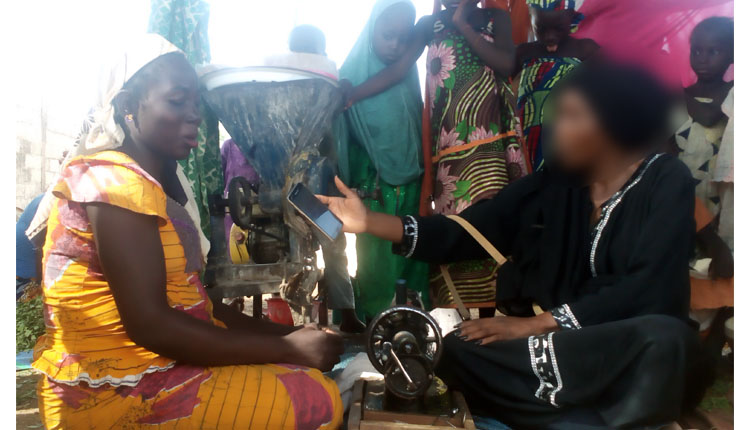
For Aisha, an IDP at the camps in the Emir’s palace, the thought of allowing the bandits to take her sewing machine or leaving it behind while running for her life was not an option. The machine had served her well while they were in the camp, so when her fellow villagers decided to return home, she took her machine with her and when the bandits attacked the soldiers and everyone was running in the middle of the night, she refused to let it go.
Limping since she was born with one leg shorter than the other, she dragged along her children, as much food as she could gather and her beloved sewing machine. She used to be her village tailor before they had to run and felt that the sewing machine might come handy. And it has been so far as she now boasts of being the designated tailor of fellow IDPs and the white doctors from MSF.
HELP FROM OTHERS
Apart from the assistance being received from MSF, Save the Children, another international humanitarian organisation, has done a lot fighting against malnutrition in Zamfara state. Nura Abdullah, its advocacy officer in the state, explained that the organisation embarked upon the Child Development Grant Program (CDGP) which is divided into phases, phase one started in 2013 and ended July this year; and phase two which started in July is still ongoing.
He said that CDGP1 was about attacking malnutrition right from conception because research reveals that malnutrition starts from conception. The scheme began by making out cash transfers of N3,500 to pregnant women as soon as they are confirmed to have taken in in their implementing communities in Anka and Tsafe. They later realised that the amount needed to be reviewed which was done and the amount was increased to N4,000. The aim is for them to be able to afford nutritious food using the available local materials.
He added, “We engage them in T1 and T2 in groups (treatment 1 and 2) where we involve them in group discussions and one on one counselling, we engage about 491 midwives as community volunteers, engaged to work in their communities, they educate the women on personal hygiene, the implication to the child and the importance of antenatal.
“Through knowledge, women are being transformed. They buy things like moringa, watermelon, oranges and take while pregnant, we also involve in food demonstrations where we tell them the right food to eat and feed their children at each stage of their lives and so far we have disbursed more than N5b in these communities. We also educate the women on the importance of complementary feeding to their children while still on breast milk. After an expectant mother is registered in our system, she starts receiving the cash transfer till the child is two, she receives N4000 from conception to weaning of the child.”
WHAT THE STATE SAYS
After years of insecurity in the state, residents who spoke with the Nation confirm that peace seems to be gradually returning.
Senior Special Assistant to the Governor of Zamfara State on public enlightenment, media and communications, Zellani Bappah, explained that the new government found the state in a complete state of impunity when it emerged. He said that banditry in the state started like ordinary cattle rustling but it metamorphosed into serious criminality of the abduction of individuals for ransom and killings, especially of motorists and because Zamfara is blessed with very thick forest, the bandits found safe haven there.
Bappah said that the government realised that there was a little tilt on the issue, but the people involved in the act were Fulani and the Hausas at the time decided that it was better for them to create what was called the Yan Sakai which was like the civilian Joint Task Force, which was supported by the previous government but instead of surveillance and protection, task force too joined the banditry, they had weapons and abducted and killed people.
It became a war between the two factions and continued to escalate, hundreds of people where killed, no road in Zamfara was safe, the government had information that the highways where just like where bandits would sit down to drink their tea and market places where deserted because at that time, when Fulani’s where caught in the market place, they where killed, so what the government realised that weapons would not solve the problem, why not dialogue?
“Some people accused the government of being immoral by entering into an agreement with bandits but the truth is, if we do not dialogue and stop the problem but insist on doing it the constitutional way, hundreds of people will continue to die, the only option was the peace process which the government introduced. Everybody was brought on board and the Governor eventually had access to the bandits themselves, at the end of the day, all waring sections agreed to sheathe their swords, the Yan Sakai were stopped from operating and bandits asked to do same, which everyone agreed.
“As part of the peace process, the bandits agreed to start releasing their victims without ransom and so far about 500 people have been released due to this without ransom. The second phase was disarming them and to date over 100 sophisticated weapons have been surrendered, so for the last three months, there has been no abduction or killing of civilians in Zamfara by bandits. The government decided on measures that will bring about peace, the question was on how the bandits and Yan Sakai will be reintegrated into the society as they where surrendering their weapons, it decided to introduce the Ruga system for the repentant bandits and anyone interested in grazing and the sum of N8b will be spent on building it,” he said.
SA Media Zellani Bappha
The Special Assistant said the governor has been urging those in the bush to come out as they are not even happy staying there because they live in holes under the ground to avoid military bombings and have difficulty spending the millions they make. Unfortunately, he added, some bandits do not want to accept the peace process and the repentant ones have promised to help the government deal them.
THE WAY FORWARD
Apart from insecurity and poverty, other factors have been identified as promoting malnutrition in Zamfara State. Some health practitioners have blamed cultural beliefs and ignorance as important factors. Dr. Stanley Nanmshe with MSF in Anka explained that one of the other factors that they have observed is the tradition of weaning their child off breast milk early. Here, the mother to child relationship gets lost because they send the child off to stay with their grandmothers, they feel it is better for the child to stay away from the breast, the child will have to learn to cope with some other person which is the grandmother who may not be able to keep up to the task of feeding the child properly.
He also said, “There are other cultural believes of not eating certain foods like some ethnic groups in the state do not believe in eating fish, most of them do not believe in giving children egg, they believe that if you do, the child will grow up stealing.
“Another factor is the father, in some cases, the father goes outside and has a balanced diet but will return home and expect them to just take kunu or tuwo without meat or fish. Their health care seeking behaviour can be poor and it starts with the father sometimes, the woman might be willing to come but the father might not be available to give consent and she cannot decide to go to the hospital without his consent.”
This theory was also pushed forward by a matron at the FMC who pleaded anonymity.
This Investigative Report is supported by Ford Foundation and the International Centre for Investigative Reporting, ICIR.
THE Nigerian National Petroleum Corporation, NNPC, is asking the Supreme Court to review a $22,630,000 (N8, 146, 800,000) damages decision against the corporation according to a report.
The apex court, slated Tuesday for hearing on the matter between BCE Consulting Engineers and NNPC after the court ordered the NNPC to pay the sum in question to the engineering firm over a failed Consultancy Service Contract.
The contract was sealed on May 20, 1999, with respect to SNEPCO Bonga Field Development Project in Oil Prospecting License, OPL, 212.
The Federal Government and NNPC are seeking the review of the July 5, 2019 judgment by a panel, headed by Justice Mary Odili, over the alleged error of facts.
The NNPC claims there was no bid process for the contract and the National Petroleum Investment Management Services, NAPIMS, were compelled to award it.
They also alleged that the contract was hurriedly awarded to BCE nine days before ex-President Olusegun Obasanjo assumed office which the Supreme Court did not take into account.
BCE is also urging the court to uphold the award of the $22.6 million judgment sum because NNPC breached an agreement with it.
It insists that the contract was legitimately awarded and it asked the Supreme Court to enforce its judgment of July 5, 2019, by ordering the release of the $22.6 million to the engineering firm.
According to a document referred to in the report, it stated the genesis to the suit.
“In July 1999, BCE filed an action at the Federal High Court, Lagos in Suit No. FHC/L/C/I316/2000 against NNPC following the Corporation’s termination of the contract at the directive of the Federal Government.
“BCE claimed certain reliefs including the sum of US$807,894.60 being the alleged value of outstanding invoices submitted to NNPC on various dates between June and October 1999,” the document hinted.
BCE claimed US$28,139,965.50 or its Naira equivalent as special damages for illegal cancellation of the Consultancy Services Agreement.
On March 7, 2002, the Court directed NNPC to pay BCE the sum of US$22,630,000 as damages for the illegal cancellation of the Agreement.
After BCE filed an appeal, the Court of Appeal directed NNPC to deposit the Judgment sum of $22.6 million into court as a condition for appeal which NNPC complied.
On June 9, 2011, the Court upheld NNPC’s appeal on grounds that the Federal High Court lacked jurisdiction over disputes arising from simple contracts.
“At a settlement meeting convened by the HAGF in 2016, NNPC offered BCE the sum of US$1 million in full and final settlement of their claims which BCE rejected,” it says.
On April 10, 2019, BCE and NNPC (through their respective Counsel) appeared before the Supreme Court to argue their case.
But on Friday, July 5, 2019, the Supreme Court upheld the judgment Sum of US$22,830,000 against NNPC. The Contingent Liability associated with this case is the sum of US$22,630,000 which NNPC had deposited in the custody of the Court as a condition for the appeal.
In another memo, NNPC explains why it opted for a review of the judgment by the apex court.
Stating a piece of legal advice by its counsel alleged that there was a substantial miscarriage of justice.
The memo seeks to update the Secretary to the Corporation/ Legal Adviser on developments in the above matter especially regarding BCE’s challenge of NNPC’s application for Judicial Review, their application for an order directing UBA Plc to release the judgment sum as well as NNPC counsel’s continuing effort to secure an early date for hearing all the applications including the corporation’s application for Judicial Review before the Supreme Court.
Upon the delivery of the judgment of the Supreme Court dated July 5, 2019, NNPC alongside its counsel, Babalakin and Co reviewed same and had good reason to believe that substantial miscarriage of justice had been done by the terms of the said judgment.
Accordingly, NNPC (through its counsel) applied for Judicial Review, which is a procedure provided under the Supreme Court Civil Procedure Rules for review of extant judgments.
Also, the corporation submitted an independent request, addressed to the Chief Justice of the Federation, seeking intervention to facilitate timely action.
“We confirm that sequel to the above application for Judicial Review of the Supreme Court judgment, BCE had filed a counter-affidavit dated October 10, 2019, in which it requested the court to disregard NNPC’s application.
“Additionally, BCE sought the order of the court in directing UBA Plc, the fundholder, to release the entire judgment sum of $22, 630,000 which NNPC deposited in an interest yielding account in favour of the Deputy Chief Registrar of the Court of Appeal in 2008, as condition for appeal, to them,” the memo reads.
THE pictures shared by the People’s Democratic Party (PDP) alongside its press release on the state of bad roads in Nigeria are not of Nigeria. Those pictures are from Liberia, a Fact Check by The ICIR has shown.
The PDP, in a post of November 8, shared on its official Twitter handle, @OfficialPDPNig showed two pictures of supposed bad roads in Nigeria, and advised the Minister of Works and Housing, Babatunde Fashola to resign and apologise to Nigerians after his statement that Nigerian roads are not as bad as often portrayed.
As at the time of this report, the tweet has generated 351 retweets and 931 likes.
Many Nigerians have criticised Mr. Fashola over the statement, including a non-governmental organisation, Leadership and Accountability Initiative, that wrote to the minister, inviting him over on an all-expense-paid tour of Nigerian roads to see how bad Nigerians roads were.
Checks by The ICIR revealed that the images of bad roads in the tweet post are not the bad roads in Nigeria. Rather, they are pictures of bad roads in Liberia.
A reverse image search of one of the pictures revealed that the picture surfaced online for the first time in 2016. A Liberian local newspaper Daily Observerhad reported how the road condition in south-eastern Liberia was causing serious havoc for motorists, passengers and students who no longer use the road network because of its deplorable condition.
Another reverse image search on the second picture showed that the picture was first used online in February 2017. The same Daily Observer newspaper had used it to report that five South-eastern counties’ road work was underway. Again, in September 2017, the Daily Observer used the picture to also report how the deplorable condition in one of the counties had delayed people from travelling and even travelled at high costs to reach their destination.
In an editorial dated March 21, 2018, Globe Afrique, also a Liberian based newspaper had published an editorial titled “Weah’s Vision for a road network excellent, but why is the IMF concern” using one of the pictures as its featured image.
Also, the number plate on one of the vehicles in the pictures is different from the number plate issued in Nigeria.
In conclusion, pictures in the PDP’s tweet are not of the bad roads in Nigeria, but bad roads in Liberia.
SENATORS during their plenary session on Friday threw their weight behind the $10 billion Train 7 project investment in the country’s gas sector, as they urged Nigerians to actively participate in the project, according to a report.
Teslim Folarin, Chairman of the Senate Committee on Local Content, disclosed this after the presentation by the Managing Director of the Nigeria Liquified Natural Gas (NLNG), Tony Attah
In a statement by his Senior Legislative Aide, Bamidele Ajibola, Folarin said that Attah had assured the committee that the Train 7 Project would expand gas production capacity in the country by 35 per cent.
He was excited at the expansion of the nation’s gas capacity from 22 million metric tonnes per year, to 30 million metric tonnes per year through the Train 7 project, urging Nigerians to be engaged in the gas sector which he said will be constructed by the SCD consortium, comprising of Saipem, Chiyoda and Daewoo.
The NLNG Train 7 project is expected to expand the existing NLNG liquefaction and purification facility located in Bonny Island, Rivers State, constituted by 6 LNG Trains, with a Complete Liquefaction Train (Train 7 replica of the Train 6 as is designed).
The Senator stressed that through this foreign direct investment on the project, the gas sector and the nation stands to witness unprecedented benefit.
He, however, said that the NLNG should expect further invitations from the Senate that is determined to ensure that the project complies with Local Content laws when the Final Investment Decision, FID, on the Train 7 project was signed.
Attah revealed that NLNG was owned by four shareholders, namely the Federal Government, represented by the Nigerian National Petroleum Corporation, NNPC, with 49 per cent stake, Shell Gas, which has 25.6 per cent, Total Gaz Electricite with 15 per cent and Eni International with 10.4 per cent. NLNG selected the SCD consortium for the Train 7 project after a thorough bidding process.
The SCD consortium, he said, would collectively build the $7 billion Train7 LNG expansion plant.
Attah further said that an additional $3 billion worth of investment in upstream gas development would be spent to meet the expected demands of the new capacity.
He also said this investment would raise the global profile of Nigeria as the fourth largest exporter of LNG in the world.
The contract for the Front End Engineering Design of Train 7 project was awarded by NLNG to Japan-based firm, Chiyoda Corporation in a Joint Venture, JV, partnership with Italy – based, Saipem S.p.A. and Daewoo E & C in July 2018.
Saipem S.p.A. Italian oil and gas industry giant would be the leader of the Joint Venture partnership.
The work will be carried out by the JV Partners in collaboration with Nigerian engineering firms. Saipem has two main operating centres in Port Harcourt, Rivers State and Milan, Italy.
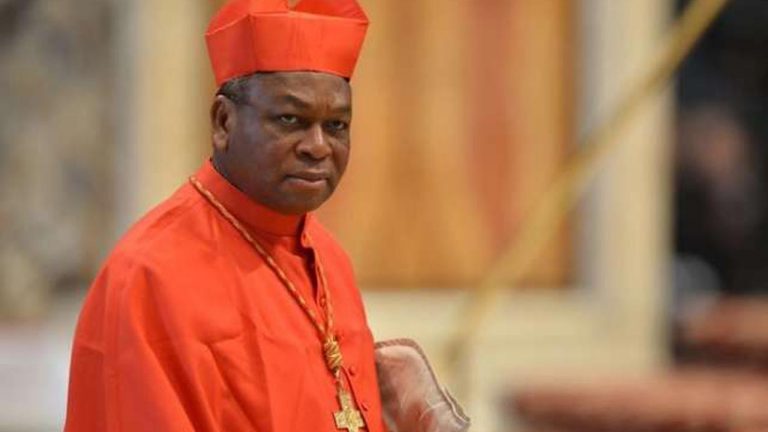
REVERED clergy man Cardinal John Onaiyekan retired as the Archbishop of Abuja Diocese.
A letter by the Catholic Archdiocese of Abuja signed by its Chancellor, Sebastian Musa, who is also a Reverend Father announced Onaiyekan’s retirement.
A copy of the letter sent to The ICIR said Pope Francis has accepted the retirement of “His Eminence John Cardinal Olorunfemi Onaiyekan as the Catholic Archbishop of Abuja.”
The letter also announced the appointment by the Pope of Archbishop Ignatius Ayau Kaigama as the new Archbishop of the Catholic Archdiocese of Abuja.
Onaiyekan was consecrated as Auxiliary Bishop of Ilorin, Kwara State, and titular bishop of Thunusuda on 6 January, 1983 by Pope John Paul II.
He became Bishop of Ilorin in 1984 and in 1990 he was named Coadjutor Bishop of the Abuja. When that diocese became an Archdiocese on 26 March, 1994, Onaiyekan became its first archbishop and has served in that position until his retirement.
During the administration of former President Olusegun Obasanjo, and especially during his second term between 2004 and 2007, Onaiyekan spoke out against the regime for its failure to support democratic principles and its corruption.
Speaking in a service in his cathedral in 2005 with the president in attendance, he called on Obasanjo to resist the temptation to stand for a third term, which the Nigerian constitution did not allow, and asked him to “resist the deadly temptation to want to remain in power perpetually by hook or by crook.”
His stance was credited with saving Nigeria from the imposition of a dictatorship. He was created a Cardinal by Pope Benedict XVI in a consistory on 24 November 2012.
As Cardinal-Priest he was assigned to the titular church of San Saturnino.
OPERATORS of telecoms industry in Nigeria have warned of a possible disruption of communications arising from restraints placed on trucks supplying diesel to transceiver base stations around the border regions to further consolidate the closure of the country’s borders according to a report by The Punch.
The Nigeria Customs Service (NCS) had during the week announced plans to suspend petroleum products supply to filling stations within 20 kilometres of the border in a bid to forestall smuggling.
However, members of the Association of Licensed Telecommunications Operators of Nigeria (ALTON), warned that hub sites in Calabar area, Cross River State would be shut down due to lack of diesel.
Gbenga Adebayo, Chairman of the group and the Head of Operations, Gbolahan Awonuga, made this known in a letter to the Executive Vice Chairman, Nigeria Communications Commission, Umar Danbatta.
They also said the directive of the NCS on the movement of petroleum products around the border area would affect telecommunications service across the affected areas.
“Following the directives by the Nigeria Customs Service in a circular dated Wednesday, November 6, 2019, directing all customs zonal coordinators not to allow petroleum product to be delivered to any filling stations within 20 kilometres radius of any border area in Nigeria.
“The directive is already having a huge negative impact on our members’ operations and this may be significant if the necessary agencies of government do not urgently intervene in the situation,” a section of the letter reads.
The Association also noted that the Nigeria Customs Service had already stopped the trucks of its members in Kebbi, Kano and Calabar from supplying diesel to the telecommunications sites within the borders areas.
It called for an immediate intervention of the NCC and the Federal Government as major hub sites might be affected.
THE Founder of Wanda Adu Foundation, Wanda Ebe has charged parents to see rape as a crime against humanity that must not be kept secret or treated as a family affair when it is committed.
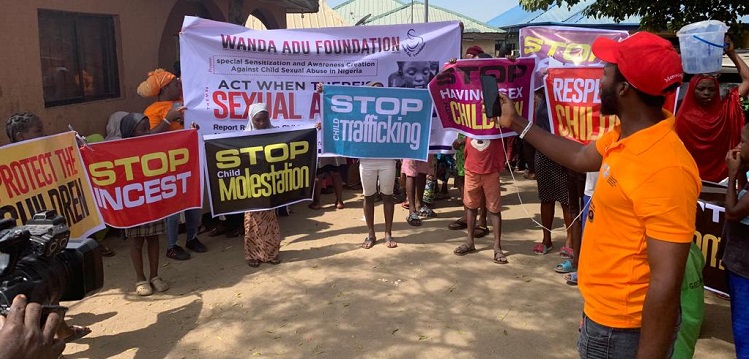
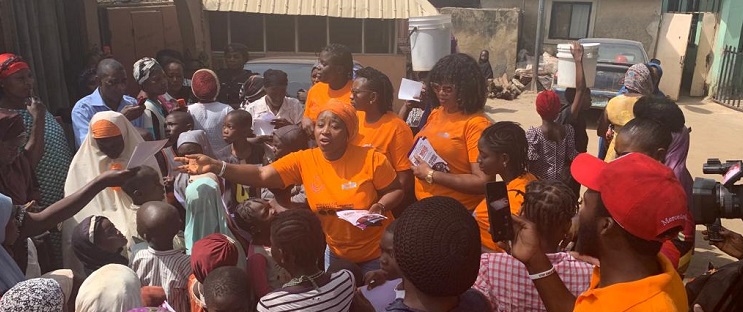
Wanda, whose Foundation caters for children, girl child and vulnerable women gave the charge on Saturday during a sensitisation and awareness campaign against sexual abuse held in Mpape community of Abuja.
The campaign which took off at the palace of traditional ruler of Mpape was organised by the Foundation in partnership with The International Centre for Investigative Reporting (ICIR) and Institute For War and Peace Reporting (IWPR).
She urged parents and members of the community as a whole not to cover-up any case of sexual abuse and child defilement, noting that such act should be promptly reported at theappropriate law enforcement agencies.
During the campaign that feature talks, road show and distribution of flyers warning against sexual abuse, Wanda admonished young girls to keep “their privates, private”.
She encouraged them to avoid men that could molest them adding that in the event of any molestation from any man, they should be courageous to their parents or guidance.
Wanda Adu Foundation sensitising women and children against sexual abuse on Saturday in Mpape, Abuja.
While addressing the women, she said the women should take responsibility in protecting their children in order not to fall victims of sexual abuse.
“If your pikin tell you that one brother touch me, make una no beat am,” she said”in pidgin. Wanda said Rape is a crime and should not be kept a secret or a family issue.
“There are uncountable cases of unreported child sexual abuse in this area,” she said explaining why the group was motivated to carry out the awareness campaign in Mpape.
Wanda added that it was necessary for the residents to know rape is a crime and there are penalties for the offence.
There have been series of reported cases of rape in Nigeria, while some of the victims do not get justice. In July, The ICIR reported how a police officer at the Gender Unit in the Federal Capital Territory (FCT) Police command allegedly requested for money from victims to enable the police to arrest a culprit.
Nigeria’s power grid suffered a total collapse twice on Saturday within four hours which put consumers in total blackout.
The power grid, which is controlled by government-owned Transmission Company of Nigeria (TCN), has continued to suffer system collapse over the years due to lack of spinning reserve that is meant to prevent such occurrences.
Eko Electricity Distribution Plc, one of the nation’s distribution companies, revealed that the grid collapsed at 11:15 pm on Friday and 3:15 am on Saturday.
“At 2315 hrs, we experienced a system collapse across all transmission stations. Supply was received at 0315hrs. Sadly, at 0438hrs, the system collapsed again. TCN and our team are working to restore supply. Kindly bear with us,” the Disco said on its Twitter handle.
Power Update: At 2315hrs, we experienced a system collapse across all transmission stations. Supply was received at 0315hrs. Sadly, at 0438hrs, the system collapsed again. TCN & our team are working to restore supply. Kindly bear with us.
— Eko Electricity Distribution Company (@EKEDP) November 9, 2019
The Jos Electricity Distribution Plc, JEDC, also announced to its customers that “there is a power outage in all our franchise states due to system collapse nationwide.
“We will provide an update shortly. Thank you for bearing with us,” it said on Twitter.
Esteemed customers, there is power outage in all our franchise states due to system collapse nationwide. We will provide an update shortly. Thank you for bearing with us.
— Jos Electricity Distribution (JED) PLC (@josdisco) November 9, 2019
An investigation carried out by Daily Trust showed that between 2010 and 2019, electricity consumers in Nigeria have had to cope with 206 power grid collapse, nine of which occurred in 2019 according to its records.
A breakdown of the figures also indicated that the grid collapses which led to power failure for a whole region or even the entire country showed that 109 of the incidents occurred from 2010 to 2013 while 97 others were recorded from 2014 to 2019.
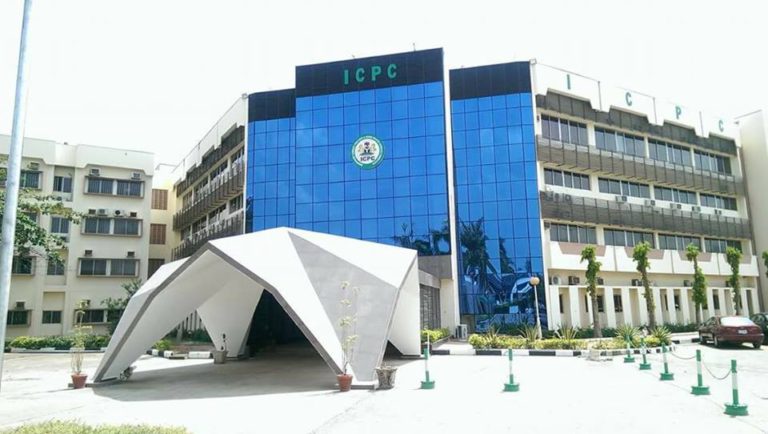
THE Independent Corrupt Practices and Other Related Offences Commission (ICPC) says it has recovered 44 properties allegedly linked to 32 corporate entities.
The Commission disclosed this in a statement on Friday, noting that the properties which were all located in the Federal Capital Territory included two mansions , 27 bare lands, one factory building,and 15 buildings at Asokoro, Maitama and other districts.
It noted that the properties cumulative value had been put at N14.7 billion, and were seized after the entities denied their ownership.
“The Commission, in collaboration with the Federal Inland Revenue Service (FIRS), had found that the entities had N883.7 million tax liability on the seized properties,” ICPC said in the statement.
“The seizure is based on Section 45(4) of the Corrupt Practices and Other Related Offences Act 2000.”