THE management of the Polytechnic Ibadan in Oyo State has closed down Kalkulus Concept, the business centre on campus that has been conniving with lecturers to trade in plagiarised theses submitted as final year projects by students of the institution.
Kalkulus Concept is one of the business centres in the Polytechnic where students were instructed to purchase plagiarised copy of the final year projects. Located near the Department of Survey and Geo-informatics, the Centre also solicits students who want their research project to be done by proxy.
The ICIR published the second part of an investigation where Qudus and Quadri, the staffs at the Kalkulus concept, sold a final year project with the topic “Civil Service As a Vehicle Towards A Nation Building In Nigeria (A Case Study Oyo State Civil Service Commission)” to this reporter for just N5,000.
The management of the Ibadan Polytechnic on Monday said it has closed down the centre.
“We have locked down the Kalkulus concept today,” said the public relations officer of the institution, Mr.Soladoye Adewole.
It has been confirmed also that the management has served query letters to all the indicted lecturers exposed in the investigation.
The ICIR investigation also revealed that the operators of business centres on campus that trade in plagiarised theses, work with lecturers who serve as project supervisors to the final year students.
Mr. Adewole told TheICIR that the management is taking pro-active steps to ensure a corruption-free system.
“I can tell you all the lecturers that were in the second part have been served query letters earlier today. We just need to ensure an academically sane environment.”
A NEW study has found out that one-third of women in three West African countries and Myanmar experienced mistreatment and were vulnerable around the time of birth.
The study published in The Lancet on Wednesday was led by the World Health Organisation (WHO) with the support of USAID and other United Nations agencies including UNDP, UNICEF, and UNFPA.
The prevalence of mistreatment during childbirth was in regard to a community-based survey with 2,672 women in four countries- Ghana, Guinea, Myanmar and Nigeria- and continuous labour observations in the three West African countries.
A total of 2,016 women were subjected to labour observations where 408 were Nigerians, 682 from Guinea and 926 Ghanian.
Among the 2,016 women observed, 838 experienced physical or verbal abuse, discrimination and neglect by health care workers. In order words, 42 per cent of the women experienced mistreatment which also includes performing caesarean sections and vaginal examinations without their consent.
Thirteen per cent of the cesarean sections and 75 per cent of the surgical cuts to the vagina were performed without consent. In 59 per cent of cases, vaginal examinations were performed without consent.
In addition, 762 of the 2,016 women were observed to experience high levels of verbal abuse with the highest proportion in Nigeria where 262 of 408 observed women were abused: most often, being shouted at, scolded and mocked.
“Physical and verbal abuse peaked 30 min before birth until 15 min after birth,” the report stated.
Also based on the survey, the report revealed that 945 of 2,672 surveyed women experienced physical or verbal abuse and stigmatisation.
Younger and less educated women were identified to be most at risk.
To tackle the issue of mistreatment, the report noted that the health systems should be held accountable while sufficient resources should be in place to provide quality and accessible maternal health care.
Health-care providers also require support and training to ensure that women are treated with compassion and dignity, it added.
“The findings of the study should be used to inform policies and programmes to ensure that all women have a positive pregnancy and childbirth experiences, supported by empowered healthcare providers within well-functioning health systems.
“Action is urgently needed to enhance the provision of respectful maternity care worldwide”.
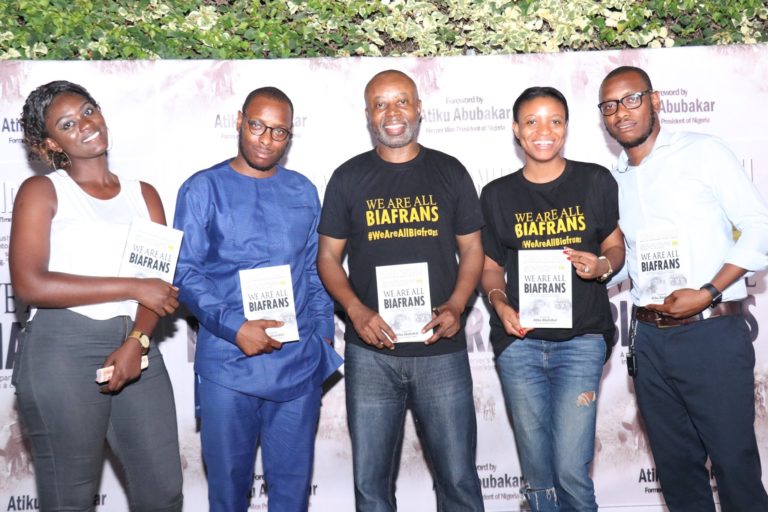
THE recent harassment or detention of human rights activist, Dr. Chido Onumah, by state agents is not only a sign that Nigeria is drifting towards full-blown dictatorship, the incident also goes to expose the hypocrisy of Nigerian leaders. Onumah’s crime, according to the state agents, is that he was wearing a t-shirt with the inscription: “WE ARE ALL BIAFRANS”, being the tittle of his best-selling book.
In the book, Onumah analyzed the myriad of challenges facing Nigeria, to posit that “the different manifestation of Biafra may well be a metaphor and, to that extent, we are all Biafrans as long as we seek to confront the clear and present danger.” The book, of course, had been launched since 2016, with the former VP Abubakar Atiku , and a number of government officials in attendance.
Therefore, Onumah’s ordeal is nothing but a growing sense of intolerance or, rather, what Wole Soyinka referred to as an “unprecedented level of paranoia” being witnessed in the current regime, while he was condemning the unwarranted detention of another activist, the Nigeria’s foremost anti-corruption crusader, Omoyele Sowore.
Biafra re-emerged as a hot topic since a group from the eastern section of Nigeria, under the aegis of Indigenous People of Biafra (IPOB), heightened its demand for freedom from Nigeria, not long after Muhammadu Buhari assumed democratic power. Central to their grouse is a history of bad leadership in the Africa’s most naturally endowed nation. Instead of dialogue, as in the case of other recent insurgents in the country, the Buhari regime not only clamped down the Biafran activists with brute force, it also branded them “terrorists.”
Interestingly, however, as Onumah had long professed, all Nigerians have become Biafrans, by consequence. This view is consistent with an ardent admonition by the venerable Balarabe Musa, which holds that the perennial tendency to ignore the social challenges in the Biafran area is tantamount to ignoring the Nigerian future. Today, most of the problems enumerated by IPOB for its agitation, including acute poverty, massive corruption, injustice, kidnapping, lawlessness and lack of free speech are now being felt by the generality of Nigerians.
A perspective by the Afrobeat Prince, Seun Anikulapo Kuti, is profoundly instructive. In a recent interview, Kuti inferred that, like the Biafran agitators, every Nigerian actually wants freedom from the country, due to the worsening state of affairs. To nail the point, he asserted that the entire citizenry would not hesitate to “escape” from Nigeria, if the international community dares to leave its border wide open. And Kuti was on point! Today, there is mass exodus of Nigerians to both richer and poorer countries, and they never hesitate to dump their Nigerian passports to acquire the citizenship of their host countries. Some are even willing to embrace the harsh conditions in immigration jails in the foreign land as more hopeful than the situation in our native land.
No person has demonstrated more fancy for freedom from Nigeria and its failing amenities than the country’s president, Muhammadu Buhari. For example, though Nigeria has its own assortment of holiday resorts, Buhari is always in hurry to vacation abroad. Though the country has a national hospital building, which can be equipped to an international standard within six months—to also serve other Nigerians, President Buhari readily opts for foreign clinics. Instead of Nigerian higher institutions, he prefers foreign schools for his children. Instead of promoting made-in-Nigeria automobiles, which can help spur employment opportunities for the teaming youths, the country’s president uses only foreign cars. Needless to mention that, to him, rule of law in the country no longer means a thing.
But Muhammadu Buhari is not alone.
Other Nigerian leaders are equally guilty. In short, the sole reason they still associate themselves with the country is the unhindered opportunity to loot the resources needed to sustain their affluent lifestyles abroad. The worst is that these Nigerian leaders stash the looted funds in foreign banks, at the cruel expense of the masses. Only people who despise the citizenship of their country exhibit such patterns.
Even if the Nigerian leaders somehow happen to love the country, besides its money, the phobia with Biafra is insincere. Progressive nations witness calls for secession from time to time, especially where some groups feel oppressed. What matters is how the leaders address such demands.
Moreover, the history of secession in Nigeria did not begin with Buhari or Biafra nor will end with Biafra or Buhari. Groups, particularly, Oduduwa, Arewa, and Niger Delta had at one time or another threatened secession from the country. Yet, such terms have not been deleted from the human history. The truth is that Biafra has come to represent a people. Its agitation has come to serve as a threat to the gross misrule in Nigeria.
At the same time, while the calls for equitable and just government deserve every commendation, outright secession is not the panacea to the problems; after all, the leaders of Biafran descent themselves, including governors and legislators, have not been able to show the desired example within their states. Yet, the current approach where anything associated with the term Biafra is disparaged with impunity only goes to grow the agitation. As Senator Ben Bruce once appealed at the floor of National Assembly, the dictatorial attempt to efface Biafra or its history is far from the solution.
The solution is an equitable, visionary and dynamic leader, who has the zeal, the competencies and capacity to unleash the abundant potential of Nigeria to greatness. The solution is a true democracy where government can thrive through inclusiveness, free speech, and dialogue.
SKC Ogbonnia writes from Ugbo, Enugu State, Nigeria
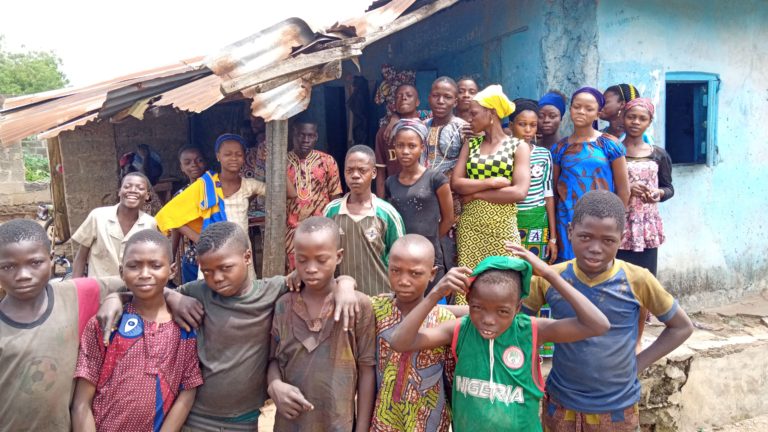
When Beninese parents are pushed to the wall due to poverty and the burden of caring for too many children, they often send their wards to neighbouring Nigeria with the help of traffickers to earn extra income. In part one of this investigative series, ‘Kunle ADEBAJO tells the story of what lies on the other side of the border for children from the former French colony.
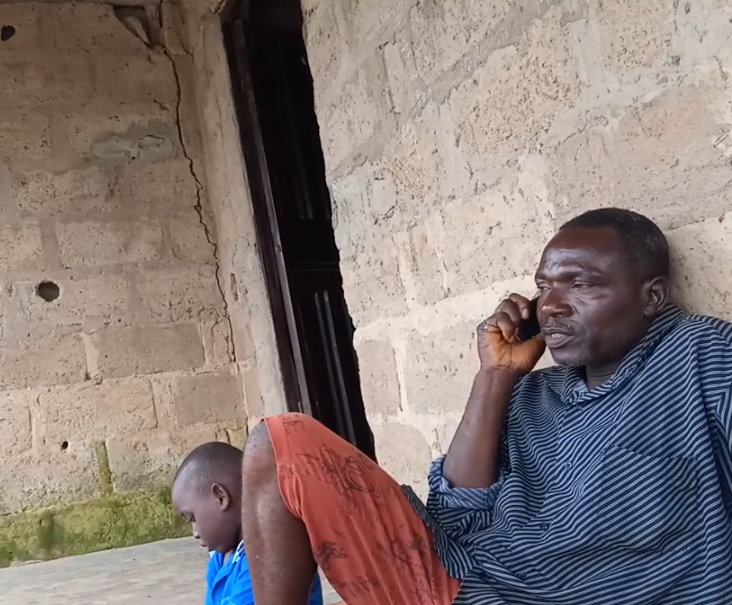
ONLY two days to the phone call, one of his agents smuggled in three people from the neighbouring Benin Republic: a 30-year-old female divorcee, an 18-year-old boy, and another boy of 15. Yet Baba Gebu, as he is fondly called, is expecting more soon—including, hopefully, a much younger girl requested by the reporter, who was posing as a customer.
The business is slow at this period of the year, hence the little difficulty in getting a prompt supply.
“People have gone to Lagos a lot. If we had known each other before, ah no, you’d have got your exact request immediately, even if you wanted four children,” he brags.
On most days, Baba Gebu works at a popular cement factory in Ewekoro, Ogun State. But, when he is not in the middle of his weekly work shifts, he makes extra money from delivering trafficked persons, especially children, to persons in Nigeria who need cheap labour.
Unless you are known to the network of traffickers though, getting a child can be a bit difficult. It is an illicit, underground business and to be trusted enough to be part of it, you would need not only a convincing story why you want a child but also how, in the first place, you gained access to the dealer’s contact details.
“Who gave you my number? You’re from which town?” are some of several questions asked by Iya Eleko, another popular trafficker who lives in Rounder, Abeokuta. “It’s difficult to negotiate since I don’t know you,” she tries to explain during a second phone conversation. “I don’t know where you are, and it is people I know I give children to.”
Trafficking children, as young as nine, from Benin, Togo, Ghana and other West African countries is a practice that dates back several decades. The person to whom a child is delivered has no obligation to enrol them in school and is free to use them however he or she pleases: as house helps, factory workers, street vendors—in whatever way that can bring a return on such investment. The trafficker gets a one-off payment of about N10,000 while the child’s handler, guardian, or the trafficker himself is paid periodically.
In 2005, in Cotonou, the governments of the Republic of Benin and the Federal Republic of Nigeria signed what is called a “cooperation agreement to prevent, suppress and punish trafficking in persons with emphasis on trafficking in women and children.” The agreement provides notably for a common front aimed at suppressing trafficking, including a joint security surveillance team meant to patrol the borders. But 14 years on, trafficking in persons, though less brazen, still persists.
As negotiations go on, Baba Gebu says he will bring the 15-year-old boy the following week if attempts to get a young girl are unsuccessful.
“We’ll make arrangements and bring the boy to you at Oshodi on Monday. However much his parents want to charge, I’ll let you know,” he assures.
This amount depends on how old the child is. “If the oga says this is how much he wants to pay, everyone will negotiate, so no one runs at a loss. If it is N10,000 (per month), it’s okay; and if it’s N8000, it’s okay.”
Asked if he can deliver children to work as a quarry in Nasarawa State, the middle-aged man replies he can, but says one would have to wait till next January because many of the children who travel between the countries have resumed work and won’t return to Benin until December.
“At that time if you need a lot of children, they will be available. They are our children, there is no problem.”
December is the time most trafficked children from Benin are returned home. Parents use the opportunity to renegotiate better wages on each child.
Baba Gebu places a call to one of the guardians to ask when the child will be available.
Untraceable
There is hardly a paper trail for any aspect of the trafficking business. Beninese children are brought into Nigeria frequently, most often without proper checks. One parent bringing his daughter to Baba Gebu promised to arrive with her on a Sunday. “On Sundays, there are usually no immigration officers on the road, so the route should be free,” he explains.
The borders between Nigeria and Benin Republic are porous, with or without police checkpoints, and citizens of any country are easily admitted. It is, therefore, impossible to have accurate statistics of how many foreign immigrants are in the country, how many are children, or where they are from.
Through the Ilara border in Ogun State, this reporter travelled to Bohicon, Benin Republic, on Thursday, August 8, and returned to Nigeria on Saturday, August 10, without an international travel passport. Yet, he was not queried anywhere along the road, despite the presence of numerous security checkpoints every few kilometres.
All that cab drivers with smuggled commodities and immigrants had to do was give bribes of N200 to operatives of the Nigeria Immigration Service and Nigeria Customs Service at the checkpoints. Travel passports were not requested, let alone checked or stamped.
But it is not only the inter-border movements that are tough to trace; the transaction between the trafficker and the buyer is also done without much ado. To prove he has experience delivering children to Lagos Island, Baba Gebu recalls a previous transaction and admits he has not once visited the home where the child is working. “But the child is okay,” he quickly adds, hinting that they occasionally communicate on the phone.
In establishing himself as a professional, he also speaks proudly about a “contract” that is to be signed. It will contain such information as when the child starts working, how much is to be paid monthly, and the contact details of both parties.
However, upon demand for a template three days later at a second meeting, what he brings is a small, black, timeworn journal. The pages have become brown owing to contact with a lot of water. The agreements are written sometimes in as few as one or two sentences, mostly in Yoruba language, and sometimes as many as five or six sentences. There’s no standard amount of information to expect and it is not arranged in any particular order.
The document shows the handwritings belong to other parties, who refer to “Baba Gebu” in the third person. There’s usually a date, amount paid, and name of the “buyer”; but other details are scarce if not inexistent: including full name and age of the child, full address and contact information of the “buyer”, and signatures.
The “buyers” are mostly addressed with nicknames such as Mama Kampala and Iya Ibeji, not named at all; and the children are identified only by their first names.
A good number of the transactions took place in 2019. One dated May 14 states, “Baba Gabriel brought Bose to my place in Ayetoro. I paid transportation costs of N10,000. The monthly payment is N20,000. 08023066***.” One dated July 28 is about a 10-year-old called Bola, for whom N10,000 was also paid. Another one written by one Olakunle, having paid N35,000 reads thus: “I paid for five months to Baba Gebu who brought Sunday to my place.”
Baba Gebu hands over his record of contracts.
“This is my copy,” notes Baba Gebu as he sits on a mat right outside his unpainted bungalow. “As they’ve written this, they also have a copy with them.”
Rescued
The use of child labour in quarries located in Abeokuta, Ogun State, received unprecedented attention in 2003. The government clamped down on illegal immigrants and deported many of them. And then, non-governmental organisations paid visits to see how they could better help the children. One of them was Terres des Hommes, an international children’s rights humanitarian organisation.
But the weight of the problem was too heavy for Terres des Hommes alone to handle. It partnered with another body, the Union of Beninese in Nigeria (UBEN), an interest group for nationals of Benin Republic resident in Nigeria. This partnership led to the creation of an autonomous branch for Ogun State, separate from that of Lagos.
With the international NGO providing funds and the local association providing manpower and experience, together they retrieved the children, placed many in school, empowered others with various vocational skills and business grants, and engaged in various orientation exercises in Beninese communities where the problems arise. Terres des Hommes also bought motorcycles for the association with which its members combed the forests, farmlands, and quarries for underage children who were being forced to work.
One of many motorcycles donated by Terres des Hommes.
Victorin Adekoute, president of UBEN’s Ogun state chapter since 2013, says child trafficking between the two countries has existed for a long time but Beninese people only started realising its legal implications in 2003. Before then, it was the norm—considered just another means of earning a living.
The mindset, he tells The ICIR, was: “Since I have given birth to many children and we are hungry, let some go and work so the others can eat.”
UBEN’s efforts partly led to a near-eradication of child labour in Abeokuta’s quarries. Where the really young Beninoirs now flock the markets and streets. Their efforts partly led to traffickers restricting their trade, to an extent, to children who are above 14 years. Their intervention, done in collaboration with the Nigeria Police and Immigration Service, has also led to the arrest and jailing of some persons found guilty of trafficking.
But the formidable partnership with Terres des Hommes only lasted for six years. Though many families still come for help, UBEN no longer has a source of funding for its activities. The members have had to tax themselves to continue to assist the children in distress, with schooling and empowerment. They operate a French school in Abeokuta called Ogbondara Community Primary School and also coordinate informal skill acquisition programmes for rescued kids.
Fifteen-year-old Nadesh Zoidji, who hails from Zakpota, is one of many young Beninese now under the supervision of UBEN; but it’s not all right and rosy yet. During the week, she receives lessons on tailoring, and at weekends she hawks for her aunt to raise money to send home and for her apprenticeship.
Because of lack of care at home, she moved to Nigeria in 2016 with her aunt, who then contracted her to a family in Olomore, Abeokuta. But her service as a maid only lasted six months because of defaults in payment.
Though Zoidji saw that it was common in her neighbourhood for house helps to be beaten, starved, and overworked, she says her boss was nice to her.
Also 15, Julianne Gbedgi was given out by her parents when she was only eight years old and in primary four. She worked for six years, between 2012 and July 2018, both at her boss’s home and for her catering company.
Her life of servitude started with the illness of her junior sister. Her parents could not afford the hospital bill and needed some money. Two years after, her sibling recovered but that did not make them discontinue the contract.
“Since the place was okay, I also liked it,” she admits, though she also complains they were usually overworked.
Speaking to this reporter, Osoba Olapeju, Terres des Hommes’ Country Director, says while working with UBEN, they observed child movement between Benin Republic and Nigeria is not only as a result of trafficking. A longstanding Fon tradition known as djoko also influences boys and young men to temporarily migrate by themselves to large farming areas for income.
“So for them, it didn’t start as a criminal activity. People moved mainly for economic reasons and also for social reasons,” she explains.
“We discovered that instead of just boxing everything into trafficking, there was the need to look at the social factors of the movement. We had children who came to Nigeria to do holiday jobs. We had children who came to Nigeria who had had some vocational training, tailoring and so on, and they needed money to establish themselves.”
At the bottom of the problem, Olapeju says, are issues of poverty. But it is more than that. They’ve also discovered there are children who travel for the thrills of adventure, some are forced due to insecurity in their communities, and others are in pursuit of developmental opportunities.
This broader understanding of the problem informed the international NGO’s ongoing project commissioned by the European Union, where it focuses on the movement of migrant children generally, not just victims of trafficking, across the Abidjan-Lagos route.
15-year-old Julianne Gbedgi.
Abused
Unlike Zoidji and Gbedgi who had considerably kind-hearted masters, Sedoni Lasu wasn’t very lucky. The 10-year-old’s Egun father and Yoruba mother are divorced. Her education was sponsored by the father until she got to primary five. When he could no longer afford to pay, he brought her to Nigeria in 2018 to work as a domestic help without her mother’s knowledge.
But, because of ill-treatment, Lasu only spent one month where she was assigned: a book and stationery store in Abeokuta, notorious for using child labour and maltreating workers.
She worked as a salesgirl alongside another girl—even younger than she was. After closing from work, they would both return home to cook, fetch water, wash the toilets and the cars—and then wake up the next day to repeat the same routine.
“I ran away because they didn’t take care of me, and they didn’t allow me to eat on time,” she tells The ICIR. “We go to work in the morning, and then it is by 12pm they just give us N50 to eat.”
With that N50, she could only buy garri and groundnut. The second and last time she ate in the day was at night when they were given the family’s leftover. If nothing was left, they were simply asked to again drink garri, this time mixed with sugar.
The young maids were not allowed to sleep until all the tasks were completed—even if this meant staying up till 1 am. By 6 am, they were up again to commence the day’s work. But an inadequate, unbalanced diet and overworking weren’t the end of Lasu and her friend’s problems. If they stopped for too long to catch their breath, they risked being physically assaulted.
“They used to beat us, if we didn’t work on time,” she narrates matter-of-factly. “If we were working too and they noticed we were slow, they would beat us. Both the husband and wife.”
She still has numerous scars on her arms and legs, from the fan belt used in whipping them, serving as a constant reminder of the gruesome experience.
Exactly a month after she arrived, Lasu picked up a few of her belongings and fled, never again to look back. She was encouraged by her friend who did the same weeks earlier and had spent only two weeks with the family. She gave her mom’s phone number to a commercial motorcyclist who eventually handed her over to UBEN.
Assaults suffered by young domestic helps from Benin Republic are not merely physical in nature, as in Lasu’s experience. Adekoute says his union has also received numerous reports of sexual assault against children.
Likewise, some children have been recovered from remote farmlands in different parts of the country, including Sagamu, Ogun State, and Ajebandele, Ondo State, where they are exploited. According to the UBEN boss, it is impossible to estimate how many children are used on these farms, where they plant maize, plantain, cocoa, cassava, among other crops.
“We may get there and meet one child on a farm and numerous adults. We can’t say exactly that this is the way it is,” he says.
“If their people don’t accompany you, there’s no way you can see anything. Since they are very remote, and you don’t know the places. We work with information that comes to us; and if for instance, a child runs away from such a place, we support him or her.”
L-R: Hounmenoun Jean, UBEN Vice President; Victorin Adekoute, UBEN President; and other executives
Established in 2003, it is the job of the National Agency for the Prohibition of Trafficking in Persons, NAPTIP, to help children like Lasu. The agency provides shelter to rescued victims and also supports them with schooling and vocational training.
The agency declined to cooperate with The ICIR on this investigation. It did not acknowledge or respond to a letter addressed to its Director-General in March, in which The ICIR requested a meeting with the NAPTIP boss to explore ways of collaborating on trafficking investigations.
The newspaper’s editors explored informal avenues and succeeded in meeting with other officials of the agency but all that came to naught, even though our editors offered to share our findings with the agency to enable it make arrests. When the investigation was concluded, NAPTIP also did not respond to requests for a reaction to our findings. Calls placed to Stella Nezan, its head of public relations and information, were not answered. She has also not replied sms and email sent to her phone and email address. A letter of enquiry delivered upon request to the agency’s Abuja head office in September is yet to be acknowledged.
Overburdened
The children under the care of UBEN, aged between eight and 15 years, are hopeful for a better future. But they are not waiting on the government or their families, nor are they expecting to be spoon-fed. Each one of them is apprenticing at one workshop or the other, training to become a tailor, an automobile mechanic, an aluminum worker, and so on. They yearn for the day they will set up their own businesses and maybe raise enough to sponsor themselves through school. They, however, cannot do it on their own.
All the children, asked for their urgent needs, have two things always topping the list: apprenticeship fee and necessary tools to start their business. The apprenticeship fee is the amount traditionally paid to the professional from whom they are learning before they can “graduate”. It is a one-off payment that varies from N80,000 for mechanics to N100,000 for tailors.
And UBEN is not as financially capable as it used to be, with external support. Yet, it continues to carry the burden almost all by itself—giving priority to children who have become orphans.
“Immigration doesn’t have any help they can give the children except to deport them. And Abeokuta, for instance, has no rehabilitation centre that is government-owned for the children. It doesn’t exist. They always bring them to us. What we have are funded and managed by private individuals,” UBEN Vice President in Ogun State, Hounmenoun Jean, explains.
Adekoute says the primary need of the association is help for the children in terms of shelter and security. They also think it is a good idea to have a constant supply of internally generated revenue, so they don’t have to rely on government or NGOs.
“When Terres des Hommes was here, they took care of those responsibilities for us. But after they left, the burden became too much,” he adds.
For Osoba, any NGO or government agency interested in the protection of migrant children cannot do without community actors and leaders.
“Institutional actors alone cannot protect the children,” she states. “We must incorporate community support. We must allow the communities to take ownership of the action and not necessarily bring our own ideas but sit with them to understand why and how these things work.”
She also urges Nigeria’s government to implement commitments it has signed under international treaties related to migration, especially the five priority areas contained in the ECOWAS Strategic Framework on the Protection of Children.
* This investigation is supported by the Institute of War and Peace Reporting and the International Centre for Investigative Reporting, ICIR.
You may read the other parts through the following links:
NIGERIA President, Muhammadu Buhari on Tuesday presented the 2020 budget, tagged ‘Sustaining Growth and Job Creation’.
Buhari made his presentation at the Joint Assembly of the Senate and the House of Representatives at about 2pm on Tuesday at the National Assembly, Abuja.
He said that due to the increase in Value Added Tax (VAT), the FG is expected to generate a total of 8.155 trillion naira in 2020.
The country is expected to generate N2.64 trillion from Oil revenue, N1.81 trillion from non oil revenue and N3.7 trillion from other revenue, totaling to the N8.155 trillion.
He added that in compliance to the debt policies that the federal government will spend a total of 2.8 trillion for debt servicing in 2020.
“We provided the sum of N2.45 trillion for debt service. Of this amount, 71 percent is to service domestic debt which accounts for about 68 percent of the total debt, the sum of N296 billion is provided for the Sinking Fund to retire maturing bonds issued to local contractors,” he said.
Buhari said the government has proposed to spend 2.14 trillion naira on capital expenditure during his presentation at the National Assembly.
He reiterated that investing in critical infrastructure is a key component of the fiscal strategy under the 2020 budget proposal and that it will also capture N318.06 billion in statutory transfers.
“Although the 2020 capital budget is N721.33 billion (or 23 percent) lower than the 2019 budget provision of N3.18 trillion, it is still higher than the actual and projected capital expenditure outturns for both the 2018 and 2019 fiscal years, respectively. However, at 24 percent of aggregate projected expenditure, the 2020 provision falls significantly short of the 30 percent target in the Economic Recovery and Growth Plan (ERGP) 2017-2020” He said.
He further stated that the main emphasis of the capital projects will be the completion of as many projects as possible rather than commencing new ones and that MDAs were not allowed to admit new projects into their capital budget for 2020 unless adequate provision has been made for the completion of all ongoing projects.
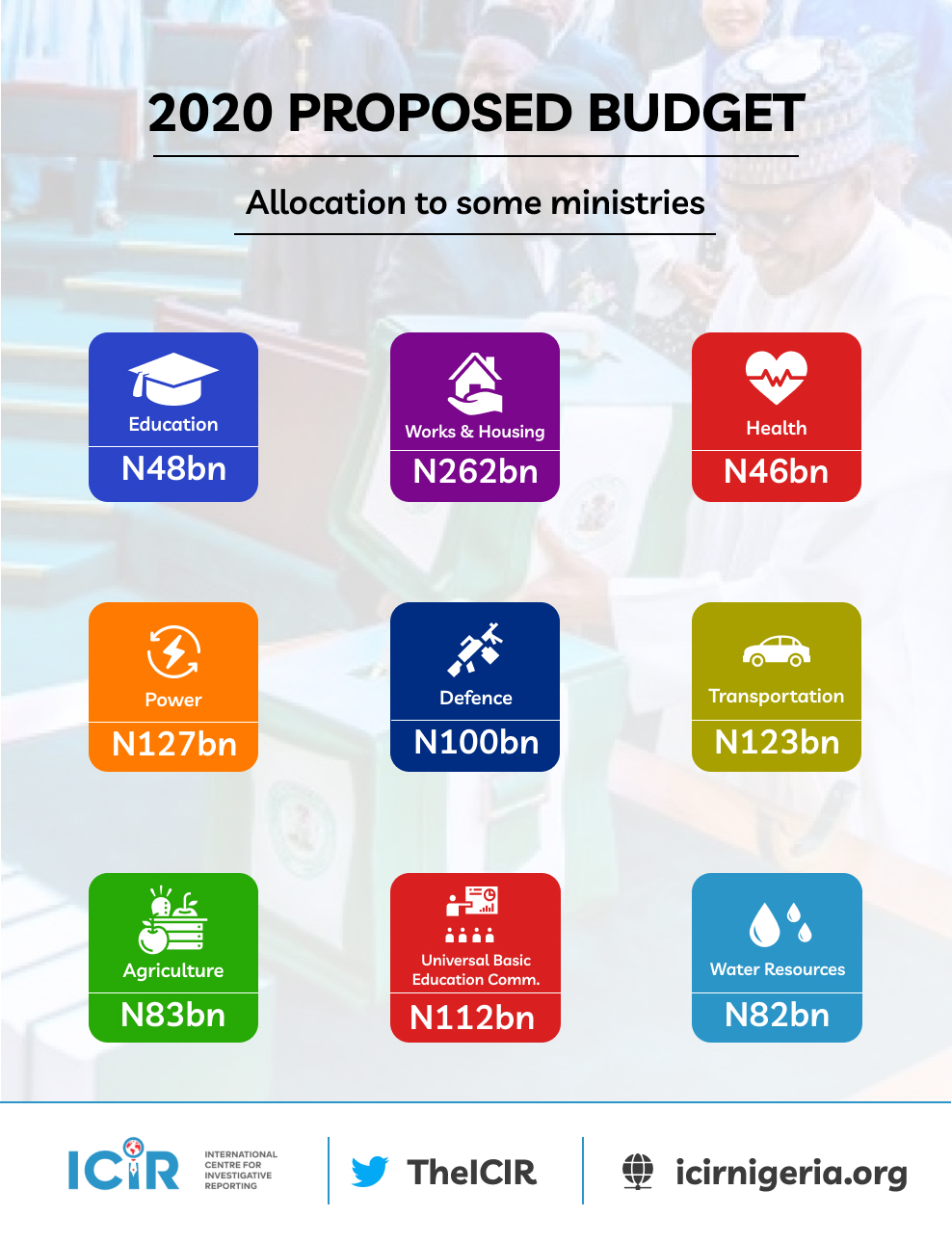
In a breakdown of the proposed budget, he mentioned that the key expenditure shall see the Ministry of Works and Housing take a lion share of the expenditure with a proposed N262 billion, Ministry of Power, N127 billion, Ministry of transportation N123 billion, Universal Basic Education, N112 billion, Defense Ministry, N100 billion, Zonal intervention Projects 100 billion naira, Ministry of Agriculture and Rural Development, N82 billion.
Ministry of Water resources, N82 billion, Niger Delta Development Commission N81 billion, Ministry of Education, N48 billion, Ministry of Health, N46 billion, Ministry of Industry, trade and investment N40 billion, Ministry of North East Development Commission N38 billion, Ministry of Interior N35 billion, Ministry of Social Investment Programmes N30 billion, Federal Capital Territory, N28 billion, and Niger Delta Affairs, N24 billion.
A total of N125 billion and N110 billion have been allocated to the National Assembly and the Judiciary respectively.
President of the Senate, Ahmed Lawan urged all ministries and agencies to defend their projects before the law makers by October 2019 and that the Senate shall also ensure the passage of the budget before the end of the year.
MORE than one billion people are losing their sight because of a lack of simple eye care needed to address their conditions, according to a landmark report on vision by the World Health Organisation (WHO).
The report titled World Report on Vision was published on Tuesday ahead of the World Sight Day on October 10.
It noted that at least than 2.2 billion people globally live with vision impairment or blindness, of which 1 billion cases could have been prevented or have yet to be addressed.
“Eye conditions and vision impairment are widespread, and far too often they still go untreated,” said WHO Director-General Tedros Adhanom Ghebreyesus.
“It is unacceptable that 65 million people are blind or have impaired sight when their vision could have been corrected overnight with a cataract operation, or that over 800 million struggle in everyday activities because they lack access to a pair of glasses, he added”
The report outlined that ageing populations, changing lifestyles and limited access to eye care, particularly in low- and middle-income countries, were the main drivers of the rising numbers of people living with vision impairment.
It found out that the burden is high in low and middle-income countries, especially among rural dwellers.
“Low- and middle-income regions of western and eastern sub-Saharan Africa and South Asia have rates of blindness that are eight times higher than in all high-income countries, the report read partly.
Women were noted to be suffering from a higher rate of cataracts and trachomatous trichiasis when compared to males.
The major eye conditions highlighted to be causing blindness among people were cataracts, trachoma, refractive error, myopia, farsightedness and glaucoma.
In response to billions of people losing sight, the report recommended that countries should integrate eye care within national health services to ensure its prevention, early detection, treatment and rehabilitation. It also added the need to monitor trends and evaluate progress towards implementing
integrated people-centred eye care.
“Millions of people have severe vision impairment and are not able to participate in society to their fullest because they can’t access rehabilitation services,” said Alarcos Cieza, who headed WHO’s work to address blindness.
But all people living with blindness who could not be treated, the report urged for their access to rehabilitation services which would help the individuals to lead independent lives. The services range from optical magnifiers and reading use Braille, to smartphone wayfinders and mobility training with white canes.
THE Trump administration has banned three of the world’s most valuable private facial recognition startups from doing business in the United States, prohibiting them from purchasing US products or maintaining relationships with American entities.
On Monday, the Department of Commerce announced that 28 Chinese companies and government entities had been added to a blacklist for their roles in human rights violations in Xinjiang, an autonomous region in northwest China that’s home to millions of Uighurs, a Turkic Muslim minority.
Among ventures banned are the Chinese startups SenseTime, Megvii, and Yitu, which, combined, have raised billions of dollars to develop commercial facial recognition technology, including security camera manufacturers Hikvision and Dahua Technology whom the US claims are among “entities reasonably believed to be involved, or to pose a significant risk of being or becoming involved, in activities contrary to the national security or foreign policy interests of the United States.”
SenseTime, Megvii, and Yitu, have flourished amid the Chinese government’s push for investments into artificial intelligence, have faced mounting criticism over perceived misuse of their technology by government agencies, particularly in Xinjiang, where it is believed to have played a role in the arrest and detention of more than a million Uighur Muslims and other ethnic minorities.
Although SenseTime and Megvii have denied working with state entities in the region, researchers and academics have uncovered troubling connections between their facial recognition tech and the surveillance and imprisonment of minorities in China.
“Specifically, these entities have been implicated in human rights violations and abuses in the implementation of China’s campaign of repression, mass arbitrary detention, and high-technology surveillance against Uighurs, Kazakhs, and other members of Muslim minority groups in [Xinjiang],” the directive read.
In the past, Megvii has acknowledged that around 1 per cent of its total revenue was derived from projects in Xinjiang in 2018, though “no revenue was generated” from the region in the first six months of 2019. The company booked sales of about $200 million in 2018, according to financial documents.
According to PitchBook, a private company database, SenseTime is valued at more than $7.5 billion and Megvii at $4 billion, based on their latest rounds of private funding. Both companies are also moving toward initial public offerings.
Earlier this year, the US blacklisted Huawei over national security concerns, dealing a major blow to the Chinese telecom and mobile device giant’s international business prospects. Previously, in June, the Trump administration added five more Chinese companies to the list and was said to be weighing further additions amid an increasingly hostile trade war.
The Chinese government has come under scrutiny for its treatment of Uighurs and other ethnic minority groups.
US leaders, including Secretary of State Mike Pompeo, have accused it of human rights violations within its camps, ranging from involuntary imprisonment to torture.
However, the Chinese government has dismissed these criticisms, insisting the camps are centres for re-education or vocational training.
ON Tuesday, the Board Of Inquiry, BOI, set up to investigate the killing of three police officers and two civilians in Taraba State in August revealed that the police and army were culpable in the five lives lost in the incident which was blamed on a breakdown in communication.
In a statement, the Acting Director, Defence Information of the Defence Headquarters, Onyema Nwachukwu, a colonel, said that the panel’s report associated the conflict to a breakdown in communication between the police team that went on an operation in Taraba State and the soldiers at the checkpoint.
“After a thorough and painstaking investigation into the incident, the BOI submitted its report to the convening authority observing that, there were infractions and poor communication between personnel of the Nigeria Police Force and troops of the Nigerian Army.
“It was also observed that there was non-adherence to the Standard Operating Procedure by both parties involved in the incident. It further made some recommendations to the NA and NPF to forestall future reoccurrence and bring anyone culpable to book in accordance with extant laws,” he said.
Three officers from the police intelligence response unit were killed on August 6 while returning from an operation to arrest a suspected kidnap kingpin in Taraba. The team were attacked by a company of soldiers while they were transporting the suspect, Wadume Bala, in a police van to Jalingo, the state capital.
The suspect was released by the soldiers but was later arrested in Kano a few weeks later and has remained in police custody.
Two civilians suspected to be working with the police were also killed in the attack, which generated nationwide outcry.
The attack led to rancour between the police and the military ranks, with the police insisting that the attack was plotted by the soldiers to free the suspect.
Investigations by the Police showed that the suspect had a series of telephone conversations with senior police officers in Ibi, the community where Bala was arrested.
The panel recommended further investigations on Captain Tijani Balarabe, Sergeant Ibrahim Mohammed, Corporal Bartholomew Obanye, DPO Ibi Police Division, Assistant Superintendent of Police Aondoona Iorbee, and Inspector Aliyu Dadje for complacency and necessary disciplinary measures.
It also urged speedy investigations on Hamisu Bala for gunrunning and possible kidnapping, in order to prosecute the suspect.
The panel was led by Ibikunle Olaiya, a rear admiral, with one representative each from the Defence Headquarters, Nigerian Army, Nigerian Navy, Nigerian Air Force, Defence Intelligence Agency, Nigeria Police and the State Security Service.
THE Wole Soyinka Centre for Investigative Journalism (WSCIJ) has announced openings for the 14th editions of 2019 annual investigative award in celebration of outstanding journalists in Nigeria.
The award features five major categories including print, radio, television, photography, online and editorial cartoon.
“The award, which is an annual programme of WSCIJ, seeks to honour journalism works with focus on public and or corporate corruption, human rights abuses, or failure of regulatory agencies, published or aired between 4th October 2018 and 3rd October 2019,” says Motunrayo Alaka, the Centre coordinator.
“This year, applicants for the Television, Radio and Online categories of the award can put in their entries through an online application process. The other three categories requiring hard copy submission given the nature of entry processing, are the Print, Photography and Editorial cartoon.”
The centre coordinator said, ” entries will be collated using the award coding system and assessed by a panel of media experts and related professionals with a good understanding of investigative reporting.”
According to her, “The judges’ board would broadly score submitted stories based on the quality of investigation, evidence, human rights elements, ethical reportage, courage, individual creativity, public interest, impact and quality of presentation.”
The entries are also opened to a team of journalists who are either practising on a full time or part-time basis.
Interested and eligible applicants were, however, advised to submit works published or aired in the local media between 4th October 2018 and 3rd October 2019 while the deadline for submission is Thursday 24th October 2019 by 4 pm.
Categories that require submission of hard copies, the centre noted should be sent to its office located at Second Floor, 18A Abiodun Sobajo Street, Off Lateef Jakande Road, Agidingbi, Ikeja, Lagos.
The WSCIJ has since October 2005, promoted the culture of investigative reporting in the Nigerian media through the award, which is in its thirteenth editions and produced 91 finalists.
THE Independent Corrupt Practices and Other Related offences Commission (ICPC) has refuted a report, claiming the commission had uncovered and retrieved over N900 billion diverted constituency project funds, siphoned by federal lawmakers in twelve states.
The ICPC in a communiqué issued on Tuesday said although the first phase of the ongoing constituency projects tracking initiates had yielded positive outcomes, such accomplishments are yet to be evaluated.
“While the Commission has embarked on the first phase of its Constituency Projects Tracking initiative with remarkable successes in terms of the return of contractors to hitherto abandoned sites; completion of projects; as well as the recovery and putting to use of equipment that had been made away with or left to idle away, the evaluation of these successes is still ongoing,” the ICPC said.
On August 6, there were reports claiming that the head of the ICPC, Kano office, Zayyanu Danmusa said the commission had ‘uncovered and retrieved over N900billion diverted constituency project funds siphoned by federal lawmakers in 12 states’.
According to the report, Danmusa claimed that ‘lawmakers connived with contractors and supervisory federal agencies to siphon funds budgeted for constituency projects meant to enhance the development of their respective communities’.
However, the commission said it was working to ensure that factual reports are delivered on its findings at the end of the first phase of the exercise.
“The general public is therefore invited to note that ICPC is working fervently and assiduously to present an unambiguous and factual report on its findings devoid of sensationalism to all its stakeholders and Nigerians in general, as soon as the first phase of the exercise is concluded,” the ICPC said.
The tracking of constituency projects in 12 states of the federation by the ICPC is an initiative aimed at ensuring, elected representatives execute and delivers quality constituency projects across Nigeria in order to obtain value for money released.
The initiatives had thus far yielded results, as witnessed in the recovery of six tractors from a former senator, Isa Hamman Misau.
The tractors were meant for farmers in six local government areas in the Central Senatorial District of Bauchi State.