ON Tuesday, the Board Of Inquiry, BOI, set up to investigate the killing of three police officers and two civilians in Taraba State in August revealed that the police and army were culpable in the five lives lost in the incident which was blamed on a breakdown in communication.
In a statement, the Acting Director, Defence Information of the Defence Headquarters, Onyema Nwachukwu, a colonel, said that the panel’s report associated the conflict to a breakdown in communication between the police team that went on an operation in Taraba State and the soldiers at the checkpoint.
“After a thorough and painstaking investigation into the incident, the BOI submitted its report to the convening authority observing that, there were infractions and poor communication between personnel of the Nigeria Police Force and troops of the Nigerian Army.
“It was also observed that there was non-adherence to the Standard Operating Procedure by both parties involved in the incident. It further made some recommendations to the NA and NPF to forestall future reoccurrence and bring anyone culpable to book in accordance with extant laws,” he said.
Three officers from the police intelligence response unit were killed on August 6 while returning from an operation to arrest a suspected kidnap kingpin in Taraba. The team were attacked by a company of soldiers while they were transporting the suspect, Wadume Bala, in a police van to Jalingo, the state capital.
The suspect was released by the soldiers but was later arrested in Kano a few weeks later and has remained in police custody.
Two civilians suspected to be working with the police were also killed in the attack, which generated nationwide outcry.
The attack led to rancour between the police and the military ranks, with the police insisting that the attack was plotted by the soldiers to free the suspect.
Investigations by the Police showed that the suspect had a series of telephone conversations with senior police officers in Ibi, the community where Bala was arrested.
The panel recommended further investigations on Captain Tijani Balarabe, Sergeant Ibrahim Mohammed, Corporal Bartholomew Obanye, DPO Ibi Police Division, Assistant Superintendent of Police Aondoona Iorbee, and Inspector Aliyu Dadje for complacency and necessary disciplinary measures.
It also urged speedy investigations on Hamisu Bala for gunrunning and possible kidnapping, in order to prosecute the suspect.
The panel was led by Ibikunle Olaiya, a rear admiral, with one representative each from the Defence Headquarters, Nigerian Army, Nigerian Navy, Nigerian Air Force, Defence Intelligence Agency, Nigeria Police and the State Security Service.
THE Wole Soyinka Centre for Investigative Journalism (WSCIJ) has announced openings for the 14th editions of 2019 annual investigative award in celebration of outstanding journalists in Nigeria.
The award features five major categories including print, radio, television, photography, online and editorial cartoon.
“The award, which is an annual programme of WSCIJ, seeks to honour journalism works with focus on public and or corporate corruption, human rights abuses, or failure of regulatory agencies, published or aired between 4th October 2018 and 3rd October 2019,” says Motunrayo Alaka, the Centre coordinator.
“This year, applicants for the Television, Radio and Online categories of the award can put in their entries through an online application process. The other three categories requiring hard copy submission given the nature of entry processing, are the Print, Photography and Editorial cartoon.”
The centre coordinator said, ” entries will be collated using the award coding system and assessed by a panel of media experts and related professionals with a good understanding of investigative reporting.”
According to her, “The judges’ board would broadly score submitted stories based on the quality of investigation, evidence, human rights elements, ethical reportage, courage, individual creativity, public interest, impact and quality of presentation.”
The entries are also opened to a team of journalists who are either practising on a full time or part-time basis.
Interested and eligible applicants were, however, advised to submit works published or aired in the local media between 4th October 2018 and 3rd October 2019 while the deadline for submission is Thursday 24th October 2019 by 4 pm.
Categories that require submission of hard copies, the centre noted should be sent to its office located at Second Floor, 18A Abiodun Sobajo Street, Off Lateef Jakande Road, Agidingbi, Ikeja, Lagos.
The WSCIJ has since October 2005, promoted the culture of investigative reporting in the Nigerian media through the award, which is in its thirteenth editions and produced 91 finalists.
THE Independent Corrupt Practices and Other Related offences Commission (ICPC) has refuted a report, claiming the commission had uncovered and retrieved over N900 billion diverted constituency project funds, siphoned by federal lawmakers in twelve states.
The ICPC in a communiqué issued on Tuesday said although the first phase of the ongoing constituency projects tracking initiates had yielded positive outcomes, such accomplishments are yet to be evaluated.
“While the Commission has embarked on the first phase of its Constituency Projects Tracking initiative with remarkable successes in terms of the return of contractors to hitherto abandoned sites; completion of projects; as well as the recovery and putting to use of equipment that had been made away with or left to idle away, the evaluation of these successes is still ongoing,” the ICPC said.
On August 6, there were reports claiming that the head of the ICPC, Kano office, Zayyanu Danmusa said the commission had ‘uncovered and retrieved over N900billion diverted constituency project funds siphoned by federal lawmakers in 12 states’.
According to the report, Danmusa claimed that ‘lawmakers connived with contractors and supervisory federal agencies to siphon funds budgeted for constituency projects meant to enhance the development of their respective communities’.
However, the commission said it was working to ensure that factual reports are delivered on its findings at the end of the first phase of the exercise.
“The general public is therefore invited to note that ICPC is working fervently and assiduously to present an unambiguous and factual report on its findings devoid of sensationalism to all its stakeholders and Nigerians in general, as soon as the first phase of the exercise is concluded,” the ICPC said.
The tracking of constituency projects in 12 states of the federation by the ICPC is an initiative aimed at ensuring, elected representatives execute and delivers quality constituency projects across Nigeria in order to obtain value for money released.
The initiatives had thus far yielded results, as witnessed in the recovery of six tractors from a former senator, Isa Hamman Misau.
The tractors were meant for farmers in six local government areas in the Central Senatorial District of Bauchi State.
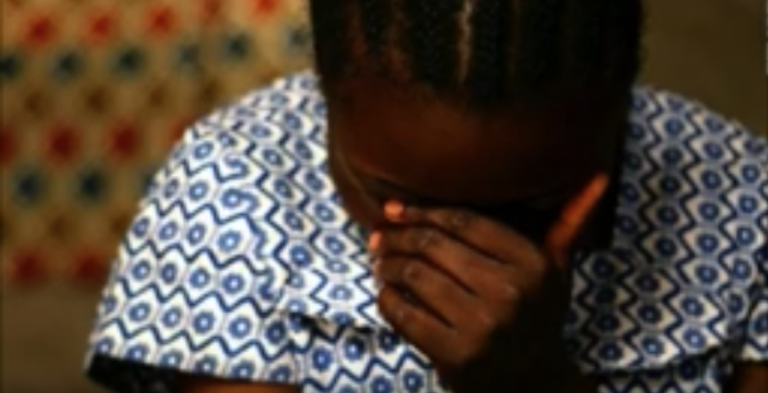
Reports of abuse of minors in the Federal Capital Territory (FCT), Abuja are on the increase. Experts say many more cases are unreported. In this report, Emiene ERAMEH reveals the reasons for the rising trend and factors responsible.
JENNIFER was four years old when she was raped by the family cook, Idris Ebiloma, on August 31, 2016, at their residence in Asokoro Abuja.
Her mother, Kimberly says there was anal and vaginal penetration of the child by Ebiloma.
She filed a suit to seek justice for her child, but her efforts were frustrated as the FCT Police Command, according to Kimberly, refused to tender all the evidence in court.
She, however, got some respite when the current FCT Commissioner of Police, Bala Ciroma, took over and instructed the Command’s Legal Department to prosecute the matter diligently.
Head Legal and Prosecutorial Department of the FCT Police Command, James Idachaba, however, denies stalling the case saying the department has done its best on the matter.
“But for us, the doctor’s report and everything is already there. All these things we are talking about are already incorporated in the evidence before the court on the part of the prosecution. I read through all the proceedings from day one and what has been filed.” Idachaba said.
Blessing, a three-year-old girl was also raped by her neighbour, Francis, a 17-year-old secondary school boy in 2018 in Mararaba, a suburb of the FCT.
Her parents reported the incident and Francis was arrested and detained by the police. But the accused was not held for long as he was released after two days. The matter was later dropped and he was set free after his parents reportedly brought a religious cleric to plead on his behalf.
A civil society group, the Committee for the Defense of Human Rights (CDHR) took up the case and insisted on getting justice for the victim, but her parents declined the offer. CDHR said it was forced to abandon the matter because even if it had wanted to prosecute the accused on behalf of the state, it would have been difficult to get witnesses to testify.
Blessing’s parents who reside in Maraba refused to speak on the case when our correspondent contacted them. Blessing and Favour are among the minors and teens who are victims of sexual abuse in the FCT.
According to data from Fabmumng, an online parenting platform, there are different types of sexual abuses, including non-genital touching, genital touching and penetrative. Ninety-five per cent of child sexual abuses go unreported because of fear of stigmatization, while 90 per cent of child abuse victims know their abuser.
Section 31 of the Child Rights Act states that sex with a minor is rape, and anyone who has sexual intercourse with a child is liable to imprisonment for life upon conviction.
The Senate on July 9, 2019, directed its committees on Judiciary, Police Affairs, Women Affairs and Social Development, which has been reconstituted, to work with relevant stakeholders to strategize on implementation of all legislation and policies aimed at protecting minors from rapists and other forms of violence.
It also directed the committees to review relevant legislation with a view to providing stiffer penalties against sexual abuse of minors in the country. The House of Representatives similarly passed a resolution on July 16, 2019, calling for the amendment of the relevant laws to clarify the age of consent in the child rights act.
Sponsor of the motion, Shina Peller, said the review will help in the successful prosecution of rape cases.
“And like I said, the first part of it which is talking about the age of consent of sexual activity in Nigeria. I think it is very important because according to the child rights act, that is section 7 subsection 1, 2 and 3. I believe that provision is not clear enough, because subsection1 says 11 years old, section 2 says the age limit is 16 years, subsection two says 16 years and subsection 3 is saying 18 years. So I think it is high time for us to put some consistency in the provisions of that Act.”
Statistics on the UNICEF website shows that abuse in all its forms is a daily reality for many Nigerian children and only a fraction ever receive help.
According to the 2015 Violence Against Children Survey “, approximately 6 out of every 10 Nigerian children under 18 have experienced some form of physical, emotional and sexual violence.
One in two children experience physical violence, one in four girls and one in ten boys experience sexual violence, and one in six girls and one in five boys experience emotional violence.”
In spite of the reportage of these cases, however, the numbers continue to rise.
Data obtained from Women Trafficking and Child Labour Eradication Foundation (WOTCLEF) in Abuja shows that it handled four cases in 2016, six in 2017, seven in 2018 and seven cases already in the first half of 2019.
Favour, another eight-year-old, was also repeatedly abused by a man who claimed to be her “Uncle”.
She eventually summoned the courage to report the abuse and was taken away from the aunty and uncle she lived within Jikwoyi, another suburb of the FCT.
Upon investigation, officials of the National Agency for the Prohibition of Trafficking in Persons, NAPTIP, learnt that the girl might be a trafficked victim, as her purported aunty said she could not remember where her sister who is supposed to be Favour’s mother resides.
Three years after Favor’s case was first reported the matter is still in court. Amina was 16 years old when she took up employment as domestic staff in 2017 in Nyanya, Abuja and on her first day at work, her madam’s husband raped her. After a cry for help, she was rescued but three years later the matter is still in court.
“They catch him, he said that is a lie, he did not do anything. So we now went to the court and talk, he was doing eye for me not to talk. I now raise my eye up.”
Kenneth is a teenager who was sodomized by his relative with whom he lived with in Jikwoyi. He was 16. The relative threatened to harm him if he reported the abuse.
Kenneth said he was traumatized by the incident and did not know how to react. But he eventually summoned the courage and confided in some of his classmates who encouraged him to report to the school authorities, and that is how he was able to get help from NAPTIP. Three years later after NAPTIP took up the matter, it is still in court.
“So they called my uncle, he came, they started the case, the case is in court. We’ve gone four times, but twice, the judge is not around, twice the judge is around but my uncle is not around”.
Bottlenecks with establishing rape cases
Establishing that a child was abused is not easy. First, the matter has to be reported at a police station and tests conducted within 72 hours after which it becomes difficult to establish the crime in the event that there was penetration. There is no clear cut guideline for this.
Gerald Katchy of CDHR says it is even more difficult to prove if there was no penetration, and it is not uncommon to hear the perpetrator say he/she only “fondled” the victim.
However, according to the Criminal Code, rape is when any person has sexual intercourse with a person, without his or her consent, or incorrectly obtained consent.
Consent can be incorrectly obtained where it is obtained by force/threat/intimidation, by means of false and fraudulent representation as to the nature of the act, by a person impersonating a married woman’s husband in order to have sex.
Gerald Katchy
Under the Criminal Code, sexual intercourse with underage girls or a person with unsound mind is the offence of defilement, and so technically a person could be charged for rape and defilement.
This has been the problem with Jennifer’s case. During the trial, Ebiloma’s lawyer, Feyisayo Folorunsho, insisted that she was not raped and claimed that his client only used his fingers.
But Jennifer’s mother says this is not true as she has gory pictures to prove that fingers could not have inflicted such injuries on her child.
Difficulty getting evidence to prosecute rape cases
Due to lack of funding, the Nigeria Police has no provision for paying the cost of investigation and for test, a victim may have to bear some of the cost of the investigation.
Once a rape case is reported at the police station, tests are required to be carried out to determine if the act actually took place.
The tests usually have to be conducted within 72 hours. Dr. Olusegun Shoyombo, a Senior Registrar, Department of Psychiatry, National Hospital Abuja says required tests include a pregnancy test, HIV, Hepatitis C, Hepatitis B, VDRL, HVS, ECS.
Emergency contraception might be required according to Dr. Shoyombo, and physical examinations will be carried out with pictures taken. All the examinations needed may cost between N30, 000 and N40, 000.
Dr. Shoyombo says there is no straight cut approach to getting how much is needed to test to ascertain if a child was raped because every case is different.
“Usually, it is that it should be reported immediately and then a medical examination should be conducted immediately. With time it becomes difficult to establish. There are basic things that you need to establish in a medical examination,” the medical doctor said.
Rape is a violent crime usually, so you want to get evidence of that violence, you want to see evidence of that sexual violation, Shoyombo added.
He explained that in cases where the person has not used any barrier protection such as condom, he might have ejaculated if it is a man raping a woman. “And then you can take samples of the semen. And children you want to establish that the hymen has indeed been breached etc.”
Shoyombo hinted also that there are quite a number of tests that can be done. Of course some of the tests, he stated, are precautionary where “you want to check the HIV status, other infectious diseases, hepatitis and all that. And then you come back and repeat those later because that is another risk the victim stands.”
Amina says she was lucky to have an organization speak up for her as she would not have been able to afford the tests. Poverty was the reason why she was released by her parents to work as a house help.
Sometimes, victims do not report cases of abuse early and so when tests are conducted they do not reveal anything.
Ngozi Ikenga of International Federation of Women Lawyers (FIDA) says in her experience, police prefer results obtained from hospitals they run, but not everyone have access to these hospitals.
Spokesman of the FCT Police Command, Anjuguri Manza, says police prefer to work with results obtained from government hospitals and in cases where the victim is located within the city centre, then he/she is referred to the police hospital as they are more trusted to give independent and accurate results.
“Anything can happen with another hospital and we have that, for the sake of credibility, these are institutions that we know that have names, and we can lay trace to whenever they provide result, the result can be acceptable,” Manza said.
“Its not about just providing the result because anybody can go and concoct anything and bring it.
But we feel the best place to bring the result that is more credible and that can be used when it comes to the issue of prosecution is for us to get it from government hospitals, recognized government hospitals. We also run such tests like in the police medical facility. We also run it in our own medical facility.”
While Ikenga of FIDA acknowledged that the police are more receptive now than they used to be, she said a lot still needs to be done.
“I believe for those who are aware, that is why they contact organisations like ours. Because sometimes when they go as individuals, they don’t get a good response, police do not take their matter seriously, but once they get to us or some like-minded organizations they sit up. Anytime we enter such a case. Sometimes they don’t get a good response from the police so they involve organizations,” Ikenga explained.
Manza says every police station in the FCT has a Gender Desk Officer, who is supposed to handle rape cases but Gerald of CDHR said the way a case is treated in a police station depends on the DPO in charge of the station.
Stigma
Victims are blamed by people who pass comments like “what did you wear”, “why did you go to his house” if she is female.
But a psychiatrist Ifedilichukwu Uchendu says it is never a victim’s fault that he/she was raped especially when the victim is a minor, stressing that the victim may not even be aware of the enormity of what has happened to him or her.
“The stigma depends on the age, the much younger ones don’t know what really happened, they might just feel that maybe uncle is playing with her, or their brother or you know, or cousin or whatever,” Uchendu said.
But it is people who are a little bit of age who have an understanding of what is going on, especially maybe if they might start having that feeling and depending on where the act took place or with who.”
“I mean, for example, for someone who is raped on the road or raped by somebody she did not know. You know rape can be by somebody who is familiar with a person. And rape can be by somebody in a bus, one chance, or in a party, so it depends and might be by armed robbers who came to the house.”
According to the psychiatrist, each of these episodes could affect people individually, and then it also depends on if it is something that happened within the house, is it from a cousin, a brother, or somebody who is known or a big brother or an uncle.
“People react to it differently. I have managed people who have such challenges and some are not too traumatized, the family wants to make sure that the person is not infected with any sickness, after some time you check for HIV and other things.”
“But if it is a minor, most of them might not really understand, it is when they are growing some of them might end up remembering what really happened. Maybe that is when the psychological challenge might start coming, it might also affect their relationship with members of the opposite sex.”
Katchy, who said the stigma is one of the reasons why parents refuse to report cases of abuse, called for sensitization to get them to open up and get justice.
Culture of silence dying slowly
Another reason adduced by Imaobong Ladipo-Sanusi, head of the Women Trafficking and Child Labour Eradication Foundation, is that the seeming rise in the number of cases of sexual abuse of minors. This, she said maybe because more people are speaking out.
“There is a rise because people are getting much, much more aware, there is a rise because of increase in population.
“There is a rise because people are speaking and then you get to find out. And I am saying there is awareness because a lot of NGOs are specialized on child sexual abuse or even domestic violence so to say. A lot of NGO’s are specialized in violence against children.”
Ladipo-Sanusi explained that it was a shame to admit that one was raped in time past. “Perpetrators would threaten the victim saying if she was female, she would not be able to find a husband. For instance, a 16-year-old girl who was raped by an Islamic cleric threatened to commit suicide if her family accepts an offer to settle out of court,” she said.
Premium Times in a report on August 2, 2019, said the settlement proposed by the cleric includes the accused admitting to committing the offence, tender an unreserved apology and pay N17 million for damages done.
Imaobong Ladipo-Sanusi, head of WOTCLEF
The police had arraigned the accused before the magistrate court on a three-count charge of ‘kidnapping’ the underage girl; ‘unlawfully taking her away against the will of her parents, with intent to carnally know her’; and ‘unlawful and indecent assault by touching her breast’.
The cleric had also allegedly sponsored posts on social media insulting and maligning the integrity and chastity of the victim.
Premium Times in its report discovered that members of the victim’s family share dissenting views on the settlement. While some believe that the out-of-court settlement is in order to save them further “disgrace”, some said the matter should be treated as a criminal case and justice should prevail.
Lack of support for victims
While Lagos State has a Lagos State Domestic and Sexual Violence Response Team, victims in the FCT have to depend on Civil Society groups and Non-Governmental Organisations like SOAR Initiative who work to rehabilitate victims of abuse.
How can sexual abuse of minors be prevented
Imaobong of WOTCLEF says prevention and policy responses to sexual violence against children need to be based on an understanding of the problem, its causes and the circumstances in which it occurs.
In the case of the sexual abuse of boys, many of the considerations relating to support for girls who have been raped which is more widespread can be extended to boys.
The FCT has no agency like the Domestic and Sexual Violence Response Team of the Ministry of Justice in Lagos State to handle cases of rape and sexual abuse.
The names of victims who are minors and their parents have been changed to protect their identity.
* This investigation is supported by the Institute of War and Peace Reporting and the International Centre for Investigative Reporting, ICIR.
BARELY 24 hours after the release of a videotape by BBC Africa of how a lecturer in UNILAG was trying to harass a female admission for sex, the People Democratic Party Presidential candidate in the 2019 elections, Alhaji Atiku Abubarkar has condemned the act, while SERAP is threatening to sue for justice.
In the 13 minutes video by BBC Africa, the lecturer, Dr. Igbeneghu of the department of English, University of Lagos was seen asking Kiki Mordi, an undercover journalist who disguised herself as a 17-year-old admission seeker, “how old are you?” “Don’t you know you are a beautiful girl? Do you know I am a pastor and I am in my 50s but if I want a girl of 17 years, all I need is a sweet tongue and put some money,” he said.
Dr. Igbeneghu told her that there is a secret place in the University called “cold room” where lecturers meet to touch ladies’ breasts in order to have good grades.
He told her that if she really wants to gain admission into UNILAG she must abide by his rules as he threatened she might miss her chances if she proves stubborn.
“You must be obedient, you are too stiff. I can call you to come any day. If you don’t come, you know you are gone,”
“Do you want me to kiss you? Switch off the light, lock the door and I will kiss you for a minute. That’s what they do in the cold room.”
An act the PDP Presidential candidate has outrightly condemned. He said no society should allow to thrive any act that is psychologically abusive to young women. He calls for “systematic strategies” to curb such behaviour in institutions of higher learning.
“I have just read the story on #SexForGrades across public tertiary institutions in many West African countries. This is unacceptable and requires systemic strategies to put a deterrence to such behaviour.
“As a society, we cannot allow a trend that is psychologically abusive to young women to thrive. In fact, that’s a direct opposite of what a sound educational system represents.” He said.
In a similar vein, the Socio-Economic Rights and Accountability Project (SERAP) has also condemned the act as it threatened to push for justice in what it described as a “crime against humanity.”
“Sexual harassment is a human rights crisis across Nigeria’s universities & higher institutions. Yet, authorities have ignored or covered up the abuses. Given disturbing revelation by @kikimordi & @BBCAfrica, we’re pushing for justice for this crime against humanity.”
It said students of higher learning should be given the opportunity to focus on their studies without the fear of being sexually harassed by anyone. It calls on people who have
“Students should be able to concentrate on their studies and enjoy their right to education free from the fear of sexual harassment or assault.” It said.
It called on the general public to report the issue of sexual abuse and harassment to her for advice and legal support.
“If you/your friend/someone you know has been a victim & would like to seek justice, please feel free to call our hotline: 0800-CALLSERAP (0800-2255-73727) for an anonymous and confidential advice and assistance. We’ll provide absolutely free legal support. We’re here to help.”
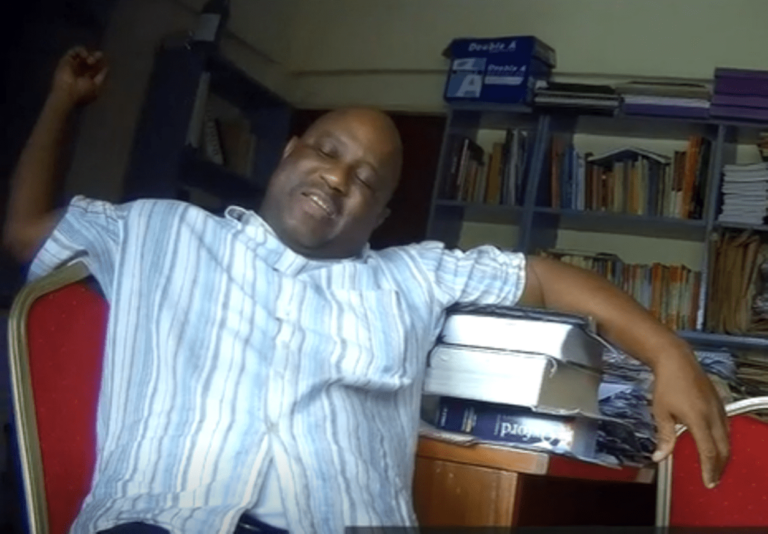
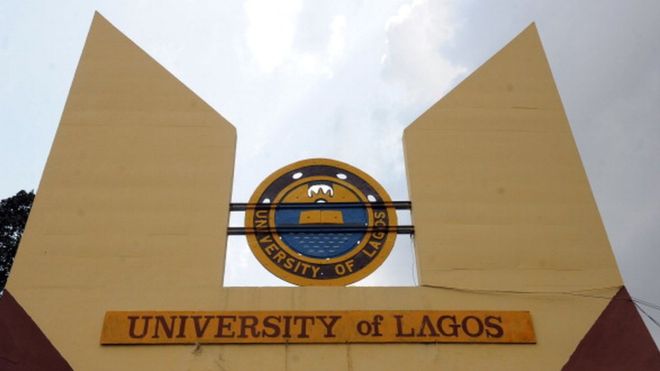
MANAGEMENT of the University of Lagos has suspended Boniface Igbegeghu, the accused senior lecturer and pastor of Foursquare Gospel Church exposed in the BBC sex-for-grade video.
Boniface in the video that has gone viral made sexual advances to Kiki Mordi, an investigative reporter who disguised as a 17-year-old student seeking admission.
The Principal Assistant Registrar (Communication Unit), Taiwo Oloyede confirmed to The ICIR that the former Sub dean of the faculty of art, University of Lagos has been suspended whilst investigation continues.
Oloyede also confirmed that the ‘Cold Room’ where lecturers get intimate with students of the school has also been shut down.
The suspension comes after the Foursquare Gospel Church sacked the pastor of his ministerial appointment and labelled his act ‘heinous’.
The sex-for-grades scandal has attracted the attention of many Nigerians on social media who applaud the reports, confirming that the act is popular in almost all of the Nigerian tertiary institutions.
The immediate past senate president of Nigeria, Bukola Saraki also commented on the incident saying that he was appalled to find the documentary.
He urged the 9th Assembly to revisit a bill passed in the last Assembly titled “Sexual Harassment in Tertiary Education Institution Prohibition Bill”. The bill prescribes a 5-year jail term for any lecturer, educationist or person in a position of authority in any tertiary institution in Nigeria found guilty of such conduct.
He said the university should conduct a robust investigation into the case and other similar reports, noting that the implementation of the bill is needed to reform the tertiary institutions of education in the country.
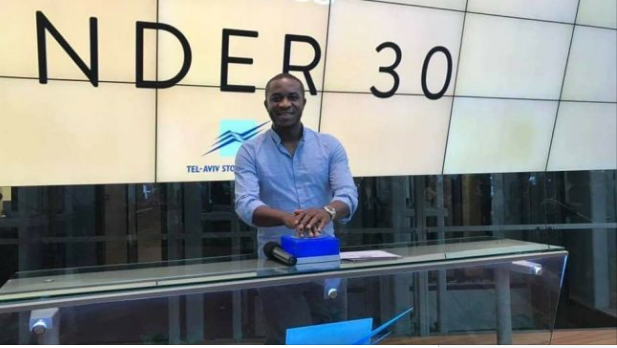
ON Monday, the Federal High Court sitting in Lagos ordered the temporary forfeiture of N280,555,010 allegedly belonging to embattled Nigerian entrepreneur Obinwanne George Okeke also known as Invictus Obi for alleged money laundering amongst other charges.
The Economic and Financial Crimes Commission, EFCC, had filed an ex – parte motion to seize the money in question affirming that investigation by the EFCC revealed that the sum of N280.6 million allegedly belonging to Obi was traced to the bank accounts of Invictus Oil and Gas Limited and Invictus Investment Limited.
Rotimi Oyedepo, EFCC counsel, stated that the funds were “reasonably suspected” to be proceeds of cyber-crime, and he requested the judge to order forfeiture.
In an affidavit filed in support of the application, Ariyo Muritala, EFCC investigator, said the funds could be expended by Okeke and his cronies if the order is not granted.
“I know as a fact and verily believe that our investigation has revealed the following ear-aching and mind-boggling findings: (a) That the Obinwanne George Okeke is a strong leader of a cybercrime syndicate specialized in business email compromise. (b) That the said syndicate has defrauded many innocent and unsuspecting victims (g) That the said Obiwanne George Okeke has been arrested by the Federal Bureau of Investigation in the United States of America for cybercrime-related offences (h) That if these funds are not forfeited to the Federal Government of Nigeria Obiwanne George Okeke and his cronies will dissipate same,” he said.
The presiding judge, Justice Rilwan Aikawa ordered a temporary forfeiture of the accounts requesting the EFCC to publish the court’s order in the national dailies to allow people interested in contesting the court’s decision to indicate interest before a final forfeiture is announced.
In 2016, 31-year-old Obi was celebrated by Forbes as one of Africa’s “most outstanding 30 entrepreneurs under the age of 30.
He was arrested in 2019 by the Federal Bureau of Investigation, FBI, where he is currently standing trial in the US for allegedly defrauding some US citizens to the tune of $11 million “through fraudulent wire transfer instructions in a massive, coordinated, business e-mail compromise scheme.
The court was adjourned to October 30 for further hearing on the case.
ANOTHER lecturer of the University of Lagos, Akoka, Boniface Ighenghu has been accused of sexually assaulting an investigative reporter who disguised as a 17 years old girl seeking admission into the University.
This comes few years after Afeez Baruwa, another lecturer of the university, was charged to court for allegedly raping a student of the institution.
Baruwa is still in court over the allegation as the student claimed to have pictorial evidence of the incident.
Also in 2018, a professor of English in University of Lagos, Olusegun Awonusi was also accused of sexual harassment by Joy Uwana, a student of the varsity who had the lecture’s nude images with her claimed the lecturer harrased her in the ,presence of other lecturers but they wont come out open because of their cult like nature.
Awonusi is a former vice chancellor of Tai Solarin University of Education, ijebu ode ogun state, also a former commisioner in ogun state denied the allegations levied upon him by the student.
However, the management of the institution are yet to conclude the investigations since it began over a year ago.
British Broadcasting Corporation (BBC) in a documentary released on Monday, titled ‘Sex for grades’: Undercover in West African Universities made this report.
In the documentary, Kiki Mordi, an investigative reporter revealed how students are sexually harassed in West African universities, showing UNILAG and the University of Ghana as examples.
The lecturer was taped making sexual propositions to the undercover journalist who claimed to seek admission into the university.
Boniface is currently a pastor with the Foursquare Gospel Church in Lagos State.
While making sexual propositions to the reporter, He said “Do you know that I am a pastor and I’m in my fifties? What will shock you is that even at my age now, if I want a girl of your age, all I need is to sweet tongue her and put some money in her hand and I’ll get her”.
In the video clip, he revealed that there is a place called ‘the cold room’ in the school premises where lecturers make love with students as he continued to assure her that the only way for her was for her to do his bidding.
In a press release signed by the national secretary of the Foursquare Gospel Church, Ikechukwu Ugbaja, the church distanced itself from Boniface and termed the act ‘heinous’.
“The general public is hereby informed that as a holiness and Bible-believing Church, we do not condone such heinous and unscriptural act among our ministers, we totally dissociate ourselves from the purported conduct of Igbenoghu and promise to take appropriate measure as soon as the ongoing investigation is concluded, Meanwhile, the pastor in question has been asked to step down from all ministerial assignments” the statement read.
Nigerian universities have in many cases been reported to sexually assault students including the sex for mark scandal which happened in Obafemi Awolowo University, Ile-Ife in 2018.
THERE is an Igbo saying about when you wake up is your morning. It simply means that it is never too late to start. This is, in my view, a good thing as it engenders an attitude that does not allow people to give up on their dreams regardless of age. However, sometimes when someone wakes up late, the reasons may be more cynical.
I want to begin this by telling a short story.
The town of Evwreni is located 150km away from the capital of Delta State, and unlike Asaba which is consistently derided as a non-Delta town (the people of Asaba are of the Igbo ethnic group), there is no doubt that Evwreni is an oil-producing Niger Delta town. In August 1999 the Evwreni Youths Association wrote a letter to the Shell Petroleum Development Company giving them an ultimatum to build a hospital, community centre, a borehole for the town, and tar the two roads in town – the Warri-Patani Road, and Palace Road. At the time, there were two major landmarks in Evwerni, the Girls Model Secondary School, which sat along the Warri-Patani Road, and the Ovie’s Palace, which was on Palace Road. In addition to these four demands, the EYA asked that Shell build a fence around the Ovie’s Palace, and install a telephone line for him. The Ovie at the time was Ovie Owin Kumani.
In response, Shell offered to pay homage and royalties to the Ovie in cash, and also offered some jobs and scholarships to the EYA. This last bit of information was kept from the majority of EYA members.
Eventually, the EYA found out and went on what was initially a peaceful protest to the Ovie’s Palace. Unfortunately, armed palace guards, paid for by the Delta State government, shot at the protesters and killed one of them. Nine others were alleged to have sustained bullet wounds.
Following this incident, Evwreni elders called for the dethronement of Ovie Kumani, and eventually the situation boiled over on 20 January 2000 when the youths stormed the palace and murdered Kumani, and another elder, Chief James Fashe. This story illustrates the danger of monetary compensation in the system such as we have in Nigeria where systems of accountability are weak, and where because of a culture of impunity, the incentive to just take cash and make for the hills is strong.
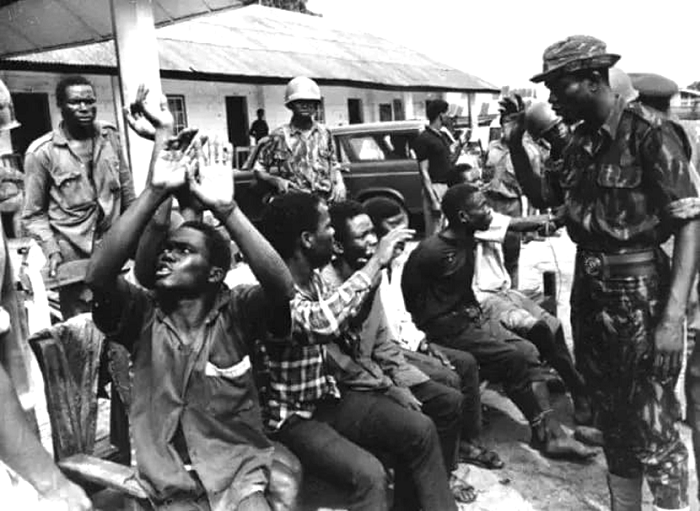
A few days ago, I read an article about the Asaba Development Union, which claimed to be speaking for the people of Asaba with respect to engagement with the government of Nigeria. The group is demanding an apology and compensation. This on the 52nd anniversary of the 7 October 1967 massacre in which at least 800 men and boys from Asaba were killed by the Nigerian Army on suspicion of being sympathetic to the secessionist cause during the Biafran War.
The reason this deserves some commentary is that two years ago during the organisation of the half-century of the event, various groups of Asaba indigenes were approached for their cooperation and contribution to the event, and they showed a distinct disinterest in the matter. In fact, it was during the six-week period of organisation before the event that I became involved and realised that there was no single group that had the capacity to organise a befitting remembrance.
But the show had to go on, and the Asaba Advisory Council set up a task force that ensured that the event went on despite the indifference of many Asaba groups, opposition from governmental figures, financial challenges and the time frame required to organise a successful event. At this point, I will go on the record to say that were it not for the extraordinary support shown by Prof Wole Soyinka, Bishop Matthew Kukah of the Sokoto Catholic Diocese, and Archbishop Emmanuel Chukwuma of the Enugu Anglican Diocese, the event may not have even gone ahead. So great was the opposition, and so real were the threats.
At the event itself all the speakers, including Soyinka, Kukah, the Governor of Delta State, Ifeanyi Okowa, and Alban Ofili-Okonkwo, were very clear that given the time that has passed, and the fact that the families of the victims of that brutal event half a century ago have for the most part done quite well, that monetary compensation was not among the lists of requests by the people of Asaba. What we want is simply an acknowledgment that the town was decimated in 1967 just because of their Igbo ethnicity and despite the “one Nigeria” stance of the indigenes at the time, and an apology for that action. The official communique after the event made it clear that if there is to be any talk of compensation, then it should be in form of a world-class maternity hospital to be located in Asaba and open to all Nigerians.
After the event, the committee met with the traditional rulership of Asaba and a foundation was incorporated to pursue these objectives. The Asagba of Asaba, by royal decree, said that the Foundation is the officially empowered body to have discussions regarding government interactions over the massacre.
Then we now have this group coming up to claim monetary compensation…
The objective of this piece is to sound an alarm because this being Nigeria, this is a movie script we have seen before, and sadly the writers only ever seem to change the dates, locations, and names of the actors, but never the script itself.
As a victim of that sad event, because I lost my maternal grandfather and many uncles, I think the stance of the task force that organised the half-century event is the best one. You do not throw money at a thing like this. It will only lead to a fight. Rather, build the hospital that they asked for.
Cheta Nwanze is a public commentator, he could be reached at cg.nwanze@gmail.com
SENIOR Nigerian public officers are notoriously parsimonious with their recall once out of office. From among their club memoirs are unusual, especially, from those with any sense of lingering shelf-life. It’s easy to speculate as to why this is so. In a country ruled by whim, risk aversion is prudent when you are out of power. By remaining quiet or feigning amnesia, yesterday’s men limit the likelihood that their successors may remember them for the wrong reasons. Moreover, with government as the principal guarantor of a good life, respect for its rule of Omerta is the only way to retain any hope of access to its revolving doors.
When it occurs, a departure from this trend is usually enforced. This is why the memoir recently published by Mohammed Bello Adoke is notable. Adoke, a Senior Advocate of Nigeria, (SAN), was Attorney-General and Minister of Justice under President Goodluck Jonathan for five years from 2010 until 2015. Since leaving office, his name has been linked with several controversies, the most high profile being in connection with the settlement of the now Infamous Oil Prospecting Lease (OPL) 245 granted in April 1998 by General Abacha to the shadowy Malabu Oil and Gas Limited.
In his memoir, Adoke feels called upon to clear his name by discharging a burden of narration in the controversies that have dogged him after office. Fittingly, his story is published under the titled Burden of Service. The sub-title Reminiscences of Nigeria’s Former Attorney-General underscores the point that Adoke is, remarkably, the first former Attorney-General of the Federation to publish any account of his time in office. In addition to the Malabu Oil controversy, Burden of Service also offers insights into many other highlights of the Jonathan years, including the hand-over of Bakassi Peninsula to Cameroon, recovery of Abacha Loot, the removal of Ayo Salami as President of the Court of Appeal, and the climactic denouement to Nigeria’s 2015 general elections.
Adoke’s telling of his version of the stories packs a punch. While his parochial account is interesting in and of itself, it is the vignettes he offers when he is not necessarily pleading his own case that make Adoke’s account deserving of attention. A general theme of his is the shiftiness of Nigerian politicians and he illustrates this with several issues in the book. Five deserve attention.
Cover page of Burden of Service by Mohammed Bello Adoke
The first is the currency of loyalty in Nigerian politics. Under General Abacha, politicians popularised “I am loyal” as cult greeting. It is not lost on those who are interested that anyone who has need to repeat affirmations of loyalty in this way probably knows nothing about loyalty in the first place. Illustrating this point, Adoke narrates how many people close to President Jonathan donated money to support the campaign of General Muhammadu Buhari in 2015. According to him, “many of my cabinet colleagues, including those known to be close to the President, had made donations to Buhari’s campaign. Those involved included heads of agencies. A Principal Officer of the National Assembly from the PDP was to later confess publicly that he donated N5 million to the APC during the elections.”
This shiftiness is not limited to politics; it also extends to high matters of constitutional legality. This is the second highlight from Burden of Service. Adoke tells a remarkable story about the fate of the Constitution (Fourth Amendment) Bill of 2015, which was said to have failed to receive presidential assent before President Jonathan vacated office. The amendment included clauses granting immunity to law-makers, life pension to former presiding officers of the National Assembly and inducting them into life membership of the National Council of State. It also contained a provision dispensing with presidential assent to constitutional amendments. As Adoke tells it, after the 2015 election, the National Assembly transmitted the Bill to the President for his assent. By the time Adoke learnt of this, President Jonathan had reportedly assented to the bill and authorized for this to be returned to the National Assembly. The President’s Senior Special Assistant on Administration, Matt Aikihionbare, confirmed this. So, Adoke raced to the presidency to explain to the President the dangers inherent in the provisions contained in the amendment he assented to. After his encounter with President Jonathan, “the President looked genuinely surprised and promptly withdrew his assent”, whereupon he directed the Attorney-General “to prepare a memorandum elucidating all the issues…. raised and why he would have to veto the bill.” The rest is history but an important constitutional question arises – can a president having assented to a law unilaterally withdraw his assent?
Thirdly, there is the issue of weaponisation of litigation against the public purse in judgment debts. It’s best to render this in Adoke’s own words: “Many of the claims were bogus but since it was an organized scam, they were getting away with it…. Again, there were too many people interested in judgment debts. We were getting calls from all manner of people, including members of the National Assembly. Actually, some National Assembly members were making appropriation for judgment debts based on an understanding with the debtors (sic). It was a conspiracy against the national treasury.” This does not require any translation but it would have been useful if Attorney-General Adoke could tell who “they” were.
At a time when they are being abused to intimidate and persecute critics of government, Adoke, fourthly, offers insights into the context and justifications for the Terrorism Prevention Act (TPA) and Cybercrimes Act, both adopted under his watch as Attorney-General. In addition to the clear and present threat of Boko Haram, the rationale for the former was the need to implement the treaty framework of international co-operation on terrorism to which Nigeria had subscribed. Concerning the latter, the goal was to “ensure the protection of critical national information infrastructure and to promote cybersecurity… intellectual property and privacy rights.” Today, sadly, these laws have been turned into instruments for pursuit of regime opponents, more imagined than real.
Fifth, there is the matter of plea bargains in white collar crimes involving politically exposed persons (PEPs) in Nigeria. About this, Adoke tells the story of the presidential pardon granted former Bayelsa State Governor, Diprieye Alamieyeseigha. According to him, Alamieyeseigha’s conviction was under a plea bargain and “as part of the plea bargain he was to be granted presidential pardon by (President Umaru) Yar’Adua after his release from jail. This, however, did not materialize as President Yar’Adua fell ill and died.” Plea bargains are subject to approval by courts and it’s doubtful whether this part of the deal was disclosed to any court. It certainly wasn’t disclosed to Nigerians.
As Attorney-General of the Federation, Adoke was also the official leader of the legal profession. His memoir offers an unusual insight into how he views hierarchies at the Bar. To make this point, he tells the story of how, before his time, “a substantial part of the budgetary allocation made for solicitors’ fees was being paid out only to two or three private solicitors. There was a case of a former Attorney-General that as paying a Senior Advocate N50 million for each case….” The result was there was insufficient money to go round, so many of the cases against government went un-defended, leading to more judgment debts. So, how did Adoke address this? He decided that “no SAN would be paid more than N5 million for a brief; any other lawyer, who was not a SAN, would receive a maximum of N2 million.” In the un-complicated calculus of Attorney-General Adoke, a SAN is worth 250% of the non-SAN!
Burden of Service is replete with claims of moral high ground and completeness of disclosure. As with all memoirs, however, it’s up to the reader to determine what weight to accord to the author’s account. In telling the story of the removal of Ayo Salami as the President of the Court of Appeal, for instance, Adoke prefaces his narration with the implicit disclaimer that “the Attorney-General is not a member of the National Judicial Council (NJC)”, who recommended the retirement of Salami. He then proceeds to a pro-forma narration that is half-hearted to the point of being clearly disingenuous. By Adoke’s own admission, Chief Justice Katsina-Alu, who was the other party in this terminal dog-fight with Salami, was his “mentor and adopted father” and benefactor, who personally recommended him to President Jonathan for the position of Attorney-General. Salami for his part “had personally encouraged” Adoke to apply for SAN. In the sub-text, Chief Justice Katsina-Alu was family to Adoke and it is difficult to escape the conclusion that in this part of the book, at least, he was less than economical with the truth.
Co-Convenor of Nigeria Mourns, Odinkalu works with the Open Society Foundations.