Home Blog Page 2288

Replacing EMT with Economic Advisory Council is a mistake — Ezekwesili

0

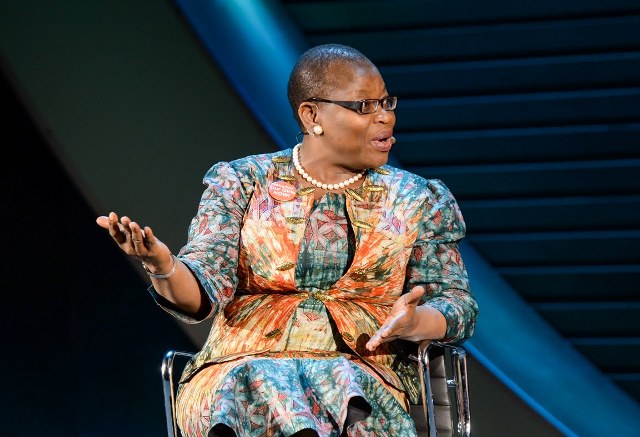
FORMER Minister of Education and a presidential candidate in the February 23 presidential election, Oby Ezekwesili has faulted the replacement of Economic Management Team (EMT) with Economic Advisory Council (EAC) by President Muhammadu Buhari.

President Buhari on Monday announced a seven-man EAC team led by Doyin Salami as a replacement for EMT that had been chaired by Vice President Yemi Osinbajo.

But Ezekwesili in her reaction to the new advisory council in a series of Twitter messages on Tuesday, described the president’s action as a mistake, noting that since the Council of Economic Advisers would meet monthly and then meet the president quarterly, “setting it up as a full replacement of the EMT which should remain as the Technical Team that it should be is a mistake.”

According to her, the proper structure of the EMT should have two levels of hierarchical control, whereby; “An EMT Meeting chaired by the President with his VP as Vice-Chair and its technical meeting chaired by the Minister of Finance with CORE Technical Members.”

She said the combination of such two-layered Structure of the EMT in addition to the intellectual capacity of the appointed EAC would result to, “topmost political power, coordinated internal technical skills and input of external skills.

Speaking on what the council needs to do, Ezekwesili said the “the economy which is currently stuck in a steady state of low-equilibrium growth needs a 24/7 level of engagement of topmost political power (that’s ready to discard outdated and pseudo-socialist ideas), coordinated internal competent skills.
and brilliant external skills.

She however, expressed hope that the newly appointed Economic Advisory Council would be bold enough to inform the president on how he had mismanaged the economy in the last four years.

“The setting up a Council of Economic Advisors is in itself one of the features of the American Presidential system which we copied,” Ezekwesili said.

“Strong membership& that’s really great,” she added.

“I hope the first thing they do is tell the President how he mismanaged the Economy in the last 4 years.”

The former minister insisted that despite Vice President being the chair of now disbanded Economic Management Team, the president was the one managing the economy.

” All those BAD Monetary Policy decisions were made by him,” she argued.

“All those strange Fiscal Policy decisions were made by him. Both the CBN Governor and the Ministers of Finance were not acting based on any Economic Management Team (EMT) decisions. Now at least the pretence is over about Economy.”

She maintained that the “EMT was in reality chaired by the VP who had no power over Core Economic Policy decisions.”

“The other side of the Presidency did not mind having him be the cannon fodder for all the extremely Bad Economic Policy decisions. A President, not VP runs the Economy. I know that”

“Hopefully, our couple of outstanding eggheads that are named to the Council of Economic Advisers will ignore all those genuflecting sycophancy that surrounds @MBuhari and tell him the kind of Truth that annoys them but which must be heard for our Economy to Grow and Prosper,” Ezekwesili said.

The newly appointed team, as announced in a statement on Monday took over from the EMT.

The team would counsel the president on fiscal analysis, economic growth, internal and global economic issues whilst finding better ways to work with the relevant cabinet members and heads of monetary and fiscal agencies.

Despite border closure, other measures, inflation dips to 11.02 per cent in August —NBS

0

Data from the National Bureau of Statistics (NBS) on Tuesday has shown that Nigerian inflation rate has gone down from 11.08 percent in July to 11.02 per cent in August.

The NBS Consumer Price Index, (CPI) which measures inflation revealed that the current inflation rate of 11.02 per cent (year-on-year)  is 0.06 per cent lower than the rate recorded in July.

The CPI measures the average change over time in prices of goods and services consumed by people for dayto-day living.

The disinflation, the NBS said, continued in August despite several pronouncements regarding restrictions on the import of some food items, minimum wage and the recent border closures.

It however, explained that, the border was only closed on August 20 with only 11 days of 31days for any significant impact to be felt either way on prices.

“The inflation rate is also the average prices for the whole month and not only the price of goods and services in the last few days of the month,”NBS said.

“Furthermore, the harvest season and existing weak consumer demand and their natural effect to slow down food and other prices will also play a major role in determining the direction of inflation.”

Every month, NBS said, 10,534 informants spread across the country provide price data for the computation of the CPI.

The market items currently comprise of 740 goods and services regularly priced, it said.


FRSC reacts to The ICIR’s investigation but fails to address allegations against corps marshal

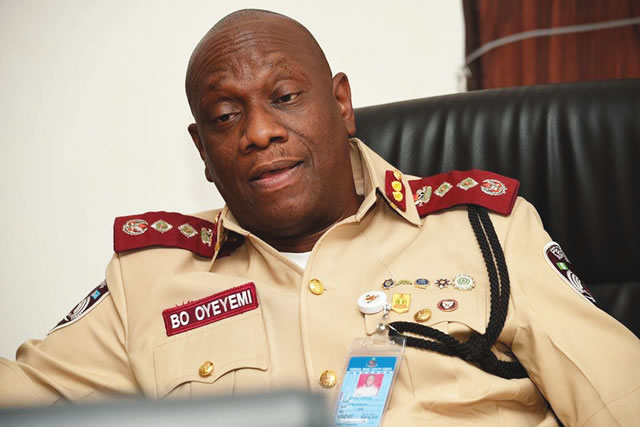
In his response to The ICIR’s report on how he forced new recruits of the commission to open salary bank accounts with the Safeline Microfinance Bank (MFB), in which he has an interest, Boboye Oyeyemi, Corps Marshall of the Federal Road Safety Corps, FRSC, has described the story as trash.

He denied the allegations despite verifiable and official documents affirming his directorship in the bank, while also failing to disprove the allegation of conflict of interest in the story published on Monday.

In a statement issued on his behalf by Bisi Kazeem, the Corps’ Public Education Officer,the FRSC boss also described the report as unfounded, seditious and as such a fabrication that cannot be authenticated.

Interestingly, sedition, one of the offences the FRSC hangs on The ICIR is a law that no longer exists in Nigerian jurisprudence as it was struck down by the court of Appeal in the case of Arthur Nwankwo vs Statez in 1982.

In spite of the story quoting Kazeem as denying that Boboye had an interest in the bank, the statement falsely claimed that  the report lacked objectivity and  that The ICIR did not seek clarification on the matter from the commission.

“….it lacked the basic elements of balance as there was no time that the writer sought any form of balance clarification, asked relevant questions or crosschecked the facts from us before going into the public, thus betraying the original intention of the hatch work which was to damage the reputation of the FRSC and its leadership,” Kazeem stated in the statement.

The truth is that the reporter spoke to Kazeem on the phone and his response to the allegation of Boboye’s directorship of a bank was “There is nothing like that. We have created a rejoinder in many places. The rejoinder is available.”

Through text messages, The ICIR went further to share its findings but he responded affirming his position in another text message.

Rather than address the specific allegations of conflict of interest and coercing new officials of the FRSC to open accounts with a bank, the statement claimed that “the original intention of the hatch work was to damage the reputation of the FRSC and its leadership.”

The statement failed to defend Boboye or provide proof disclaiming the report that he is a director of the bank, contrary to the law or if he derived any benefits or pecuniary rewards in his position as member of the management of the bank.

Thus the fundamental allegation of conflict of interest in the report was not addressed.

The ICIR report stated that “Oyeyemi’s actions directly conflict with provisions of the Nigerian Constitution. The Fifth Schedule of the 1999 Constitution, which deals with codes of conduct for public officials, states clearly in Part 1, Section 1 that “A public official shall not put himself in a position where his personal interest conflicts with his duties and responsibilities”.

Section 2 (B) states that a public official shall not “engage or participate in the management of any private business, profession or trade …”

Business here, according to Section 318 (1) of the 1999 Constitution, is defined as “any profession, vocation, trade, or any other adventure or concern in the nature of trade excluding farming.”

Though the report was not centred against presidential directive on new recruitments and its transparency, the FRSC used the argument to rationalise the instruction from the corps marshall compelling the new recruits to open accounts with a specific bank.

As such, he did not dispel claims by the new recruit of being coerced to own the accounts despite minimal branches it has nationwide.

“On the allegation that the Corps Marshal and Management of FRSC compelled the newly trained staff to open an account with Safeline Microfinance Bank, nothing could be further from the truth,” he stated.


Buhari appoints Soludo, Salami, Doyin into Economic Advisory Council

0

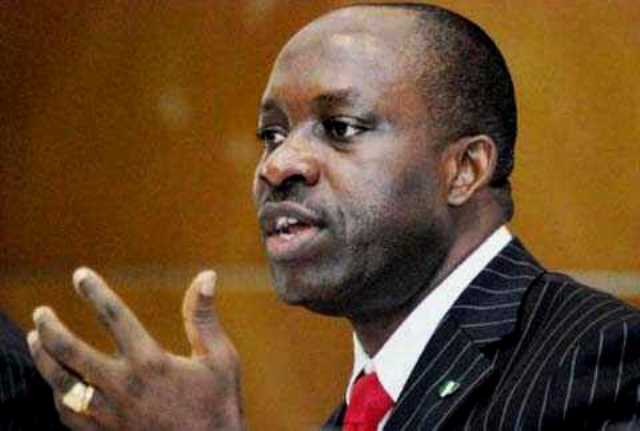
PRESIDENT Muhammadu Buhari on Monday announced the appointment of former governor of Central Bank of Nigeria (CBN), Charles Soludo and six others as members of his new Economic Advisory Council (EAC).

A statement released by Femi Adesina, Senior Special Assistant to the president on Media and Publicity said the new council will take over from the current Economic Management Team (EMT).

Adesina said the Council is to be chaired by Doyin Salami, a member of the International Monetary Fund Advisory group for Sub-Sahara Africa (AGSA). Other members are Mohammed Sagagi as the Vice-Chairman, Prof. Ode Ojowu, Shehu Yahaya, Iyabo Masha, Bismark Rewane and Mohammed Adaya Salisu, Senior Special Assistant to the President, Development Policy would serve as secretary.

The EAC would advise the president on fiscal analysis, economic growth, internal and global economic issues whilst finding better ways to work with the relevant cabinet members and heads of monetary and fiscal agencies, he said.

US alleges Iran behind Saudi oil field attacks, amid global rise in oil prices

0

The United States, US, on Monday revealed satellite images and intelligence reports suggesting that Iran was behind attacks on major Saudi Arabia oil facilities, a move that has reduced global oil supplies by 5 per cent and also made oil prices rise. 

The attacks targeted Abqaiq, the site of the world’s largest oil processing plant, run by the Saudi state oil company, Aramco and also the Khurais oil field.

US Ambassador to the United Nations, UN, Kelly Craft, told the Council that emerging information on the attacks “indicates that responsibility lies with Iran” and that there is no evidence the attack came from Yemen in a Reuters report.

Saudi Arabia is the world’s biggest oil exporter, it also has a unique role in the global oil market as the only country with enough spare capacity to increase or decrease its output by millions of barrels per day, keeping the market stable.

In a tweet on Sunday, President Donald Trump accused Iran but suggested possible military action when the perpetrator was identified.

Oil prices climbed by 20 per cent in one day, the biggest jump within a one-day period since the 1990-1991 Gulf crisis over Iraq’s invasion of Kuwait according to a BBC report.

US Energy Secretary Rick Perry also blamed Iran for “an attack on the global economy and the global energy market”.

“The United States wholeheartedly condemns Iran’s attack on Saudi Arabia and we call on other nations to do the same,” he said in a speech to an annual meeting in Vienna of the U.N. nuclear watchdog IAEA.

He was confident the oil market would bounce back , “it is resilient and will respond positively”.

Tension in the oil-producing Gulf region has escalated this year after Trump imposed severe U.S. sanctions on Iran aimed at halting its oil exports.

However, Iran has denied a role in specific attacks, including bombings of tankers in the Gulf and previous strikes claimed by the Houthis.

However, U.S. allies question Trump’s strategy, arguing that it provides no clear mechanism to defuse tensions, creating a risk that the competitors could stumble into war.

ECOWAS heads of states pledge $1 billion to combat terrorism in regions

0

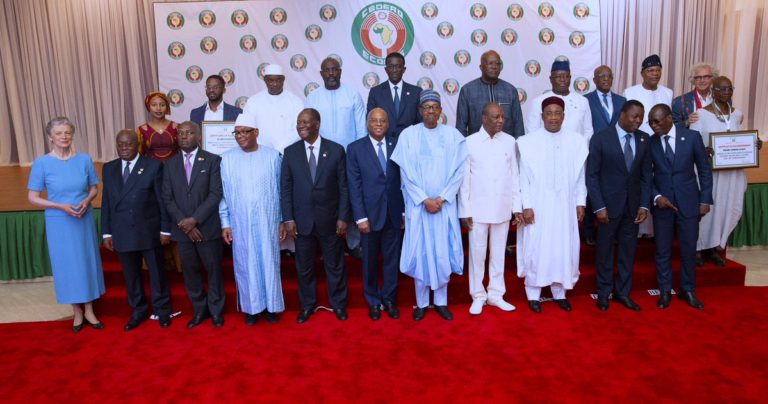
WEST African leaders have pledged to contribute $1 billion to combat the increasing threat of Islamist militancy in the sub-region.

Head of the regional ECOWAS bloc, Jean- Claude Kassi Brou disclosed this during the Extraordinary summit on the counter-terrorism in Ouagadougou, Burkina Faso concluded on Sunday.

He said that the Commission has decided to “contribute financially and urgently to a joint effort in the fight against terrorism,” by pledging the sum of $1billion to address the growing insecurity in the sub-region.

The Ouagadougou counter-terrorism summit, was an offshoot of the 55th ECOWAS ordinary  session held in Nigeria in June.

President Muhammadu Buhari who also spoke at the summit over the weekend charged other African heads of state with the responsibility of ensuring peace within their countries by foiling plans by terrorist groups to destabilise the region.

“The frequency of attacks, the determination and resilience of the terrorist groups as well as the ease with which they raise funds and acquire sophisticated weapons are matters of serious concern which should engage our attention as a Community,” Buhari said, addressing the summit.

“Equally worrisome is the continuing spread of the menace of terrorism in the region and the growing link between terrorism and organized crime. This is why we must not relent in our efforts until we defeat the monster completely.”

He also stressed the importance of regional collaboration as a major strategy towards arresting the menace.

Frequent terrorist attacks  in the Sahel region by groups linked to al Qaeda and Islamic State terrorist group, is making large swathes of territory ungovernable and stoking local ethnic violence, especially in Mali, Burkina Faso and Nigeria.

Nigeria is battling with Islamist group, Boko Haram that are raiding of villages in the Northeast region.


‘You’ve always stood behind us’ … Ramaphosa ‘sincerely’ apologises to Nigeria for xenophobic attacks

0

SOUTH African President, Cyril Ramaphosa, has apologised to Nigerians for recent xenophobic attacks against her citizens and other African nationals resident in his country. 

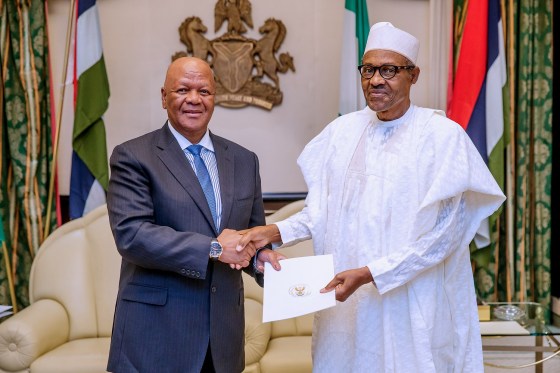
This was conveyed on Monday by former South African energy minister Jeff Radebe who led a special envoy appointed by Ramaphosa to deliver messages to seven African countries including Nigeria. They set out on the mission on Saturday.

Addressing officials of the Nigerian government and journalists at the State House, Radebe said he met with President Muhammadu Buhari “a short while ago… to convey our president, Ramaphosa’s, sincerest apologies about the incidents that have recently transpired in South Africa.”

He said the xenophobic incidents did not represent what South Africa stands for as a constitutional democracy.

Ramaphosa, he said, has apologised for the attacks and also instructed law enforcement agencies to bring all culprits to book so that the rule of law may prevail.

“He also conveyed his fond memories of ensuring that both Nigeria and South Africa must continue to play a critical role in the rebuilding of Africa to attain the Agenda 2063: the Africa that we want,” he said.

“We have also recalled with very fond memories of the historical ties that exist between Nigeria and South Africa during the dark days of apartheid. We always knew that the Nigerian people and their government always stood behind our leaders who were fighting against the obnoxious system of apartheid.

“There is a commission between South Africa and Nigeria and on the 3rd of October during President Buhari’s visit to South Africa, there will be detailed discussions that are going to be held there. I do understand that this issue of compensation, restitution is part of the agenda items in the draft that the Nigerian government has presented to South Africa.”

Ramaphosa had himself apologised in Zimbabwe on Saturday after he was jeered during a speech at the funeral of former Zimbabwean leader, Robert Mugabe.

“I stand before you as a fellow African to express my regret and apologise for what has happened in our country,” he said.

Earlier in September, Ramaphosa confirmed the death of 10 persons, including two foreigners, as a result of “acts of violence and criminality directed against foreign nationals and our own citizens” spanning several days.

On September 9, two persons were also killed and many others wounded in another bout of mob violence in Johannesburg.

Nigeria, one of the countries with most victims, has decided to evacuate hundreds of her nationals who are resident in South Africa and willing to return home.

Out of 640 Nigerians who have expressed their wish to move, 187 have returned while an additional group of 319 returnees are expected by Tuesday evening, according to Abike Dabiri-Erewa, chairperson of the Nigerians in Diaspora Commission.

ABDUCTION: FCT Police command confirms release of Aishat, kidnapped daughter of PDP Chieftain

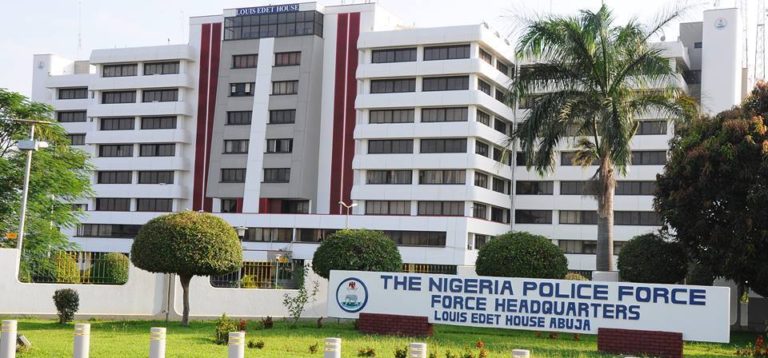
THE Federal Capital Territory (FCT), Police Command on Monday confirmed the release of Aishat Umar Ardo, daughter of Peoples Democratic Party (PDP) Chieftain, Umar Ardo who was kidnapped outside a popular mall around 7:45 pm on Kwame Nkrumah Crescent, Asokoro, Abuja.

Anjuguri Manzah, spokesperson for the FCT Police Command told The ICIR, the abducted girl was released but did not give details or circumstances that surrounded her release from her abductors.

Social Media report earlier claimed she was released after her father had paid $15, 000 in form of bitcoin to the kidnappers. “Alhamdulillah miss Aishat Umar Ardo has just been released after her father paid the $15,000 in bitcoin ransom,” the report stated. “She just called her dad to pick her up at 4th Avenue Gwarinpa.”

However, the police could not confirm the $15,000 claim.

“I don’t know about that,” says Manzah, adding: “All I can tell you is she has been released.”

She was among five persons including a lecturer with the Baze University, earlier kidnapped by abductors on Saturday.

The lecturer was later released on Saturday with assurances from the police command to fight criminalities in the territory.

“It is pertinent to inform the public that the Police have successfully rescued the Baze University lecturer, who was kidnapped on 8th September 2019,” FCT Police Command said in a statement Sunday evening.

In the statement issued by Manzah, the police reiterated its commitment to public safety,  and urged Abuja residents to disregard social media claims on the upsurge of criminality in Abuja.

“The Command wants to reaffirm its commitment to the protect lives and property by deploying proactive security measures that will nip this crime in the board”.

Failed responsibilities

The ICIR had earlier reported increased cases of criminality in the territory, especially the trend of ‘one chance’ which has remained unabated.

For first-time visitors, the sight of Closed Circuit Television (CCTV) cameras on major roads suggests that Abuja, the seat of power, is well under tight security surveillance. But a second and closer look will reveal that the technology offers nothing more than physical presence — the cameras are not working.

The N76 billion National Public Security Communication System, mostly known as the CCTV project in Abuja is one of the failed measures meant to keep the territory more secure but laid in ruins.

Signed in 2010, an attempt was made to revive the failed project eight years after, but till date, the CCTV project which is meant to help in policing the territory has been vandalised with many of its components across the city carted away.


Seun Onigbinde bows to criticisms, resigns as Technical Adviser on Budget

0

SEUN Onigbinde, Co-founder of BudgIT, has announced his resignation as the Technical Adviser to the Minister of State for Budget and National Planning.

Seun, after coming under criticisms for taking appointment under a government he once condemned, gave the update about his appointment in a medium post he shared on his official Twitter handle on Monday.

“Upon further reflections on the furore that has been generated by my new role as the Technical Adviser to the Minister of State for Budget and National Planning, I humbly resign the appointment,” he said.

Seun who is the director of BudgIT, a critical fiscal transparency group had been trending on social media since the revelation of his appointment at the Ministry.

Many popular Nigerians had criticised his appointment, describing him as an unprincipled opportunist, who only criticised the government in the past because it did not favour him.

Speaking on the appointment on Monday, Seun said his loyalty to the good cause of Nigeria compelled him to accept the call to provide technical skills going by the experience he has.

But he said the reason behind his resignation was to uphold the atmosphere of trust and integrity he has for himself.

“It is clear that recent media reports about my appointment have created a complex narrative, which I believe would engender an atmosphere of mistrust, as I planned to proceed.

The Budgit Co-founder appreciated the Minister of State, Budget and National Planning, Clem Ikanade Agba, for believing in his expertise.

Seun also extended his gratitude to people who sent their congratulations to him in a short period.

“I have also been humbled by the faith and belief that numerous persons have expressed in me,” he said.

He wished the President Muhammadu Buhari’s government “well”, adding that he would always extend his help to the Federal Government in his capacity as the Director of BudgIT.

“I have been to several agencies. I would also work to ensure that BudgIT continues to build civic awareness on the right of every Nigerian to know how public resources are managed,” said Seun.

How Fidelity Bank employee illicitly diverted client’s N137m in 31 months

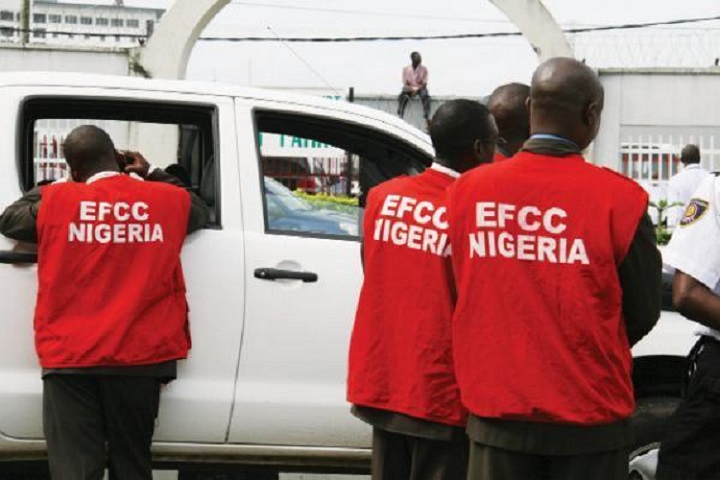
FOR 31 months, Kehinde Olumide Agbabiaka, a sales agent with Fidelity Bank Plc illicitly and intermittently diverted N137 million belonging to his client, the Economic and Financial Crime Commission (EFCC) has revealed.

Specifically, Agbabiaka committed the crime between January 2017 and July 2019, until his client (name witheld) decided to review his statement of account in reconciliation with his cash register and the fictitious deposit slips raised by the bank’s employee.

According to Ibadan Zonal Office of the EFCC, the suspect, who was the account officer attached to the customer, had been visiting the business premises of the victim weekly to collect cash with the understanding that he would remit same to his accounts domiciled in the bank’s Challenge, Ibadan branch.

However, rather than depositing the money, Agbabiaka, who already had been arrested by the anti-graft agency, at different times remitted only a portion and “on many occasions diverted the whole sum to personal use”.

A statement by the Commission,  explained that the accused was later arrested following a petition jointly written by the bank’s Regional Security Officer and the Cluster Control and Compliance Manager, regarding the incident.

“…it was alleged that the suspect suppressed, diverted and stole a total sum of N137,000,000 (One Hundred and Thirty-Seven Million Naira) from personal and corporate accounts of a customer in Ibadan.

“Filed on August 20, 2019, the petition alleged that Agbabiaka committed the offence between January 2017 and July 2019,” the statement read.

The EFCC further revealed that in order to cover his criminal acts, the accused had to issue ‘fictitious bank slips’ to deceive the customer that he truly deposited the sums.

It noted that everything appeared good until the account reconciliation and subsequent discovery of Agbabiaka’s fraudulent deeds, prompting the bank to put up the petition.

“So far, the EFCC investigators have established a prima facie case of diversion and stealing against the suspect.”

“Further investigations also revealed that he had used the suppressed sums to build houses, purchase cars, invest in fixed deposits and insurance policies,” the statement read.