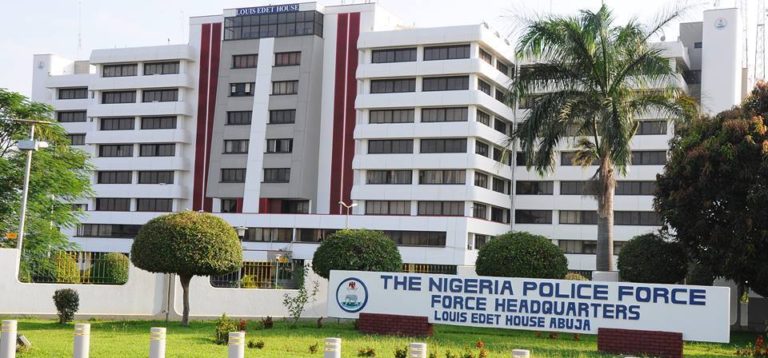
THE Federal Capital Territory (FCT), Police Command on Monday confirmed the release of Aishat Umar Ardo, daughter of Peoples Democratic Party (PDP) Chieftain, Umar Ardo who was kidnapped outside a popular mall around 7:45 pm on Kwame Nkrumah Crescent, Asokoro, Abuja.
Anjuguri Manzah, spokesperson for the FCT Police Command told The ICIR, the abducted girl was released but did not give details or circumstances that surrounded her release from her abductors.
Social Media report earlier claimed she was released after her father had paid $15, 000 in form of bitcoin to the kidnappers. “Alhamdulillah miss Aishat Umar Ardo has just been released after her father paid the $15,000 in bitcoin ransom,” the report stated. “She just called her dad to pick her up at 4th Avenue Gwarinpa.”
However, the police could not confirm the $15,000 claim.
“I don’t know about that,” says Manzah, adding: “All I can tell you is she has been released.”
She was among five persons including a lecturer with the Baze University, earlier kidnapped by abductors on Saturday.
The lecturer was later released on Saturday with assurances from the police command to fight criminalities in the territory.
“It is pertinent to inform the public that the Police have successfully rescued the Baze University lecturer, who was kidnapped on 8th September 2019,” FCT Police Command said in a statement Sunday evening.
In the statement issued by Manzah, the police reiterated its commitment to public safety, and urged Abuja residents to disregard social media claims on the upsurge of criminality in Abuja.
“The Command wants to reaffirm its commitment to the protect lives and property by deploying proactive security measures that will nip this crime in the board”.
Failed responsibilities
The ICIR had earlier reported increased cases of criminality in the territory, especially the trend of ‘one chance’ which has remained unabated.
For first-time visitors, the sight of Closed Circuit Television (CCTV) cameras on major roads suggests that Abuja, the seat of power, is well under tight security surveillance. But a second and closer look will reveal that the technology offers nothing more than physical presence — the cameras are not working.
The N76 billion National Public Security Communication System, mostly known as the CCTV project in Abuja is one of the failed measures meant to keep the territory more secure but laid in ruins.
Signed in 2010, an attempt was made to revive the failed project eight years after, but till date, the CCTV project which is meant to help in policing the territory has been vandalised with many of its components across the city carted away.
SEUN Onigbinde, Co-founder of BudgIT, has announced his resignation as the Technical Adviser to the Minister of State for Budget and National Planning.
Seun, after coming under criticisms for taking appointment under a government he once condemned, gave the update about his appointment in a medium post he shared on his official Twitter handle on Monday.
“Upon further reflections on the furore that has been generated by my new role as the Technical Adviser to the Minister of State for Budget and National Planning, I humbly resign the appointment,” he said.
Seun who is the director of BudgIT, a critical fiscal transparency group had been trending on social media since the revelation of his appointment at the Ministry.
Many popular Nigerians had criticised his appointment, describing him as an unprincipled opportunist, who only criticised the government in the past because it did not favour him.
Speaking on the appointment on Monday, Seun said his loyalty to the good cause of Nigeria compelled him to accept the call to provide technical skills going by the experience he has.
But he said the reason behind his resignation was to uphold the atmosphere of trust and integrity he has for himself.
“It is clear that recent media reports about my appointment have created a complex narrative, which I believe would engender an atmosphere of mistrust, as I planned to proceed.
The Budgit Co-founder appreciated the Minister of State, Budget and National Planning, Clem Ikanade Agba, for believing in his expertise.
Seun also extended his gratitude to people who sent their congratulations to him in a short period.
“I have also been humbled by the faith and belief that numerous persons have expressed in me,” he said.
He wished the President Muhammadu Buhari’s government “well”, adding that he would always extend his help to the Federal Government in his capacity as the Director of BudgIT.
“I have been to several agencies. I would also work to ensure that BudgIT continues to build civic awareness on the right of every Nigerian to know how public resources are managed,” said Seun.
FOR 31 months, Kehinde Olumide Agbabiaka, a sales agent with Fidelity Bank Plc illicitly and intermittently diverted N137 million belonging to his client, the Economic and Financial Crime Commission (EFCC) has revealed.
Specifically, Agbabiaka committed the crime between January 2017 and July 2019, until his client (name witheld) decided to review his statement of account in reconciliation with his cash register and the fictitious deposit slips raised by the bank’s employee.
According to Ibadan Zonal Office of the EFCC, the suspect, who was the account officer attached to the customer, had been visiting the business premises of the victim weekly to collect cash with the understanding that he would remit same to his accounts domiciled in the bank’s Challenge, Ibadan branch.
However, rather than depositing the money, Agbabiaka, who already had been arrested by the anti-graft agency, at different times remitted only a portion and “on many occasions diverted the whole sum to personal use”.
A statement by the Commission, explained that the accused was later arrested following a petition jointly written by the bank’s Regional Security Officer and the Cluster Control and Compliance Manager, regarding the incident.
“…it was alleged that the suspect suppressed, diverted and stole a total sum of N137,000,000 (One Hundred and Thirty-Seven Million Naira) from personal and corporate accounts of a customer in Ibadan.
“Filed on August 20, 2019, the petition alleged that Agbabiaka committed the offence between January 2017 and July 2019,” the statement read.
The EFCC further revealed that in order to cover his criminal acts, the accused had to issue ‘fictitious bank slips’ to deceive the customer that he truly deposited the sums.
It noted that everything appeared good until the account reconciliation and subsequent discovery of Agbabiaka’s fraudulent deeds, prompting the bank to put up the petition.
“So far, the EFCC investigators have established a prima facie case of diversion and stealing against the suspect.”
“Further investigations also revealed that he had used the suppressed sums to build houses, purchase cars, invest in fixed deposits and insurance policies,” the statement read.
THE decision of Oyeyemi Boboye, the Federal Road Safety Corps (FRSC) Corps Marshall, mandating the officers, especially new recruits, to compulsorily open monthly salary accounts with Safeline Microfinance Bank (MFB), a financial institution in which he has substantial interest, is causing serious anxiety among officers of the agency.
For years, The ICIR gathered that Boboye, until this investigation commenced, had perfected a system whereby each time new recruits are employed, while in training camp, they are given account opening forms of a micro finance bank and are subsequently issued account numbers days before their graduation.
Safeline MFB Standing Order distributed to the new recruits while on Camp on January 2019
While in camp, a document titled “Standing Order”, which is actually a bank opening form, was distributed to 4,650 new officers nationwide by the FRSC officials. The new recruits have just been posted after the training.
They all had their training at FRSC Academies in three locations: Enugu, Jos and Kontagora in Niger State.
The recruits were not given any other banking option or allowed to use existing bank accounts.
But, Safeline (RC 760000), unlike the conventional commercial banks has limited branches of operation, thus making withdrawal frustrating for the new officers after they were posted across the country.
Investigations by The ICIR have however unearthed the reason why Oyeyemi is particularly interested in feathering the nest of this particular micro finance bank.
Alas! it was discovered that he, indeed, has more than a passing interest in the bank as, contrary to government regulations, he is a serving director on the institution.
Originally registered as a limited liability company in 2008 with Central Bank of Nigeria’s (CBN) final approval given in February 2010, it was discovered that the MFB with a share capital of 500,000,000 has six directors with Oyeyemi listed as number one. Other directors are Ibrahim Baba Gana, Shehu, Horo Emmanuel Gemache, Igbokwe Gilbert Ibebuka, Biu Dauda Alli and Emmanuel Ifeanyichukwu Charles. The shareholders of the bank include Apoch Oko Godwin, Olashore Olushola, Kumapaiyi Ayodele and Anafa B.D. It has since transformed into a Public Liability Company (PLC) with 1,005 shareholders contrary to over 3, 000 as claimed.
Oyeyemi’s actions directly conflict with provisions of the Nigerian Constitution. The Fifth Schedule of the 1999 Constitution, which deals with codes of conduct for public officials, states clearly in Part 1, Section 1 that “A public official shall not put himself in a position where his personal interest conflicts with his duties and responsibilities”.
Section 2 (B) states that a public official shall not “engage or participate in the management of any private business, profession or trade …” Business here, according to Section 318 (1) of the 1999 Constitution, is defined as “any profession, vocation, trade, or any other adventure or concern in the nature of trade excluding farming.”
Besides these constitutional infractions, no part of the FRSC Act (2007), authorises the Corp Marshall, or any other public official, to determine what bank where government employees should open their salary accounts.
“They just came one day and ask us to sit in the hall and account numbers were given to us and in the same manner, forms were also brought to us,” one of the affected newly recruited officers told The ICIR.
Asked if there was an official notice in that respect, the source explained, “…they already opened it on our behalf before telling us about it. And it was much later that they brought forms for us to fill….And all these were done while in training amidst threats and hostilities.”
Some of the old staff, it was gathered, had to manage for a period of six months and beyond “before they could access their salaries from the Safeline account”.
Meanwhile, a number of the aggrieved officers had earlier taken to the social media to anonymously vent their anger and displeasure on the development. They claimed it has become a trend for years until the newly recruited officers frowned at the matter and expressed concerns.
A 2010 report also claimed the MFB was established for the FRSCas part of efforts to create assets for the commission but findings through the government database revealed contrary.
“The peak of these corrupt practices by the corps marshal is the compulsory opening of salary account with a microfinance bank called “Safeline” owned by Boboye Oyeyemi and his fellow top-ranking FRSC senior officers,” an officer alleged.
“A bank with meagre capital base, no working ATM card, no known branch, aside from the only existing one in Abuja. This act of regimental robbery and several others gives one reason to wonder why a man saddled with the responsibility of moving an organisation forward will decide to run it aground by subjecting the staffs to untold hardship and enrich his pocket.”
Other affected staffs were reluctant to share their concerns due to the fear of losing their jobs if caught.
FRSC makes sudden U-turn
On August 2, the Commission in a directive with reference number FRSC/HQ/OPS/94/VOL.XIII/054 acknowledged the new recruits were paid allowances via the Safeline Bank. But it went further to lift the restriction, permitting the new staff to either continue with the MFB or provide an alternative bank account. There should be a handwritten letter of “intention,” the letter stated.
FRSC Directive to the Officers on Safeline MFB
The concerned officers further accused the commission of extortion through its top officers while in the camp in January 2019, stressing that they were charged frivolous amounts for basic necessities such as name tags, oath forms among others.
On training allowances, the new staff complained that officers of other paramilitary agencies were paid higher sums than what they received, insisting that they ought to be paid both training allowances and salaries for the six months used on camp.
“The set that was employed before us, they started receiving salaries in the 4th month of their training that lasted for six months. But in our case, we were paid N20, 000 per month and the money was paid in two tranches.”
“The first N59, 000 was paid in the last week of the training while the second was paid weeks after we left camp. N1, 000 was removed from the money as charges for standing order on both occasions. In all, we were paid N118,000 for the whole training”.
Another problem is that the officials allege that those who left Safeline to open salary accounts with other banks have been victimised as they receive their monthly pay nearly four weeks into the next month.
“Those whose still run account with Safeline receive their salaries on 3rd of the next month, while those who resolved to use other banks get theirs on 25th of the next months.”
FRSC reacts
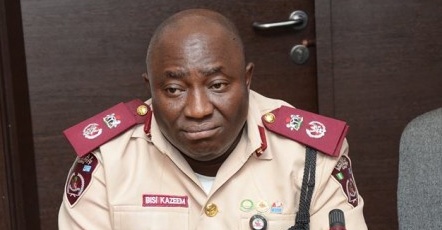
Bisi Kazeem Photo Credit: The Eagle Online
Bisi Kazeem, the spokesperson for the commission denied the claims. “There is nothing like that. We have created a rejoinder in many places. The rejoinder is available,” says Kazeem. “Google it online, you will see it,” and he terminated the call with a promise to call back.
The ICIR searched online but there was no rejoinder from the commission as claimed. The reporter later shared his findings with Kazeem on how Boboye is a Director in Safeline MFB but he simply described the report as “False News”.
Eight minutes after, he sent another text message affirming his position, “Go and do further research. He is not.”
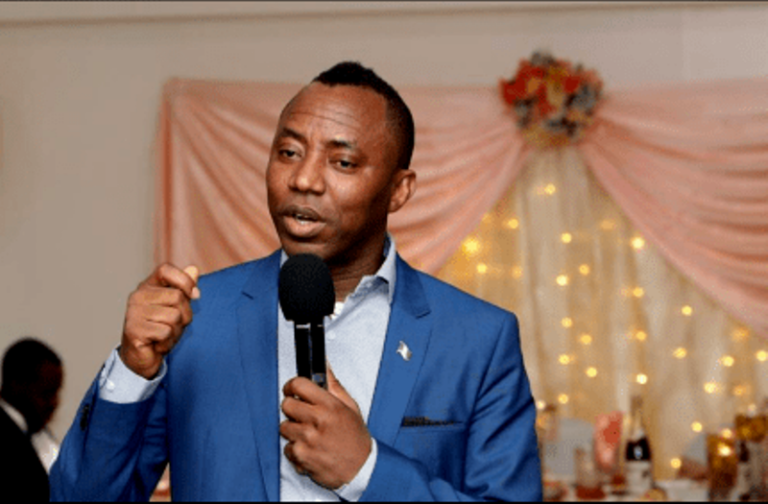
OMOYELE Sowore, founder of Sahara Reporters and 2019 presidential candidate of the African Action Congress (AAC), has filed a fresh bail application to the Federal High Court, Abuja, asking to be released from detention.
He was arrested at about 11 pm on August 2 by operatives of the Department of State Services (DSS) for calling for a revolution and “threatening public safety, peaceful co-existence and social harmony in the country”.
Relying on a provision of the Terrorism (Prevention) Amendment Act 2013, the Federal High Court in Abuja had, five days later, granted the DSS permission to keep him in detention without trial for 45 days. Sowore’s application to upturn this, in August, was not ruled upon by the court.
Sowore’s latest application, filed by Falana & Falana’s Chambers, is seeking bail on self-recognisance (with the condition being only a personal assurance of appearing for trial) or “upon any condition the court may reasonably deem to impose in the circumstance of the case”.
The motion, a copy of which was obtained by The ICIR, noted that Sowore’s arrest was made without a warrant and argued that even someone detained under the anti-terrorism law can be admitted to bail.
It submitted that Sowore is entitled to bail since he has cooperated with the DSS and the government agency has “concluded investigation of this case and announced its findings”.
“The Applicant had also volunteered a statement to the Respondent since the 7th and 8th August,” it further stated.
“The persons, who participated in the protests of 5th August 2019 were charged with unlawful assembly at the Magistrate Courts at Ebute-Metta, Lagos State, Oshogbo in Osun State, Calabar, and Lagos State.
“The arraigned persons were all promptly released on bail upon arraignment.”
The motion also stated that Sowore has never been charged with any criminal office is entitled to rights of fair hearing, dignity of human person, liberty, health and freedom of movement as guaranteed by law.
KAYODE Fayemi, Governor of Ekiti State has directed the state Police Commissioner, Amba Asuquo, to urgently commence an investigation that would identify the culprits behind the killings of the two students of the Federal University of Oye Ekiti (FUOYE) during a protest.
Fayemi gave the directive in a statement he released through the official Twitter account of the state government Sunday evening.
“I have directed the State Commissioner of Police to urgently commence an investigation into the circumstances that led to the unfortunate shooting incident with a view to identifying possible culprits within and outside the Force,” he ordered.
In the meantime, before the conclusion of the investigation, Fayemi suggested to the police authorities to explore the use of non-lethal rubber bullets in managing public protests.
Fayemi who is also the Chairman of the Nigerian Governors Forum, said the Forum would take the suggestion up at the highest levels in government.
“Taken together with the ongoing investigation by the university management, we will consider the need for an independent panel of inquiry, if necessary once these fact-finding investigations are concluded,” he said.
Two students of the university — Oluwaseyi Kehinde and Joseph Okonofua had died when protest by their colleagues poor power supply at Ikole and Oye, the two host communities of the university turned violent.
An unnamed eyewitness had said that the violence that led to the shooting and deaths of the two students broke out when a confrontation ensued between the aggrieved students and the security operatives accompanying the wife of the governor of Ekiti State, Erelu Bisi Fayemi, who was on a tour across the 16 local governments in the state.
But in the statement, Fayemi exonerated his wife, stating that she and her convoy were victims of the incident.
“I note the initial public statement by the university authorities and its Students Union body. We welcome the conclusion that neither the wife of the governor nor any government official directed the shootings.
“Indeed it is obvious that the wife of the governor and those on her entourage are victims of this unfortunate incident,” Fayemi said.
The governor noted that in no circumstances would the government have directed that deadly force be used on any of the citizens freely expressing their right to protest.
“Having heard from all parties to the incident, it is pertinent that I now personally convey my deeply felt sorrow for the loss of two promising young lives and for those who suffered injuries. I have in the last few days agonised over the incident that took place at FUOYE on Tuesday, September 10, 2019.
“Any death is a tragedy. Any shooting arising from legitimate protests diminishes our fledgling democratic dispensation and calls to question, our commitment to fundamental human rights,” he said.
Fayemi outlined the other actions taken by the government in the matter to include the visitation of the high-level delegates to the families of the deceased.
“This will not be a one-off intervention,” he vouched for his support to the relatives of the deceased students.
The governor also promised that the students who were injured as a result of the violence would also be given support saying “…their hospital expenses will be defrayed by government,” he said.
Fayemi said the issue that led to the protest has been the subject of intense disagreement and negotiations with Benin Electricity Distribution Company (BEDC) since he resumed the governorship office.
“Only last week, my Commissioner for Infrastructure and Public Utilities was still in Benin to see BEDC management on the matter of inadequate and inconsistent supply of electricity in Ekiti State.
“Though governors do not have any control over privatised power distribution companies, the four governors from the states covered by the Benin DISCO have consistently expressed dissatisfaction with the services of BEDC and taken the matter up with the Vice President who chairs the Privatisation Council.
“In addition to this, I have been talking to the Rural Electrification Agency about including FUOYE in the next round of their University Electrification Project,” he said.
THE Ekiti State Police Command has warned the National Association of Nigerian Students (NANS), against its planned mass action scheduled for this week in reaction to the killing of two students of the Federal University, Oye-Ekiti (FUOYE).
NANS had on Saturday announced its relocation to Ado-Ekiti “in mourning the departed comrades and seeking justice on their behalf”.
In the statement signed by its National Secretary, Farouk Umar, the association directed affiliate unions “to mobilise in solidarity with the oppressed students” of FUOYE.
It’s also planned visits to the victims’ families as well as many stakeholders including the state Commissioner of Police and the State Director of SSS. The students’ umbrella body hinted that its members will also be demonstrating and submitting a protest letter to the Ekiti State Government.
The state’s Police Command, however, through a statement signed by Caleb Ikechukwu, its Public Relations Officer, and released on Sunday, warned against any plan to “ferment [sic.] and precipitate trouble” or break law and order in the state.
“The Ekiti State Police Command through intelligence gathering have been reliably informed that some group of person(s) who tag themself ex-graduates who are not currently students of any Higher Institution of Learning in Ekiti State are presently moving into Ekiti State with the sole aim of fermenting and precipitating trouble, and also to incite peace-loving Youth and People of Ekiti State,” Ikechukwu said.
“However, the Police Command is using this medium to warn anyone or group of person(s) against any unlawful assembly with an intent to cause breach of peace.
“The Police Command have the constitutional mandate to maintain law and order and also to stop or advice any gathering which it thinks might break law and order,” it added.
The command said it “shall deal decisively with anyone” who takes law into their hands. Such individual, it said, will be arrested and prosecuted “no matter how highly placed”.
“The police Command would want to advise that their [sic.] are channels and procedure for addressing issues,” the statement concluded.
Barely four days after The ICIR reported how residents of Dada and other communities in Ilorin, Kwara State, live in perpetual fear of an epidemic outbreak owing to poor sanitation, governor of the state, Abdulrahman Abdulrasak, has set up a committee to undertake a comprehensive assessment of environmental issues in the state.
The reportrevealed how the residents engage in indiscriminate dumping of refuse and open defecation due to the failure of the state government to provide waste disposal options in public spaces.
“We have also set up a committee in place headed by Justice Raliat Elelu to look at the issue top down on environment and once they submit their report things will start changing.
“If you drive through our major roads, you will see rubbish all over the places. But give us time, all these will be a thing of the past,” a statement on the official website of Kwara State government quoted the governor as saying.
The 15-member committee chaired by a former Chief Judge of Kwara State, Justice Raliat Elelu, is to look into environmental issues such as unlawful dumping of waste and other violations that hurt public planning and endanger public health, the Chief Press Secretary to the governor, Rafiu Ajakaye, who issue the statement explained.
Replying to a text message sent to him by this reporter, Ajakaye confirmed the new development and further reiterated his principal’s commitment to change the narratives in the state.
“Yes it is correct. The panel has been inaugurated on Monday and is chaired by retired Justice Raliat Elelu,” he said.
“Work is currently ongoing at the Ministry of Environment to clear refuse that litter the metropolis and other communities.”
Ajakaye, however, said he was in transit and would only be abreast with new developments of the panel once he returned to the state capital, Ilorin.
His words: “I heard of a similar story about a week ago before I travelled, I don’t know the stage they are now (referring to the committee) until I get back to Ilorin,” he said.
“All I know is that there is an ongoing effort to clear the communities. The picture I saw in the story is a big dump site which will take concerted efforts to clear because definitely it has to be addressed.”
DEMOCRACY is freedom; freedom to exist and to exercise the full catalogue of natural rights. The quality of democracy in an ordered system is assessed by the quantity and level of freedom the citizens enjoy.
Any type of government – military, fascist or totalitarian – can deliver services of material nature to its citizens; building hospitals, schools, roads and providing other social amenities. But not all types of government can allow citizens be citizens — not subjects or minions. This is where democracy stands out.
The office of the citizen is a critical one in a real democracy as legitimacy resides with the people, and they accord it to whichever government that deserves it.
Also, the government exists because of the people. When citizens live in fear and are wary of raising their voice against the establishment, democracy is in manacles.
Joseph Stalin was a brutal Soviet dictator. Though he transformed the defunct USSR from an agrarian state to an industrial hub and even strengthened the military might of the country, making it a rival superpower to the US; he is most remembered for being an executioner and violator.
People will remember more how you treated them than what you did for them. It is true that the late Sani Abacha, through the Petroleum Trust Fund, invested in building roads and other infrastructure across the country, but today, the memory of him is that of sorrow, tears and blood.
When citizens in their homes are abducted in the dead of night and thrown into the pits of silence by security agencies for raising their voice and for doing their bounden duty of holding the government to account, totalitarianism reigns.
Boss Mustapha, secretary to the government of the federation, said last Thursday that “there cannot be real democracy without the freedom of the press’’. But I doubt if he understood the weight of his statement, considering how the actions of the administration he serves run antithetical to this aphorism.
No one is spared. Journalists are hounded and intimidated. Activists are pursued and imprisoned. Citizens are threatened and attacked.
Omoyele Sowore, publisher of Saharareporters, was abducted by the DSS and sectioned in a hovel. Locked up and shut out without justification.
The secret police say he “planned to violently overthrow the government through a protest; he planned to join forces with the Shiite group to bring down the government; he planned to mislead the public to overthrow the government, and that he formed an alliance with Nnamdi Kanu to launch attacks on Nigeria and topple the government”.
It is enervating that we are at this curve. It is now the norm for security agencies to arrest citizens and rustle-up farcical charges to keep them silenced. “Threat to national security” is the defence, however vacuous, for this violation.
No matter how long it takes, some Nigerians will not glide by until Sowore is released unconditionally.
Ohimai Amaize (Mr Fix Nigeria), anchor and creator of Kakaaki Social; a popular, novel programme on AIT now suspended, had to flee the country after potent threats to his life by agents of the state for only doing his job. He now lives in exile.
Abubakar Idris, better known as Dadiyata, was abducted in his home by men suspected to be security agents, and since this incident, there has been no word of his whereabouts.
But why is the Buhari administration dutiful in making political prisoners and exiles?
Former President Jonathan, with all his flaws, did not keep a single political prisoner. This was despite the insults and defamation he suffered from even the likes of Nasir el-Rufai, who today is highly sensitive to criticism and brooks no opposition.
Why is the government resolute in creating fear and breaking citizens to become mutes – if they cannot be its mouthpiece?
Why does the government harass and arrest journalists, activists, citizens, but pardon, and beg bandits with monetary inducements? Is violence the only pidgin the government understands?
History is unkind to ‘’strong men’’. If the strong man in Aso Villa cares; he should glean some lessons from the ashes of other strong men long gone.
THE Economic and Financial Crimes Commission (EFCC), Sokoto Zonal Office, says it has arrested Abdullahi Sa’idu, the Director-General of Sokoto Marshall Agency, over alleged diversion of workers salaries to the tune of N10 million.
A statement issued by EFCC spokesman, Wilson Uwujaren, said the director-general was arrested alongside the agency’s accountant, Bashar Dodo-Iya, on September 13.
The statement said that the arrest was as a result of a petition jointly signed and presented to the Commission by 39 workers of the agency, alleging that their three months salaries were being withheld without any reason.
“They further alleged that the suspects refused to pay their salaries and diverted the money for their personal use, and all efforts made to get their salaries paid, proved abortive.
“However, a preliminary investigation revealed that the two conspired and diverted about N10 million funds meant for the Marshalls’ salaries,” it said.
It added that the suspects would be charged to court as soon as investigations were concluded.