Home Blog Page 2299

Hong Kong finally bows to public outcry, withdraws controversial extradition bill

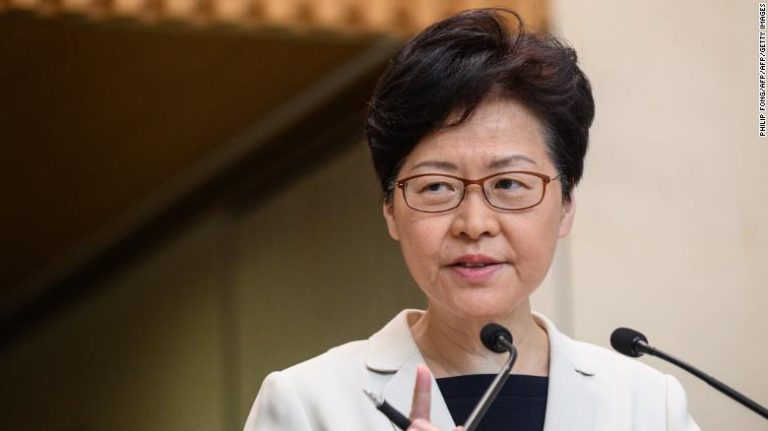
FINALLY, Hong Kong’s chief executive, Carrie Lam, has announced the full withdrawal of a controversial bill that, if passed, would allow the extradition of fugitives to mainland China.

The bill sparked three months of continuous protest in the special administrative region. It was suspended in June “to maintain law and order”, but this move did not satisfy the pro-democracy protesters who insisted on its complete shelving among four other demands.

Lam said in a video statement released on Wednesday evening, “The government will formally withdraw the bill in order to fully allay public concerns.”

“We must find ways to address the discontent in society and look for solutions. After more than two months of social unrest, it is obvious to many that this discontentment extends far beyond the bill,” she added.

“Let’s replace conflicts with conversations and let’s look for solutions.”

The chief executive did not, however, concede to other requests from the residents, such as having an independent inquiry into allegations of police brutality, no longer addressing the protest as riots, the release of those arrested as a result of the protests, and the implementation of universal suffrage in Hong Kong.

She said all investigations will rather be conducted by the Independent Police Complaints Council (IPCC), to which two new members have been appointed: a former IPCC judge and former education bureau chief.

The group behind the protest, Civil Human Rights Front, said over 1 million people participated in the protest (nearly one-seventh of the city’s population), which started in June. Hong Kong police’s estimate, however, is 240,000.

Joshua Wong, one of the pro-democracy figures earlier arrested in August, following the latest announcement described it as “too little and too late”.

“Carrie Lam’s response comes after 7 lives sacrificed, more than 1,200 protestors arrested, in which many are mistreated in police station,” he tweeted on Wednesday.

“The intensified police brutality in the previous weeks have left an irreversible scar to the entire HK society. And therefore, at this very moment, when Carrie Lam announced withdrawal, people would not believe it is a ‘sincere’ move.

“We urge the world too to alert this tactic and not to be deceived by HK and Beijing Govt. They have conceded nothing in fact, and a full-scale clampdown is on the way.

“In short, Carrie Lam’s repeated failure in understanding the situation has made this announcement completely out of touch – She needs to address to ALL Five Demands: STOP PROSECUTION, STOP CALLING US RIOTERS, INDEPENDENT INQUIRY OF POLICE and FREE ELECTION!”

OPINION: Like Buhari, I love cartoons!

0

By BOLA Bolawole


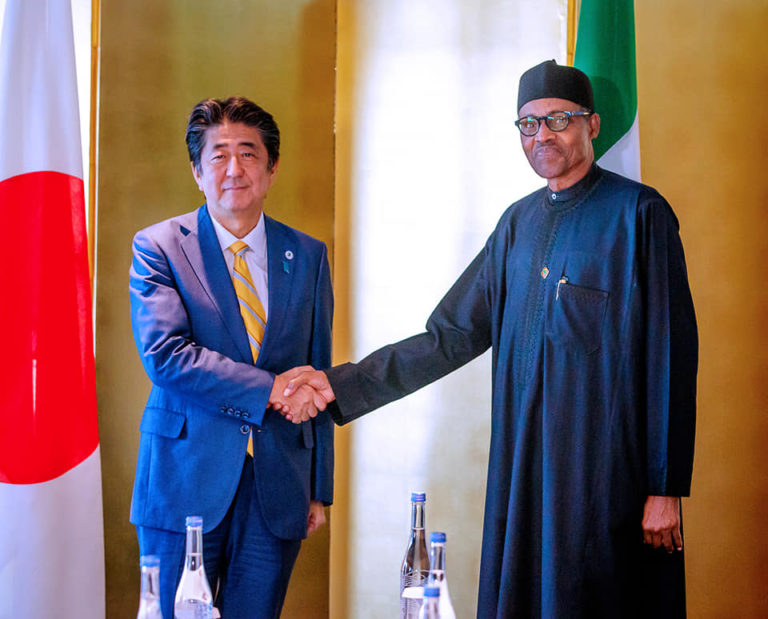
RENO Omokri, one of the most virulent and partisan – even if forthright – critics of President Muhammadu Buhari, his administration and party, the All Progressives Congress (APC), took the president to the cleaners on his just-concluded trip to Japan (“A tale of Buhari, Nana Akufo-Addo and Toyota).

That is vintage Omokri – expectedly (and justifiably?) so. Reno was one of ex-President Goodluck Jonathan’s aides; in fact one of his spin-doctors and social media gurus. He has, since Jonathan’s exit in 2015, proved an unrepentant and incorrigible defender of the ex-president, his administration, and party.

Reno has not jumped ship like many others, defecting or crossing the carpet from PDP to APC to enjoy the now famous, even if notorious, soft-landing, a euphemism for an escape from EFCC persecution. It is obvious Reno is not one of those desiring an “invite” – as social media language has now corrupted the word – to “come and eat” on Buhari and APC’s table.

“Come and eat” was how the late Chief Sunday Afolabi, an Obasanjo Minister, described the ministerial invitation to his former boss, ex-governor of old Oyo State, Chief Bola Ige (later assassinated as sitting Minister of Justice and Federal A-G). We thank God that of all the issues with Buhari – cluelessness, incompetence, indifference, diffidence, colourless, lifeless, ruination of the economy, destruction of the nation itself, playing King Nero, nepotism, sectionalism, religious fundamentalism, name it – he has not added wilful assassination of political opponents.

So we do not yet have to cast suspicious glances over our shoulders to see whether or not a Sergeant Rogers Jabilla is trailing. Except for the irritants called DSS and EFCC, critics are still free to go, as they say. So we can still enjoy the vibrant, virile, and delectable community of critics who light up our spirit and give us hope of a better (post-Buhari/APC) tomorrow.  But I digress!

It interests me to hear from Reno that I have something in common with Mr. President: That Buhari reads newspapers – well, not newspapers, really, but cartoons! That is something! Many would wager a bet he never – or ever can – read anything, including memos brought before him but that, at best, aides summarise everything in a few words and then brief him about the decisions arrived at and actions taken.

And Mr. President – Yes, Mr. President! – would simply nod and say with a voice full of gratitude, “tooo mad’Allah!” and continue to mind his own business! Many of the cartoons Buhari reads are critical of him –that he does not call for the head of the “errant” cartoonists is very instructive. Remember: Cartoons critical of Muhammed has lead to terrorist attacks in France and elsewhere.

I think Buhari once joked that his nose is not as long as the cartoons portray it! Compare this with the fact that mere criticism of some State governors has landed some journalists in jail; there is one journalist who is being charged with treason right now just for being critical of a governor! Petulant tyrants! Impetuous tin-gods!

Imagine if such pig-headed local champions were President/Commander-in-Chief! I remember a story about Gen. Raji Rasaki – of the “who build this gada (bridge)” fame! – that Dele Oguntayo told me: As Lagos State governor, Rasaki’s press secretary had come with “prayers” – that is what request for money is called in official, bureaucratic parlance – to take care of “press boys”.

Rasaki jocularly quipped: Ki lo n pressi? Apo re lo n pressi! Ojojumo l’ori n tobi t’ese n tirin ninu paper”; meaning, “What are you pressing; it is your pocket you are pressing. It is every day they cartoon me in the papers with big head and tiny legs” How many of our so-called democratic leaders will laugh off such as inanities?

I, too, read cartoons. Yes, I not only read cartoons, I really, really love cartoons; especially cartoons that are political and didactic. Without mentioning names, I dare to say that some of the most profound political commentators and critics of our time have been cartoonists.

It is not love for cartoons that has made Buhari the flop that he is; the reasons for his abject performance are glaring for all to see, many of which Reno brilliantly highlighted in his piece under review. I love cartoons that make me laugh. These days, you must laugh to kill sorrow that daily mounts in Buhari/APC’s Nigeria.

I feel sad and cheated when cartoons are repeated. I mark out silly errors on cartoons. It pains that few editors pay good attention to their cartoon pages. I start to read my newspaper from the back page – after having taken a glance at the front page. I read the columnist, then the Sports pages. I love Sports, especially foreign sports.

Sadly, local sports have lost its allure. It is evidence of how the generally-pervasive decadence has spread to all hitherto vibrant sectors of our national life. I read obituaries – religiously. That may surprise many. In fact, I study and analyse the wordings on obituaries.

If you devote some time to obituaries, you will marvel at the advancement our people have made in communicating with the dead. It is like the dead are listening to, reading and hearing what their loved ones and those they have left behind have to say about them. I imagine what my own children and other loved ones will say of me when my own time is up.

I calculate the age of the departed and wonder at what age I, too, will depart this plane. I consider what killed who and who and wish such would not be my portion. I shudder when parents announce the death or paste the obituary of their children and say “Lord, I reject this in Jesus mighty name.”

In my many years of reading obituary pages, I have not come across one where expletives were poured on the departed or where their evil deeds were brought into remembrance. “Say no evil of the dead” rules the waves on obituary pages.

Here, William Shakespeare is turned on his head: The evil that men do, do not live after them but are interred with their bones; only the good is remembered and adumbrated. Being the deeply religious people that we are, we leave judgment unto Baba God, as they say.

I also love reading foreign news. This could not have been otherwise since I was a foreign affairs correspondent and travelled far and wide, meeting with foreign dignitaries like Nelson Mandela, Oliver Tambo, Sam Nujoma, Nicephore Soglo, Gnassingbe Eyadema, POLISARIO president Abdulaziz, Gaddaffi’s number two, Major Jalloud, to mention but a few.

I feel cheated anytime adverts take over any of the pages mentioned above – even though I can understand why. These are some of the pages where newspapers still manage to be different these days. The news pages are practically the same. Once you have read the news in a newspaper, you can take it for granted that you have read the news in all the other newspapers. I was aghast years back when I learnt that press secretaries write the news, together with headlines, for correspondents – and that is how the silly thing will come out the next day! No urge to be different. Critical angles are neglected.

Industry is lost. It was not like that during my days – but I must hasten to add that mine was the analogue age, today is the digital! But I wonder if they do not understand that, this way, they are killing the newspaper, making it irrelevant day after day.

Reno, thanks! As far as cartoons go, I should henceforth be able to exchange notes with Buhari through my brother, Femi Adesina or my brother, Louis Odion, if issues to be discussed are technical in nature! Despite my unyielding criticism of Buhari, Femi has not failed, not even once, to respond to my SMS. I know this is grace.

Michael Awe, a better friend of Femi, has not been that lucky. I thank Reno also for his lucid expose, as usual, on Buhari’s jamboree to Japan where the “Oyinbos” preferred small Ghana to giant Nigeria, making no pretence of the fact that Nigeria, under Buhari – just like it was under vile dictator Sani Abacha – has once again relapsed into a pariah in the comity of nations. They say once bitten, twice shy: How many times will Nigeria get bitten before it learns a lesson?


Bolawale can be reached through: turnpot@gmail.com,  0807 552 5533      

JUST IN: One dead, police vehicle burnt as Nigerians commence picketing of South African investments

An unidentified man has been allegedly shot dead by the police in Lekki, Lagos State as Nigerians, particularly in Lagos, Oyo and Akwa Ibom  states, have started picketing South African investments across the country.

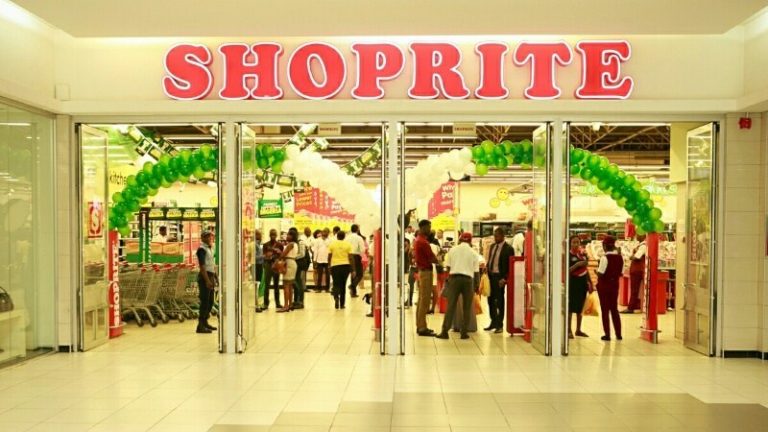
The incident which involved a casualty occurred around Shoprite outlet in Jakande Bus Stop, one of the highbrow locations in the state.

Some of the aggrieved Nigerians were seen with placards condemning attacks on the Nigerian citizens in South Africa.

Others were seen in a viral video destroying goods in Shoprite. The angry mobs also set ablaze an MTN office in the affected locations.

One of the Shoprite stores in Lagos was almost set on fire but for police intervention.

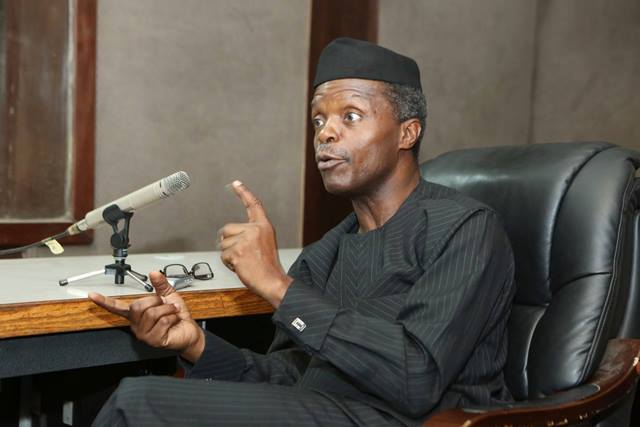
Cyril Ramaphosa, the South African President and Nigeria’s Vice President, Yemi Osinbajo have both reacted to the xenophobic attacks against Nigerians, and other foreign nationals describing it as condemnable.

While Ramaphosa called for an immediate stop to the attacks, President Muhammadu Buhari, today sent a Nigerian delegation to South Africa on the xenophobic incident.

The delegates are expected to arrive Pretoria on Thursday.

Bobby Monroe, the South African envoy in Nigeria has however denied the attack stressing that it was targeted at the Nigerian citizens.

Here are video shreds of evidence of the attacks on business interests of South Africa in Nigeria:


FACT CHECK: Two recently shared pictures, video are not from fresh xenophobic attacks

XENOPHOBIC attacks in South Africa have become more prominent, particularly in the past one week, with many foreign nationals killed, threatened, and their shops looted or set ablaze. 

Citizens of Nigeria and other African countries have been the major victims of this trend, which has been connected to concerns over job security for South Africans.

Series of recent mob attacks that took place between Sunday and Monday led to the death of three people and the burning of about 50 businesses owned by foreign nationals, thereafter spurring protest from Nigerians on social media.

Several videos and photos have been shared online purportedly showing burnt bodies and shops as a result of the latest attacks.

Checks by The ICIR, however, revealed that some of the pictures and videos are not linked to any xenophobic attacks or are from events that took place in other countries, while others are from old incidents dated back to 2008 in South Africa.

Victims of Tanzanian tank explosion, not xenophobia

On Tuesday, a Twitter user identified as @Shwinie shared a picture of burnt bodies, numbering more than 20, scattered on the floor.

However, a reverse image search indicates that the photo is not in any way related to the xenophobic attacks.

It appeared in a report of a fuel tanker explosion that occurred in Morogoro city of Tanzania on August 8, 2019. The explosion, according to the report, had resulted in the death of 68 people trying to collect spilled fuel.

Jungle justice in Johannesburg

Also, a video was shared by many social media users on different platforms including, Youtube and Twitter which displayed a man being burnt alive. The Youtube video shared by See n Talk had gotten 3,750 views. A similar tweet by IU Wakili had received 90,700 views and was shared 895 times at the time of writing this report.

https://twitter.com/IU_Wakili/status/1168777314957692928?s=20

But, the same video appeared in a report of an alleged robber set ablaze in Johannesburg, South Africa, in January 2019.

The report published by a popular South African paper, Times Live, on January 15 noted that the man in the video was assaulted by a mob after allegedly robbing a woman of her handbag in Hillbrow of Johannesburg. This clearly shows the video as not a xenophobic attack.

Eleven-year-old attack

Similarly, in a popular tweet shared over 1,200 times and liked by more than 2,300 users at the time of writing, two pictures were shared showing a man who had caught fire and the second of a burning warehouse.

A Twitter user with the name, Zero Chills who shared the two pictures wrote: “We are all trying to make a dollar $$ to feed our families and take our children to school, STOP KILLING US and torching our business.”

https://twitter.com/nyaikae/status/1168762236543938560?s=20

Though the first photo of the burnt man was related to a xenophobic attack, it is actually an eleven-year-old incident as it first appeared in a report published in June 2008. The photo was included in the report of the U.S-based Boston Globe Media.

The photo’s caption as indicated in the 2008 report read thus: “South African policemen attend to Mozambican immigrant Ernesto Alfabeto Nhamuave who was set on fire in Reiger Park during xenophobic clashes that shook the whole of Johannesburg on May 18, 2008. Nhamuave, a 35-year-old father of three, later died of his injuries, his body returned to Mozambique to be buried”.

Killing of Nigerians in South Africa unacceptable─ Osinbajo

The Nigerian government has said that the killing of Nigerians in South Africa during recent xenophobic attacks in the country, was “absolutely unacceptable”.

Speaking via his Tweeter handle, Vice President Yemi Osinbajo lamented that the lives and livelihoods of Nigerians living in South Africa were destroyed  despite the nation’s sacrifice in dismantling apartheid in the country.

Osinbajo made this declaration in a video posted on his verified Twitter handle on Tuesday.

“We will take this up with the authorities in South Africa in to ensure that this sort of thing does not repeat itself,” he said.

“It is absolutely unacceptable.

“It is sad and very unfortunate that the lives and livelihoods of Nigerians living in South Africa, are once again being destroyed with such wantonness carelessness and recklessness,” he added.

The Vice President added that the South Africans’ actions are a negation of the sacrifices made by the founding fathers of the nation.

He described them as “acts of bigotry” antagonising the “very ideals that all the great South African leaders including what Cyril Ramaphosa, present president fought for, and for which many gave their lives”.

Osinbajo reiterated that Abuja would take the issue up seriously with the the South African government to ensure that attacks are stopped.

“We will take all actions necessary for the protection of our citizens everywhere in the world,” he said.

The Vice President assured that the Federal Government was currently in consultation with the South African government on the urgent need to put in place measures to end those acts of violence against Nigerians.

South African government had denied that the attacks were xenophobic.

South Africa’s High Commissioner to Nigeria, Bobby Monroe, said when he was summoned by the Federal Government on Tuesday that it was only “Sporadic act of violence”, and the attacks were not targeted at Nigerians.

ICPC seeks court order for forfeiture of filling station, warehouse from NDDC director

0

THE Independent Corrupt Practices and Other Related Offences Commission (ICPC) on Tuesday asked for an interim forfeiture of a petrol station and a warehouse belonging to a director in the Niger Delta Development Commission (NDDC), Solomon Okpa Ita.

The commission, in an ex-parte motion filed before the Federal high Court IN abuja, accused Ita of acquiring the properties, including an event centre located in Calabar, the Cross River State capital, with corrupt proceeds.

This was contained in a press statement released by the commission on Tuesdaay and signed by its spokesperson, Rasheedat okoduwa.

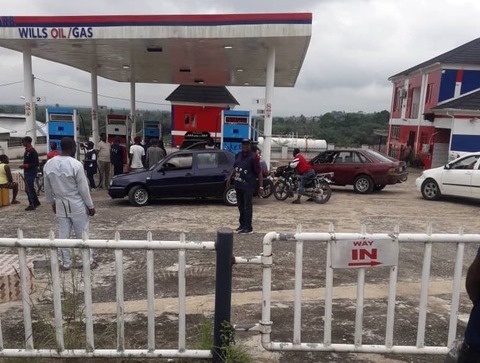
“Coming through Section 6 (6) (a) of the 1999 Constitution of the Federal Republic of Nigeria, as amended, ICPC prayed the court to grant an order of interim forfeiture for Agare Wills Petroleum/ Gas Station Ltd, and Agare Wills Event Centre and Warehouse, all located on Parliamentary Extension Expressway, Calabar,” the statement said.

The commission disclosed that the director could not show evidence that the properties were obtained with his legitimate earnings.

It said the director was accused of using Non-Governmental Organisations (NGO) as fronts to embezzle government money, which could have been used to acquire the properties under contention.

“Investigation revealed that Solomon Ita, in one instance, facilitated the payment of N20 million into the account of one of the NGOs which was then transferred to the Zenith bank account of a third party.

“The third party, while acting on instructions from the Director was said to have transferred the same amount to one Ita Williams Okpa, for onward handing over to the director,” ICPC said.

It said another illegal transaction of N45 million was made through the same channel for his personal use.

According to the release, besides being accused of using shell NGOs to siphon funds from his employer, Ita was fully involved in the running of his private businesses while still a director with NDDC.

The ICPC further said it was seeking the order of interim forfeiture of the properties to stop the director from using them to fund activities that may make the country unstable and ungovernable.

“The final stock in the filling station at the point of seizure by ICPC has been sold off and proceeds remitted to the ICPC Recovery Account in CBN,” it said.

ANALYSIS: If India, Germany, others fail to buy crude oil from Nigeria, economic collapse is sure

0

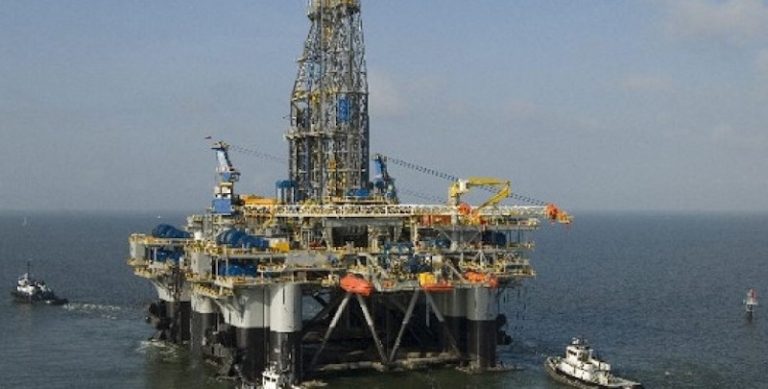
IN January 2019, Nigeria lost one of its biggest oil trading partners, the United States,  when Washington stopped buying crude oil from the country. This singular act by the US pushed crude oil from Nigeria out of its markets.

This was after it lifted its 40-year ban on crude oil exports. Nigeria’s economy would be hanging in the balance, if not at a precarious situation, if the country’s top crude oil buyers follow suit.

Data obtained from the Observatory of Economic Complexity (OEC), an international trade database tool that portrays visual narrative about countries and the products they exchange, revealed that from 2008 to 2018, Nigeria earned $544.68 billion from oil exports to its major trading partners.

Nigeria’s top crude oil buyers for the period under review included the US, spending $151 billion, closely followed by India with $96 billion. Brazil was in third place with $52 billion, Spain at $49 billion, South Africa spent $34 billion, the Netherlands and France both spent $33 billion each.

In 2011, there was a spike in crude oil sales from Nigeria which could be attributed to global cuts in oil supply by OPEC countries making the US, India and Brazil double their demand from Nigeria.

The African giant realised $80.2 billion from crude oil sales that year. The highest amount raked in from crude oil exports by Nigeria for the period under review.

However, the boom in crude oil exports in 2011 was short-lived, as crude export sales fell to $71.6 billion in 2012 due to a drop in the sale of crude to the US by 44.5 per cent.

Though India, the Netherlands, Spain and the United Kingdom increased their crude oil demands from Nigeria, it did not increase the country’s oil revenues compared to the previous year.

India overtook the US in 2013 to become Nigeria’s biggest export destination for its crude oil prompted by a shift in crude demand by the US which turned its attention to shale production making Nigeria suffer a 43.2 per cent drop in crude sales.

In a 2019 report, titled “Nigeria Economic Outlook” released by PricewaterhouseCoopers (PWC), it was stated that fluctuating prices of crude oil in the global market with stagnating demands would leave Nigeria’s oil-driven economy vulnerable to external shocks.

“With the Organisation of Petroleum Exporting Countries (OPEC) lowering Nigeria’s crude oil production level to 1.685 million barrels per day with hopes of raising the prices. We expect this cut coupled with fluctuations in oil price and potential supply disruptions to impact Nigeria’s 2019 budget implementation,” the report states.

Consequently, the report noted that increased failure of OPEC members to comply with the production cuts agreement and increasing global shale production could pose a threat to the Nigerian oil-dependent economy because of the likelihood of lower crude oil prices in the global oil market which might be prolonged.

Records showed that key countries that were major export destinations for crude oil from Nigeria namely Germany, the US and Brazil had lowered their demand significantly.

Between 2013 and 2017, Brazil reduced its purchase of Nigeria’s crude by 94.9 per cent from $8.3 billion crude purchase to $425 million, while Nigeria saw a 78.3 per cent reduction in sales to Germany from $5 billion to $1.1 billion between 2012 – 2016.

Also, the US has virtually stopped the importation of crude oil from Nigeria with the U.S oil exports rising at 260,000 barrels per day in June to a monthly record of 3.16 million barrels per day.

The six-year drop in crude oil sales which started in 2011 continued in 2016, as Nigeria raked in $22 billion, signifying a 31.8 per cent drop in sales compared to the $32.2 billion made in 2015.

From 2015 – 2018, Nigeria’s top six crude oil buyers included India at $31.2 billion, Spain with spending at $15.2 billion, the US with at number three with $14.6 billion, South Africa spent $12.3 billion, the Netherlands bought  $10.5 billion worth of crude oil and France is at number six with $10.3 billion.

Between 2011 and 2014, the top six buyers are the US sitting in first place with $57.7 billion, India spent $50.9 billion, Brazil is at $32 billion, Spain spent $25.1 billion, Germany $18.7 billion and the Netherlands at $17.7 billion.

Analysis by The ICIR reveals that for Nigeria to maintain a high oil income and become fiscally viable,  traditional stronghold countries for oil exports namely Brazil, Germany, Spain, India and the Netherlands must remain its top buyers and increase their purchase by 40 per cent.

However, the widening fiscal deficit of the federal budget, which has risen to a decade high of N3.8
trillion in 2017 from N2.2 trillion in 2016 indicates danger for the Nigerian economy if oil remains the mainstay of the economy.

A PWC projection for 2019 hints that oil revenues for the country would under-perform the 2019 budget by 27 per cent which would be prompted by a shortfall in oil supply. This means the fiscal deficit would likely increase by 79 per cent to N4.55 trillion with debt service to revenue earnings expanding higher than the projected 31 per cent in the budget.

There was only sporadic act of violence, no xenophobic attacks in South Africa — High Commissioner

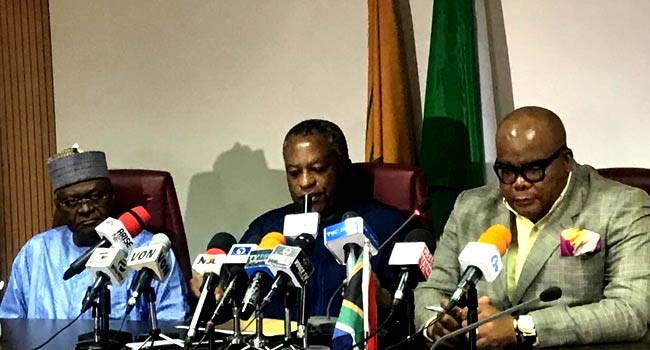
BOBBY Monroe, South Africa’s High Commissioner to Nigeria, on Tuesday  says there was only “Sporadic act of violence” in his country and not Xenophobic attacks on Nigerians as reported in the media.

Monroe who was summoned by the Federal Government to explain why Nigerians in South Africa have become targets of Xenophobic attacks said the attacks were not targeted at Nigerians in his country.

Answering questions from Nigeria’s Minister of Foreign Affairs, Geoffery Onyeama, the South Africa’s High Commissioner to Nigeria maintained that businesses belonging to the South Africans were also affected in the violence.

However, Onyeama disclosed that Nigeria would no longer accept such re-occurrence from the South African government.

During the meeting, the Foreign Affairs Minister called for compensation of Nigerians due to losses suffered during the attack.

He also announced a proposal to the South African envoy for both military outfits of the two countries to meet over the reoccurring concerns.

“We feel that as Nigerian government, definite measure have to be taken to stop once and for all this act of aggression and criminality against Nigerians in South Africa. I invited the head of mission in South Africa today….the South African government has issued a statement, arrests have been made but for us, going forward, we are determined that we should not have any recurrence of this going forward,” says Onyeama.

He added that “We must put in place adequate measures to ensure this does not occur. We have made very concrete measures to South Africa today and we believe that if those measures are implemented, we have a very good chance of ensuring that this does not occur.”

“There has to be accountability and responsibility for compensating that have suffered loss and we are going to absolutely push for that. I’ll not go into details.”

“The South African and Nigerian forces can have an arrangement where there would be cooperation on the ground in South Africa to arrest such events of occurrences and this is something we will have to work out details with South African government to address the challenges posed by these attacks at the ground level. We have put that forward. We hope the South African government will support us.”

The Minister had on Monday condemned the attack on Nigerians which was widely reported by the media.

Abike Dabiri-Erewa, Chairman of Nigerians in Diaspora Commission also criticised actions of the South African protesters against Nigerians and other foreigners in the country.

She sought for better engagement and urgent intervention of the African Union (AU).

Buhari sends delegates to Ramaphosa

Meanwhile,  President Muhammadu Buhari has sent a special envoy to the South Africa President, Cyril Ramaphosa, to express his disappointment on the attacks on Nigerians.

According to a statement issued by Femi Adesina, the President’s Special Adviser on Media and Publicity, the Nigerian delegate would arrive in Pretoria on Thursday.

Though, identify of the delegate was kept hidden, Buhari expressed concerns about the “reported attacks on Nigerian citizens and property in South Africa since August 29, 2019.”

“The President had instructed the Minister of Foreign Affairs, Geoffrey Onyeama, to summon the South African High Commissioner to Nigeria and get a brief on the situation; express Nigeria’s displeasure over the treatment of her citizens; and assurance of the safety of their lives and property,” Adesina stated in the document.

I inherited N14b pension debt, but I’m paying N1.09b— Gombe Governor

0


THE Governor of Gombe State, Muhammad Yahaya, on Tuesday says he inherited N14billion pension liability from the past administration in the state but he has approved the sum of N1.097 billion to commence payment of outstanding gratuities for eligible state retirees under the civil service.

The governor disclosed this in a statement issued by his Senior Special Assistant on Media and Publicity, Ismaila Uba Misilli,  that the payment was to cover 504 eligible state retirees since 2014.

“The amount of N1,097,968,035 is to cover payment to 504 eligible state retirees, with 50 percent approved for immediate payment to the beneficiaries,” he said.


READ ALSO:

Yahaya said payment of the gratuity for local government retirees will be endorsed after verification by the committee while stating the governor’s resolve, to taking out the accumulation of gratuity and pension arrears owed retirees for the past eight years.

On his official Twitter handle, @GovernorInuwa, he said the approved money was part of the N14billion backlog of pension and gratuity arrears he inherited.

“…This is part of the 14 billion naira backlog of pension and gratuity arrears I inherited. This would have been different if the previous govt had utilized Gombe’s resources judiciously. I intend to clear those backlogs. The one for local governments’ workers will also follow”  Yahaya wrote on Twitter.

Yahaya said his government would encourage reward for hard work, while he called on civil servants to rededicate themselves for effectual service delivery.

“After serving our state with honor, our retirees deserve a dignified retirement life…”


ICPC moves to recover N840m from ex-president of Customary Court of Appeal

THE Independent Corrupt Practices and Other Related Offences Commission (ICPC) has requested a Federal High Court, Abuja, to order the interim forfeiture of N840 million traced to a retired President of the Benue State Customary Court of Appeal, Margaret Igbeta.

The Commission, in an ex-parte motion filed at the court, said that the order would stop  Igbeta from accessing the money alleged to have been obtained through fraudulent activities in the course of her official duties.

A statement by Rasheedat Okoduwa, Spokesperson for the Commission said the request for the interim forfeiture is pursuant to Section 48 (1), (2) and (3) (a) and (b) of the Corrupt Practices and Other Related Offences Act, 2000 and Section 6 (6)(a) of the 1999 Constitution of the Federal Republic of Nigeria, as amended.

The retired resident of the Customary Court of Appeal was accused of operating a proxy fixed deposit account in the name of her maid, one Theodora Atsu, with Ecobank Plc, where she accumulated N870, 321, 492.15 between 2008 and 2019.

She was said to have opened the account with her passport and the name of Atsu on March 5, 2008, with an initial deposit of N8 million.

Igbeta subsequently made several other huge deposits including N123, 745, 925.57 and N5 million, in the months of March and May, 2008.

It was also noted by the Commission that the money was far above her legitimate earnings both as a judge and President of the Customary Court of Appeal within the period that the account was operated and would have used to meet the infrastructural needs of the citizens and development of the nation.

ICPC therefore prayed the court to grant the order in the interest of the nation.