Home Blog Page 2317

UI students query varsity management over fees paid for items not provided

0

By Yusuf AKINPELU

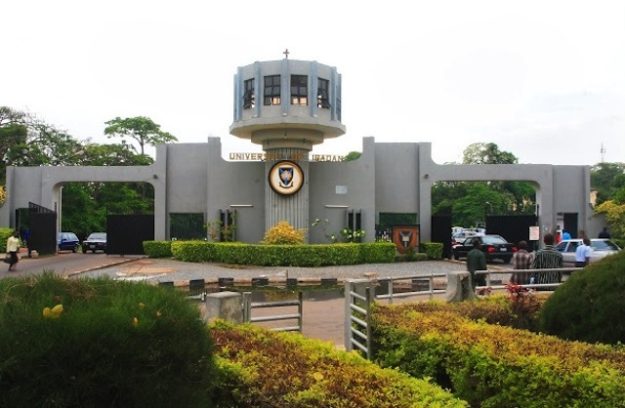
THERE is a growing disquiet among students of the University of Ibadan over a number of fees they pay for items that were not provided, The ICIR can report.

The concerns raised by the students stem from the items that have always appeared on the breakdown of their school fees but have not always been provided by the university authorities.

The students who spoke anonymously for fear of being persecuted said undergraduates are made to pay  Student Union Government fee, despite that the Union has been proscribed by the university since  2017.

Although they said the school’s Vice-Chancellor, Abel Idowu Olayinka, directed that the money should be refunded, the students told our correspondent they didn’t get a refund.  And the following session, students were still compelled to pay SUG fee.

Another item students of the University Ibadan pay for is Faculty Prospectus, charged at ₦500. Graduates of the University confirmed they yearly pay for the booklet but not every student obtained a copy throughout their years in the college. Some students only got the prospectus only once or twice throughout their years.

Hassan Sanni, a former faculty president while an undergraduate, said he didn’t get the prospectus in his years at the university.

But he said, in a private chat with his faculty’s Dean last session, there was a plan to have an updated prospectus, which will contain a new syllabus for the faculty and would be distributed to students.

A sample of receipt to students of the University of Ibadan showing items they paid for but never given.
Photo Credit: Yusuf AKINPELU

“It was not ready till I graduated,” he said. “Because they collected money for it, they [the university managemet] should have provided it before students graduate.”

Tomisin Odunmbaku, a 2016 graduate of Statistics, when asked if he ever got a copy of the prospectus, said, ‘“Not even once”.

“We were not even given the student ID cards in our final year.”

Students every session are charged  ₦1, 350 for an identity card, but the university does not provide one until last year after the 2017 student protest. Nobody accounted for the I.D card levies collected in the years past.
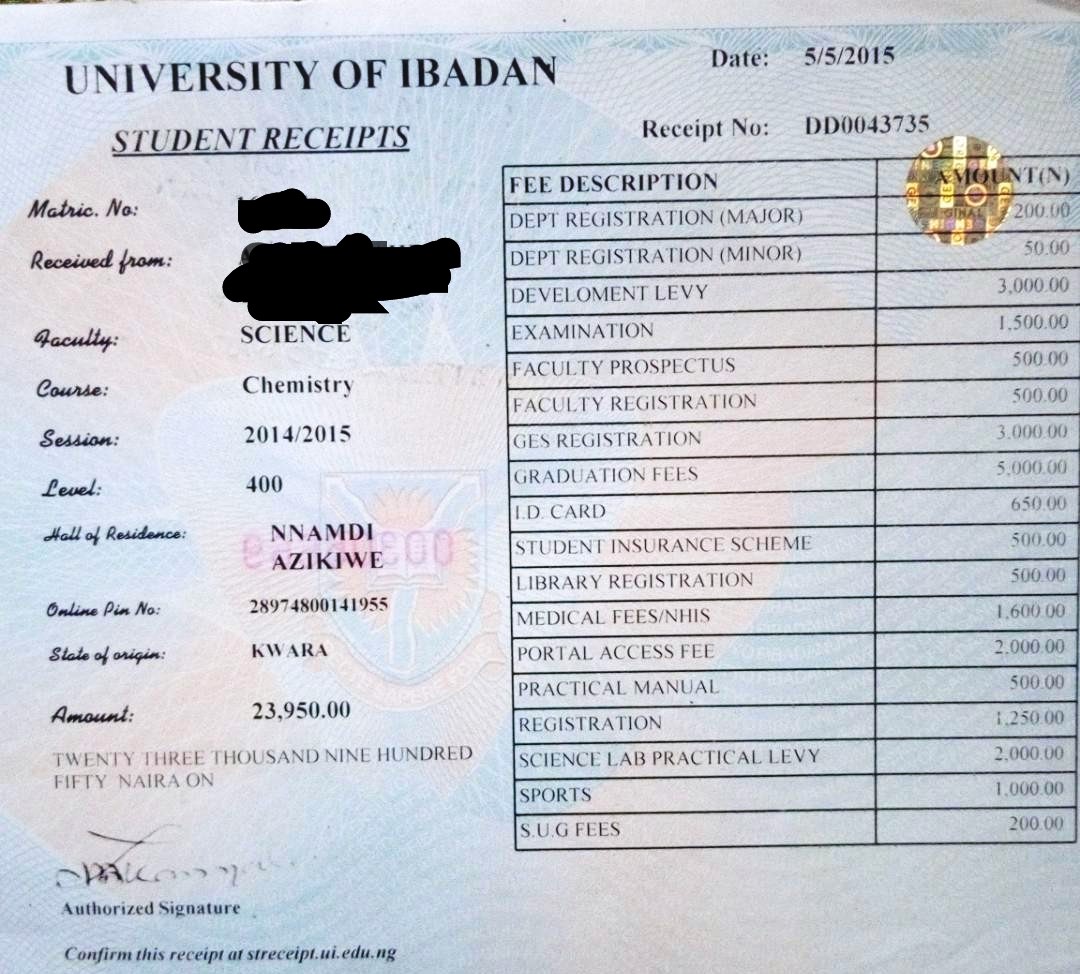
Another receipt from 2015 academic session showing those items, Photo Credit: Yusuf AKINPELU

A 300-level engineering student told The ICIR that the students were compelled to pay for I.D again in the 2018-2019 session, despite the fact there was no new identity card given to them.

He also criticised the management for collecting ₦1, 000 for Chemistry Practical Manual every session, whereas the manual was only given once when they were freshers.

His colleagues also confirmed that the less than 10-page manual was only given to students in their first year, though they are paid to pay for it every session.

More Concerns

At the start of the 2018-2019 session, the University introduced  a new fee called Technology Fee, pegged at ₦6, 500. And the notification of the increase was so short that students complained bitterly.

“The notification for the imposition of the fee was quite short. A lot of students, including me, did not know about the technology fee until we resumed for this new session. In fact, I had to call home to send me additional money so as to pay my technology fee,” a student told The ICIR.

When the campus press, AFAS Press, asked the Vice-Chancellor the rationale for the increase, the VC said, it was to “provide fast, reliable and robust internet services to students.”

This is how he responded to the question of the student journalists:

“The University is opening up internet access to students on campus (to a capped volume per student per semester/session). As such there is an on-going investment on additional network infrastructure/ bandwidth.

“The bandwidth is projected to be increased in the first instance from the present 475 to 775 Mbps. It is worth mentioning that the bandwidth increase will be dedicated to the new student network.

“The bandwidth cost will grow from N64 million to about N100 million. This is excluding other required network infrastructural upgrades. I do hope this clarification helps in providing justification for the Technology Fee.”

But it’s two months into the academic calendar, the students said they are yet to see any improvement in the school’s internet service system.

“We are yet to hear of anything about it (technology fee),” Ojedele, a student  said, adding, “Except we’d be given our Wi-Fi passwords tomorrow.”

He wondered how the leadership of the university can be trusted in the future when they fail to keep a simple promise.

Other students are uncertain of what purpose the technology fee will serve. Is it for internet services, as claimed in some quarters, or for portal maintenance, as others claimed?

“They said it is for portal maintenance. What are they maintaining?” a sophomore from the Faculty of Education queried.

“With the ₦6, 500, we should have access to the internet whenever we want to use it. We paid ₦6, 500, yet we can’t even access anything.  It’s extortion. They are just extorting us,” she lamented.

Due to the difficulty in accessing the internet, some tech-savvy students have resorted to using passwords assigned to staff.

According to The Higher Education (THE) World University Ranking, University of Ibadan has a full-time student population of 25, 416. It also said undergraduate and postgraduate students are in the ratio 50:50. It, therefore, means that the undergraduate population estimate of the university stands at 12, 708 students. When the number of the undergraduates is multiplied with the technology fee of N6,500, it amounts to ₦82, 602, 000 per session.

No one is extorting anyone —University’s reaction

Speaking on the school’s plan on the utilisation of the technology fee, Tunji Oladejo, the university’s spokesperson, says “no one is extorting anyone.” He rather insisted that the ivory tower is underfunded.

But he declined to make further comment. “I am always misrepresented by the press. So, I may not pick your call anymore,” he said and hung up later. Also, messages sent to the Vice-Chancellor were not responded to.

Problem of poor funding
Public record shows that all federal universities in Nigeria are underfunded.  In recent years, allocation to the education sector has ranged from five to seven percent of total budget. The 2019 figure stands at 7.05 percent of the total budget.

According to the Office of the Accountant General of the Federation, from 2011 to 2018, a combined total of ₦101,694,545,436 was accrued to the University of Ibadan. Of this amount, ₦2,025,051,401 (less than 2 percent) was released to the university. And the university spent only ₦769,485,563  out of the amount released (38 percent).

Muhammad Abba, a Gombe-based educationalist said institutions must work out ways with some bodies through grants and others to attract adequate funding. He said institutions must be innovative in seeking more funding. “Universities are primarily research-based institutions meant at solving problems,” Abba said.

On her part,  Victoria Ibiwoye, the Director of OneAfricanChild Foundation for Creative Learning, also noted that institutions must use creative means to drive the education system forward. She, nonetheless, placed the major responsibility on the government.

“Government are duty bearers as far as funding education is concerned, but they can’t do it alone,” Ibiwoye said. “So, they need to create a friendly environment for partnerships with stakeholders like CSOs, local and international NGOs working in the education space. Even when the resources are available to these CSOs, if the environment is not conducive, they will be forced to take the aid elsewhere.”
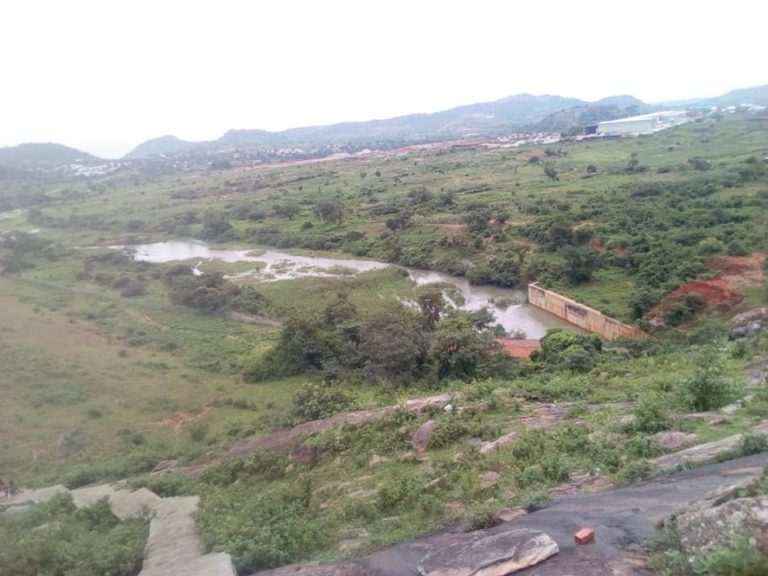
Prepare for floods, FEMA warns Kubwa, Kuje residents

THE FCT Emergency Management Agency has advised the residents of Kubwa, Gwagwa-Karimo, Kuje, Airport Road and Gwagwalada to be wary of possible flooding.

The Director-General of FEMA, Alhaji Abbas Idriss, in a statement made available through their official Facebook page @fctemergencymanagement  said that torrential rainfall had increased the water level at the Usuma Dam and spilled into the Usuma River Channel.

“This is to notify the general public that due to the recent torrential rainfall there has been an increase in the water level of the Lower Usuma Dam making the Dam to spill into the Usuma River Channel. People leaving along the Usuma Dam channel will experience an increase in the volume of water along the River Channels.
Areas mostly to be affected are; Kubwa, Gwagwa-Karimo, Kuje, Airport Road and Gwagwalada,” the statement read.

Based on the above, Idriss advised residents of the above settlements to be wary of possible flooding and  should also observe the following simple precautions:

“They should observe simple precautions because not all floods are alike. Some develop slowly, sometimes over a period of days. But flash floods can develop quickly, sometimes in just a minute and without any visible signs of rain.”

He, therefore, enjoined communities to listen to the radio or television for information concerning the flood situation.

“Always be aware that there could be possible flooding. If there is any possibility of that in your area, move immediately to higher ground. Do not wait for instructions to move.”

He also urged the residents of Kubwa and Kuje to be aware of streams, drainage channels, and other areas prone to sudden flood.

Idriss said that flash floods could occur in those areas with or without such typical warnings.

The director-general also cautioned residents against walking through moving water, adding that six inches of moving water could make people fall.

“Do not drive into flooded areas. If floodwaters rise around your car, abandon the car and move to higher ground if you can do so safely.

“If you do not do that, you and the vehicle can be quickly swept away. After your escape, look for a safe environment, call FEMA RESCUE TEAM on 112 Toll-Free Emergency Number for prompt
response,” the statement said.

It will be recalled that Nigeria Hydrological Services Agency (NIHSA) a few days ago alerted Nigerians of more flooding, appealing the 36 states to prepare for the upcoming flooding as the Rivers Benue and Niger keeps rising.

Similarly, a story by The ICIR in May confirmed that most drainages in Abuja were clogged with a mass of wastes, causing water to find unplanned paths to pass.

“Once you block the natural path where water can pass, what it would result to is flooding,” said John Harry, National Secretary of the Nigerian Environmental Society.


EFCC: Ambode dissociates self from alleged N9.9bn fraud

FORMER Governor of Lagos State, Akinwunmi Ambode, on Friday refuted claims that his account was frozen by the Economic and Financial Crimes Commission (EFCC).

Ambode, in a statement, through his media aide Habib Aruna, disclosed that the said accounts reportedly frozen by the federal high court belonged to the Lagos state government and was not associated with him.

“Those accounts were opened in the course of normal operations by the Lagos State Government for its administrative purposes and not for the former governor’s personal transactions as was being wrongly insinuated and have been operated to ensure smooth operations of government activities by previous and present administrations,” the statement said.

On Tuesday, the federal high court, sitting in Ikoyi, Lagos had ordered the freezing of the sum of N9.9bn belonging to the Lagos State Government.

Justice Chuka Obiozor, the presiding judge gave the order, to freeze the accounts following an ex-parte application filed by the Economic and Financial Crimes Commission, EFCC.

However, the statement reads, “The former governor was not and will never be involved in any unauthorized use of government property and resources”.

He said he won’t confront the EFCC because there was no communication between him and the antigraft agency.  However, he emphasized that his family and loved ones did not deserve the “unwarranted attacks on his well-earned reputation”.

The EFCC had traced N9,927,714,443.29 from the state accounts into an FCMB bank account opened on September 17, 2018, during the administration of the immediate past governor of the state, Akinwunmi Ambode, and operated by Adewale Adesanya.

Adesanya is the Permanent Secretary in the Office of the Chief of Staff to the former governor, Ambode.

The antigraft agency disclosed that Adesanya and other signatories to the account made a fraudulent transfer from the accounts of the Lagos State Government and dispersed the funds kept in the said accounts.

INEC sacks Cross River REC for declaring governorship ambition at office premises

THE Independent National Electoral Commission (INEC) has sacked its Resident Electoral Commissioner (REC) of Cross River State, Frankland Briyai, on the ground of breaching the code of conduct while declaring his political ambition.

Briyai who was the electoral commission boss at Cross River State had declared on Thursday, August 8, his ambition to contest in the upcoming Bayelsa state governorship election, prior to the announcement of his resignation. The gubernatorial poll would be conducted by INEC on November 16.

While at the commission’s office in Calabar, he declared that he would contest the election under the platform of the All Progressives Congress (APC).

After Briyai made his position known to journalists at his office on Thursday, he announced his resignation from INEC job.

However,  a statement signed by Festus Okoye chairman of information and voter education committee for INEC claimed that the Commission was yet to receive Briyai’s resignation letter.

“Although this was done at the commission’s Cross River State office in Calabar, the commission is yet to receive any communication on this from Briyai.

“Section 306(2) of the constitution of the Federal Republic of Nigeria states that the resignation of such appointment takes effect on receipt of the letter of resignation by the appointing authority – in this case, the President,” the statement read in part.

INEC also frowned at the use of the commission’s premises and facilities for his political pursuit.

It described Briyai act as “unlawful and contrary to the Code of Conduct subscribed to by all INEC officials”.

As a result of not tendering an official letter to relay his resignation, the electoral umpire, thereby, sacked him from his duties, withdrawing all powers delegated to him. It directed the Administrative Secretary of the State office to oversee the office and take over the functions and duties of the REC until further notice.

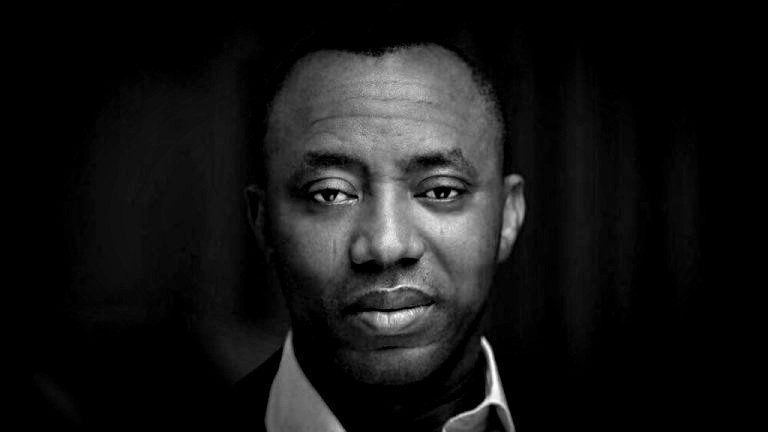
Sowore, DSS and language of ‘revolution’

By Theophilus ABBAH

AT the centre of Department of State Security (DSS’) arrest of Mr. Omowole Sowore at the weekend over the protest #RevolutionNow is the meaning of the noun ‘Revolution.’ Erudite spokesman of DSS, Peter Afunanya, justified the security agency’s ‘preventive measure’ by not just defining ‘revolution,’ but provided extended meaning of the word to include: “… threats of sabotage, threats of subversion, threat of terrorism and, of course, ethnic agitations, separatist agitations, economic sabotage and others.” On the legacy and social media, there is rancorous debate on two issues: the meaning of the word ‘revolution’ and the propriety of Sowore’s arrest and detention by SSS.

This intervention is meant to provide linguistics insight that could illuminate our understanding of the face-off between the State and the Coalition for Revolution (CORE). There are two dictionary definitions of revolution. One is historical and the other is figurative. The Cambridge Dictionary provides the historical definition as “change in the way a country is governed, usually to a different political system and often using violence or war.” The dictionary accompanied this definition with a typical example, thus “The French Revolution changed France from a monarchy to a republic.

The country seems to be heading towards revolution.” The concept of revolution is tied to the 18th and 19th Century European ideology of ‘propaganda of deed,’ which gave birth to the French Revolution, and later Marxism. It is, therefore, understandable if, to Europeans, revolution is seen as equivalent of terror. In fact, the French Revolution was at a point unashamedly called the Reign of Terror. It is this atmosphere that comes to mind when we agree with the DSS that Sowore and his cohorts were a danger to the Nigerian State.

Looking at the use of the word from a different perspective, it is necessary to invoke the linguistics concept of ‘Felicity Condition.’ The concept is widely discussed in the field of Pragmatics, which deals with the critical study of words, signs and symbols. Felicity Condition simply means, for a statement to be considered as being capable of performing an action, such word or statement must meet certain [contextual] conditions. For instance, if a messenger in an officer threatens to issue a written query to his manager, it is clear that it is an empty threat because he does not have the authority to do so. But if, in reverse, a manager threatens to issue a cleaner a query, we know that threat is genuine; we may begin to plead with the manager to temper justice with mercy because the manager has the authority to query the cleaner.

In line with the above, the natural question is, ‘does Sowore and his cohort have the capacity to violently overthrow Buhari’s government?’ Perhaps, the DSS needs to investigate and provide ample evidence that when CORE threatened #RevolutionNow, they have amassed lethal weapons, militia groups, and other ingredients of insurrection which all combined are capable of displacing Buhari for Aso Rock Presidential Villa. As at now, what the DSS has done successfully is to invoke the Terrorism (Prevention) Act 2013. In this Act, the word that is close to the offence Sowore is accused of is “incitement.” In the Act, “incites” and “incitements” are mentioned six times. The one that may be relevant in this case is found in a section that defines the word “support” for a terrorist act. Subsection 2 (a) talks about: “incitement to commit a terrorist act through the internet, or any electronic means or through the use of printed materials or through the dissemination of terrorist information,” as punishable under the act.  However, to successfully invoke this section of the law, the DSS would have to prove the ‘act of terror’ in #RevolutionNow movement.

For those who line up behind Sowore, there is a linguistic escape route for their use of the word ‘revolution.’ It is in what is called figurative language use, and umbrella concept for allusion, metaphor, symbolism, personification, synecdoche, hyperbole (exaggeration), pun, and even simile. If we say, ‘the cleaner has been fired,’ do we mean the cleaner has been cast into fire? If we say ‘the cleaner sermonized his innocence to the manager,’ does that mean the cleaner had become a bishop? Also, if we say ‘the soup transported me to heaven,’ do we mean the soup has become a carrier which has the capacity of tearing through outer space into heaven?

In its second definition of revolution, the Cambridge Dictionary provides its figurative meaning, as different from its literal meaning. It says, “big change or improvement in the way that something works or looks, or in the way that people do a particular activity:” Among the examples the dictionary writers used to illustrate this figurative use of ‘revolution,’ includes, “This biomedical revolution includes procedures and strategies in therapy, diagnosis, and prevention of diseases.” When the dictionary talks about ‘biomedical revolution,’ it does not mean there was a violent overthrow of the regime in order to diagnose or prevent diseases. Here, revolution is used to describe the remarkable change that biomedical discoveries have brought into the treatment of diseases.

My instinct tells me that Sowore and his elements in CORE used the expression ‘#RevolutionNow’ as a ‘clickbait’ or catch-phrase for the planned protest in order to attract national attention. And this may be an act of indiscretion on their part. However, there is need for a huge paradigm shift in the way this country is governed at the moment. Both online and offline, Nigerians are tramautised by palpable fear as killings in various shades seem to have come to stay. There is evidence that security operatives have come to their wits end. They now leave everything to their natural course, including the killings, expecting a divine intervention to halt the mayhem at some point along the line. Nigerians would be very glad if the DSS can prevent many of the criminal acts tagged on criminal Fulani herders, just the way they have halted #RevolutionNow protest.
Dr. Theophilus ABBAH,  a journalist, writer, researcher, and trainer, lives in Abuja.

Gun violence: Amnesty International issues travel warning to US tourists  

United States Office of the Amnesty International, a global right movement on Friday issued a travel warning to intending tourists to the US, asking them to remain cautious due to the prevailing gun violence in the country.

The rights group said the warning became vital as the increasing gun violence amounts to human right crisis.

According to Ernest Coverson, Campaign Manager for the End Gun Violence Campaign at Amnesty International USA, the caution is to also replicate the United States Department of State’s travel advice for U.S. travelers to other nations.

“Travellers to the United States should remain cautious that the country does not adequately protect people’s right to be safe, regardless of who they might be. People in the United States cannot reasonably expect to be free from harm – a guarantee of not being shot is impossible,” says Coverson. “Once again, it is chillingly clear that the U.S. government is unwilling to ensure protection against gun violence.”

Gun violence in the US is reported to cost the American economy at least $229 billion every year while eight children and teens are shot daily unintentionally by family fire.

The worrying statistics also revealed that 310 people are shot daily in the US.

Report by the Voice of America (VOA) also put the number of mass killings only in 2019 at 19 deaths.

In total, 31 people died at the recent gun incident which happened in El Paso, Texas and Dayton in Ohio, US.

However, the AI explained that the issued travel advisory is meant to address growing gun violence, mostly hate crimes, including racism and discrimination in the US.

It noted that the traveler’s race, country of origin, ethnic background, sexual orientation or gender identity may place them at higher risk after recent attacks linked to white supremacist ideology.

The group noted that by prioritising gun ownership over basic human rights, it accused the U.S. government of willfully and systematically failing on multiple levels, thus ignoring its international obligations to protect people’s rights and safety.

“The action called attention to the extent to which all aspects of life in the United States have been compromised in some way by unfettered access to guns, without comprehensive and uniform regulation of their acquisition and use.

“Amnesty International has been calling for common-sense reform regarding the use and possession of firearms, including comprehensive background checks, national regulations for registering and licensing firearms, required training, a ban on high capacity magazines/assault weapons, and mandatory safe-storage laws.

“Amnesty International USA’s campaign to end gun violence has focused efforts on passing S.42., the Assault Weapons ban, and the Disarm Hate Act,” it stated.

The global human rights organisation, last month published a report to examine how gun violence survivors in the US suffer years of trauma and pain “due to a destructive combination of government policies” which allegedly ignore peoples’ needs.

25 years after, S’Court affirms PUNCH N25m judgement against DSS

AFTER twenty-five years, the Supreme Court has affirmed N25m damages against the Department of State Services (DSS) for the unlawful invasion and sealing off of Punch Nigeria Limited’s office in Lagos in 1994.

In a report published by The PUNCH, the judgment was a sequel to a fundamental rights enforcement suit; the newspaper had filed against the DSS and four others.

The other four included the attorney general of the federation, the inspector-general of police, the commissioner of police, Lagos and the Chief of Army Staff.

The suit was filed by the late Gani Fawehinmi (SAN) at the federal high court, Lagos on July 29, 1994, in favour of the newspaper company.

The court also awarded a separate N100,000 to the then Editor of The PUNCH, Bola Bolawale for his unlawful detention by the security agents.

The court upheld the newspaper’s plea, that the “invasion, search without warrant, sealing off, seizure and/or occupation of its business premises at No.1 Kudeti Street, Onipetesi, Ikeja, Lagos State and the consequent stoppage of the newspaper’s lawful business by the respondents, were a gross violation of the newspaper’s fundamental rights”.

The Supreme Court’s history of the case noted that Punch had obtained an order of the federal high court, Lagos, directing the security agents to produce, Bolawale, the then editor in court on June 20, 1994.

This, however, was after the invasion of the newspaper, but the security agencies ignored the order.

Consequently, the counsel from the Attorney General of the Federation’s (AGF) office wrote to the court praying the case, be adjourned.

The application for adjournment was opposed by Fawahinmi but was overruled, as the court eventually adjourned the hearing till June 28, 1994.

At the resumption of the proceedings, both the AGF and security agencies were absent with no representative at the court.

At their absence, Fawehinmi went on to argue the suit, which resulted in the court granting its judgment in favour of the newspaper company on July 29, 1994, against the defendants.

The defendants at the court’s verdict on August 10, 1994, appealed to the court, that the judgment should be reversed.

The appeal, however, remained in the court for five years without the appellants filing their brief of argument.

Therefore, the newspaper on June 4, 1999, filed an application to the court, asking that the court dismissed the appeal, “for want of diligent prosecution”.

On March 8, 2004, exactly 10 years after the appeal was filed, the court of appeal dismissed it “for want of diligent prosecution.”

The appellants filed another application, urging the court to reverse its judgment.

The appeal court rejected the application, leading to another appeal at the supreme court by the AGF and the security agencies.

The apex court also dismissed the appeal by a judgment led by a five-man Supreme Court panel delivered by Olu Ariwoola on June 14, 2019.

The other panelists were Olabode Rhodes-Vivour, Chima Nweze, Paul Galume and Sidi Bage.

Ariwoola held, “It is clear that the appeal of the appellants was dismissed pursuant to Order 6 Rule 10 of the Court of Appeal Rules for failure to file the brief of argument within the prescribed time and there was no application for extension of time to file the said brief out of time. The appeal was, therefore, properly dismissed and the dismissal order is final and irreversible.”

N1.23 bn Fraud: Court grants ex-INEC boss N1bn bail, warns him not to intimidate EFCC witnesses

A former Chairman of the Independent National Electoral Commission (INEC), Maurice Iwu, who was alleged of money laundering totalling N1.23 bn has been granted bail in the sum of N1 billion with two sureties in like sum.

Iwu, a professor of  Pharmacognosy was arraigned by the Economic and Financial Crimes Commission (EFCC) on four counts charges bordering on concealment, fraud and money laundering of N1,203,000 between December 2014 and March 2015.

He was the INEC chairman from June 2005 till April 2010 when he was removed from the office due to issues of integrity in the electoral processes.

Giving the ruling on Friday, Justice Chuka Obiozor at the Federal High Court Ikeja, Lagos ordered that Iwu be remanded at the Ikoyi prison pending the fulfilments of the bail conditions, according to Punch.

His bail conditions were to provide N1 billion, together with two sureties. He said one of the sureties must own a landed property in Lagos while the other must be a professor or a civil servant not below Grade Level 16.

The EFCC had fingered Iwu among the ‘beneficiary’ of the N23.29 bn slush funds allegedly shared by former Petroleum Minister, Diezani Allison-Madueke to influence the result of the 2015 presidential election.  The 2015 election saw to the emerging of President Muhammadu Buhari unseating the ruling president Goodluck Jonathan.

The over 1.2 billion Iwu had received was said to be domiciled in a bank account of the  Bioresources Institute of Nigeria Limited, a company he currently heads as the Executive Director.

During the hearing of the bail application on Friday, Iwu’s counsel, Ahmad Raji, prayed the court to grant him bail.

The prosecution lawyer, Rotimi Oyedepo, rather opposed. He urged the court to use its discretion not to grant the bail. The EFCC counsel added that there was evidence of the possibility of the defendant intimidating or interfering with the witnesses if he was granted bail, adding the witnesses were mostly INEC officials with whom he had worked closely.

He told the court that the former INEC boss “ought to have reasonably known that the N1.23bn formed part of proceeds of an unlawful act, to wit: fraud.”

He noted his action was in contrary to sections 18(a) and 15 (2) (a) of the Money Laundering ((Prohibition) Act 2011 and was liable to be punished under Section 15(3) of the same Act.

After hearing both the defendant and prosecution arguments, the judge, however, granted him bail, insisting that Iwu should not communicate with any of the witnesses.

Nigeria crude oil exports suffers poor sales, amidst competing US oil production

0

THE glut of crude oil supply in the oil market hit Nigeria’s crude oil exports with poor sales, amidst efforts to balance the market, the International Energy Agency, IEA, on Friday announced a global decline in oil demand growth.

The global energy agency lowered its oil demand growth for 2019 by 100,000 barrels per day to 1.1 million barrels per day and cut its 2020 demand growth to 1.3 million barrels per day blaming uncertainties on the US-China trade war.

“The situation is becoming even more uncertain … global oil demand growth has been very sluggish in the first half of 2019,” the IEA stated in its monthly report.

The IEA highlights that the global oil supply decline poses danger to demand growth of the market.

“Comparing oil demand for May with the same month in 2018, global demand fell by 160,000 barrels per day, for the second year in a row. The outlook is fragile with a greater likelihood of a downward revision than an upward one,” the IEA noted.

However, over forty cargoes of crude oil exports from Nigeria in August were still in need of buyers when Nigeria began publishing its preliminary programme for September exports beginning on July 18 according to a report.

It is the largest oversupply of Nigeria’s crude oil in 2019 considering the time under review when compared to its highest 25 cargoes monthly excess this year.

Nigeria and the United States are major producers of sweet grades crude oil which is ideal for refining into petrol, but US oil exports increased from 260,000 barrels per day in June to a monthly record of 3.16 million barrels per day putting Nigeria’s oil exports sales in jeopardy.

Mele Kyari, the Group Managing Director of the Nigerian National Petroleum Corporation, NNPC, in an interview, affirmed that buyers would always pick interest in Nigeria’s crude because of its quality.

“I think the advantage we’ve had is the quality of our crude, there will always be a need for it,” he said.

According to IHS Markit, Europe has imported around 46 per cent of Nigeria’s oil since the beginning of 2019, India nearly 18 per cent, and the rest of Asia about another 10 per cent.

The Organisation of Petroleum Exporting Countries, OPEC, and its allies have agreed to cut production by 1.2 million barrels per day through to the end of the first quarter of 2020 and its members have shown strong compliance.

However, the IEA was also quick to point out it would be a “temporary phenomenon” because its forecasts show very strong non-OPEC oil production growth next year likely to make the global oil market flooded with crude oil.

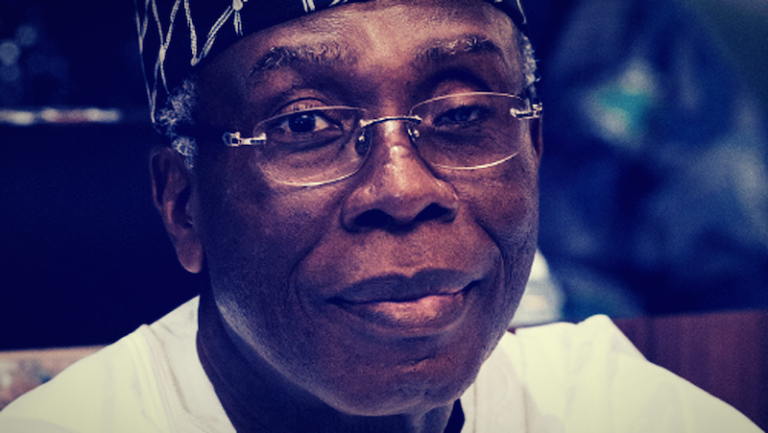
As Audu Ogbeh takes the backseat

By Eric TENIOLA

WHEN President Muhammadu Buhari, GCFR, submitted his list of Ministers to the Senate on July 23, the name of Chief Audu Innocent Ogbeh (72) was missing. He was one of the few Ministers who was not re-nominated by the President. And this led to a conclusion that perhaps the public service career of this colourful politician is over and that henceforth he will retire to his village in Efugu-Otukpa with his wife, Justina Obehi and take the back seat with a role as an Elder Statesman.

If that should be, it is not too early to thank Chief Ogbeh for his contributions to Nigeria. No doubt Chief Audu Ogbeh now has a passport to join the league of Benue state greats including Chief Jacob Obade, the Minister of State in charge of the Nigerian Army in early sixties who recruited most military officers from that zone, Chief Joseph Sarwuan Tarka (1932-1980) who formed the United Middlebelt Congress at the age of 23 along with Chief Isaac Shaahu and others. And became a leader of the region till died and Colonel Joseph Akahan, the Chief of Army Staff from Gboko, who died in a helicopter crash during the civil war at the age of thirty-one in May 1968. Others with similar passports are Brigadier General David Bonaventure Alachenu Mark (71) from Otukpo, Major General (rtd.) Lawrence Anebi Oloja (70) from Idekpa, Okpiko, Chief George Akume (65) from Wannune Tarka, Major General Chris Abutu Garba (71) from Ipole, Senator Daniel Iyorkegh Soror, Brigadier Atom Kpera (78) Chief Barnabas Adyar Iyoriher Gemade from Otukpo, Chief Iyorchia Ayu (66) from Gboko, Chief Ameh Ebute from Ugbokodo, Ambassador Iyorwuese Hagher (70) from Kasar, Chief Paul Unongo from Turan, Brigadier General (rtd) Emmanuel Ikwue from Otukpo, Chief Isaac Shaahu and a few others.

Chief Audu Ogbeh’s life reminds me of what James Baldwin wrote, “Not everything that is faced can be changed but nothing can be changed until it is faced”.

The name Audu Ogbeh caught National attention in 1979 when he was elected as deputy speaker of the Benue state House of Assembly. On October 18, 1979, President Shehu Usman Aliyu Shagari submitted 31 names to the Senate for ministerial confirmation. Benue state had two cabinet nominees, Chief Isaac Shaahu and Chief Paul Unongo. Chief Shaahu was of the NPN at that time. In 1981 there were some allegations made against the then Minister of Power and Steel, Chief Paul Iyorpuu Unongo (82) then of the NPP, who is also from Benue state. At that time the NPN was in control of Benue state and the then governor, Chief Aper Aku (1938-1988) from Ikyobo, Ushongo local government area of Benue state was of the NPN. Notable politicians from Benue state including my good friend Senator Joseph Sarwuan Tarka, Senator Suemo Chia, Senator Ameh Ebute, Chief Isaac Shaahu, Dr. Emmanuel Atanu, V. Iortim, S.O. Adohi, Chief B.A. Chaha, and others were also of the NPN.

Following the allegations on Chief Paul Unongo, President Shagari dropped him from the cabinet and appointed Chief Audu Ogbeh as Minister of Communication at the age of 33. President Shagari later moved him to the Ministry of Power and Steel. It was at this time that I knew Chief Audu Ogbeh who was introduced to me by his bosom friend, Chief Innocent Adikwu, who was then Editor of THE SUNDAY PUNCH. He was also introduced to me later by my colleague and friend, Mr. Muyiwa Adetiba, a gifted writer, who was then a star in the Punch Newspaper who later became Editor of THE SUNDAY PUNCH. In his first term, he was loyal to President Shagari and he did his job brilliantly.

On October 17, 1983, he was re-nominated by President Shagari as a Minister in his second term. Only seven of them were re-nominated. And they were Chief Eteng Okoi Obuli (Cross River), Mohammed Ibrahim Hassan (Bauchi), Alhaji Ali Baba (Gongola), Alhaji Umaru Abdurahman Dikko (Kaduna), Alhaji Adamu Ciroma (Borno) and Chief Audu Ogbeh (Benue) and Dr. Ishael Jikiri Igbani (Rivers). The rest were fresherS. They included Chief Eleazar Chukwuemeka Anyaoku, Chief John Nwodo jnr., Alhaji Sule Katagum, Alhaji Ibrahim Tahir, Alhaji Magaji Mu’azu, Chief J.A. Orhorbo, Mr. Ralph Uwechue, Dr. E.T. Atanu, Alhaji Muhammadu Buhari, Alhaji Haliru Dantoro, Dr. Simi Johnson, Dr. Idirisu Ibrahim, Chief Kehinde Sofola, Dr. Bode Olowoporoku, Chief S.M. Afolabi, Dr. Bimbo Akintola, Alhaji Hassan Mohammed, Mr. Robert Doshun Gumut, Chief Okoi-Obuli, Dr. A.J. Okonno, Alhaji Ali Baba, Mr. Paul Wampana, Chief Emmanuel Adiele, Alhaji Isma’ila Isa, Alhaji Yusuf Maitama Sule, Alhaji Hamisu Musa, Dr. Ishmael Igbani, Mrs. E. Diete-Spiff, Alhaji Muhammadu Lugga, Alhaji Idirisu Koko and Alhaji Bala Sokoto.

On December 31, Major General Muhammadu Buhari toppled President Shehu Shagari. Chief Ogbeh went back to his farm in Benue state. He is an Idoma. The Idomas are people that primarily inhabit the lower western areas of Benue State, Nigeria, and kindred groups can be found in Cross Rivers State, Enugu State and Nasarawa State in Nigeria. The Idoma language is classified in the Akweya subgroup of the Idomoid languages of the Volta–Niger family, which include Alago, Agatu, Etulo and Yala languages of Benue, Nasarawa, and Northern Cross river states. The Akweya subgroup is closely related to the Yatye-Akpa sub-group. The bulk of the territory is inland, south of river Benue, some seventy-two kilometers east of its confluence with River Niger. The Idomas are known to be ‘warriors’ and ‘hunters’ of class, but hospitable and peace-loving. Other tribes in Benue state are Tiv, Igede, Etulo, Abakpa, Jukun, Hausa, Igbo, Akweya and Nyifon.

He returned to full time farming in December 1984. During the period, he set up a number of personal projects including Medium Scale Rice Mill, 14,000 Tree Cashew Plantation and a Poultry Farm.

He also consulted for several state governments and established a number of notable projects, including a large scale pineapple project for Cross River State and 2 rice mills – for the Family Economic Advancement Program in Abuja and for General Jeremiah.T. Useni in Langtang, Plateau State.

While in full-time agriculture, he answered the call to serve and was appointed to the 19 member National Constitutional Conference Commission in 1993. He was later appointed to the eight-man National Reconciliation Committee, which was inaugurated on December 28, 1995, under the leadership of my former teacher, Chief Alexander Opeyemi Akinyele, the Loboshin of Ondo Kingdom. General Sani Abacha inaugurated the committee with a view towards full reconciliation among Nigerians. He later dissolved the committee.

In 1998, he directed the presidential campaign of Dr. Alex Ekwueme, under the PDP and became a full-time member of the party; which won the elections in 1999.

He is also a member of Eisenhower Exchange Fellowships Incorporated, based in Philadelphia, United States of America. He has written five plays which include three published works. One of his plays, the Epitaph of Simon Kisulu was staged at Muson Center in 2002.

The brutal politics in Benue state almost took his life as he was attacked by hired assassins and was presumed dead after the attack in 1999.

On November 11, 2001, Chief Audu Ogbeh succeeded his Benue state colleague, Chief Barnabas Germade who in November 1999 defeated Chief Sunday Awoniyi as Chairman of the party. Chief Audu Ogbeh’s term as chairman was tumultuous. The puzzle I still don’t understand till now is why President Obasanjo picked on Chief Ogbeh to be the National chairman when in 1998 he was the campaign manager of Chief Alex Ekwueme in his Presidential bid at the Jos Convention.

Chief Ogbeh reorganised the party and ensured the party’s victory in the 2003 election. From day one we knew that the marriage between President Obasanjo and Chief Audu Ogbeh can’t work. One grew up in a military constituency where 100 percent total loyalty to your boss wrong or right is required while the other grew up in a rather free world of ideas where you can agree and disagree on principles. The gubernatorial election in Anambra state in 2003 and other crises exposed the division between the two men.

Shortly after the Presidential election in 2003 he was faced with a difficult decision either to support President Obasanjo’s third term bid or to abide by the constitutional provision which allows any individual to serve only two terms. The decision he took became risky. Towards the end of his tenure and with his increasingly vocal denunciations against the excesses of the Obasanjo administration, he came into conflict with the president.

Chief Audu Ogbeh’s family was harassed and subjected humiliation and embarrassment. His wife, Justina Obehi Ogbeh from Ekpoma in Edo state and his five children were not spared in the ordeal.

In a letter dated December 6, 2004, he told President Obasanjo to do something about it. “About a month ago, the nation woke up to the shocking news of a devastating attack on Anambra State, resulting in the burning down of radio and television stations, hotels, vehicles, assembly quarters, the residence of the state chief judge, and finally, Government House, Awka. Dynamites were even applied in the exercise; and all, or most of these actions, in the full glare of our own police force, were shown on the NTA for the world to see. The operation lasted three days. That week, in all churches and mosques, we, our party, and you as head of government and leader of this nation, came under the most scathing and blithering attacks. We were singly and severally accused of connivance in action and so forth. Public anger reached its peak. You set up a reconciliation committee headed by the Ebonyi State governor, Dr. Sam Egwu, and we all thought this would help calm nerves and perhaps bring about some respite.

But quite clearly, things are nowhere near getting better. While the reconciliation team attempted to inspect damaged sites in Anambra, they were scared away by gunfire, further heightening public anger and disdain for us.   Bomb explosion in Government House, Awka On Tuesday, the 30th day of November 2004, there was another shocking development – a reported bomb explosion in Government House, Awka. Since then, the media, public discourse within and even outside of our borders, have been dominated by the most heinous and hateful of expletives against our party and your person and government. It would appear that the perpetrators of these acts are determined to stop at nothing since there has not been any visible sign of reproach from law enforcement agencies. I am now convinced that the rumours and speculations making the rounds that they are determined to kill Dr. Chris Ngige may not be unfounded.

The questions now are: What would be the consequences of such a development? How do we exonerate ourselves from culpability? Worse still, how do we even hope to survive it? Mr. President, I was part of the Second Republic and we fell. Memories of that fall are a miserable litany of woes we suffered, escaping death only by God’s supreme mercy. Then we were suspected to have stolen all of Nigeria’s wealth. After several months in prison, some of us were freed to come back to life penniless and wretched. Many have gone to their early graves un-mourned because the public saw us all as renegades. I am afraid we are drifting in the same direction again. In life, perception is reality, and today, we are perceived in the worst light by an angry, scornful Nigerian public for reasons that are absolutely unnecessary. Mr. President, if I write in this vein, it is because I am deeply troubled; and I can tell you that an overwhelming percentage of our party members feel the same way, though many may never be able to say this to you for a variety of reasons. But the buck stops at your table, and in my position, not only as chairman but also as an old friend and loyal defender of your development programmes, which I have never stopped defending, I dare to think that we can, either by omission or commission, allow ourselves to crash and bring to early grief, this beautiful edifice called democracy. On behalf of the People’s Democratic Party, I call on you to act now and bring any, and all criminal, even treasonable activity to a halt. You and you alone have the means. Do not hesitate. We do not have too much time to waste.”

Obasanjo’s response on December 12, 2004 was laced with bile even from the first paragraph where he wrote: “I am amused and not surprised by your letter of December 6, 2004, because after playing hide and seek games over a period of time, you have finally, at least in writing, decided to unmask and show your true colour.” Ogbeh refused pressures to resign from office and throughout the yuletide holidays of 2004 the nation was kept agape by the standoff between the party chairman and the president.

In early January, not even a reconciliatory lunch of pounded yam was enough to reconcile the two men and Ogbeh finally resigned following apprehensions about his life. The fact that the resignation was announced by President Obasanjo’s spokesperson, Mrs. Oluremi Oyo, gave credibility to the rumour that Chief Audu Ogbeh resigned under duress.

He claimed later that he resigned only to avoid conflict within the party, and due to a desire to return to farming. He handed to someone from President Obasanjo’s military constituency, Colonel (rtd.) Ahmadu Adah Ali (82) of the ALI MUST GO FAME, who was Minister of Education between 1978 and 1979 during the tenure of General Olusegun Obasanjo as Head of State.

In December 2005, he formally resigned from the PDP. It was not until 2015 that he joined the All Progressive Congress (APC) as a pioneer member. On November 11, 2015, President Muhammadu Buhari appointed him Minister for Agriculture and Rural Development.

In March last year, he lost his brother, Michael and this affected him seriously for they were very close since they both lost their parents Pa Ogbeh Ejembi and Madam Egbi Ogbeh nee Odinya.

In the last three and a half years, his work in the Ministry of Agriculture has been commendable.

The political obituary of Chief Audu Ogbeh is yet to be written. Deputy Speaker, National Chairman of a ruling party, three-term Minister, these are notable achievements of a worthy public servant.

Eric Teniola,  a former director at the Presidency wrote from Lagos