Home Blog Page 2336

NNPC boss vows to make refineries fully operational before 2023

MELEE Kyari, the incoming group managing director of the Nigerian National Petroleum Corporation, NNPC, on Monday vowed to make all the four refineries in the country working before 2023.

He made this pledge at the valedictory session organised for the outgoing group managing director of the NNPC, Maikanti Baru, held at NNPC Towers in Abuja.

“We will deliver all our four refineries within the life of President Buhari’s administration. We shall seek strategic partnerships to ensure Nigeria becomes a net exporter of petroleum products,” he said.

He also stated his resolve not to compromise on his stand for transparency and accountability.

“To my family members, from today, if you accept any gift from anyone, then it is not from me. So those who want to give my family members gifts, let them know that my family members can never influence me,” he said.

In his remarks, he thanked President Buhari for the chance to serve with a promise to deliver on the mandate of the corporation.

“I’ll like to thank President Buhari for giving me the opportunity to serve. It is a challenge and I promise to do this job with integrity. I will never do anything against the interest of this Corporation,” he stated.

The current NNPC boss joins a long list of Nigerians who had given a timeline to make the nation’s refineries fully operational but only time will tell.

In May 2017, Ibe Kachikwu, a former Minister of State for Petroleum Resources during an interview on BBC World Service programme, HardTalk, anchored by Stephen Sackur vowed to resign if Nigeria’s refineries were not working by 2019.

Unfortunately, he failed to meet the target and also did not honour his word by resigning from his position as Minister of State for Petroleum Resources.

About 445,000 barrels per day of refining capacity can be produced across the four facilities which operate well below capacity, forcing the NNPC to import greater quantity of the country’s petroleum products.

NNPC manages the nation’s major refineries, two located in Port Harcourt, Rivers State, which combine to form the Port Harcourt Refining Company, PHRC, with a combined installed capacity of 210,000 barrels per stream day, bpsd, Kaduna Refining and Petrochemical Company Limited, KRPC, capable of 110,000 bpsd and Warri Refining and Petrochemical Company Limited,WRPC, which boasts of 125,000 bpsd.

Nigeria currently produces an average of 1.8 million barrels of oil daily, despite, huge resources spent on Turn Around Maintenance, for the refineries none had worked up to 50 per cent of their capacity at any time during 2019, according to official figures from the state oil firm, NNPC.

Leaked assault tape: Senator pleads not guilty, granted N5m bail

SENATOR representing Adamawa North, Elisha Abbo, alleged to have assaulted a nursing mother, has on Monday pleaded not guilty.

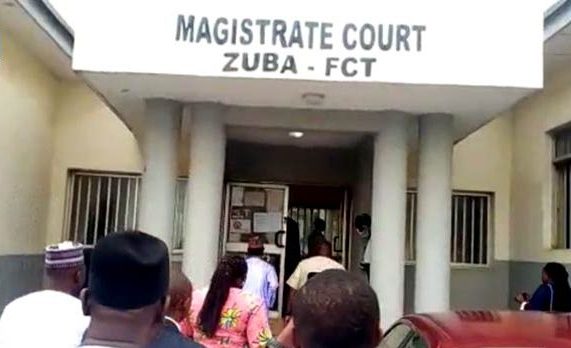
Abbo was arraigned on two counts of criminal charges at the Chief Magistrate court, Zuba on Monday.

He had pleaded not guilty to both charges, sidestepping his admission of wrongdoing and an apology to both the victims and Nigeria last Wednesday, Premium times reports.

The court had granted the senator bail of N5 million on counts of criminal assault.

The magistrate said Abbo must present two competent sureties to the court to secure his appearance in subsequent hearings on the criminal charges.

Abbo, had on Friday, June 5,  allegedly assaulted a nursing mother, at a sex toy shop, in Abuja, following a viral video disclosed by Premium Times.

The video clip had drawn a national wide outrage calling on the immediate prosecution of the lawmaker.

Consequently, Abboh had in a press statement, apologised to the family of the assaulted, maintaining such an attitude does not describe his personality.

“I have never been known or associated with such actions in the past.”

He surrendered also to the police of the FCT, which led to his arrest on Friday but was granted bail afterward.

Federal High Court ends legal year, resumes September.

FEDERAL High Courts in Nigeria, on Monday, commenced the annual long vacation for the year 2019.

In a circular signed by the Federal High Court Lagos, Chief Registrar, Emmanuel Gako, the 2019 long vacation would commence on July 8 and end on September 13, while normal court activities were expected to resume on September 16.

NAN reports that the long vacation is observed annually, pursuant to the provisions of Order 46 rule 4 (a) of the Federal High Court Civil Procedure Rules 2009.

According to the circular notifying the general public of the scheduled vacation, only divisions like Abuja, Lagos, and Port Harcourt would remain functional during the vacation, and litigants were at liberty to approach only these courts.

The circular revealed that the Abuja division would cater to cases from the Federal Capital Territory, North Central, North Western, and the North-Eastern parts of the country.

The Lagos division would cater to cases from the South West, while the Port Harcourt division would cater to cases from the South-South and South East.


Federal High Courts in Nigeria, on Monday, commenced the annual long vacation for the year 2019, reports the News Agency of Nigeria, (NAN).

In a circular signed by the Federal High Court Lagos, Gako, the 2019 long vacation would commence on July 8 and end on September 13, while normal court activities were expected to resume on September 16.

The long vacation is observed annually, pursuant to the provisions of Order 46 rule 4 (a) of the Federal High Court Civil Procedure Rules 2009.

According to the circular notifying the general public of the scheduled vacation, only divisions like Abuja, Lagos, and Port Harcourt would remain functional during the vacation, and litigants were at liberty to approach only these courts.

The circular revealed that the Abuja division would cater to cases from the Federal Capital Territory, North Central, North Western, and the North-Eastern parts of the country.

The Lagos division would cater to cases from the South West, while the Port Harcourt division would cater to cases from the South-South and South East.

“Only cases of extreme urgency are to be entertained during the period,” Gako said.

Meanwhile, in Lagos, Justices Nicholas Oweibo and Chuka Obiozor, have been assigned to sit as vacation judges during the period.

(NAN)

Teenagers win over N1 million prizes at national spelling bee finals

JUNIOR secondary school students from across the country participated on Saturday in the grand finale of a national spelling competition, Solutions Spelling Bee, where the top three winners were awarded cash prizes of up to N1 million.

Organised by Decipher Solutions, the competition which is in its seventh year, took place in Abuja. The participants, 60 in all, were the top spellers from five regional rounds held in Lagos, Enugu, Gombe, Kano, and Abuja.

Emerging the grand prize winner, Praise June Seth, 13, a student of Zamani College, Kaduna, coasted home to victory with N500,000. The first runner-up and second runner-up, 11-year-old Ugosinachi Okoli of Starville School Abuja and 10-year-old Ugochi Okoli of Spring of Life International School Enugu, received N300,000 and N200,000. All three winners also got Samsung tablets.

The final round of a writing competition also took place as part of the event, where Indrani Okeke, a student of Spring of Life International School, Enugu, emerged winner. The second and third prize winners were Okpe Akondu of Starville School and Cleopatra Nkemsinachi Udoh of Spring of Life International School.

Zainab Haruna, the founder of Decipher Solutions, said in her opening address that the goal of the competition is not only to teach students how to spell and expand their vocabulary but also to equip them with skills that will make them productive in the modern world.

“That is why we teach about financial literacy. Every person today must be financially literate. We want you to be good writers,” she said.

“Writing and speaking are two skills you should have to be educated in the 21st century. Some of you already have it. Some of you have it but you do not realise that you do, you will have to nurture it. We want you to be excellent writers, that is why we introduced the essay contest as a component of the spelling bee program.”

She added that the organisers deliberately incorporated workshops on public speaking, essay writing, boardgame design, and prose and poetry composition so as to improve the students’ skills and creativity.

Some of the student participants at the event

The competition was sponsored by the Raw Materials Research and Development Council (RMRDC), National Agency for Technology Acquisition and Promotion (NOTAP), and also received support from a host of other organisations.

Among personalities at the event were Eugenia Abu, deputy director of training at the Nigerian Television Authority (NTA) headquarters; Imevbore Ohiomokhare, head of the Business and Economic Desk at the African Independent Television (AIT); and Nwokedi Moses, an On-Air Personality (OAP) with Wazobia FM.

El-Rufai says Nigeria’s North largely worse off than South, and statistics agree

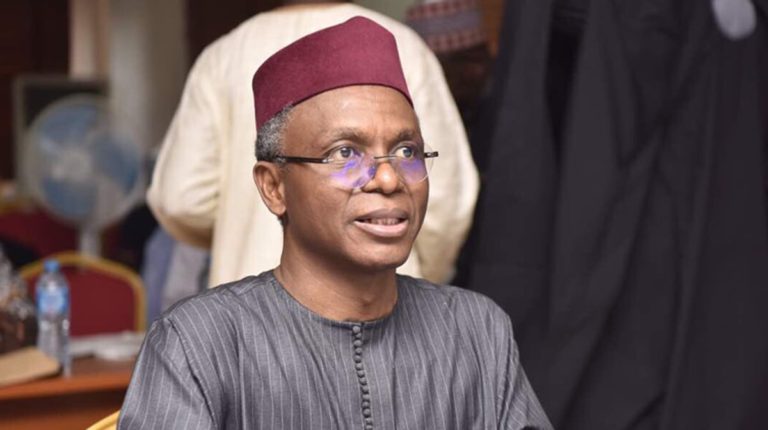
NASIR EL-RUFAI, the governor of Kaduna State, has said Nigeria’s northern region is more backward, more unhealthy, and less educated than the south, and available data, examined by The ICIR seem to support his claim.

He said this on Saturday in Kaduna at the Northern Youth Summit themed: “Awakening the Arewa Spirit” and organised by Northern Hibiscus, a non-governmental organisation.

“Looking at the statistics, Nigeria appears to be a middle income country. But, if we segregate those statistics across states and zones, you will see that, in terms of human development indicators, Nigeria consists of two countries; there is a backward, less educated and unhealthy northern Nigeria, and a developing, largely educated and healthy southern Nigeria,” the governor said during his address.

He said northern Nigeria has development indicators similar to war-torn Afghanistan and the bulk of poor people and out-of-school children in Nigeria are from the region.

“Northern Nigeria has become the centre of drug abuse, gender violence, banditry, kidnapping and terrorism. We have also been associated with high divorce rate and breakdown of families. These are the challenges that confront us. This is the naked truth that we have to tell ourselves,” he said.

He urged leaders in the North to have conversations about the challenges, and deliberate on solutions “because increasingly, as many of you must have seen on social media, we are being considered as the parasite of the federal economy.”

“Even though, that is not entirely true,” he added, “because northern Nigeria still feeds the nation. The richest businessman in Nigeria is still Aliko Dangote, not someone from Southern Nigeria, thank God for that.

“We are generally considered to be more honest and less corrupt than other Nigerians. That is something we should be proud of. In addition, our demographic superiority gives us a very powerful tool to negotiate in politics. And that is something we should be proud of and we should preserve. So, we have every reason to unite and not be divided.”

Data from the National Bureau of Statistics (NBS) shows that of the top 15 states in Nigeria on the 2017 Internally Generated Revenue (IGR) ranking, only three are from the northern region: Kano, Kaduna, and Kwara, which occupy the 5th, 6th, and 10th positions respectively.

Likewise, among the 15 states that generate the least revenue according to the ranking, only three, Ekiti, Ebonyi and Osun, are from the sourthern region. The rest are northern states.

Also, according to the latest States Nominal Gross Domestic Product ranking released by the NBS, only three northern states, Abuja, Kano and Kaduna, are in the top 10, while 5 are in the least 10th position. The list ranks only 22 states.

Loading...

Loading…

The State of the Nigerian Children report of 2015 also reveals lower performance in the northern region when it comes to the wellbeing of young Nigerians.

All 18 states that top the ranking for places with most stunted children are in the north. All 16 states with the highest percentage of children with no early childhood education are from the region. And all 10 states with the least percentage of children with no birth registration are from northern states. The same pattern is observable on various other rankings as well.

A 2016 report of the World Bank titled Poverty Reduction in Nigeria in the Last Decade, confirms that, while Nigeria may the world’s poverty capital, states in the northern region have a far greater population of poor residents.

“The states in the North East and the North West are the poorest states,” states the report, “while the states in the South West and the South-South show the lowest poverty rates. Five states display an exception to this general rule: Ebonyi, Enugu, Cross River, Gombe, and Sokoto.”

Buhari signs free trade area agreement

PRESIDENT Muhammadu Buhari finally signed the African Continental Free Trade Area (AfCFTA) agreement, making Nigeria the 53rd county to do so.

He signed the document on Sunday morning at the 12th Extraordinary Session of the Assembly of the Union on AfCFTA and the First Mid-Year Coordination Meeting of the African Union and the Regional Economic Communities held in Niamey, Niger Republic.

President Buhari had set up a panel to study the agreement, which projected in its report submitted in June that the country’s economy stands to benefit from increased trading with other countries on the continent.

The panel also noted that possible adverse effects include “massive smuggling that could turn Nigeria into a dumping ground for goods produced outside of Africa”.

The goal of the agreement is to facilitate the free movement of products, followed by the creation of a single-currency union. It is expected to lead to the emergence of the world’s largest free trade area since the establishment of the World Trade Organisation.

Already, 24 countries have ratified the agreement.

On Ruga and Fulanisation

By Simon Kolawole


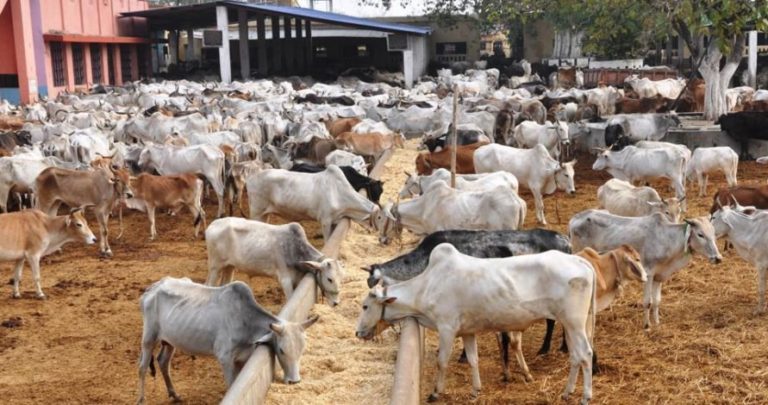
I WANT this on record: I am opposed to the ruga racket. And my misgivings have nothing to do with the conspiracy theories on Islamisation and Fulanisation. I call it a “racket” because that is exactly what it is. I don’t understand the indecent haste by civil servants in the ministry of agriculture and rural development to award multi-billion contracts to construct ranches. If the office of the vice-president is already overseeing the National Livestock Transformation Plan (NLTP), which is a more robust programme for value-added cattle farming, why would the ministry excise ruga from the plan and start awarding contracts — especially when there is yet no minister? It is very fishy.

I also fault the process that produced the policy. Who was consulted? Were the herders themselves asked if they want ruga? Not so long ago, people made arguments in the media that the nomadic life is their culture and they would reject any attempt to destroy thousands of years of their history through ranching. Are we trying to decree them to abandon their culture just like that and then expect that they will automatically comply? What is the guarantee that the herders will use the ranches when constructed? As a policy analyst, I would treat that as a defining question. It is not good enough for ranch contractors to be smiling to the bank while leaving the rest of the society in tears.

Yet another question: how were the participating states picked? I understand, for instance, that a state like Kwara has a 5,000-hectare ranch in Kaiama LGA that has been abandoned for years. Such a state would have fitted effortlessly into the programme. Instead, Chief Audu Ogbeh, as minister of agriculture, excluded Kwara and included his home state, Benue, which everybody knew was going to be anti-ruga because of pre-existing conditions. How much consultation did the political leaders put into the process, especially because of the sensitive ethnic and religious issues that are bound to arise? Something is terribly wrong with policy making in Nigeria.

Nevertheless, despite the missteps, ranching is a beautiful concept with massive potential if we can take the racket out of the ruga. If the herders themselves, farmers, host communities and political leaders are sold on it, ranching can curtail the perennial conflict between farmers and herders in the country. For ages, herders have been clashing with farmers over destructive grazing practices. To the herder, or cattle farmer, the survival of his livestock is his No 1 priority. If farmlands are destroyed in the process, what a pity. If you challenge him, what a bigger pity. Surely, things can’t go on this way. If all key stakeholders accept ranching, that would be marvellous.

Furthermore, ranching has a lot of economic benefits. To the ranch owners, the livestock will be healthier, fatter and more profitable. They will get more beef and more milk yield per cow. Profitability can double. To the butchers, retailers and consumers, a cow at hand is worth more than two in the bush. A cow that can reach the market from a ranch that is a few kilometres away will be cheaper than the one being transported from Maiduguri to Fiditi. To the locals, cottage industry will spring up. When the Leventis Group set up a pig farm in my village in the 1980s, the local economy boomed with the introduction of “yungba” delicacy sold by a new generation of food vendors.

For ruga to work, I think there are more details to be worked out and worked upon. While ruga will provide water and pasture, are these all the cattle farmers need to stay in one place? What studies have we done to understand the likely outcomes? What other measures are we going to take to incentivise good behaviour and make sure the herders do not move again? Does this offer us an opportunity to build schools for their children as well? We need to look at the public value we can gain from this, most importantly the peace. For instance, the immunisation provided by government ordinarily looks like a personal benefit, but the entire society benefits from the containment of epidemics.

I think President Buhari did the right thing by suspending the project. At this delicate period of our nationhood, we can do with less fire-fighting. This crucial interval offers an opportunity to take a second look at the initiative. I would suggest that (1) stakeholders should be thoroughly engaged at all levels, taking into consideration the peculiarities of individual states and communities (2) states should be allowed to come up with their own initiatives in a way that suit them; none can be forced to do ruga (3) funds for the construction of ranches must be treated as concessionary loans — ranching is big business and the real issue at play is not even capital but land.

As I was saying, Nigeria is a country perpetually in crisis and the ruga fiasco is just typical. Trust is long gone. Conspiracy theories have taken over. Mutual suspicion is the rule. There are fears of domination. There are insinuations of hidden agenda. Politics is trumping common sense. So we keep jumping from one crisis to the other, from one conflict to the other. As one episode ends, another begins. As one season closes, another starts. Season one, season two, and so on. The tragic reality show is renewed endlessly. The lead characters change from time to time, from generation to generation. The directors and producers move in and move on. But the storyline is ever so familiar.

In my last article, “A Nation Perpetually in Crisis” (30/06/2019), I chronicled the crises and conflicts that Nigeria has gone through in the last three decades. I had barely shut down my laptop when, from nowhere, the ruga controversy exploded in our faces. In a matter of three days, the temperature of the polity threatened to match that of hell. I had traced the trigger for the permanent state of mutual hate, suspicion and tension along ethno-religious lines in the country to the mistrust generated by Nigeria’s membership of the Organisation of Islamic Conference (OIC) in 1986. I said the process was mismanaged by the Babangida administration.

Ironically, as I had also argued years ago, we stood to benefit financially and economically from OIC membership without the country being Islamised, despite the fears expressed by Christians. No country has ever been Islamised for joining OIC, but the delicate composition of Nigeria meant such a decision was going to generate red heat. This was clearly not factored into the decision-making process by the Babangida government and, in my opinion, we are still living with the after-effects. One of the most telling consequences of that era is that Nigerian Christians have become overly sensitive to anything Islamic, no matter the merits.

When Islamic banking was authorised by the Central Bank of Nigeria (CBN) some years back, all hell was let loose by those who said it was an attempt to Islamise Nigeria. Critics ignored the fact that Nigerian entrepreneurs could get finance at no interest but on the principle of sharing profit and loss. Those who tapped into the opportunity — including Christians, who have not been forced to convert to Islam as at the time I wrote this — are enjoying the benefits. The sukuk bonds, which offer more friendly terms than other bonds in the market, were also opposed just because of this suspicion of Islamisation. That is what happens when there is mistrust in the society.

The ruga controversy has inevitably followed the same pattern of rejection based on suspicion. There is a conspiracy theory that Buhari wants to Fulanise and Islamise Nigeria. The “Fulanisation” agenda, it is said, is to establish the foothold of the Fulani in every state of the federation for the eventual total take-over of Nigeria — to complete the job started by Uthman Dan Fodio in 1804. It comes against the backdrop of the increasing criminal activities of some herdsmen who have been implicated in kidnapping and rape in the south-west. They have been classified by the conspiracy theorists as “Fulani jihadists” who are out to help Buhari achieve his “Fulanisation agenda”.

But northern Muslims are being kidnapped too. Alhaji Musa Uba, the district head of Buhari’s village, and Alhaji Mahmood Abubakar, the chairman of Universal Basic Education (UBEC), were kidnapped. The Abuja-Kaduna road has been the most lucrative route for kidnappers in the last three years. At what stage do these criminals get framed as “Fulani jihadists”? I can answer the question: when they cross the River Niger and strike on Ife-Ibadan road. That is how conspiracy theories work. Insecurity is ruining the length and breadth of Nigeria. No geo-political zone or ethnic group is spared. But we would rather politicise the national catastrophe in order to promote our pet theories. It is a sad story.

Above all, I hope lessons have been learnt from this ruga fiasco. Apart from the need to manage our delicate dynamics sincerely and leave no room for speculation, we also need to step up the quality of policy making. There is a common defect among decision makers in Nigeria: they think because a policy looks good and beneficial, everybody will embrace it. Marketing a policy is as important as making it. You are dealing with attitudes, practices, beliefs and politics. Policy is not purely technical. As an example, everybody knows pedestrian bridges save lives, but why do people still cross the highway right under the bridge at the risk of death? I give that as homework to our policy makers.

AND FOUR OTHER THINGS…

OSUN MYSTERY

The Supreme Court judgment in the case between PDP’s Ademola Adeleke and APC’s Adegboyega Oyetola left us with more questions than answers. Adeleke lost his Osun governorship petition against Adegboyega because, the apex court ruled, a member of the tribunal did not sign the judgment. How is that the petitioner’s problem? Will the petitioner drag a judge from his house to come and sign the judgement? The question remains: can INEC declare an election inconclusive and do a supplementary election? Except it is not yet made public, this million-dollar question seems to have gone completely unanswered. The Supreme Court can do better than this. Weird.

SENATOR SLAP

Senator Elisha Abbo, the ambassador of Christ who was videoed in a sex toy shop repeatedly slapping a nursing mother, has admitted his wrongdoing and apologised. The law is still expected to take its course, although fresh facts seem to suggest he is a career slapper. Nevertheless, I am pleased that he admitted his fault. In this same country, a state governor was caught on camera loading bales of dollars into his parachute but he still came out to say the video was “cloned”. Abbo could have followed this bad example, although he has no immunity like that guy. But he could have paid some social media influencers to be asking: “Why is the lady just talking now?” Hirelings.

NORTHERN MASQUERADES

The Coalition of Northern Groups (CNGs) issued a warning to governors who are opposed to the ruga settlement programme to reconsider their decision within 30 days. On Wednesday, Abdul-Azeez Suleiman, its spokesperson, said: “While we warn all state governments that stand against the implementation of the RUGA Initiative to desist and give peace a chance, we place President Buhari and the Federal Government on notice that they must completely stop this raging madness within 30-days beginning from today, Wednesday.” I would like to know the real masquerades behind these guys. Their arrogance and confidence stink to the heavens. Reckless.

MYTH BUSTER

So you were told that Timi Dakolo was a member of the Commonwealth of Zion Assembly (COZA) and was even the music director? You were also told that he married Busola in the church and the wedding was officiated by Pastor Biodun Fatoyinbo, the man she alleged raped her when she was 16? You further read that Dakolo had once married and divorced before meeting Busola? Well, these are the alternative facts from cyberbullies, according to Dakolo himself, who said: “Please watch the (wedding) video yourself. Does the Pastor look like Biodun Fatoyinbo? His name is Pastor Seyi of Global Impact Church… I have never been a member of COZA.” Counterfeiters.
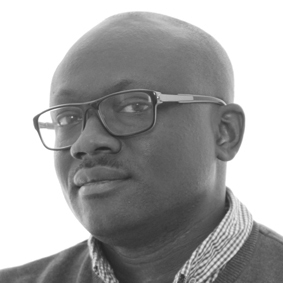

Simon Kolawole is the founder and CEO of TheCable. He tweets @simonkolawole.

Normal activities resume at ports after union suspends strike

THE Nigerian Ports Authority (NPA) says normal port activities had resumed following the suspension of a three-day strike by Maritime Workers’ Union of Nigeria (MWUN).

The NPA spokesperson, Adams Jatto, confirmed the resumption of ports activities in a statement on Saturday.

Jatto said the NPA management “regretted all inconveniences the strike might have caused port users and other stakeholders”.

He gave an assurance of continued industrial peace and harmony in the maritime sector.

The spokesperson also assured port users that the issues that led to the strike would be resolved as soon as possible in the national interest and to further enhance NPA’s mandate to deliver efficient services for customer satisfaction.

(NAN)

LIST: Buhari retains Boss Mustapha, Kyari, 11 other close aides for second term 

PRESIDENT Muhammadu Buhari has decided to retain thirteen of his close aides, including the Chief of Staff and Secretary to the Government of the Federation (SGF).

The State House made this announcement on Friday, adding that the appointments shall be presumed to take effect from May 29, when Buhari was sworn-in again as president. The ICIR observes that all the appointees maintained the same offices they occupied in the previous term.

According to presidential spokesman Garba Shehu, Boss Mustapha remains Nigeria’s SGF and, amid widespread discontent, Abba Kyari likewise remains the government’s chief of staff.

“President Muhammadu Buhari has approved the re-appointment of Mr Boss Mustapha as Secretary to the Government of the Federation (SGF), and Malam Abba Kyari as Chief of Staff (COS) to the President,” Shehu said.

“Both appointments take effect from May 29, 2019.”

The News Agency of Nigeria reported on Wednesday that Sunday Aghaeze was re-appointed the president’s Personal Assistant on Photography through a letter signed by Mustapha.

A report published on Thursday had revealed that all but three of the president’s appointees had not been receiving their usual pay and had lost other privileges attached to their positions though they are still actively working for the administration.


Here is the full list of the appointees as of Friday:

1 Abba Kyari President’s Chief of Staff.
2 Boss Mustapha Secretary to the Government of the Federation.
3 Mohammed Sarki Abba Senior Special Assistant to the President (Household and Social Events).
4 Ya’u Shehu Darazo Senior Special Assistant to the President (Special Duties).
5 Suhayb Sanusi Rafindadi Personal Physician to the President.
6 Lawal A. Kazaure State Chief of Protocol.
7 Sabiu Yusuf Special Assistant (Office of the President).
8 Saley Yuguda Special Assistant (House Keeping).
9 Ahmed Muhammed Mayo Special Assistant (Finance & Administration).
10 Mohammed Hamisu Sani Special Assistant (Special Duties).
11 Friday Bethel Personal Assistant (General Duties).
12 Sunday Aghaeze Personal Assistant (State Photographer).
13 Bayo Omoboriowo Personal Assistant (Presidential Photographer).


Anger as Nigerians demand probe into death of deputy DG of CIIN killed in South Africa

ALMOST one month after Elizabeth Obianuju Ndubisi, a deputy Director General of Chartered Insurance Institute of Nigeria(CIIN) was found dead in a hotel room in Johannesburg, South Africa, Nigerians have started a campaign for a thorough investigation into the mysterious death.

Obianuju’s body was found in her hotel room on June 13, at the Emperor’s Palace Hotel, a tribute page opened for her by friends and family said.

The 53-year-old CIIN deputy DG was in South Africa to attend the conference of the African Insurance Organisation (AIO) which held in Johannesburg when she was allegedly murdered by yet to be identified assailants.

She was reported to have attended the closing dinner of the AIO Conference the night before her body was found.

“Her colleagues who were with her saw her healthy,” wrote Bennet Ndubisi, a relation of the deceased on the tribute page.

While it was held that she might have suffered a sudden death over the night, the death certificate released on June 20 by South Africa’s Dept. of Home Affairs after an autopsy revealed that she had died of unnatural cause.

“This was confirmed in a separate document issued by South Africa’s Dept of Health on 27 June, where they confirmed that the autopsy revealed she had been strangled,” Bennet Ndubisi further wrote.

Almost a month after the incident and no clue to who her assailants were, Nigerians are already accusing the management of the Emperor’s Palace Hotel & Convention Centre of thwarting investigation into the mysterious death.

They alleged that the hotel management is unwilling to provide access to CCTV images and other evidence that may help investigations.

Former Chairman of National Human Rights Commission, Chidi Odinkalu is leading a campaign on Twitter asking for a thorough probe into the incident.

Odinkalu is currently asking Abike Dabiri, Chairperson of Nigerians in Diaspora Commission to be at the forefront of the investigation.