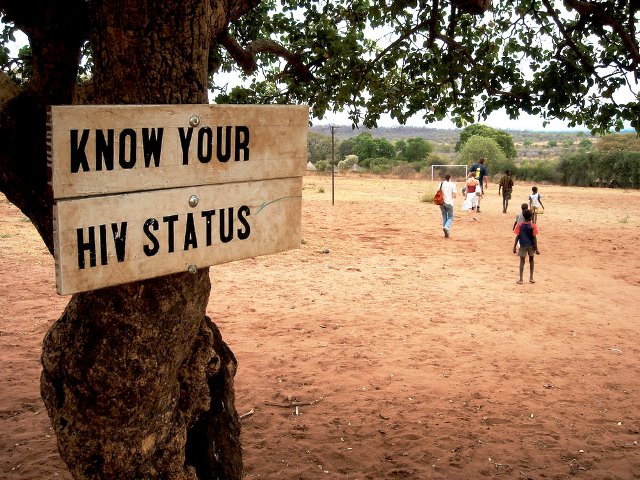
ON the occasion of the National HIV Testing Day, The Joint United Nations Programme on HIV and AIDS (UNAIDS) and the United Nations Development Programme (UNDP) have urged 48 member countries to remove all forms of HIV-related travel restrictions.
They noted that 48 countries still have restrictions that include mandatory HIV testing and disclosure as part of the requirements for immigrants visa.
Nigeria is, however, part of the 145 countries that do not have HIV-related restriction on entry, study or residence permits.
HIV, human immunodeficiency virus is a virus that damages the immune system which helps the body fight off infections. It causes AIDS, a serious condition where the immune system is too weak to fight off other diseases and infections.
Of the 48 member states listed, four were Africans- Sudan, Tunisia, Angola, and Egypt. Egypt and Sudan deport non-nationals on the grounds of their HIV status, UN said. They also prohibit short or long term stay of any person tested HIV positive, including Tunisia. While Angola requires HIV testing or disclosure for certain types of entry, study, or residency permits.
Non-African countries that deported non-nationals on the grounds of having HIV infections include Russia, Malaysia, Iraq, Saudi-Arabia, Jordan, Syrian Arab Republic, Oman, Yemen, and Turkmenistan. Those that prohibited immigrants with HIV infections into their countries are Ukraine, Indonesia, Tunisia, Dominican Republic, Bosnia and Herzegovina and Kyrgyzstan.
Other countries like Australia, Cuba, Paraguay, and Angola require an HIV test or diagnosis as a requirement for a study, work or entry visa.
Infographics credit: Twitter/UNAIDS
“HIV-related travel restrictions fuel exclusion and intolerance by fostering the dangerous and false idea that people on the move spread disease,” said Mandeep Dhaliwal, Director of UNDP’s HIV group.
Also, Gunilla Carlsson, UNAIDS executive director, said that travel restrictions on the basis of being HIV positive “violate human rights and not effective in achieving the public health goal of preventing HIV transmission.”
UNAIDS noted that restrictions of people because of their HIV status stimulate stigma and discrimination. It added that the restrictions do not “decrease the transmission of HIV. “It is truly incomprehensible that HIV-related entry and residency restrictions still exist,” UNAIDS noted.
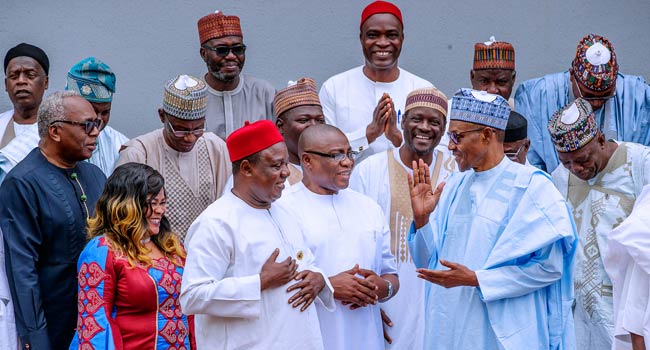
PRESIDENT Muhammadu Buhari had on Thursday sworn-in the Chairman and 30 Commissioners of Revenue Mobilization, Allocation and Fiscal Commission (RMAFC) and charged them to be fair and just to all tiers of government.
Buhari gave this charge while swearing-in the members of the Commission at the Presidential Villa, Abuja, and urged them not to compromise the Commission’s constitutional mandate for whatever reasons.
He enjoined the Commission to work hard toward meeting Federal Government’s target of lifting 100 million Nigerians out of poverty in the next 10 years.
He said: “The mandate of the Commission is very wide and has an important for our country’s economy. The Commission must be fair and just to the three tiers and arms of government without compromising its core mandate.
In my speech on June 12 Democracy Day, I informed Nigerians that this administration has laid the foundation for transforming our country and liberating our people from the shackles of poverty by putting policies and measures to integrate our rural economies to the national economic grid.
Our measure is to extend credit facilities currently available, to be able to encourage and support domestic production of basic goods and reduce our reliance on imported goods.
I set a target for our country to lift 100 million Nigerians out of poverty in 10 years. This commitment is to further challenge the Revenue Mobilization, Allocation and Fiscal Commission to rise to its constitutional responsibilities and mandate,” He said.
Buhari, charged the members of the Commission to concentrate more on expanding the other sources of revenue like non-oil sources including solid minerals.
He urged them to use all legal ways and means to strengthen the commission’s monitoring mechanism and block leakages of revenue from the federation account.
He said they should also ensure that all relevant laws and regulations on revenue collections and remittances were fully complied with and appropriate sanctions visited on defaulters.
The president reminded the members that they were chosen based on their integrity and proven track records, and as such much is expected from them.
Your appointment as Chairman and members of the Commission was carefully considered based on your proven track records of hard work and integrity.
It is therefore the expectation of government that you will rapidly and systematically set to work to address all areas of your mandate in a businesslike manner,” Buhari stated.
He assured the Commission that government would continue to provide all the necessary support that would facilitate its work.
He also called on the National Assembly to put in place “relevant enabling laws that shall guarantee the commission the legal ability to ensure that defaulters of revenue laws are appropriately sanctioned’’.
The News Agency of Nigeria, (NAN) reports that Elias Mbam from Ebonyi was sworn-in as Chairman of the Commission alongside 29 others as Federal Commissioners representing various States.
Mbam, who spoke to State House correspondents at the end of the swearing-in, pledged that the Commission would look into the current revenue allocation formula with a view to effecting changes if necessary.
The RMAFC was established by law to monitor the accruals into and disbursement of revenue from the Federation Account, and to review from time to time, the revenue allocation formula and principles in operation to ensure conformity with changing realities.
The Commission is also expected to advise the Federal, State and Local governments on fiscal efficiency and methods by which their revenue is to be increased, among others.
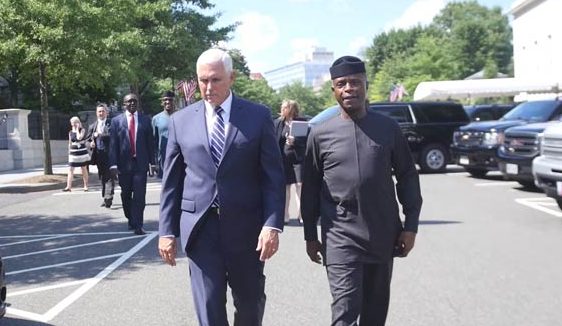
Talks between the Nigeria Vice President, Yemi Osinbajo and the United States’ Vice President, Mike Pence, concluded on strengthening the country’s economy and curbing insecurity in general.
The outcome of the meeting, held at the White House in Wahington DC, was disclosed afterwards, to CHANNELS TELEVISION.
Osinbajo revealed that both leaders built on previous talks; talks on encouraging investors’ participation in the country, through partnership, for an effective economy.
They also discussed on the acquisition of arms and ammunition to tackle terrorism and insecurity, especially the in Sahel regions.
“What we are working on at the moment is cooperation that has been on for a while so the whole point of it is to see how to bring several of those things to fruition.
We discussed cooperation on the supply of arms and ammunition which the US has worked with us on and we think we are moving in the right direction. They are happy to work with us on it,” Osinbajo said.
The meeting, which was centered on building strong ties between both Nigeria and America, was part of the agenda of Osinbajo’s four-day visit to the US.
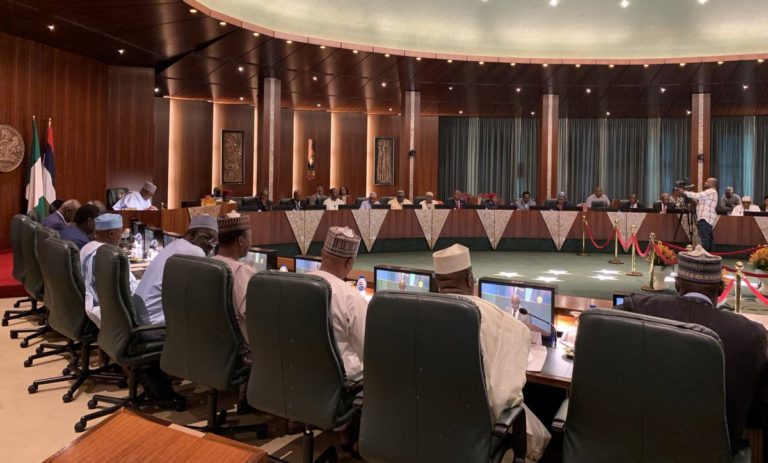
PRESIDENT Muhammadu Buhari has received the report assessing Nigeria’s readiness for the African Continental Free Trade Area Agreement (AfCFTA), stating he would ensure the agreement, when signed, create business opportunities for Africa’s manufacturers, service providers and innovators.
Buhari made this known while receiving the committee’s report on Thursday at the State House, Abuja.
Most of the other African countries have signed this intra-African trade, but Buhari had refused to sign for Nigeria’s participation for the establishment of AfCFTA. In fact, the Federal Executive Council gave Buhari the approval to join other African Countries to sign but Buhari withdrew from the meeting at Kigali, Rwanda where the agreement would be signed in March 2018.
Rather Buhari had set up a committee in October 2018 to give a report on the impact and readiness assessment of the agreement establishing the AfCFTA in Nigeria, stating he needs to ensure if it will benefit the country before he signs.
Receiving the report on Thursday, Buhari said the AfCFTA “will have both positive and negative effects on us as a nation and on our region”. He said the intra-African trade is only 14 per cent of Africa’s total trade while the region consumption is mostly of goods imported from Non-African countries.
For AfCFTA to succeed, Buhari said policies that promote African production must be developed.
“Africa, therefore, needs not only a trade policy but also a continental manufacturing agenda. Our vision for intra-African trade is for the free movement of ‘made in Africa goods’. That is, goods and services made locally with dominant African content in terms of raw materials and value addition,” Buhari said.
Buhari noted he would ensure that the agreements create business opportunities for Africa’s manufacturers, service providers and negotiators.
He added that many of the challenges Africa countries face today “whether security, economic or corruption” are rooted in the region’s inability over the years to “domesticate the production of the most basic requirements and create jobs for our very vibrant, young and dynamic population”.
Thus, he noted his aspiration of the intra-African trade to be the creation of jobs and prosperity for “vibrant and hardworking” Nigerians.
“The benefits of economic growth must be prosperity for the masses,” he said.
Buhari, therefore, assured that the received report will form part of the consideration in his decision on the “next steps on the AfCFTA in particular and on broader trade integration subjects”.
AfCFTA is the first of its kind in Africa. It proposes creating a single market for goods and services, with free movement of people and investments across 55 countries.
FORMER Minister of Information and Culture, Lai Mohammed is to appear before a Federal High Court, Abuja, to explain his role in the alleged misapplication of N2.5 billion Federal Government Digital Switch-Over (DSO) programme.
The Independent Corrupt Practice and Other Related Offences Commission (ICPC), in a statement issued on Thursday, Abuja stated that the former minister’s appearance became imperative following fresh discovery during investigations, that a government White Paper that governs the execution of the DSO programme was allegedly flouted by the head of NBC.
The Commission is currently prosecuting the Director General of the National Broadcasting Commission (NBC), Ishaq Modibbo Kawu, over alleged abuse of office and money laundering.
The People’s Democratic Party (PDP) had earlier in January tasked the anti-graft agency to probe Mohammed for his involvement in the fraudulent deal.
Mohammed, who is at the centre of the fraud was also contacted by The ICIR on his alleged involvement in the scam but never responded until he later acknowledged he was deceived into the deal.
ICPC had filed a 12-count charge before Justice Folashade Ogunbanjo-Giwa, against Kawu, Lucky Omoluwa and Dipo Onifade, the Chairman and Chief Operating Officer of Pinnacle Communications Limited respectively, saying that the NBC director- general misled the former minister into approving government funds for a private company.
Mohammed had however admitted in a statement to the Commission that he was misled by Kawu, as opined in court by a witness from ICPC, Osanato Olugbemi.
Olugbemi, led in evidence by counsel to ICPC, Henry Emore, also told the court that the payment of N2.5 billion from NBC to Pinnacle Communications Limited, as seed grant was suspicious because ICPC found out through its investigations that only government-owned company was approved to benefit from the grant according to the White Paper.
According to the statement, the court also heard that the processes that led to the final payment of the fund to the private company were shrouded in secrecy as revealed by the minute from an NBC emergency board management meeting where issues of carriage fees owed Pinnacle and not seed grant was discussed.
He told the court that 47 suspicious transactions were originated by the Chairman of Pinnacle Communications, Omoluwa, immediately after the receipt of the funds on June 2, 2017.
Some of the transactions include payments of N363 million to one Idowu Olatunde, N274.4 million to one James Segun and N127 million to Dipo Onifade, the Chief Operating Officer of the company.
He informed the court that Omoluwa refused to explain the reasons for the payments to Olatunde and James when asked by ICPC, but Onifade explained that he received the N127 million as legal fees he rendered to Pinnacle Communications Limited.
A Bureau de Change operator, Salisu Mamman Daura, who also testified in court, said he received N167 million in two instalments of N97 million and N70 million respectively, from Pinnacle Communications Limited.
Daura added that the sums were converted into $265, 000 and $195, 735 respectively, at the rate of N360 to an American dollar, and handed in cash to one Alhaji Sabo, supposedly on behalf of Pinnacle Communications.
Counsel to the accused persons, Alex Iziyon (SAN), A Yusuf and A. V. Etuwewe for Omoluwa, Onifade, Kawu and Pinnacle Communications respectively, took turns to cross-examine both witnesses after which the matter was adjourned till July 1, 2019 for continuation of trial and ruling on two pending motions by the trial judge.
THE Nigeria Air Force (NAF) says it had destroyed the tactical headquarters of an Islamic State of West Africa Province (ISWAP) located at Kollaram, Borno State.
The NAF director of public relations and information, Air Commodore Ibikunle Daramola, disclosed this in a statement on Thursday in Abuja.
He noted, the operation was executed on Wednesday, June 26, which had witnessed the killings of terrorists in the process.
The paper read that the destruction of ISWAP was led by the Air Task Force (ATF) of operation, Lafiya Dole, following series of Intelligence, Surveillance and Reconnaissance (ISR) missions.
The ATF had launched an Operation Green Sweep 2, according to the statement, to fight against terrorist elements in the North eastern part of the country.
The operation which commenced on June 26, aimed at targeting selected locations within the Northeast, “in order to further degrade the remnants of the terrorists as well as deny them safe havens and freedom of action,” The paper said.
Damilola said, the ISR captured a large number of ISWAP fighters in buildings, communication facilities with roof-mounted solar panels, defensive parapets as well as suspected tunnels at various location around the settlement.
“Consequently, the ATF dispatched two NAF Alpha Jet aircraft to attack the location recording accurate hits in the target area, leading to the destruction of some of the structures and equipment as well as the killing of several terrorists,” he said
On the other hand, the Nigerian troops, on June 26, reportedly repulsed the Boko Haram insurgents that attacked a military base in Goniri, Gujba Local Government Area,(LGA), Yobe.
The Daily Trust disclosed, there were causalities on both sides, although, figures yet unknown, but the military destroyed and had recovered items from the insurgents.
The government had consistently betell its measures towards a total clampdown of insurgency, especially those ravaging the north eastern part of the country.
However, the NAF had reported, earlierin February, that the ATF had destroyed a Boko Haram Terrorists (BHTs) hideout, insurgents’ facilities, as well as belonging to the BHTs, the insurgents’ facilities, as well as neutralize its fighters at a settlement in Arboko, Borno State.
Sometime in June also, Damilola, the NAF director of public relation and information, had disclosed that the ATF had destroyed terrorists Tactical Command Center,operating in the Sambisa Forest, Borno State and had killed a significant number of BHTs.
Although there are still remnants of insecurities, bordering on banditry, kidnaps and killings in states such as Taraba, Zamfara, Kadunna, Plateau… in northeast Nigeria.
Nevertheless, the Nigerian government had said, its military had “successfully defeated” Boko Haram insurgents, and what the country is currently facing, is a fresh crisis, called, “global insurgency.”
In this report, Chinwe AGBEZE, uncovers massive corruption by education ministry officials in the implementation of the Federal Government’s multi-billion naira project to secure unity schools.
IN November 2018, the Immediate past Education Minister, Mallam Adamu Adamu, disclosed that the federal government reserved over N7billion between 2017 and 2018, to provide basic security facilities in 104 unity schools across the country.
According to the Minister, the decision to provide security infrastructure in the schools arose as a result of the “insecurity in the northeast, occasioned by Boko Haram as well as incidents of kidnapping in parts of the country.”
Adamu explained that the funds were being used “to provide perimeter fences for the schools that have none, CCTV cameras, solar-powered streetlights, and modern security gates.”
In the 2017 budget, N5bn was proposed for the security gadgets. Also, in the 2018 appropriation bill, N2bn was set aside to provide “perimeter fencing, solar streetlights, solar-powered motorized borehole and CCTV in 104 colleges.”
Investigations in nine unity schools in four Southeast states of the federation, however, reveal that the colleges grossly lack the basic security apparatus listed.
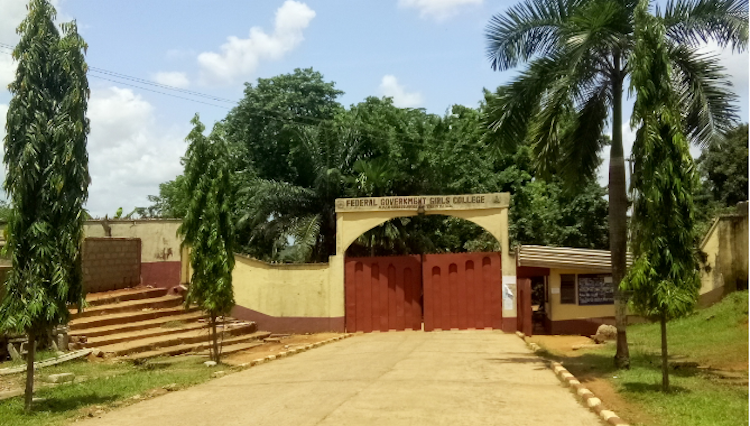
FGGC Lejja
Enugu State
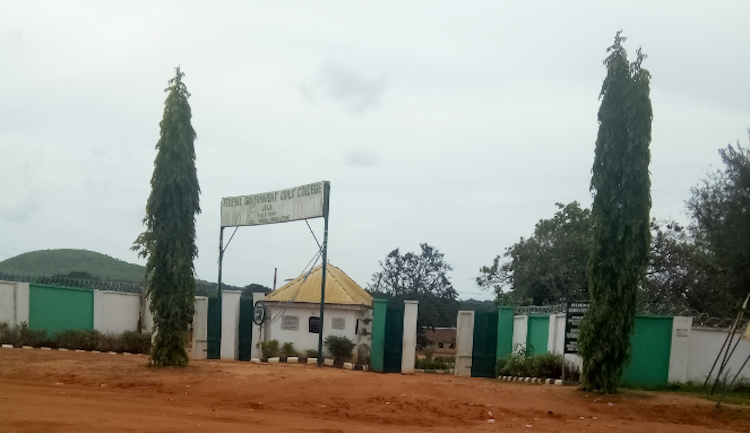
On Monday, May 6, 2019, this reporter arrived at Federal Government Girls College, Lejja in Nsukka area of Enugu State. The time was around 8.29am.
By the school gate was a signboard indicating that the security infrastructure project is awarded to IQ International Services Ltd, and supervised by the controller, Federal Ministry of Power, Works and Housing in Enugu.
Lifting her eyes off the signpost, it rested on the fence. The reporter observed that the walls of the fence were weak, and some blocks were gradually falling off giving room for lizards to play hide-and-seek in the partitioned walls. Sitting on the weak fence were newly installed barbed wires.
“When the contractor arrived, I told him that we are not sure of our fence, and asked what would happen if the fence collapse after the wires were installed,” explains Jude Ezeogwu, vice principal, special duties at the school. “The contractor admitted that the fence is weak, but he said the job is to install wires not to build a fence.”
So, the wires were installed, but the coping was poorly done. A touch and the wires fell off.
“I mentioned that to Daniel, the contractor. I also told him about the opening the villagers created on the wall,” says the project officer at the school, who identified himself simply as Mr. Umahi.
Continuing, he says: “The worker requested for five bags of cement. Daniel promised to send the money for the cement and planks to me, but he hasn’t sent it. The worker is supposed to resume work today, but he hasn’t and I cannot reach Daniel.”
Ezeogwu refused to disclose the contents of the bill or how much was awarded for the project.
“What the contractor executed is almost in line with what he was asked to do. If he was asked to knock down the fence and erect new one before putting the spiral wires, he would have done that,” he says.
He adds: “So, I pass the blame back to those that awarded the contract without coming to investigate, to check out the state of the fence first. The contractor has done something, but let them come and see.”
Going round the school, this reporter counted on the total, twenty-five solar streetlights. The streetlight by the SS3 classroom block is tilted, probably indicating a weak tightening at the base. Some of the lights which were installed in March are not functional.
“I went around in the night and spotted nine that were not lighting,” Umahi says. “The streetlight at the gate is not working, but it worked when it was installed. At a point, the light became faint and was not giving out the proper illumination. Then, it stopped lighting.”
Corroborating, Abui Audu, vice principal administration at the school, says: “The light close to the gate is no longer working. That’s the one I’m sure of.”
Also, four CCTV cameras were installed around the administration block, dining hall, gate and computer room.
“There are still some areas we want the contractor to address, like the fencing. Also, a portion of land outside the gate needs to be fenced, but it’s still under controversy,” says Ezeogwu.
He adds: “I called the contractor on Friday (May 3), and he promised to be here this week. We have not seen him, but we are still expecting him.”
Daily Sun reached out to Daniel Asekhamen, the contractor in charge of the project.
He says: “We finished the work about a month ago. We did all we were supposed to do, and the school can attest to that. We installed 11 cameras, 25 solar streetlights and put barb wires around the fence. That is what we have on the bill.”
When asked how much was awarded for the project and how much has been paid to them, Daniel said he would confirm and get back to the reporter.
“I can’t recall now until I check the account,” he said on May 17. “I can’t really give you the figure now until I get to the office.”
Daniel never got back to the reporter, and he failed to pick frequent calls made to his line.
Corporate Affairs Commission, CAC search on IQ International Limited, shows that the company which was incorporated on August 20, 2013, is owned by Adedeji Adesola Oluwastosin and Olatubosun Olanrewaju.
The company removed the relatives—Akinola Martins, Akinola Adesola Dorcas, Akinola Oluwafemi Samuel, Akinola Folakemi from its board on January 12, 2017, and on January 26, 2017, it re-appointed Adedeji Adesola Oluwastosin and Olatubosun Olanrewaju, as directors.
An analysis of the company’s registration details showed that the company has no business in building and construction.
The company was set up to “carry on the business as assemblers, manufacturers, importers, exporters, suppliers and dealers in automobile vehicles whether classified as cars, lorries, buses, vans, motorcycles, or otherwise, to import and export cars of all descriptions,” details filed with the CAC stated.
Snakes, scorpions on the prowl
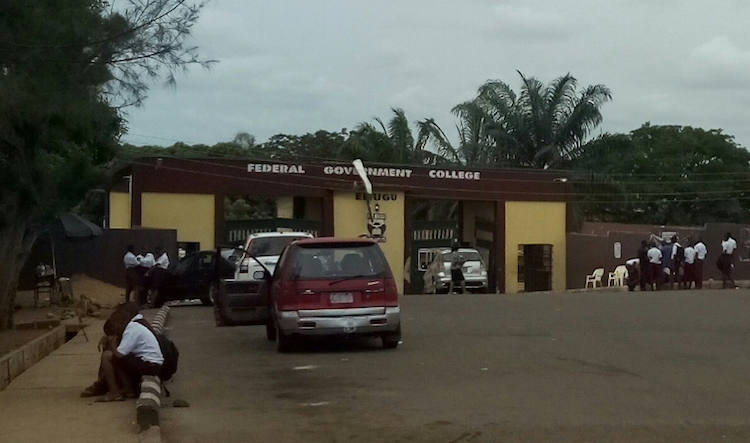
Leaving Lejja, this reporter shifted her attention to Federal Government College, Enugu.
But, arriving at this school, the reporter observed that no security facility was provided. There was neither a project signpost nor workers on the site.
There are quite a number of solar streetlights in this school, but none is functional.
“When I was admitted to this school in JSS1, the lights close to the gate were the only ones working,” says Godwin Okeke (not real name), a JSS3 student at the school. “Before the end of my JSS1, it stopped working. Now, the school is dark at nights.”
The perpetual darkness in this school is putting the lives of the students in danger.
“We suffer from snakes and scorpion bites especially at nights,” he says.
According to Okeke, two students almost lost their lives recently to snake bites.
“Senior students usually wake junior students up to run errands or punish them at nights. So, we stay outside the hostel until the seniors go to bed. One night, we did not see the snake coming because it was dark and the birds were chirping,” he narrates.
Continuing, Okeke says: “Two students were bitten, and immediately rushed to the school clinic where they were given first-aid. The next day, their parents were called to pick them up and give them proper treatment.”
The school was fumigated and students were mandated to move around with torchlights.
“Torchlight is compulsory and any student not seen with one is thoroughly punished,” Okeke adds.
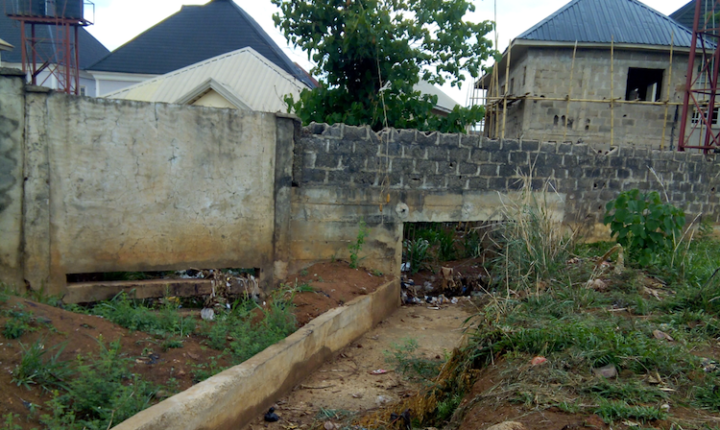
Apart from the faulty streetlights, the fence is another major source of concern. Right at the back of the staff quarters, and on the wall of the fence, is a huge opening, big enough for a chubby adult to comfortably pass through.
“Students sneak out at night through the hole,” says Chijioke Nwankwo (not real name), an SS1 student. “When students are late for school, they enter the school through the hole to avoid punishment.”
This is not the only avenue to gain access inside the school unnoticed. The fence close to the kitchen is another route.
“Some time ago, fight broke out between our school and Command Secondary School. The students tried to come in through the gate, but when they were denied access, they jumped in through the fence and attacked us,” Nwankwo says.
This reporter spotted CCTV cameras on the administration block, which the students said were installed over three years ago. But, the cameras are broken.
“It’s no longer working,” says Okeke, when he found the reporter looking at the cameras. “From my JS1, our principal kept telling us they would install CCTV cameras round the school, and rebuild the fence to prevent students from going out. He said that until he left our school.”
The school principal was not on seat when Daily Sun stopped by his office.
“The principal is busy somewhere around the school. You know we just resumed today,” says a staff of the school, who this reporter met around the principal’s office.
After a long wait, this reporter took her leave, but returned to the school around 8.45pm to ascertain if indeed all the streetlights were faulty as claimed.
On getting to the school, the entire premises was enveloped in darkness. There were two poorly lit bulbs in front of the gate. The light notwithstanding, one could not make out the faces of people walking briskly in and out of the school. Some had torchlights, but many didn’t.
“They are used to the environment,” says Jude, the security guard at the school. “The streetlights have been bad in more than two years.”
Inside the school was covered in darkness. Not a single streetlight was functional.
“If not for the chemical the school often applies to drive away snakes, you would have seen snakes,” Jude says.
He adds: “Snake bit my colleague one night, and we rushed him to ParkLane Hospital. After that, snake bit a student. If the streetlights were working, that wouldn’t have happened.”
Opening on the wall of the fence at FGC Enugu..
Supervisor reacts, defends contractor
To obtain more information about the security projects investigated, Daily Sun contacted the Federal Ministry of Power, Works and Housing in Enugu.
In a meeting with the controller of Housing, Godwin Emesue, he says: “The contractor came here with a contract document that directed the school authority to liaise with us for supervision. We deployed our men to supervise.
“The project was supervised to the satisfaction of the school. When they finished, the school authority confirmed that the jobs have been done and the school signed the document.”
He, however, said one item on the bill was not done.
“The contractor wanted to fence a building, but, the community said the land belongs to them. We said, instead of waiting, cut that one off,” Emesue says.
“I’m sure the contractor has not been paid because before payment is done, they will send audit supervisors to the site to check everything using the contract document. But, if they have paid him, I’m not aware,” he says.
About FGC Enugu, he said, “We don’t work there. If we receive any information that there is a contract, and that a job has been awarded in FGC Enugu, and that we should come and supervise, we will go and supervise.”
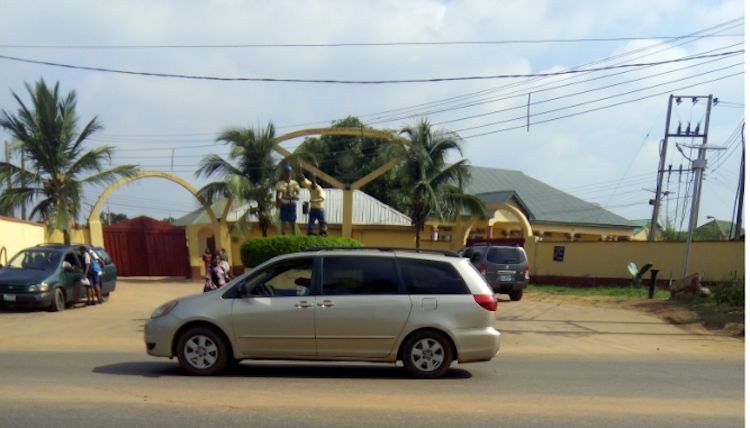
FSTC, Awka
ANAMBRA STATE
On Thursday, May 9, 2019, this reporter journeyed to Anambra State. The plan was to check out the security infrastructure projects in three Unity Schools — Federal Science and Technical College, Awka; Federal Government College, Nise; and Federal Government Girls’ College, Onitsha.
Director of finance implicated
Competent sources allege that Nwokoye Edwin, the Director of Finance and Accounts at the Federal Ministry of Education owns the company that secured the contract at Federal Science and Technical College, Awka.
According to insiders, the director has made frequent visits to Awka in connection with the job.
“He has been trying to get the project supervisor and school to certify that the work has been completed so he can access the fund for the project since he is retiring soon. He succeeded and was in Awka on Friday, May 17 to pick up the signed document,” one source disclosed.
On arriving Federal Science and Technical College, Awka in Anambra State on May 10, 2019, at 7.32am, this reporter noticed that some security work had commenced.
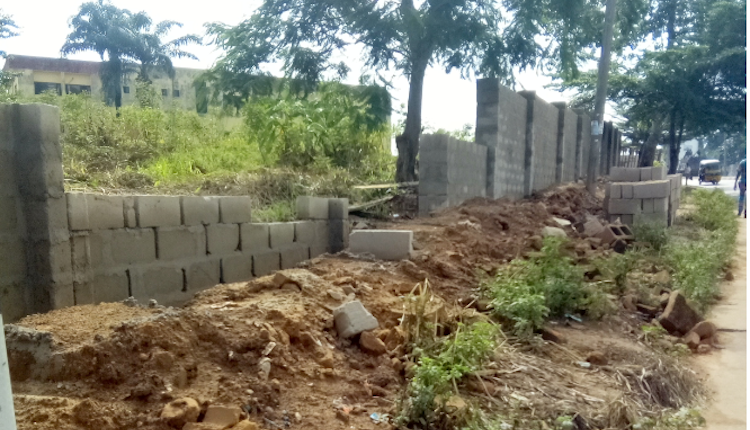
At the site, the perimeter fencing was abandoned midway, creating an avenue for people to walk in and out of the school unchecked. But, no worker or signpost was seen on site.
This reporter learnt that the workers resumed work on the fence in January 2019 and disappeared only to reappear briefly on April 14.
“The principal kept calling them to come and finish the fence they abandoned since January. The workers resumed work on April 14, the day we went on holiday. When we resumed on May 6, we met the fence in a similar state,” said Sharon, a staff of the school.
Speaking about the fence, Mrs. Nyah Margaret, the school principal says: “The school had fence before, but it was weak and falling off. So, the workers are fixing the parts that fell off. Nevertheless, they are not fast. Since we resumed school, they have not come to work.”
Daily Sun gathered that N59 million was awarded for 1,000 square meters perimeter fencing, 25 solar streetlights and 10 CCTV cameras in the school.
Touring the school, the reporter counted on the total twenty-five solar streetlights which was mounted in February, and the school confirmed that the lights are working perfectly.
The cameras were installed at the gate, administration block and hostel. But, the principal is not pleased with the work done.
“The cameras are concentrated in the administration block. Apart from the two cameras at the gate, the other locations are not useful to us. I complained to the man that installed the cameras, but he said the money does not cover cables,” says Mrs. Nyah.
“I need the camera installed at the fence so I can see when the students are breaking bounds, and another in the dining. Now, they captured the conference room and bursary. What am I doing in the bursary? They are paying to TSA or are they going to steal money?” she queries.
In his defense, Kelechi Ibe, who installed the CCTV cameras, when contacted says: “We were instructed to meet the bursar for locations to fix the cameras. It was the bursar that picked the locations, not me.”
Daily Sun obtained the phone number of Frank Ezeh, the engineer-in-charge of the project, and he was contacted to get the name of the company that secured the contract and also finds out why the fence was abandoned halfway.
“We have done the main fencing. We are plastering now. By the end of May, we will be through with the painting, and in June, we will finish the fence,” said Ezeh on May 20. “The name of the company is AE & E Nigeria Limited.”
Shortly after, Ezeh hung up and, Christian Chinweuba called and introduced himself as the general manager of AE&E Nigeria Limited.
He says: “We are handling the fencing now. What is remaining is plastering and the barbwire. In two days, we will complete the fence.”
When asked the name of the company that obtained the contract, Chinweuba, says: “AE & E Nigeria Limited.”
When the school was contacted on May 27, 2019, this reporter was told that the workers were yet to resume work since they were last seen on April 14, 2019.
A CAC search on AE & E Nigeria Limited shows that the company is not registered.
Abandoned fence at FSTC, Awka
Director denies involvement
Daily Sun reached out to Nwokoye Edwin Ementa, Director of Finance and Accounts at the Federal Ministry of Education, via telephone to know why he has not completed the security project at Federal Science and Technical College, Awka.
“You said you are calling from the Sun?” Nwokoye said after a pause, and this reporter replied in the affirmative.
Then he blurted out, “What do you mean? Am I the contractor? Who told you I’m the contractor? Abi I’m the one who is facilitating it?”
“Your engineer,” this reporter responds, and asks again, “Why have you not completed the project?”
“Who is my engineer?” he asks but got no reply. “My friend, I’m the Director of Finance, Federal Ministry of Education. I cannot be a contractor. I’m not the contractor. So, why are you saying ‘why have I not completed the project?’
Nwokoye continues: “Because I’m facilitating it because that project is around my side. I want to make sure that they do it. So, I’m forcing them to do it, and they are doing it. They will complete it,” he pauses and says, ‘according to their promise’.
Unsure if he has convinced the reporter, he says persuasively: “They will complete it. The guy said he is on the ground there, he will complete it. So, please I’m not the contractor. Maybe the person gave you my number as the person who has been making sure that that project is completed. Okay?”
“Alright, sir,” the reporter replies.
The director adds: “Maybe when you come next, you can check and you will discover that they must have completed it.”
Two minutes after the telephone conversation, Christian Chinweuba, the general manager, rang this reporter.
“Please, somebody gave me your number. Are you Chinwe?” he asks.
In response, this reporter requested to know who he is referring to.
Rather than give the name, he tries to describe.
He says: “Eh? Someone you called and you were asking him eh…if he is the engineer handling the project at FSTC Awka.”
In reply, the reporter says: “Someone I called? I’ve called a lot of people. Who are you talking about?”
“Eh? Okay,” Chinweuba says. Hesitantly, he stammers: “You called em em, Nwokoye, and addressed him as the contractor handling the project at Awka. He told you that he is not the one, and he called me. He asked me if I’m the one that gave you his number, and I said, no. I am the engineer handling the project”
“Who is the contractor?” the reporter queries, and he replies: “I am the one.”
“You won the contract?” the reporter asks. In response he says: “Yes”
Without being asked, Chinweuba went ahead to explain why the project is yet to be completed.
He says: “I started work in February because I had em em a health challenge. You know, yes, I have heart problem. I had to stop my project in Bayelsa, and other places because of my health challenge. The project is going on. We are just completing the fence. Just about 5 or 2 percent near completion.”
On how much has been released out of the N59million allotted for the project, he says: “They have never released any money. We have been using our money to do the project.”
Weak wall at FGGC Lejja 2
Procurement laws violated
The Bureau of Public Procurement (BPP) Act specifies that every contracting firm must be registered and must have been in existence and paying tax for the last three years before being offered a job by the Federal Government.
However, AE&E Nigeria Limited, obtained the contract at Federal Science and Technical College, Awka, and it is not registered.
Also, section 25(2)(ii) of the Public Procurement Act (2007) demands that requests for bids must be advertised in at least two widely circulated national newspapers, official websites of the procuring entity and the Bureau as well as the Tenders Journal.
The law states: “the invitation for bids shall be advertised on the notice board of the procuring entity, any official web sites of the procuring entity, at least two national newspapers, and in the procurement journal not less than six weeks before the deadline for submission of the bids for the goods and works.”
Then again, the Public Procurement Act was flouted as no invitation to tender was published for the projects.
To uphold the principles of honesty, accountability, transparency, fairness and equity in procurement processes, sections 57 and 58 of the Public Procurement Act prohibits public officers from partaking in contracts.
According to Section 57(9), “Every public officer involved directly or indirectly in matters of public procurement and disposal of assets shall not engage or participate in any commercial transaction involving the federal government, its ministries, extra-ministerial departments, corporations where his capacity as public officer is likely to confer any unfair advantage – pecuniary or otherwise on him or any person directly related to him.”
But, Nwokoye Edwin Ementa, Director of Finance and Accounts at the Federal Ministry of Education, allegedly secured the contract at Federal Science and Technical College, Awka. In his defense, he said he is “facilitating and forcing” the workers to complete the project.
But then, Subsection 12, disallows public officers from possessing “direct or indirect interest in or relationship with a bidder, supplier, contractor or service provider.”
No security project
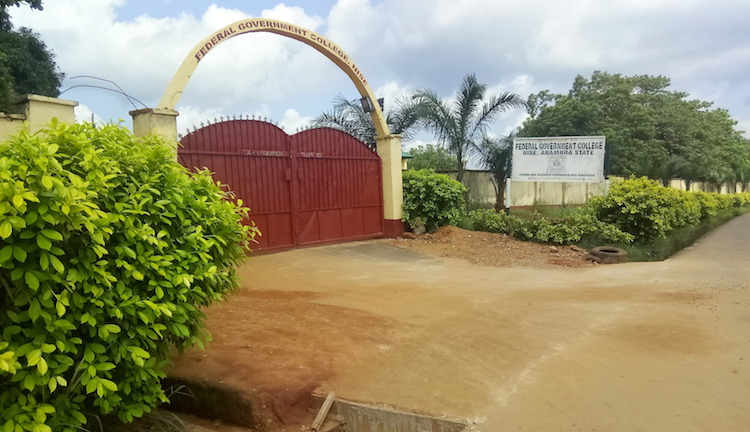
Still in Anambra State, on Friday May 10, 2019, this reporter made a stopover at Federal Government College, Nise.
She observed that no security project was in place. The school fence is in dire need of attention.
According to Comrade Onyekwere, vice principal special duties, the Federal Ministry of Education proposed to repair the fence, but the school is yet to see the contractor.
He says: “The Ministry sent a quantity surveyor over a month ago to measure our fence. He came and went back to prepare the BOQ (bill of quantity), but we have not seen the contractor. We have fallen fences that has exposed the school to security dangers.”
From the gate to the dormitories and round the school, no CCTV cameras or newly installed solar streetlights was sighted.
“Nothing has been done here,” says Mrs. Ijeoma Ekumankama, the school principal.
FGGC, Onitsha
The story is the same at Federal Government Girls’ College, Onitsha. A tour round the premises showed that the school is yet to benefit from the security infrastructure project.
Like previous school visited, the fence here is weak and begging for attention.
“The fence has been falling down. Before we went on holiday in April, rain fell part of the fence. I fixed it, and yesterday (May 9), it fell again. Now, the fence near the hostel is down too,” Aghedo Osamudiame, the school principal, told this reporter on May 10.
The old solar streetlights are not working perfectly well.
“Everywhere is dark, the electrician just left here now. I told him that when I was coming from church, everywhere was so dark,” the principal says. “Some of the lights are working, but I just told him to get some bulbs. Everywhere from the gate is just dark.”
Aghedo said she notified the procurement director at the Federal Ministry of Education of the security challenges, but there has been no response.
She adds: “I even called the procurement director that there is no intervention here, and I sent my bursar to him. I wrote a letter saying they are not doing anything here. There is no security work here.”
This investigation was supported by the John D. and Catherine T. MacArthur Foundation and the International Centre for Investigative Reporting, ICIR.
THE Nigerian Stock Exchange (NSE), the leading market for Exchange Traded Funds (ETFs) in the West African region, has announced the commencement of a three-day enlightenment campaign to increase investors’ awareness and participation in the ETFs market held as the next best option to stocks and bonds.
The campaign slated to kick-off within the week will see the Exchange engage investors through social media, radio, email and in-house workshop, on the benefits of ETFs as a transparent and low-cost investment option.
Mr Jude Chiemeka, Divisional Head, Trading Business Division, NSE, said that “this initiative is in line with the NSE’s strategic objective of providing new and accessible opportunities for citizens to create durable wealth.
“The Exchange continues to showcase the benefits of ETFs as a sound and viable investment option to tap into the capital markets.
“I am pleased with efforts made by ETF providers and advisers to create and introduce more ETFs that align with the needs of institutional and retail investors thereby deepening the ETF market segment.”
ETFs purchased on the NSE just like stocks and bonds through Dealing Member Firms (DMF) as well as online trading platforms are professionally managed vehicles designed to give investors broad exposure to the market by tracking an index (market cap allocations) or specialized themes that consider factors such as value and growth investing (smart beta strategy).
The NSE advised that investor take advantage of the discounted trading fee regime offered by the ETF Market Authorized Dealers – Stanbic IBTC Securities Limited and Vetiva Securities Limited – before month end.
THE Code of Conduct Bureau was not represented by any counsel, on Wednesday, at an ongoing trial where it is a respondent.
The International Centre for Investigative Reporting, ICIR, had in February filed an ex-parte motion at the Federal High Court in Abuja seeking a declaration that the bureau’s refusal to grant access to asset declaration forms is a violation of the right of access to information guaranteed by the Freedom of Information Act.
In May, the court granted the centre’s application for a judicial review of the legality of the CCB’s decision and had adjourned to Wednesday, June 26.
The bureau, however, did not make an appearance for its defence and has also not filed any court documents in response to The ICIR‘s notice of motion.
On the other hand, the office of the Attorney-General of the Federation, another respondent in the matter, had legal representation at the hearing.
Justice Inyang Ekwo pronounced that the CCB be given the benefit of the doubt, and then adjourned the trial to Thursday, September 26 2019.
The ICIR, had in February, written to the CCB requesting for the “details of all asset declaration of all cabinet members in the present administration” as well as other key appointed officials.
But in its response over two months after, the agency declined to provide the documents and said the FOI Act “has exempted asset declarations of public officers from documents that can be accessed via reliance on the provisions”.
The bureau is facing a similar lawsuit from the Socio-Economic Rights and Accountability Project (SERAP) filed last Friday at the Federal High Court in Lagos.
Femi Falana, a human rights lawyer and Senior Advocate of Nigeria, has described the bureau’s refusal of SERAP’s request for asset declaration details as illogical.
The federal government has “failed to show commitment to the fight against corruption by encouraging secrecy with respect to asset declaration by public officers,” he said at a Stakeholders Dialogue on Corruption held in Kano in June.
“With respect, it is illogical to claim that the asset declaration forms submitted by the erstwhile public officers are private documents. Accordingly, the rejection of the request by SERAP is a contravention of section 1 of the Freedom of Information Act, 2011 and article 9 of the African Charter on Human and Peoples Rights,” the lawyer submitted.
“It is hoped that the CCB will review its position and allow citizens to access the information in the declaration forms submitted to it by all public officers in view of the new policy of the Buhari administration to enforce effective asset declaration by public office holders.”
THE Joint Admission and Matriculation Board (JAMB) says it has withdrawn and invalidated results of four candidates who were found to have been involved in the manipulation of their 2019 Unified Tertiary Matriculation Examination (UTME).
JAMB Spokesperson, Fabian Benjamin who disclosed this in a statement Wednesday evening explained that the four candidates were found by the Board’s Intelligence Committee to have been involved in the illicit attempt to fake JAMB result.
He gave the names of the candidates as Adah Eche with Registration Number 97512230IB, Taiwo Abisola Omowumi with Registration Number 97049254GG, Vincent Onyinyechi Prisca with Registration Number 96531098BC and. Sofodun Afolasade Zainab with Registration Number 96634599GA.
While explaining the process that led to the withdrawal and invalidation of the candidates’ results, Fabian said the Board had stated when it announcedthe results of the 2019 UTME on Saturday, May 11, 2019, that a post-examination discovery of serious infractions may lead to the withdrawal of any released result.
He added that it was also stated that a number of candidates’ results were withheld for further verification and anyone not deeply implicated would have his/her result processed.
“After the verification exercise, a number of the results were released and others were cancelled,” the JAMB spokesperson said.
He explained that there were, however, some that needed further direct interaction and interview to establish clearly whether they were culpable or not.
“Candidates in this category were invited to appear in eight centres across the country (Abuja, Asaba, Gombe, Ibadan, Ilorin, Kaduna, Lagos and Owerri) on Monday, 17 June and they had direct interaction and interview with the Intelligence Committee of the Board to ascertain their culpability or otherwise in some discovered examination infraction,” he said.
Following this exercise, he said 3,736 candidates who were found to be either free of any blame or entitled to the benefit of the doubt, have their results processed for release. “The 3, 736 results are now released,” Fabian said.
He cited an example of how the results of the four candidates were detected and later withdrawn and invalidated.
Fabian said the Board withdrew the results of Adah Eche with registration number 97512230IB, who claimed that his initial score of 290 was reduced to 153.
“Following this claim, Mr. Adah Eche was then invited to the Board’s headquarters where it was eventually proved to him that his (Mr. Adah Eche’s) claim was untrue and he was discovered to have been deeply involved in serious infractions and forgery of examination result,” he explained.
“He eventually confessed to the forgery. Further check on his phone revealed that Mr. Adah Eche was not alone but had been patronised for possible illicit upgrade and faking of result by the following candidates whose names, registration numbers were discovered on Mr. Eche’s phone.”
The JAMB spokesperson insisted that “No effort would be spared in identifying and sanctioning any candidate who attempts to falsify results of JAMB-organised examinations (UTME and others) and whoever collaborates or patronizes such candidates would also face a similar consequence.”
A total of 1,886, 508 candidates registered for the matriculation examination in Nigeria and eight other countries.